Most cat owners assume that buying a familiar brand means they’re doing right by their pet. That assumption is exactly why so many good owners keep feeding their cats ingredients tied to real health problems.
The damage doesn’t show up after one bad meal – it builds quietly over thousands of meals across a cat’s life. Nine ingredients on this list are sitting on labels right now, and most owners walk right past them.
#9 – BHA & BHT (The Preservatives Already Sitting in Your Cabinet)
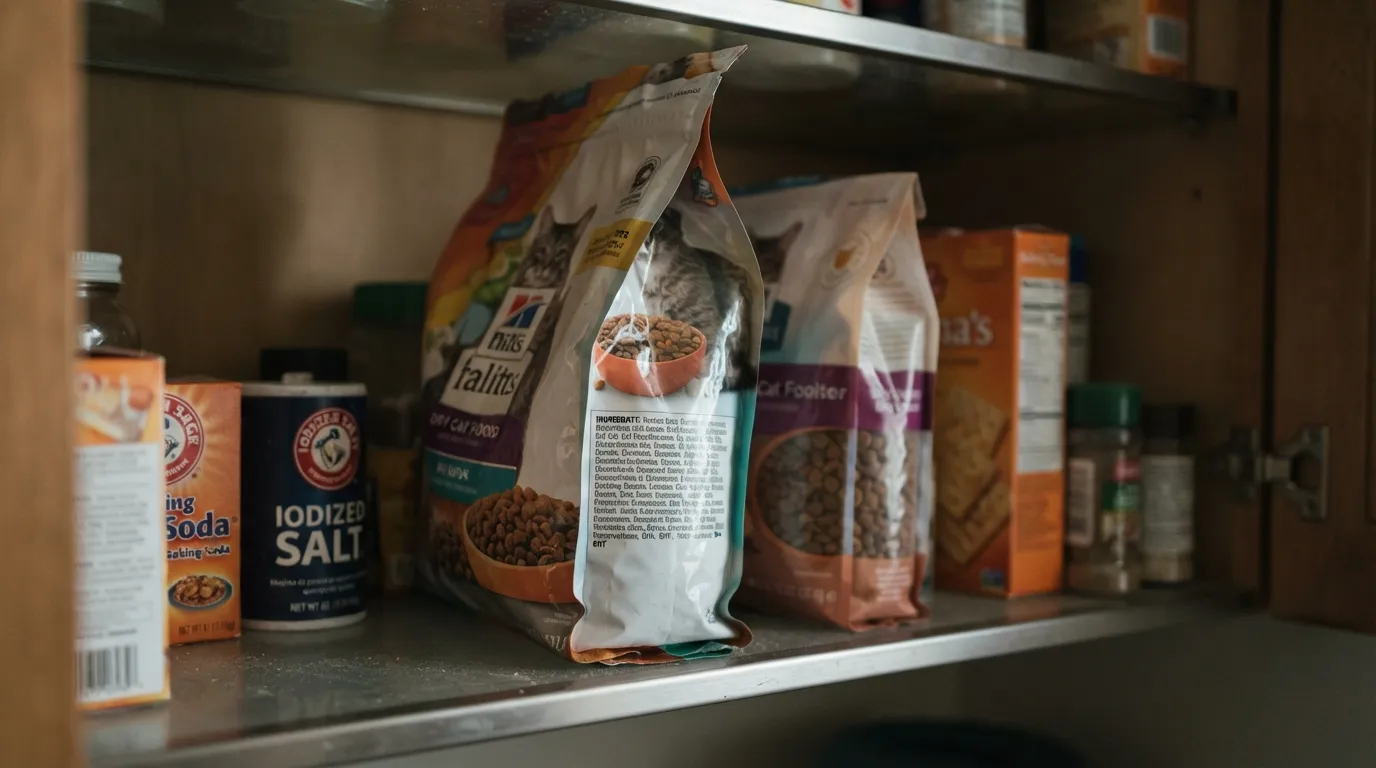
These two acronyms show up on more cat food labels than most owners ever notice. Their safety record is shakier than manufacturers like to admit.
BHA (butylated hydroxyanisole) stops fats from oxidizing, and BHT (butylated hydroxytoluene) keeps oils from turning rancid. Both are synthetic preservatives that have been questioned by researchers for decades.
In rodent studies, BHA has been linked to stomach tumors and BHT to liver and kidney damage, though at doses far higher than what’s in cat food. Some health organizations still classify BHA as a possible carcinogen.
The most alarming detail: one study detected BHA and BHT in 84 dry pet foods, and 13 of those bags claimed “no added synthetic antioxidants.” Your “clean label” food may not be nearly as clean as the front of the bag suggests.
Fast Facts
- BHA is treated as a possible human carcinogen by major health researchers.
- BHT’s job is purely cosmetic – it just keeps fats from smelling rancid on the shelf.
- A single lab test of 84 dry pet foods found both preservatives present.
- 13 of those bags advertised themselves as free of synthetic antioxidants.
But that’s nothing compared to what we found about #8…
#8 – Ethoxyquin (The Herbicide Hiding in Fish Meal)
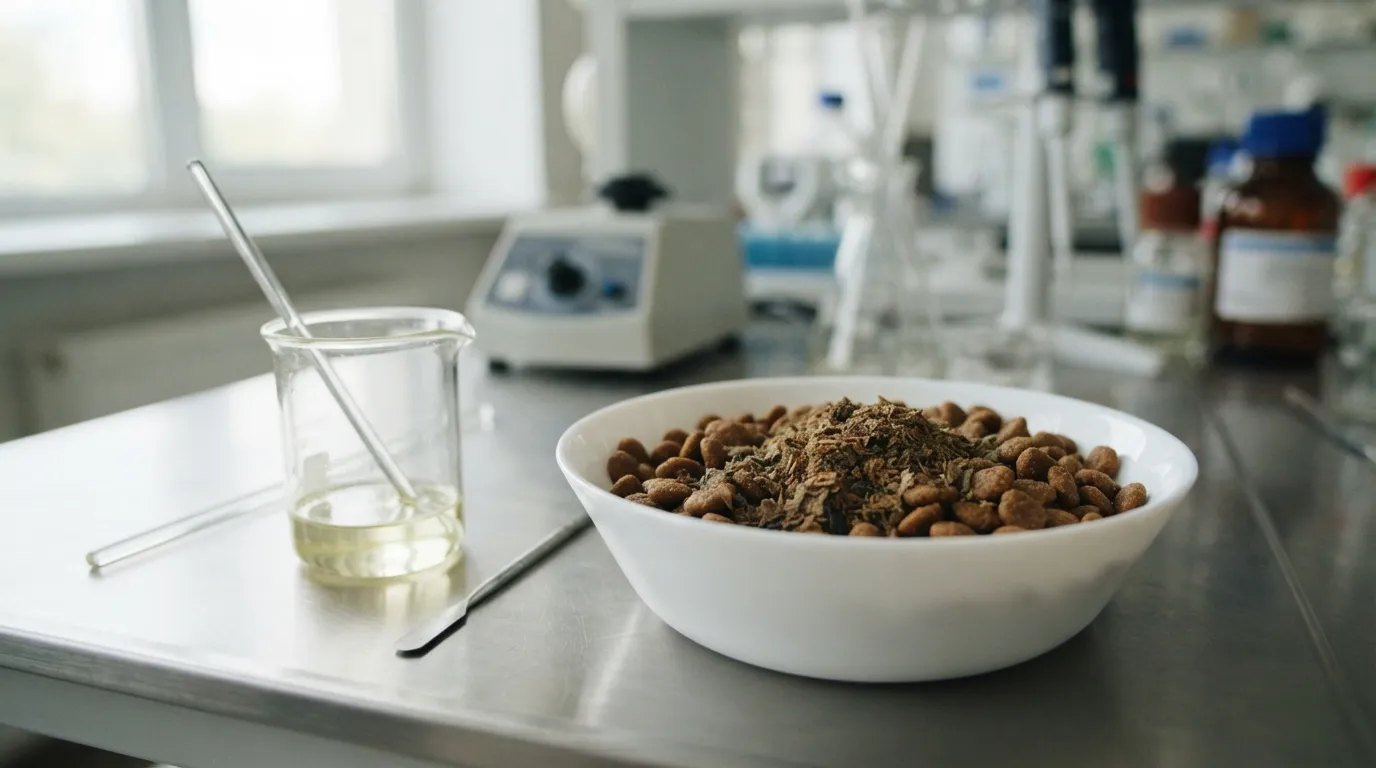
Ethoxyquin has a backstory most cat food labels will never mention. It started life as a herbicide, not a food additive.
Lab animal studies have linked it to liver damage and cancer. It’s still widely used today to preserve fish meal, one of the most common proteins in commercial cat food.
Fish suppliers often add ethoxyquin before the meal even reaches the pet food factory. That means it can end up in your cat’s bowl without ever appearing on the ingredient list.
Why that matters: research has tied this chemical to problems in the liver, kidneys, and thyroid – organs your cat depends on to detoxify everything else in its food. When the biggest risk is what you can’t even see on the label, that’s the real warning sign.
But that’s nothing compared to what we found about #7…
#7 – Carrageenan (The “Natural” Thickener With a Dark Side)
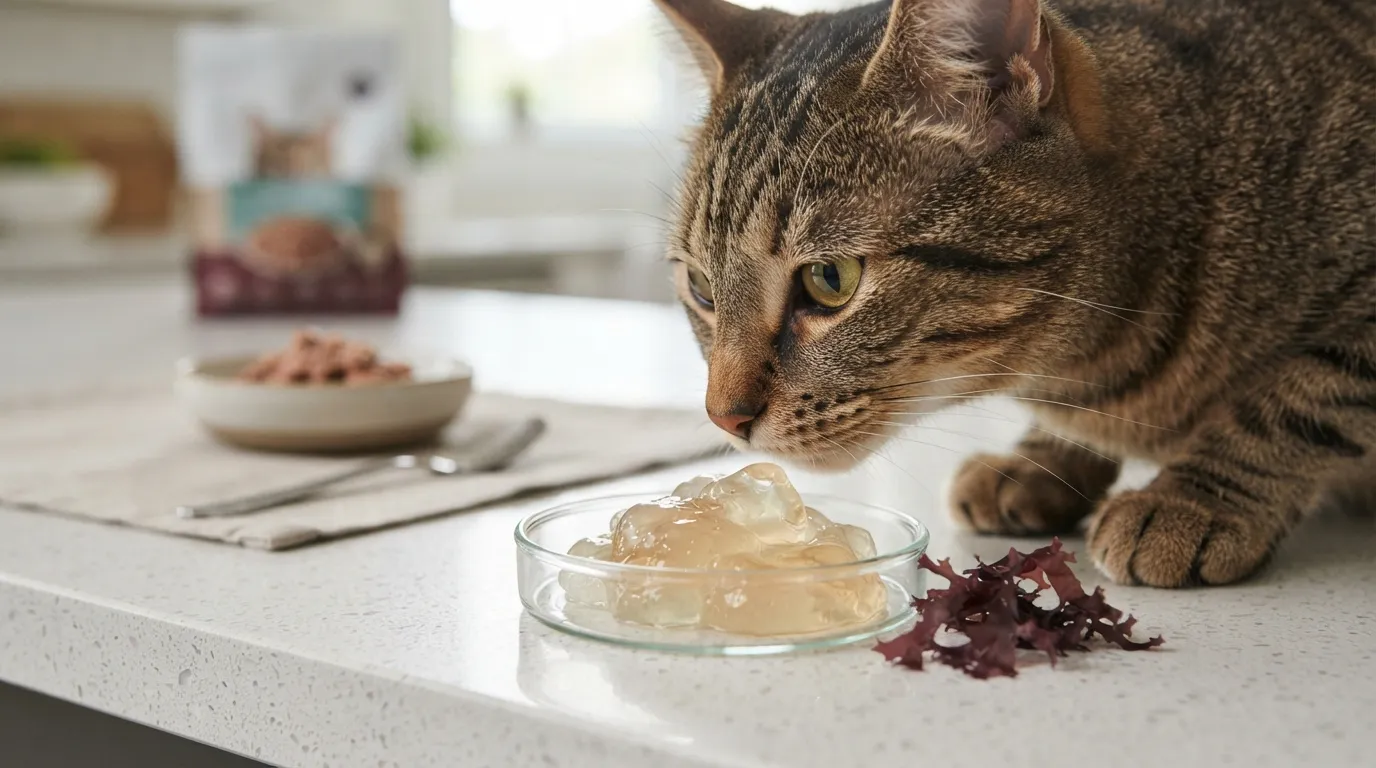
It comes from red seaweed, sounds harmless, and shows up in a huge number of wet cat foods. It’s also one of the most debated ingredients in feline nutrition.
Carrageenan works as a thickener and stabilizer, helping wet food hold its shape on the shelf. Manufacturers love it – but your cat’s gut may not.
Researchers have shown that carrageenan can trigger gastrointestinal ulcers and tumors in animal models. Scientists even use it deliberately to create inflammation when testing anti-inflammatory drugs.
Here’s what makes this unsettling: even “food-grade” carrageenan contains small amounts of degraded carrageenan, and more may form during digestion. Degraded carrageenan is directly linked to inflammation and chronic gut issues.
But that’s nothing compared to what we found about #6…
#6 – Corn, Wheat & Soy (Filler Dressed Up as Protein)
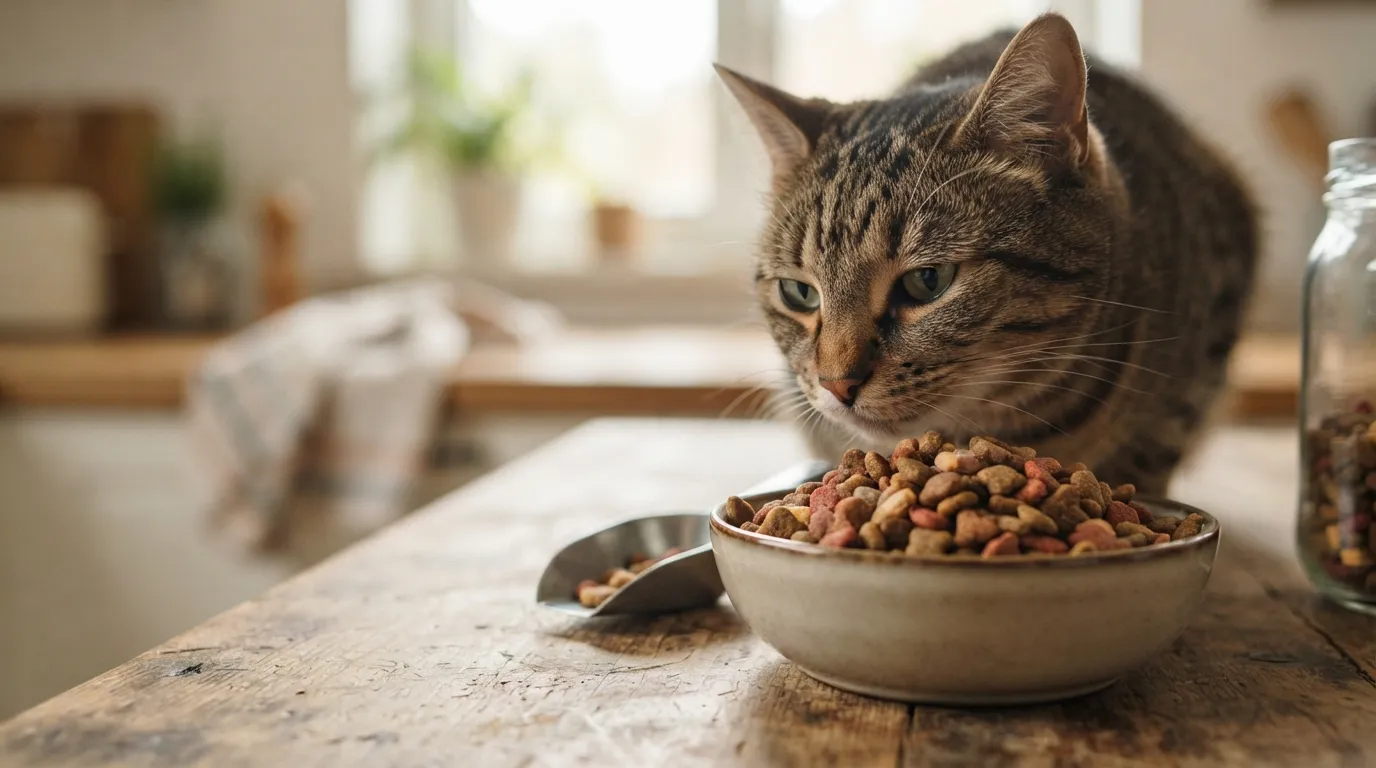
These three ingredients are everywhere in commercial cat food. The reason has nothing to do with your cat’s health.
Cats are obligate carnivores – built to run on animal protein, not plants. Corn, wheat, and soy are cheap ways to inflate the protein number on the label without spending money on real meat.
Ingredients like corn gluten meal and soybean meal are hard for cats to digest and often trigger stomach upset. Worse, the protein they provide is “incomplete,” missing amino acids like taurine that cats can only get from meat.
The real gut punch: years of relying on these fillers have been linked to obesity, diabetes, and food allergies. If corn, wheat, or soy shows up in the first six ingredients, treat it as a warning sign.
Quick Compare
- Filler-first label: Corn, wheat, or soy sitting in the first three ingredients.
- Protein-first label: A named meat like chicken, salmon, or turkey listed first.
- Filler-first digestion: Harder on the stomach, missing key amino acids.
- Protein-first digestion: Matches what an obligate carnivore’s body is built to process.
But that’s nothing compared to what we found about #5…
#5 – Unnamed Meat By-Products (The Mystery Protein)
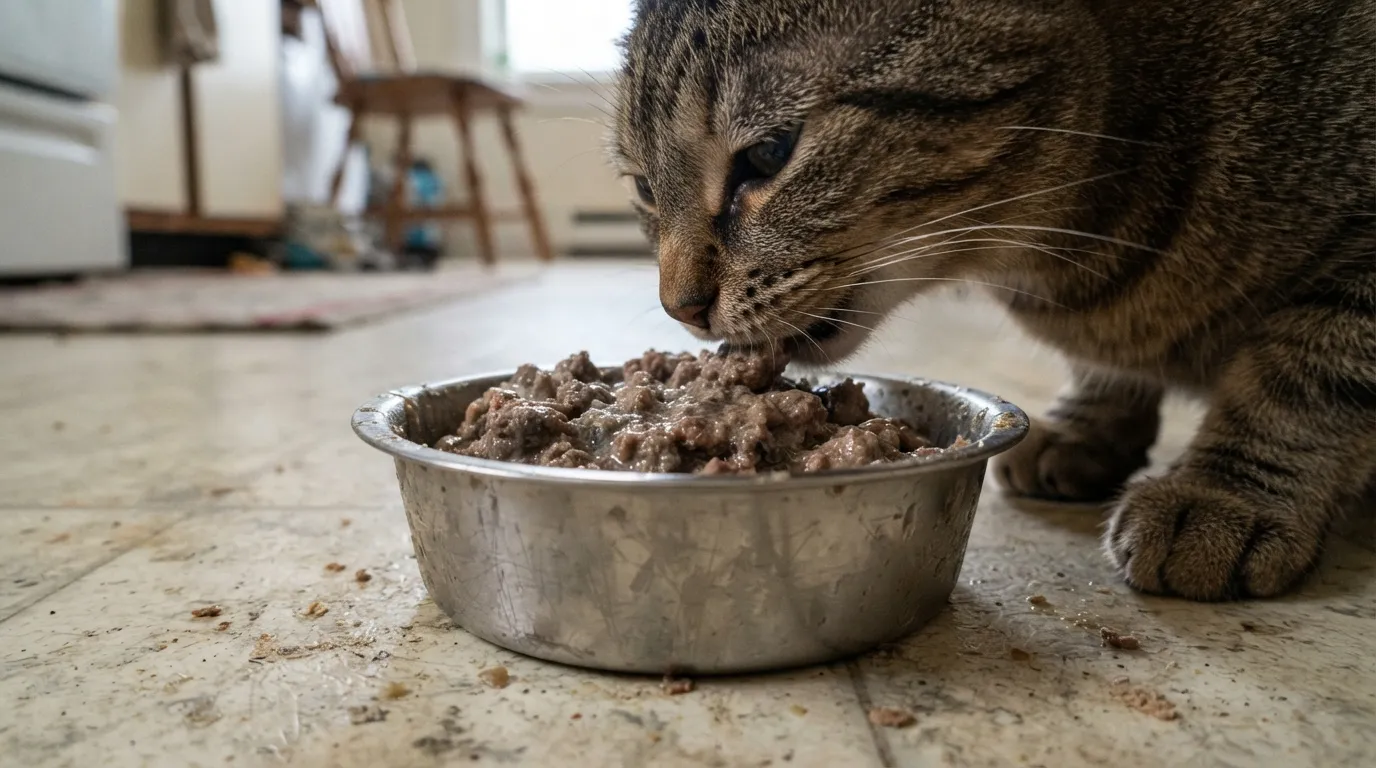
“Meat by-products” sounds fine on paper. It isn’t – at least not when the source is a mystery.
Vague labels like “meat by-products” or “animal digest” don’t tell you which species – or which body parts – you’re feeding your cat. Named proteins like “chicken by-products” are a completely different story, because at least you know the source.
Unnamed by-products can include organs like spleen, lungs, or brain from questionable sources. Some pet food even contains what the industry calls 4D meat, from animals that were dead, dying, diseased, or disabled before processing.
What most owners miss: cats can develop allergies to this unclear mix of tissues, showing up as skin problems or digestive upset that owners often blame on something else. The fix is simple – look for a named protein source as the very first ingredient.
But that’s nothing compared to what we found about #4…
#4 – Added Sugars & Sweeteners (Hidden in Plain Sight)
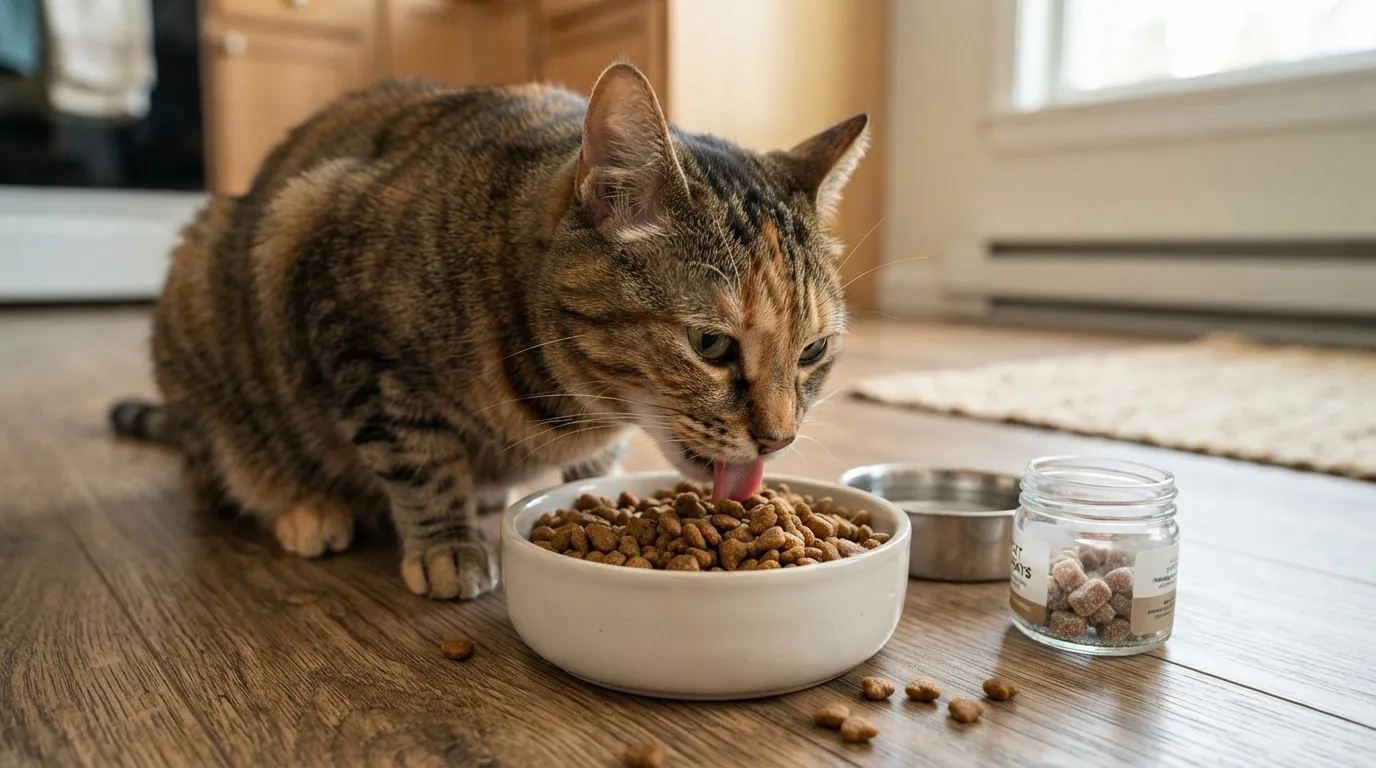
Your cat’s food probably contains sugar. Your cat doesn’t need a single gram of it.
Ingredients like cane molasses and corn syrup exist to make food taste better to a cat, not to make it healthier. A genuinely good cat food shouldn’t need sugar to be appealing.
Over time, added sugars have been linked to obesity, diabetes, weight gain, and even food addiction in cats. What looks harmless in small amounts adds up fast over a lifetime of meals.
The part that should concern you most: xylitol, a sweetener common in “sugar-free” human products, is extremely toxic to pets and can be fatal in tiny doses. It’s rare in dedicated cat food, but it shows up in toppers, treats, and supplements people assume are safe.
But that’s nothing compared to what we found about #3…
#3 – Artificial Food Dyes (Colors That Exist Only for You)
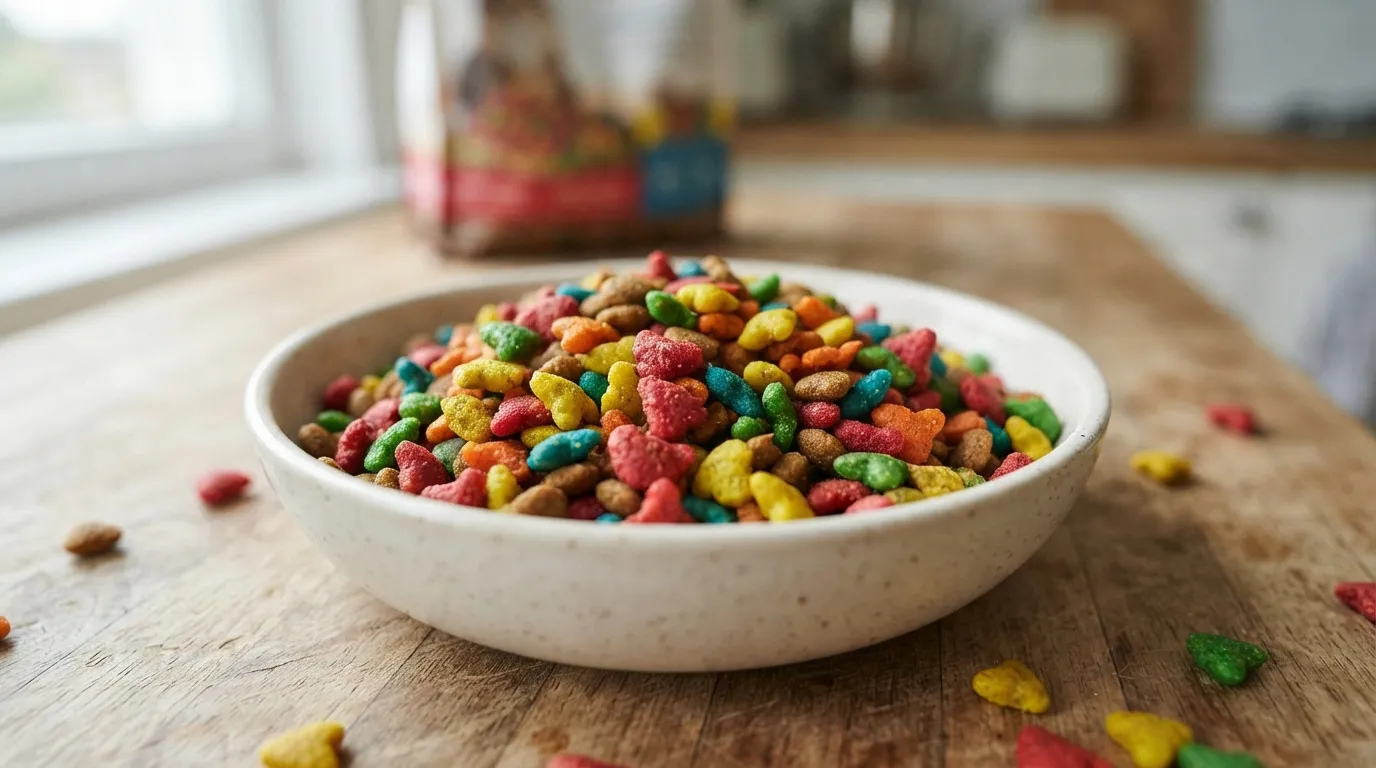
Here’s something that should genuinely make you angry: artificial colors serve zero purpose for your cat. Cats can barely tell red from green, so the color is entirely for the human standing in the pet aisle.
Red 3 has caused cancer in animal studies, and Red 40, Yellow 5, and Yellow 6 have turned up contaminated with carcinogens like benzidine. None of these dyes make the food more nutritious – only more marketable.
At least four common dyes – Blue 1, Red 40, Yellow 5, and Yellow 6 – have been tied to hypersensitivity reactions. For cats already prone to skin issues or a sensitive stomach, that’s an unnecessary risk with zero upside.
What the research actually shows: sodium nitrate can become carcinogenic once ingested, and titanium dioxide has been shown to damage chromosomes and cause DNA damage. None of these additives offer your cat a single nutritional benefit.
At a Glance
- The FDA banned Red No. 3 from human food starting January 15, 2025, citing cancer risk in animal studies.
- Manufacturers have until January 2027 to remove it from human food products.
- That ban does not explicitly cover pet food, and Red No. 3 is still listed as safe for use in animal food.
- A dye pulled from the human food supply can still legally end up in your cat’s bowl.
But that’s nothing compared to what we found about #2…
#2 – Inorganic Phosphates (Even “Vet-Recommended” Brands Use This)
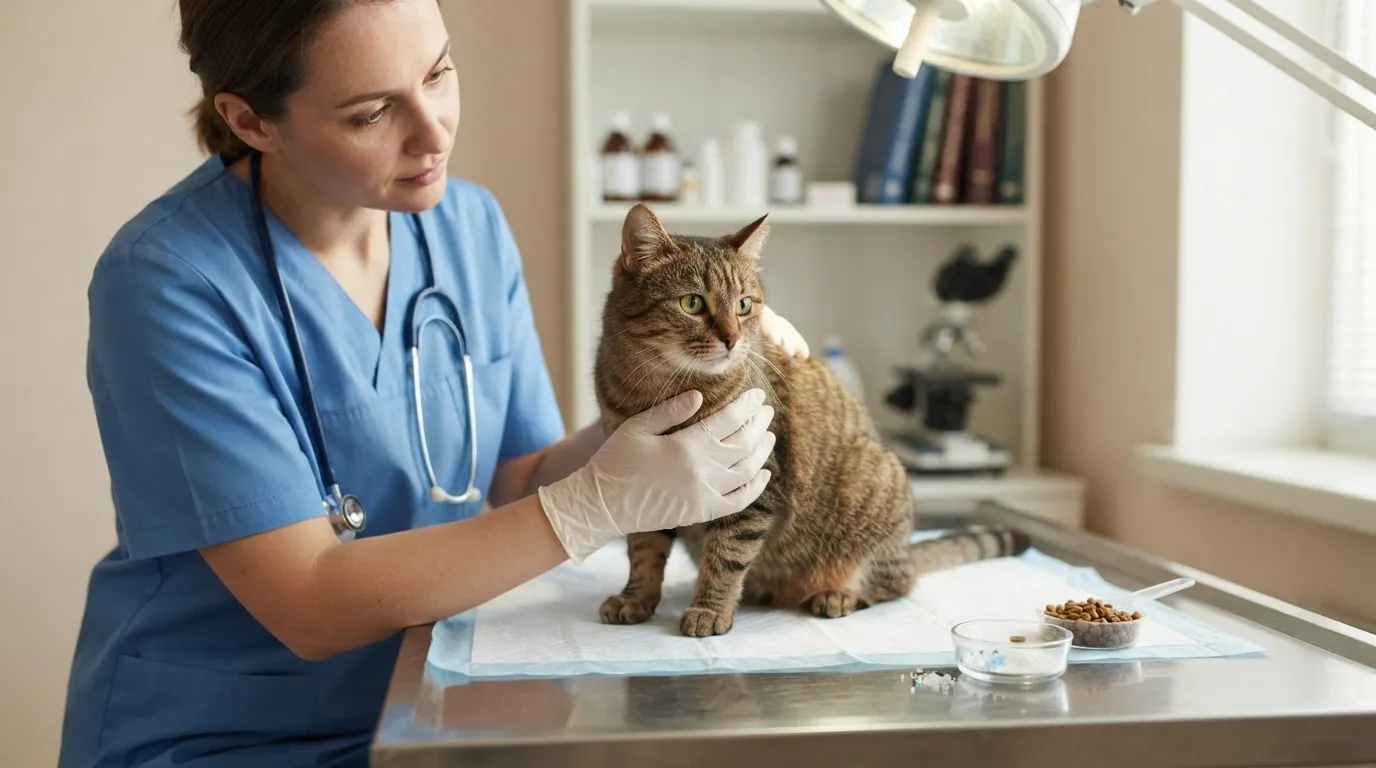
This one stings a little. You might be feeding a vet-recommended brand and still exposing your cat to this ingredient every single day.
Inorganic phosphates are added as flavor enhancers, but studies show excess phosphate intake over time can damage a cat’s kidneys. Unfortunately, these ingredients turn up even in brands carrying a veterinary seal of approval.
Research published in the Journal of Feline Medicine and Surgery found that high dietary soluble phosphorus can trigger kidney disease in otherwise healthy adult cats. This isn’t fringe science – it’s peer-reviewed and hard to dismiss.
The issue most owners never connect: chronic kidney disease is one of the leading causes of death in older cats, and most owners chalk it up to simple old age. Watch labels for “sodium phosphate,” “phosphoric acid,” or “dicalcium phosphate.”
Worth Knowing
- Chronic kidney disease affects roughly 40% of cats older than 10, according to feline health researchers.
- That number climbs as high as 80% in cats over 15.
- Early-stage kidney disease often shows no obvious symptoms, which is why owners rarely connect it to diet.
- Diets that limit phosphorus have been shown to slow the disease once it develops.
But that’s nothing compared to what we found about #1…
#1 – Unlabeled Rendered Fats (The Industry’s Dirtiest Secret)
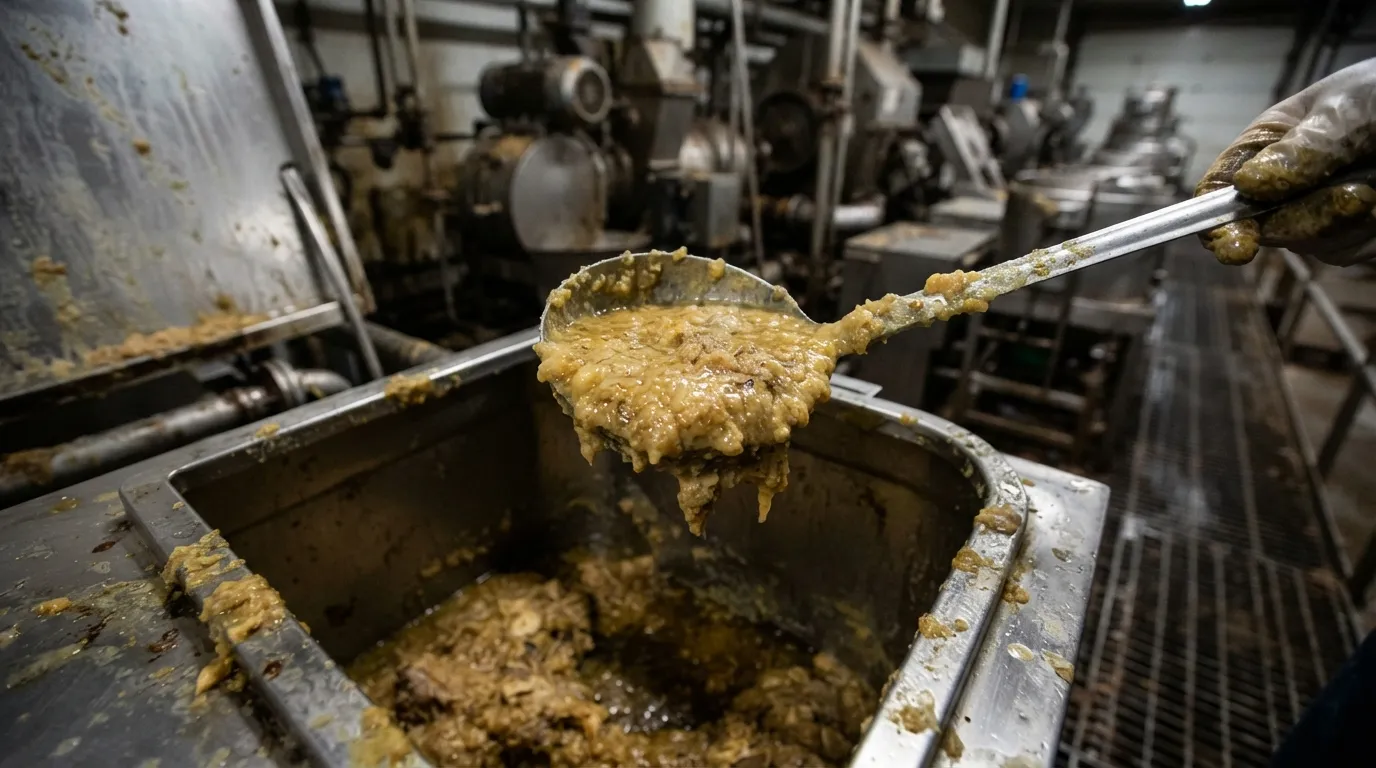
This is the ingredient the pet food industry really doesn’t want you thinking about. It’s also in far more products than you’d expect.
Rendering heats animal tissue to separate fat from protein and moisture. The danger is that rendered fat can come from 4D meat – animals that were dead, dying, diseased, or disabled before they ever reached the plant.
A label that just says “animal fat” tells you nothing about the source. Named fats like chicken fat or salmon oil are safer bets, especially for cats with known sensitivities.
The single most important label rule: rendering doesn’t separate high-quality tissue from low-quality tissue, and the heat involved strips away nutrients your cat actually needs. If you see “animal fat” with no species named anywhere on the bag, put it back on the shelf.
The Bottom Line
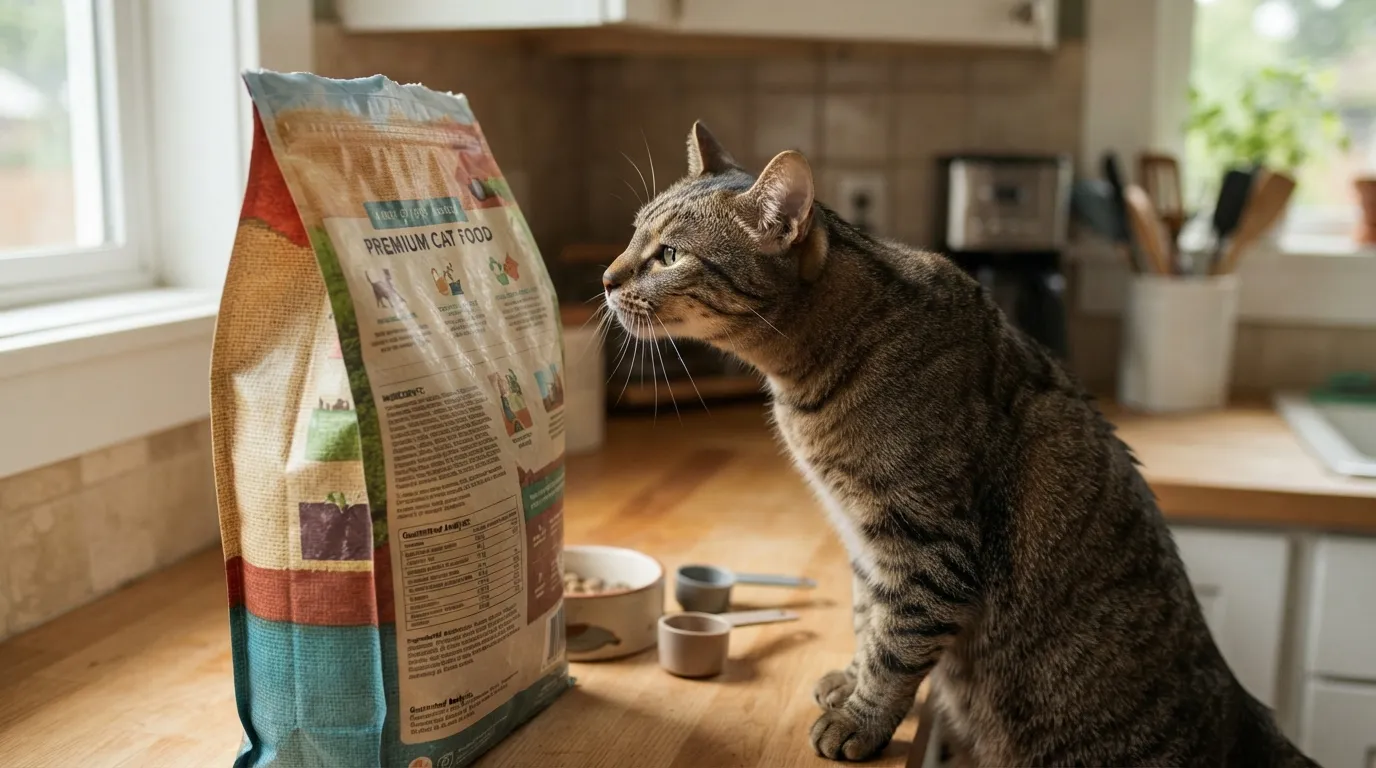
One meal with a questionable ingredient won’t hurt your cat. Thousands of meals over a lifetime – that’s where the damage quietly builds.
The nine ingredients above are the ones nutritionists and researchers flag again and again: BHA/BHT, ethoxyquin, carrageenan, grain fillers, unnamed by-products, added sugars, artificial dyes, inorganic phosphates, and unlabeled rendered fats. Make sure a named animal protein sits at the very top of the ingredient list, every time.
Your cat can’t read the label. But now you can – so go check the bag in your kitchen tonight.
Growing up traveling and experiencing new cultures and wonders, I have had a passion for nature, adventuring, photography, and videography. I am currently working towards a BSc in Biodiversity and Ecology at Stellenbosch University, and I hope to specialise in Marine Sciences one day.
Please send any feedback to Feedback@animalsaroundtheglobe.com