Your cat looks fine. She’s fed, she’s warm, and she’s never once faced a car, a coyote, or the diseases waiting outside your door.
Vets will tell you that’s exactly the problem – safety was never the whole assignment.
Underneath that calm nap schedule, most indoor cats are running on a quiet, invisible deficit. Nothing dramatic today, but something that slowly reshapes their behavior, their weight, even their kidneys over the years.
Here are the 13 things veterinarians say indoor cats are missing – starting with the one hiding inside every “harmless” toy mouse in your house.
#13 – The Complete Hunting Sequence
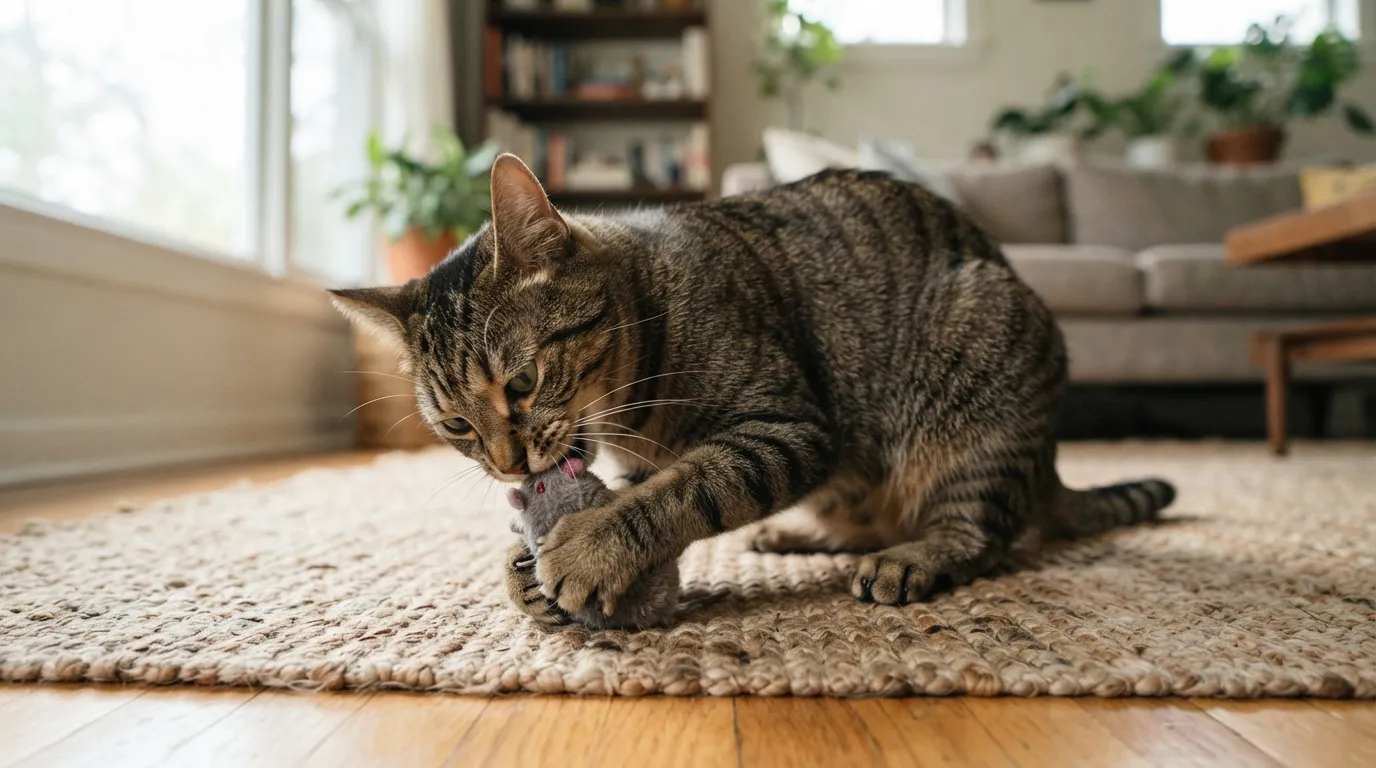
Hunting isn’t a hobby for a cat. It’s a full-body, brain-satisfying sequence: stalk, chase, pounce, catch, kill, eat.
Toss a toy across the floor and you’ve triggered maybe two of those six steps. The rest of the circuit just stops.
Most owners think that counts as play. Vets say it’s closer to starting a movie and cutting it before the ending.
Fast Facts
- The natural hunting sequence has six steps: stalk, chase, pounce, catch, kill, eat.
- Chasing a toy usually completes only two of those steps.
- An unfinished sequence can leave a cat wired instead of satisfied.
- Ending play with a toy she can physically “catch” helps close the loop.
That unfinished loop leaves cats keyed up instead of satisfied – and it’s just the first gap on this list.
Wait until you see what’s missing right above your cat’s head…
#12 – Vertical Territory
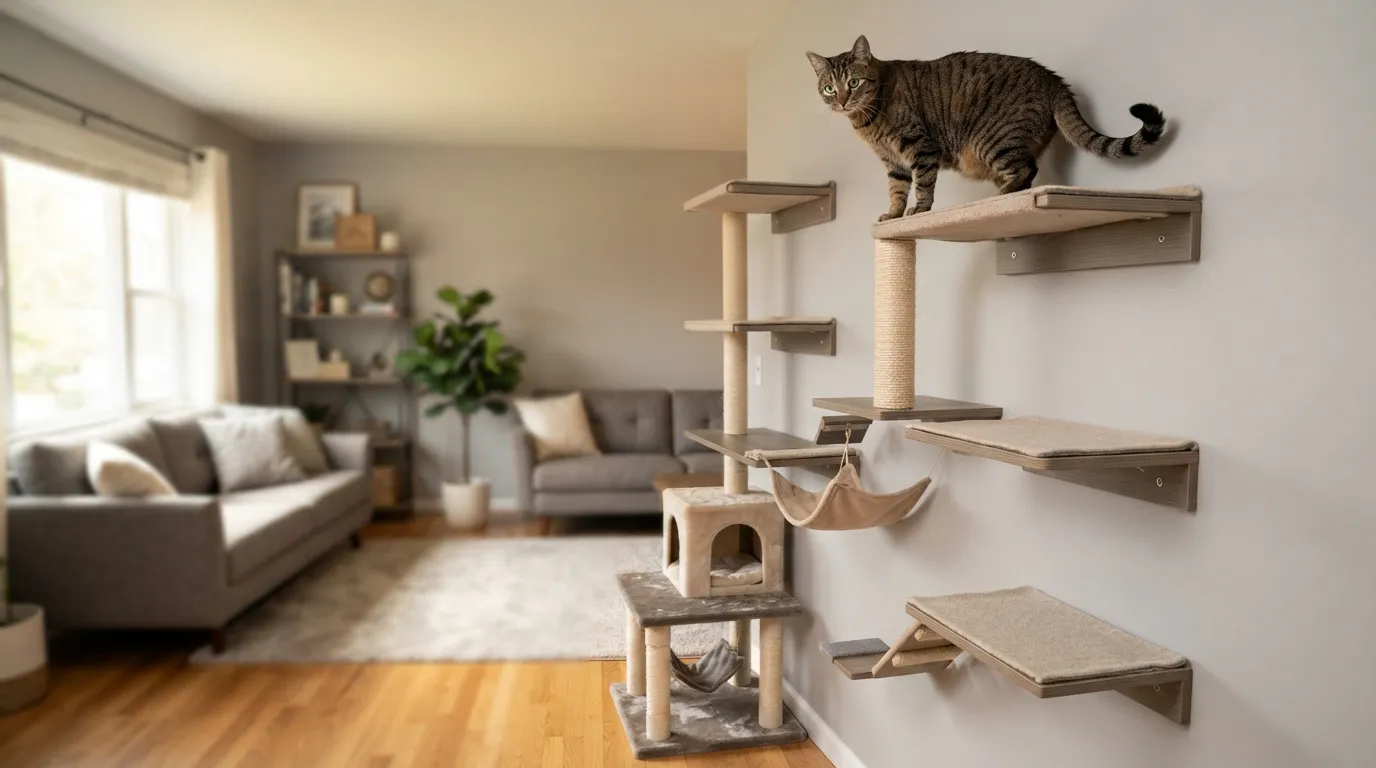
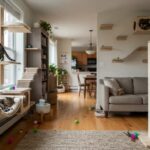
In the wild, height means survival. Up high, a cat can watch for danger and feel unreachable.
In most living rooms, that entire dimension doesn’t exist. Floor, couch, bed – one flat plane, forever.
A cat tree, a window perch, even one wall-mounted shelf can change how safe a cat feels in her own home. It costs almost nothing, and most owners never think to add it.
That’s a problem you can see. The next one is happening inside your cat’s head, and it’s easy to miss entirely…
#11 – Real Mental Stimulation
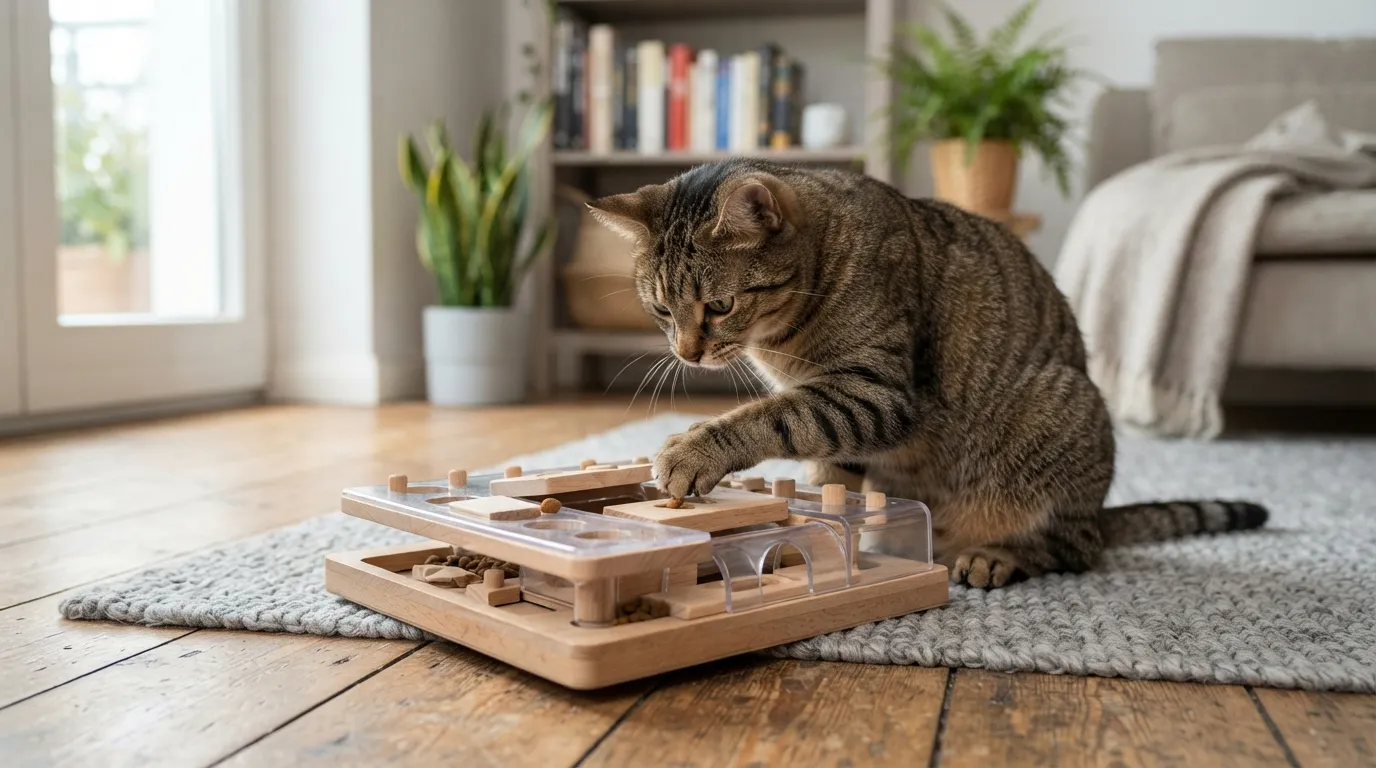
Cats don’t get “bored” the way people do. What looks like boredom is usually something closer to low-grade stress.
What people think of as ‘boredom’ is actually frustration and stress due to a lack of environmental enrichment.
Dr. Blake Gibson, DVM
That distinction matters, because the fix isn’t just tossing in more toys. Cats need problems to solve, not just objects to bat around.
An enriched environment lowers mental stagnation and heads off a long list of behavior problems before they start.
Most owners are quietly making the next problem worse without realizing it…
#10 – Food That Requires Effort
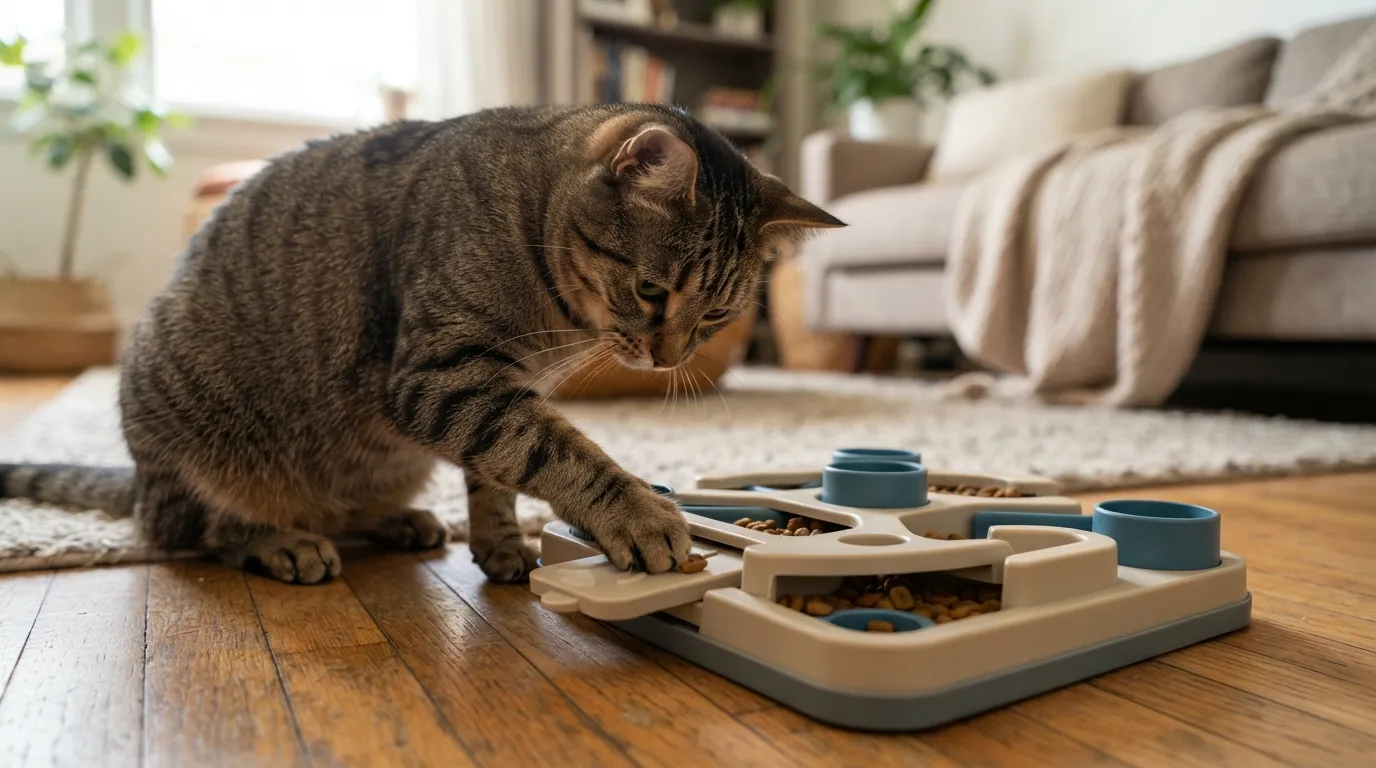
A feral cat spends 40 to 60 percent of her waking hours hunting, foraging, and problem-solving for food. Your indoor cat’s version is a bowl that magically refills itself twice a day.
That gap isn’t just behavioral – vets link it directly to weight gain and stress-related conditions like urinary problems.
Puzzle feeders and scattered scent trails using catnip or silvervine turn a meal back into a mini-hunt. It’s one of the cheapest fixes on this entire list, and almost nobody uses it.
The next item is quieter than food, but vets say it might matter even more…
#9 – A Stable Daily Routine
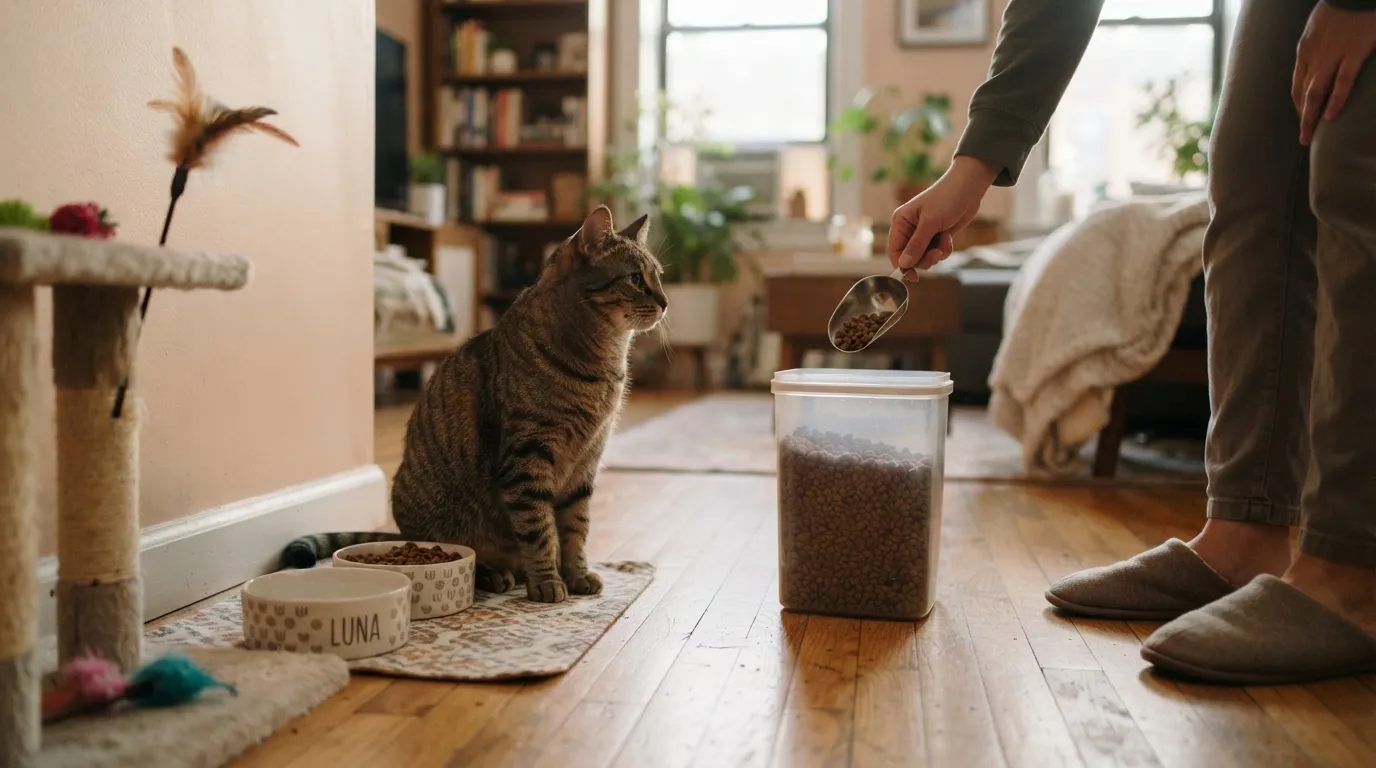
Cats run on predictability. Unpredictability isn’t just annoying to them – it’s a genuine stressor.
Late dinners, skipped play sessions, random wake-up times: each one chips away at a cat’s sense of safety.
Vets say an erratic schedule is one of the most common hidden stressors they see in indoor cats. The order of the day matters more than the number of activities in it.
Up next is a physical need almost every owner underestimates – and it’s tied to a disease that kills more indoor cats than almost anything else…
#8 – Enough Water, the Way They’d Actually Drink It
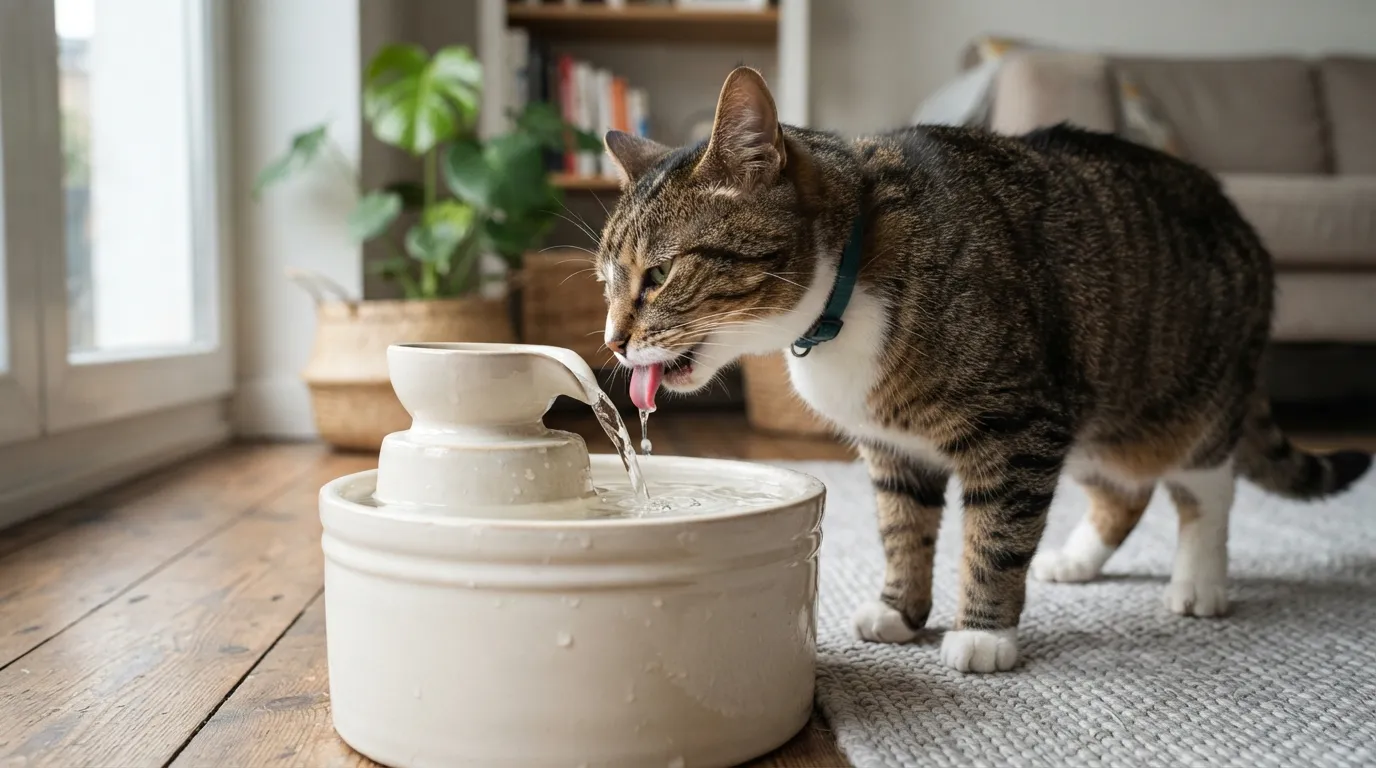
Most indoor cats walk around chronically underhydrated, and their owners have no idea. Cats evolved to get moisture from prey, not standing water, so many of them barely touch the bowl.
A water fountain changes that instantly, because cats are drawn to movement.
Quick Compare
- Still water bowl: Often overlooked; many cats barely register it as worth drinking.
- Water fountain: Movement pulls cats in, closer to their instinct for flowing water.
- Why it matters: Chronic kidney disease affects roughly 40% of cats over age 10, and estimates climb as high as 80% in cats over 15.
More water intake means fewer UTIs and better long-term kidney function. Kidney disease is the leading cause of death in older indoor cats, and chronic mild dehydration is part of that story.
Before we hit the top five, here’s a mistake loving owners make while trying to do everything right…
#7 – Social Interaction on Their Terms
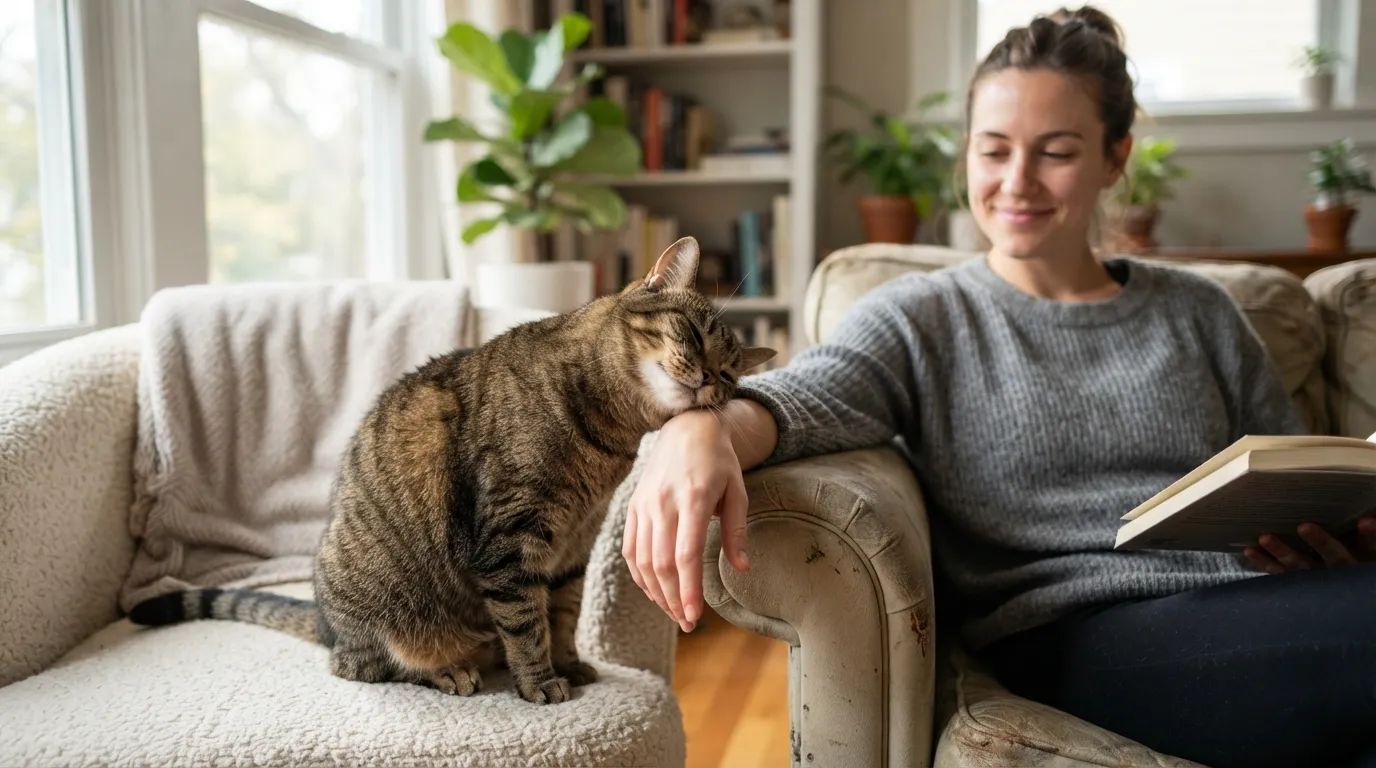
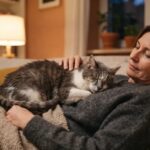
Here’s an uncomfortable truth: plenty of cat owners give too much forced affection and not enough chosen connection. Picking a cat up mid-nap or demanding cuddles on a human schedule isn’t bonding – it’s an interruption.
Cats need to choose contact, not just receive it. An enriched home lets a cat approach, or not, without every interaction depending on a person’s mood.
Respecting that opt-in approach measurably lowers a cat’s baseline stress. Most owners mistake tolerance for happiness.
The next one is something almost no cat home gets right, and vets now call it a genuine welfare issue…
#6 – Enough Places to Disappear
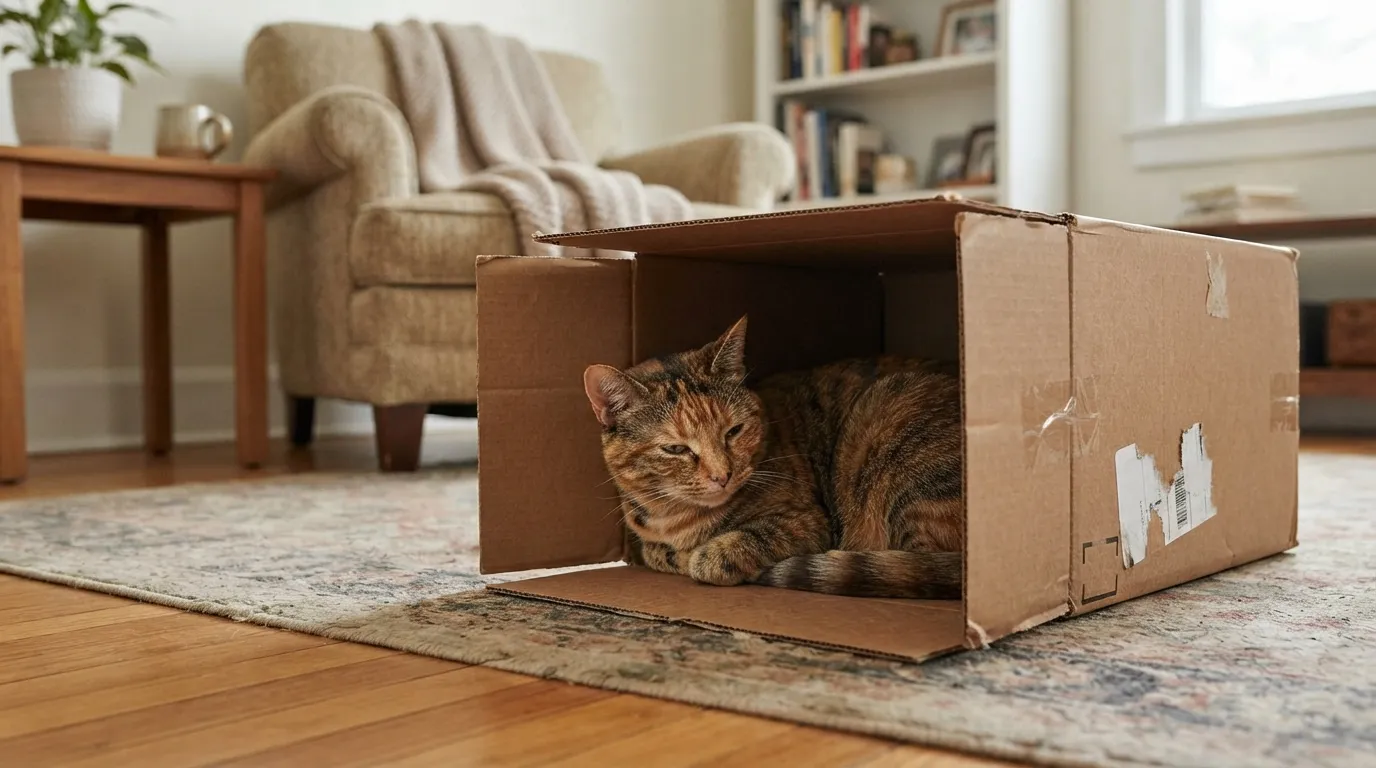
Constant hiding can signal stress. But vets note that indoor cats can also be under-stimulated in ways that never look dramatic from the outside.
Here’s the flip side: cats need hiding spots as a standing option, not just an emergency exit. Without one, they feel permanently exposed, even in a home with no real threats.
Worth Knowing
- A hiding spot works best when it’s always available, not just pulled out during a crisis.
- Cardboard boxes, covered beds, and gaps under furniture all count as legitimate options.
- Cats tend to favor spots enclosed on three sides over open ones.
- Just having the option can lower a cat’s baseline anxiety, even if she rarely uses it.
A cardboard box, a covered bed, a gap under the couch – any of it counts, and none of it costs money.
You’ve made it to the top five. This next one sits behind one of the most common complaints vets hear about indoor cats…
#5 – Scratching Surfaces That Actually Work
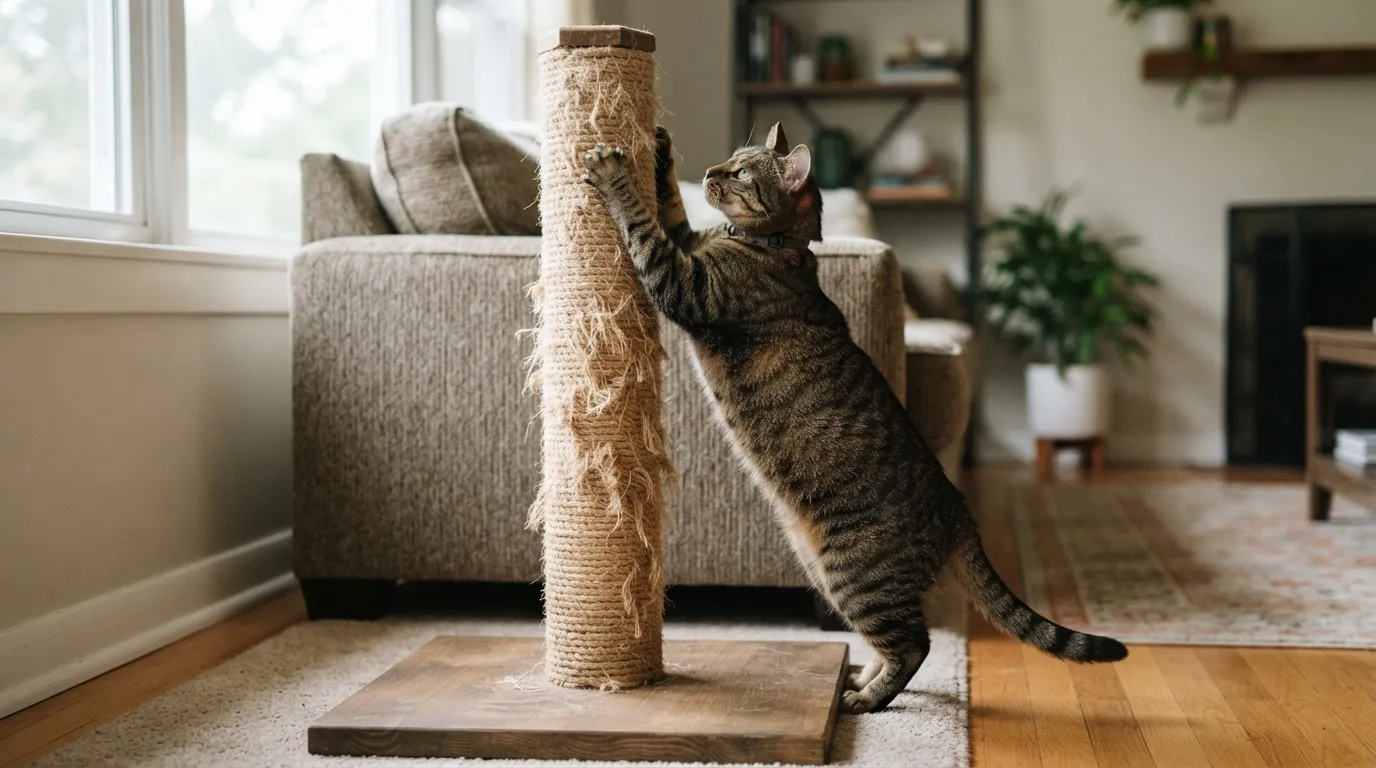
Scratching isn’t misbehavior. It’s nail maintenance, a full-body stretch, and scent-marking territory, all in one motion.
Take away a decent outlet and the need doesn’t disappear – it just redirects itself to your couch arm. Most scratch posts sold in pet stores are too short or too wobbly for a full stretch.
A tall, sturdy post solves more behavior “problems” than owners realize.
Vets have been vocal about the next one for years, and most owners still get it wrong…
#4 – Play That Actually Ends
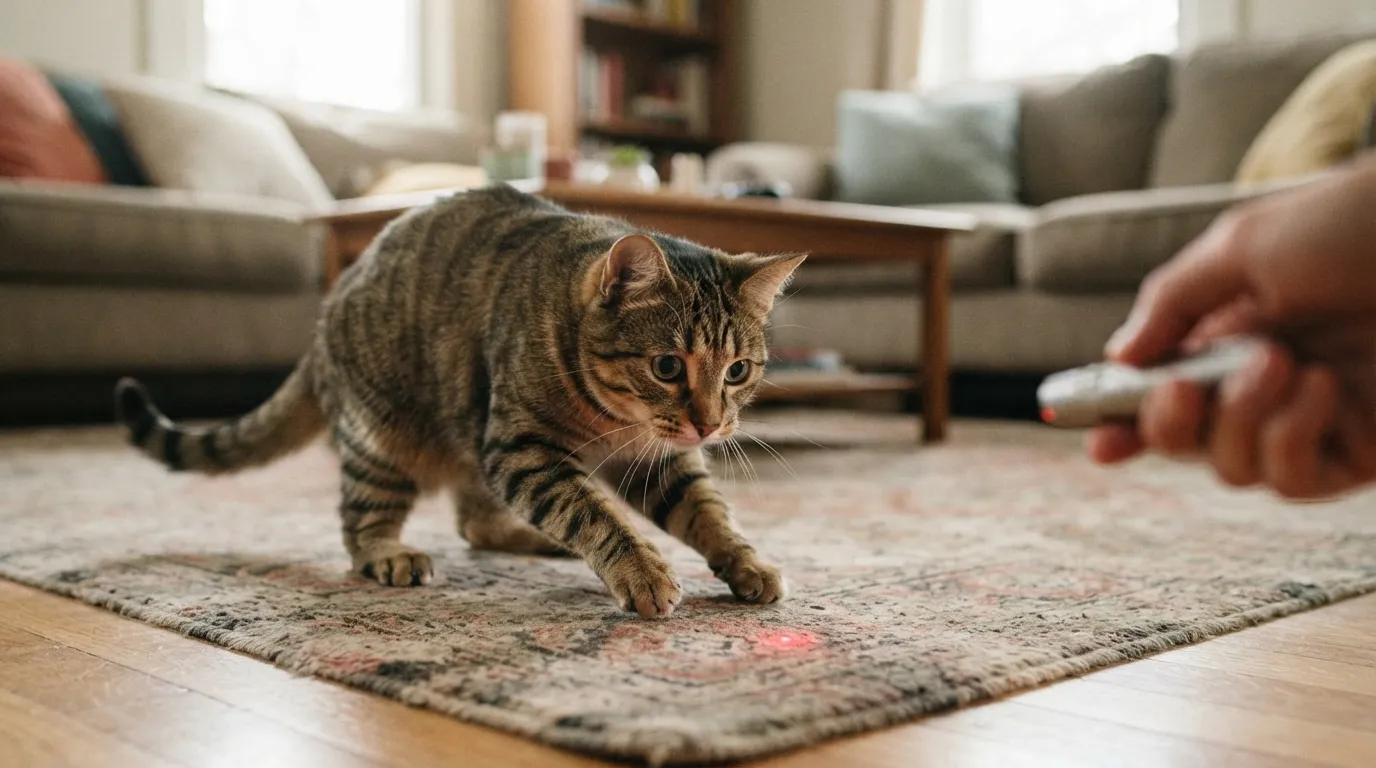
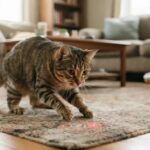
A laser pointer with nothing to catch at the end isn’t play, it’s frustration on a loop. There’s no “prey” to close the sequence, so the hunting circuit in the brain never fully switches off.
Cat behavior consultant Dr. Mikel Delgado, who has worked with the UC Davis School of Veterinary Medicine, points to the kill-and-eat step as the missing piece. In the wild, a cat hunts, eats, grooms, then sleeps, in that order.
The fix: end every session with a toy she can physically “catch,” then follow it with a small meal. That sequence alone can turn a wired, restless cat into a calm one.
Only three items left – and the next one is quietly making indoor cats physically sick…
#3 – Stress-Free Litter Box Access
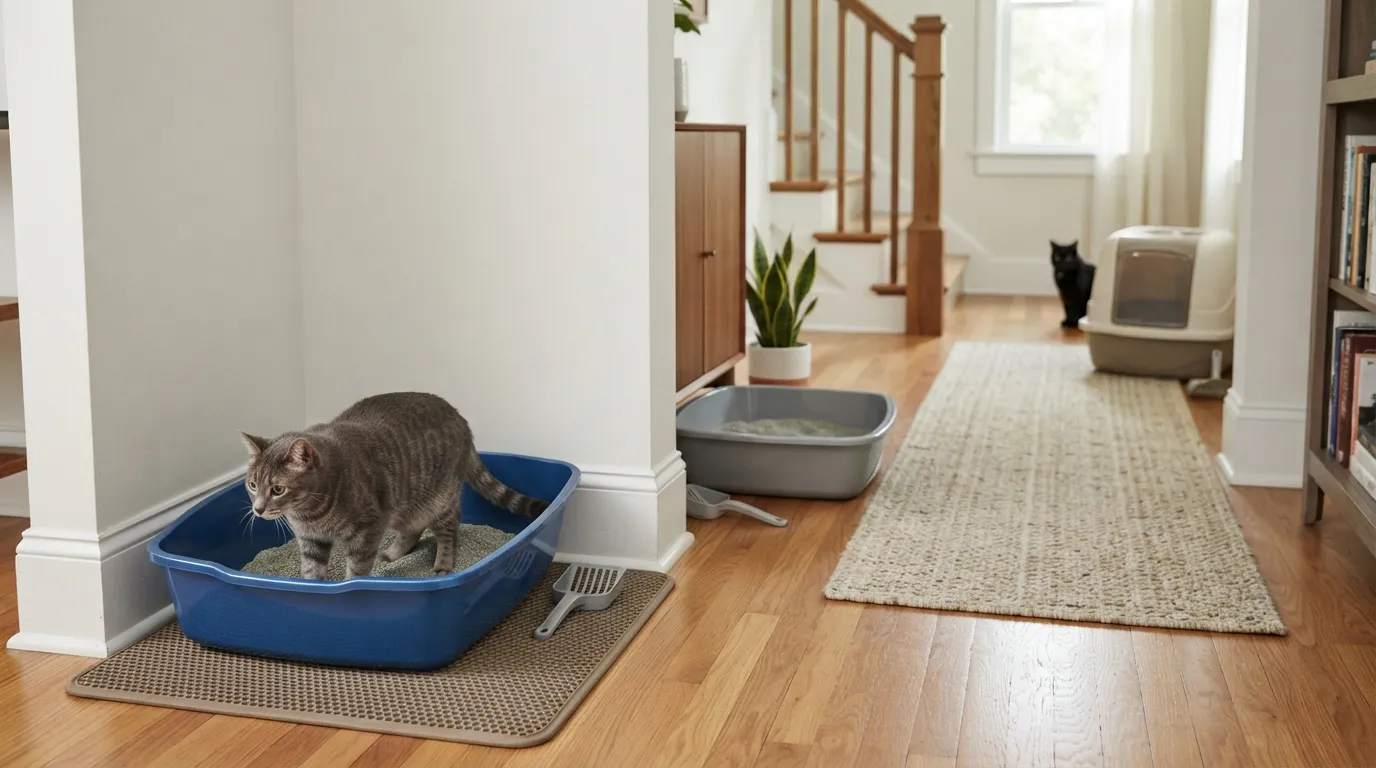
Environmental boredom is directly linked to elimination outside the litter box and tension between cats sharing a home. Most owners blame the cat. Vets blame the setup.
The rule they recommend is simple: one litter box per cat, plus one extra – and never two boxes crammed into the same corner.
Avoiding the box, along with appetite changes or vomiting, is often a stress signal, especially after a move, a new pet, or a schedule change. It’s almost never a character flaw.
The next item is the one most vets call the real root cause – and fixing it costs nothing…
#2 – Real Physical Exercise
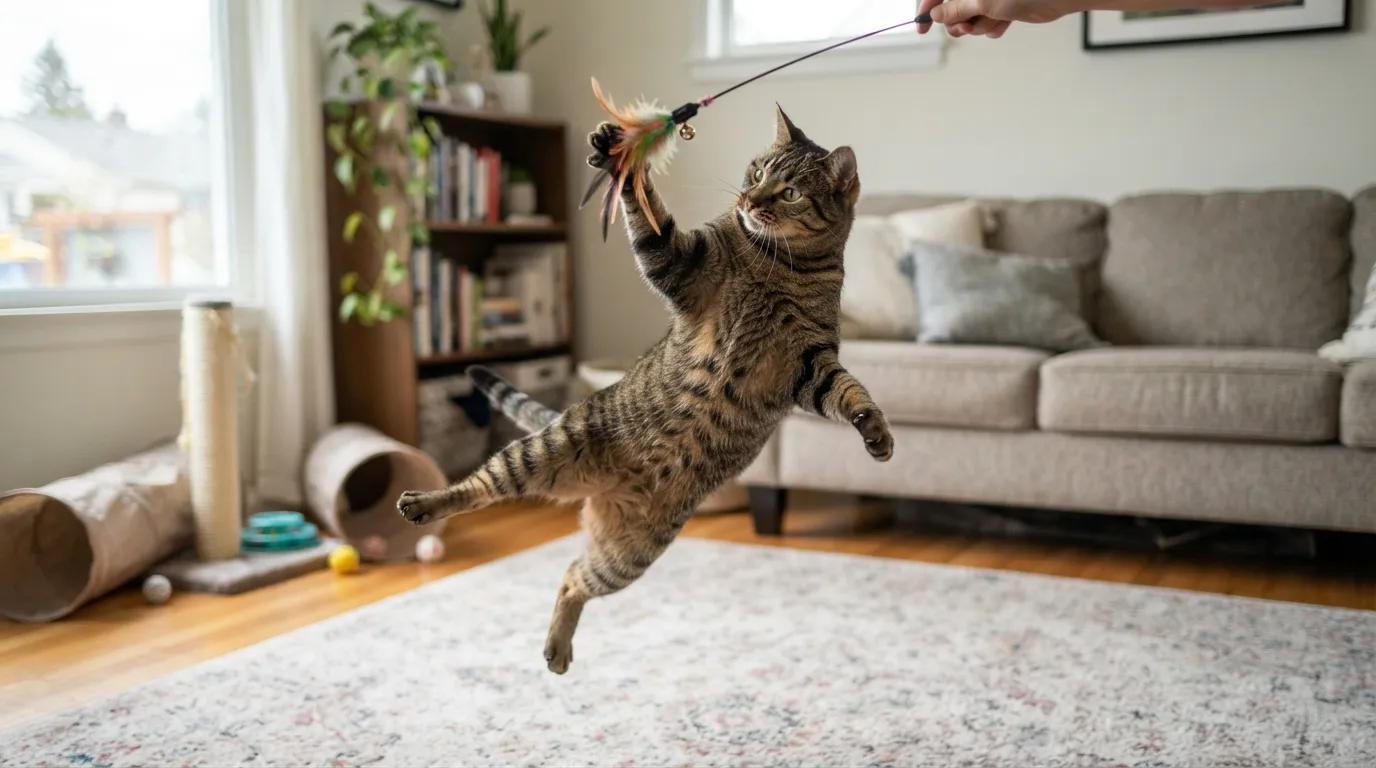
An under-enriched indoor cat doesn’t just get “lazy.” She gets a slow, quiet buildup toward obesity, diabetes, and joint problems.
Cats are hardwired to hunt, stalk, and patrol territory for hours a day. A cat curled up all day isn’t relaxed, she’s accumulating health debt.
At a Glance
- About 61% of U.S. cats are now classified by veterinary professionals as overweight or obese.
- Most veterinary behaviorists recommend at least two 10-minute interactive play sessions daily as a baseline.
- Under-exercised cats often beg for food, which owners mistake for hunger.
- Extra weight raises the risk of diabetes, joint disease, and a shorter lifespan.
Most veterinary behaviorists now recommend two ten-minute interactive play sessions daily, as a baseline, not a bonus. Bored cats often beg for food instead, which owners mistake for hunger and answer with more calories.
And now, the one thing vets say matters more than everything else on this list combined…
#1 – A Sense of Control Over Their Own Life
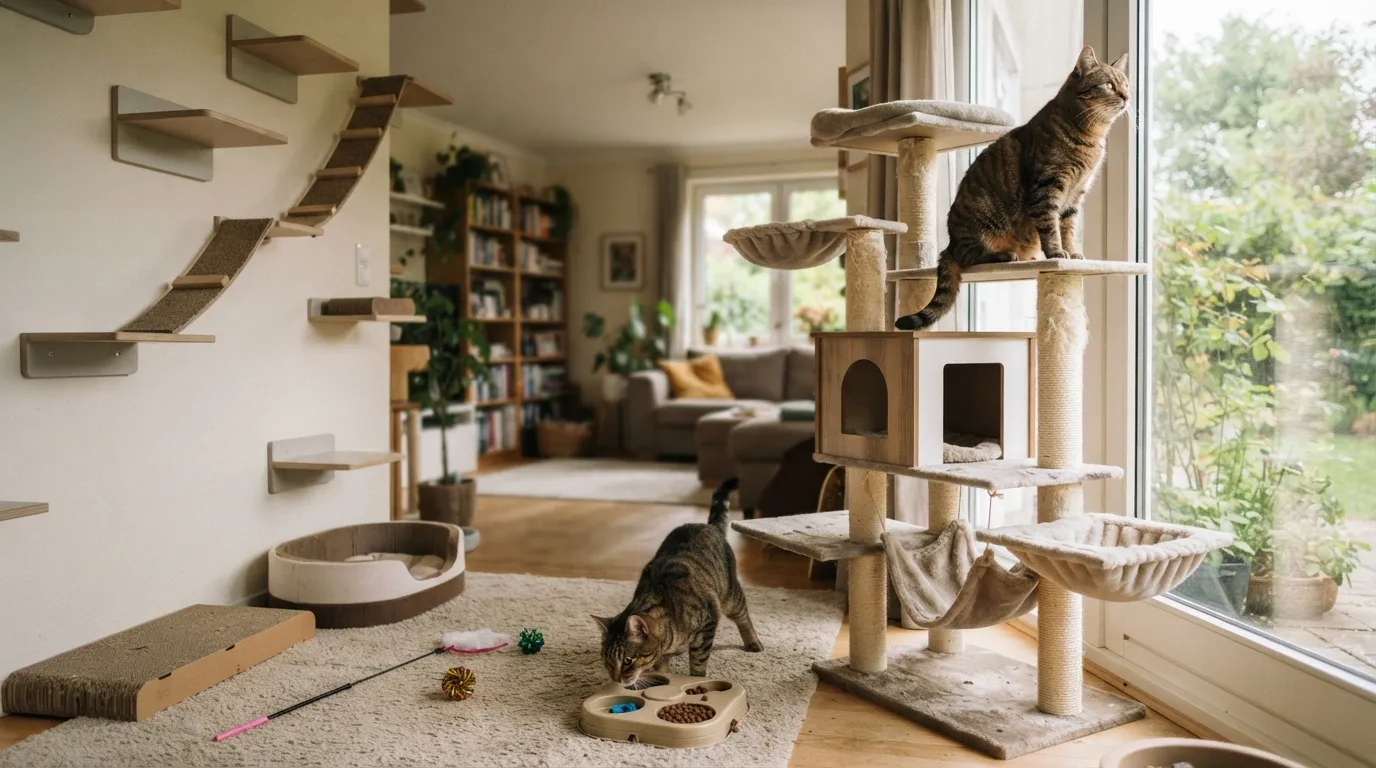
This is the one that surprises people most, and vets say it underpins almost everything above it. Distress, clinically, is defined as an inability to cope, and coping requires choice.
Most indoor environments offer almost none: no choice in when to hide, when to play, when to eat, or when to be touched.
That chronic lack of control doesn’t stay invisible for long. It shows up at the vet’s office as urinary disease, overgrooming, aggression, or unexplained weight gain.
Design isn’t a luxury add-on to a cat’s life. Vets say it’s the actual job of keeping one indoors.
The Bottom Line
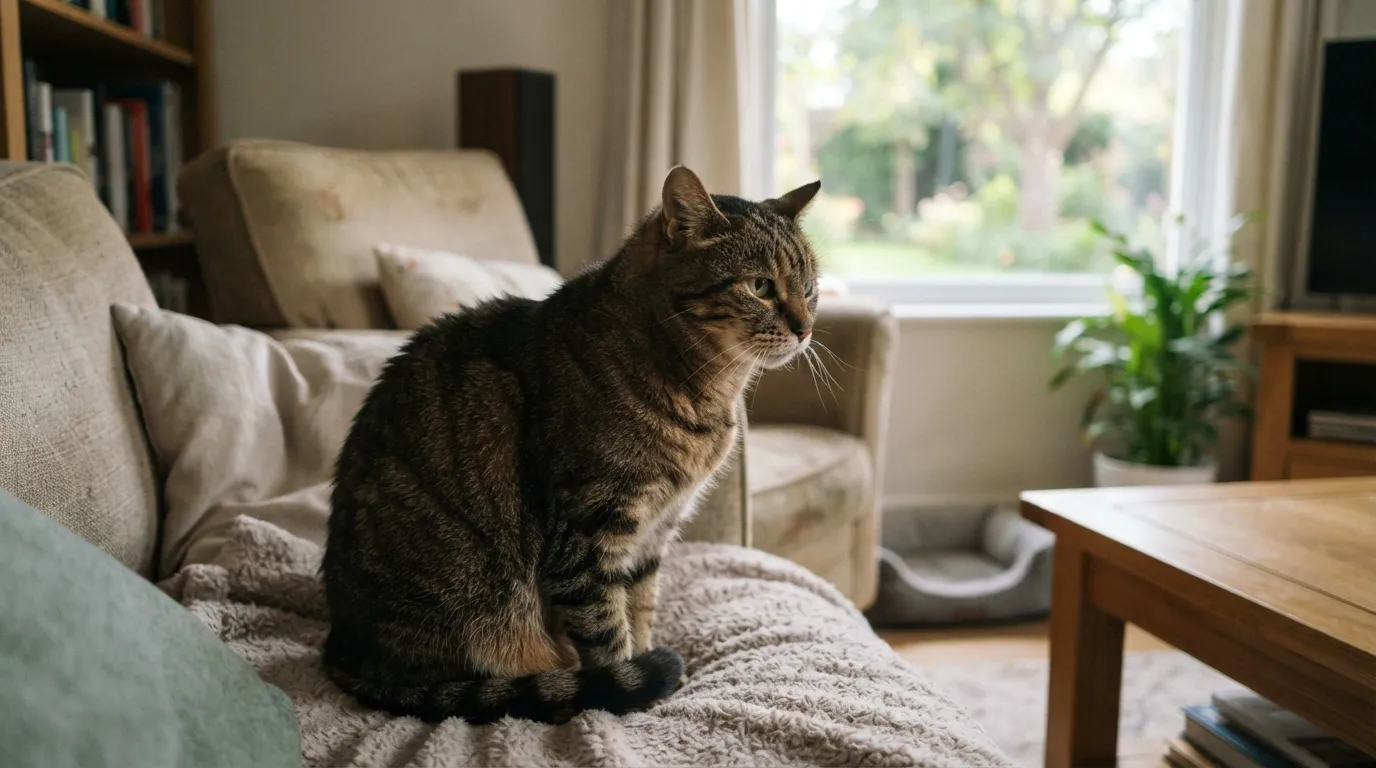
Living indoors still gives cats longer, safer lives than living outdoors ever could. But safety was never the same thing as fulfillment.
Missing one or two items on this list might not show up as anything obvious. Missing several of them adds up quietly into chronic stress, illness, and a duller version of a life that could be much richer.
The good news is almost none of these fixes cost real money. They just require someone to notice.
Which one is your cat quietly going without?
Growing up traveling and experiencing new cultures and wonders, I have had a passion for nature, adventuring, photography, and videography. I am currently working towards a BSc in Biodiversity and Ecology at Stellenbosch University, and I hope to specialise in Marine Sciences one day.
Please send any feedback to Feedback@animalsaroundtheglobe.com