Most people think a cat’s love is random. It’s not.
Senior cats – those aged 11 and older – have spent years reading every human in the household, quietly scoring each one on a rubric you never knew existed. By the time they’re grey around the muzzle, they’ve made a final decision: one person gets the full trust, and everyone else gets polite tolerance.
The behaviors reserved for that chosen human are deliberate, subtle, and often completely misread. Here’s what the data actually shows.
#14 – They Follow You From Room to Room
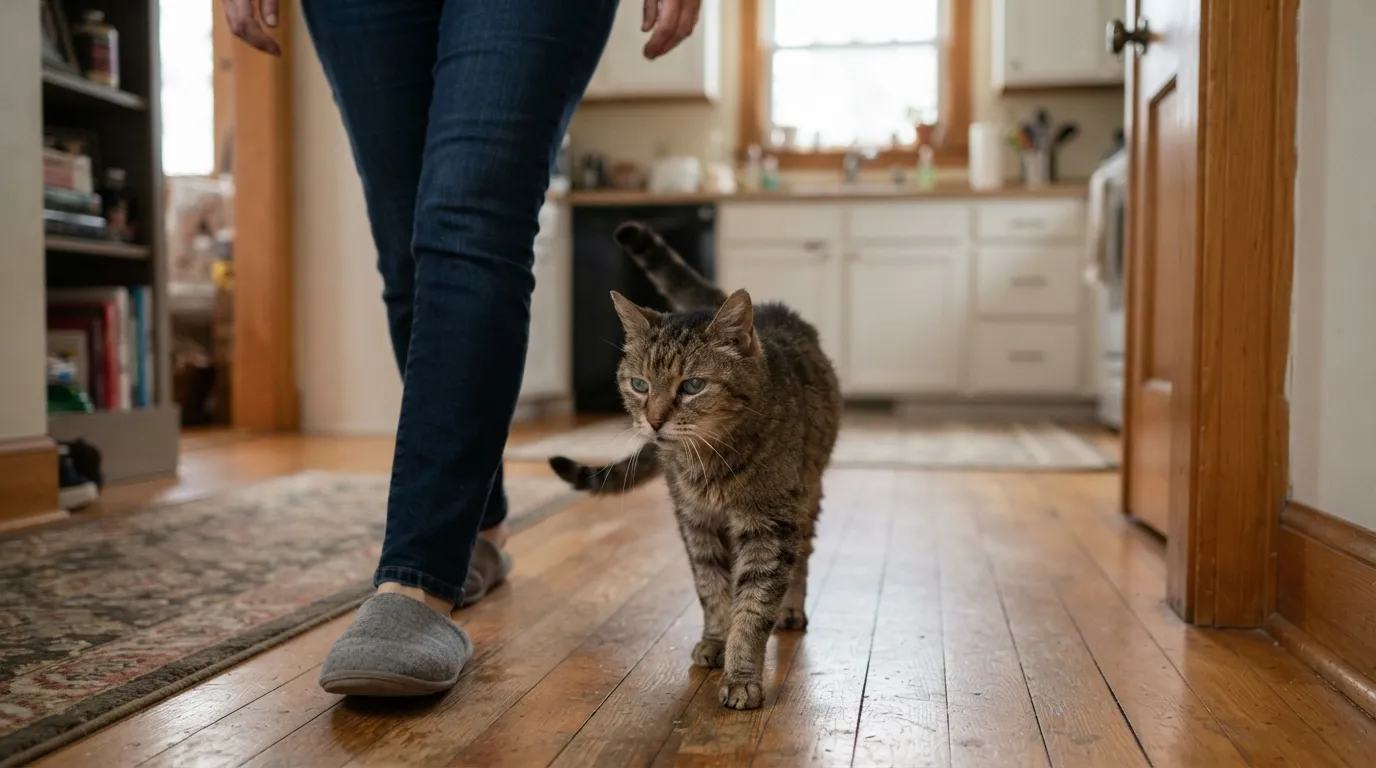
Not every cat will follow you around, but when they do, it’s a clear sign of trust. Animal behavior experts consider it one of the most reliable indicators there is – if your cat trails you from room to room, that’s not neediness, that’s a verdict.
In the wild, cats don’t follow other animals unless they feel secure and protected. When a senior cat shadows you, it is choosing you as its safe person.
For a cat whose joints ache and whose energy is finite, spending that energy walking behind you is a deliberate act, not an accident. Consistent following isn’t curiosity – it’s a deeper expression of trust and attachment.
But following you with their paws is just the beginning – wait until you see what they do with their eyes…
#13 – They Give You the Slow Blink
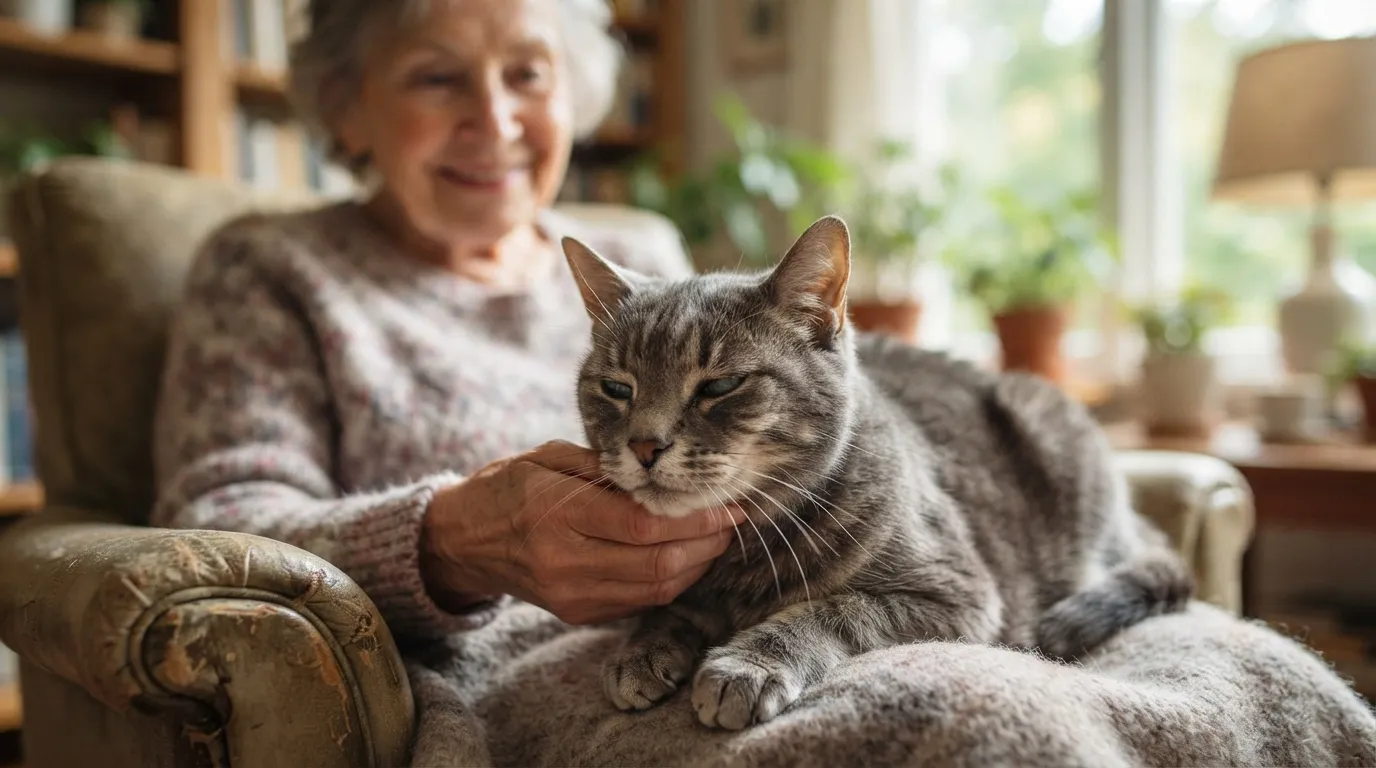
When cats encounter strangers, they greet them with an unblinking stare. But they’re far more likely to slowly blink at those they have a good relationship with.
Research suggests slow blinks are associated with a positive emotional state and can be a sign of trust, contentment, and affection – similar to a human smile. When a cat slowly closes and opens their eyes in your presence, it is a signal of trust.
Worth Knowing
- Researchers found that cats were significantly more likely to slow blink back at their owners after the owner had slowly blinked at them, compared to when the owner maintained a neutral face.
- Cats respond to human slow blinking by slow blinking themselves, and are also more likely to approach a human who has slow blinked at them.
- Cats that showed an increased number of and longer eye closures in response to human slow blinks were rehomed faster from shelters.
A senior cat that slow-blinks at you is essentially saying: I am not afraid of you, and I never will be. It’s considered the feline version of a kiss – you can even try blinking back to show love in return.
And once that gaze locks in, there’s something even more physical they reserve just for you…
#12 – They Headbutt You (Bunting)
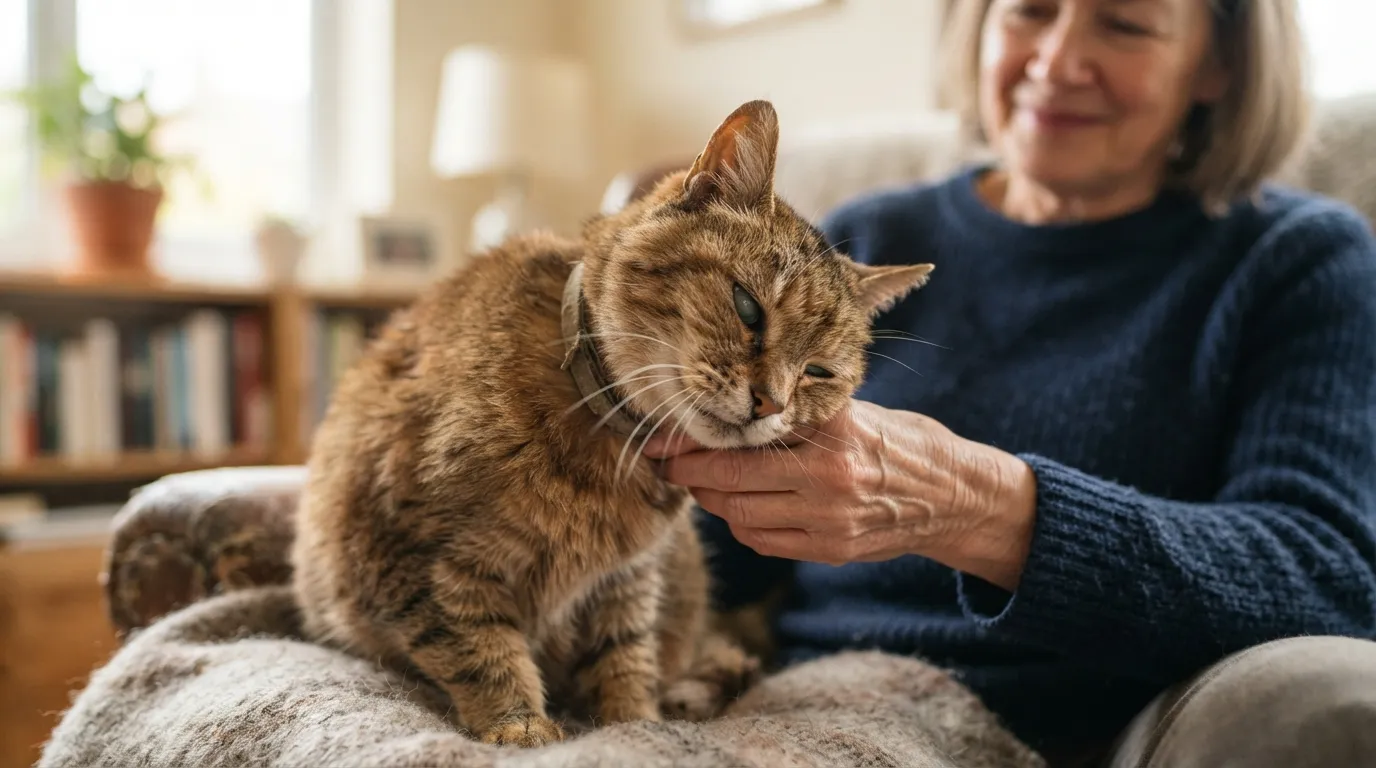
When a cat bumps their head against you or rubs their cheeks on your hand, they’re doing more than being cute. This behavior deposits scent from glands on their face, marking you as familiar and safe.
The head bump is usually saved for a cat’s closest feline friends and most trusted humans. For a senior cat with a sore neck or stiff spine, leaning in to bunt you takes real effort – and they only do it for one person.
It’s not affection in the human sense – it’s territorial ownership. And that means you’ve been claimed.
That scent-marking instinct goes even deeper than a headbutt. What comes next is the version most owners completely misinterpret…
#11 – They Present Their Belly Without Expecting a Rub
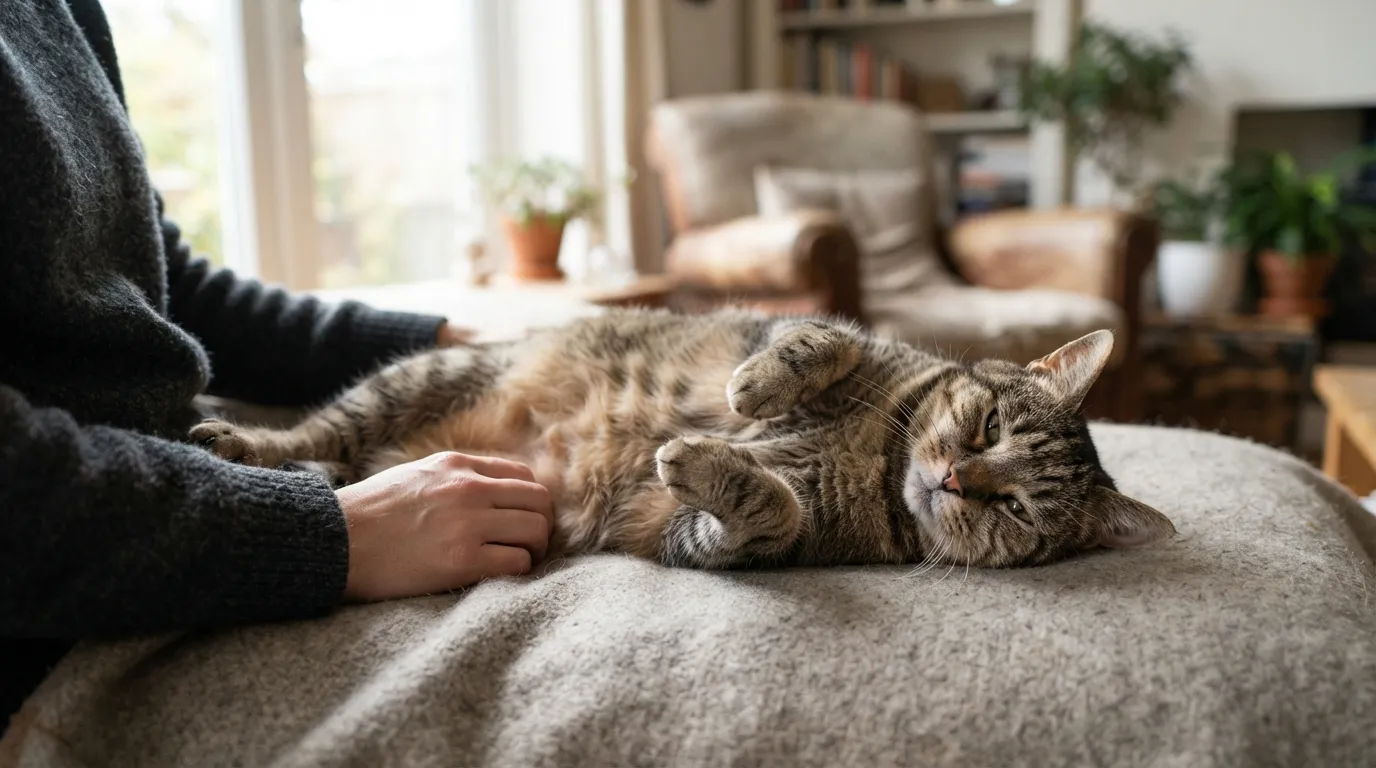
While it’s easy to assume your cat wants a belly rub when they roll onto their back, that’s actually not the case. Cats that roll onto their backs, exposing their belly, are showing trust – full stop.
Showing the belly is the deepest sign of trust a cat will offer, and the unwritten rule is: just don’t touch it. A senior cat that exposes it in front of you is signaling that you are the one creature on earth it is not afraid of.
Most owners ruin this moment by reaching for a rub and getting a swat. The invitation was never about petting – it was a declaration of absolute safety, directed only at you.
If you think that’s intimate, wait until you see where they choose to sleep…
#10 – They Choose to Sleep On or Beside You
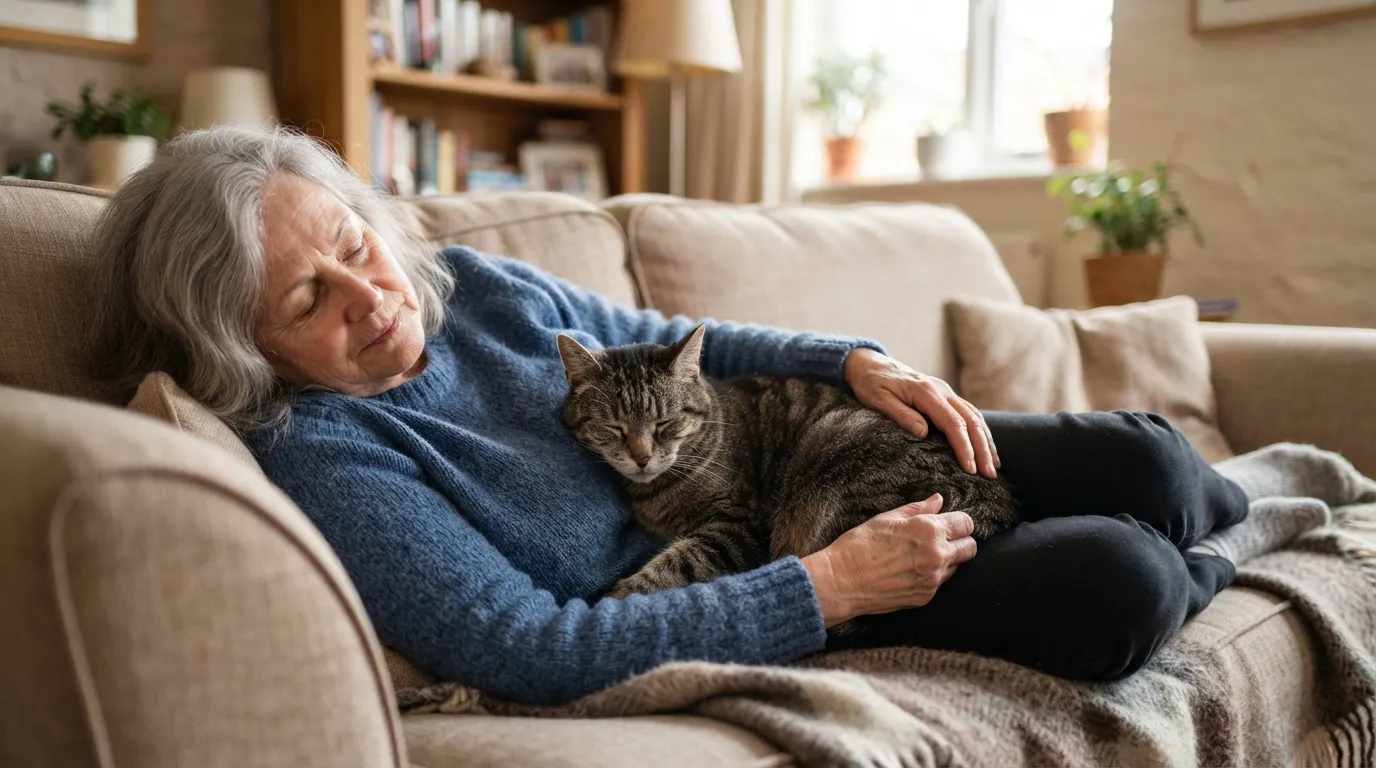
A cat sleeping on or beside you isn’t simply a sweet moment – it’s a strong sign of trust and comfort. Animals are most vulnerable when they sleep, so choosing to nap on your lap, chest, or beside you is a powerful sign of imprinting – it means you’re seen as a source of safety.
Some cats sleep at your feet or nearby rather than directly on you, but that close proximity still counts. Senior cats sleep more than younger cats, which means their choice of sleeping spot carries more weight than ever.
Fast Facts
- Older cats can sleep anywhere from 16 to 20 hours a day, compared to the 12-15 hours of adult cats.
- Deep sleep periods become shorter in senior cats, while light dozing periods increase.
- It’s completely normal for senior cats to spend up to 80% of their day resting.
Every nap is a vote, and they keep voting for you.
The next behavior is one nobody talks about – and it’s what senior cats do when no one else is looking…
#9 – They Groom You
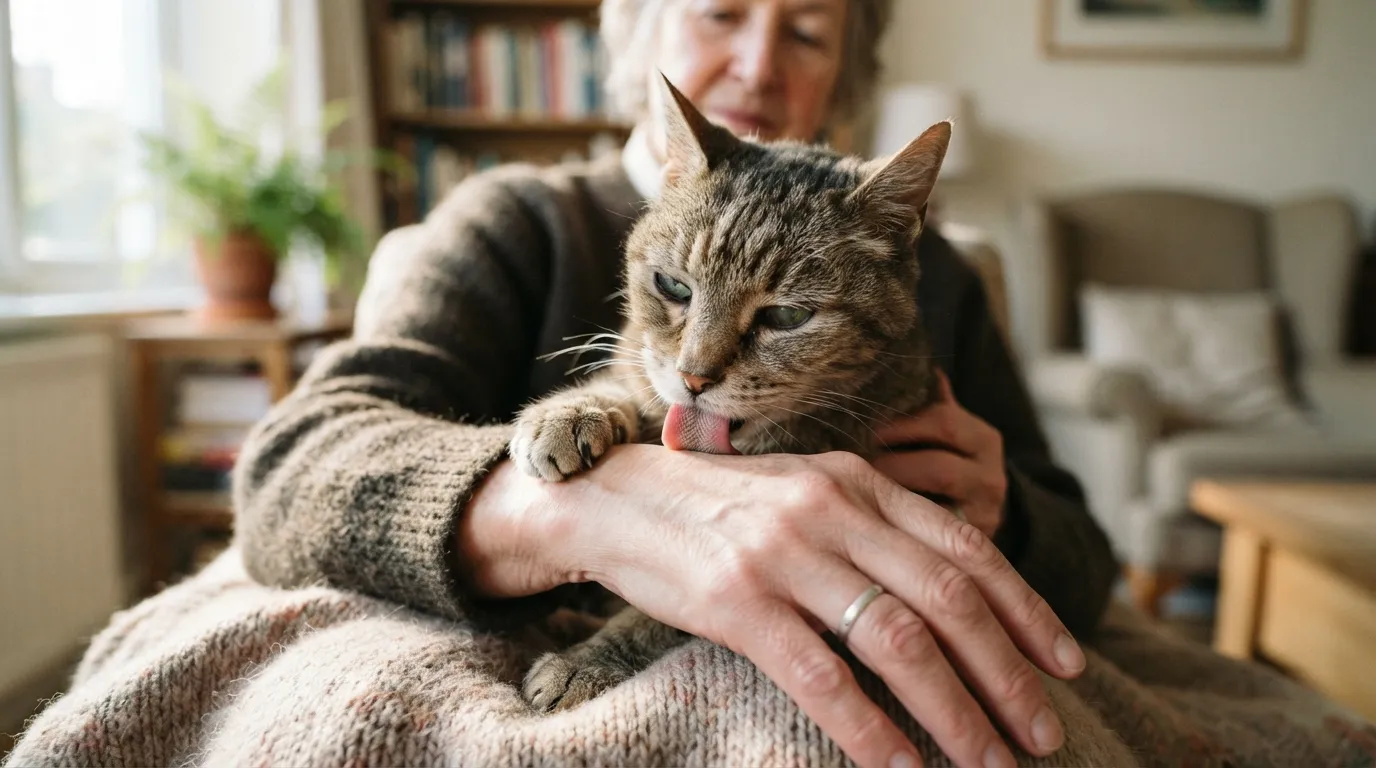
One of the most telling signs a cat trusts you is when they groom you. When your cat licks your hands, arms, or even your face, it’s not about giving you a “makeover” – it’s a bonding behavior.
Cats only groom people they feel safe with. This gentle licking signals: I trust you, I feel secure with you, and you’re part of my family.
Cats groom each other as a display of affection, and this extends to humans only when deep trust has been built. A senior cat that licks your hand is treating you as a member of its inner feline circle – the same circle it spent a decade deciding on.
This one comes with a companion behavior that’s even harder to earn. What’s next is the one cat owners talk about for years…
#8 – They Knead You Like Dough
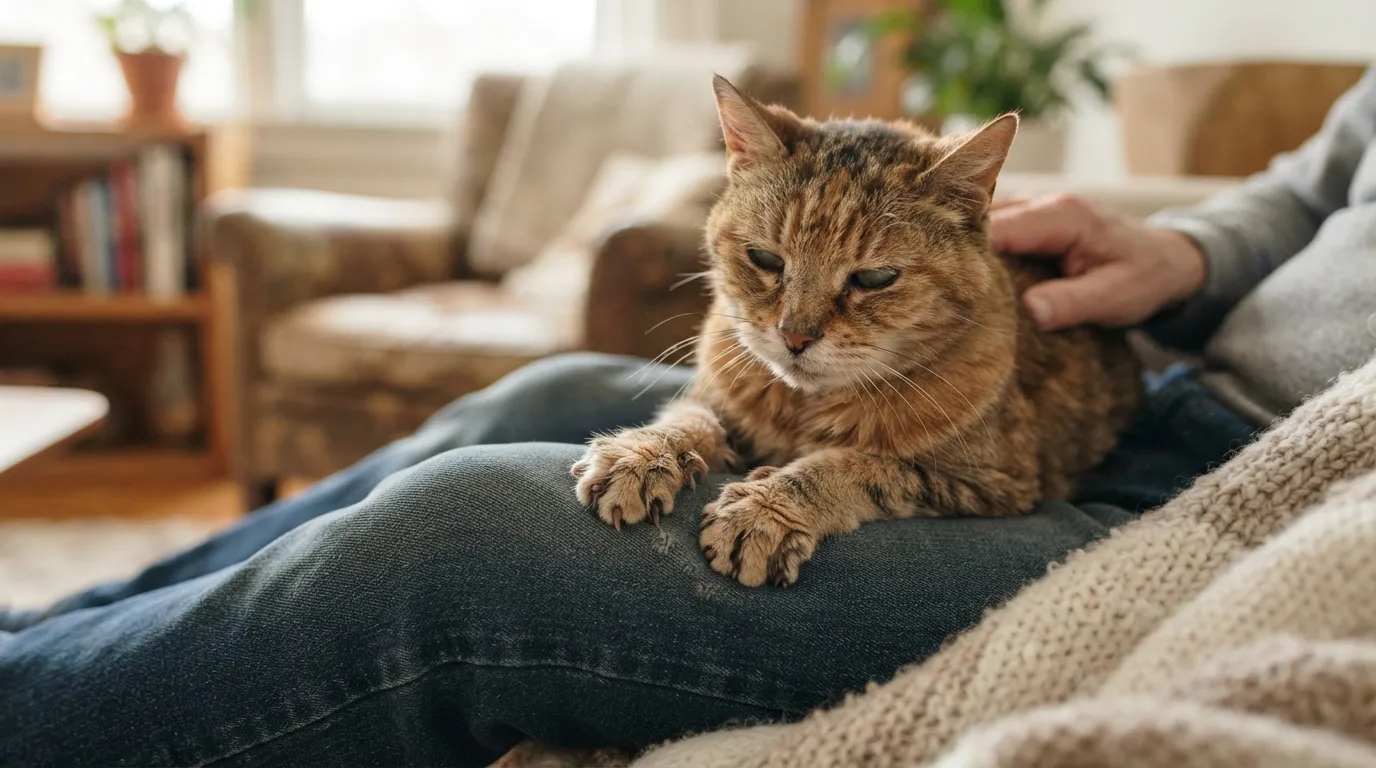
Kneading – often called “making biscuits” – happens when a cat rhythmically flexes and relaxes their front paws against a soft surface or their owner. It’s more than cute; it’s a sign your cat feels safe and bonded.
Cats learn this behavior as kittens, when kneading their mother stimulated milk flow. Kneading is believed to release endorphins, reducing stress and promoting relaxation.
When a senior cat with arthritic paws still chooses to knead on you, that is a level of comfort they will not offer anyone else in the house. It’s one of the rawest emotional signals a cat produces – a direct line back to the safest feeling they’ve ever known.
And the next behavior is just as primal…
#7 – They Bring You “Gifts”
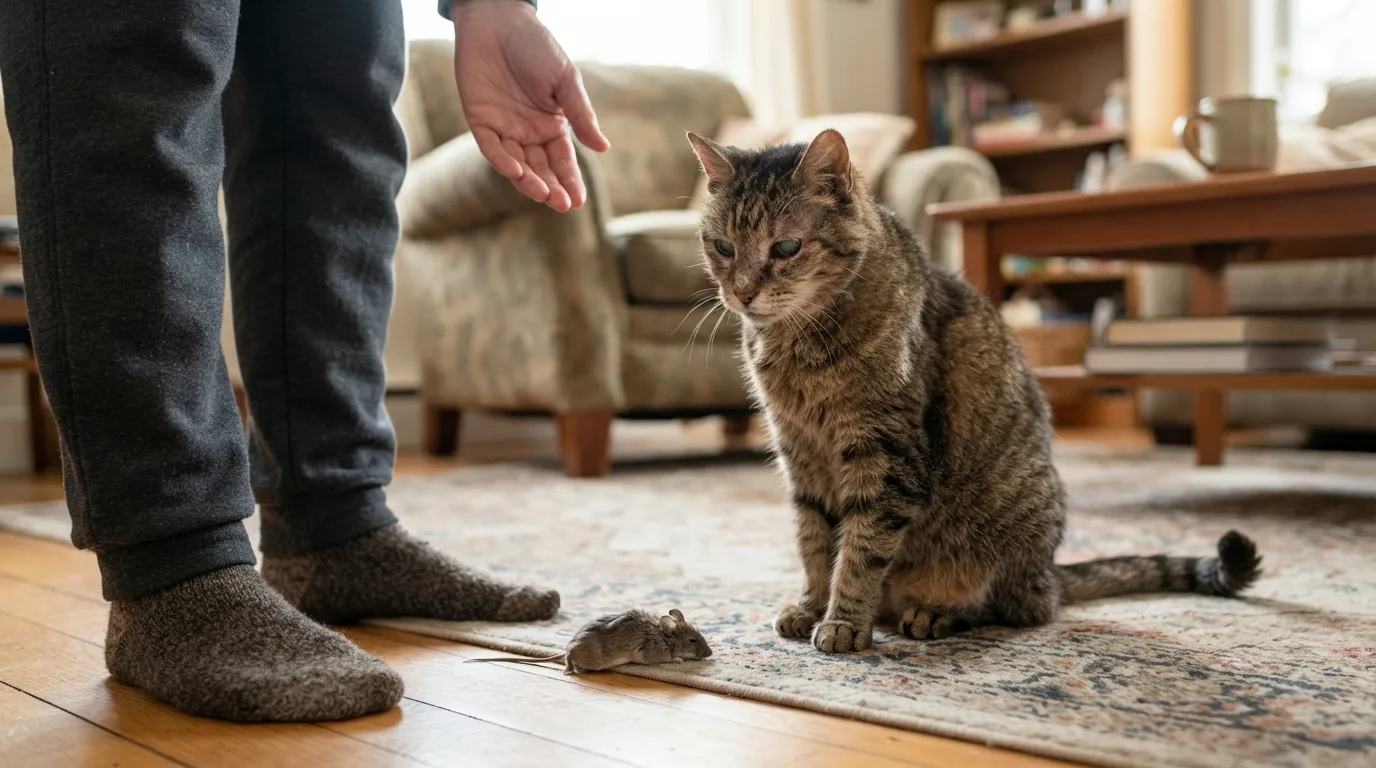
In feral cat colonies, some members hunt and bring back food to their bonded companions. Finding a mouse – or a toy – at your feet may not be your idea of a gift, but if your cat hunts and presents you with the reward, it deserves appreciation, not disgust.
This nurturing behavior translates directly to how bonded cats interact with their chosen humans, offering protective supervision and teaching behaviors through the presentation of “prey.”
Senior cats that still bring gifts are expending precious energy to do something that, in their instinctual world, means: I want you to survive. That is the feline equivalent of love made physical. And the human it’s always directed at? You.
The next one is quieter – but arguably the most emotionally loaded behavior on this list…
#6 – They Adjust Their Behavior to Your Mood
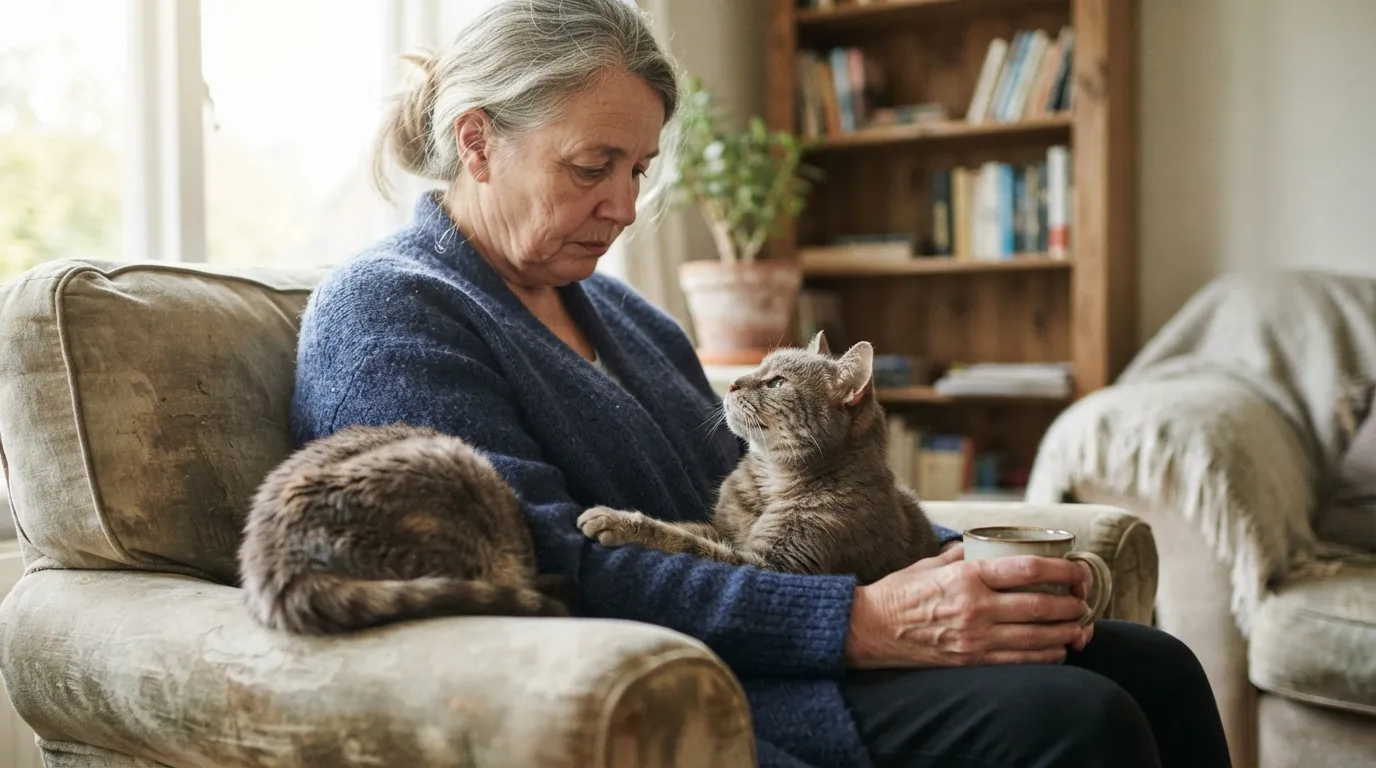
Bonded cats often recognize their human’s voice and respond when called or spoken to. Some cats pick up on your emotions, approaching when you’re sad or anxious and offering comfort by sitting nearby.
If your cat comes when called, chirps back at you, or shifts behavior based on your mood, that’s a powerful signal of a deep emotional bond.
Most people dismiss this as coincidence. It isn’t. Senior cats have had years to study your voice, your posture, your patterns – and the one human they trust fully is the one whose emotional cues they’ve memorized. They don’t do this for anyone else.
Quick Compare
- Young cat: reacts to any voice in the room and chases whatever moves.
- Trusted senior cat: responds to one specific voice and softens at your tone alone.
- Everyone else: gets the polite glance. You get the full attention.
And when your mood drops, there’s a specific place they’ll position themselves. That’s next – and it matters more than you’d think…
#5 – They Sit Directly on Your Chest or Lap During Quiet Moments
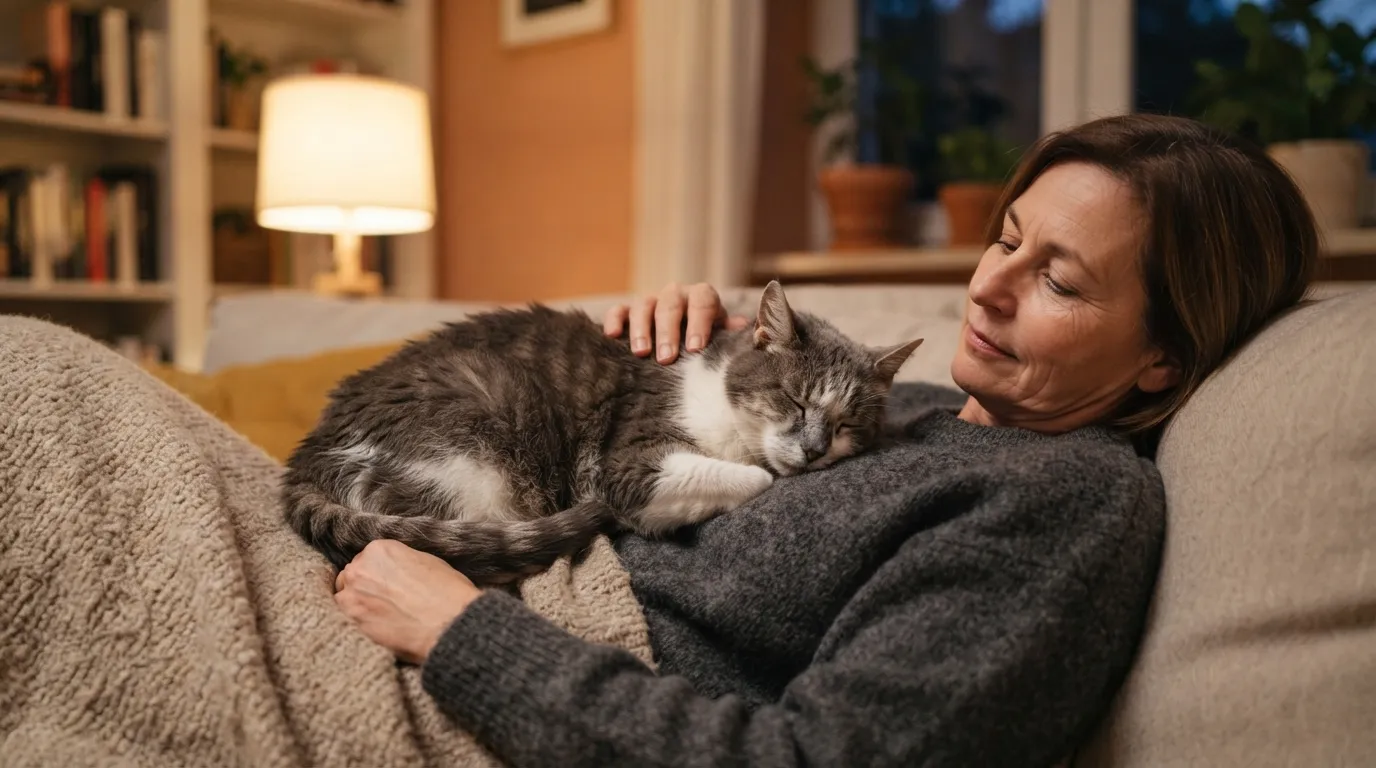
Attachment theory explains why cats seek comfort from humans during stressful moments while otherwise appearing independent. In secure relationships, the presence of a trusted person provides reassurance even without constant interaction.
For cats, bonding centers on predictability and safety. A cat may not demand attention, but they choose to stay near their person, sleep in shared spaces, or seek them out during unfamiliar moments.
A senior cat that climbs onto your chest during a quiet evening isn’t looking for warmth – it’s seeking your heartbeat. Some cats position themselves near the face and chest specifically, echoing the comfort of early security they haven’t felt since kittenhood.
What comes next is rarer – and many owners never even notice it’s happening…
#4 – They Synchronize Their Routine With Yours
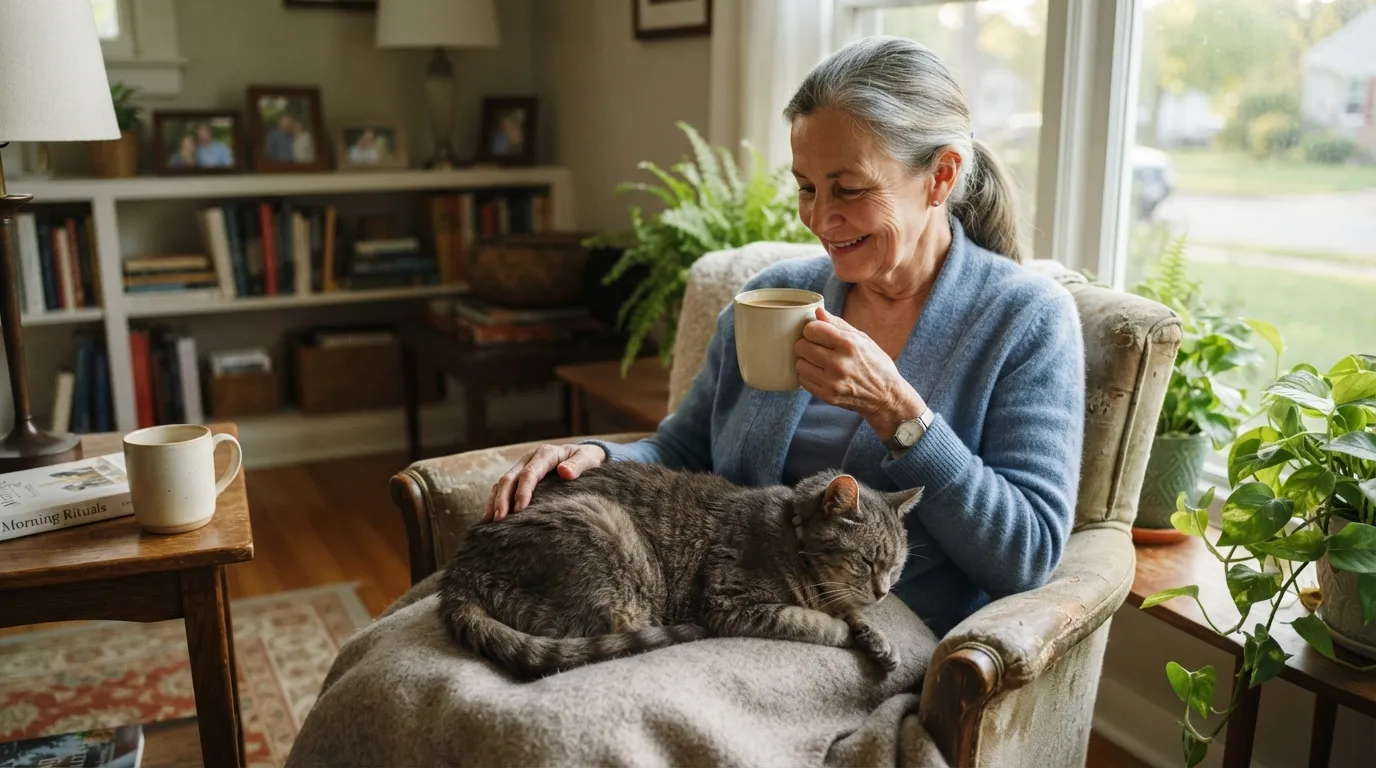
Cats are creatures of habit. If your cat consistently joins you for morning coffee or nighttime TV, that shared routine reflects a bond, and these predictable moments help them feel secure.
Bonded cats integrate their chosen human into their personal territory, aligning routines with your schedule and creating a synchronized daily rhythm.
This is one of the least-discussed but most reliable markers of true trust in senior cats. Their world has narrowed with age, their energy is limited, and they are choosing to spend that rhythm with you, every single day. No one else in the house gets that kind of synchronized loyalty.
The next behavior is one that catches most owners completely off guard…
#3 – They Vocalize Specifically at You (and No One Else)
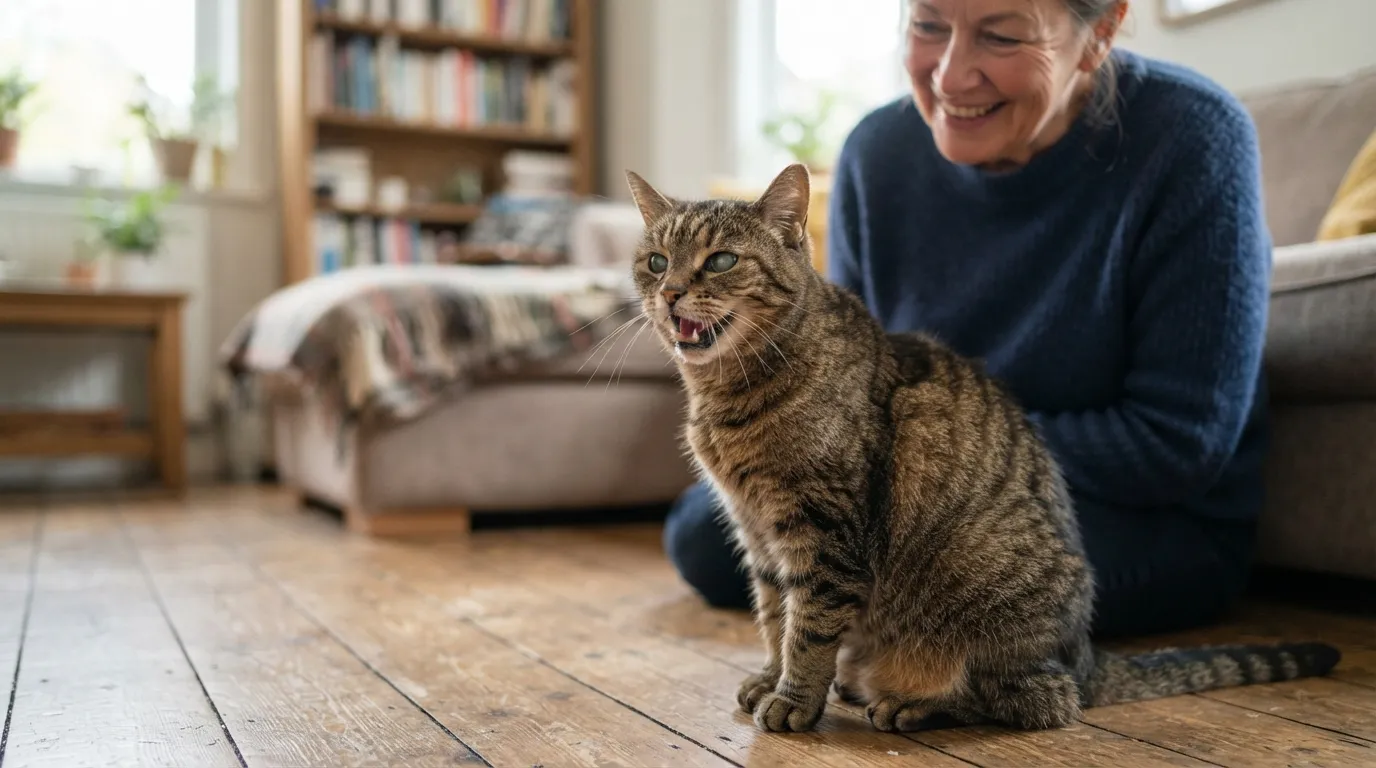
Cats rarely meow to other cats – this vocal behavior is largely reserved for humans. A cat that greets you with high-pitched noises or meows has learned to communicate specifically with you.
Cats use different vocalizations when they get excited, and may greet people with trills and chirrups that indicate positive feelings.
Senior cats that develop a private vocabulary with one person – specific chirps, trills, or a signature meow – are doing something remarkable. They have invented a language just for you. It didn’t exist with anyone else in the house, and it didn’t exist when they were young and less selective.
And the second most powerful sign? It involves something far more ancient and instinctual…
#2 – They Seek You Out When They’re in Pain or Unwell
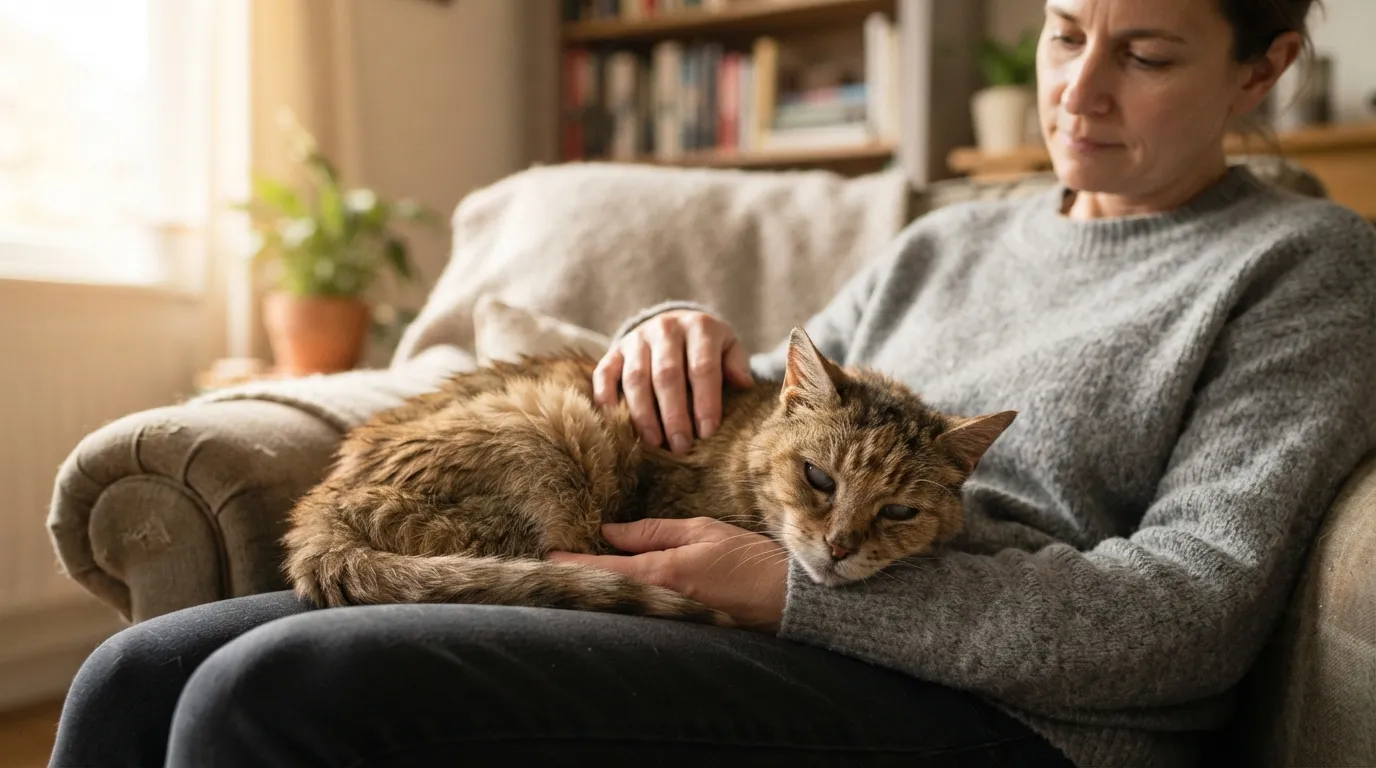
For cats, bonding is rooted in feeling safe and being able to predict what happens in their environment. When that safety is threatened – by illness, pain, or confusion – senior cats don’t hide from their trusted human. They move toward them.
Many people misread this as clinginess or frailty. In reality, it’s a sign of trust and emotional stability – they know exactly where they feel safe, and they’re spending their limited energy getting there.
At a Glance
- Doesn’t hide – moves toward its trusted person instead of retreating.
- Still seeks contact even when clearly uncomfortable or unwell.
- Chooses proximity over solitude, the opposite of how many cats treat strangers when sick.
A sick or hurting senior cat that finds its way to you – and only you – is making the most deliberate choice of its day. In their most vulnerable state, you are the answer. That is the entirety of what trust means in the feline world.
Only one behavior sits above this one. And it’s the quietest thing on the list…
#1 – They Close Their Eyes Completely in Your Presence
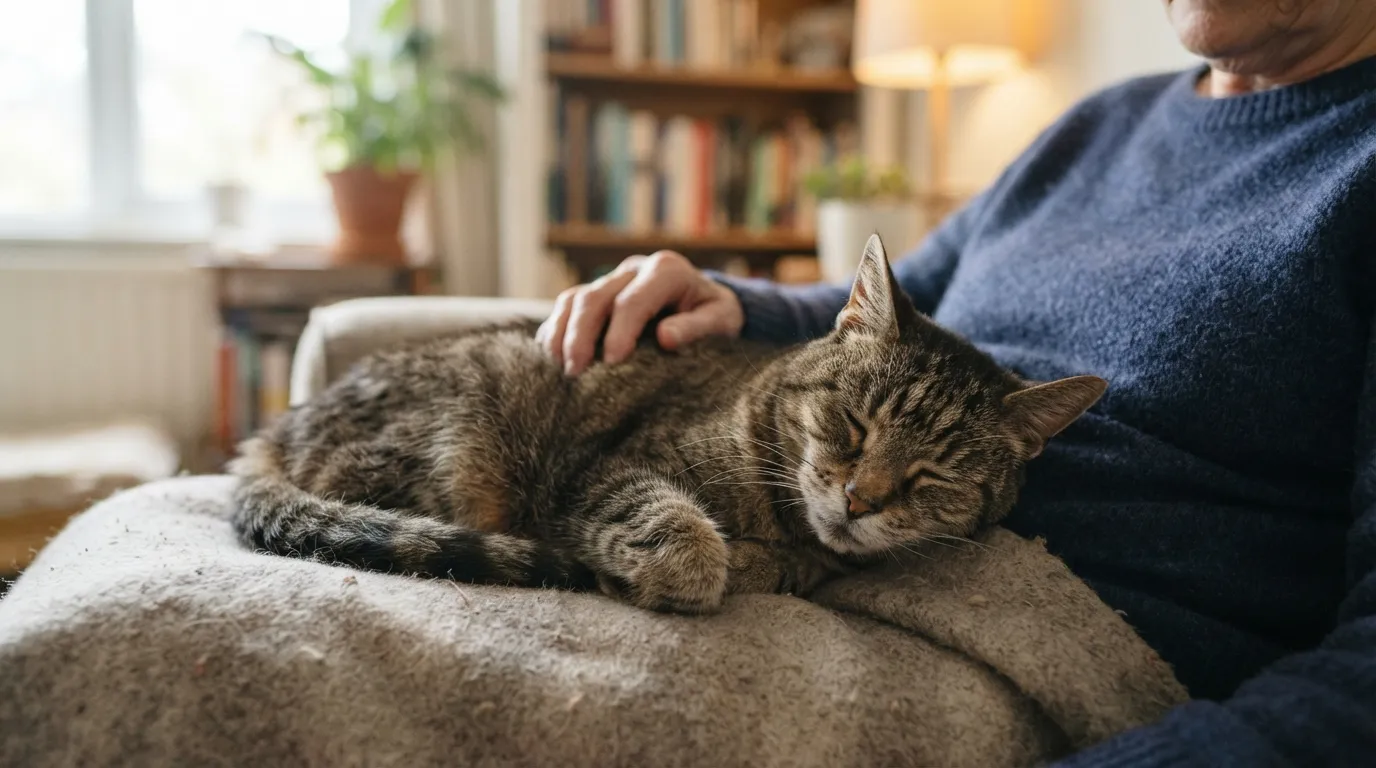
By closing her eyes in your presence, a cat is signaling that she doesn’t perceive you as a threat – and assumes you feel the same way about her. For a senior cat whose senses have sharpened through a decade of survival, choosing to shut their eyes entirely while you’re in the room is the ultimate act of surrender to trust.
Younger cats still startle, still scan the room, still hold one eye half-open. A senior cat that has truly chosen you lets go completely.
Cats are not emotionally indifferent. They form true bonds with their humans based on trust and a sense of security.
Feline behavior research
This is the behavior most owners never consciously register – and it’s happening every single day.
The Bottom Line
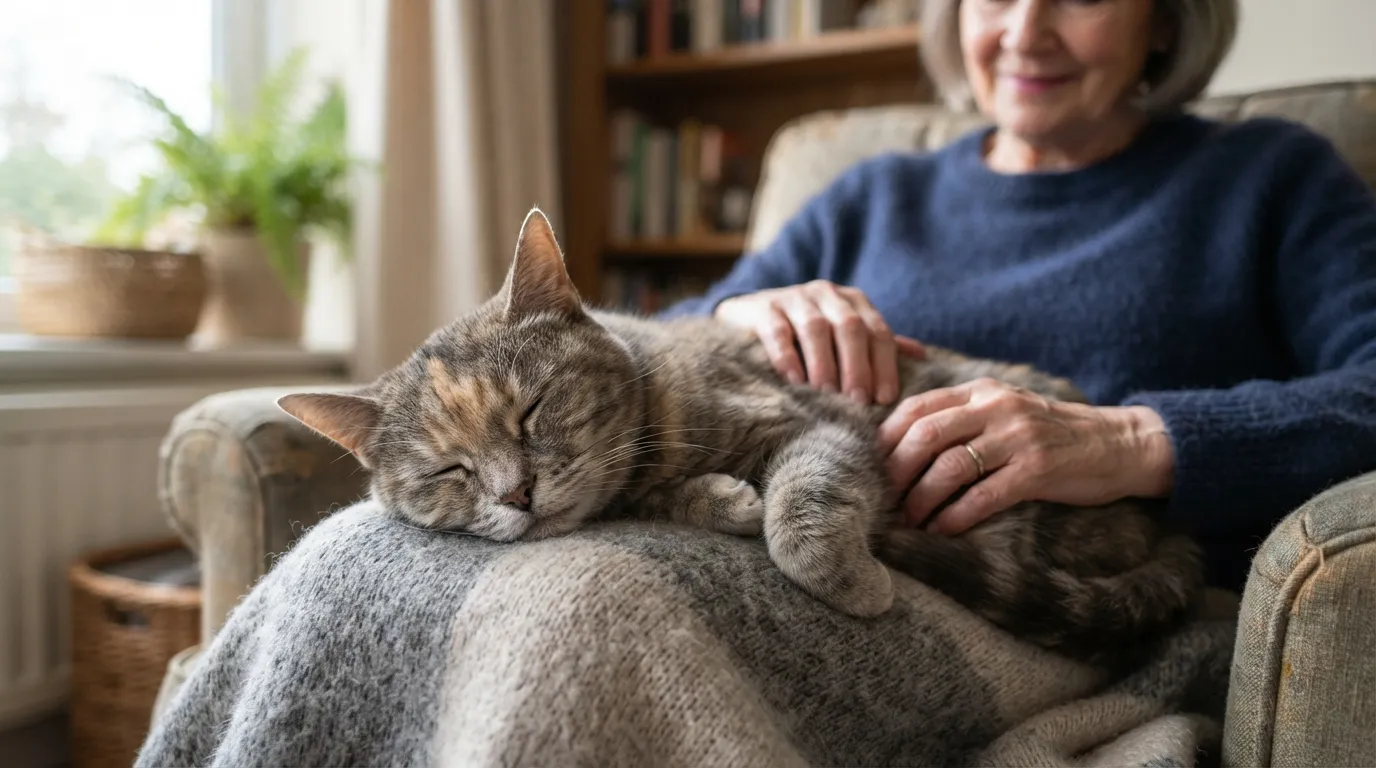
Senior cats are not aloof. They are selective.
They often attach to one person because that human provides consistent care, calm interaction, and predictable routine. The 14 behaviors above – from the slow blink to shutting their eyes completely – are not random.
They are the cumulative result of years of quiet observation. Cats don’t perform affection the way dogs do; they offer it through small, repeated rituals.
Every one of those rituals is directed at exactly one person – and now you know how to spot them. Did we miss one your senior cat does? Drop it in the comments – we read every single one.
Growing up traveling and experiencing new cultures and wonders, I have had a passion for nature, adventuring, photography, and videography. I am currently working towards a BSc in Biodiversity and Ecology at Stellenbosch University, and I hope to specialise in Marine Sciences one day.
Please send any feedback to Feedback@animalsaroundtheglobe.com