Most cat owners assume their indoor cat is safe, cozy, and perfectly content. That assumption is exactly the problem veterinarians keep running into.
“Indoor-only cats are often assumed to be the safest, but it is more challenging to meet their needs, impacting their physical and emotional health.”
Dr. Ilona Rodan, veterinarian and feline welfare specialist
Indoor cats live longer and dodge the worst injuries, but they pay for it with anxiety, aggression, eating disorders, and compulsive grooming that most owners never see coming. The good news: nearly all of it is preventable, and the fixes are simpler than you’d think.
Here’s what vets actually say every indoor cat home needs right now – starting with the mistake almost every owner makes first.
#14 – A Tall, Stable Scratching Post
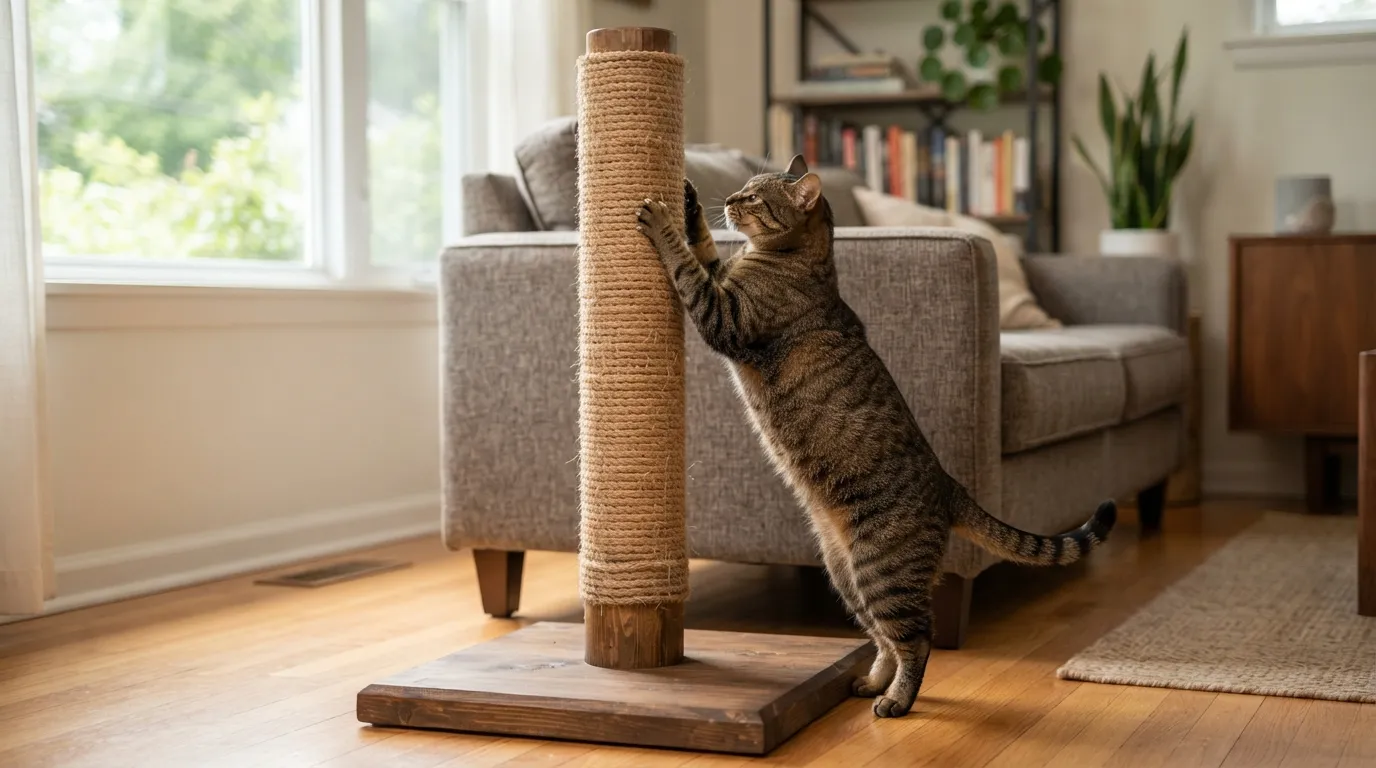
Scratching isn’t a bad habit – it’s biology, and ignoring it is the #1 mistake indoor cat owners make.
Scratching is a natural behavior for cats, essential for their physical and mental health. The ASPCA recommends a sturdy post at least three feet high, stable enough that it won’t wobble during use.
Cover it with rough material like sisal, burlap, or tree bark – that texture is what actually triggers the scratching instinct. A single post in the corner isn’t enough.
Provide a mix of vertical posts, horizontal pads, and boards in different materials, and scatter them across multiple rooms. The more options your cat has, the less your couch becomes the default target.
Don’t underestimate this one. But the next upgrade could be the difference between a healthy kidney and a vet emergency – and #13 explains why.
#13 – A Circulating Water Fountain
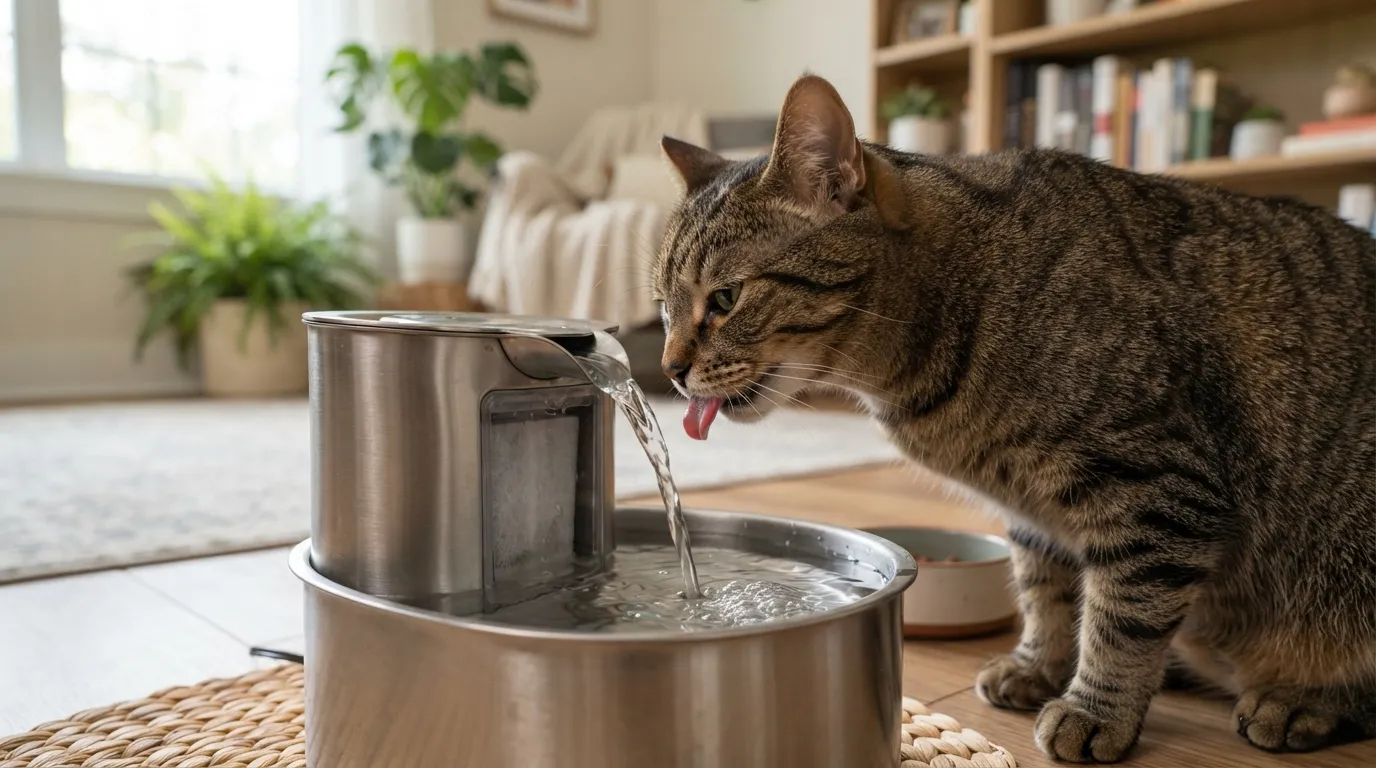
Most cats are quietly, chronically dehydrated – and a still water bowl is a big reason why.
Hydration is crucial for a cat’s health, and a static bowl just doesn’t cut it for a lot of cats. Vets recommend always providing fresh water and considering a fountain, since moving water is simply more appealing to many cats.
“A cat water fountain provides fresher, cleaner water by continuously filtering it, reducing impurities, and preventing bacterial growth.”
Dr. Danielle Bernal, veterinarian and animal nutrition specialist
Fast Facts
- Dry kibble runs about 7-10% moisture, while wet food sits closer to 70-80%
- Cats descend from desert-dwelling ancestors, which left them with a naturally low thirst drive
- Moving water triggers more drinking than a still bowl for many cats
- Spreading water bowls or fountains across several rooms boosts intake even further
Moving water means higher intake – and higher intake means fewer UTIs and better kidney health. Many cats also drink more when fresh water is offered in several locations around the house.
This one change is deceptively powerful. But there’s something even more overlooked lurking in most cat homes – and #12 is where owners go wrong every single day.
#12 – The Right Number of Litter Boxes
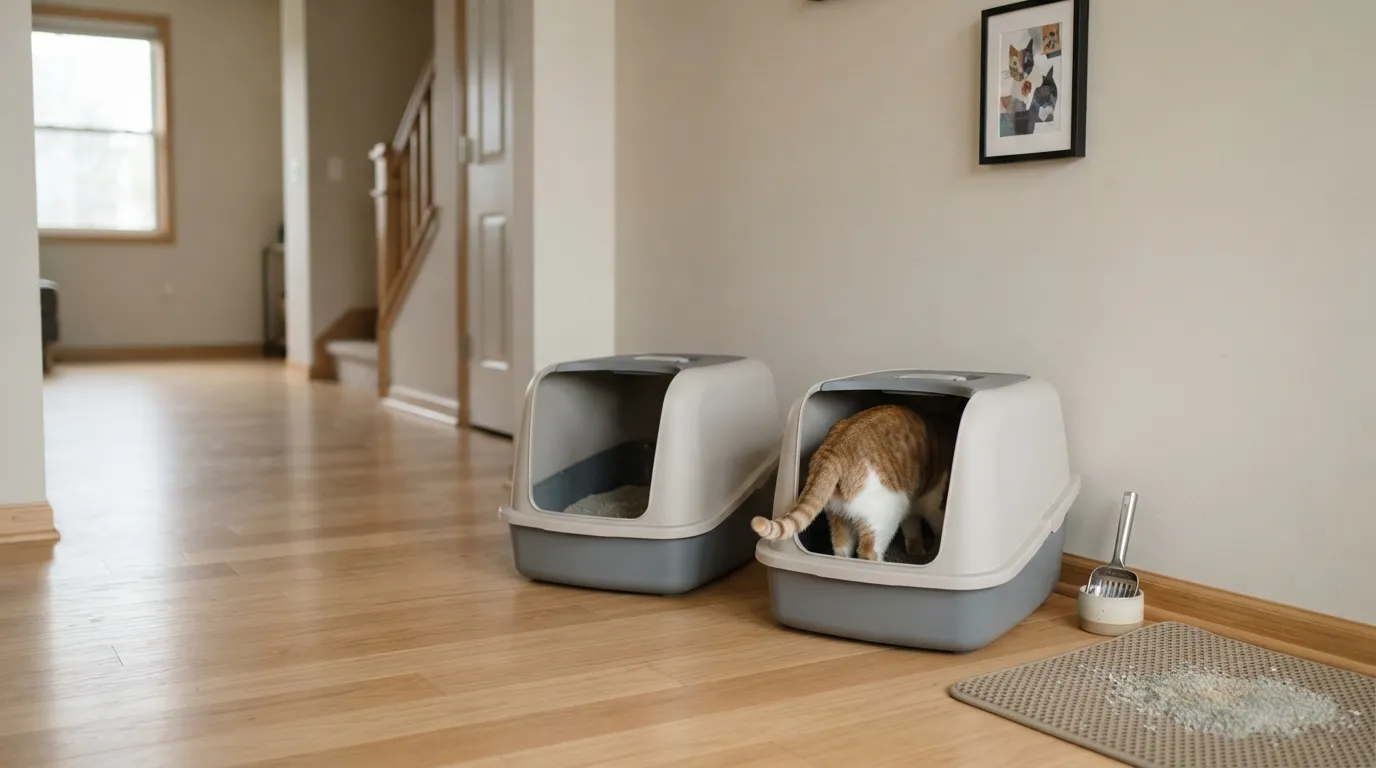
Here’s a rule most cat owners break without knowing it: one box is almost never enough.
The standard veterinary rule is N+1: one litter box per cat, plus one extra. In a multi-level home, add one box per floor.
Placement matters just as much as quantity – tucked into a quiet, accessible spot, never crammed next to food or water.
Cats won’t use a messy, smelly box, so scoop solid waste at least once a day. Skipping daily scooping is one of the fastest ways to trigger litter box avoidance – a top behavioral complaint vets hear constantly.
Size matters too: pick a box large enough for your cat to turn around comfortably. Extra-large cats need extra-large boxes, or accidents become almost inevitable.
Get this right and you’ll eliminate one of the most stressful hidden triggers in your home. And speaking of hidden stressors – #11 is one almost nobody talks about.
#11 – Dedicated Vertical Space
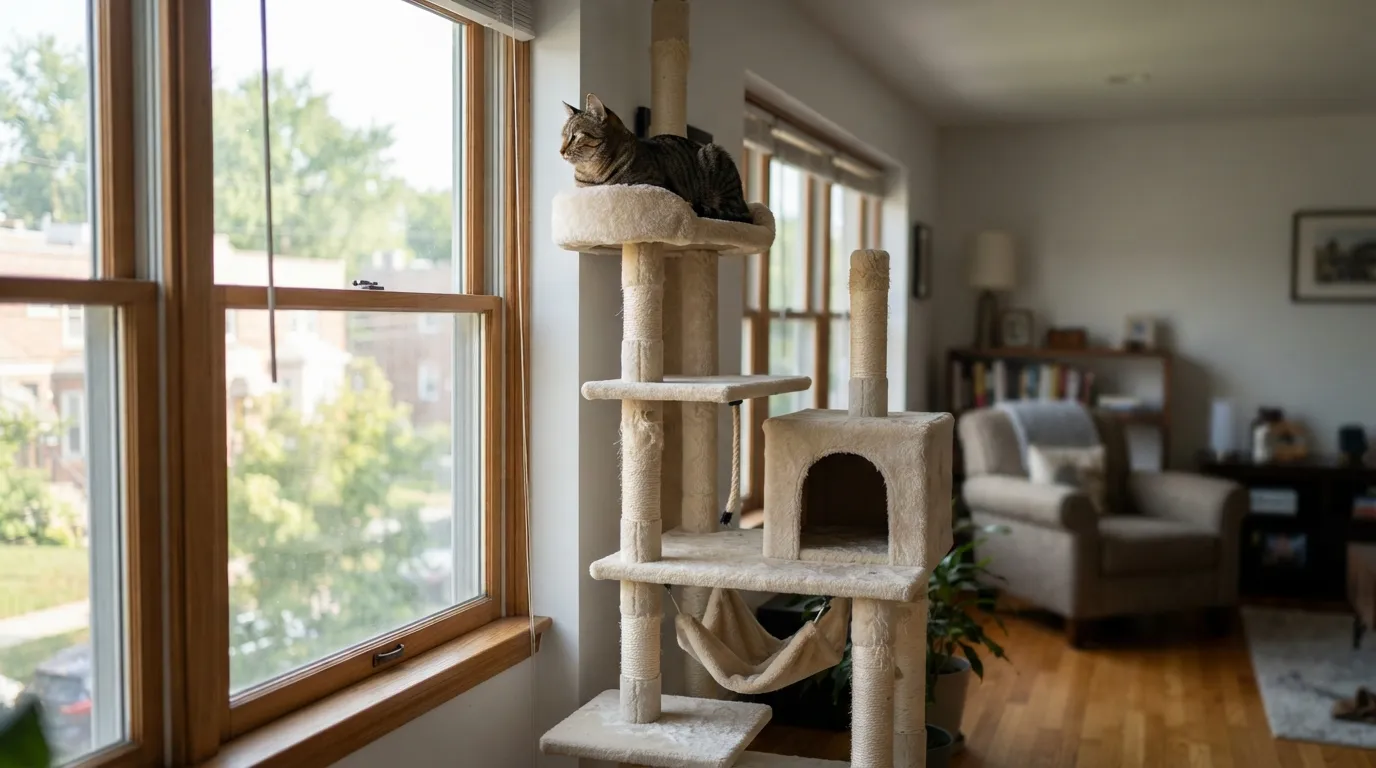
Your cat isn’t ignoring the furniture because it’s stubborn. It’s looking for something your home probably doesn’t have.
Cat trees give cats vertical territory to climb and perch on, and height makes them feel genuinely safe. A tall cat tree or a set of shelves near a window becomes an escape hatch the moment things get stressful on the ground.
Vertical space effectively multiplies the usable territory in your home without adding a single square foot of floor space. Skipping it – especially in small apartments – is a critical mistake, because cats are wired to climb, not sprawl.
A multi-level cat tree near a window is arguably the single highest-ROI piece of furniture you can buy for a cat.
Once your cat has height, the next upgrade is about what they do up there – and #10 reveals the cognitive piece most setups are completely missing.
#10 – Puzzle Feeders and Slow-Feed Bowls
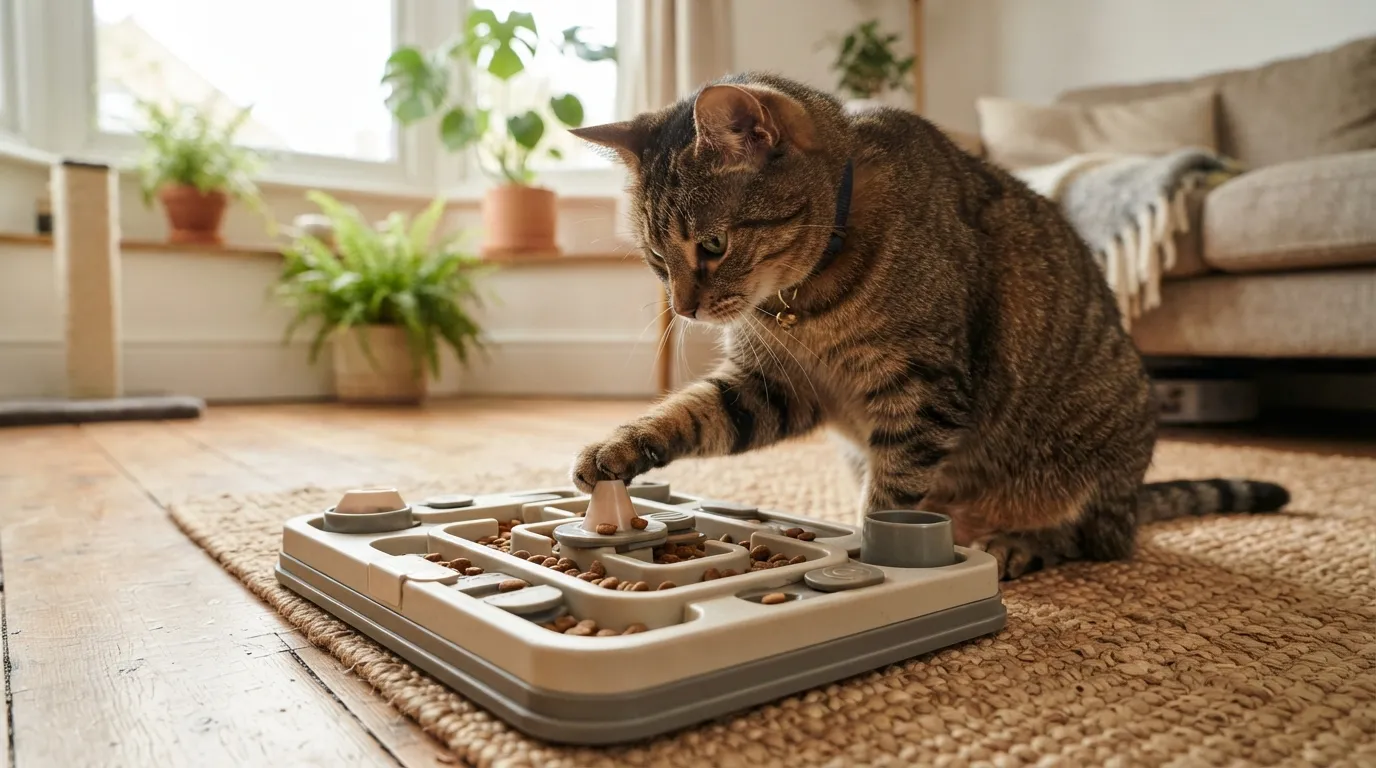
Turning mealtime into a five-second scarf-and-done routine is quietly killing your cat’s mental health.
An enriched environment increases activity and decreases mental stagnation, and mental stimulation matters most for cats who never go outside. Food puzzles, interactive toys, and food balls – store-bought or homemade – are a vet-recommended fix.
Feeding from one big bowl with zero puzzle element is one of the most common enrichment mistakes owners make. Puzzle feeders tap into a cat’s hardwired hunting instinct, forcing them to problem-solve before they eat.
That problem-solving burns mental energy and cuts boredom-driven behavior. Even scattering a portion of kibble around the house counts as real enrichment.
Your cat’s brain is just getting warmed up. But #9 is where the physical side of things takes a turn most owners completely ignore.
#9 – Interactive Wand Toys (Used Consistently)
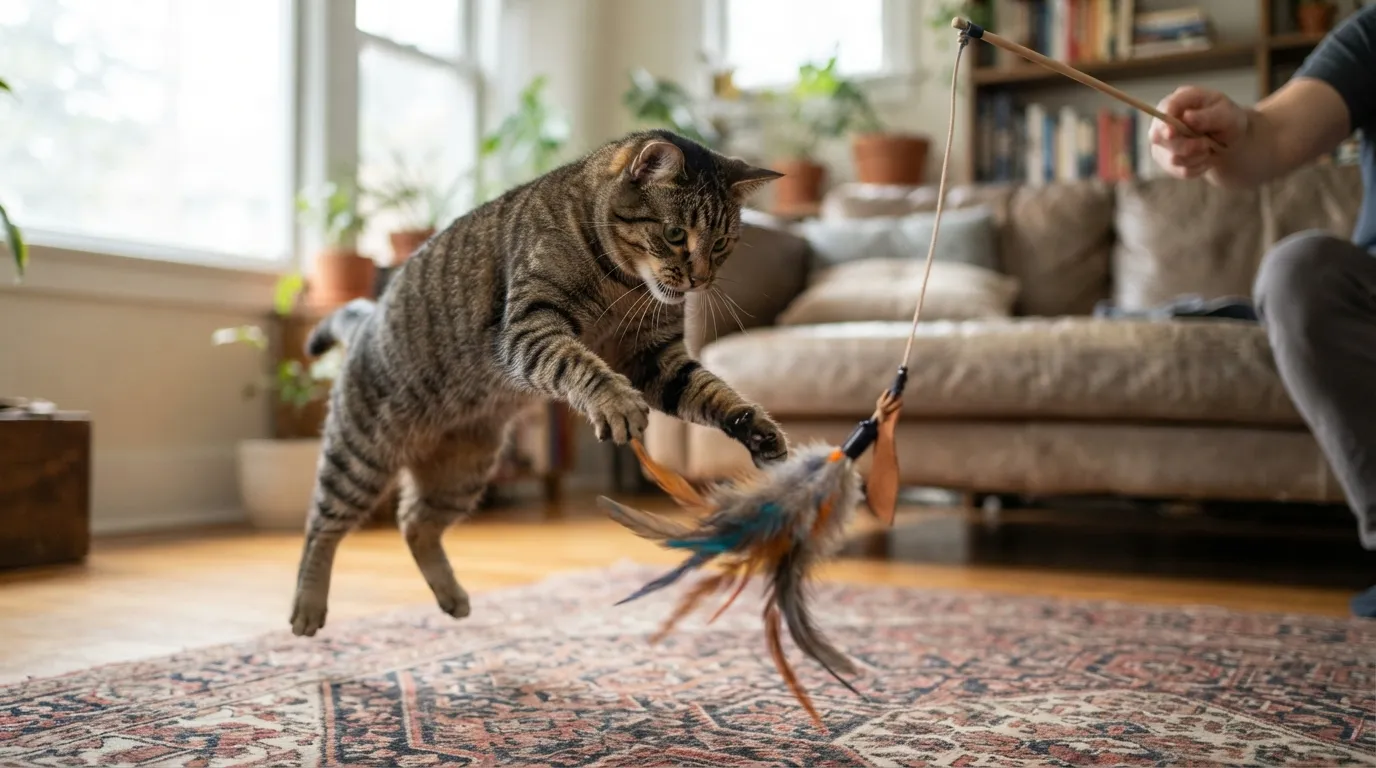
Owning a wand toy means nothing if it’s sitting in a drawer. Vets are very specific about this.
Social play with humans might be the single most effective enrichment tool for an indoor cat. Vets recommend setting a timer for five minutes, twice a day, and rotating toys each session.
Feather wands or motorized toys mimic prey movement, triggering the full run-jump-pounce sequence your cat’s body is built to crave.
The detail most people miss: always end a session with a “catch.” Stopping mid-hunt leaves stress hormones elevated and your cat genuinely frustrated.
Let them “kill” the toy before you put it away. And rotate only a few toys at a time – cats lose interest fast.
Two sessions a day sounds small. The payoff is enormous – and it connects directly to what #8 addresses about your cat’s emotional wiring.
#8 – A Dedicated Safe Hideaway
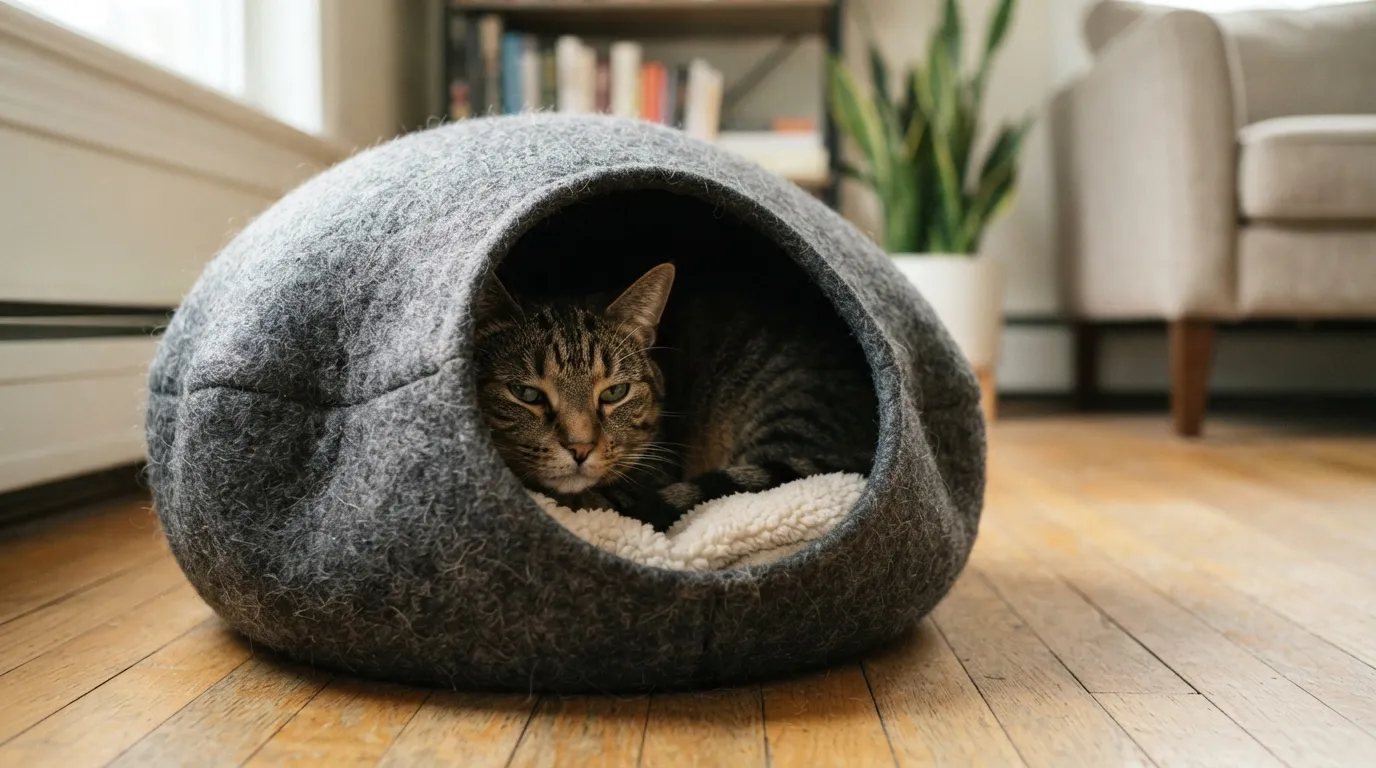
Most owners think their cat wants to be visible and social. Many cats actually need the opposite – and not having one is a real welfare problem.
Cats need safe, cozy places to retreat to when they need solitude. Cat caves, enclosed beds, or soft blankets tucked into quiet corners give them real comfort and security.
This isn’t optional for anxious cats or multi-pet households – it’s a baseline need.
Many behavioral and medical issues vets see are directly linked to homes that skip this. A cat that can’t retreat when overwhelmed often redirects that stress into aggression, over-grooming, or litter box avoidance.
A simple covered bed – or even a cardboard box with a cut-out entrance – is enough to make a measurable difference.
The hideaway solves the retreat problem. But #7 solves the opposite issue – what happens when your cat is bored and has nowhere to direct its energy.
#7 – A Rotating Toy Library
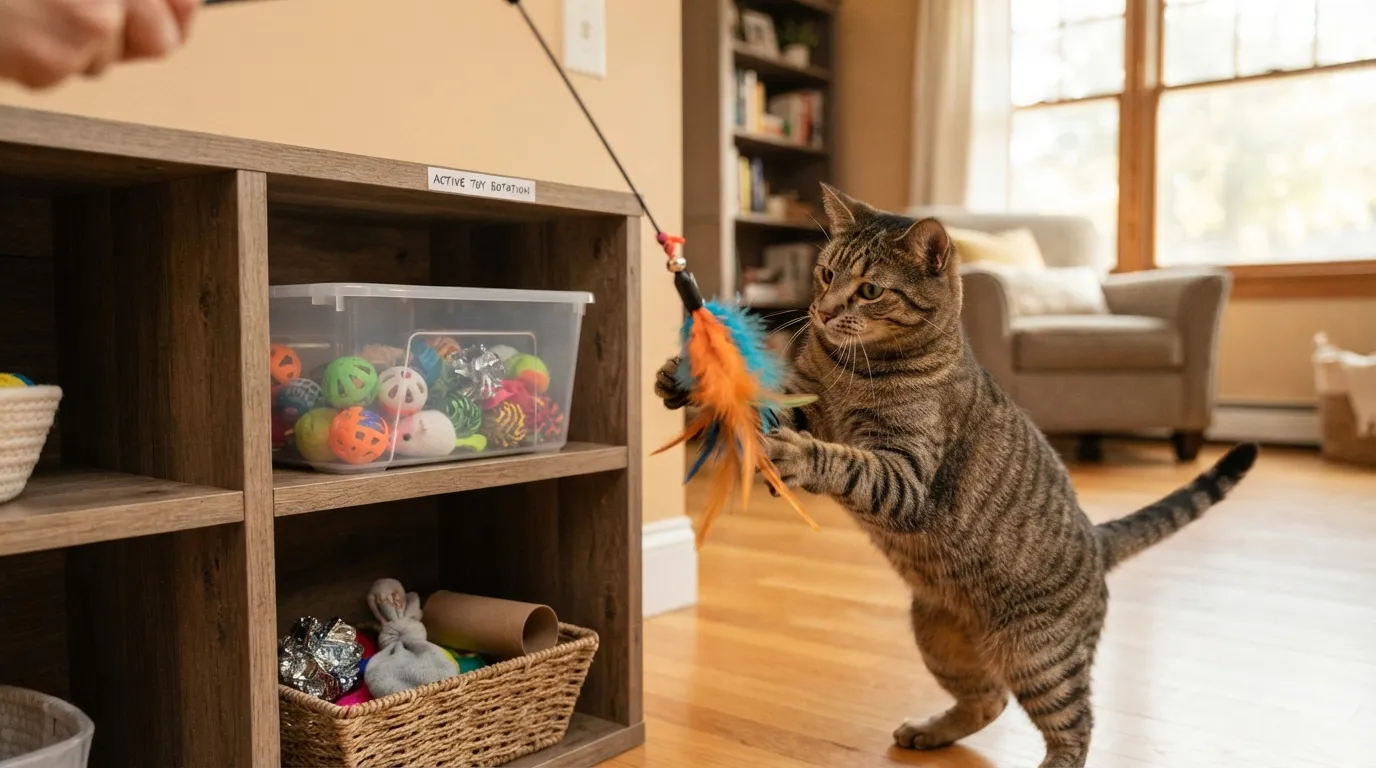
Leaving every toy on the floor at once is one of the most common and most wasteful mistakes in cat ownership.
Leaving every toy out at once kills novelty within about 48 hours – your cat’s brain essentially “deletes” those items from its world. Vets recommend rotating a variety of toys to keep play genuinely exciting.
Some cats get just as much entertainment from DIY options – cardboard boxes, old socks stuffed with fabric, foil balls, or a dangling shoelace.
The fix is simple: store most toys out of sight and rotate two or three into play every few days. Each rotation feels brand-new to your cat’s brain.
It costs nothing extra, and it extends the life of every toy you already own – indefinitely.
But rotating toys only works if your cat’s sensory environment is firing on all cylinders – and #6 is the sensory upgrade almost nobody thinks to add.
#6 – A Window Perch With an Outdoor View
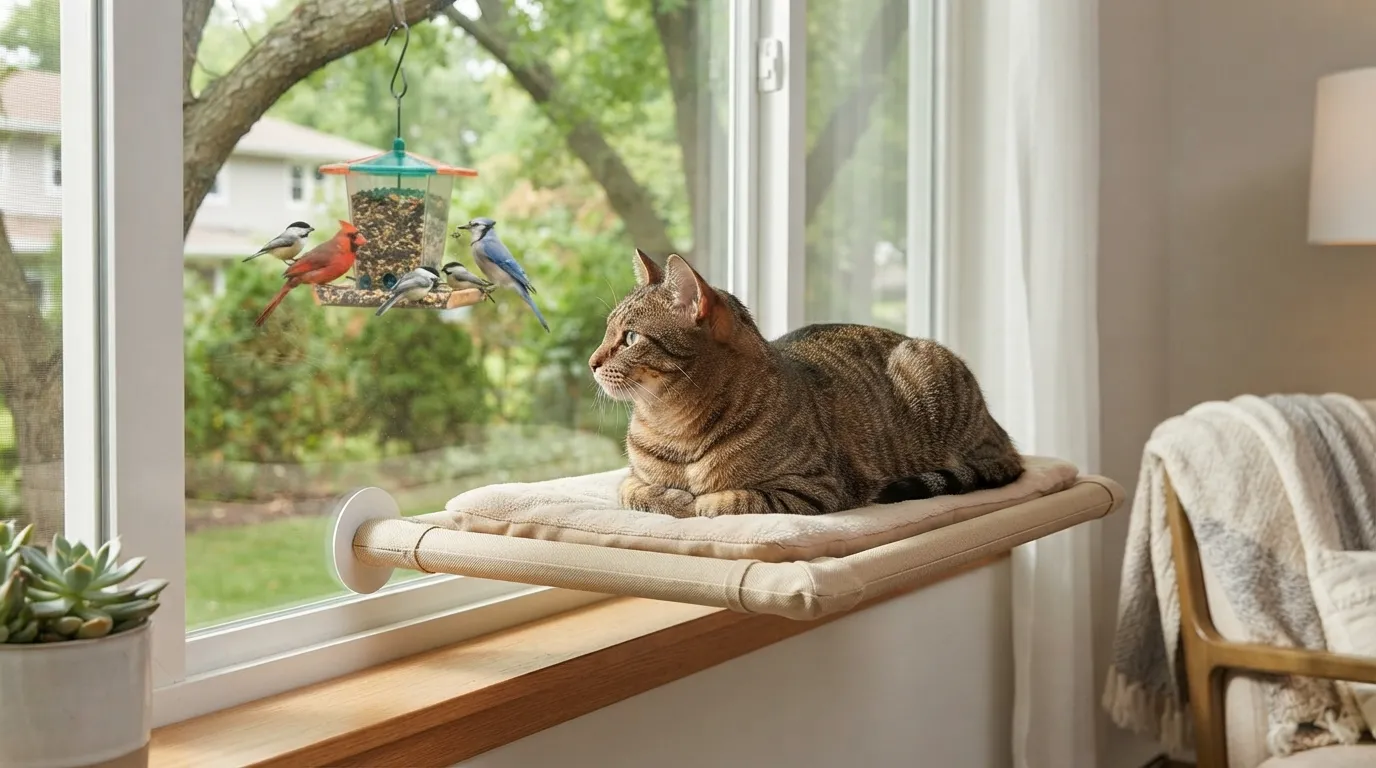
“Cat TV” isn’t a joke. Vets actually use that phrase when recommending this upgrade.
Access to windows – especially with a perch – gives cats real mental stimulation just from watching the world go by. Moving beds and perches around occasionally mimics a changing environment and keeps things interesting.
A bird feeder placed just outside the glass turns a blank window into hours of daily entertainment.
Worth Knowing
- The best perch spots face bird feeders, trees, or foot traffic, not a blank wall
- Moving a perch to a new window every few weeks keeps the view feeling fresh
- Only place perches at closed or securely screened windows for safety
- Adding soft bedding to the perch encourages longer, more relaxed use
Indoor cats face three real limits: less space, no hunting, and less variety. A window perch quietly solves all three with one placement.
It gives your cat a living, changing “screen” of birds, insects, and weather – the kind of unpredictable stimulation no toy can fake.
That covers the eyes. But #5 deals with something your cat is processing through an entirely different sense – one most owners never think to engage.
#5 – Scent Enrichment (Herbs, Catnip, Silver Vine)
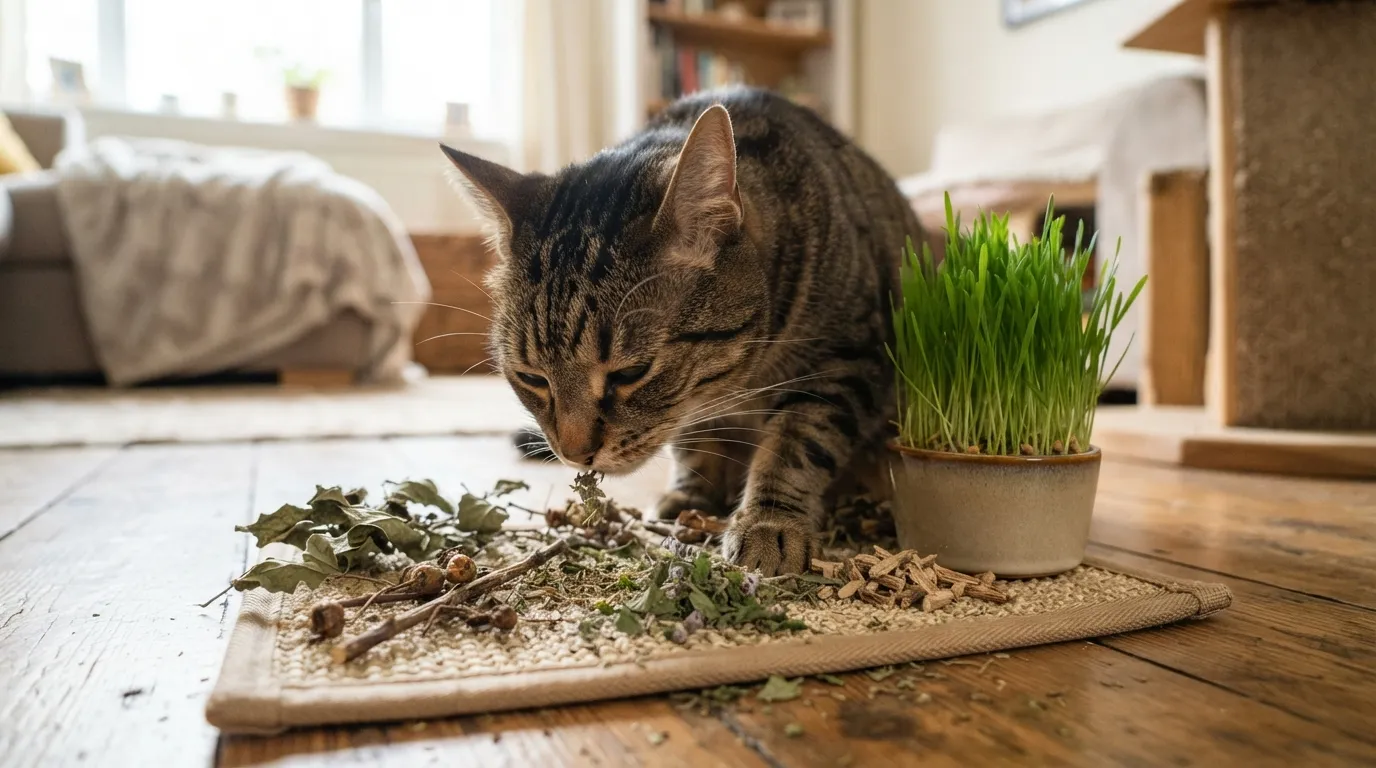
Your cat experiences the world nose-first. Ignoring scent enrichment means ignoring one of its primary ways of reading the environment.
Cats have a scent organ humans don’t – the vomeronasal organ – that reads chemical signals far beyond what our noses pick up. Rotating scent enrichment like catnip, silver vine, or valerian root gives them a powerful experience for almost no effort.
Not all cats respond to catnip – it’s genetic – but most respond strongly to silver vine, which makes it the smarter default choice.
Growing a little wheatgrass at home keeps your cat away from toxic houseplants while doubling as enrichment – a small taste of the outdoors, indoors.
Scatter dried herbs on a scratcher or inside a paper bag. The novelty alone holds a cat’s interest longer than most plastic toys ever will.
Scent done right is quietly powerful. But #4 is a structural upgrade vets specifically link to reducing stress-related illness – not just boredom.
#4 – Multiple Separated Resource Stations
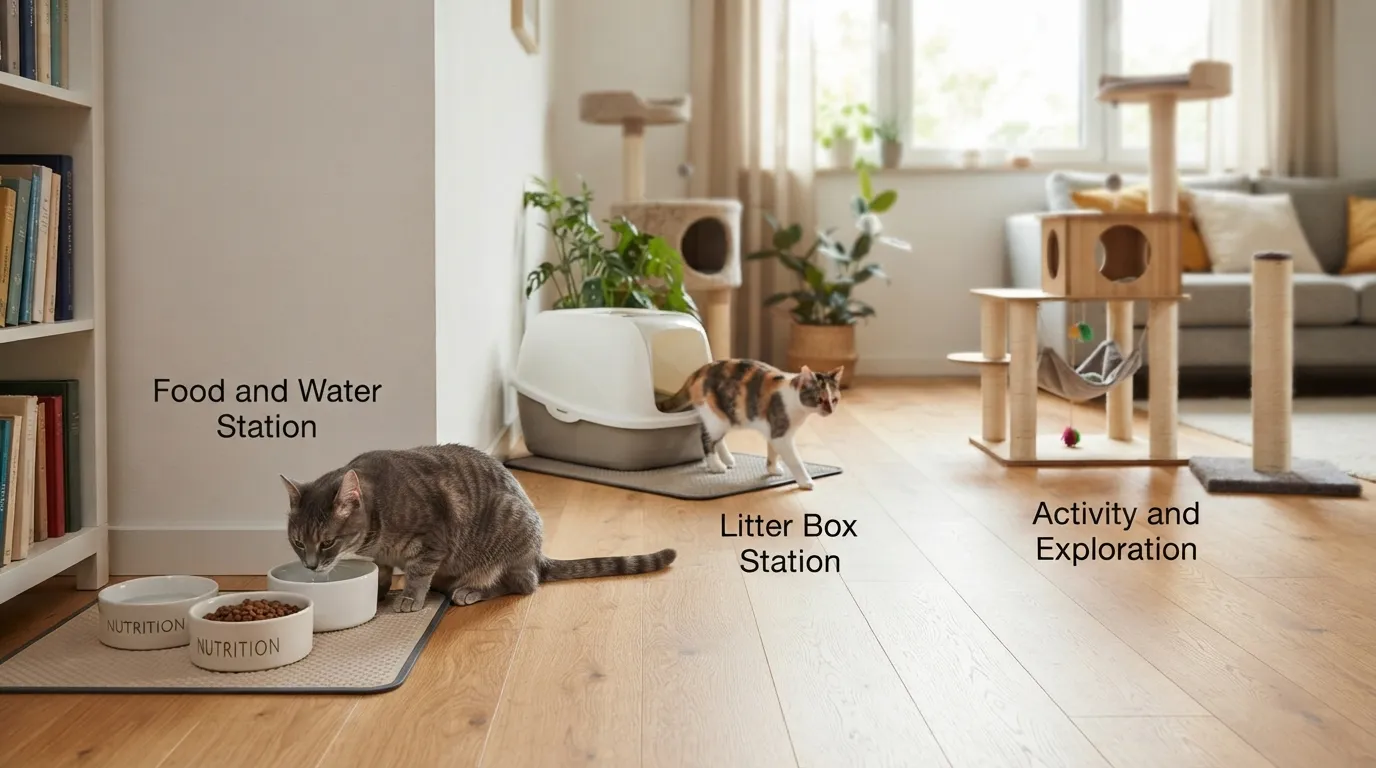
Cats are not wired to share, even with themselves. Clustering resources in one spot creates low-level chronic stress most owners never detect.
Veterinary guidelines outline five basic needs for indoor cats: space, food and water, litter boxes, social contact, and activity. Critically, food, water, and litter need to be physically separated, not clustered in one corner of a room.
At a Glance
- Space – room to explore, climb, and retreat
- Food and water – kept well away from the litter box
- Litter boxes – enough of them, placed thoughtfully
- Social contact – on the cat’s own terms
- Activity – daily physical and mental engagement
The goal vets describe is “an environment of plenty” – plenty of room, plenty of boxes, plenty of food, water, and things to do.
Cats in the wild never eat next to where they eliminate – a food bowl near the litter box can trigger an instinctive aversion that suppresses eating and drinking. Spread resources across your home and watch behavior normalize within days.
You’ve fixed the layout. Now #3 targets the cognitive layer – and it might be the upgrade with the highest return on investment of everything on this list.
#3 – Scheduled Daily Play Sessions
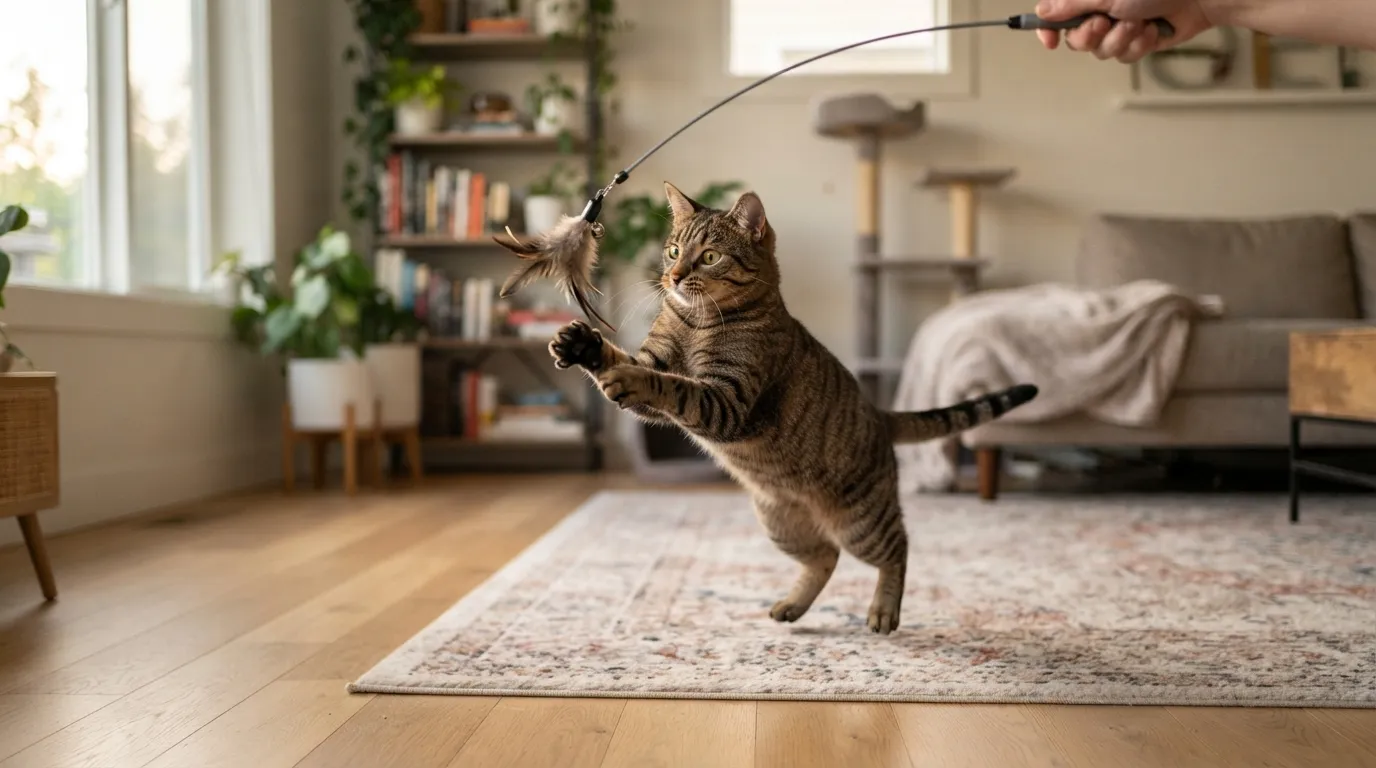
Spontaneous play is better than nothing. Scheduled play is what actually changes behavior.
Two ten-minute wand-toy sessions a day, plus one puzzle-fed meal, is enough to meaningfully cut boredom-based behavior in most indoor cats within a couple of weeks. Timing matters because cats are crepuscular – most active at dawn and dusk.
Cats have a reputation for needing less maintenance than dogs. They don’t need walks, but they need just as much mental and physical stimulation – kitten or senior, it doesn’t matter.
Ten minutes, twice a day, is the minimum threshold vets consistently recommend. Anything less and you’re managing symptoms, not solving the problem.
If play is the engine, #2 is the fuel that makes the whole system run – and most owners have it completely wrong.
#2 – A Nutritionally Complete, Moisture-Rich Diet
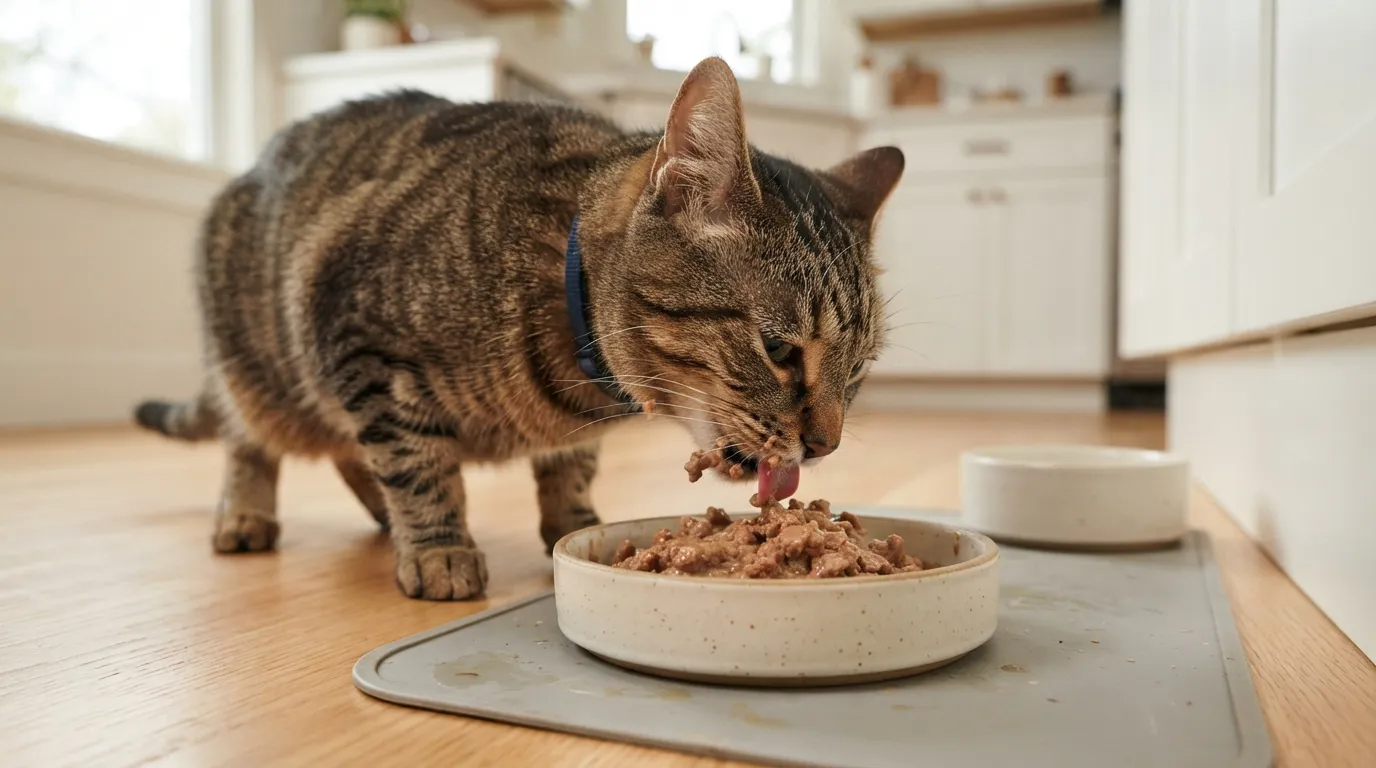
This isn’t just a food upgrade – it’s the foundation every other enrichment effort is built on.
Keeping a cat indoors comes with a responsibility to meet needs they’d otherwise meet outside on their own – and diet is the first outlet that gets neglected.
Treatment for many stress-related conditions starts with hydration, and wet food does a lot of that work quietly, meal after meal.
Quick Compare
- Wet food: roughly 70-80% moisture – closer to a cat’s natural prey diet
- Dry food: roughly 7-10% moisture – convenient, but offers little hydration support
- Cats fed only dry food tend to drink more from the bowl, yet often still fall short on total water intake
- Mixing in even a partial serving of wet food is one of the simplest ways to close that hydration gap
Indoor cats on dry-only diets face a significantly higher risk of urinary tract issues, weight gain, and chronic low-grade inflammation. Adding wet food – even as a partial swap – is one of the most impactful changes you can make.
Talk to your vet about the right ratio for your cat’s age and health profile.
You’re one upgrade away from the most important item on this list. And honestly, #1 is the one most people actively resist – which is exactly why their cats struggle.
#1 – A Genuinely Cat-Proofed, Enriched Home Layout
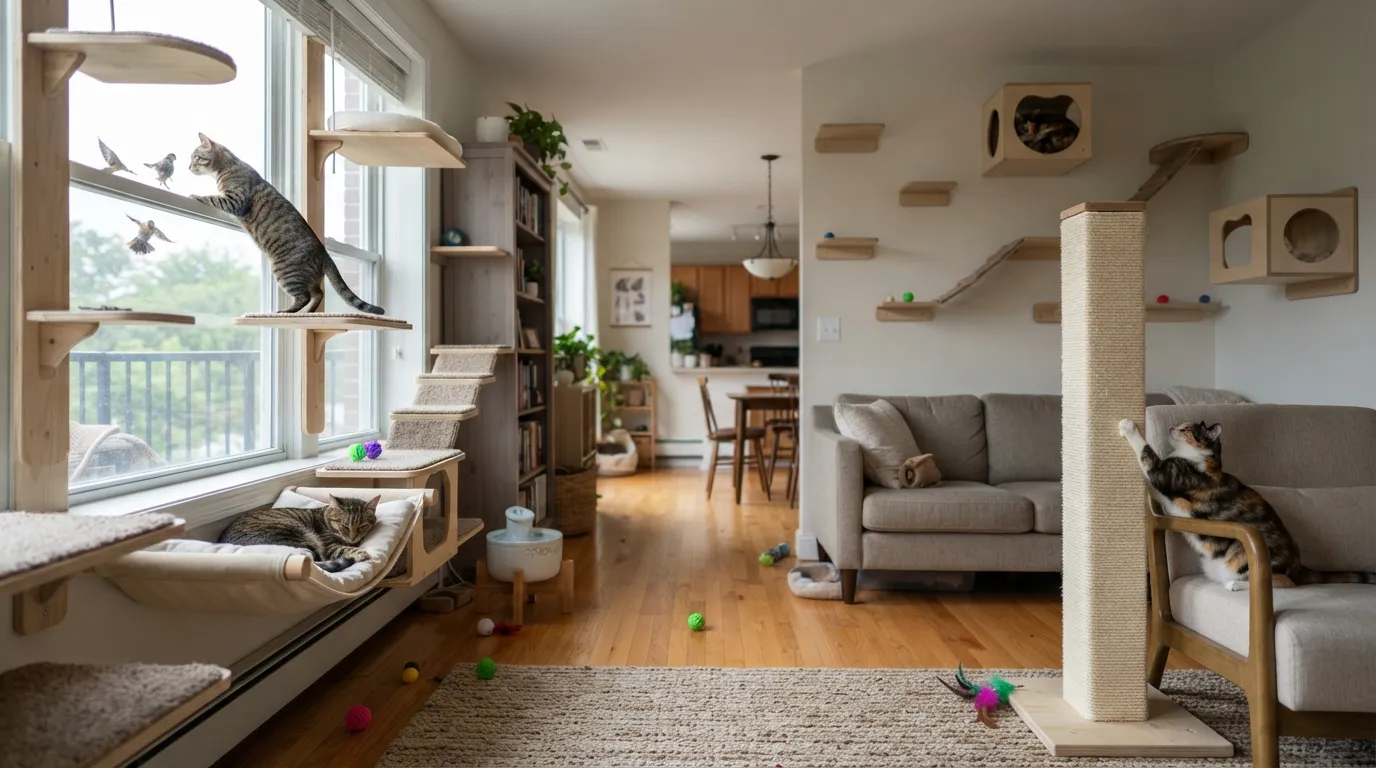
Everything else on this list fails if your home’s layout works against your cat. This is the one upgrade that makes all the others stick.
Cats keep their natural behaviors – scratching, chewing, hunting, hiding – whether you give them an outlet or not. A cat-proofed home doesn’t just remove hazards; it actively builds those outlets in.
That means climbable furniture near windows, scratchers near nap spots, water on multiple levels, and a hideable space in every major room.
Plenty of indoor cats survive in less-than-perfect surroundings – but vets care about optimizing the environment, not just hitting the bare minimum. Surviving isn’t thriving.
A layout-level rethink, even in a small apartment, is the single most powerful thing you can do for your cat’s long-term happiness.
The Bottom Line
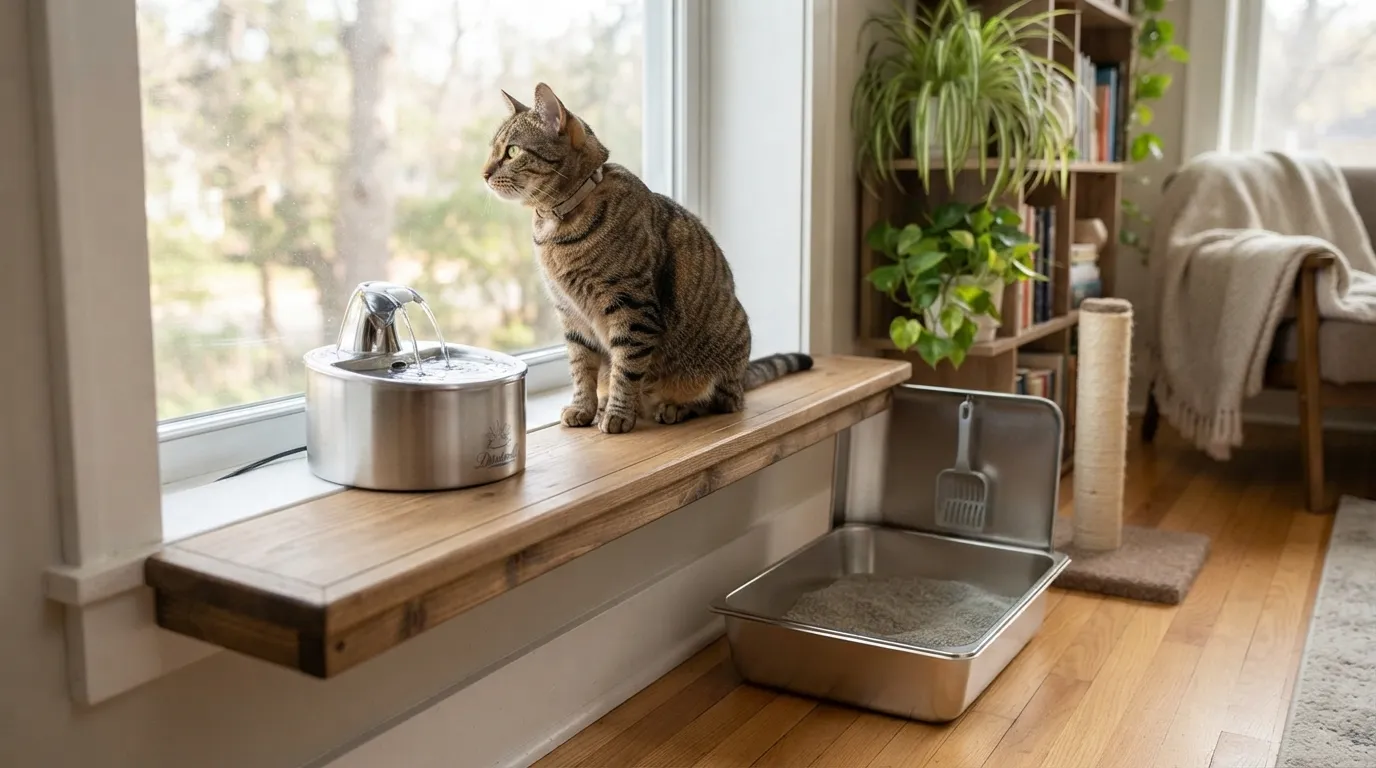
Enrichment is preventive medicine – under-stimulated indoor cats are a leading source of behavior, litter, and stress-related vet visits. The 14 upgrades above aren’t luxury add-ons; they’re the baseline your cat’s brain and body are wired to need.
Start with the easiest wins – a water fountain, a window perch, a second litter box – and build from there. Most behavioral problems vets see in indoor cats are fixable at home, without medication, once the environment is right.
The science is clear, the fixes are affordable, and your cat can’t ask for them itself. Which of these is your cat missing most right now?
Drop it in the comments – and tag a cat owner who needs to see this.
Growing up traveling and experiencing new cultures and wonders, I have had a passion for nature, adventuring, photography, and videography. I am currently working towards a BSc in Biodiversity and Ecology at Stellenbosch University, and I hope to specialise in Marine Sciences one day.
Please send any feedback to Feedback@animalsaroundtheglobe.com