Everyone assumes a sick cat wants to be left alone – it goes quiet, hides under the bed, and we respect the distance. That assumption is only half true, and the missing half is what makes this so strange.
Because when a cat is truly unwell, it doesn’t shut everyone out equally. It picks exactly one person to lean on, and what that choice reveals about trust, survival instinct, and hidden loyalty is something most owners never notice until they know what to look for.
#14 – The “Shadow Follow” That Suddenly Gets Intense
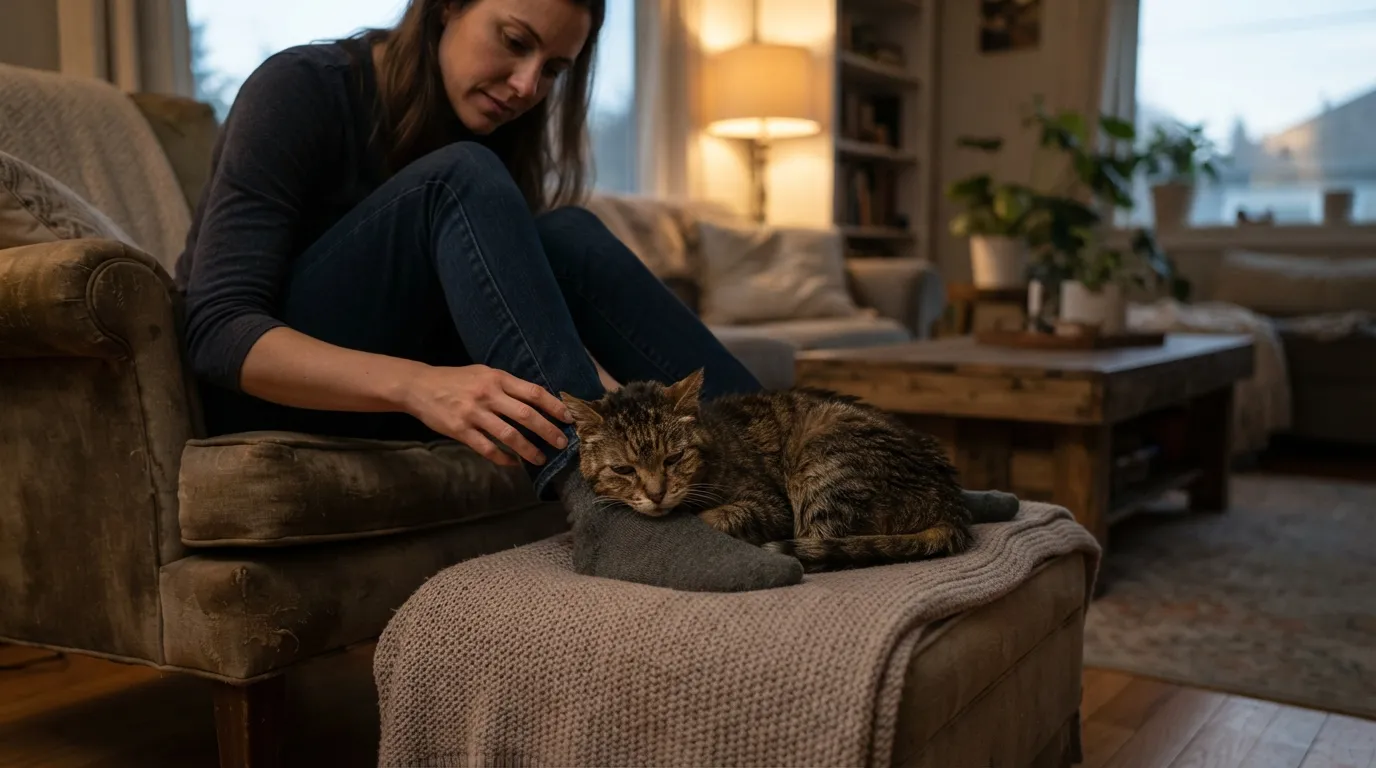
A once-independent cat glued to your ankles is not a coincidence. Something in its body has changed, and it’s leaning on you specifically to handle it.
Sick cats often start trailing one person everywhere, curling up beside them for long stretches, purring and kneading like they’re trying to say something urgent. The rest of the household barely registers.
That’s because cats attach to whoever gives them steady care and a predictable routine, and illness strips away every pretense until that one bond is all that’s left standing.
But that’s nothing compared to what happens the moment it’s time to sleep…
#13 – Sleeping Directly On (or Pressed Against) You
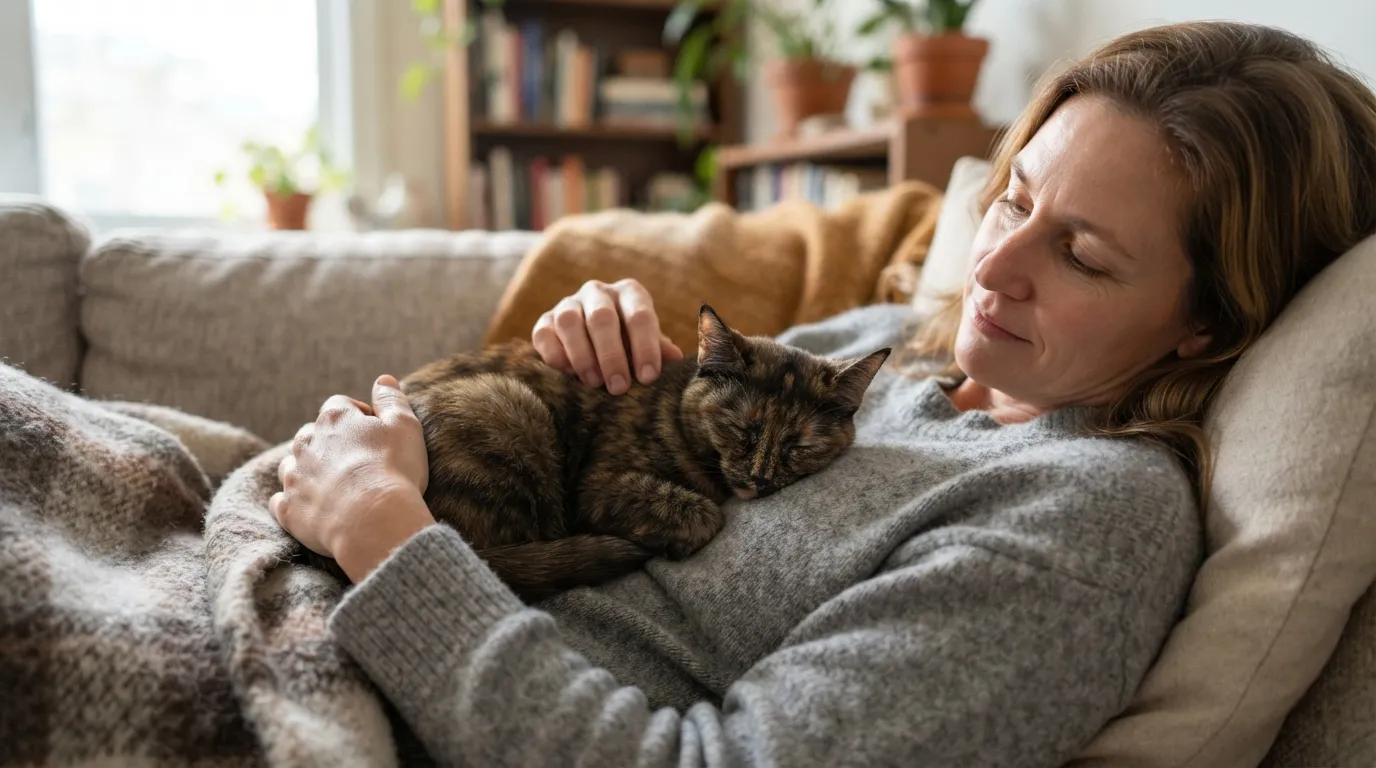
A sick cat that chooses to sleep on your body isn’t being cute. It’s making a calculated safety decision.
Cats bond through predictability and physical safety, not grand gestures. When something feels wrong inside their body, they don’t broadcast it – they go find the one lap that has always felt safe.
What’s remarkable is the specificity. A sick cat almost never settles for its “second favorite” person; it goes straight to the one it trusts most and stays there.
But that’s nothing compared to what happens when it locks eyes with you…
#12 – The Slow Blink Directed Only at You
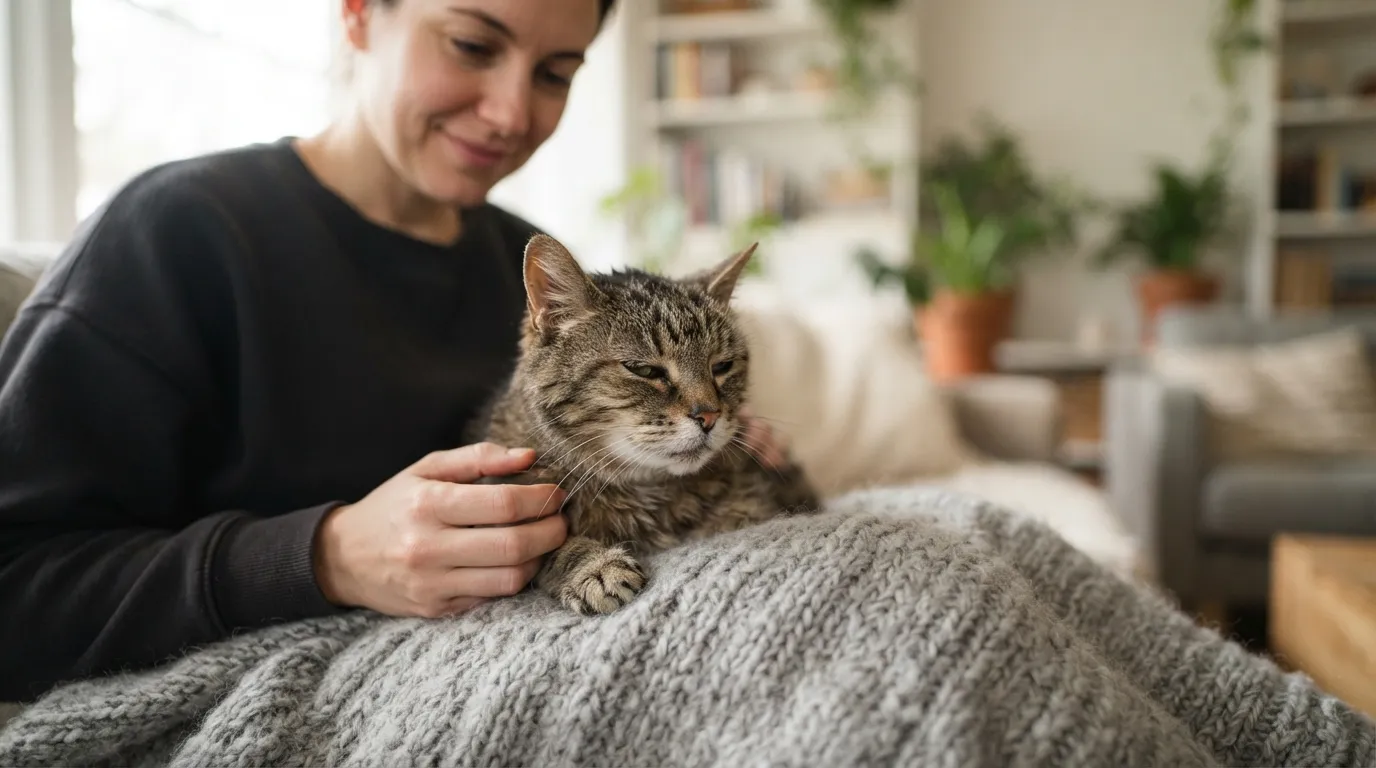
Cats don’t hand out slow blinks for free. When a sick cat locks eyes with you and does it anyway, pay attention.
A relaxed stare with slow blinks is one of the clearest trust signals a cat has, while a tense, fixed stare usually means fear or discomfort. In a vulnerable cat, the slow blink becomes almost deliberate.
It’s the closest thing to a cat saying, out loud, you are safe, even when nothing else feels safe right now. And it’s a signal reserved almost exclusively for the one human it trusts.
Fast Facts
- Slow blinking shows up most in calm, familiar settings, not stressful ones.
- Research has found cats slow-blink back more when their person blinks first.
- Cats also approach slow-blinking strangers more readily than a neutral face.
- A wide, unblinking stare usually signals fear rather than trust.
But that’s nothing compared to the sound it starts making next…
#11 – Unusually Loud or Persistent Purring Near You
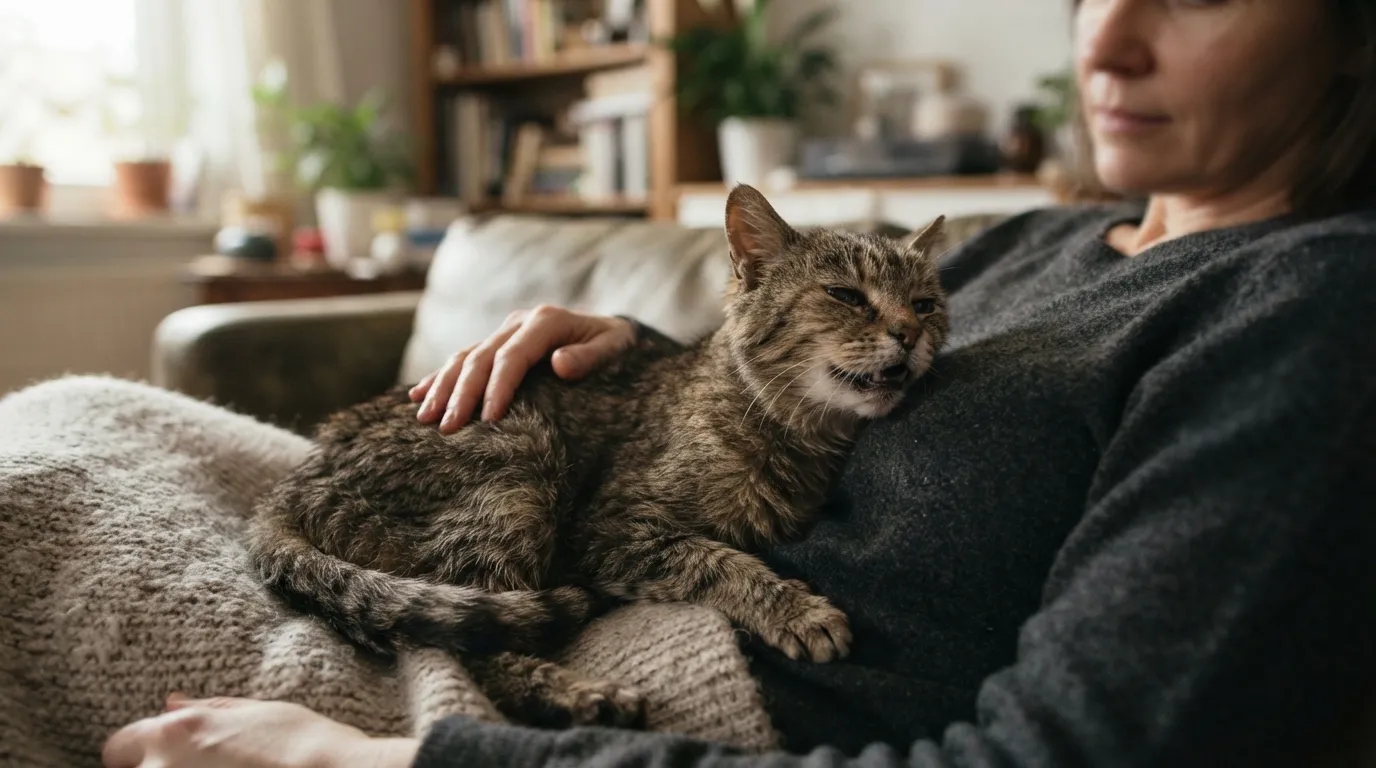
When a sick cat purrs hard in your presence, it isn’t simple contentment. Something more complicated is going on underneath.
Purring can actually help a cat feel better when going through painful situations because it releases endorphins.
Dr. Sabrina Kong, DVM
The low frequency of a cat’s purr has been shown to ease pain, lower stress, and even steady labored breathing. It’s self-soothing, the same way humans take deep breaths to calm down.
Here’s the part most owners miss: purring often intensifies during higher pain or stress. When a sick cat purrs loudest next to one specific person, it’s using that person as part of its own pain-management system.
But that’s nothing compared to what it does with its head next…
#10 – Head-Butting and Scent-Marking You More Than Usual
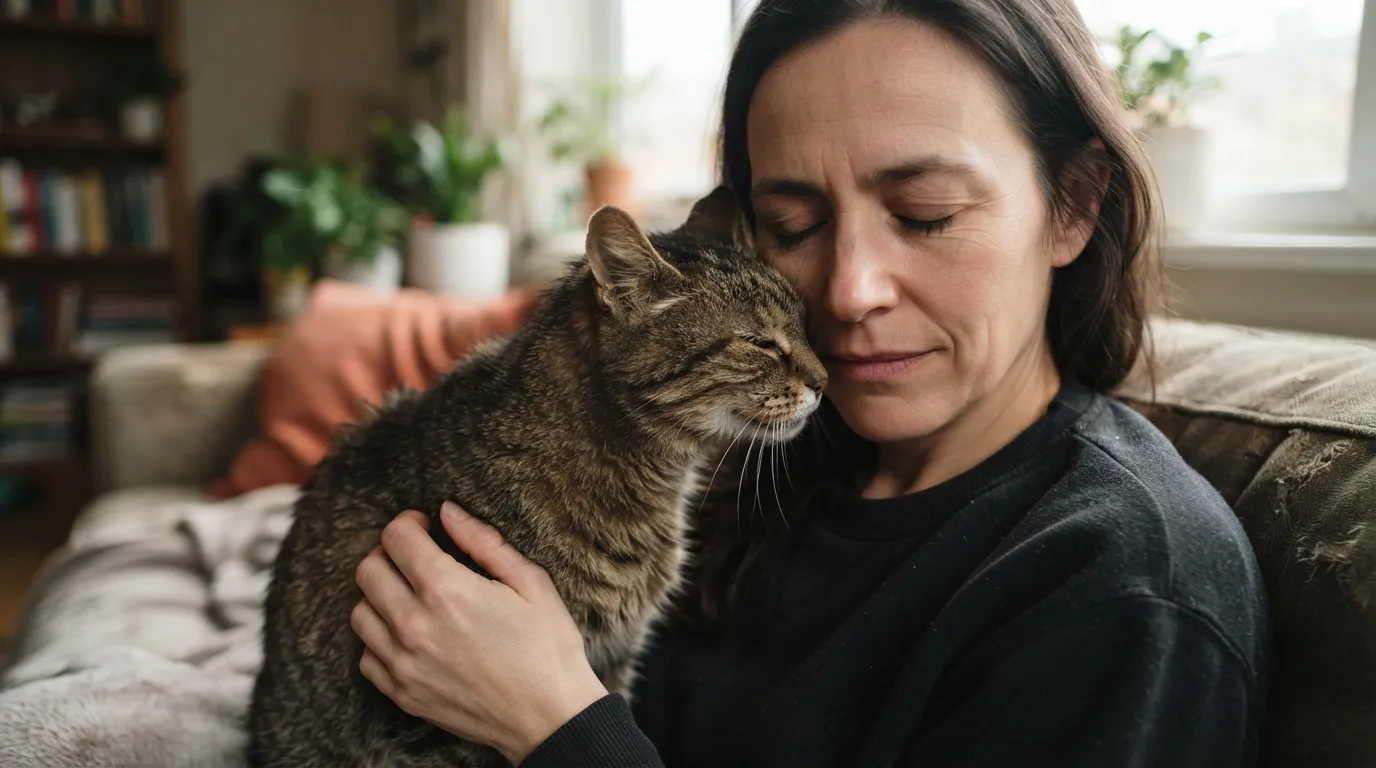
A sick cat that headbutts you over and over isn’t just being affectionate. It’s reclaiming its anchor.
Cats have scent glands on their foreheads and cheeks, and rubbing against you is literally marking you as theirs. When a cat feels unwell and uncertain, that marking behavior intensifies dramatically toward one trusted person.
It’s the feline equivalent of grabbing someone’s hand in a crowded room. It almost never happens with strangers, and rarely even with other family members in the house.
But that’s nothing compared to where it chooses to hide next…
#9 – Choosing to Hide Near You, Not Away from You
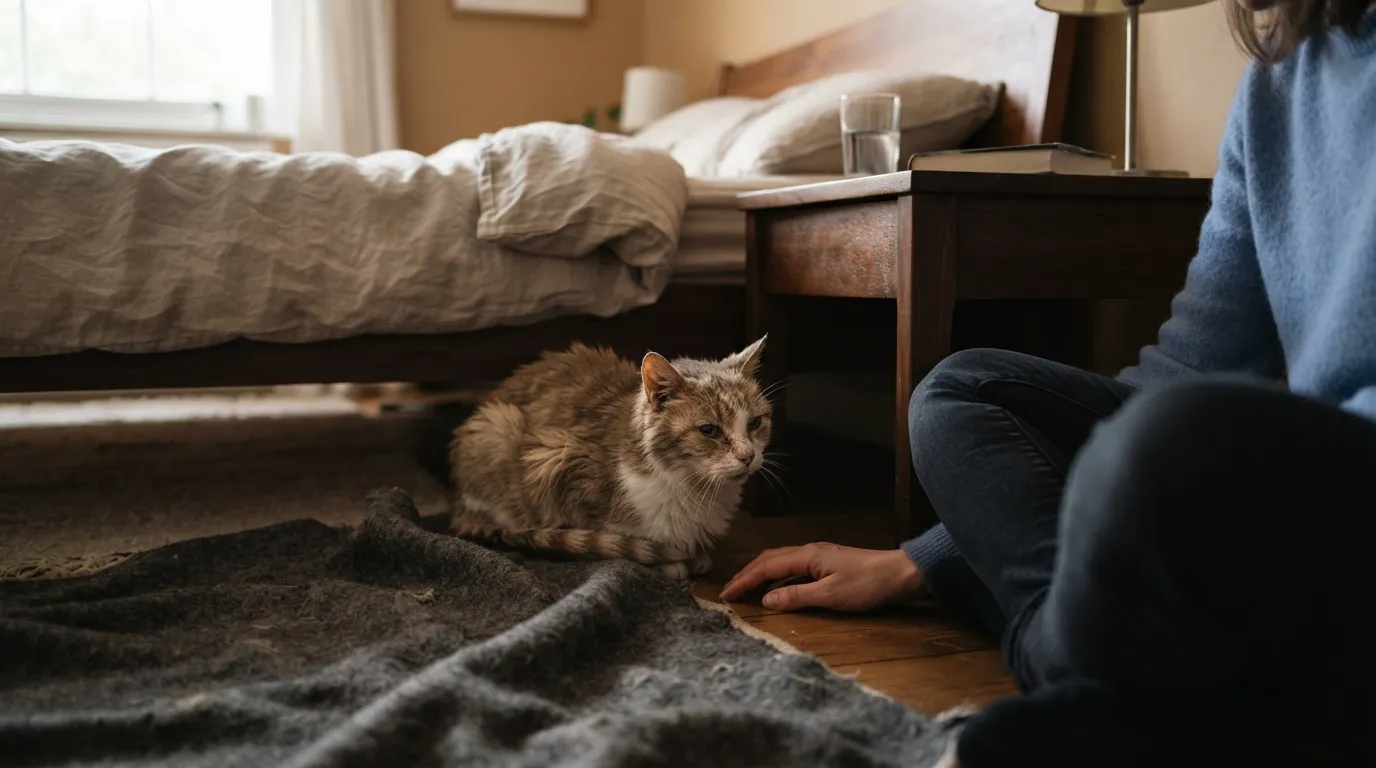
Everyone knows sick cats hide. What most people get wrong is exactly where.
A cat deeply bonded to one person doesn’t retreat to the farthest, quietest corner of the house. It hides close – under your desk, behind your side of the bed, tucked into your closet.
In the wild, a visibly sick cat is a target, so hiding is ancient instinct. But hiding near its trusted human instead of far away means trust is overriding fear – and that’s a massive distinction.
But that’s nothing compared to the stare it gives you next…
#8 – Making Direct Eye Contact and Holding It
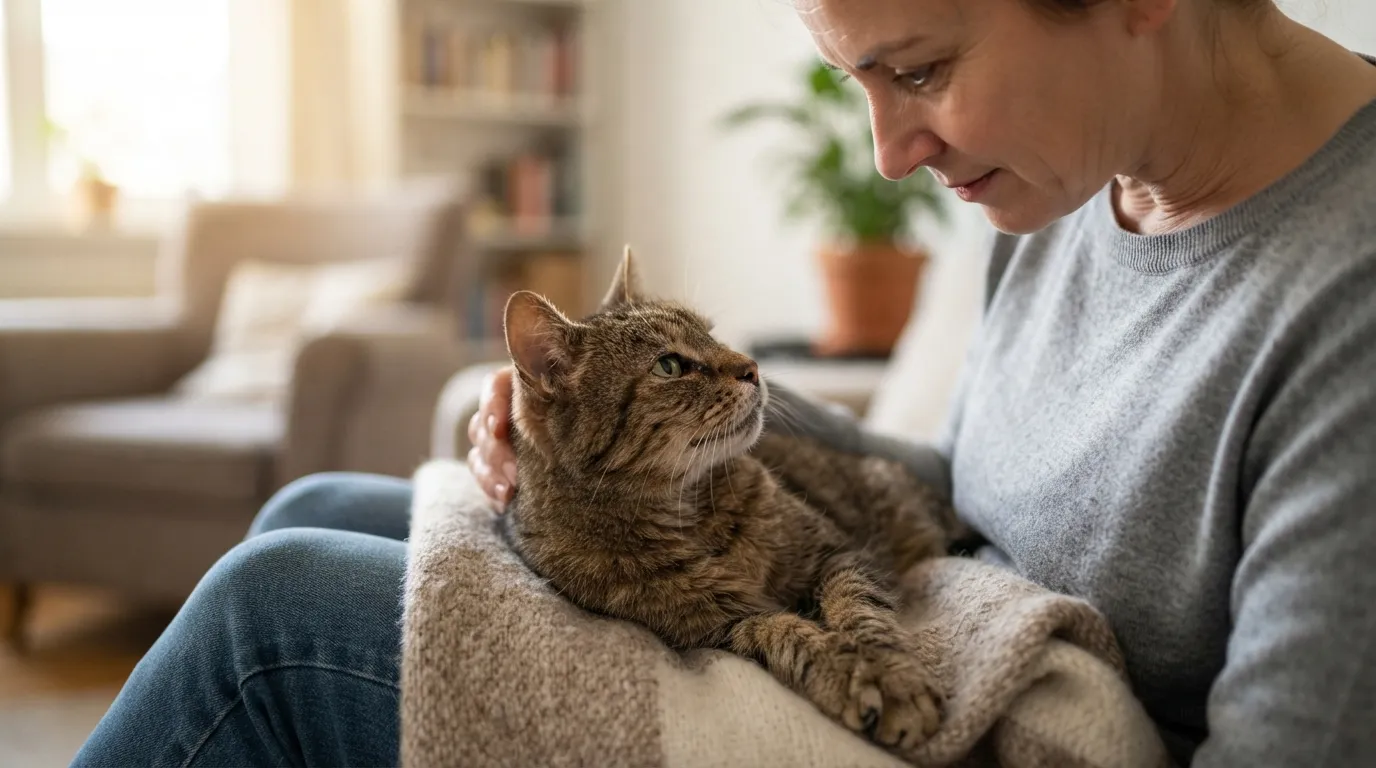
Cats avoid sustained eye contact with anyone they don’t fully trust. So a sick cat that stares straight at you is communicating something urgent.
Cats read body language, facial expression, and mood with startling precision. When they’re ill, they lean on that skill harder than ever, watching their trusted person’s face for reassurance.
Prolonged eye contact from a sick cat is essentially it asking, are you still here? – and it only asks the one person whose answer actually matters to it.
But that’s nothing compared to what its paws start doing on your lap…
#7 – Kneading You (But Nobody Else)
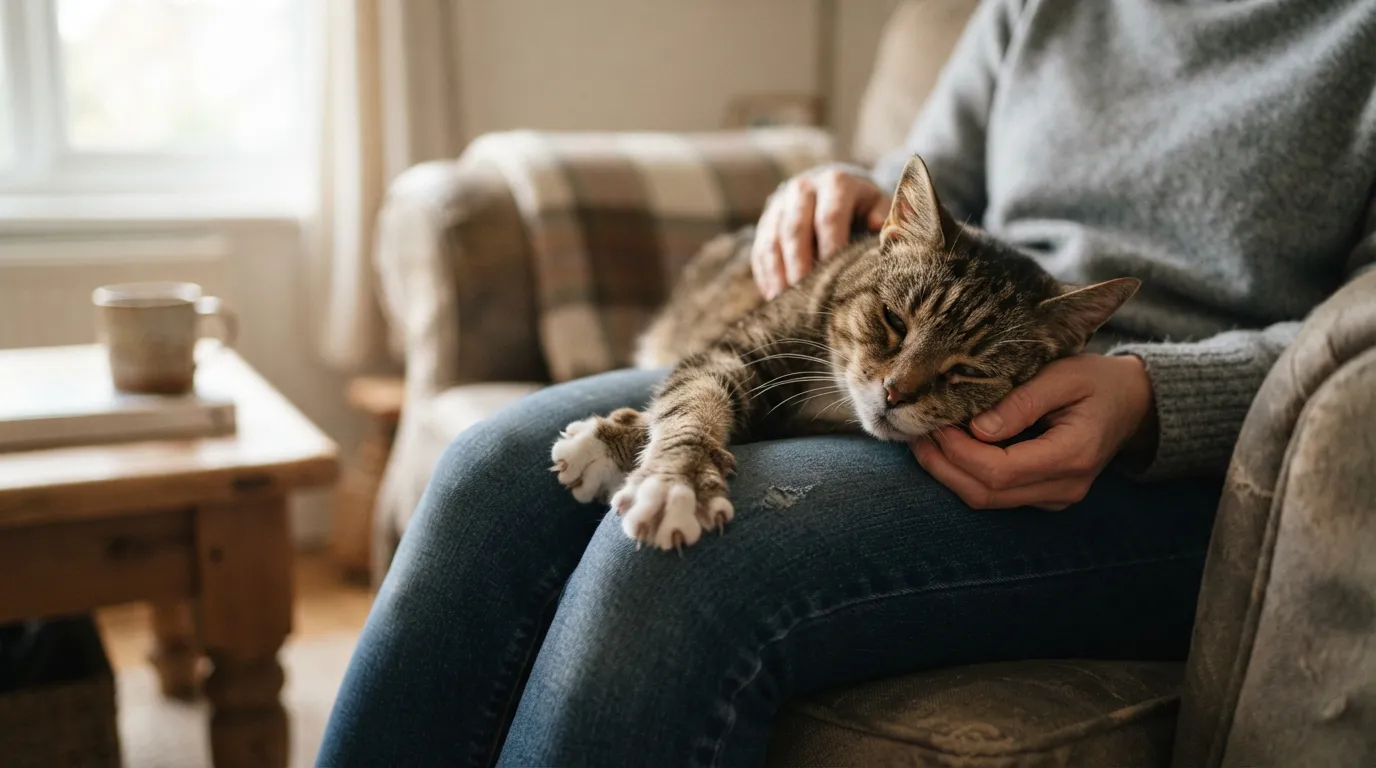
Kneading – that slow, rhythmic pushing of the paws – is one of the most emotionally loaded things a cat does. A sick cat kneading your lap is telling you something deep.
It’s a leftover behavior from kittenhood, from nursing and feeling completely safe. When a cat is frightened by illness, that regressive comfort ritual resurfaces, and it only comes out around someone deeply trusted.
Worth Knowing
- Kittens knead their mother’s belly to stimulate milk flow while nursing.
- The motion is tied to feel-good hormones released during that early bond.
- Paw pads carry scent glands, so kneading also marks a spot as “claimed.”
- A sudden change in kneading habits can be a quiet sign of pain or stress.
Even without constant interaction, a trusted human’s presence alone provides reassurance. A sick cat choosing to knead specifically on you means, to that animal, you are the closest thing to home.
But that’s nothing compared to what it does with its tongue next…
#6 – Grooming You or Attempting To
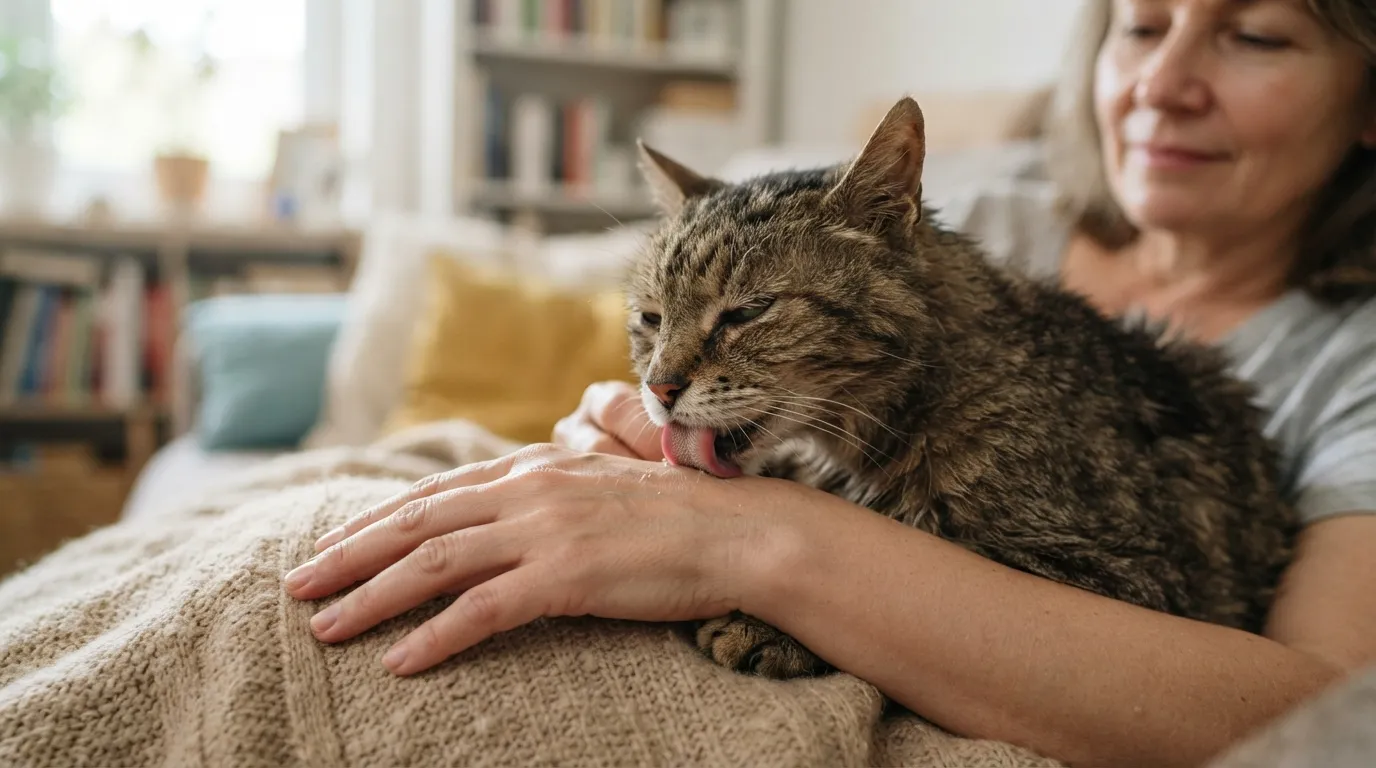
If your sick cat starts licking your hand, arm, or hair, that’s not random affection. It’s a bonding signal cranked up by vulnerability.
Mutual grooming between cats – called allogrooming – is reserved strictly for those they genuinely trust. It is never done casually, and never done with strangers.
A sick cat grooming you is placing you inside its inner circle, the same way it would treat a bonded feline companion. The “independent cat” myth quietly falls apart right here.
But that’s nothing compared to the sound it makes only for you…
#5 – Vocalizing Specifically Toward You
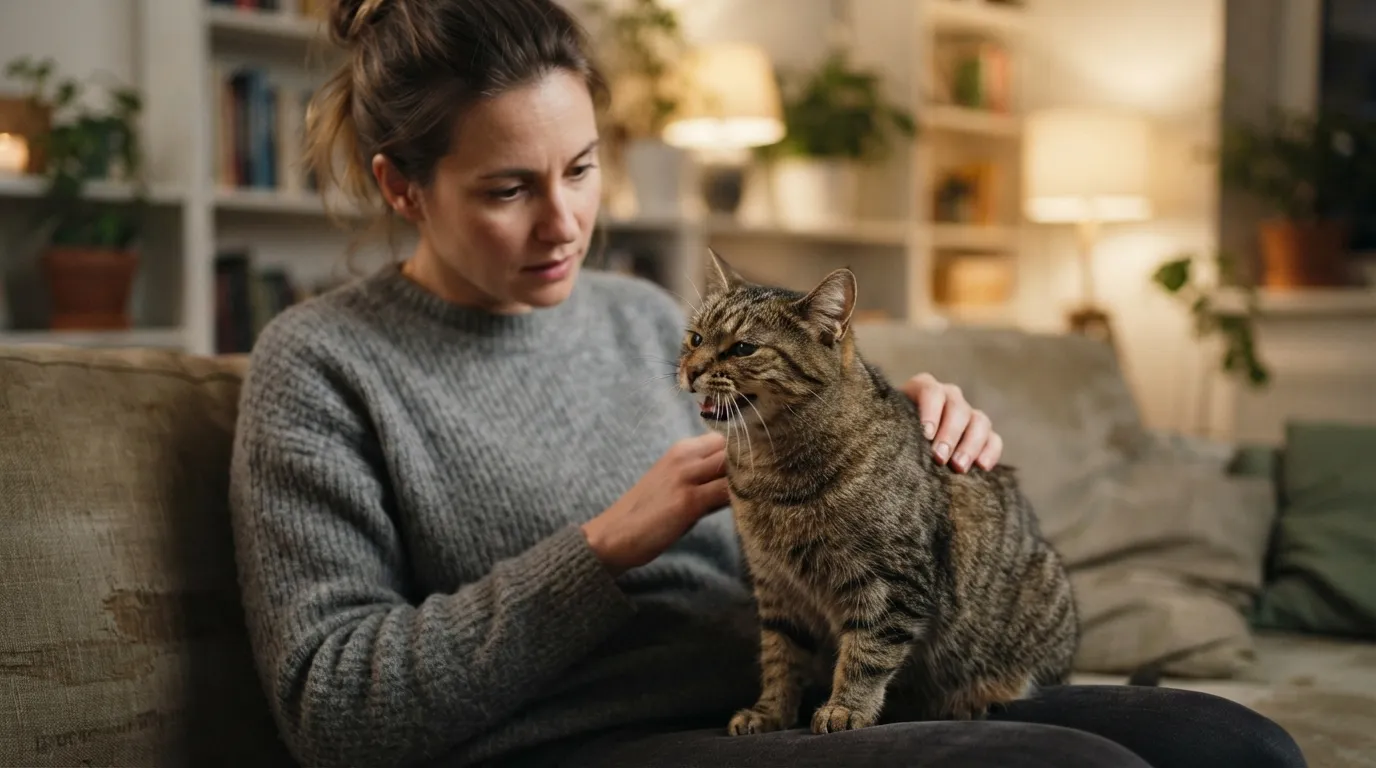
A sick cat that meows, chirps, or whimpers at you – and nobody else in the house – is doing something remarkably intentional.
Some cats get more vocal when unwell, as if trying to flag the problem. The key detail is direction: the sound isn’t broadcast to the whole room, it’s aimed squarely at one person.
Cats pick up on your tone and body language, and they only bother communicating need to someone they believe will actually respond. That selectivity is the real story here.
But that’s nothing compared to what it does even while it’s in pain…
#4 – Seeking Your Lap Even When Movement Is Painful
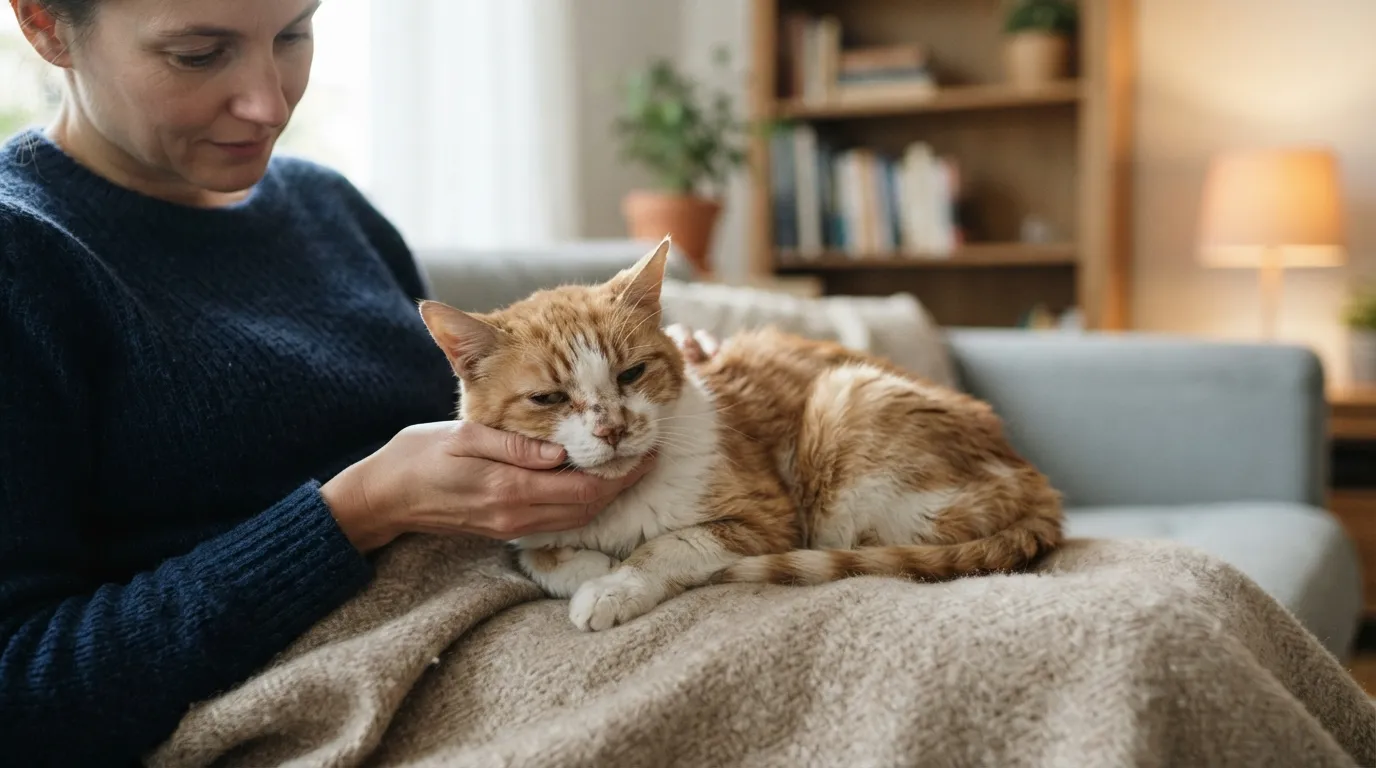
A cat in real pain typically minimizes movement. So when a sick cat still makes the effort to climb into your lap, that act carries serious weight.
Whether it’s arthritis, dental pain, or something internal, discomfort usually pushes cats to retreat and stay still. Crossing the room anyway, toward one specific person, is a deliberate override of pure survival instinct.
Securely bonded cats show measurably less stress around their trusted person, even mid-illness. A sick cat choosing your lap over stillness is proof your presence calms it more than rest does.
But that’s nothing compared to what its breathing starts doing next…
#3 – Mirroring Your Stillness and Breathing
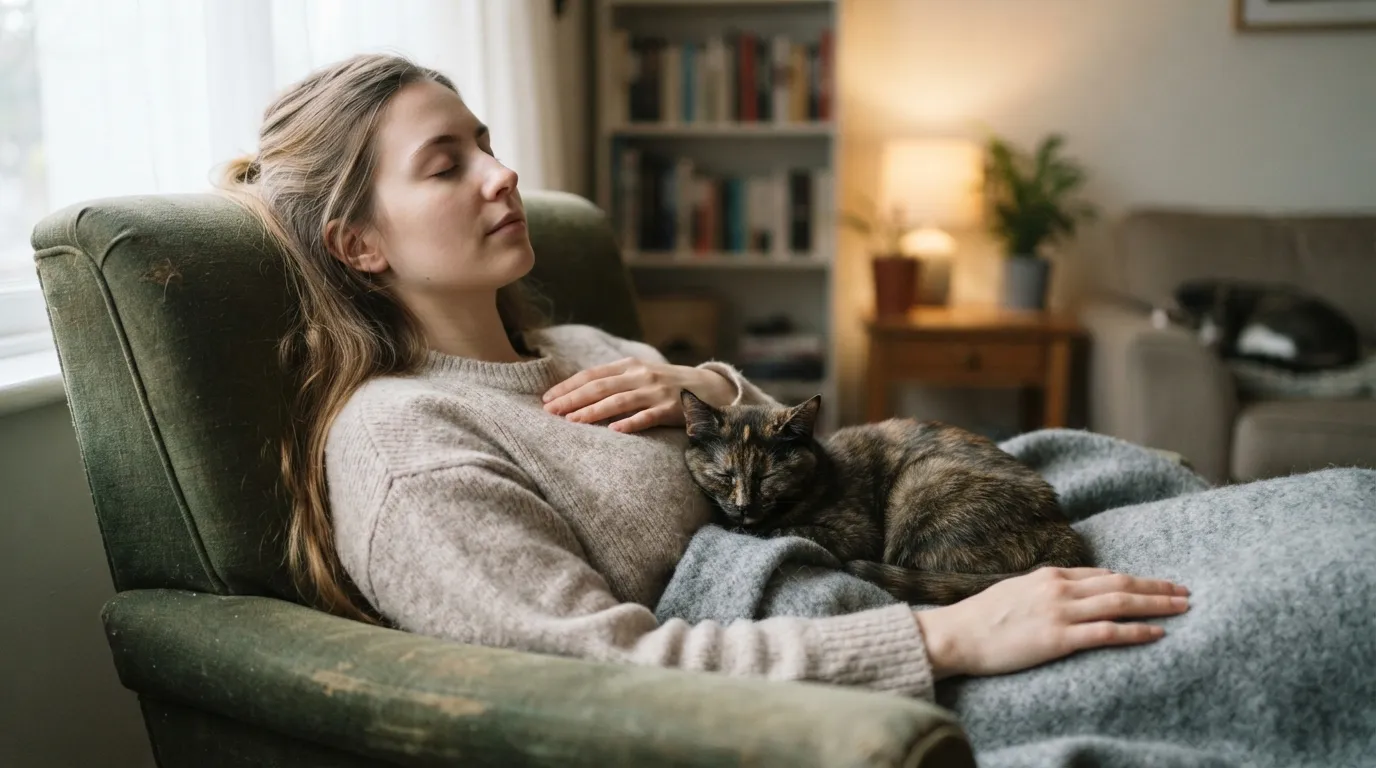
This one is subtle, and most owners never consciously catch it. But it’s one of the most striking things a sick cat does for its trusted person.
Sick cats often mirror their owner’s energy – going quieter, resting more, skipping play. The reverse happens too: slow your breathing and soften your posture, and a bonded cat visibly settles right along with you.
Cats are remarkably tuned to their trusted person’s emotional state, anxiety included. The regulation runs both directions, and a sick cat will use your calm like medicine – but only your calm.
But that’s nothing compared to what happens after it disappears…
#2 – Coming to You After Retreating from Everyone Else
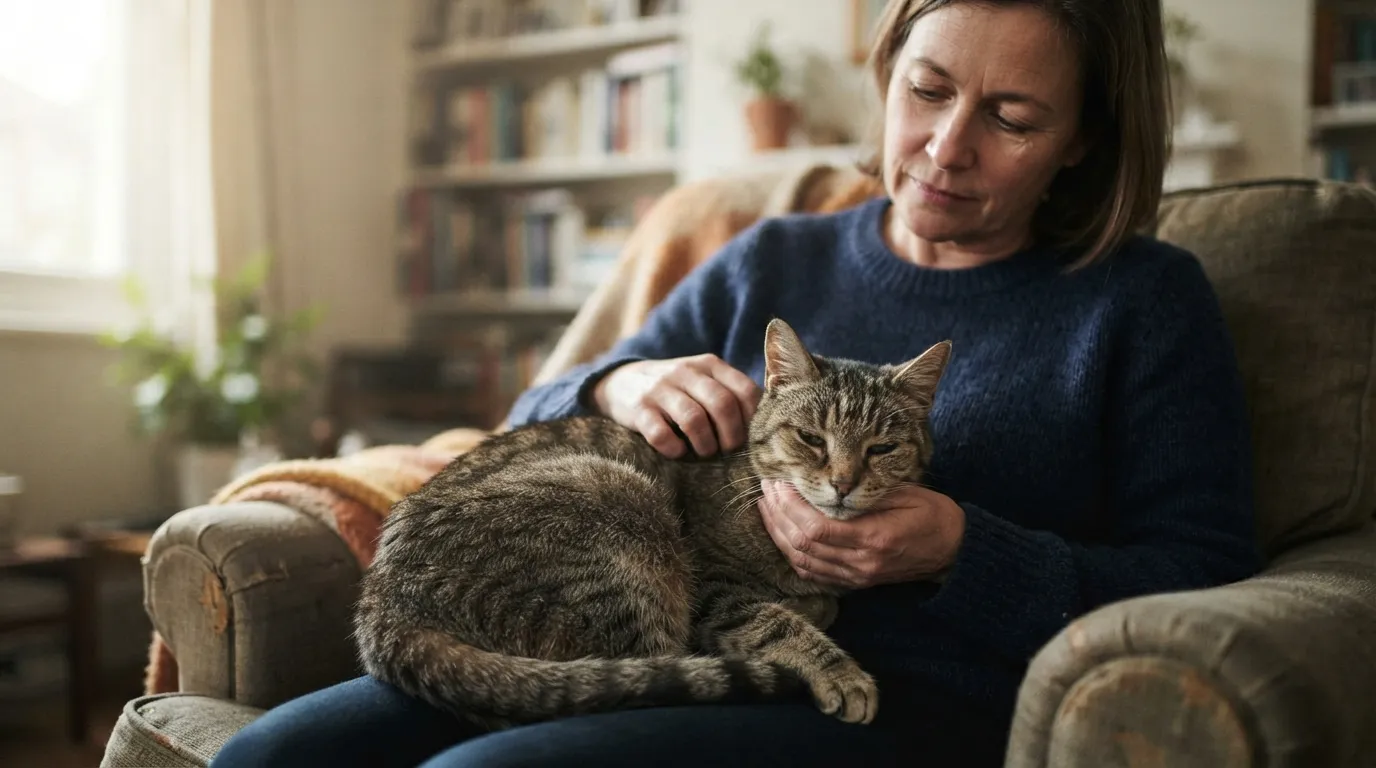
Here’s the pattern that surprises even experienced cat owners. A sick cat vanishes, everyone worries, and then it reappears – for exactly one person.
Cats are experts at masking pain, so withdrawal alone can signal illness. What matters most is the sequence: retreat first, then a deliberate return aimed at a single human.
At a Glance
- Cats are known for masking illness far longer than dogs typically do.
- A brief disappearance followed by a deliberate return often works like a security check.
- Reunions with a trusted caregiver tend to look calmer than with anyone else.
- The pattern mirrors classic secure-attachment behavior seen in other bonded animals.
In attachment studies, cats reunited with their trusted caregiver after a brief separation show noticeably less stress than with anyone else. Illness recreates that exact reunion moment in real life, and the cat always finds its way back to its secure base.
But that’s nothing compared to what it does through the entire night…
#1 – Staying Within Touching Distance All Night
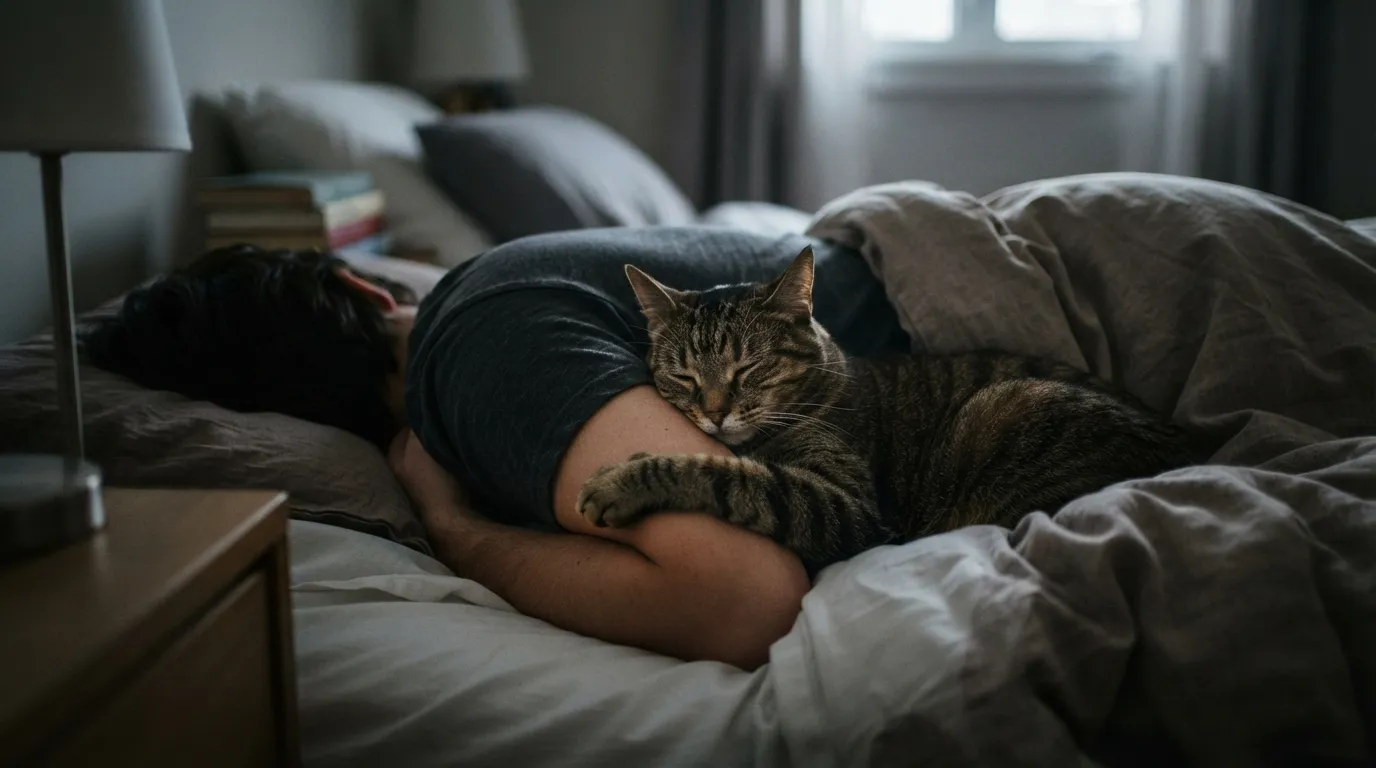
This is the one. Once you understand it, you’ll never look at your cat the same way again.
Many owners report their cats seem almost eerily attuned to when they’re needed most. A truly unwell cat doesn’t just seek you out during the day – it stations itself within touching distance through the entire night, paw or body pressed against you.
Dr. Jo Righetti, one of Australia’s leading animal behaviourists, notes that this kind of following isn’t a behavioral problem at all – it reflects trust and emotional safety.
Staying within touch all night while sick is the most unguarded thing a cat can do, because survival instinct is fighting hard against vulnerability, and trust wins anyway. If your sick cat does this, you are genuinely its safe place in the world.
The Bottom Line
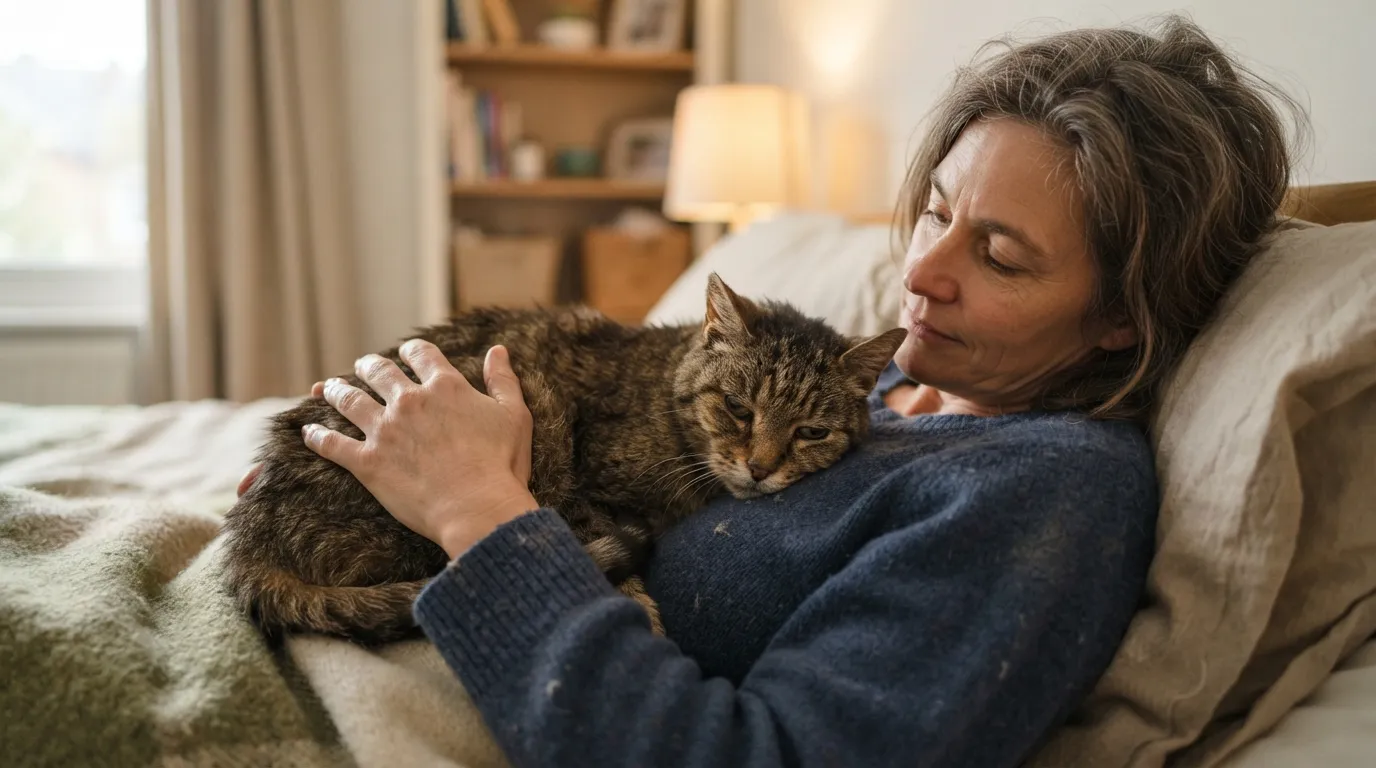
Dogs evolved to signal the pack the moment they’re hurt, because the pack means protection. Cats are solitary by nature – there’s no built-in safety net waiting for them.
That’s exactly what makes it so significant when a sick cat breaks that ancient pattern and seeks out one specific human anyway.
Quick Compare
- Dogs: pack animals that historically signal injury openly for group protection.
- Cats: solitary hunters that historically hide weakness to avoid becoming prey.
- A sick cat seeking one human anyway breaks that ancient survival script completely.
The purring, the kneading, the overnight vigil – every single behavior on this list is a sick animal choosing vulnerability over instinct, because it trusts you that much.
If you’ve watched any of these play out in your own home, you weren’t imagining it. That bond is real, it’s rare, and it’s been quietly running the whole time.
Kristina is a young writer from India. An arts graduate and an avid content creator, Kristina is passionate about animals and wildlife. She enjoys exploring topics related to pet care, animal behavior, conservation, and nature, combining thorough research with engaging storytelling.