Most people think cats are aloof little roommates who merely tolerate the humans who feed them. The truth is stranger, and far more touching.
Devoted breed cats – Siamese, Ragdoll, Burmese, Birman – run a quiet, deliberate loyalty campaign aimed at exactly one person, and most owners never notice it happening. Fifteen behaviors below prove it, starting with a walk your cat performs for no one else but you.
#15 – They Do the “Tail-Up” Walk Exclusively for You
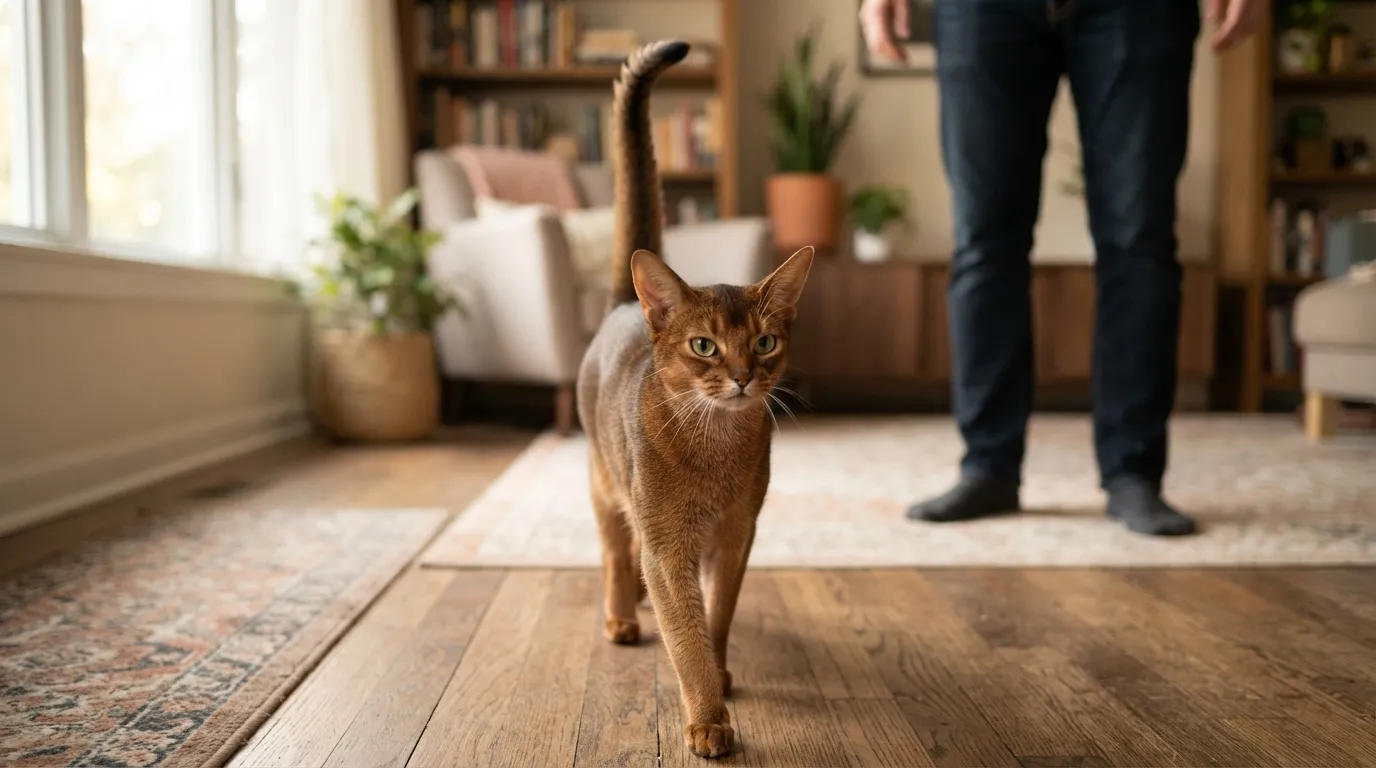
That confident, upright tail your cat flaunts when you walk in the room? It’s not random.
The tail-up greeting is a documented cat-to-cat signal for social interaction. Wild and feral cats rarely show it to humans at all, which suggests domestic cats invented this exact greeting for the people they live with.
Your devoted cat basically created a hello just for you. Watch closely: a quivering tail tip means the emotion behind it is turned all the way up.
But the tail is just the opening act. What happens on your cat’s face next is a signal you’ve probably been ignoring for years.
#14 – They Give You the Slow Blink “Cat Kiss”
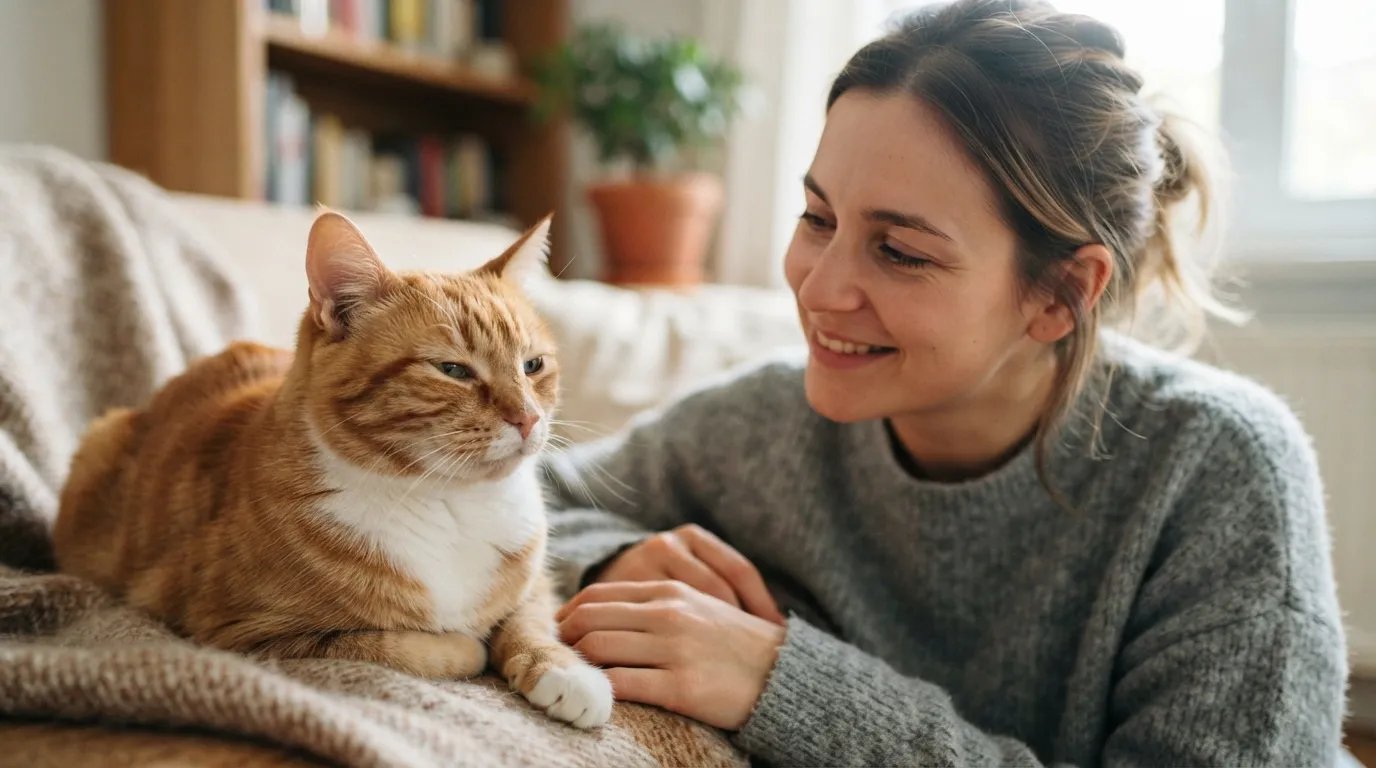
Cats greet strangers, and animals they don’t trust, with a hard, unblinking stare. With people they trust, they do something completely different.
Research links the slow blink to a relaxed, positive emotional state – it works almost like a human smile. Studies also found cats slow-blink back more often after their owner slow-blinks first, which means this is a two-way conversation you can actually join.
Try it tonight: soften your eyes and blink slowly at your cat. If a stranger gets the cold stare and you get the blink, you’ve officially been chosen.
Fast Facts
- Psychologists at the University of Sussex and the University of Portsmouth ran the original slow-blink experiments.
- Cats were significantly more likely to narrow their eyes back after a person slow-blinked at them first.
- In a follow-up test, cats were also more likely to approach an outstretched hand after that person slow-blinked at them.
Think that’s intimate? What comes next is even more personal – they’re literally marking you as theirs.
#13 – They Headbutt and Scent-Mark You as Theirs
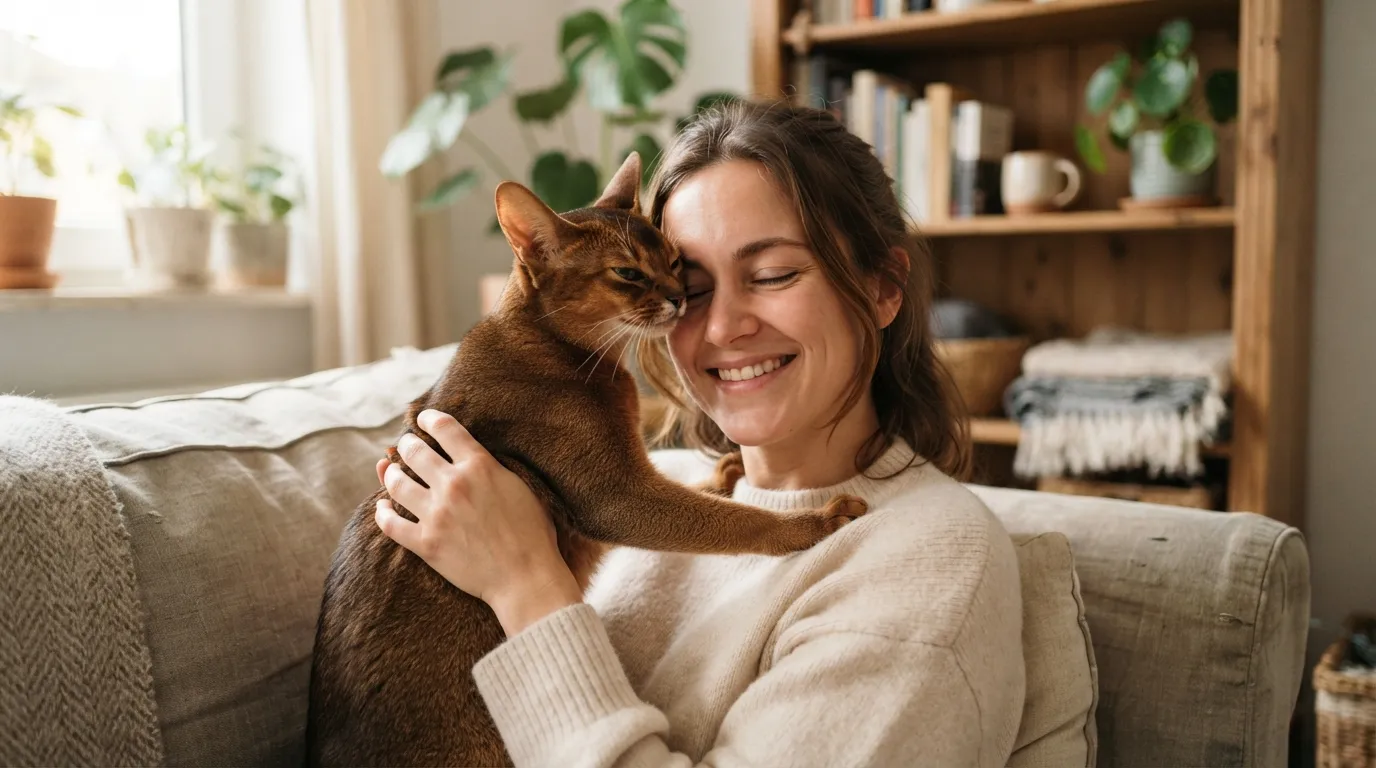
When a cat presses its head against your face or hand, it’s not just being sweet. It’s depositing scent from glands in its cheeks, chin, and forehead onto you.
This is called head bunting, and it’s one of the clearest signs of feline social bonding there is. Your cat is literally claiming you as territory.
Head bunting is usually reserved for a cat’s closest feline friends and its most trusted humans. The mail carrier doesn’t get this. You do.
That possessiveness runs even deeper. Next up: how devoted breeds guard you, even while you’re both asleep.
#12 – They Sleep On or As Close to You as Possible
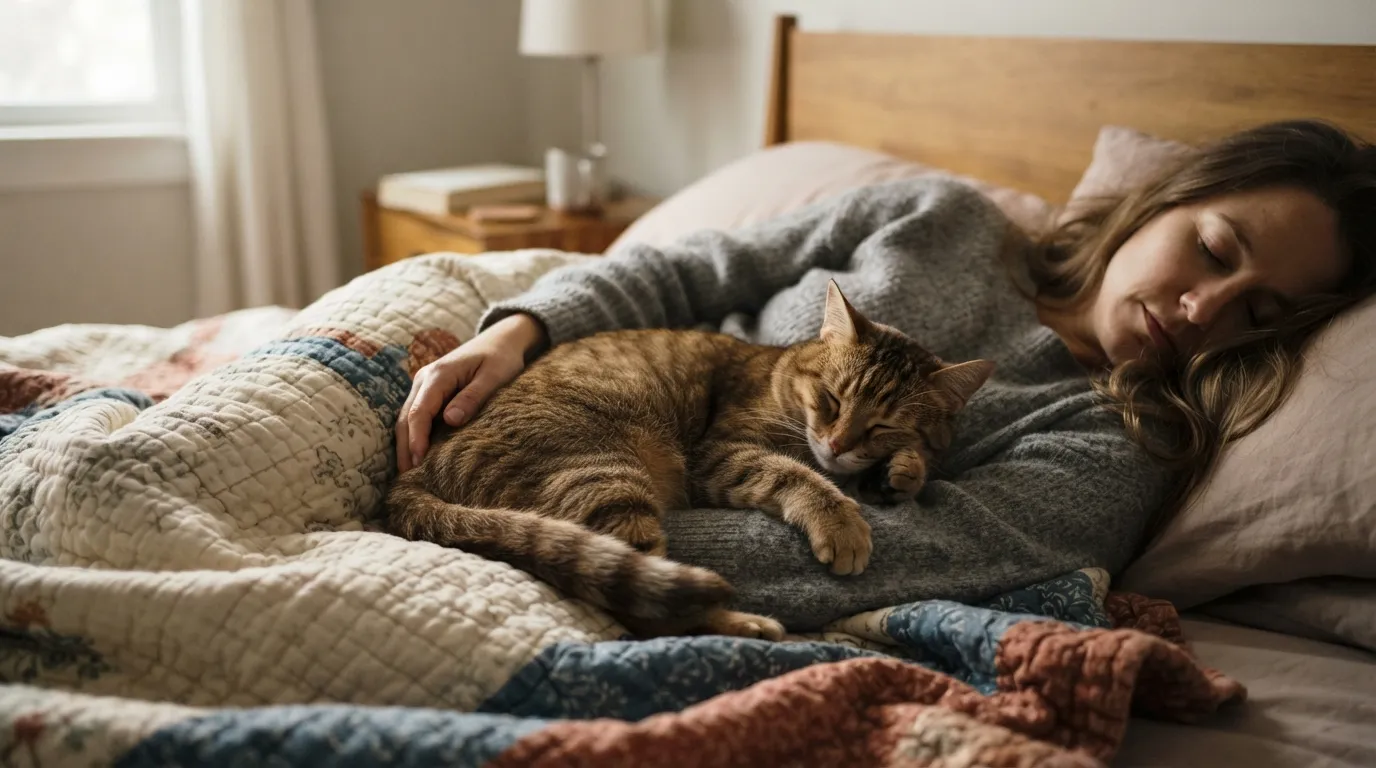
Sleep is the most vulnerable state an animal can be in. A cat who chooses to sleep pressed against you is telling you something serious.
Choosing to sleep near their owner – or directly on them – is a well-documented sign of feline trust and comfort. It’s one of the deepest connections a cat can offer.
The ultimate compliment is when they sleep directly on you. Being that close to you during their most defenseless hours means you’ve earned real trust.
And while they sleep near you, they’re quietly tracking everything else you do. What comes next reveals just how precisely.
#11 – They Anticipate Your Routine With Uncanny Precision
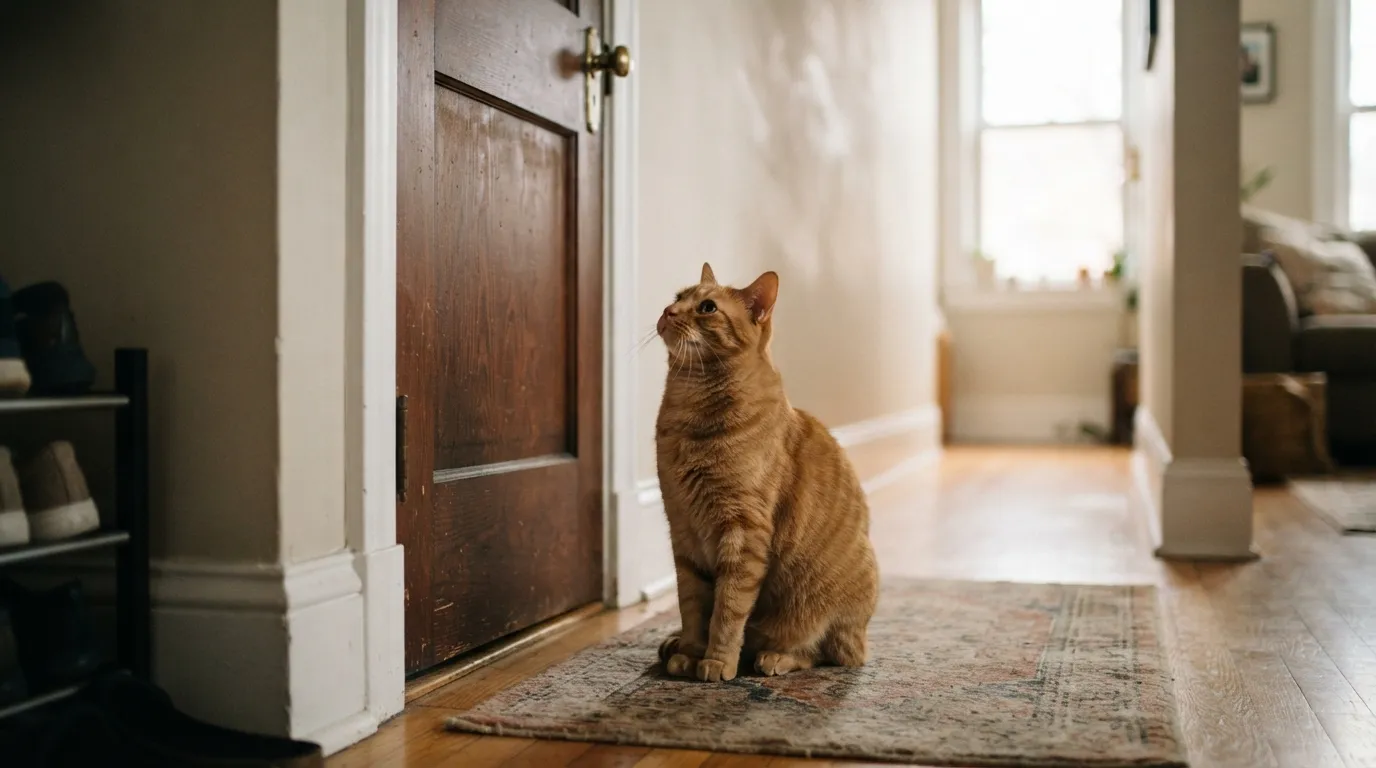
Cats can anticipate regular events within roughly 15-minute windows, adjusting their own sleep and activity to match your schedule. Meal times, play sessions, bedtime – they build a mental model of all of it.
A devoted breed cat isn’t reacting to you; it’s pre-loading for you. This shows up as pacing near the food bowl minutes before you usually feed them, or waiting by the bedroom door right on cue.
Change your routine unexpectedly and a deeply bonded cat will often seem genuinely confused or unsettled. That’s not coincidence – that’s a broken pattern they built around you.
That same routine-tracking shows up in an even more obvious way next – the way they monitor your movement through the house.
#10 – They Shadow You From Room to Room (Including the Bathroom)
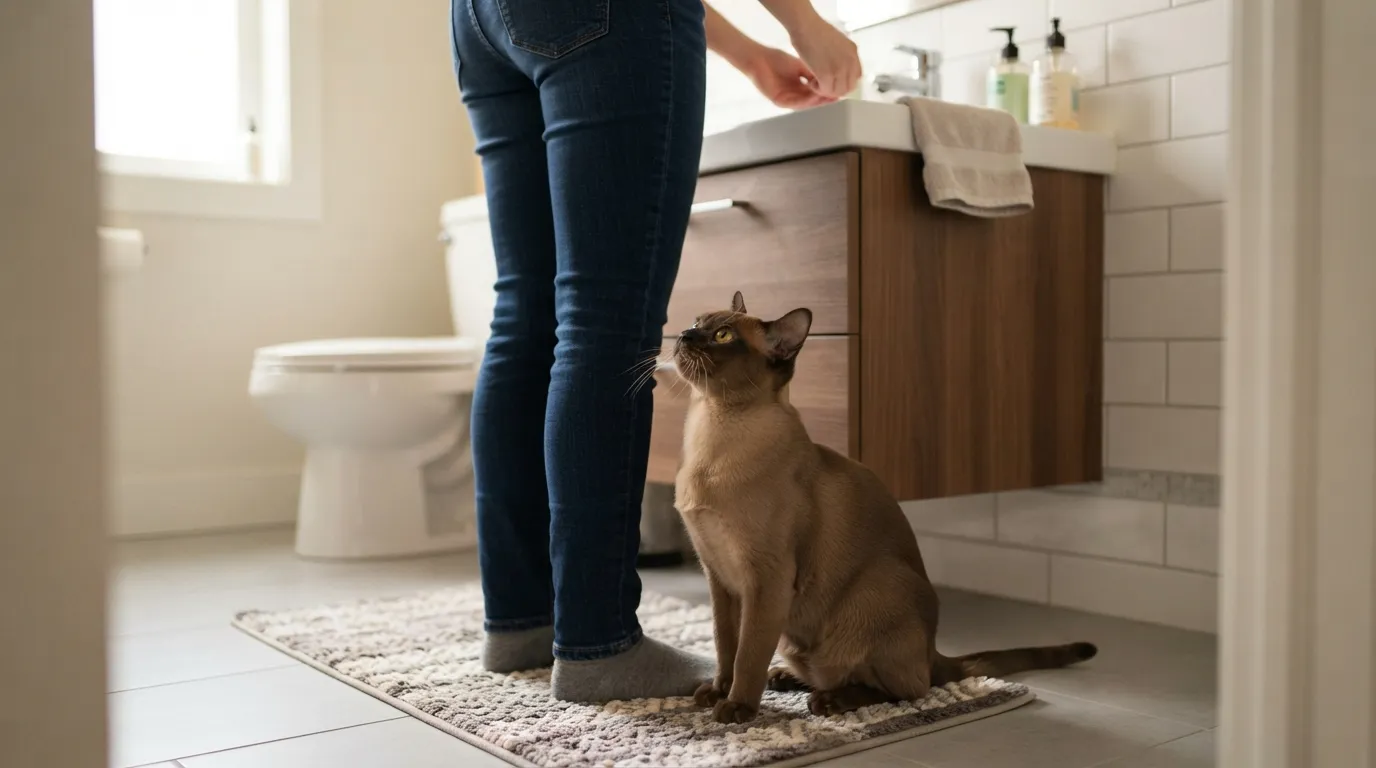
If your cat follows you everywhere – even into the bathroom – it’s not random curiosity. It’s a strong sign they feel connected to you.
This shadowing behavior has deep roots in feline colony life, where close physical proximity signals membership in the same social group. Burmese cats take this the furthest, earning a reputation as classic “shadow cats” whose whole love language is physical closeness.
They’re not being clingy. They’re treating you like family.
But shadowing is just movement. Next is something you can hear – a sound a devoted cat develops for you and only you.
#9 – They Trill and Chirrup at You (and Only You)
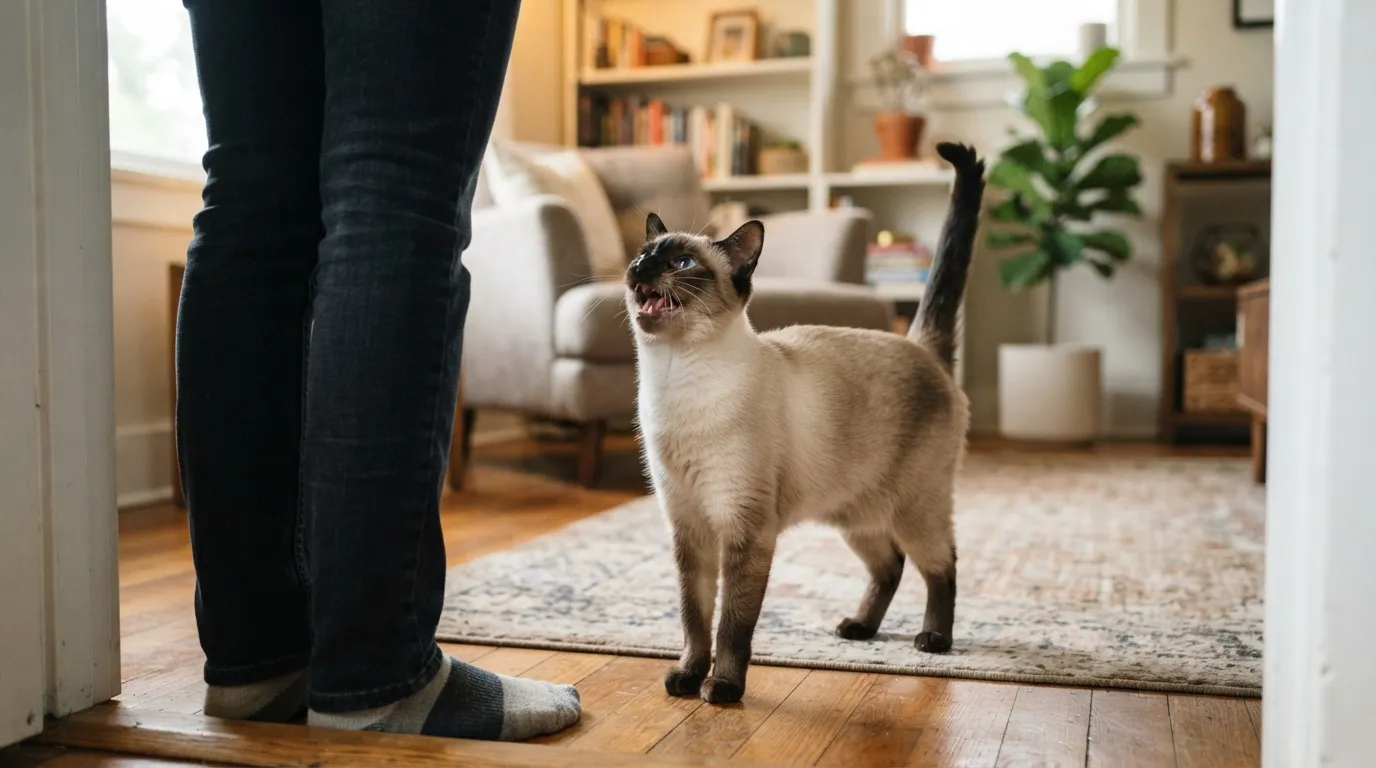
The chirrup or trill is a melodic little greeting cats reserve for people they like. If your cat sings at you when you walk in, they’re genuinely pleased to see you.
Bonded cats develop something close to a private vocal language with their chosen human, similar to how mother cats “talk” to their kittens. This sound isn’t part of a feral cat’s normal vocabulary – it evolved specifically for the bond with you.
Siamese cats are famous for this. Silence is rarely their style, especially the moment they want your attention.
Get a chirrup every time you enter the room? You’re not just the owner. You’re the person. And what’s next shows exactly how they respond when that person is having a hard day.
#8 – They Seek You Out When You’re Unwell or Upset
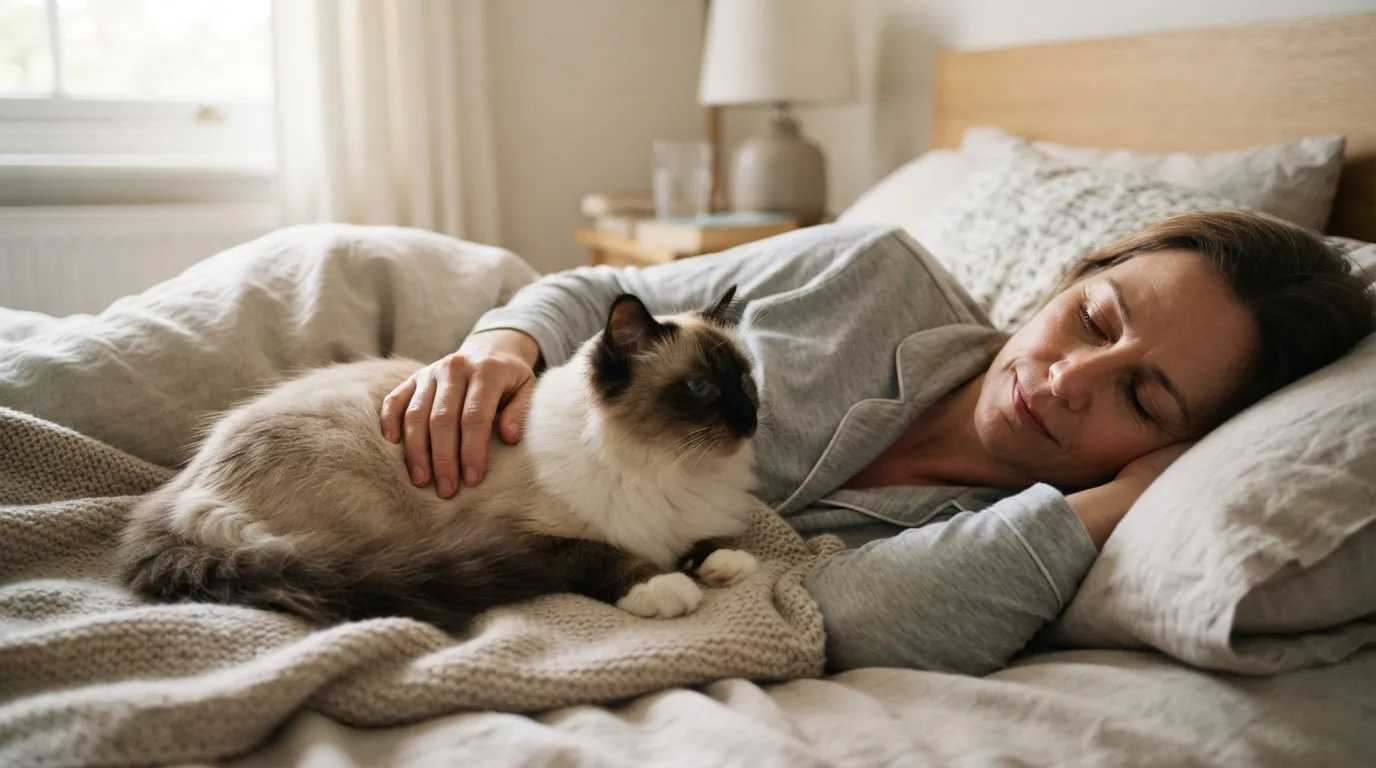
Devoted breed cats don’t just want proximity. They quietly track your emotional state.
Birman cats in particular tend to sense a shift in mood and show up when their person is resting or feeling low. If your cat adjusts its behavior based on how you’re feeling, that’s a powerful sign of real emotional connection.
A devoted cat reads your nervous system, not just your schedule. They’ll show up on bad days without being asked.
Quick Compare: Breed Devotion Styles
- Siamese: constant chirps and trills aimed straight at their person.
- Burmese: nonstop shadowing, earning the nickname “shadow cats.”
- Birman: tunes into mood shifts and shows up when you’re low.
- Ragdoll: greets you at the door and goes limp with trust, earning the nickname “puppy cat.”
The science behind this gets even stranger. Next up: how that emotional attunement shows up physically.
#7 – They Knead You Like You’re Their Mother
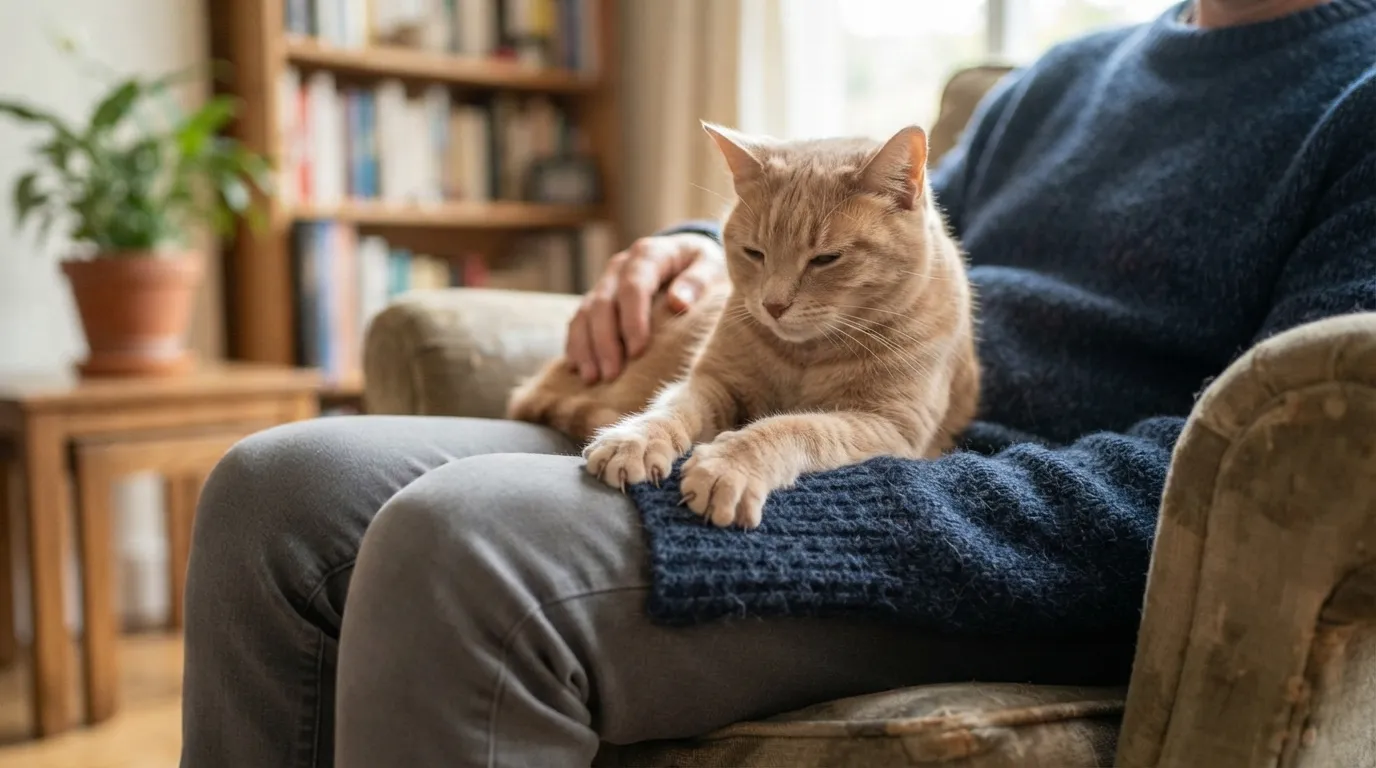
That rhythmic paw-pressing motion your cat does on your lap isn’t random. It’s a leftover from kittenhood.
Kittens knead their mother to stimulate milk flow, and adult cats keep doing it because it triggers the same feeling of comfort. When your cat climbs onto you and starts kneading, they’re reverting straight back to being a kitten who feels completely safe.
Kneading is one of the clearest ways a cat says “I love you.” This isn’t fidgeting – it’s pure, instinctive attachment.
And that level of attachment leads directly into a behavior that genuinely surprises most cat owners.
#6 – They Groom You (and Consider It a Bonding Ritual)
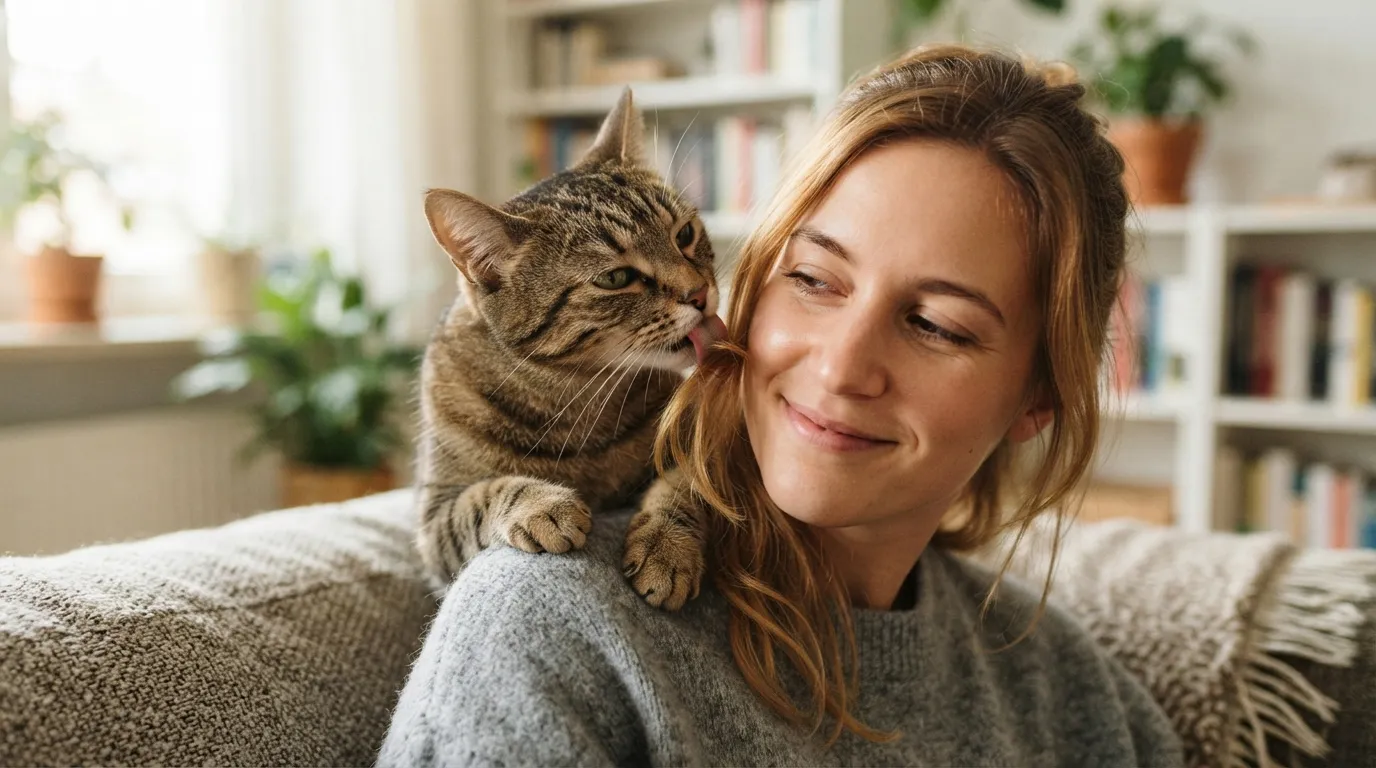
Cats groom each other as a bonding ritual. When your cat licks your hair, hands, or face, they’re treating you like part of their tribe.
Some researchers believe cats may see humans as large, clumsy, non-threatening cats rather than a different species entirely. That’s why they use the same rubbing, kneading, and grooming behaviors on us that they’d use on a fellow cat.
Your cat doesn’t see a species barrier. They see a companion.
That kind of group membership is exclusive – and the next behavior shows just how fiercely they protect it.
#5 – They Show Signs of Jealousy When Attention Goes Elsewhere
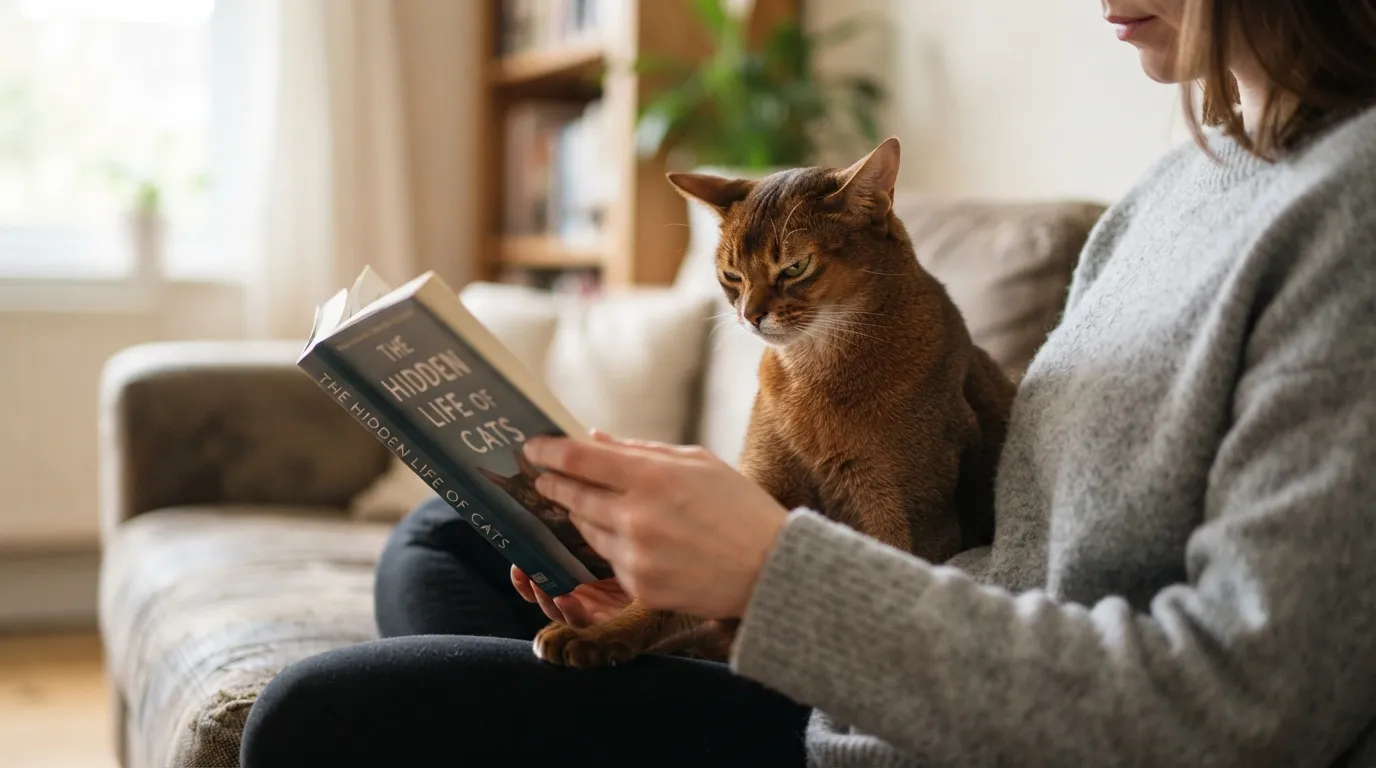
Here’s the behavior most people explain away, and shouldn’t.
Devoted “one-person” cats can get jealous, mope, and act out if they feel like they’re not getting enough attention from their chosen human. If something happens to that person, some cats visibly withdraw or show signs of grief.
That’s not neediness. That’s a real emotional bond with real psychological consequences. A devoted breed cat isn’t performing loyalty – it’s living it.
Some people find that level of attachment surprising in a cat. The next behavior proves the bond runs even deeper than mood.
#4 – They Expose Their Belly – But Only to You
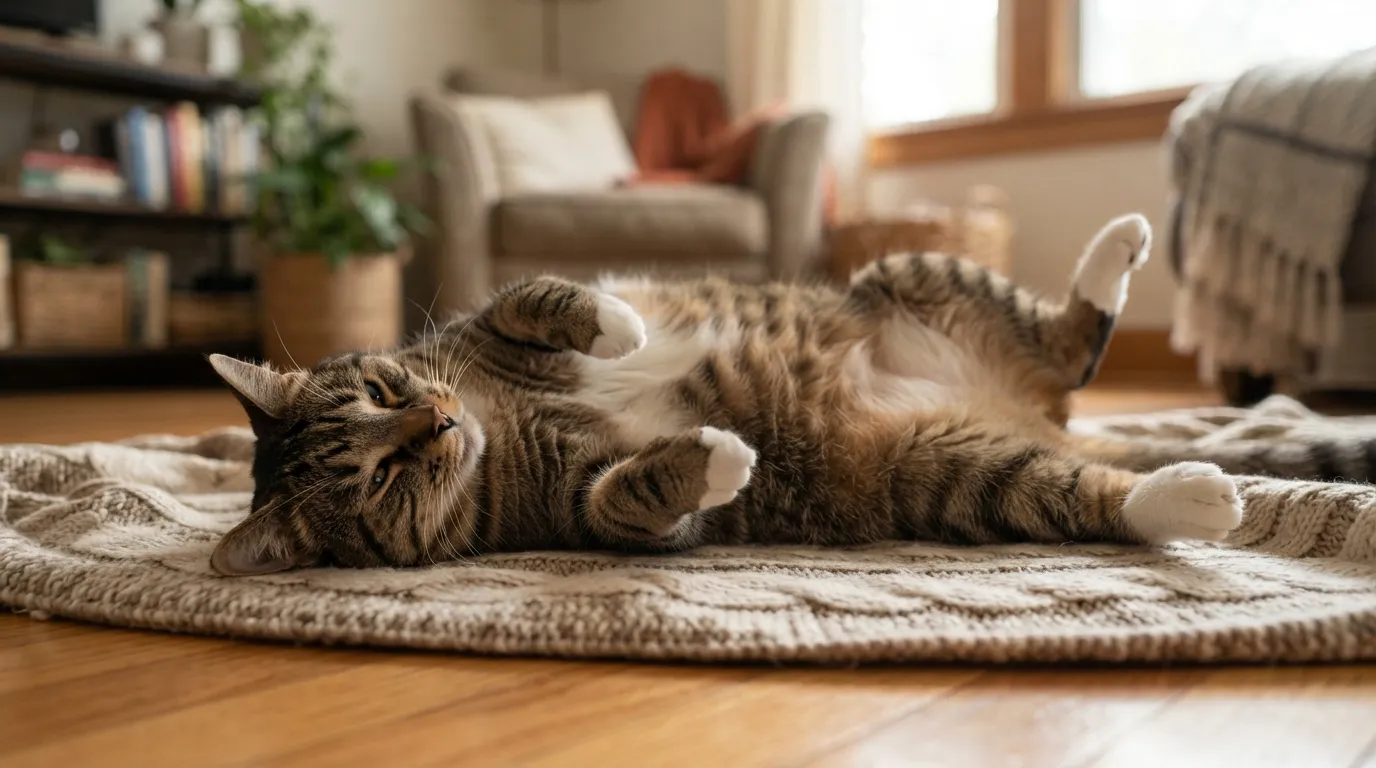
When your cat rolls onto their back and shows their belly, it looks like an invitation for a rub. It’s actually something bigger.
The belly protects vital organs, so exposing it is a genuine act of vulnerability – a trust display, not a touch invitation. Most cats won’t do this around strangers, or even around familiar people they don’t fully trust yet.
When a devoted breed cat rolls over for you, it’s saying: I have zero fear around you. That’s extraordinary from an animal wired for self-protection.
It’s the deepest trust signal a cat can offer – just don’t take it as an invitation to actually touch it. What’s coming next might be the most misunderstood gift-giving behavior in the animal kingdom.
#3 – They Bring You Gifts (and Mean It Sincerely)
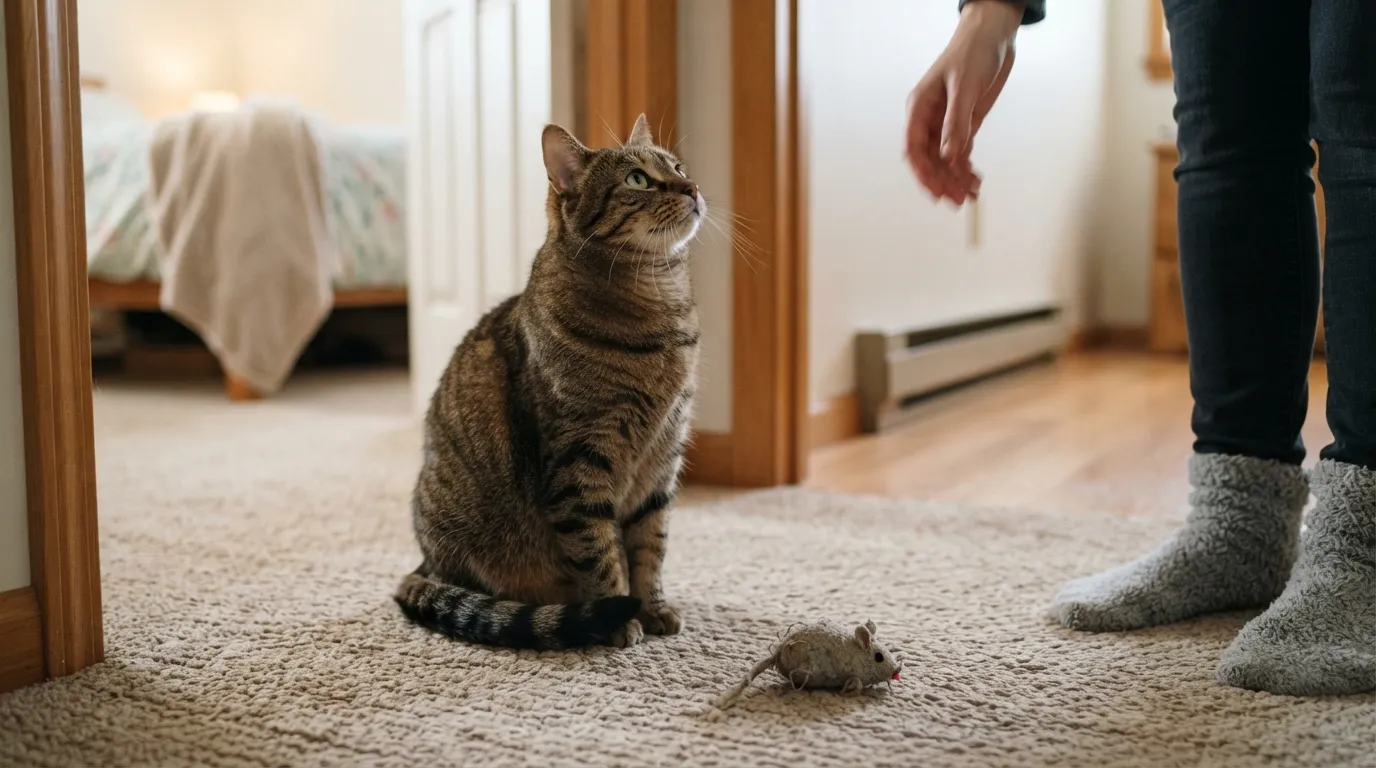
Some cats show affection in the most unexpected way possible – by bringing you gifts. Maybe it’s a favorite toy dropped outside your bedroom door, or something less pleasant they actually hunted.
Cat behavior experts consider this a classic bonding sign, an act of loyalty where your cat shares its hunting success or its favorite possessions with you. Unsettling as some of these “gifts” can be, they reflect a real desire to provide for you.
A devoted breed cat is treating you like a member of the colony it wants to feed and protect.
Almost nothing beats that – except the two behaviors still ahead. Next up will reset what you think “greeting” even means for a bonded cat.
#2 – They Wait for You and Greet You at the Door Every Time
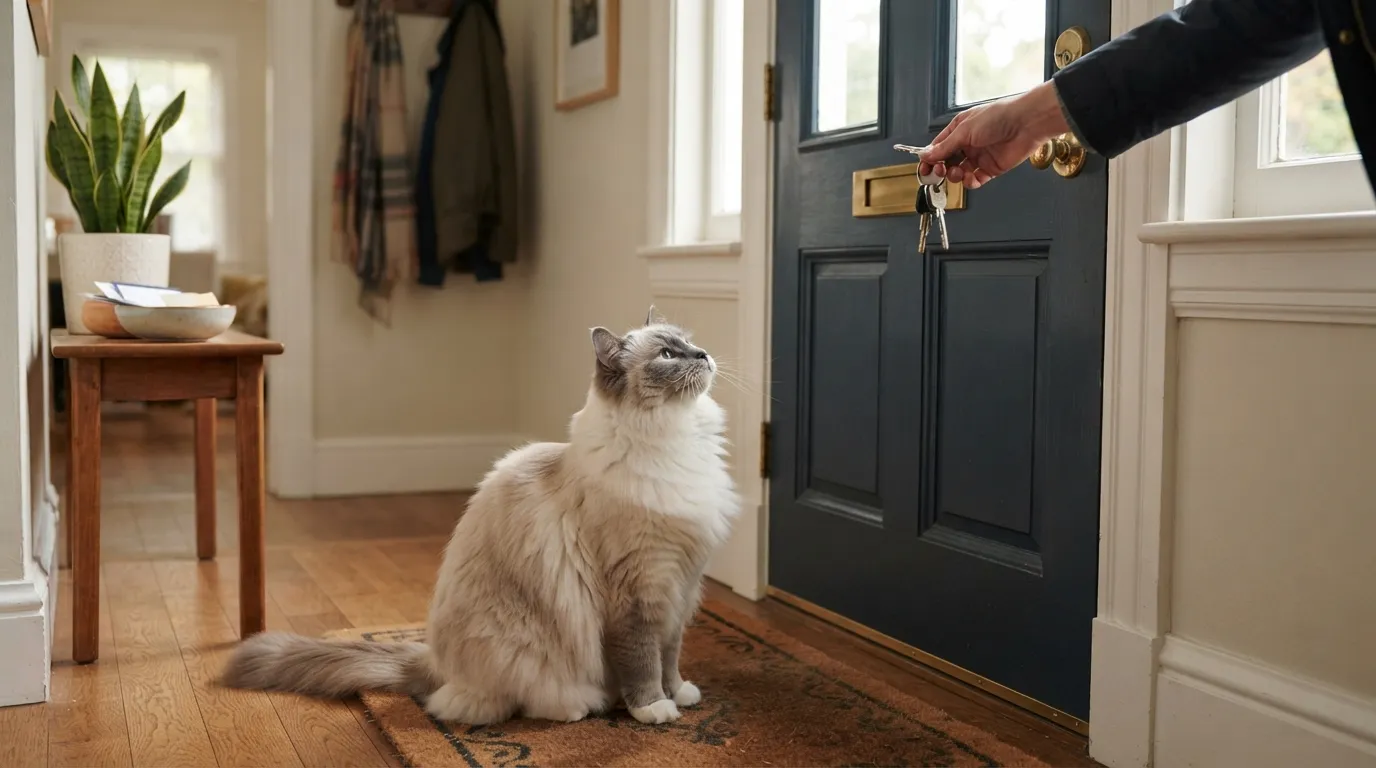
Devoted breed cats are known for following their owners room to room, greeting them at the door, and even showing protective behavior toward them.
Remember that 15-minute anticipation window from earlier? It applies here too – cats develop predictive behaviors around arrival times, not just meals.
Your devoted cat isn’t just hearing you at the door – it knew you were coming before your key hit the lock.
Worth Knowing
- Door-greeting is a hallmark trait of the most people-oriented breeds, including Ragdolls, often nicknamed “puppy cats” for exactly this reason.
- Devoted cats often reposition themselves closer to the door as your usual arrival time approaches.
- This behavior blends memory, scent recognition, and routine tracking – not just sound.
Feeling safe, secure, and emotionally connected is exactly what door-greeting behavior signals. And no behavior demonstrates that safety more completely than the one waiting at #1 – a behavior almost no one talks about, yet experts call the ultimate proof of feline devotion.
#1 – They Maintain a Constant, Calm “Watch” Over You
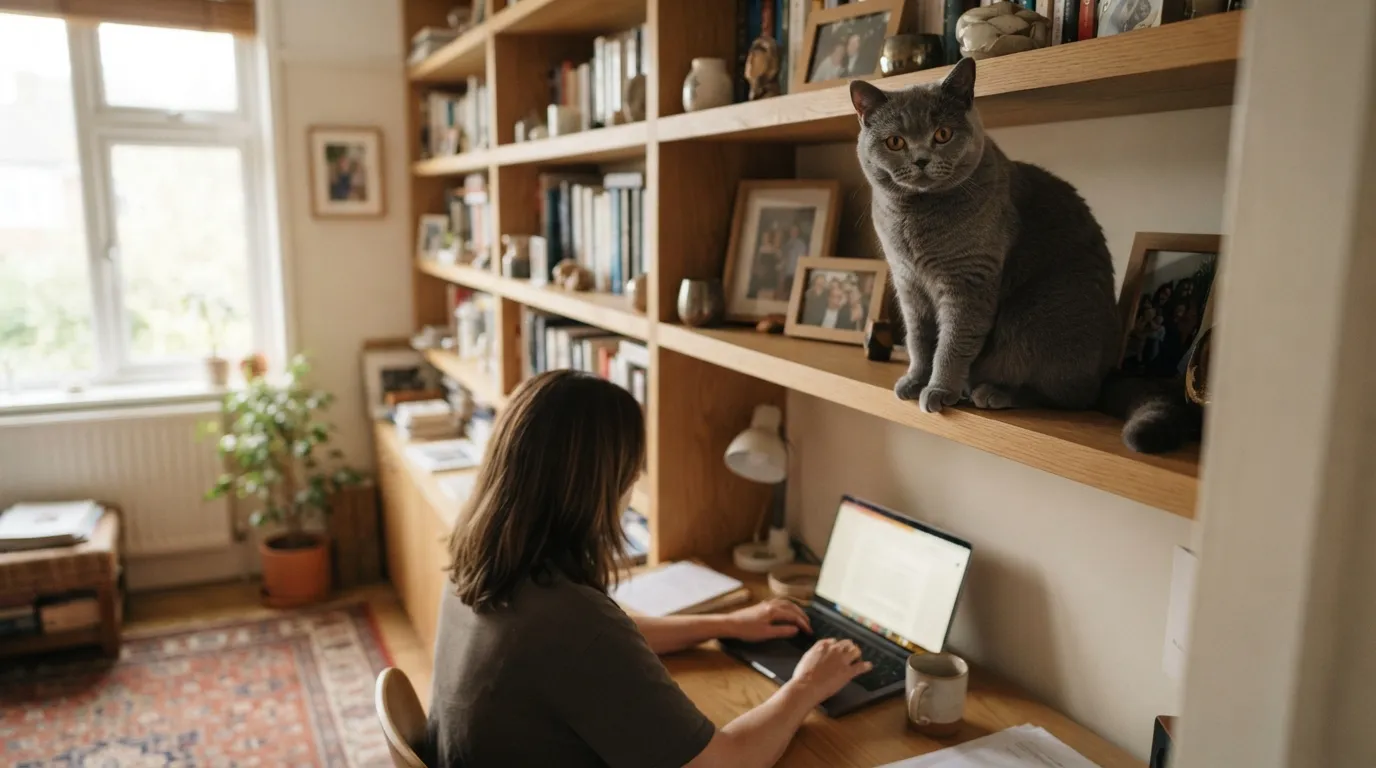
Most cat owners credit the obvious gestures – the lap sits, the headbutts. The real marker of a devoted breed cat is quieter and far more deliberate.
A truly bonded cat will consistently sit in the same room while keeping a clear line of sight on their chosen person. They often pick elevated spots specifically because it gives them a full view of what you’re doing.
Even with other comfortable spots available all over the house, a bonded cat stays nearby and repositions itself every time you move. They are not lounging. They are standing guard.
This is the behavior of an animal that has decided your safety and presence matter, permanently. A bonded cat chooses to be around you not because it has to, but because it wants to – and that distinction is everything.
The Bottom Line
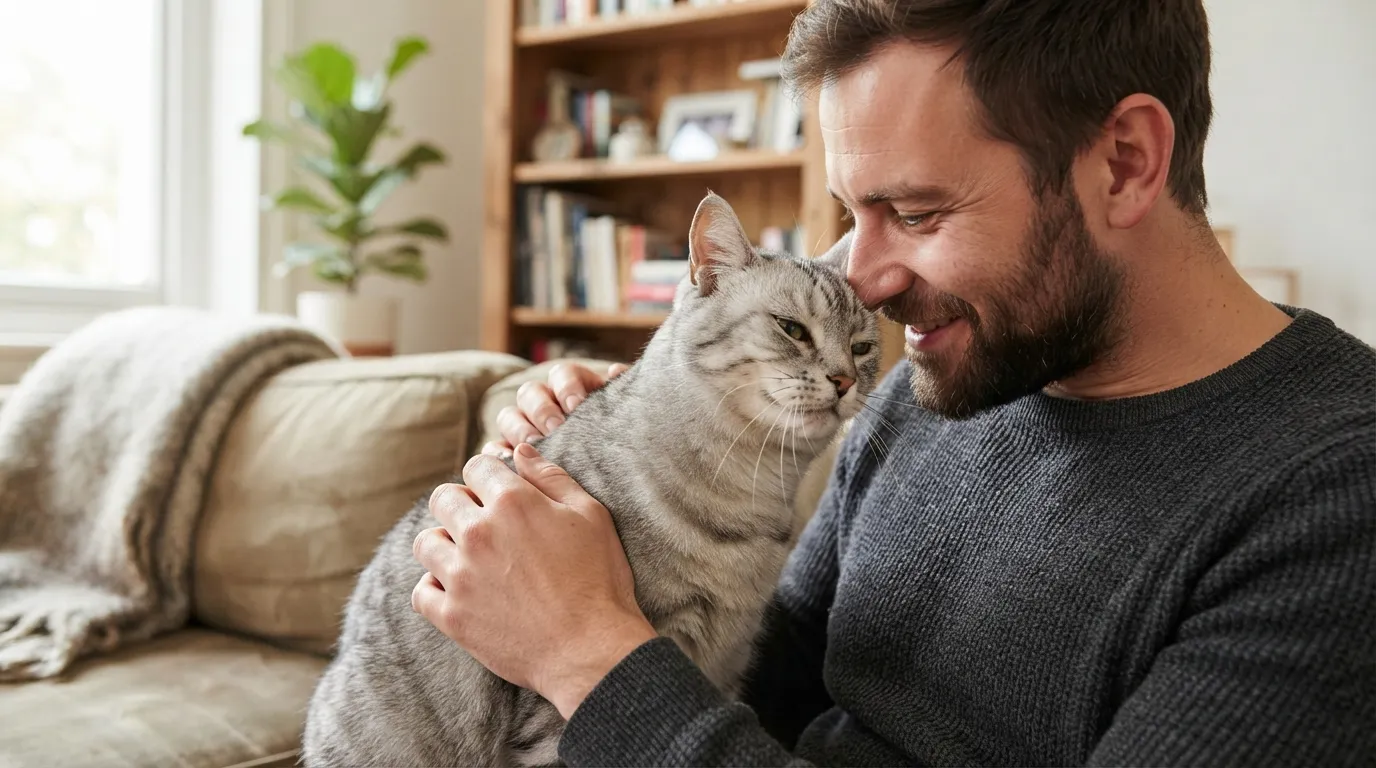
Devoted breed cats are running a full-time, quietly sophisticated loyalty operation, and most owners only ever catch a fraction of it. The slow blinks, the grooming, the sleeping nearby – none of it is accidental.
The belly flash, the trill, the door greeting, the scent-marking headbutt: every single behavior on this list is a deliberate signal aimed at one person. You.
These cats take their relationships seriously, and their emotional investment runs deep. The real question isn’t whether your cat loves you – it’s whether you’ve been paying close enough attention to see it.
Which of these did you recognize in your own cat? Drop it in the comments – we’d love to know.
Kristina is a young writer from India. An arts graduate and an avid content creator, Kristina is passionate about animals and wildlife. She enjoys exploring topics related to pet care, animal behavior, conservation, and nature, combining thorough research with engaging storytelling.