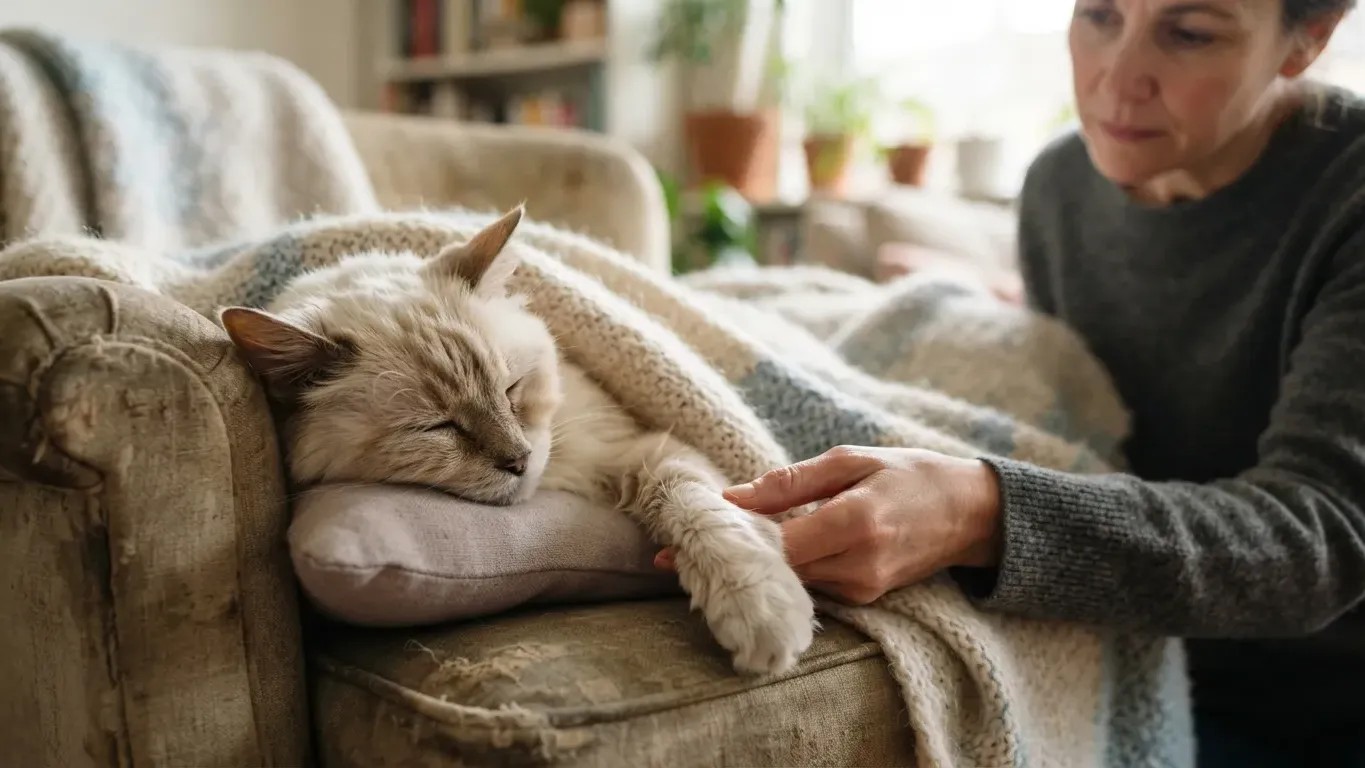
Most cat owners think they’ll know. They believe that when the time comes, their beloved purebred will make it painfully obvious.
The truth is far quieter. Cats are experts at masking pain, and by the time you notice something’s wrong, the goodbye may already be underway.
The farewell is happening right now, in signals most owners mistake for something harmless. Here’s what fifteen of those quiet moments actually mean.
#15 – The Goodbye Nap in a Brand-New Spot
Something feels off, but you can’t quite name it. Your cat just moved.
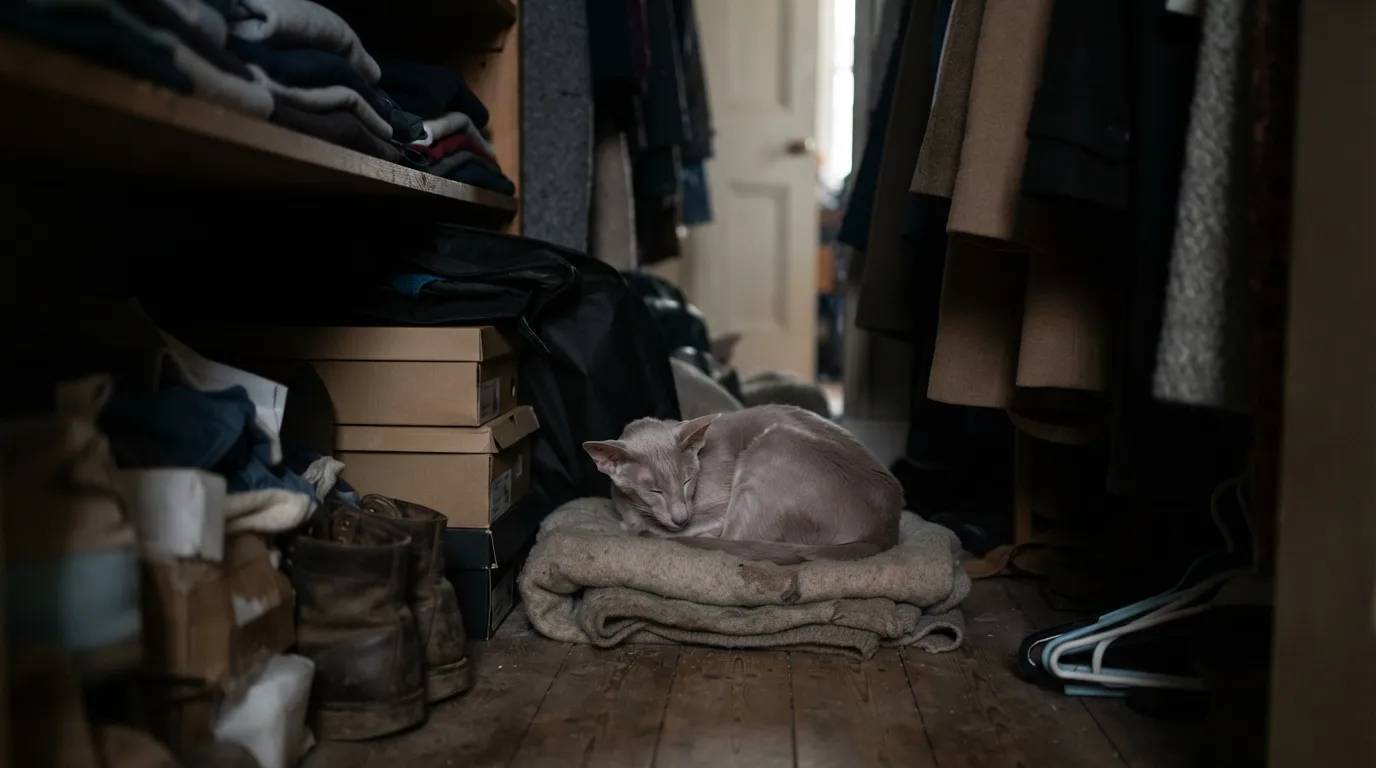
Cats often pick out new, tucked-away places in the final days. A favorite under-the-bed spot might give way to the back of a closet or behind furniture they usually ignore.
Owners often assume the cat is just napping somewhere different. But the shift can happen suddenly – and it signals the body preparing for rest.
The key tell: it’s not one hiding session – it’s a permanent relocation. What’s different near the end of life is the quality and consistency of the hiding.
But that’s nothing compared to what we found about #14 – an emotional reversal almost no one sees coming.
#14 – The Sudden Personality Flip

Your independent cat won’t leave your side. Or your cuddly cat just pushed you away.
Neurological and physical changes can rewire personality overnight. A fiercely independent cat may suddenly crave contact, while an affectionate cat may pull away and demand space.
Sick cats often change how they interact with everyone in the house, seemingly overnight. That lap-cat who lived for cuddles might dodge your touch entirely.
This is the sign most owners misread as a quirk or a mood. It isn’t. It’s the body and brain changing together.
But that’s nothing compared to what we found about #13 – a signal hiding in plain sound.
#13 – The Purr That Means the Opposite of Happy
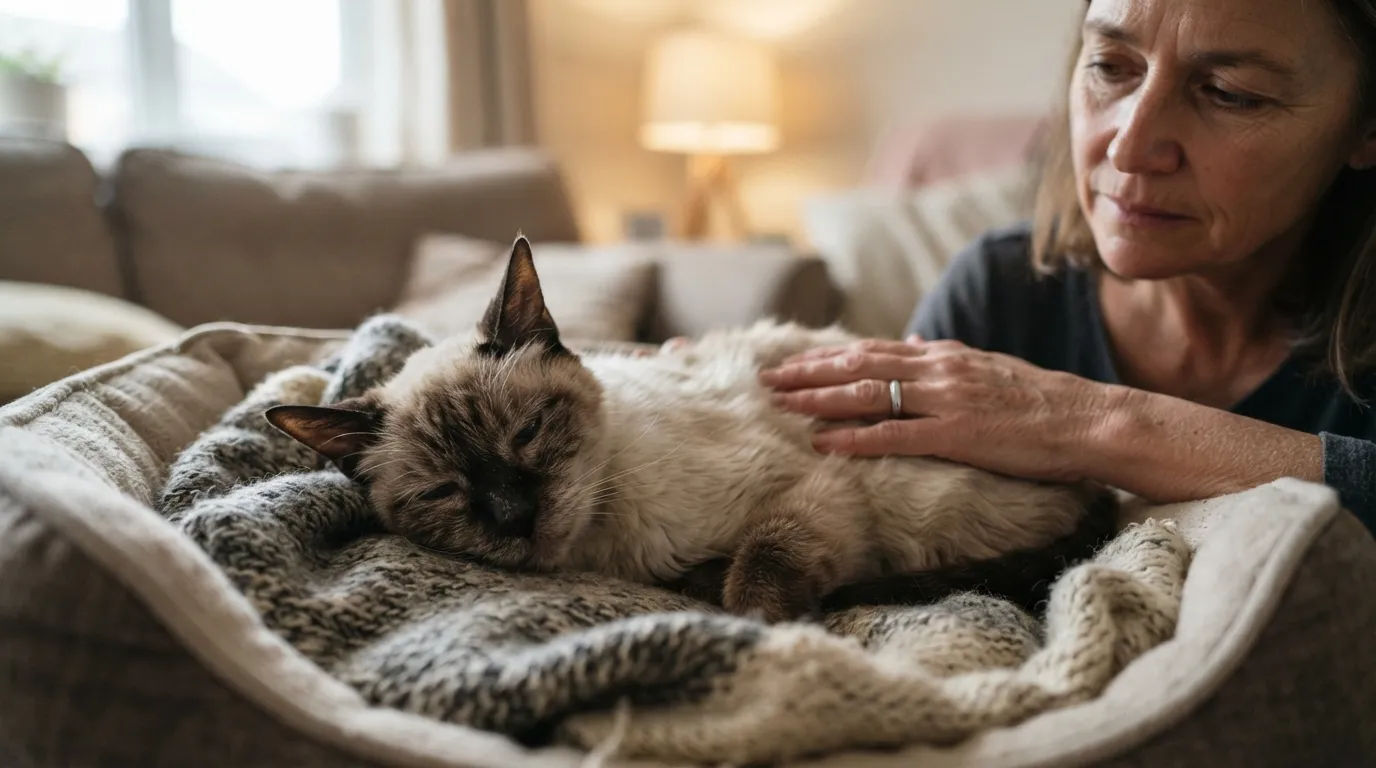
You hear purring and assume everything’s fine. Turns out, that purr may be a distress signal.
Cats purr to soothe themselves when they’re in pain, not just when they’re happy. Near the end of life, that purring often increases – a self-comforting behavior, not a sign of contentment.
The purr you’re interpreting as contentment could actually be your cat managing its own discomfort. It’s one of the most emotionally confusing signs on this entire list.
But that’s nothing compared to what we found about #12 – a sign you’ll only notice if you’re watching the food bowl.
#12 – The Slow-Motion Hunger Strike
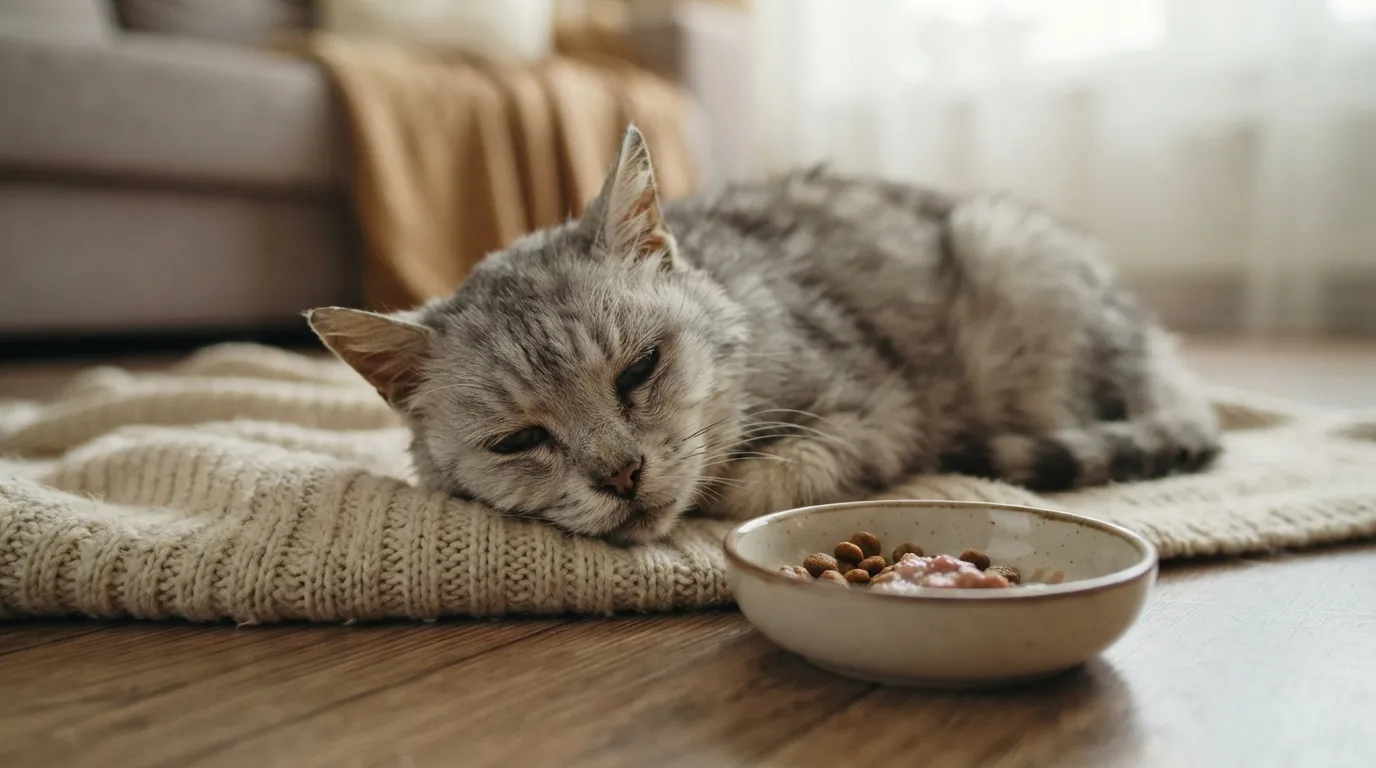
It doesn’t start with a flat-out refusal. It starts with eating a little less, just a little.
It’s rarely an abrupt refusal. When a cat is dying, appetite typically fades in stages rather than stopping all at once.
Some cats go a day or two eating little to nothing. When that’s paired with lethargy, weakness, or hiding, it’s a strong sign the end is near – not pickiness that a new food brand will fix.
Switching to a new food at this stage is one of the most common ways owners delay getting help. Watch the trend, not just the single meal skipped.
But that’s nothing compared to what we found about #11 – a change happening in your cat’s coat right now.
#11 – The Coat That Quietly Gives Up
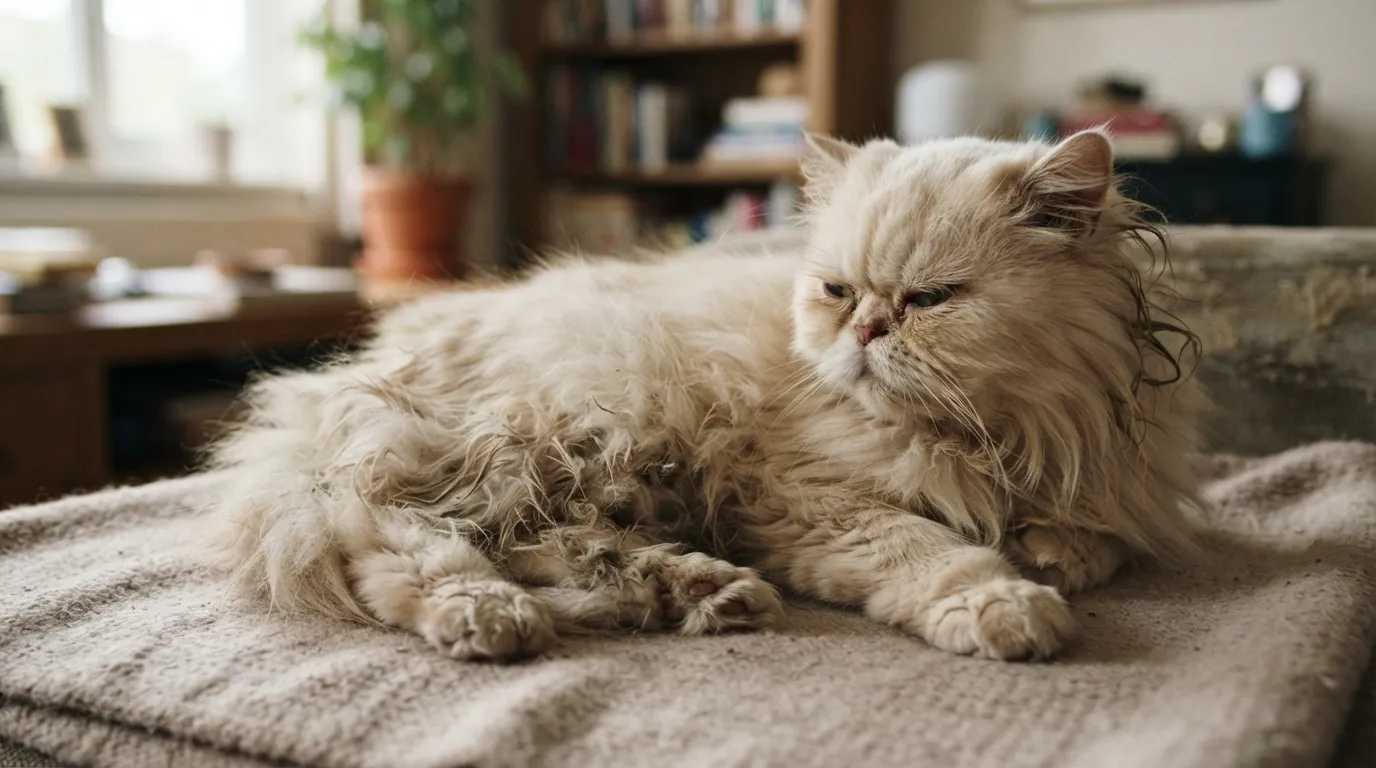
A purebred’s coat is their pride. When it starts going, something is seriously wrong.
When cats don’t feel well, they stop grooming themselves – and it shows fast. Long-haired breeds especially develop mats around the hind end, underbelly, and behind the ears.
As the body shuts down further, the coat can turn dirty and start to smell. Toxins build up faster than a weakened body can handle, and grooming becomes the first thing to go.
For breeds like Persians or Maine Coons, where grooming is a daily ritual, a suddenly matted coat is a serious red flag. Don’t chalk it up to laziness.
Fast Facts
- Healthy cats typically spend 30 to 50 percent of their waking hours grooming themselves.
- Long-haired breeds like Persians and Maine Coons often need daily brushing to stay mat-free.
- Mats tend to show up first behind the ears, under the legs, and around the hindquarters.
- A sudden, sharp drop in grooming is one of the fastest visible red flags an owner can spot.
But that’s nothing compared to what we found about #10 – a temperature shift you’d only catch by touch.
#10 – Cold Paws, Cold Ears
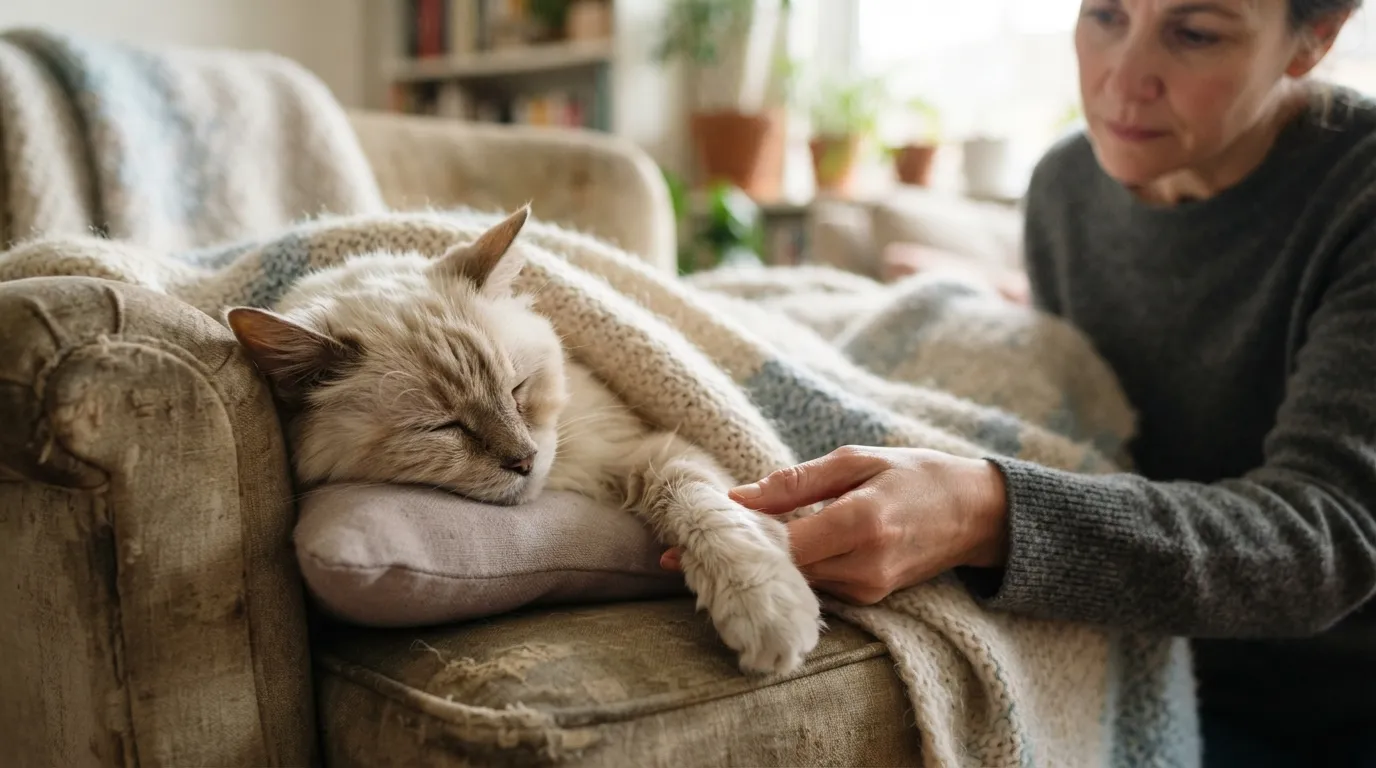
You reach down to pet your cat and something feels wrong. They’re cold – even in a warm room.
A healthy cat runs between 100°F and 102.5°F. As circulation slows near the end, that number drops – and paws and ears go cold first.
Senior cats already struggle to regulate body heat. Even wrapped in blankets in a warm room, a dying cat’s temperature often keeps falling.
Cold extremities in a warm room are not a coincidence – they signal the body redirecting its remaining energy away from the limbs. This one requires you to actually reach out and feel.
But that’s nothing compared to what we found about #9 – a vocal change that gets misread every single time.
#9 – Going Strangely Silent (Or Unbearably Loud)
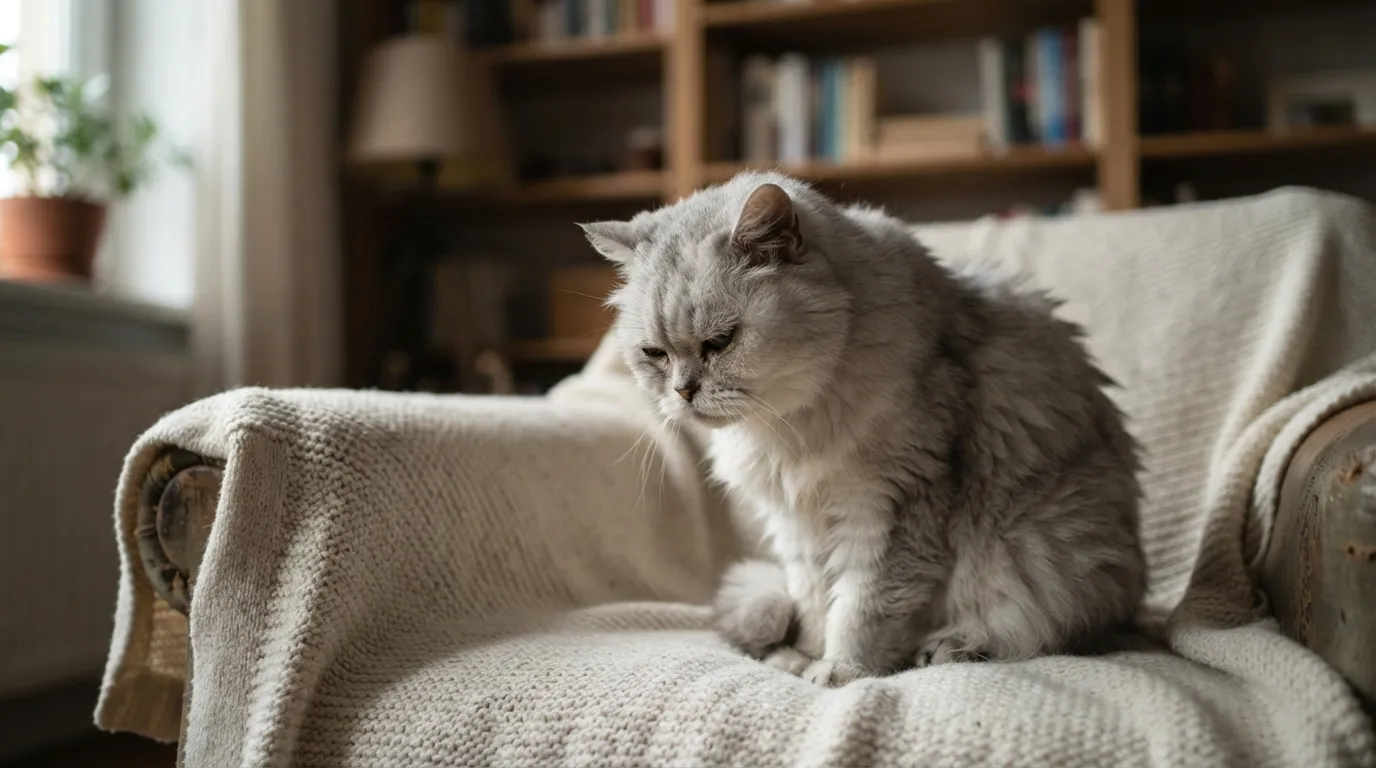
Most owners expect a sick cat to cry. What they don’t expect is total silence – or the opposite extreme.
Changes in vocalization near the end of life run in both directions – excessive yowling and meowing, or complete silence. Either extreme can be a sign of pain or distress.
Both extremes – the sudden silence from a chatty cat, or the yowling from a quiet one – are equally significant. The change from their baseline is the warning, not the sound itself.
Quick Compare
- Sudden silence: A normally vocal cat stops meowing or chirping almost entirely.
- Sudden yowling: A normally quiet cat begins crying loudly, especially overnight.
- The real signal: It’s the shift away from their baseline – not the volume itself – that matters most.
But that’s nothing compared to what we found about #8 – a litter box signal almost everyone misses.
#8 – The Litter Box Sends a Message
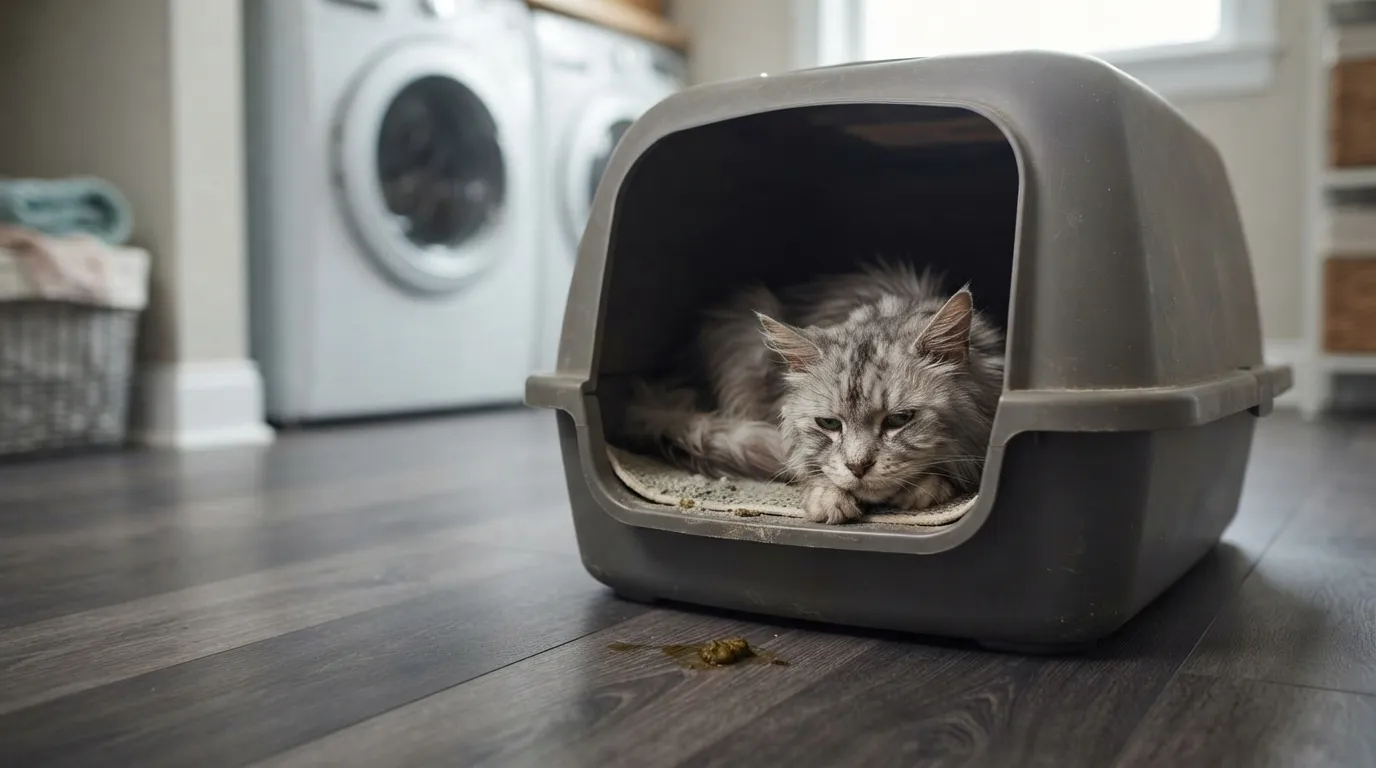
This one feels embarrassing to notice. Owners assume it’s a behavioral problem. It’s not.
Normal aging just means a little more stiffness and slightly fewer trips to the box. End-of-life changes look different – no longer burying waste, or missing the box entirely in new spots around the house.
It’s often paired with incontinence and a drop in grooming. This isn’t defiance; it’s the body losing control it once had.
A cat that was perfectly litter-trained for 12 years doesn’t suddenly forget – their body is losing the ability to control it. React with compassion, not frustration.
But that’s nothing compared to what we found about #7 – a loss that cuts deeper than appetite.
#7 – They Stop Caring About Everything They Loved
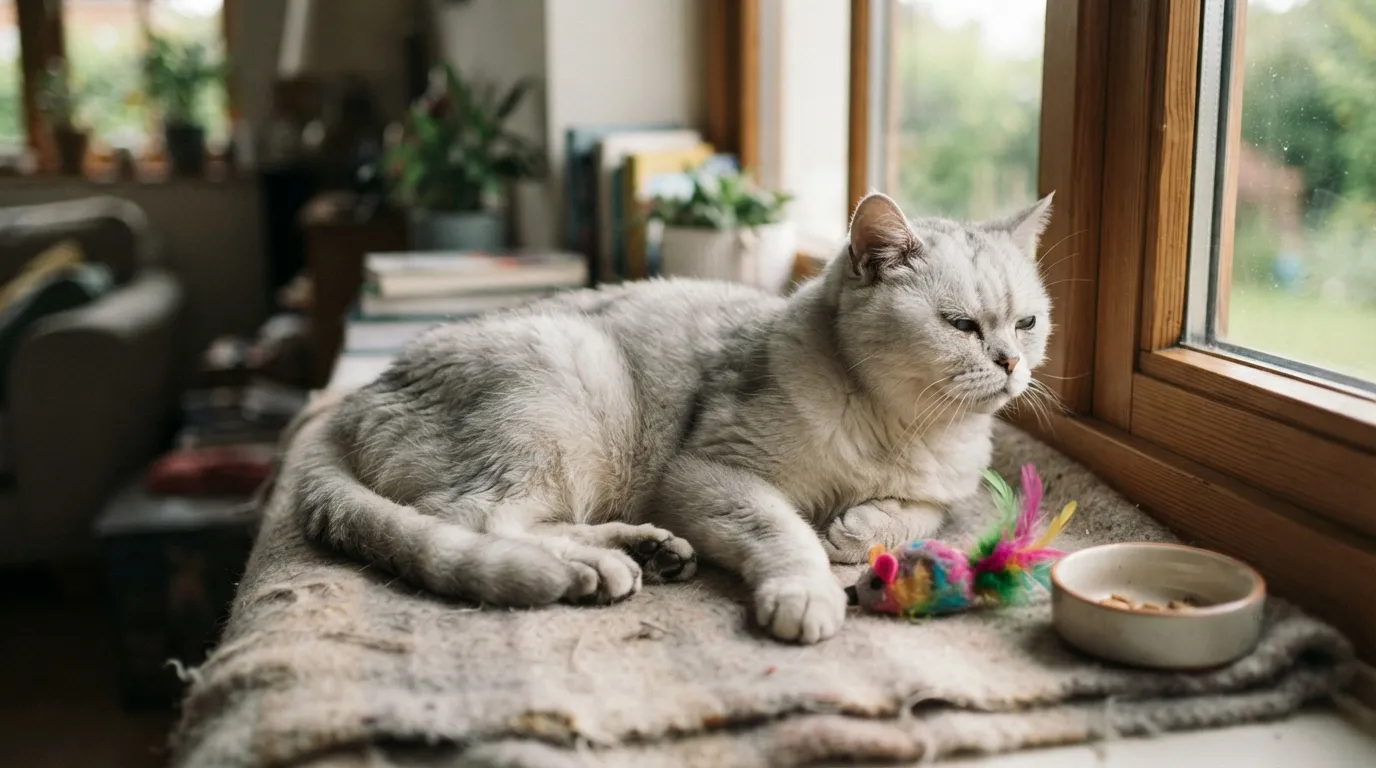
The toy they used to go wild for sits untouched. The window seat they owned every morning – ignored.
As health deteriorates, cats lose interest in the things that used to light them up – toys, treats, even being petted. That disinterest in the world around them is one of the clearest signs the end is near.
This “loss of spark” – as vets actually call it – is one of the clearest quality-of-life indicators used in end-of-life conversations. Owners often describe this stage as their cat “losing its spark” – an admittedly unscientific phrase, but one vets hear constantly from families trying to describe a change they can feel but can’t quite name.
But that’s nothing compared to what we found about #6 – a restlessness that strikes in the middle of the night.
#6 – The 3 a.m. Pacing That Isn’t Insomnia
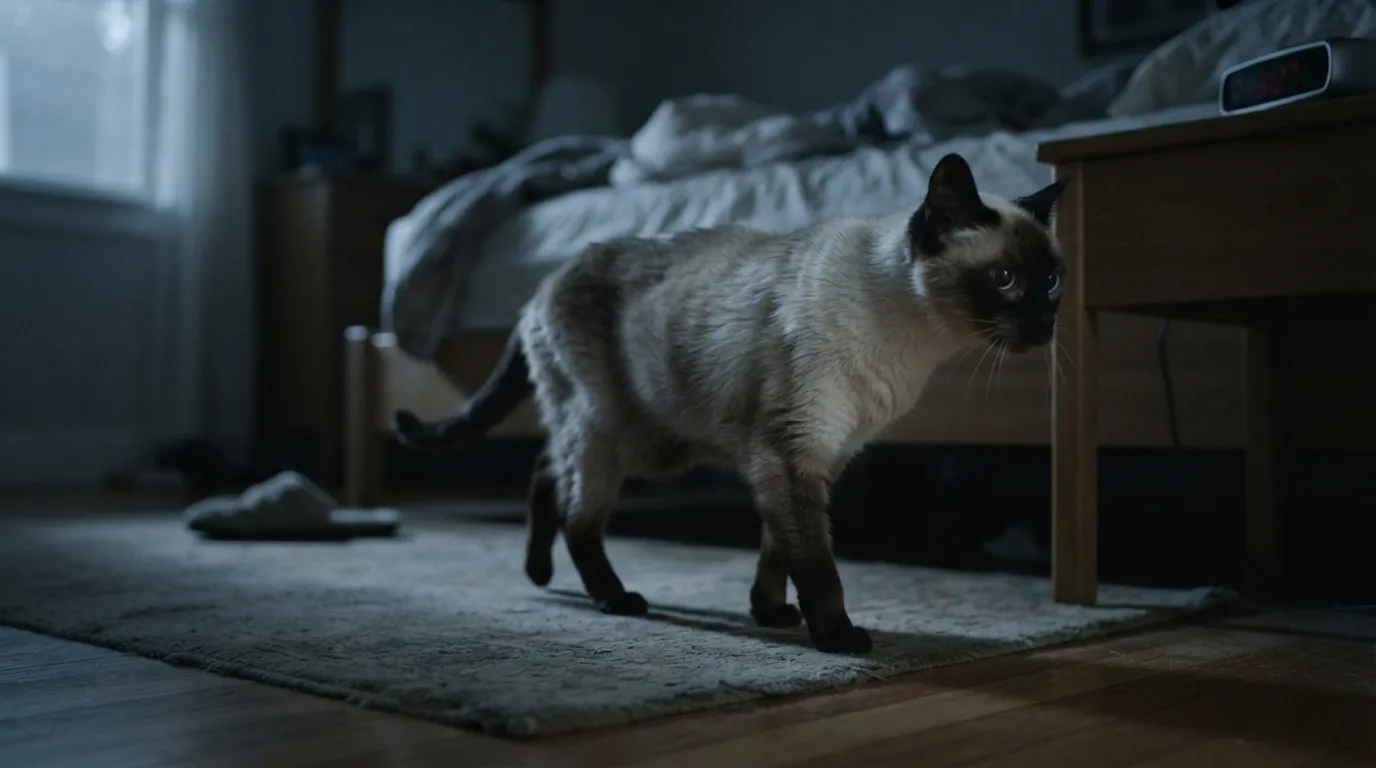
You wake up. Your cat is circling the room, can’t settle, seems almost confused about where they are.
A cat pacing at 3 a.m., unable to settle anywhere, is showing something more specific than insomnia. Restlessness like this is usually listed alongside pain indicators, not quirky behavior.
Senior cats can also develop cognitive dysfunction, similar to dementia in humans. They may genuinely forget where they are, lost inside their own home.
Nighttime disorientation combined with restlessness is a combination that warrants a vet call the next morning, without delay.
Worth Knowing
- Feline cognitive dysfunction affects more than 55% of cats aged 11 to 15, and over 80% of cats aged 16 to 20.
- Common signs include disorientation, disrupted sleep-wake cycles, and nighttime pacing or vocalizing.
- Affected cats can forget familiar routines, including the location of their own food bowl or litter box.
But that’s nothing compared to what we found about #5 – the eyes that quietly tell you everything.
#5 – The Eyes Change
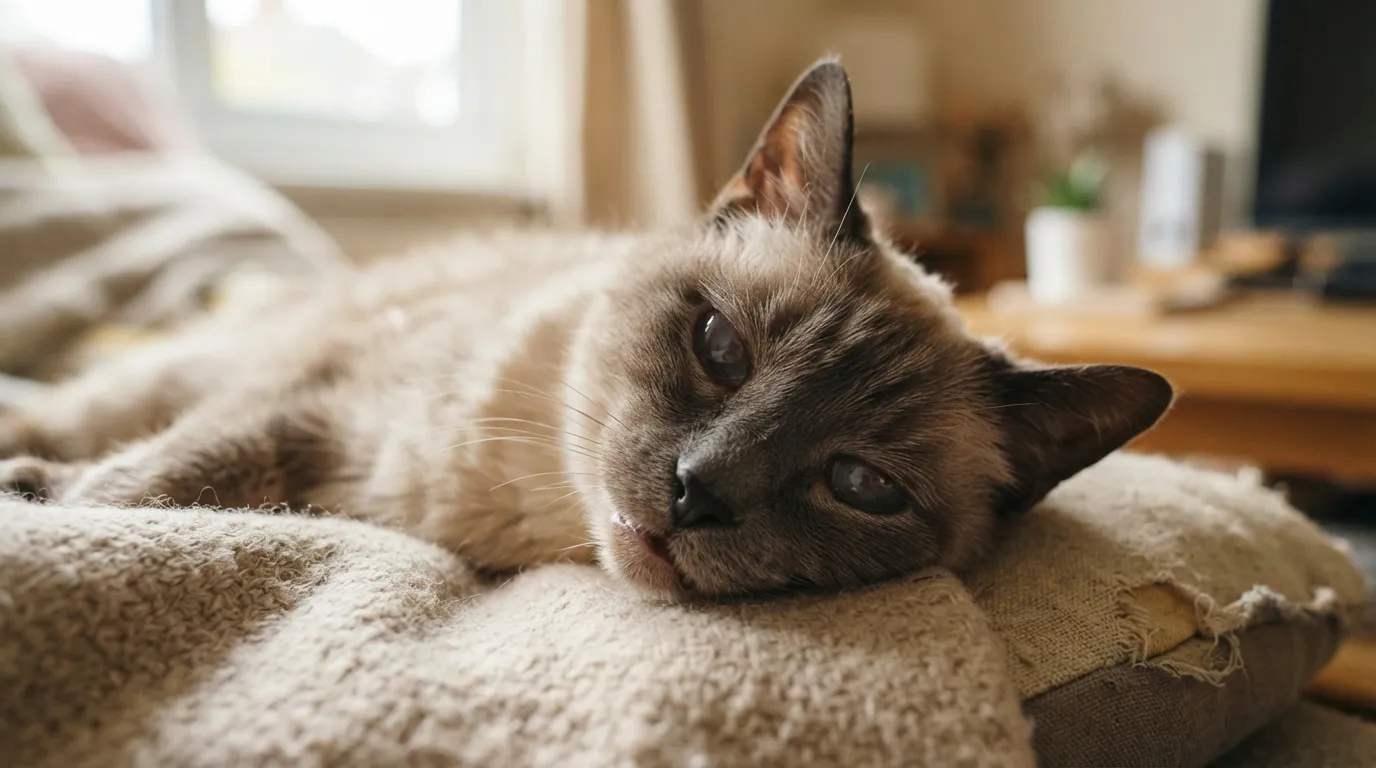
You look into your cat’s eyes and something is different. It’s subtle, but it’s there.
At the end of life, cats often grow confused, dull, or disoriented – weak and uncoordinated, with a glazed look in their eyes. Sunken eyes and pale gums are physical markers that tend to cluster together as the body winds down.
A cat whose eyes once tracked every movement in the room may now stare at nothing at all.
Breeders and experienced feline vets often say the eyes are the first place they look. Glazing, sunken appearance, or a fixed gaze with no reaction are signals the brain is changing.
But that’s nothing compared to what we found about #4 – the last movement warning most people dismiss entirely.
#4 – The Hind Legs Start to Go
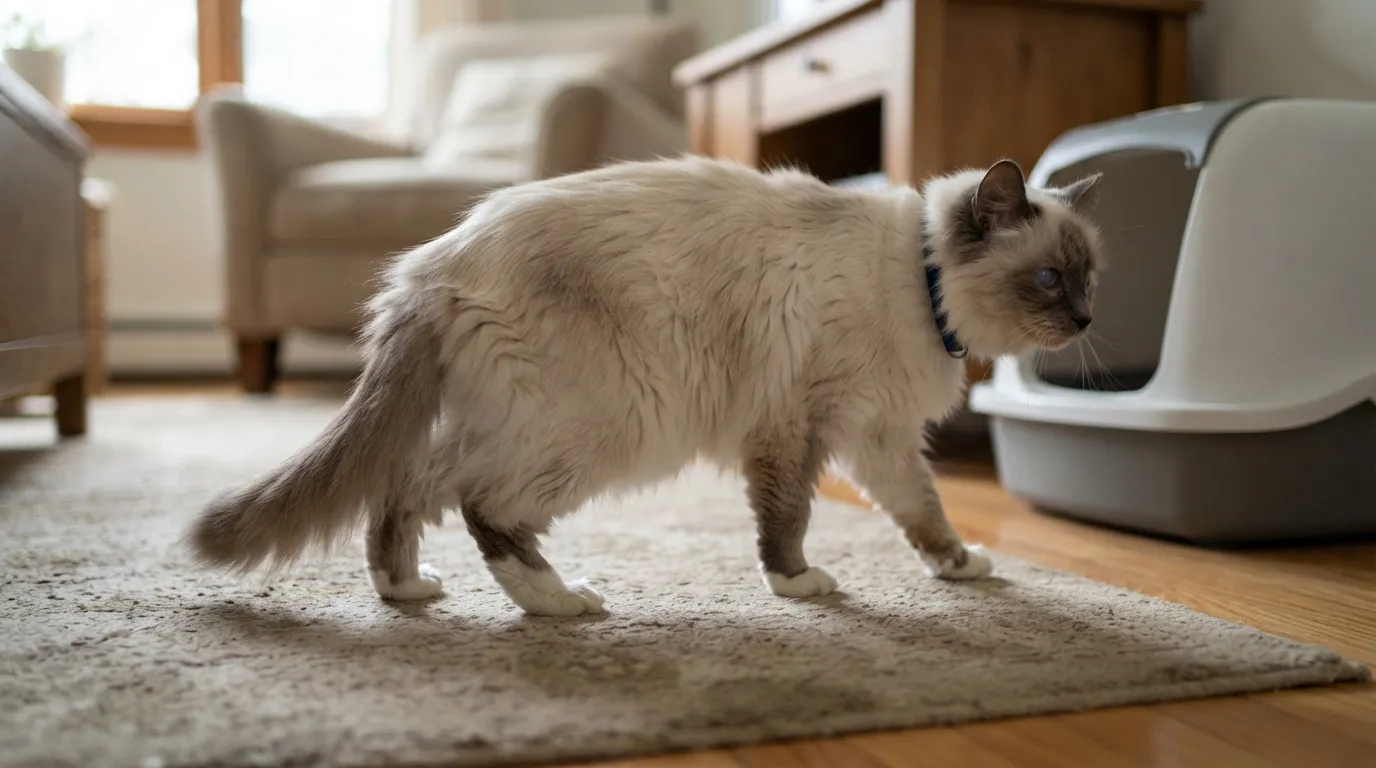
It looks like a stumble. Owners call it “a clumsy moment.” It’s rarely that simple at this stage.
As systems fail, muscle control goes with them. You might notice unsteadiness, an inability to stand, or real hind leg weakness – even simple tasks like stepping into the litter box become impossible.
As the body shuts down further, involuntary twitching or tremors can appear. Some cats also lose bladder control or the ability to coordinate movement at all.
Hind leg weakness in particular – especially in older purebreds prone to conditions like HCM or spinal issues – is a serious warning, not a “senior moment.”
But that’s nothing compared to what we found about #3 – one of the most beautiful and heartbreaking signs on this list.
#3 – They Seek You Out One Last Time
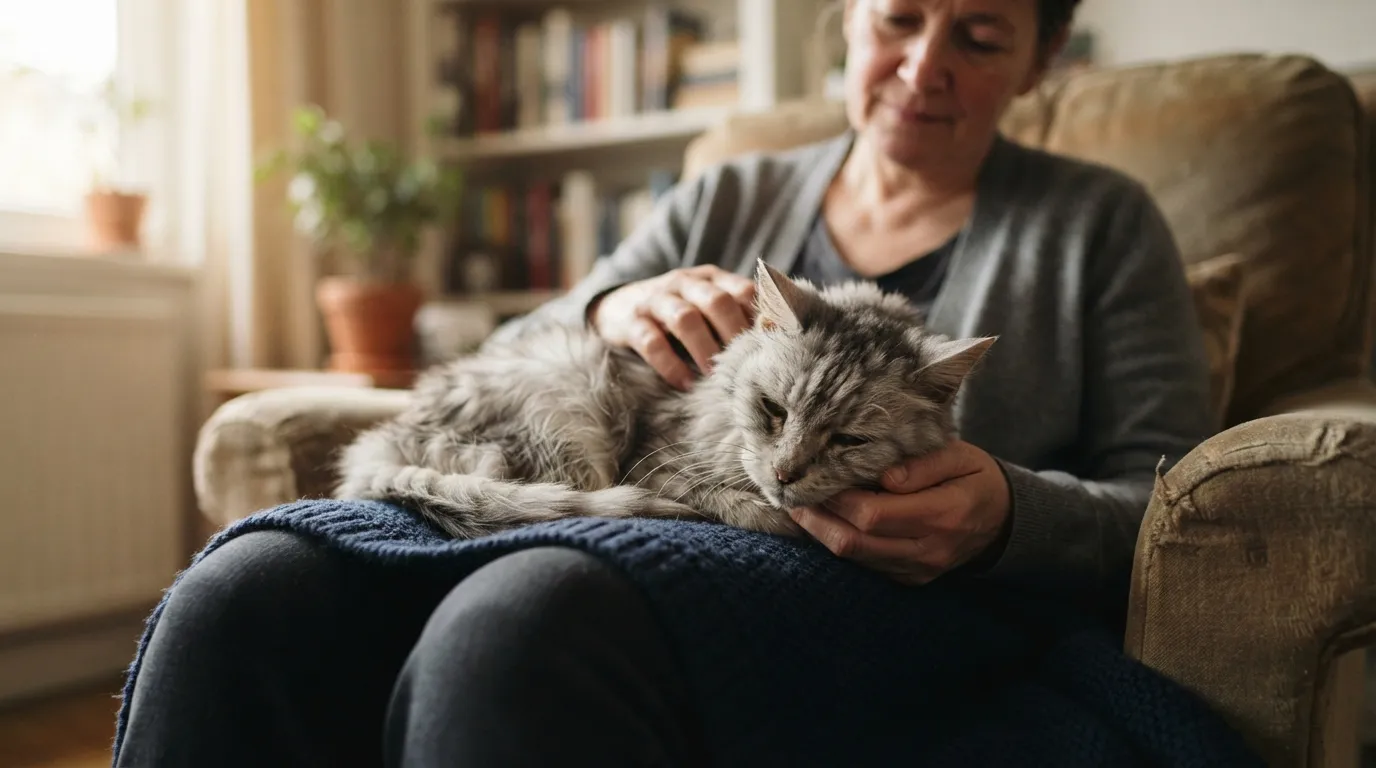
Out of nowhere, your cat climbs into your lap. They haven’t done that in months. Maybe years.
Some cats become suddenly, intensely affectionate – seeking constant physical contact in their final days. It’s their way of chasing comfort and security when their body starts failing them.
This sudden surge of closeness – from a cat that has been distant or sick – is the moment many owners describe as the most gut-wrenching in hindsight. It felt like a good sign. Turns out, it was a farewell.
But that’s nothing compared to what we found about #2 – a phenomenon so documented it has an actual name.
#2 – The Rally: One Inexplicably Good Day
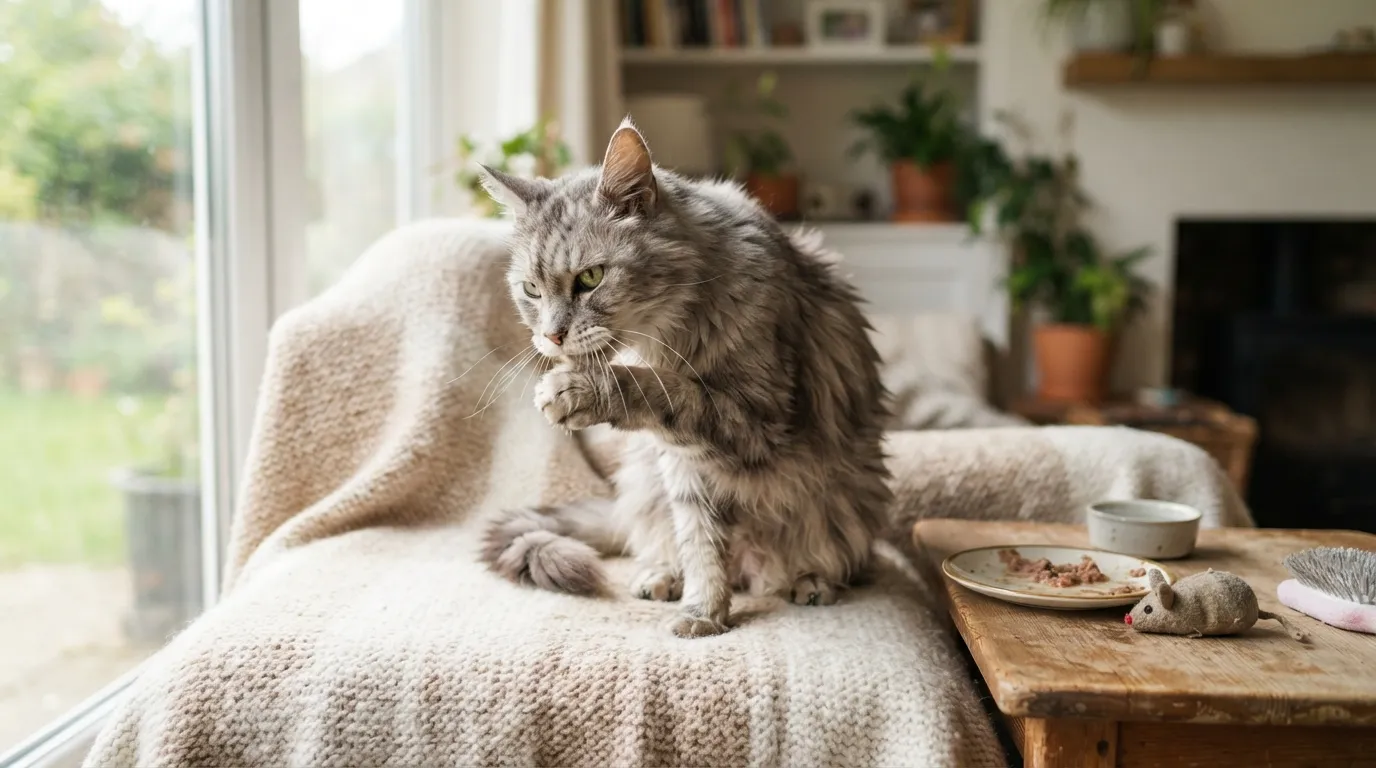
Your cat suddenly seems better. Eating a little. Moving around. Almost like the old days. Don’t be fooled.
Hospice caregivers and vets have a name for this brief resurgence: “the rally.” It can last anywhere from a few hours to a full day or two.
The pattern shows up often enough in both human and animal end-of-life care to be considered common, not rare. Owners who’ve lived through it describe it less as false hope and more as an unexpected gift.
The rally is real, but it does not indicate recovery or a reversal of the underlying decline. Treat it as the gift it is – spend every minute of it with your cat.
At a Glance
- The rally usually lasts anywhere from a few hours to a couple of days.
- Cats may briefly eat more, move around, or seem more alert than they have in days.
- Caregivers see it often enough to consider it a common phase, not a fluke.
- It’s a window of comfort, not a sign the underlying decline has reversed.
And then there’s #1. This is the sign that blindsides owners the most. Every single time.
#1 – They Disappear to Die Alone
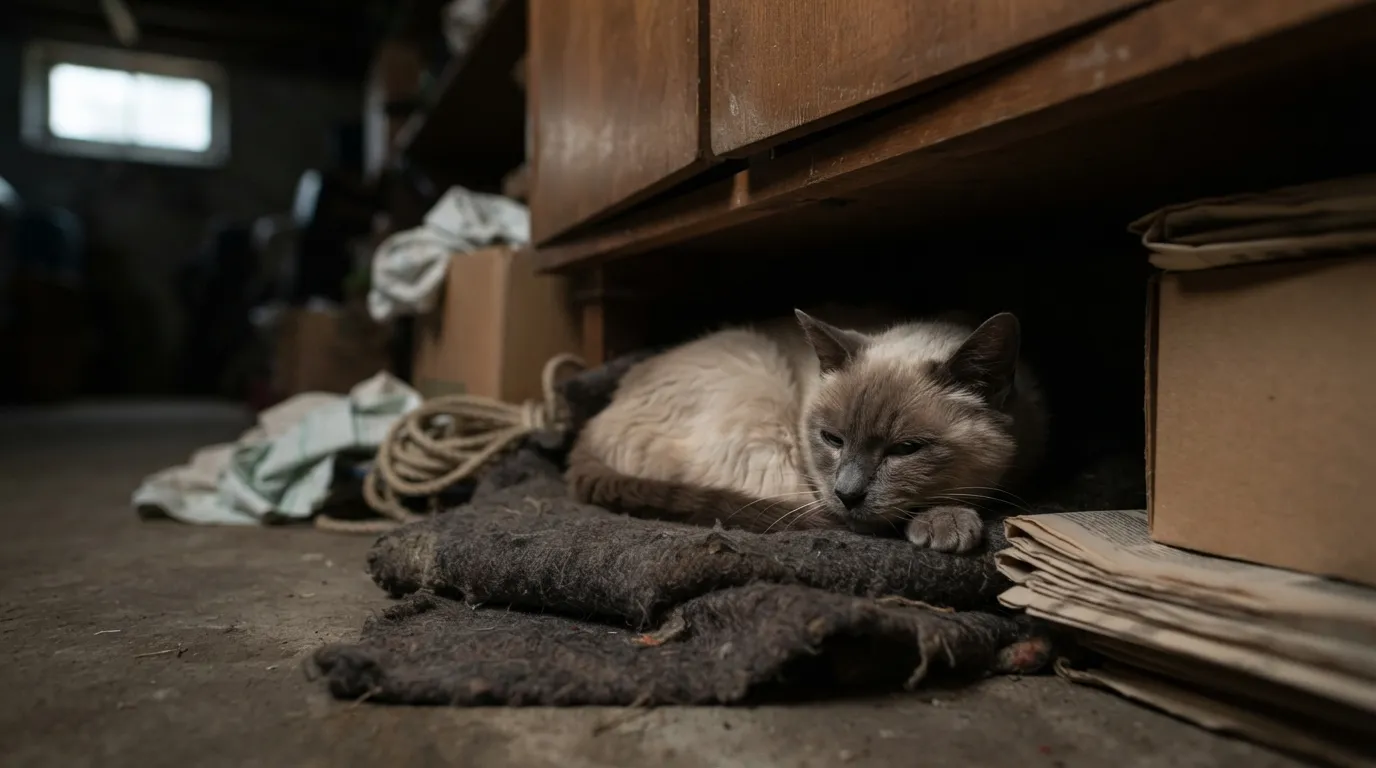
You search the house. You call their name. Your cat is gone – and they chose to go without you.
Some cats instinctively seek out a hiding place when they sense death is near. They stop eating, stop drinking, and pull away from everyone, including you.
It’s an ancient survival strategy – hiding weakness so a predator never sees an opening.
This is not rejection. This is ancient instinct.
Cats likely don’t understand death as a concept, but they do sense the physical changes happening inside them. They aren’t leaving you – they’re following an impulse written into their DNA long before they ever lived beside us.
If you know your cat is near the end, check their hiding places often. Sit near them, even if they won’t come out.
Your presence still matters, even through a closet door.
The Bottom Line
Cats give off both physical and behavioral cues that they’re nearing the end – and almost all of them are easy to misread.
The shift in sleeping spot. The reversed personality. The purr that signals pain, not peace. The one good day that turns out to be the last.
Learning how to know if your cat is dying often comes down to watching for changes in routine and personality. None of these signs guarantee the worst, but if several appear together, call your vet.
Cats shouldn’t have to pass through the final stages without care and comfort. You owe your purebred that conversation.
Did one of these signs catch you off guard with your own cat? Your experience in the comments might be exactly what another owner needs to read.