Animal Science Says Cats Who Scratch Certain Places Repeatedly Are Leaving More Than the Claw Marks Their Owners Can See
#1. The paw pad hides a gland most owners never think about
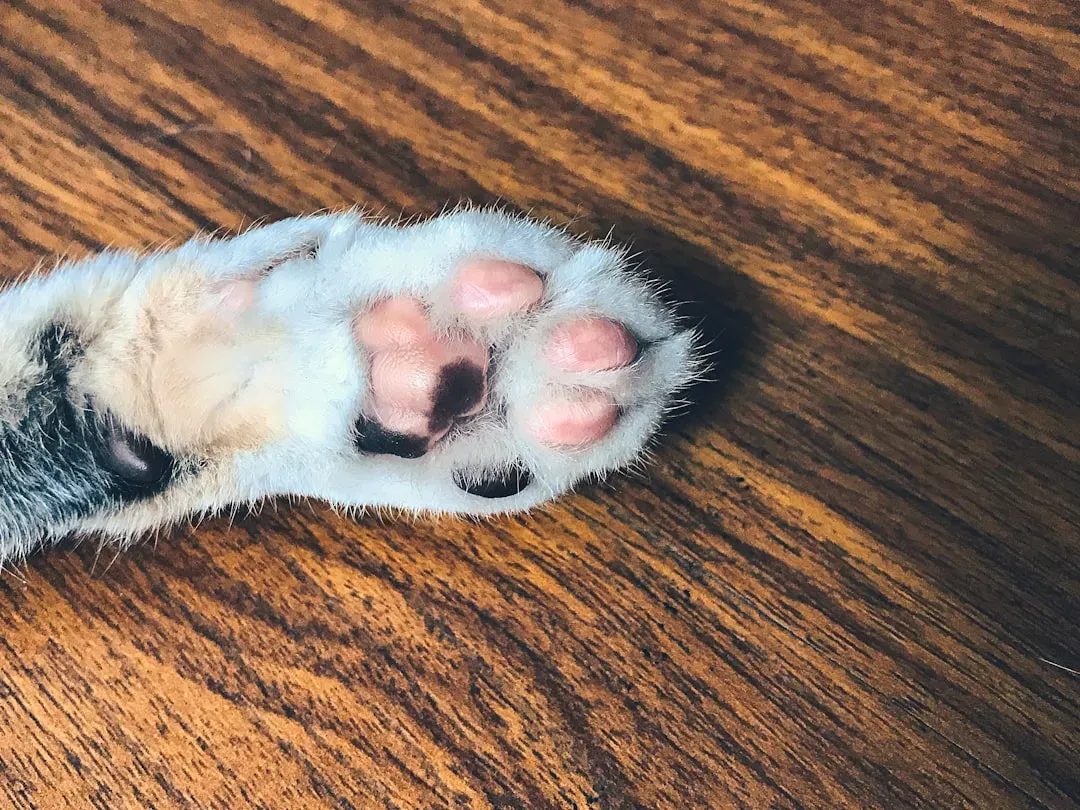
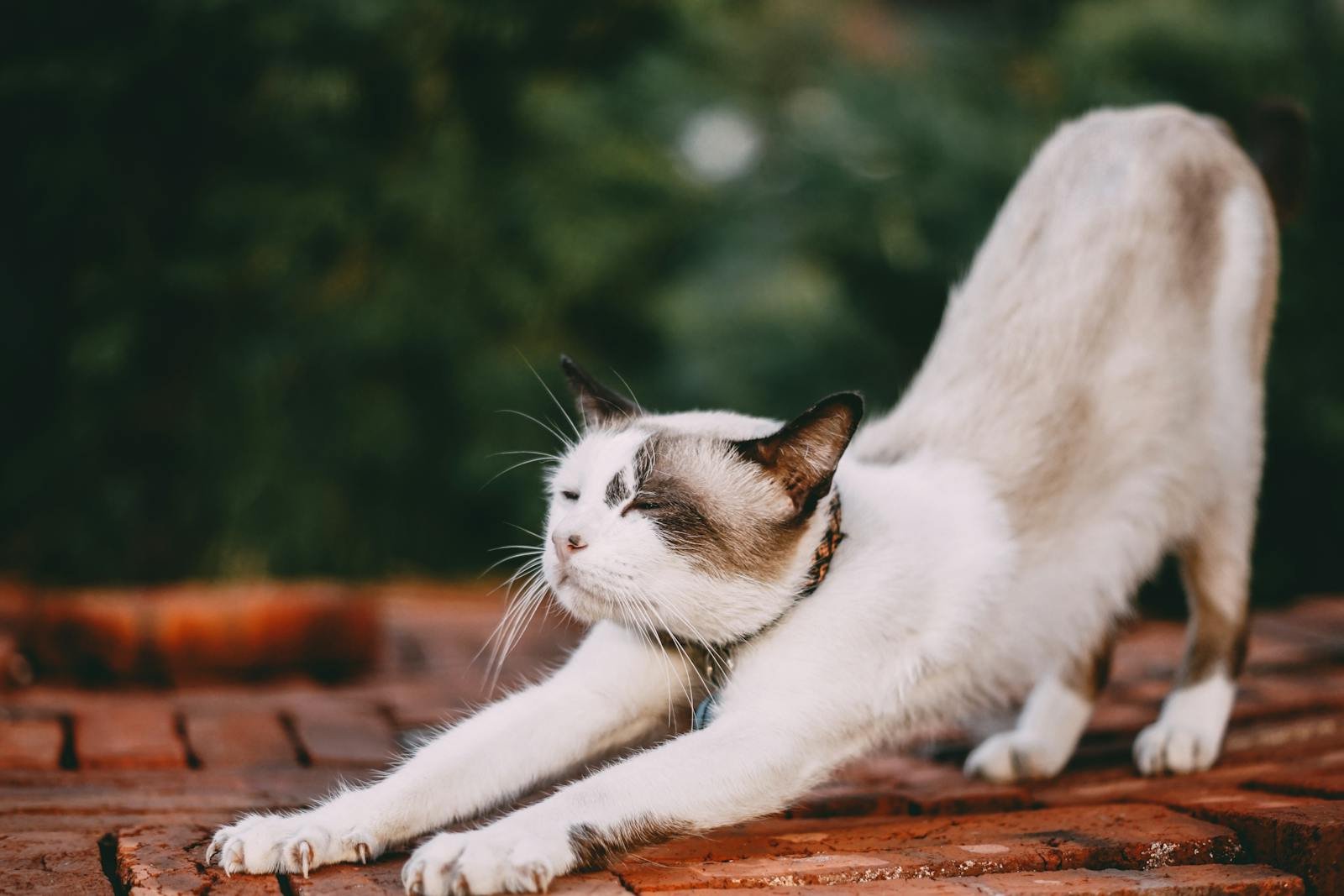
Cats have specialized scent glands tucked between the pads of their paws, known as interdigital glands. When a cat scratches, they deposit pheromones from small glands called interdigital glands, found between their pads. These glands sit quietly out of sight until the claws extend and the paw presses into a surface, at which point they release their chemical signal alongside the physical damage.
What makes this interesting from a scientific standpoint is that the gland activates specifically during the scratching motion, not during ordinary walking in the same way. These pheromones come from tiny glands on all four of a cat's feet, called interdigital glands, that give off a strong scent when the paw is stretched and the claws are extended. That timing detail suggests scratching itself is the delivery mechanism, not just a byproduct of having claws.
#2. Every scratch leaves a message humans cannot smell
The chemical signals cats deposit through their paws are pheromones, and they are built to be read by other cats, not by us. Humans cannot detect the pheromones released by cat scent glands. These chemical signals are for cats to communicate with other cats. That's part of why owners tend to underestimate how much communication is happening on their furniture and doorframes.
Scientists studying feline scent behavior have grouped these markings by function, and scratching falls into a specific category tied to territory rather than simple grooming or affection. Scratches and urine spurts are meant to express that someone is a sitting tenant of the place. In plain terms, the scratch is a signature, and it's meant to be read by whichever cat happens to pass by next.
#3. The visible marks and the scent marks work as a pair
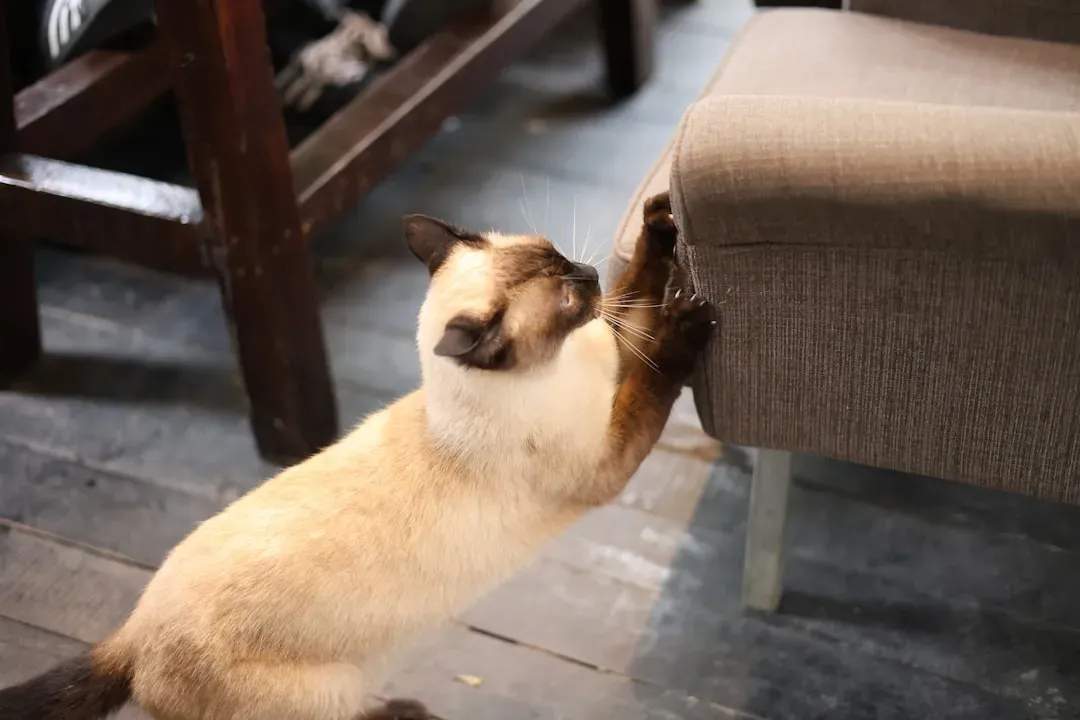
Researchers who study scent communication in cats describe scratching as producing two separate signals at once, one that other cats can see from a distance and one they can only detect up close. Having both a visual and olfactory mark is important for safety, since the visual mark allows other cats to see the scratch marks from a distance so they know they're entering another cat's area, and if they choose to come closer, they identify the olfactory marks. That layered system lets cats warn each other off without ever having to meet face to face.
This two part signal also explains why scratching happens at consistent, repeated spots rather than randomly around a room. A cat isn't just testing different surfaces for texture. It is reinforcing a location that already carries meaning, refreshing the scent so the message doesn't fade and lose its authority over time.
#4. Repeated scratching in the same spot is not random behavior
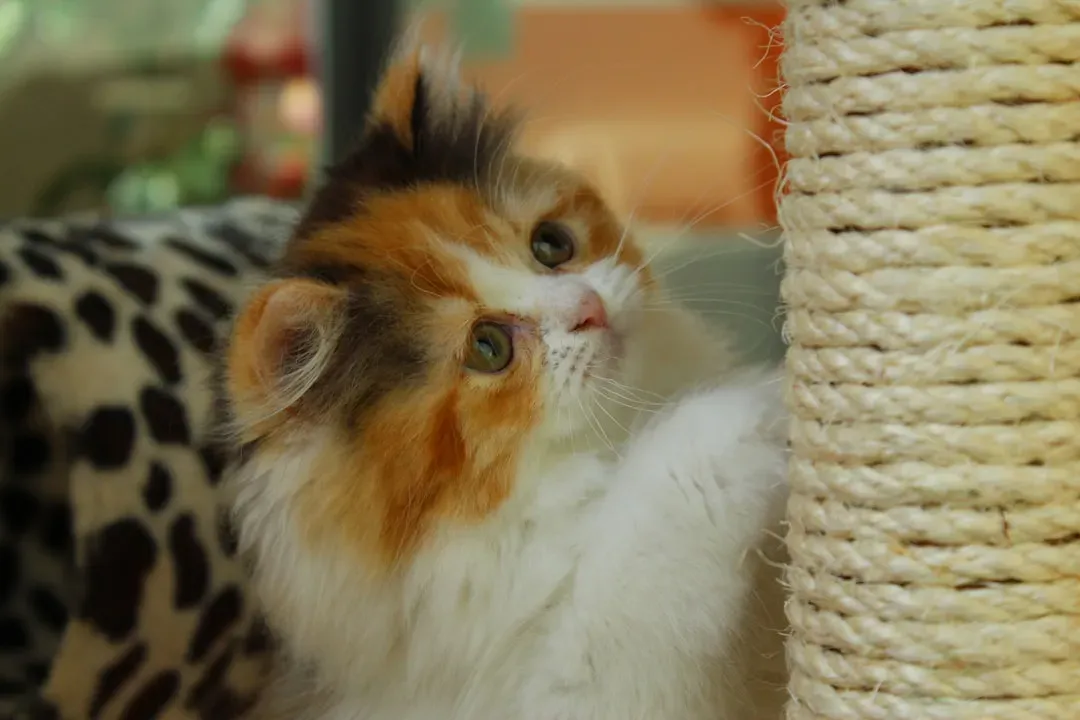
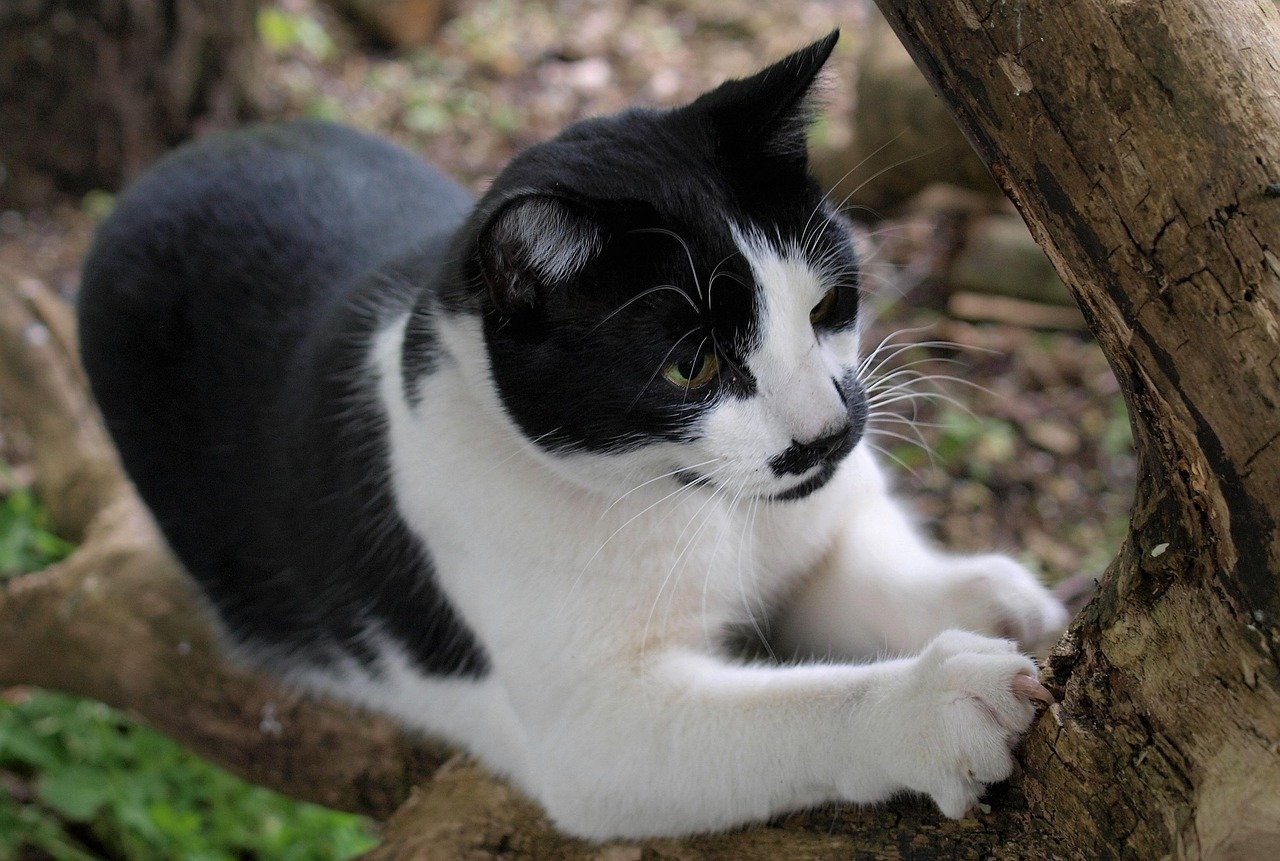
Owners often assume a cat returns to the same scratched spot because the material feels good on the claws. That's part of it, but scientists point to something more deliberate happening underneath. The glands in a cat's paws are more often used to set boundaries, and when a cat scratches something, whether it's a cat tree or the sofa, they are claiming it as part of their territory. Once a spot has been claimed this way, returning to it is a way of maintaining that claim rather than starting a new one each time.
This pattern also helps explain a frustration many cat owners know well: swapping in a new scratching post rarely solves the problem on its own. This is why discouraging a cat from scratching a piece of furniture can be so difficult. You don't just offer them an alternate scratching surface, you also need to offer them something that they prefer to claim as territory. The cat isn't attached to the object itself so much as to the meaning it has already built there.
#5. Scratching sits alongside a wider system of scent based communication
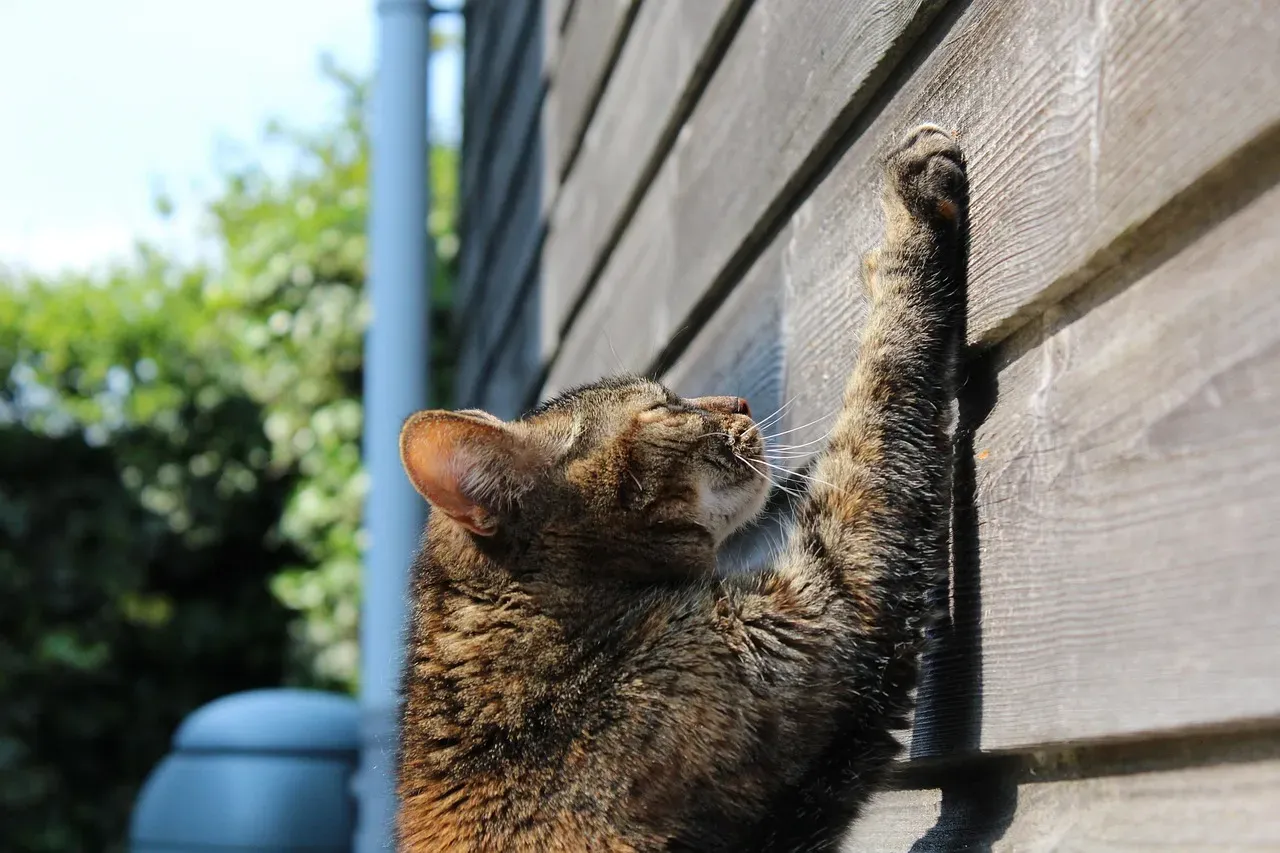
Paw scratching doesn't operate in isolation. Cats also carry scent glands on their cheeks, chin, forehead, flanks, and the base of the tail, and each location tends to serve a slightly different social purpose. The scent glands around the face are identified as friendly or low-intensity, which stands in contrast to the paw glands, whose signals lean more territorial and less about bonding.
That distinction matters because it shows cats aren't sending one generic message through every part of their body. Scent is used to identify members of the same colony, define territory, create familiarity, announce reproductive status, learn more about unfamiliar cats in the environment, self-soothe, bond with another, or as a form of aggression. Scratching taps specifically into the territorial and self-soothing end of that list, which is part of why it shows up so reliably near doorways, windows, and resting spots.
#6. Scent marking through scratching appears to reduce stress, not just claim space
Beyond the territorial angle, there's a calming function built into this behavior that's easy to overlook. Cats surrounded by their own scent tend to register their environment as familiar and safe, which lowers the vigilance they'd otherwise need to maintain in unfamiliar or shared spaces. Scent marking is a natural behavior that reduces stress and aggression by providing clear communication.
This self soothing element helps explain why scratching can spike during periods of change, like moving to a new home, welcoming a new pet, or even rearranging furniture. The cat isn't necessarily anxious about the scratching post itself. It's working to re-establish a scent layer over an environment that suddenly feels less predictable, and the paw glands are the fastest tool it has for that job.
#7. There's actual laboratory evidence behind the pheromone theory, not just observation

This isn't purely inferred from watching cat behavior. Researchers have tested synthetic versions of the paw gland pheromone directly against a placebo to see whether it changes scratching behavior. In one experiment, cats scratched a post significantly more when it had been treated with Feliscratch, a synthetic version of the pheromones found in plantar pads, compared to a placebo. That result gives the scent theory something rare in animal behavior research: a controlled comparison rather than just correlation.
Scientists are careful to note there are still open questions, particularly since some of these products combine multiple active ingredients. Because Feliscratch also includes catnip, it's not known which substance, or the combination, is responsible for this effect. Even with that caveat, the fact that a paw pad derived compound measurably shifts where cats choose to scratch supports the broader idea that this behavior is chemically driven, not just mechanical.
#8. Knowing this changes how owners should think about scratching problems
Once you understand that scratching is doing double duty as both muscle maintenance and territorial signaling, it reframes the whole furniture destruction conversation. A cat clawing the same armrest every day isn't being difficult for its own sake. It's maintaining a scent signature that, to the cat, might be doing real psychological work in an environment it wants to feel secure in.
This also explains why simply removing access to a favored scratching spot, without giving the cat an acceptable alternative in a similarly meaningful location, tends to backfire. You also need to offer them something that they prefer to claim as territory, which in practice means placing new scratching surfaces near, not far from, the spots a cat has already chosen to mark.
Final thoughts