Wildlife Biology Says Solitary Tigers Communicate Far More With Other Tigers Than Their Lonely Reputation Would Suggest

A tiger moving through its range is reading messages left by neighbors, leaving its own in return, and sometimes calling out into the dark in ways humans can barely detect. The solitary label describes how tigers hunt and raise cubs, not how disconnected they actually are from one another.
#1 The Myth Of The Isolated Predator

Tigers earned their reputation as loners because they hunt alone, sleep alone, and rarely share a kill with another adult outside of mating or motherhood. That part is accurate. But biologists studying their behavioral ecology have long pointed out that solitary living and social silence are not the same thing at all.
Despite their solitary nature, communication is a very important part of tigers' behavioral ecology, and they communicate through vocalizations such as roaring, grunting and chuffing, and through signals such as scent marking and scratches on trees. That distinction matters because it reframes the entire conversation. A tiger without visible company is still, in a very real sense, in constant contact with the tigers around it.
#2 Scent Marking Works Like A Chemical Bulletin Board

If tigers had a social media platform, scent marking would be it. The scent marks contain pheromones and other chemical compounds that communicate information about the tiger's identity, sex, age, and reproductive status to other tigers, functioning in effect as a social network that operates without any actual socializing. A tiger passing through doesn't need to see another animal to know exactly who has been there recently.
What makes this system remarkable is its staying power compared to a shout or a growl. A roar reaches far but is gone in seconds, while a scent mark sits on a tree trunk for weeks and carries identity, sex, reproductive state and how long ago the marker passed, since tigers spray a mix of urine and anal gland secretion onto vertical surfaces along the routes they use. Researchers analyzing these secretions have found dozens of chemical compounds packed into a single spray, turning a simple mark into something closer to a detailed profile than a casual note.
#3 The Flehmen Response Turns Scent Into Data

Anyone who has watched footage of a tiger wrinkling its nose and pulling back its lips has witnessed one of the more curious behaviors in the animal kingdom. That expression, known as the flehmen response, is not discomfort or disgust. Big cats possess an extraordinary sense of smell, aided by a special organ called the Jacobson's organ, located on the roof of the mouth, and when a tiger curls its lips in the flehmen response, it draws in scents to analyze them.
This is essentially a tiger running a chemical analysis in real time. The primary function of the flehmen response is intra-species communication, and by transferring air containing pheromones and other scents to the vomeronasal organ, animals can gather chemical messages. For tigers specifically, this gesture is closely tied to reading reproductive cues and detecting rivals, which helps explain why males perform it so deliberately near fresh scent marks.
#4 Scratches And Scrapes Add A Visual Layer

Scent alone would be enough to carry a lot of information, but tigers layer visual signals on top of it. Claw marks raked high into tree bark serve two purposes at once: they physically display the size and reach of the animal that made them, and they release scent from glands in the paws.
These rake marks are done on tree bark, where the individual stands on its hind legs and scrapes the bark with the claws of its front paws, with males reaching approximately 10 to 11 feet above the ground. A tall scratch mark tells a passing tiger something a scent trace cannot quite convey on its own, namely the physical stature of whoever left it. Ground scrapes work in a similar way, combining a visible disturbance in the dirt with a fresh scent deposit so the message reaches an animal through both sight and smell.
#5 Roars, Growls, And The Almost Silent Chuffle

Tigers are not mute animals waiting for visual or chemical cues to do all the work. The roar is the headline of tiger vocal communication, measuring around 114 decibels near the animal and carrying roughly three kilometres in still air, further at night and over flat water. That kind of range means a roar can announce a tiger's presence across an entire stretch of forest without any physical encounter taking place.
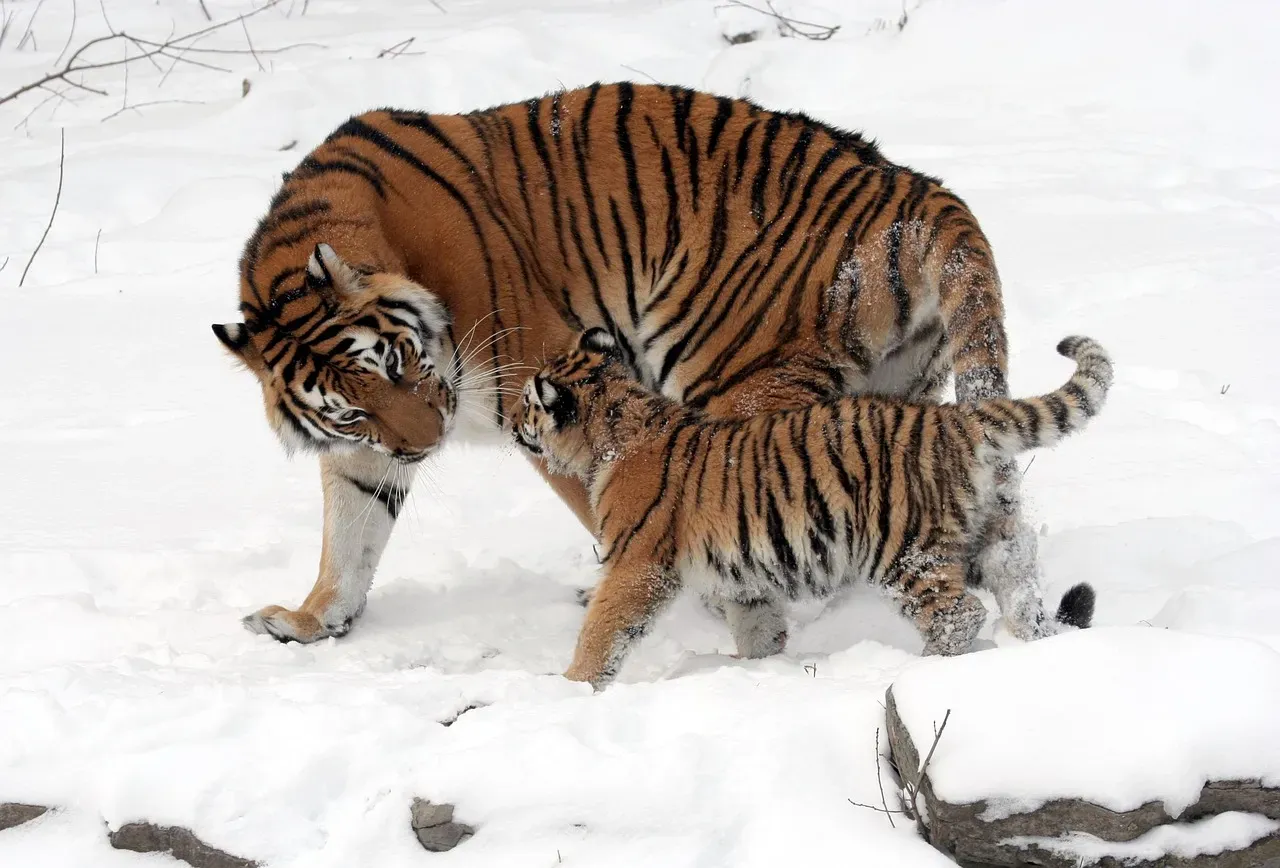
Not every sound a tiger makes is a warning, though. The chuffle is the only tiger vocalisation reliably tied to a positive context, since growls, roars and hisses all carry threat or tension while the chuffle carries none, and keepers treat it as the marker that a tiger is at ease. This soft, breathy greeting shows up most often between mothers and cubs or during calm encounters between adults, offering a rare glimpse of tiger communication that has nothing to do with conflict or territory at all.
#6 Every Roar Sounds A Little Different
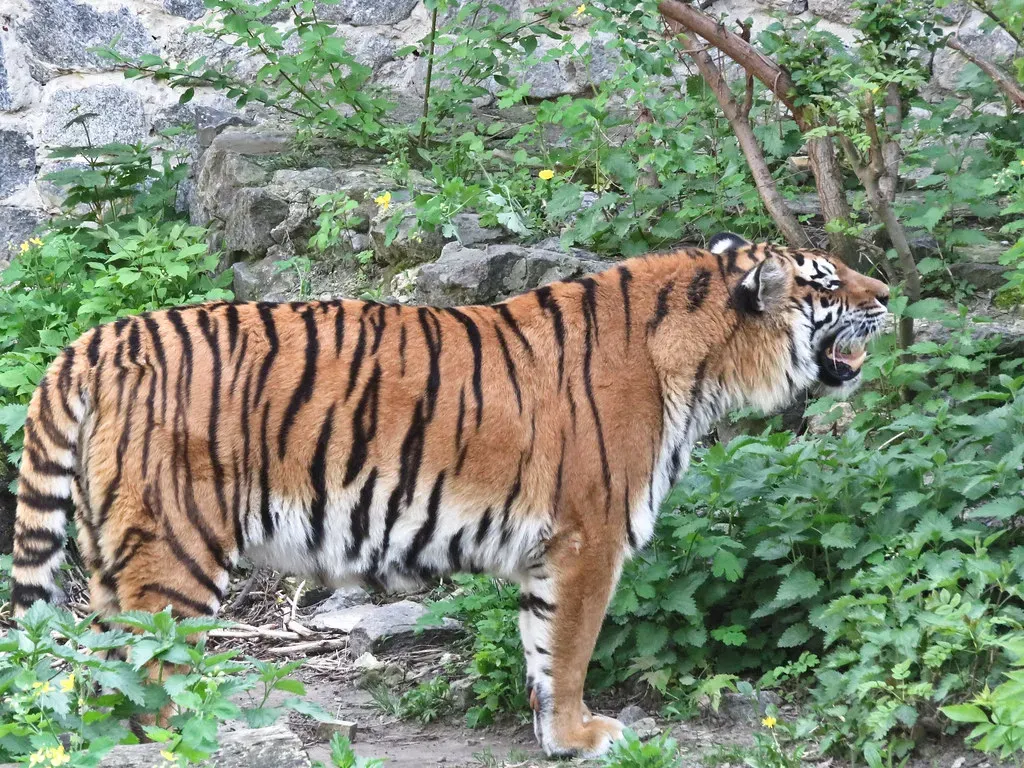
One of the more surprising findings from zoo-based research is that tiger roars are not interchangeable. Individual animals produce roars with distinct acoustic signatures, similar to the way human voices differ from one speaker to the next.
A study of long-distance roars from six tigers at Omaha's Henry Doorly Zoo found that individuals could be told apart acoustically, with the temporal pattern of the call doing most of the discriminating work. This raises the intriguing possibility that wild tigers may recognize specific neighbors by voice alone, though researchers are careful about how far that idea can be pushed. Zoo recordings have shown that roars are individually distinctive, but whether wild tigers actually use that to tell a neighbor from a stranger has not been tested with playback experiments in the field.
#7 A System Built To Prevent Conflict, Not Just Announce Presence

Put all these signals together and a clearer picture emerges of why tigers rely on this layered communication network in the first place. Meeting face to face is dangerous for an animal this powerful and this territorial, so avoiding unnecessary encounters carries real survival value.
The flehmen response allows a tiger to read the age, health, and sex of the individual who left a mark with incredible precision, effectively avoiding lethal conflict through information. Scent marks, scratches, and vocal signals all function as a way of settling disputes over territory and mates before they ever escalate into violence. In that sense, tiger communication is less about staying in touch for its own sake and more about managing risk in a landscape where two apex predators meeting unexpectedly rarely ends well for either one.
Final Thoughts
The word solitary has done tigers a disservice for years, painting them as isolated animals moving through empty landscapes with little awareness of one another. The research tells a more interesting story. Scent marks linger on trees for weeks, scratches announce size and strength, roars carry for kilometers, and the flehmen response lets a tiger read chemical information the way a person might scan a message.
None of this makes tigers social animals in the way lions or wolves are social. It does mean that calling them lonely misses the point entirely. A tiger walking through its range alone is, in a very real sense, never out of touch with the tigers around it, and that distinction feels worth remembering the next time the word solitary comes up in a conversation about these animals.