16 Quiet Signals a Senior Cat Gives Before It Needs Urgent Veterinary Care
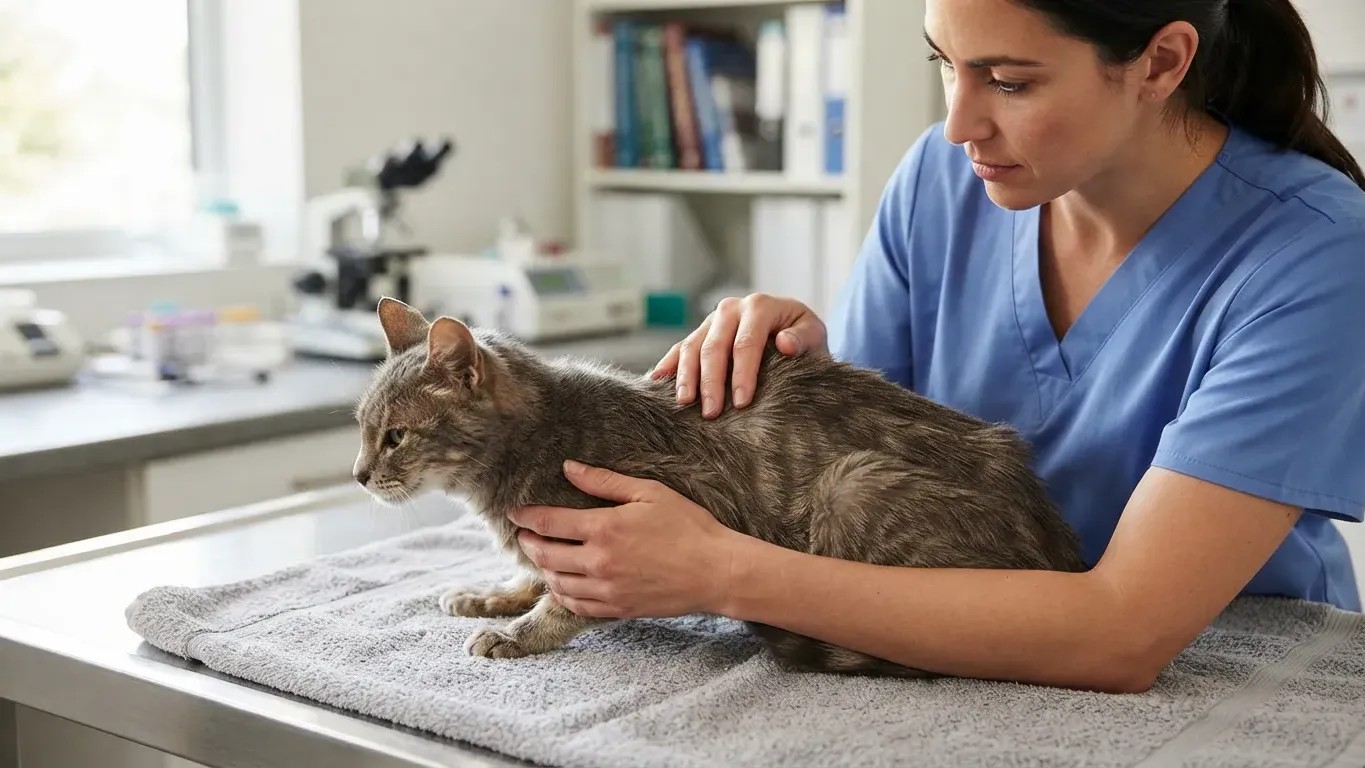
Most cat owners think they'll know when something is seriously wrong with their senior cat. They imagine an obvious signal - a dramatic cry, a sudden collapse, something impossible to miss.
That's not how cats age. Older cats hide illness with unsettling skill, and that instinct can delay treatment when minutes matter most.
The real warnings are quiet, easy to explain away, and almost always present weeks before a crisis hits. Here's what to watch for, starting with the one hiding in plain sight.
#16 - A Shift in Where They Choose to Sleep
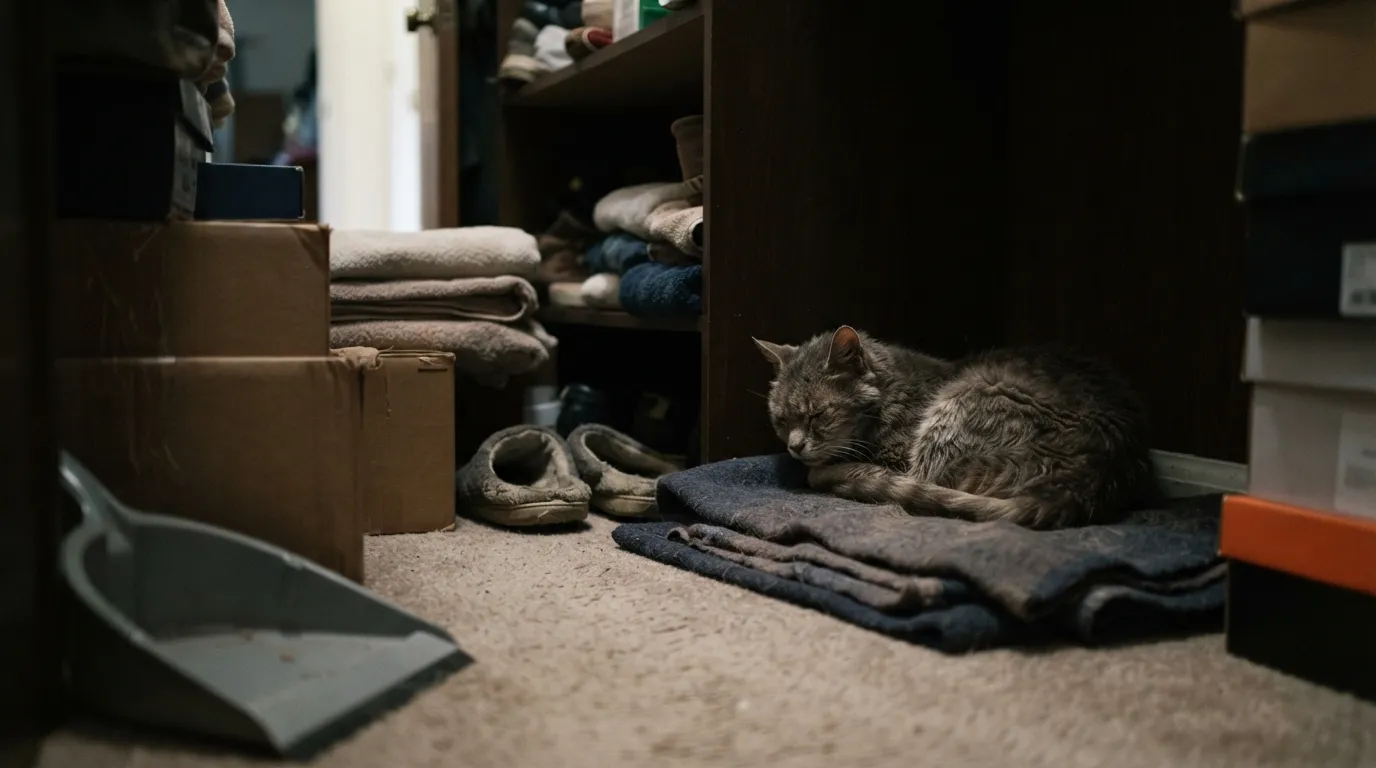
Senior cats are creatures of iron habit. When that habit quietly breaks, pay attention.
A senior cat may start hanging out in unusual places - an empty corner, behind the toilet, deep inside a closet. It looks like preference, but it usually isn't.
The concerning part isn't the new spot, it's the withdrawal from you. Pulling away from human contact is especially telling in a cat that used to be social or affectionate.
If your cat has quietly relocated away from the family, note the date it started. The next clue is written right into their fur.
#15 - Grooming That Stops Without Warning
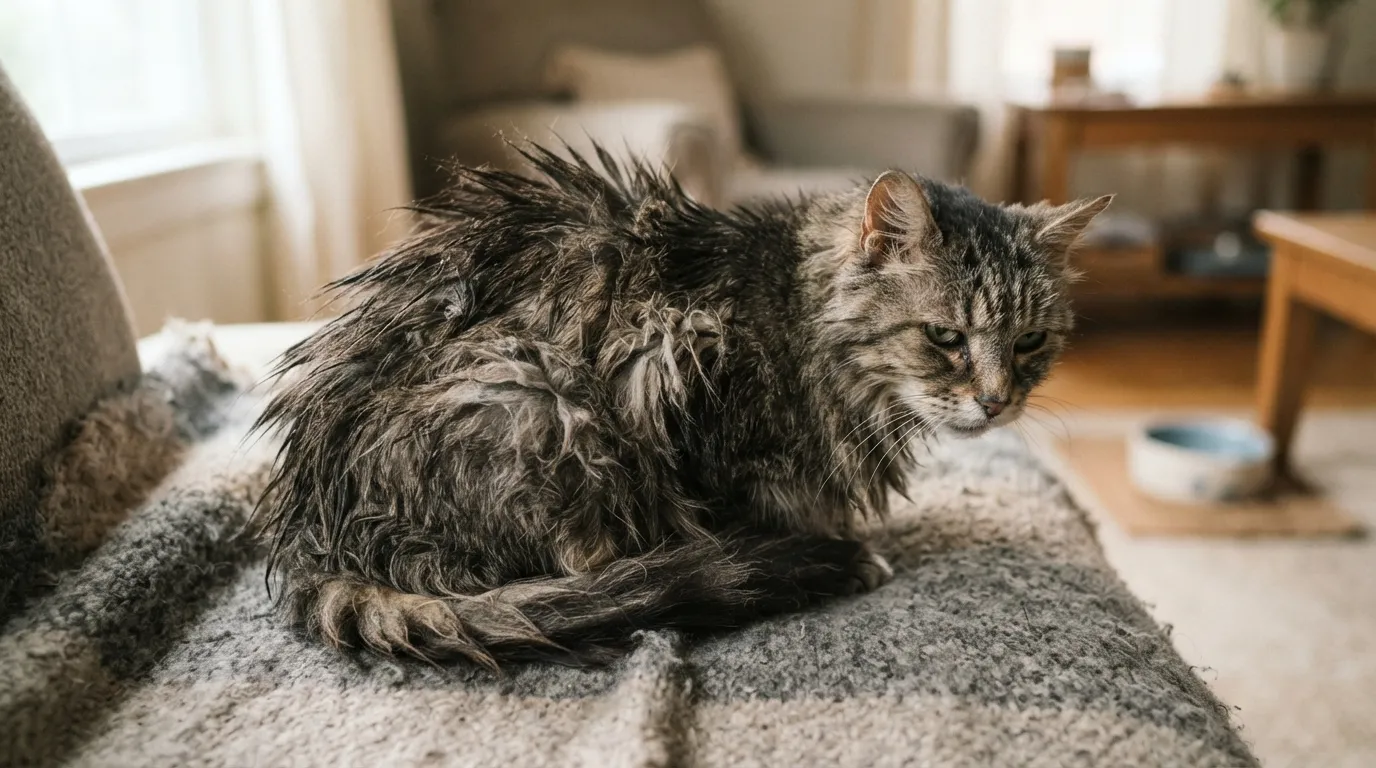
A cat's coat is a direct health report. Most owners read it wrong.
A cat that stops grooming and develops a matted coat is showing one of the most reliable early warning signs vets look for. Grooming takes flexibility, energy, and the absence of nausea - when any of those fail, the coat goes first.
A senior cat with a greasy, clumped, or unusually dull coat isn't getting lazy, it's physically struggling. The back and base of the tail show neglect first because they're hardest to reach when joints hurt.
Watch the coat. It tells the truth long before anything else does - and next, something in the water bowl tells its own story.
#14 - Drinking More Water Than Usual
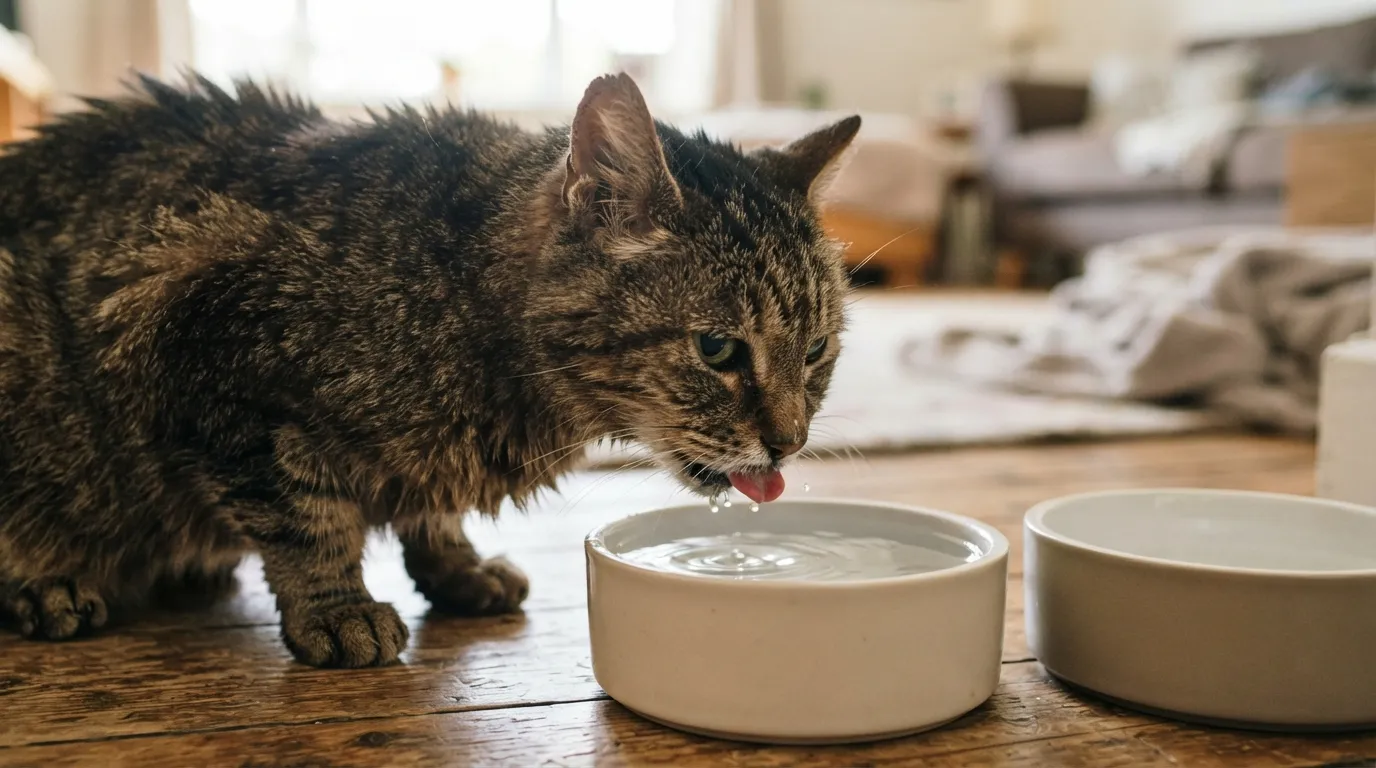
This one gets dismissed constantly, usually with "she's just thirsty." That's the wrong read almost every time.
Increased thirst, frequent urination, weight loss, and a poor coat are hallmark signs of kidney disease in senior cats. It's also a hallmark of hyperthyroidism and diabetes, two of the most common conditions in cats over 10.
Fast Facts
- Chronic kidney disease affects an estimated 30% to 40% of cats over age 10.
- That share climbs to roughly 81% in cats over 15.
- Hyperthyroidism and diabetes are two of the next most common senior-cat diagnoses tied to excess thirst.
- None of these three conditions go away on their own.
A senior cat that suddenly needs noticeably more water is very likely dealing with one of these three conditions. None of them resolve on their own, and all of them respond far better to early treatment.
If you're refilling the bowl more often than you were two months ago, that's your signal. The next warning sign waits in the litter box.
#13 - Litter Box Trips That Look "Off"
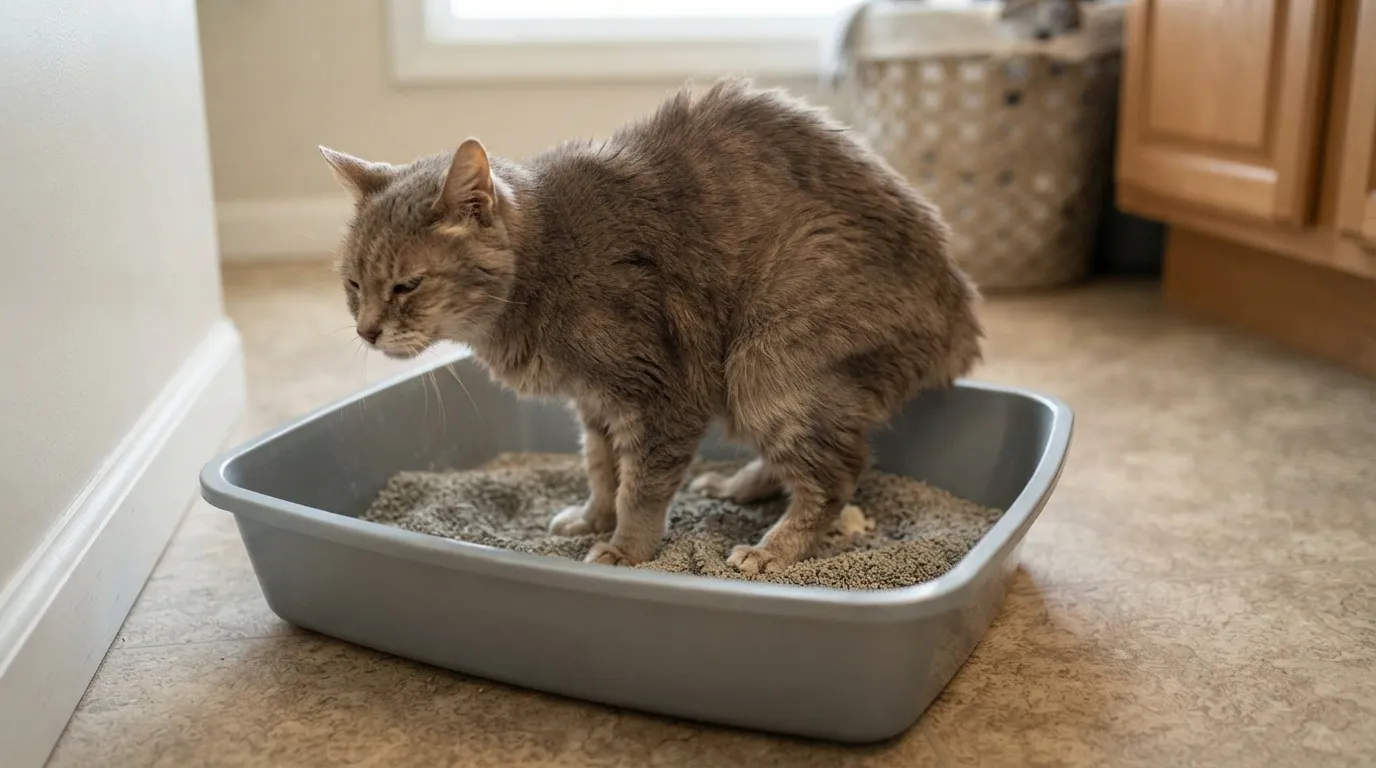
The litter box is one of the most honest diagnostic tools in your home. Most owners stop checking it closely after kittenhood, and that's a mistake.
A senior cat may strain in the box or make frequent trips with little output. In a male cat especially, that in-and-out pattern can signal a urinary blockage, which turns life-threatening within hours.
A senior cat that starts urinating outside the litter box is not being difficult, it's often in pain. A cat with joint pain may struggle to climb in and out of a box with high sides.
Log any change in frequency, output, or stool consistency. Next up: the bowl they used to empty in seconds.
#12 - Sudden Food Pickiness
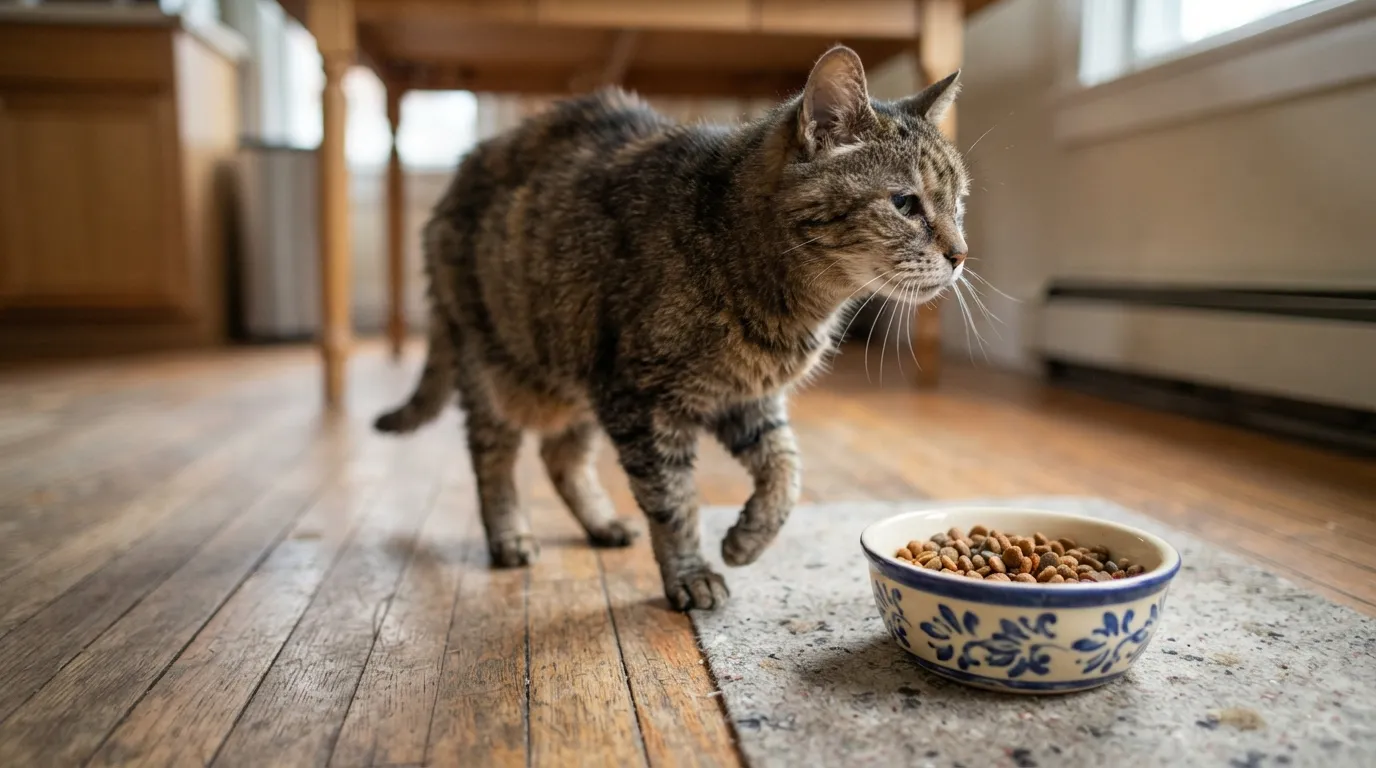
Your senior cat turning their nose up at a food they've eaten for years isn't attitude. It's a symptom.
Changes in appetite can be a pain response, particularly tied to dental disease or nausea. A cat with mouth pain will often approach the bowl, sniff, and walk away - owners read this as finickiness.
Dental disease is staggeringly common in senior cats and profoundly undertreated. If your cat now prefers wet food over dry food it once loved, that's a red flag for oral pain, not a preference change.
Call the vet before this becomes a full refusal to eat. The next sign lives under their fur, where you can't see it yet.
#11 - Weight Loss You Can Feel Before You Can See It
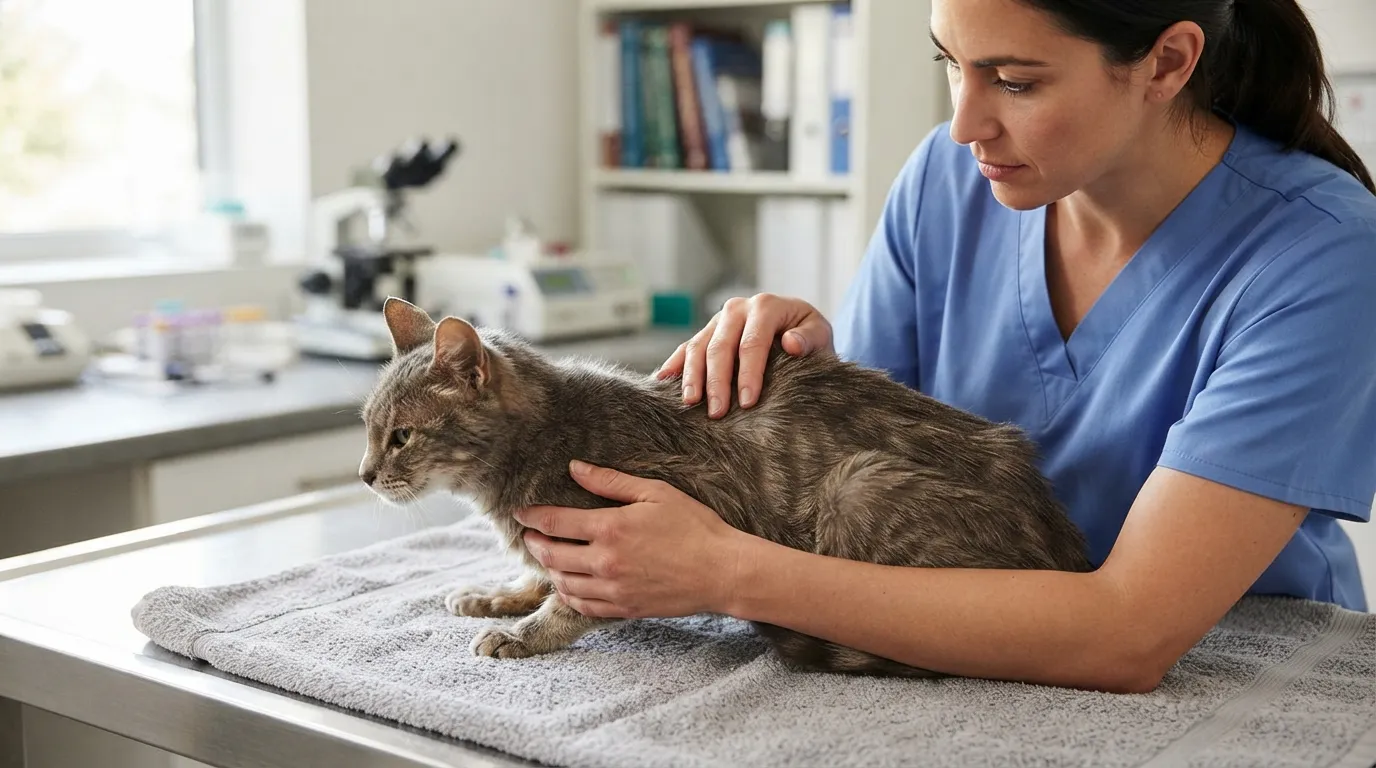
By the time weight loss is visible, it has usually been building for weeks or months. Run your hand along the spine, then the shoulder blades and hips.
A prominently felt spine, visible hip bones, or a loss of fullness around the head and shoulders means the body is under real metabolic stress. That warrants immediate veterinary evaluation.
The muscle loss around the skull and temples is one of the earliest detectable changes, and almost no one checks for it. Sudden weight loss or gain can point to thyroid problems or diabetes.
Weigh your senior cat monthly at home. A loss of even half a pound on a 10-pound cat is 5% of body weight, and that's medically significant.
Next: the jump they used to make without thinking.
#10 - Hesitating Before Jumping
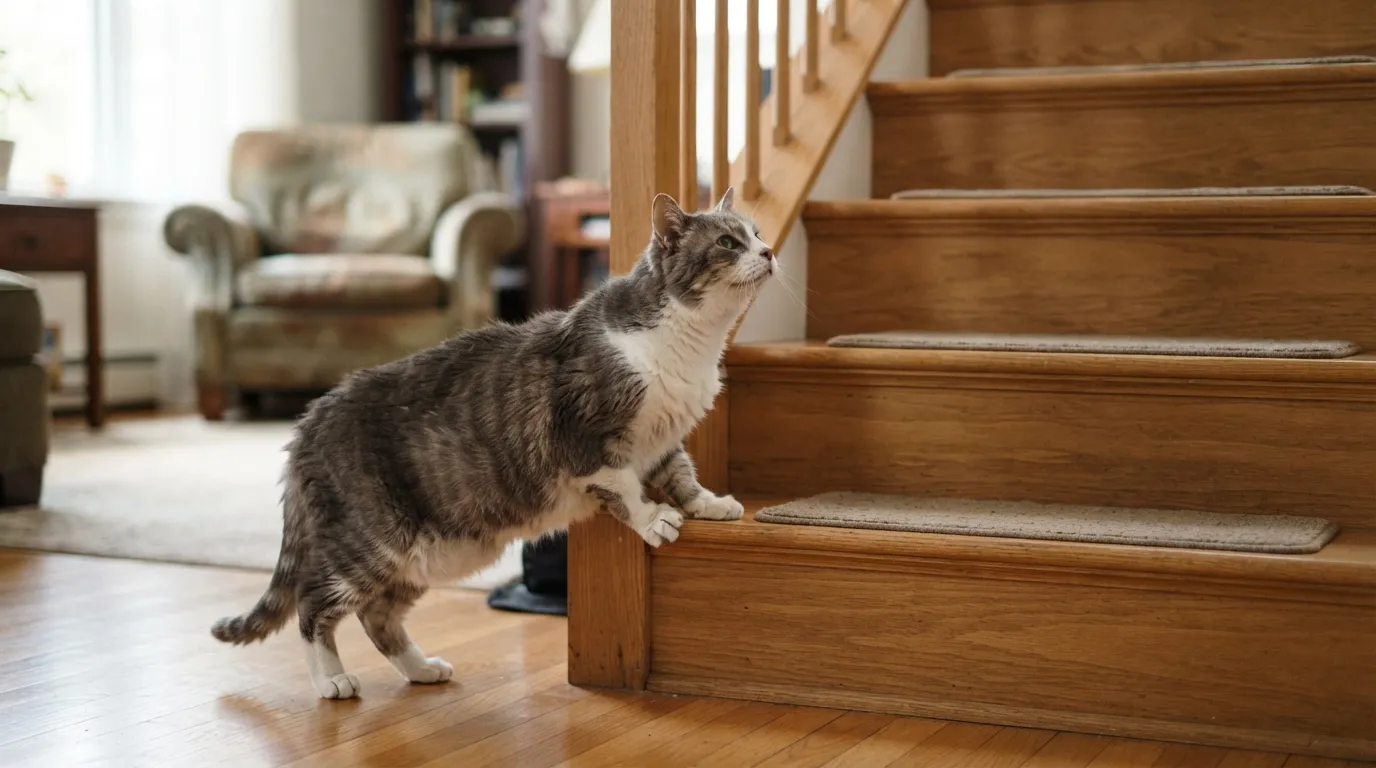
This is the sign that gets explained away more than almost any other. "She's just getting older," owners say.
Sometimes that's true. Often, it isn't.
A cat who no longer jumps onto furniture or hesitates on the stairs may not simply be slowing down - these can be early arthritis symptoms. Stiffness, limping, reluctance to jump, and decreased activity are the classic signs.
Worth Knowing
- Osteoarthritis shows up in roughly 60% of cats over age 6.
- That number climbs past 90% in cats 12 and older.
- Most affected cats never limp - they simply stop jumping, climbing, or playing as much.
- The condition is one of the most underdiagnosed in feline medicine.
Feline arthritis is severely underdiagnosed because cats mask the pain so effectively. They don't limp the way dogs do, they just quietly stop doing the things that hurt.
If your cat used to leap to the windowsill and now stands on the floor looking up at it, that's pain - manageable, but only if you catch it. The next sign shows up only after the stress is already over.
#9 - Slower Recovery After Stress
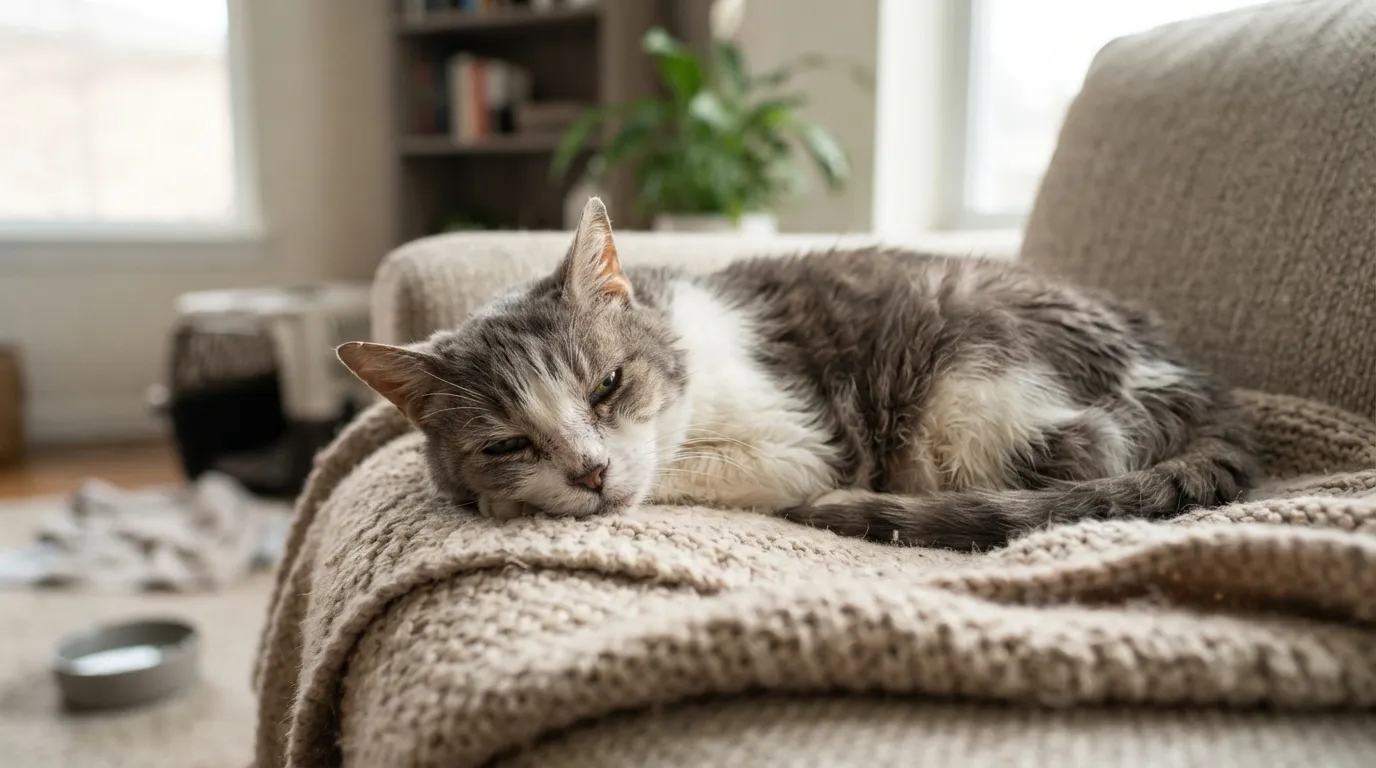
This one is almost invisible unless you're watching for it. But vets consider it one of the most telling signs of underlying decline.
Senior cats tire faster during play and sleep more than they used to. After a stressful event - a vet visit, a new person in the house - they take longer to return to baseline.
If your cat seems "not quite right" for three or more days after any disruption, that recovery lag is a clinical signal. Senior cats have less reserve and can decline quickly from kidney disease, heart disease, diabetes, or infection.
Less physiological reserve means less ability to cope with even minor stress. Next, listen closely, or notice the silence.
#8 - Going Quiet When They Were Once Vocal
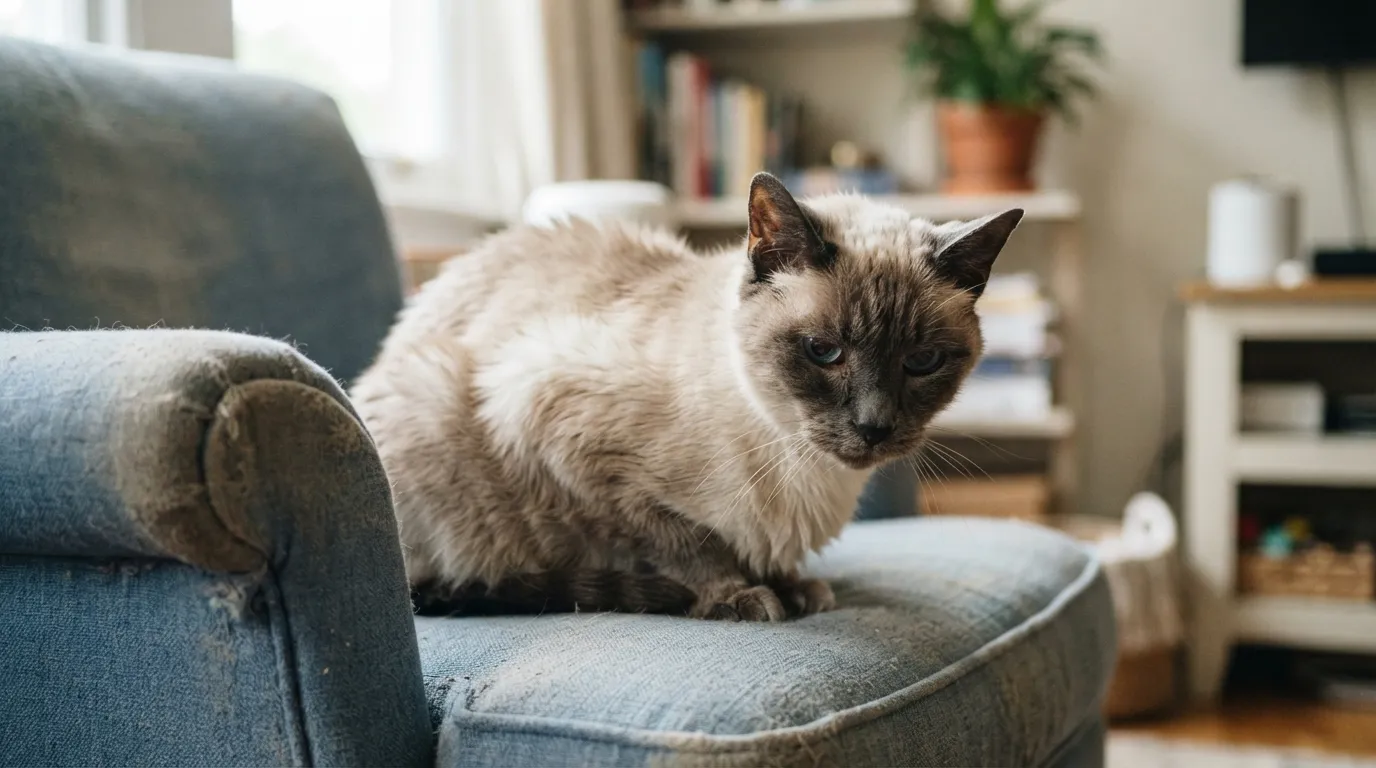
Silence in a previously chatty cat is unsettling for a reason.
If your normally talkative cat suddenly goes quiet, they might be feeling too sick or weak to speak up. This is especially telling in breeds known for chattiness, like Siamese, Burmese, or Maine Coons.
The opposite pattern, a previously quiet cat that begins yowling at night, is equally alarming. A usually quiet cat who starts crying out or growling may be trying to tell you something is very wrong.
Nighttime yowling in senior cats is linked to cognitive dysfunction, pain, and hypertension, all of which need evaluation rather than earplugs. The next clue is staring back at you every day.
#7 - Eyes That Look Subtly Different
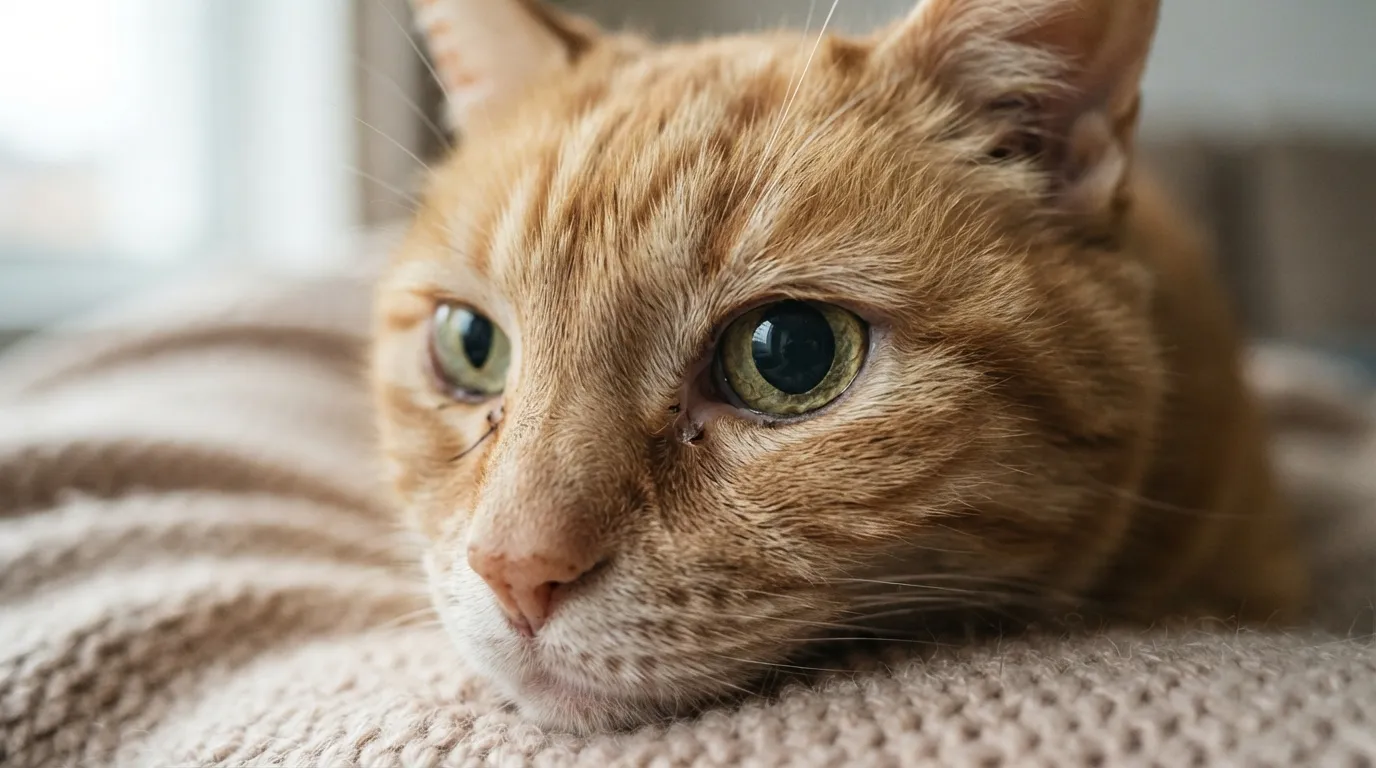
Most owners look at their cat's eyes every day without truly seeing them. Start looking more carefully.
Cloudiness, discharge, or unevenness in pupil size are physical signs that require veterinary attention. Unequal pupil sizes, one big, one small, can indicate a neurological event or hypertensive retinopathy.
High blood pressure is common in senior cats with kidney disease or hyperthyroidism, and the eyes are often where damage first becomes visible. Watch for a hazy or blue tint, dilated pupils, sudden aggression, or one eye looking more prominent than the other.
Any sudden change in eye appearance warrants a same-day call to your vet. Next: how they sit when they think you're not looking.
#6 - Hunched Posture at Rest
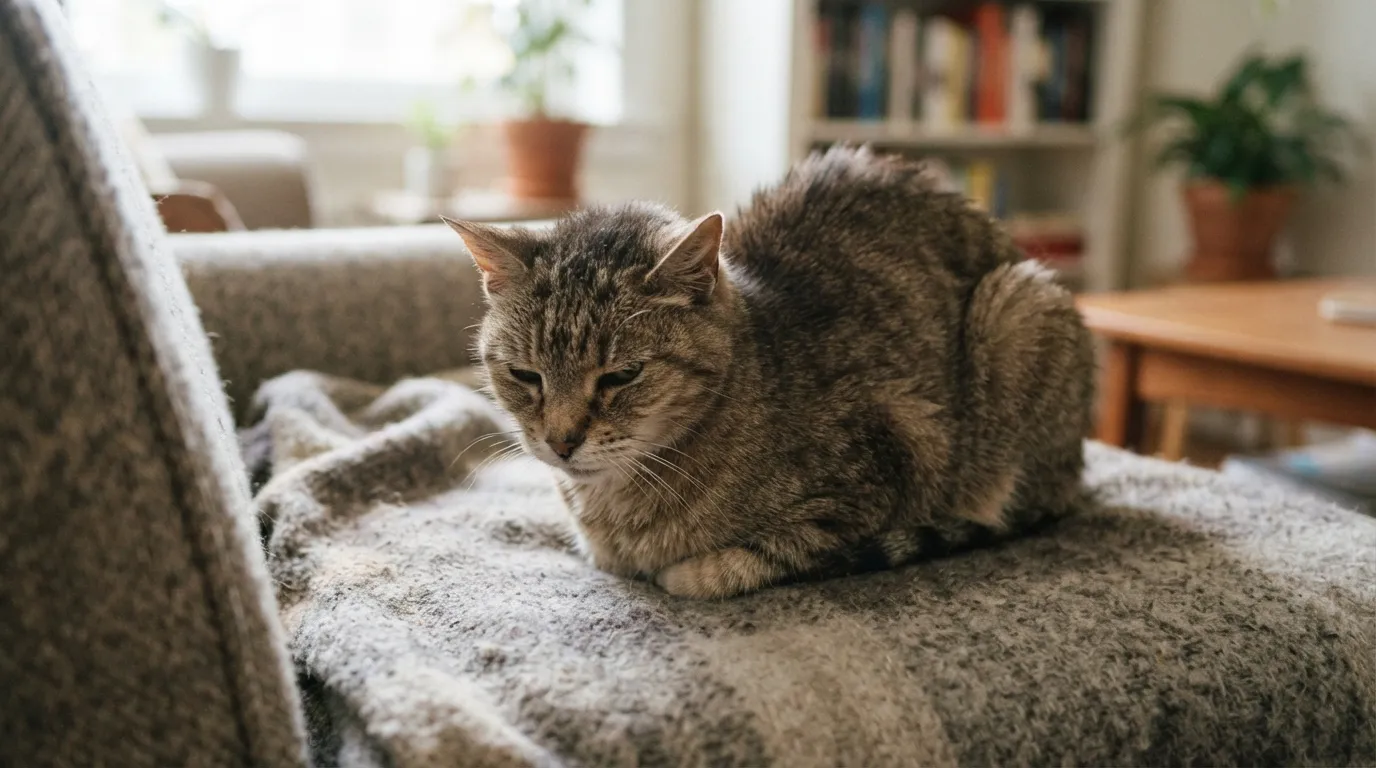
How your cat sits when they think no one is watching tells you more than almost anything else.
Pinned ears, a hunched posture, and wide pupils can all mean something is wrong. A cat in pain will often sit in a loaf position with elbows splayed, head lowered, eyes partially closed - braced, not relaxed.
The difference between a relaxed loaf and a pain loaf is subtle but real: a comfortable cat looks soft, a cat in pain looks held. Learn what your cat looks like when genuinely resting.
When that changes, you'll know, and you need to act on it. The next sign happens the moment your hand makes contact.
#5 - Refusing to Be Touched in Specific Areas
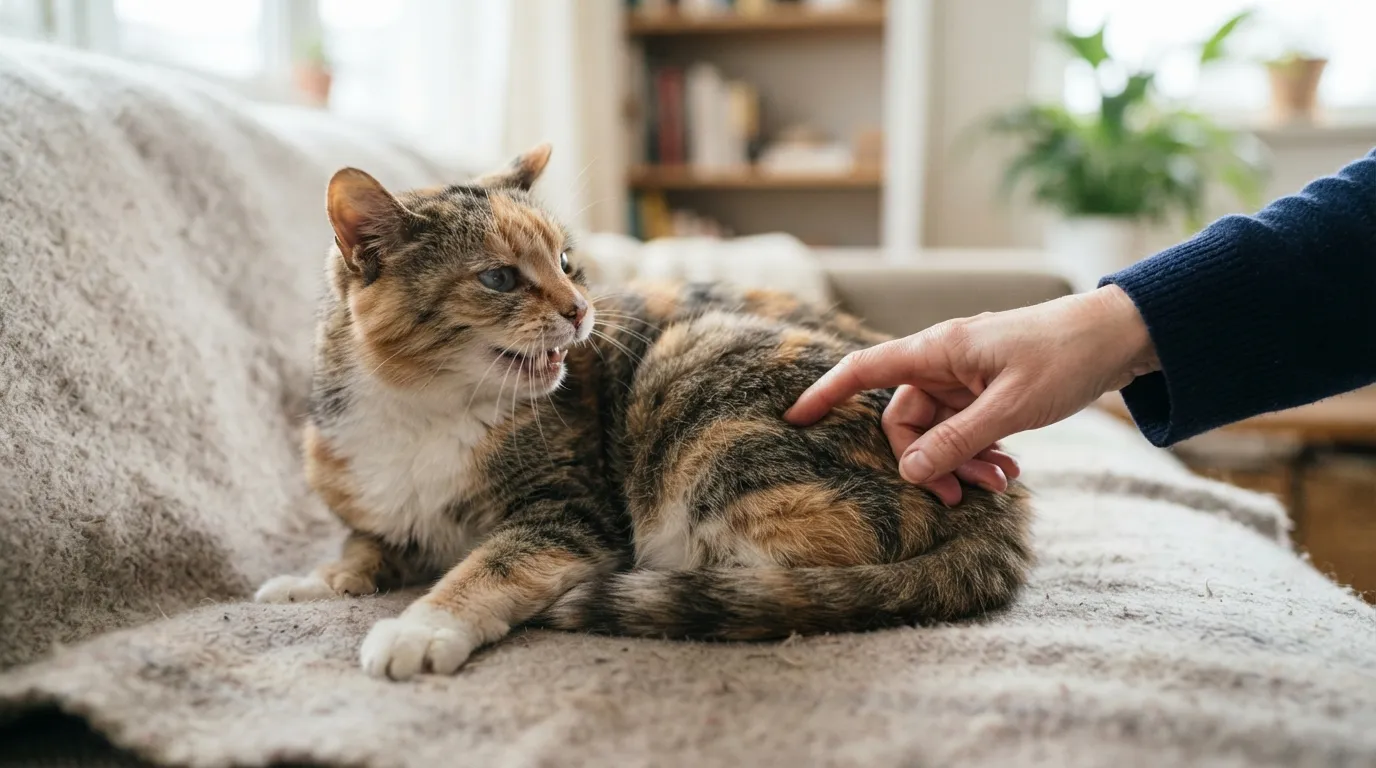
A cat that suddenly flinches or pulls away when touched somewhere they used to allow is communicating directly.
Disliking brushing is one subtle sign of declining comfort. But localized sensitivity, pulling away when you touch the belly, spine, or hips, points to something more specific: internal pain, a mass, or joint inflammation.
A cat that growls or hisses when touched somewhere it was never protective of before should be seen that same week, not in a few months. Touch sensitivity is one of the clearest behavioral flags a cat can raise.
Trust it. Next comes the sign owners write off as "just old age."
#4 - Confusion or Staring Into Space
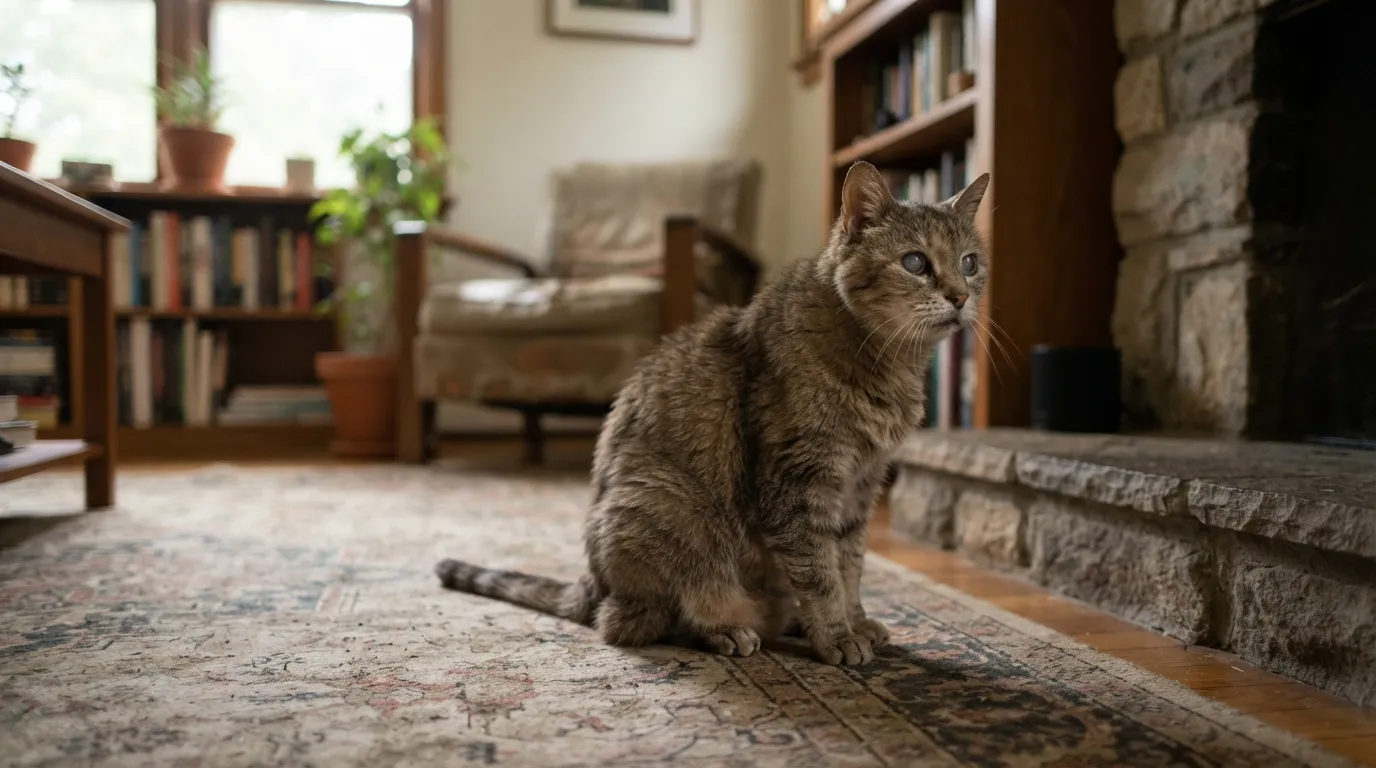
This sign gets written off as "just being a cat." It shouldn't be.
Confusion, staring into space, or changed sleep patterns can sometimes signal cognitive decline or medical illness. Restlessness, pacing, inappropriate urination, and increased anxiety often ride alongside it.
At a Glance
- About 28% of cats aged 11 to 14 show at least one sign of cognitive dysfunction.
- That figure rises to more than 50% in cats 15 and older.
- Owners frequently mistake early symptoms for a personality shift rather than a medical one.
- The condition can't be cured, but it can often be managed once identified.
Feline cognitive dysfunction is real, underdiagnosed, and not simply "part of aging." It's a medical condition vets can help manage.
But confusion can also come from a neurological event, a dangerous blood pressure spike, or a metabolic crisis. Any episode of your cat seeming genuinely lost needs prompt evaluation.
The next one comes with a deadline you can't ignore.
#3 - Skipping Meals for More Than 24 Hours
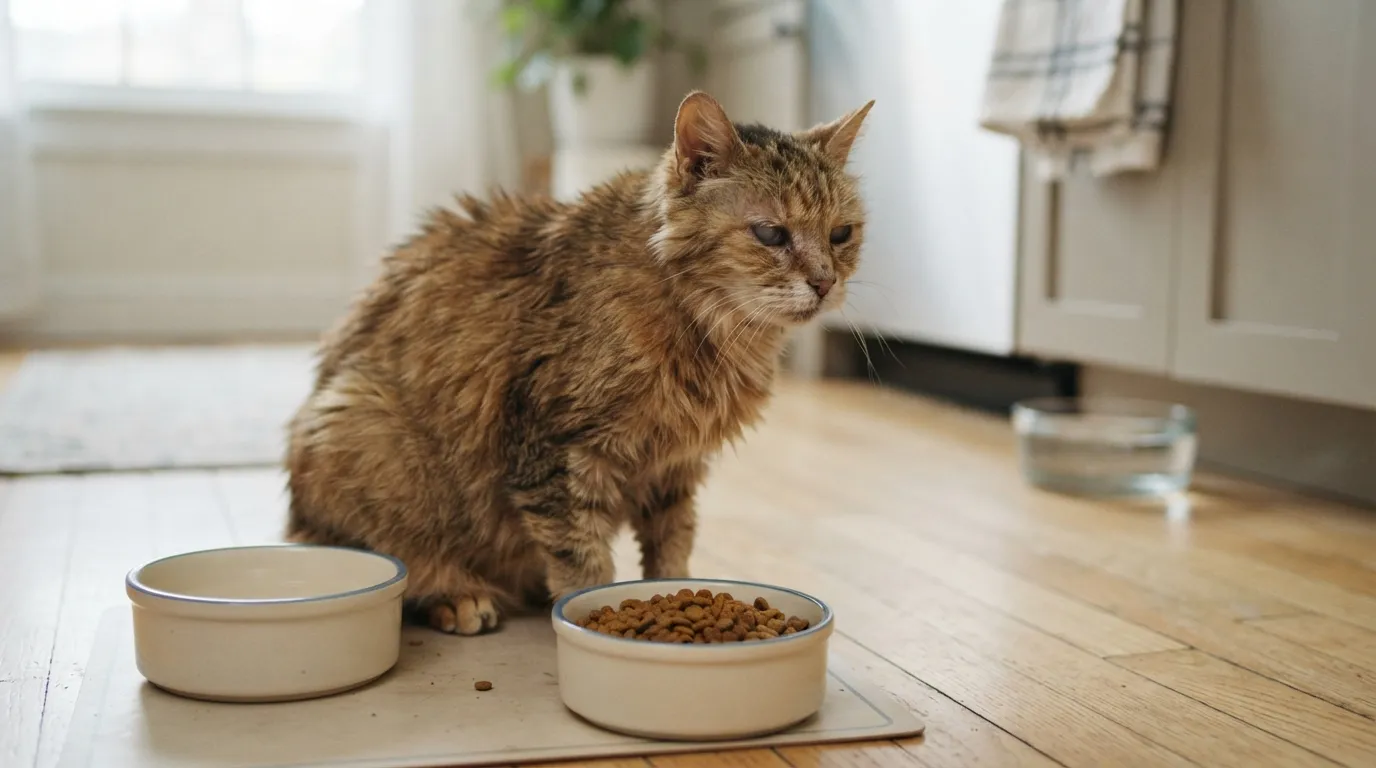
This is the threshold that separates "wait and see" from "call the vet now."
A senior cat refusing food is one of the most urgent behavioral signs an owner can observe. Food refusal beyond 24 to 48 hours can trigger hepatic lipidosis, a serious liver condition that develops as the body mobilizes fat reserves.
Hepatic lipidosis, fatty liver disease, can develop alarmingly fast in cats and turns life-threatening without intervention. Appetite loss in a senior cat should never be treated as something to simply wait out.
This is not a "give it a day or two" situation. Twenty-four hours of refusal in a senior cat is a vet call, full stop.
What's next isn't quiet at all, it's an emergency.
#2 - Labored, Rapid, or Open-Mouth Breathing
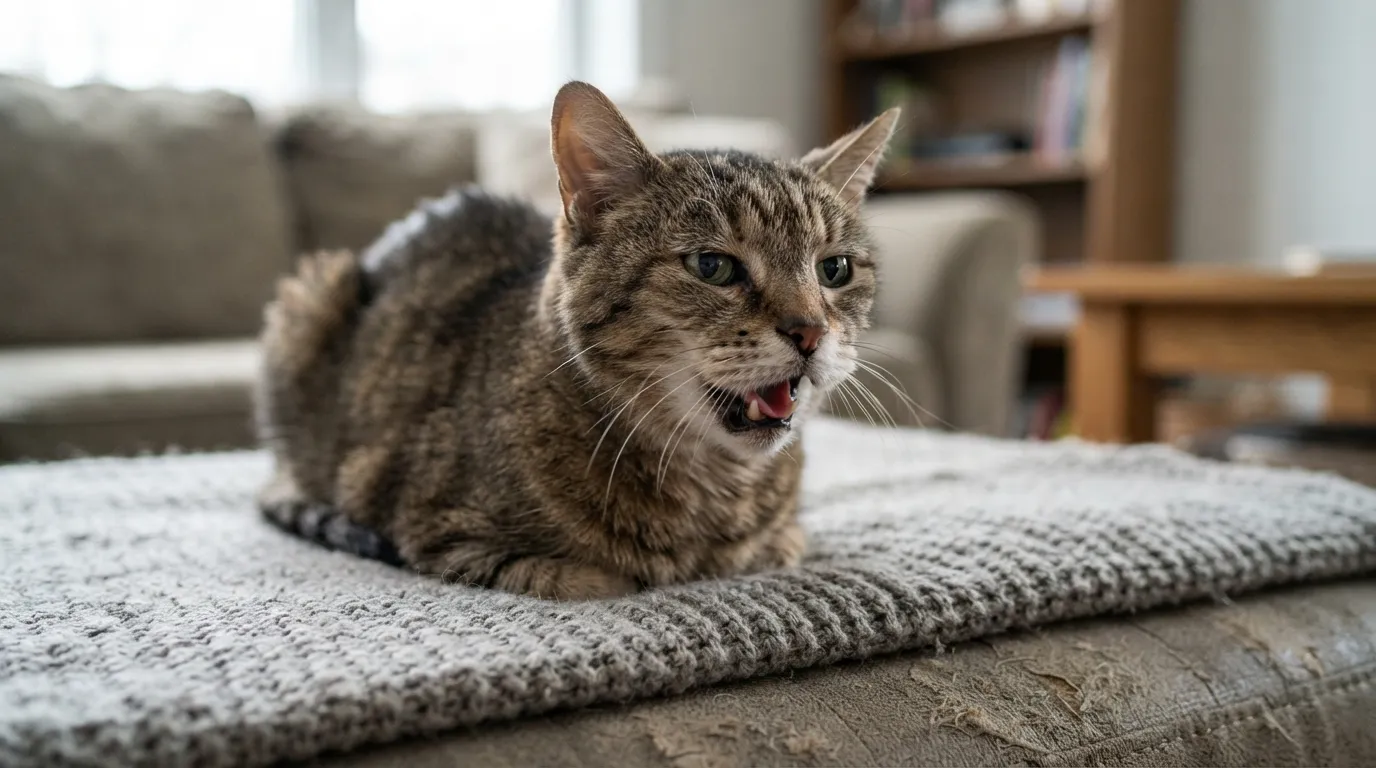
If you see this one, you are already past the "quiet signal" stage. This is an emergency.
Cats are obligate nasal breathers and almost never pant unless something is seriously wrong. Open-mouth breathing can indicate fluid around the lungs, severe asthma, heart failure, or a blocked airway.
Do not wait for a scheduled appointment. Do not "monitor it overnight." This is an emergency room visit, right now.
Rapid breathing, visible effort, or audible wheezing and crackling can all reflect heart disease, pleural effusion, lung tumors, or respiratory infection. Any breathing change in an elderly cat calls for same-day care, not watchful waiting.
But the #1 signal, the one that fools even experienced cat owners, is coming next.
#1 - The "Just Not Themselves" Feeling You Can't Name
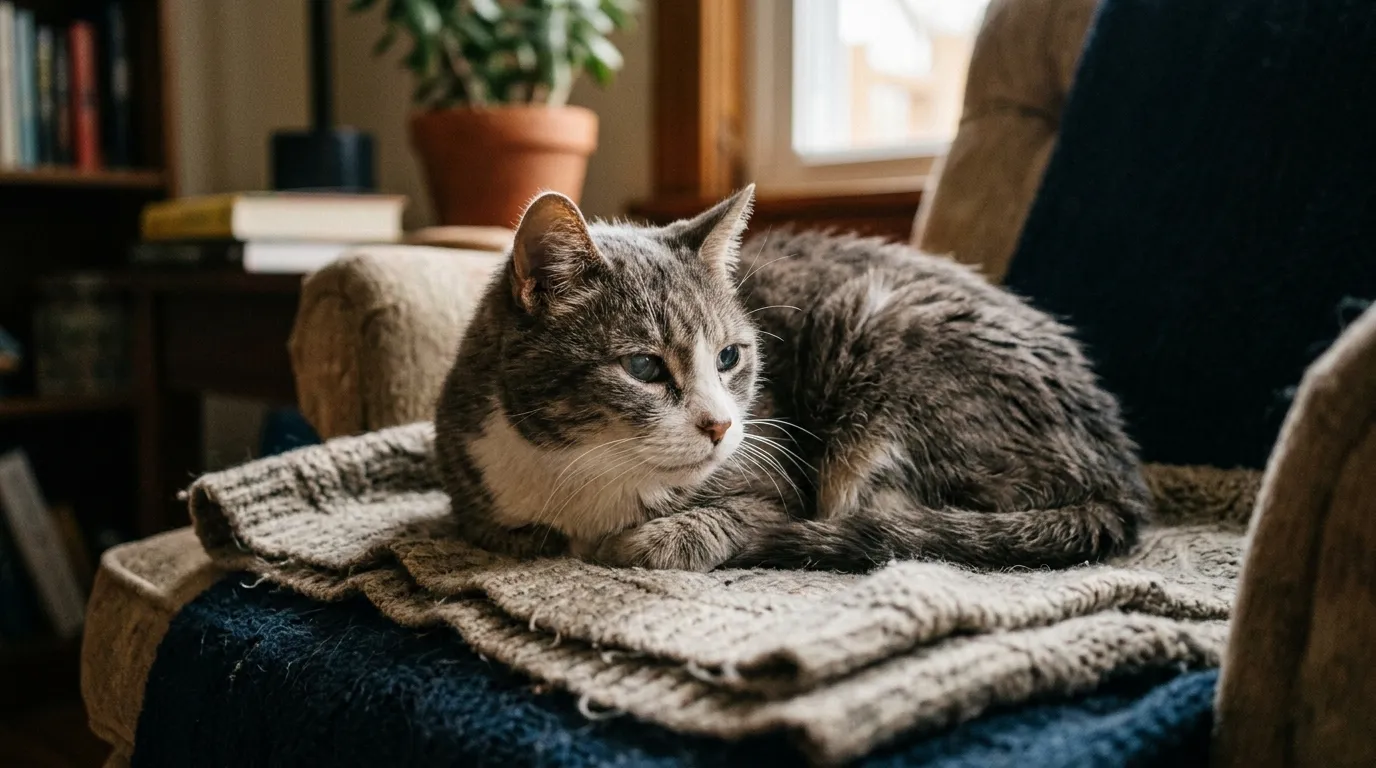
This is the signal that saves lives when owners trust it, and costs them dearly when they don't.
Sudden lethargy, hiding, refusing food or water, or a "just not right" quality you can't quite name but recognize instantly. You know your animal better than anyone.
You have watched them every day for years. That knowledge is a clinical tool, so use it.
Vets would rather examine a cat that turns out fine than see one arrive too late because an owner waited to see if things improved. Cats hide illness so well that a sudden behavior change usually means more is happening underneath than it looks.
Many owners wait too long simply because their cat still seems "mostly fine." Mostly fine is not fine, and that feeling in your gut is data worth acting on.
The Bottom Line
Cats age quietly on the outside while conditions like kidney disease, hyperthyroidism, or heart trouble build underneath. The 16 signals here run from a subtle whisper to a full alarm.
Most of them appear weeks before a crisis, which means there's almost always a window to act. Early intervention leads to better outcomes and often prevents complications entirely.
Your senior cat won't tell you they're struggling out loud. They never do.
But they are telling you, all the same. You just have to know where to look.