14 Lab Results Vets Read Differently for an Older Cat
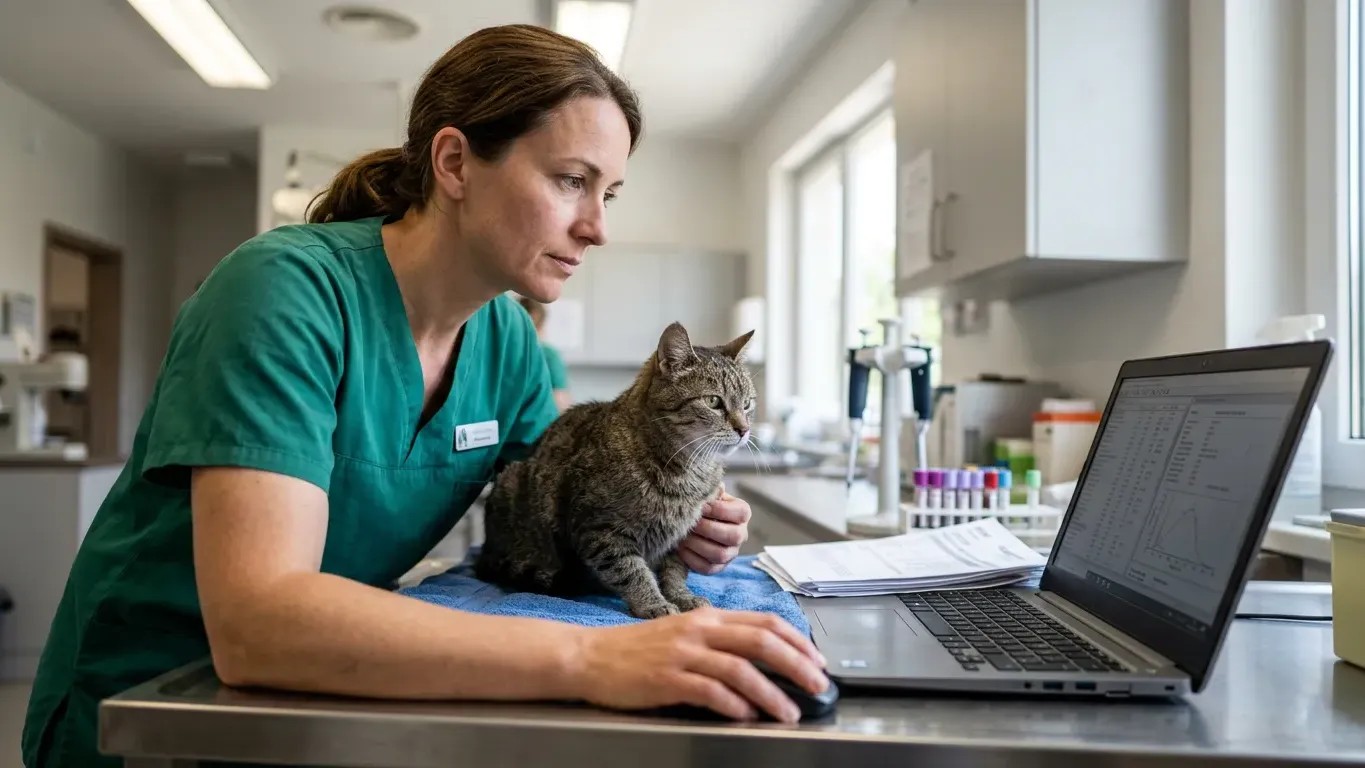
Most cat owners glance at a lab report, see a checkmark next to "normal," and breathe easy. That relief might be premature. Veterinary researchers have found that healthy cats over 10 years old show measurably different values for kidney markers, red blood cells, platelets, and more compared to younger adults.
The reference range printed on that report was built from cats of every age lumped together - which means a senior cat's true "normal" can be sitting somewhere the chart doesn't even flag. Vets who specialize in older cats know how to read between those lines. Here are the 14 numbers they interpret completely differently once your cat crosses into its senior years.
#14 - Reference Ranges Weren't Built With Your Senior Cat in Mind
Lab reference intervals come from huge cohorts of cats - different breeds, different sizes, every age lumped into one chart. That makes them wide, and wide means they can miss what's actually abnormal for your individual cat.
In routine screenings, healthy cats over 10 showed significantly different values than cats aged 6 to 10. Commercial lab results deserve real caution when the reference intervals were never split by age group.
That caution sets up everything that follows - starting with the kidney number that lies most often.
#13 - Creatinine Lies in Thin Cats
Creatinine is treated as the gold-standard kidney marker. In an older cat who has lost muscle mass, though, it can be dangerously misleading.
In a very thin cat, creatinine stops reflecting true kidney function, while BUN can swing falsely high instead. A creatinine that looks "normal" in a slim senior may actually be hiding early kidney disease.
Muscle loss in cats can start well before middle age, which makes this blind spot more common than most owners realize. But creatinine isn't the only kidney marker with an age-related gap - the next one catches what creatinine misses entirely.
#12 - SDMA Catches What Creatinine Can't
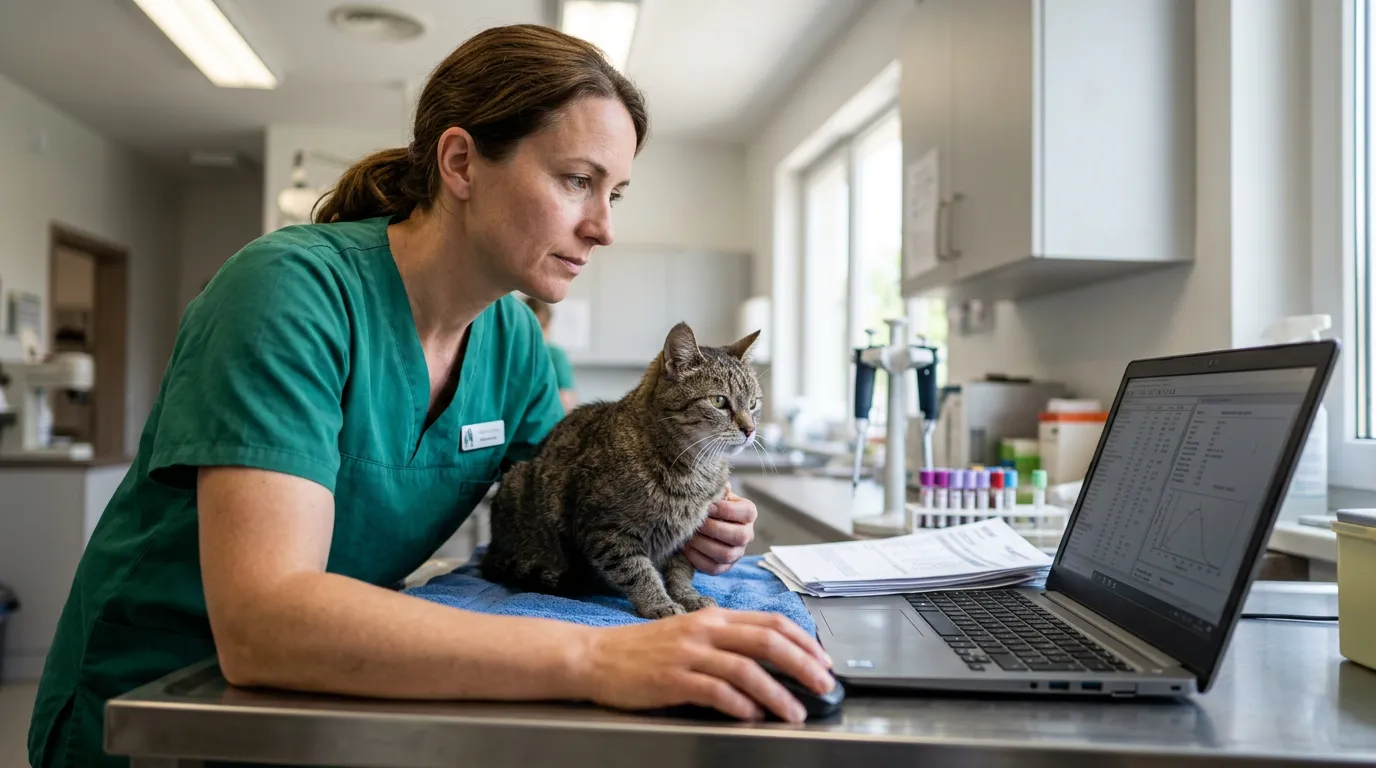
SDMA - symmetric dimethylarginine - is the newer kidney marker vets now run alongside creatinine. In older cats, it changes the whole picture.
Elevated SDMA with a normal creatinine often means early chronic kidney disease, caught before it's advanced. A senior cat can look perfectly fine on creatinine while SDMA is already climbing.
Research confirms elevated SDMA shows up in cats with compromised kidney function well before other markers move. In a senior cat's panel, a normal creatinine without an SDMA reading is an incomplete picture - and BUN is where the noise really starts.
#11 - BUN Gets Distorted by Diet and Dehydration in Seniors
Blood urea nitrogen is another classic kidney marker, but in older cats it comes loaded with extra noise. Normal BUN sits between 17 and 35 mg/dL.
Values of 36 to 50 are mildly elevated, often just dehydration or early kidney trouble. Anything from 51 to 80 raises real concern, and above 80 signals a kidney emergency.
The catch: older cats eat less, drink less, and lose muscle - all of which shift BUN without kidney failure ever entering the picture. The BUN-to-creatinine ratio actually tells you which story you're looking at - and that ratio depends on a mineral almost nobody thinks to check.
Quick Compare
- 17-35 mg/dL: Normal range
- 36-50 mg/dL: Mildly elevated - often dehydration or early kidney stress
- 51-80 mg/dL: Real concern - warrants prompt follow-up
- Above 80 mg/dL: Kidney emergency
#10 - Phosphorus Is the Quiet Accelerator Nobody Watches
Phosphorus rarely comes up in casual cat-health talk. In a cat with even early kidney disease, though, a creeping phosphorus level is one of the most actionable numbers on the entire panel.
Normal phosphorus runs 2.4 to 8.2 mg/dL - a wide range where direction matters far more than any single reading. A number can sit comfortably "inside normal" while still drifting the wrong way for months.
Vets watch that slow climb closely, because phosphorus trending upward inside "normal" is a red flag long before it crosses the line. The next number behaves so differently in cats than in dogs that most owners never see it coming.
#9 - ALP: A Tiny Bump Means Something Different in Cats
In dogs, a mildly elevated ALP often gets shrugged off. In an older cat, vets treat the same bump very seriously.
Alkaline phosphatase has a short half-life in cats, so even a small elevation is meaningful in a way it simply isn't in dogs. An elevated ALP in a senior cat can point toward hyperthyroidism, hepatic lipidosis, or cholangitis.
Cats are not small dogs - ALP, hematocrit, creatinine, and T4 all behave differently and should never be read using canine values. A "borderline" ALP in a 12-year-old cat is rarely actually borderline, and the liver enzyme sitting right next to it tells its own story.
#8 - ALT Isn't Just a Liver Number Anymore
ALT signals liver cell damage - but in an older cat, an elevated ALT can be a symptom of something happening somewhere else entirely. It can rise with primary liver disease, but also with thyroid disease, medication, inflammation, or a cat simply eating less.
In a senior cat, an elevated ALT without a matching T4 result is an incomplete read. Elevated ALT has even been linked to sleep-wake disturbances and cognitive changes in aging cats - a connection most owners never hear about.
An ALT flag in a senior cat should prompt a thyroid check, not just a liver workup. That thyroid connection takes over completely in the next number.
#7 - T4 Hides Behind Symptoms That Look Like Normal Aging
Hyperthyroidism is one of the most commonly missed diagnoses in older cats - precisely because its symptoms look like what owners expect from getting old. Weight loss, a bigger appetite, restless energy: all of it reads as "just aging" until a T4 test says otherwise.
Hyperthyroidism affects roughly 10% of cats over age 10, and cats develop the opposite thyroid problem dogs do - high T4 instead of low. A T4 above 4.7 µg/dL confirms hyperthyroidism and calls for action right away.
But there's a twist waiting in the next number - a cat can be sick with hyperthyroidism and still test completely normal.
Fast Facts: Feline Hyperthyroidism
- Affects roughly 10% of cats over age 10
- Cats show the opposite thyroid shift from dogs - high T4, not low
- Classic signs: weight loss, ravenous appetite, restless energy
- A T4 above 4.7 µg/dL confirms the diagnosis
#6 - A Normal T4 Can Still Mean a Sick Cat
This one genuinely surprises most owners. A cat can have hyperthyroidism with a T4 reading that looks perfectly normal, because another illness is quietly suppressing it.
Vets call this "occult hyperthyroidism" - concurrent kidney disease or other illness can push circulating T4 down into a deceptively normal range. A T4 above 4.7 µg/dL confirms the disease, but the full picture - blood pressure, heart rate, kidney values - has to be checked alongside it.
Treating only the visible problem without retesting T4 later can unmask severe kidney disease once treatment begins. Age plays another quiet trick in the very next number.
#5 - Hematocrit: How Low Is Actually Too Low?
Anemia is common in senior cats, and vets don't read a low hematocrit the same way they would in a younger one. Normal feline hematocrit runs 24 to 45 percent.
Values dropping toward 20 percent or lower often point to CKD-related anemia, since aging kidneys make less of the hormone that drives red blood cell production. The trend matters more than any single reading - one low number is very different from a steady decline.
Cats over 10 run significantly lower on this measure than younger cats, even when otherwise healthy. A hematocrit of 22 percent in a 14-year-old cat with kidney disease tells a completely different story than the same number in a 4-year-old - and the next value is one almost nobody watches until it's too late.
At a Glance: Reading a Senior Cat's Hematocrit
- Normal range: 24-45 percent
- Below roughly 20 percent often signals CKD-related anemia
- A slow downward trend matters more than one low reading
- Cats over 10 typically run lower than younger adults, even when healthy
#4 - Albumin's Slow Fade Signals Big Trouble Early
Albumin is the protein that keeps fluid inside the bloodstream and ferries essential compounds throughout the body. In older cats, a gradual decline tells vets something a single flagged number never could.
Cats over 10 show significantly lower albumin than cats aged 6 to 10, even when they're otherwise considered healthy. A reading sitting at the low end of "normal" in a senior cat may already represent meaningful loss.
A trending decline across multiple visits is often the earliest sign of chronic protein loss or liver trouble, well before anything technically flags. Vets who track albumin over time catch problems months before a single lab result ever would - and the next value flips expectations entirely.
#3 - Higher Platelets in Older Cats Aren't Actually Good News
Here's one almost nobody expects. Platelet counts in cats over 10 actually run higher than in younger cats, and that's not a sign of robust health.
In apparently healthy cats, those over 10 show significantly higher platelet counts than cats aged 6 to 10. Elevated platelets in a senior cat often reflect chronic low-grade inflammation rather than strong clotting ability.
Platelets sitting above the adult midrange in a 12-year-old cat deserve a look at inflammatory markers, not just a passing grade. That inflammation thread leads straight into the next number.
#2 - Globulins Carry the Fingerprint of an Aging Immune System
Globulins - the proteins that carry antibodies and immune factors - shift measurably as cats age, and elevated levels tell a different story than they do in a younger cat. Some vets now read high globulins as more than just an infection signal.
Elevated globulin levels have been linked to sleep-wake disturbances and cognitive changes in aging cats, suggesting chronic low-grade inflammation leaves an actual fingerprint in the bloodwork. Researchers have started calling this pattern "inflammaging."
A globulin level creeping upward across three annual panels matters more than any single elevated result ever could. Which brings us to the one reading that outranks every number on this list.
#1 - The Trend Line Matters More Than Any Single Number
Here's the biggest thing vets know that most owners never hear at the appointment. In a senior cat, the direction a value is moving matters more than whether it technically sits inside the printed range.
A creatinine creeping from 1.2 to 1.8 over 18 months is still "normal" on paper both times - but it's a kidney disease story already unfolding. Vets caring for senior cats watch that movement more closely than any single bolded flag.
This is exactly why twice-yearly bloodwork gets pushed so hard for cats over 10 - not to catch one bad number, but to watch the trend build. Cats instinctively hide weakness, so by the time symptoms show up, the damage underneath may already be significant.
Worth Knowing
- Vets recommend bloodwork every 6 to 12 months once a cat turns 10
- Ask for last year's results to be compared side-by-side, not just reviewed alone
- Cats mask illness instinctively, so trend shifts often appear before symptoms do
- A full senior panel should include T4, not just kidney and liver values
The Bottom Line
Standard lab reference ranges weren't designed with your 13-year-old cat in mind. Creatinine lies in thin cats, ALP means more in felines than in dogs, and a normal T4 can still mask hyperthyroidism.
Albumin and globulins trend in directions that predict disease months before any single value ever flags. Above all, the most important reading on any senior cat's panel is how the numbers have changed since the last visit - not whether they sit above or below a printed line.
Senior cats benefit from bloodwork every 6 to 12 months with T4 included. If your vet isn't comparing today's results to last year's, ask them to - and tell us which of these 14 surprised you most.