14 Quiet Routines your Senior Cat Still Loves in its Golden Years
Most people assume an aging cat is just slowing down. Experts say something far more intentional is actually happening.
Senior cats don't quietly give up their routines - they double down on the ones that still make them feel safe and loved. Here are the 14 quiet rituals veterinary behaviorists say your senior cat is desperately clinging to, starting with the one most owners break by accident.
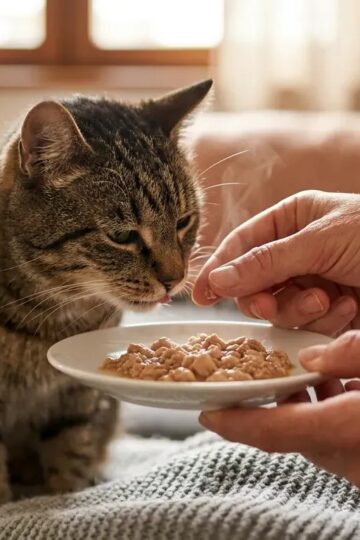
#14 - Predictable Mealtimes at the Same Spot
Predictable feeding times and stable household activity help lower stress in senior cats. That's not a preference - it's a need rooted in biology.
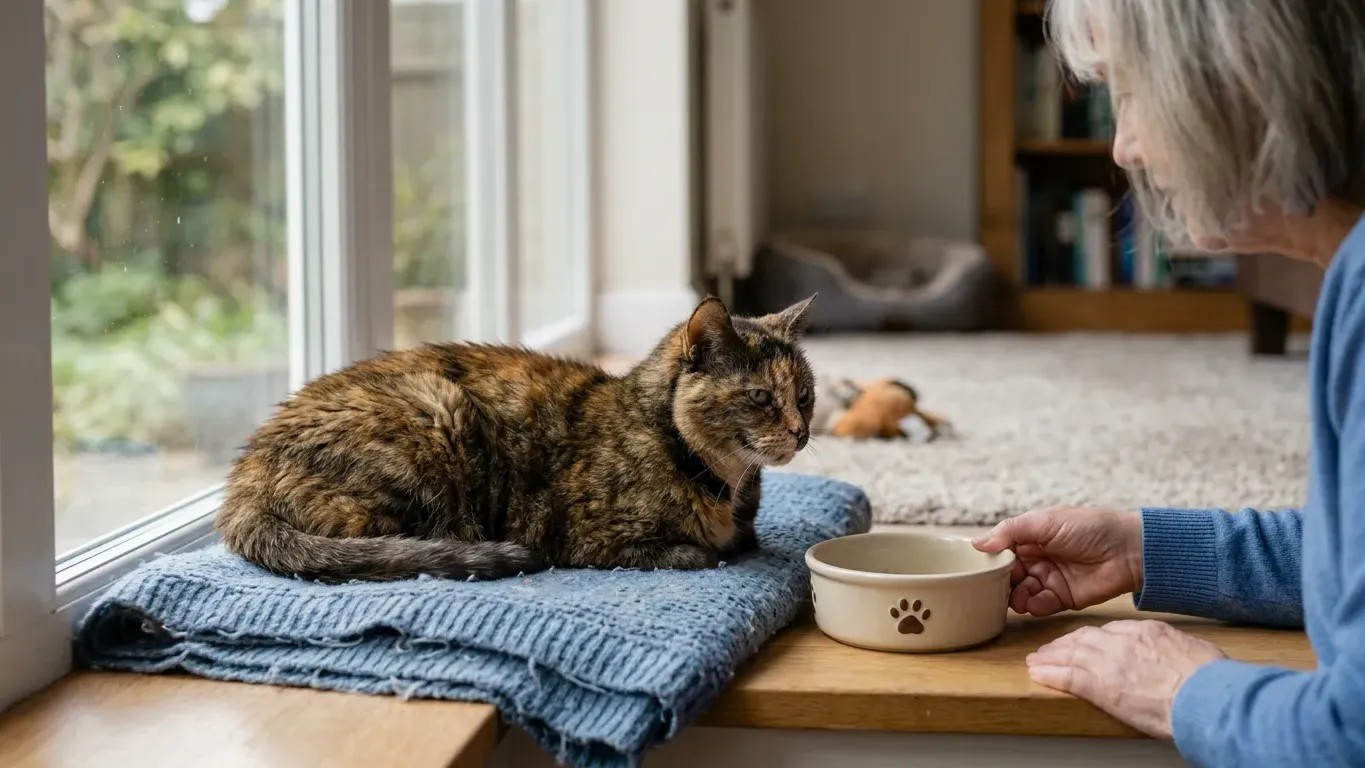
Older cats may prefer quiet feeding areas, shallow easy-to-access bowls, and multiple small meals throughout the day. Swapping the routine - even slightly - can suppress appetite fast.
The most overlooked mistake: moving the food bowl to a "better" spot. Cats with limited vision or hearing rely heavily on routine, so keep it exactly where it's always been.
But that's nothing compared to what #13 reveals about your cat's sleep habits...
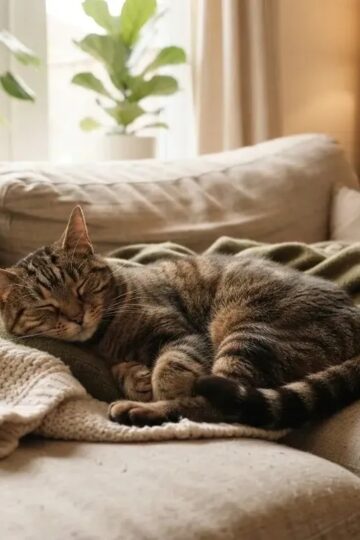
#13 - Long, Undisturbed Naps in a Warm Spot
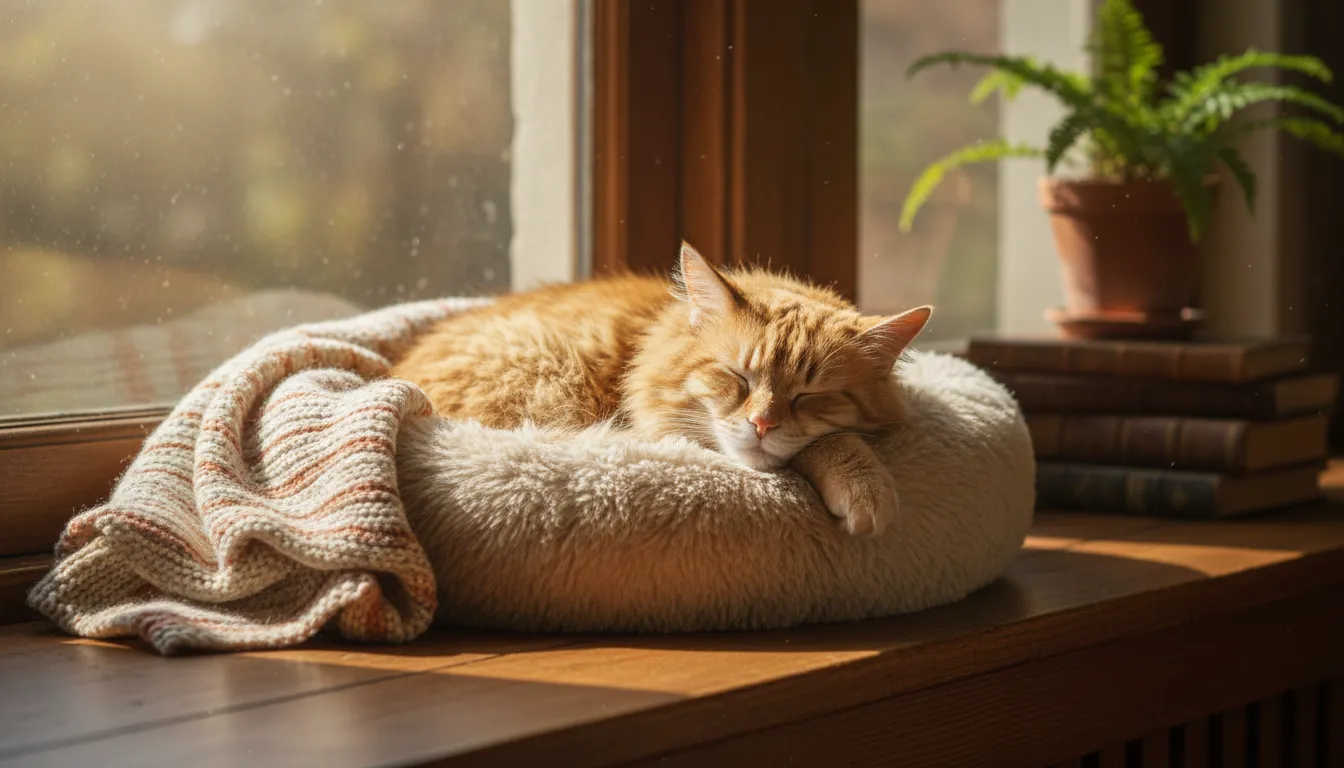
Senior cats sleep an average of 16 to 20 hours a day. That's not laziness - that's a biological shift that deserves real respect.
In the 1995 Elderly Cat Survey, most owners (79.1%) said their cat had a favorite sleeping spot. Almost all of them said it was somewhere warm and comfortable.
Senior cats want cozy, accessible sleeping spots - warm, quiet places where they can relax without disruption. Interrupting naps repeatedly is one of the fastest ways to spike anxiety in an aging cat.
Set up a dedicated warm nook and protect it.
Fast Facts
- Senior cats can sleep 16 to 20 hours a day, more than a typical adult cat.
- Roughly 4 in 5 owners report their older cat has one clear favorite sleeping spot.
- Warmth and quiet matter more to that spot than location or size.
But sleep is only part of the story - wait until you see what #12 does for their joints...
#12 - Gentle Grooming Sessions With You
Daily bonding activities like petting, grooming, and gentle interactive play provide real stimulation for older cats. This one pulls double duty - physical care and emotional connection at once.
As cats age, self-grooming often declines, and the areas they like being touched may change too. Don't assume what worked at age five still works at age fourteen.
A soft brush for two to three minutes a day can maintain coat health, stimulate circulation, and deepen your bond. It also gives you a regular chance to spot unusual lumps or skin changes early.
Grooming is the most underrated health check in senior cat care.
And speaking of health checks - #11 is something most owners never think to schedule...
#11 - Window-Watching From a Secure Perch
Window perches with a view of the yard or a bird feeder can provide entertainment for cats with low energy levels. It's free enrichment that costs you nothing but a suction-cup shelf.
Install a perch by a window so your cat can watch birds and outdoor activity. Senior cats don't need to hunt anymore - they need to watch, and that instinct never fully fades.
The key detail most people miss: the perch must be reachable without a big jump. Ramps and small steps remove the physical barrier so arthritis doesn't steal this ritual from them.
But what happens when you give them something to sniff instead of see? #10 has the answer...
#10 - Scent Exploration Around the Home
This one surprises most owners. A senior cat that barely moves for toys will light up for a new smell.
Grab your smelliest wet food, put your cat in another room, then hide a few small dishes with a tiny amount of it. Let your cat in to find them - it's low-effort, zero-impact enrichment.
A cat's sense of smell remains sharp well into old age, making scent-based play one of the most age-appropriate enrichment options available. Don't underestimate it.
#9 builds on this beautifully - and it taps straight into their hunting instinct...
#9 - Food Puzzle Play (Short and Sweet)
Food puzzles and treat toys are great ways to stimulate the hunter that lurks in every feline. Letting your cat solve a puzzle or work for food taps directly into that instinct.
The catch is that senior puzzles need to be easier than what younger cats use. Aim for several short sessions throughout the day instead of one long, exhausting one.
Quick Compare
- Standard puzzle: multiple hidden compartments and stiff sliding parts.
- Senior-friendly puzzle: one or two simple openings with treats easy to see and reach.
- Best shape for older cats: flat, low-profile designs instead of tall spinning towers.
Most people buy the same difficulty puzzle they always used - then wonder why their senior cat walks away. Start at the easiest level and only increase it if they're genuinely breezing through.
Wait until you see how #8 keeps their muscles working without them even realizing it...
#8 - Low-Impact Toy Batting
Older cats often adapt their play, choosing subdued activities that match their lower energy. Soft toys and simple games without vigorous movement suit them best.
Large toys they can grab and kick give stiff hind limbs important range-of-motion exercise. That casual batting isn't just entertainment - it's physical therapy in disguise.
The mistake here is chasing novelty. Many owners rotate in flashy new toys, not realizing senior cats often prefer the familiar ones they already love.
#7 takes a completely different approach - and it's one most cat owners have never tried...
#7 - Short Clicker Training Sessions
This one shocks people: training a senior cat? Yes - and it's one of the best things you can do for their aging brain.
A few minutes of reward-based training a day gives less mobile cats excellent mental stimulation without physical strain. Keep sessions as brief as a commercial break, since cats have shorter attention spans than dogs.
Even one new behavior per month keeps their cognitive pathways firing. The brain needs exercise just as much as the body does.
And that leads perfectly into what #6 quietly does every single day...
#6 - Sitting Quietly in the Same Room as You
As their energy drops, senior cats value the serenity of quiet companionship. They'd be content just sitting by your side, no constant interaction required.
This isn't disengagement - some older cats actually grow more affectionate with age. Your calm, consistent presence is the routine they're leaning into now.
Most owners underestimate how powerful this is. You don't need to entertain them constantly - simply being in the room is often exactly what they need.
#5 is the one routine that protects their joints every single morning...
#5 - A Slow Morning Stretch and Wander
Senior cats may lose interest in zooming around or jumping onto high surfaces. That's not laziness - it's often just age asking for more rest.
Move toys or dishes slightly to encourage gentle exploration, and schedule short, frequent movement instead of one long session. A slow morning wander around the home covers this perfectly.
Worth Knowing
- An estimated 60% to 90% of cats over age 6 to 12 show signs of joint disease.
- Morning stiffness is often the earliest, most overlooked warning sign.
- Short, frequent movement breaks help stiff joints more than one long play session.
Cats with arthritis are often stiffest right after waking. Hesitation before jumping or taking longer routes to favorite spots are early signs - let them move at their own pace.
#4 might be the most emotionally charged routine on this list...
#4 - A Consistent Bedtime Ritual
When an older cat calmly trots to the bedroom every night, that's cognitive health paired with real emotional confidence. Don't dismiss it as habit - celebrate it.
A consistent feeding, play, and bedtime routine gives your senior cat a framework that reduces anxiety and supports better sleep. A cat who knows what comes next is a cat who feels safe.
Senior cats who lose their bedtime anchor often become more vocal at night. A once-quiet cat may suddenly start meowing persistently after dark if that security gets disrupted.
#3 is one most owners give up on far too early...
#3 - Supervised Time Near a Window or Safe Outdoor Space
A secure outdoor space, like a catio or a cat-proof garden, allows safe exploration and sensory enrichment for senior cats. Even brief time outdoors can lift mood and overall wellbeing.
Many owners pull back outdoor access the moment a cat ages, and that's often the wrong call. Older cats naturally spend less time outside, but brief, supervised access to fresh air is still enormously enriching.
Even ten minutes on a screened porch counts. If full outdoor access isn't safe, a window cracked open in the sun is a legitimate substitute.
#2 is quietly one of the most powerful things you can offer a senior cat...
#2 - Regular, Predictable Hydration Rituals
Multiple water sources away from high-traffic areas and the food bowl genuinely help. Wash the water bowl daily and encourage wet food - these aren't tips, they're necessities for an aging kidney.
Senior cats are notoriously prone to dehydration and kidney disease. A cat water fountain can spark real interest for cats drawn to moving water.
At a Glance
- Kidney disease is one of the most common conditions diagnosed in senior cats.
- Wet food adds far more moisture to the diet than dry kibble alone.
- Multiple water stations placed away from food encourage more frequent sips.
Some cats simply prefer moving water over a still bowl - worth testing if intake seems low. Place bowls near their sleeping spot and window perch, and turn hydration into a quiet daily habit.
And saving the most important for last - #1 is the routine that ties everything else together...
#1 - Unbroken Daily Consistency
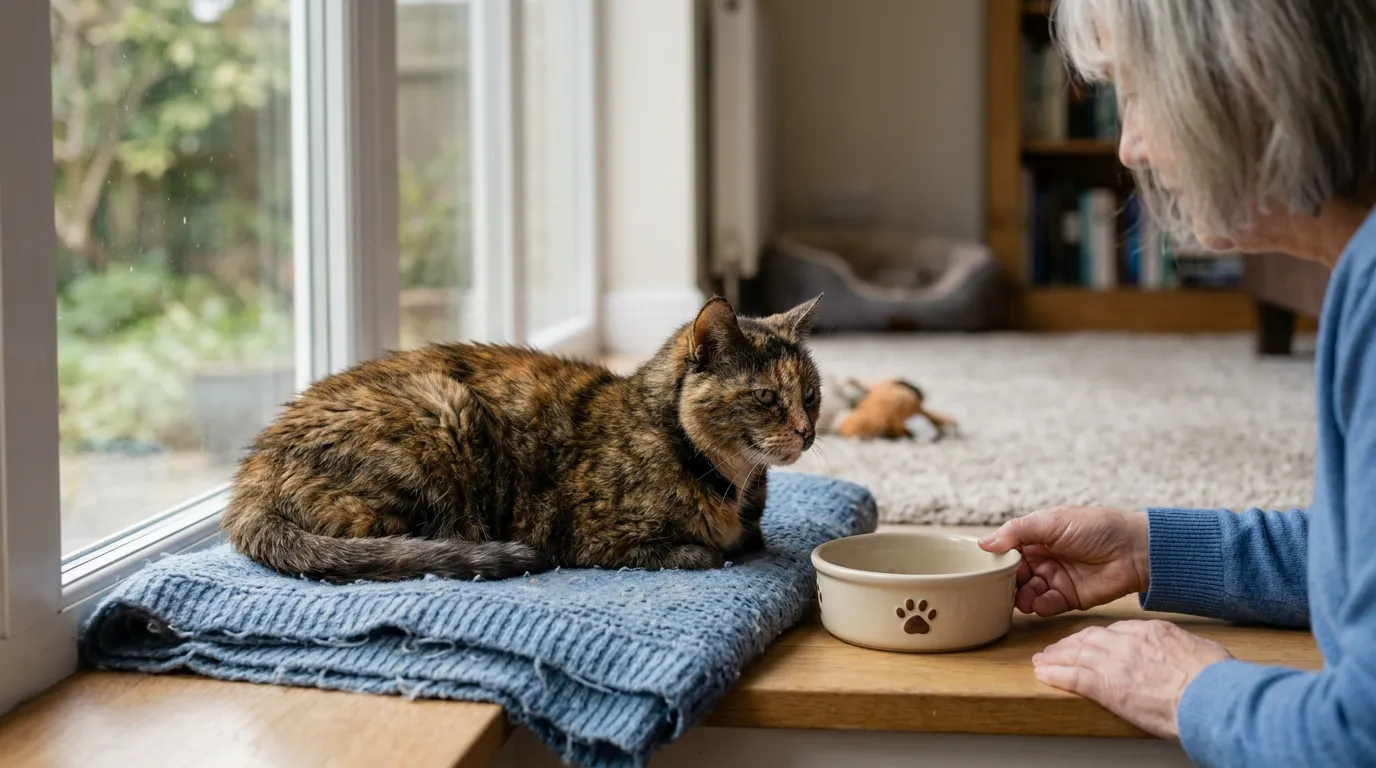
Gentle mental stimulation supports cognitive health and keeps senior cats curious - but none of it works without the foundation underneath it all. Consistency is that foundation.
The preference for predictability is linked to lower anxiety and a stronger sense of control. Some owners misread it as boredom and over-stimulate their senior cat, when the real kindness is a calm, steady environment with only small, gentle changes.
This is the routine that makes every other routine work. Same sounds, same faces, same order of events, every single day.
To a senior cat, that repetition isn't boring - it's love made into structure.
The Bottom Line
Senior cats don't need less from life - they need the right things, delivered with total consistency. Warm naps, window perches, scent games, quiet companionship: these 14 routines aren't sentimental, they're survival instincts dressed up as comfort.
The biggest mistake owners make is assuming an aging cat has given up. Really, they're silently asking for the same rituals - just a little slower, a little gentler.
Watch what your cat keeps returning to, even now. That's the routine that matters most - and it's the one thing your golden-years cat still needs from you every single day.