16 Breed-specific Risks Vets Wish Owners Knew Before Buying
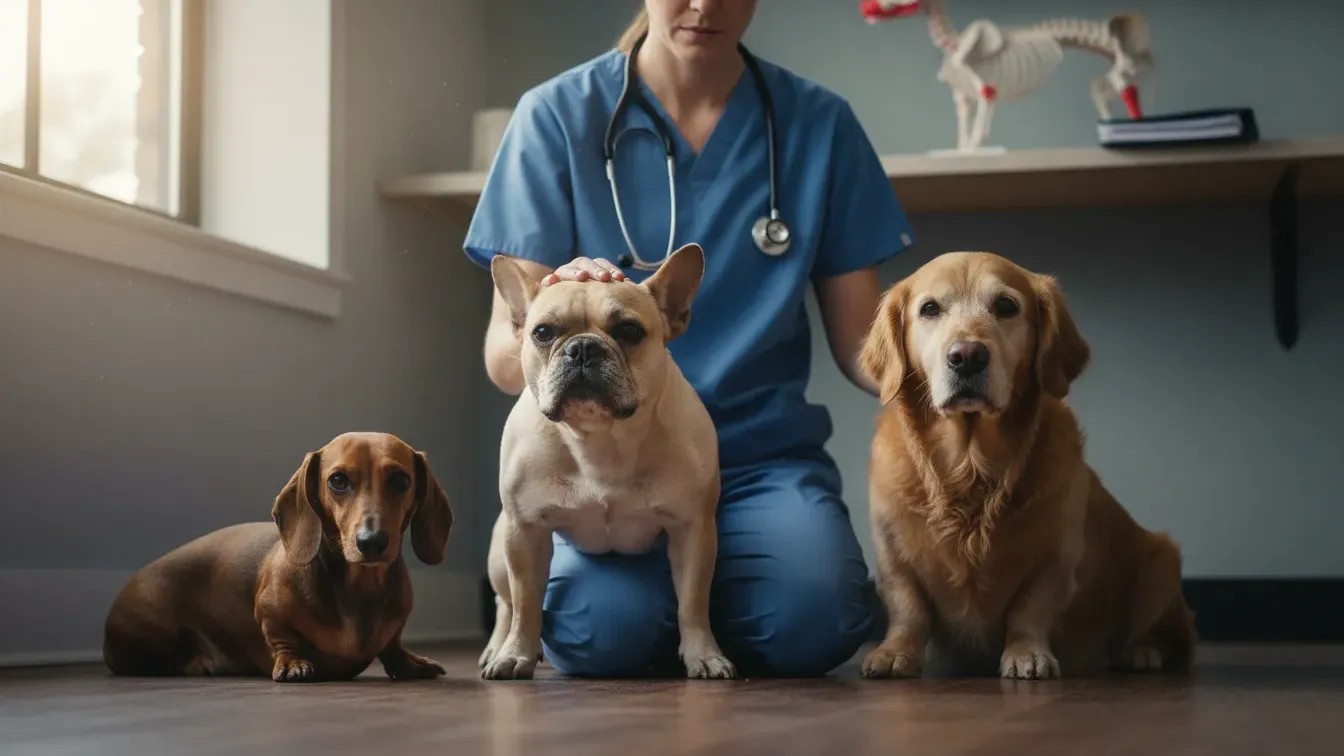
You walk into a breeder's home, and the puppy in front of you looks perfect - soft fur, wagging tail, big trusting eyes. What you don't see is the invisible blueprint written into its genes, one that decides whether it lives fifteen healthy years or spends half its life in surgery.
Vets see that blueprint every single day, and it rarely matches what's printed on the adoption papers. Here are the 16 breed-specific risks they wish every buyer understood before falling in love with a face.
#16 - French Bulldog: The Breathing Crisis Nobody Advertises
The French Bulldog's iconic flat face is also its biggest health liability - and most buyers have no idea how serious it gets.
French Bulldogs are more than 17 times more likely to have a claim submitted for brachycephalic obstructive airway syndrome (BOAS) compared with non-brachycephalic dogs. That's not a minor inconvenience - that's a structural breathing disorder baked into the breed's anatomy.
A BOAS diagnosis can act as a sentinel for other conditions including pneumonia, spinal disease, and gastrointestinal disease - meaning the breathing problem is often just the beginning. Upper respiratory disorders are the cause of death for 17% of dogs with extreme brachycephalic conformation, compared to 0% for all other breeds.
Fast Facts
- Clinical studies show 40% to 65% of Pugs, French Bulldogs, and English Bulldogs display significant BOAS signs.
- Some assessments find over 75% of French Bulldogs have moderately to severely narrowed nostrils.
- Surgery can widen the airway, but it doesn't undo the underlying skull shape driving the problem.
- Many owners mistake years of loud snoring and snorting for personality quirks rather than a medical issue.
Most owners don't find this out until the vet bills start stacking up. But the French Bulldog isn't even the only flat-faced breed hiding this risk - slide #15 reveals another one that's just as alarming.
#15 - English Bulldog: Surgery Before the First Birthday
The English Bulldog looks like a classic family dog. Vets see a very different picture.
English Bulldogs are prone to BOAS, skin fold infections, hip dysplasia, cherry eye, and obesity - and most require cesarean sections to give birth. That last point alone is staggering: this breed often cannot reproduce without surgical intervention, which tells you something profound about how far selective breeding has pushed its biology.
Objective measurements have determined that 45% of Bulldogs have clinically significant signs of BOAS. Nearly half of all English Bulldogs are struggling to breathe properly - and their owners often mistake the snoring and snorting for charm rather than distress.
Turns out, the costs and conditions only get more serious as you move down this list - slide #14 involves a heart condition that strikes with almost no warning.
#14 - Doberman Pinscher: The Silent Heart Attack Breed
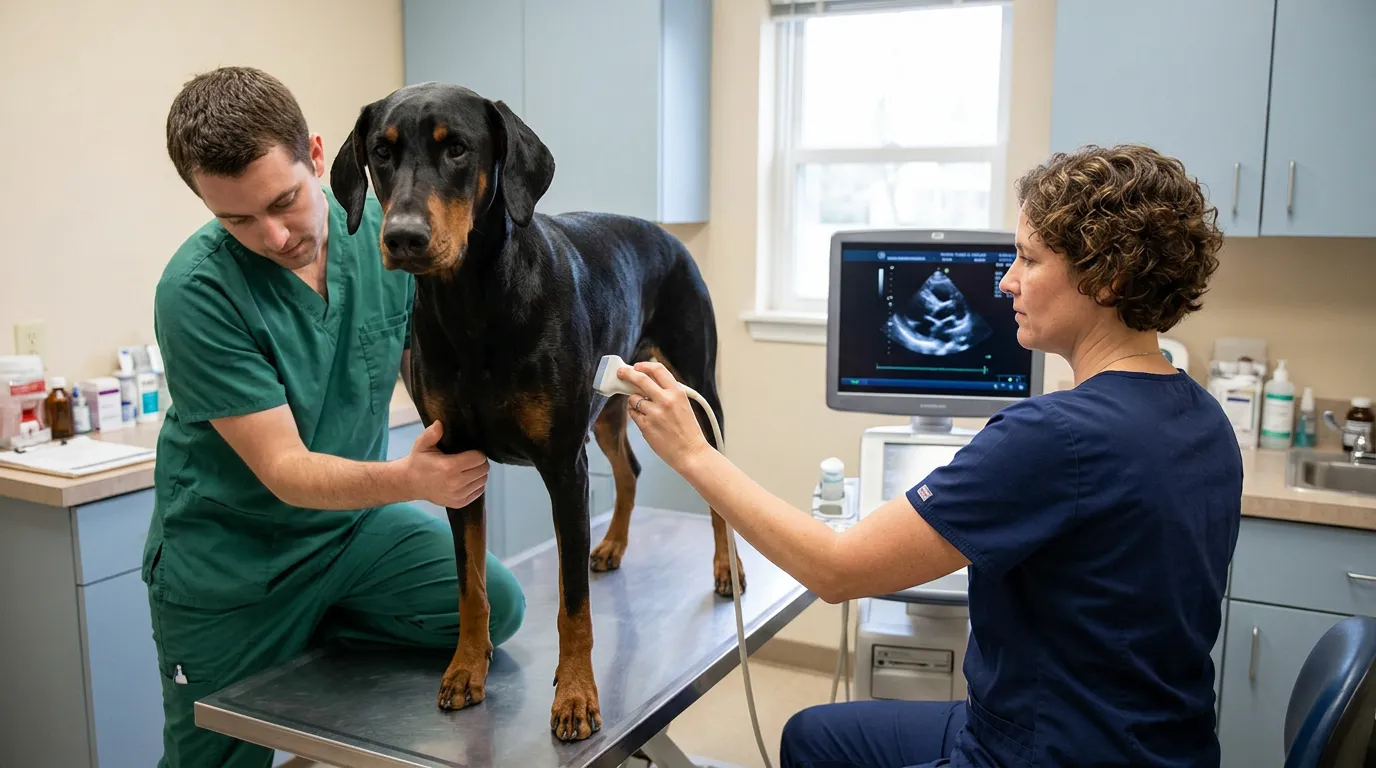
Dobermans are athletic, loyal, and strikingly beautiful. They're also quietly carrying one of the most dangerous cardiac conditions in all of dogdom.
Dilated cardiomyopathy (DCM), where the heart becomes enlarged and weakened, is particularly common in Doberman Pinschers. What makes this terrifying is how late it tends to show up - dogs can appear perfectly healthy right up until the heart fails.
A genetic test now exists for the primary mutation linked to DCM in Dobermans, and vets strongly recommend annual echocardiograms for the breed starting in middle age. Most pet store Doberman puppies skip this screening entirely, leaving families with no cardiac baseline and no early warning system.
Von Willebrand's disease, a bleeding disorder, and hip issues round out the health profile.
Don't assume this is just a giant-breed problem - slide #13 proves small breeds carry equally serious heart risks.
#13 - Cavalier King Charles Spaniel: A Heartbreaking Guarantee

Cavaliers are the darlings of the dog world. They're also living with a cardiac disease that's almost universal in the breed.
Mitral valve disease afflicts over half of all Cavalier King Charles Spaniels by age 5 and greater than 90% by age 10. Read that again.
Mitral valve disease is about twenty times more prevalent in the Cavalier than in other breeds of dog, and the onset is typically earlier and its progression swifter.
Mitral valve disease is the main cause of death in Cavalier King Charles Spaniels, accounting for 42.8% of deaths. This is not a condition they might get - it is a condition they will almost certainly get.
Vets argue that any prospective Cavalier owner should budget for cardiology checkups from an early age.
Still think it's just the fancy or flat-faced breeds at risk? Slide #12 covers a wildly popular family dog with a cancer rate that defies belief.
#12 - Golden Retriever: The Cancer Epidemic Nobody Talks About
Golden Retrievers are consistently ranked among America's favorite dogs. They're also dying from cancer at rates far above the average breed.
Golden Retrievers have an elevated risk of lymphoma and hemangiosarcoma - two of the most aggressive cancers in veterinary medicine. Hemangiosarcoma in particular tends to grow silently on internal organs and rupture with almost no prior symptoms, often killing dogs within days of diagnosis.
Studies have estimated that roughly 60% of Golden Retrievers will develop some form of cancer in their lifetime - a figure that has prompted long-running research projects specifically dedicated to the breed. This is the kind of statistic that changes how you think about breed choice entirely.
At a Glance
- Lymphoma and hemangiosarcoma remain the two cancers most associated with the breed.
- A long-running Golden Retriever cancer study has followed over 3,000 dogs for more than a decade.
- Within that study, cancer-related deaths account for roughly 75% of all deaths recorded.
- Hemangiosarcoma often grows silently on the spleen or heart until it ruptures without warning.
Slide #11 shifts to a different kind of risk: a back problem so severe it can paralyze a dog overnight.
#11 - Dachshund: The Spine That Was Never Meant to Last
The long, low body of the Dachshund is arguably the most structurally risky silhouette in the dog world.
Long-backed breeds such as Dachshunds face a significantly higher risk of spinal disc disease. Intervertebral disc disease (IVDD) causes spinal discs to herniate or rupture, compressing the spinal cord - and in severe cases, a Dachshund can go from walking normally to completely paralyzed within 24 hours.
Surgery can cost upwards of $6,000 and is not always successful.
The breed's shape is the direct cause of the problem: the same genes that produce the short legs also affect spinal disc composition, making them more prone to early degeneration than almost any other breed. Vets consider IVDD a near-inevitability in the breed, not an "if" but a "when."
Slide #10 reveals a large breed where the stomach itself becomes the danger.
#10 - Great Dane: Bloat, Big Hearts, and a Short Clock
Great Danes are majestic, gentle giants - and they live breathtakingly short lives for a dog of their stature.
Great Danes are at risk for bloat, cardiomyopathy, bone cancer, arthritis, and hip dysplasia, with an average lifespan of 8 to 10 years. Bloat - or gastric dilatation-volvulus - is particularly brutal.
It is a life-threatening situation often seen in large, deep-chested breeds and requires immediate veterinary attention.
Worth Knowing
- Early signs include restlessness, pacing, and excessive drooling.
- A hallmark symptom is unproductive retching - the dog tries to vomit but nothing comes up.
- Advanced cases show a swollen, drum-tight abdomen, pale gums, and a racing heart rate.
- Once shock sets in, collapse can follow within minutes - this is a race-to-the-vet emergency, not a wait-and-see situation.
GDV can kill a Great Dane in hours if left untreated. Many vets recommend a preventive surgical procedure called gastropexy to tack the stomach in place - ideally done at the time of spaying or neutering.
Most new owners have never even heard the word.
Don't be fooled into thinking Bernese Mountain Dogs are a safer large-breed option - slide #9 has the data.
#9 - Bernese Mountain Dog: Bred Beautiful, Broken Early
The Bernese Mountain Dog is one of the most stunning breeds in the world. It's also one of the shortest-lived.
Bernese Mountain Dogs frequently develop histiocytic sarcoma and joint issues, with an average lifespan of 7 to 10 years. Histiocytic sarcoma is a rare but devastating cancer in most breeds - in Berners, it's tragically common, with some estimates suggesting it accounts for a quarter of all deaths in the breed.
A dog this large, this expensive, and this beloved shouldn't have a median lifespan under a decade - but the genetics are clear. Vets increasingly recommend full cancer screening protocols for Berners starting around age 5 or 6.
Owners who go in unprepared face both emotional and financial devastation.
Slide #8 covers a breed whose neurological risk is almost completely invisible at the pet store.
#8 - Boxer: Tumors, Heart Arrhythmias, and a Shortened Lifespan
Boxers are energetic, funny, and deeply loyal - and they're disproportionately affected by both cancer and cardiac disease.
Boxers are notably prone to lymphoma, mast cell tumors, and heart diseases such as boxer cardiomyopathy. Boxer cardiomyopathy (ARVC) is a condition that causes dangerous heart rhythm abnormalities and can lead to sudden cardiac death - sometimes in otherwise healthy-looking, young dogs.
It is one of the few cardiac conditions in dogs known to cause sudden death during exercise.
Boxers are also prone to mast cell tumors, which can appear as ordinary-looking lumps on the skin. Owners who dismiss a new lump as "just a fatty cyst" may be making a fatal mistake.
Slide #7 brings a small breed with a structural skull problem that causes chronic, invisible pain.
#7 - Cavalier & Other Small Breeds: Syringomyelia - Pain You Can't See
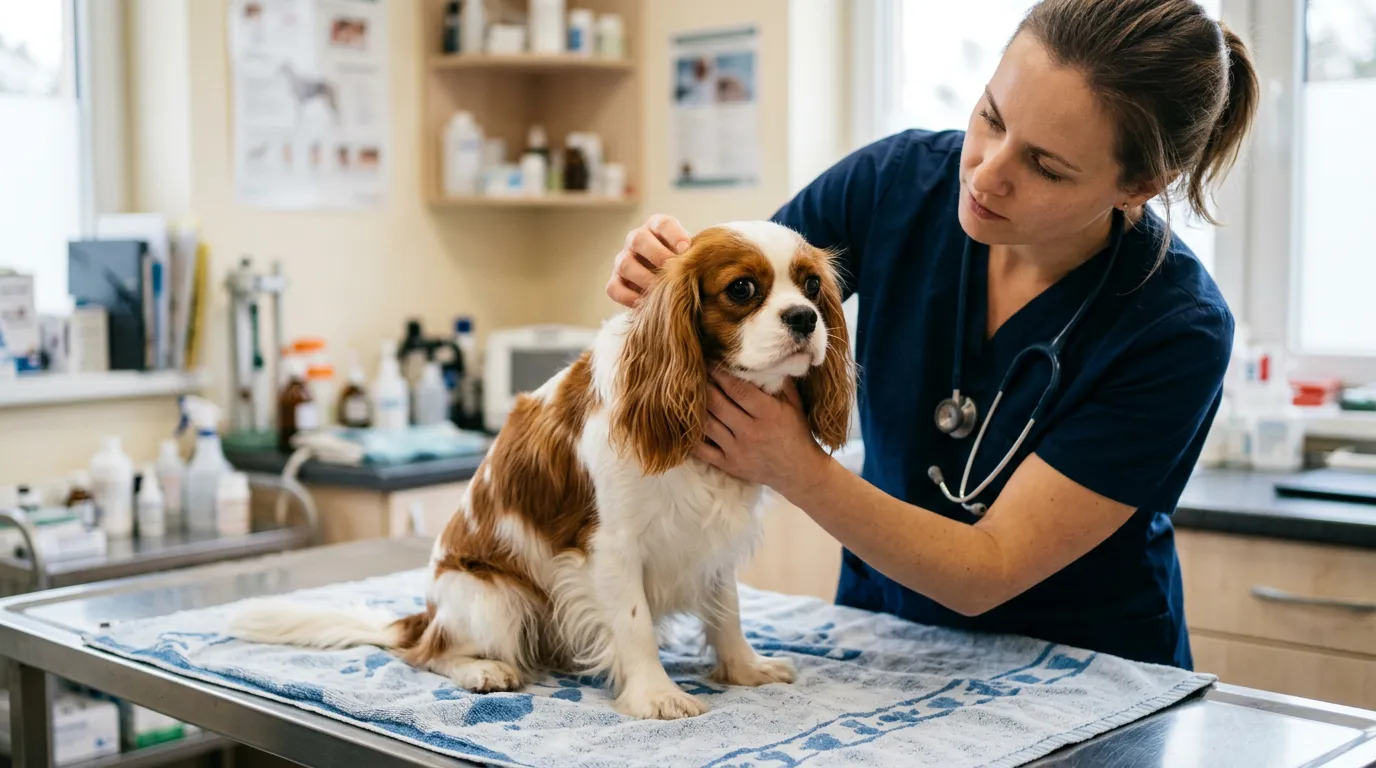
This one flies completely under the radar, even among experienced dog owners.
Syringomyelia is a condition where fluid-filled cavities form within the spinal cord - often because the skull is too small for the brain it contains. Cavalier King Charles Spaniels are prone to heart valve disease, syringomyelia, and eye disorders.
In syringomyelia, dogs may scratch at their neck or shoulders, yelp without obvious cause, or become sensitive to touch - and owners routinely mistake these signs for behavioral quirks rather than neurological pain.
The condition is inherited and linked directly to skull conformation, meaning breeding decisions drive the suffering. Diagnosis requires an MRI.
Many dogs live with undiagnosed pain for years.
Slide #6 moves to a breed whose joint problem starts not in old age, but in puppyhood.
#6 - German Shepherd: Hip Dysplasia From the Ground Up
German Shepherds are among the most intelligent and versatile working dogs alive. They're also genetically stacked against healthy hips.
Large breeds such as German Shepherds may suffer from joint issues like hip dysplasia due to their size and growth patterns. Hip dysplasia in German Shepherds isn't just an old-dog problem - it can begin developing in puppies as young as five months old, long before any limp appears.
By the time symptoms are obvious, the joint damage is already significant.
Responsible breeding programs use OFA (Orthopedic Foundation for Animals) hip scoring before breeding - but not every breeder complies, and buyers rarely think to ask. The lifetime cost of managing severe hip dysplasia, including potential surgery, can exceed $10,000.
Slide #5 reveals a toy breed with a problem hidden inside its chest.
#5 - Yorkshire Terrier: Small Dog, Big Internal Problems
Yorkshire Terriers look fragile - turns out, their insides can be fragile too.
Yorkshire Terriers are commonly affected by kidney disease, liver disorders, and dental problems. The liver issue - a portosystemic shunt - is particularly serious: it's a birth defect where blood bypasses the liver, allowing toxins to accumulate in the body.
Most tiny dogs are also prone to periodontal disease, bladder stones, a heart condition called mitral valve insufficiency, and bad knees.
A Yorkie's teeth can be so overcrowded that multiple extractions are required before the dog is even two years old. Vets consistently flag dental care as one of the most underestimated costs of toy breed ownership.
Slide #4 spotlights a breed with a genetic eye condition that vets have been warning breeders about for decades.
#4 - Collie & Sheltie: The Eye Condition Hiding in Their DNA
Rough Collies and Shetland Sheepdogs are iconic, graceful herders. But a significant portion of them are carrying a hereditary eye defect that can cause blindness - and it's been present in the breed gene pool for generations.
Collies and Shelties are prone to hereditary eye diseases like progressive retinal atrophy (PRA) and Collie Eye Anomaly (CEA). CEA is a developmental defect of the eye present from birth, and in severe cases it causes retinal detachment and blindness - with no treatment or cure.
A genetic test exists to identify carriers, but not all breeders test.
Diseases like progressive retinal atrophy and similar conditions disproportionately affect certain dog breeds, and regular veterinary eye exams are vital to catch these conditions early. Many affected puppies are sold with no disclosure whatsoever.
Slide #3 covers America's most popular breed with a genetic hunger switch stuck in the "on" position.
#3 - Labrador Retriever: The Obesity Engine With Bad Joints
Labradors are the most popular dog breed in many countries for good reason - they're loyal, trainable, and endlessly enthusiastic. That enthusiasm, it turns out, extends to food in a way that's medically dangerous.
Labradors have a known genetic mutation - in the POMC gene - that disrupts the normal feeling of fullness, making them perpetually hungry. This single mutation makes Labs significantly more prone to obesity than most other breeds, and obesity then accelerates every other orthopedic risk they carry.
Obesity worsens joint strain in dysplasia-prone breeds and increases heart stress - both issues Labradors are already predisposed to.
Large dogs like Labs are more prone to hip dysplasia, tumors of the spleen, bloat, and ACL ligament tears in their knees. A torn cruciate ligament repair (TPLO surgery) costs between $3,000–$6,000 per leg - and some Labs blow both.
Quick Compare: What Breed-Specific Surgery Really Costs
| Breed | Common Surgery | Typical Cost |
|---|---|---|
| Dachshund | IVDD spinal surgery | $6,000+ |
| German Shepherd | Hip dysplasia management | $10,000+ lifetime |
| Labrador Retriever | TPLO (per torn knee ligament) | $3,000–$6,000 |
These aren't rare worst-case numbers - they're the routine price tag of loving a genetically predisposed breed.
Slide #2 has a finding that most owners of a specific beloved breed would flatly refuse to believe.
#2 - Pug: Half the Breed Can't Breathe Properly - Right Now
Pugs are everywhere - on merchandise, in memes, in millions of homes. And statistically, half of them are in respiratory distress.
Objective measurements have determined that 50% of Pugs have clinically significant signs of BOAS. Not "might develop" - currently show.
Brachycephalic breeds are strongly predisposed to respiratory disease, eye disease, dystocia, spinal disease, heat stroke, and pneumonia - and are reported with significantly shorter lifespans, with a median longevity of 8.6 years compared to 12.7 years for moderate and non-brachycephalic dogs.
That's over four years of life expectancy lost simply due to skull shape. Brachycephalic dogs have decreased capacity for thermoregulation and lower oxygen saturation levels in the blood than non-brachycephalic dogs.
Vets often describe treating Pugs as managing a permanent disability, not occasional illness.
But as dramatic as the Pug's situation is, the #1 slot involves a risk so pervasive, so well-documented, and so consistently ignored that it redefines how we should think about breed selection entirely.
#1 - The "Healthy Breed" Myth: The Risk Every Owner Carries
Here's the finding that vets wish they could say out loud in every pet store and breeder's waiting room.
Selective breeding in dogs and cats often targets physical or behavioral traits, but this process can also lead to an increased risk of certain inherited diseases. The biggest breed-specific risk isn't tied to one breed - it's the assumption that because a breed is popular or "looks healthy," it must be fine.
Breed-specific knowledge should never create a false sense of certainty - mixed-breed pets can inherit health risks from multiple genetic backgrounds, while purebred pets may never develop the conditions commonly associated with their breed.
The real risk is going in uninformed. Understanding breed-specific health risks empowers owners to make informed decisions about nutrition, exercise, and environmental modifications.
Every breed on this list has owners who prepared - who budgeted for screening, chose health-tested breeders, and built relationships with veterinary specialists before problems arose.
Those owners are the ones whose dogs live longer, suffer less, and cost far less over a lifetime.
The breed you choose shapes the vet bills, the heartbreak, and the years you get together.
The Bottom Line
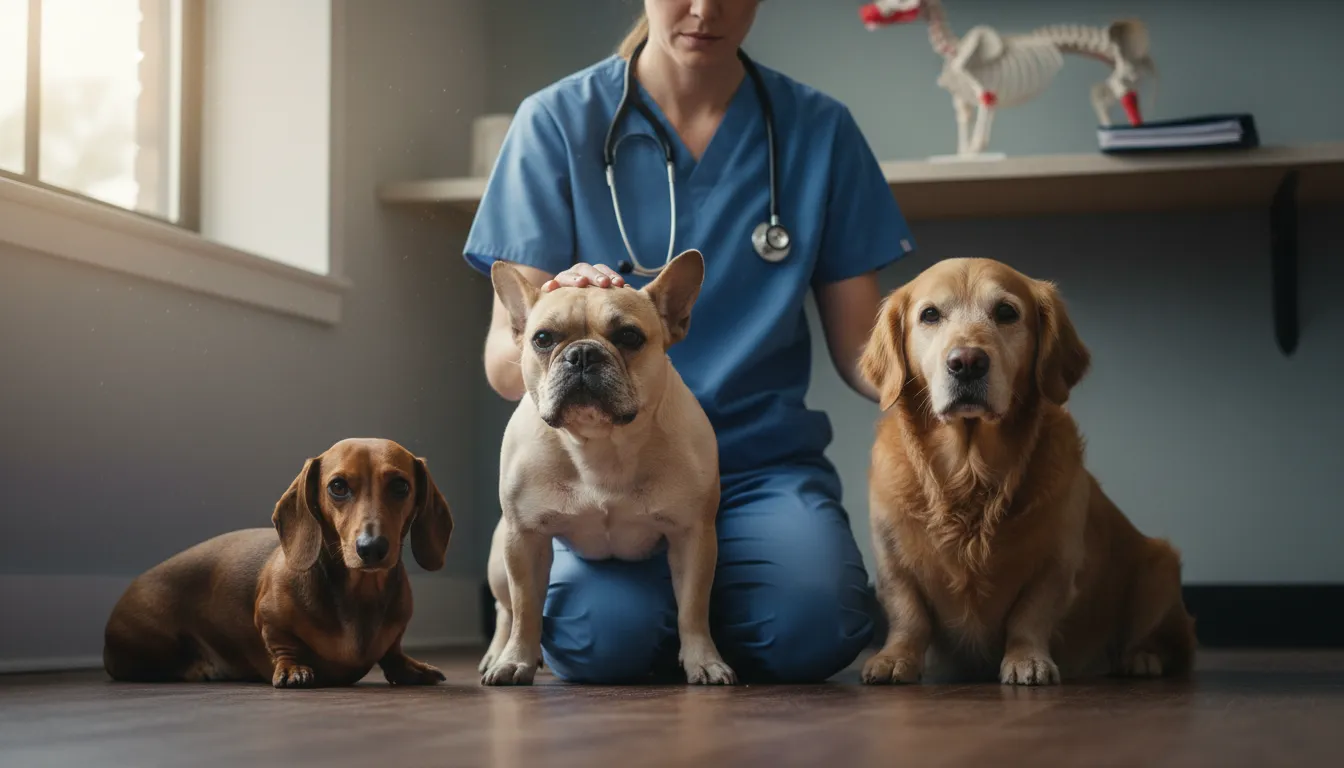
Breed-specific conditions are medically recognised health disorders that arise due to inherited genetic mutations, breed-conformation traits, or breed-focused selection pressures.
The 16 risks on this list aren't scare tactics - they're documented, researched, and consistently seen by vets every single week.
Flat faces mean breathing problems. Long backs mean broken spines.
Certain bloodlines mean hearts that fail far too soon.
The information exists. Most buyers just never look for it before signing the papers.
Talk to a vet - not a breeder, not a pet store - before you commit to any breed.
Did we miss a breed-specific risk that surprised you? Drop it in the comments.