There’s something almost theatrical about watching a cat stalk a toy mouse across the living room floor. Every low crouch, every slow-motion creep, every sudden explosive pounce looks like it was choreographed by evolution itself. Most people smile and call it “playing.” The truth, though, runs considerably deeper than that.
Play behavior in cats isn’t just about having fun. It’s rooted in evolution, biology, and complex brain chemistry. The question of whether your cat is goofing around or rehearsing something far more ancient is not a trivial one. The answer, it turns out, reveals quite a bit about what cats actually are.
The Predator Hiding in Plain Sight
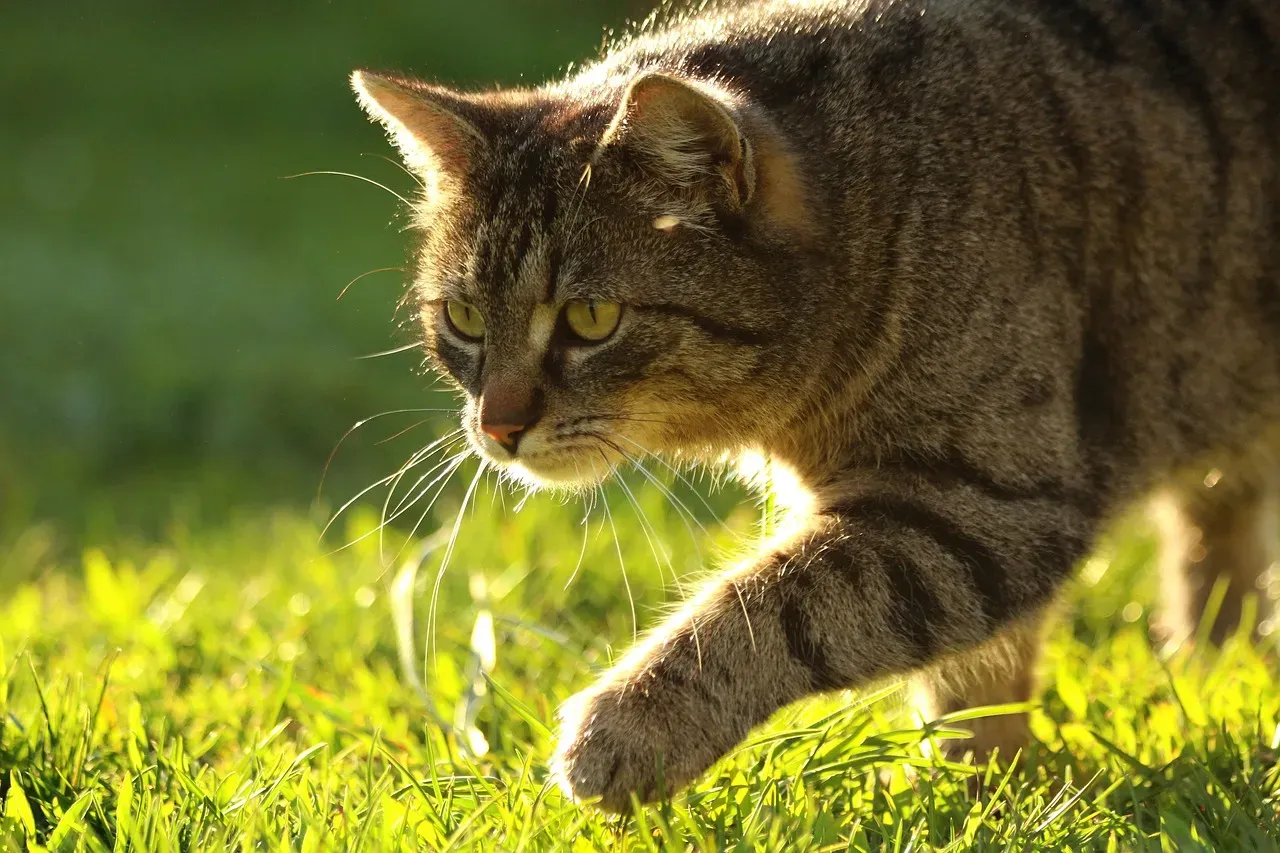
The domestic cat is a predatory species, and much like their wild ancestors, domestic cats are solitary hunters. That identity didn’t vanish with domestication. It was simply redirected into your living room, your hallway, and yes, the corner where you hide that feathery wand toy.
Until quite recently, cats were mainly kept to control rodent populations rather than as pets, and during this time, only the best hunters survived and reproduced, meaning that our pet cats today descended from the most adept hunters. There’s been very little selective breeding of cats, so their instinctive need to hunt remains strong. You’re not just living with a pet. You’re sharing your home with a finely tuned predatory machine.
Hardwired From Birth: Why the Instinct Never Switched Off
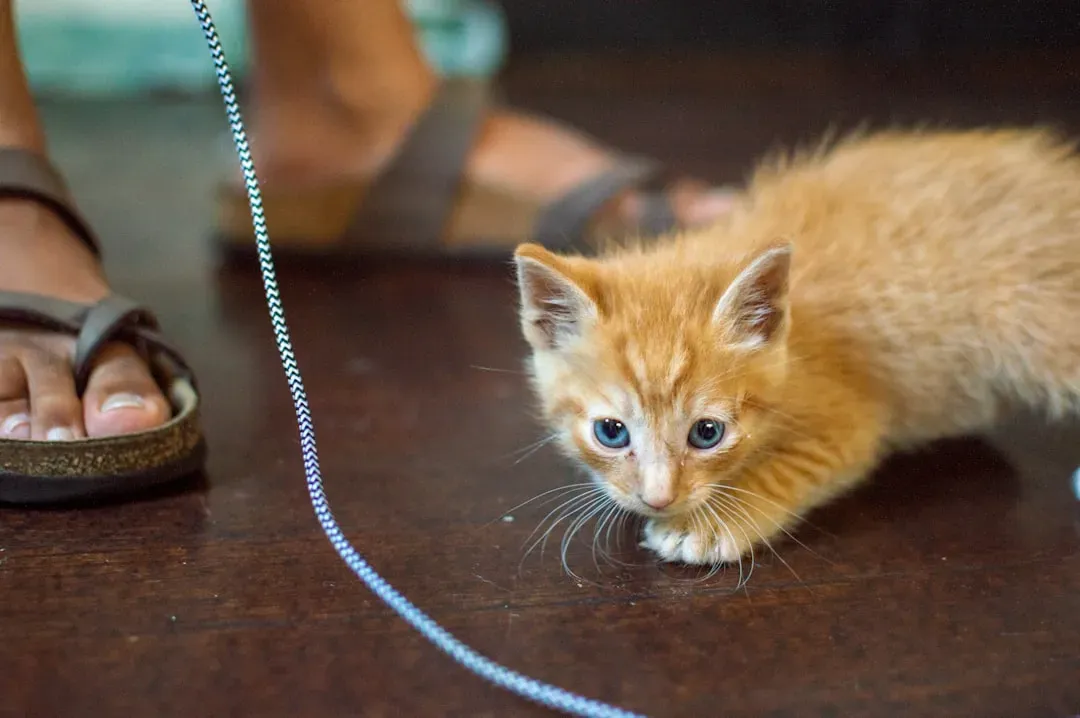
From a young age, kittens display instinctual hunting behaviors even without being taught. This is because these actions are hardwired into their DNA, passed down from generations of wild cats who relied on stealth and precision to eat and survive. Even a kitten raised entirely indoors, without ever seeing a mouse, will stalk, pounce, and bat at anything that moves.
Domestic cats share over 95% of their DNA with wild species like the African wildcat, and their play styles mirror the behaviors needed in the wild. Think about that for a moment. The cat napping on your couch carries nearly identical genetic code to a wild predator hunting across the African savanna. The instincts come bundled with the DNA.
Play as Practice: What’s Actually Happening When Your Cat Pounces
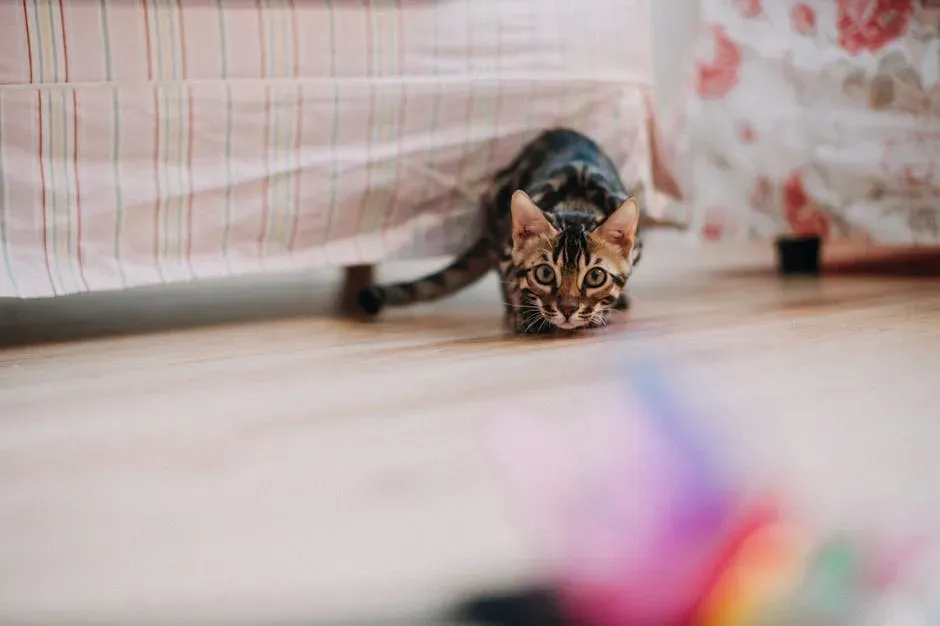
In the wild, survival depends on the ability to hunt efficiently, and play is how young predators learn to become skilled hunters. For felines, behaviors like stalking, pouncing, batting, and chasing are not random. They are rehearsals for the real-life scenarios of catching prey. Every time your cat leaps at a crinkle ball, they’re running a simulation.
Through play, kittens develop the coordination and timing needed to successfully capture their target. They learn to adjust their speed to the speed of moving objects. They learn to gauge distance by pouncing. Play gives the kitten a chance to learn to make judgments by experience. It’s less entertainment and more like a training program built directly into their development.
The Hunt Sequence: Stalk, Chase, Pounce, Capture
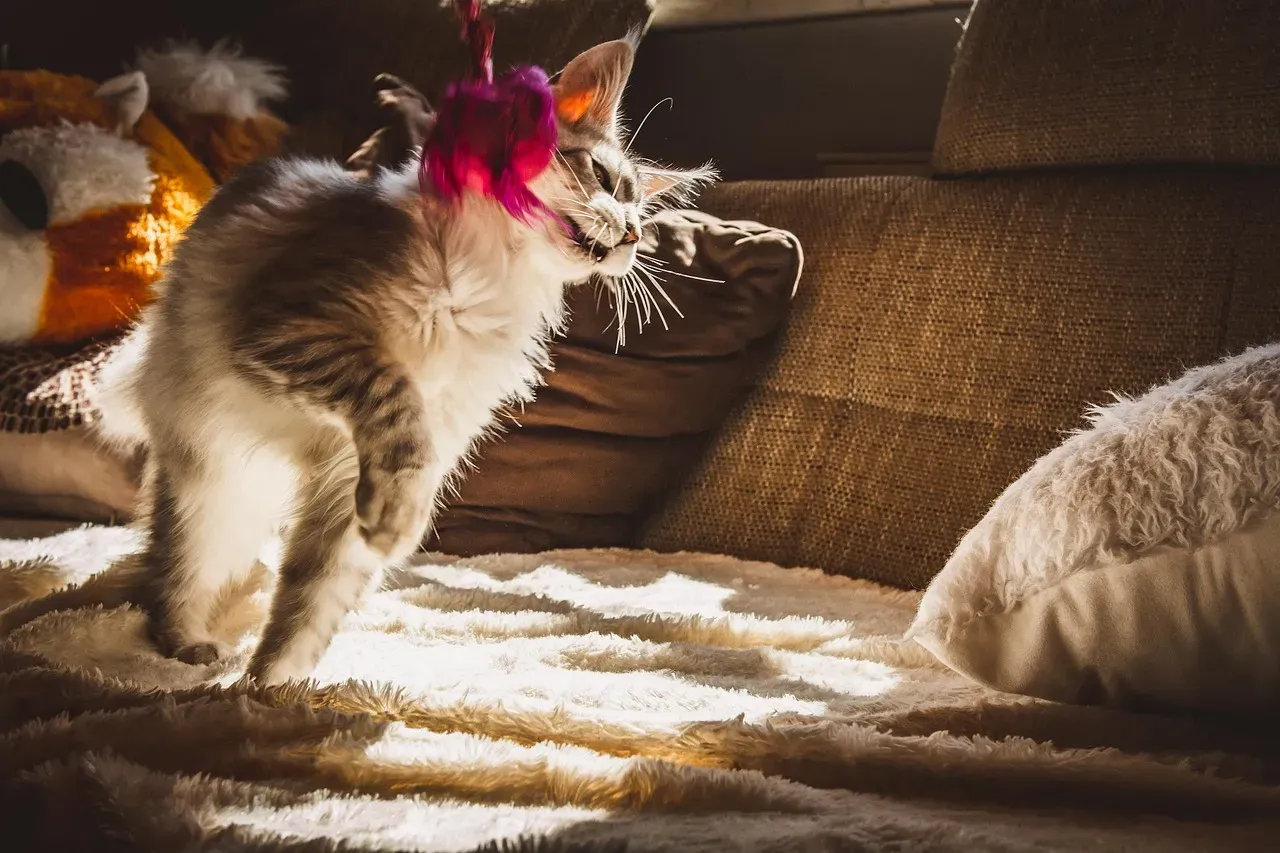
Cats use a seek, capture, and kill process when hunting. First, they search their environment for potential prey. Once they’ve spotted something, they will slowly approach, or stalk, the prey until they are close enough to pounce and capture it. You’ll recognize every single step of this if you’ve ever watched your cat interact with a moving toy.
Cats usually approach their prey by stalking them, which involves the cat moving in a crouched position with their head outstretched. Slow movements are used on the initial approach, which may speed up to a sprint the closer the cat gets to their prey. As the cat gets close enough to catch the prey, they stop and prepare to spring forward. At this point, the cat may hold themselves in a tense position before a brief sprint and spring forward to strike the prey with one or both of their front paws. The sequence is consistent whether the “prey” is a field mouse or a scrunched piece of paper.
The Role of the Mother: How Hunting Skills Are Passed Down
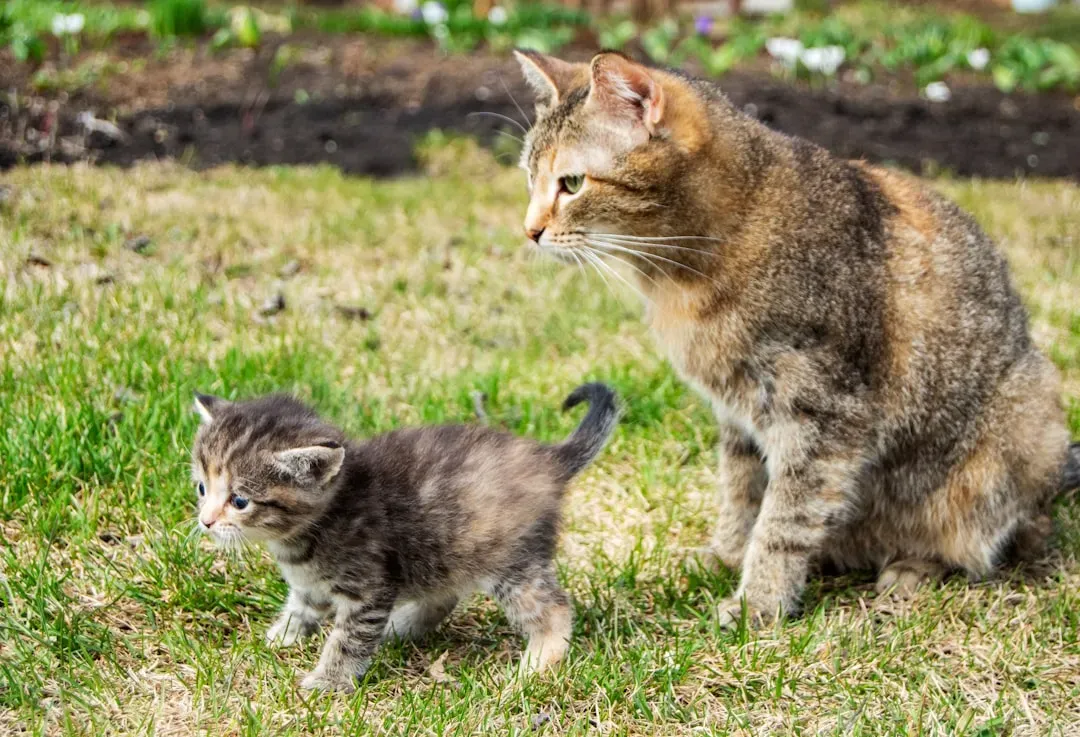
Cats often learn to hunt the same way most mammals learn how to do things, from their mothers. In many instances, hunting is a learned behavior first taught by their mother and then reinforced and honed by playing with littermates. Studies have shown that kittens who had the opportunity to observe their mothers hunt become better hunters than kittens who didn’t. The social dimension of hunting runs surprisingly deep in feline development.
The mother cat teaches her kittens to kill to eat. Her first lesson consists of bringing home dead prey and consuming it in front of the kittens. Soon they learn to join in. At the end of this stage, she brings the dead prey home and leaves it for the kittens to eat on their own. Cats raised with their mother for a longer duration had fewer failed attempts in catching than subjects raised with their mother for a shorter duration.
Built for the Hunt: The Sensory Toolkit Your Cat Carries Everywhere
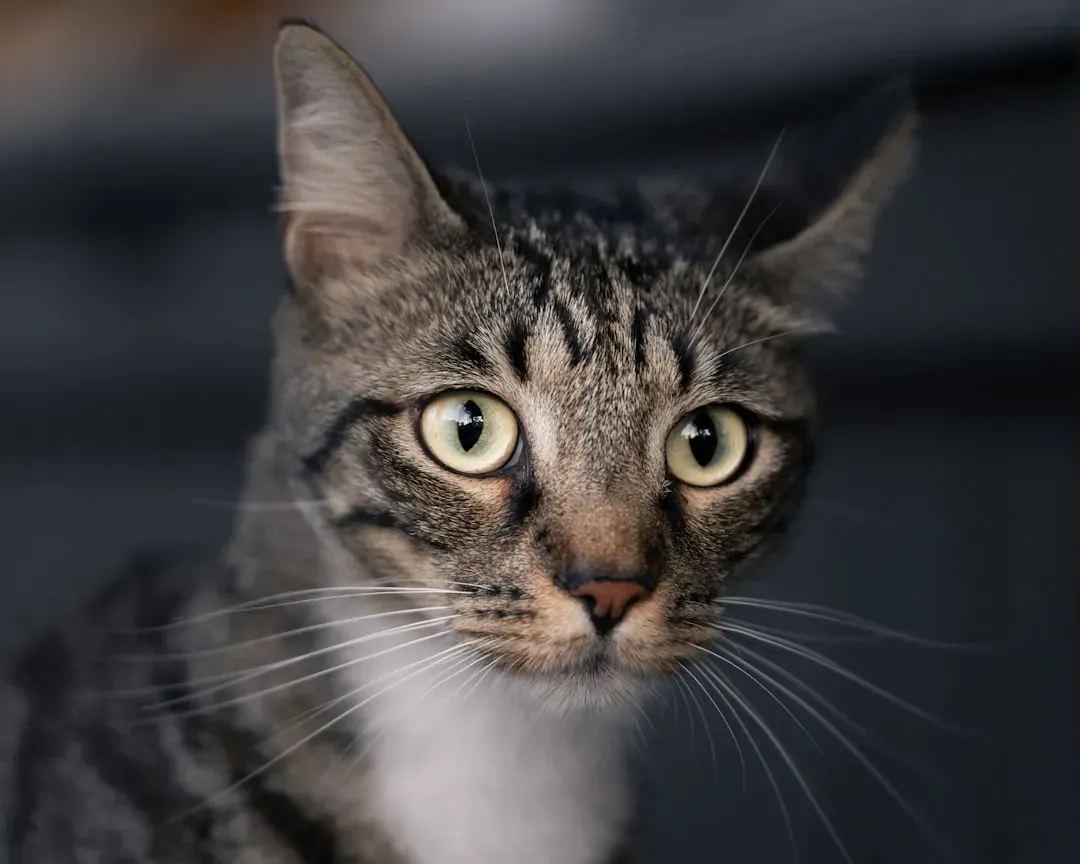
Cats are good at detecting movement in low light, have an acute sense of hearing and smell, and their sense of touch is enhanced by long whiskers that protrude from their heads and bodies. These senses evolved to allow cats to hunt effectively at dawn and dusk. None of this is accidental. Every sensory adaptation has a specific hunting purpose.
Humans and cats have a similar range of hearing on the low end of the scale, but cats can hear much higher-pitched sounds, up to 64 kHz, which is 1.6 octaves above the range of a human, and 1 octave above the range of a dog. At this range, they detect the ultrasonic squeaks of small rodents who are typical prey animals. Cats also have an unusually good sense of smell that helps them to identify and localize their prey. When your cat freezes and stares at an empty wall, there’s a good chance they heard or smelled something you simply can’t perceive.
Hunger Doesn’t Drive It. Something Older Does.
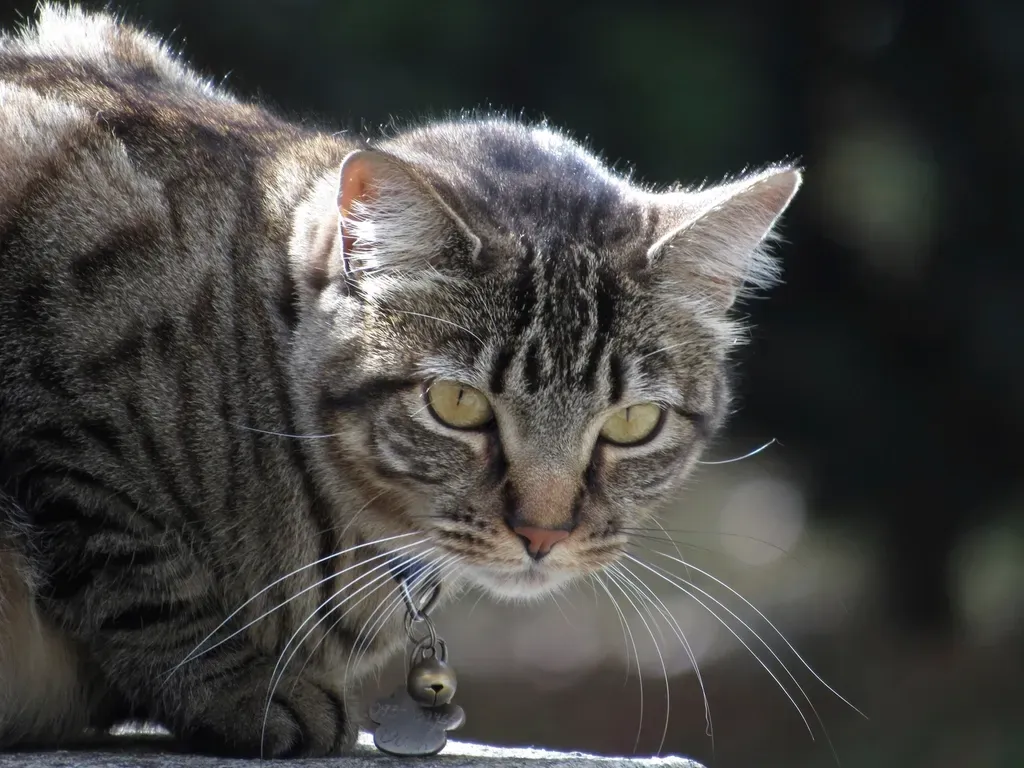
Along with the urge to procreate and to defend their patch, the hunting instinct is one of the most distinctive behavioral patterns in cats. The desire to hunt is not governed by hormones and therefore does not diminish after neutering. That surprises many pet owners who assume that a well-fed, neutered cat has no real drive left to hunt. The reality is quite different.
The importance of hunting even to a cat that is fed becomes easy to understand once we take a closer look at its anatomy and sensory organs. Even if cats that are fed hunt less than those who have to hunt to survive, the feeling of being full and well fed does not cause a cat to give up hunting altogether. The drive operates independently from hunger, which is why you can fill your cat’s bowl and still watch it stalk a moth across the ceiling ten minutes later.
Indoor Cats and the Unsatisfied Predator Within

Indoor-only cats showed more intense reactions than indoor-outdoor cats when presented with artificial prey-like stimuli. In other words, cats who never get to hunt outdoors don’t lose the urge. They may actually feel it more acutely. Predators living in a sterile environment can cause problems. With no real prey to hunt, your cat will still need to express this natural behavior. The result is cats who pretend that people are prey.
Without regular hunting opportunities, climbing challenges, or territory exploration, indoor cats often develop stress-related behaviors. According to the American Veterinary Medical Association, environmental enrichment significantly impacts feline mental health and can prevent anxiety-driven problems. Behavioral changes associated with distress in cats were reported when play was absent. Play may be an important factor in assessing and maintaining cat welfare.
What You Can Do: Feeding the Ancient Hunter in Your Home
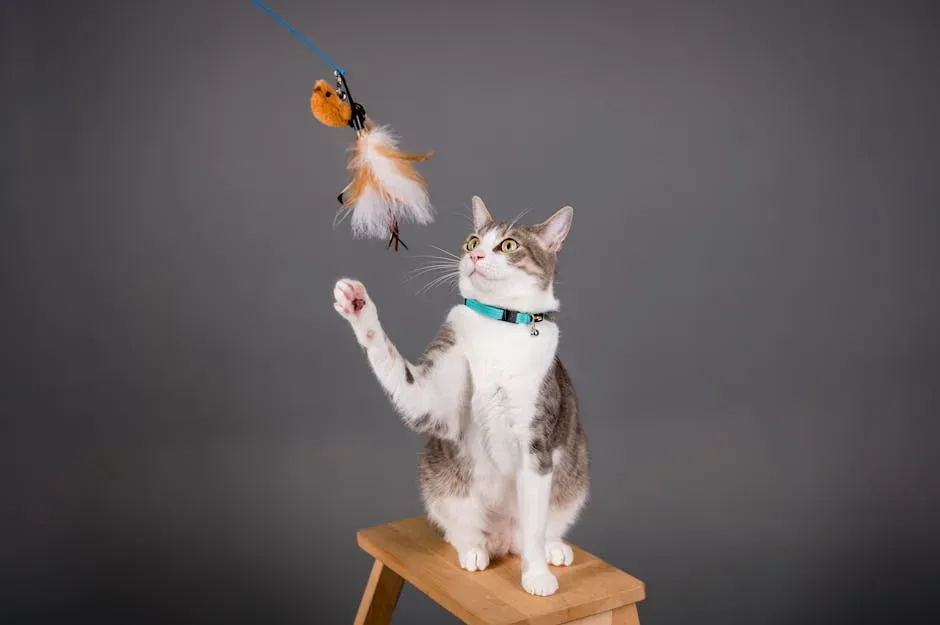
When adult cats play with toys that we provide, we essentially see them performing predatory behavior directed towards inanimate objects. Studies have found that adult cats show more intense and prolonged play with toys that resemble actual prey items. Similarly, the hungrier the cat was at the time of object play, the more intense and prolonged the play sessions were. Both factors indicate that cats consider these toys to be prey when they are playing.
Wand toys with feathers, strings, or small fabric attachments are the gold standard because they mimic prey movement and let you control the “hunt.” Move the toy away from your cat, not toward them. Let it pause behind furniture, then dart out. Let your cat stalk, pounce, and “catch” the toy periodically so they feel the satisfaction of a successful hunt. End sessions by slowing the toy’s movement and following up with a small meal or treat, which mirrors the natural hunt-catch-eat-groom cycle. Structure matters more than most people realize.
Conclusion
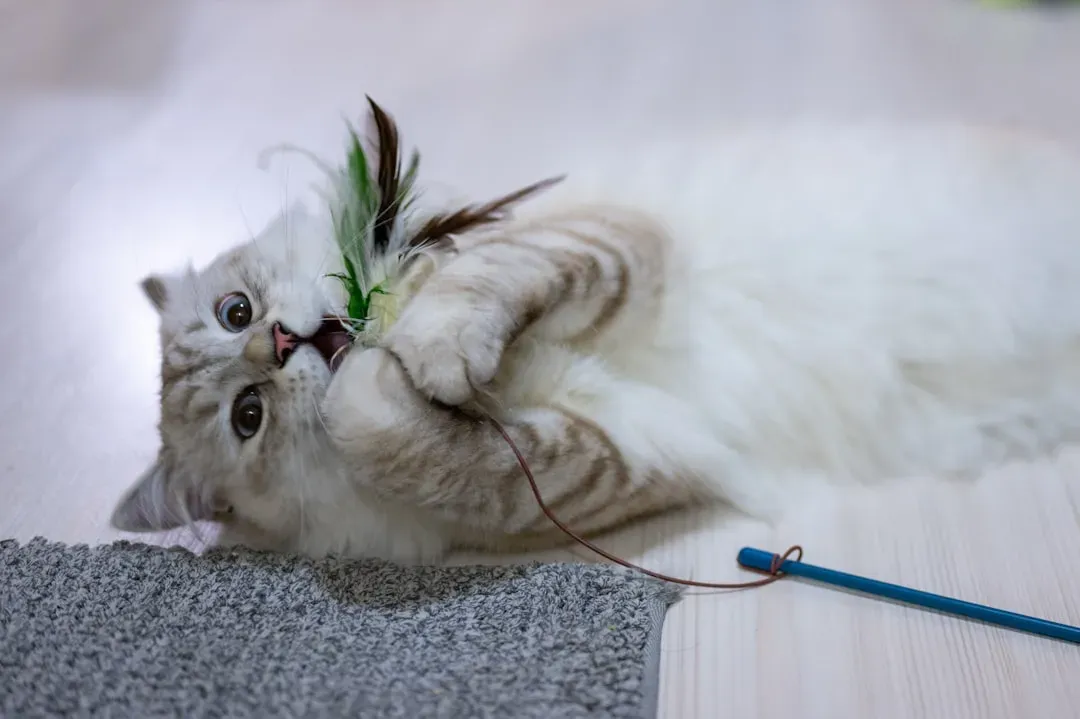
So, is your cat playing or practicing? The honest answer is that the distinction barely matters to your cat. For them, those two things are the same. Cats play to mimic hunting behaviors, release energy, and practice the skills their ancestors needed to survive. Even your well-fed indoor kitty carries the instincts of a stealthy predator, and play provides an outlet for those natural drives.
Understanding this changes how you see every pounce, every crouch, every wild midnight sprint across your hallway. Your cat isn’t being silly or random. They’re being exactly what they were built to be. Enrichment isn’t just about entertainment. It’s about helping your cat express natural behaviors like hunting, climbing, and exploring, all while staying safe indoors and genuinely healthy. Give them the hunt. It’s the kindest thing you can do.
Kristina is a young writer from India. An arts graduate and an avid content creator, Kristina is passionate about animals and wildlife. She enjoys exploring topics related to pet care, animal behavior, conservation, and nature, combining thorough research with engaging storytelling.