There are stories that stop you mid-scroll. Not because they’re dramatic or loud, but because they quietly break something inside you. The story of Milkbun, a small dog returned to a Georgia animal shelter after six months with a family she had come to trust, is exactly that kind of story. It spread across social media within days, not because it was unusual, but because it was painfully, undeniably real.
The footage, raw and unfiltered, captured something that millions of people felt instantly. A dog, trembling in her kennel, staring out from behind bars she had already escaped once before. The image is simple. The weight of it is anything but. Read on, because there is far more to this story than a viral video.
Meet Milkbun: The Dog Who Already Knew What Rejection Felt Like
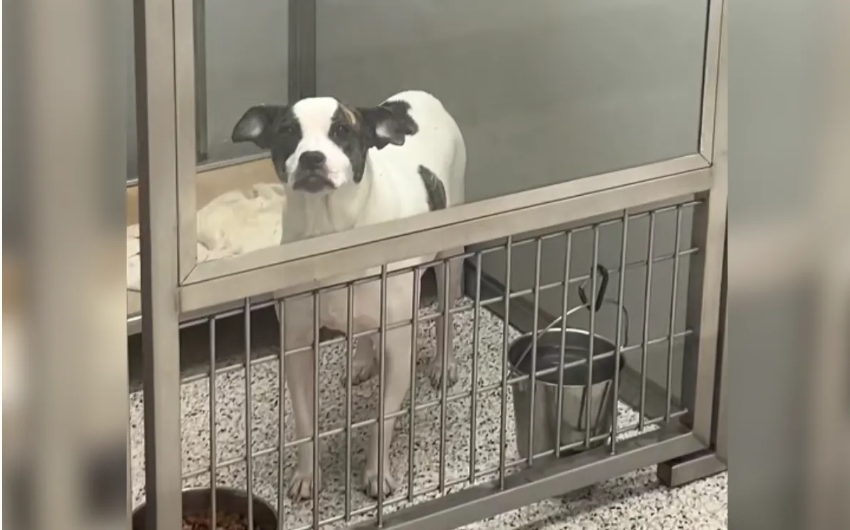
A dog returned to a Georgia shelter just six months after being adopted drew widespread attention after Atlanta-based shelter volunteer Jayah Jones, who posts under the TikTok handle @jayedreamsofpaws, shared footage of the small dog named Milkbun inside her kennel. Jones describes herself as a self-proclaimed “dog mom who loves all things dogs,” and her pain watching Milkbun was obvious in every word she wrote.
Milkbun is an adorably small pup, but her size only deepens the heartbreak of her situation. She was recently returned after being adopted for six months and was visibly struggling with the realization that she was back in the shelter, trembling in her kennel. This wasn’t just nerves from a new environment. This was a dog who had lived in a home, had a routine, had people she recognized, and then lost all of it.
The shelter volunteer remembered Milkbun from her very first time at the facility. That familiarity was part of the reason she chose to post the footage online, hoping it would make people think twice before choosing the shelter as a first solution for an unwanted pet. Honestly, I think that’s one of the most quietly powerful parts of this story. One person recognized one dog and decided that recognition mattered.
The Moment a Volunteer Arrived for Work and Saw Her Shaking
Jones described arriving at the shelter one morning and immediately recognizing Milkbun standing there, staring directly at her, shaking in her kennel, terrified. She called it “the reality when you think the only option is to bring your dog to the shelter.” That sentence is worth sitting with for a moment. Not every surrender is careless, but not every surrender is truly necessary, either.
Jones urged people to consider rehoming their pets privately, insisting that the shelter should always be a last resort. Her only wish now is for someone to step in and give Milkbun the permanent home she deserves. Until that happens, Milkbun remains in the care of Fulton County Animal Services. The video did exactly what Jones intended. It spread far and fast, drawing thousands of comments from people desperate to help.
Think about what six months of stability means to a dog. It’s not just familiarity. It’s an entire internal world being built around a specific smell, a specific voice, a specific front door. Then that world simply vanishes. No explanation. No goodbye. Just a car ride and a kennel.
Why Dogs Are Returned – and the Numbers Are Sobering
Research from the American Humane Society found that between roughly one in fourteen and one in five dogs are returned to shelters within the first six months following adoption. These findings highlight that the period immediately after adoption is a critical window when targeted support and intervention could keep pets in their homes and reduce returns. That’s not a small fraction. That’s a significant and preventable crisis.
Sometimes adopters face unexpected life changes that make it difficult to continue caring for their dog. Circumstances like moving to a smaller home, job loss, family changes, or health issues can all impact a person’s ability to provide consistent care. Life gets complicated. That’s a fact, and not every return comes from indifference. Still, the dog suffers just the same.
Behavioral challenges are among the most common reasons adopters feel overwhelmed. Many shelter dogs have not received consistent training or proper socialization, and issues like barking, separation anxiety, or house training accidents can discourage adopters who simply don’t know how to respond. Most of these behaviors are not the dog’s fault and can be improved with patience and proper training. The sad truth is that many dogs are returned for issues that could have been worked through with a little more time and support.
What the Shelter Environment Does to a Dog’s Mind
Without emotional support, the stresses of shelter life can lower a dog’s immune system and trigger behavioral problems that reduce her chances of ever being adopted. When confined in an animal shelter, dogs experience a wide range of emotions that can have both short and long-term impacts on their mental health, particularly when they become sensitized to fear-inducing triggers over time. The shelter is not a neutral space. For many dogs, it is genuinely terrifying.
Longer shelter stays increase the odds of continued behavioral deterioration. Emotional trauma can eventually cause chronic fear, anxiety, depression, or aggression, and if a dog remains in shelter care indefinitely, she may experience long-term emotional suffering. This is the cruel cycle that Milkbun’s story puts a face to. A dog who was already adopted once, who already knows what a home feels like, is now more emotionally vulnerable than she was the first time around.
Returned dogs often stay longer in shelters than first-time arrivals, averaging two to three months compared to around four to six weeks for dogs that haven’t experienced prior abandonment. Returned dogs also face additional challenges due to behavioral changes caused by abandonment trauma, and some potential adopters worry about animals they see as “problem” pets. There’s a painful irony in that. The more a dog has been through, the harder it becomes for her to get out.
The Broader Pattern: Milkbun Is Far From Alone
Let’s be real, Milkbun’s story is devastating. It is also just one story among thousands happening every single week across the country. Another dog named Maggie had her “entire world turned upside down” after being returned to a shelter following years in a loving home. She went from a calm home environment with people she knew to a loud, stressful shelter full of strangers, and was soon spending worrying amounts of time panting, whining, and pacing in her kennel.
In another case that went viral, a dog named Sam was brought back to a shelter after nearly a year with an adoptive family. A video showed him entering happily at first, licking his lips and wagging his tail as he greeted familiar staff members. The mood shifted sharply when he was placed alone in a kennel, curled up on a bed, looking depressed and scared. That transformation, from excitement to despair, in a matter of minutes, is difficult to watch and impossible to forget.
The number of animals entering shelters has been slowly declining thanks to more owners choosing adoption over buying from breeders. Around 5.8 million animals entered shelters in 2024, down from approximately 6.3 million the previous year, according to the ASPCA. Progress is happening. Still, millions of animals are still cycling through shelters each year, and too many of them are repeat visitors.
What Can Actually Be Done: Real Alternatives to Surrender
One powerful tool available to struggling pet owners is owner-to-owner rehoming software, which connects people directly with potential new families while using the community shelter as a support platform. Some shelters have staff specifically assigned to counsel people wanting to surrender their pets on using these tools before bringing them into the facility. The key is reaching pet owners before they feel like the shelter is their only option.
By researching ahead of time and understanding that behavioral challenges and adjustment periods are normal, potential adopters can reduce the likelihood of making the painful decision to return their pet. It is just as hard, or even harder, on the dog. Careful consideration before adoption can ensure that the two of you live happily together for many years to come. Preparation isn’t glamorous, but it saves lives. Including the dog’s.
Encouragingly, research suggests that dogs do appear to adapt well when successfully rehomed, and owners of rehomed dogs actually reported the strongest perceived emotional bond compared to owners of dogs with no history of relinquishment. There is genuine hope here. Dogs are resilient. They want to love and be loved. Given the right home, even a dog like Milkbun can find her way back to feeling safe.
One Small Dog, One Very Big Wake-Up Call
Milkbun’s story cuts through the noise because it is so specific and so honest. She is a small dog standing in a kennel, shaking, staring at a face she recognizes, in a place she hoped she had left behind forever. That image does not require any narration. It speaks entirely for itself.
What it asks of us is harder. It asks us to think before we adopt, to ask for help before we surrender, and to understand that for a dog, home is not just a location. It is everything they know about safety in the world. When that disappears, something in them breaks in ways that are not always visible but are always real.
Milkbun is currently at Fulton County Animal Services, waiting. If her story moved you, the most powerful thing you can do is share it, consider fostering or adopting from a local shelter, and remember that the shelter should truly always be the last resort. What would you do if you were the person who recognized her that morning, clocking in for another day of work, and found her there, shaking, staring back at you?