Fostering a timid cat demands endless patience, especially when the newcomer burrows deep into a hiding spot and shows no signs of emerging. Kate Davidson faced this challenge with her latest charge, a cat named Tuna, who spent days curled inside a cat tower in a dedicated foster room. On the fifth day, Davidson witnessed a pivotal shift that highlighted the unique role resident pets can play in building trust.[1]
A Slow Start Filled with Caution
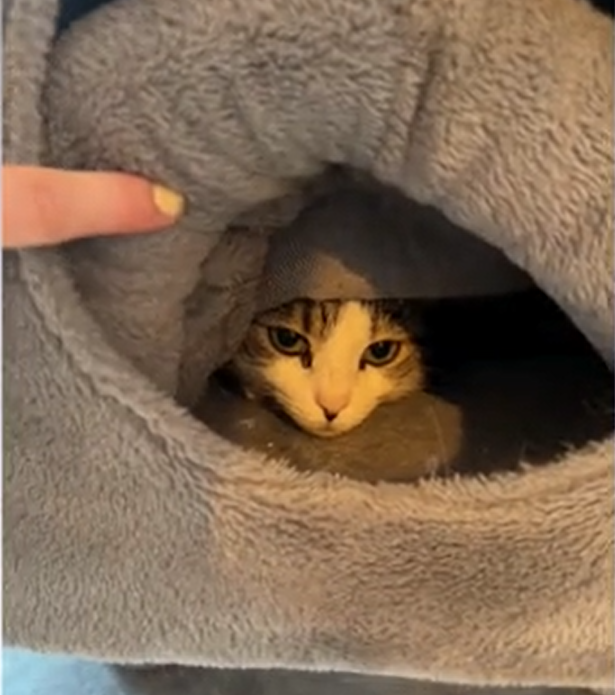
Davidson had set up a quiet space for Tuna upon her arrival, complete with essentials like food, water, and the cat tower that quickly became her refuge. For the first four days, Tuna refused to venture out, ignoring meals and avoiding any interaction. Davidson checked in gently each time, respecting the cat’s need for space.[1]
This pattern frustrated but did not surprise Davidson, who has experience with nervous fosters. Early life experiences often leave cats wary of change, making adjustment periods unpredictable. Still, Davidson persisted with calm routines, hoping familiarity would eventually coax Tuna forward.
Calling in the Confidence Booster
By day five, traditional approaches yielded no progress, so Davidson turned to her resident cat, Siggi. Known for her gentle demeanor with shy newcomers, Siggi had helped other fosters before. Davidson called Siggi into the room, where the cat entered without haste, methodically sniffing around.[1][2]
Siggi avoided direct stares or sudden moves, simply exploring the space at her own pace. Davidson placed a treat nearby to encourage positive associations. This low-pressure introduction proved key, as Siggi’s relaxed presence signaled safety to the hidden observer.
The Moment of Emergence

Suddenly, Tuna peeked out from the cat tower, her curiosity overriding fear. She stepped forward and approached Siggi directly, marking their first interaction and Tuna’s boldest move yet. The encounter unfolded smoothly, with no hissing or tension – just mutual sniffing and acceptance.[1]
Davidson captured the exchange in a TikTok video posted on March 12, which quickly garnered over 1.2 million views. Viewers celebrated Siggi’s “magical” influence, with comments noting how rare immediate harmony is among adult cats. This breakthrough validated Davidson’s instincts and underscored animal-to-animal bonds.
Rapid Progress and Lasting Lessons
Two days later, on day seven, Tuna ventured fully from her tower. She walked toward Davidson, rubbing against her legs and accepting pets with enthusiasm. Siggi’s role lingered as a catalyst, reinforcing Tuna’s growing confidence.
Experts echo this success, advising fosters to prioritize control for the cat – offering hiding spots, predictable routines, and gradual exposures. Confident pets like Siggi can accelerate trust by modeling security, though each cat’s timeline varies. Simple tools such as enclosed beds or cat trees support this process without force.
Here are proven strategies for helping shy fosters adjust:
- Provide multiple hiding options to let them feel secure.
- Maintain consistent feeding and cleaning schedules.
- Introduce scents from resident pets before physical meetings.
- Use treats and toys for voluntary positive encounters.
- Observe body language to avoid overwhelming them.
Key Takeaways
- Patience pays off; force rarely does in cat fostering.
- Resident cats can serve as natural “therapy” for newcomers.
- Small environmental tweaks build big confidence gains.
The story of Tuna and Siggi reminds us that fostering succeeds through empathy and subtle support. As Tuna continues her journey toward adoption, her quick transformation inspires others to open their homes. What experiences have you had with shy pets finding their courage? Share in the comments.
Kristina is a young writer from India. An arts graduate and an avid content creator, Kristina is passionate about animals and wildlife. She enjoys exploring topics related to pet care, animal behavior, conservation, and nature, combining thorough research with engaging storytelling.