You glance across the room and catch your cat staring at you with what can only be described as barely contained disdain. The furrowed brow, the narrowed eyes, the jaw set like a tiny stone monument to disapproval. Your instinct says your cat is annoyed with you. Science, however, tells a very different story.
The truth is that feline facial expressions have been fundamentally misread by humans for centuries. What looks like irritation or indifference on a cat’s face is often something far more interesting – deep concentration, acute sensory focus, or a form of quiet emotional communication that operates on completely different terms than our own. Once you understand what’s actually going on behind those “grumpy” features, you’ll never look at your cat’s face quite the same way again.
Cats Have Far More Facial Expressions Than You Think
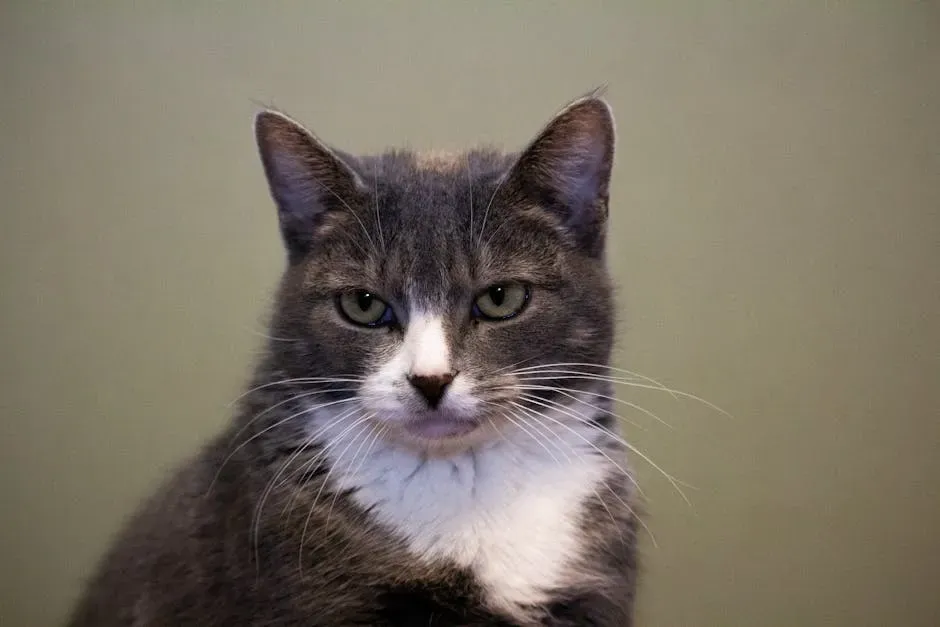
Many people assume that cats’ faces aren’t the most expressive when it comes to communication, particularly compared to dogs. You can certainly tell when a kitty is mad or needy or content, but generally, you might think they are fairly stoic in their facial expressions. That assumption turns out to be significantly off the mark.
In a study published in Behavioural Processes, researchers tallied 276 different feline facial expressions, used to communicate hostile and friendly intent and everything in between. The total of 276 distinct facial expressions made toward other cats is not so far removed from the 357 produced by chimpanzees. So when your cat looks grumpy, it may simply be using one of dozens of nuanced expressions you haven’t yet learned to decode.
The Science Behind That Concentrated Stare
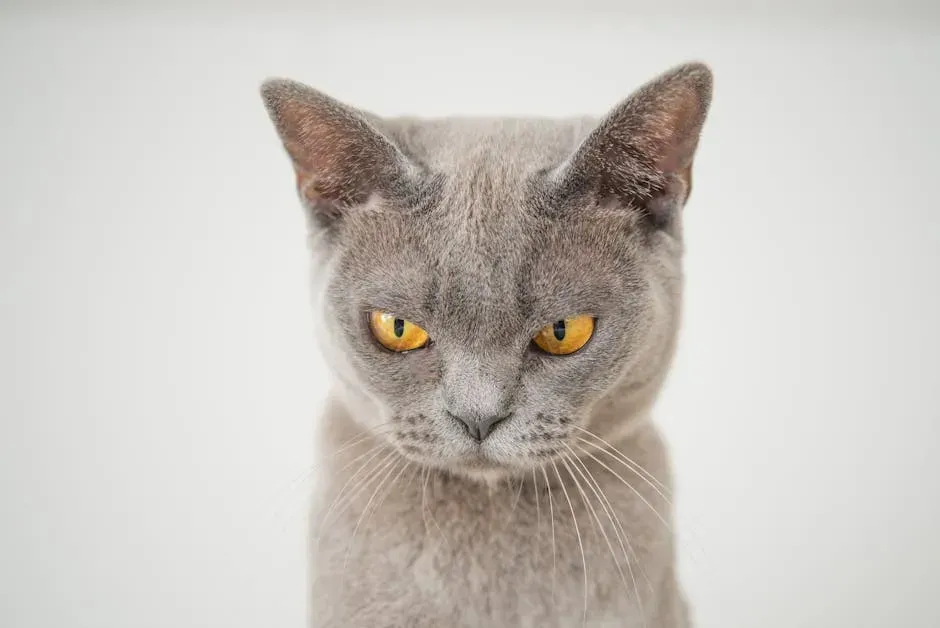
Real hunting postures look more intense and focused. Cats crouch low with eyes locked on target, whiskers pushed forward, and bodies coiled for pouncing. Tail movements become controlled and purposeful rather than playful. When your cat fixes you – or a dust particle on the floor – with that serious, unblinking gaze, you’re watching ancient predatory wiring at work.
Unlike pack animals, cats are solitary hunters, relying on their individual skills and instincts to catch prey. This independence is reflected in their behavior, as they prefer to hunt alone rather than in groups. Their solitary nature allows them to focus on their target without distraction, using their senses to guide them. That intense, “grumpy” facial lock is simply a look of total absorption.
Why Cats Were Built to Look Serious
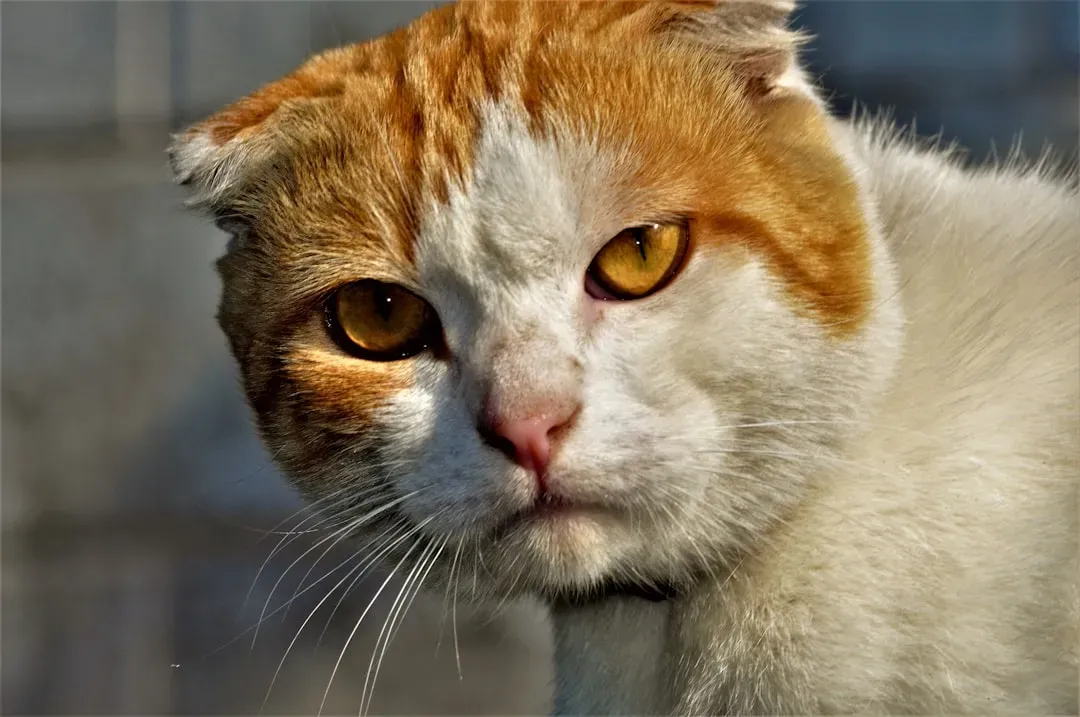
The inscrutability of cats – and, ironically, their viral appeal – spring from the fact that cats aren’t all that far removed from natural-born, prehistoric killers. Their ability to be social is only a few thousand years old. The cat’s domestication is incomplete, in terms of its need to continue hunting and also in terms of its ability to socialize. One of the consequences of that is it has a rather unexpressive face.
Pet cats might have retained some of that defensive communication, but these domestic descendants probably started to pick up friendly facial expressions as they gathered to await humans’ dinner leftovers. In other words, the “grumpy” baseline face is essentially a holdover from a much older, wilder version of the animal you keep in your apartment.
What Those Narrowed Eyes Are Really Saying
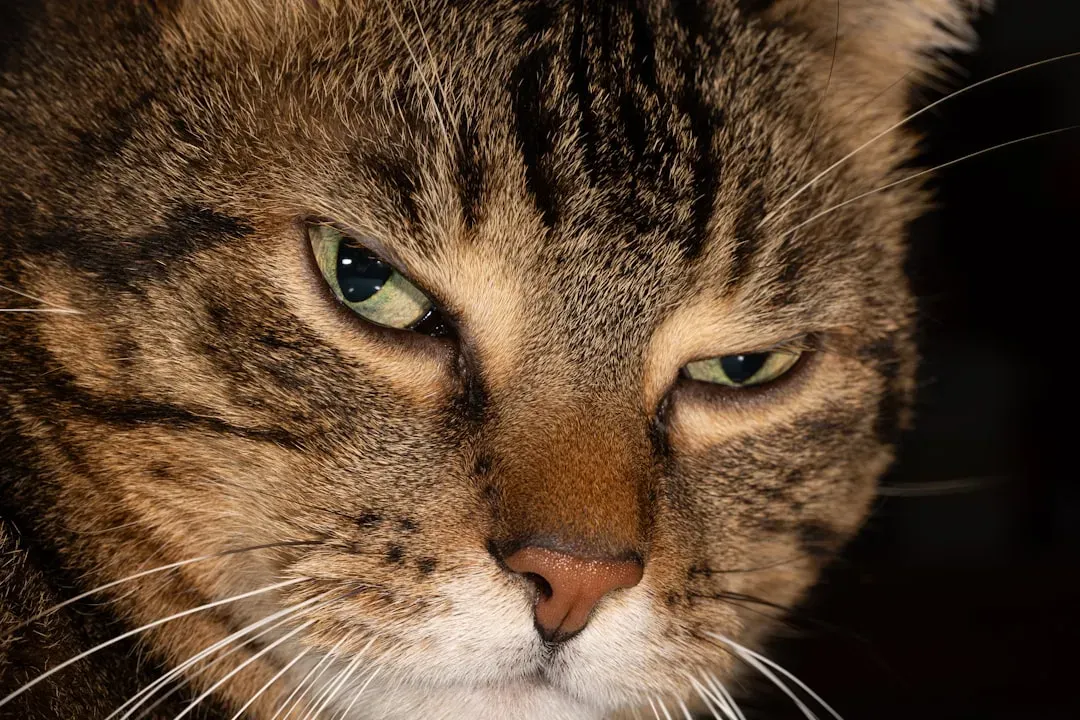
While the slow blink communicates trust and affection, other eye movements and positions reveal different aspects of feline emotional states. Half-closed eyes in a relaxed cat typically indicate contentment and security – similar to how humans might look when deeply relaxed or about to fall asleep. However, similarly narrowed eyes in a tense body posture may indicate pain or discomfort, as cats instinctively protect their eyes when feeling vulnerable.
Dilated pupils can signal excitement or fear, depending on the context and accompanying body language. Conversely, very constricted pupils – unless in bright light – might indicate aggression or intense focus. So the same set of narrowed eyes can mean completely different things depending on whether your cat’s body is relaxed or rigid. Context is everything with these animals.
The Slow Blink: When “Grumpy” Is Actually “I Love You”
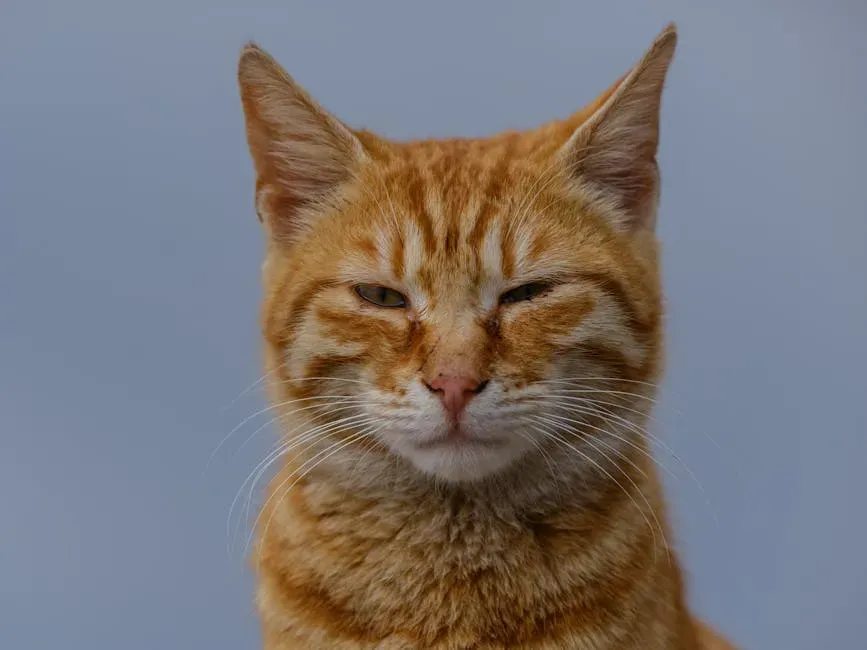
In 2020, psychologists at the University of Sussex conducted the first scientific study on cat slow blink meaning. Led by Dr. Tasmin Humphrey and Professor Karen McComb, the research published in Scientific Reports proved something cat owners long suspected: slow blinking is genuine cat communication. It’s one of the most misread expressions in the entire feline repertoire.
To understand cat eye narrowing, consider what wide eyes mean in the animal kingdom: alertness, fear, and potential threat. A predator locks eyes on prey. A scared animal scans for danger. When your cat narrows their eyes around you, they’re doing the opposite. They’re signaling vulnerability. Closed eyes mean “I don’t need to watch you for threats.” That drowsy, almost dismissive squint your cat gives you? That’s actually a compliment.
When Breeds Are Born Looking Grumpy
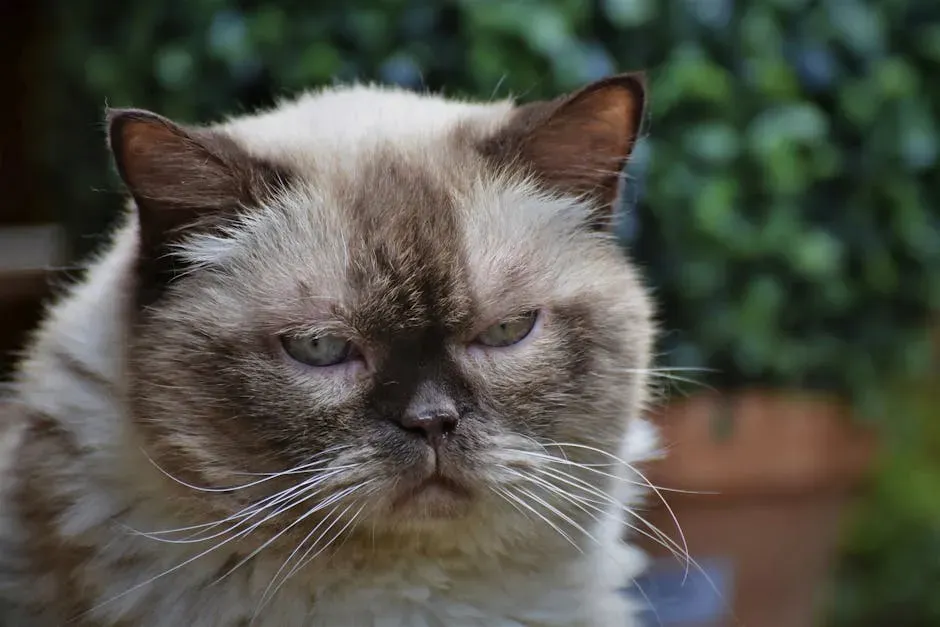
Research by cat behaviour and welfare specialists at Nottingham Trent University argues that over time, people have selectively bred cats based on human preferences to display specific features. Breeding cats to have features such as brachycephalic breeds with flat faces, big eyes, and foreheads and often seemingly grumpy expressions could be affecting their ability to communicate how they are actually feeling.
What this might mean is that the neutral facial expression in one breed might now look the same as the expression of pain or discomfort in another. The Persian cat is famous for its unmistakable grumpy facial expressions, but these felines are some of the most gentle, loving, patient, and affectionate companions you’ll ever meet. Despite their serious demeanor, Persian cat personalities are typically serene, and they tend to be quiet and low maintenance. The grump on the outside, in these cases, is entirely structural.
Reading the Whole Body, Not Just the Face
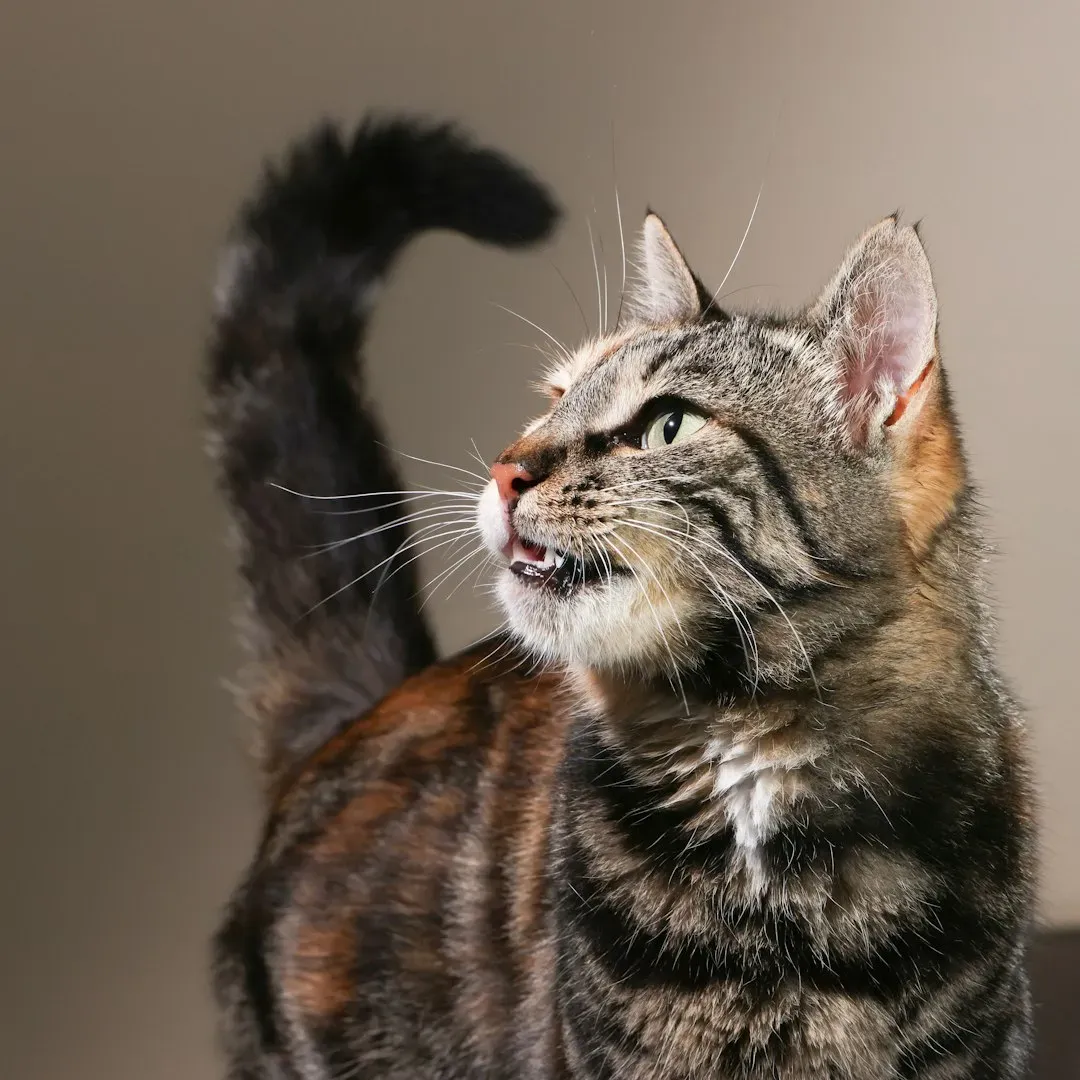
While cats may have over 200 different facial signals, these expressions are subtle, and you’re more likely to determine how cats feel by watching their whole body language – their ear position, body position, and tail movements. Relying solely on the face to judge a cat’s mood is like trying to understand a sentence by reading only one word.
Your cat might have naturally grumpy facial features due to their breed, but it doesn’t necessarily mean they’re unhappy. Some cats have prominent brow lines and round faces, giving them a perpetually stern appearance. To determine their mood, pay attention to their body language, purring, and overall behavior, which are better indicators of their emotional state. A grumpy-faced cat who is purring and kneading your lap is telling you something very different from a grumpy-faced cat who is flicking their tail in short, tight movements.
When a Grumpy Face Might Signal Something More
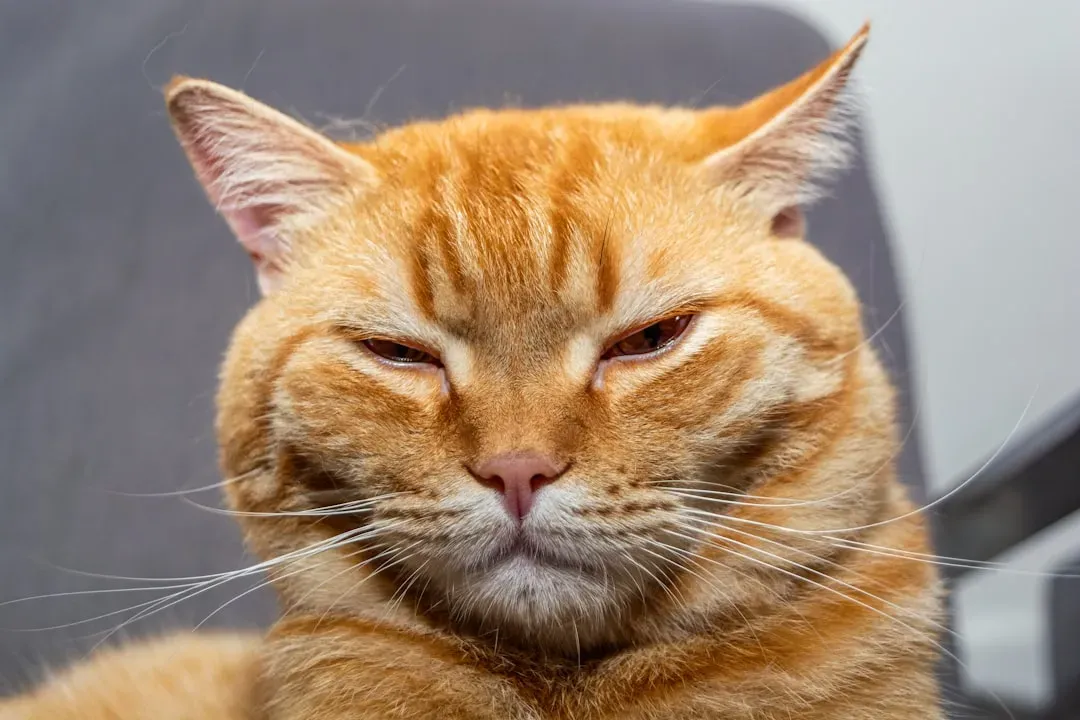
Research shows the following movements determine whether a cat is in pain: the ears will rotate back and flatten down; the eyes will start to squint or close completely; facial muscles will get tense, almost as if they’re frowning; they will have pursed lips when they’re looking at you; and their whiskers will bunch up and get pulled back along the sides of their face.
Sometimes, a grumpy face can be a sign of an underlying health problem. Dental issues, eye infections, and pain from arthritis can make your cat appear unhappy. It’s essential to monitor their behavior and consult your veterinarian if you suspect any health concerns. The key difference is that a cat in pain will usually show these facial changes alongside shifts in behavior, appetite, and movement, not just a resting stern expression during a sunny afternoon nap.
How You Can Speak Your Cat’s Facial Language Back
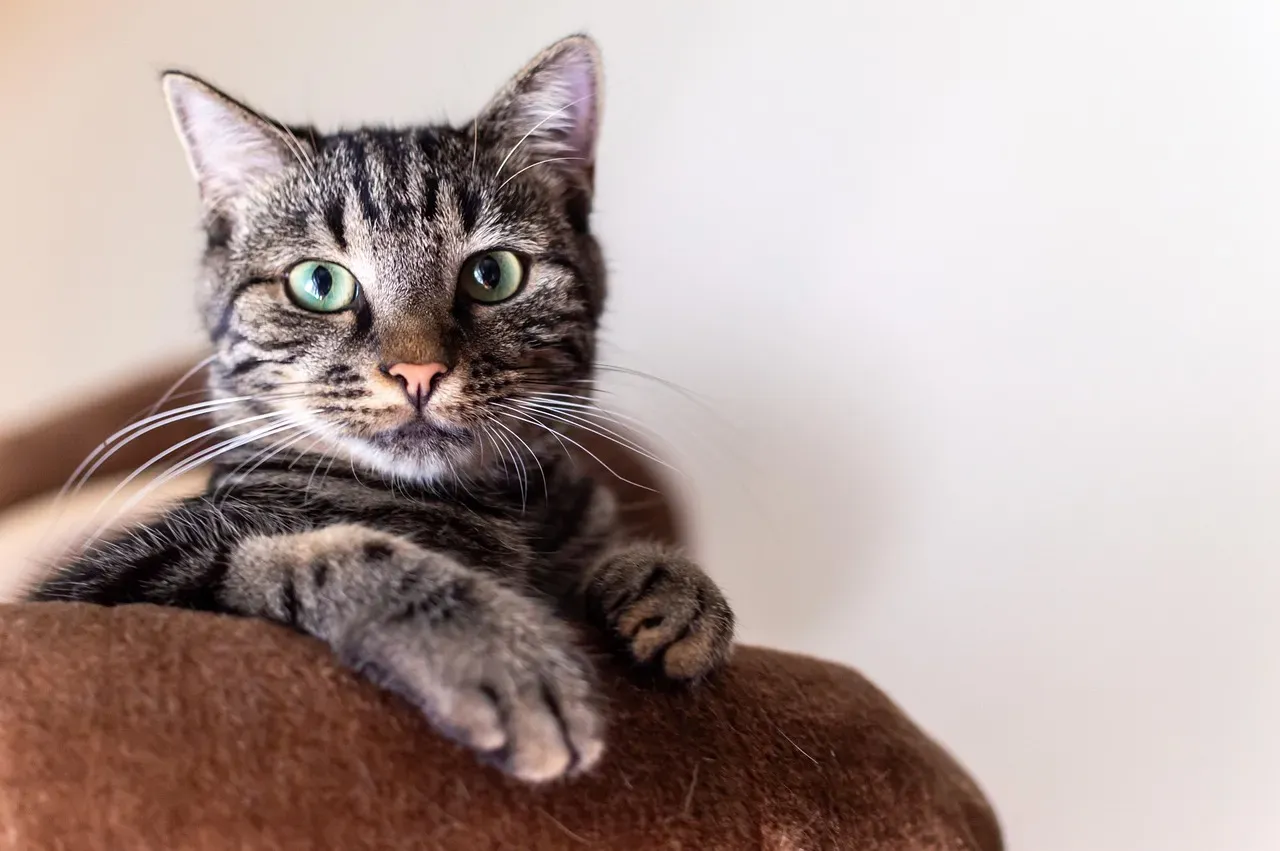
Cat slow blinking behavior isn’t just anecdotal, but a form of communication proven by science. In a study by the University of Sussex, cats are more prone to slow blinking when their owners do it to them. In addition, cats appeared to prefer approaching the experimenters that had slowly blinked at them rather than those with neutral expressions. Such findings support the theory that slow blinking translates to a positive emotional connection between humans and cats.
Whiskers overall are surprisingly telling: content or happy cats almost always point their whiskers forward. Cat whiskers function as sensitive sensory tools that also broadcast emotional states. Neutral, relaxed whiskers suggest calm, comfortable cats. Whiskers pulled back against faces indicate fear or defensiveness. Forward-positioned whiskers show interest, curiosity, or hunting focus. Once you start paying attention to whisker position alongside eye shape, your ability to read your cat’s real mood improves dramatically.
Conclusion
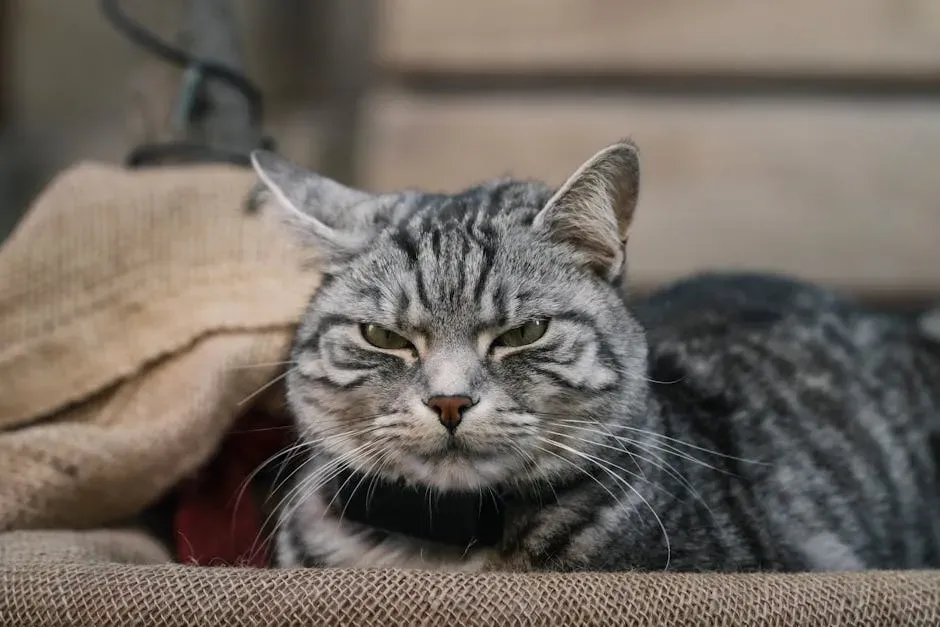
Your cat’s “grumpy” face is rarely what it looks like from the outside. It’s the face of a creature running ancient software in a modern living room – wired for precision focus, built for subtle communication, and shaped partly by thousands of years of selective breeding that prioritized looks over legibility. The frown is often just deep thinking, quiet trust, or an anatomical quirk that has nothing to do with how your cat actually feels about you.
Learning to read your cat’s face in full context – body posture, whisker position, tail movement, and the situation around them – is genuinely one of the more rewarding things you can do as a cat owner. The expressions are all there. You just need to know what you’re looking for. Most of the time, that “grumpy” stare from across the room is your cat paying you the quiet, focused attention of a creature who trusts you completely.
Kristina is a young writer from India. An arts graduate and an avid content creator, Kristina is passionate about animals and wildlife. She enjoys exploring topics related to pet care, animal behavior, conservation, and nature, combining thorough research with engaging storytelling.