Have you ever heard of a cat that lives so high up, it might as well be touching the clouds? You might picture domestic felines lounging on sunny windowsills, yet there exists a wildcat so elusive, so perfectly camouflaged in one of Earth’s harshest environments, that people sometimes wonder if it’s real. Fewer than 1,500 individuals are thought to exist in the wild, making this enigmatic creature one of the world’s most endangered felines.
Imagine a landscape where freezing nights give way to scorching days, where oxygen is thin and survival is a daily battle against the elements. In this unforgiving realm of rock and sky, the Andean cat has carved out a life that remains largely shrouded in mystery. Let’s explore the remarkable story of this mountain phantom and why its existence hangs by a thread.
A Ghost That Haunts the Rooftop of South America
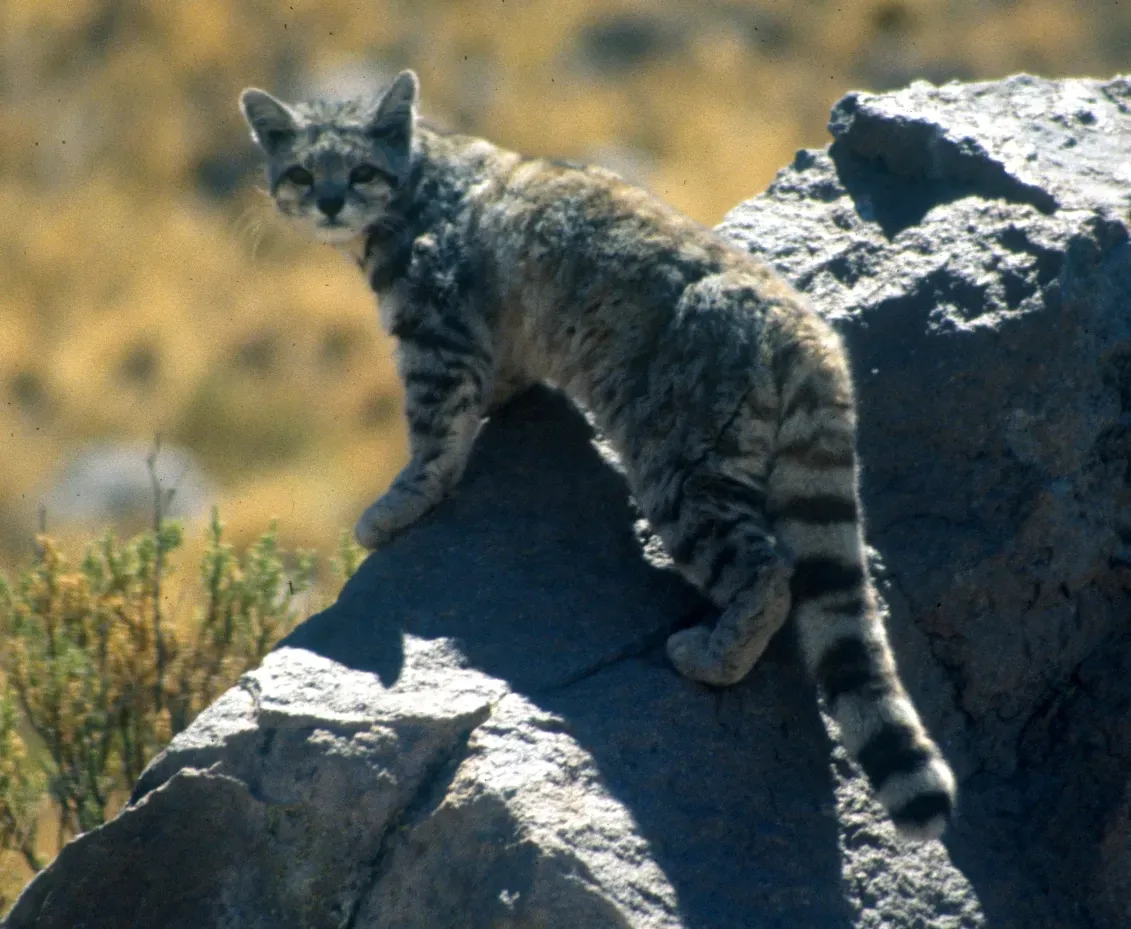
The mountain cat lives high in the Andes of southern Peru, southwestern Bolivia, northeastern Chile, and northern Argentina, usually found at elevations above 3,000 meters in the high, rocky, and generally treeless zone. Think about that for a moment. We’re talking about altitudes where most people struggle just to breathe, where the air is so thin that even walking feels like running a marathon.
Living above 3,000 meters, and often as high as 4,500 meters, the Andean cat calls one of Earth’s harshest environments home, where freezing nights, scorching days, high winds, and low oxygen make it a hostile place. Yet this small feline has mastered these extremes with adaptations that would make any mountaineer jealous. Its thick, luxurious fur isn’t just for show, it’s survival gear in a place where temperatures can plummet dangerously at night.
The Feline Fashioned for Extremes
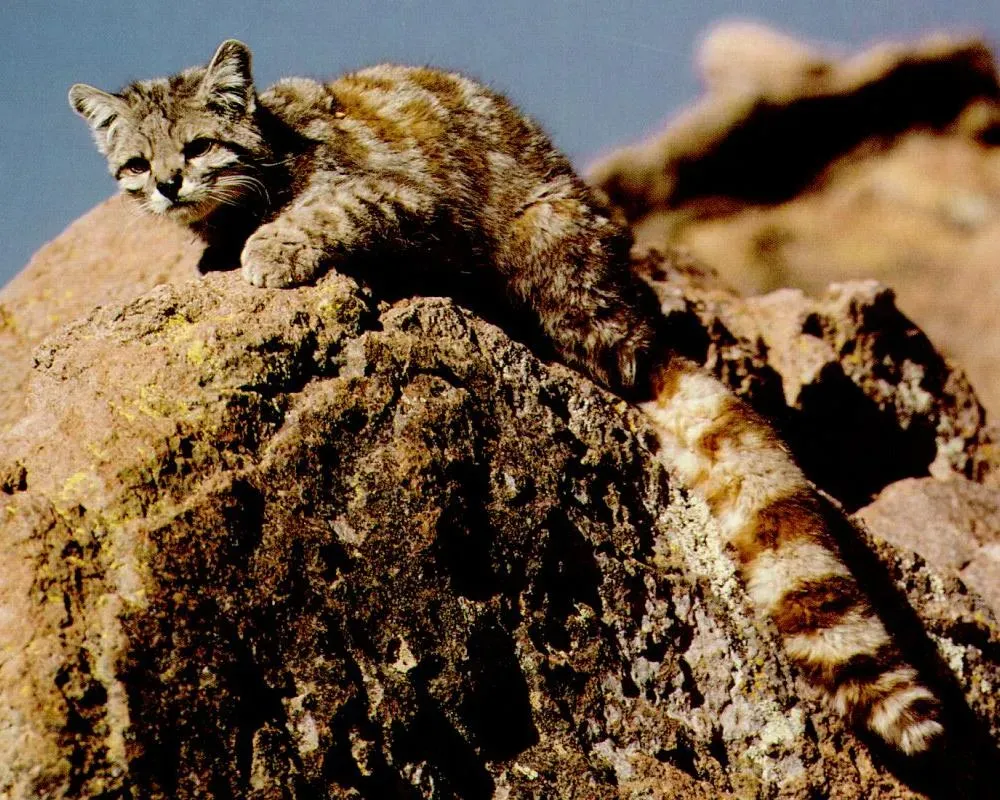
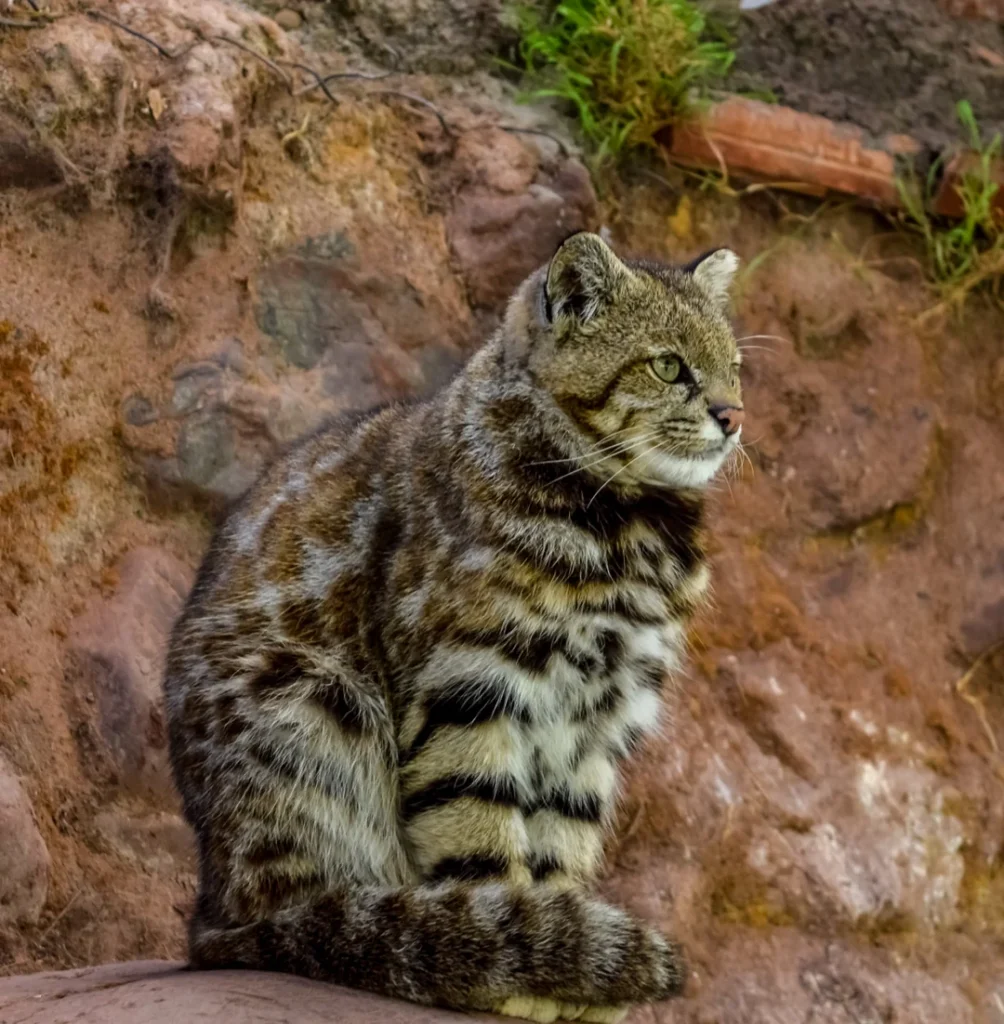
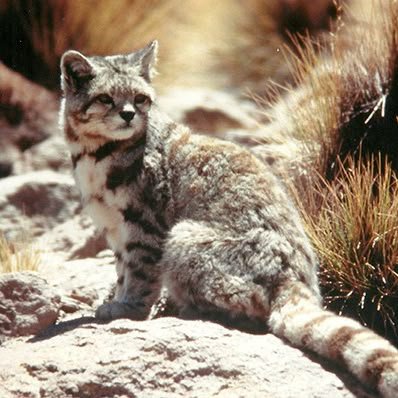
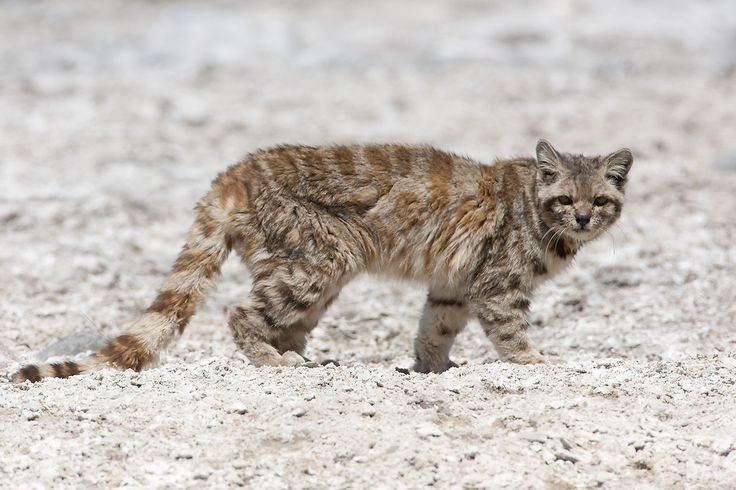
The species has long, thick fur and a coat of a pale, silvery gray, spotted and striped with blackish or brownish markings, with white underparts marked with dark spots and a long, bushy tail banded with about seven dark rings. Honestly, their appearance is striking. Imagine a housecat dressed for an Arctic expedition, complete with the fluffiest tail you’ve ever seen.
That tail deserves special mention. The tail is characteristic, being very long and bushy, measuring around 66–75% of the cat’s head to body length and marked with 6–9 wide dark brown or black rings, probably an aid to balance when hunting. Picture a tightrope walker with a balance pole, except this pole is attached and furry. When temperatures drop, they can wrap this magnificent appendage around themselves like a built-in blanket, tucking their nose inside for warmth.
Hunting in the Land of Rock and Sky
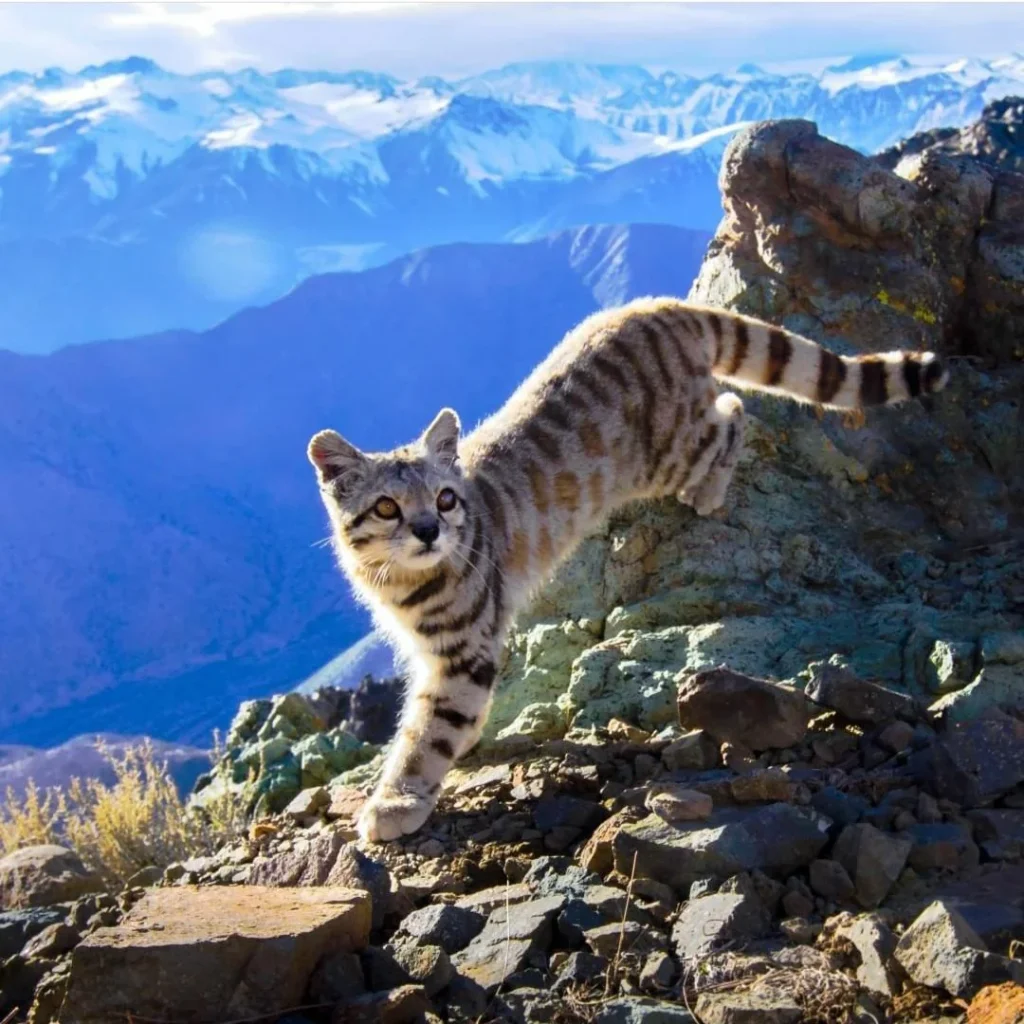
The viscacha comprises 93.9% of the biomass consumed in the Andean cat’s diet, while the pampas cat depends on it for 74.8%, as both cats depend on specific prey for their dietary needs. This dependency is both a testament to their specialization and a vulnerability. The mountain viscacha, a rabbit-like rodent that thrives in rocky crevices, forms the backbone of their survival.
With thick fur, a powerful build, and agility unmatched on steep, rocky slopes, they specialize in hunting vizcachas, which flourish near patches of vegetation. Watching one hunt would be like witnessing a master acrobat at work, leaping from boulder to boulder with that impossibly long tail streaming behind like a banner. Most sightings have been made during daytime, however recent camera trap and radio telemetry studies indicate it is possibly crepuscular and active at night.
A Population Teetering on the Edge
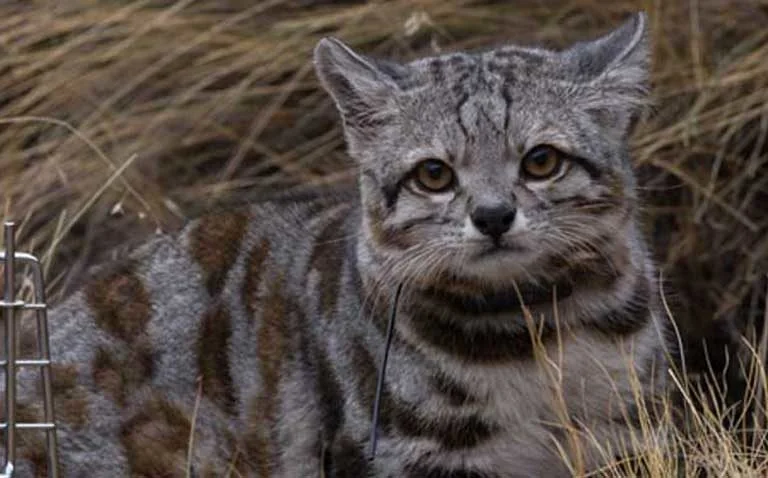
Here’s where the story gets truly concerning. Globally, it is classified as Endangered in the IUCN Red List due to its low population size of less than 2,500 mature individuals, the largest subpopulation being less than 250 mature individuals, and an inferred continuing population decline. Let those numbers sink in for a moment. Less than 2,500 breeding adults scattered across four countries.
Each cat roams a vast territory, up to 60 square kilometers, and their populations are not just sparse but fragmented, isolated by mountains, valleys, and now, increasingly, by the footprints of human industry. Think of it like trying to find scattered puzzle pieces across an entire mountain range. These cats already lived at naturally low densities, making every single individual precious beyond measure.
The Paradox of Green Energy and Survival
Here’s something that might surprise you. One of the greatest new threats comes not from climate change itself, but from attempts to stop it, as the global push for green energy has triggered a mining boom in the lithium triangle of Argentina, Bolivia, and Chile, which overlaps directly with the Andean cat’s core range. It’s a cruel irony, isn’t it? The solution to one environmental crisis becomes a death sentence for creatures already struggling to survive.
Mining operations don’t just destroy habitat directly. The reduction in population is based on increasing threats such as roadkills, retaliatory killing, and dog attacks, due to rapidly increasing mining activities across large parts of its distribution range. Roads bring vehicles that strike cats in the darkness. Dogs from mining camps attack them. Water sources get diverted or contaminated, affecting both the cats and their prey.
When Mountains Run Out of Mountain

As global temperatures rise, the Andes are warming faster than many other mountain systems, with glaciers retreating, snowlines rising, and with them, the prey and predators that depend on cold, rocky niches. Imagine living in a penthouse apartment, only to discover the building is slowly sinking. Where do you go when you’re already at the top?
The Andean cat is a specialist, thriving only in very specific conditions, and those are vanishing like the mountain mist, with rocky refuges shrinking, climbing higher, and fragmenting further until eventually they’ll run out of mountain. The phrase “run out of mountain” sounds almost poetic, yet it describes a genuine existential threat. These cats can’t simply relocate to friendlier climates; their entire existence is tied to these extreme high-altitude environments.
Fighting for the Ghost Cat’s Future
The Andean Cat Alliance was formed in 2003 by representatives from Argentina, Bolivia, Peru, and Chile to foster research and conservation of the Andean cat. It’s one of those rare examples of countries setting aside differences to protect something precious. Their work involves everything from camera trapping in impossibly remote locations to working with local communities who share the land with these elusive felines.
Local community engagement in conservation is currently the primary line of action, with traditional cultural reverence for the Andean cat serving as the foundation of a conservation education program to reduce hunting pressure. It is traditionally considered a sacred animal by indigenous Aymara and Quechua people, which provides a powerful cultural hook for conservation efforts. When you can tie modern conservation to ancient respect, you create something meaningful that resonates across generations.
Conclusion: Every Single Cat Counts
The Andean cat’s story is simultaneously heartbreaking and hopeful. These remarkable creatures have survived for millennia in conditions that would defeat most species, adapting to life at the very edge of what’s possible. Yet now, facing threats from climate change, habitat destruction, and the unintended consequences of our green energy transition, their future has never been more uncertain.
Saving a single cat can be vitally important, as the density is so low that if you kill one, you might lose the connection between two populations. Every individual matters when you’re this close to the edge. The phantom of the mountains deserves better than to fade into legend, becoming just another story we tell about what used to exist.
What do you think needs to happen to save this species? Should lithium mining be restricted in their habitat, even if it slows the transition to green energy? These are difficult questions without easy answers, yet they’re conversations we need to have before it’s too late.