The Way Your Cat Greets You Says More Than You Think
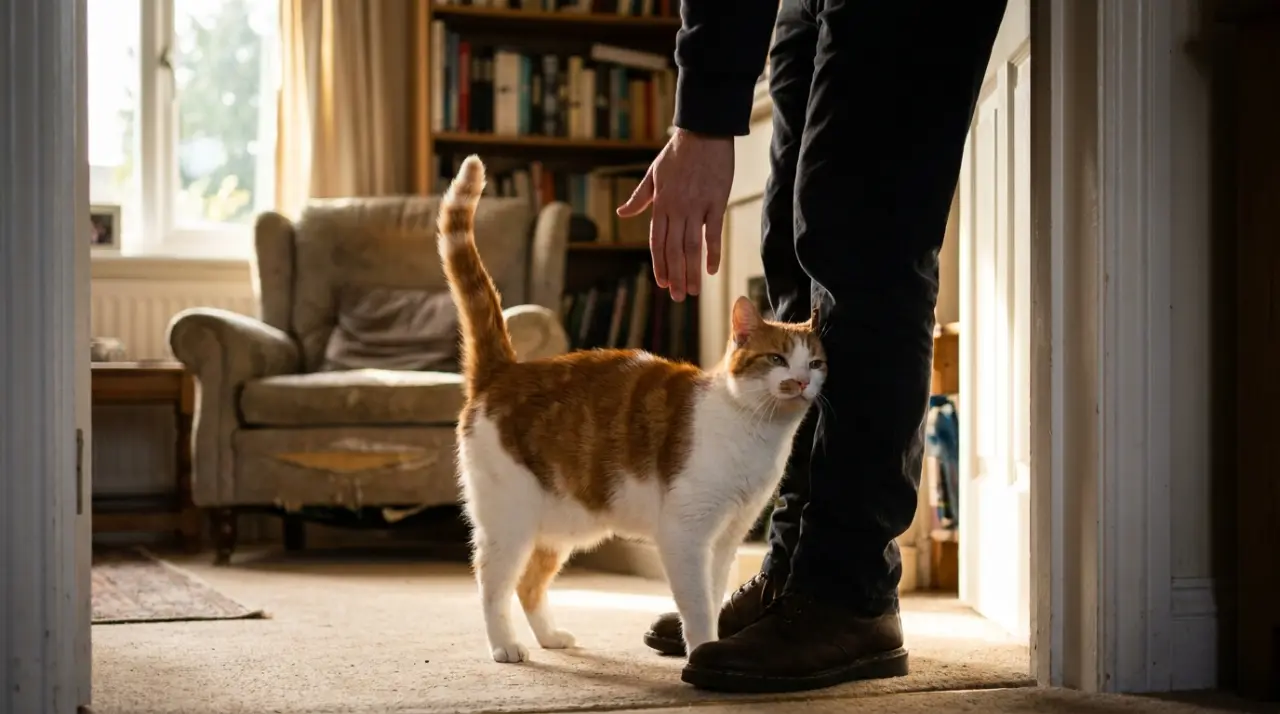
You've probably noticed that your cat doesn't greet you the same way every time you come home. Most pet owners assume these differences are random, but animal behaviorists have identified specific greeting patterns that reveal your cat's emotional state, health status, and the exact strength of your bond.
What looks like a simple tail flick or meow is actually a complex communication system that's been studied for decades. Here's what the data actually says.
#8 — The Slow Blink From Across the Room
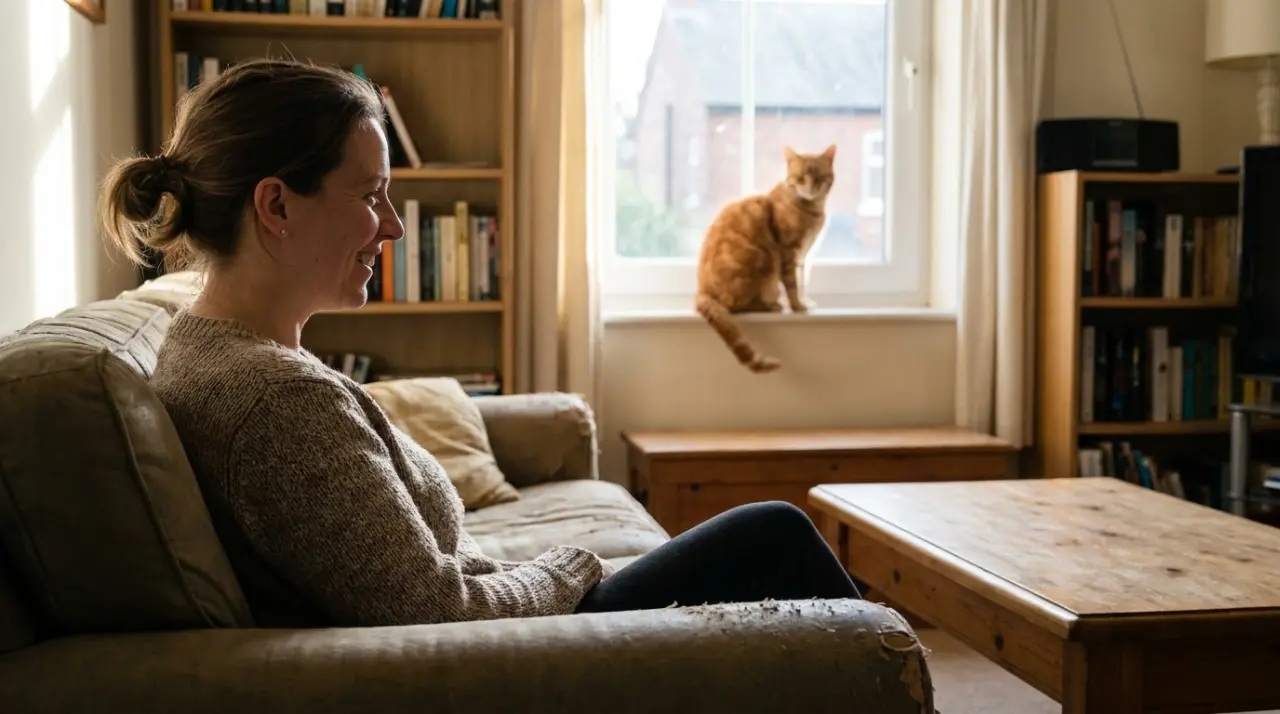
When your cat looks at you and slowly closes both eyes, they're performing what researchers call an "affiliative display."
This behavior was formally documented in a 2020 University of Sussex study that tested whether cats respond to slow blinks from humans. The results were striking: cats were significantly more likely to approach a person who slow-blinked at them than one who maintained a neutral expression.
The slow blink is essentially a cat smile. It signals trust and contentment because closing the eyes in the presence of another creature is inherently vulnerable.
If your cat greets you this way from their perch or bed, they're acknowledging your presence without feeling the need to rush over. It's actually a sign of a secure attachment—they know you're not going anywhere.
Cats who don't slow blink at their owners aren't necessarily unhappy, but those who do are demonstrating a measurable level of comfort. You can reinforce this behavior by slow blinking back, which the Sussex study found increases the likelihood your cat will approach you.
But that's nothing compared to #7...
#7 — The Silent Meow You Almost Can't Hear
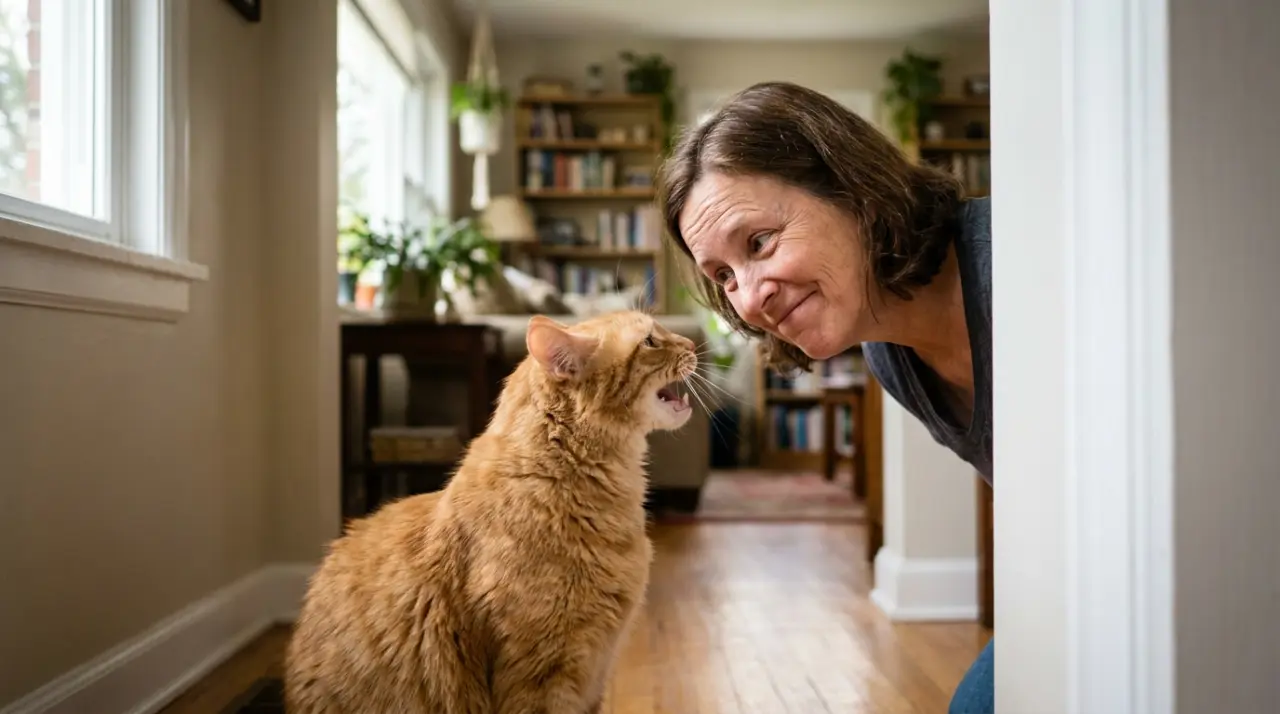
Some cats open their mouth in a meow shape but produce no sound, or a sound so high-pitched that many adult humans can't detect it.
This isn't a malfunction. It's actually a specialized greeting that animal behaviorists call a "solicitation vocalization," and it's primarily used with trusted humans rather than other cats.
The silent meow evolved from kitten behavior. Young kittens produce ultrasonic distress calls that adult humans can barely hear but that mother cats detect immediately.
When your adult cat uses this greeting, they're essentially reverting to kitten communication patterns—a sign they view you in a caregiving role. It's most common in cats who were socialized with humans before eight weeks of age.
Deaf cats often use silent meows more frequently because they never learned to calibrate their vocal volume through auditory feedback. But hearing cats do it too, specifically when they want something but don't want to be demanding about it.
If your cat reserves this greeting exclusively for you and not other household members, you're their primary attachment figure. The specificity matters more than the frequency.
But that's nothing compared to #6...
#6 — The Tail Straight Up With A Curved Tip
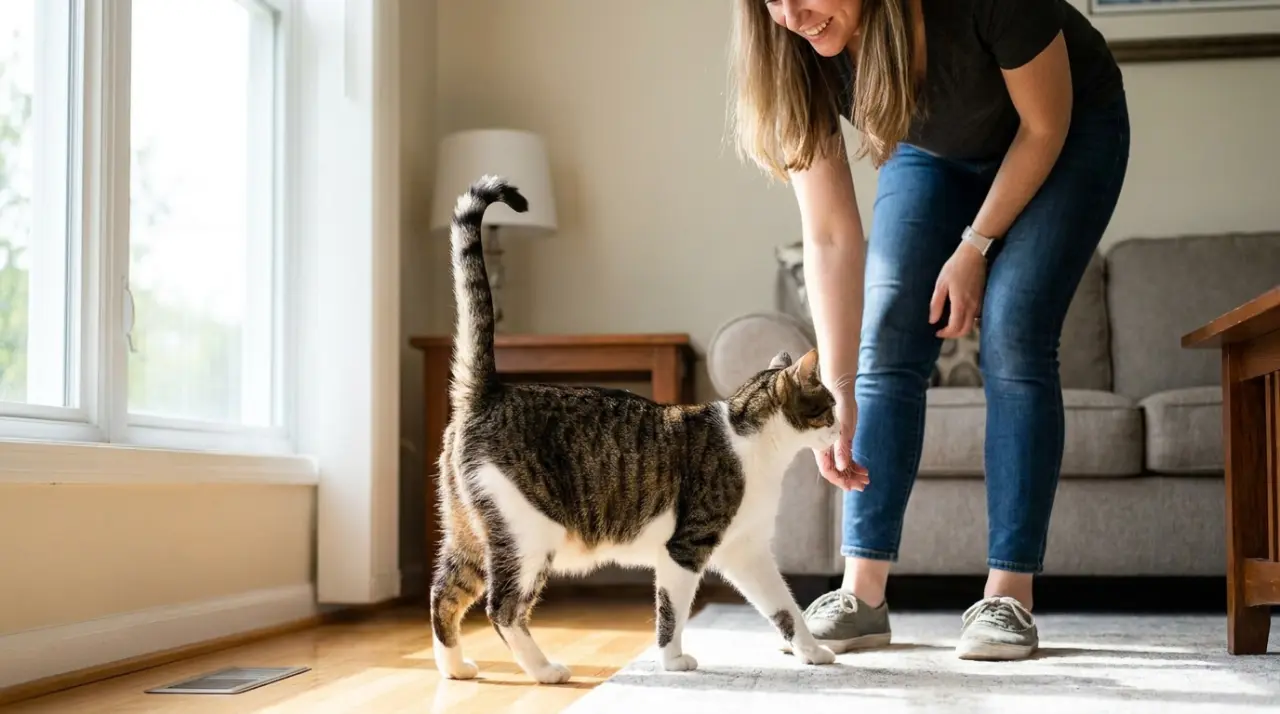
A vertical tail with a slight hook or curve at the very top is the feline equivalent of a enthusiastic wave.
This posture comes from kitten behavior patterns that researchers have traced back through developmental studies. Kittens approach their mothers with tails straight up so the mother can inspect and clean their hindquarters—it's simultaneously a greeting and a vulnerability display.
Adult cats maintain this signal specifically for social companions they trust. Feral cats rarely show this tail position except occasionally with littermates.
When your cat walks toward you with this tail position, their confidence level is measurable. A straight tail means they expect a positive interaction. A lowered or tucked tail during a greeting indicates stress or uncertainty.
The curve at the tip adds an additional layer of meaning. Some behaviorists interpret it as a visual question mark—your cat is greeting you but also asking for something, usually food or attention.
Cats who don't exhibit this greeting may still be bonded to you, but those who do are demonstrating what attachment researchers call "secure base behavior." They view you as a safe starting point for interaction.
But that's nothing compared to #5...
#5 — The Head Bump That Feels Like A Collision
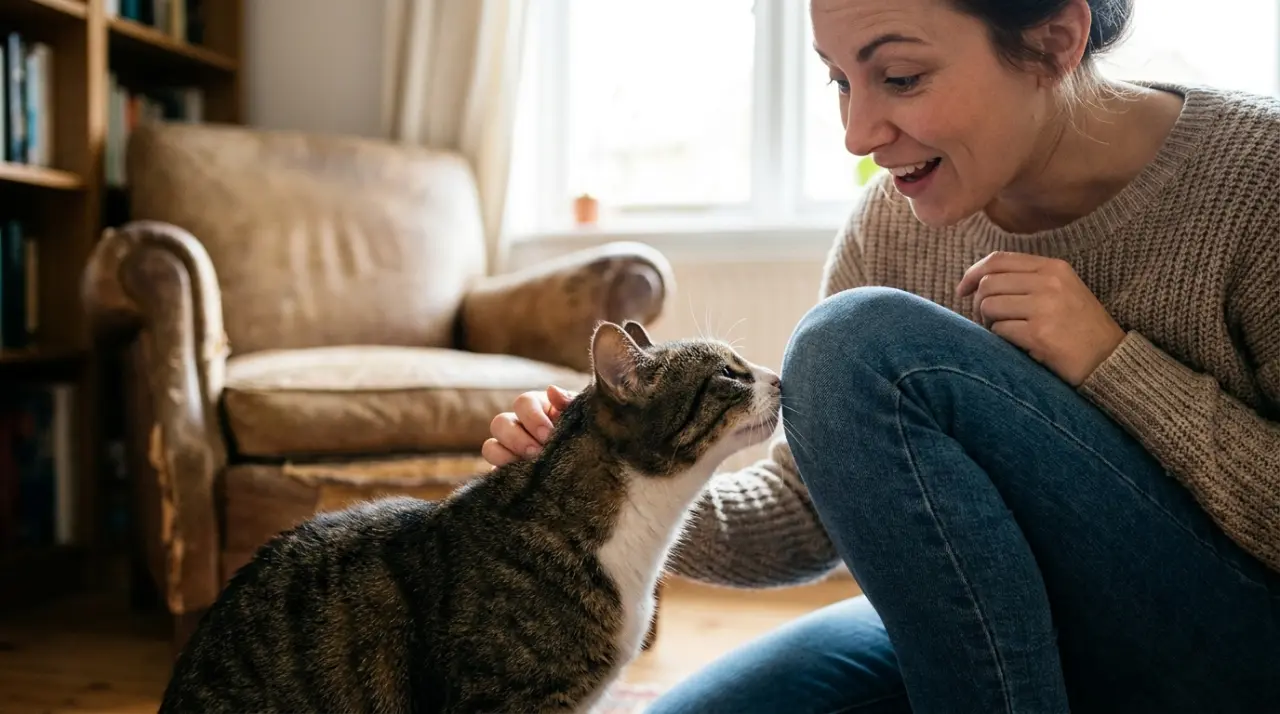
When your cat greets you by forcefully bonking their head against your hand, leg, or face, they're not being clumsy.
This behavior, called bunting, involves the cat pressing scent glands located on their forehead, cheeks, and chin against you. It's both a greeting and a claim of ownership.
Cats have scent glands that produce pheromones specific to each individual animal. When they bunt you, they're marking you with their scent signature—essentially updating your shared "colony scent."
The force of the bunt correlates with enthusiasm. A gentle head press is affiliative; a collision-level bunt indicates your cat is extremely motivated to mark you, which typically happens after you've been away or if you smell unfamiliar.
Cats who bunt your face are showing higher trust than those who only bunt your legs. Face-level bunting requires them to approach your eyes and teeth—the most threatening parts of a predator.
Some cats bunt objects near you instead of bunting you directly. This isn't rejection; they're marking the territory around you, which still includes you in their social scent profile.
But that's nothing compared to #4...
#4 — The Chirping Trill That Sounds Like A Question
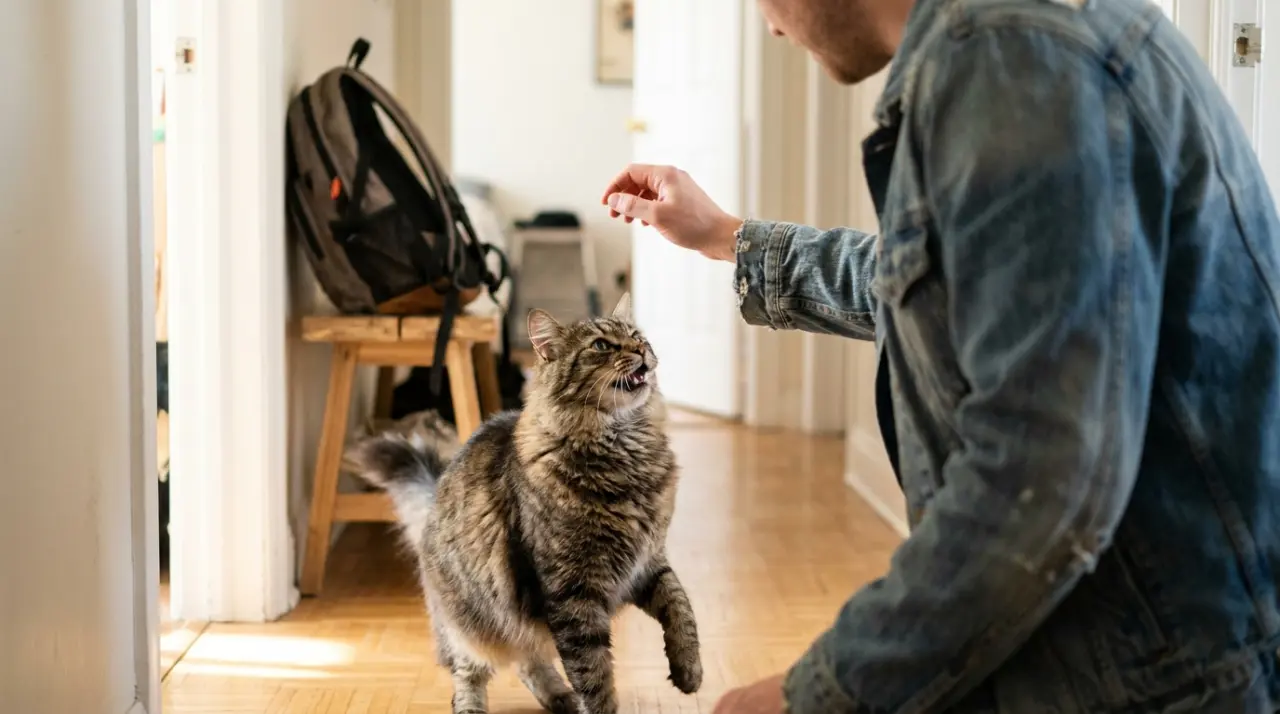
That rising "brrrup?" sound is called a trill, and it's distinct from both meows and purrs.
Trilling is produced with a closed mouth, creating a rolled, melodic sound. Mother cats use it to communicate with kittens, often as a "follow me" signal.
When your adult cat trills at you during a greeting, they've adapted maternal communication for human interaction. It's less common than meowing—many cats never trill at all.
Research into feline vocalizations shows that trills are typically associated with positive, low-stress situations. Cats rarely trill when frightened or aggressive.
The trill is almost always an invitation. It usually precedes a request: follow me to my empty food bowl, come see what I found, or sit down so I can jump in your lap.
Cats who trill are generally more socially confident than cats who rely solely on meowing. Meows can indicate desire or distress; trills indicate companionship.
If your cat has recently started trilling after years of not doing so, it often means your bond has strengthened or their confidence level has increased. It's a developmental shift in how they categorize you.
But that's nothing compared to #3...
#3 — The Belly-Up Flop Right At Your Feet
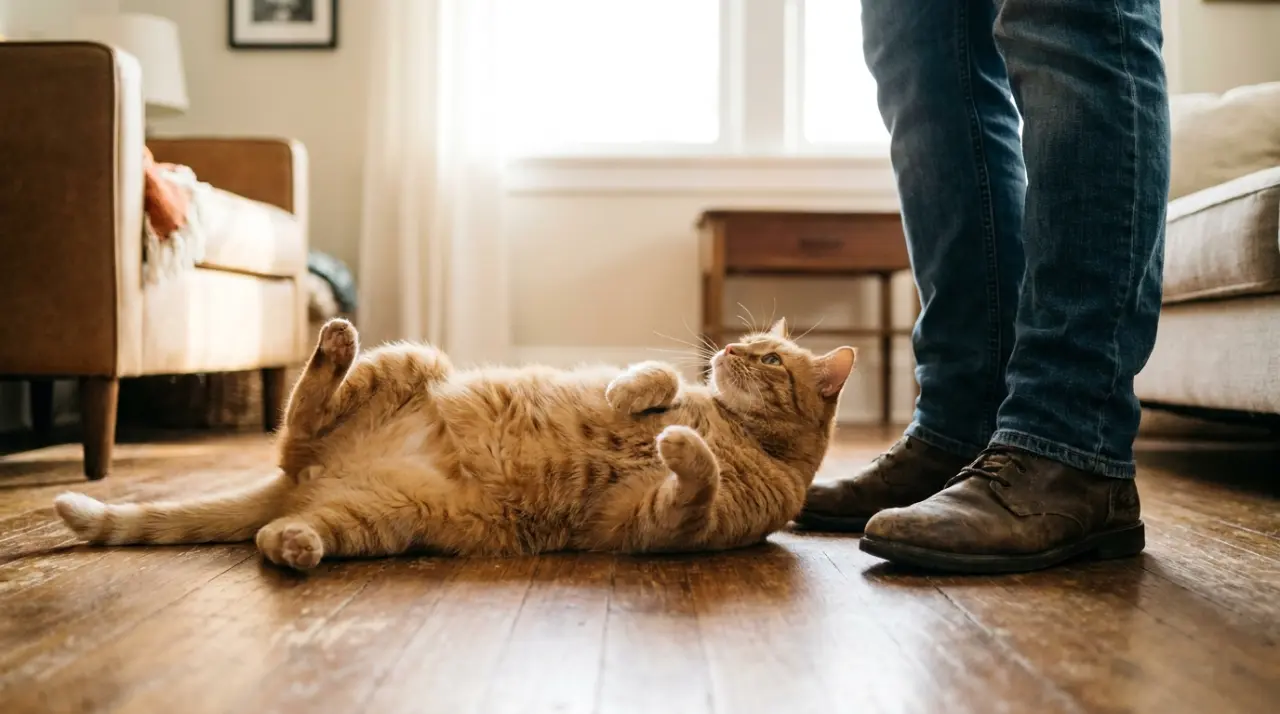
When your cat greets you by flopping onto their back and exposing their stomach, they're performing the highest-trust display in the feline behavioral repertoire.
The abdomen contains vital organs and is a cat's most vulnerable area. In conflicts between cats, the loser often rolls onto their back—but that's a defensive posture with claws out and ears flat.
A greeting belly-up flop is completely different. The cat rolls with loose body language, often with paws curled and eyes half-closed.
This greeting appears almost exclusively in cat-human relationships, not cat-cat relationships. Researchers believe it evolved specifically for interaction with humans because we don't interpret it as an invitation to fight.
Some cats flop and genuinely want belly rubs; others are displaying trust but still don't want their stomach touched. The difference is in what happens when you reach toward them—if they grab your hand, they were showing trust but not requesting touch.
The flop is more common in cats who were bottle-fed or extensively handled as young kittens. It correlates with higher overall sociability scores in behavioral assessments.
But that's nothing compared to #2...
#2 — The Figure-Eight Weave Through Your Legs
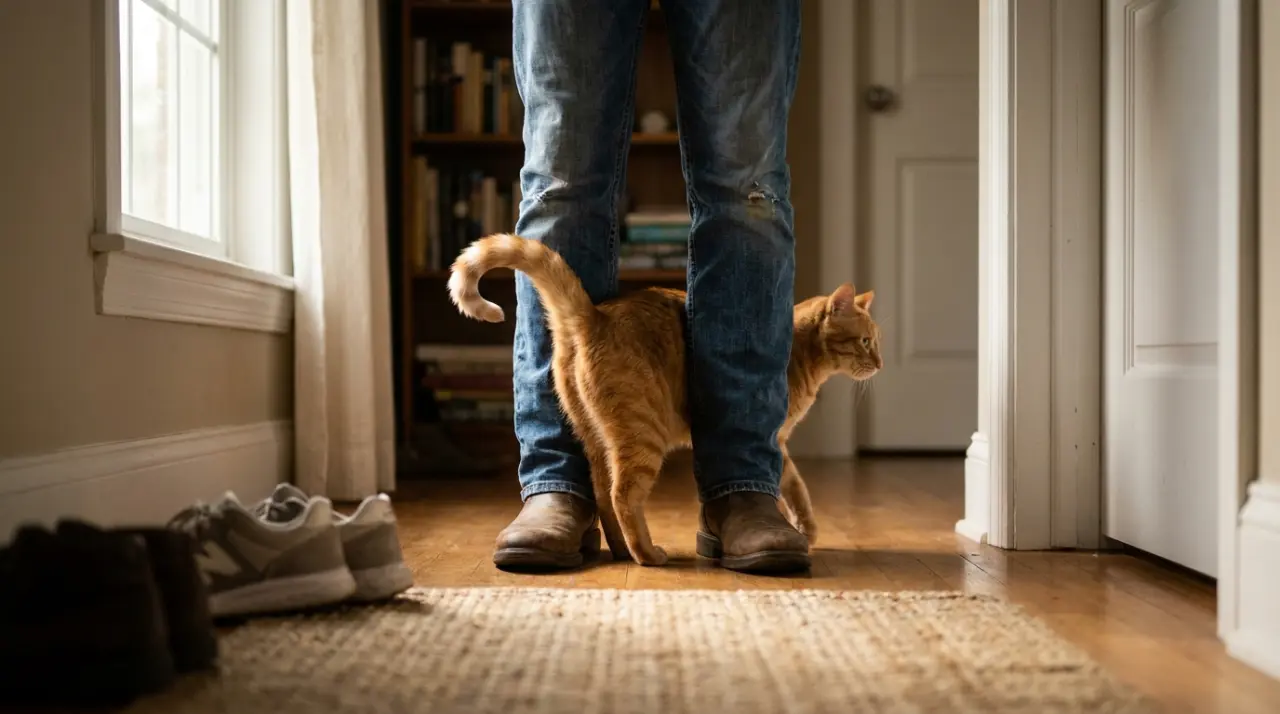
When your cat threads between your legs in a figure-eight pattern while you're standing still, they're performing a complex scent-marking and balance-testing behavior.
This weaving motion rubs multiple scent glands against you simultaneously—the glands on their cheeks, flanks, and tail base all make contact as they move.
But there's a second component. Cats have an extraordinary vestibular system that tracks spatial relationships. When they weave through your legs, they're also testing whether you're going to move.
A cat who weaves while you walk is in danger of being stepped on. A cat who weaves while you stand still is demonstrating that they predict you'll remain stationary—you're predictable and therefore safe.
This greeting peaks around feeding time because it evolved from a kitten behavior used to solicit food from a mother cat. Adult cats maintain it specifically for caregiving relationships.
Some cats weave so aggressively they nearly trip their owners. This isn't clumsiness; it's often frustration that you're not moving toward the food bowl fast enough.
Behaviorists note that cats typically weave around the humans who feed them most consistently, not necessarily the humans they're most bonded with. It's one of the few greetings that's more transactional than emotional.
But that's nothing compared to #1...
#1 — The Slow-Motion Approach With Ears Forward
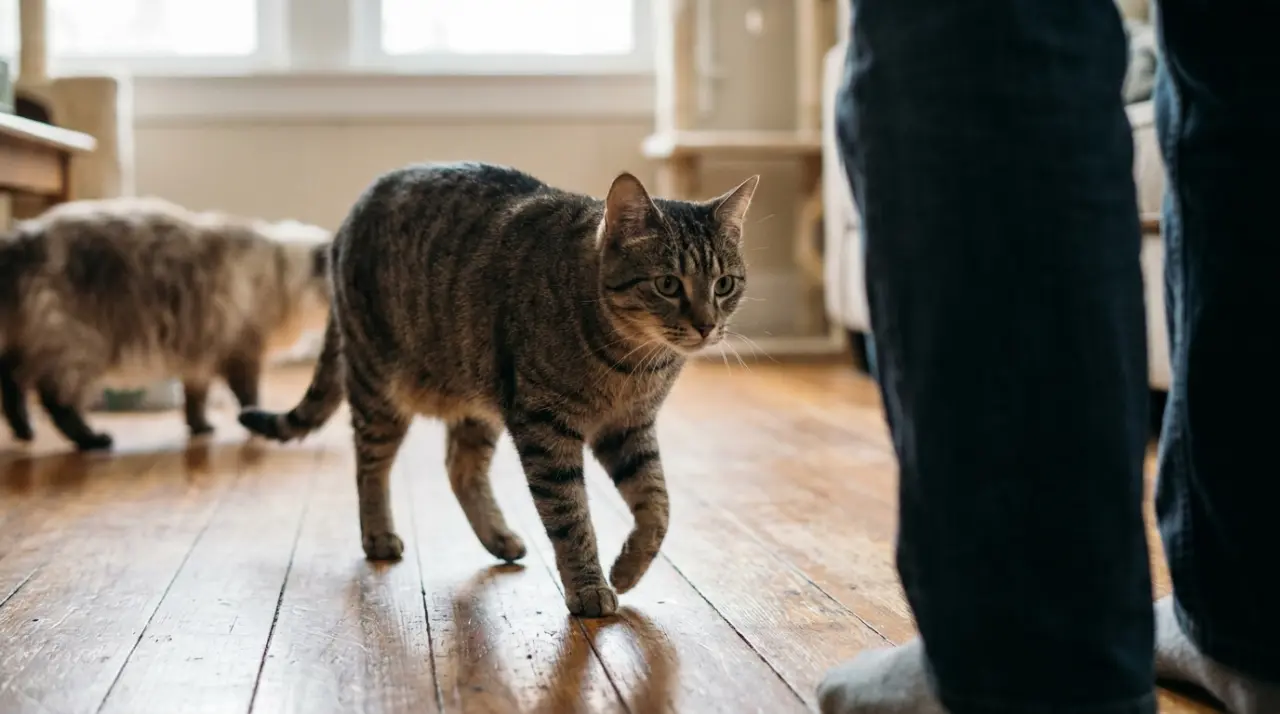
The most meaningful greeting is the one that looks the least dramatic: a slow, deliberate walk directly toward you with ears rotated forward and eyes focused on your face.
This greeting appears simple, but it requires your cat to make multiple trust calculations simultaneously. They're approaching head-on, which eliminates their peripheral vision and makes them vulnerable to surprise.
Forward-facing ears during approach indicate your cat is actively seeking social contact, not just tolerating your presence. Sideways or backward ears suggest ambivalence or stress, even if the cat is moving toward you.
The speed matters enormously. A slow approach means your cat is choosing interaction over other activities—they're not rushing to get it over with. A rapid approach is often about food or access to something you're blocking.
Cats who greet you this way immediately after you arrive home are demonstrating what attachment researchers call "secure attachment with active proximity-seeking." It's the same pattern that indicates healthy bonding in human children.
This greeting is less common than most people think. Many cats acknowledge owners from a distance or approach only after the owner sits down. A direct, slow, ears-forward approach is typically reserved for the cat's single most-bonded human in a multi-person household.
If multiple cats in your home do this to you simultaneously, you're reading their behavioral cues well enough that they all feel secure competing for your attention. That's actually more significant than any single greeting.
The Bottom Line
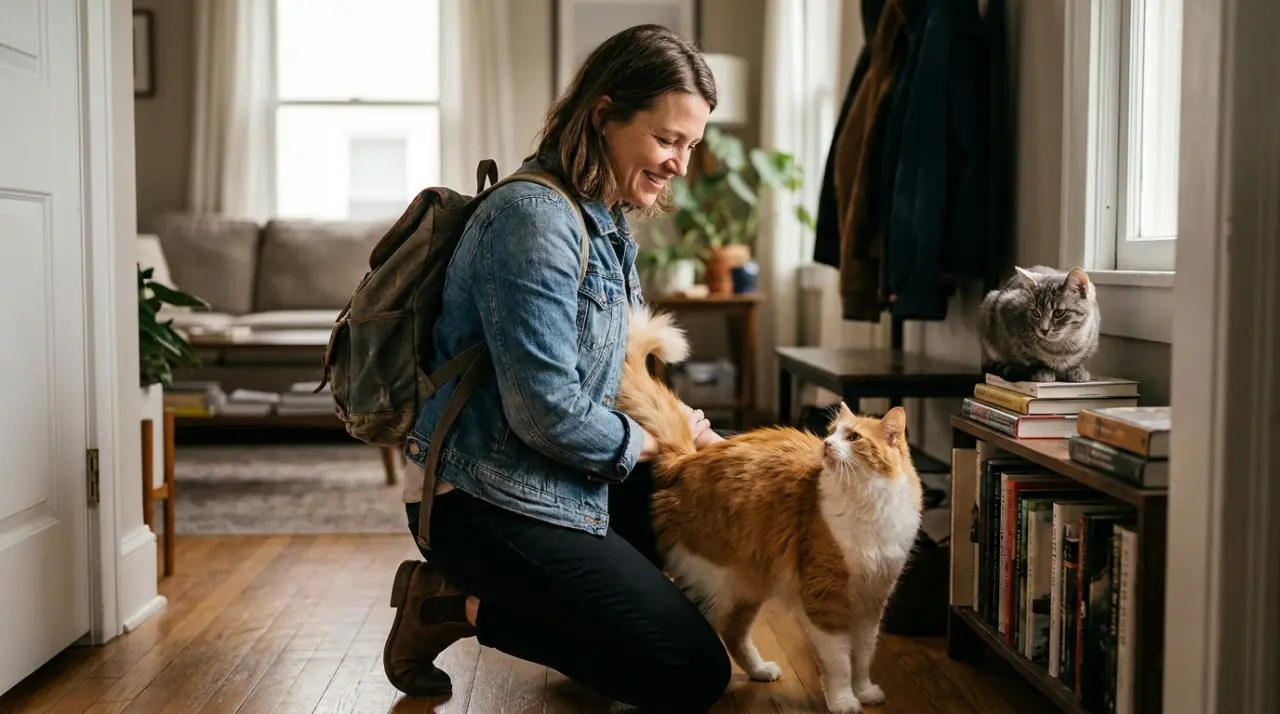
Your cat's greeting is a real-time readout of their emotional state, stress level, and bond strength. The slow blink signals trust without effort, while the direct approach with forward ears represents active decision-making in your favor.
Most surprising: cats who greet you from across the room may be more securely attached than cats who rush over. The need for constant reassurance often indicates anxiety, not affection.
If your cat combines multiple greeting signals—trilling while bunting, or slow-blinking followed by a belly flop—they're layering communication signals the way humans combine words into complex sentences. Which greeting does your cat use most? Drop it in the comments.
- 10 Tiny Ways Cats Show They Trust You That Are Easy to Miss in Everyday Life
- Feline Psychology Says Cats Who Relax More Quickly Around One Person May Be Revealing Who Makes Them Feel Safest
- 12 Signs Your Cat Has Made You Part of Their Daily Routine and Notices When You’re Missing
- 10 Quiet Ways Cats Ask Their Favorite Human for Reassurance Without Making a Sound