You’ve bought another expensive cat bed, carefully selected for maximum comfort and style. Yet there sits your feline friend, contentedly squeezed into a cardboard box that’s barely big enough to contain them. Sound familiar? If you think your cat’s box obsession is just another quirky feline behavior, think again. There might be something far more fascinating happening here, something that reaches back millions of years into your cat’s evolutionary past. What if those innocent cardboard containers aren’t just random hiding spots but strategic fortresses designed for an elaborate game of hide-and-seek with the world around them?
Let’s be real, the relationship between cats and boxes has baffled pet owners for generations. The science behind this behavior reveals a complex interplay of instinct, psychology, and survival strategy that makes your living room box pile far more significant than you ever imagined.
Your Cat’s Secret Fortress: Why Security Matters More Than You Think
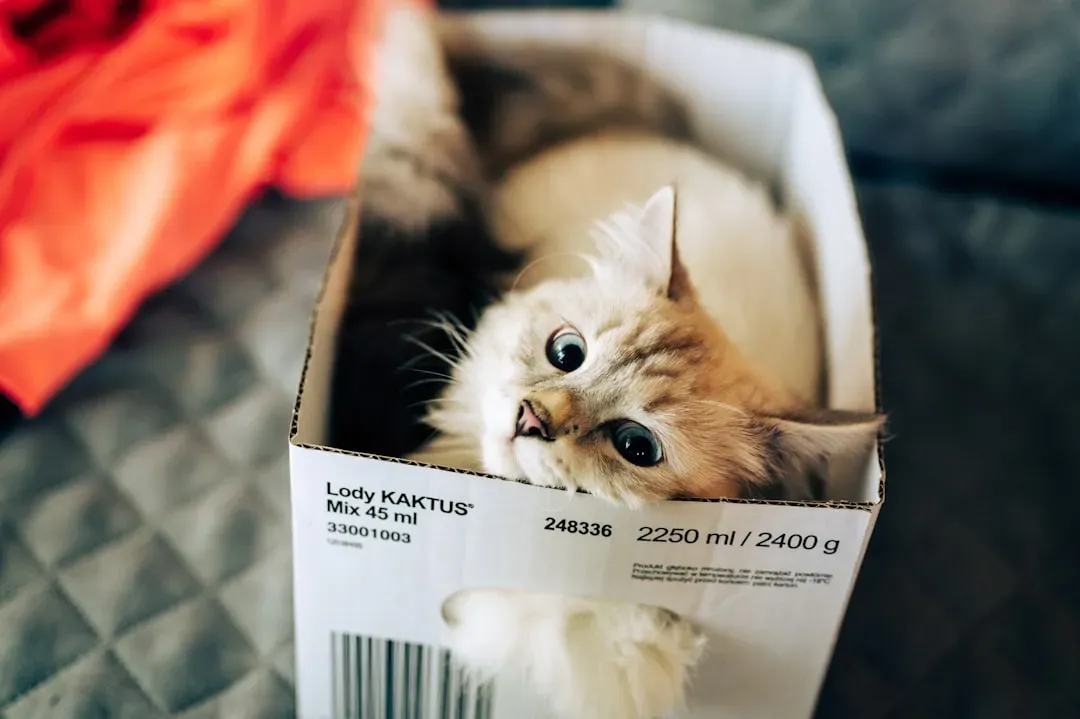
In the wild, small hidden spaces protect cats from predators, and a box triggers your cat’s natural instinct to find a safe den where they can keep watch while feeling hidden and safe. Think about it from your furry companion’s perspective. They’re simultaneously hunters and hunted in their ancestral world.
Studies have found that when shelter cats are given boxes to hide in, their stress levels drop significantly. That simple cardboard structure becomes an emotional sanctuary. Research from the University of Utrecht showed that newly arrived shelter cats who had access to boxes recovered faster and adapted quicker to their new environment, because boxes provide comfort and security crucial when cats feel stressed or anxious.
Your cat isn’t being difficult when they ignore that plush bed. They’re making a calculated choice about personal safety. The walls of a box mean nothing can sneak up from behind or the sides, giving your cat complete visual control of their surroundings.
The Temperature Game: Boxes as Personal Climate Control
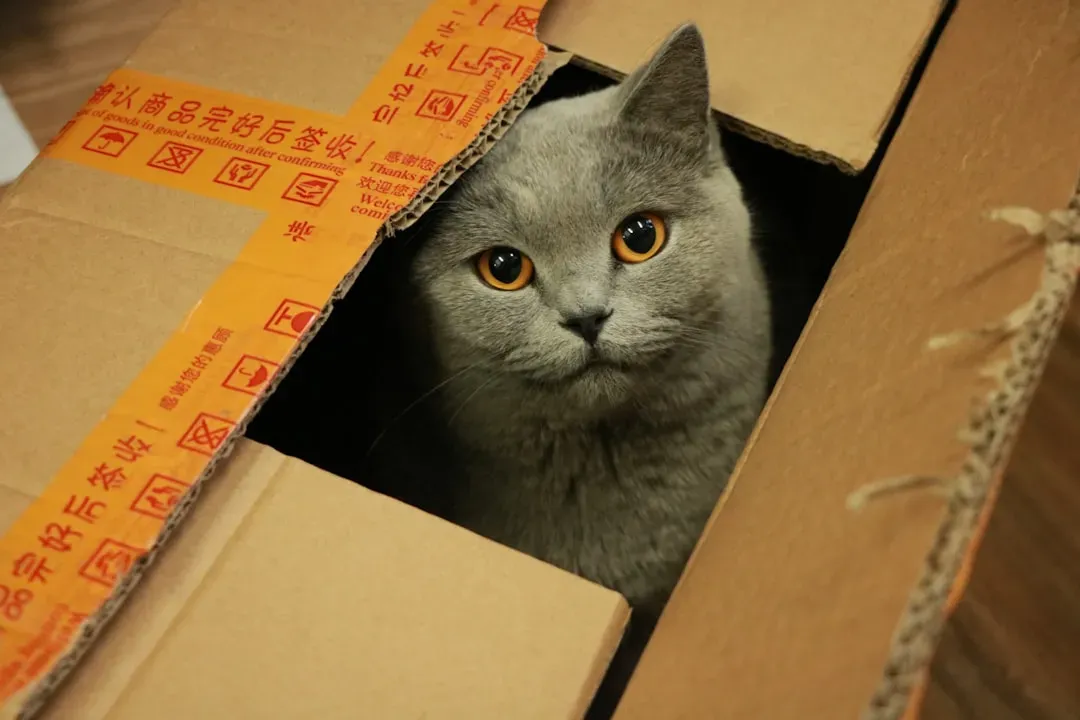
Here’s something you probably didn’t know: cats have a higher thermoneutral zone than humans, meaning they’re comfortable in warmer temperatures between roughly eighty-six to ninety-seven degrees Fahrenheit. That’s significantly warmer than what most of us prefer for our home thermostat.
Cardboard is an excellent insulator that traps heat, providing a warm and cozy environment for cats, especially during colder months. When your cat curls up in that Amazon delivery box, they’re essentially creating their own personal sauna. The confined space forces them to curl into a ball, which further conserves their body heat.
Despite its flimsy appearance, cardboard is an excellent insulator that traps body heat and buffers against cold floors or air conditioning drafts, and shelter cats given access to boxes showed lower stress levels than those without. It’s not just about comfort. It’s about energy conservation and maintaining optimal body temperature with minimal effort.
The Ambush Predator’s Perfect Hunting Blind
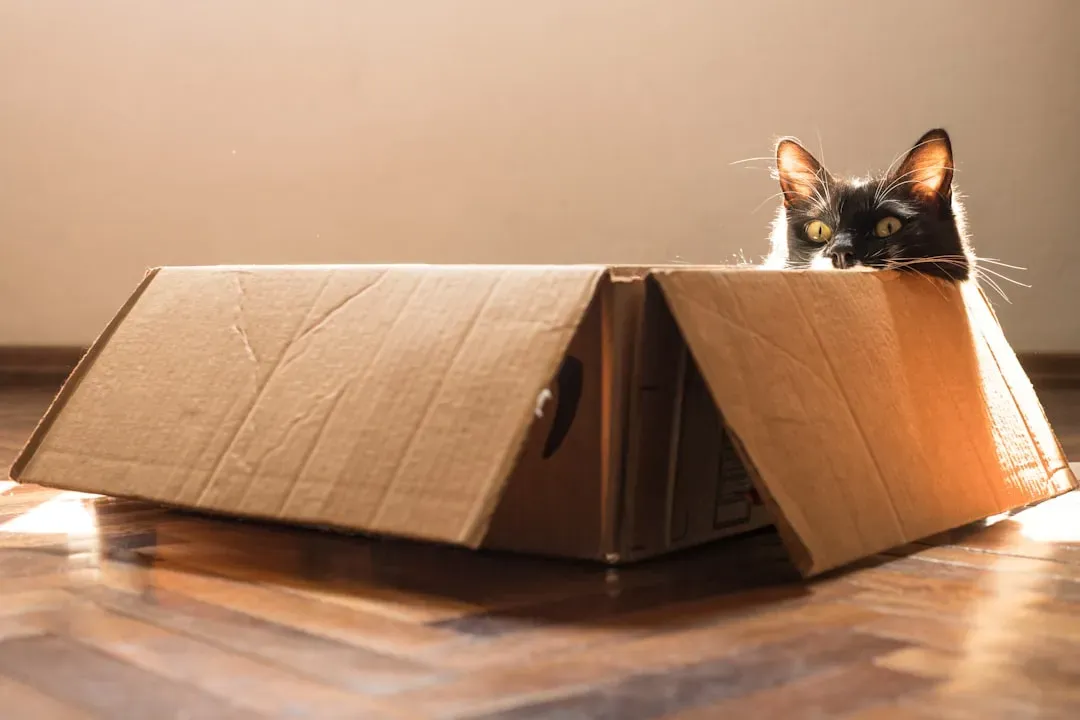
Even your pampered indoor cat who’s never caught anything more dangerous than a dust bunny retains powerful hunting instincts. Unlike pack hunters that chase down prey over long distances, cats are ambush predators who prefer to wait patiently and then launch a sudden, powerful attack.
Boxes offer a perfect hunting spot, with walls that shield them from view and an open top that they can use to pounce onto potential prey. Every time your cat peers out from their cardboard fortress at your ankles, they’re engaging in a behavior perfected over millions of years. With high sides and enclosed spaces, boxes are the ultimate ambush spots that let cats hide, pounce, and strike, satisfying their natural predator instincts.
This isn’t just play. It’s behavioral rehearsal for survival strategies hardwired into your cat’s DNA. The box becomes both camouflage and launching pad, allowing your feline to practice hunting sequences even when there’s no actual prey involved.
The Stress-Busting Magic of Enclosed Spaces
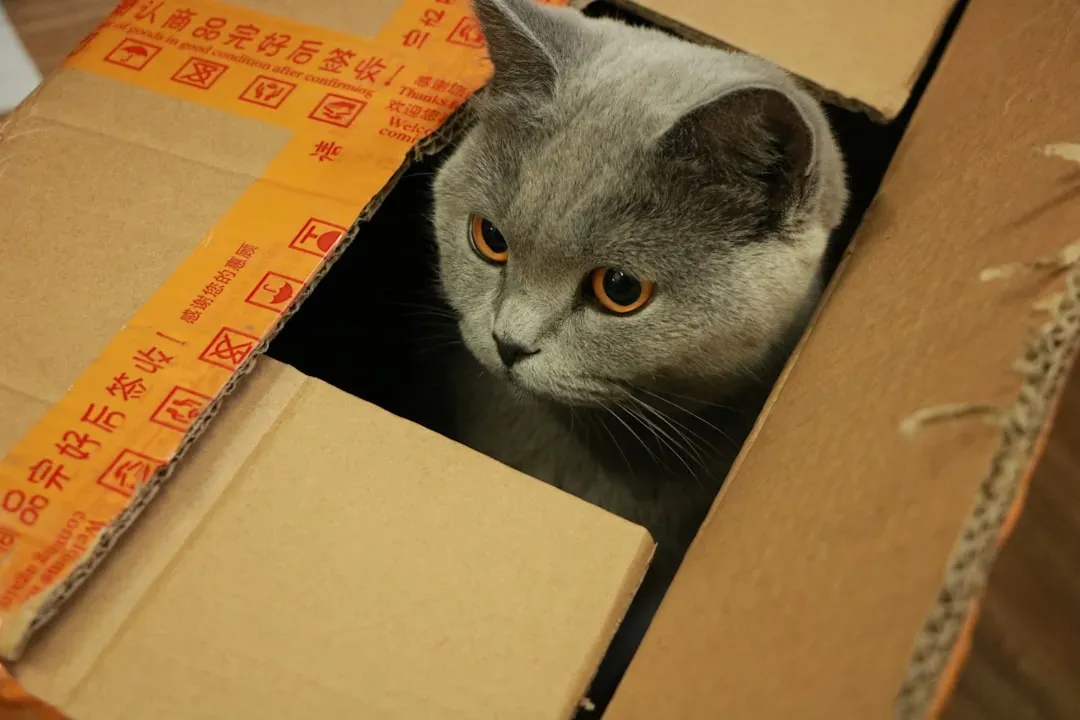
Cats with a hiding box showed a significantly faster decrease in stress levels, recovering from stress seven days earlier than the control group. That’s not a minor difference. That’s a dramatic improvement in mental health and adaptation speed.
When your world feels chaotic or overwhelming, where do you retreat? Cats face similar emotional needs. Cats lack refined conflict resolution skills, so they prefer to avoid negative interactions by hiding away, and when tensions arise with family members, the refuge of a box offers the cat a chance to recalibrate and de-stress.
Think of the box as your cat’s meditation chamber. It’s where they go to process the world, lower their anxiety levels, and regain emotional equilibrium. Multiple studies have shown that stress levels are reduced in newly rescued cats when they are given access to a box. The science couldn’t be clearer about the psychological benefits of these simple cardboard structures.
Curiosity Meets Novelty: The Irresistible New Box
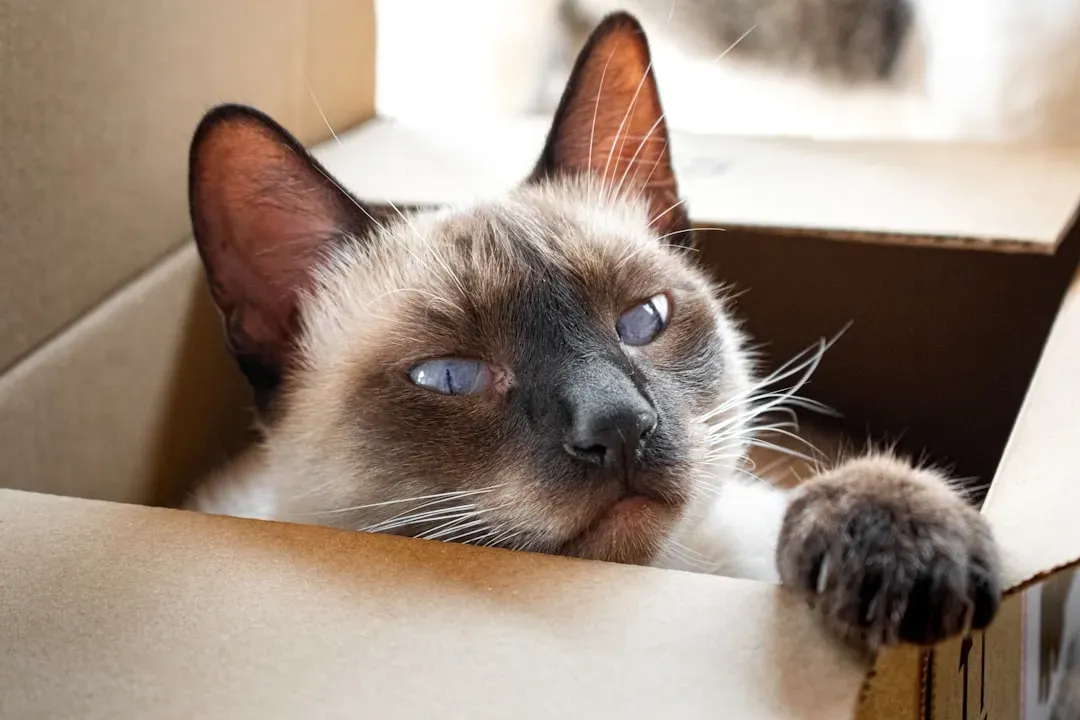
Cats that live indoors know every inch of their kingdom and immediately notice any changes, and for a curious cat, the box is something fun and novel to investigate. Your cat isn’t just sitting in boxes. They’re exploring new territory.
Imagine living in the same space day after day, knowing every corner and surface. Then suddenly, a new structure appears. For a naturally curious creature, that’s incredibly exciting. The box smells different, feels different, and presents entirely new sensory information to decode and understand.
Cats may be drawn to cardboard boxes because of the novelty factor, and there’s also the corrugated texture on the edge that’s soft and easier for cats to puncture than other objects, giving them easy satisfaction for chewing and clawing. Every new box is an adventure, a puzzle to solve, and a territory to claim.
Territorial Instinct: Claiming the Cardboard Castle
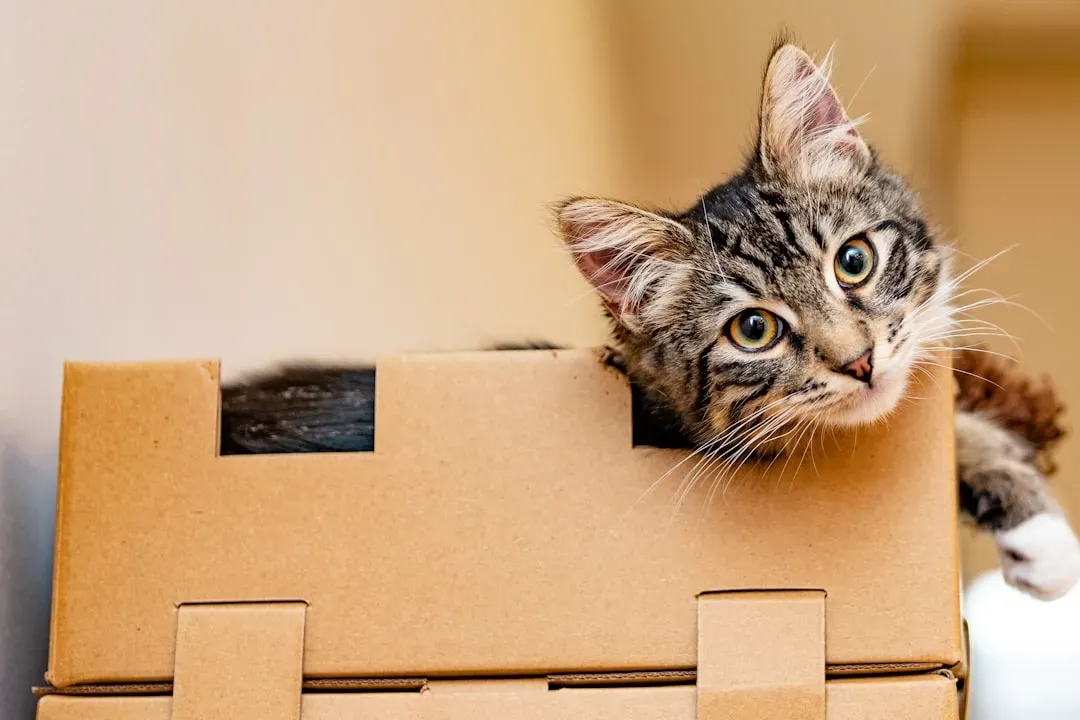
Cats have scent glands on their faces, and when they rub their faces on the sides of a box, they leave behind their scent. This isn’t just adorable cat behavior. It’s serious territorial marking.
Your cat isn’t merely occupying that box. They’re claiming ownership through pheromone deposition. Every time they rub against those cardboard walls, they’re essentially writing their name on it in a language only other cats can read. The box becomes their personal domain, marked and defended.
If you notice your cat chewing on the flaps or sides of the box, it could be your pet’s way of scent marking since saliva carries pheromones. Even destructive behavior serves a purpose in establishing territorial boundaries. Your cat isn’t wrecking the box out of spite. They’re incorporating it into their personal space through multiple sensory channels.
From Kitten to Cat: The First Safe Space
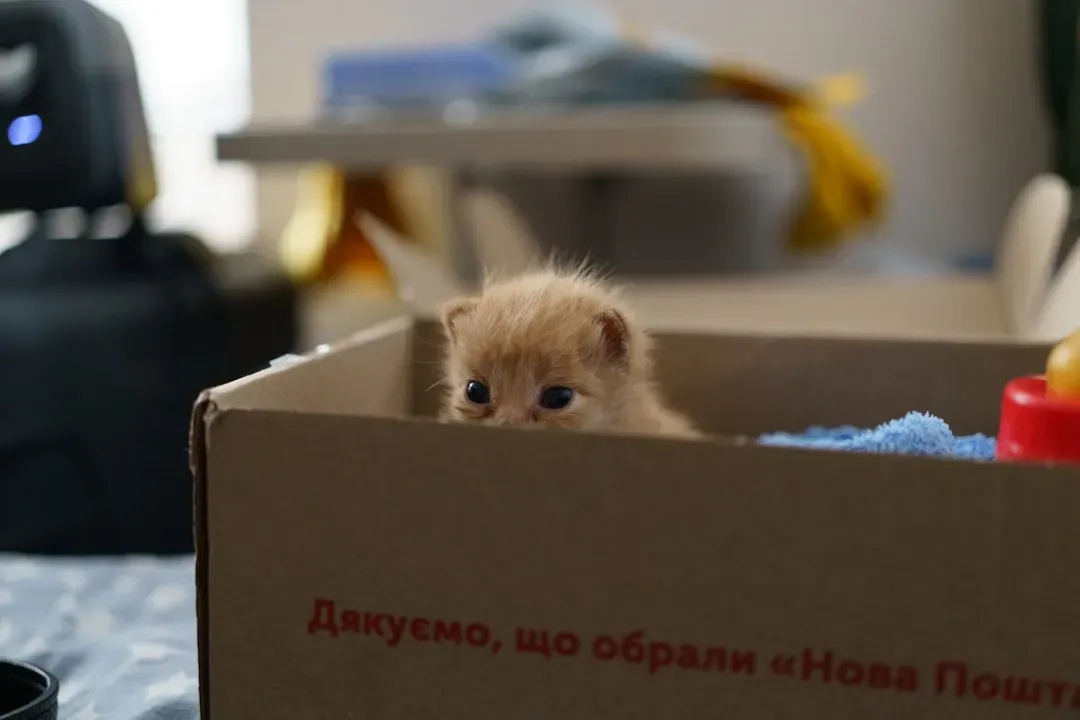
A mother cat will seek out a quiet area to birth her kittens, and their first experience will be a safe, enclosed space. This early imprinting creates a lifelong association between enclosed spaces and fundamental safety.
Veterinary behaviorist Nicholas Dodman explains that hunkering down in small, enclosed spaces is a kind of swaddling behavior left over from cuddling up with their moms and littermates when they were kittens. The box essentially recreates that primal sense of security your cat experienced in their earliest, most vulnerable moments.
Kittens aged between two and nine weeks old absorb a huge amount of information about their world, and when exposed to strangers or other pets at this age, kittens carefully looked after during this time will likely be much more resilient to environmental changes as adults. That box isn’t just shelter. It’s a psychological anchor to their formative experiences.
The Illusion Game: Even Fake Boxes Work
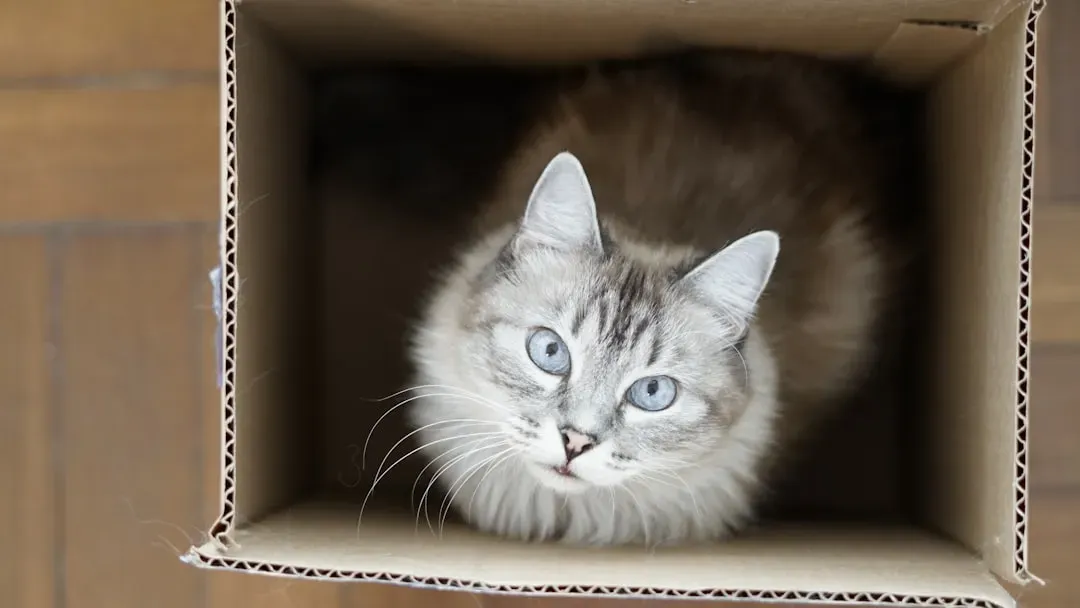
Here’s where things get truly fascinating. Cats will happily sit in illusory squares, and researchers from Hunter College found that cats fall for fake boxes. Scientists discovered that cats are susceptible to visual illusions like the Kanizsa square, a pattern that creates the illusion of a box using only corner markers.
The study explored whether cats would sit inside a Kanizsa contour, a rectangle created by corners taped off on a floor, and in other words, cats love boxes so much they’ll even sit in fake, two-dimensional ones. Your cat’s brain is so wired to seek enclosed spaces that even the suggestion of boundaries triggers the same comfort response.
This reveals something profound about feline psychology. The need for defined space runs so deep that visual cues alone can activate those ancient survival instincts. It’s not really about the physical box. It’s about the concept of bounded, defensible territory.
Big Cats Love Boxes Too: It’s a Family Affair
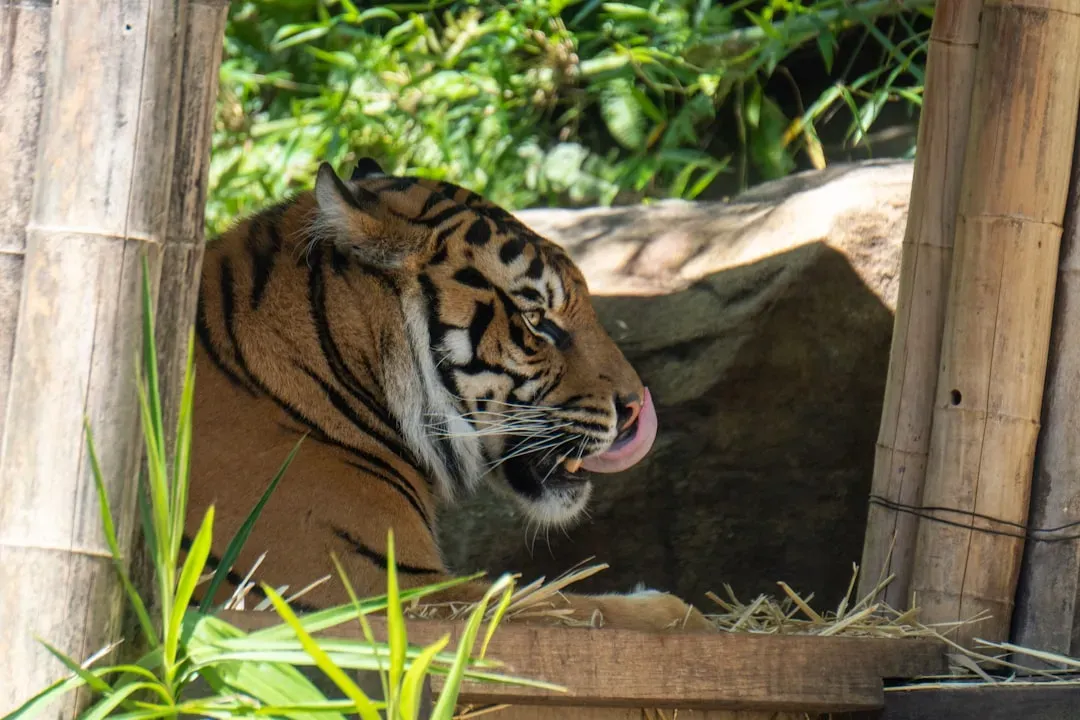
The affinity for cardboard boxes that we see in domestic cats is just as strong in big cats as well, and tigers and lions have been known to enjoy lounging in boxes when given the chance, strengthening the idea that sitting in boxes fulfills some evolutionary need.
Picture a massive tiger squeezing itself into an oversized cardboard box at a wildlife sanctuary. It’s both adorable and scientifically significant. This behavior transcends domestication and species differences within the entire cat family. From your five-pound kitten to a five-hundred-pound tiger, the appeal of enclosed spaces remains constant.
This universality suggests the behavior isn’t learned or cultural. It’s deeply embedded in feline genetics, a survival strategy refined over millions of years across countless cat species and environments. Your house cat and a wild leopard share more behavioral DNA than you might imagine.
Control and Autonomy: The Psychology of Choice
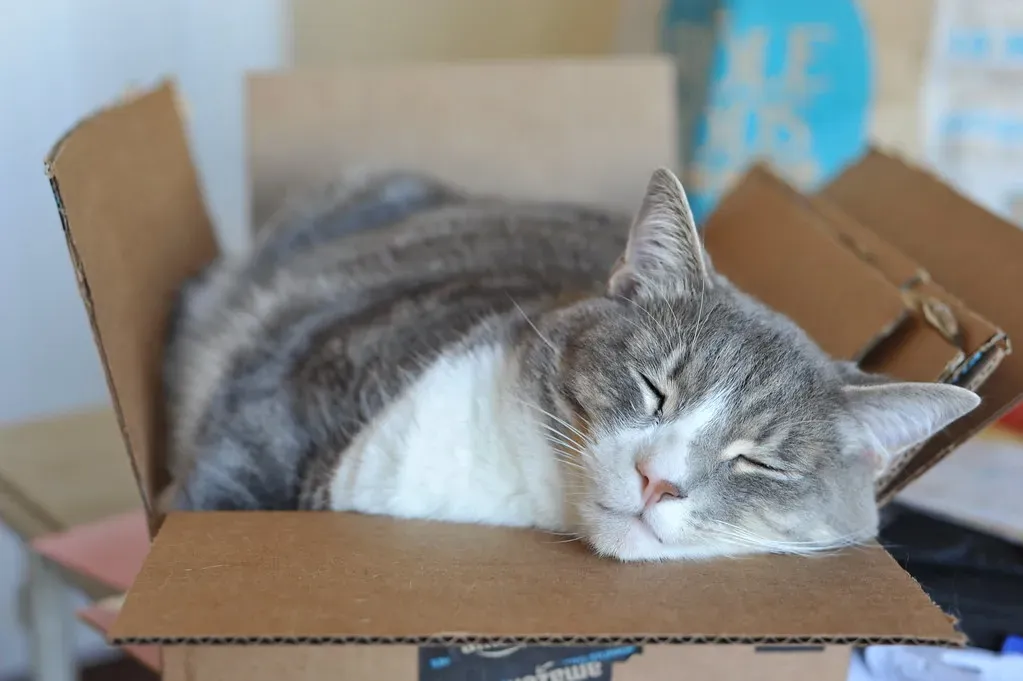
Control is a cornerstone of feline well-being, and unlike dogs who often seek social validation, cats prioritize autonomy and thrive when they can choose when to interact, observe, or withdraw, and a box gives them exactly that on their own terms.
Cats are kept in an environment where they don’t have a lot of control. Think about it. We decide their feeding times, when doors open, who visits the house, and virtually every other aspect of their daily existence. The box becomes one of the few things your cat can fully control.
Cats denied safe retreats may develop chronic stress, leading to issues like over-grooming, inappropriate elimination, or aggression, and providing accessible hiding spots is a low-cost, high-impact way to support emotional balance. That cardboard box isn’t frivolous. It’s an essential component of your cat’s mental health infrastructure.
When Box Behavior Becomes a Concern
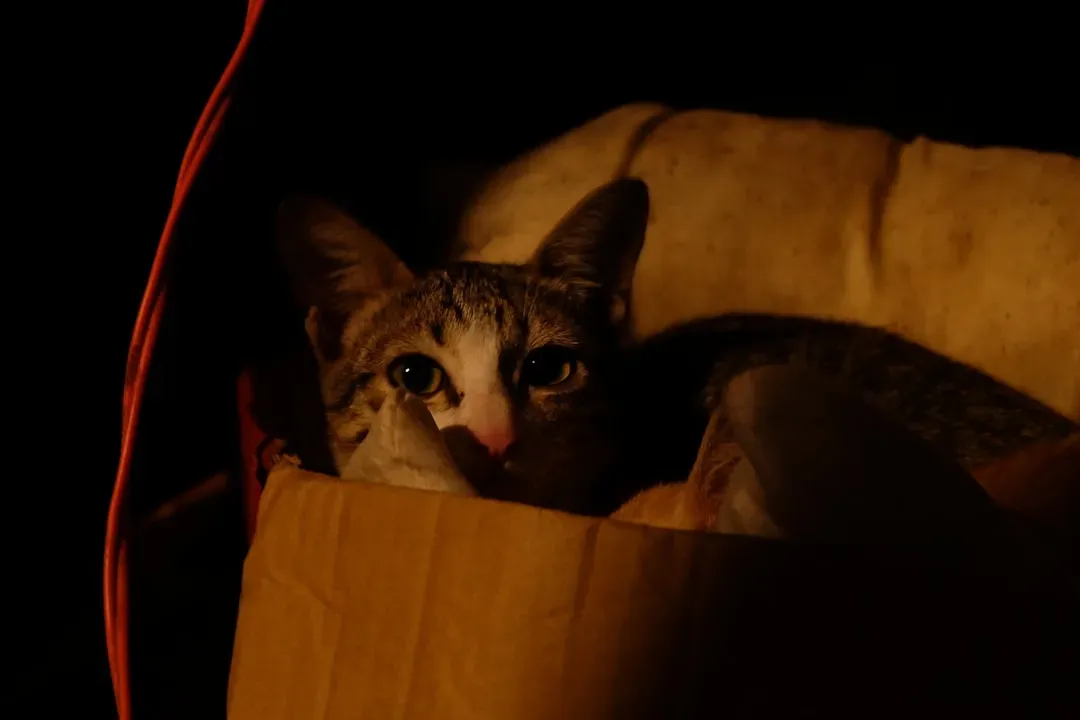
Whether spending lots of time in a box reveals anything deeper about how your cat is feeling depends on the context, and a cat cowering at the back of a box with wide eyes is likely using the box very differently from one who is snoozing or repeatedly pouncing.
There’s a difference between healthy hiding and distress-driven withdrawal. If your cat spends excessive time hiding, refuses to come out for meals or interaction, or shows signs of fear when emerging from their box, something might be wrong. If your cat is retreating to boxes more than usual, experts recommend reaching out to your veterinarian or a feline behaviorist who can help identify triggers and create a plan.
Normal box behavior involves play, relaxation, and temporary retreat. Problematic box behavior looks like persistent hiding, lack of engagement with the environment, or signs of illness like lethargy or loss of appetite. Know the difference, and don’t hesitate to seek professional guidance if you’re concerned.
The Simple Truth Behind the Cardboard Obsession
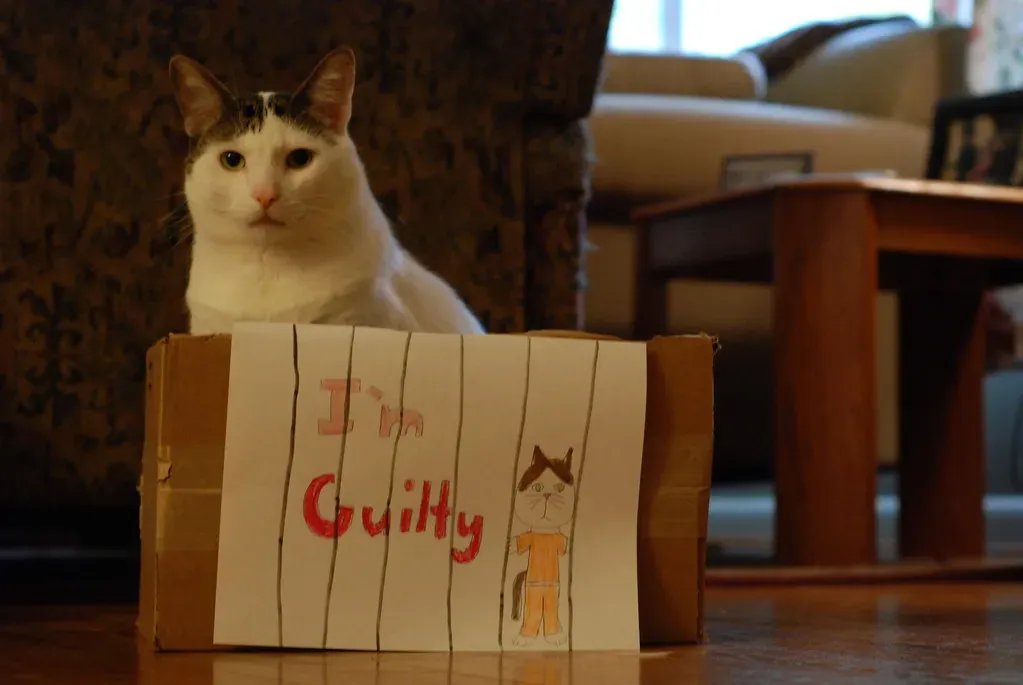
Your cat’s fascination with boxes is not just a silly quirk but evolution at work, giving cats a sense of control, a spark of adventure, and a reliable refuge from stress. What looked like random feline weirdness turns out to be sophisticated behavioral strategy rooted in survival instinct.
That cardboard box scattered with cat hair and claw marks? It’s simultaneously a stress management tool, temperature regulation device, hunting blind, territorial marker, and psychological anchor to early life experiences. No wonder cats choose boxes over expensive beds. The humble cardboard container delivers multiple essential functions that fancy pet furniture simply can’t match.
Boxes are fortresses, hunting grounds, temperature regulators, stress relievers, and entertainment centers all rolled into one recyclable package, so next time you’re about to break down those boxes, consider giving it to your cat first. Your cat’s obsession makes perfect sense once you understand the complex needs being met by those simple corrugated walls.
So what do you think? Will you see your cat’s next box adventure differently now? Tell us in the comments how your feline friend plays their own version of hide-and-seek with their favorite cardboard fortress.