You’ve seen it happen. The room goes dark, you stumble around looking for the light switch, and meanwhile your cat strolls past you with total confidence, completely unbothered. It’s almost insulting, honestly. How does a creature that spends roughly sixteen hours a day napping suddenly turn into a precision night-stalker the moment the lights go out?
The truth is, your cat’s eyes are a masterpiece of biological engineering. There are layers to this story – quite literally – and understanding them will change how you look at your feline companion forever. So let’s dive in.
Your Cat Is Not Actually Nocturnal (And That Changes Everything)

Here’s the thing most people get completely wrong about cats. Many people believe that felines are nocturnal and can see in the dark perfectly, but it may surprise you to learn that cats are actually crepuscular, meaning that generally they’re more active around dawn and dusk. That’s a big distinction. Think of it this way: nocturnal animals, like owls and raccoons, are built for pitch darkness. Your cat is built for the in-between moments, those moody, golden-edge hours when light is scarce but not entirely gone.
This allows for “optimal balance when hunting for prey,” meaning just enough light for the predator to see their prey but not enough light to be seen by the prey. That’s a strategic advantage that has been tens of thousands of years in the making. Indoor cats retain these ancestral activity patterns even without natural light cues. The 21:00 and 05:00 peaks explain the common complaints of “my cat goes crazy at bedtime” and “my cat wakes me up at 5 AM.” These are not random behaviors – they are biologically timed activity surges driven by circadian programming that predates domestication.
The Tapetum Lucidum: Your Cat’s Built-In Mirror
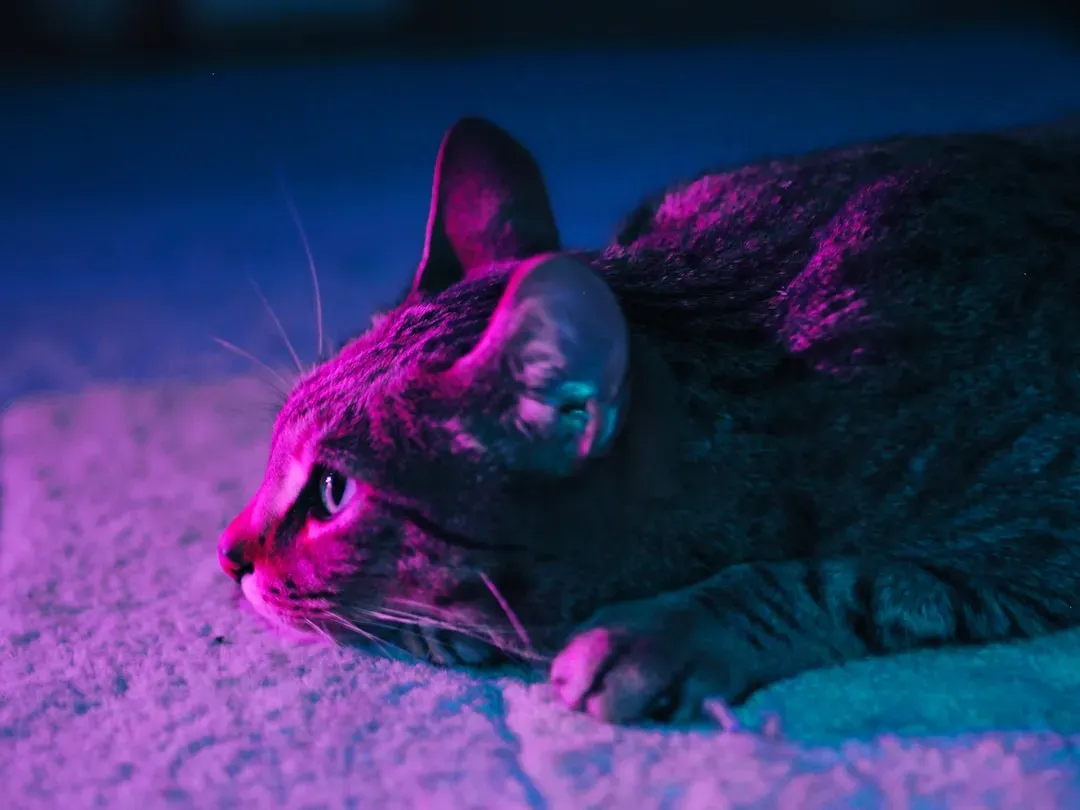
The secret weapon behind your cat’s glowing eyes at night is the tapetum lucidum. It is a reflective layer behind the retina that acts like a mirror, bouncing any incoming light back through the retina a second time, giving rod cells another chance to absorb it. Imagine reading a book in a room where every wall is a mirror. Suddenly, even a single candle becomes more than enough light. That’s essentially what your cat’s eyes are doing every single night.
The tapetum lucidum in cats is renowned for its brilliance, even inspiring ancient Egyptians to believe it reflected the sun at night. This reflective layer is composed of 15 to 20 layers of cells arranged in a central pattern. This structure, denser than that of dogs, results in high reflectance, nearly 130 times that of humans. That’s not a small improvement. That’s a different league entirely. No wonder ancient civilizations thought there was something almost supernatural going on.
Rod Cells: The Low-Light Workhorses of the Feline Eye
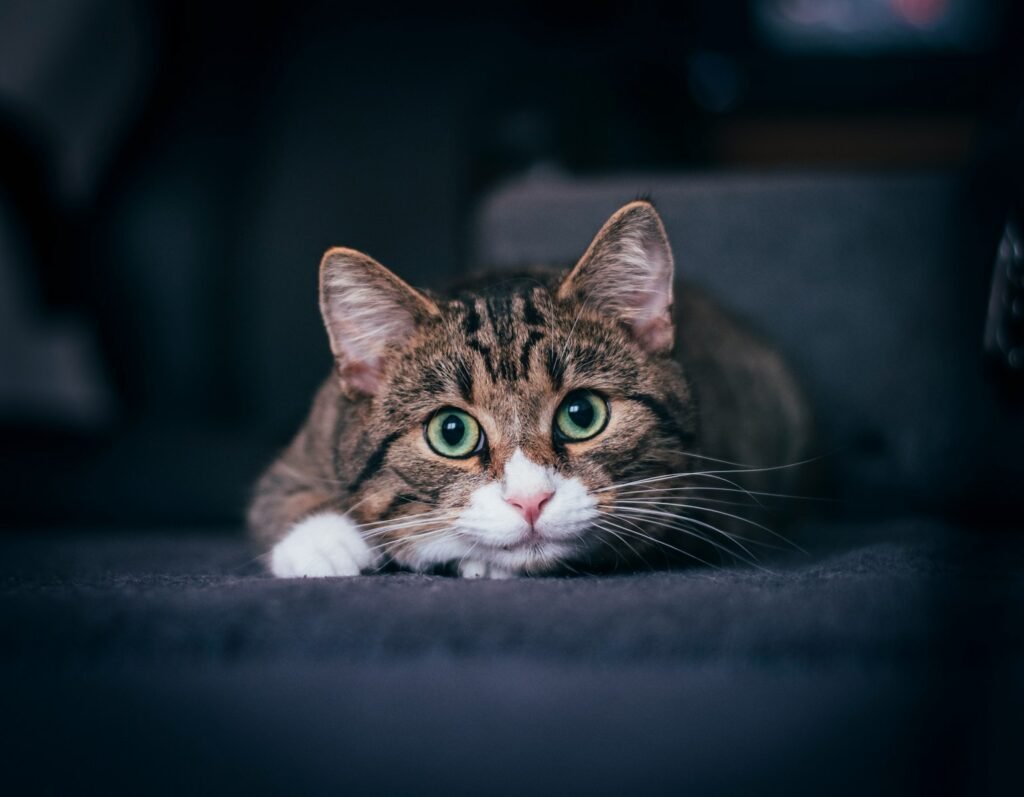
The retina is composed of two types of cells: rods and cones. While cones detect color and detail in bright light, rods are responsible for detecting movement and light intensity in darkness. Cats have a much higher concentration of rod cells compared to humans, which makes their vision more sensitive in low-light environments. This increased number of rods helps them detect even the slightest movement in the dark, making them exceptional nighttime hunters.
Rod cells do not detect color. Instead, they are responsible for detecting the contrast between light and shadow, giving cats an edge when it comes to defining the edges of things in low light. It’s a bit like trading a color television for a thermal camera. You lose the palette, but you gain an almost eerie ability to detect every flicker of motion. For a hunter, that’s an extremely worthwhile trade.
Those Slit Pupils Are Smarter Than They Look
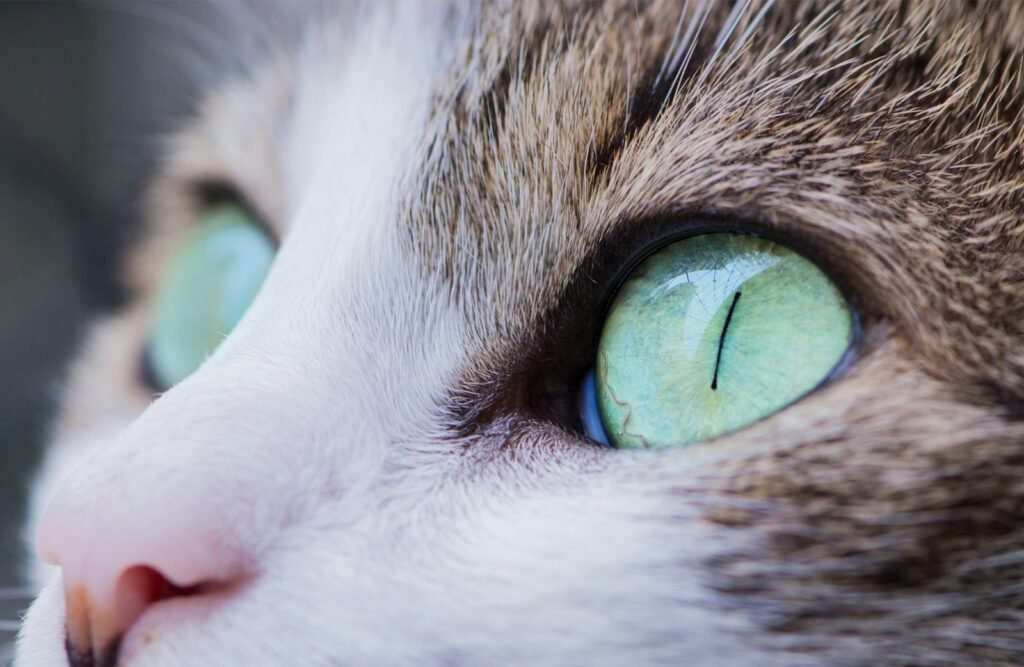
As Banks and colleagues at UC Berkeley’s School of Optometry demonstrated in their 2015 study on pupil shape and ecological niche, the vertical slit pupils of domestic cats undergo a 135-fold change in area between constricted and dilated states. Human circular pupils manage only a 15-fold change. This nine-times-greater range allows cats to hunt in near-darkness and bright daylight without retinal damage, a critical adaptation for an animal that operates across extreme lighting conditions.
You may have often wondered why your cat’s eyes are mostly a straight vertical line during the day, then expand at night or when they’re feeling playful. This is because when their pupils are vertical slits it allows them to focus, as varying amounts of light can enter the eye through different areas. When a cat’s pupils dilate to their adorable saucer-like state, more light is allowed to enter the eye. This means they can see in low light situations, but it makes their vision blurrier. It’s a fascinating tradeoff. Sharpness for brightness. In the dark, your cat will almost always choose brightness.
How Much Better Can Your Cat Actually See?

Let’s get real about the numbers here. Cats don’t have night vision per se, but they can see significantly better in lower light conditions than humans. A veterinary ophthalmologist estimates that cats can see about 5.5 to 7 times better than humans in dim light, not complete darkness, with dogs trailing slightly behind cats in their “night vision” capabilities. That’s a staggering gap. Imagine standing in a dimly lit parking lot where you can barely make out shapes, and your cat can see it all as clearly as a gray afternoon.
Cats only need one-sixth of the amount of light that humans do and can see in very low light. To put that into perspective, think of the faintest sliver of moonlight sneaking under a curtain. To you, that’s practically nothing. To your cat, it might as well be a spotlight. Cats’ large corneas and pupils, which are about 50 percent larger than humans’, allow more light into their eyes, and this extra light helps them to see in the dark.
The Glowing Eyes Mystery: Eyeshine Explained
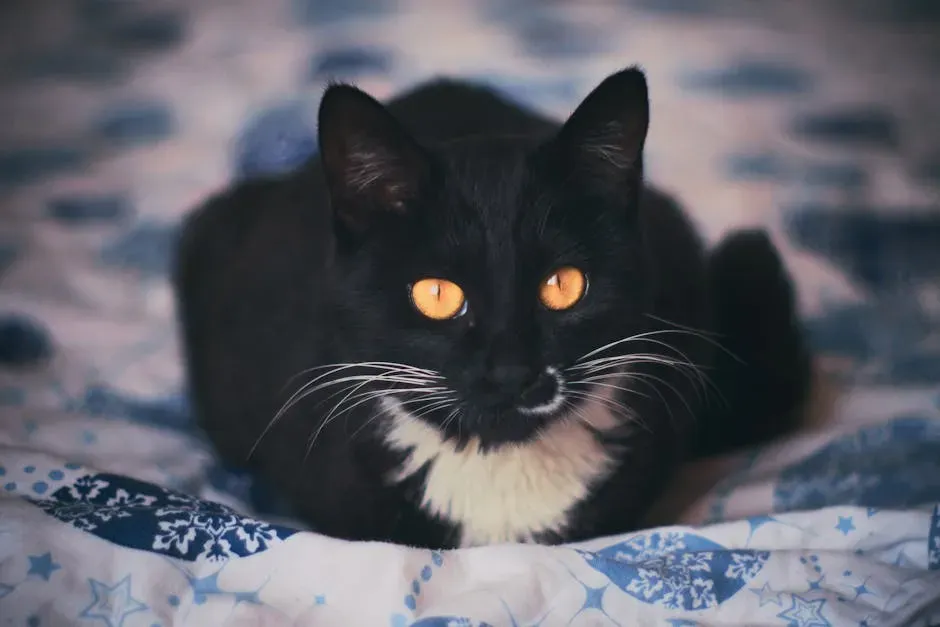
It’s hard to say for sure whether the ancient Egyptians were more impressed or unsettled by this phenomenon, but that eerie green glow in the dark? There’s a perfectly logical explanation for it. Our pets’ eyes glow in photos and at night, a phenomenon known as eyeshine, and the science behind it comes back to the tapetum lucidum, the part of a cat’s eye that acts as a reflective layer. When you shine a light at your cat, you’re essentially witnessing a tiny biological mirror doing exactly its job.
The color of a cat’s eyeshine is heterogeneous, varying with age and species due to factors like rodlet spacing, refractive index, and light interactions. Young cats exhibit a blue appearance, which shifts to yellow with age, with adult coloration ranging from light orange to green. So that glowing color you see isn’t random – it’s actually telling you something about your cat’s age and eye composition. Eyeshine occurs in a wide variety of colors including white, blue, green, yellow, pink, and red. Since eyeshine is a type of iridescence, the color varies with the angle at which it is seen and the minerals which make up the reflective tapetum lucidum crystals.
Can Your Cat See in Total Darkness? The Honest Answer

This is where a lot of people have completely the wrong idea. While cats have remarkable night vision, they cannot see in total darkness. Contrary to popular belief, no animal, including cats, can see in absolute darkness. Vision requires at least some level of light to function, and if there is no light source at all, a cat’s eyes will not be able to process images. Your cat is extraordinary. Your cat is not magic.
People’s homes are rarely in complete darkness – there’s always a little light coming in from somewhere – which is why humans think their cats have night vision goggles. They don’t, but it can seem that way when your cat wakes you up for a midnight meal. That faint glow of a street lamp through the curtains, a blinking router light, the standby LED on the television – that is genuinely all your cat needs to navigate your entire home with confidence. It’s almost humbling when you think about it.
Color Vision: What Your Cat’s World Actually Looks Like
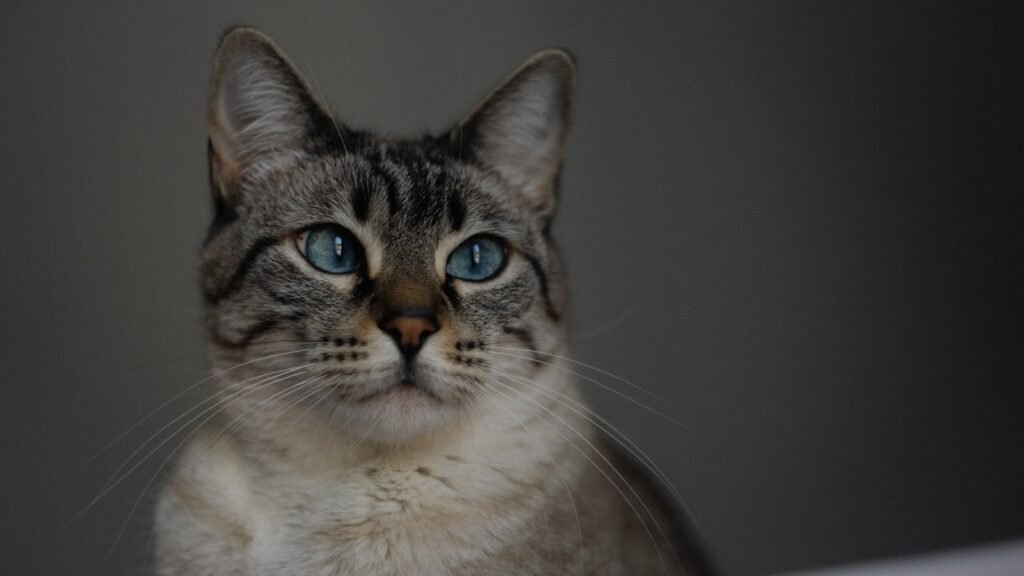
Here’s a fascinating tradeoff worth knowing. Cats have fewer cones than most humans, so they see fewer colors than we can. They also have two types of cones, enabling dichromatic color vision, which allows them to identify yellows and blues. In contrast, most humans have three cones, facilitating trichromatic color vision, which recognizes red, blue, and green color combinations. Think of it as the visual equivalent of swapping a full orchestra for a jazz trio. There’s beauty in it, just a different kind.
While cats can see a lot more in their peripheral vision, they seem to have limited color vision and see mostly in shades of blue and green, but red and pink appears to get confused. Additionally, colors are much less saturated and appear less rich than the way humans see the world. So that vibrant red toy you bought your cat? It likely looks closer to a muted gray blob to them. Motion is what catches their eye, not color. Keep that in mind next time you’re shopping for toys.
Whiskers: The Secret Sensor System That Works Alongside Night Vision
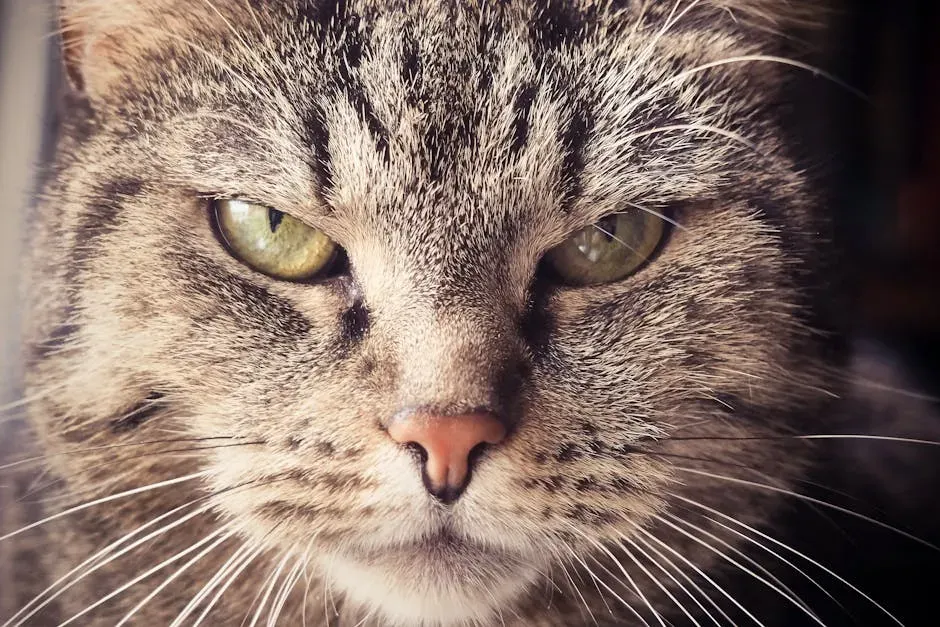
Your cat’s night vision doesn’t work alone. It has a spectacular partner. Cats have excellent night vision, but their whiskers give them an extra edge. In low light, they use their whiskers to sense the shape, size, and movement of objects around them, kind of like a sixth sense. It’s the biological equivalent of combining a camera with a radar system. Together, they’re unstoppable.
A cat’s whiskers are more than twice as thick as ordinary cat hairs, and their roots are three times deeper in a cat’s tissue than other hairs. They have numerous nerve endings at their base, which give cats extraordinarily detailed information about nearby air movements and objects with which they make physical contact. They enable a cat to know that it is near obstacles without it needing to see them. Picture walking through a dark room with your arms stretched out. Now imagine those arms were so sensitive they could feel a change in air pressure caused by furniture two feet away. That’s your cat’s whisker experience every single night.
How Cats Compare to Dogs (and Humans) in Low-Light Vision

We’ve established that your cat sees far better in the dark than you do. But what about dogs? This is where things get really interesting. Both cats and dogs have increased vision in low-light situations, especially when compared to human vision. However, most veterinary ophthalmologists agree that cats actually fare better at night than dogs. Cats have an advantage even over dogs as their eyes’ anatomical structures allow them to make the most out of the little bit of light available.
Cats generally have a slight advantage over dogs in low-light vision. A 1983 comparative study found that reflective rodlets in dog tapeta are less precisely oriented than in cat tapeta, resulting in less efficient reflectance. Both species have tapeta lucida and enhanced rod density, but the cat’s more precisely structured photonic crystal tapetum provides marginally better light recycling. Your cat isn’t just ahead of you in the dark. It’s ahead of pretty much everyone else in the house too. I think there’s a certain satisfaction for the cat in knowing that.
Conclusion
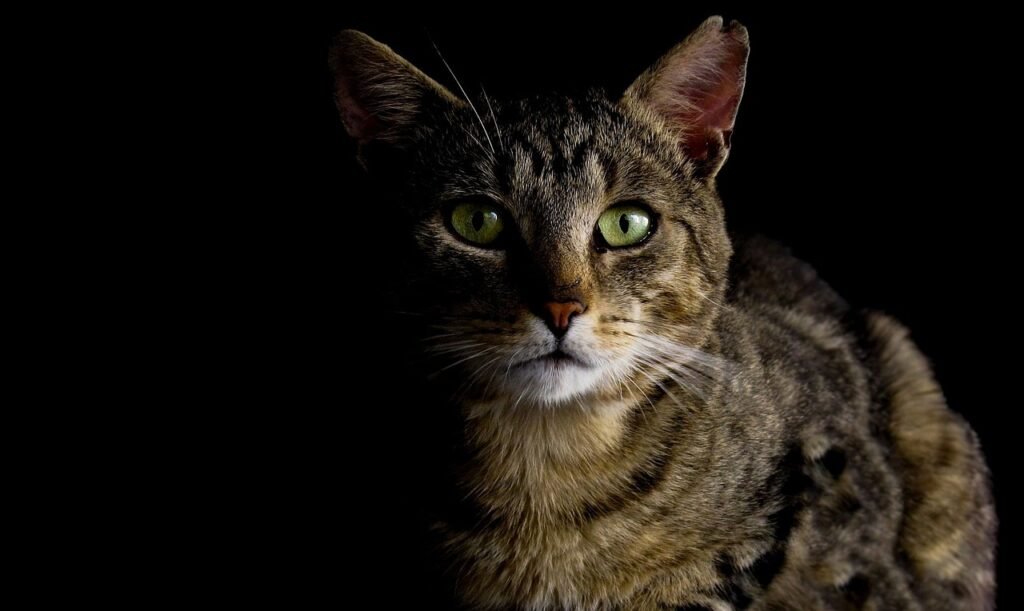
Your cat’s astonishing ability to navigate the night isn’t a single superpower. It’s an entire team of biological adaptations working in perfect harmony. From the mirror-like tapetum lucidum and its extraordinary reflective properties, to the slit pupils capable of adjusting light intake far beyond anything a human eye can manage, to the whisker network reading air currents in real time – every piece works together with precision that any engineer would envy.
Cats have an extraordinary ability to see in the dark, but it is not unlimited. Their adaptations – large pupils, abundant rod cells, and the tapetum lucidum – work to maximize vision in low-light conditions. The next time your cat casually waltzes past you in the middle of the night, completely sure-footed while you’re squinting at shadows, remember: you’re not watching magic. You’re watching millions of years of evolution at work, packaged inside a creature that also somehow manages to sleep for most of the day.
What do you think – does knowing the science behind your cat’s night vision make you see your feline differently? Share your thoughts in the comments below.