You probably assume that by now, scientists have pieced together the everyday lives of most big cats. With clouded leopards, that assumption falls apart almost instantly. These forest ghosts are so secretive and live in such difficult terrain that even today, researchers admit there are gaping holes in what anyone really knows about their hour‑to‑hour routines. Instead of a neat schedule of when they hunt, sleep, and socialize, you’re left with fragments: a camera‑trap photo here, a GPS point there, and a handful of observations from zoos. Put together, they paint a picture that is fascinating precisely because it is incomplete. When you look closely at this cat, you start to understand how an animal can be intensely present in its forest home and yet remain almost invisible to science.
You Are Looking at One of the Least‑Known Big Cats on Earth
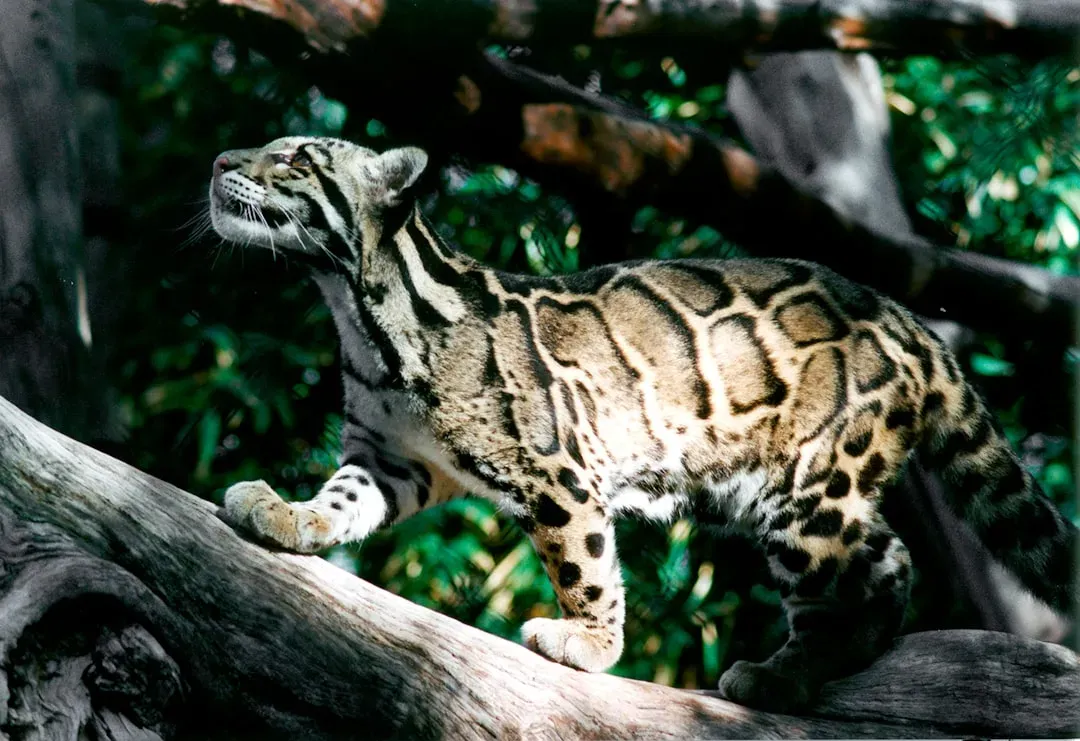
If you tried to list what scientists confidently know about the daily life of a lion or a tiger, you could go on for pages. Try the same exercise for clouded leopards and you hit a wall shockingly fast. You know they are medium‑sized wild cats from Southeast Asia, you know they are powerful climbers, and you know they are elusive to the point of disappearing from view for years at a time in some protected areas. Beyond that, much of their day is still a blank. ([nationalzoo.si.edu](https://nationalzoo.si.edu/animals/clouded-leopard?utm_source=openai)) The challenge is not a lack of interest; it is that you are dealing with a master of vanishing acts. Clouded leopards live in dense tropical and subtropical forests, from Himalayan foothills to lowland rainforests, where visibility is poor and access is hard. You cannot just drive around at dusk like you might on an African savanna and pick them out with a spotlight. Most of the time, unless you are using specialized equipment, you would never even know one passed within a few meters of you.
Forests So Thick You Could Walk Past a Leopard and Never Know
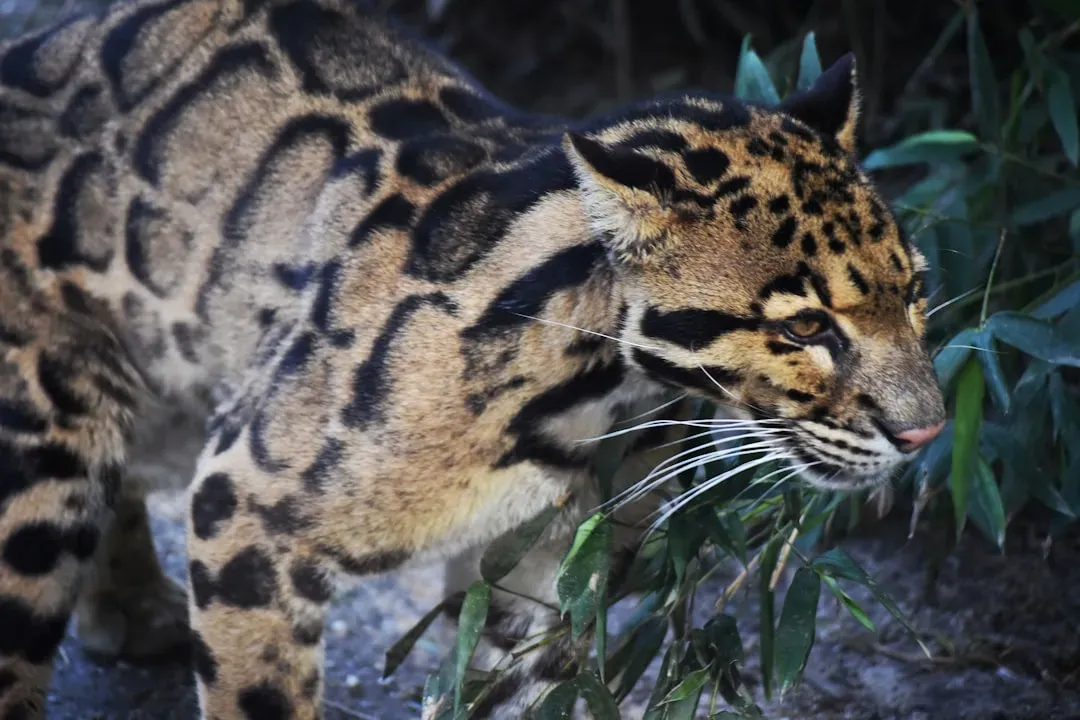
Imagine hiking through a humid, leech‑filled forest where every step sinks into leaf litter and every view is blocked by tangled vines, fallen logs, and layers of foliage. That is the clouded leopard’s home turf. You are in some of the least accessible landscapes on Earth: steep ridges in the Himalayas, remote national parks on the Thai–Myanmar border, or lowland forests in Laos and Vietnam that still see very few people. Sit quietly in those forests and you might hear birds, frogs, and insects – but you almost never see the cat that silently slips between them. ([animaldiversity.org](https://animaldiversity.org/accounts/Neofelis_nebulosa/?utm_source=openai)) These habitats do more than hide clouded leopards from you; they hide them from science. Setting up camera traps and tracking collars in such places is expensive, dangerous, and logistically tough. Many areas where the cats still survive are in politically sensitive regions or rugged border zones. So this cat benefits from a double layer of protection: the natural cover of its forest, and the human reluctance or inability to spend months fighting mud, heat, and bureaucracy just to glimpse its life.
A Cat Built for the High Branches, but Not Tied to Them
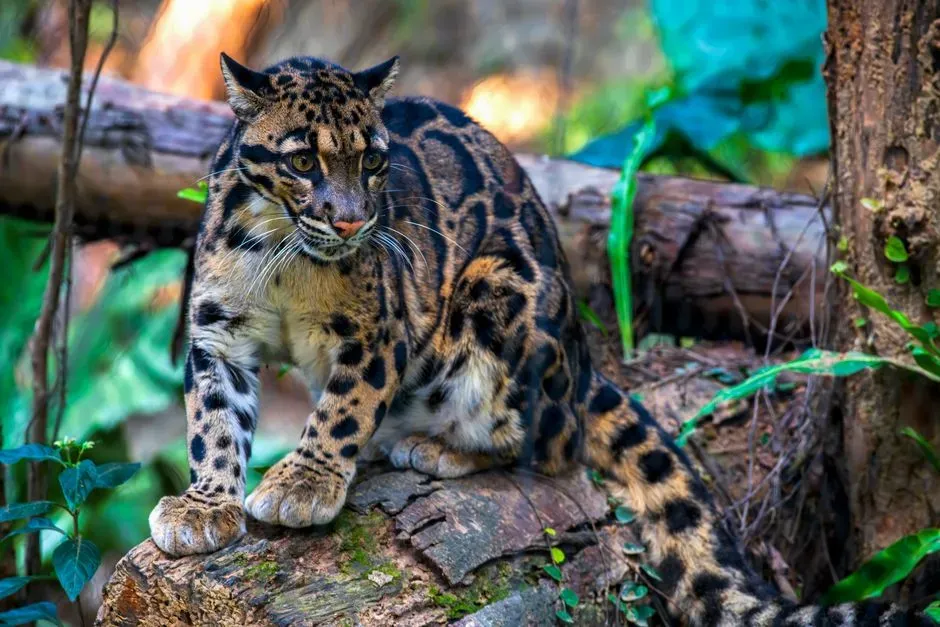
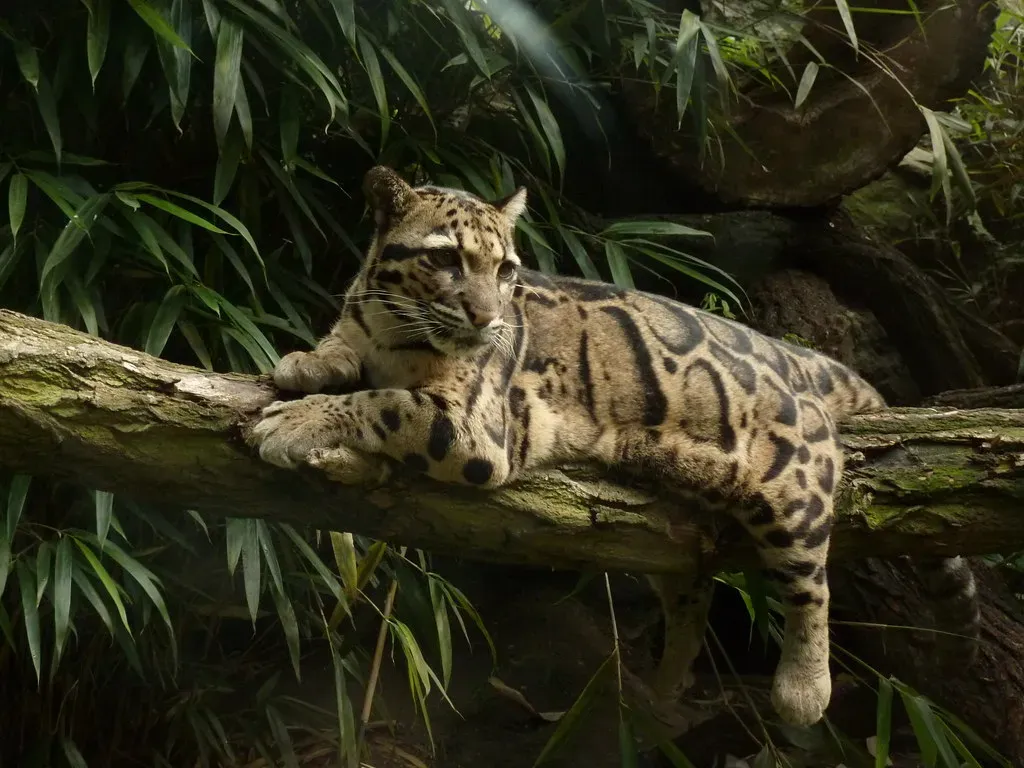
You might picture clouded leopards as tree‑bound acrobats that rarely come down to the ground, and you would be partly right. Their body looks like it was custom‑designed for the canopy: relatively short legs, huge paws for gripping bark, flexible ankles that let them climb down trunks headfirst, and an exceptionally long tail acting as a counterweight. Observers have watched them hang upside down from branches, descend vertical trees like squirrels, and move along limbs with the ease of an animal born in the treetops. ([animaldiversity.org](https://animaldiversity.org/accounts/Neofelis_nebulosa/?utm_source=openai)) But if you assume they live purely in the trees all day, you oversimplify things. Radio‑collar and camera‑trap data suggest they actually hunt a lot on the ground, stalking deer, pigs, monkeys, and rodents in the undergrowth and returning later to feed. Their tree time may be used more for resting, hiding, and escaping leeches or larger predators like tigers and leopards than for constant hunting. You are looking at a cat that treats the forest in three dimensions, using branches, trunks, and leaf litter interchangeably as parts of one seamless hunting arena. ([en.wikipedia.org](https://en.wikipedia.org/wiki/Clouded_leopard?utm_source=openai))
Nocturnal, Crepuscular… or Just Doing Whatever Works?
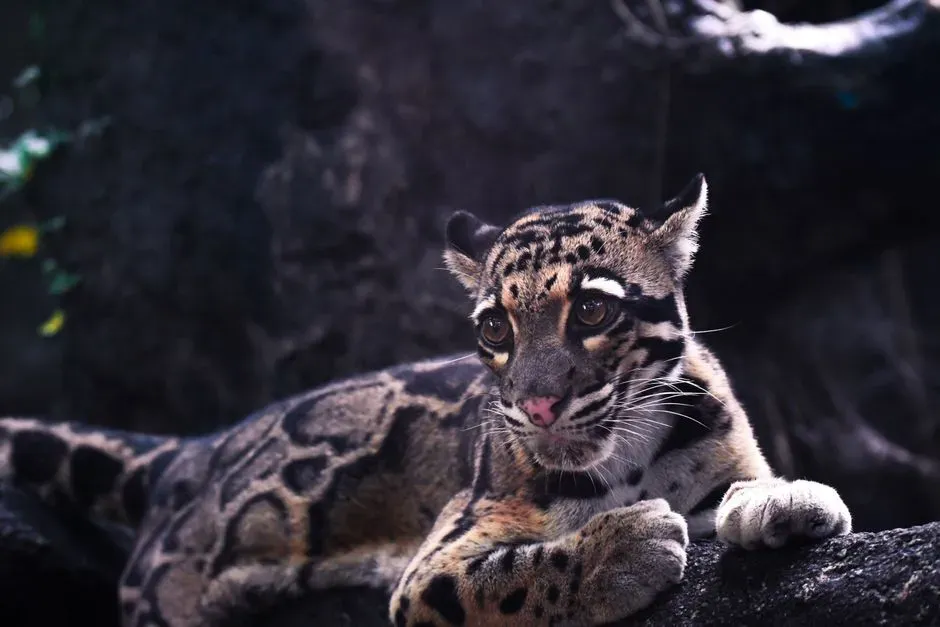
If someone told you clouded leopards are nocturnal, they would not be wrong – but they also would not be fully right. For years, people labeled them night‑active mainly because sightings during the day were almost nonexistent, and zoo cats tended to be more lively after dark. Once researchers began using radio telemetry and long‑term camera trapping, a more complicated picture emerged. You see clear peaks of activity after sunset and before sunrise, but also bursts of movement in early morning and late afternoon. ([en.wikipedia.org](https://en.wikipedia.org/wiki/Clouded_leopard?utm_source=openai)) What this really means is that the cat’s schedule probably bends around food, competition, and human disturbance more than a rigid internal clock. In some places, clouded leopards may shift their movement to avoid bumping into tigers or common leopards; in others, they may move differently in logged forest than they do in dense primary rainforest. When you try to pin them down with a simple label like “nocturnal,” you miss the quiet flexibility that helps them stay one step ahead of bigger predators – and of you.
Solitary, Secretive, and Rarely Seen Together
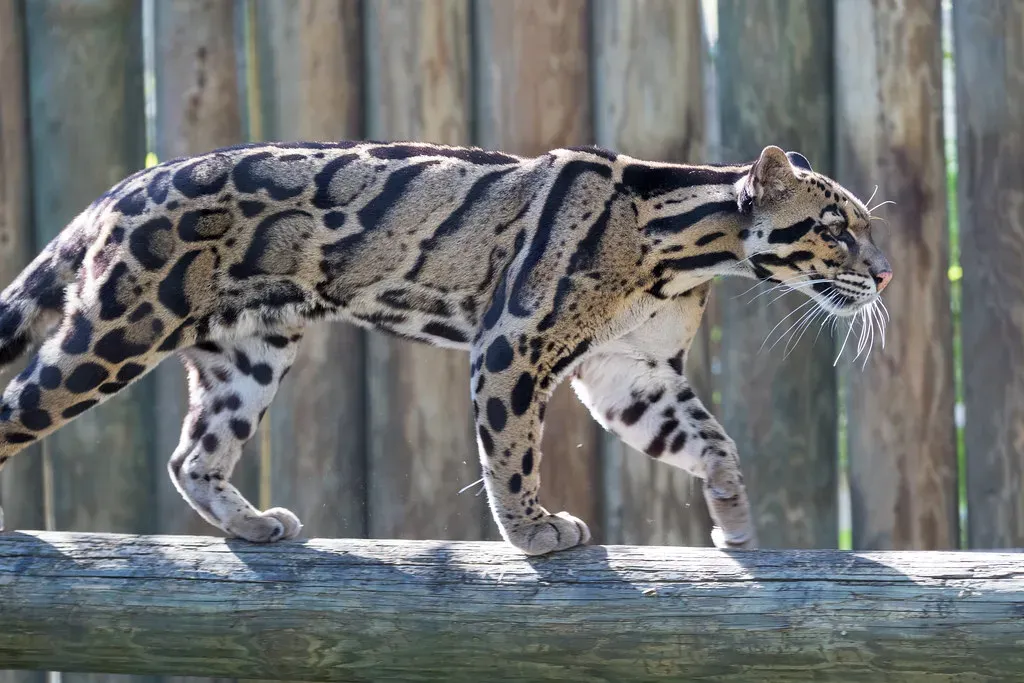
If you followed a clouded leopard through the forest for a week, you would probably see only one most of the time. Evidence from camera traps, track surveys, and comparisons to related cats all point toward a largely solitary lifestyle. Adults seem to roam alone within big home ranges, likely overlapping somewhat with neighbors, but avoiding direct contact except when mating or raising cubs. Even these interactions are poorly documented in the wild; almost everything you know about their romantic and parenting lives comes from zoos and rescue centers. ([felidaefund.org](https://felidaefund.org/learn/cats/clouded-leopard?utm_source=openai)) In captivity, you see how careful humans have to be when introducing pairs, how quickly aggression can flare, and how much planning goes into breeding programs. That experience hints at what you might expect in the forest: a cat that is mostly a loner, strongly territorial, and very picky about who gets close. It is a social pattern that keeps conflict low in a world where injuries can be fatal and veterinary care is not an option. For you as an observer, that means your odds of stumbling on a pair in the wild are vanishingly small.
Following Ghosts with Collars, Cameras, and Educated Guesswork
Because you almost never see clouded leopards directly, most of what you know about their daily routines comes from technology. Biologists fit a tiny handful of animals with GPS or radio collars, then download strings of location points that tell you where each cat was moving and roughly when. You combine that with camera‑trap images – those grainy, night‑time shots where a cat slips past an infrared lens – and you start to sketch out patterns: travel routes, preferred ridges, river crossings, and time windows of activity. ([vtechworks.lib.vt.edu](https://vtechworks.lib.vt.edu/server/api/core/bitstreams/25105532-e087-4f9f-ae93-52be5e0bbf91/content?utm_source=openai)) Still, the gaps are huge. Collars eventually fail or fall off, batteries die, and in many countries you may only have data for a few individuals from one small region. So when you try to describe a “typical” day in the life of a clouded leopard, you are really stitching together fragments from scattered studies. It is a bit like trying to understand an entire language after hearing only a handful of sentences; you can grasp the rhythm, but not the full story.
What You Can Infer from Their Teeth, Diet, and Hunting Style
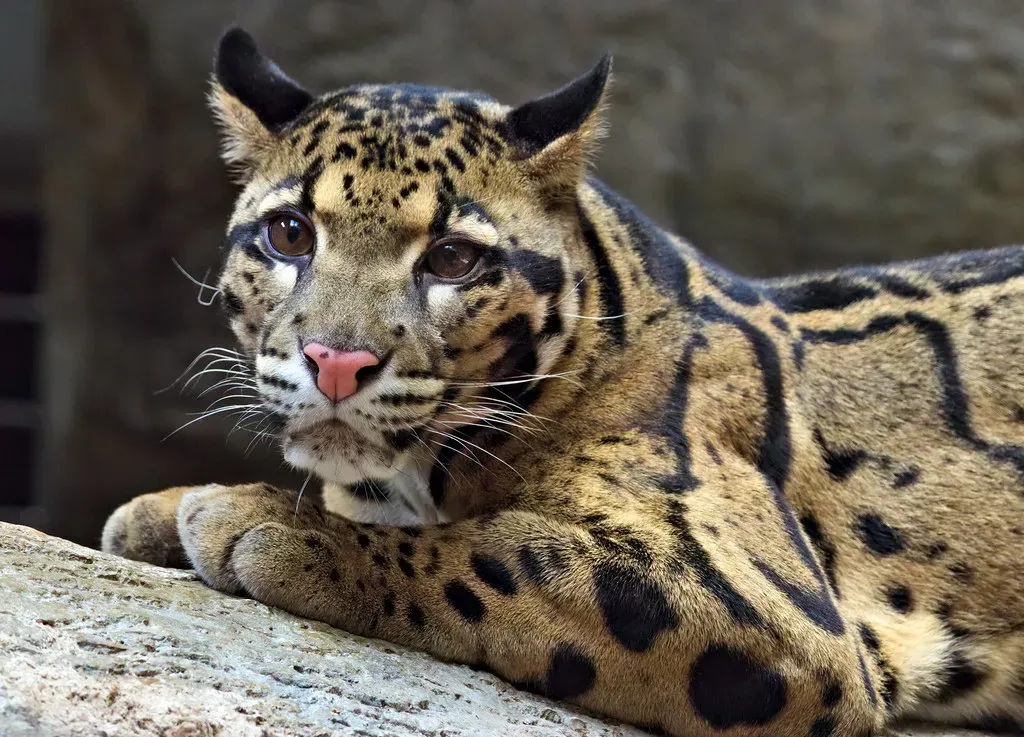
When you look at a clouded leopard’s skull, you see something striking: proportionally, its canine teeth are among the longest of any cat on Earth. That alone tells you a lot about how this animal probably kills and eats. Those oversized fangs are ideal for delivering a deep, precise bite to the neck of prey, perhaps allowing the cat to tackle animals larger than you might expect for its body size. Observations and gut content records show them feeding on ungulates like deer and wild pigs, as well as monkeys, squirrels, and other smaller animals. ([animals.sandiegozoo.org](https://animals.sandiegozoo.org/animals/clouded-leopard?utm_source=openai)) From that, you can infer pieces of the daily routine you cannot yet see. This is not a cat that spends its days picking at insects or scavenging scraps; it is a specialized ambush predator. You can imagine it slipping quietly along a game trail, pausing at scent marks, then exploding into motion when a muntjac steps too close. After a kill, it might drag the carcass to dense cover or even up into a low tree, feeding in secret and returning later if disturbed. You are filling in the blanks with careful comparisons to other cats, but every step is grounded in anatomy and the prey species documented in the same habitats. ([maxallen.inhs.illinois.edu](https://maxallen.inhs.illinois.edu/files/2019/01/Chiang-and-Allen-Clouded-Leopard-Review-2017.pdf?utm_source=openai))
Zoos Offer Clues – but Not a Complete Script
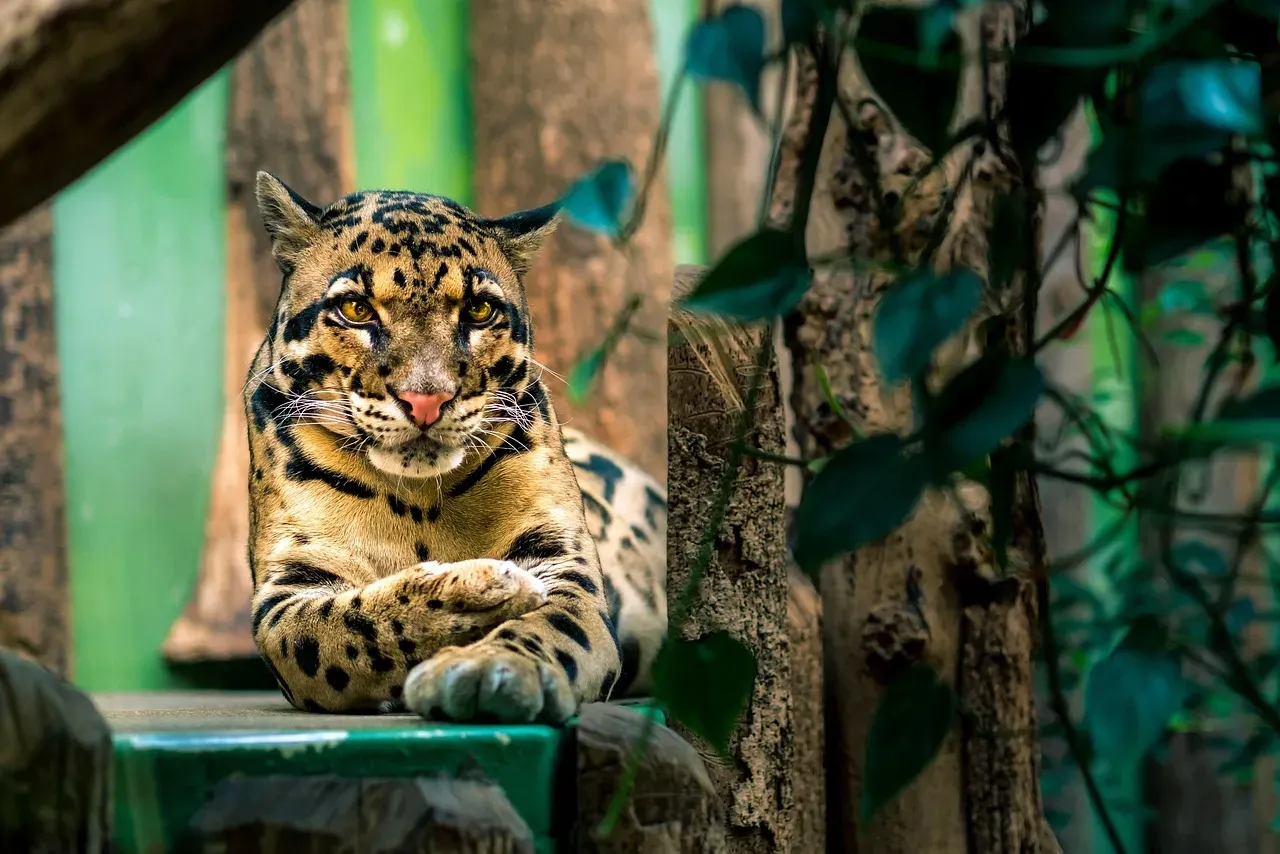
Because the wild is so hard to study, you end up leaning heavily on what caretakers see every day in zoos and breeding centers. Under managed care, clouded leopards show you their agility on climbing structures, their preference for elevated resting spots, and their tendency to be more active at night or during cooler hours. Keepers use enrichment – scent trails, hidden food, dangling toys – to encourage those natural behaviors, and you can watch how the cats respond: stalking, pouncing, scent‑marking, and patrolling their space. ([nationalzoo.si.edu](https://nationalzoo.si.edu/animals/news/how-care-clouded-leopards?utm_source=openai)) But you also have to stay cautious about how far you stretch those observations. A cat in a well‑designed enclosure with regular meals and no predators is living a very different life from one navigating poachers, logging roads, and competing carnivores. Zoos give you priceless hints – like how often they rest, how they interact with mates, and how they respond to new smells – but they cannot fully recreate the messy, unpredictable decisions the animal makes in a wild forest. For that, you are still waiting on more field data.
You Know Enough to Be Worried, Even If You Do Not Know Their Whole Story
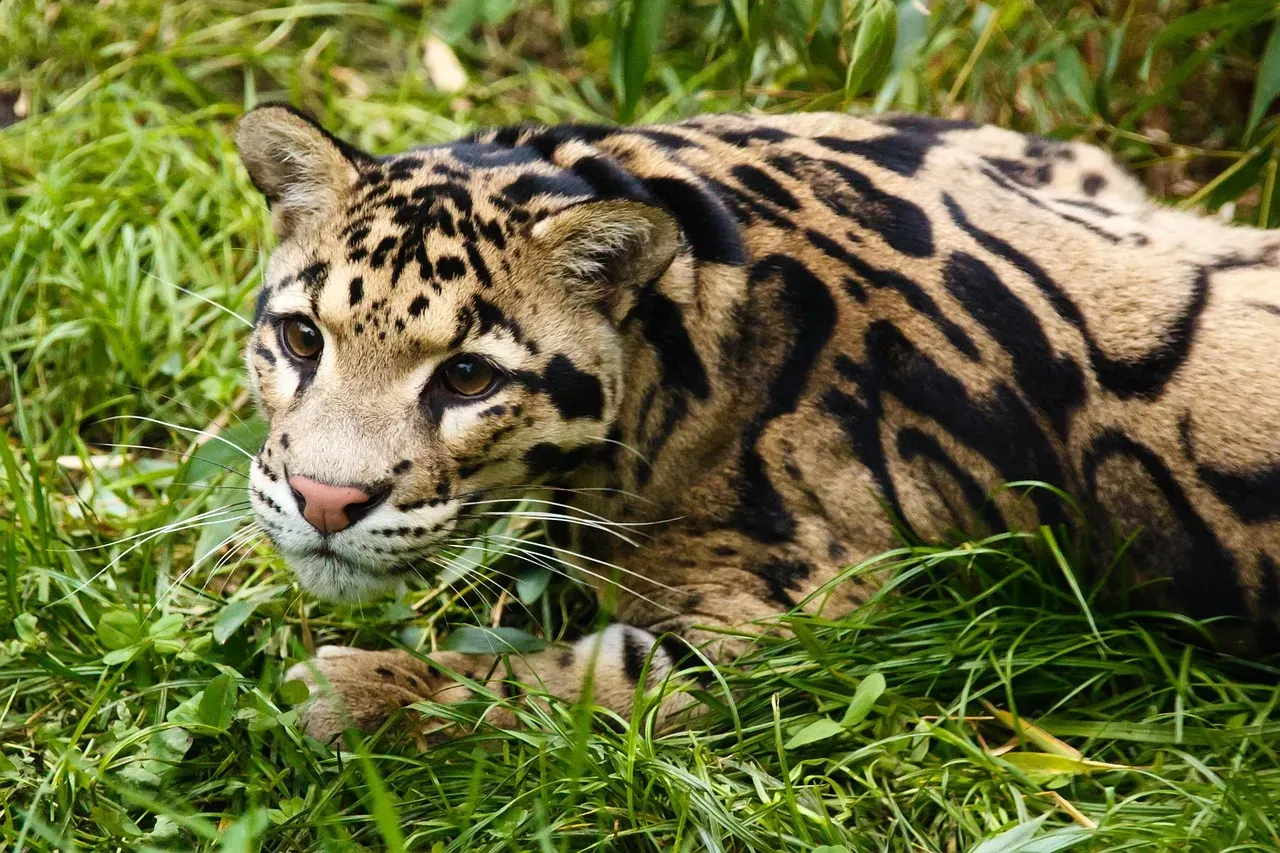
There is a quiet irony here: you might not know exactly how a clouded leopard spends a typical day, but you know enough to see that its future is precarious. Across much of its range, forests are being cleared for agriculture, especially oil palm plantations, and broken up by roads and settlements. A cat that relies on large, connected tracts of forest – and that already lives at very low densities – cannot magically adapt to a world of shrinking islands of habitat. ([nationalzoo.si.edu](https://nationalzoo.si.edu/animals/clouded-leopard?utm_source=openai)) On top of that, you have direct threats from poaching, illegal wildlife trade, and conflict with people. Because clouded leopards are so rarely seen, local declines can go unnoticed for years, and population estimates are often based on very thin data. That means conservation decisions are sometimes made with more uncertainty than anyone would like. You may not yet be able to describe what they do from dawn to dusk, but you can clearly see what happens if the forests vanish: the mystery of their daily life disappears along with the cat itself.
Conclusion: When Not Knowing Becomes a Reason to Care More
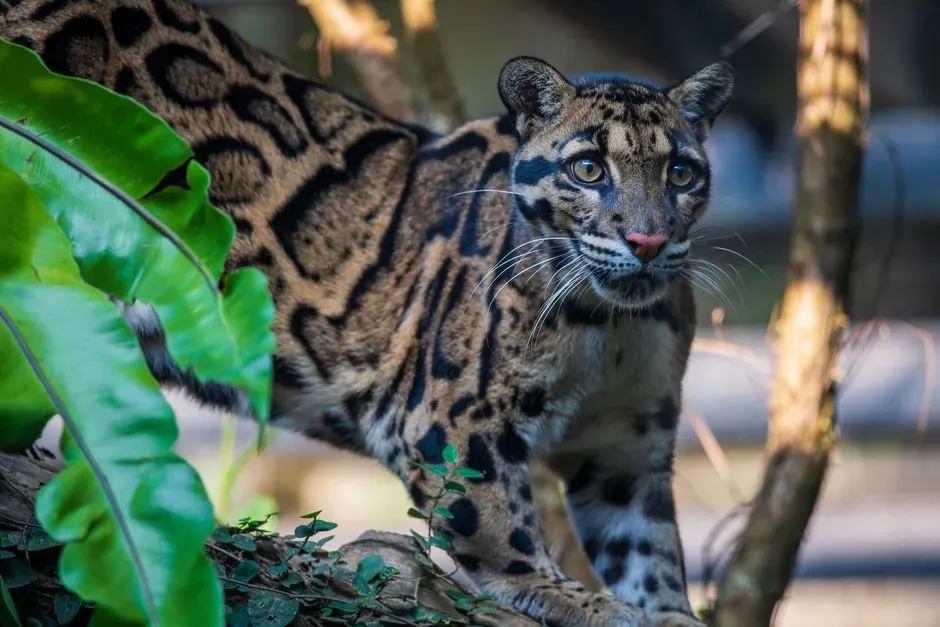
Clouded leopards force you to sit with uncertainty in a way few other big cats do. Instead of a tidy documentary narrative – wake here, hunt there, sleep at this hour – you are left with a handful of solid facts, many educated guesses, and vast stretches of unanswered questions. Strangely, that makes them even more compelling. You are looking at a species that has survived for millions of years by staying off the radar of almost everything, including human science. ([pmc.ncbi.nlm.nih.gov](https://pmc.ncbi.nlm.nih.gov/articles/PMC10558132/?utm_source=openai)) If you care about them, your job is not just to chase more data; it is to make sure there is still a living, breathing cat to study in the first place. Protecting large, intact forests, supporting field research, and backing ethical conservation programs all help keep that possibility alive. In a world where you can track your own steps by the second on a smartphone, there is something humbling about a wild cat whose daily behavior still refuses to fit neatly into your spreadsheets. Maybe the real question is not only how clouded leopards live – but whether you are willing to protect a creature precisely because it remains, in so many ways, unknown.
Kristina is a young writer from India. An arts graduate and an avid content creator, Kristina is passionate about animals and wildlife. She enjoys exploring topics related to pet care, animal behavior, conservation, and nature, combining thorough research with engaging storytelling.