There’s something almost universal about the experience of looking at your cat, catching what looks like a world-class scowl, and thinking: “What did I do wrong?” Flat ears, a tight muzzle, narrowed eyes – the whole package reads as displeasure straight out of a cartoon. The honest truth, though, is that we’ve been projecting human emotional logic onto creatures that communicate in a fundamentally different way.
Researchers have found that cats can communicate using nearly 300 different facial expressions, and while these expressions can give the impression that your cat is feeling silly, grumpy, or appalled, the expression a cat makes doesn’t always mean what you think it does, because cats emote differently from how humans do. Understanding the distinction isn’t just interesting – it can genuinely change how you relate to your pet, and in some cases, even help you catch early signs of illness.
The Sheer Number of Feline Expressions Is Staggering
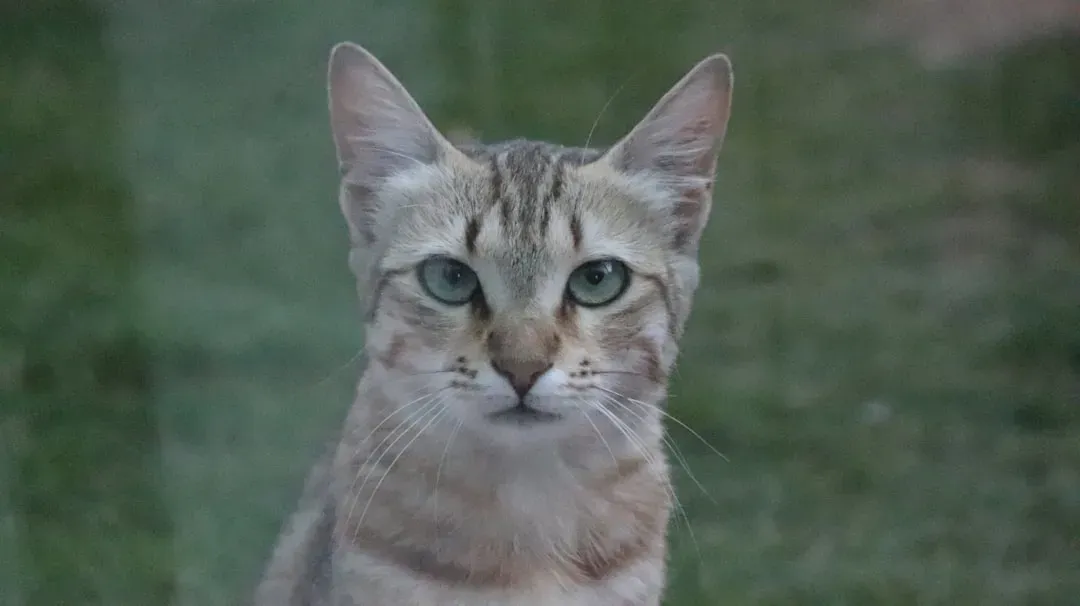
You might think of your cat as a creature of fixed moods, alternating between aloof and demanding. The reality is considerably more nuanced. In a scientific study, researchers monitored a group of 53 cats as they interacted with each other at a cat café in the United States, and incredibly, this study revealed that cats can use up to 276 expressions when communicating with each other, made up of a combination of 26 facial movements, including shifts in their ears, blinking, and nose wrinkling.
Research has shown that cats display different facial expressions and that these expressions differ depending on how cats are feeling, both in positive and negative situations, and being able to read and interpret these different facial expressions can help ensure that cats receive appropriate care. When you realize just how expressive your cat’s face actually is, the idea that a single “grumpy” look tells the whole story starts to unravel pretty quickly.
Most People Are Surprisingly Bad at Reading Cat Faces
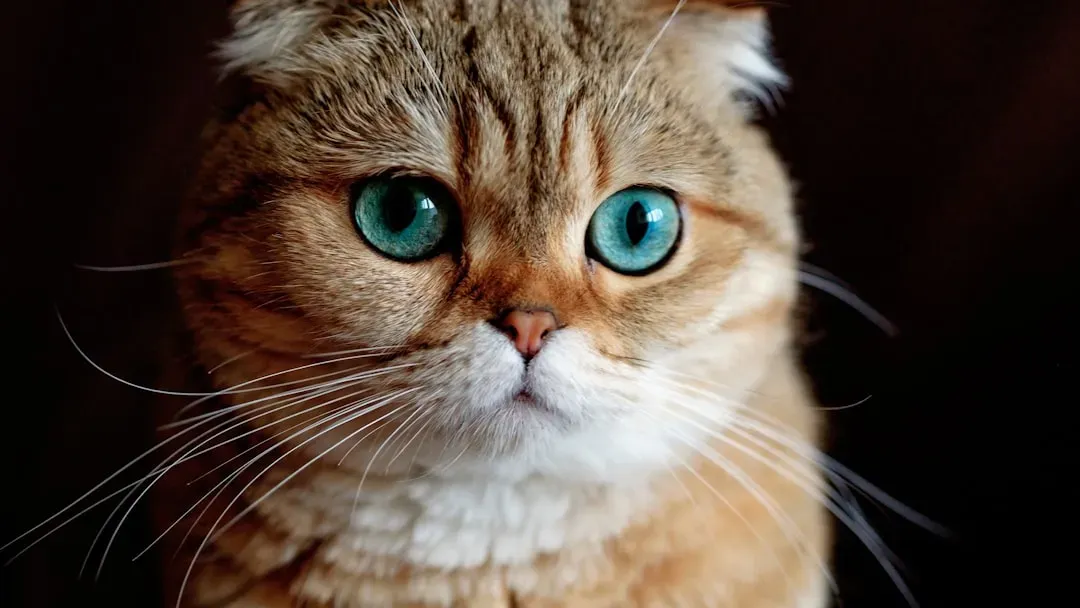
You might expect that years of living with a cat would make you something of an expert on their expressions. Research suggests otherwise. Cat owners are not any better at reading cat faces than people who have never owned a cat, which may be because cat owners learn the intricacies of their own cat through continued interactions but likely cannot draw on varied experiences when faced with a series of unfamiliar cats.
In one study, more than 6,300 people from 85 countries judged whether the cat in each video was feeling positive or negative, and on average, people identified the correct expression only about 59 percent of the time – which, while slightly better than guessing, suggests that many people find the task of reading cat faces genuinely challenging. That number is humbling. It means our instinct to label a cat’s neutral or tense face as “grumpy” is, more often than not, simply incorrect.
The Real Meaning Behind a Tense, Frowning Face
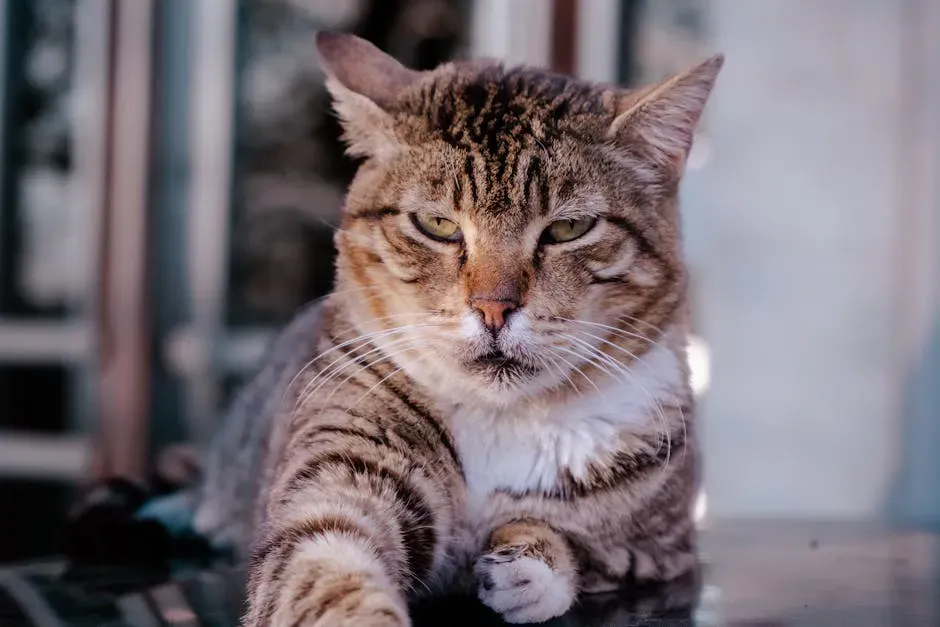
When your cat’s facial muscles tighten, their ears pull back, and their eyes narrow, you’re likely reading “annoyed.” But a tense face can signal something far more important. Emotions play a significant role in shaping a cat’s facial expression, and stress and anxiety can cause cats to tense up, leading to the characteristic “grumpy” look we’ve all come to know.
When a cat is relaxed and happy, its facial muscles are at rest, giving it a smooth, neutral expression, but when it’s stressed or anxious, its facial muscles tense up, causing its ears to fold back and its whiskers to twitch. So if your cat seems perpetually grumpy, the real question worth asking is: what in your cat’s environment might be causing ongoing stress? Changes in routine, unfamiliar scents, or new animals in the household can all be quiet but significant culprits.
When a Is Actually a Cry for Help
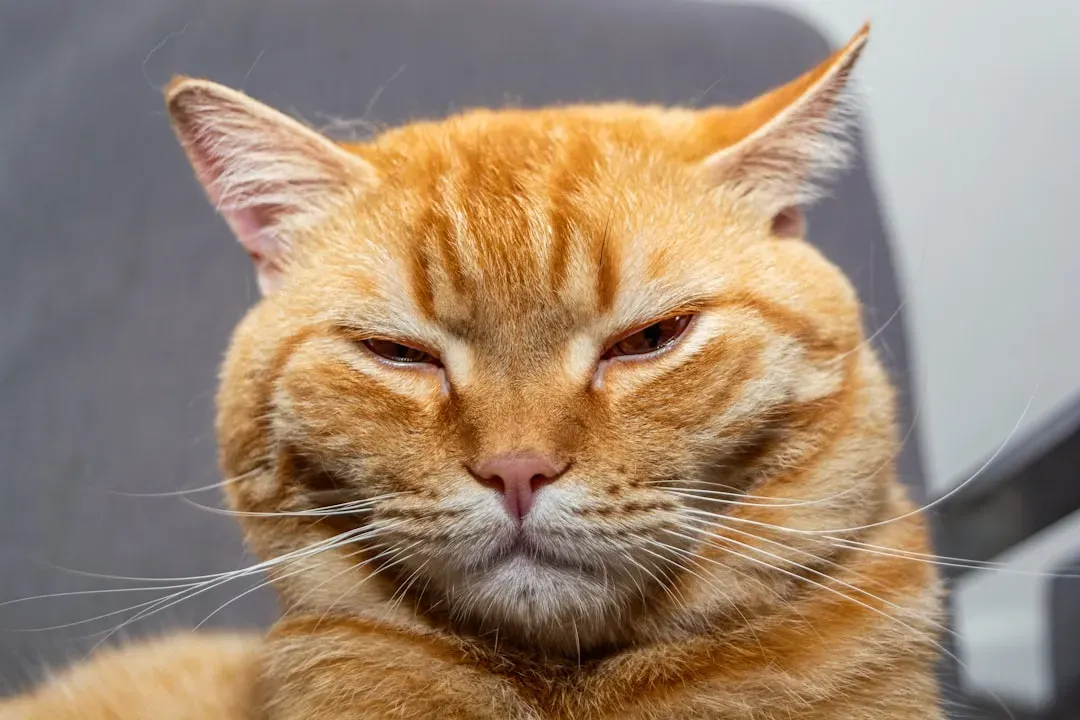
One of the most important things you can learn as a cat owner is that a tense, scrunched facial expression can be a sign of physical pain, not just a bad mood. Veterinarian Dr. Daniel Pang co-developed, along with Dr. Paulo Steagall, the “Feline Grimace Scale,” which was published in Scientific Reports, with the goal of enabling veterinarians to identify if a feline is experiencing any pain.
The scale assesses five features: the position of the cat’s ears, head, and whiskers, whether its eyes are open or closed, and muzzle tension. A grumpy-appearing face may be accompanied by other subtle signs, such as changes in appetite, lethargy, or difficulty breathing, and if your normally playful cat is suddenly hesitant to play or seems withdrawn, it could be a sign that they’re experiencing dental problems, arthritis, or even kidney disease. This is why that “grumpy” expression deserves your attention, not your amusement.
Whiskers and Ears Tell a Different Story Than the Eyes
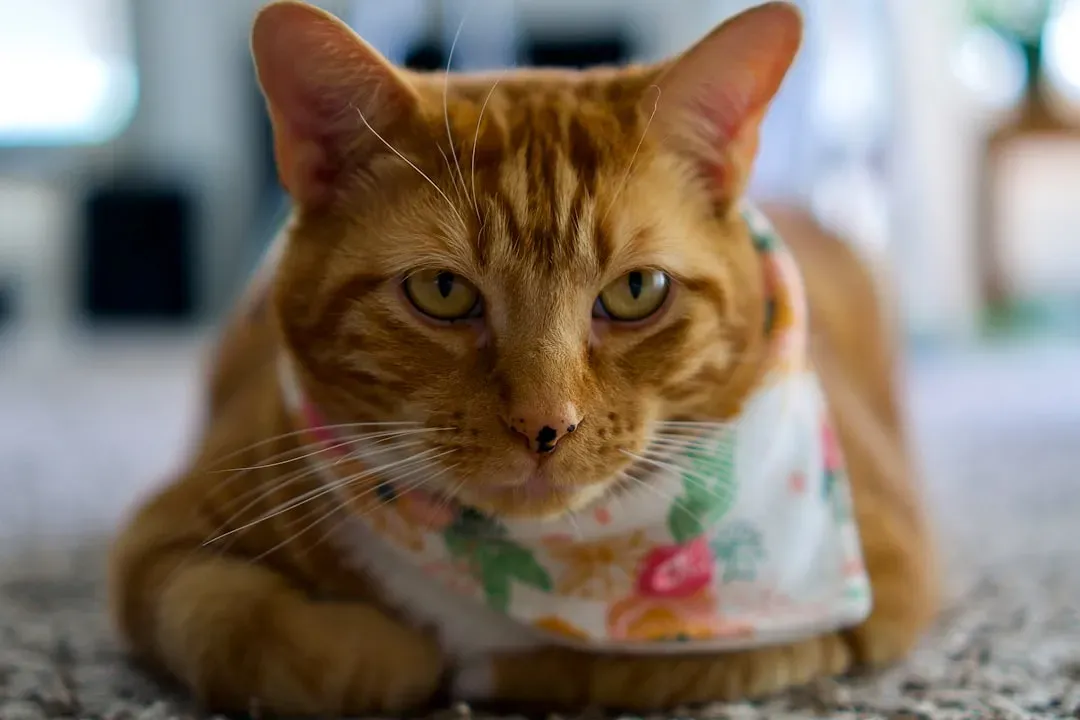
You’ve been trained, mostly by internet memes, to focus on your cat’s eyes for emotional clues. The whiskers and ears are actually doing a lot of the heavy lifting in feline communication. Whiskers are not just accessories; they play a vital role in a cat’s body language, and these long, sensitive hairs are deeply connected to a cat’s sensory system. When a cat’s whiskers are pulled back and flat against their face, it typically indicates fear or aggressiveness – a clear signal that the cat is feeling threatened and may be ready to defend itself.
Conversely, when whiskers are relaxed and positioned forward, it signifies a calm and confident state. When a cat’s ears are pulled back and flat against its head in a defensive position and its whiskers are stiff and out, with narrowed, focused pupils and a tense body, the hair may even be raised along the spine. Reading these signals together, rather than focusing on any single feature, gives you a far more accurate picture of what your cat is actually feeling.
Some Cats Are Born Looking Grumpy
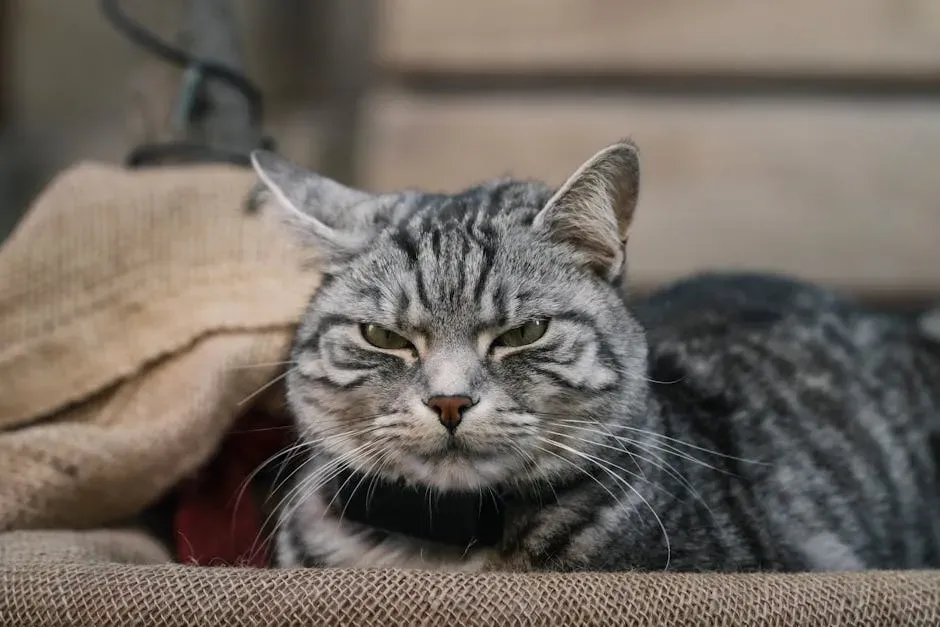
It’s worth acknowledging that for some cats, the “grumpy” face isn’t a mood at all – it’s just anatomy. Grumpy Cat, whose real name was Tardar Sauce, became an internet sensation not because of her temperament, but due to a unique physical trait: a permanent grumpy facial expression caused by an underbite and feline dwarfism. Her face looked perpetually displeased simply because of how she was built, not because she was actually miserable.
Despite her appearance, Grumpy Cat was reported to be a calm and friendly cat in real life, and her “grumpy” look was simply a result of her unique physical traits. It’s worth noting that some cats naturally appear grumpier than others – British Shorthairs and Maine Coons, for example, are known for their more serious expressions – though most cats can display a range of emotions on their faces with proper care and interaction. Your scowling cat might simply have the face they were born with.
The Slow Blink Is the True Sign of Contentment
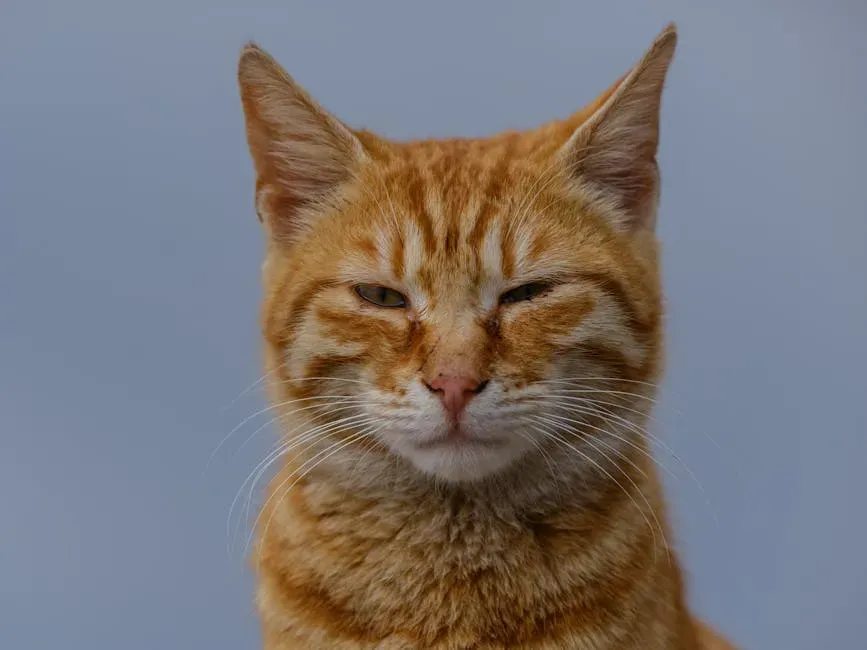
Here’s one of the most commonly missed emotional cues in the entire feline repertoire. Your cat isn’t smiling at you the way a dog does, but they are absolutely expressing affection – just in a way you might be overlooking. Slow-blinking is a cat’s sign of trust and is one of the most common ways a cat shows love – if a cat slow-blinks around you, it means your feline trusts and loves you enough to close their eyes and drop their guard, even just for a second.
Recent studies have confirmed that the slow blink is indeed a social signal conveying friendliness and comfort, and researchers observed that cats were more likely to approach strangers who used slow blinking than those who did not. Research published in The Journal of Physiology notes that cat slow blinking, when both the closing and the opening of the eyelid happen at a slow pace, differs from the velocity of a typical cat blink, showing that slow blinking is not a reflexive movement – it’s an intentional behavior. Blinking slowly back at your cat is one of the most genuine conversations you can have with them.
Context Changes Everything When Reading Feline Faces
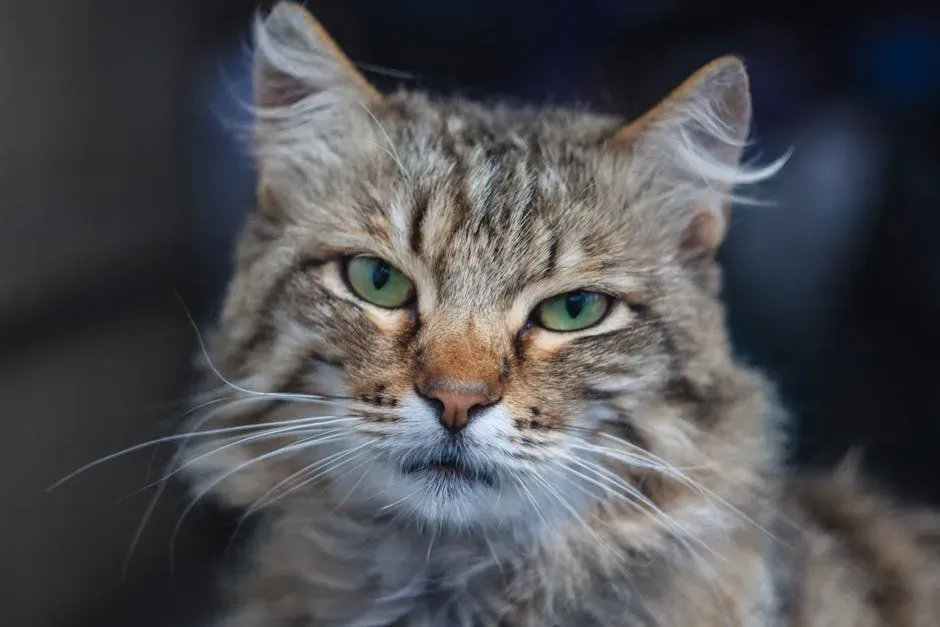
One of the biggest mistakes you can make is trying to read a single facial feature in isolation. There are many physical cues of a cat’s mood, but their meaning can vary depending on the context – for example, one of the most reliable signs of a confident cat is a tail that’s lifted vertically, and most of the time, this position indicates that the cat feels comfortable and open to interaction.
Understanding cat facial expressions and body language can significantly improve the communication between you and your cat, and it’s essential to observe cues in the context of your cat’s environment and overall behavior to really gauge their feelings and needs – a slow blink can be a sign of affection and comfort in your presence, whereas a direct, hard stare might indicate a challenge or discomfort, and knowing the difference will enable you to recognize your cat’s needs more effectively. No single expression ever tells the whole story on its own.
Cats Are Actually Studying You Too
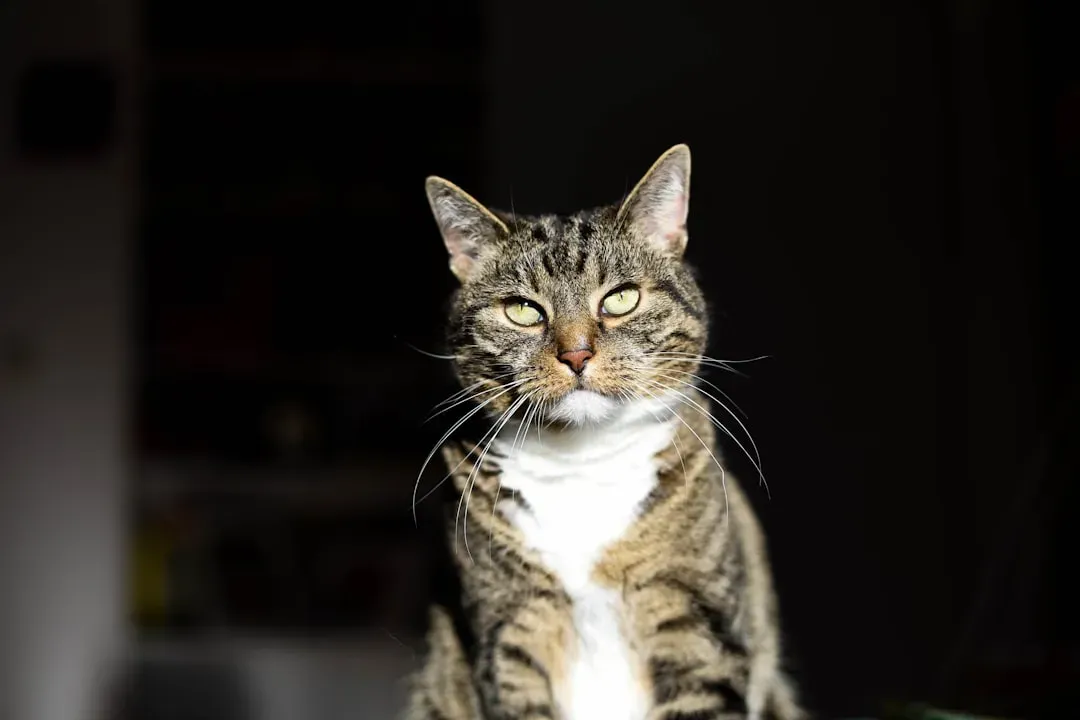
You spend a lot of time trying to decode your cat’s face. What you might not realize is that the observation runs both ways. Cats are surprisingly tuned into human emotions, and studies suggest they can recognize happy and angry faces and adjust their behavior accordingly, such as choosing to cuddle when you’re upset or avoiding eye contact when you’re angry.
It’s also possible that cats have worked out that meowing is a particularly effective way to communicate with humans – adult cats rarely meow to one another, yet when they meow at a human, we tend to give them our full attention, and it’s thought that cats may have realized this and adjusted their behavior around us accordingly. Cats are quick studies, and they realize that because humans don’t speak the same language, they need to rely on certain body language and expressions to let us know what they want. The dynamic between you and your cat is, in the truest sense, a two-way conversation.
Conclusion: Learn the Language Before You Make Assumptions
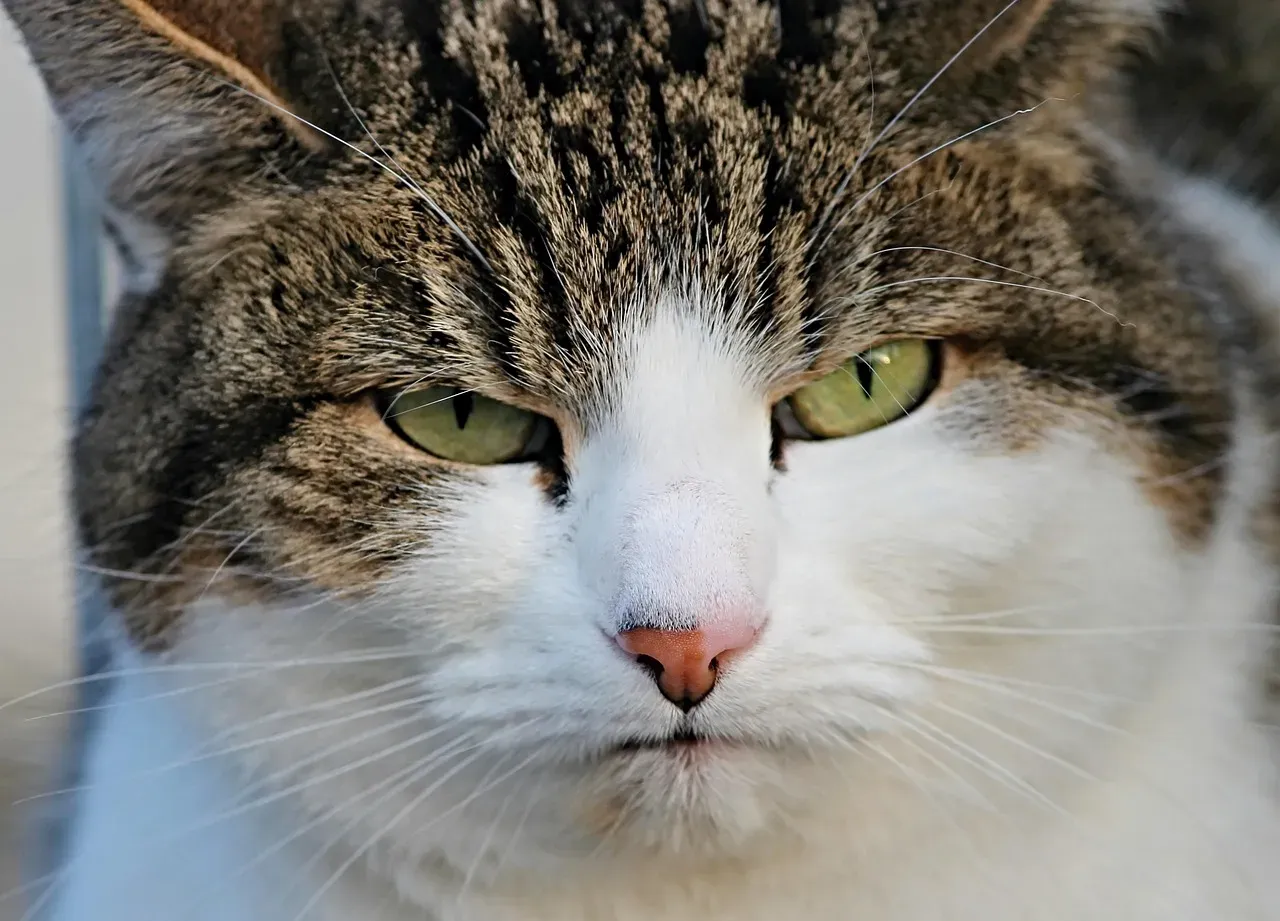
The grumpy face that’s become a cultural shorthand for feline attitude is, in reality, a much more layered signal. It might mean stress. It might mean pain. It might simply be a breed characteristic or a neutral resting expression that your brain is pattern-matching to a human scowl. Facial expressions can indicate when a cat may be in pain and require treatment, and being able to read cat faces can also improve the bond between cat owners and their cats through an improved understanding of how their cats may be feeling.
A key advantage of understanding cats’ body language is the prevention of misunderstandings and miscommunication – cats can exhibit behaviors that seem puzzling or even contradictory to our human perspective, but by learning their unique signs such as tail movements, ear positions, and facial expressions, we can decipher their messages accurately and build trust and a deeper connection. The grumpy face isn’t a wall. It’s an invitation – if you know how to read it, you might realize your cat has been trying to talk to you all along.