12 Ways an Old Cat Lets You Know It Is Comfortable and Unafraid
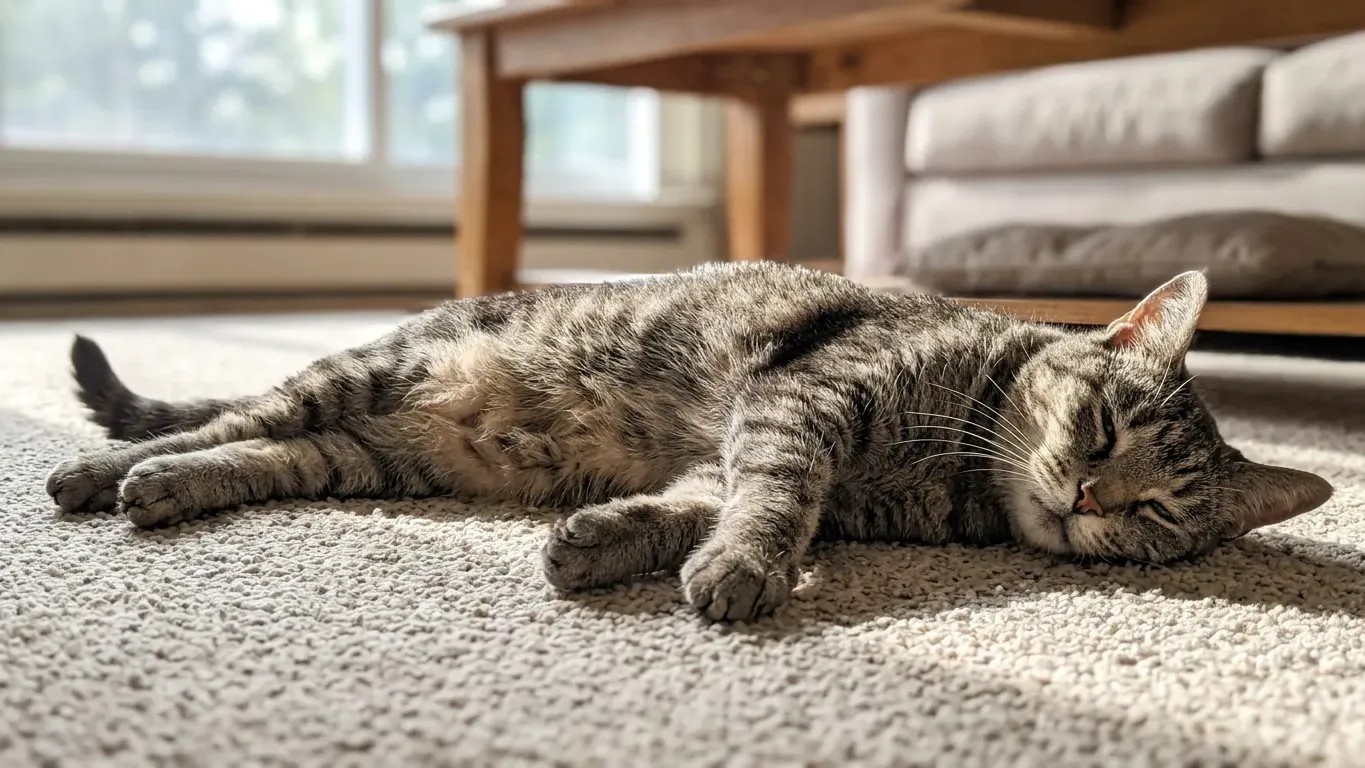
Most cat owners assume a quieter, slower old cat is simply winding down - detaching from the world and from you. Experts say that's almost exactly backwards.
Senior cats, typically age 10 and older, are broadcasting comfort and safety constantly - they've just swapped loud signals for whisper-quiet ones. Miss these twelve cues, and you'll misread your own cat completely.
#12 - They Stretch Out Fully Instead of Staying Curled Tight
A cat that holds a tight, curled posture is protecting its most vulnerable organs. Watch what changes the moment the fear disappears.
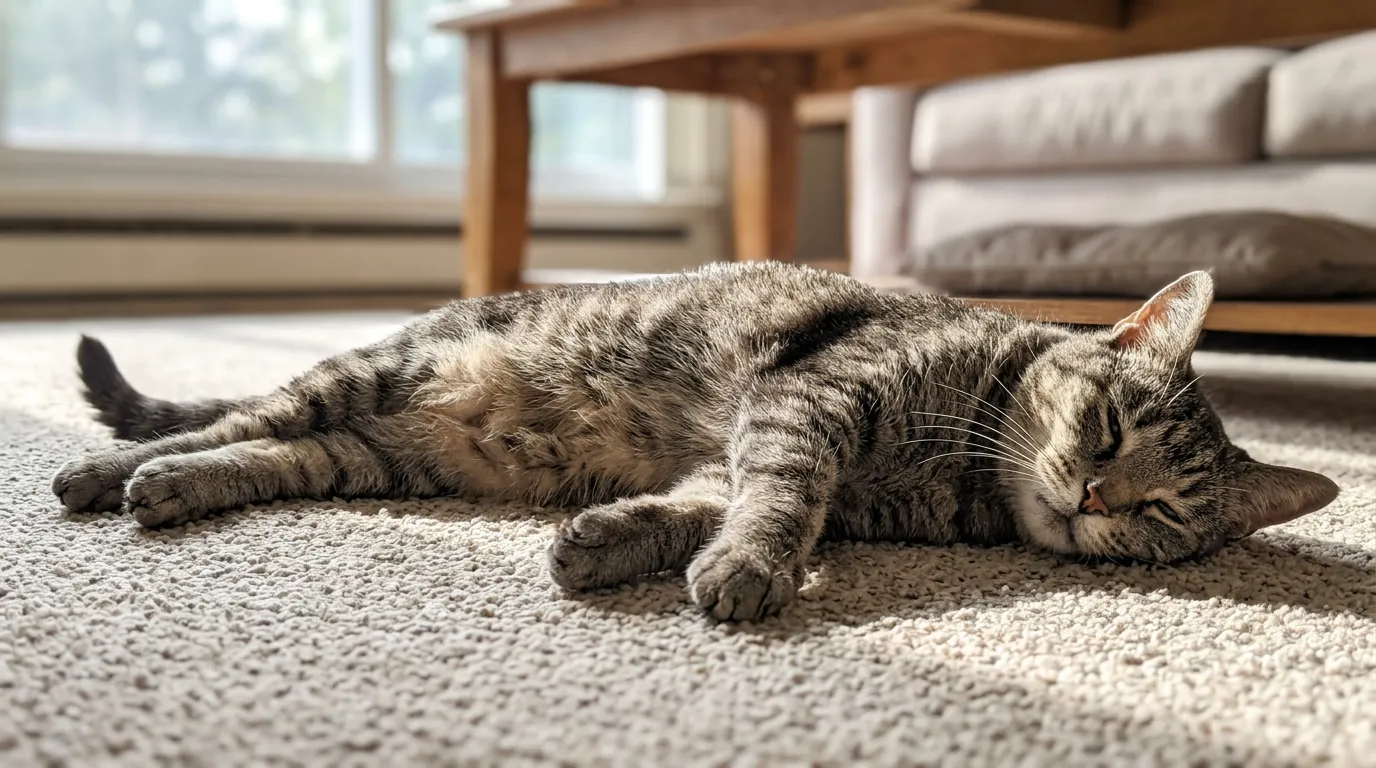
A comfortable cat lies stretched out on its side or curls up loosely - never in a defensive ball. That difference matters more than most owners realize.
Comfortable cats start taking up more space, sprawling into positions a nervous cat would never risk. In an old cat, full-body sprawling is a deliberate signal, not laziness.
When your senior cat goes full "rag doll" on the floor, their nervous system has genuinely powered down. That's not something a frightened animal can fake.
But there's another sign that shows up even before they lie down - and it involves their tail.
#11 - Their Tail Goes Straight Up When They Approach You
Most people notice the tail. Almost nobody understands what it's actually saying.
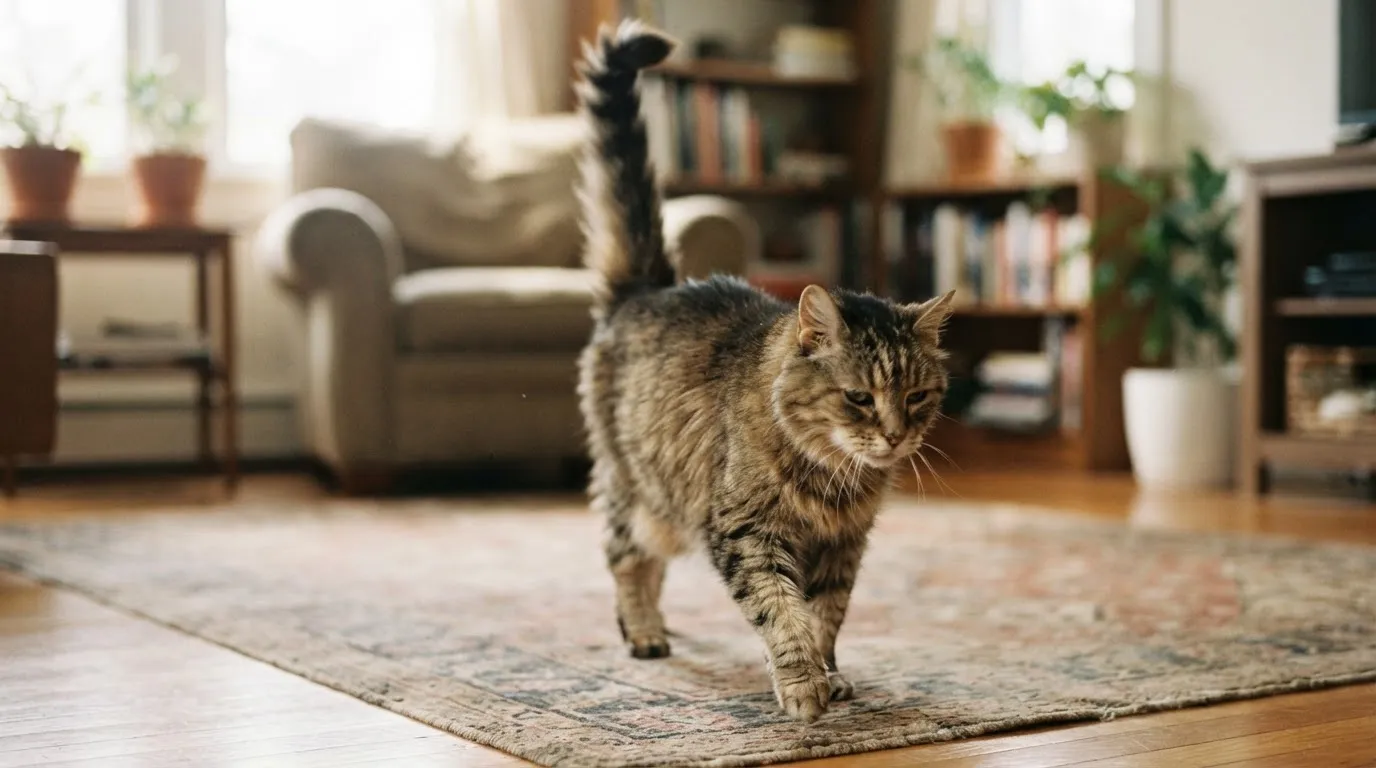
The tail-up greeting is one of the most consistent friendly signals in feline behavior. It isn't a mood ring - it's a specific message, sent on purpose.
A relaxed cat often walks toward trusted people with its tail straight up, sometimes with a soft curve at the tip. In an old cat who moves slowly and deliberately, that upright tail is a quiet declaration.
It costs an arthritic senior cat real energy just to cross a room. When they do it with their tail up, they're choosing you.
Next, look at what's happening above the tail - at their face.
#10 - Their Eyes Are Soft, Not Scanning
Young cats have restless eyes, constantly tracking movement and running threat calculations. A comfortable senior has turned that down to almost nothing.
Relaxed cats show soft, calm eyes - partially closed lids, loose facial muscles, slow blinking. Nothing about their expression looks like surveillance.
Many senior cats slow-blink more when you make eye contact and scan the room less. Soft, half-lidded eyes in an old cat mean their threat-detection is essentially switched off.
The shift from hard stare to dreamy gaze isn't accidental - it's your cat actively choosing not to monitor the environment. What they do with those soft eyes next might be the single most important signal on this list.
We're not there yet.
#9 - They Give You Long, Slow Blinks
This one gets talked about constantly. But in a senior cat, it carries far more weight than most owners realize.
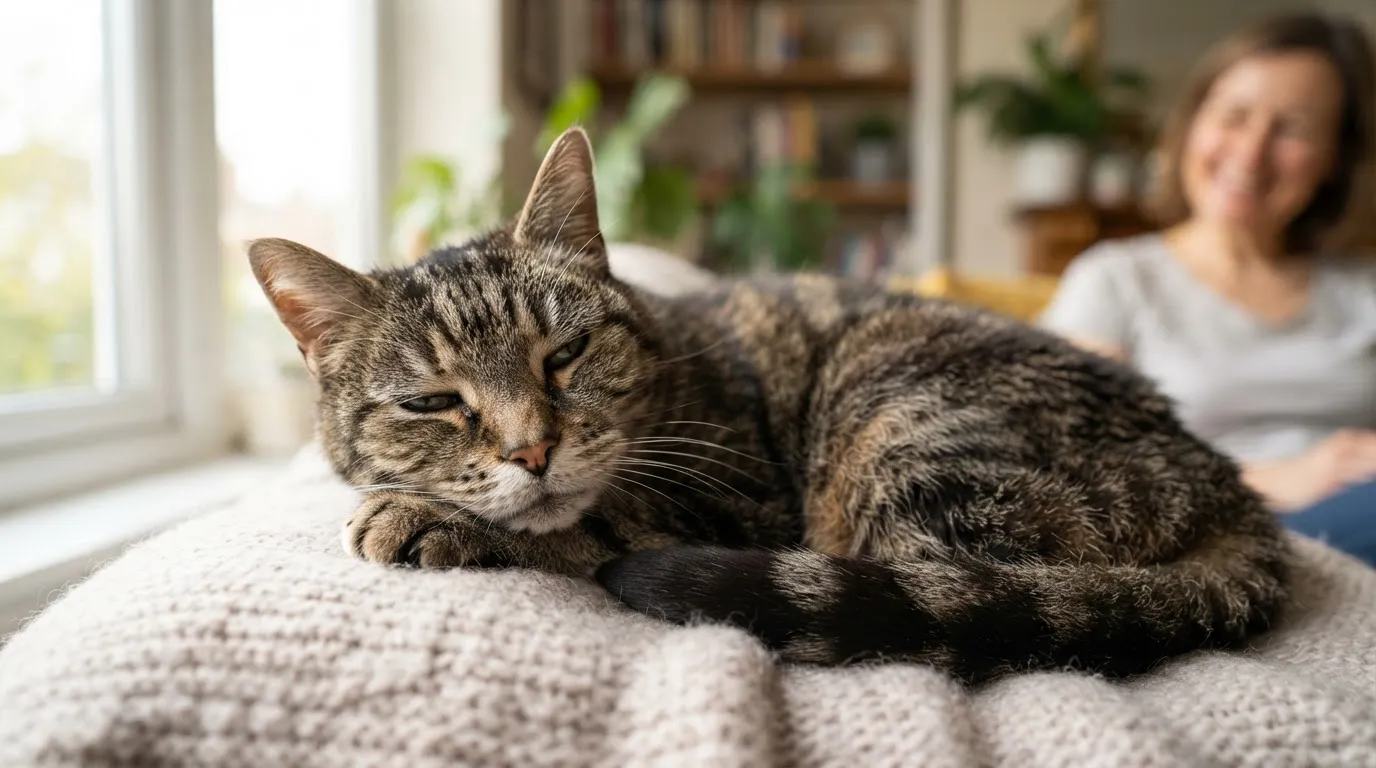
When your older cat locks eyes with you and gives that lazy, half-closed blink, it isn't boredom. It's disarming itself on purpose.
In the animal world, a hard stare is a threat. Breaking that stare slowly is the closest thing a cat has to a peace treaty.
Slow blinking is strongly linked to calm, friendly interactions between cats and people. That blink is your cat voluntarily lowering its guard - right in front of you.
Fast Facts
- A study from the Universities of Sussex and Portsmouth found cats slow-blink more after their owner slow-blinks first.
- In the same research, cats were more likely to approach a stranger's outstretched hand after that person slow-blinked at them.
- A survey by the charity Cats Protection found most cat owners - 69% of those asked - read a slow blink as a sign of a relaxed cat.
- Researchers have described the behavior as a kind of "cat smile," signaling goodwill instead of submission.
From a survival standpoint, that's enormous. And the sign right before this one - the sound - is one most owners dismiss entirely.
#8 - They Purr in Very Specific, Targeted Moments
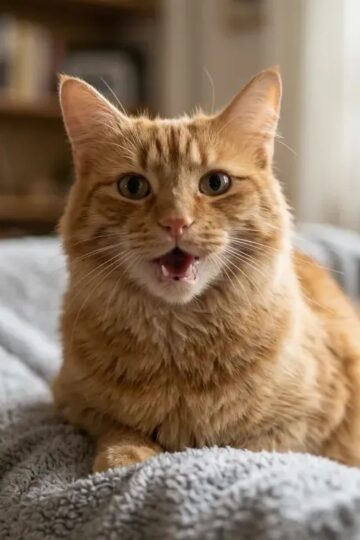
Purring is widely misread. Not every purr means the same thing, and a comfortable senior cat's purring follows a very specific pattern.
If your cat only purrs in your usual spot, or when you touch certain "safe" areas like the cheeks or shoulders, that's not indifference. That's a targeted trust response.
A senior cat that curls into you, closes its eyes, and lets out a faint, buzzing purr is reaching a level of contentment a nervous cat simply can't fake. The key word for senior cats is "rhythmic" - a steady, unbroken purr means nothing has disturbed their sense of safety.
Targeted, calm purring is a green light. But what about when they fall silent altogether?
That next sign might surprise you.
#7 - Their Household Noise Tolerance Goes Through the Roof
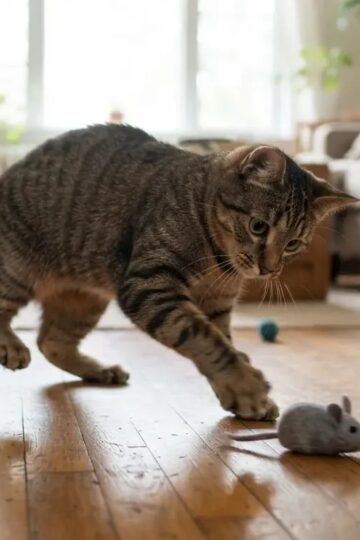
A nervous cat flinches at a dropped spoon. A comfortable senior cat barely raises an eyebrow.
A comfortable cat treats normal household noise as background sound instead of a possible emergency. In a senior animal whose senses are still sharp, that calm is a conscious choice rooted in safety.
An older cat may sleep through most of the day, but a comfortable one still looks alert and curious when awake - not jumpy or skittish by default. The gap between "deeply asleep" and "flinching at every sound" is the gap between a secure cat and a stressed one.
If your old cat stays relaxed through the vacuum cleaner and the doorbell, that's real data. And there's a body signal that goes hand-in-hand with it - one involving the most vulnerable part of any cat's body.
#6 - They Expose Their Belly and Actually Stay There
A quick roll-and-flash means nothing. The real signal is what happens next.
Cats that feel safe often expose their belly while resting. It doesn't always mean they want it touched, but it does show deep trust in their surroundings.
For a small predator like a cat, exposing the spine and belly basically says, "I trust you not to hurt me." A true comfort moment looks like a long, floppy sprawl - paws loose, eyes closed, staying that way even if you shift position.
Quick Compare
- Guarded cat: crouched low, tail tucked tight, ears pinned back, eyes locked on the exit.
- Comfortable cat: sprawled loose, tail relaxed, ears soft and forward, eyes half-closed.
- Guarded cat: freezes or flees the second you shift position nearby.
- Comfortable cat: barely stirs when you move around the room.
A senior cat that lies exposed like that while you move freely around the room is telling you something rare. And what they do with their back tells a story just as powerful.
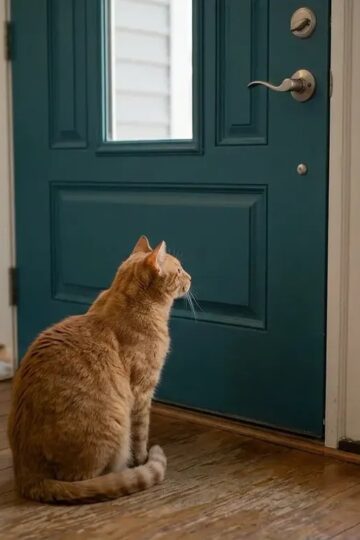
#5 - They Turn Their Back to You and Face the Door
This one looks like dismissal. It's actually the opposite.
Sleeping deeply with its back turned to you is one of the clearest relaxation signals a cat can give. Turning away means your cat has decided you're guarding the room they can't watch.
When your older cat curls up with their back pressed against your body, they're doing something that requires enormous trust. In predator-prey logic, your cat is literally appointing you their security detail.
Most owners misread this as the cat ignoring them. Behaviorists flag it as one of the deepest trust behaviors in the feline repertoire.
The next sign happens in motion, not in rest.
#4 - They Follow You Room to Room on Stiff Joints
A young cat follows you out of curiosity. An old cat follows you because you're their safe zone - and that changes everything.
If your senior cat uses stiff, aching joints just to stay close to you, that's not clinginess. That's a cat saying "wherever you are, nothing bad happens."
Worth Knowing
- Veterinary researchers estimate that up to 90% of cats over age 10 have some degree of arthritis.
- One radiographic study found the severity of joint disease climbs roughly 13.6% with each additional year of a cat's age.
- Cats are notorious for hiding pain, so many arthritic seniors never limp or cry out at all.
- That means a senior cat crossing the room to be near you may be pushing through real discomfort to do it.
As cats age, they often become more affectionate and seek closeness - following you room to room, curling up beside you, purring contentedly in your lap. When every step costs something physically, choosing to take it toward you is a profound vote of confidence.
This quiet shadowing is easy to overlook. Don't - because the next signal, the one involving touch, is where things get genuinely moving.
#3 - They Let You Handle Them Without Tensing Up
Younger cats fight nail trims. They squirm during vet exams and bolt when you reach too fast.
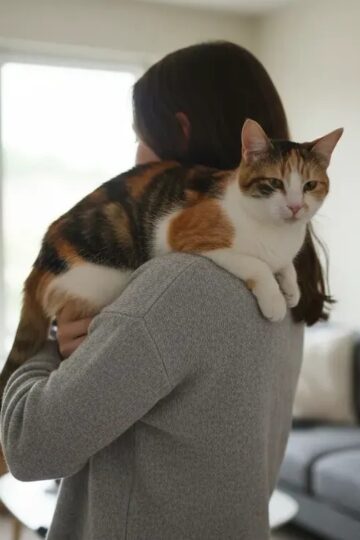
A comfortable old cat does something entirely different. An older cat who calmly lets you lift them onto the couch or wipe their eyes has decided you're safe enough to be vulnerable with.
Some guardians find this shift unsettling because it reminds them of aging. Behaviorists often see it as one of the clearest markers of deep, hard-earned trust.
A cat that goes limp - not stiff - in your hands has made an active decision about you.
That softness under your hands is years of relationship, not resignation. And the last two signals? One happens while they sleep, and one is so quiet most owners never notice it at all.
#2 - They Fall Asleep Deeply Near You, Faster Than Anywhere Else
Adult cats typically sleep 12 to 16 hours a day. Senior cats, age 11 and up, often sleep even more - sometimes 18 to 20 hours.
With that much sleeping happening, where and how your cat sleeps is one of the most data-rich signals available. A true "safest spot" moment looks like this: they roll onto their side or back, paws go loose and limp, eyes close and stay closed.
At a Glance
- Adult cats (roughly 1 to 10 years): about 12 to 16 hours of sleep a day.
- Senior cats (11 years and up): often 18 to 20 hours a day.
- Senior sleep tends to be lighter and more fragmented - aches and low-grade anxiety keep many older cats on a kind of permanent half-alert.
- A fast, deep nap curled against you, faster than in their own bed, means your presence is doing something their own space can't.
So if your old cat curls up against you and conks out faster than in their regular bed, your presence is physically lowering their guard. Deep, fast sleep near you isn't coincidence - it's your cat's nervous system recognizing you as a safe place.
That's the second-most powerful signal on this list. The #1 sign happens with no fanfare, no drama, and almost no noise at all.
#1 - They Simply Stay - Calmly, Quietly, Without Needing Anything
Every other signal on this list involves your cat doing something. The final one is about what they stop doing.
A cat that sits calmly in the same room as you, doesn't startle easily, and holds relaxed body language around you is demonstrating genuine trust - whether or not they ever initiate contact. As their energy dips, senior cats often value quiet companionship more than anything else.
They'd be content to simply sit by your side, enjoying your presence without needing constant interaction. That stillness - the absence of tension, scanning, flinching, or fleeing - is the most complete comfort signal a cat can offer.
Many older cats are more attached than they've ever been. They've just stopped shouting about it.
The Bottom Line
Most people spend years waiting for their old cat to become more expressive, never realizing the cat has been broadcasting comfort the entire time. The stretched-out sprawl, the upright tail, the slow blink, the stiff-jointed follow through the hallway - these are not small things.
They're a senior cat spending its limited energy to tell you one thing: I'm safe here, and you're the reason. The signals get quieter with age, but they never actually stop.
Now that you know what to look for, you'll start seeing them everywhere. Which one did you recognize in your own cat first?