13 Gentle Signs Vets Say Tell You Your Old Cat Is Still Thriving
Most cat owners assume a slower, sleepier senior cat is a cat in decline. That assumption is wrong often enough that it causes both needless panic and dangerous complacency in equal measure.
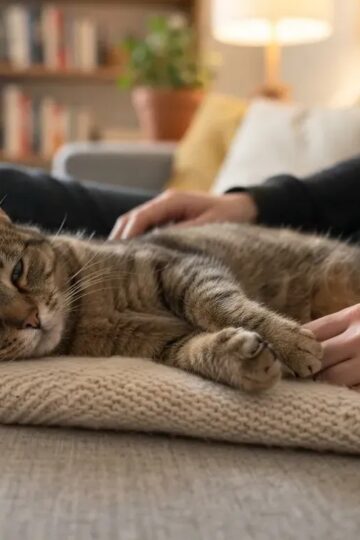
Cats live longer than ever now, and according to Cornell's Dr. Richard Goldstein, DVM, "growing older is not a disease" - some older cats stay perfectly normal well into their later years. The real question was never her age. It's whether she's actually thriving, and vets say the proof shows up in small, easy-to-miss moments you probably walk past every single day.
#13 – A Coat That Still Looks Intentional
Self-grooming is usually the first habit to slip when a senior cat starts struggling.
Healthy cats are meticulous groomers. When a cat is in pain or feeling unwell, that meticulous routine is often the very first thing to go.
Fast Facts
- Cats are officially considered senior at age 10, though many vets start senior-level care earlier.
- Cats are considered senior between 11 and 14 years old, and geriatric after 14, roughly equal to a 60-to-100-year-old person.
- The average cat lifespan is 13 to 17 years, though many now live to 20 or more.
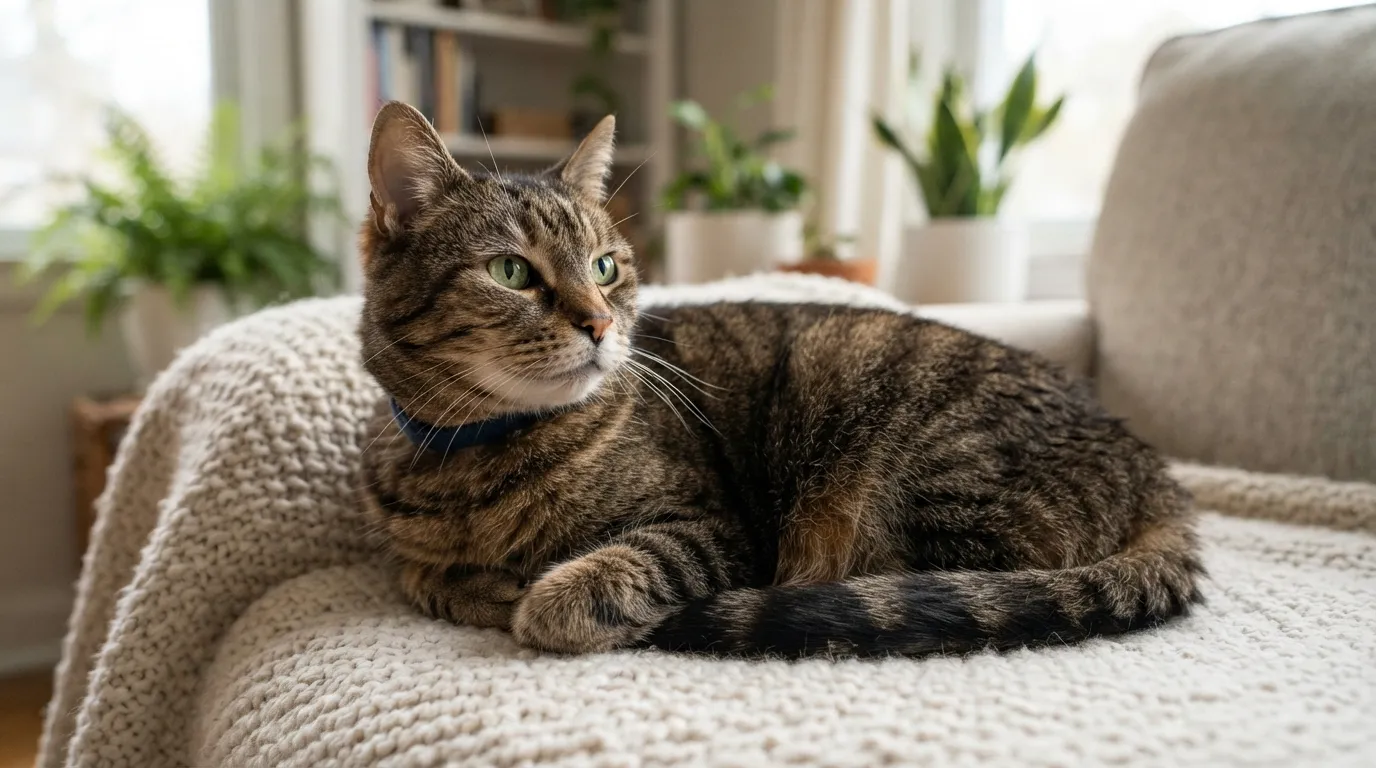
A coat that still looks clean and deliberate - not matted, not patchy - is a quiet but powerful green flag. Arthritis and mobility issues make grooming harder, so a scruffy coat is rarely "just aging."
A cat who's still reaching her belly, the base of her tail, and behind her ears is telling you something important: her joints and her motivation are both holding strong. That's no small thing at 14 years old.
But the coat is only the surface story. What vets check next is something almost every owner walks past without a second thought.
#12 – Consistent Litter Box Habits
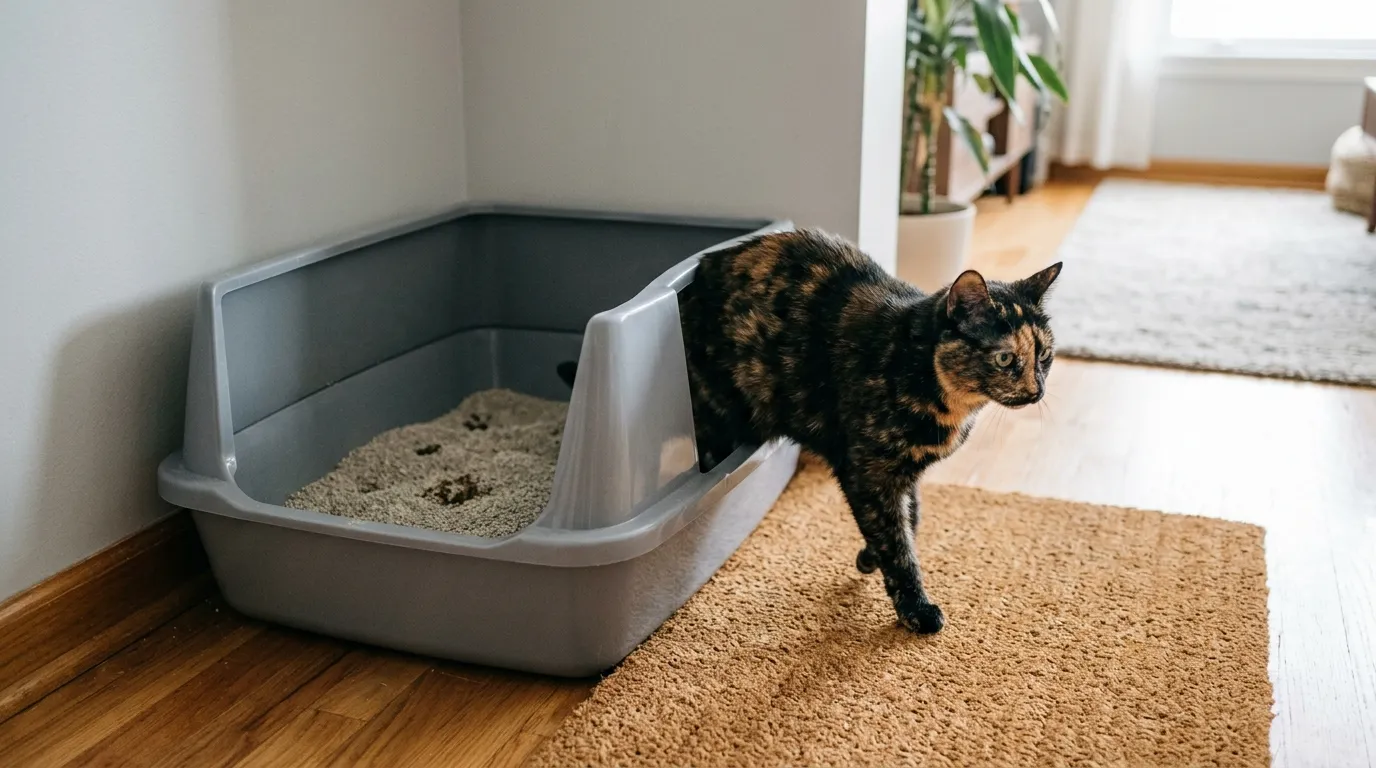
The litter box is, in the words of many vets, your cat's daily health report card.
Senior cats are prone to urinary and digestive issues that show up first as changes in litter box habits. Straining, extra visits, or accidents outside the box can all signal pain hiding beneath the surface.
Thriving looks like the opposite of all that. A senior cat who visits on a predictable schedule, produces normal output, and walks away without hesitation is quietly passing one of the most important health tests there is.
No changes in litter box behavior is itself a meaningful sign - it means her kidneys, bladder, and gut are all still doing their jobs well.
The next sign catches most owners off guard. It's more emotional than clinical.
#11 – She Still Seeks You Out
Social withdrawal is one of the clearest warning flags vets watch for in senior cats. So if your old cat still wants to be near you, that matters more than you might think.
Vets say hiding, or pulling away from people and other pets, is often the very first sign something is wrong. That makes the opposite behavior worth noticing.
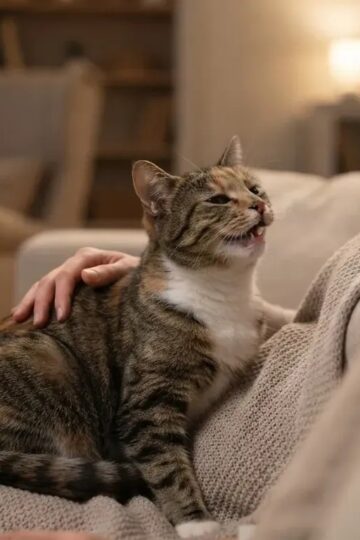
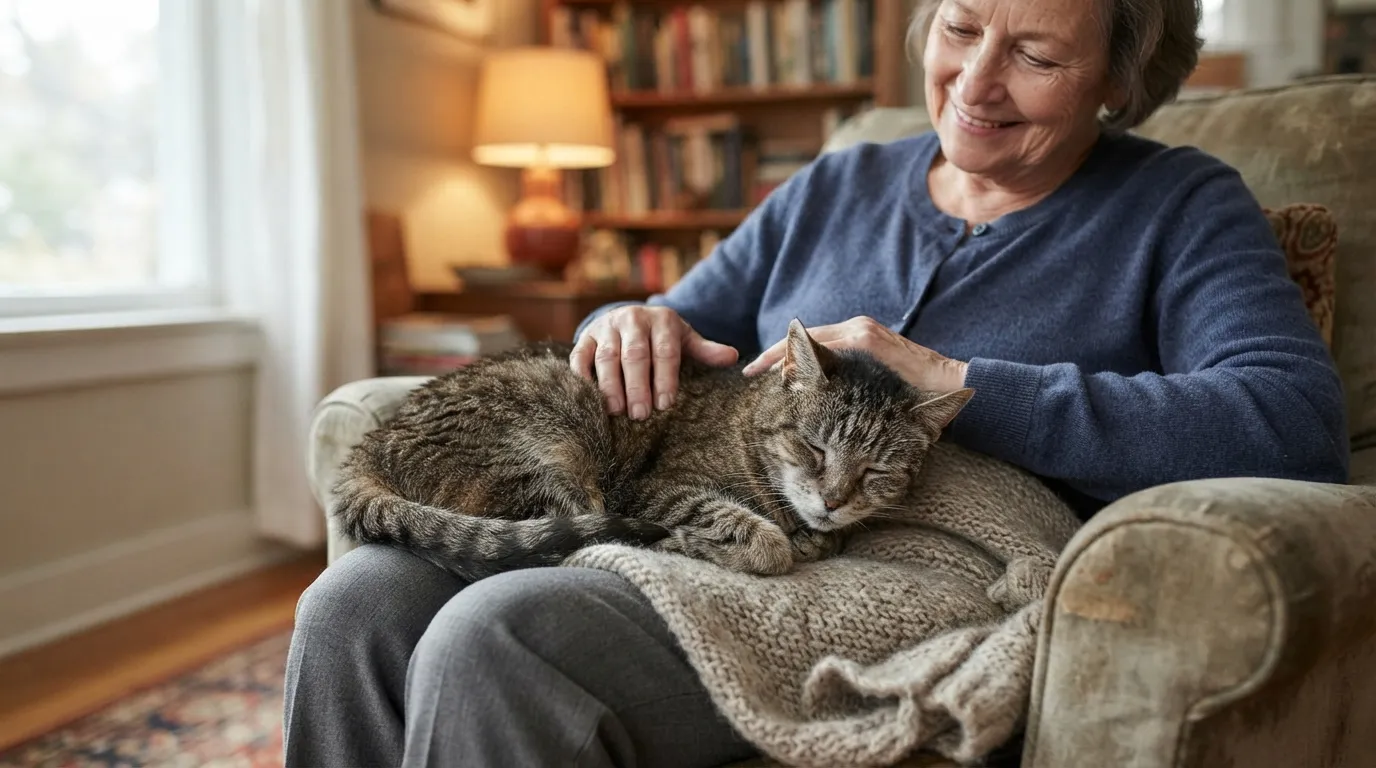
A cat who still finds her way to your lap, greets you at the door, or chirps for attention is showing both cognitive engagement and a sense of security. She feels well enough to keep investing in her relationships.
Older cats lean on routine more than younger ones do, and staying plugged into the household rhythm is one of the clearest signs of genuine wellbeing. It's easy to take for granted - until it's gone.
What comes next is something vets specifically flag as a green light, and almost nobody thinks to check it.
#10 – Bright, Clear Eyes With No Discharge
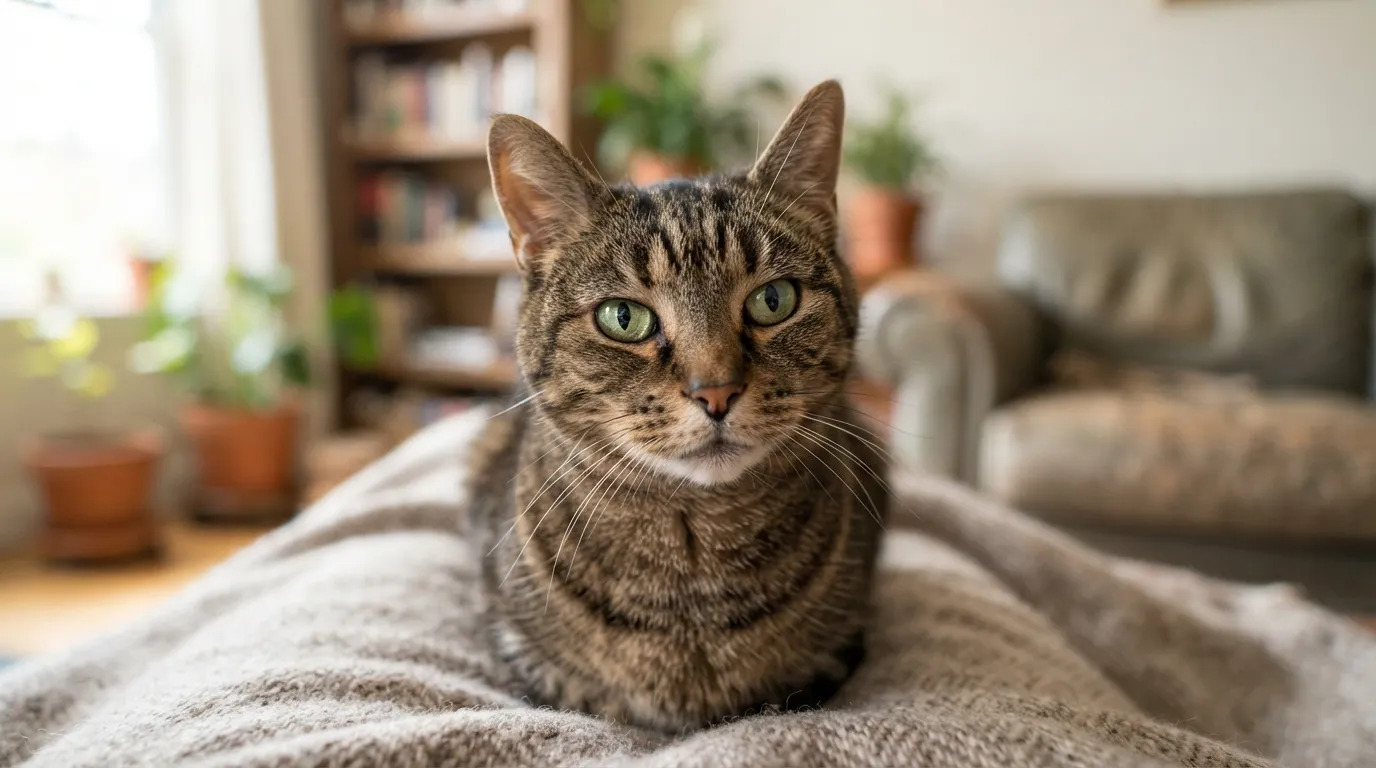
Eyes are one of the most honest windows into a senior cat's health, and healthy ones have a look that's hard to fake.
Bright, focused eyes with no cloudiness, no excess tearing, and no crust in the corners tell you the nervous system and immune response are still keeping pace with age.
The real test is tracking. A cat who can still follow a fly, a shadow, or your hand across the room with sharp focus is showing you her neurological wiring is intact.
Pair sharp eyes with ears that still swivel toward sound, and you've got a cat whose senses haven't quit on her yet.
Stick around, because the next sign genuinely surprises most cat owners when they hear it.
#9 – Muscle You Can Still See Along Her Spine
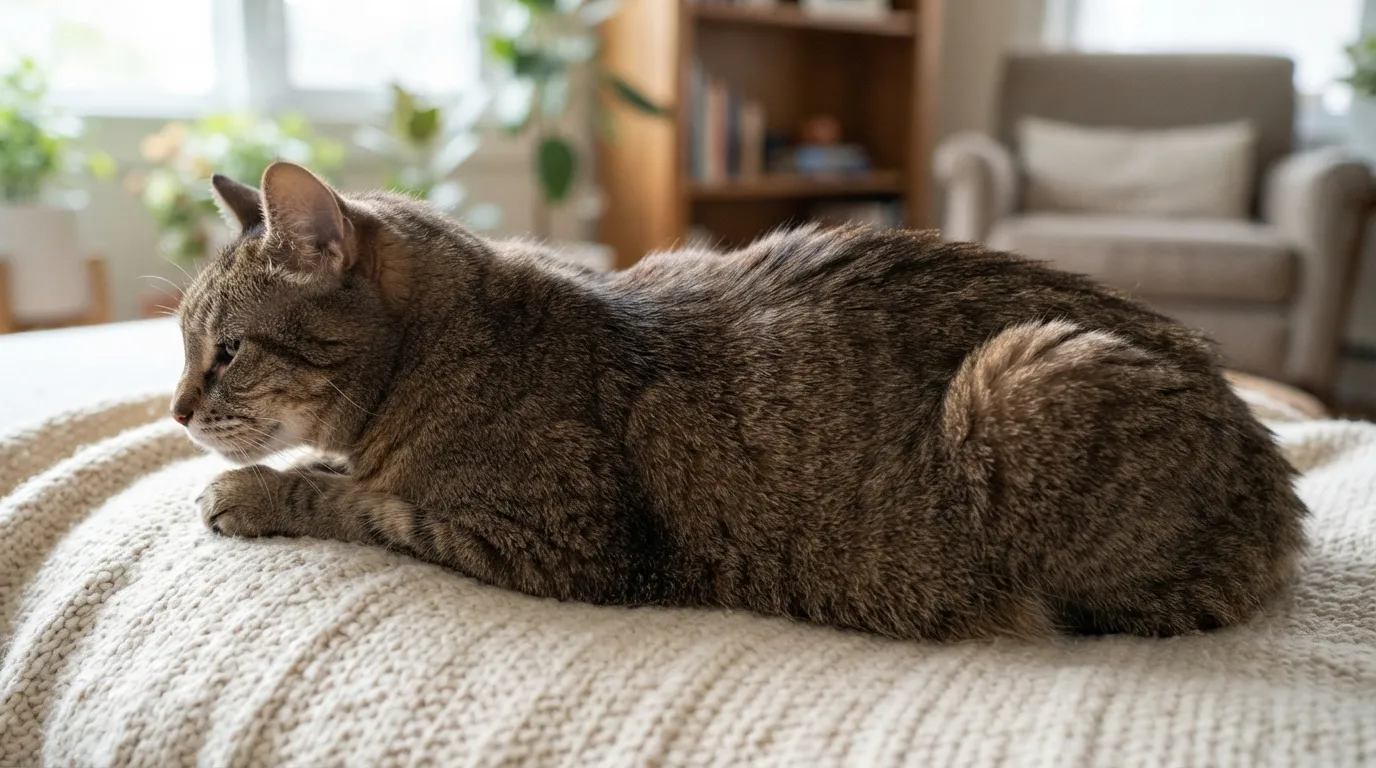
Weight stability in a senior cat is harder to hold onto than it sounds, and more meaningful than most owners realize.
Weight loss is often one of the very first signs something's wrong, and it can happen even while your cat is eating the same amount or more - especially with conditions like hyperthyroidism or diabetes.
Here's what most senior cats lose first: muscle along the spine, leaving a bony ridge you can feel with your hand. A cat who still has a rounded topline and visible muscle across her shoulders and hindquarters is ahead of most cats her age.
Vets recommend weighing your cat at home regularly, not just at the annual visit. Holding steady year over year is something most senior cats quietly fail to do.
The sign coming up next is one vets say is wildly underrated by almost every owner.
#8 – Normal, Relaxed Breathing at Rest
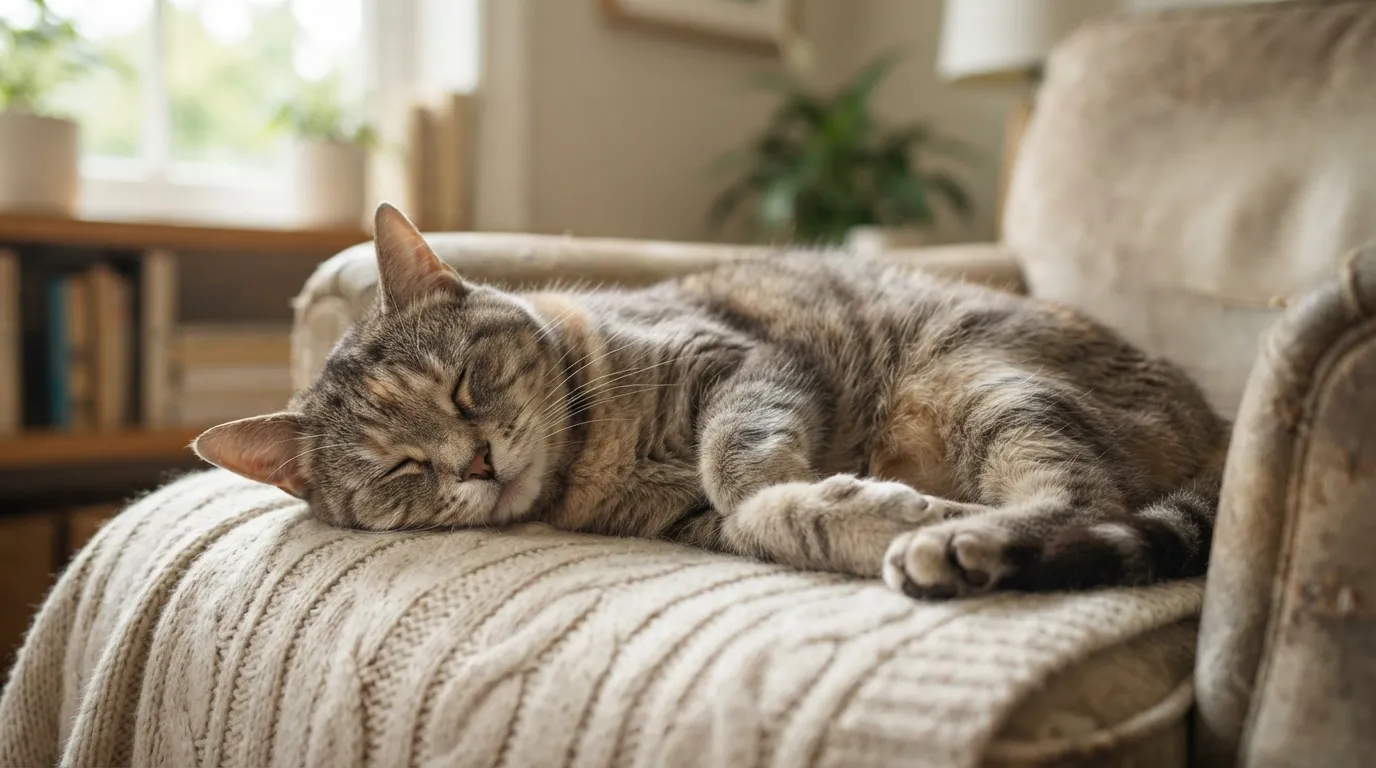
Most owners never think to watch how their senior cat breathes. Vets say they absolutely should.
Watch her while she rests. Breathing should be quiet and unlabored, and her chest should rise naturally without visible strain.
At a Glance
- A normal cat with no respiratory disease should breathe between 15 and 30 breaths per minute while resting or asleep.
- Resting rates consistently above 30 breaths per minute are considered increased and abnormal and worth a call to the vet.
- Cats should not be purring when you count their breathing rate, since it throws off an accurate reading.
Tracking a resting respiratory rate gives your vet real data about heart and lung health long before other symptoms show up. A cat who breathes slow and silent while curled up - no open-mouth breathing, no flared nostrils - has a cardiorespiratory system that's holding steady.
It costs nothing and takes five seconds to check. Almost no one ever does it, which is exactly why it's such a useful sign.
But there's a behavioral sign coming up next that genuinely surprises even vets when they see it in older patients.
#7 – Curiosity Is Still Switched On
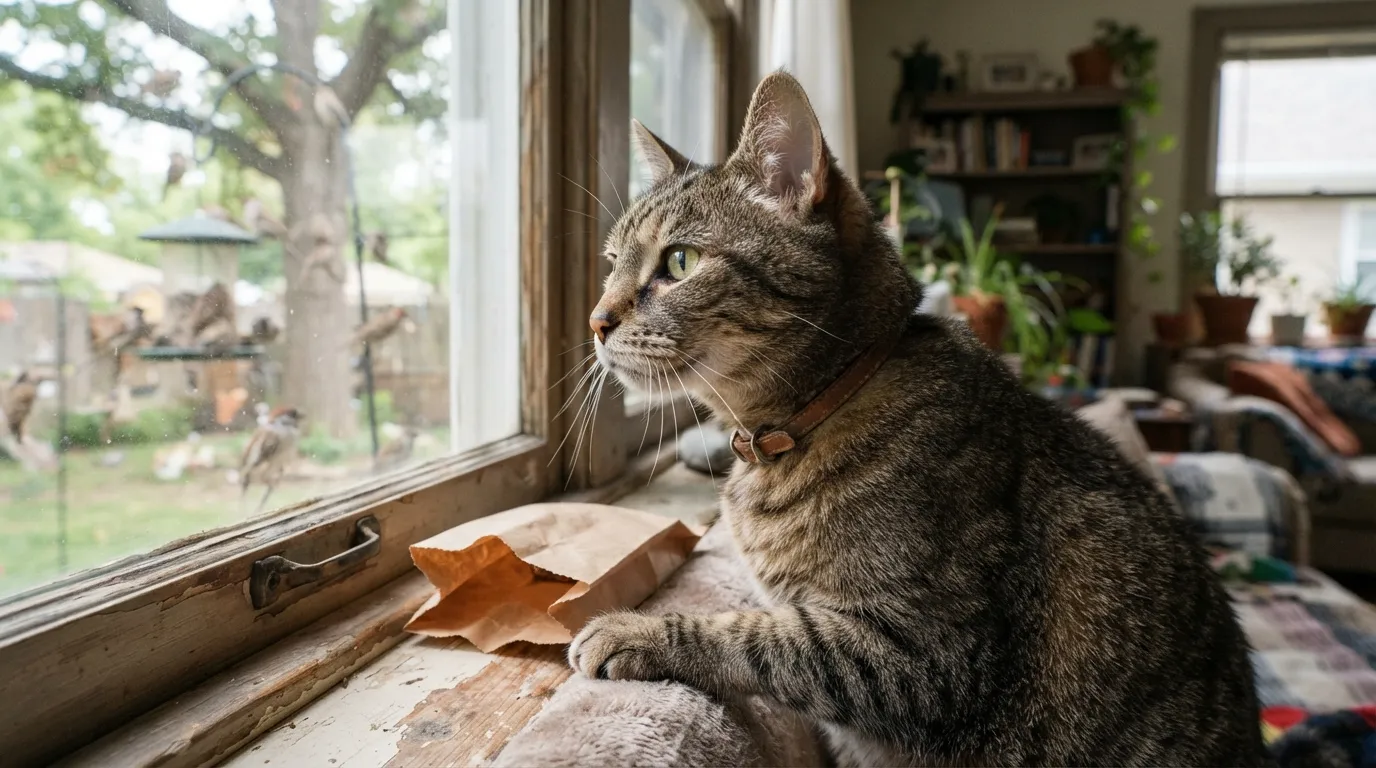
A cat who still investigates a new paper bag, watches birds from the window, or sniffs a new object you brought home is showing off something vets value highly: cognitive engagement.
Curiosity takes sensory sharpness, motivation, and the energy to act on both. A senior cat whose ears still swivel toward a sound, or who still tracks a bird with real focus, is holding onto sharpness a lot of cats lose much earlier.
Cognitive decline in cats is real, and it's progressive. A cat still curious about her world is a cat whose brain hasn't handed over the reins yet.
What's coming up next is a sign many vets quietly consider one of the best predictors of senior cat health, period.
#6 – She Still Shows Up Hungry
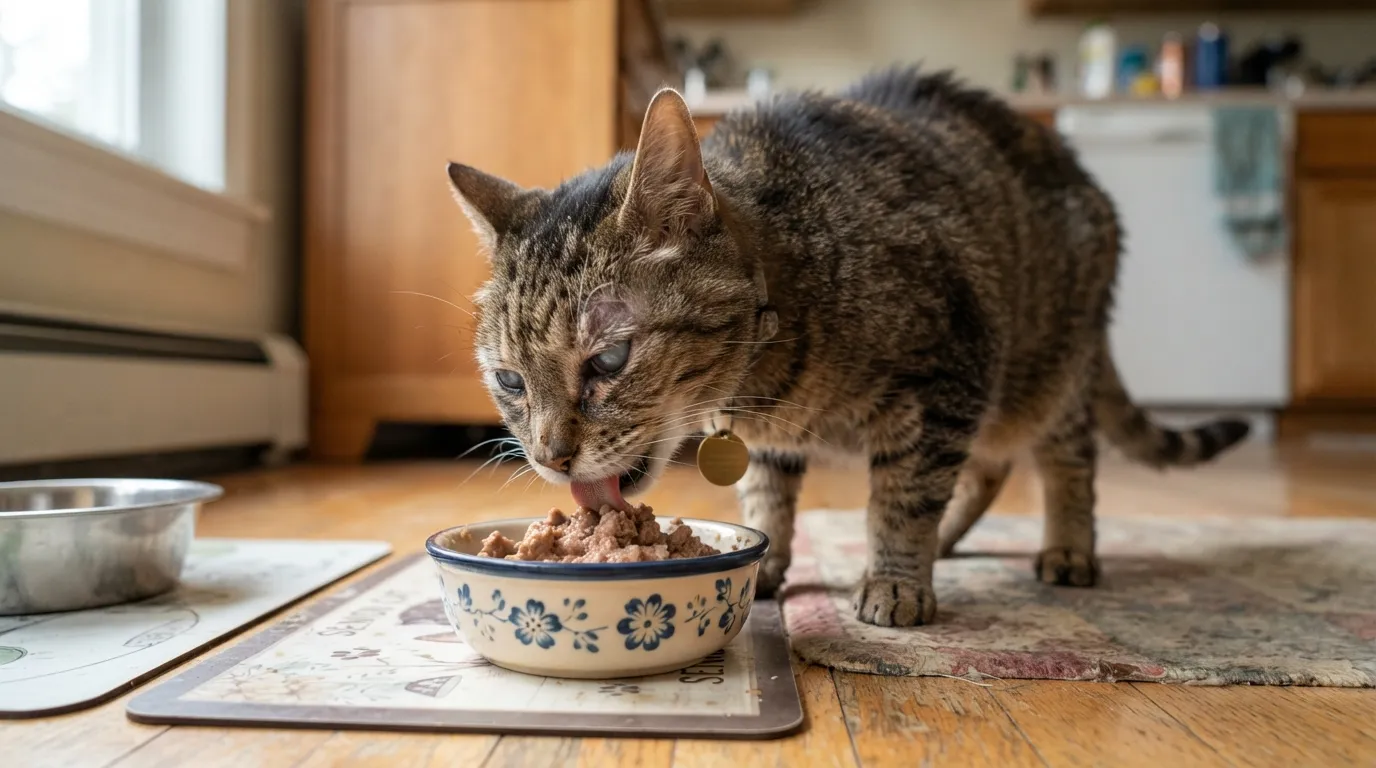
Appetite is a barometer vets watch more closely than almost anything else in a senior cat.
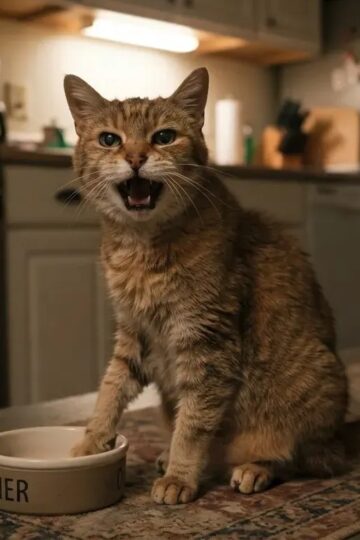
Taste and smell naturally fade with age, so a cat who still shows up eager and on schedule is bucking the trend in a good way. Sudden disinterest in food gets treated as an urgent red flag, not a normal aging quirk, because appetite is often the first thing to slip when something's wrong internally.
Track how much your senior cat eats and drinks each day. Any real change is worth a call to the vet.
A cat who arrives at her bowl with enthusiasm and finishes her meals is passing one of the most important checkpoints there is. It means her sense of smell and taste are intact, her nausea is at zero, and her drive to keep going is still strong.
The sign coming next gets dismissed as "cute old cat behavior" all the time. Vets see it very differently.
#5 – Steady, Purposeful Movement
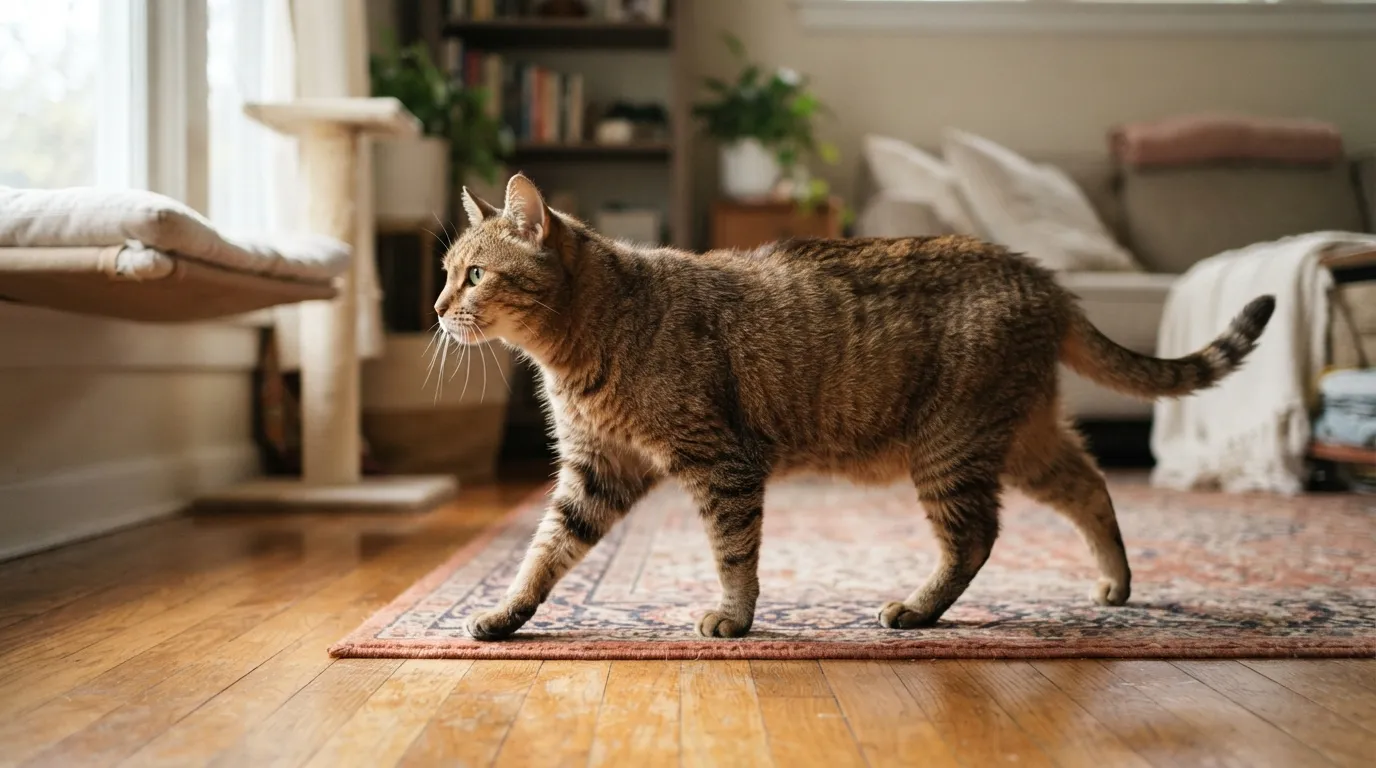
A senior cat who crosses the room with intention - no wobbling, no hesitating, no visible stiffening - is showing you her musculoskeletal and neurological systems are still in solid shape.
Cats are experts at hiding pain, so arthritis and joint stiffness often stay invisible until they're severe. That's exactly why the positive version is so informative.
A cat who rises from sleep smoothly and climbs to her favorite spot without a second thought is giving you a daily mobility report, and a good one. Movement that still looks easy and confident in a 13- or 15-year-old cat is genuinely impressive.
Vets call it one of the clearest indicators of overall structural health. Don't take it for granted.
The next sign connects straight to your cat's brain, and it's a bigger deal than it sounds.
#4 – She Still Wants to Play
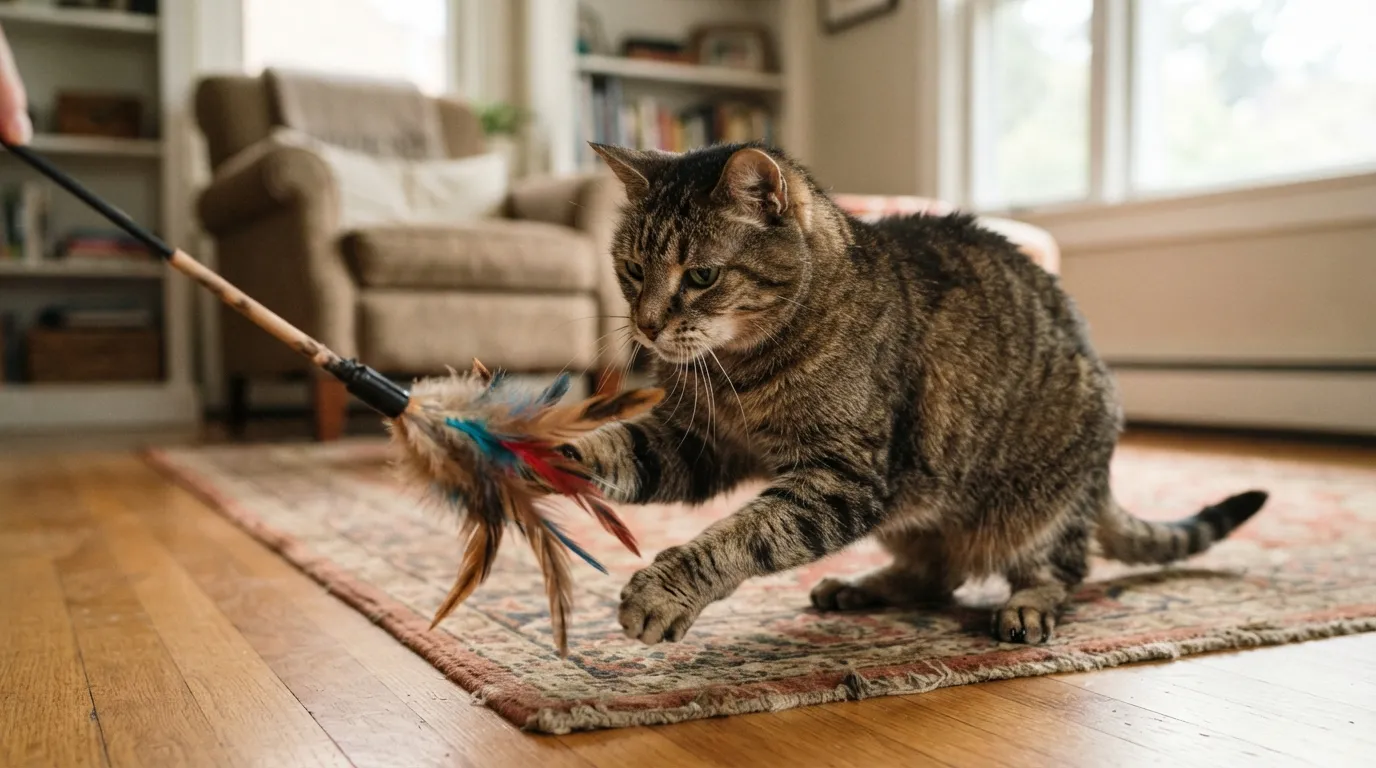
This one surprises a lot of owners, who assume play is strictly a kitten thing. Vets strongly disagree.
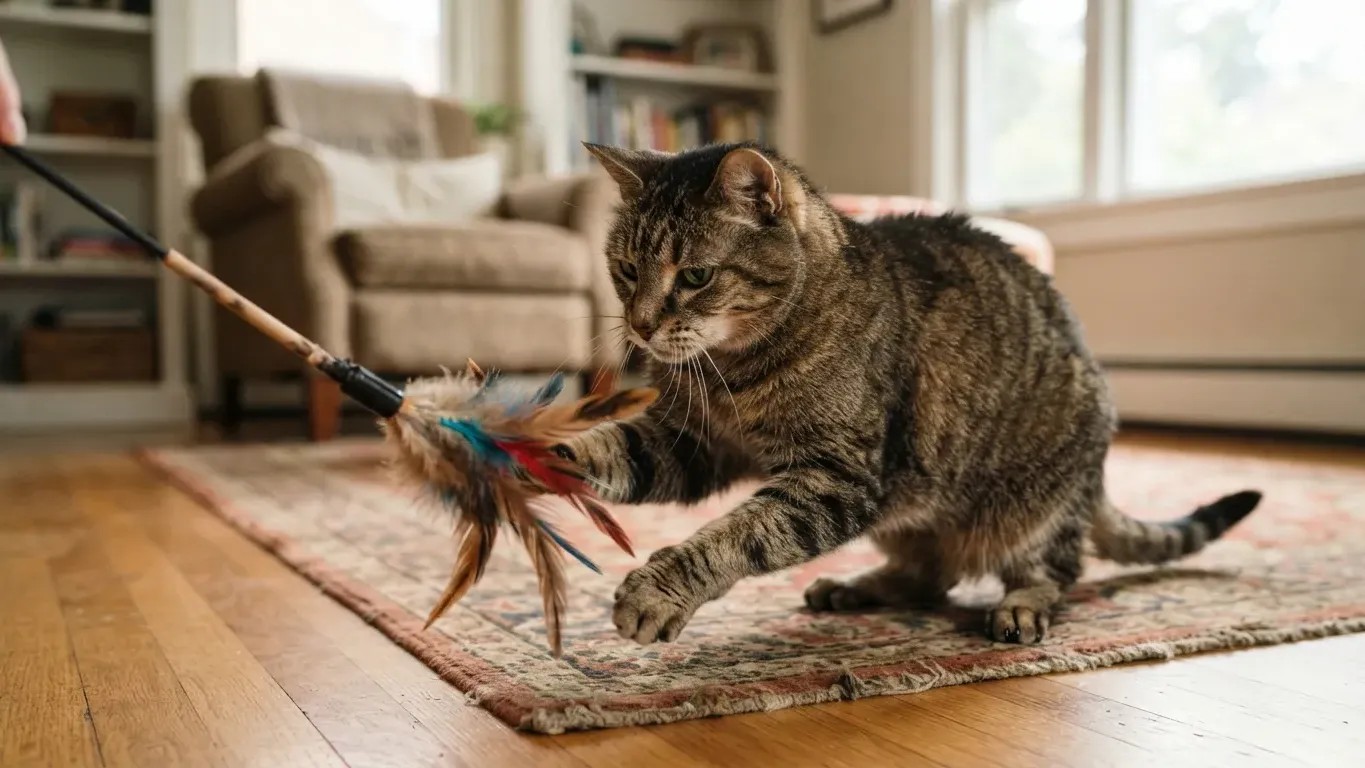
A senior cat who still pounces on a feather wand or bats at a crinkly ball - even for thirty seconds - is showing you her prey drive and her joints are still working as a team. Play takes coordination, eyesight, and willingness to move, and those three things tend to decline together when a cat is truly struggling.
Even a brief, low-intensity burst of play signals preserved neurological function and real emotional investment in life. Regular play also supports healthy weight, better circulation, and stronger muscles, so keep the feather wand coming.
What comes next is a sign you can literally feel with your hands, and it's one vets specifically train owners to check for at home.
#3 – The Hands-On Test Vets Swear By
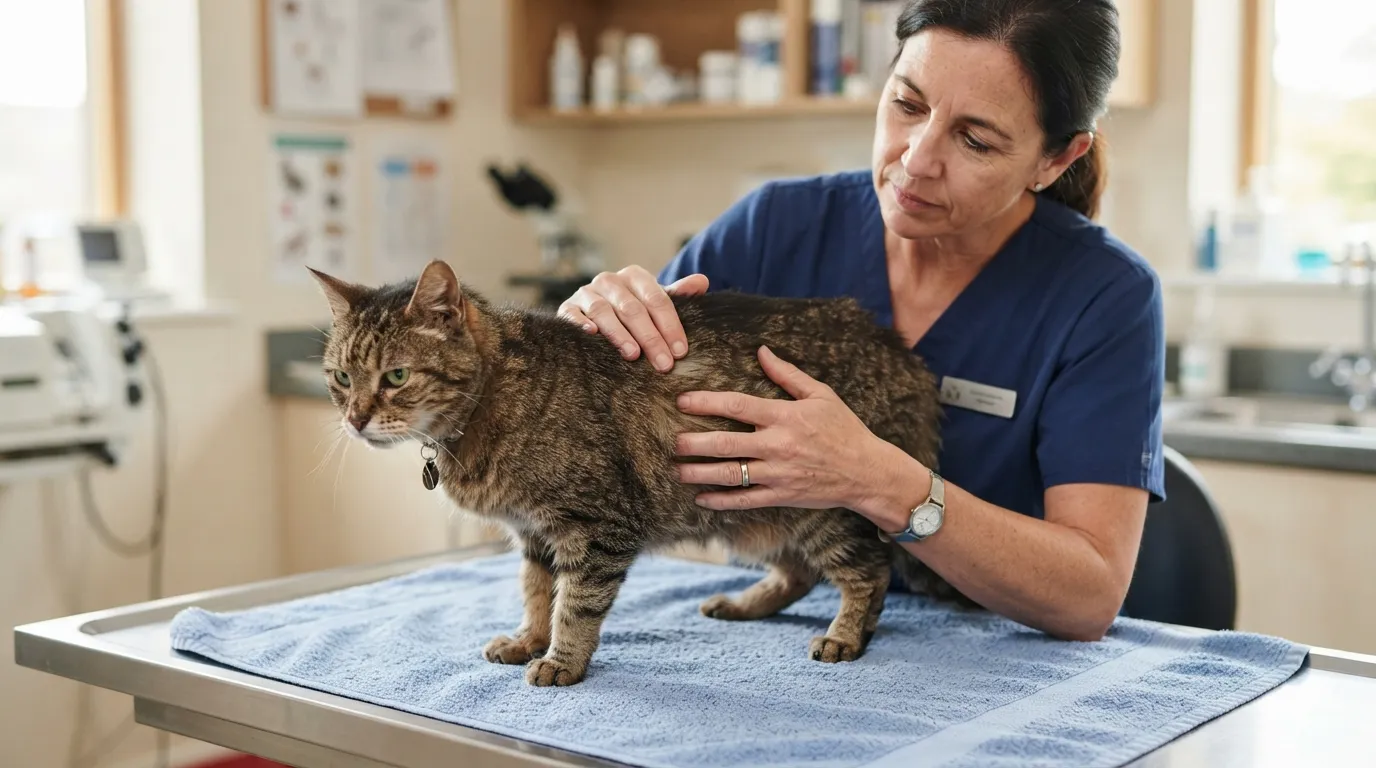
Vets don't just eyeball a senior cat's weight. They use their hands, and they want you to do the same at home.
Visible weight loss - a spine you can see, hip bones poking through, hollow shoulders - means the body is under real metabolic stress and needs a vet's attention fast. The flip side is worth celebrating.
Ribs you can feel with gentle pressure but not see, a spine with a smooth muscle covering, shoulders that still feel full - that's a body condition vets actively celebrate in senior patients. Tracking that feel over months and years builds a health history more useful than any single snapshot.
A senior cat who has held the same body condition for a year or more is winning one of the toughest physiological battles that come with old age.
Slide #2 is the one almost every cat owner overlooks completely, and vets say it's crucial.
#2 – Pink Gums and a Clean Mouth
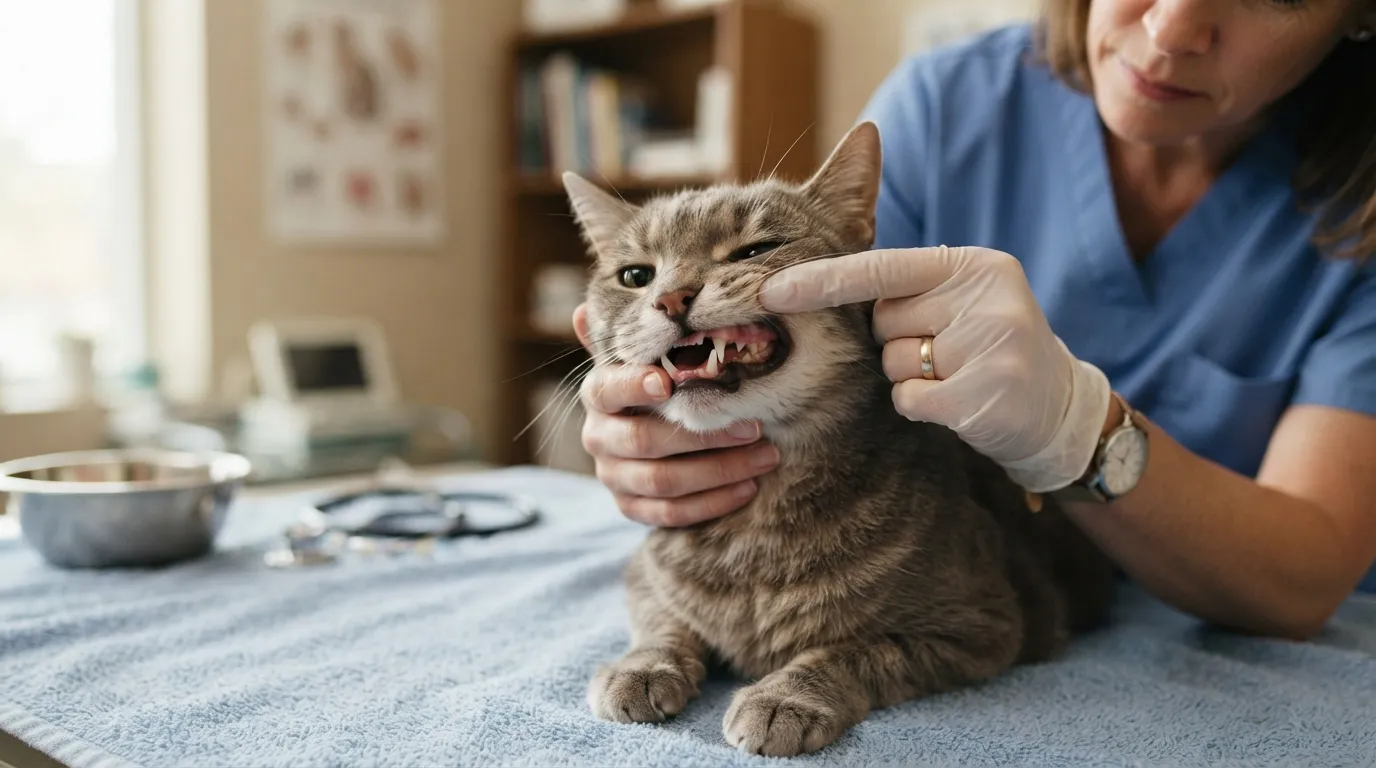
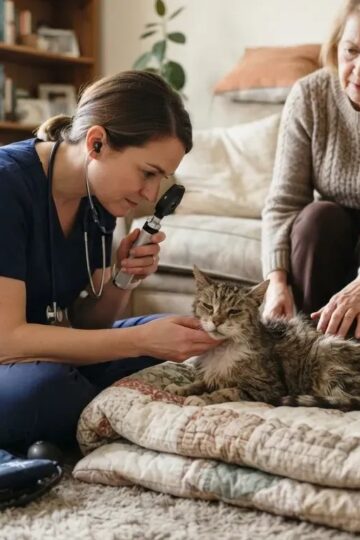
Oral health in senior cats is dramatically underrated, and it's one of the first things vets check in a wellness exam for good reason.
Worth Knowing
- Dental disease affects over 80% of cats over 5 years old, making it one of the most common senior-cat health issues.
- Bad breath, drooling, and reluctance to eat are the earliest warning signs, and they're easy to miss.
- A yearly dental check, paired with the at-home lip-lift test, catches most problems before they spiral.
Dental disease is common in aging cats and can spiral into serious health problems if it's ignored. Bad breath, drooling, or trouble eating are all signals that need real attention, not a shrug.
Gently lift your cat's lip and check the color. Healthy gums are pink and moist - pale or unusual coloring can point to anemia or circulation trouble, and it's one of the fastest health checks you can do with zero equipment.
Your cat has the same set of teeth she had at six months old, and decades of wear catch up eventually. A healthy mouth sidesteps a whole cascade of downstream problems most owners never see coming.
Now for the #1 sign - the one vets say is the clearest, most complete picture of a thriving old cat.
#1 – She Still Knows Her Routine and Owns It
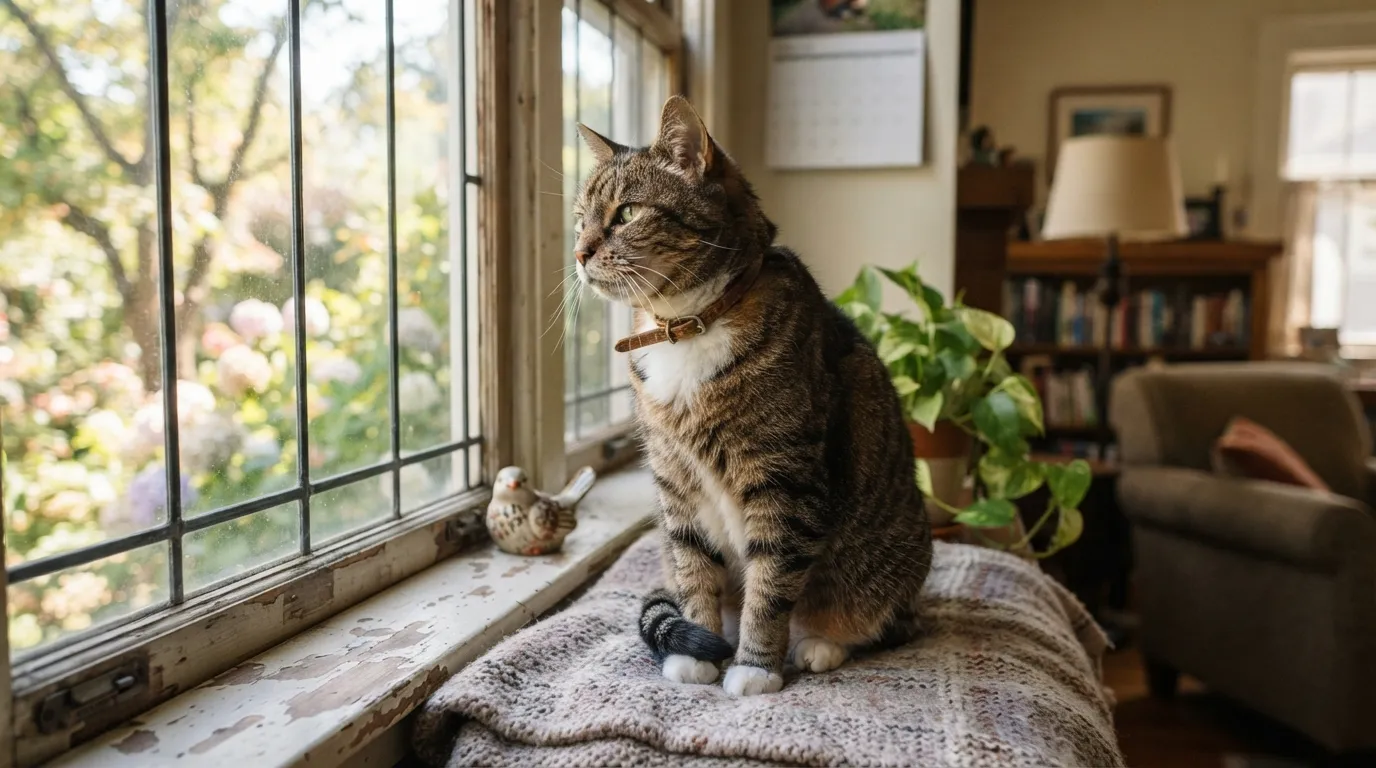
This is the one. If your senior cat wakes at the same time, demands breakfast on schedule, claims her favorite window at the same hour, and settles into her usual sleep spot at night, she is cognitively and physically intact in a way that matters enormously.
Just as we become set in our ways as we get older, cats do too.
Dr. Richard Goldstein, DVM, Cornell University
Watch for disorientation, broken sleep patterns, or sudden confusion - vets treat those as early flags worth a call. A cat who shows none of them, who moves through her day with familiar confidence, is demonstrating preserved memory, orientation, and neurological health all at once.
Routine-following demands brain function, physical capability, hunger, and emotional engagement, all firing at the same time. When it's intact, everything important underneath it is still working.
Cats now commonly live into their twenties thanks to better nutrition, indoor living, and modern veterinary medicine. Your old cat's boring little routine isn't boring at all - it's proof she's still very much in the game.
The Bottom Line
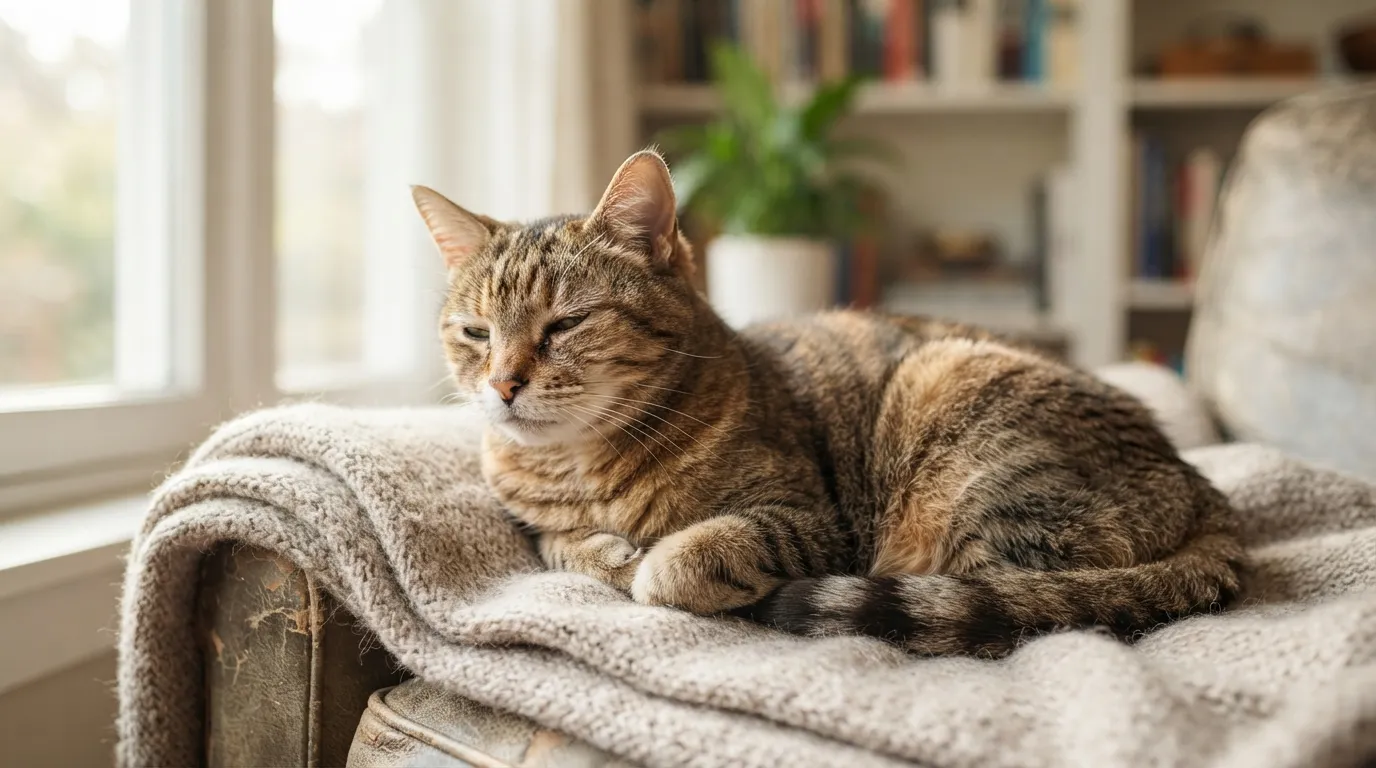
Most people scan for dramatic signs that something's wrong with their senior cat. Vets say the smarter move is learning what right looks like, then noticing when it holds steady.
Cats are masters at hiding pain and illness, which is exactly why so many owners miss the early stages. The 13 signs above - an unbroken routine, a confident stride, pink gums, a clean coat, a cat who still shows up hungry - are the quiet, daily proof that your old cat is genuinely thriving, not just surviving.
Old age isn't a disease, but older cats do need closer attention so problems get caught early and treated fast. With regular vet care and a little at-home attention, you can stretch out the good years for as long as possible.
Which of these signs does your old cat still nail every day? Tell us in the comments - we'd love to hear about your thriving senior.