15 Signs Your Cat Trusts You Completely Even When It Feels Unwell
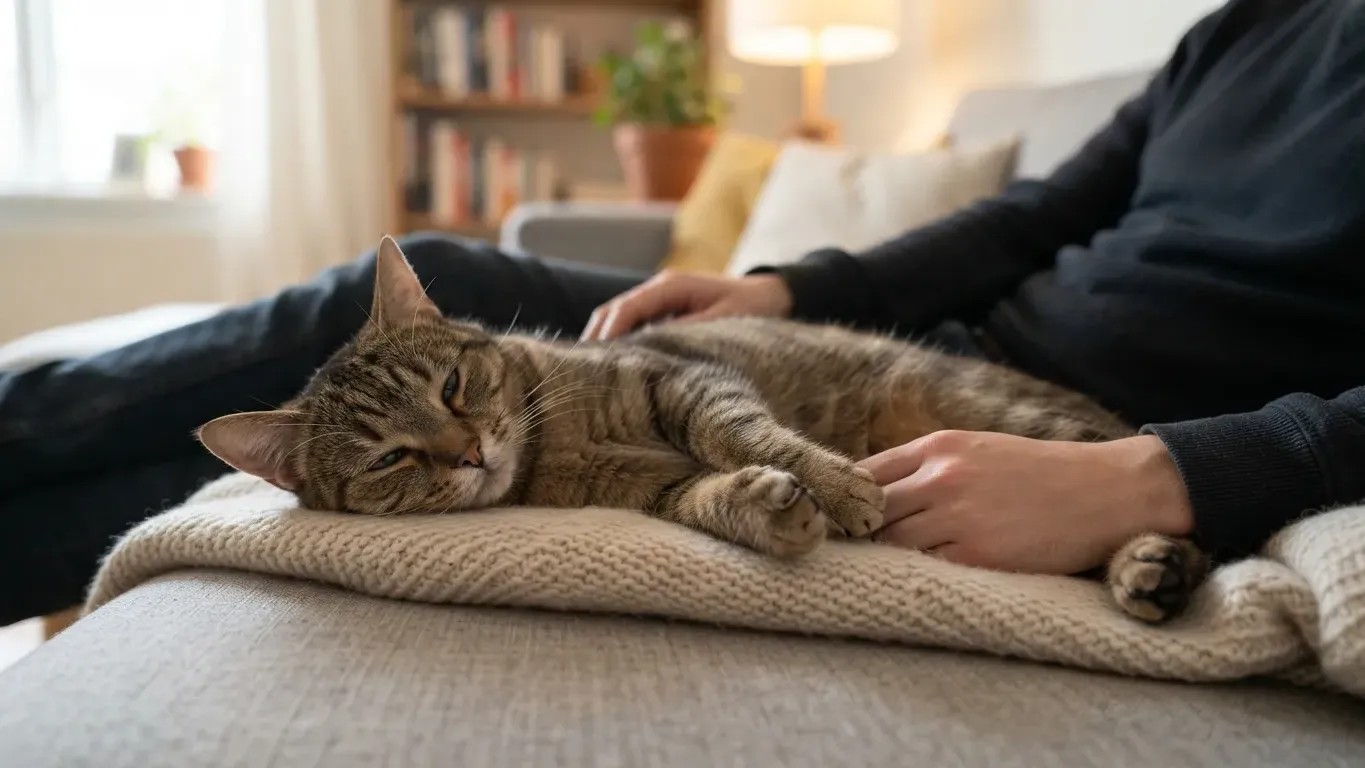
A sick cat pressed against your leg looks like nothing special - maybe just a cat seeking warmth. But veterinary behaviorists say it's actually one of the rarest signals in the animal kingdom, and once you know what to look for, you'll never see it as "just cuddling" again.
Cats are hardwired to hide any sign of weakness, even indoors, even with owners they've known for years. The fifteen signs below reveal exactly when - and why - some cats break that ancient rule completely, and the last one is proof of trust most owners walk right past.
#15 - They Still Follow You From Room to Room
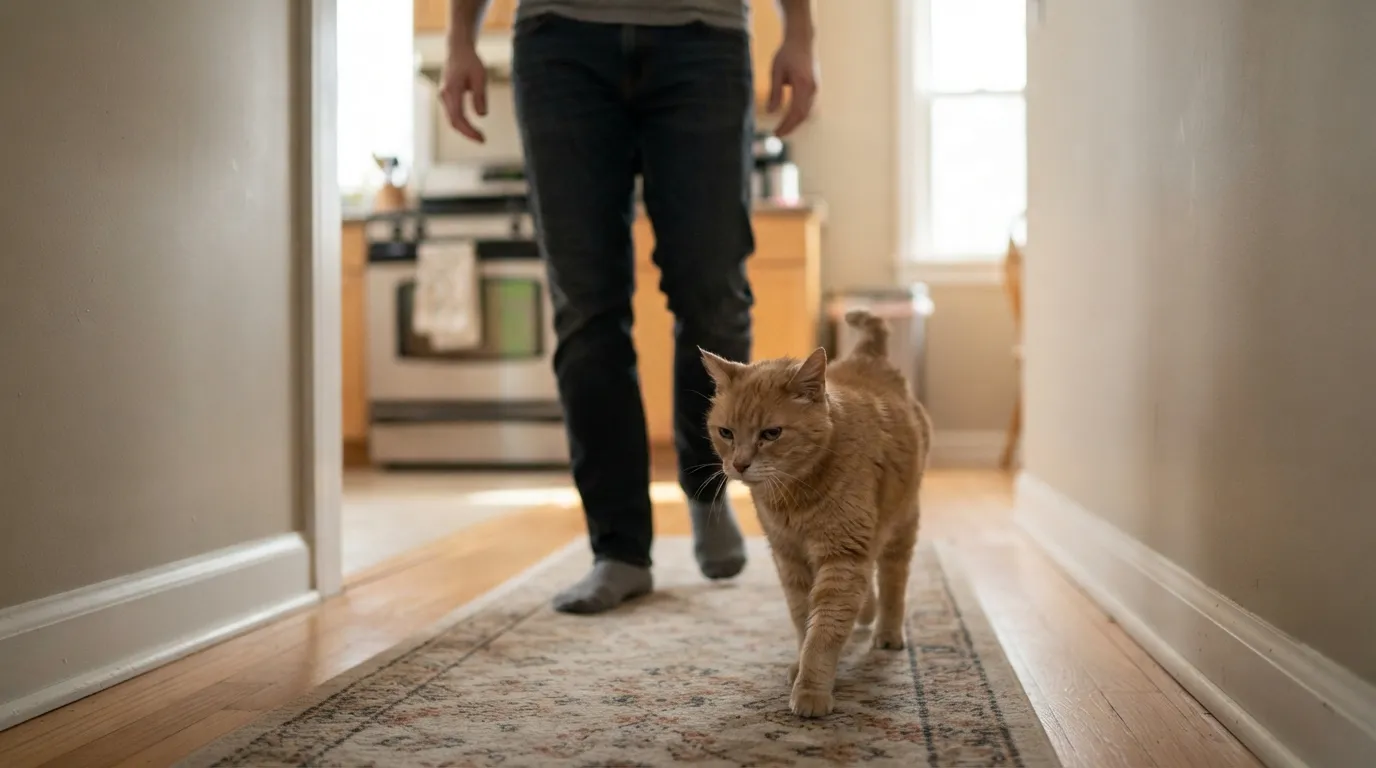
A sick cat's first instinct is to vanish, not tail you like a shadow.
In the wild, illness makes an animal look weak, and weak animals get targeted. Hiding is survival.
So when your unwell cat still trails you to the kitchen, the bathroom, and back, something bigger is happening. They're overriding a primal survival instinct because being near you feels safer than hiding does.
Watch for the quiet version too - a cat who simply relocates to whatever room you're in, without asking for anything.
That's just the opener. Sign #14 is even more intimate, and most owners completely misread it.
#14 - They Expose Their Belly Without Asking for a Rub
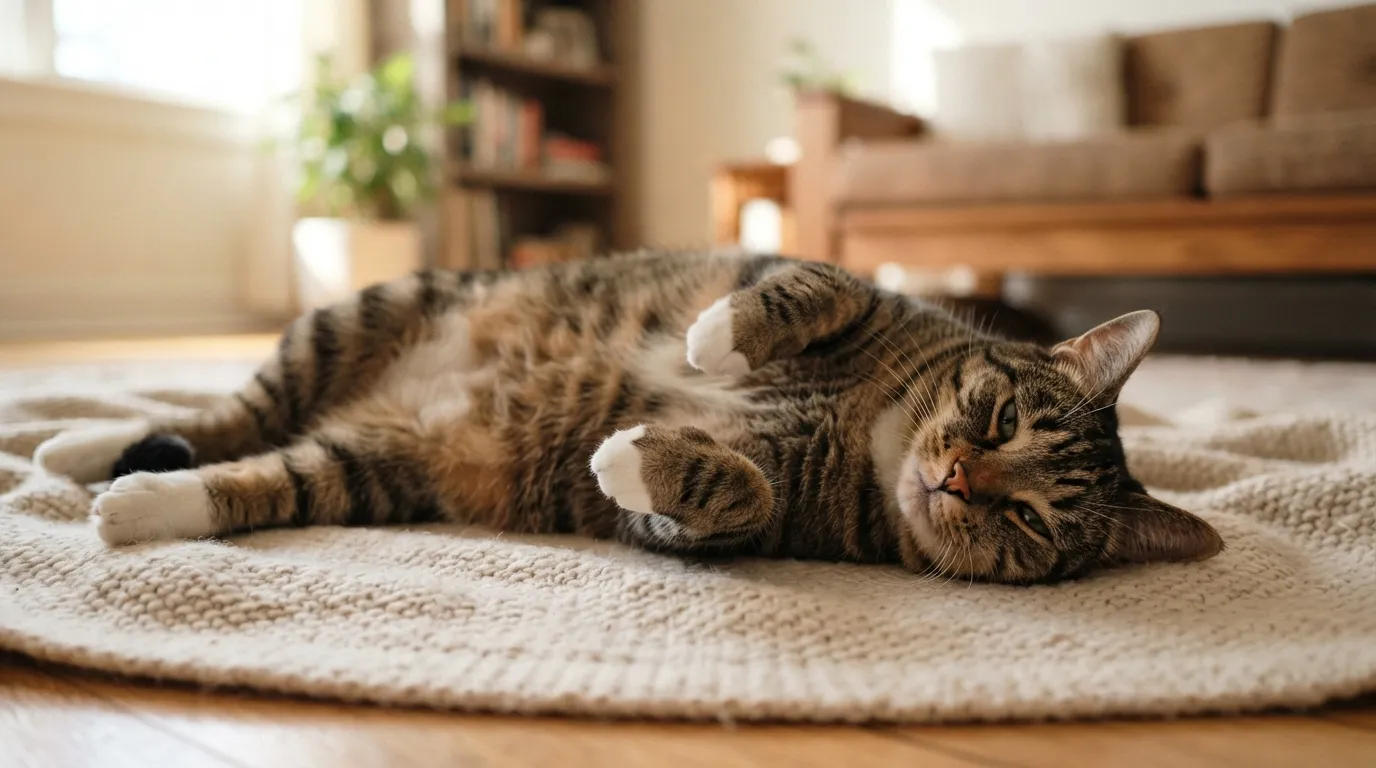
The belly is a cat's most defenseless spot - no bone, no armor, just organs.
Rolling onto their back is a full-body statement of safety, even if they're not inviting a touch.
A sick cat going belly-up near you is saying, "I am at my most exposed, and I chose you anyway."
Let them lead. Resist the urge to rub right away - the gesture means more if you just let it happen.
Sign #13 plays out right on your cat's face, and it will change how you read their eyes forever.
#13 - They Give You the Slow Blink
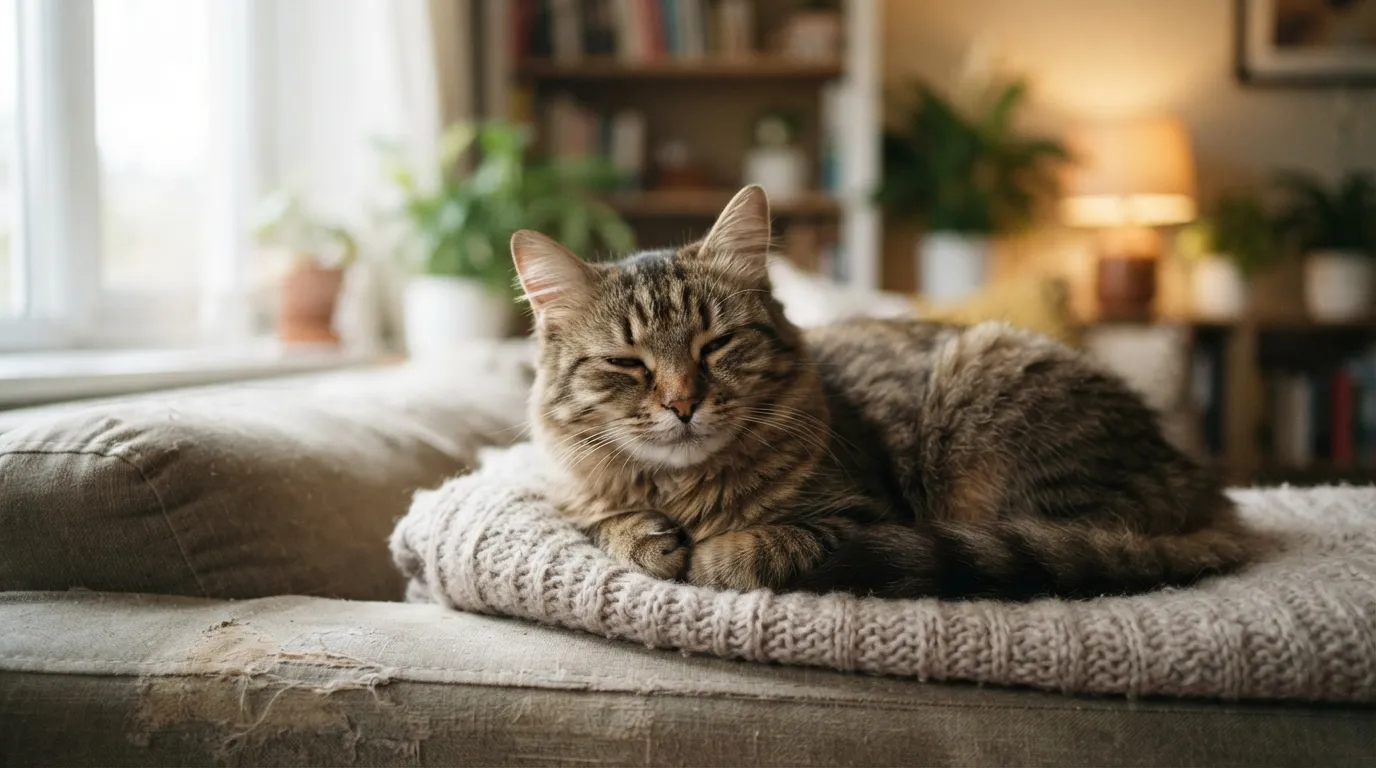
Most owners think it's sleepiness. It's not.
A slow blink is often called a "cat kiss" - a small signal of comfort, calm, and trust.
A sick cat that still slow-blinks at you is choosing vulnerability over vigilance. Sick animals normally scan for threats, not soften their eyes.
Try blinking back slowly. It's a real two-way signal, not just a cute trick.
Fast Facts
- University of Sussex researchers found cats slow-blink back more often after a human blinks slowly at them first.
- In the same research, cats approached unfamiliar people more readily after a slow-blink exchange.
- Scientists now treat the slow blink as genuine cat-to-human communication, not just a sign of drowsiness.
Sign #12 shows what it means when a hurting cat still wants to sleep next to you.
#12 - They Choose to Sleep On or Beside You
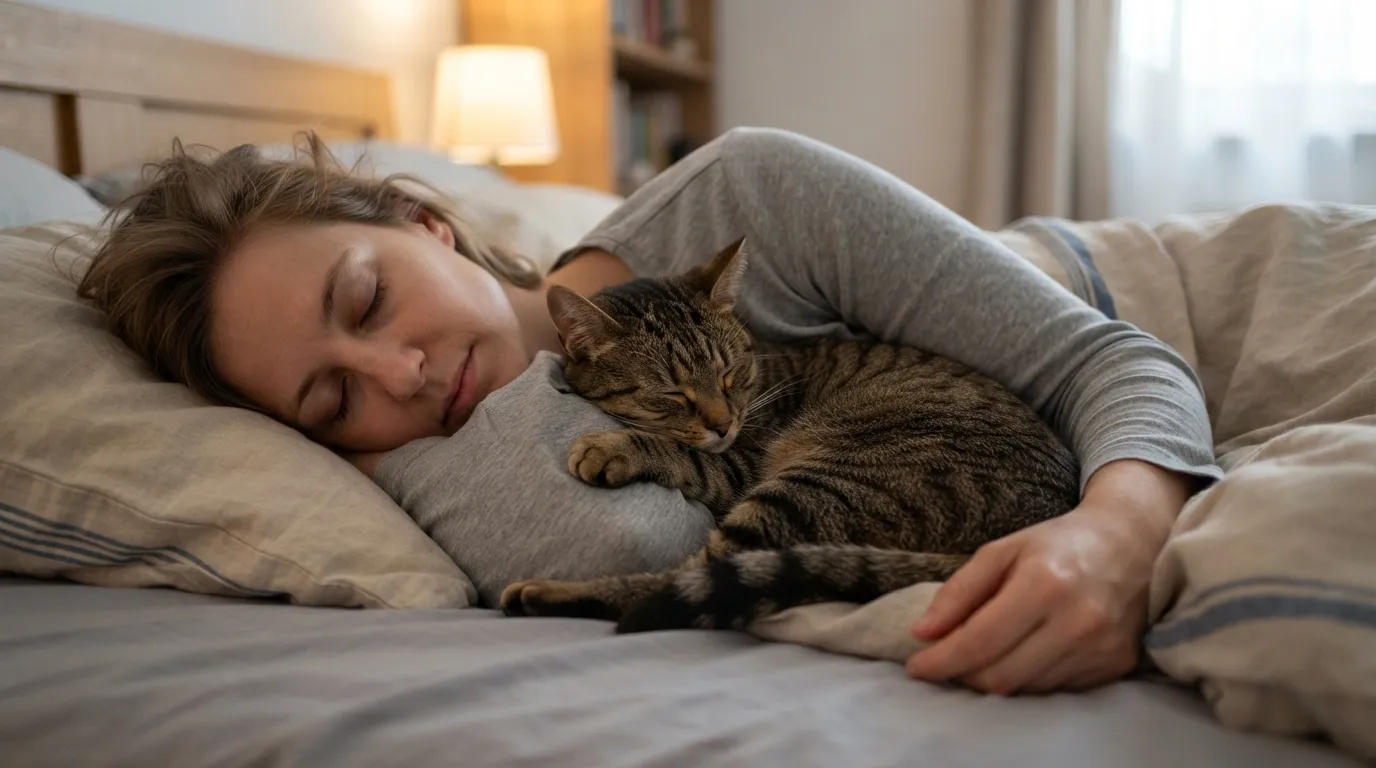
Sleep is when a cat is at its most defenseless - and every cat knows it.
Even indoor cats carry the instincts of wild ancestors who could be ambushed mid-nap.
Choosing to sleep pressed against you turns your body into their personal safe zone.
A sick cat curling up against you instead of isolating is doing something biologically backwards. Illness usually pushes animals toward solitude, not contact.
Notice where they press against you. The closer the contact, the deeper the trust.
Sign #11 is a sound most owners get completely wrong when their cat feels ill.
#11 - They Purr Specifically When They're Near You
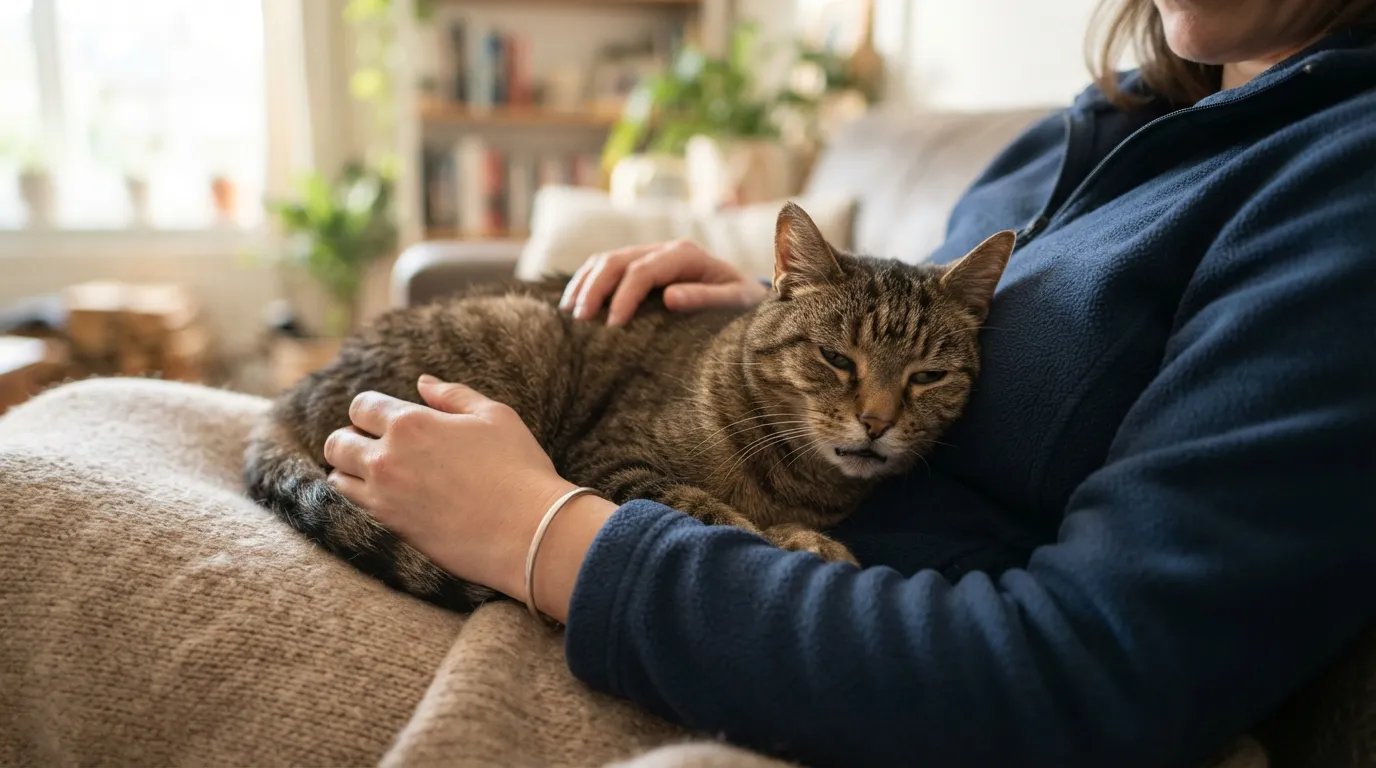
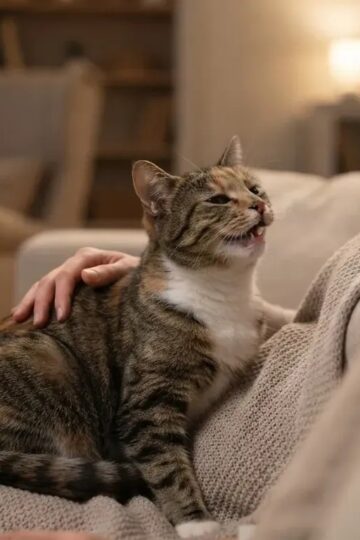
Here's the twist: a sick cat purring doesn't always mean they feel fine.
Purring can also work as self-soothing, and possibly even aid healing, not just contentment.
So the real clue isn't the purr itself - it's when it happens.
If your unwell cat only purrs when they're close to you, that purr is aimed directly at you. That's trust, not reflex.
At a Glance
- Cats purr at roughly 25 to 150 Hertz, a frequency range linked to bone and tissue healing.
- Cats purr when injured, in labor, or stressed - not only when they're content.
- Some researchers view purring as a built-in recovery tool, not just an emotional cue.
Sign #10 covers a touch behavior with roots older than domestication itself.
#10 - They Headbutt or Rub Against You
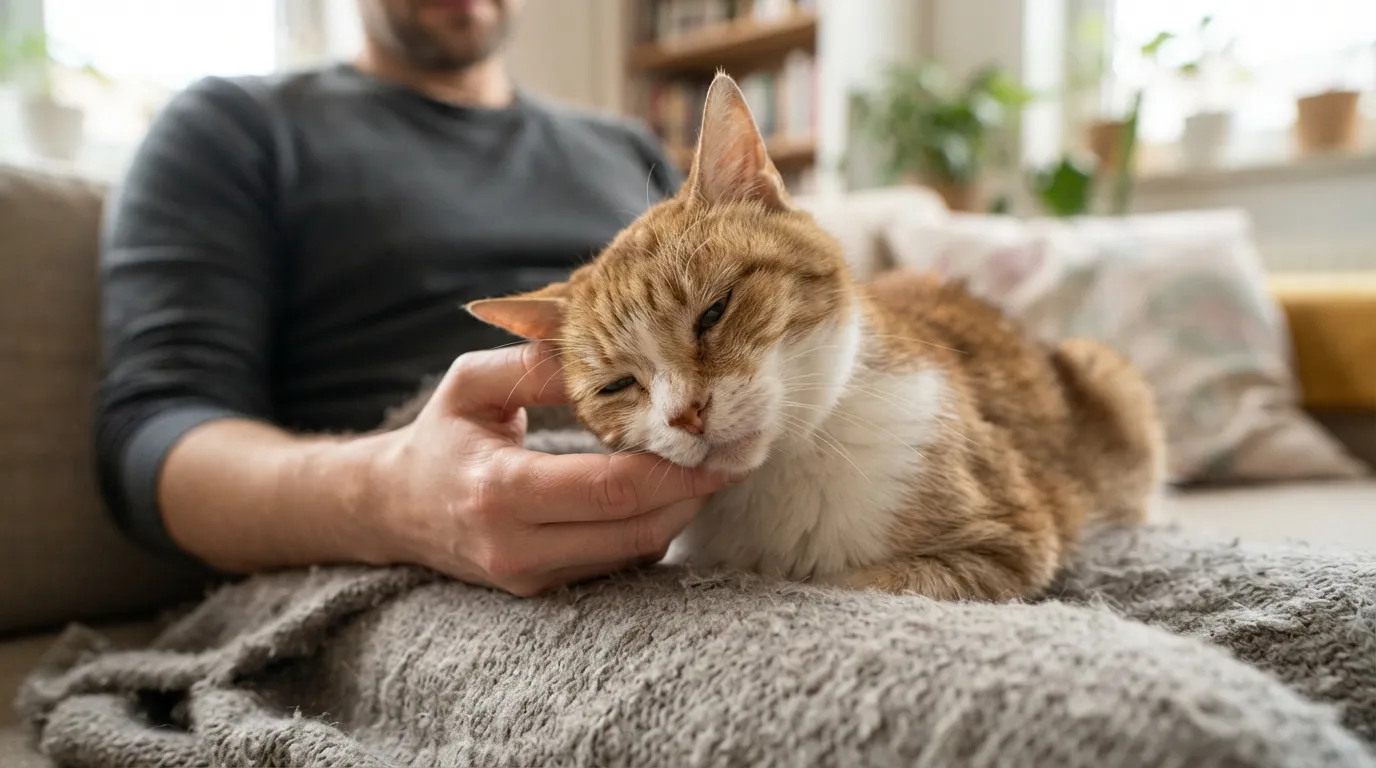
Cats don't headbutt strangers. Ever.
Head bumps and cheek rubs come from kittenhood, and they double as scent-marking - claiming you as theirs.
A sick cat that still presses their face into your hand is reinforcing the bond even while feeling awful.
It doesn't take much. A soft head press against your fingers counts fully.
Sign #9 is about grooming, and why letting a sick cat lick you is actually a privilege.
#9 - They Groom You (or Let You Groom Them)
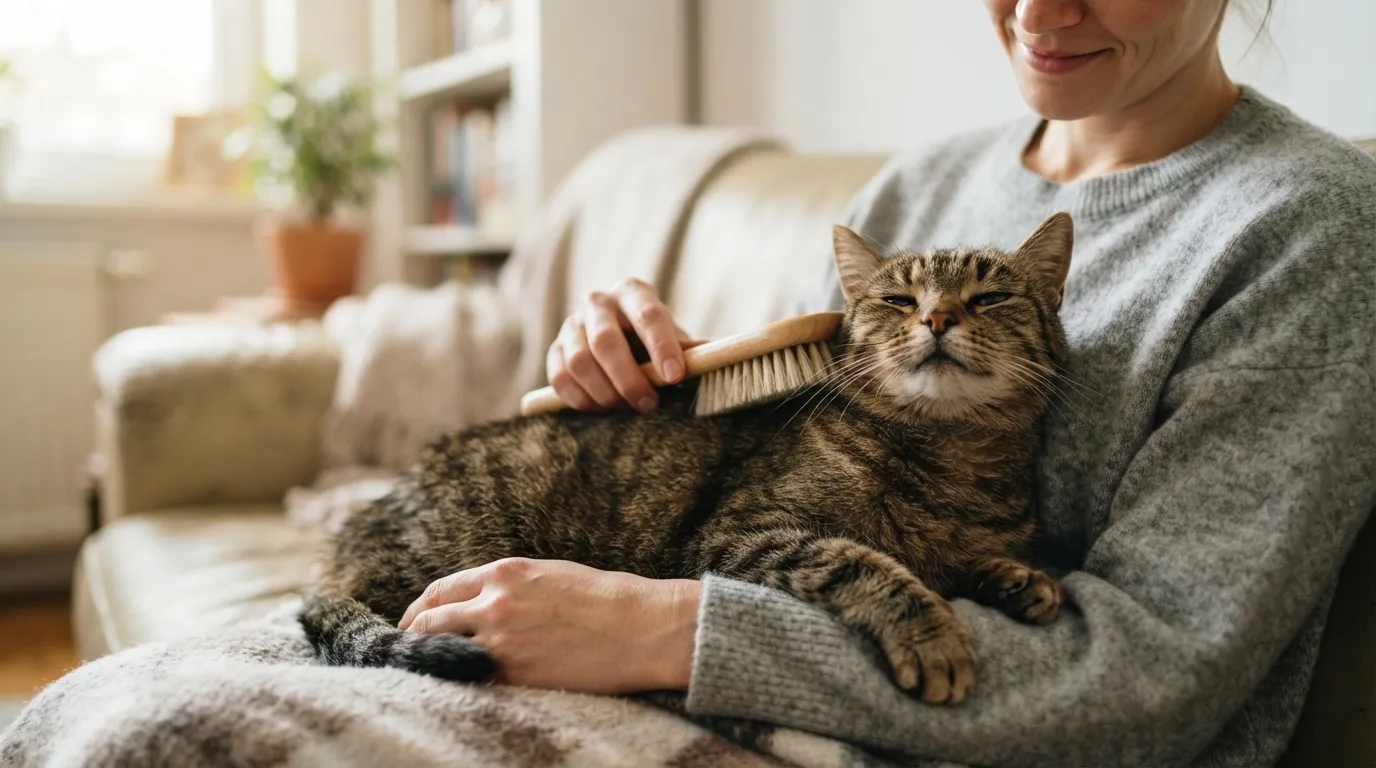
Grooming between cats, known as allogrooming, is reserved for trusted bond-mates.
When a cat licks you or leans into your brush, they're extending that same inner circle to you.
Touch is usually the last thing a hurting animal wants.
A sick cat who still tolerates or initiates grooming is choosing connection over discomfort.
Sign #8 is something most owners never even think to check - the tail.
#8 - Their Tail Goes Up the Moment They See You
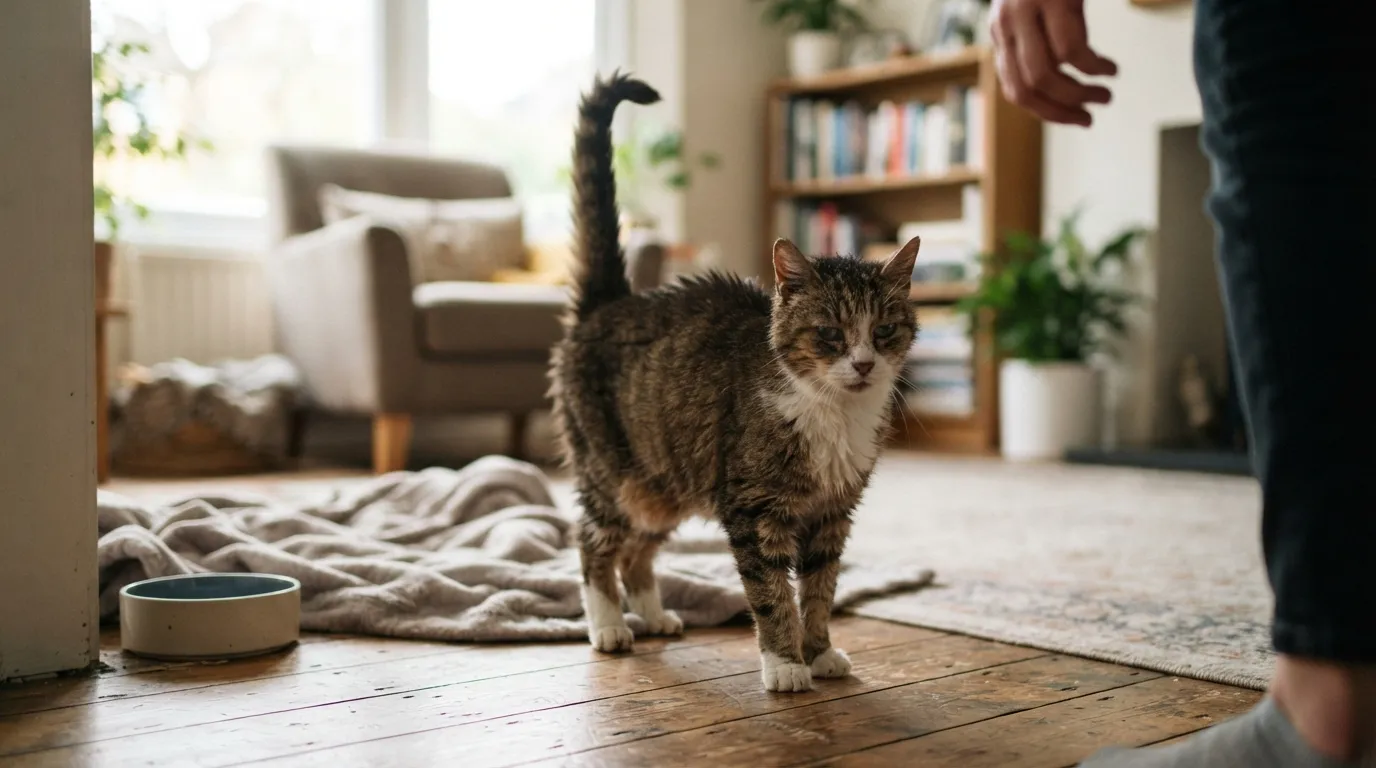
Tail language gets overlooked constantly, especially in a sick cat who barely moves at all.
A high tail, sometimes with a soft kink at the tip, is a greeting reserved for cats who feel safe.
Illness drains energy fast, and lifting a tail costs something.
An unwell cat spending that energy to greet you is a deliberate act of communication, not an accident.
A flat or tucked tail means the opposite: fear or pain.
Sign #7 is something cats almost never do for anyone but their closest person.
#7 - They Knead on You, Making "Biscuits"
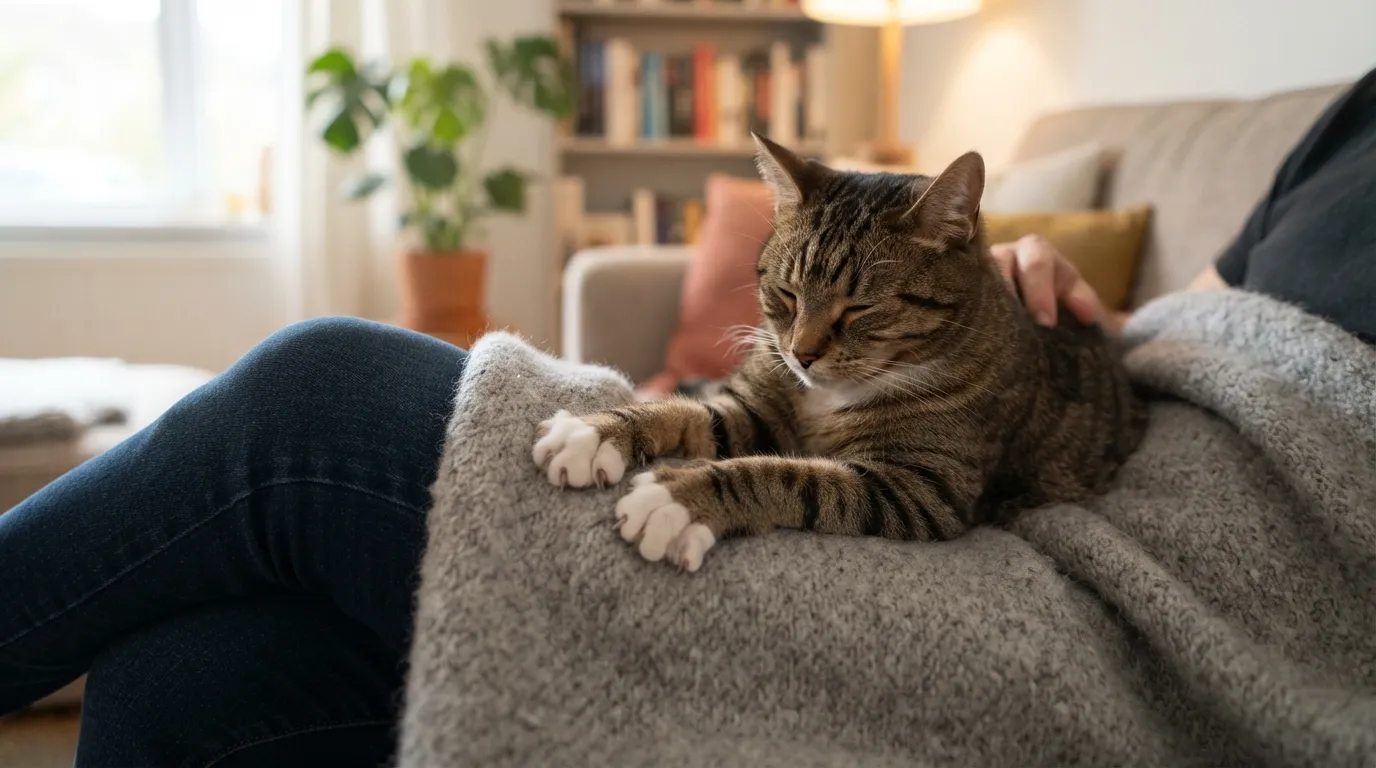
Kneading isn't random fidgeting. It's one of the most intimate things a cat can do.
The motion goes back to kittenhood, when kneading a mother's belly triggered milk flow.
It also releases scent from glands in their paws, marking you as safe territory.
A sick cat still kneading your lap is reaching for their earliest comfort memory - and choosing you as the one attached to it.
Worth Knowing
- Kneading traces back to nursing, when kittens pressed paws against their mother to encourage milk flow.
- Paw pads carry scent glands, so kneading you leaves their scent behind as a marker.
- Cats generally reserve kneading for people, blankets, or spots where they already feel calm.
Sign #6 is a vocal shift that tells you more than almost anything else on this list.
#6 - They Still Talk to You, Even Softly
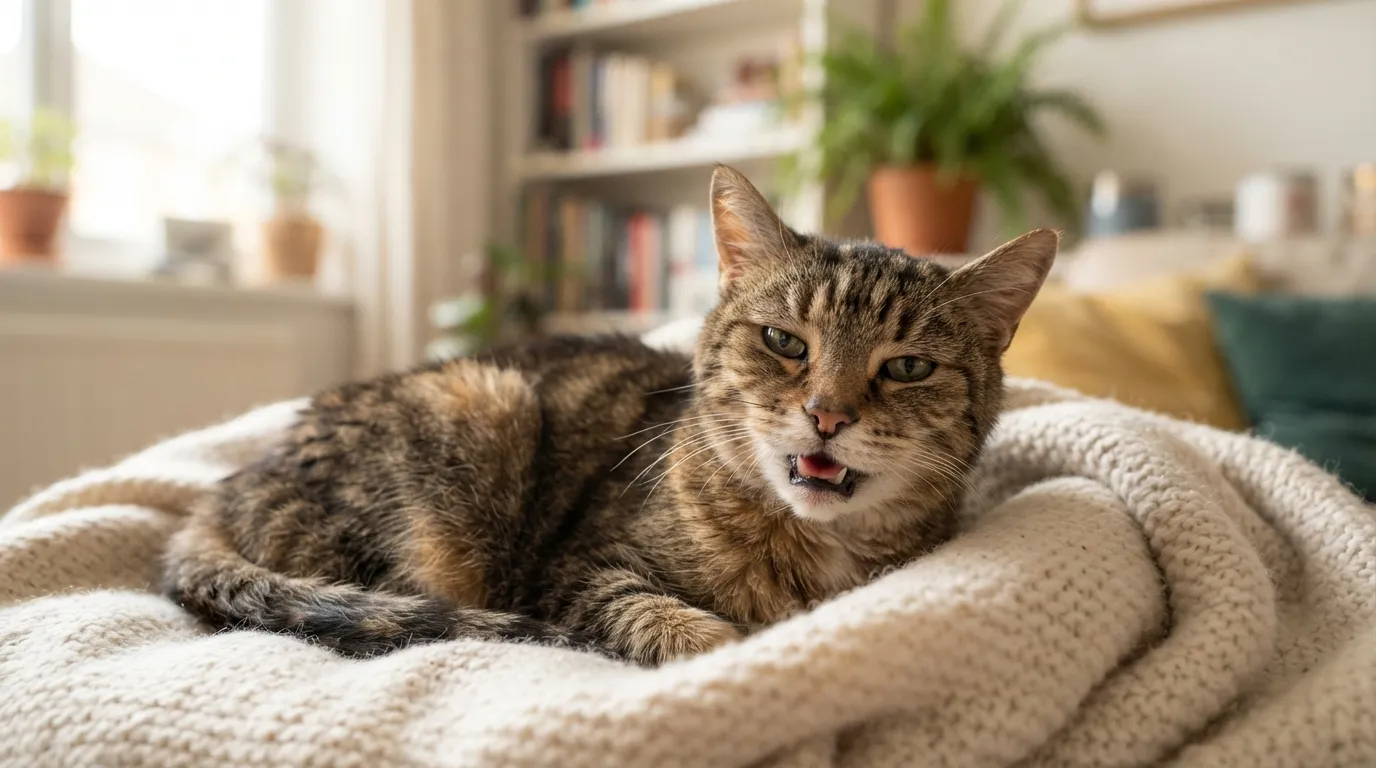
Adult cats rarely meow at each other in the wild. That sound is something they developed specifically for humans.
Vet Aimee Warner, DVM, has explained how subtle trust really looks in cats.
Cats are naturally wary animals. When they display trust, they do so through consistent and calm behaviors, not necessarily through affectionate displays.
Aimee Warner, DVM
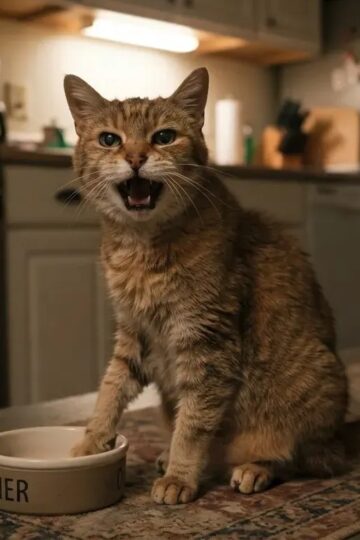
Pain usually makes a cat go quiet.
A soft chirp, trill, or tiny meow from an unwell cat means they're keeping the communication channel open - specifically with you.
If a normally chatty sick cat suddenly goes silent, that's worth watching too - it can mean the illness has deepened.
Sign #5 might be the biggest trust signal on this entire list, and almost everyone misreads it.
#5 - They Come to You Instead of Hiding
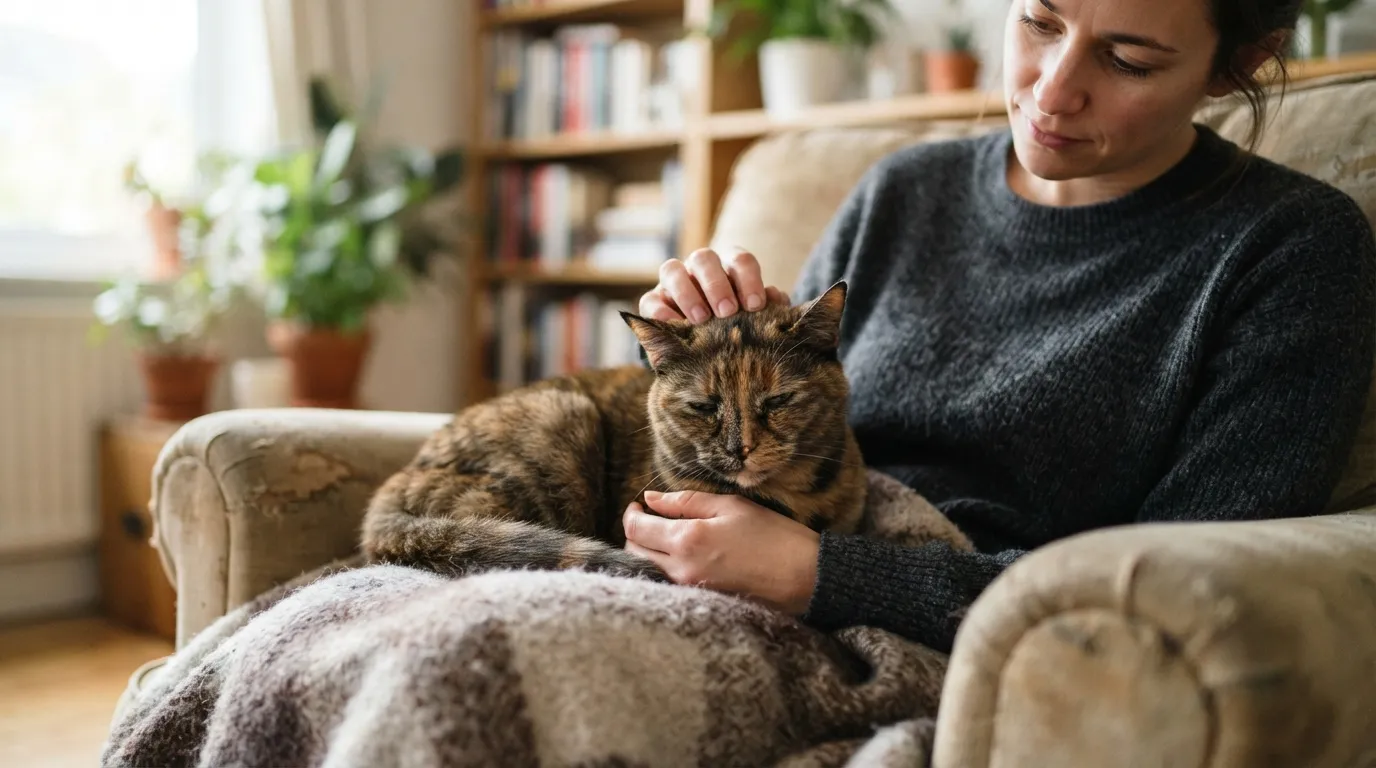
This is the one most owners witness constantly without realizing what it means.
Cats are masters at disguising illness - it's a built-in defense that keeps predators from noticing weakness.
Even indoor cats with zero real predators still carry that same instinct.
A cat that defies all of that and seeks YOU out while sick is making the single largest trust declaration a cat is capable of.
They've decided you're safer than hiding. That's love functioning as biological override.
Sign #4 is a subtle body-language shift that's easy to miss if you're not paying attention.
#4 - Their Body Stays Loose and Relaxed Near You
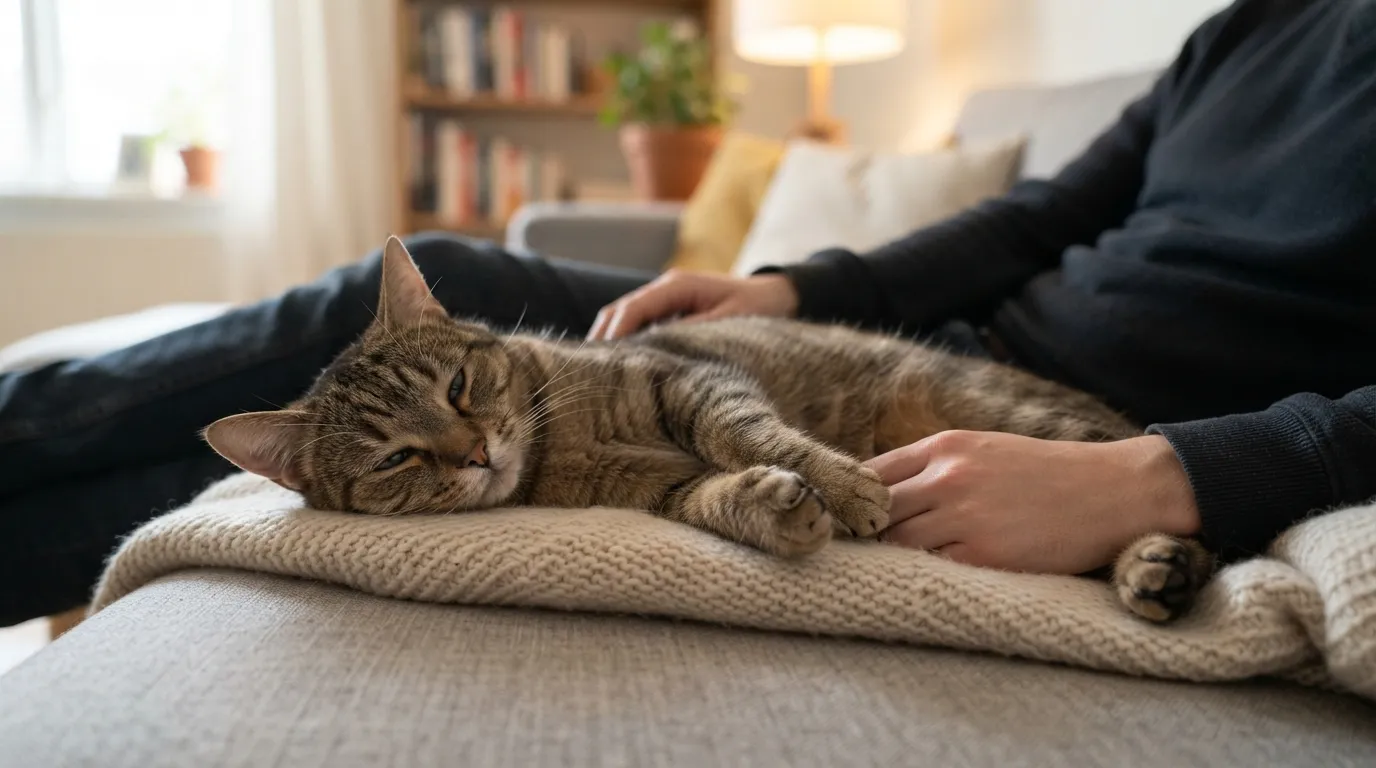
Tense muscles tell the real story. A guarded sick cat hasn't fully let go yet.
Illness often brings a hunched, tight posture.
So when an unwell cat near you shows loose limbs and tucked paws with no defensive tension, your presence has calmed their stress response mid-illness.
Watch the shoulders and paws first - that's where tension shows up before anywhere else.
Sign #3 is about what they do, or don't do, with their eyes.
#3 - They Make Soft, Unhurried Eye Contact
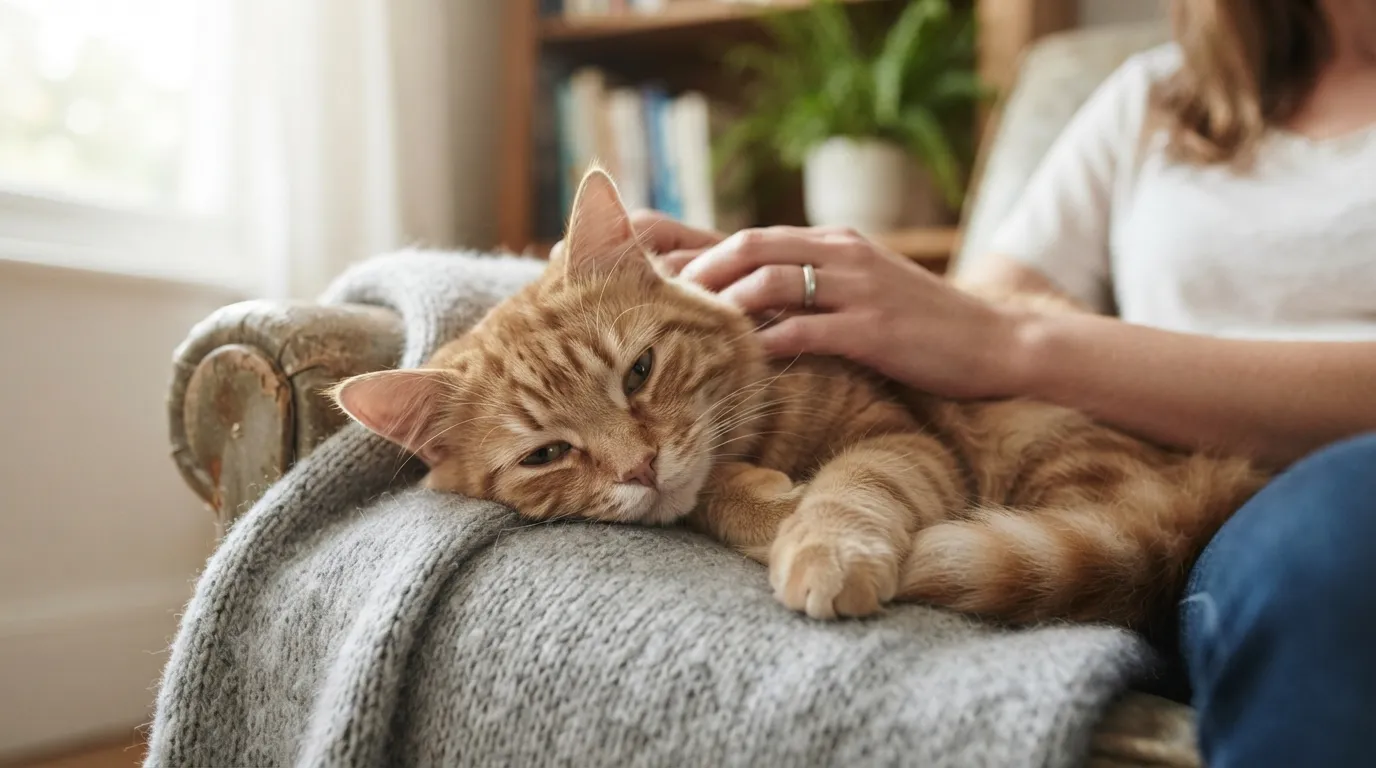
A scared or hurting cat avoids eye contact, or locks in with wide, dilated pupils. Neither of those is a good sign.
Soft, half-lidded eyes with a slow blink mean the opposite - safety.
A sick cat meeting your gaze with soft eyes is working against every instinct pain creates.
Sick animals go hyper-alert, scanning constantly. Soft eyes mean they've handed that job to you.
Quick Compare
- Scared or hurting: wide, fixed pupils and a tense, unblinking stare.
- Trusting: soft half-lids, slow blinks, and a relaxed brow.
- Scared: eyes dart or avoid you entirely.
- Trusting: calm, unhurried gaze held steady on you.
Sign #2 is the trust signal almost nobody notices, because it looks like nothing at all.
#2 - They Simply Stay in the Room With You
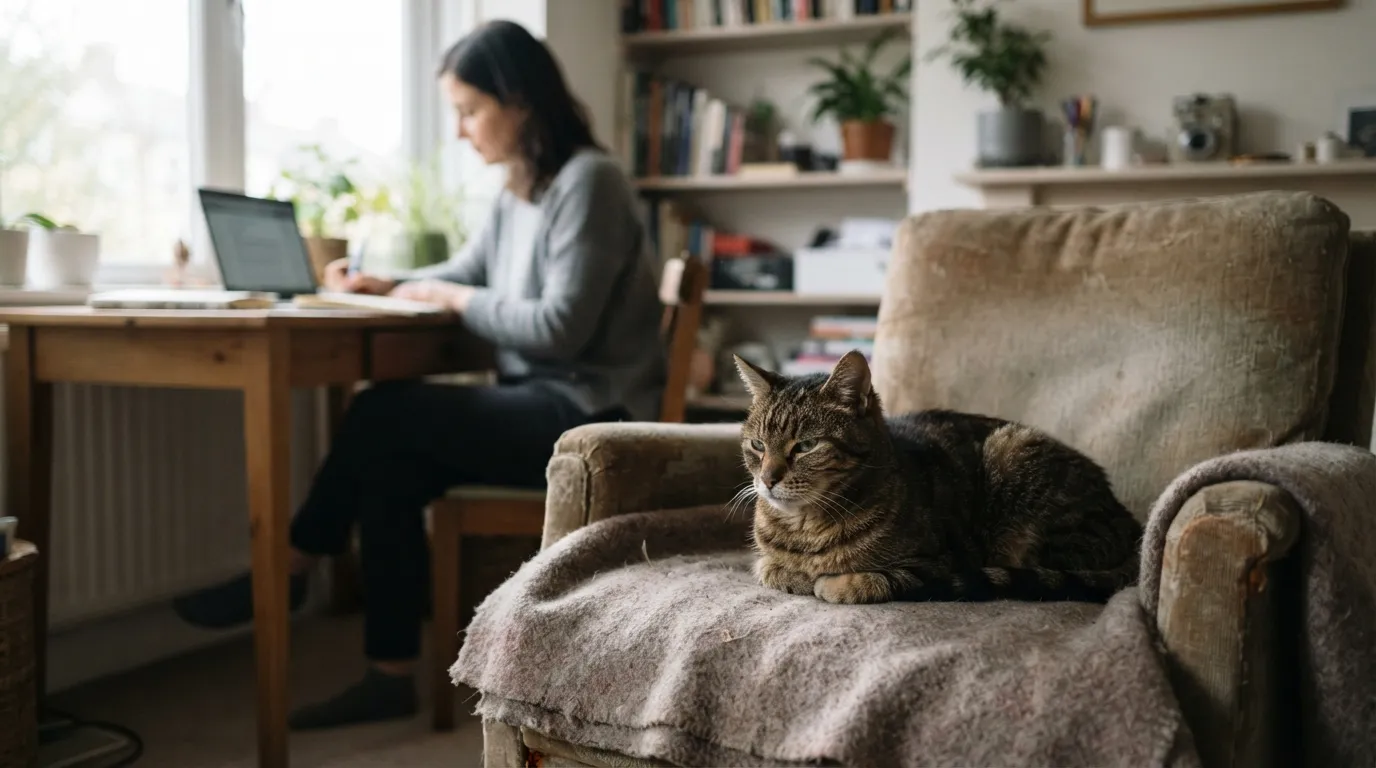
This is the quiet one - the one people overlook because it isn't dramatic.
Most owners want a lap cat or a purring cat, something obvious.
But a sick cat that just doesn't leave the room you're in, lying quietly nearby, is exercising enormous trust.
They're choosing your proximity as their recovery environment. There's no higher compliment from an animal wired to isolate.
Don't mistake the stillness for indifference. It's a full sentence in cat language.
And sign #1? Experts say it's so misunderstood that most owners never catch it happening.
#1 - They Let You Help Them, and Don't Resist
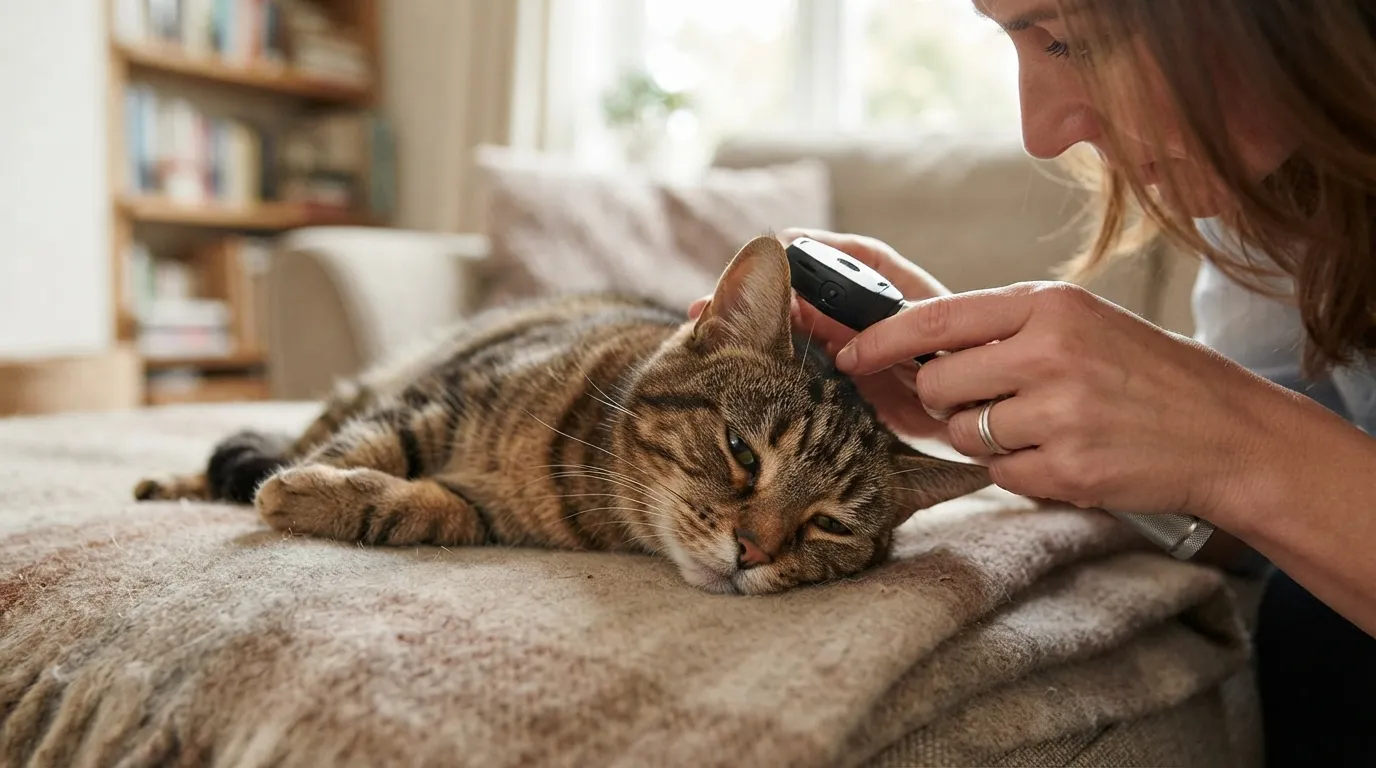
This is the crown jewel. This is the one that means everything.
Sick cats usually associate handling with pain, so their instinct is to retreat and protect themselves.
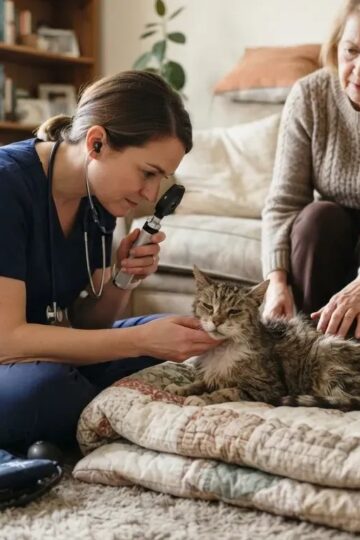
Against that backdrop, a cat that lets you check their ears, give medicine, or carry them to the vet carrier without a fight is doing something enormous.
That's a complete surrender of control to someone they fully trust. It's the behavioral definition of "I believe you won't hurt me."
Calm cooperation during illness is the single most consistent trust behavior a cat can offer.
This isn't just tolerance - it's your cat saying, "you're safe, I'm handing this to you."
Honor it every single time.
The Bottom Line
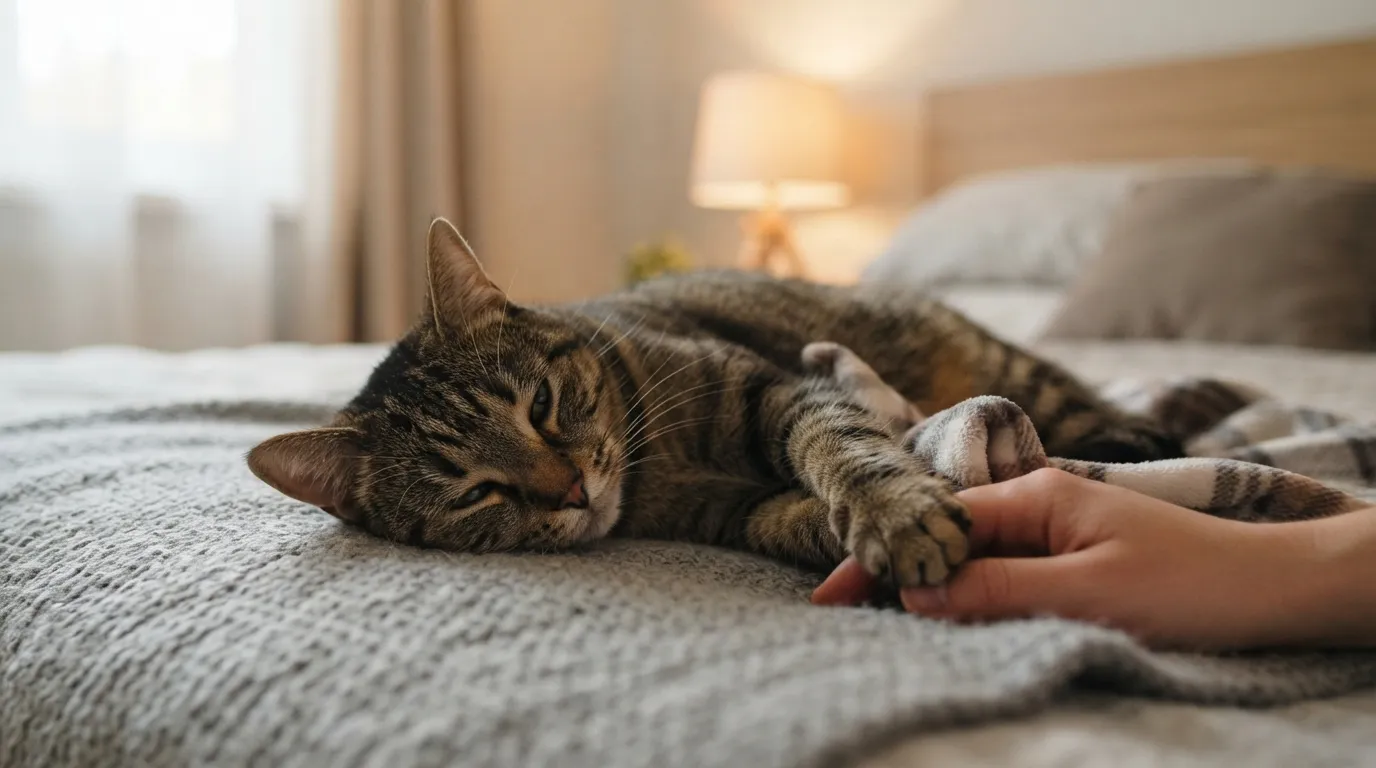
Cats don't lie with their bodies. Every signal on this list is a direct override of millions of years of instinct telling them to hide, isolate, and disappear.
The slow blink, the loose body, the soft meow, the choice to simply stay in the room - none of it is accidental.
Each one is a deliberate choice made by an animal that has decided you're worth the risk.
If your sick cat is showing even three or four of these signs, you've earned something genuinely rare - so take care of it.
Which sign did your cat show you that you almost missed? Tell us in the comments.