13 Quiet Ways an Indoor Cat Says Goodbye in Its Last Days at Home
Most cat owners assume a goodbye looks dramatic - a decline you can't miss, a cry for help you'll surely hear. The truth is quieter and stranger: cats are wired to hide the very signs that would tell you they're dying, so the goodbye may have already started days before you notice anything at all.
Vets and pet hospice workers have spent years cataloguing these small, easy-to-miss shifts - the ones most owners brush off as "just getting old." Here are all 13, counting down to the single moment many owners say they'll never forget.
#13 - Retreating to Strange, Dark Places
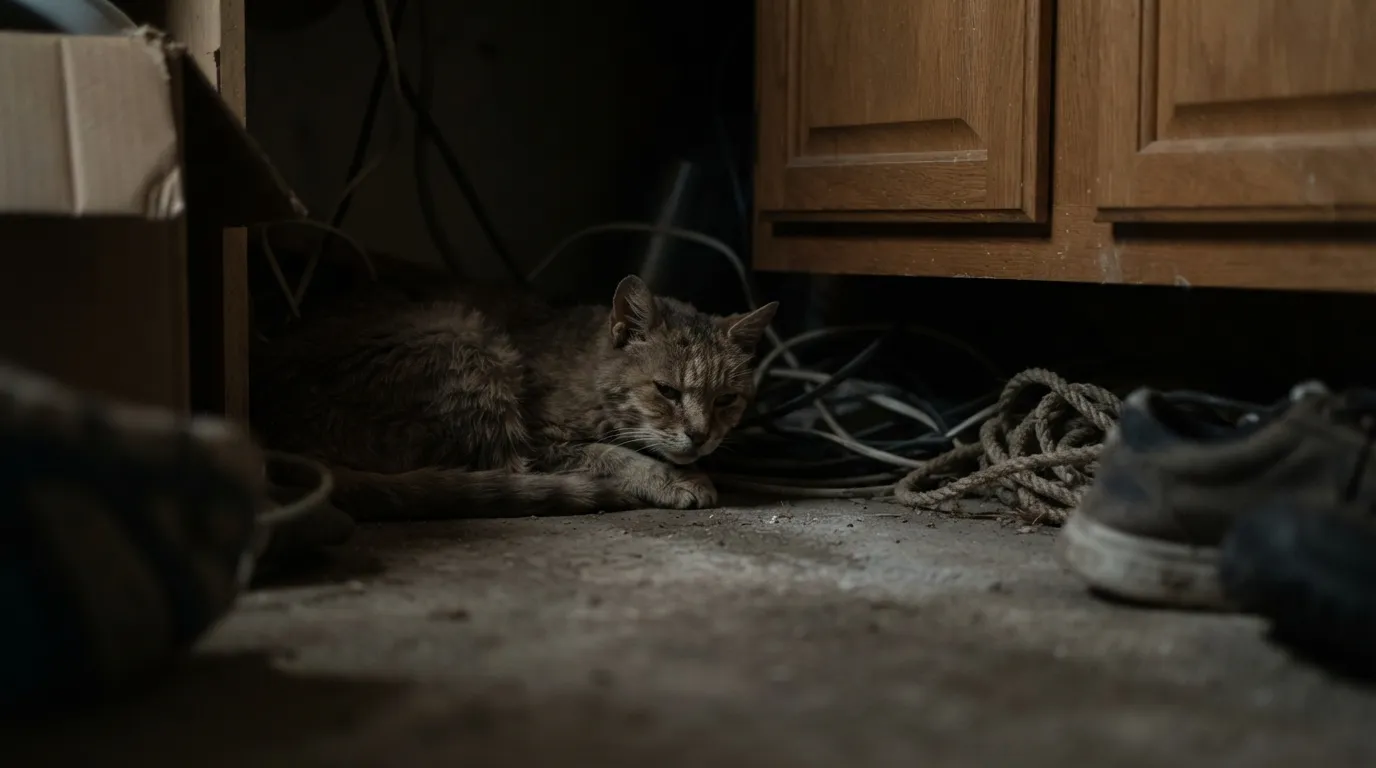
Cats instinctively hide when they're vulnerable, even ones who've never met a predator in their life. That ancient wiring doesn't know the difference between a backyard and your living room floor.
In their final days, cats often seek out unusual, dark, or oddly quiet spots - under beds, deep in closets, behind the water heater. It's not moodiness. It's self-protection running on autopilot.
A sudden switch to a cramped corner your cat has never used before deserves a second look. But that's mild compared to what happens with sound next - or the total absence of it.
#12 - Going Completely Silent
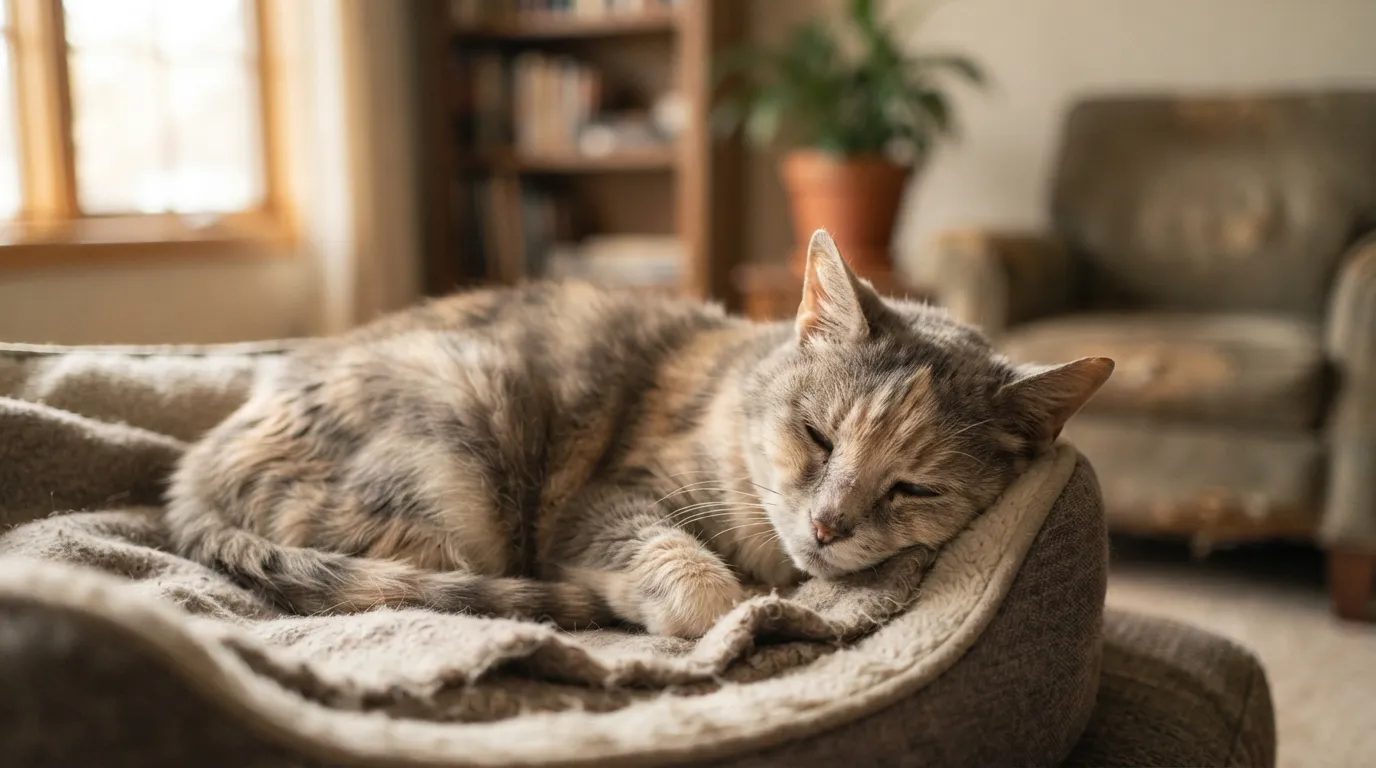
Most owners brace for more crying as a cat nears the end. Instead, many cats do something nobody expects - they go almost entirely quiet.
Some withdraw socially in their final days, appearing distant and disengaged rather than distressed. A cat that once greeted you at the door and now says nothing at all is telling you something real.
This isn't aloofness - it's a body conserving every resource it has left. Silence isn't the only vocal shift coming, though; the next sign flips the pattern completely.
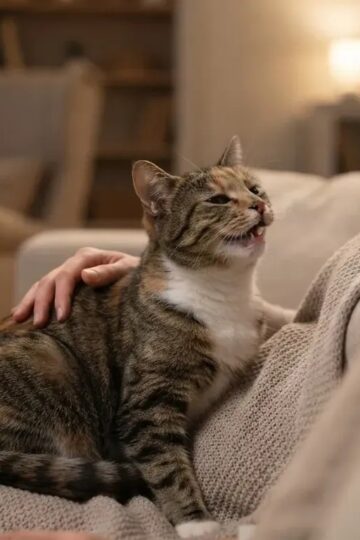
#11 - Sudden, Unexpected Vocalizing at Night
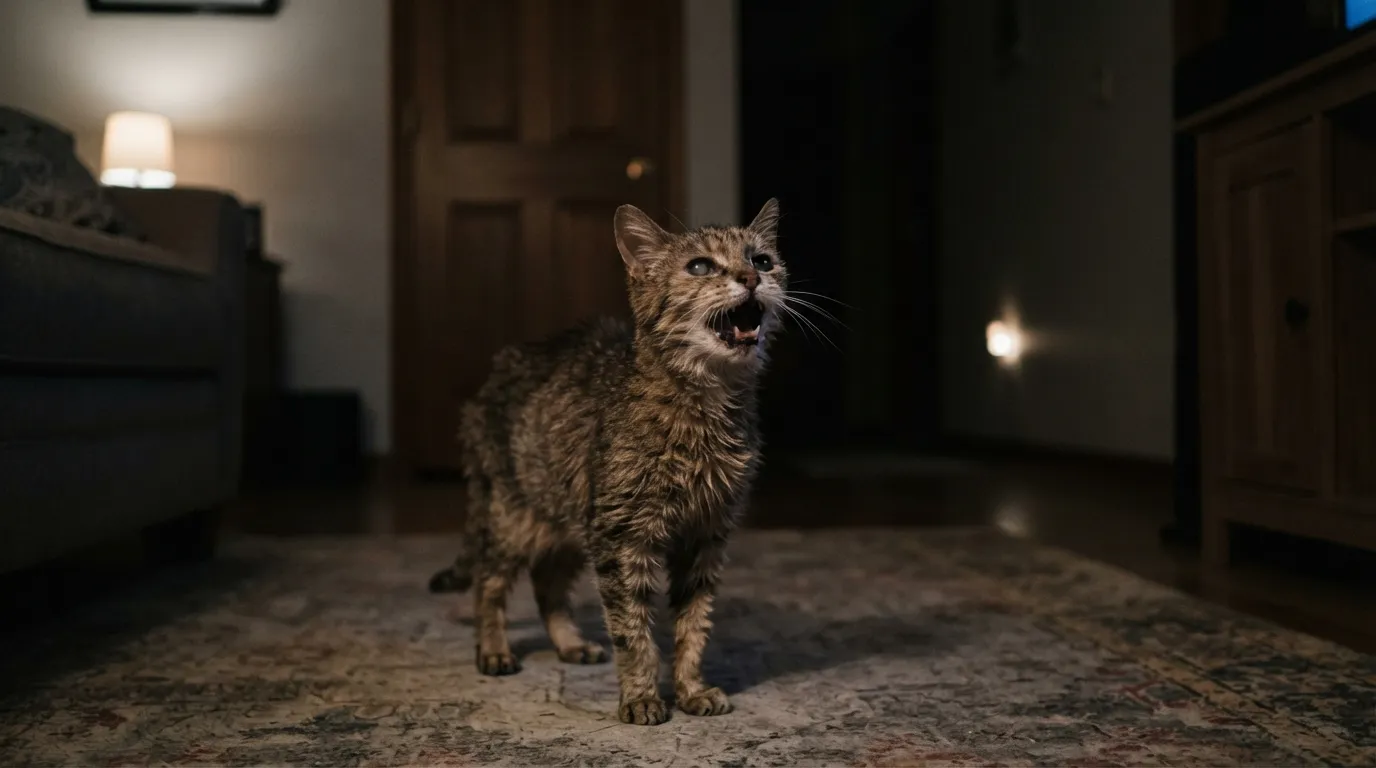
Some dying cats don't go quiet at all - they get loud, and usually after dark. Owners often assume it's hunger or restlessness.
The real cause can be darker: cognitive decline similar to dementia, which triggers confusion, wandering, and yowling into empty rooms. It's one of the most underreported signs of serious neurological decline in senior cats.
Worth Knowing
- About 28% of cats aged 11 to 14 show at least one sign of cognitive decline, a number that climbs past 50% after age 15.
- Owner surveys consistently point to nighttime yowling as the most commonly reported symptom of feline cognitive dysfunction.
- Vets typically rule out pain, hearing loss, and thyroid problems before confirming a cognitive diagnosis.
If your cat is calling out at 3 a.m. for no obvious reason, that's a same-day vet call, not a wait-and-see. The next sign is one almost every owner mistakes for laziness.
#10 - Abandoning the Grooming Routine
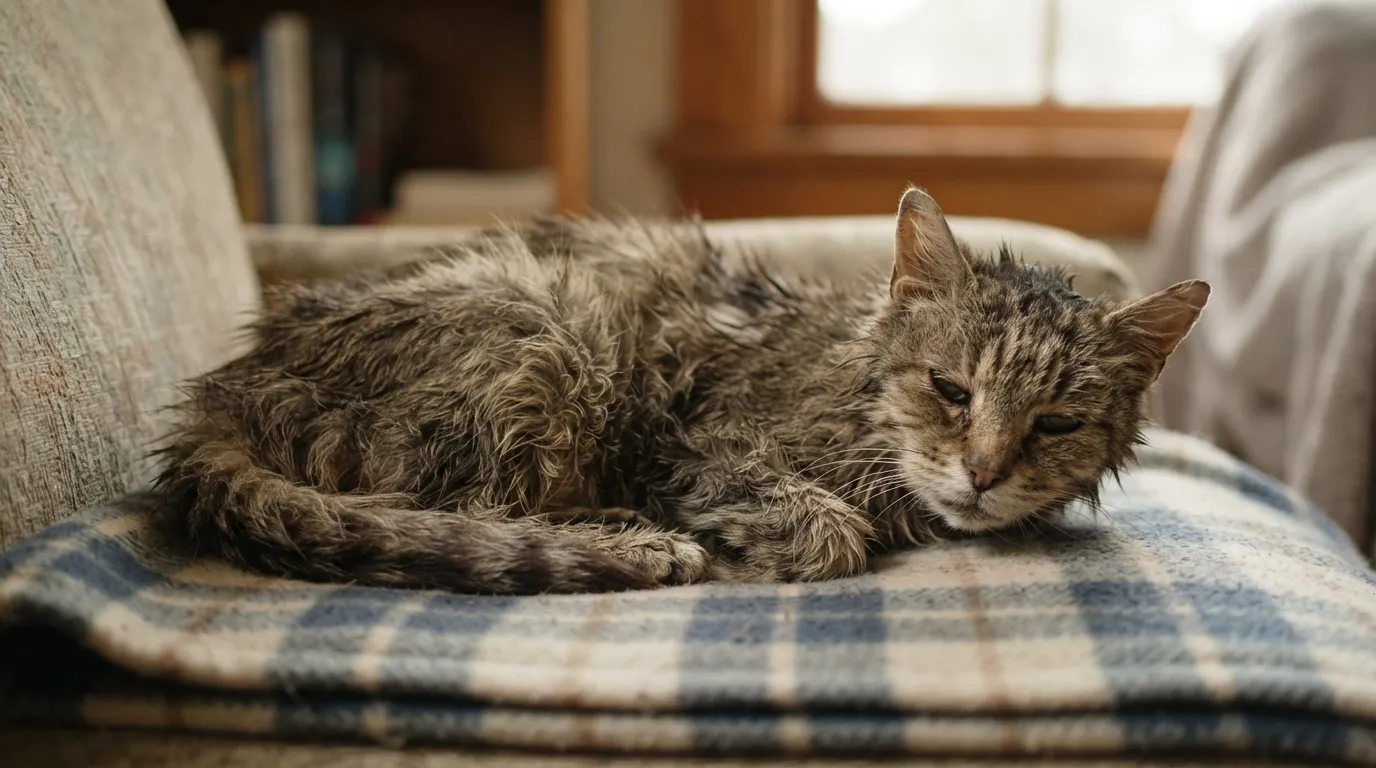
Healthy cats groom constantly - it's practically a full-time job. When that stops, it's rarely about laziness.
Look for matted or greasy fur, sunken eyes from dehydration, and a distinct odor caused by toxins building up in a failing system. The body has simply stopped budgeting energy for anything but survival.
This decline tends to accelerate fast once it starts. The next sign is a complete behavioral reversal - and it genuinely surprises most owners.
#9 - Becoming Unusually Clingy
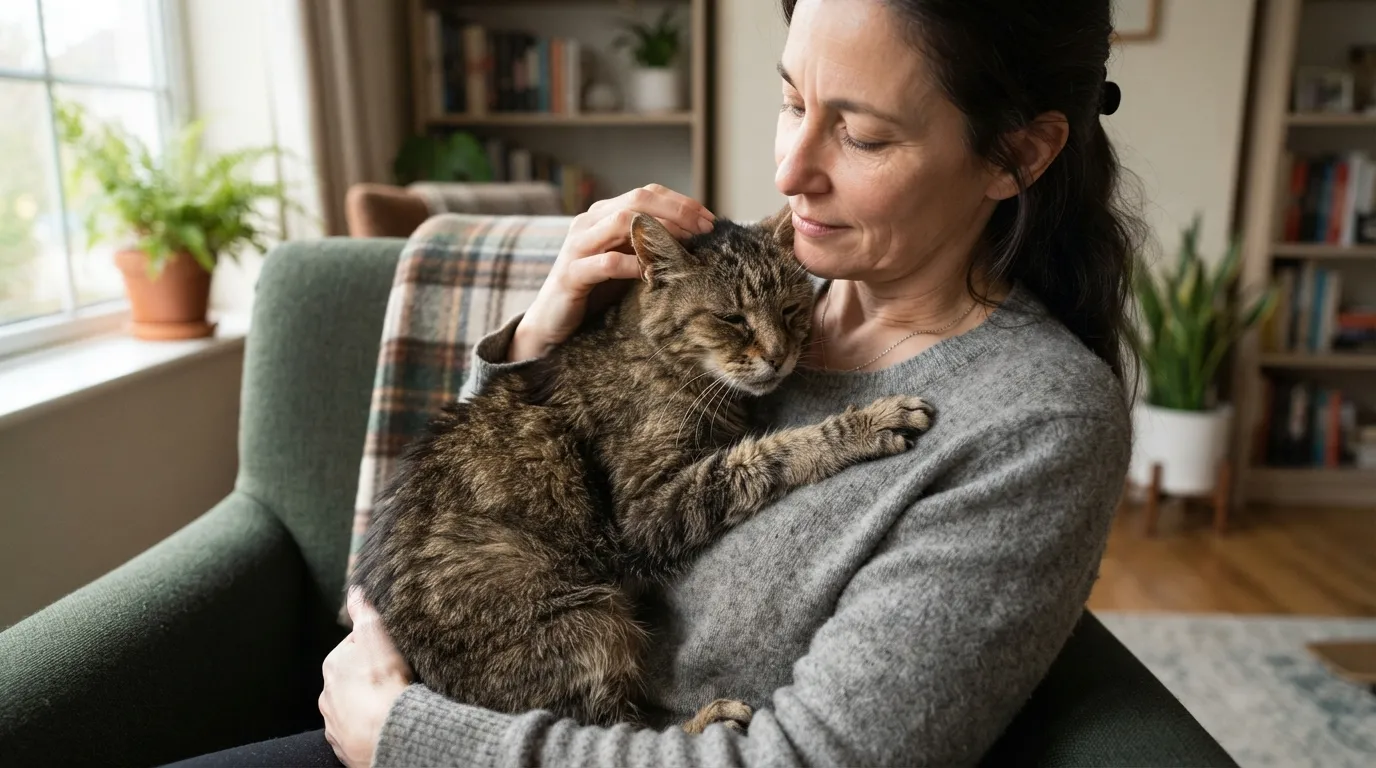
Not every dying cat hides. Some do the exact opposite.
A famously independent cat may suddenly want to be held constantly, following you from room to room. Don't mistake it for a personality upgrade - it's often a search for warmth and safety in the one place it has always trusted.
Cherish it, but stay alert. The next sign hides in plain sight every single day, in something as ordinary as a nap.
#8 - Sleeping Far More Than Usual
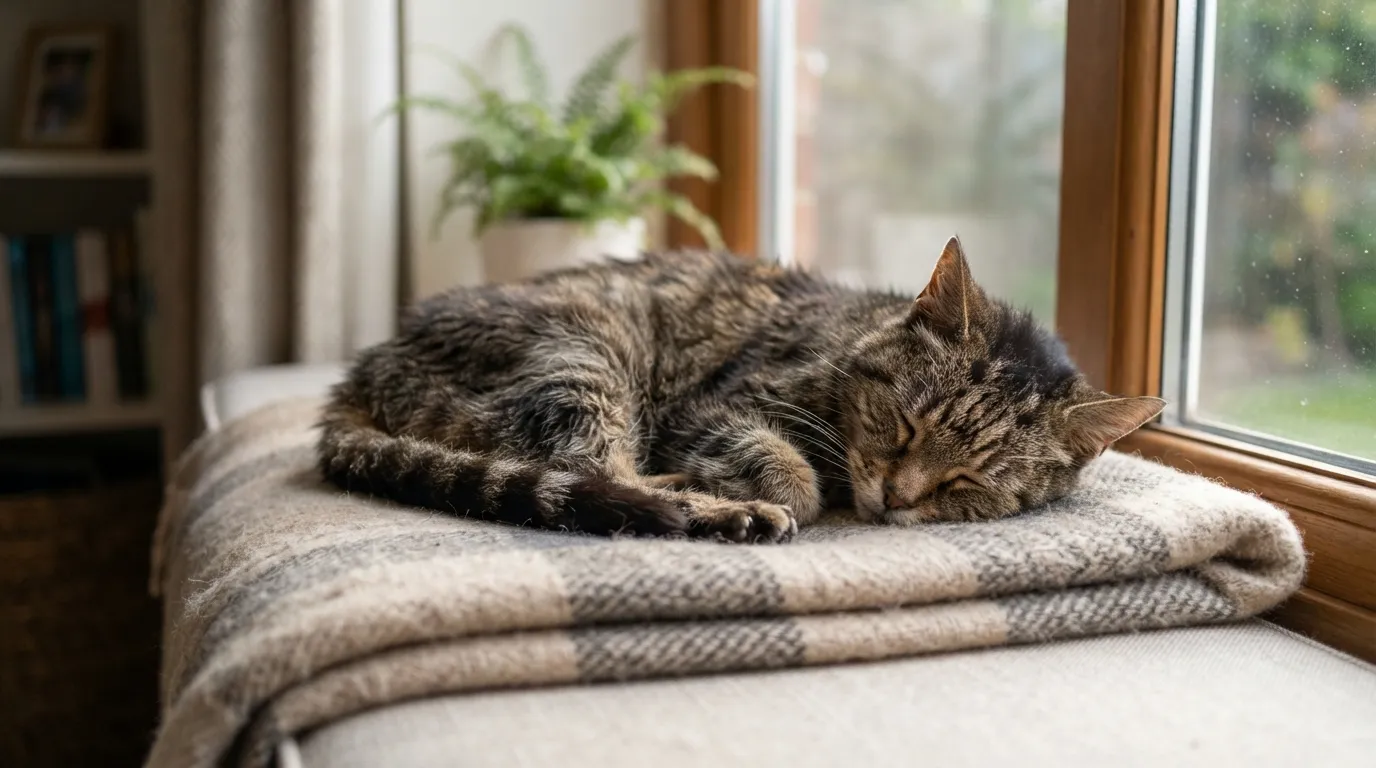
Cats already sleep 16 to 20 hours a day, so extra rest is easy to miss. The real warning sign is a shift beyond ordinary tiredness.
Cats nearing the end often retreat into a deep, unmoving rest, avoiding anything that costs energy. The threshold to watch for: a cat that barely stirs even when you walk in or offer food.
That kind of stillness pairs with something even more alarming that tends to follow right behind it.
#7 - Refusing Food and Water
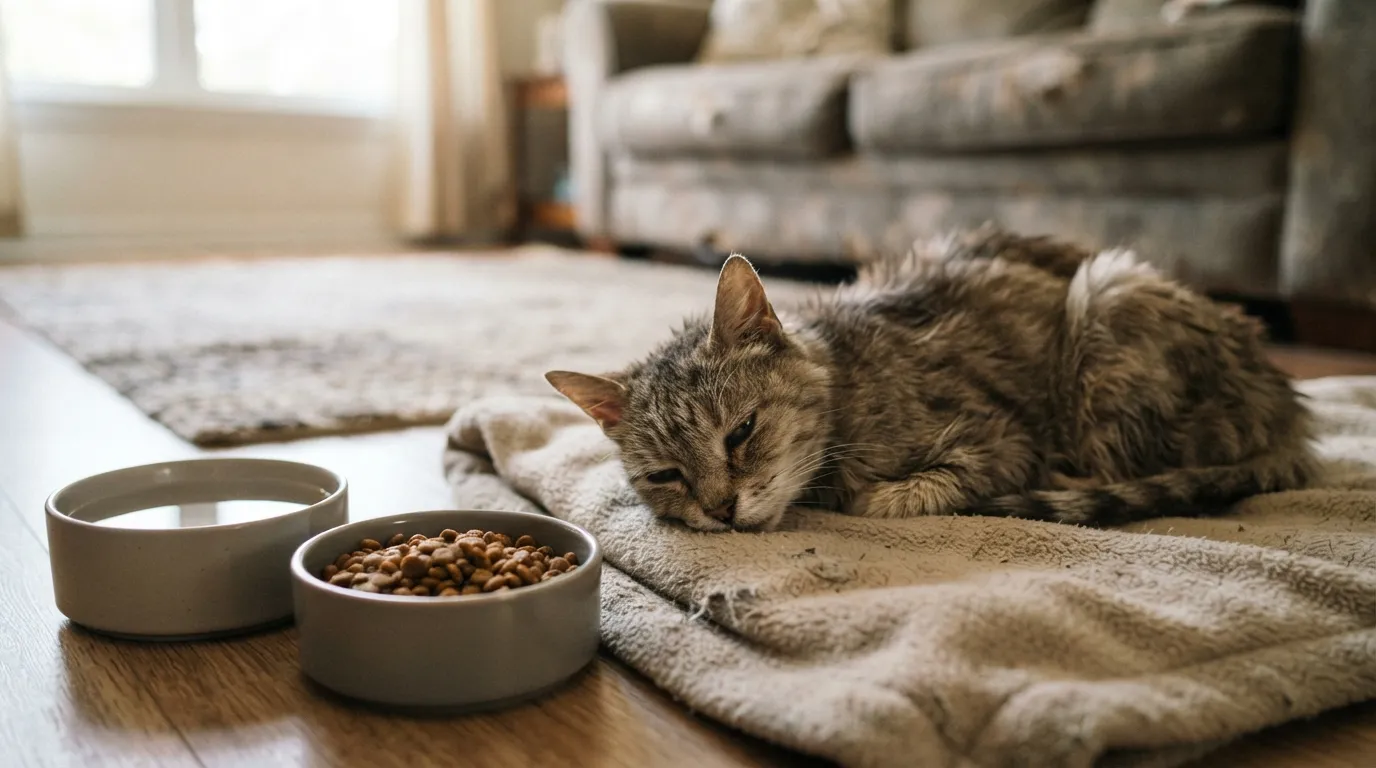
One of the clearest signals a vet will point to is a dramatic drop in appetite. A cat that once begged for treats may suddenly show zero interest in food altogether.
Some cats sniff at food but never eat; others drink excessively as kidney function fails. Either way, weight loss and dehydration follow fast.
Fast Facts
- Cats that stop eating can develop hepatic lipidosis, a dangerous fatty liver condition, in as little as two to four days.
- Heavy drinking paired with appetite loss often points to failing kidneys, a common issue in aging cats.
- Most vets treat 24 hours without food in a senior or ill cat as a same-day concern, not a wait-and-see.
This is the sign most vets flag as the clearest marker that time is short. But the body reveals other clues too - ones you can feel with your own hands.
#6 - Cold Ears and Paws
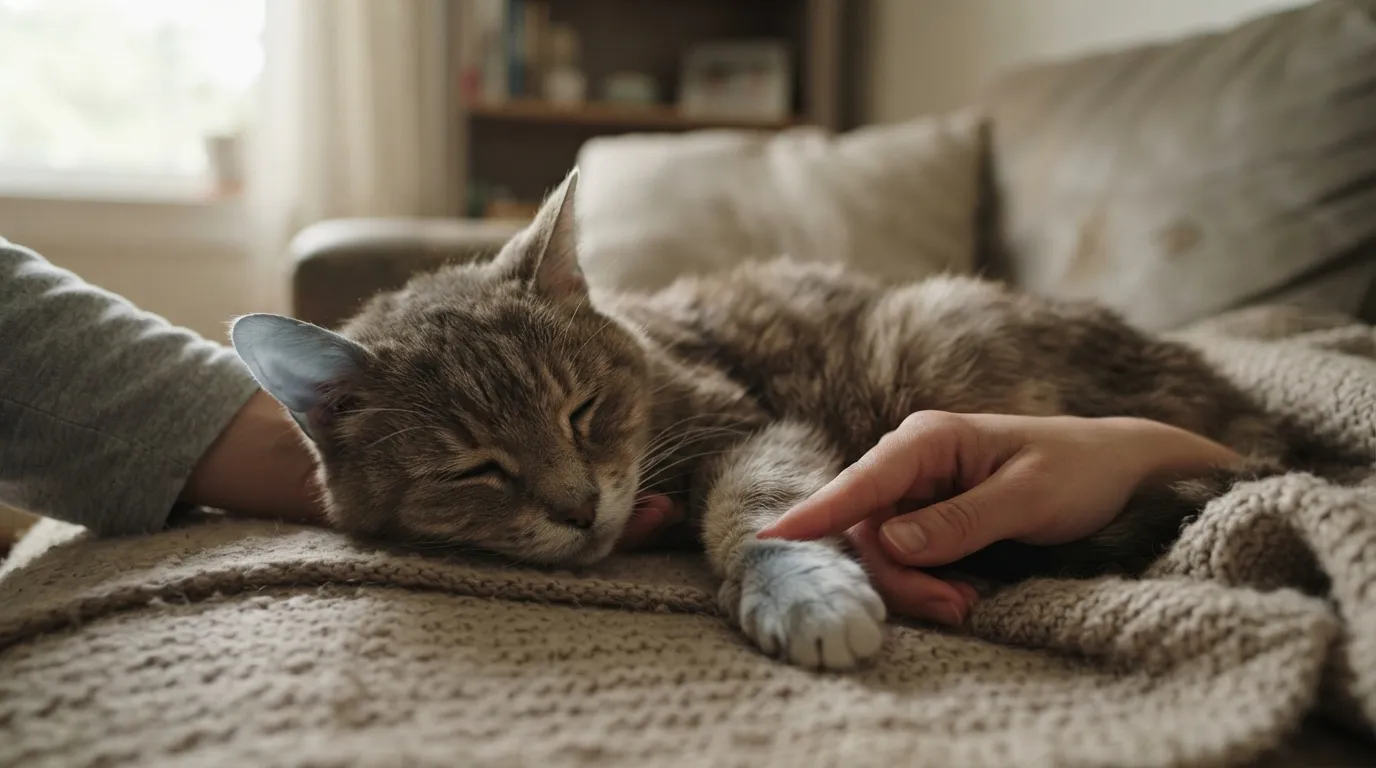
A cat's normal body temperature sits between 100 and 102.5°F. When circulation starts failing, the extremities go cold first.
Watch the ears, paws, and tail - they'll feel noticeably cooler than the rest of the body. Combined with labored or rapid breathing, this is a late-stage sign that the body is actively shutting down.
If you pick up your cat and its paws feel cool, don't wait it out. Another sign often shows up around the very same time, and it's impossible to miss once you know what to look for.
#5 - Visible, Rapid Weight Loss
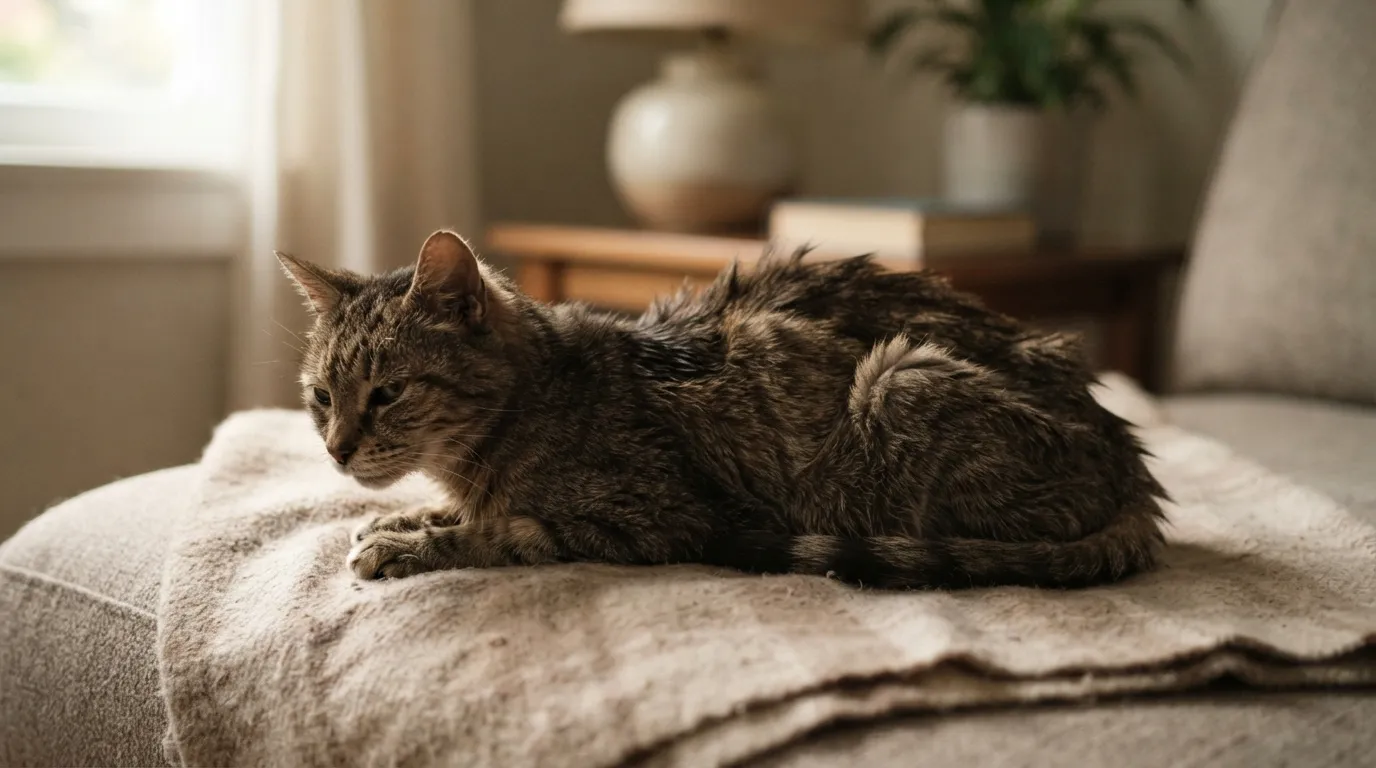
Gradual weight loss over months is one thing. A sharp decline in just days is something else entirely.
Shoulder blades and hips become sharply pronounced as muscle mass disappears. What looked like a slightly thin cat on Monday can look skeletal by the weekend.
Run your hand gently along your cat's spine - if every vertebra feels sharp and distinct, take it seriously. The next sign is behavioral, and it's the one that tends to break owners' hearts the most.
#4 - Losing Interest in Everything It Once Loved
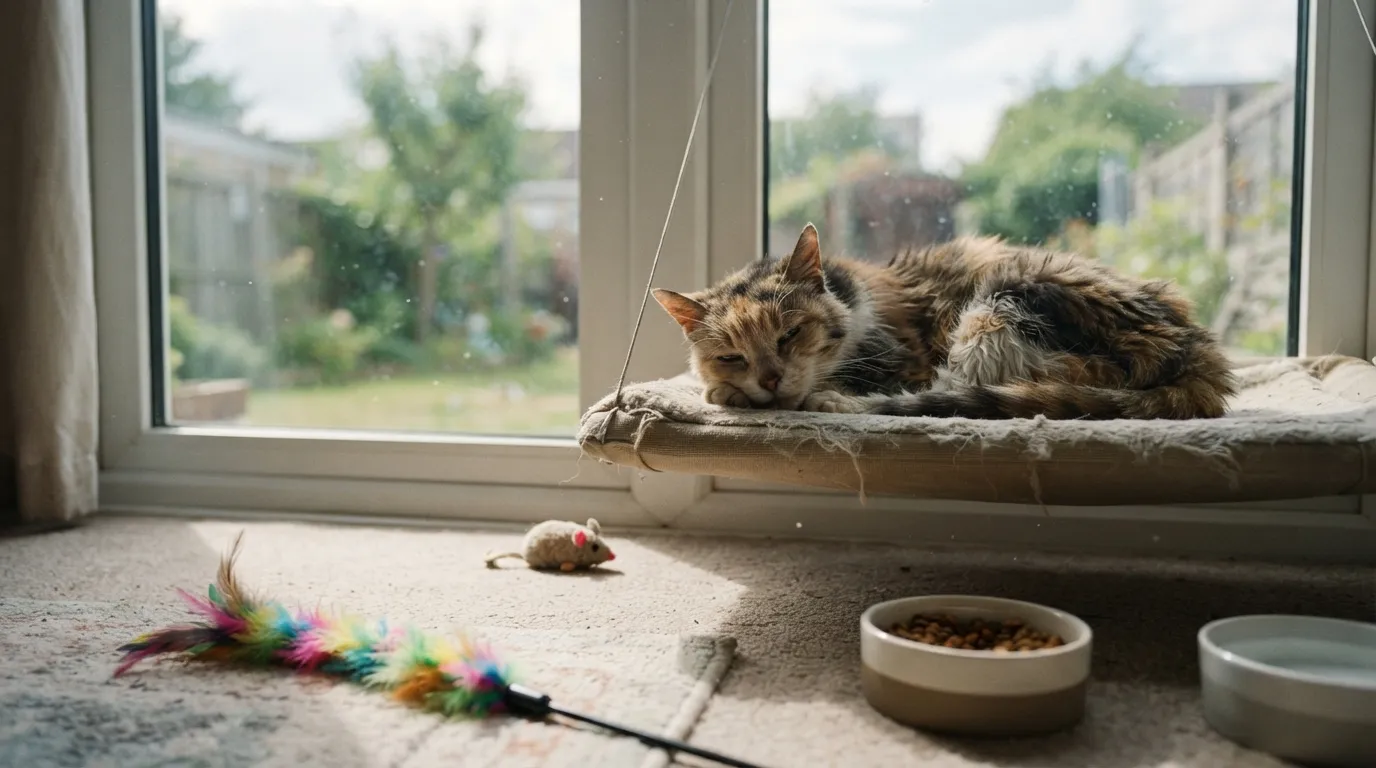
The toy that once sent your cat flying across the room now sits untouched. The window perch it claimed every morning stands empty.
Cats nearing the end often lose interest in play, treats, climbing, even self-grooming. It's easy to explain away as "she's just getting old," but paired with other signs, it tells a much clearer story.
This one is quiet enough to dismiss for weeks. The next sign happens in the litter box, and most owners never connect it to dying at all.
#3 - Accidents Outside the Litter Box
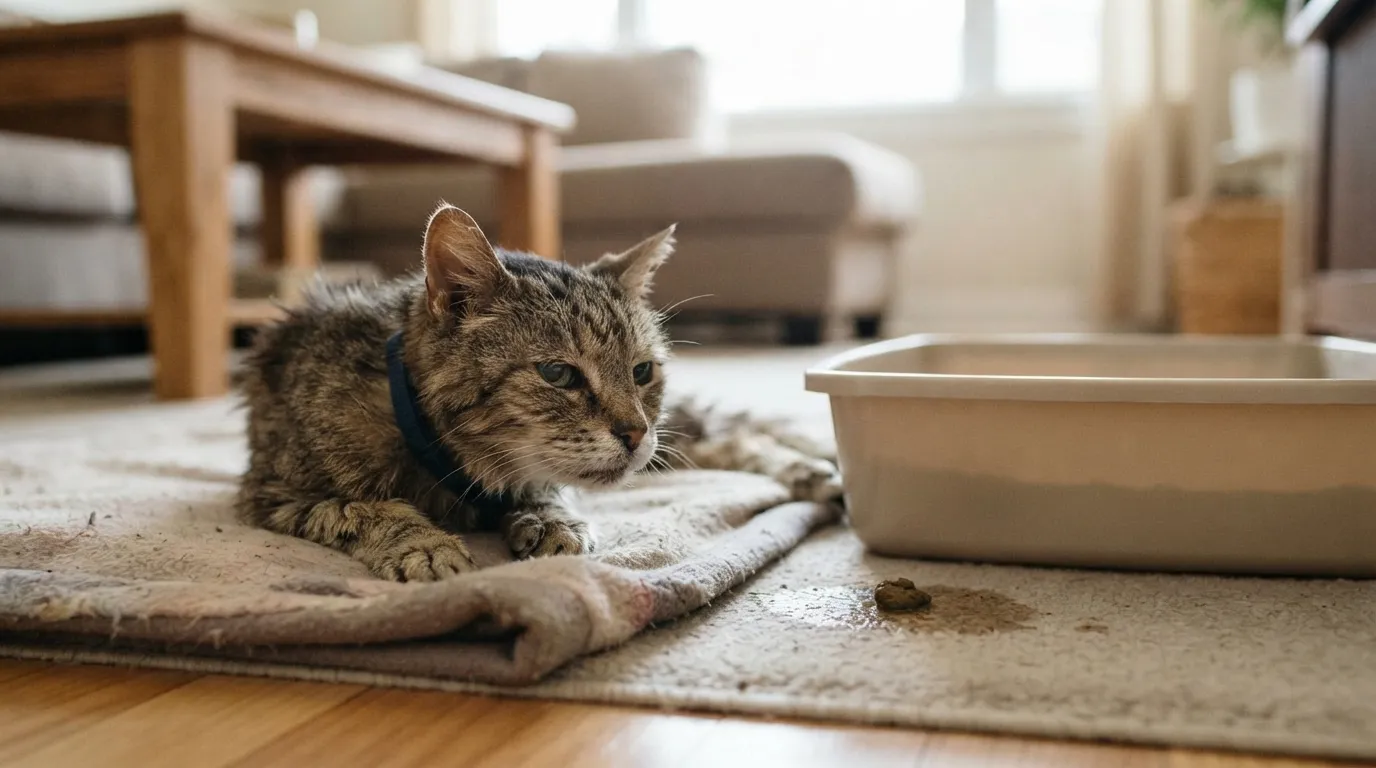
Failing muscle control and fading awareness can lead to accidents outside the litter box. It's rarely behavioral, and almost always physical.
The cat may simply be too weak to make the trip in time. Incontinence in a previously fastidious cat is one of the clearest signs that organ function and muscle control are failing.
At a Glance
- Loss of bladder or bowel control usually points to weakening muscles, not spite or defiance.
- Paired with poor appetite and weight loss, litter box accidents are often treated as a late-stage marker.
- Low-sided boxes and washable bedding placed nearby can ease this stage without adding extra stress.
Many owners scold their cats for this without realizing what it actually means. Don't make that mistake - and don't miss what comes next, the quietest sign on this entire list.
#2 - The "Tucked" Resting Position
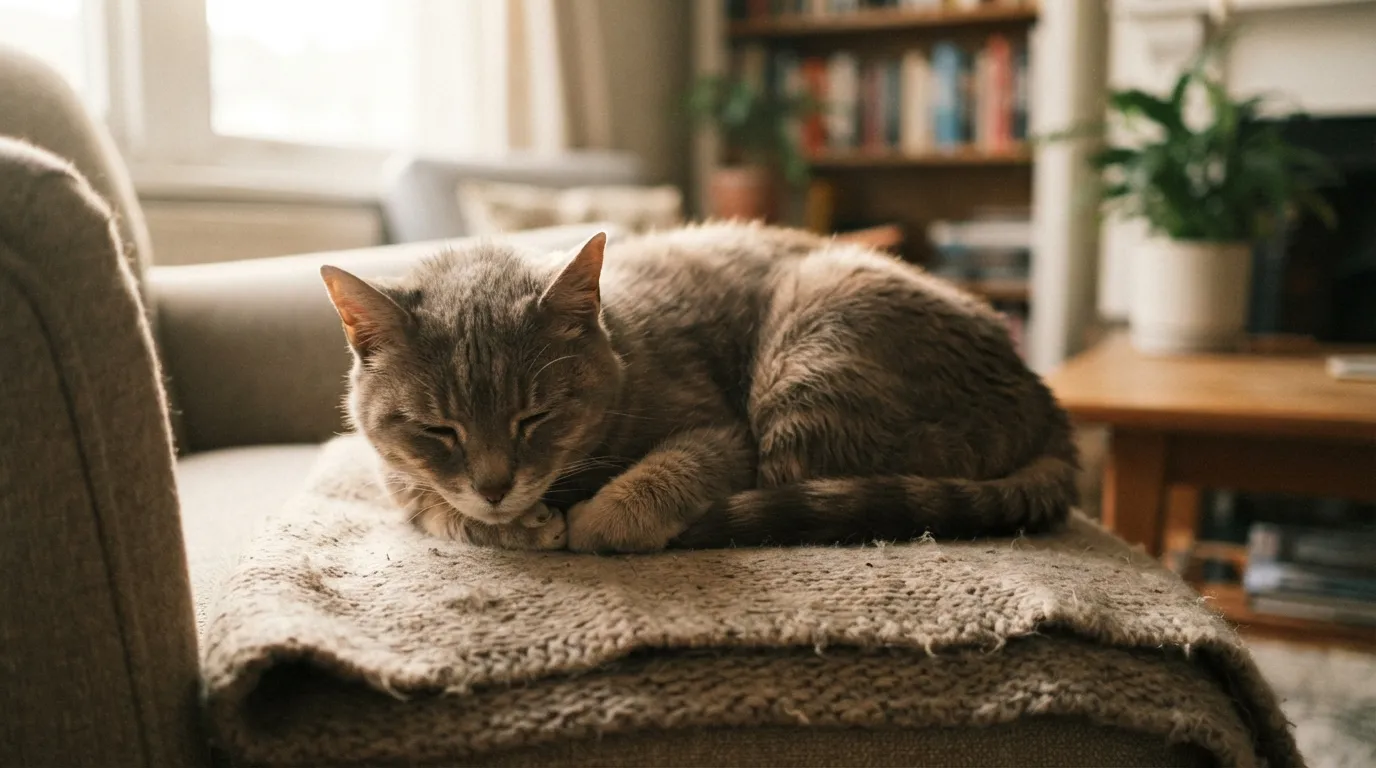
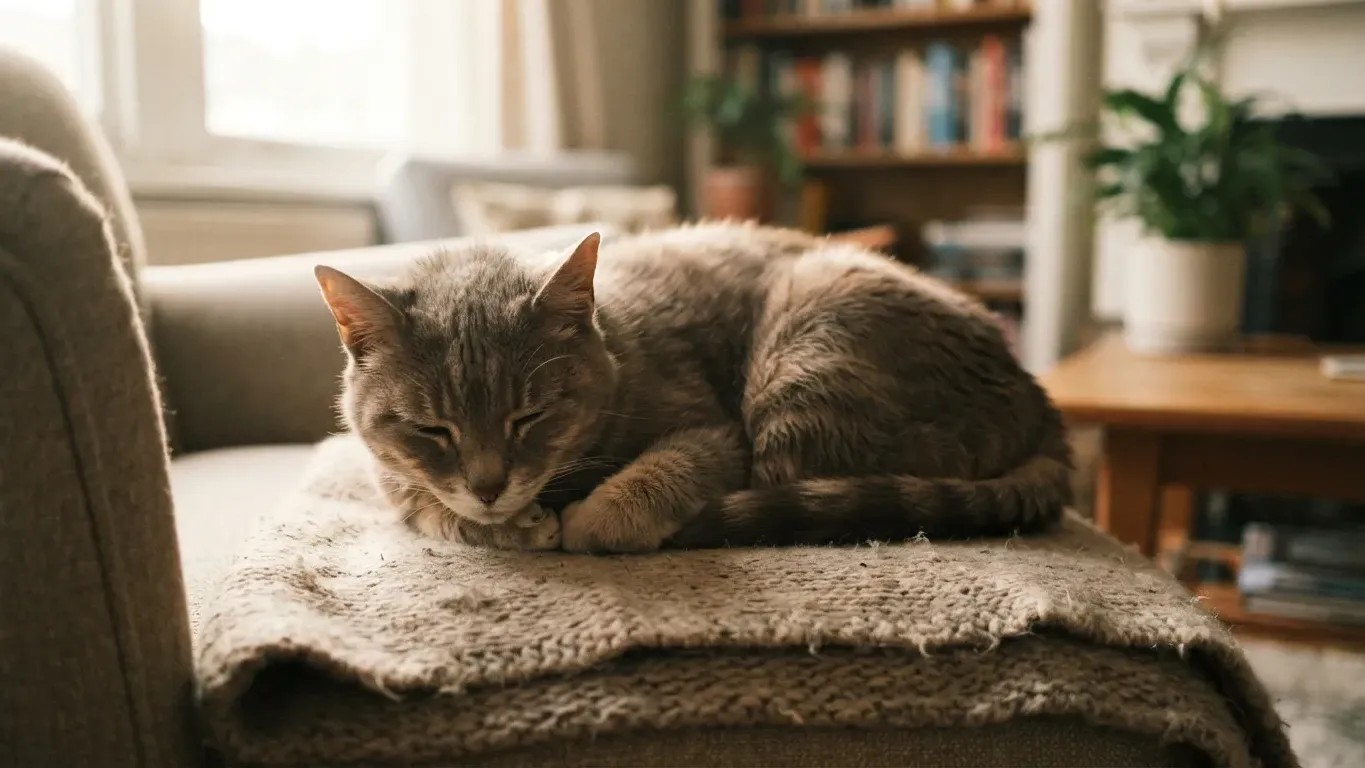
Cat owners know the "meatloaf" position well - paws tucked, tail wrapped close, head low. In the final days, it takes on a different quality.
The body hunches not for warmth, but because staying upright has become genuinely hard work. You may notice unsteadiness, an inability to stand, or hind-leg weakness alongside it.
A cat that can barely lift its head to greet you has moved past tired. Held for hours without movement, this posture is often the moment owners later say they knew - but the final sign on this list is the one nobody talks about, and it may be the most profound.
#1 - One Last Moment of Stillness With You
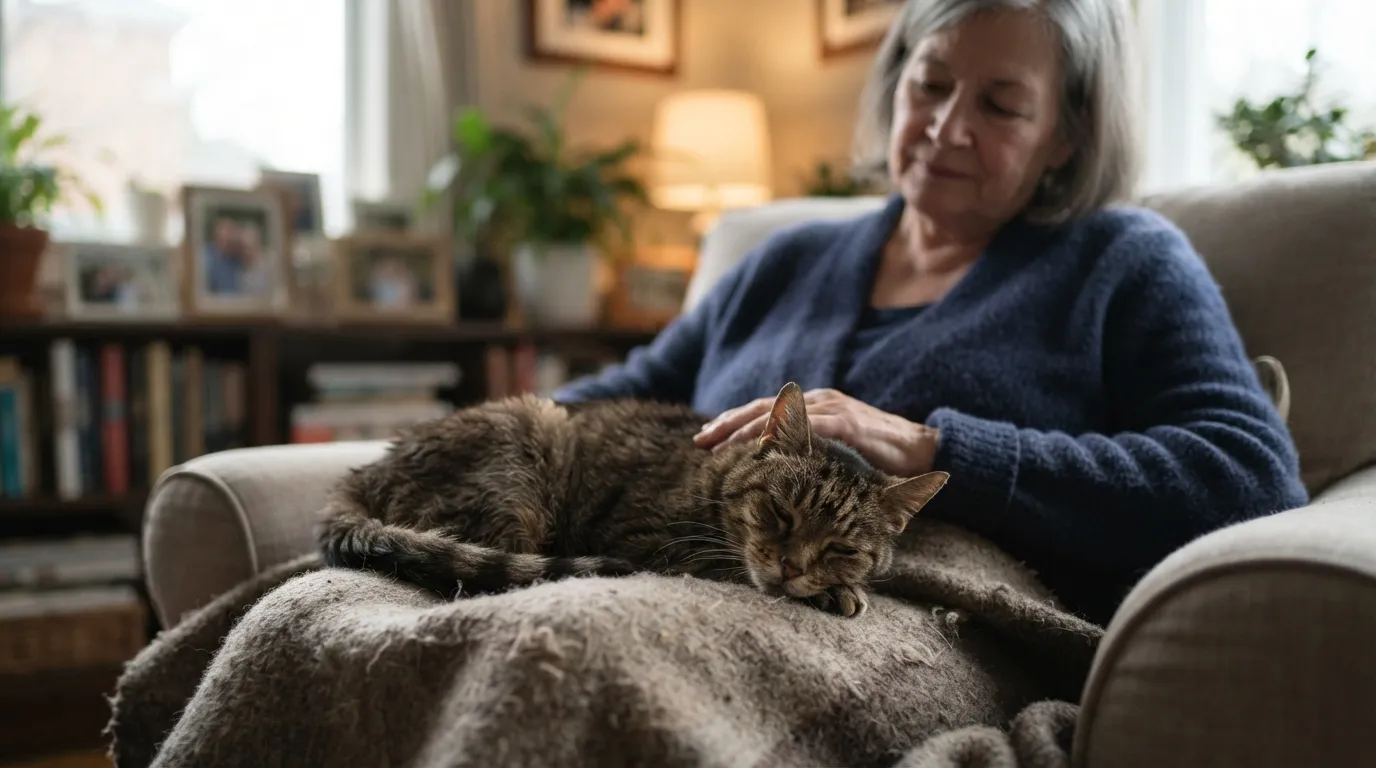
We can't know exactly what a cat senses in its final hours, but cats are remarkably intuitive animals. Many likely feel the physiological changes long before we notice anything at all.
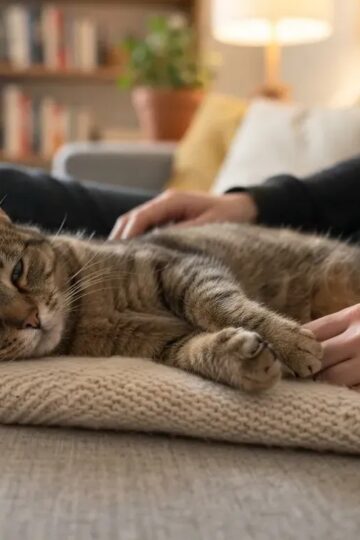
In the last hours, many owners report something unexpected - a brief return of alertness, followed by their cat settling calmly beside them. It's as if the cat chooses to spend its remaining awareness with the person it trusts most.
Vets and hospice workers describe this pattern often enough that it's considered a real, recognizable stage of dying - not just a comforting story owners tell themselves afterward.
None of these signs are meant to make you panic over every nap or quiet afternoon. Cats are simply built to hide what hurts, right up until they can't anymore.
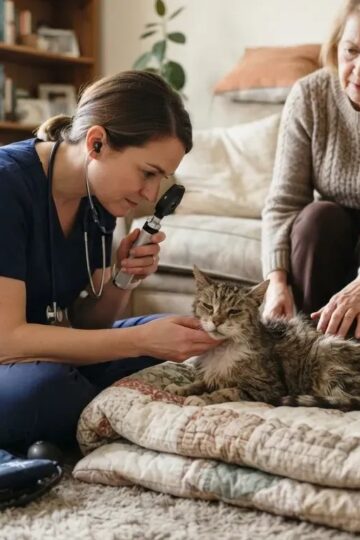
If you start noticing two or three of these together, call your vet - not to brace for the worst, but to make sure your cat's last days are as comfortable as they can be. The kindest thing you can give a cat that's spent its whole life hiding pain for you is the chance to finally stop hiding it.