13 Signs a Cat Has Stopped Treating You as a Stranger for Good
Most people assume cats either like you or they don't - some fixed setting decided at birth. That assumption is completely wrong.
Cats run on a trust system that can take days, weeks, or months to unlock, and the signals they send once it clicks are almost always misread. By the time you reach sign #1, you won't be able to look at your cat's tail, blink, or 3 a.m. headbutt the same way again.
#13 - They Eat With Their Back to You
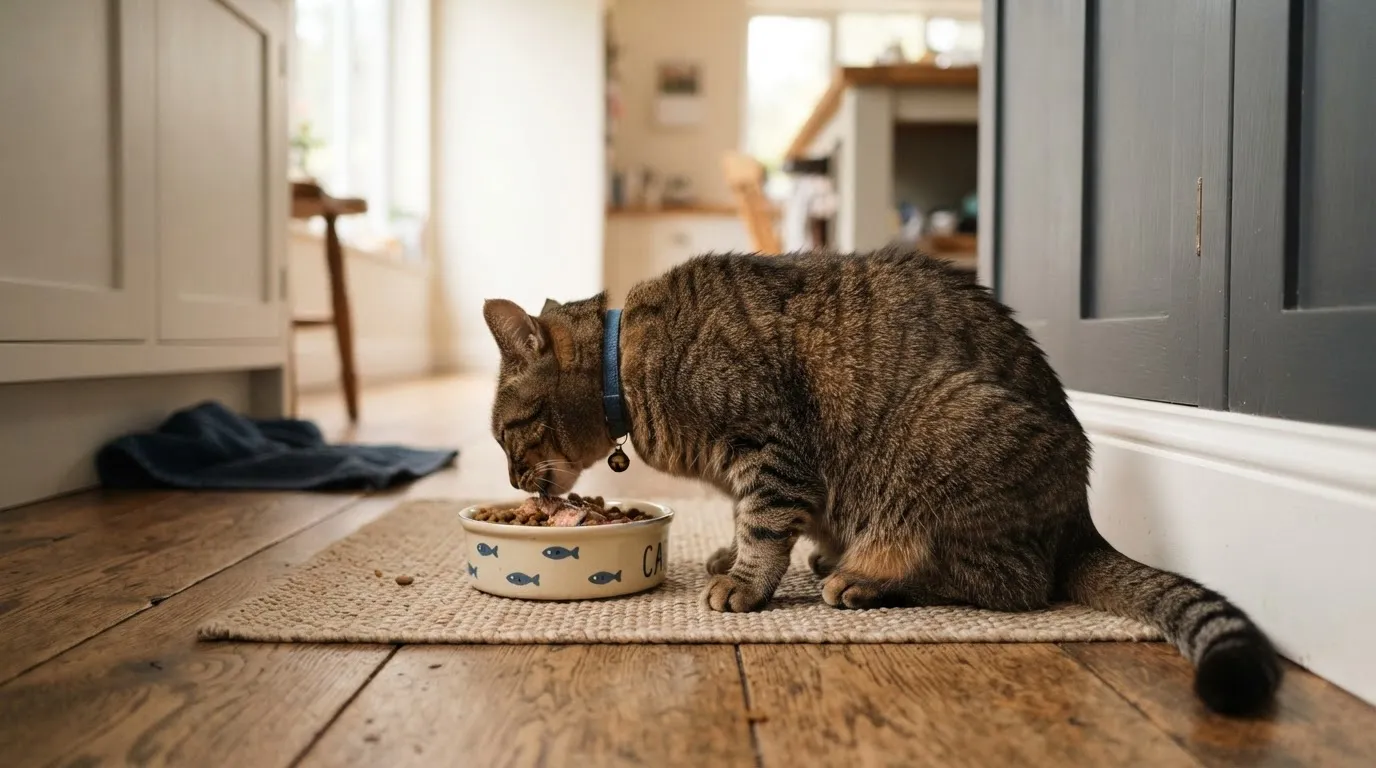
This one flies under the radar for most owners, yet it's one of the clearest early signs of trust.
"If a cat is happy to eat with its back turned or without regularly checking where you are, it usually indicates they don't see you as a threat." A feeding animal is at its most physically vulnerable moment of the day.
A cat that stops scanning the room while eating has made a quiet, deliberate decision about you. Most owners celebrate the loud, obvious signs and miss this one completely.
Watch your cat's next meal. If it never glances back, that's trust, not indifference - and the tail tells an even more specific story. Keep reading.
#12 - The Tail Goes Straight Up When They See You
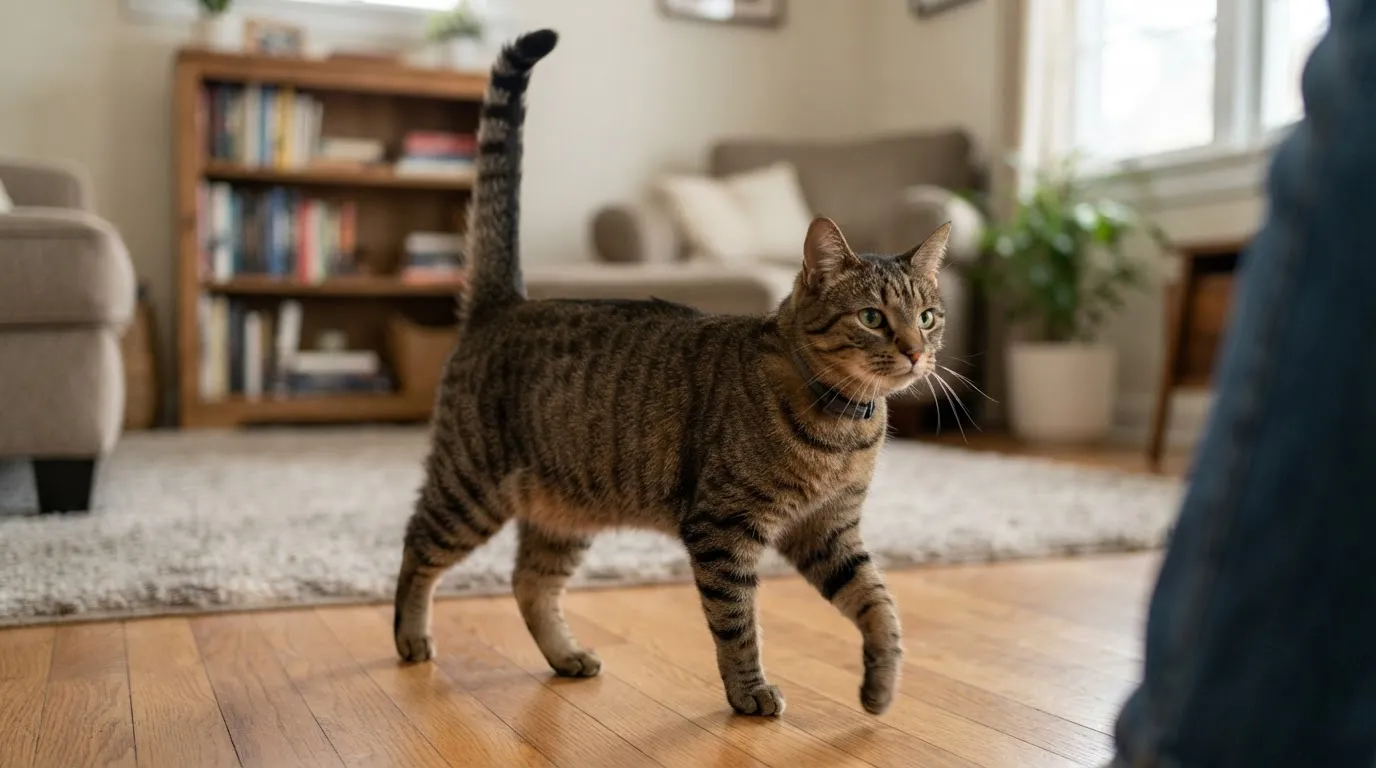
A cat's tail is a reliable barometer of mood. One simple way to know your cat trusts you is if her tail stands straight up, especially when she sees you or walks toward you.
In cat-to-cat communication, this posture signals friendly, non-threatening intent. Sometimes it comes with a gentle kink at the tip, which only sweetens the message.
Fast Facts
- Tail straight up: confident and friendly
- Straight tail with a hooked tip: an open invitation to interact
- Puffed, "bottle brush" tail: fear, not trust
- Tucked tight against the body: anxiety or submission
When a cat points that tail at the ceiling for you, it's extending the same greeting it would give a trusted feline companion. That's not random - it's a deliberate social signal that only appears once the stranger-label is gone.
The next sign happens when they think you're not even looking.
#11 - They Follow You From Room to Room
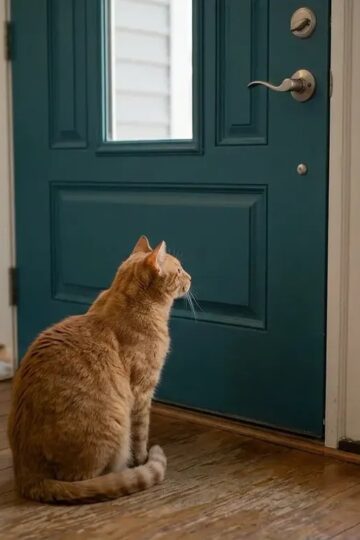
"If your cat follows you from one room to another, it is a very good indication of trust." In the wild, cats don't tail another animal around unless they feel secure and protected.
When a cat follows you, it's choosing you as its safe person - not necessarily its favorite playmate. "Even if they don't want to be petted, their choice to be near you indicates a certain degree of trust."
The detail most owners miss: the cat doesn't have to demand attention for this to count. Simply relocating to wherever you are is the signal, food and habit aside.
Wait until you see what they do with their eyes next. It's more powerful than any of this.
#10 - They Slow-Blink Directly at You
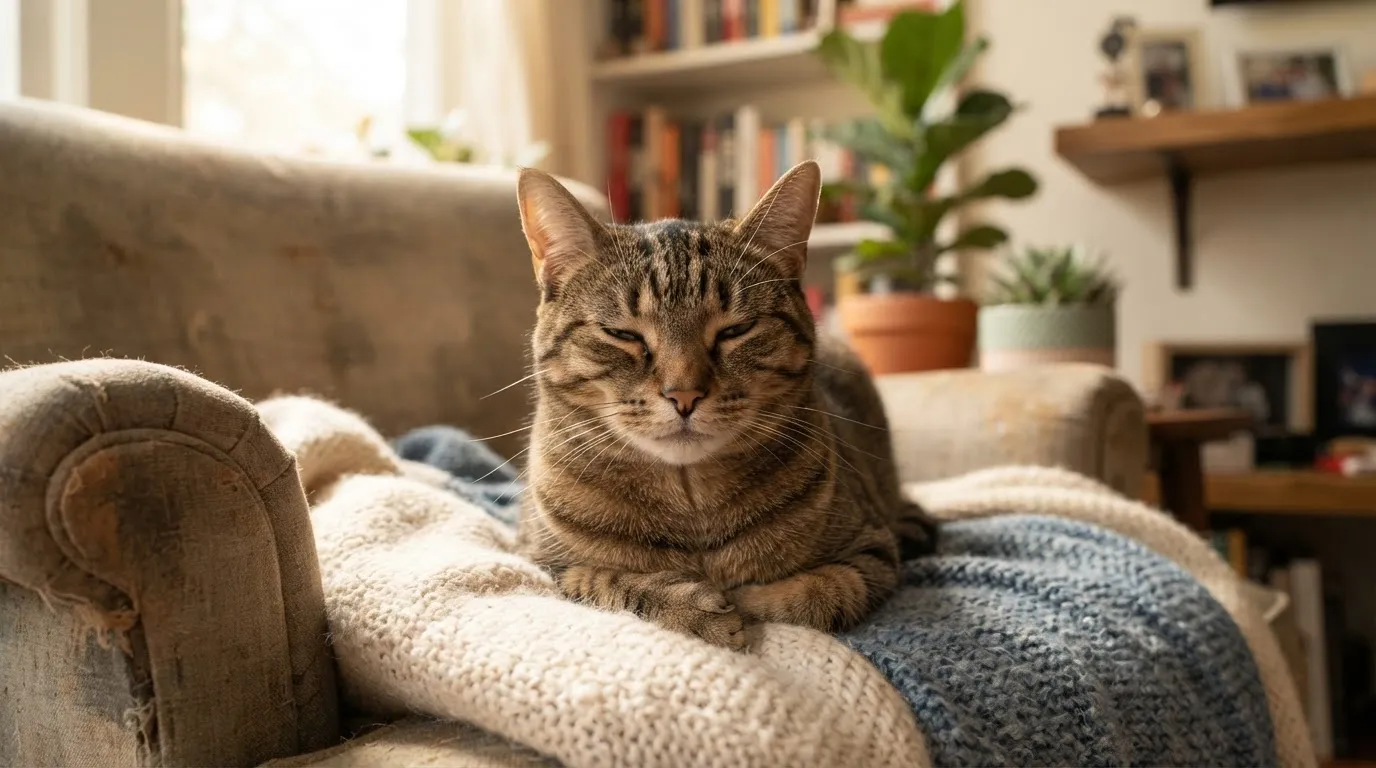
"The slow blink is a sign of trust. Your cat is showing that they are relaxed and comfortable in your presence."
Cristin Tamburo, certified feline behavior consultant
Think about what closing your eyes actually means in survival terms - it cuts off a cat's primary sense for a full second. A cat that slow-blinks at you is, quite literally, choosing to go briefly blind in your presence.
You can slow-blink back, and it tends to land. Cats often respond positively when humans mirror the gesture, making the exchange genuinely mutual.
The next sign takes this vulnerability even further - and it happens while they're completely unconscious.
#9 - They Sleep Near You (or Directly On You)
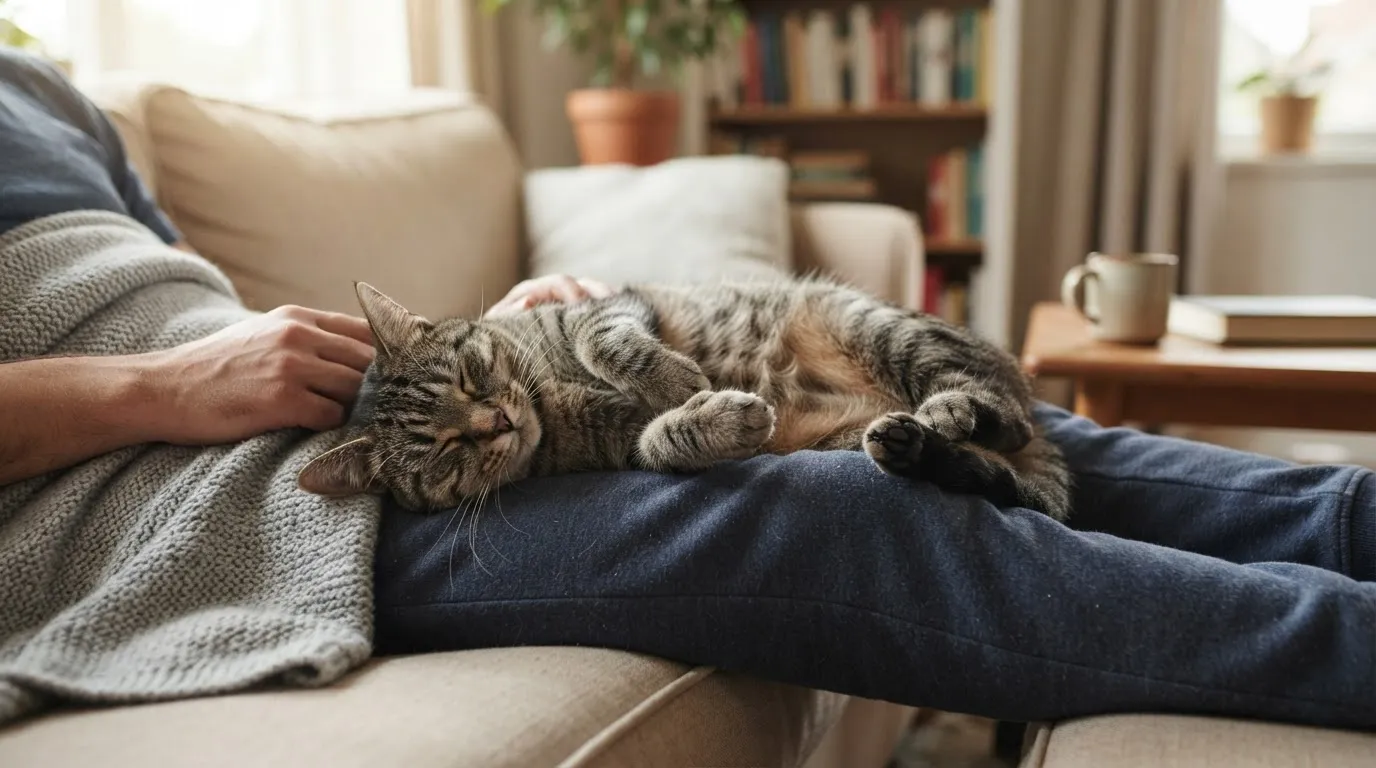
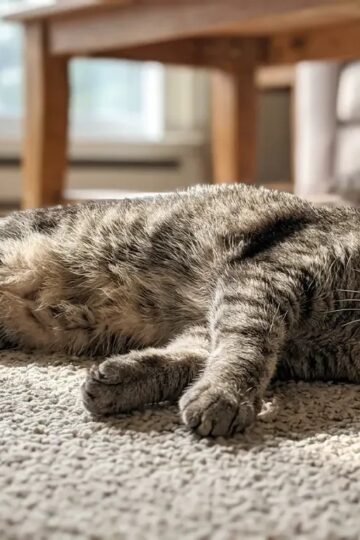
If your cat likes to sleep near you, or on you, that's total trust on display. Asleep, a cat is defenseless, so choosing to do it in your presence means it doesn't see you as a threat.
When a cat sleeps on its back beside you, it has essentially switched off its own alarm system. That's the feline equivalent of handing you the keys.
At a Glance
- Adult cats sleep about 12 to 16 hours a day, on average
- Kittens and senior cats often sleep closer to 20 hours a day
- Deep sleep usually lasts only a few minutes at a stretch
- True deep sleep only happens when a cat feels completely safe
Many owners write this off as the cat just liking the warmth. It isn't - location matters, and a cat that could sleep anywhere and picks you has made a choice.
Sleeping near you is passive, though. The next sign is an active declaration.
#8 - They Headbutt You
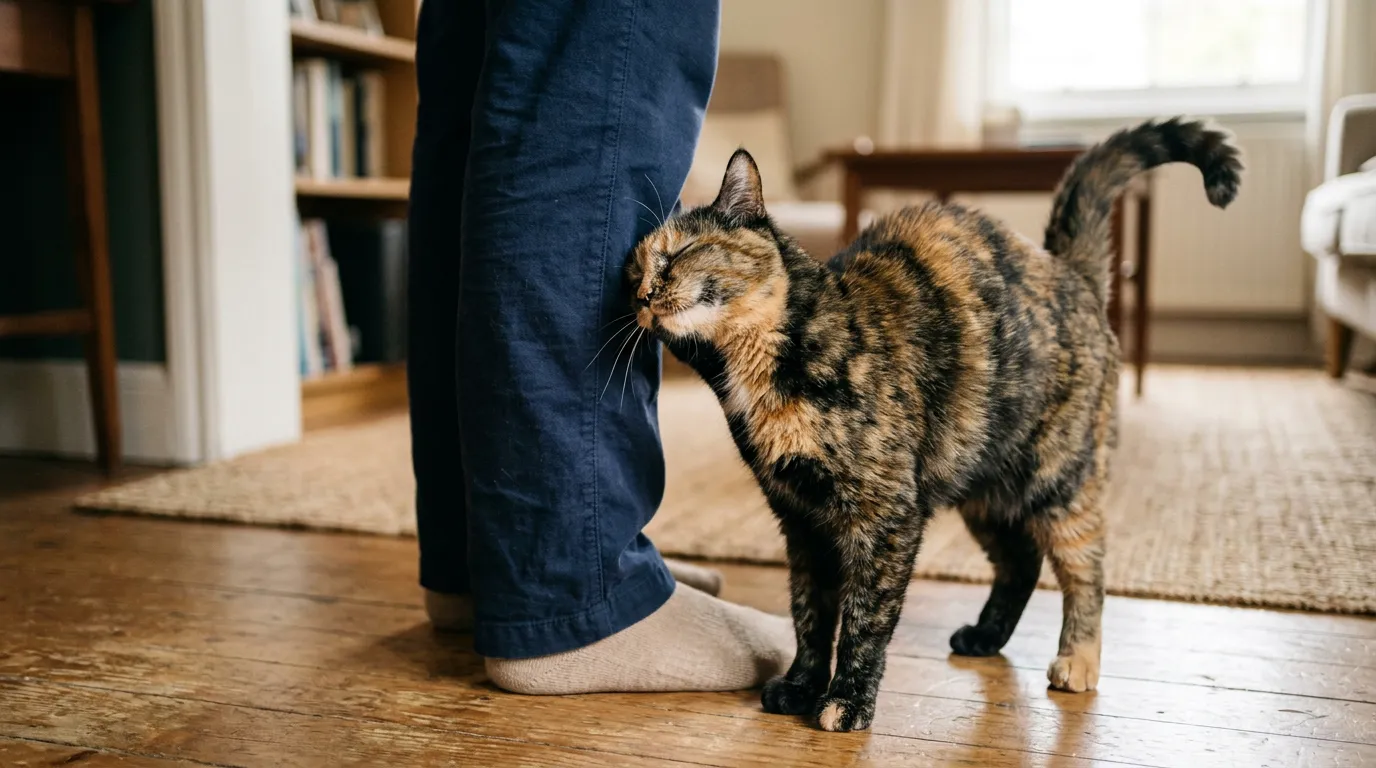
If your cat prods your chin with its head or rubs against your leg, consider it a compliment. Your cat is putting its trust in you and has accepted you as its caregiver.
A cat's cheeks carry scent glands, so head-bumping doubles as scent-marking. Your cat is chemically labeling you as part of its inner circle.
This isn't vague affection - it's a territorial claim that says "this human belongs to me." A cat that has stopped seeing you as a stranger doesn't just tolerate you, it marks you as its own.
What comes next is even more deliberate - and almost universally misunderstood.
#7 - They Knead You
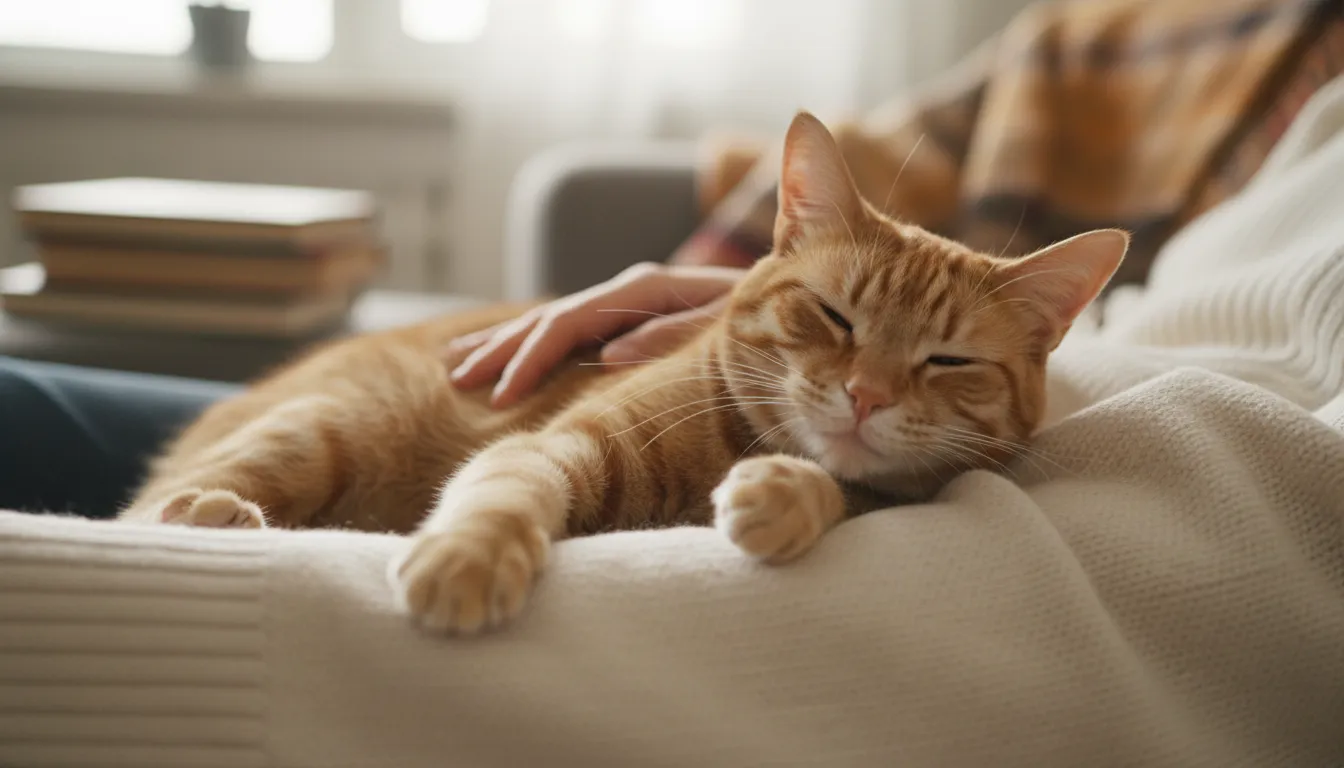
Cats remember feeling protected against their mother as kittens. You can see that nostalgia surface when your cat kneads a cushion - or your stomach - with its paws.
Kneading originates in kittenhood, used to stimulate milk flow from the mother. When your cat kneads you, it's placing you in the emotional category of "safe, nurturing, and home."
There's no higher placement in a cat's internal ranking system. The fact that it sometimes hurts is irrelevant to the cat - it's instinct, not intent.
The next sign is one almost every cat owner gets completely wrong.
#6 - They Show You Their Belly
Your cat offering you its stomach is a genuine honor. Rolling onto its back and stretching that fluffy belly toward you is a display of sheer comfort.
Worth Knowing
- Dogs often show their belly as an invitation for a rub
- Cats show their belly mainly to signal trust, not to request touch
- The belly is one of the least protected, most vulnerable spots on a cat's body
- A relaxed tail and soft eyes during the display confirm it's about comfort, not play
Here's the part people misread: a belly display is a trust signal, not necessarily a petting invitation. Many owners reach down, the cat swipes, and they walk away calling the cat "unpredictable."
The cat wasn't inviting touch - it was saying "I trust you." Learn to read the belly flash as a compliment, not a request.
The next sign involves sound - and it's more nuanced than you'd think.
#5 - They Talk to You
Purring and other vocalizations are a trust marker, but here's what most owners never realize: cats adjust their body language and vocalizations specifically for humans, using more eye contact and meows than they ever use with other cats.
Adult cats almost never meow at other cats - the behavior developed almost exclusively for communicating with humans. When your cat sits and meows at you, it's using a channel of communication it essentially invented for your benefit.
That's not a random noise. It's an attempt at conversation, and it only happens with people the cat has decided are worth talking to.
The next sign goes a step further. It's contact, not just sound.
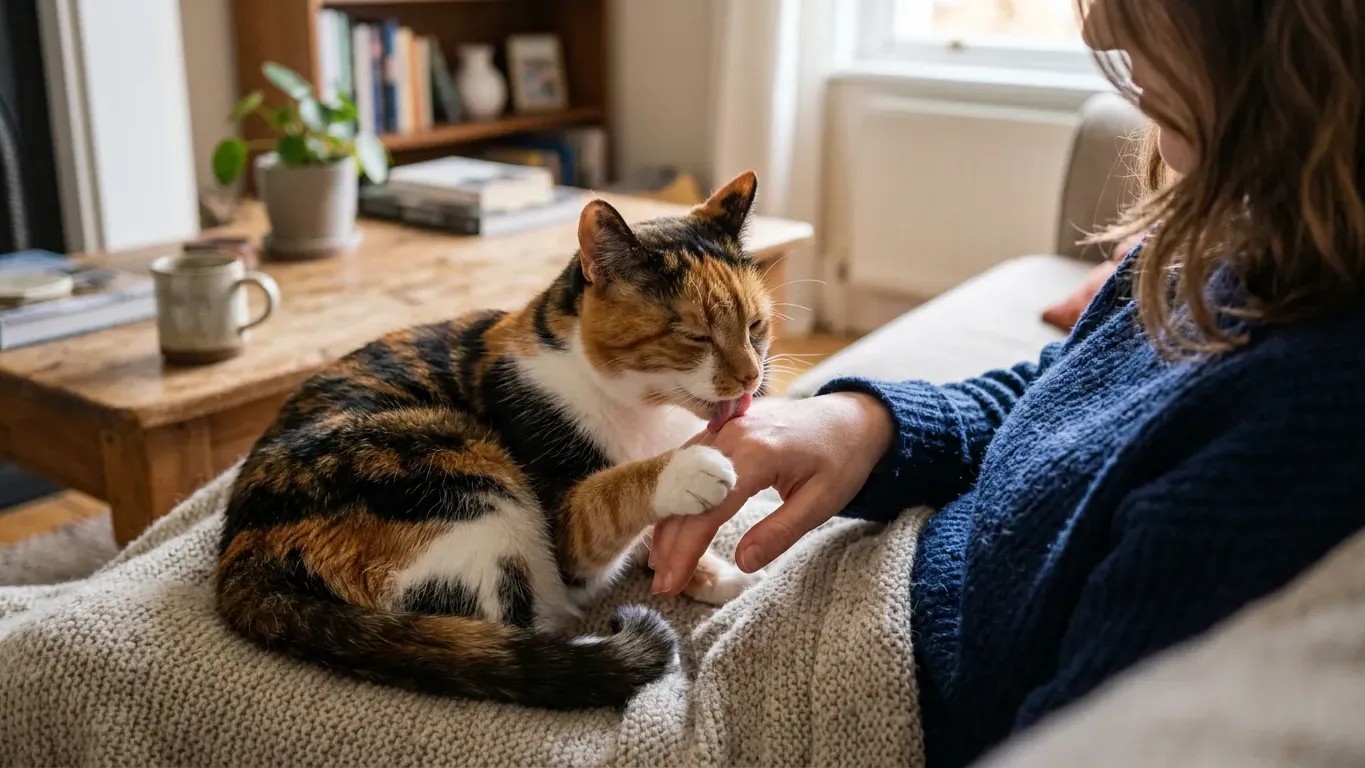
#4 - They Groom You
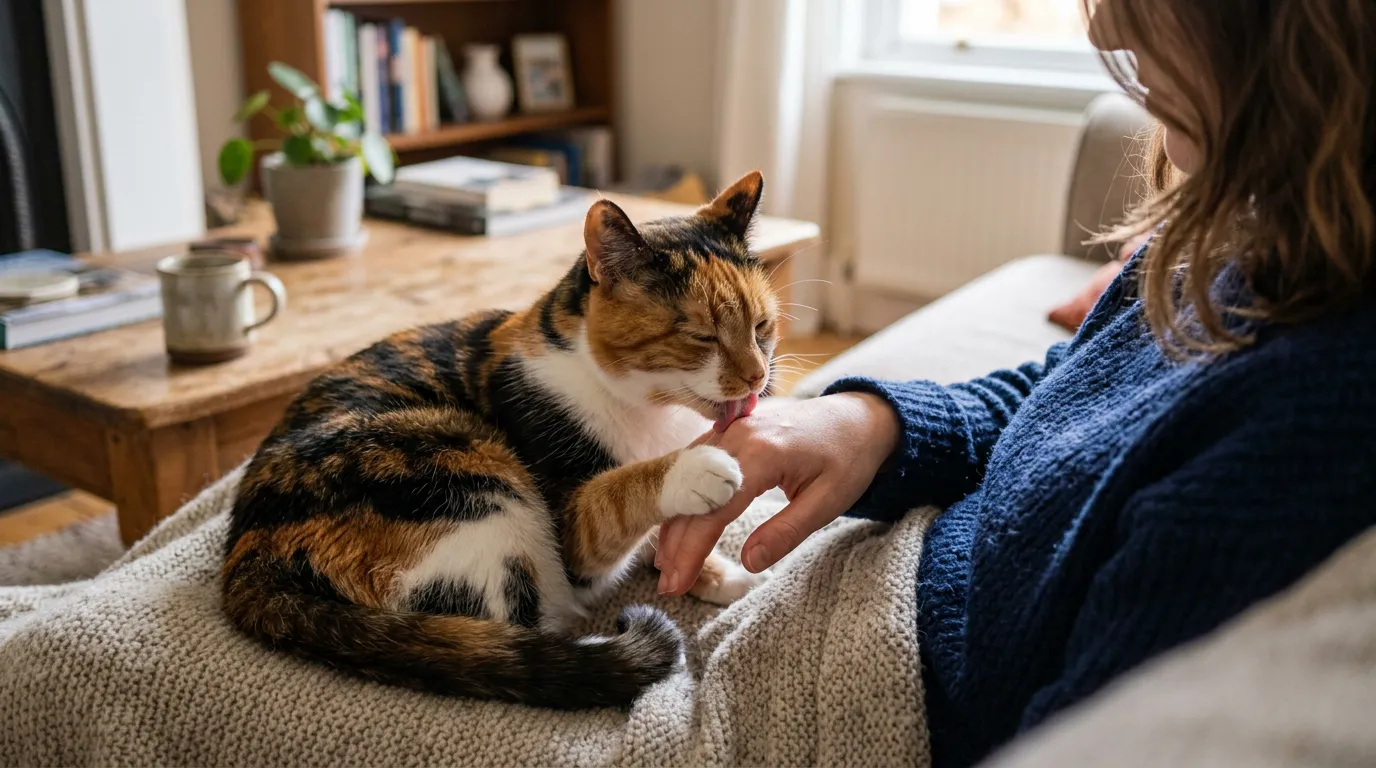
Grooming and headbutting help cats establish social bonds and communicate affection. These behaviors exist specifically to build and maintain relationships.
When a cat licks your hand, hair, or face, it's doing something normally reserved for bonded companions. This behavior - called allogrooming - is one of the strongest social bonding signals in the feline world.
Cats don't groom strangers, and they don't groom animals they're indifferent to. If your cat is licking you, you've been formally inducted into its social group.
Still, the next sign might be the most underrated tell of all.
#3 - They Let You Do Things No One Else Can
"This is one of the biggest signs your cat trusts you. Maybe they let you trim their nails or hold them, or in some extreme cases, only come out of hiding when you are around."
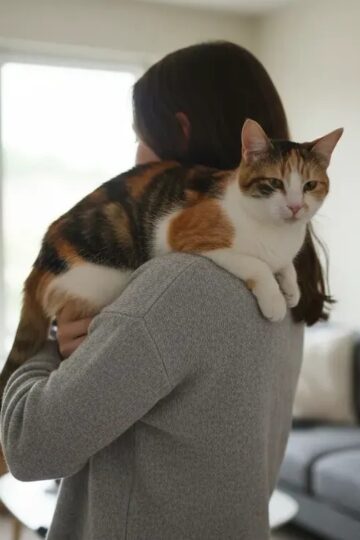
When your cat allows you to pick it up and its body stays relaxed, that's absolute trust. Some owners even cradle their cat like a baby or carry it draped over a shoulder.
Quick Compare: You vs. Everyone Else
- Nail trims: calm and still for you, squirmy or hiding for others
- Medication or vet visits: tolerated with you nearby, resisted without you
- New visitors: stays hidden until you walk into the room
- Being carried: relaxed body with you, tense with anyone else
These "only for you" behaviors are the gold standard of feline trust. A cat that tolerates handling, nail trims, or medication from one specific person - and hides from everyone else - has made an exclusive social contract.
One more sign before the ultimate one, and it only shows up in moments of genuine fear.
#2 - They Come to You When Stressed
Maybe they hide behind you when strangers arrive, keeping you between them and the unknown because they trust you to protect them. Maybe at the vet, they bury their face in your shoulder, trying to get as close to you as physically possible.
This is the moment that separates "comfortable with you" from "fully bonded." Any cat can tolerate your presence on a calm Tuesday afternoon at home.
But a cat that seeks you out when its instincts are screaming to hide has decided you are its safest place in the world. Stress-seeking is trust made visible.
Now, the #1 sign - the one that means everything.
#1 - They Initiate Physical Contact on Their Own Terms
"Any time a cat makes contact with a person, they are taking on a certain amount of risk. So, only if they really trust you will they initiate touch or allow themselves to be touched by you."
A cat that approaches unprompted - not food-motivated, not startled into it - and makes physical contact has done something profoundly deliberate. Ears tilted forward, smooth fur, relaxed whiskers, and slow movements all confirm the same thing: no defensive tension left at all.
When all of those signals appear at once, paired with the cat walking straight to you and pressing against you, you are no longer a stranger. You never will be again.
The Bottom Line
Cats don't hand out trust carelessly, and that's exactly what makes it worth earning. The 13 signs above form a ladder, from the subtle - eating with their back to you - to the unmistakable, being chosen as a safe haven during fear.
Most owners are already receiving several of these signals and dismissing them as "just cat behavior." It isn't - it's a relationship being quietly declared, one deliberate gesture at a time.
The slow blink, the belly flash, the unprompted headbutt - each one is a door being opened. The only question is whether you noticed.
Which sign did your cat show you first? Drop it in the comments - we'd love to know.