Everyone assumes a sick cat vanishes under the bed and wants total silence. That’s the story we’ve all been told – and for some cats, it’s even true.
But plenty of sick cats do something nobody warns you about: they move closer, not farther, using small, deliberate gestures most owners never notice. Once you know what to look for, you’ll realize your cat has probably been trying to tell you something for years.
#13 – They Follow You From Room to Room
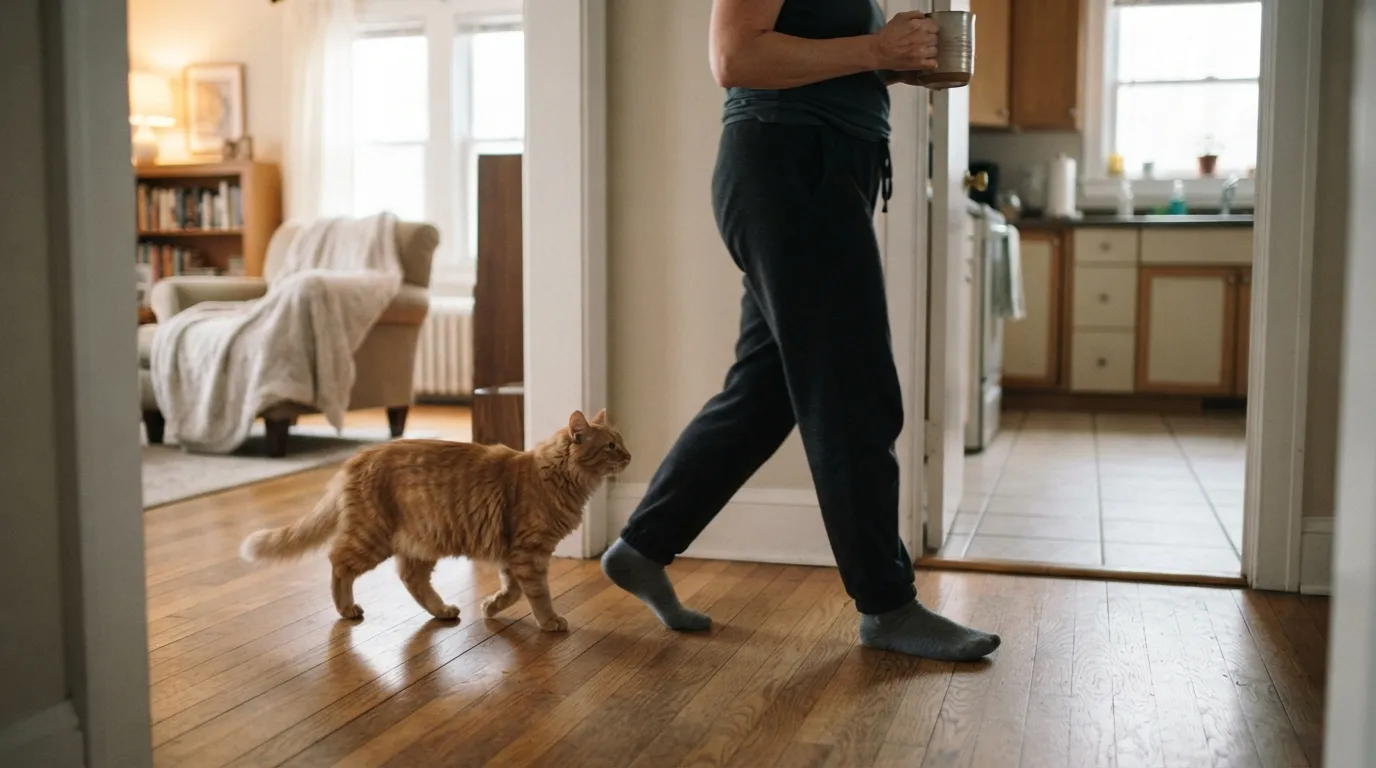
A cat that suddenly shadows your every move isn’t just being nosy.
Sick people often notice their cats trailing them from room to room. Cats read our body language closely, and they don’t need to understand “illness” to notice something is off.
Because cats thrive on routine, any shift – sleeping more, moving slower, talking less – stands out to them immediately. They interpret it as a signal, and they respond.
It’s not random. It’s a check-in.
What they do once they catch up with you is even more telling – see #12.
#12 – They Sit on Your Chest or Lap Without Being Invited
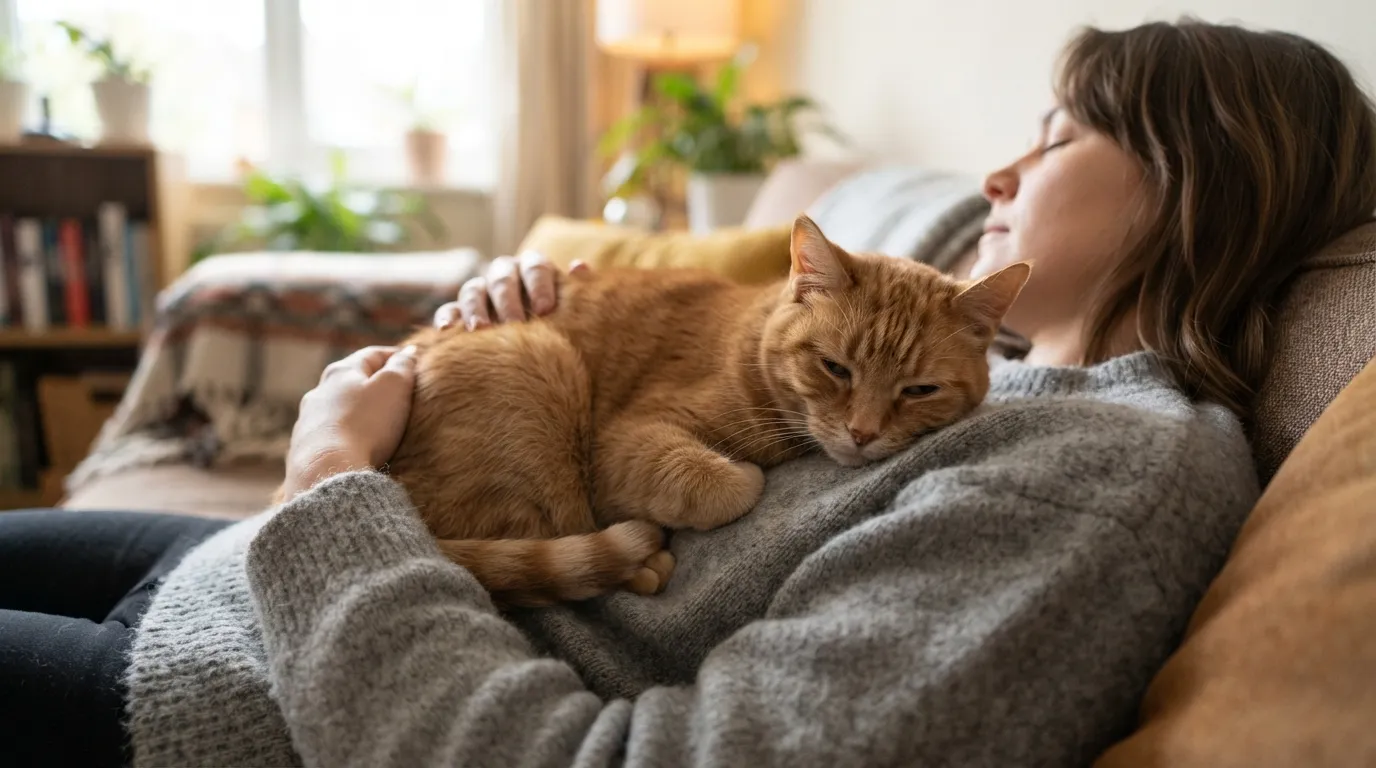
A cat that’s normally independent suddenly wants to be on you? Pay attention.
Some cats grow noticeably more affectionate when something feels wrong, seeking constant contact or curling up near your chest and head.
Illness can make a cat clingy, too – they want comfort just as much as they want to give it. Your body becomes both an anchor and a heat source.
A sick cat climbing onto you uninvited is using you as both.
The next habit shows just how sensitive that heat-seeking instinct really is.
#11 – They Press Their Body Flat Against Yours
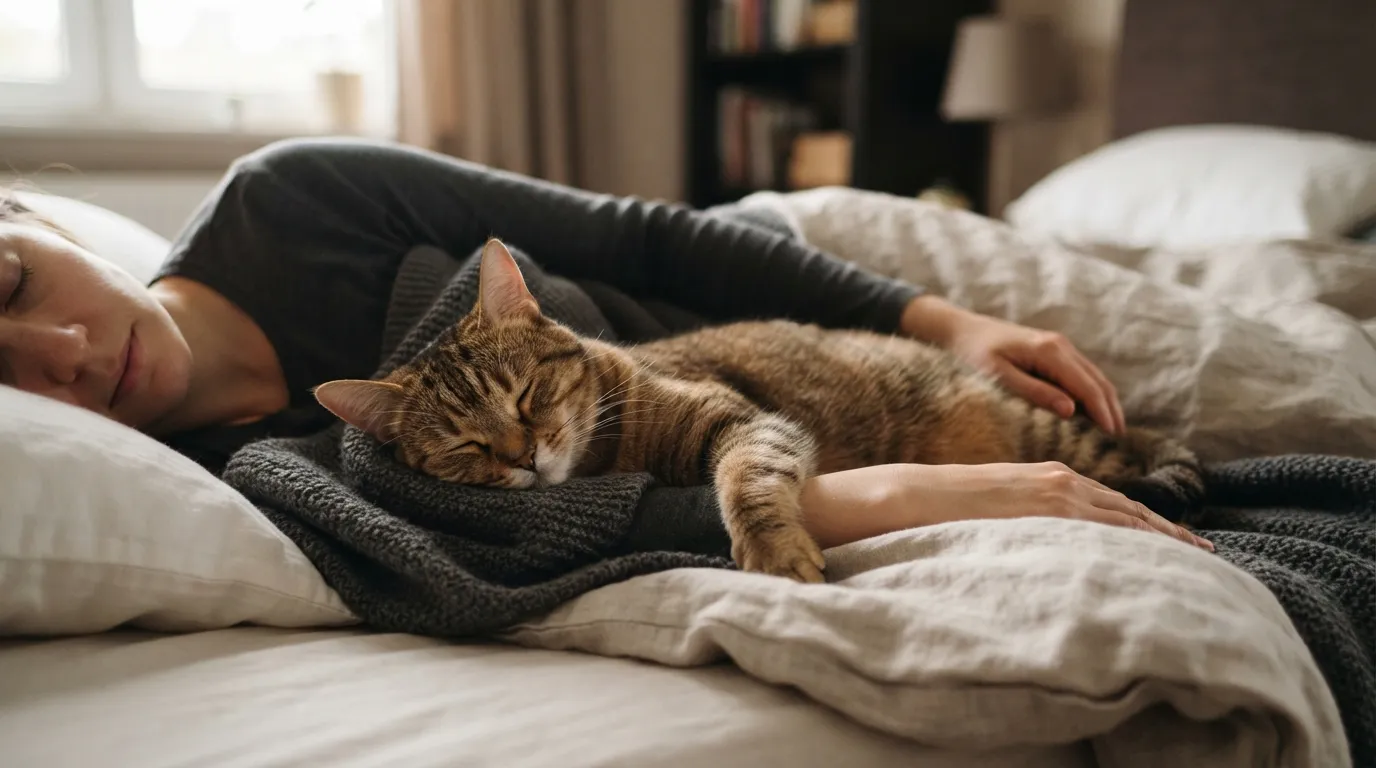
A lean is more than a lean – it’s a deliberate act of contact.
Cats are remarkably sensitive to body temperature. A fever raises skin heat just enough for a cat lying against you to notice.
This isn’t anxious behavior. It’s calm, quiet, observant – a cat choosing to stay physically locked onto you rather than retreat.
That full-body press is mutual warmth and mutual reassurance.
But the next habit is almost invisible if you’re not watching closely.
#10 – They Purr Differently Than Usual
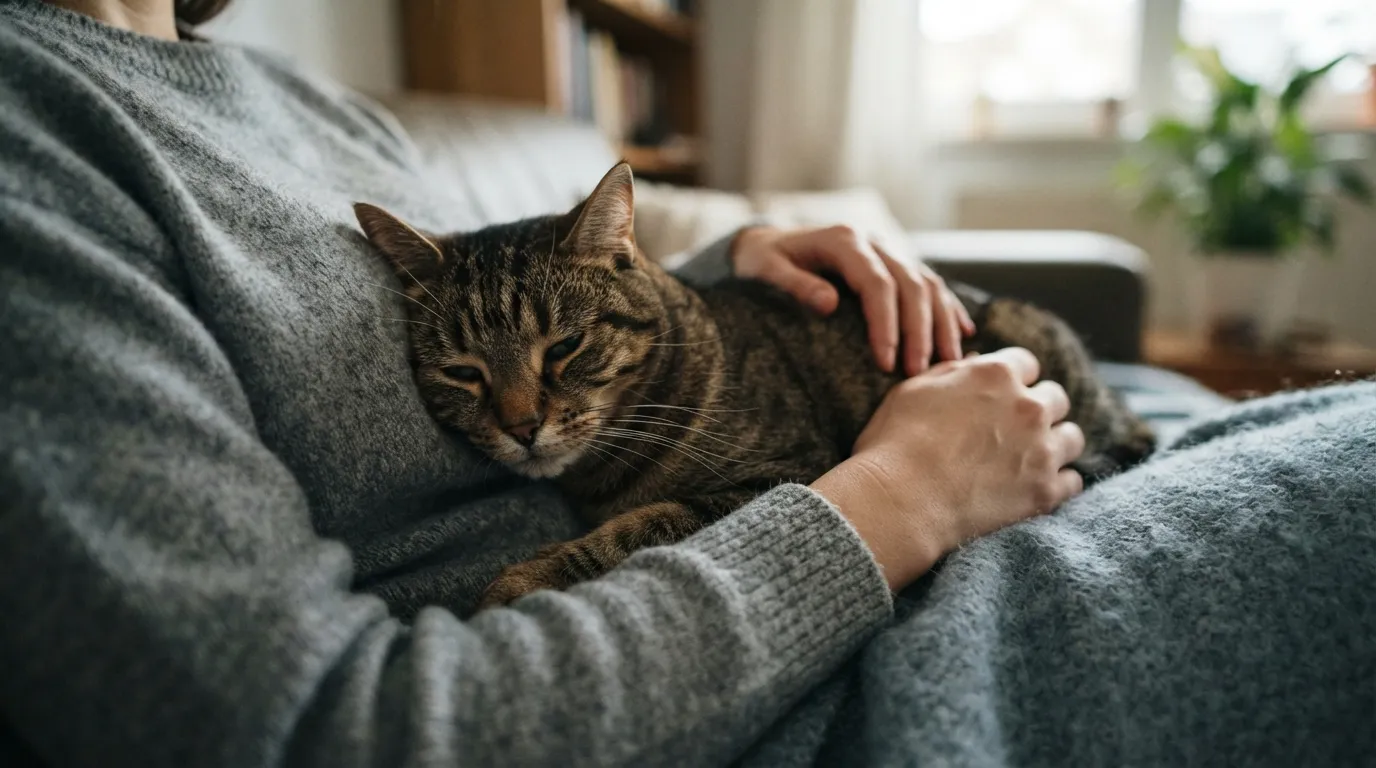
Most people think a purr always means a happy cat. It’s more complicated than that.
Cats purr when content, but they also purr when anxious, in pain, or trying to self-soothe. The sound is the same – the meaning isn’t.
A cat purring while pressed against you during illness may be using vibration as comfort, not celebration.
Watch the rest of their body, not just the sound.
Fast Facts
- A cat’s purr typically falls between 25 and 150 hertz, a range that’s been studied for its calming qualities.
- Cats purr not only when content, but also when they are severely injured or frightened.
- Purring often doubles as a self-soothing tool, not just a happy signal.
- That steady vibration may be part of why a purring cat pressed against you feels so calming.
A low, sustained purr while they stay still and close is worth noticing. The next habit tends to pair with it.
#9 – They Knead Gently on You or Your Blanket
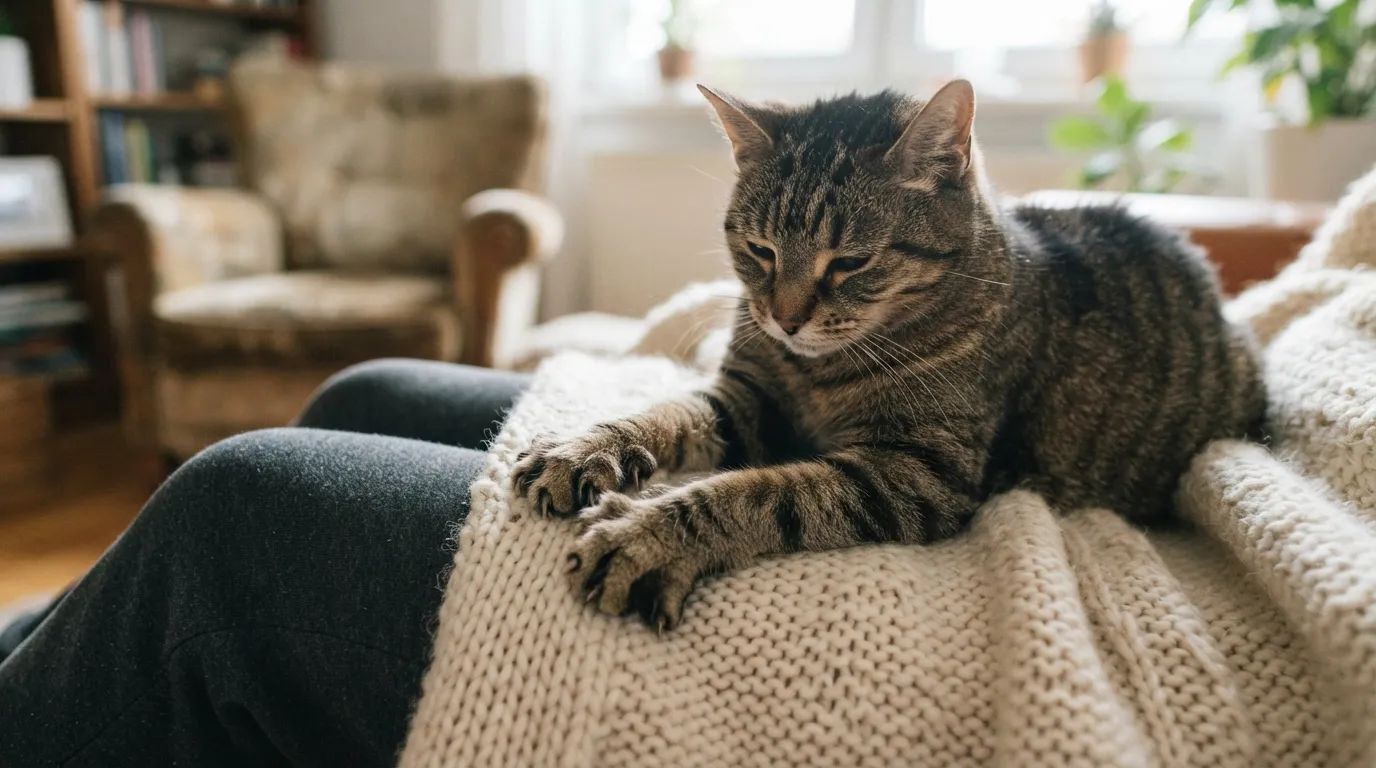
Kneading isn’t random – and when a sick cat does it, the meaning runs deeper than habit.
Kittens knead their mothers to stimulate milk, and the comfort of that memory never really fades. Adult cats keep doing it because it still feels like safety.
When a sick cat kneads on you specifically, they’re reaching back to their earliest sense of security. It’s not decorative – it’s a primal bid for closeness.
And the next behavior is just as ancient.
#8 – They Give You Slow Blinks From Across the Room
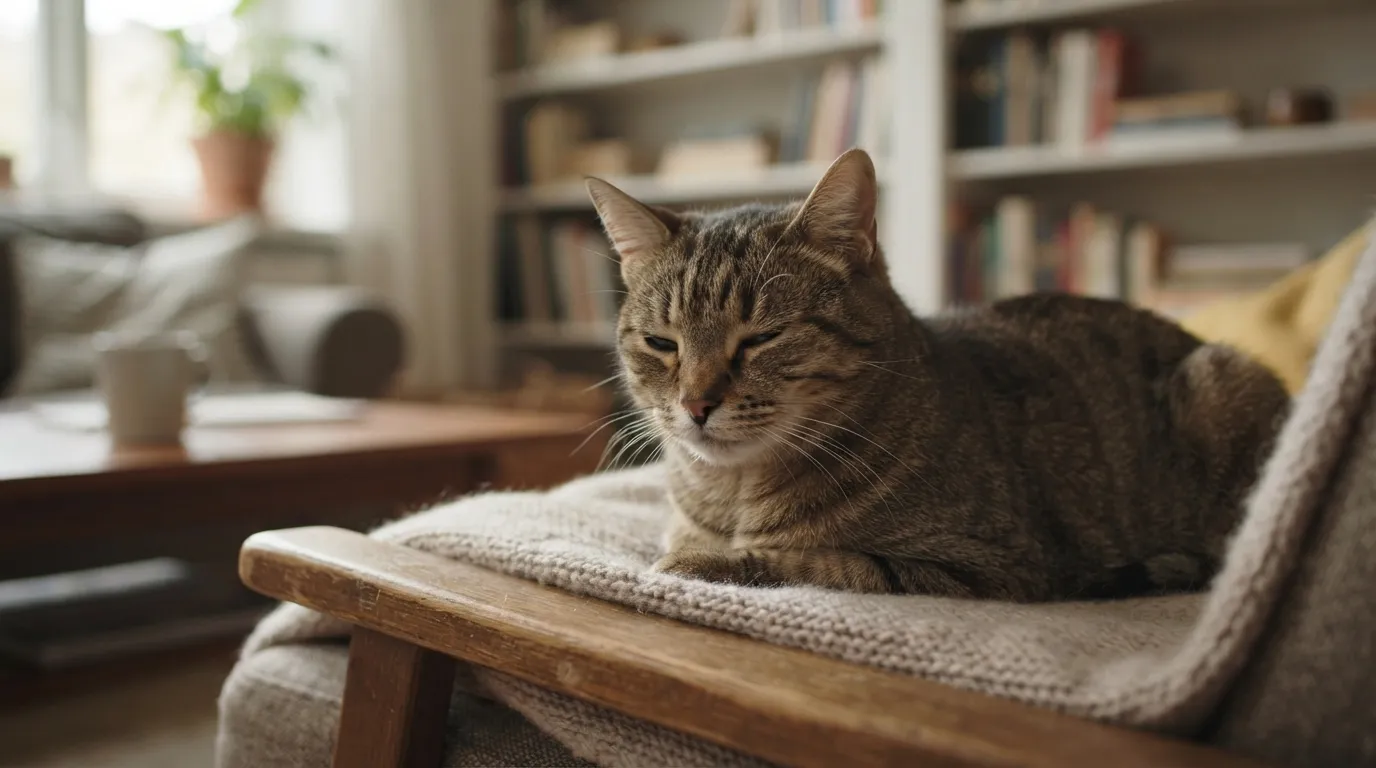
They don’t have to be touching you to be communicating. Sometimes the signal travels across the room.
A cat’s eyes don’t need constant blinking the way ours do. So when your cat holds your gaze and closes their eyes slowly, that’s not random – it’s affection.
A relaxed stare with slow blinks signals trust; a tense one signals discomfort.
A sick cat that keeps locking eyes with you is staying present even when it lacks the energy to move.
That long, quiet gaze is one of the most intimate things a cat can offer.
It’s a great way of enhancing the bond you have with cats
Professor Karen McComb, University of Sussex
Watch what happens right after – slide to #7.
#7 – They Groom You (or Let You Groom Them More)
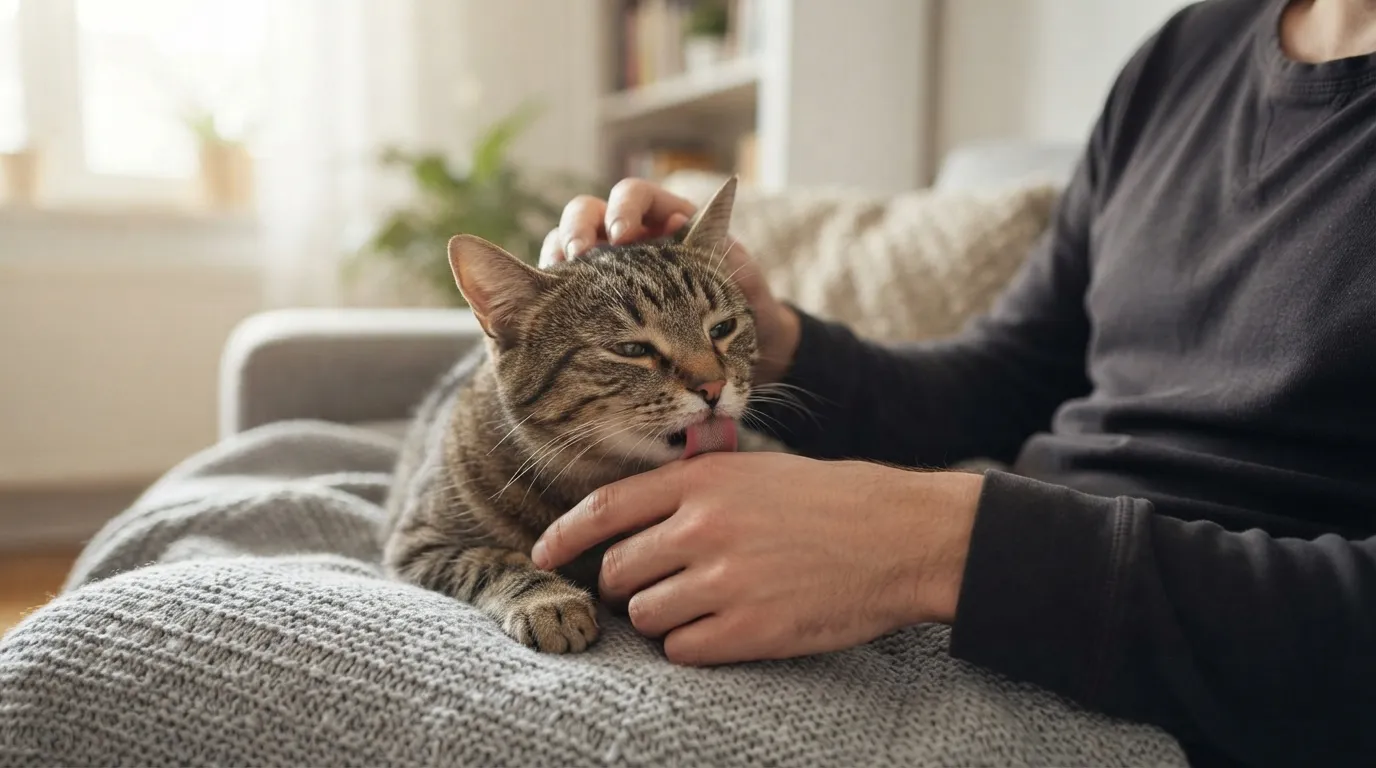
A cat licking your hand or arm is doing something very specific.
Allogrooming – grooming another cat or a human – is reserved for whoever a cat considers family. A sick cat extending this to you is a quiet declaration.
The reverse matters too: a sick cat that suddenly tolerates longer petting sessions is telling you something. Cats form real attachments, and illness tends to surface them.
The habit right after this one is the one most owners completely misread.
#6 – They Sniff You More Carefully Than Usual
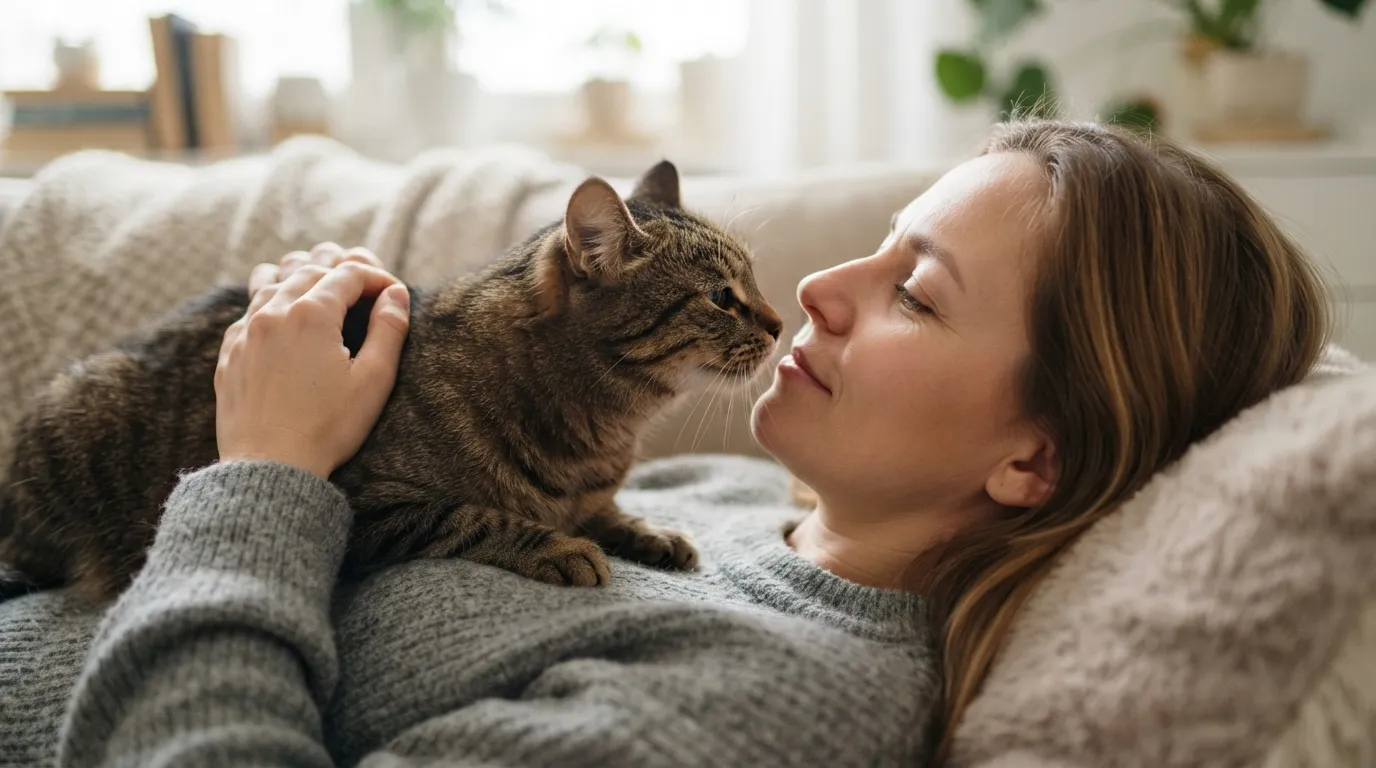
Your cat investigating your face, breath, or hands isn’t intrusive. It’s diagnostic.
Cats can detect chemical shifts in body odor when a person is sick. Certain infections and illnesses genuinely change how we smell, even if we can’t tell.
A sick cat sniffing you attentively is essentially trying to read your health status – with a sensory tool far sharper than anything we have.
Quick Compare
- Cats have around 200 million scent receptors in their nose, while humans only have 5 million.
- That gap lets a cat register subtle shifts in breath and skin chemistry well before a person notices anything.
- Illness can alter body odor in ways too faint for us to catch, but not too faint for a cat’s nose.
It may show up as curiosity, or as sudden clinginess.
After the sniff comes something even quieter – see #5.
#5 – They Post Themselves at the Door When You Leave
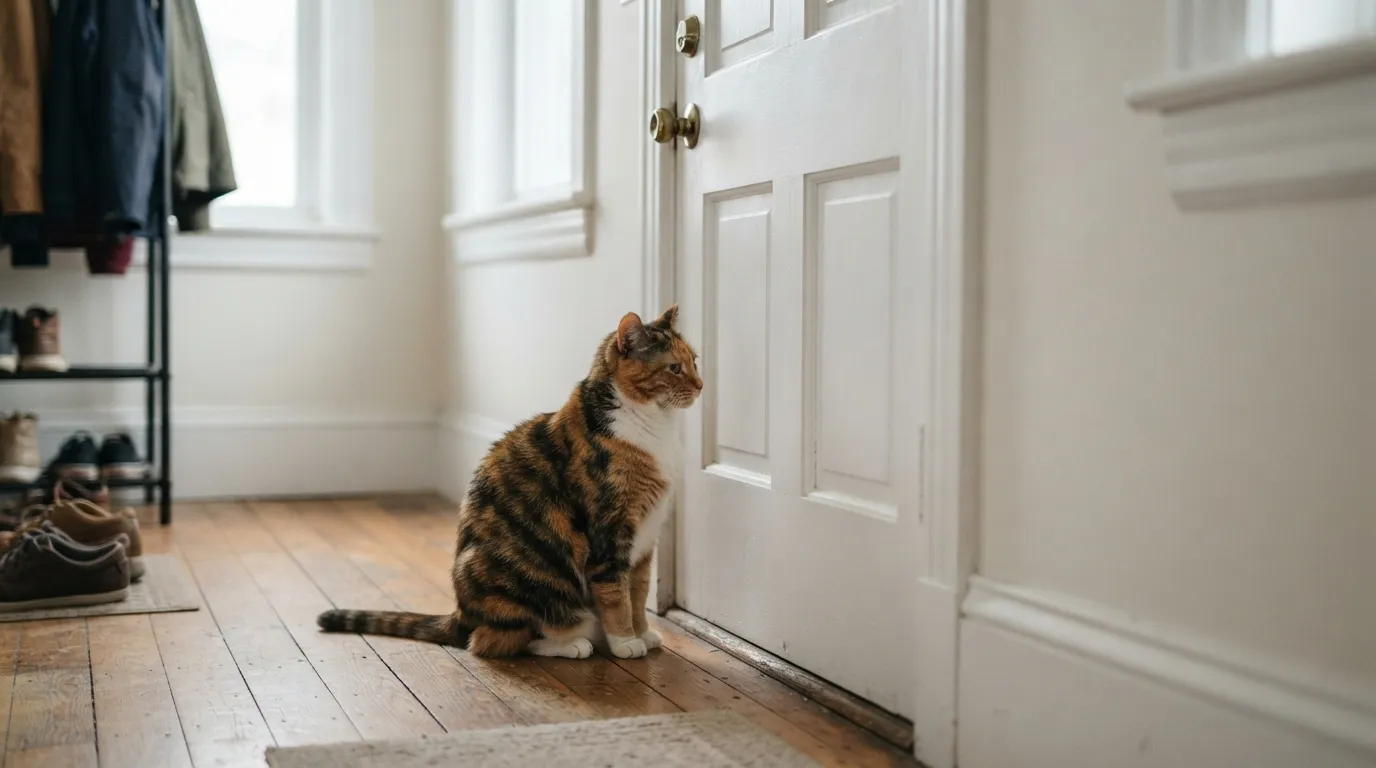
A sick cat that parks itself by the exit when you get up isn’t being dramatic.
Cats retain a colony instinct from their wild ancestry, where survival depended on the group. When one member seems weak, the others stay close to protect them.
Domestication didn’t erase that instinct – it just aimed it at you. Door-watching is tracking behavior, plain and simple.
The next habit takes that protective streak even further, and it plays out while you sleep.
#4 – They Sleep on or Beside You All Night
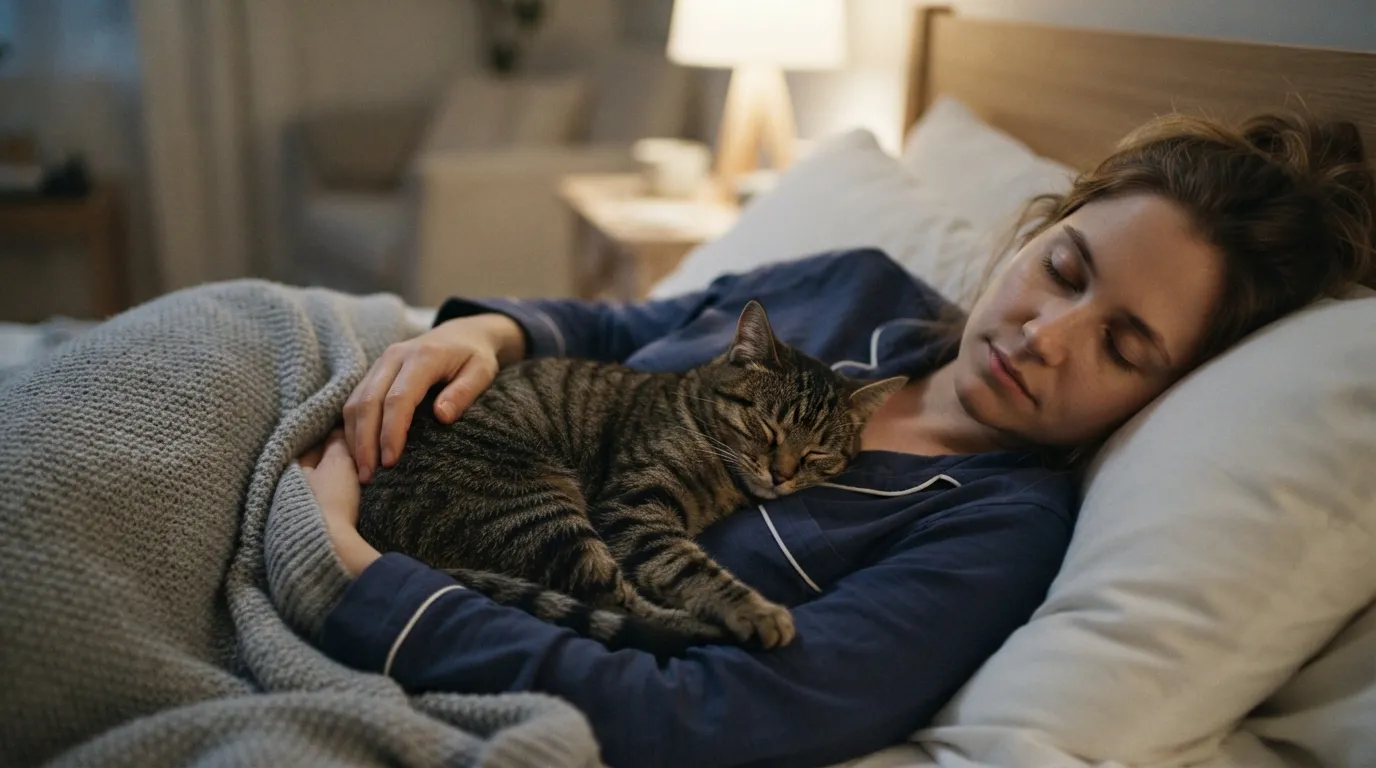
A sick cat that refuses to leave the bed is offering something specific.
Closeness during illness deepens the bond between cat and owner. Familiar routines and quiet companionship make recovery feel less isolating – for both of you.
Some cats choose your chest or the crook of your neck and stay there until morning. That all-night vigil isn’t coincidence – it’s proximity maintained through your most vulnerable hours.
They notice things while you sleep that you’d never catch.
#3 is where it gets genuinely surprising.
#3 – They Match Your Slower Pace Without Being Told
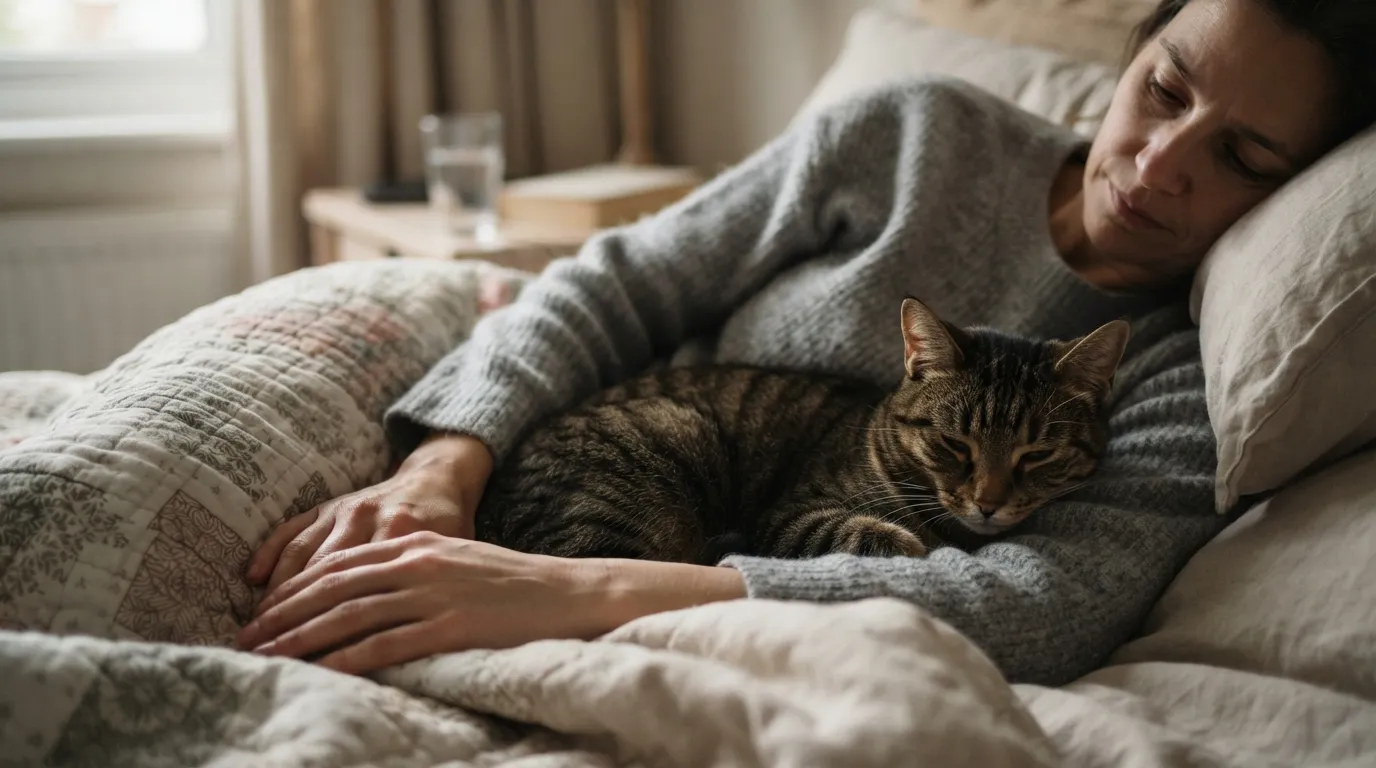
A cat that suddenly stops zooming, stops demanding play, and just sits with you quietly isn’t being lazy.
That’s attunement.
Cats pick up on behavioral and emotional shifts around them. If you move slower, sleep more, or seem low, they often mirror it with gentler, quieter behavior of their own.
Some research on cat behavior suggests play noticeably drops off when an owner is unwell.
That drop isn’t disinterest – it’s a cat recalibrating itself to match your energy.
Worth Knowing
- Cats are highly sensitive to shifts in daily routine, even small ones.
- Reduced play and slower movement in a cat often tracks directly with a change in the owner’s own energy.
- This kind of mirroring is generally seen as a sign of attachment, not withdrawal.
What comes next is arguably the most emotionally loaded habit on this list.
#2 – They Respond to the Sound of Your Voice Differently
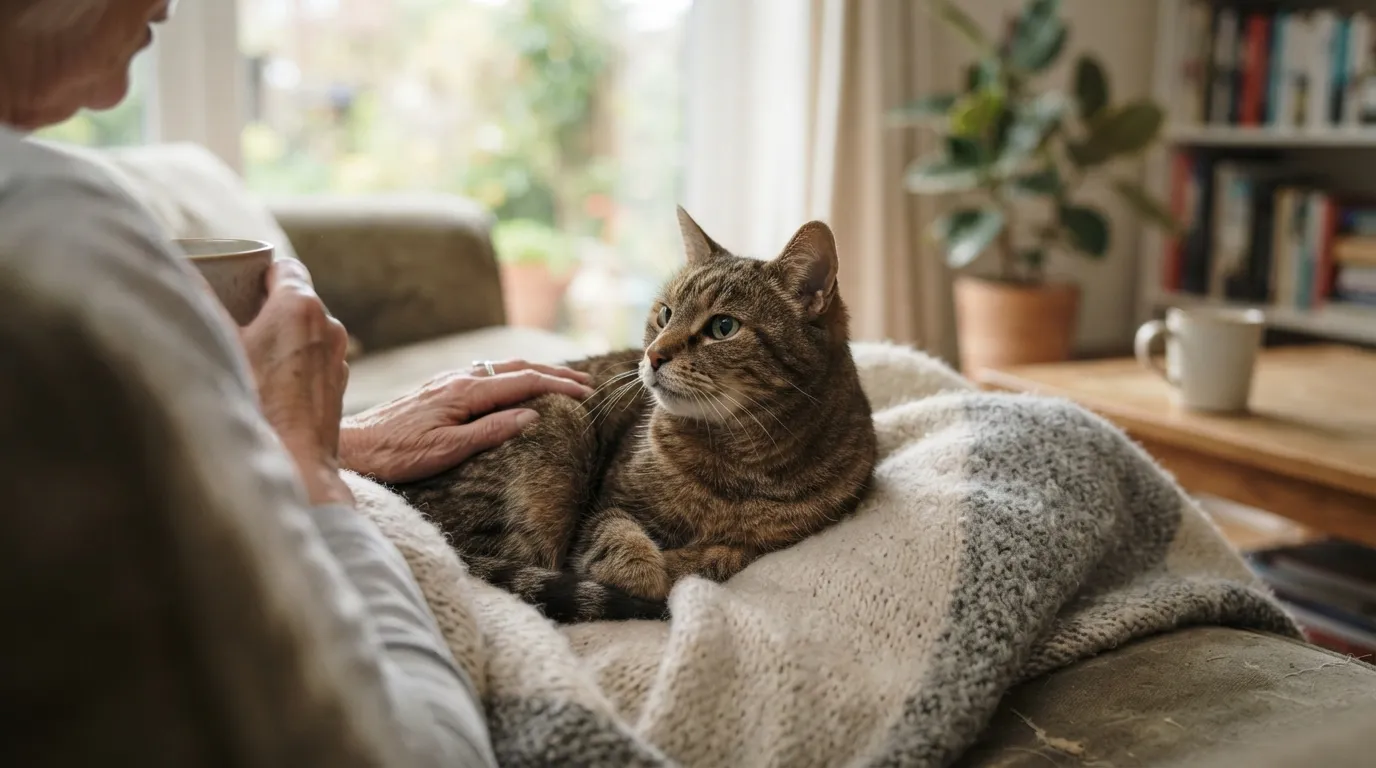
Your sick cat isn’t just hearing you. They’re listening for distress.
Cats can distinguish between an owner’s happy tone and a distressed one, and they tend to respond to the difference. When your voice sounds “off,” an attentive cat notices before you even finish the sentence.
A sick cat that looks up, shifts position, or moves toward you the moment your voice changes pitch is actively monitoring you. They know your “fine” voice from your “not fine” voice.
The #1 habit pulls all of this together in the most quietly powerful way.
#1 – They Simply Stay. Quietly. Right There.
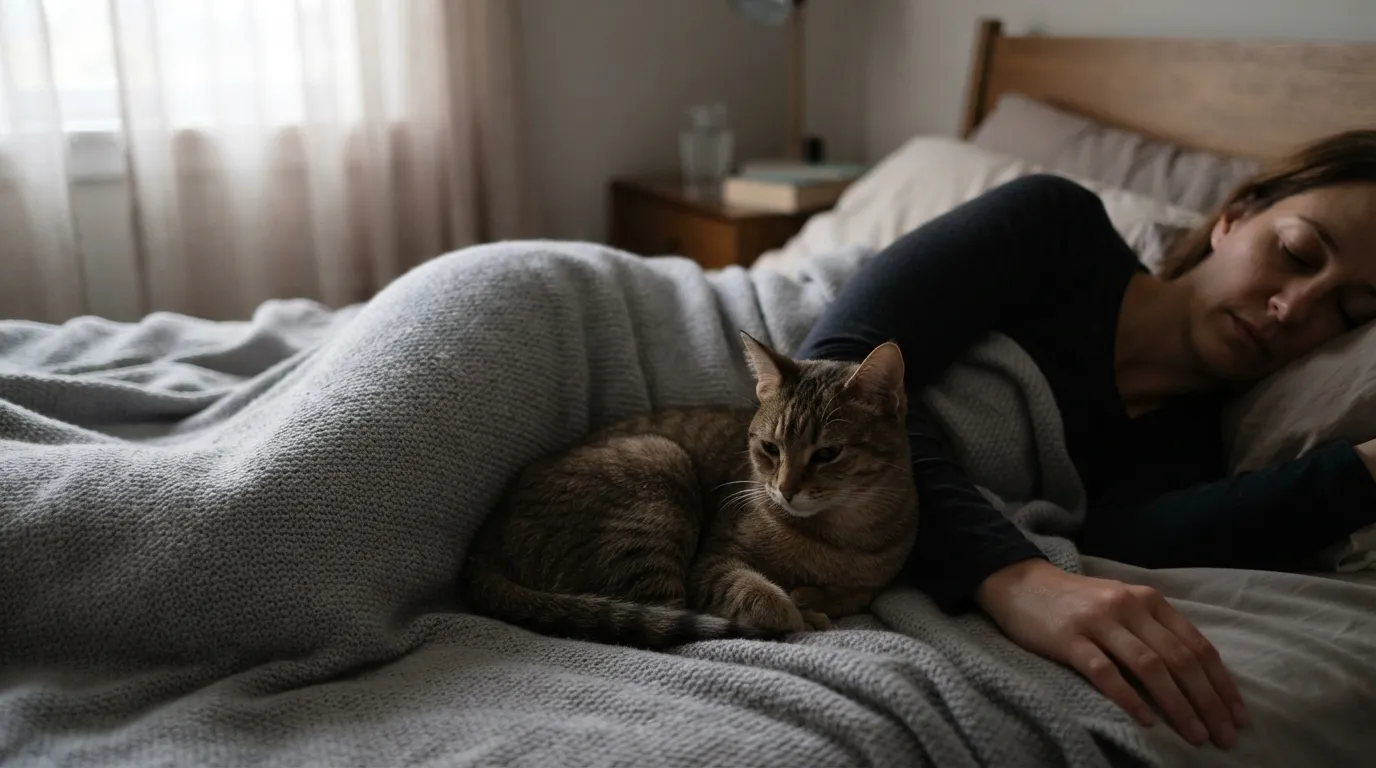
No meowing. No demanding. Just present.
Unlike dogs, cats rarely announce their loyalty. They show it in smaller, quieter ways – and illness tends to bring those ways out in full.
They may not understand “sickness” the way we do, but they clearly register when you’re down. Their answer, again and again, is to stay near and say nothing.
This is the one habit that costs the cat nothing but carries the most weight.
A cat choosing to just be in your space for hours, asking for nothing, is offering the closest thing a cat has to a vigil.
The Bottom Line
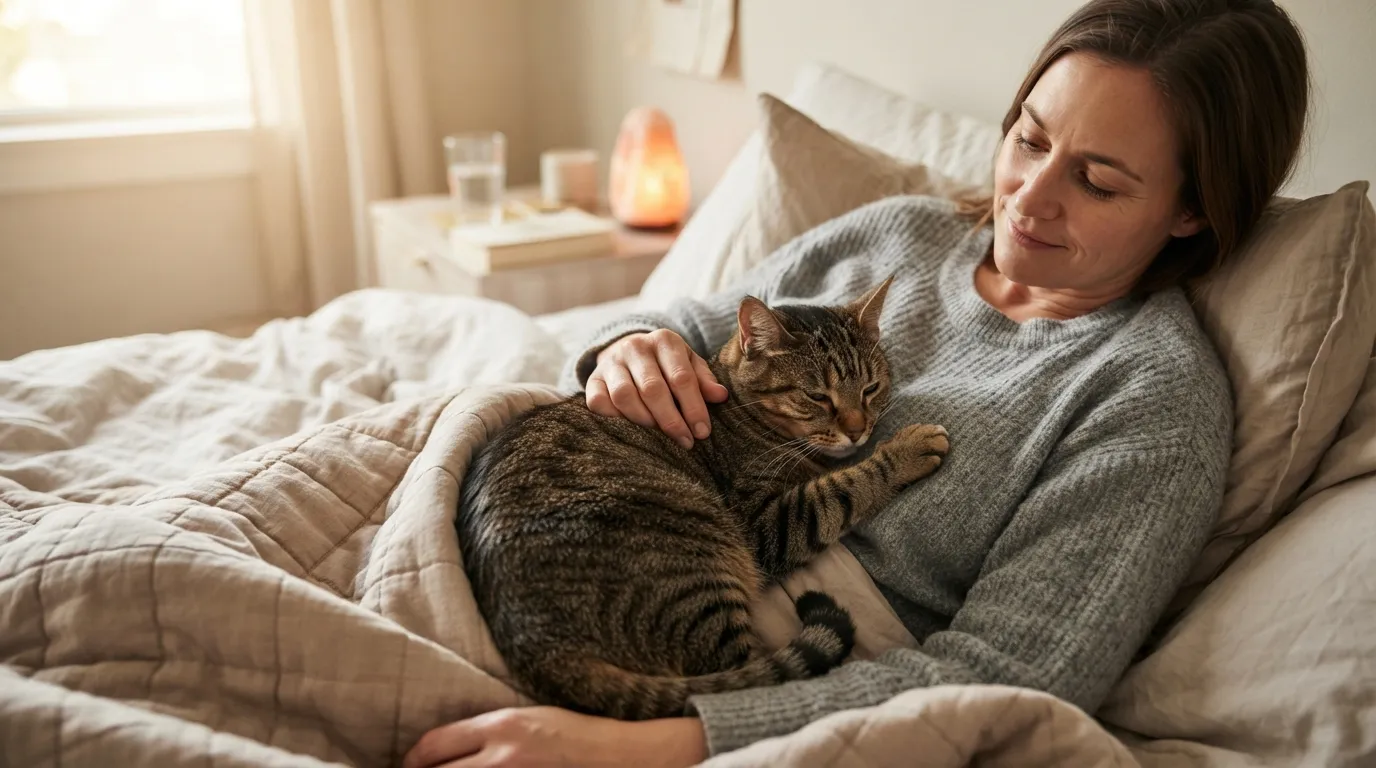
Sick cats don’t always retreat. Plenty of them do the opposite – following you, pressing against you, matching your pace, tracking your voice, and refusing to leave your side.
Owners consistently notice these shifts: more attention, more clinginess, more purring, more time spent simply close by. None of it is random.
If a cat has ever comforted someone through illness before, that memory seems to stick – and the behavior gets reinforced the next time it’s needed.
The bond is real, the signals are subtle, and now you know exactly what to watch for.
Has your cat ever done one of these when you were under the weather? Tell us which habit surprised you most.
Growing up traveling and experiencing new cultures and wonders, I have had a passion for nature, adventuring, photography, and videography. I am currently working towards a BSc in Biodiversity and Ecology at Stellenbosch University, and I hope to specialise in Marine Sciences one day.
Please send any feedback to Feedback@animalsaroundtheglobe.com