Your vet isn’t lying to you. But there’s a quiet gap between what gets prescribed with total confidence and what the actual research can back up – and once you notice it, you can’t unsee it.
Some of these treatments are sitting in your cat’s medicine cabinet right now. Others get handed over at checkout without a second thought. By the time you reach number one, you’ll understand why even experienced vets choose their words carefully.
#14 – Homeopathic Remedies for Cats
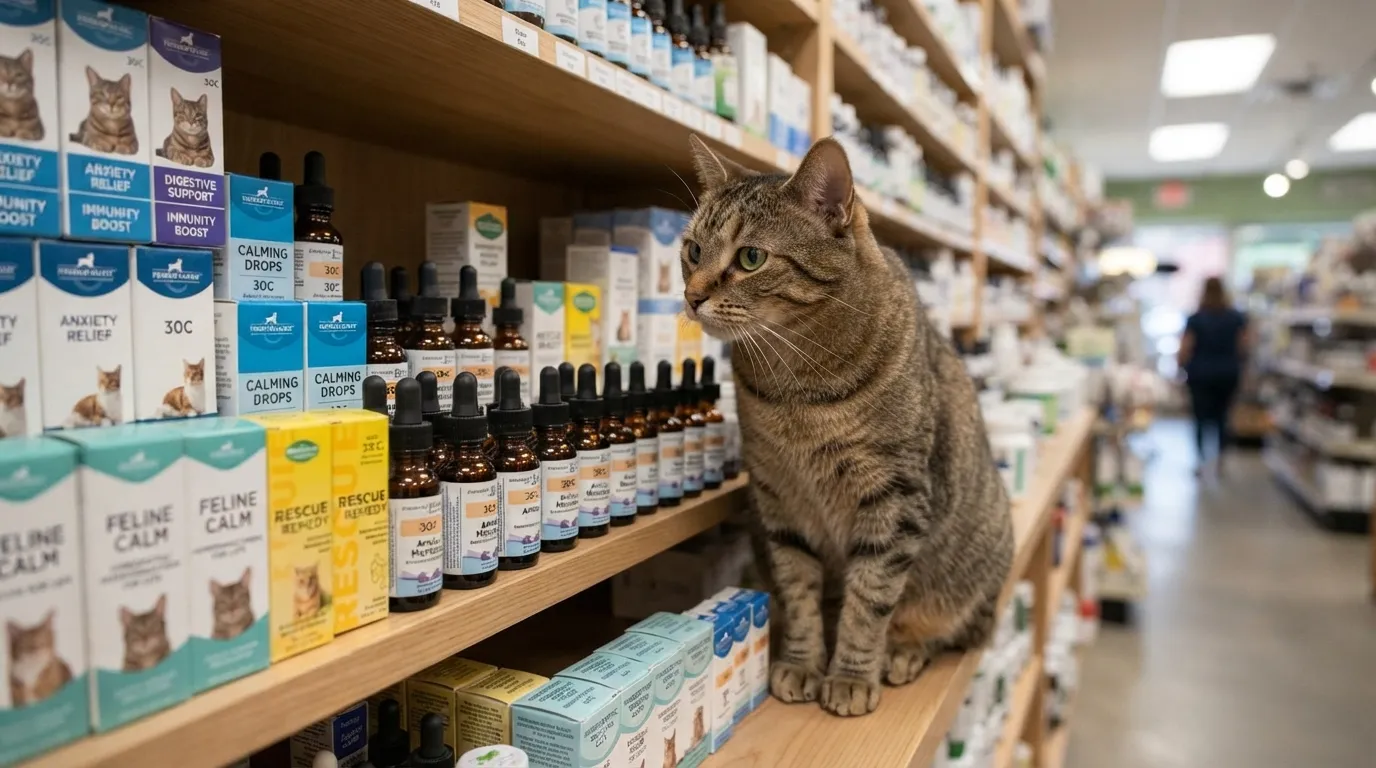
Homeopathy for cats is a booming market. Walk into any pet store and you’ll find shelves of drops and pellets claiming to fix everything from anxiety to infections.
For most of these therapies, there are few or no scientific articles describing clinical efficacy in cats at all. And the studies that do exist mostly aren’t rigorous enough to draw any real conclusion.
The products are real; the proof largely isn’t. Cats can’t respond to a placebo effect – which makes the lack of evidence here even harder to explain away.
But wait until you see what’s happening with one of the most commonly recommended calming tools on the market…
#13 – Pheromone Diffusers Like Feliway
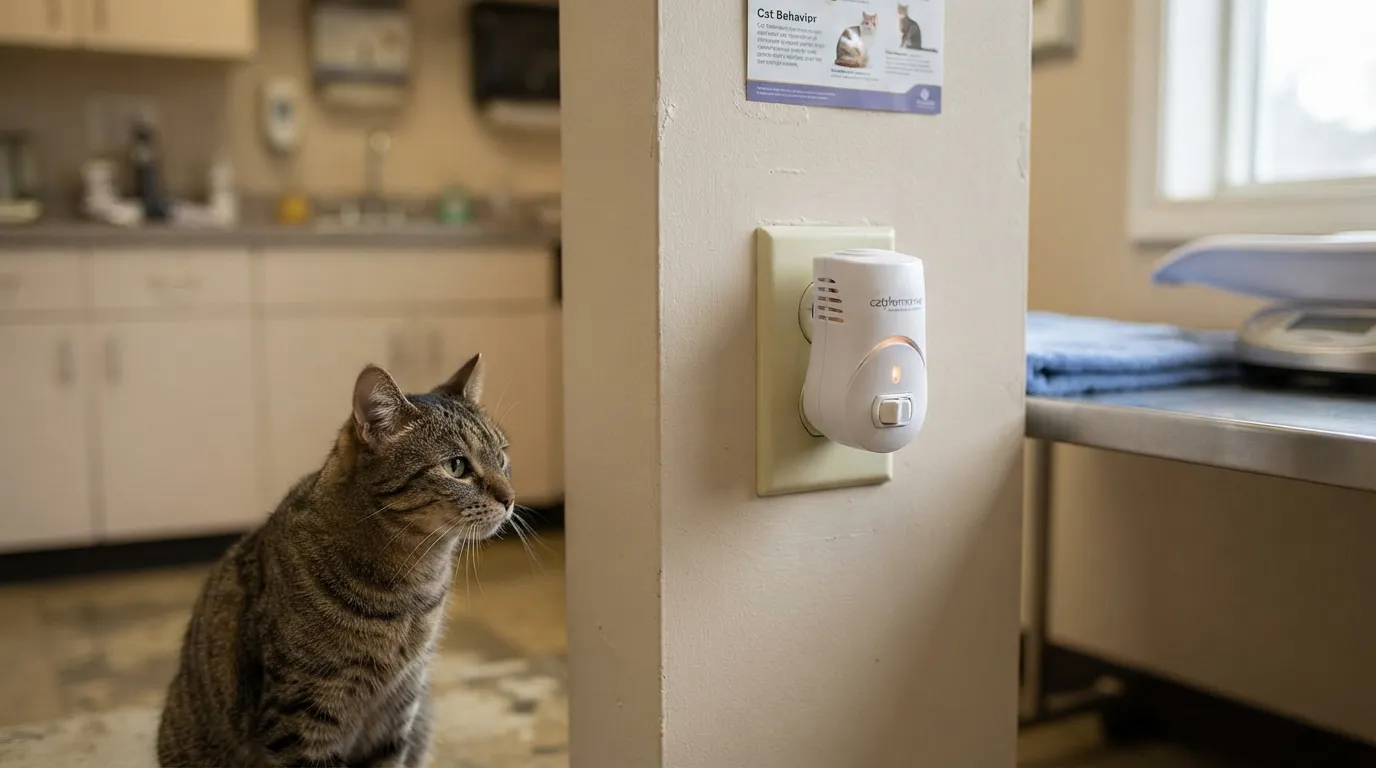
Pheromone diffusers are practically a vet clinic staple for anxious cats. They’re sold with total confidence and displayed right at checkout.
Studies on how well these products actually work are generally lacking. Dig deeper and the picture gets worse: pheromone therapy wasn’t clearly beneficial for cats with interstitial cystitis, and it didn’t seem to calm cats during hospital stays or stressful procedures either.
That’s the opposite of what most packaging quietly implies.
The next one gets handed out after almost every dental cleaning or surgery – and the evidence gap there may matter even more…
#12 – Antibiotics Around Dental and Surgical Procedures
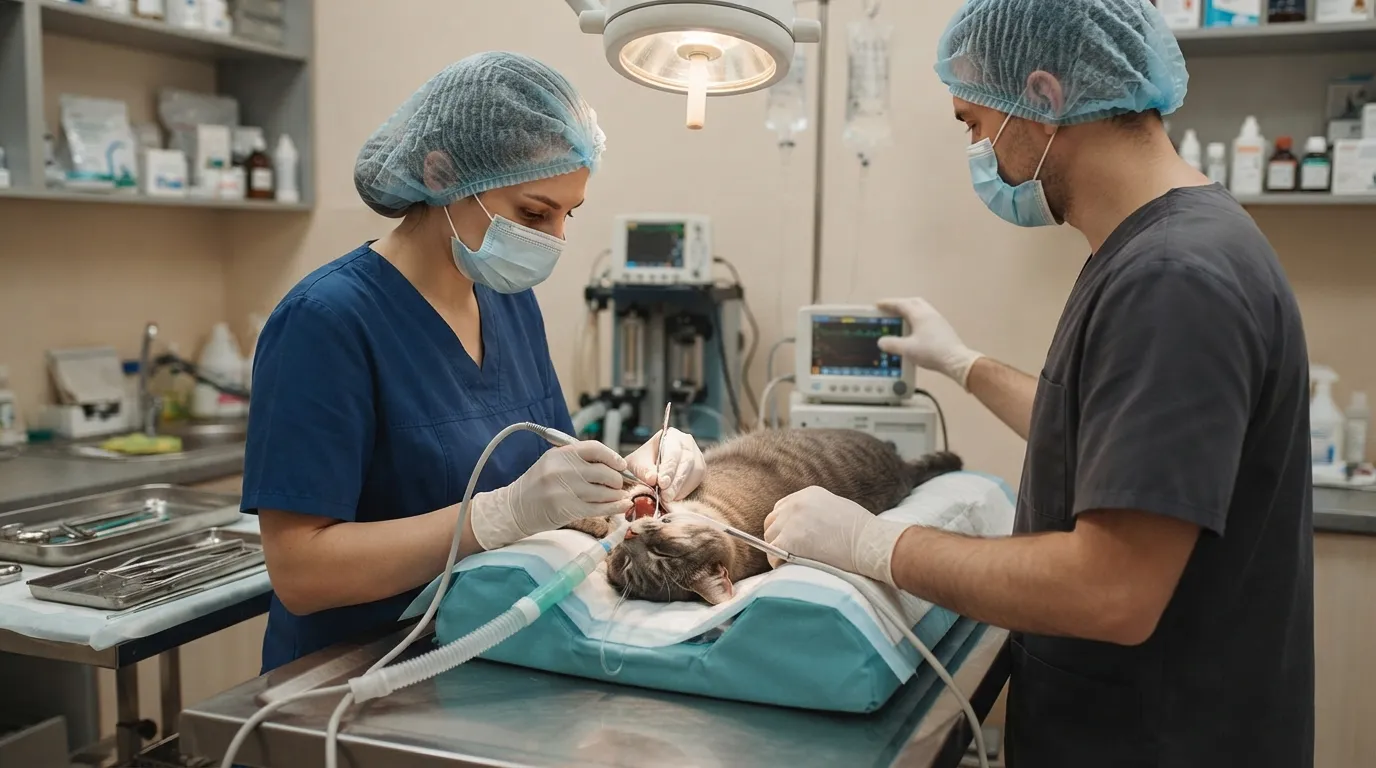
When your cat gets a procedure, you almost always go home with antibiotics. It feels like basic safety. It might not be.
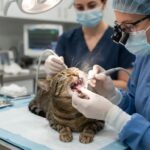
Data from over 1,000 US veterinary clinics found systemic antimicrobials were given in 7.8% of cat dental procedures with no periodontal disease and no extractions – meaning no clear clinical reason. It gets more striking still: drugs classified as highest-priority, critically important antibiotics were used in 52% of cats getting dental work done, purely as “prevention.”
Fast Facts
- 7.8% of dental procedures with no periodontal disease or extractions still involved antimicrobials.
- 52% of cats getting dental work received top-tier, critically important antibiotics as pure prevention.
- Researchers behind the data are calling for clearer, evidence-based prescribing guidelines.
Half of all treated cats getting top-tier antibiotics for a teeth cleaning is a number that should give every owner pause. Researchers studying this openly call for clearer, evidence-based guidelines – because right now, the rules are murky.
The next treatment sounds ancient and wisdom-laden – but the science tells a very different story…
#11 – Veterinary Acupuncture
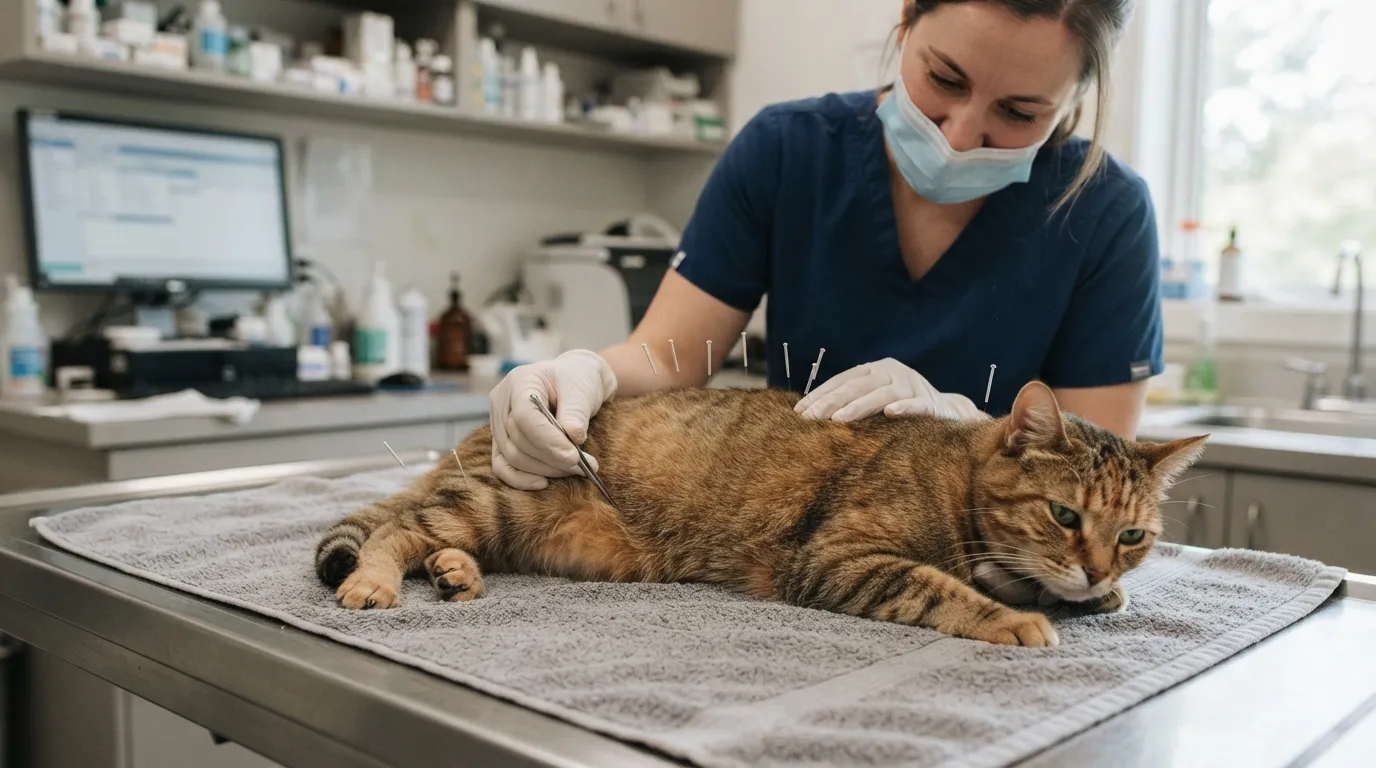
Feline acupuncture is growing fast, with certified practitioners and premium price tags. The anecdotes owners share are genuinely compelling.
But anecdote isn’t data. Even in the better-designed studies, researchers found wildly inconsistent results from one trial to the next – not enough to draw a clear conclusion either way.
In plain terms: we don’t know if it works, and nobody can yet prove that it does.
Next up is something even more widely used – a treatment given to countless epileptic cats that may actually be dangerous…
#10 – Oral Diazepam for Feline Epilepsy
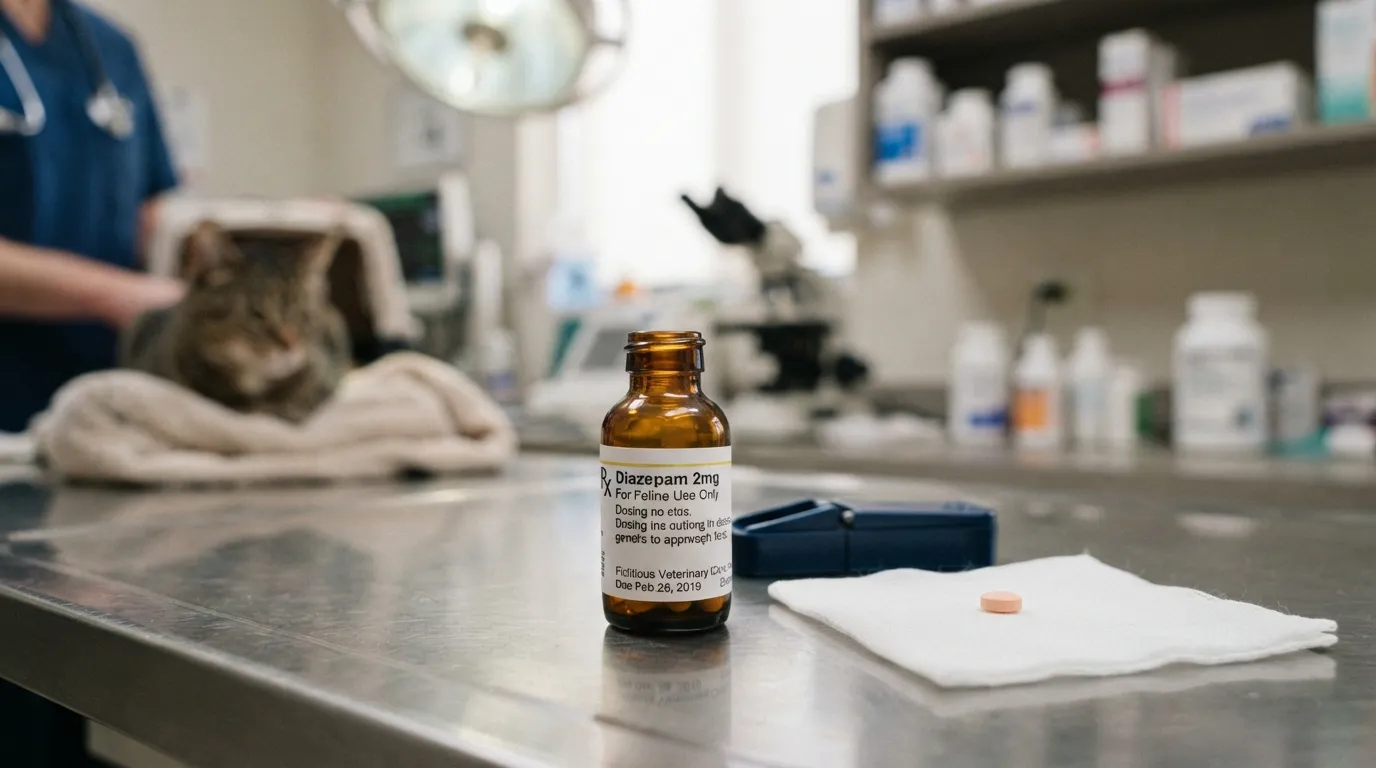
Epilepsy in cats is notoriously hard to treat, and for years diazepam was the go-to option. Turns out the evidence behind it was always shaky – and the risk was serious.
Epilepsy research organizations grade evidence from Class I, rigorous randomized trials, down to Class IV, expert opinion and anecdote. Knowledge on feline epilepsy treatment sits at that lowest grade, Class IV – and diazepam has since been linked to sudden, potentially fatal liver failure in cats.
Cats were given this for years based on little more than expert opinion. It’s now considered contraindicated for exactly that reason.
The next item is sold in virtually every vet clinic and pet shop – and its evidence base is barely any better…
#9 – Calming Supplements and Nutraceuticals
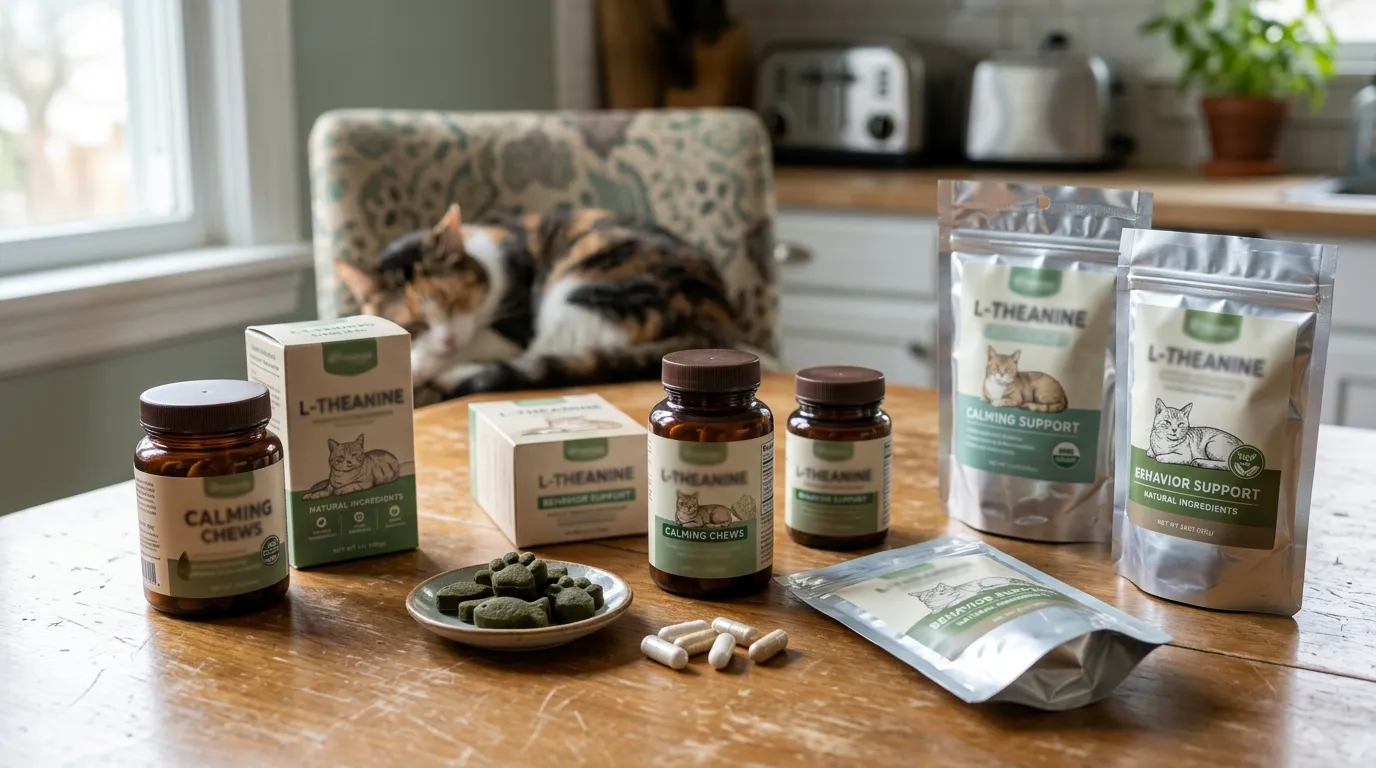
From L-theanine capsules to “calming chews,” these products are everywhere. Vets recommend them. They’re expensive. The data behind them? Thin.
These products often meet manufacturing quality standards similar to real pharmaceuticals – but studies proving they actually calm cats are generally lacking. And natural doesn’t automatically mean harmless, especially for an animal whose liver processes drugs very differently from ours.
“Natural” and “safe” are not the same thing when your cat’s metabolism doesn’t work like yours.
What happens when you combine that metabolic sensitivity with bladder treatments? The answer is troubling…
#8 – Direct Bladder Instillation Treatments
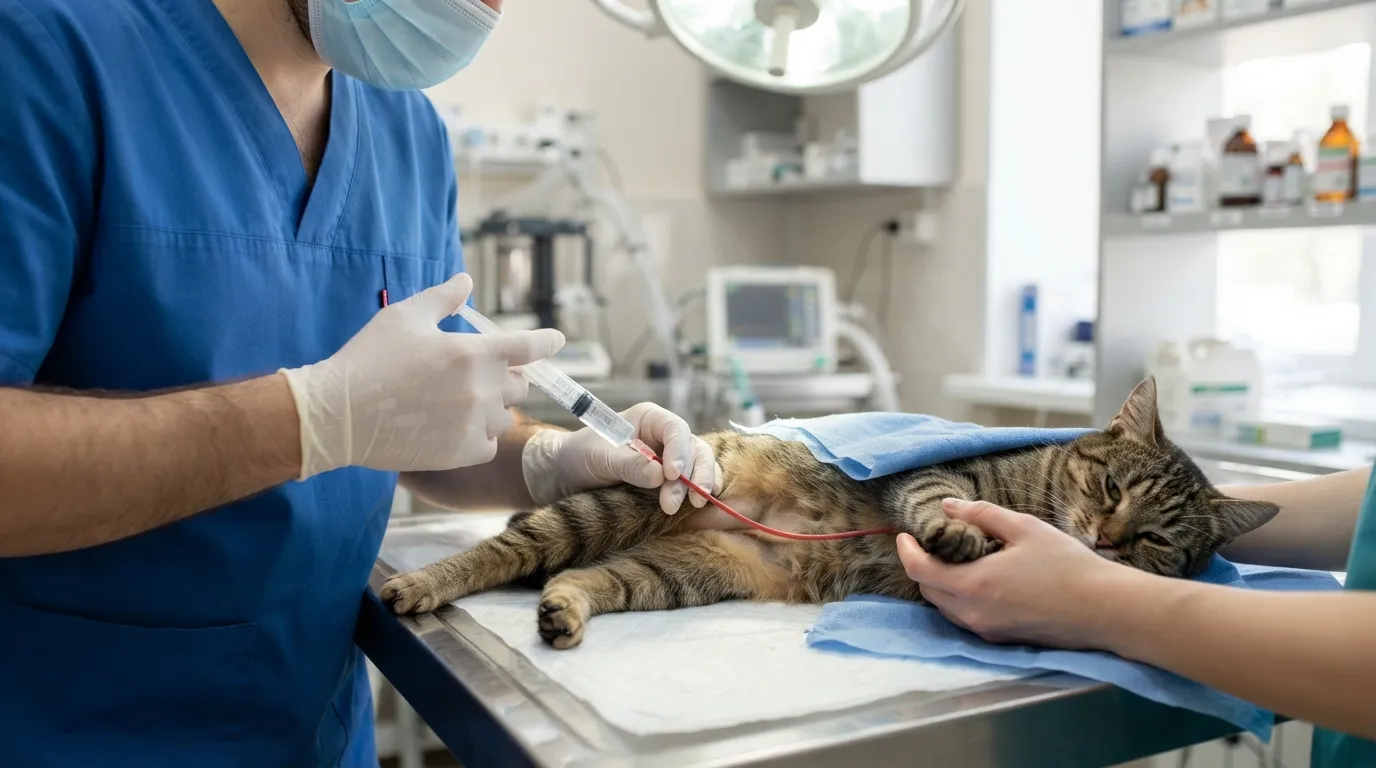
For cats with urinary issues, some vets flush antimicrobials or antiseptics directly into the bladder. It sounds clinical and precise.
There is no evidence for a clinical effect of this practice – not limited evidence, no evidence. No evidence-based recommendations for it exist anywhere in veterinary medicine.
This is one of the starker evidence gaps in all of feline practice.
The next treatment is recommended for cats recovering from injury – and its scientific foundation is surprisingly weak…
#7 – Therapeutic Massage and Stretching
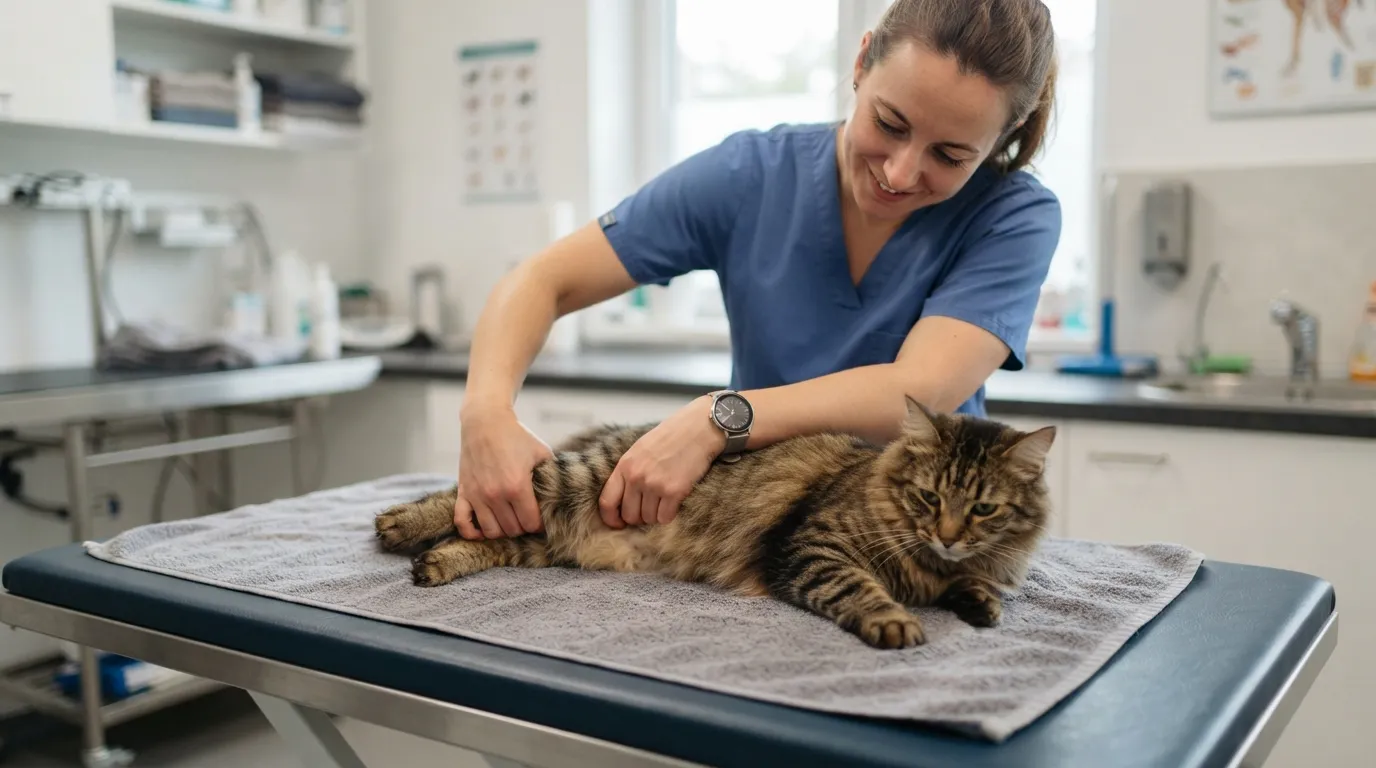
Therapeutic massage for cats sounds harmless at worst – a gentle, calming practice with potential upside. Many rehab vets offer it as standard care.
But studies on it show wildly different results from one to the next, and the overall quality isn’t strong enough to draw a clear conclusion. That doesn’t mean it can’t help – it means nobody actually knows yet.
Worth Knowing
- Outcomes vary wildly from one study to the next, with no consistent pattern.
- Most trials are too small or too loosely designed to settle the question either way.
- “It seems to help” and “it’s been proven to help” are not the same claim.
The feeling that it “must be doing something” is not a clinical standard.
Up next is a supplement many owners consider essential. The truth about it may change how you spend your money…
#6 – Glucosamine and Chondroitin for Feline Arthritis
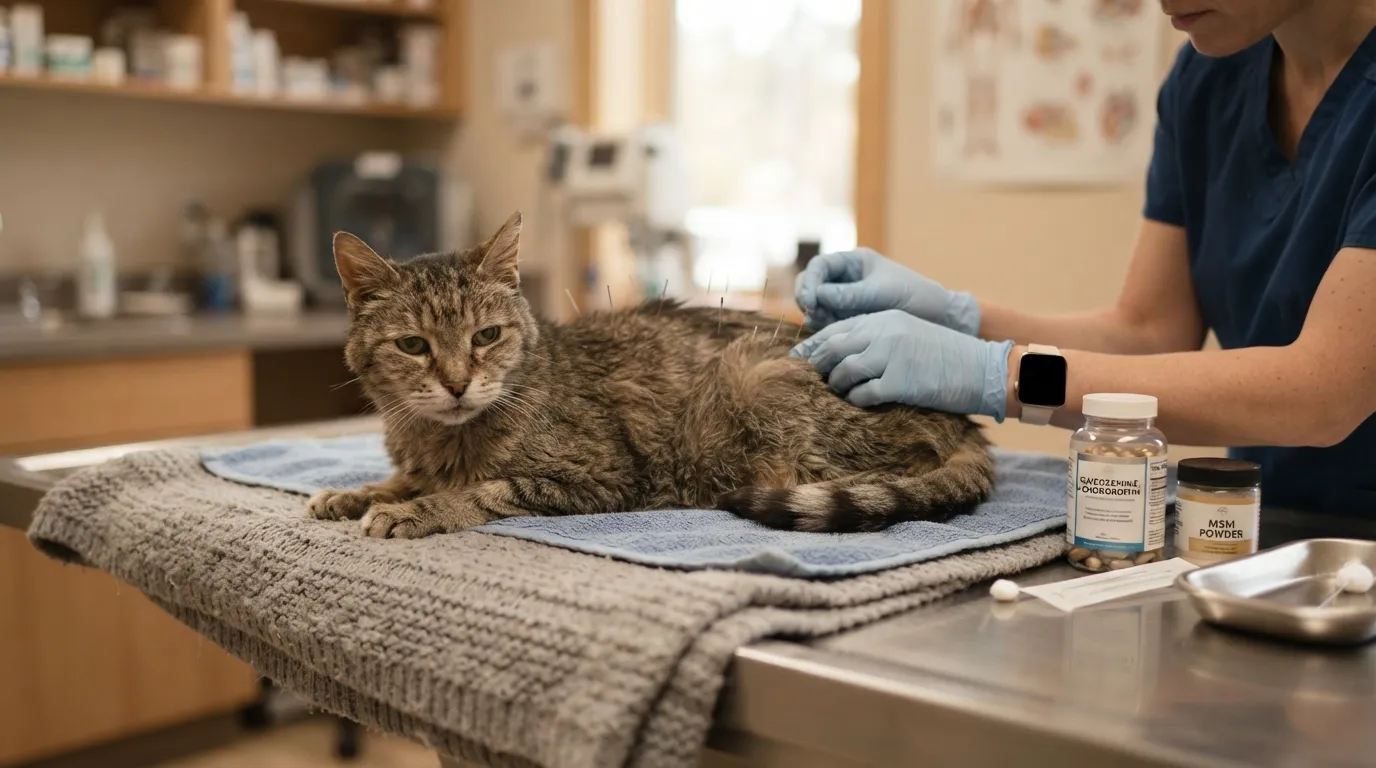
Joint supplements are routinely recommended for older, stiffening cats. The human data looks promising. But cats aren’t small humans.
Glucosamine, chondroitin, and MSM formulas are often paired with acupuncture or massage – yet the feline-specific evidence for any of it is sparse. Few or no solid studies exist proving clinical efficacy in cats specifically.
Millions of cat owners buy joint supplements every month with almost no species-specific proof they work.
The next treatment is one of the most emotionally charged – and the evidence gap is harder to swallow than most…
#5 – Herbal “Immune Boosting” Preparations

Echinacea, goldenseal, mushroom extracts – herbal immune boosters marketed to cat owners carry an air of ancient, natural authority.
Many owners choose them specifically to avoid harsh side effects. But cats are unusually sensitive to plant compounds, and allergic reactions to ingredients in these formulas aren’t rare – and supplements aren’t regulated the way real drugs are.
What’s on the label and what’s actually in the bottle can be two entirely different things.
The next treatment is one of the most routinely sold at vet reception desks – you may already have it at home…
#4 – Calming Collars and Anxiety Wraps
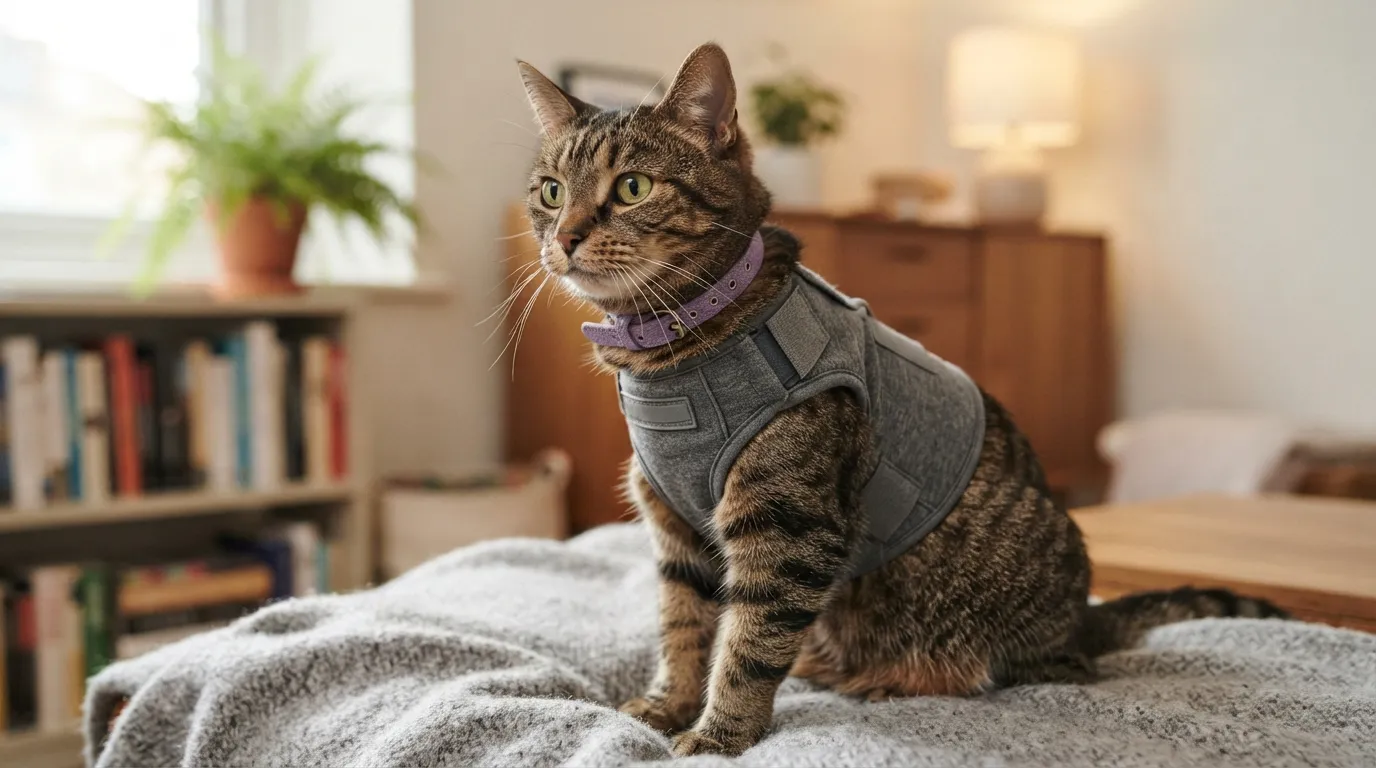
Thundershirts, lavender-infused collars, pressure wraps – these products are marketed as safe, drug-free solutions for a stressed-out cat.
There are no controlled studies supporting their effectiveness. What exists is anecdotal – some cats seem calmer, some don’t, and nobody has actually measured it properly.
“May help some cats” is doing a lot of heavy lifting on that packaging. When a vet recommends it anyway, it quietly borrows credibility the product hasn’t earned.
What comes next involves epilepsy drugs again – and the picture here is even more complicated…
#3 – Antiepileptic Drugs Borrowed From Dogs and Humans
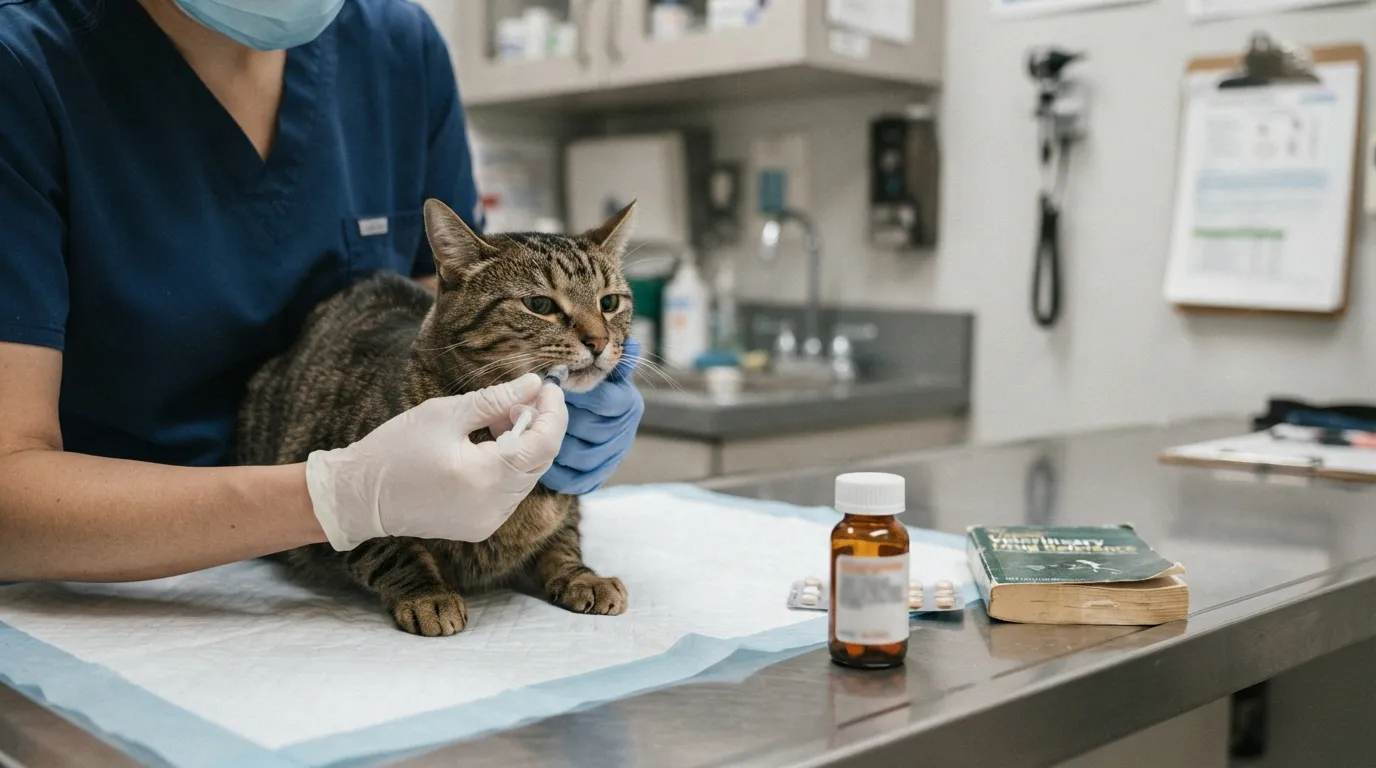
Many antiepileptic drugs used in cats were developed for humans or dogs, then applied to cats with little real adaptation. “It works in dogs, so it’ll work in cats” is a pattern with real consequences.
Feline epilepsy is fundamentally different from canine epilepsy, and treatment options remain limited, with only sparse data to guide dosing. Several of these drugs have unfavorable pharmacokinetics, unproven efficacy, or outright toxic effects in cats specifically.
Cats are not small dogs – but feline epilepsy has often been managed as if they were.
The second-most surprising finding cuts straight to the heart of how vets actually make decisions…
#2 – Treatments Based Purely on Expert Opinion
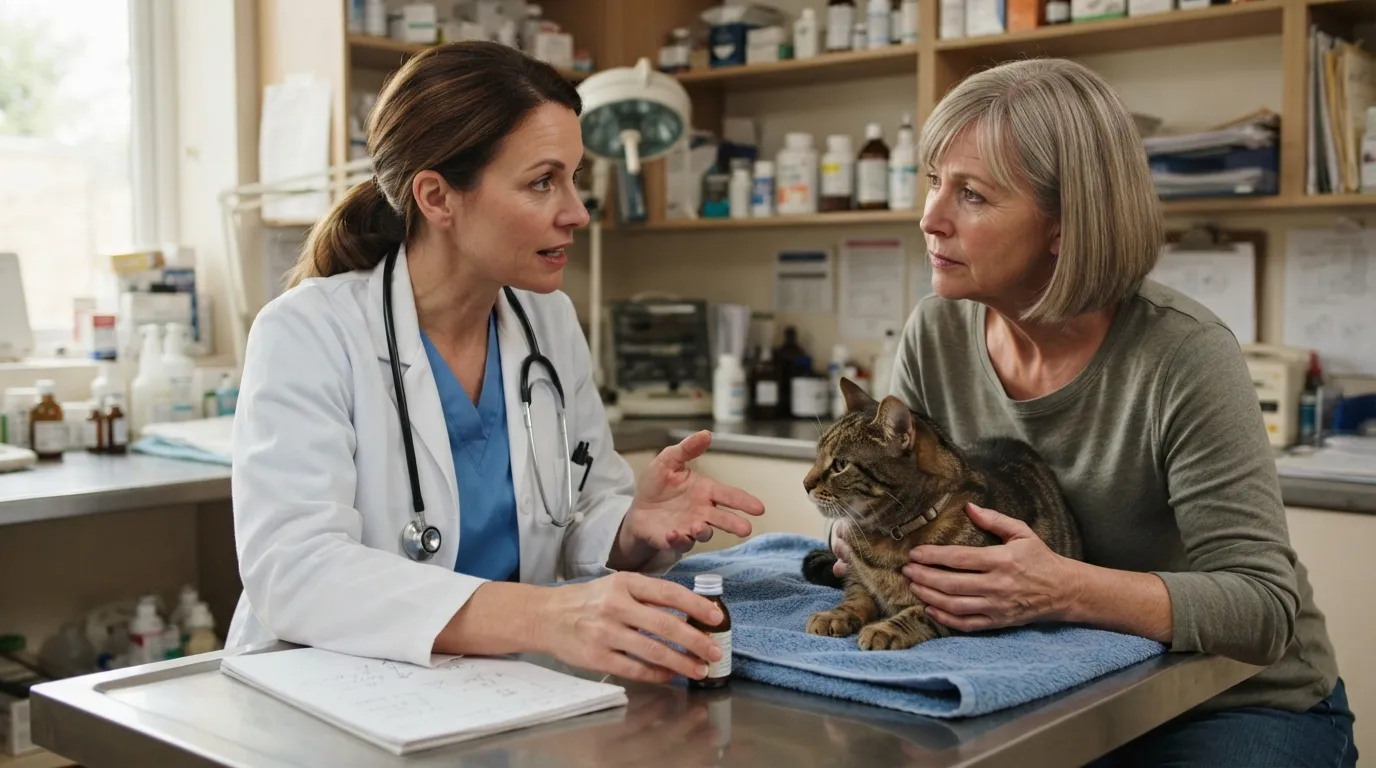
This one isn’t a single product – it’s a pattern. A large share of what vets confidently recommend to cat owners rests on clinical experience, not controlled trials.
The standard evidence scale runs from Grade I, the gold-standard randomized trial, down to lower grades built on opinion and experience. Even after reading all the available research, vets are often left without a clear, definitive answer.
Quick Compare
- Top of the scale: Large, well-designed randomized controlled trials.
- Bottom of the scale: Expert opinion, case reports, and clinical anecdote.
- Where much feline guidance sits: Closer to the bottom than owners assume.
The vet may well be right. But “I’ve seen this work” is not the same as “this has been proven to work.”
And the number one treatment, with the widest gap between confidence and evidence? It may be the one you’ve trusted most…
#1 – Treating Subclinical Bacteriuria With Antibiotics
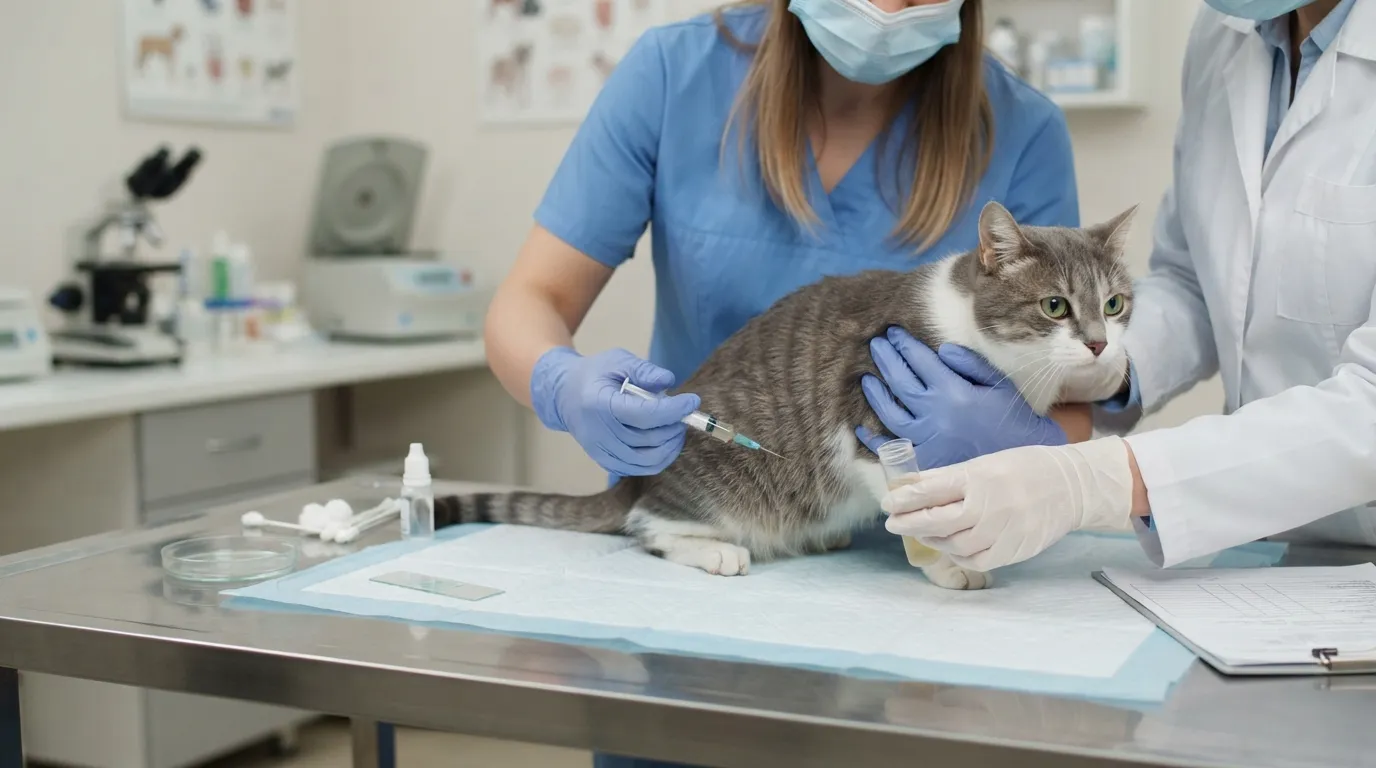
Subclinical bacteriuria – bacteria in the urine of a cat showing zero symptoms – is frequently treated with antibiotics anyway. It feels proactive. It may be unnecessary.
Plenty of cats have this condition, and its clinical relevance is still genuinely uncertain. Yet urinary treatment remains one of the biggest drivers of antimicrobial use in cats, quietly feeding the exact resistance problem vets are supposed to be guarding against.
At a Glance
- Subclinical bacteriuria produces zero visible symptoms in affected cats.
- Its clinical relevance is still genuinely uncertain, even to specialists.
- Urinary treatment is one of the biggest drivers of antimicrobial use in cats.
- That overuse directly feeds the antibiotic resistance problem vets are meant to prevent.
Treating a cat with no symptoms, using antibiotics that carry real resistance risks, based on uncertain clinical relevance – this is the gap hiding in plain sight, at the very top of the list.
The Bottom Line
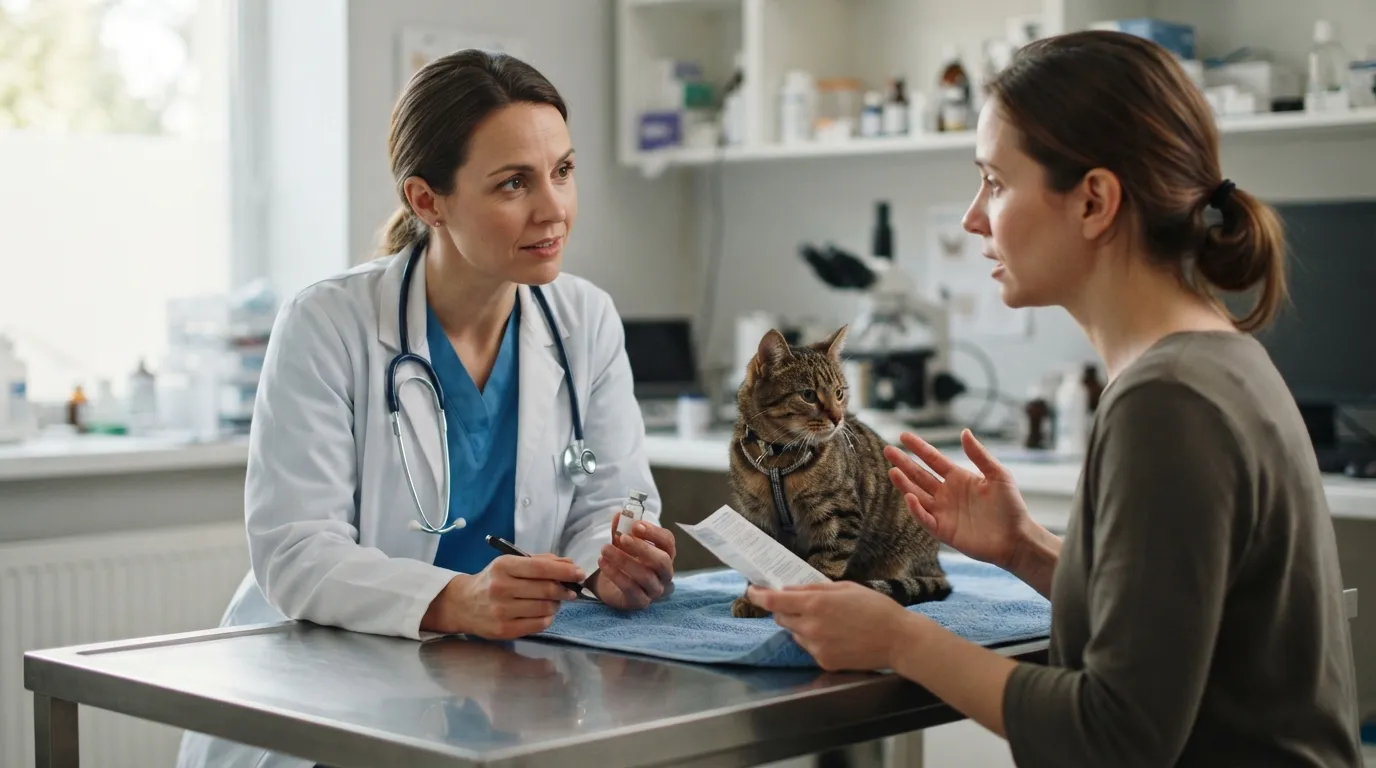
Feline medicine is genuinely hard science. Cats aren’t dogs, aren’t humans, and they metabolize drugs in ways that don’t map neatly onto either.
The evidence base for cat-specific treatments is thinner than most owners – and even some vets – fully realize. That doesn’t mean your vet is wrong. It means the right questions are always worth asking out loud.
Have you ever pushed back on a treatment recommendation for your cat – and been surprised by the answer? Drop it in the comments.
Growing up traveling and experiencing new cultures and wonders, I have had a passion for nature, adventuring, photography, and videography. I am currently working towards a BSc in Biodiversity and Ecology at Stellenbosch University, and I hope to specialise in Marine Sciences one day.
Please send any feedback to Feedback@animalsaroundtheglobe.com