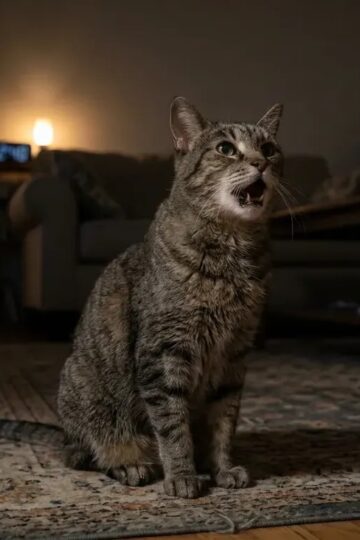
13 Things a Sick Cat Does to Hide Its Pain That Owners Never Notice
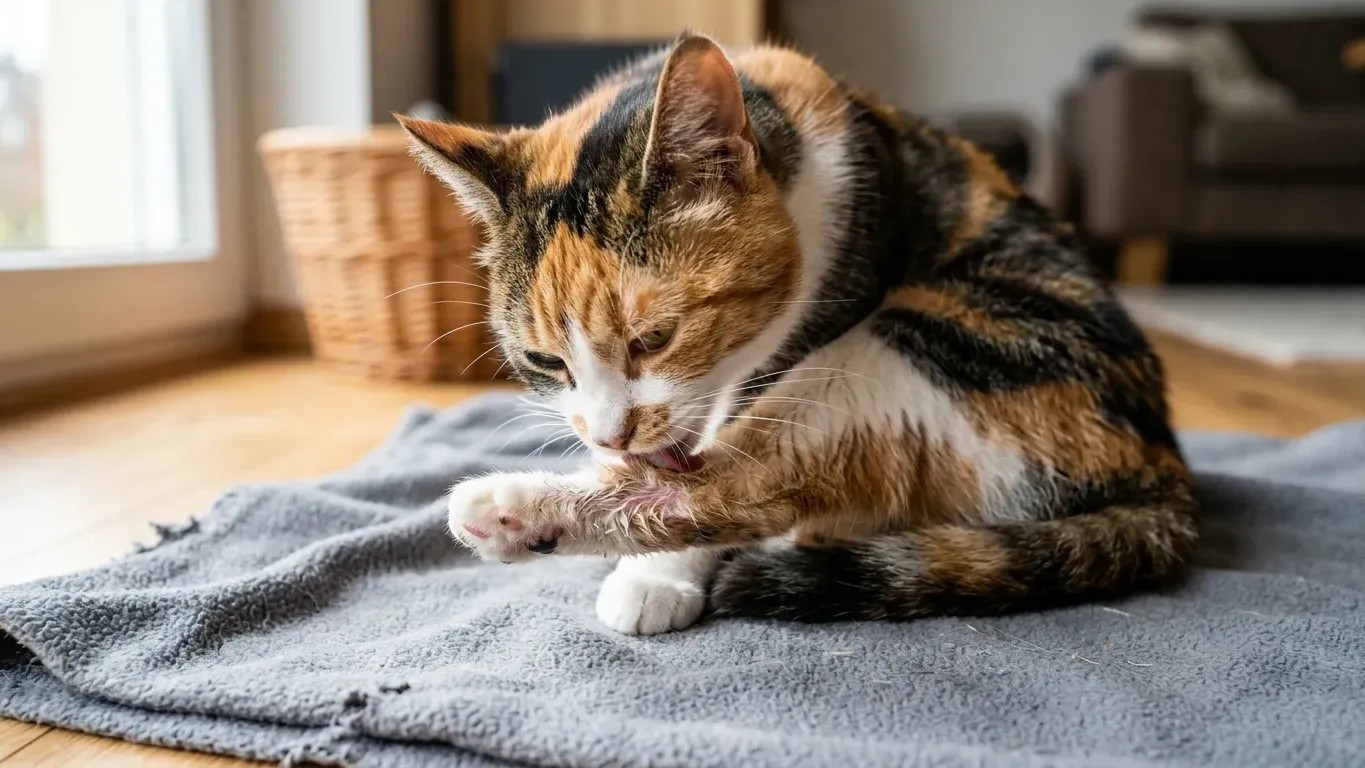
Most cat owners wait for the obvious signs - crying, limping, refusing dinner. That's the mistake that costs cats weeks, sometimes months, of pain nobody catches in time.
Cats hide by instinct - in the wild, showing weakness invites a predator, and that ancient wiring never really left the species. Thirteen behaviors below are the ones your cat is using to mask its pain right now, and most owners write every one of them off as "personality."
#13 - Sleeping in a Different Spot
Your cat isn't just being quirky about where it naps. Some sick cats sleep far more than usual, others far less, and some choose strange new positions or hiding places entirely.
A changed sleeping routine is one of the subtlest pain signals there is. Restless cats may be too uncomfortable to settle, while lethargic ones sleep the day away instead.
The location shift is what most owners miss completely. A cat that suddenly retreats under the bed or into a closet is usually doing it on purpose - extended hiding is a recognized sign of stress or pain.
But that's nothing compared to what we found about #12...
#12 - Withdrawing from Social Interaction
You think your cat is just being aloof. There's a real difference between "independent" and "hiding," and vets say losing interest in play, people, or exploring is a recognized sign of pain.
Not greeting you at the door, skipping playtime, or holding one position for hours are all subtle red flags, not quirks of personality.
The dangerous part? Owners read withdrawal as contentment. A cat that stops meeting you at the door might simply be conserving energy because something hurts.
But that's nothing compared to what we found about #11...
#11 - Grooming One Spot Obsessively
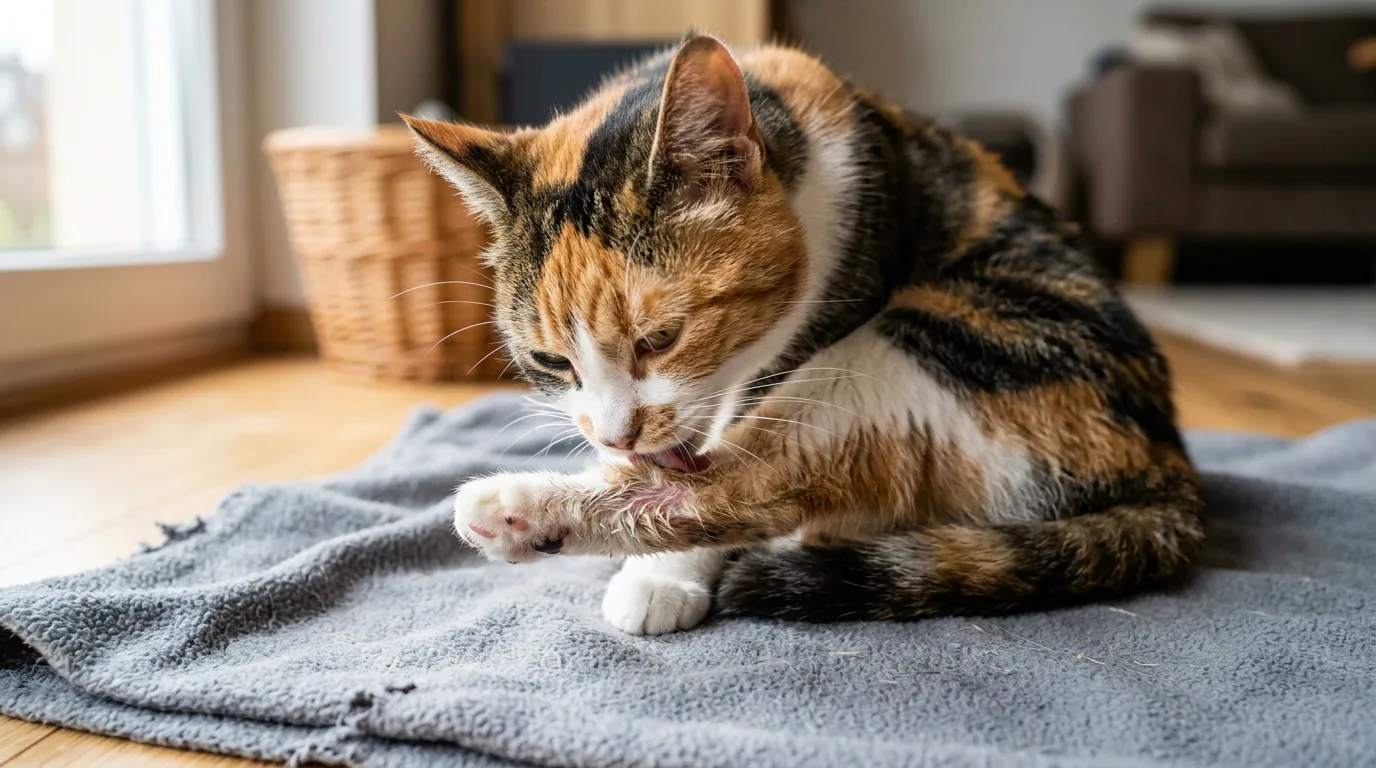
Most people see a cat licking itself and think nothing of it. That's the trap - a sudden drop in grooming can signal pain, and so can obsessive licking focused on one specific spot.
Some cats overgroom one area until the skin turns raw, while others quit grooming altogether and end up with a dull, matted coat.
Over-grooming one patch of fur is a cat's version of rubbing a sore muscle. Skin disease, allergies, and old wounds can cause the same behavior, which is exactly why knowing your cat's normal coat habits matters.
But that's nothing compared to what we found about #10...
#10 - Purring When Nothing Seems Wrong
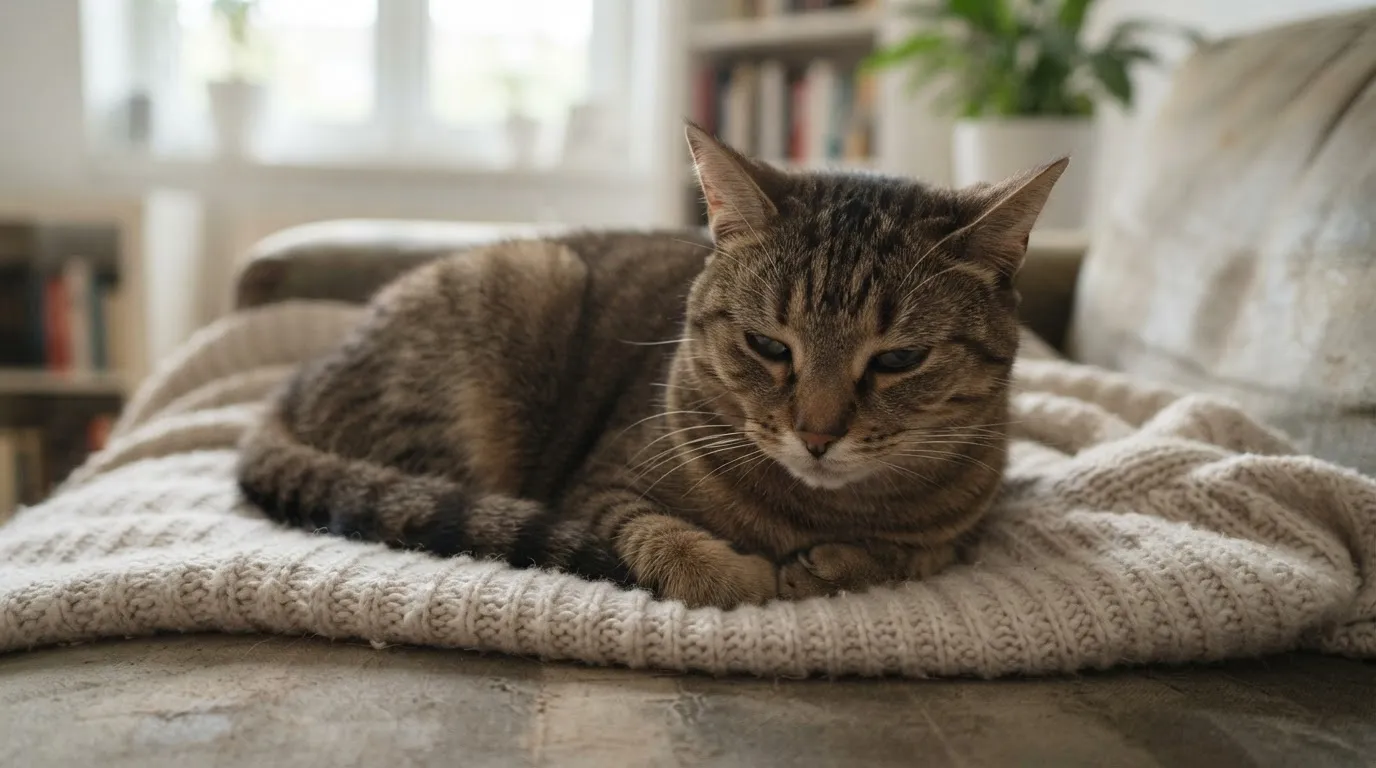
Here's the one that fools nearly every owner: purring. We're wired to hear it as happiness, but that instinct is flat-out wrong.
Cats purr when frightened, stressed, and in genuine pain, not just when content. Purring should always be read alongside posture, appetite, and facial expression, never as proof on its own.
A cat in serious pain can purr nonstop as a way of self-soothing, using the vibration to calm its own nervous system. That makes purring one of the easiest signals to misread completely.
But that's nothing compared to what we found about #9...
#9 - Changes in the Litter Box Routine
This one is genuinely underestimated, and vets call it one of the most reliable early signals there is. Pain can make a cat urinate outside the box or avoid it entirely.
Arthritis, bladder pain, or constipation can make squatting difficult, so some cats end up urinating over the box's edge instead of inside it.
Most owners punish litter box accidents instead of recognizing them as a distress call. A cat with chronic arthritis pain often stops using the box for the same reason it stops jumping onto its favorite cat tree.
Fast Facts
- Straining longer than a minute or two can point to bladder pain rather than stubbornness.
- Urinating right at the box's edge often means the squatting position itself hurts.
- Crying out during elimination usually signals inflammation, not a bad mood.
- Avoiding the box completely is one of the top reasons cats get mislabeled "difficult" instead of sick.
But that's nothing compared to what we found about #8...
#8 - Sudden Aggression Out of Nowhere
Your sweet, gentle cat snaps at you out of nowhere. Most owners assume a bad mood - vets say check for pain first.
A cat's tendency to lash out at familiar faces and strangers alike rises sharply when it's hurting, regardless of its usual temperament.
Cats that suddenly bite or scratch during petting are often reacting to a touch near something that hurts. The aggression is a boundary, not bad behavior - your cat is protecting a painful spot from being handled.
But that's nothing compared to what we found about #7...
#7 - Subtle Changes in Facial Expression
This one requires actually studying your cat's face, and most owners never do. Researchers at the University of Montreal built the Feline Grimace Scale, now widely used by vets to score a cat's pain level.
They identified five telltale facial changes: ear position, squinting, muzzle tension, whisker position, and head position. A comfortable cat has ears up, eyes wide, and a relaxed muzzle.
A cat in pain shows squinted eyes, flattened ears, a tense muzzle, and a lowered head. Squinting alone is often mistaken for sleepiness, when it can actually signal moderate to severe pain.
At a Glance
- Ear position - forward and alert versus flattened or pulled back
- Orbital tightening - eyes wide open versus squinted and tense
- Muzzle tension - loose and relaxed versus tightly drawn
- Whisker position - loose and curved versus pulled forward and clumped
- Head position - held above the shoulder line versus dropped level or lower
But that's nothing compared to what we found about #6...
#6 - The "Meatloaf" Posture
If your cat sits hunched with all four paws tucked tightly under its body and its head low, that's not cute - that's a red flag. Vets link this posture to a whole cluster of pain signals.
A hunched spine with a lowered head can mean the cat is protecting its abdomen. Paws pulled tightly under the chest instead of a relaxed loaf often points to pain in the limbs or hips.
Vets specifically flag the "meatloaf" posture as one of the most overlooked signs of chronic pain. It's easy to mistake for a cat just getting comfortable - it usually isn't.
But that's nothing compared to what we found about #5...
#5 - Refusing to Jump or Climb
Your cat used to own every high surface in the house. Now it stays on the floor, and most owners shrug it off as preference.
Vets hear alarm bells instead - trouble jumping is a classic early sign of osteoarthritis, even with no obvious limp to notice.
A cat quietly giving up its favorite perch is one of the most consistent, and most ignored, signs of joint or internal pain. Watch for it especially in cats over seven, since age makes the change look like normal "slowing down."
But that's nothing compared to what we found about #4...
#4 - Slow, Silent Weight Loss
The scale doesn't lie, but most owners never put their cat on one. Pain, dental disease, kidney problems, and cancer can all quietly shrink a cat's appetite long before anything else looks wrong.
Eating slowly, dropping food, or chewing on one side of the mouth can all signal dental pain or nausea hiding in plain sight.
Here's what makes this genuinely dangerous: a cat that stops eating for just three to four days can develop hepatic lipidosis, a life-threatening liver condition. Quiet weight loss is never just a cat "watching its figure."
Worth Knowing
- Ribs or spine that suddenly feel prominent under light pressure often mean real weight loss, even if the coat still looks fine.
- A collar or harness loosening by a notch within a few weeks is a practical early warning sign.
- Muscle loss over the shoulders and hips can show up before the scale ever moves much.
- Skipping even one full day of eating in an overweight cat is reason enough to call the vet, not wait it out.
But that's nothing compared to what we found about #3...
#3 - Vocal Changes That Are Easy to Dismiss
Most people expect a sick cat to howl dramatically. The real pattern is far quieter, which is exactly what makes it so easy to miss.
Some cats cry more, especially during movement or litter box use, but the truly dangerous cases are the cats that go quieter, not louder.
A sudden drop in vocalization is just as alarming as an increase, yet owners almost always read silence as calm. A cat that used to chat at breakfast and now sits silent is telling you something.
But that's nothing compared to what we found about #2...
#2 - Neglecting Grooming Entirely
A dull, matted, or greasy coat is a cat telling you something is wrong, but because the change is gradual, owners adjust to the new normal without noticing. Arthritis and dental pain can both make grooming physically difficult.
Reaching the back, tail, and haunches takes real flexibility, and when those movements hurt, a cat simply stops trying.
By the time a coat looks noticeably unkempt, the underlying problem is usually well established. Grooming decline is one of the earliest windows you get, and most owners slam it shut by calling it "just a phase."
Don't make that mistake, because what's coming at #1 is the most unsettling behavior on this entire list.
#1 - Acting Completely Normal
This is the one that breaks owners' hearts when they finally learn the truth. A cat's body can maintain a convincing "normal" facade even after its kidneys are up to 75% compromised.
Your cat can be eating, playing, and purring in your lap while quietly fighting a serious internal illness underneath all of it.
The most dangerous sick cat is the one that looks perfectly fine. Wild ancestors survived by hiding weakness from predators, and that instinct never left - it just moved into your living room.
Quick Compare
- What you see: normal appetite, playful energy, purring on your lap
- What's actually happening: kidneys can lose roughly two-thirds of their function before any of that changes
- What you see: a steady weight and a shiny coat
- What's actually happening: early organ disease can stay invisible for months at a time
If any change in routine, appetite, litter habits, or mood lasts more than a day or two, that's the moment to call your vet.
The Bottom Line
Cats hide pain so well that even attentive owners miss it until it's serious. The 13 behaviors above - from a stolen sleeping spot to flawless, fake normalcy - are your cat's way of suffering quietly.
The cruelest trick is this: the more stoic your cat looks, the more serious the problem might actually be. Catching these small changes early is often the difference between a quick fix and a real crisis.
Trust your gut, watch the small stuff, and call the vet the moment something feels off. Did any of these sound exactly like your own cat? Tell us which one in the comments - you might help another owner catch it in time.