
Most people assume they’ll know – clearly and unmistakably – when their old cat is nearing the end. Turns out, they’re almost always wrong.
Cats are hardwired to conceal vulnerability, and the farewell often arrives wrapped in gestures so quiet, so ordinary-looking, that owners mistake them for bad days or aging quirks.
Cats are remarkably good at hiding signs of illness and pain, and the changes that actually matter are often behavioral, not physical. By the time the signs become obvious, weeks – sometimes months – may have already passed.
Here’s what actually happens, sign by sign – and the last one is the one every owner remembers forever.
#15 – Refusing Food, Even the Favorites
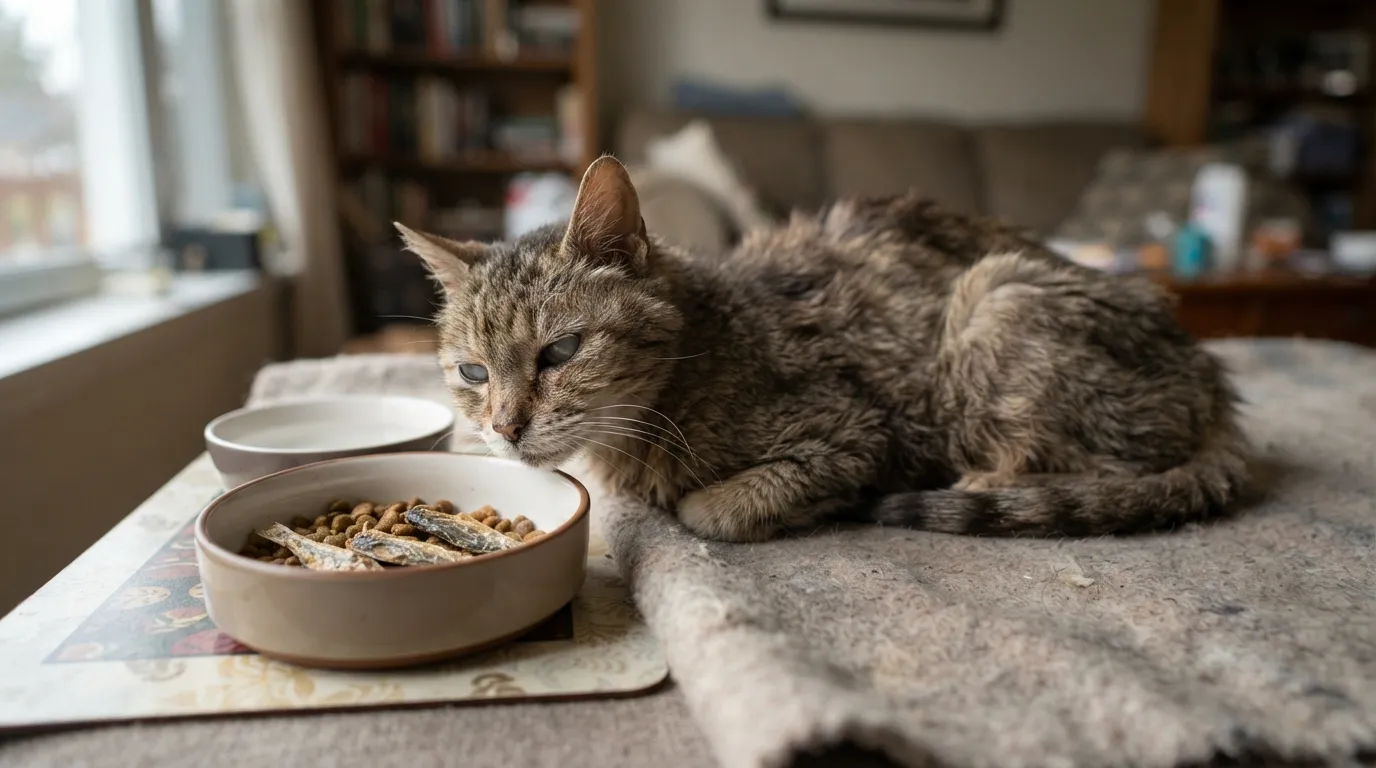
Loss of appetite is one of the first signs that a cat may be dying. That detail matters – it’s not just pickiness.
Pets may lose interest in food or water as vital organ functions begin to shut down. Your cat may be reluctant to approach their food bowl but still take treats – or stop eating altogether.
The refusal of a former favorite treat is the more telling signal.
If your cat’s appetite stays low for a couple of days, pay close attention. Don’t brush it off as a phase.
But that’s nothing compared to what we found about #14…
#14 – Drinking Far Less (or Far More) Water
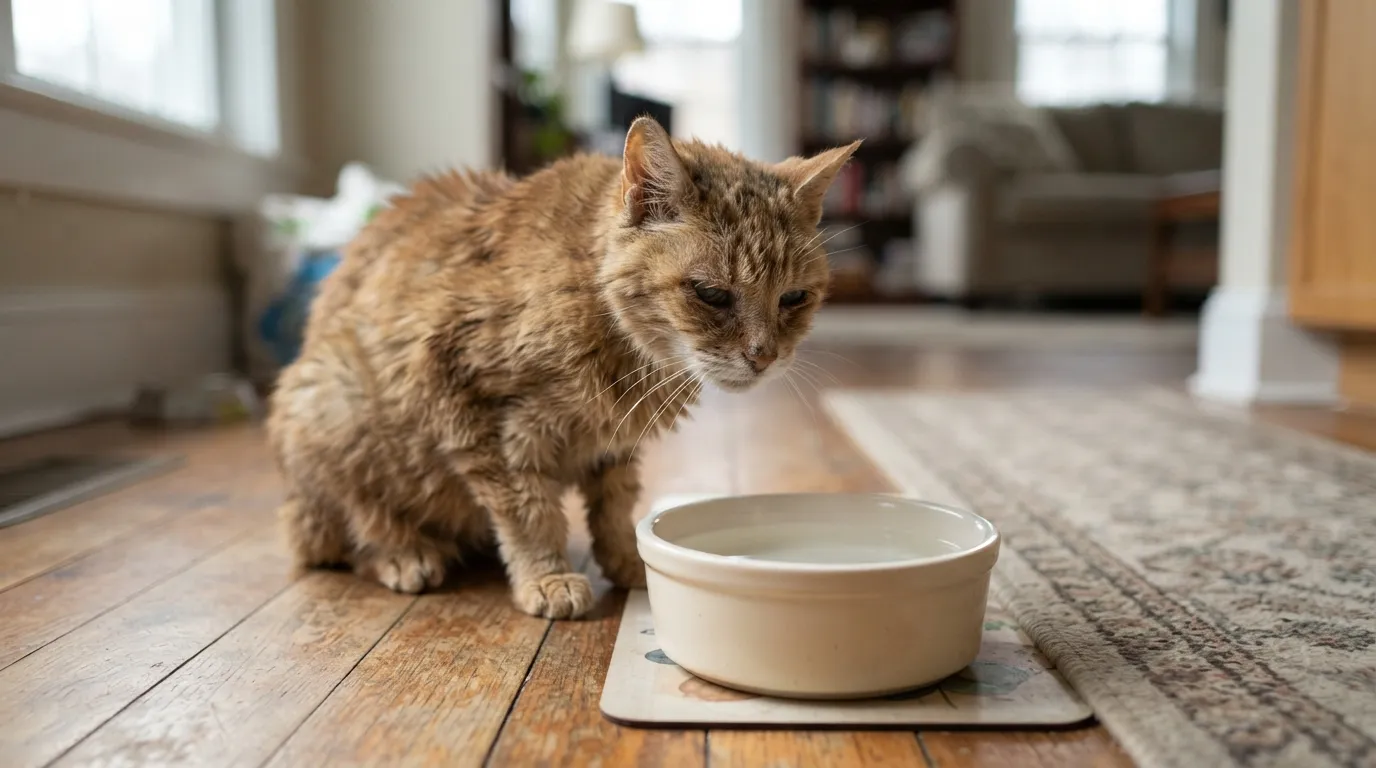
Changes in water intake cut both ways – and both directions carry weight.
An increase in water consumption can signal serious kidney or hormonal problems. A steep decrease is equally alarming.
When a senior cat stops drinking regularly, dehydration sets in fast and accelerates organ decline.
Keep a close eye on your cat’s water bowl. It’s one of the simplest things to track and one of the most informative.
The next sign is one most owners completely overlook – keep reading.
#13 – Sleeping Almost Around the Clock
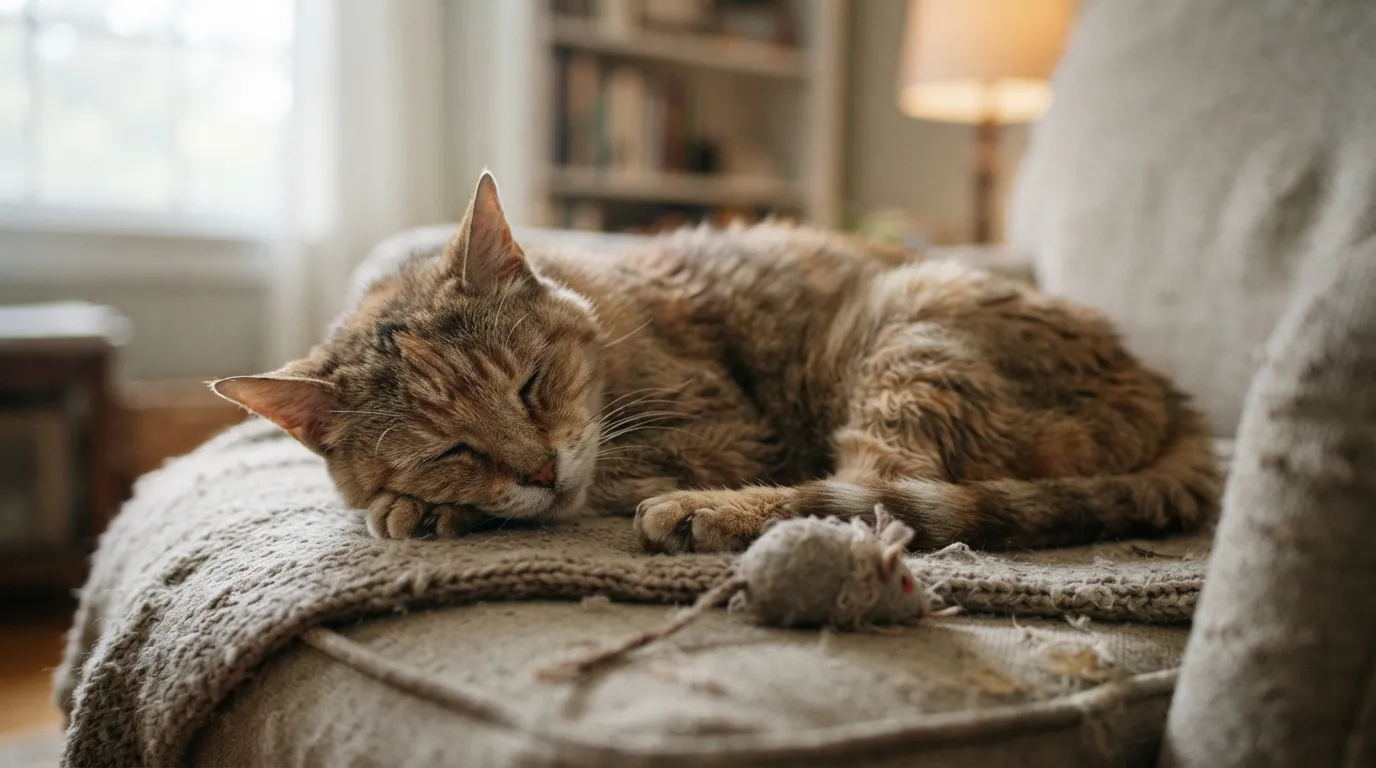
Every senior cat sleeps more than a kitten – that’s normal. But there’s a line between “senior lazy” and something more serious.
When your cat starts sleeping nearly all the time and shows no interest in favorite pastimes, it may signal the end-of-life stages. They may become difficult to wake, or lack the energy to move even for a favorite treat.
The key difference is disengagement – they stop reacting to the things that always got them up.
Lethargy and decreased alertness can be signs your cat is unwell. An elderly cat isn’t always active – but ignoring a favorite toy entirely is when to act.
But that’s nothing compared to what we found about #12…
#12 – Retreating to Strange, Hidden Spots
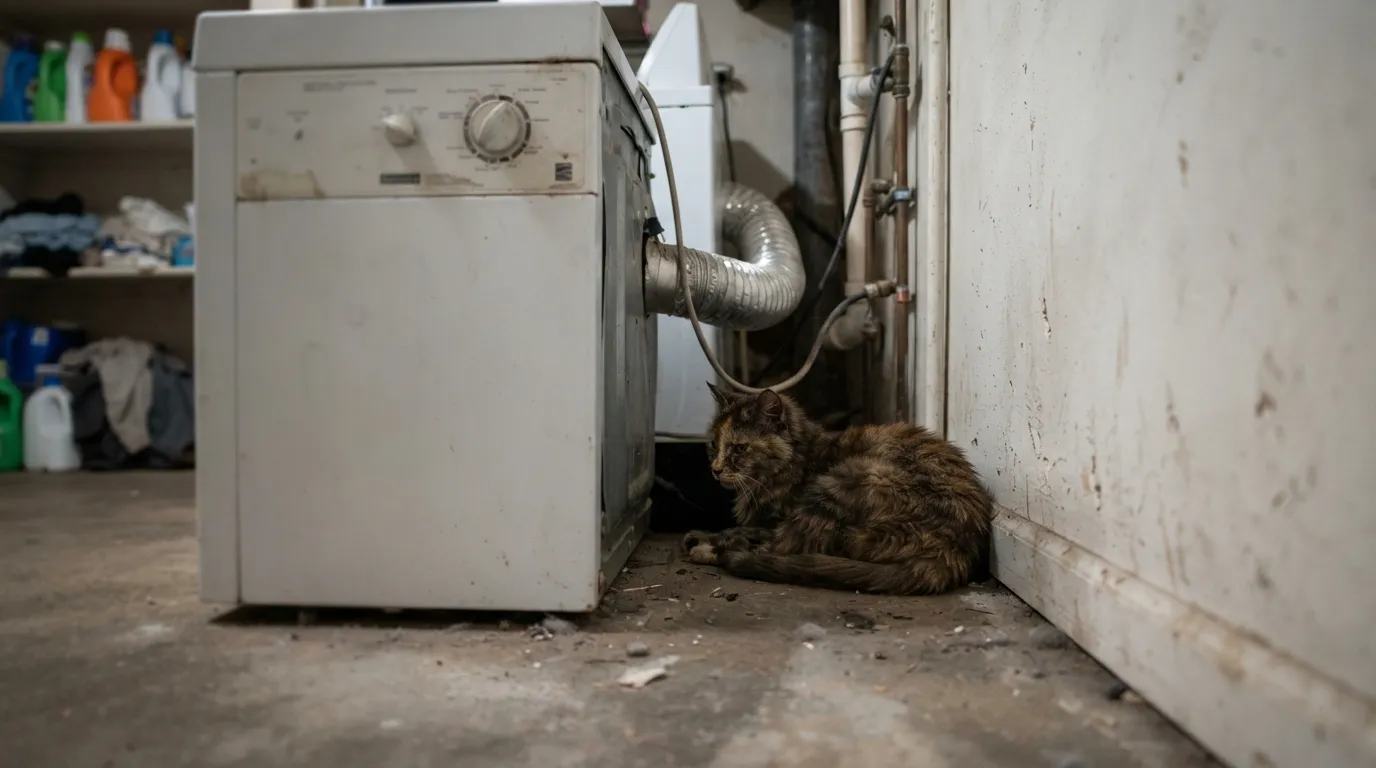
Your cat has lived in your home for years. So why is she suddenly wedged behind the dryer?
Many animals, including cats, hide away when they’re dying. It’s an innate instinct to protect themselves from predators that would target a weak animal.
This hiding instinct is ancient – and in a domestic cat, it’s one of the most reliable end-of-life signals there is.
Dying cats often hide for long stretches, refusing to come out for meals or things they used to enjoy. If it’s new, consistent, and paired with any other sign here, take it seriously.
Worth Knowing
- Hiding is one of the oldest survival instincts cats carry from their wild ancestors.
- Common retreat spots include closets, under beds, or behind large furniture.
- A cat hiding for more than a day while skipping meals is a signal, not just a mood.
But that’s nothing compared to what we found about #11…
#11 – A Sudden Personality Shift
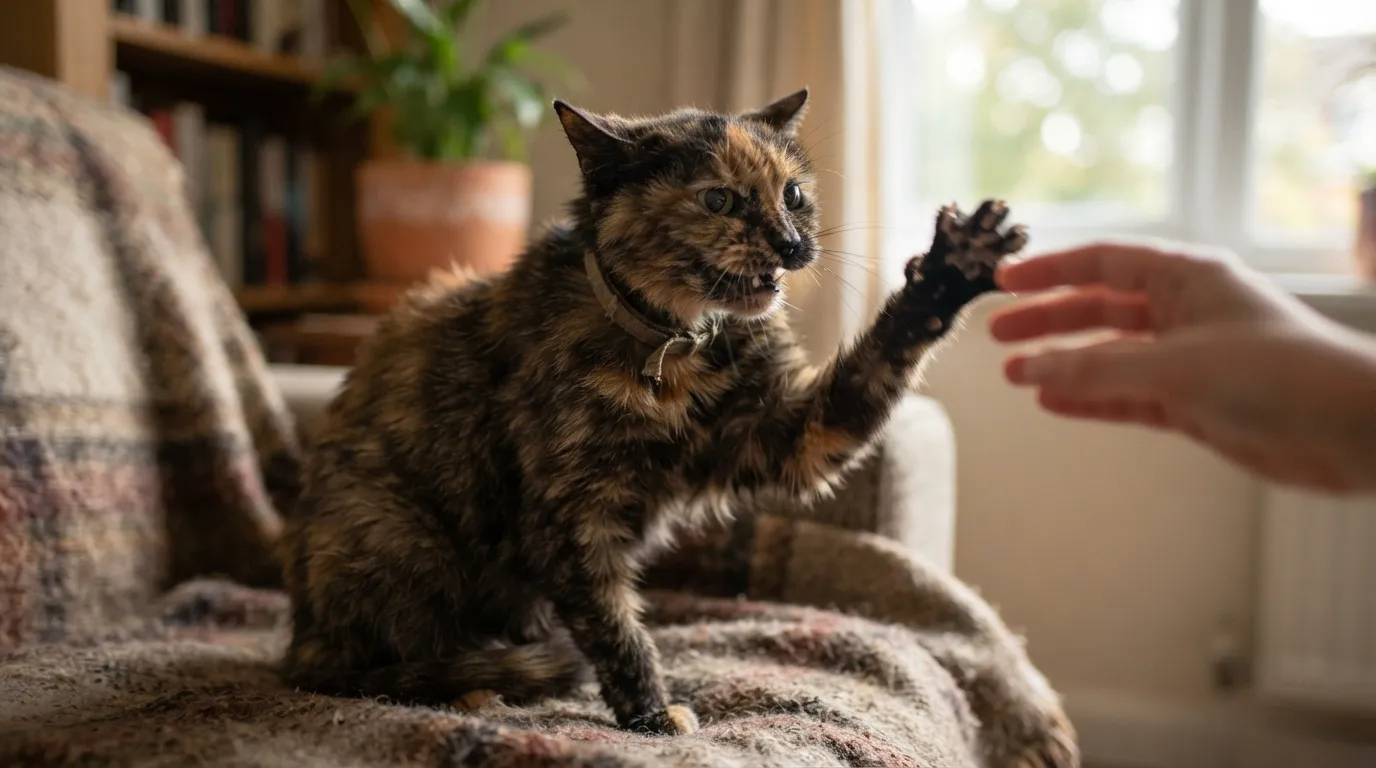
Here’s one that genuinely surprises people: your cat’s personality may flip almost overnight.
Neurological and physical changes can alter personality. A fiercely independent cat may become suddenly clingy, while a cuddly cat may lash out or demand distance.
A dying cat may become more prone to hissing, growling, or lashing out entirely out of character.
Neither shift – clingier or more withdrawn – is “better.” Both are signals.
The cat isn’t being difficult. Pain, confusion, and fear are reshaping behavior.
But that’s nothing compared to what we found about #10…
#10 – Visible Weight Loss and Muscle Wasting
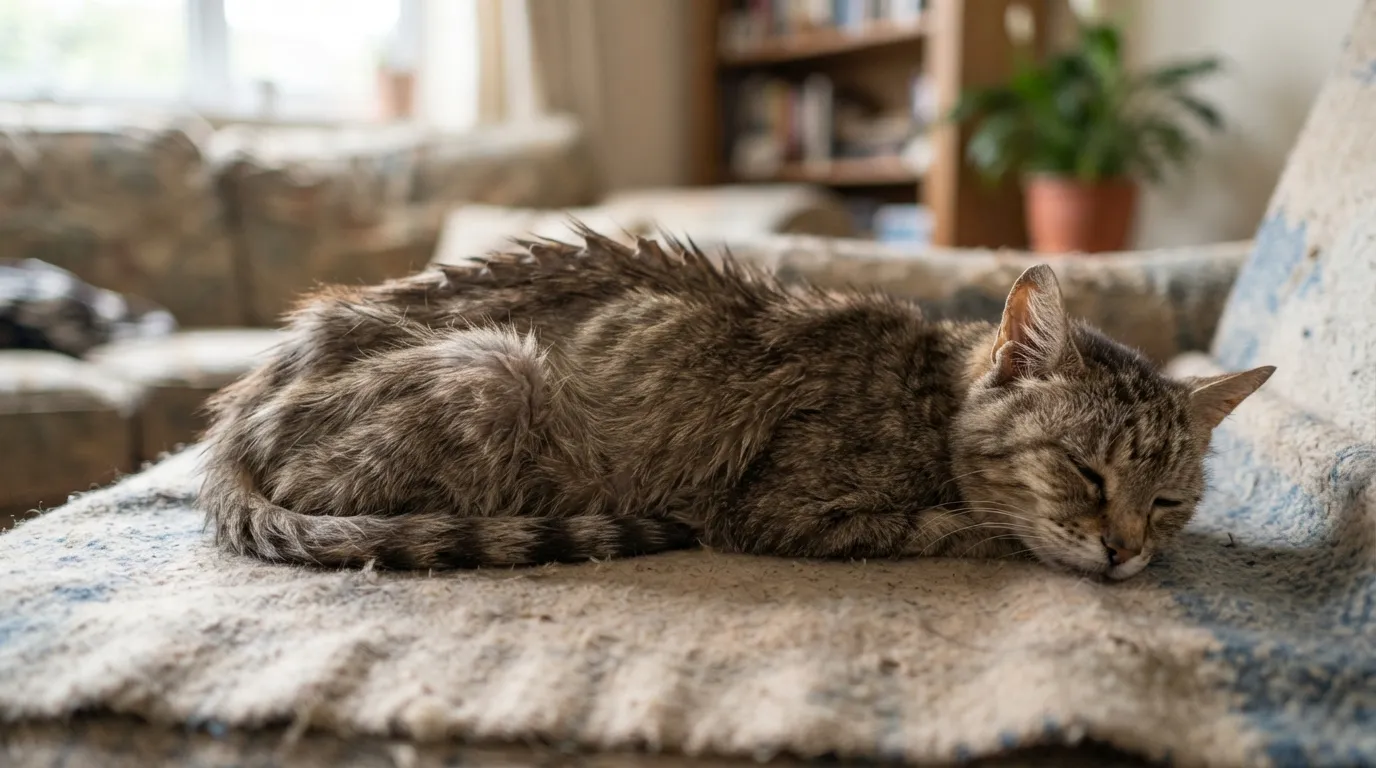
This one is physical, and it can happen faster than owners expect.
Cats may struggle with stairs, walking, or standing as muscle loss progresses. You’ll often notice it first along the spine and hips – bones becoming visible beneath a coat that used to hide them.
Significant muscle loss in a short window is one of the clearest signs the body is redirecting its remaining resources.
Weight loss rarely travels alone – it usually shows up alongside changes in appetite, energy, or mobility.
But that’s nothing compared to what we found about #9…
#9 – Labored or Irregular Breathing
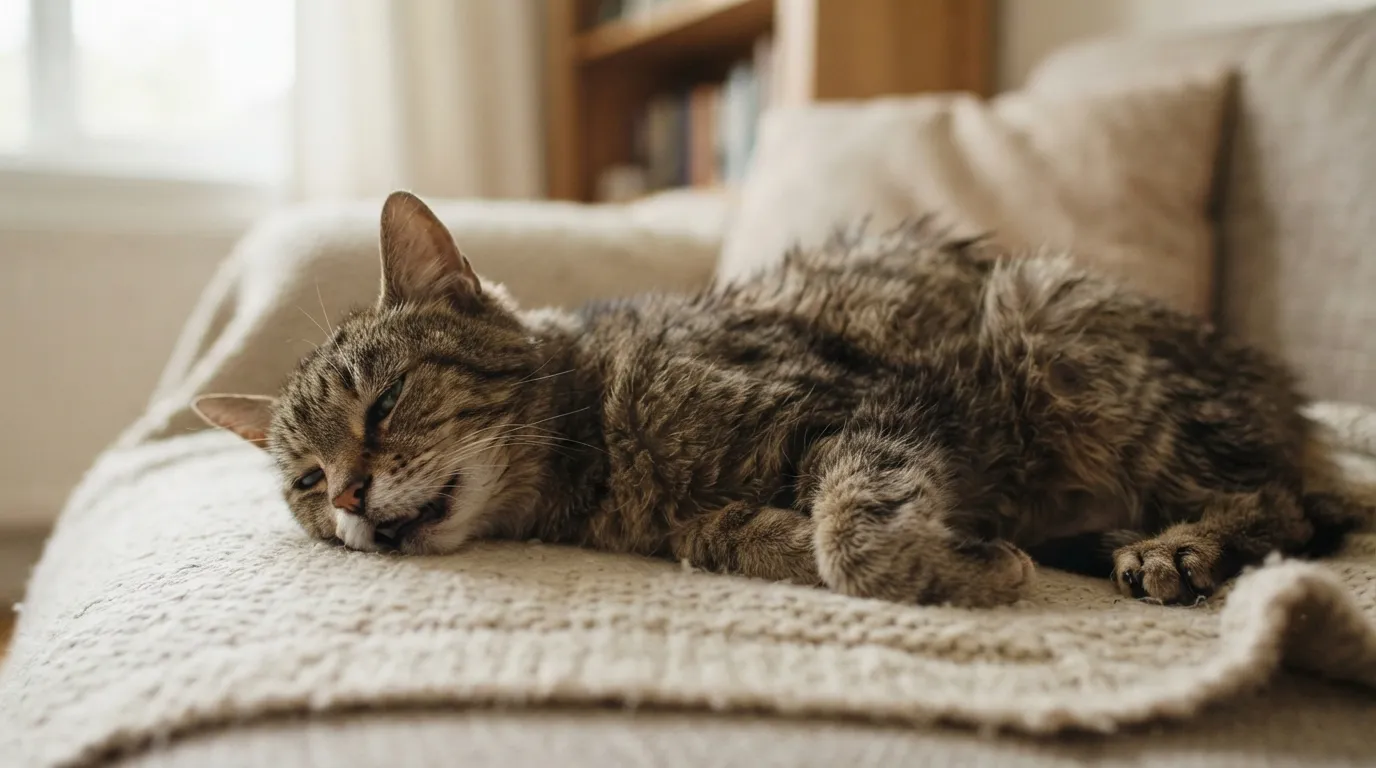
Most owners don’t watch their cat breathe. Start now – it tells you more than you’d expect.
Irregular, shallow, or labored breathing is a warning sign that a cat may be dying. In a pet’s final hours, a gasping pattern known as agonal breathing may occur.
A resting respiratory rate above 40 breaths per minute, or gums that turn blue or purple, signals something serious.
Labored breathing at rest – not after play – is never a “wait and see” situation.
Quick Compare
- Normal at rest: A healthy cat breathes about 15 to 30 times per minute while relaxed or asleep.
- Warning zone: A rate that consistently sits above 30 breaths per minute at rest is worth a vet call.
- Emergency: Open-mouth breathing or gasping is never normal and needs immediate attention.
Call your vet immediately about rapid, shallow, or labored breathing.
But that’s nothing compared to what we found about #8…
#8 – Neglecting Grooming
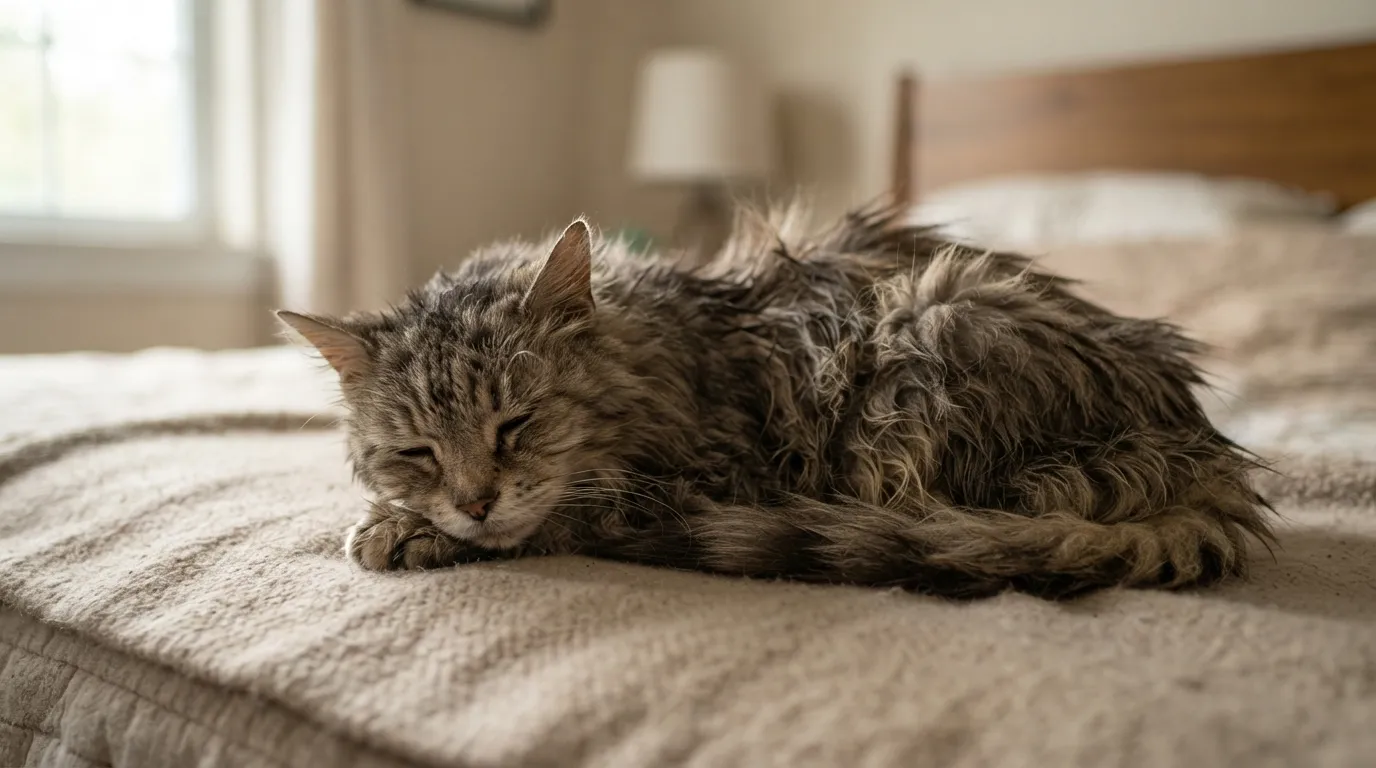
Cats spend a significant portion of their waking hours grooming. When that stops, the body is telling you something.
Cats near the end of life often struggle with hygiene – including bad odor, poor grooming, and toileting outside the litter box. They can appear unkempt or in poor condition seemingly overnight.
A dull, matted, or greasy coat in a cat who was once fastidiously clean is one of the most understated red flags on this list.
It usually means either movement has become too painful, or the energy for self-care simply isn’t there anymore.
But that’s nothing compared to what we found about #7…
#7 – Litter Box Accidents Outside the Box
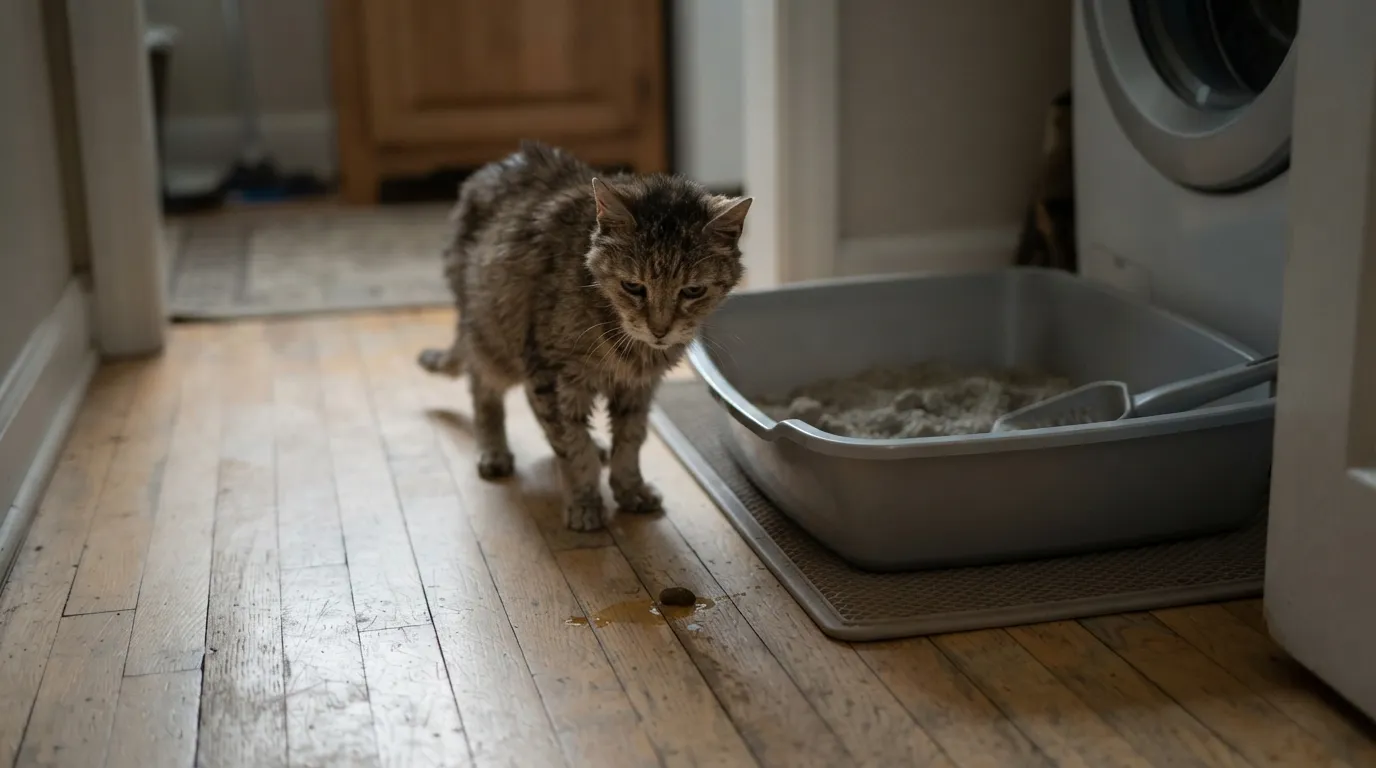
Nobody likes to talk about this one – but it’s important.
Cats approaching the end of life may experience cognitive confusion that makes them forget litter box training. In other cases, the issue is purely physical – getting into the box is simply too painful.
A cat who trained perfectly for 15 years suddenly missing the box is not misbehaving. It’s a distress signal.
Adjust the setup – low sides, easy access – and call your vet.
But that’s nothing compared to what we found about #6…
#6 – Changes in Vocalization
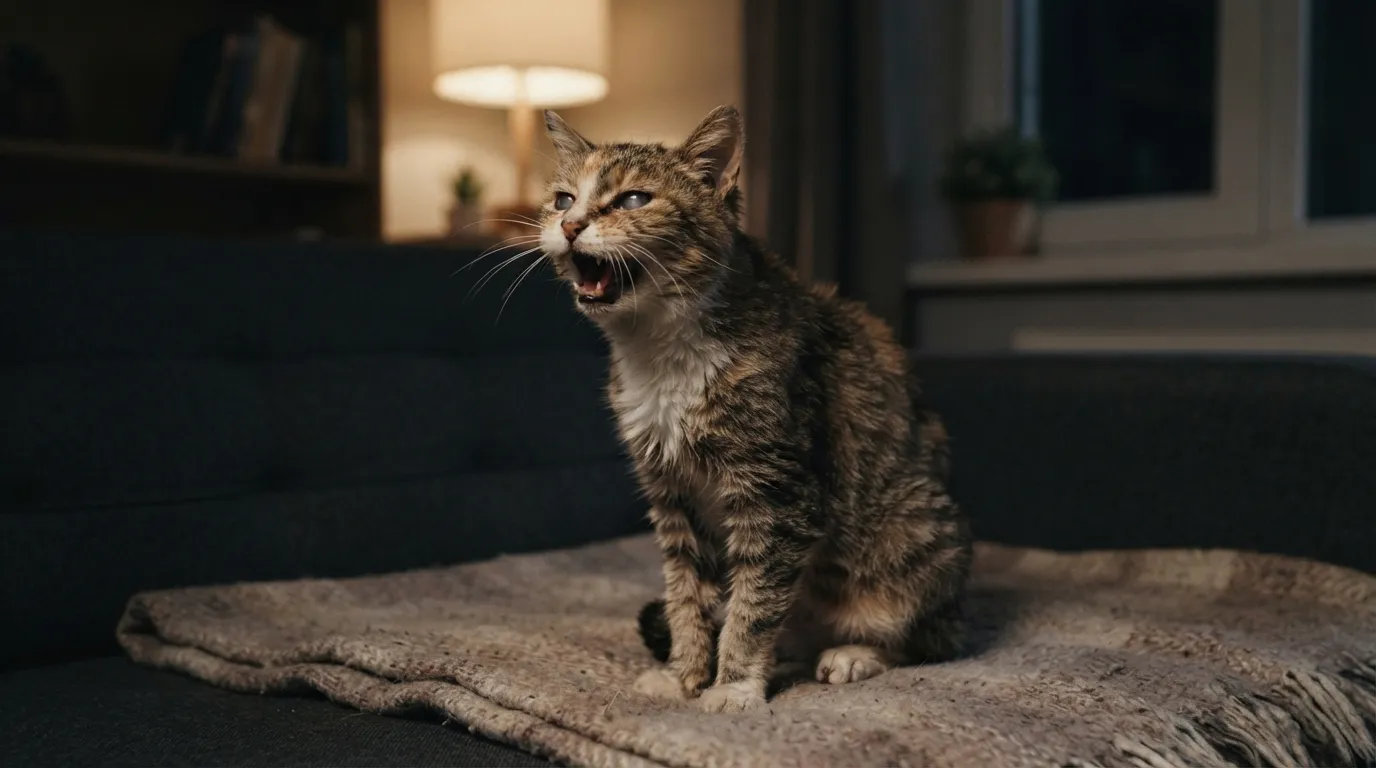
Pay attention to what your cat is saying – even if what she’s saying is nothing at all.
Yowling, excessive meowing, or falling into complete silence are among the behavioral changes cats show near the end. Sudden, out-of-the-ordinary vocalizing often signals discomfort or pain.
Unusual nighttime yowling in a senior cat, in particular, is something vets take seriously.
But that’s nothing compared to what we found about #5…
#5 – Confusion and Disorientation
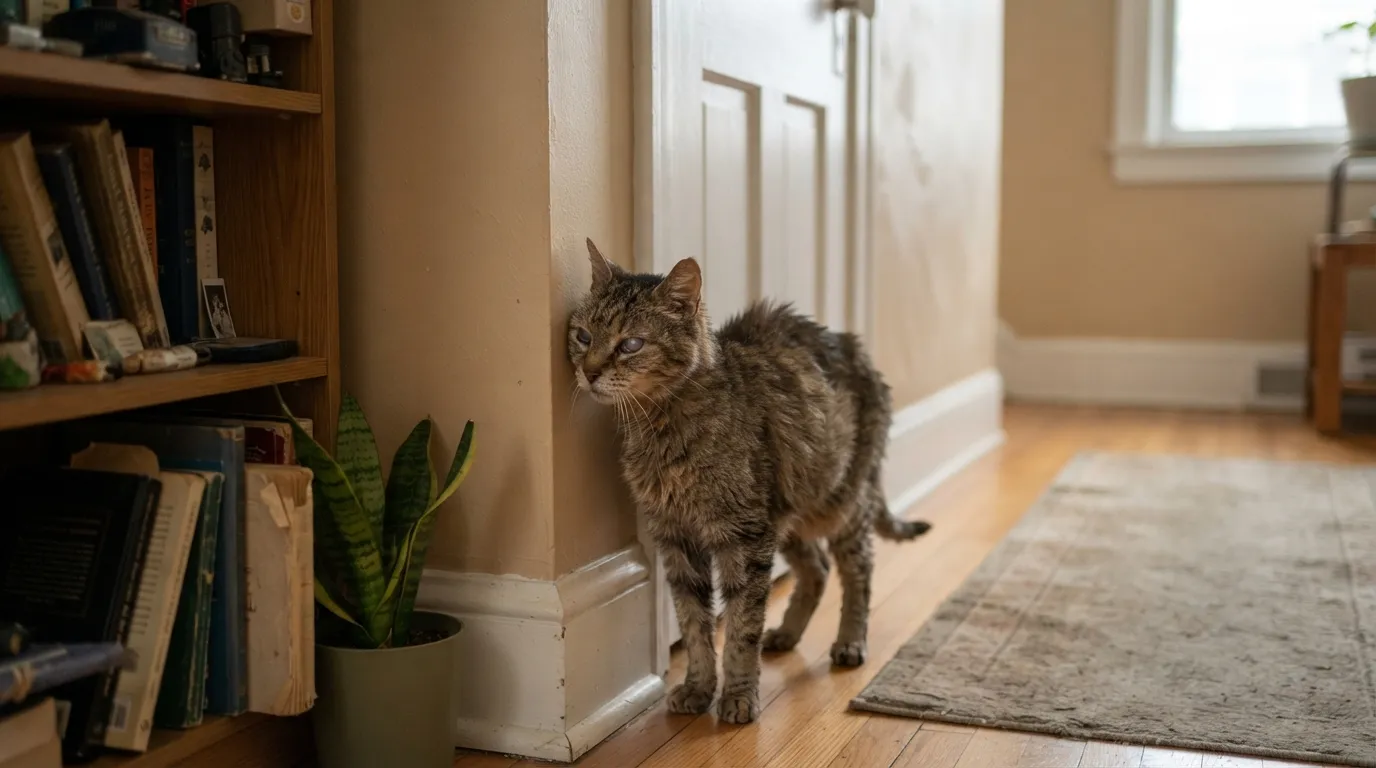
This one is heartbreaking to witness – and it’s more common than most people know.
Similar to dementia in humans, geriatric cats – typically 11 to 14 years and older – may experience cognitive decline. They may seem “lost” in corners of their own home or howl aimlessly at night.
Near the end, some cats grow confused, dull, or disoriented, with a glazed look to their eyes.
Cognitive dysfunction in senior cats is a recognized condition – not just “old age being old age.”
Fast Facts
- Feline cognitive dysfunction affects more than 55% of cats aged 11 to 15 years.
- That number climbs to more than 80% in cats aged 16 to 20.
- Common signs include disorientation, disrupted sleep, and forgetting familiar routines.
But that’s nothing compared to what we found about #4…
#4 – Gastrointestinal Distress
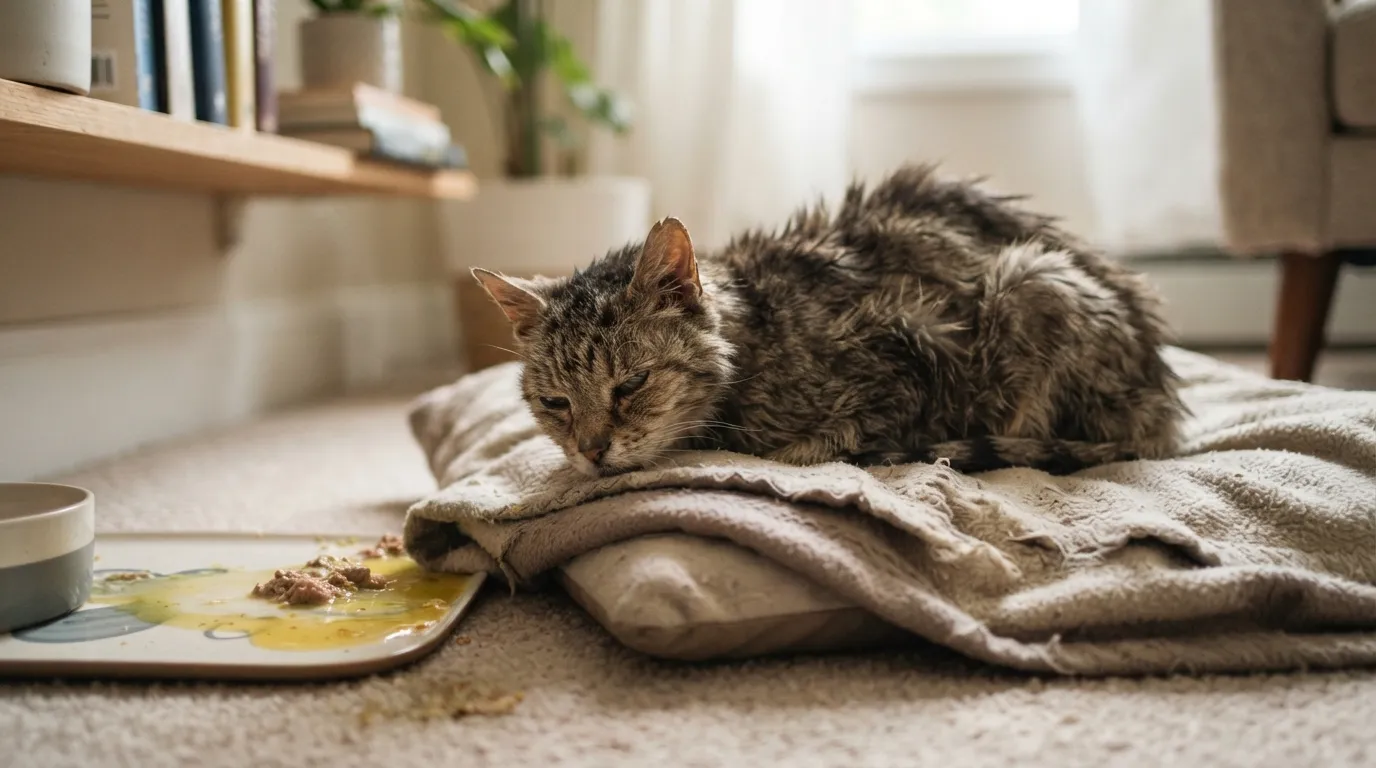
When a dying cat’s digestive system begins to fail, the signs are hard to ignore.
Dying cats often develop gastrointestinal distress that causes severe vomiting or diarrhea. This dehydrates the body fast and worsens overall quality of life.
Chronic vomiting or diarrhea in a senior cat is never just “a sensitive stomach” – it deserves a vet conversation immediately.
Don’t wait until the bad days outnumber the good.
But that’s nothing compared to what we found about #3…
#3 – More Bad Days Than Good Ones

There’s actually a framework vets use to measure this – and it’s more useful than most owners realize.
Some cats become more loving near the end. But when symptoms seriously impair quality of life, and bad days start outnumbering good ones, it signals the end is near.
Tracking good days versus bad days in a simple notebook is one of the most practical things you can do.
A quality-of-life scale, paired with your veterinarian’s guidance, can help with decisions about palliative care or timing.
But that’s nothing compared to what we found about #2…
#2 – Purring More Than Usual (Not Out of Happiness)
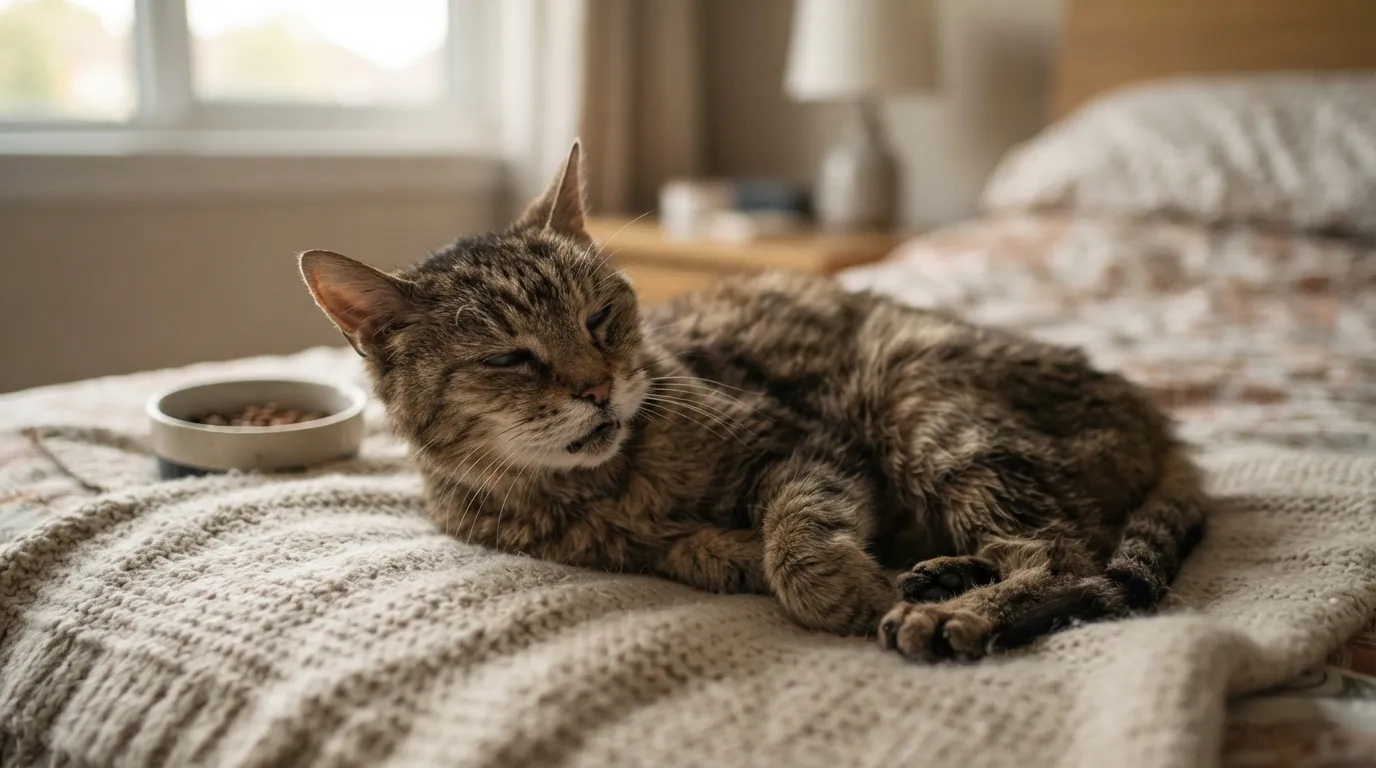
This is the sign that shocks almost everyone – including longtime cat owners.
Some cats purr more at end-of-life – not out of happiness, but as a self-comforting behavior. The purr mechanism, it turns out, doubles as a self-soothing response to pain or distress.
That soft, constant purr from a cat who isn’t eating and has stopped playing is not reassurance. It may be the opposite.
Subtle or profound changes in appetite, behavior, or mobility can indicate that your cat is dying – and every cat’s journey looks a little different.
The next – and final – sign is the one that ties every other signal together.
#1 – Seeking You Out One Last Time
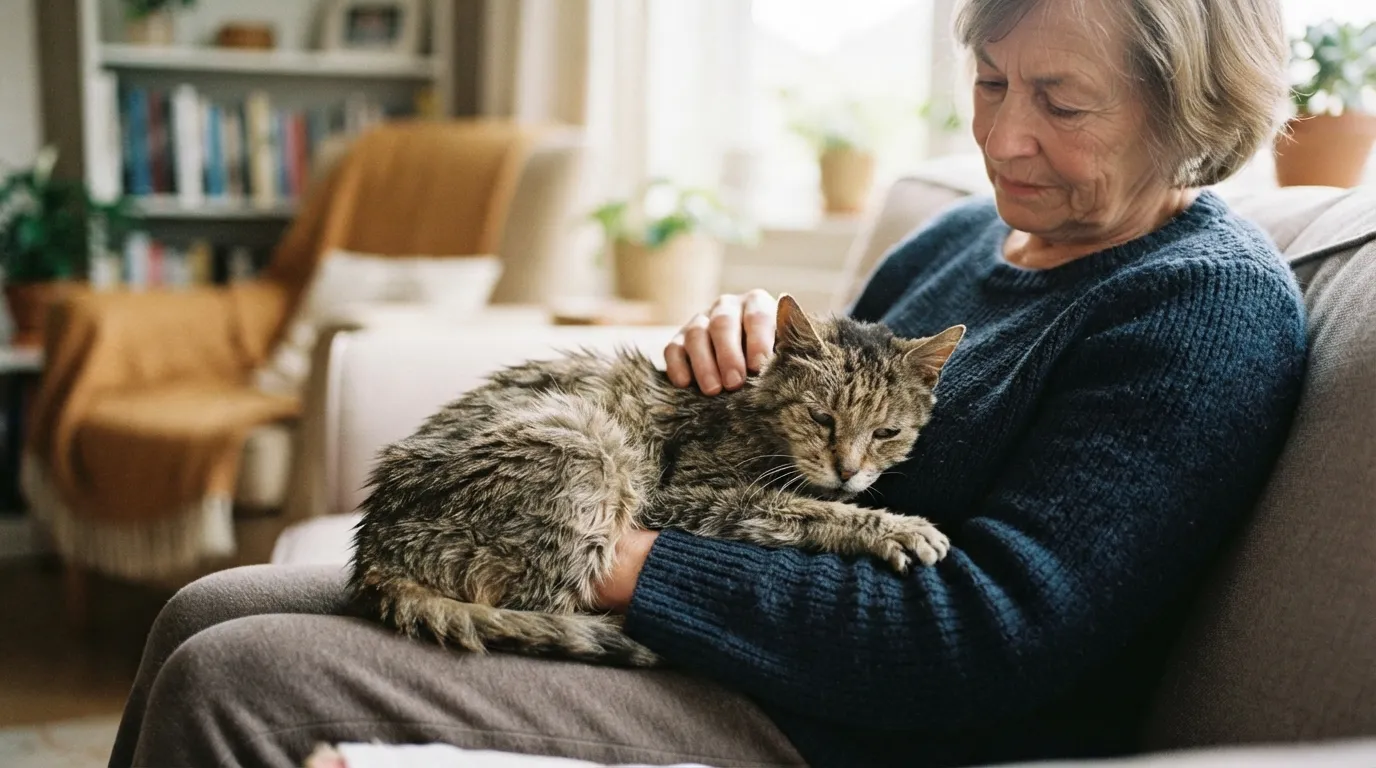
Save the hardest for last. Because this is the one owners remember forever.
Some cats become more loving near the end, sticking close and following you room to room. After days or weeks of hiding, a dying cat will sometimes emerge and plant themselves next to – or on top of – the person they love most.
It’s not a recovery. It’s something else entirely.
Sick cats change how they interact with you – a usually cuddly cat might shy away from touch, while others become intensely clingy.
When a cat who has been withdrawing suddenly comes to find you, sit with her. She’s not asking for a diagnosis – she’s asking for you.
At a Glance
- Many dying cats seek out their favorite person after days of withdrawal.
- This isn’t a medical recovery – it’s a final act of comfort-seeking.
- Staying close, speaking softly, and offering gentle touch is the right response.
The Bottom Line
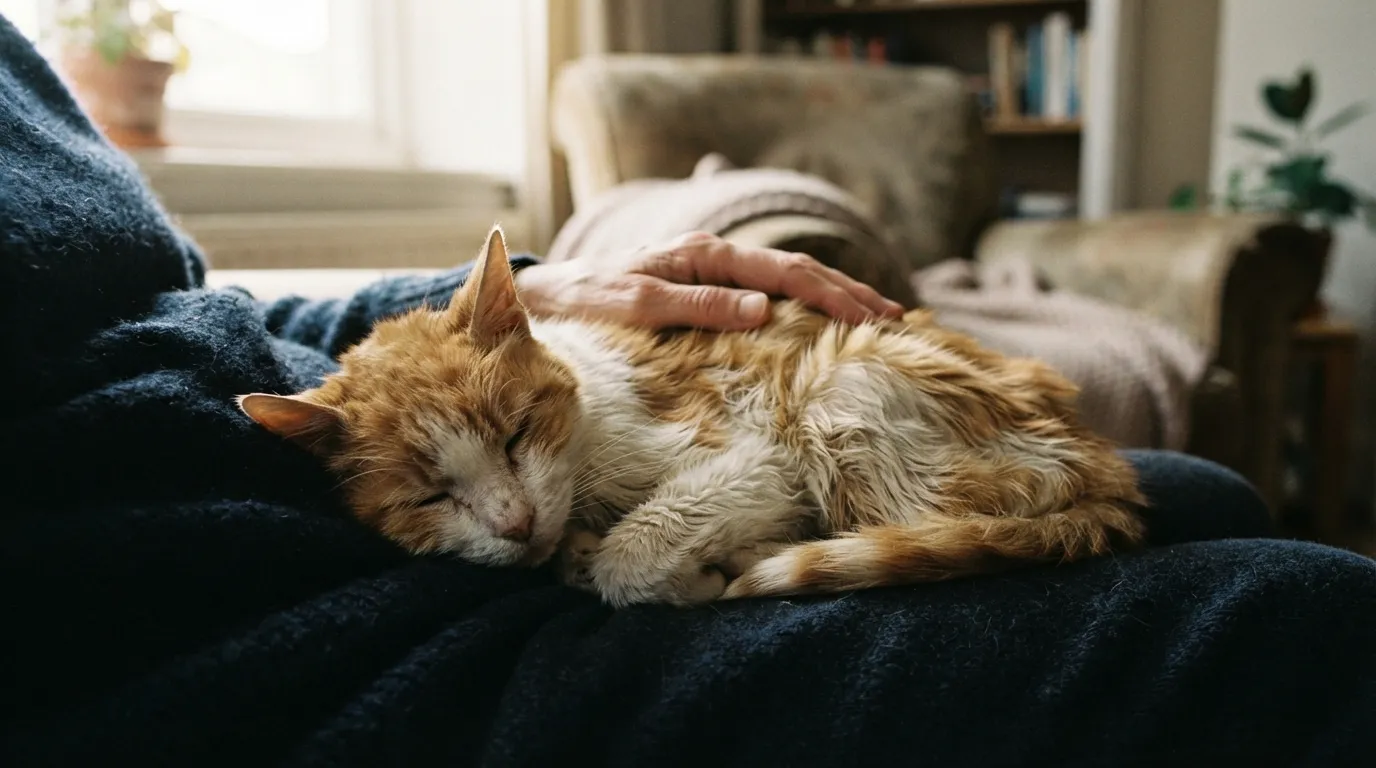
Old cats don’t announce their goodbyes. They hide. They go quiet. They stop eating. Then they find your lap one more time.
The signs may not be obvious, and you may struggle to recognize or accept them – but subtle changes in appetite, behavior, and mobility are often the only language they have left.
If your cat is nearing the end, you’ll usually see more than one of these signs together. Trust that instinct, and contact your veterinarian for evaluation and support.
You know your cat better than anyone. Did any of these signs catch you off guard? Drop it in the comments – your experience might help another cat owner recognize the signs in time.
Growing up traveling and experiencing new cultures and wonders, I have had a passion for nature, adventuring, photography, and videography. I am currently working towards a BSc in Biodiversity and Ecology at Stellenbosch University, and I hope to specialise in Marine Sciences one day.
Please send any feedback to Feedback@animalsaroundtheglobe.com