15 Quiet Routines Vets Recommend for a Senior Cat's Final Years
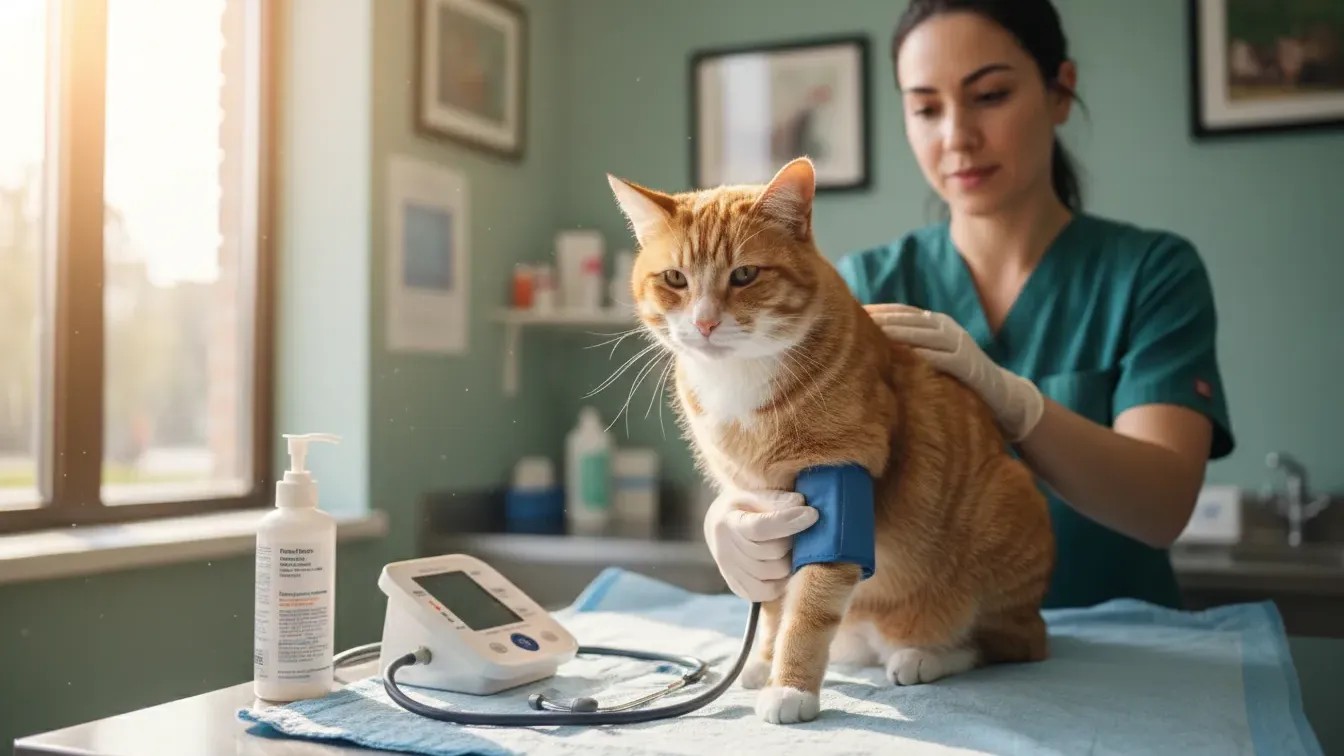
Most people think their senior cat just needs "a little extra love" in these final years. Vets will tell you love without structure isn't enough.
The routines ahead aren't dramatic interventions - they're quiet, easy-to-miss habits insiders swear by. Here's what the data and veterinary professionals actually recommend, starting with the one most owners get wrong first.
#15 - Biannual Vet Visits (Not Annual)
Most owners still book their senior cat's vet visit once a year. That's not enough.
The American Animal Hospital Association recommends twice-a-year visits for senior cats, more often if your cat has a chronic disease. For cats over 15, some vets now suggest check-ins every four months.
A checkup every six months for cats 10-15, and every four months for cats over 15, is recommended for early disease detection. That extra appointment can be the difference between catching kidney disease early and managing a full-blown crisis.
But that's nothing compared to #14 - something most owners never think to ask their vet to measure.
#14 - Routine Blood Pressure Checks
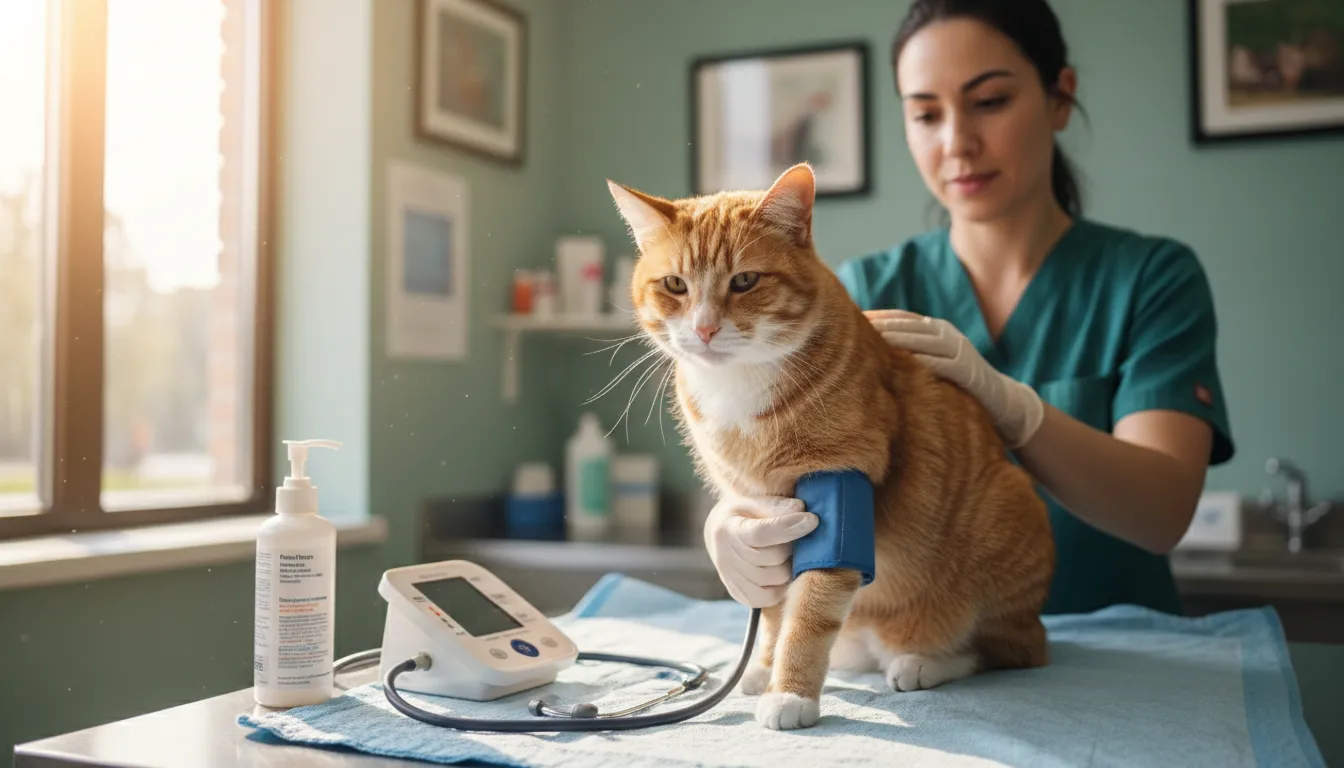
Here's one that almost no cat owner knows to request: a blood pressure reading.
High blood pressure is common in senior cats and can silently damage the eyes, kidneys, and heart. Your cat can look perfectly normal while quietly going blind.
Fast Facts
- Normal feline blood pressure runs roughly 120-140 mmHg systolic
- Sustained readings above 160 mmHg are treated as hypertension
- Above 180 mmHg, damage risk to the eyes, kidneys, and heart rises sharply
- At least 60% of cats with hypertension also have chronic kidney disease
This is a quick, non-invasive reading your vet can take in minutes - and most owners never ask for it. Make it a standing request at every biannual visit.
But that's nothing compared to #13 - and this one happens at home, every single day.
#13 - Daily Weight Monitoring
One of the most underrated senior cat routines costs nothing: weigh your cat weekly at home.
Sudden weight loss or gain can signal an underlying issue like hyperthyroidism or kidney disease. The problem is that gradual weight loss is nearly invisible day-to-day - cats can lose 20% of their body weight before an owner even notices.
Senior cats are prone to both weight loss and obesity, and both carry real risks. A simple kitchen scale used consistently each week builds the data trail your vet actually needs to act early.
But that's nothing compared to #12 - it targets the one organ most likely to fail in an older cat.
#12 - Hydration-First Feeding
Chronic kidney disease is one of the leading causes of death in cats over twelve. Hydration is your single most powerful tool against it.
Most dry-food-only diets leave senior cats mildly, chronically dehydrated. Switching even partially to wet food is one of the highest-impact diet changes you can make.
Multiple water sources or a cat water fountain can help too. Running water is instinctively more appealing to cats - a fountain often works when a bowl doesn't.
But that's nothing compared to #11 - a routine that protects something most owners forget entirely.
#11 - Consistent Dental Care
Periodontal disease is common in senior cats and can trigger organ dysfunction from chronic bacterial inflammation. This is the part most owners skip - and it has consequences far beyond bad breath.
Senior cats still carry the same teeth they had at six months old, just decades of wear on them. A cat eating less because of tooth pain often gets mistaken for normal aging. It's not.
Brush daily with pet-safe toothpaste, or gently rub gauze against their teeth if they won't tolerate a brush. Ask your vet to inspect their teeth at every wellness exam.
But that's nothing compared to #10 - a structural issue in your home that's quietly hurting your cat every day.
#10 - Low-Entry Litter Boxes on Every Floor
This is a setup issue vets consistently flag, and owners consistently ignore.
An arthritic cat that has to climb stairs to reach the litter box will often just stop going - and the resulting accidents get blamed on behavior. The box should have sides low enough that the cat steps in, not hops in.
Place multiple boxes on every floor, near favorite sleeping and eating areas. Don't assume litter box issues are behavioral in a senior cat - assume medical first, and call your vet.
But that's nothing compared to #9 - a comfort fix that tackles one of the most underdiagnosed senior cat conditions.
#9 - Heated Sleeping Spots for Joint Relief
Many senior cats have osteoarthritis, and because cats are so good at hiding pain, it often goes untreated. This is one of the most overlooked facts in senior cat care.
Worth Knowing
- More than 90% of cats age 12 and older show radiographic signs of osteoarthritis
- Even cats as young as six can show arthritis in at least one joint - around 61% do
- One clinic study found routine exams caught arthritis in just 1% of affected cats; a structured screening checklist raised that to 39%
Heated cat beds reduce joint pain and help your cat sleep more comfortably. Avoid human heating pads - look for purpose-built, thermostatically controlled cat beds instead.
The warmth loosens stiff joints and can meaningfully improve your cat's willingness to move. Place beds at ground level, near the spots your cat already gravitates to.
But that's nothing compared to #8 - and this one involves something most owners are accidentally denying their cat.
#8 - Raised Food and Water Bowls
Bending down to a floor-level bowl forces an arthritic cat to strain its neck and spine at every single meal.
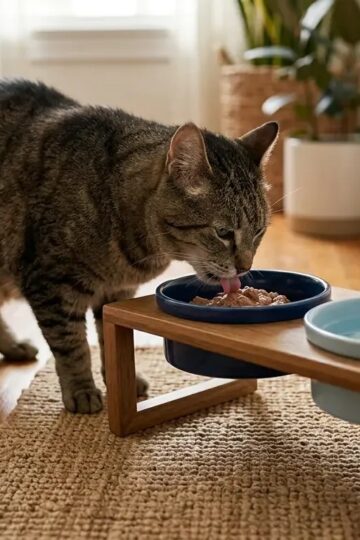
Raised bowls mean cats with degenerative joint disease don't have to bend to eat or drink. It's a two-dollar fix that can be the difference between a cat that eats comfortably and one that quietly skips meals.
In multi-pet households, watch for another problem too - younger pets bullying seniors away from the bowl. Owners often never notice it's happening.
But that's nothing compared to #7 - a grooming routine that does double duty as a health check.
#7 - Hands-On Grooming as a Health Scan
When a senior cat stops grooming well, it's rarely laziness - it's usually pain or illness.
Help out with gentle brushing and regular nail trims. Here's what makes this routine powerful: every session is also your best chance to scan for lumps, weight loss, and skin changes.
Feel along the spine and hips - you shouldn't easily find those bones on a healthy cat. If you find a lump, tell your vet exactly what you felt, when, and where.
But that's nothing compared to #6 - a home modification that most people get completely wrong.
#6 - Ramps, Not Just Steps
Most owners who try to help an arthritic cat buy pet stairs. Vets increasingly prefer ramps instead.
Quick Compare
- Steps: require a small jump at each level, still stressing joints
- Ramps: one continuous incline, essentially zero impact
- Best pick for advanced arthritis: ramps, hands down
If your cat prefers the couch or your bed, add a ramp so they never have to choose between comfort and safety. Keep favorite high spots accessible, no matter what.
But that's nothing compared to #5 - a nutrition shift vets call one of the most protective things you can do.
#5 - High-Protein Diet to Prevent Muscle Wasting
Here's something most people get backwards: they assume senior cats need less protein. They actually need more.
Muscle loss in senior cats accelerates joint pain, reduces mobility, and shortens quality of life. A high-protein diet protects against that wasting, and it's largely preventable with the right food.
A diet lower in calories but rich in easily digestible protein can help manage weight while maintaining muscle. One caveat: cats with kidney disease may need modified protein levels, so talk to your vet before changing anything.
But that's nothing compared to #4 - a behavioral routine that directly targets your cat's brain health.
#4 - Gentle, Daily Mental Stimulation
Cognitive decline in cats is real, documented, and far more common than most people think.
At a Glance
- Disorientation or getting "stuck" staring at walls or corners
- Changed sleep-wake cycles, including nighttime yowling
- House soiling despite a clean, accessible litter box
- Reduced interest in play or interaction
Even five minutes of wand-toy play, a puzzle feeder, or window bird-watching counts. Keep mealtimes and playtime consistent, but mix in small novelty - a new scent or toy keeps the brain working while routine keeps stress low.
But that's nothing compared to #3 - and this one is about something you do every single time you sit down.
#3 - Calm, Daily Physical Contact
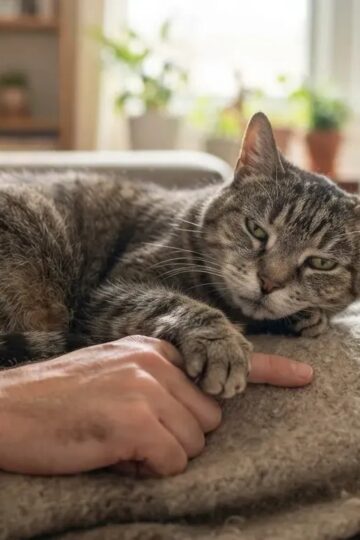
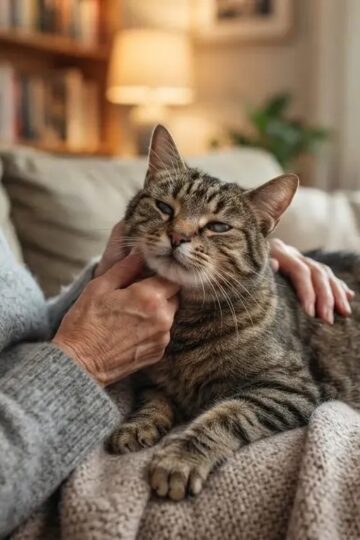
Spend quality time with your senior cat through gentle play and extra cuddles, adjusted to their energy level. This sounds simple, but most owners underestimate how much structured daily contact actually does.
Cats who are handled calmly every day tolerate exams better, which means vets catch problems earlier. It's not just comfort - it's a medical advantage.
Cats hide pain from arthritis and dental disease without showing obvious signs. Daily hands-on time is the closest you'll get to reading their body honestly.
But that's nothing compared to #2 - a routine so simple it takes 30 seconds, but most owners never do it consistently.
#2 - A Written Daily Behavior Log
Most owners track their senior cat's health in their head. That's not reliable enough.
A simple daily log of appetite, water intake, litter box use, and activity level gives your vet a data trail that can detect illness weeks before it becomes visible. Cats that don't feel well move around less and may limit themselves to only a few sleeping spots.
That shift is easy to miss without a log. Thirty seconds a day, three quick observations - it could genuinely extend your cat's life.
And now - the most important routine of all. #1 is the one vets say owners consistently deprioritize until it's too late.
#1 - Stable Daily Routine Without Exception
Every vet interviewed on this topic circles back to the same idea: predictability is medicine for a senior cat.
Disrupted schedules - different feeding times, rearranged furniture, new visitors, sudden noise - create measurable stress in older cats, and chronic stress accelerates physical decline. Stick to routine mealtimes, playtime, and sleep, and change your cat's environment slowly when you have to.
Give them a quiet den to retreat to when things feel overwhelming, like when guests are over. A stable routine also makes changes easier to spot - when every day looks the same, anything out of the ordinary stands out immediately.
The Bottom Line
Senior cat care isn't about dramatic interventions. It's about quiet, consistent habits stacked on top of each other.
The real mistake most owners make is treating senior care reactively - only changing things once something goes visibly wrong. By then, you've already lost valuable time.
Twice-yearly vet visits, blood pressure checks, daily logs, a stable routine, hydration-first feeding, hands-on grooming - none of these are luxuries. They're the baseline your cat is quietly counting on.
Which of these fifteen are you already doing - and which one just made you rethink something? That's the one worth starting tonight.