16 Quiet Ways Your Senior Cat Says Thank You Without a Single Word
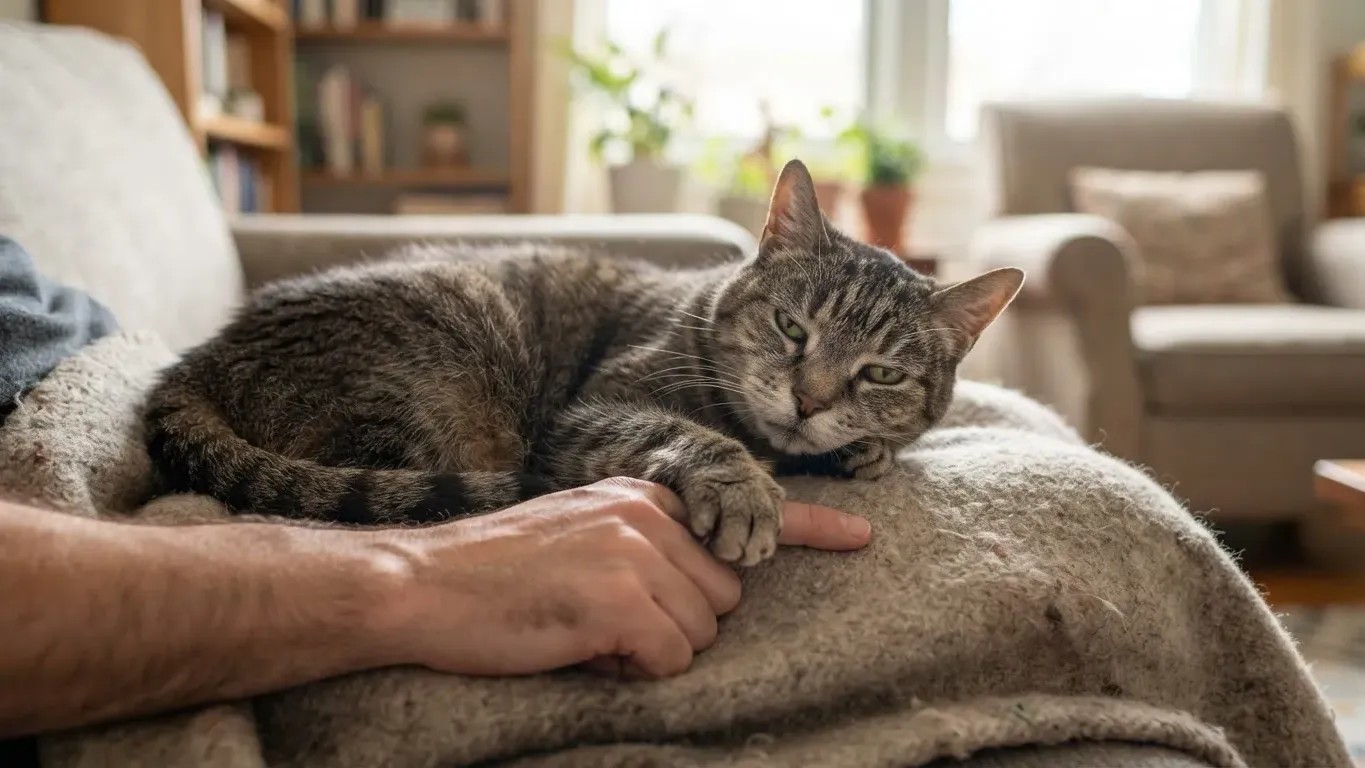
Most people assume their senior cat is just getting quieter, slower, and more distant with age. Turns out, the opposite is often true - senior cats are frequently more affectionate than they ever were as kittens.
The problem is almost nobody knows what to look for. A soft purr, a slow blink, a paw resting on your hand - none of it is random, and by the end of this list you won't be able to unsee it.
#16 - Sitting in the Same Room Without Asking for Anything
Your senior cat doesn't always need to be on you to be with you - and that difference is enormous.
Certified cat behavior consultant Dr. Mikel Delgado notes that some cats show affection simply by staying nearby, not by climbing into your lap. Most people write this off as coincidence. It isn't.
If your cat's love language is quality time, they'll linger in whatever room you're in. For a senior cat, this quiet proximity is often how they say "I choose you, every single day."
Dogs get all the credit for loyalty, but a senior cat that trails you room to room - without begging, without meowing - has quietly built its entire world around you.
But that's nothing compared to what we found about #15...
#15 - The Slow, Deliberate Blink
Most people think the slow blink is just a cute cat thing. It's so much more than that.
"A slow blink, often with both eyes, is a sign of trust and affection," says Dr. Maggie Placer of EveryCat Health Foundation. It shows the cat feels safe enough to close its eyes near you.
As cats age, they get stingier with energy and attention. So when a senior cat still performs that soft, deliberate blink, it isn't sleepiness - it's a chosen ritual.
Here's the real tell: mirror it back, and if they repeat it, you're inside what some behaviorists call a "trust loop." Most older cats won't bother doing this for guests or casual hands - it's simply too intimate to waste.
But that's nothing compared to what we found about #14...
#14 - Kneading You with Their Paws
Your senior cat "making biscuits" on your lap isn't just adorable - it's ancient, instinct-level communication.
Kneading is a leftover behavior from kittenhood, when nursing kittens pressed their paws to encourage milk flow. The motion still releases oxytocin in both cats and humans, strengthening the bond between you.
The most surprising part: cats have scent glands in their paws. By pressing them into you, they may be quietly marking you as familiar and safe.
When your senior cat chooses your lap for their "biscuit making," they're telling you - in the only way they know - that they feel completely secure.
But that's nothing compared to what we found about #13...
#13 - A Low, Steady Purr in Your Presence
Not all purring is equal - and your senior cat's purr carries a very specific message.
A purring cat at the vet is likely anxious. A purring cat curled on your lap is blissful, and context is everything.
If your cat only purrs in your usual spot, or when you touch specific "safe" areas, that's not indifference - that's a targeted trust response few animals bother offering.
And here's the detail most people miss entirely: some senior cats skip the sound altogether and switch to a silent "purr face" - relaxed jaw, soft eyes - because even purring takes energy they'd rather spend on you.
But that's nothing compared to what we found about #12...
#12 - Head Bunting and Cheek Rubs
When your senior cat bonks you with their forehead or drags their cheek across your hand, they're doing something remarkably intentional.
Cats have scent glands on their foreheads and cheeks, and head bunting is how they mark you as theirs. As cats age, they conserve energy by cutting back on the high-effort stuff - fewer wall scrapes, fewer marathon cat-tree sessions.
So if your senior cat still headbutts your chin or rubs its cheek against your glasses, you are their scent project, specifically.
The real insight: in multi-person homes, the heaviest scent-marking almost always lands on one chosen human. Everyone else gets the leftovers.
But that's nothing compared to what we found about #11...
#11 - Sleeping Directly on You
Your senior cat choosing to sleep on your body - not just near it - is one of the most significant gestures in their entire emotional vocabulary.
Cats are vulnerable while sleeping, so this shows deep trust. For a senior cat, whose joints ache and senses have dulled, that vulnerability runs even deeper.
At a certain age, many cats stop sleeping near their person and start sleeping directly on them, even if they never did this before. They're not just chasing warmth anymore - they're chasing stability.
Fast Facts
- Senior cats often sleep 16 to 20 hours a day, compared with 12 to 16 hours for younger adults.
- Feline sleep tends to arrive in short bursts rather than one long stretch of unconsciousness.
- Choosing to sleep directly on you, instead of nearby, is a shift many owners only notice with age.
Your breathing, your heartbeat, your small movements tell them they're not alone and that their world is still holding steady.
But that's nothing compared to what we found about #10...
#10 - Grooming You
When your senior cat licks your hand, your hair, or your face, most people laugh it off. Experts see something else entirely.
In cat colonies, mutual grooming - called allogrooming - is a major bonding ritual. By grooming you, your cat is including you in their colony.
"A cat licking or grooming you is a form of affection," says Dr. Placer. For a senior cat who conserves every bit of energy, spending it on grooming you is nothing short of a declaration.
But that's nothing compared to what we found about #9...
#9 - Resting a Paw Gently on You
This is one of the quietest signals your senior cat sends - and one of the most overlooked ones in the room.
A cat that reaches out a paw to touch you, whether patting your hand or resting on your leg, is initiating contact on purpose. Arthritis or age-related aches often make senior cats less likely to leap into your lap and more likely to reach out instead.
Worth Knowing
- Studies show roughly 90 percent of cats over age 12 have some degree of joint disease.
- Even cats over age 6 already show measurable joint changes, often long before any visible limping.
- Reaching out a paw costs far less energy than jumping, which is likely why many arthritic seniors trade cuddles for gentle touches.
A simple paw on your hand is their way of connecting without paying the physical cost of a full cuddle.
What experts say this really means: it's a check-in. A wordless "are you still here?" that carries enormous weight coming from an animal who doesn't give that kind of touch lightly.
But that's nothing compared to what we found about #8...
#8 - The "Happy Flop" Belly Exposure
Your cat rolling onto their side and going belly-up in front of you is not an invitation to touch. It's something far more significant.
"Lying on the floor in front of you also shows they feel safe enough to expose their belly, which is the ultimate trust gesture," says Dr. Lambo. The abdomen is one of a cat's most vulnerable areas.
The key distinction most owners get wrong: a belly flop is a display of trust, not necessarily a request for belly rubs. Many senior cats will still swat if you actually touch there.
For arthritic seniors, belly checks can be uncomfortable - yet they endure it because life with you has proven safe. That's a level of cooperative trust most people never earn from their pets.
But that's nothing compared to what we found about #7...
#7 - Following You Room to Room
Most people attribute this to cats being nosy or hungry. Behaviorists say it's something much more deliberate.
Highly bonded seniors run what can only be described as "roll calls." You stand up to grab a drink, and within a minute, there they are in the hallway.
They're not anxious in a dog-like way - they're updating a mental map: where is my person now, and is everything normal? A senior cat who's decided this is a shared home starts syncing to your daily pattern instead of their own instincts.
This quiet shadowing is one of the clearest expressions of gratitude a senior cat can offer. Choosing your rhythm over their own is not nothing - it is everything.
But that's nothing compared to what we found about #6...
#6 - Claiming Your Spot the Moment You Leave It
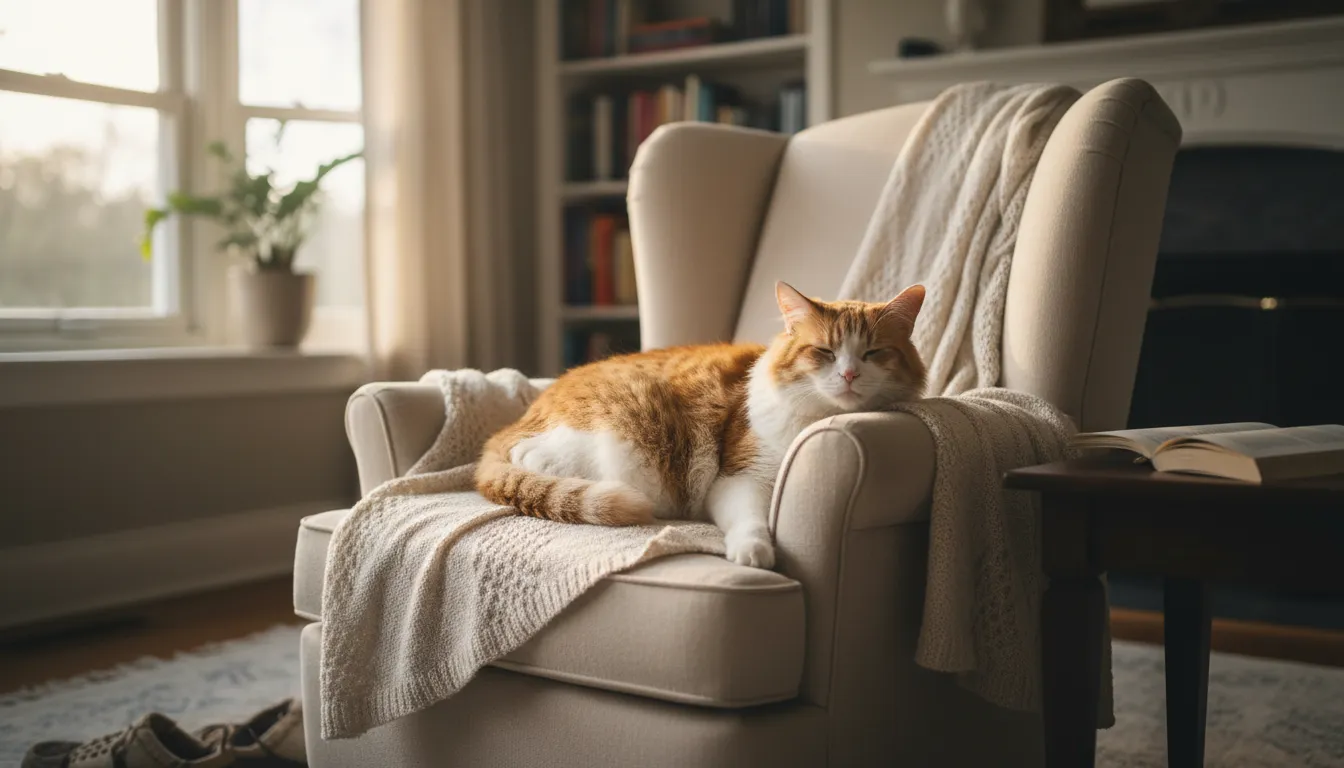
Your senior cat gravitating to your chair, your pillow, or your side of the couch the moment you vacate it? That's not coincidence or territory. It's your scent.
Senior cats crave safety and predictability above almost everything else, and at this stage of life, your scent has become their main safety signal.
Here's the science behind it: a cat's sense of smell is roughly 14 times stronger than a human's, thanks to more than 200 million scent receptors packed into their nose. Their glands sit on the cheeks, paw pads, lips, forehead, flanks, and tail - exactly how they "claim" a favorite chair.
Some owners read this as demanding or needy. It isn't. It's trust in its purest, quietest form.
But that's nothing compared to what we found about #5...
#5 - Allowing You to Touch Off-Limits Zones
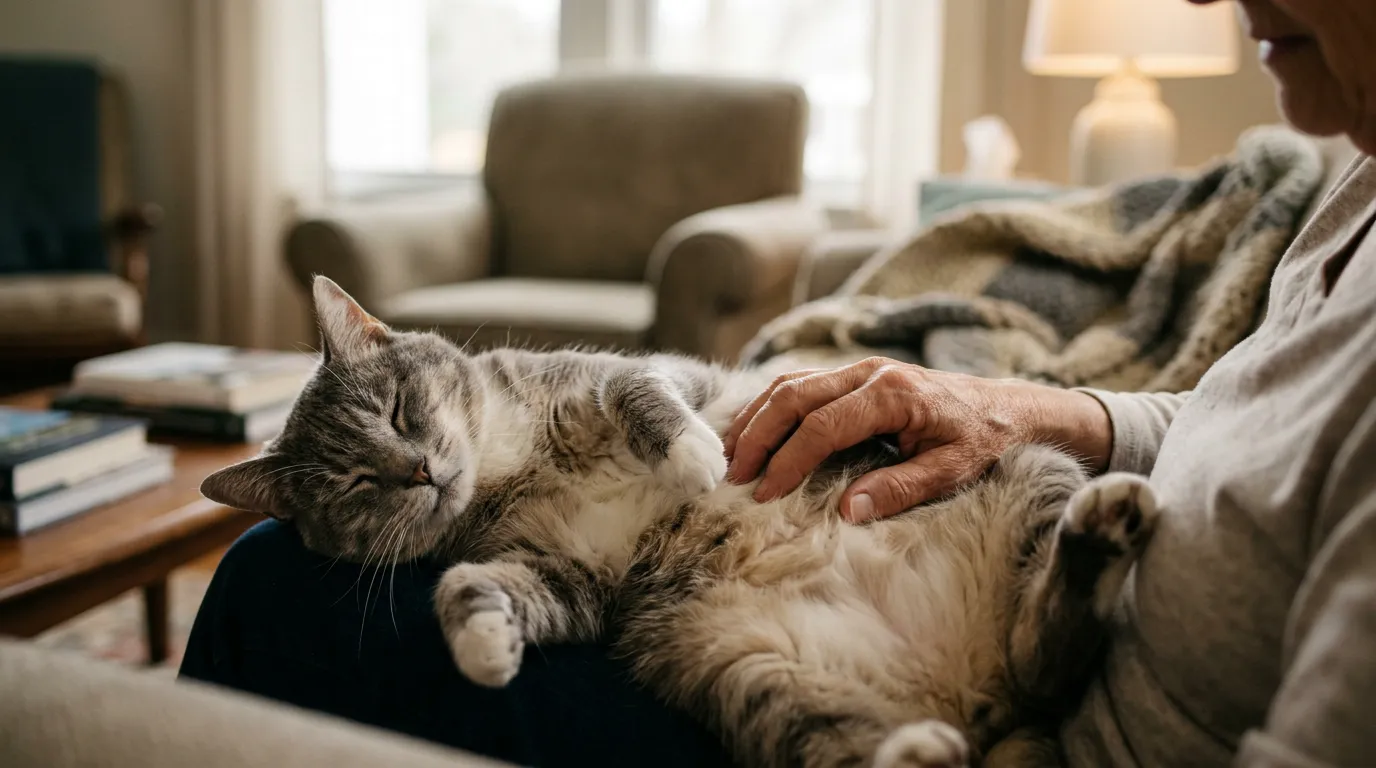
Every cat has hard boundaries. When a senior cat softens those boundaries specifically for you, that's remarkable.
Belly, paws, base of the tail - most cats guard these zones fiercely. With age and deep trust, some seniors start allowing careful touches there, from you and you only.
This isn't permission for rough petting - it's a fragile privilege. Nail trims and gentle belly checks can genuinely hurt an arthritic senior, yet they endure it because life with you has proven safe.
Experts point to this as one of the clearest signs a senior cat has moved from merely tolerating care to actively thanking you for it. Don't take it lightly.
But that's nothing compared to what we found about #4...
#4 - Soft Chirps and Private Vocalizations
Senior cats change the way they talk. If you've noticed a new sound reserved only for you, pay close attention.
A senior cat's voice often changes with age - softer, raspier, sometimes closer to a croak than a chirp. These aren't random noises; they're direct communication attempts.
Cats aren't antisocial, they're just subtle about things. They bond on their own terms, not ours.
Dr. Lambo, DVM, Ph.D.
A private sound saved only for your ears is one of the most personal gifts in their repertoire. If your senior cat chirps at you when you walk in, then quietly turns back to their nap, that's not indifference - it's the senior cat version of a standing ovation.
But that's nothing compared to what we found about #3...
#3 - Sustained, Relaxed Eye Contact
A hard stare from a cat means challenge. A soft stare means something completely different - and senior cats use it like a signature.
Sustained, relaxed eye contact is typically a sign of profound trust, not confrontation. Their body stays loose, paws tucked, tail still, eyes soft, while they simply look at you for long stretches.
Quick Compare
- Hard stare: tense body, flattened ears, flicking tail - a warning sign.
- Soft stare: loose paws, slow blinks, still tail - a sign of comfort.
- Sustained eye contact from a senior cat almost always falls into the second category.
Loose paws, a still tail, a relaxed jaw alongside that gaze - your senior cat is communicating something they can't put into words.
The expert read: this eye contact, especially paired with a slow blink, is the closest a cat comes to a deliberate "thank you." Most casual observers miss it entirely because it looks like the cat is doing absolutely nothing. They are doing everything.
But that's nothing compared to what we found about #2...
#2 - Syncing Their Entire Schedule to Yours
This one sounds mundane. It is anything but.
A feral or loosely bonded cat will always prioritize instinct: hunt, patrol, hide, repeat. A senior cat who's decided this is a shared home starts syncing to your rhythm instead - napping the moment you sit at your desk, stirring when you get up.
This behavioral shift takes months, sometimes years, of earned trust to produce. It doesn't happen by accident.
Here's what makes it extraordinary: a cat who has spent years with you builds a reservoir of trust that runs deeper than anything possible in kittenhood. Syncing schedules is that trust made visible, hour by hour, every single day.
But nothing - nothing - beats what we found at #1...
#1 - Simply Staying Close When You're Struggling
This is the one that stops people in their tracks when they finally notice it.
Cats can pick up on subtle changes in their owners' emotions, such as stress or anxiety, and respond accordingly. Some become noticeably more affectionate the moment they sense their person's mood has dropped.
This isn't guesswork on their part - research suggests cats recognize emotional cues through tone, body language, and even scent. That emotional intelligence plays a real role in how deeply bonded a cat becomes.
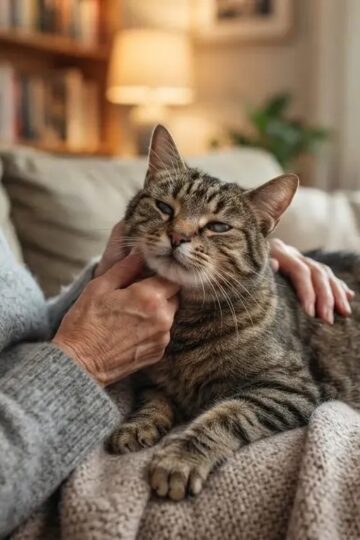
The most humbling truth about senior cats: sometimes their increased closeness on a hard day is their way of saying "I'm here" - in the only language they have. No wagging tail, no words, just a warm, quiet presence pressed against your side, right when you need it most.
Once you learn their love language, you realize senior cats are incredibly affectionate - just with boundaries. They may not write thank-you notes, but their gratitude runs deep.
The Bottom Line
Most people spend years living with a senior cat and never realize the conversation has been happening the entire time. The slow blink, the synced nap, the paw on your hand, the soft chirp reserved only for you - none of it is random.
At a Glance
- Slow blinks and soft eye contact signal deep trust.
- Kneading, grooming, and head bunts are physical affection, cat-style.
- Syncing naps and following you room to room means you've become their anchor.
- Staying close on hard days is the clearest thank-you a cat can give.
A cat who has spent many years with you builds a reservoir of trust that gets deeper, not shallower, with age. Your senior cat isn't becoming distant - they're saying thank you in the only sixteen ways they know how.
Which of these did you recognize in your cat? Drop it in the comments - we want to hear the one that surprised you most.