16 Small Comforts Your Aging Cat Appreciates More Than You Think
Most cat owners think their senior cat is just "slowing down" - a little more napping, a little less play, maybe some extra attitude. Turns out that quiet shift is your cat sending very specific signals that almost nobody catches in time.
Their joints, senses, and brains are changing in predictable ways, and the comforts they crave now are small, cheap, and constantly overlooked. Vets who specialize in geriatric cats say most of these needs go unmet for years - starting with something sitting in your bathroom right now.
#16 - A Low-Entry Litter Box
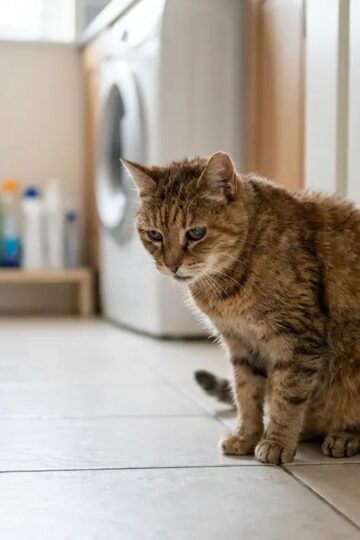
Arthritis and mobility issues can make a standard litter box genuinely hard to use. Those tall sides your cat cleared easily for years are now a small, painful obstacle several times a day.
That's why some seniors start going outside the box - not out of spite, but physical difficulty. It's rarely a behavior problem at all.
A box with low sides makes entry and exit far easier, especially in a quiet, convenient spot. Put one on every level of your home so stairs are never the reason your cat skips it.
Most owners assume litter box accidents in older cats are a behavior problem. Vets say it's usually a pain problem in disguise.
But the litter box is just the start - wait until you see what comes next.
#15 - Multiple Water Stations
Your aging cat is almost certainly not drinking enough water - and the layout of your home is likely why. Several stations around the house, with a mix of bowls, glasses, and even fountains, encourage more drinking.
Some cats actually prefer cold water, so offering an ice-water station can help. Senior cats face higher risk of kidney disease, and staying hydrated is a key line of defense.
A sudden change in how much your cat drinks can signal kidney disease or diabetes, so accessible water is more than a comfort - it's an early-warning system. Placing a bowl near where your cat sleeps means they won't skip drinking simply because it's too far away.
The next one is something nearly every owner gets wrong about their senior's sleep.
#14 - An Orthopedic or Memory Foam Bed
Most people grab any soft bed off the shelf and call it done. Vets say that's not enough.
Cats with arthritis or joint pain specifically benefit from memory foam, which offers real cushioning. A regular bed compresses too easily and leaves aging joints unsupported through the many hours a cat spends resting.
Old clothes or blankets can add a familiar touch, but a bed actually designed to support aging joints makes a measurable difference. The scent of familiar fabric, especially your old clothing, gives anxious senior cats a real sense of security.
Place these beds low to the ground - no jumping required. Up next is a change that could be quietly saving your cat from daily pain.
#13 - Ramps to Their Favorite Spots
Cats are hardwired to seek elevated perches. It makes them feel safe, in control, able to survey their territory - and age doesn't kill that instinct, it just kills their ability to act on it.
Stairs or a ramp to reach higher spots matter because climbing lets cats observe their environment and feel secure. Denying them that access quietly increases their stress.
Fast Facts
- Arthritis affects more than 90% of cats age 10 and older, making mobility support a near-universal need, not a niche one.
- Cats seek height instinctively - it's tied to safety and territorial confidence, not just comfort.
- A single fall from a windowsill can cause serious injury once bones and joints have aged.
- Carpeted ramps add traction that smooth, slick surfaces simply can't offer.
Steps or ramps covered in carpet give aging cats the traction and confidence to keep climbing. A fall from a windowsill in a senior cat can cause serious injury - padding underneath is cheap insurance.
This is a five-minute fix with an outsized payoff. Next up is a temperature trick most owners overlook entirely.
#12 - A Warm, Draft-Free Resting Spot
Senior cats lose the ability to regulate body temperature the way they once did. That drafty windowsill they loved as a kitten might now be quietly miserable.
Keeping their environment warm and draft-free matters, and a heated bed or pad adds real comfort in colder months. Older cats gravitate toward warmth, so a cozy blanket in a favorite lounging spot addresses this directly.
A self-warming thermal blanket, one that reflects body heat back to the cat, is one of the highest-value, lowest-cost upgrades you can make. Choose one that's easily washable so warmth never becomes a hygiene problem.
You won't believe how much the next one matters to your cat's daily dignity.
#11 - Gentle Grooming Help
Cats are meticulous self-groomers, so when a senior cat starts looking unkempt, most people assume laziness. That's almost never what's happening.
Lost mobility, extra weight, or health issues make it hard for aging cats to reach certain spots, and fur becomes tangled and matted. Depending on coat length, some cats need help several times a week.
Gentle brushing with a soft brush or grooming mitt, kept short if that's what the cat prefers, makes the experience far less stressful. Matted fur can hide skin sores, lumps, or parasites that need early attention.
Grooming also gives you quiet one-on-one time to notice what's normal for your cat. And the next comfort is connected to grooming in a way most owners never consider.
#10 - Regular Nail Trims
This one flies completely under the radar - and it can turn into a genuine medical emergency if ignored. Thickened back nails can go unnoticed and become painfully ingrown.
Younger cats wear their nails down scratching. Older cats often can't scratch with the same force or frequency, so the job falls to you.
In arthritic senior cats, overgrown nails can curl into the paw pads. This is one of the most commonly missed sources of low-grade, chronic pain in senior cats.
Some seniors also find horizontal scratching posts easier than vertical ones - swap the post if they've stopped using it. What's coming next is something your vet almost certainly hasn't mentioned, but should have.
#9 - Elevated Food and Water Bowls
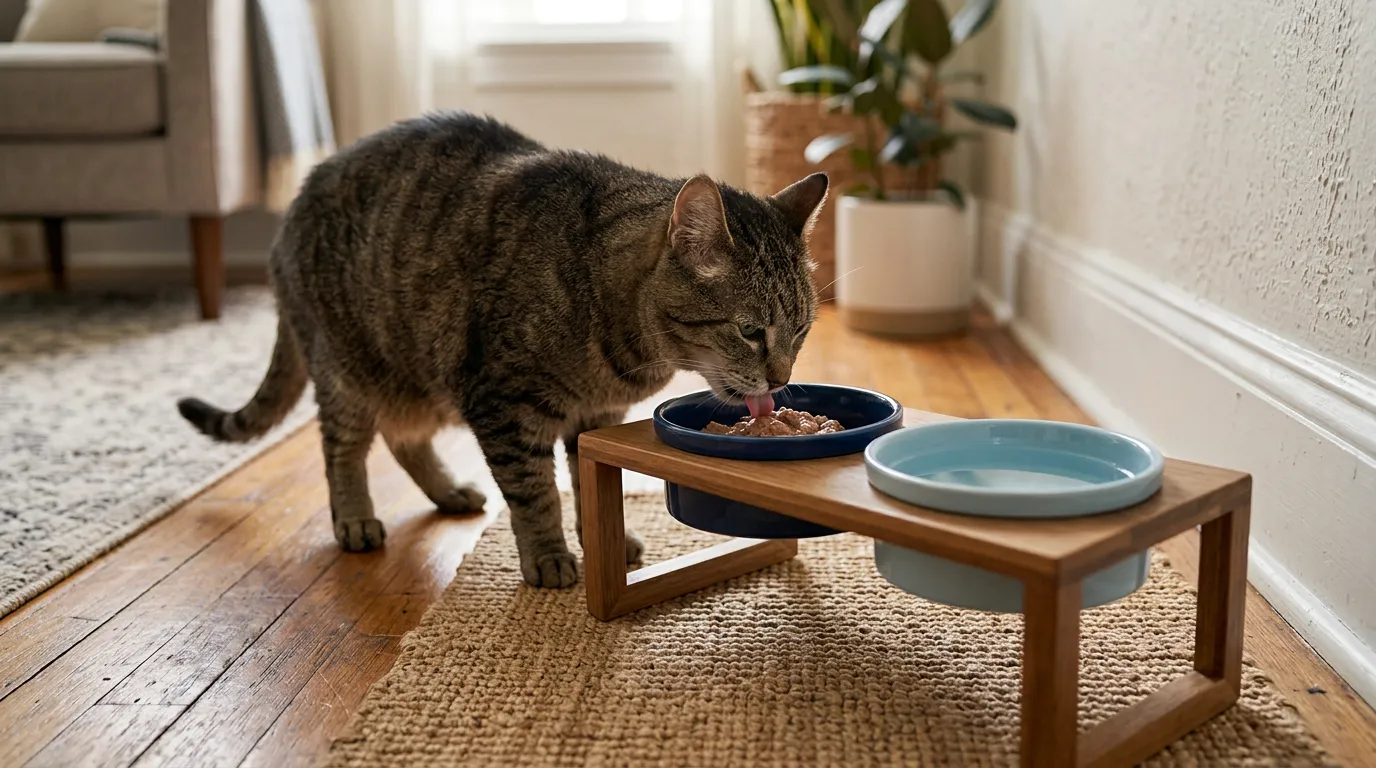
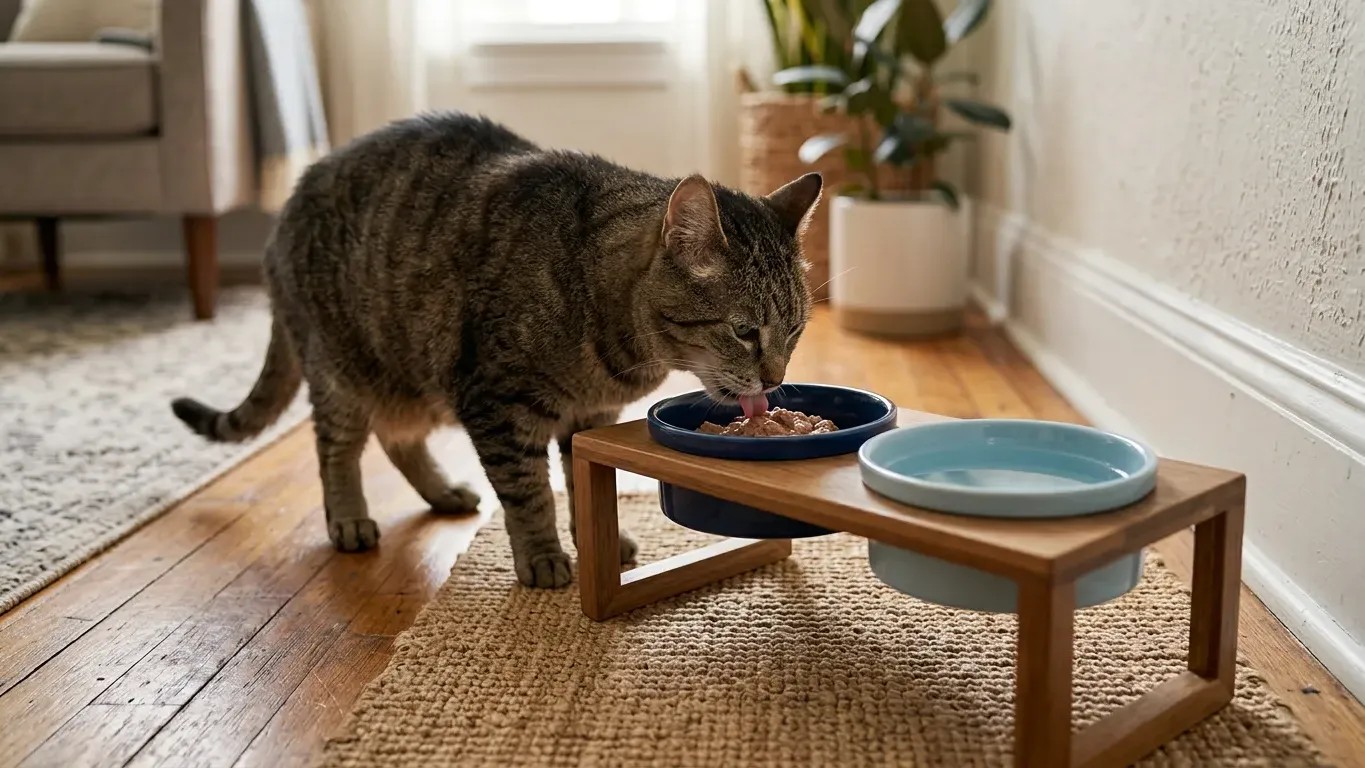
Here's a counterintuitive one: lowering your cat's bowl to the floor isn't always the right move. For cats with neck or back pain, it can make eating more difficult.
Elevated bowls mean they don't have to bend close to the floor, which makes every single meal less of a strain. This helps cats with degenerative joint disease avoid bending just to eat or drink.
Quick Compare
- Floor-level bowl: Familiar, but forces bending and neck strain in cats with joint or spinal pain.
- Elevated bowl: Keeps the neck in a neutral position and eases strain at every meal.
- Raised water bowl: Requires less effort to drink from, which can encourage more frequent sipping.
- Budget fix: A sturdy box or stack of books under an existing bowl works almost as well as a store-bought stand.
The rule of thumb: bowls should sit level with your cat's elbows - no hunching, no straining. It's a two-dollar fix at most hardware stores, and the payoff is a cat who eats more comfortably.
Next is something that will genuinely surprise you - it's about something your cat hears that you don't.
#8 - Consistent, Predictable Routine
This one is psychological, and it matters more as cats age than at any other point in their lives. Once you find spots your cat likes, keeping them familiar preserves the routines they already know.
Senior cats, especially those with early cognitive changes, find unpredictability genuinely distressing. Moving furniture or changing feeding times can trigger hiding, extra vocalizing, or litter box issues.
Cats with feline cognitive dysfunction - the cat equivalent of dementia - rely on environmental familiarity as a primary coping mechanism. Keep feeding times, nap spots, and interactions as steady as you can.
The calmer their world, the calmer their nervous system. But what about their mental sharpness? That's where things get really interesting.
#7 - Simple Mental Enrichment
Most people think mental stimulation is just for kittens. That's one of the most expensive mistakes you can make with a senior cat.
When senior cats stare at walls, sleep excessively, or seem spaced out, people shrug it off as "she's just old." Sometimes it's a brain that's been quietly under-challenged for years.
Worth Knowing
- Excessive staring, disorientation, or getting "stuck" in corners can point to cognitive changes, not just old age.
- Short, five-minute training sessions keep neural pathways active without tiring out a senior cat.
- Puzzle feeders and treat-hiding games exercise the brain during something cats already love: eating.
- Rotating just two or three toys keeps things novel without overwhelming your cat with too many choices at once.
Rotate a small set of toys instead of a giant pile they'll ignore, hide a few treats in easy spots, and run short training sessions with high-value soft treats. You can absolutely still teach a senior cat new tricks, and doing so builds neural pathways that slow cognitive aging.
Keep sessions under five minutes - frequency matters more than duration. The next one hits closer to home than you might expect.
#6 - Your Scent and Your Presence
Your aging cat is not being "needy" when they follow you from room to room. They're doing something very specific, and understanding it changes how you respond.
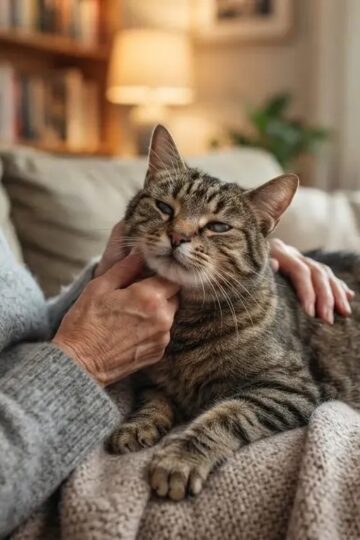
Many cats grow noticeably more cuddly in their senior years. As vision and hearing decline, your scent becomes one of their most reliable anchors to safety.
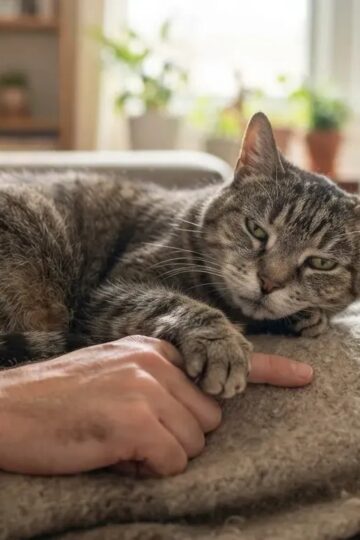
Sleeping on your clothes, your lap, or your side of the bed is a genuine comfort behavior, not clinginess. A cat who feels securely attached to their owner shows measurably lower stress hormone levels.
Don't dismiss the quiet lap sessions - they're doing real physiological work. What's next is something almost every owner dismisses as cosmetic. It isn't.
#5 - Dental Comfort and Soft Food Options
Here's a stat most cat owners don't know: dental disease is one of the most widespread and undertreated sources of pain in older cats. Because cats hide pain so well, many owners never realize their cat's mouth hurts at every meal.
A cat who eats less, chews on one side, or drops food is often showing dental pain, not pickiness. Treating it doesn't just remove pain - it improves overall health and energy.
At a Glance
- Dental disease is estimated to affect 50 to 90 percent of cats over age 4.
- Because cats mask pain instinctively, many owners never notice a problem until it's severe.
- Chewing on one side, dropping food, or reduced appetite are common early warning signs.
- Switching to wet or softened food can restore appetite almost immediately during a painful flare-up.
Switching to wet or softened food during dental issues can restore your cat's appetite almost immediately. Ask your vet about professional cleaning options - the difference afterward can be dramatic.
The next comfort lives quietly in every corner of your home. Take a look.
#4 - Non-Slip Surfaces on Key Pathways
Your senior cat's world is quietly full of slipping hazards they never had to worry about before. Every slip erodes a little more of their confidence.
Hardwood, tile, and polished floors that were never a problem at age three become genuinely treacherous as muscle mass and coordination decline. A cat who slips will start avoiding those areas, and the restricted movement only accelerates decline.
Yoga mats cut into strips, carpet runners, or rubber-backed rugs along your cat's regular routes cost almost nothing and restore real daily confidence. Focus on the paths to food, litter, and sleeping spots - the routes they travel most.
Small change, massive quality-of-life return. The next one is the comfort almost every well-meaning owner gets backward.
#3 - Quiet Spaces Away From Household Chaos
Most owners try to keep aging cats "involved" in family life, right in the middle of the action. Vets say that instinct is frequently wrong.
Senior cats benefit from quiet spots away from drafts and heavy foot traffic, not proximity to it. Loud TV, kids running through the house, and unpredictable noise stress a nervous system that's already working harder than before.
The best thing you can do is create at least one room or corner that is always quiet, always accessible, and always exclusively theirs. Placing food, water, and litter in quiet, easy-to-reach areas directly lowers daily stress.
Think of it as their sanctuary - earned after years of loyal companionship. What comes next will genuinely move you once you understand what it means to your cat.
#2 - A Sunny Window Perch at the Right Height
Sunlight isn't just a preference for aging cats. It's closer to a physiological need that most owners treat as a luxury.
A soft towel near a window offers warmth, visual stimulation, and gentle sensory engagement that keeps a senior mind active without overtaxing it. For cats with reduced mobility, that window is their primary connection to the outside world.
The catch: the perch must be at a height they can actually reach without pain. A sturdy step or ramp can make a longtime favorite spot accessible again instead of retiring it for good.
For a cat who used to patrol the neighborhood, that window is the last frontier. Keeping it accessible is an act of deep respect for who they still are.
#1 - Being Truly Seen and Responded To
Every other comfort on this list is physical. This last one is different, and it's the one that most determines your cat's quality of life in their final years.
Underneath the slower pace, a senior cat's joints, brain, senses, and organs are shifting in specific, predictable ways - and they are sending real requests for help. The biggest comfort you can give isn't a bed or a ramp. It's noticing.
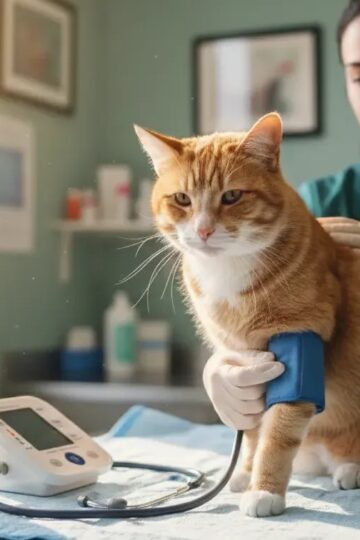
As the owner, you play the most crucial role in your senior cat's health, and changes in habits are vital information. A cat who feels genuinely seen, whose signals are read and acted on, is a calmer, healthier, longer-lived cat.
That's not sentiment. That's what the behavioral evidence consistently shows - and your cat has been paying attention to you for years.
The Bottom Line
Senior cats don't ask for much, but what they do ask for, they mean. A low-sided litter box, a warm draft-free perch, non-slip floors, a predictable routine, and your genuine attention add up to a dramatically better quality of life.
Aging cats need thoughtful support, careful observation, and an environment that makes daily life easier - and most of it costs almost nothing. The real investment is noticing.
Which of these did you already have in place, and which one surprised you most? Drop it in the comments.