15 Vet Checks That Catch a Cat's Hidden Illness Before It Is Too Late
Most cat owners believe their pet would "act sick" the moment something goes wrong. They wouldn't - and that's the terrifying part.
Cats are hardwired to hide illness, a leftover survival instinct from the wild where showing weakness meant becoming somebody's next meal. By the time your cat "looks off," a disease has often had months to take hold.
But a trained vet, working through the right sequence of checks, can spot the truth long before your cat ever drops a hint. Here's exactly what they're looking for - and why the order matters.
#15: The Head-to-Tail Physical Exam
It looks routine. It isn't.
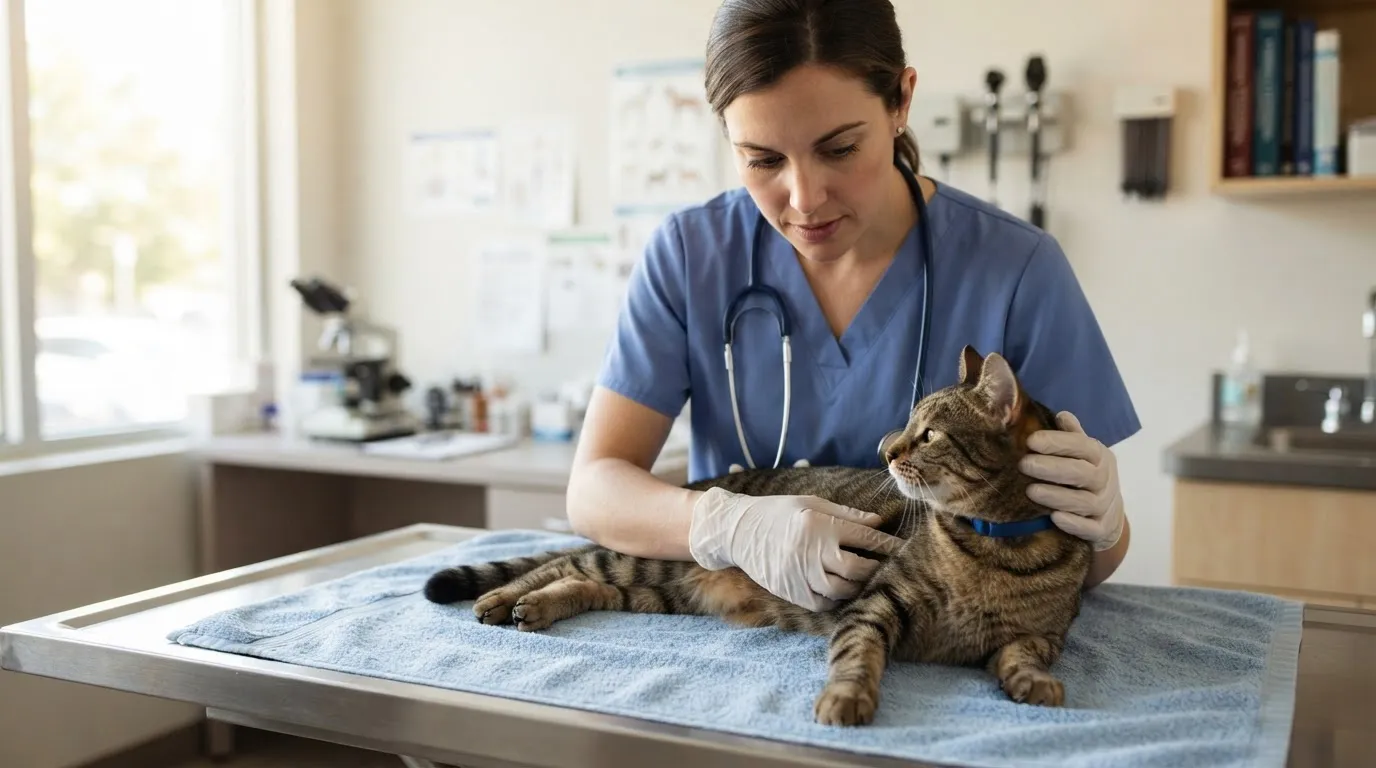
In just a few minutes, a vet's hands and eyes sweep the eyes, ears, mouth, skin, heart, lungs, abdomen, and limbs, hunting for anything out of place.
A slightly swollen lymph node. A whisper of a heart murmur. A flinch when the abdomen is pressed.
None of it would ever register to you at home, but to a vet, it's enough to trigger a deeper investigation.
This is just the opening move. What comes next goes far beneath the skin.
#14: The Complete Blood Count (CBC)
Your cat could be fighting a raging internal infection right now and still look perfectly content curled up on the sofa.
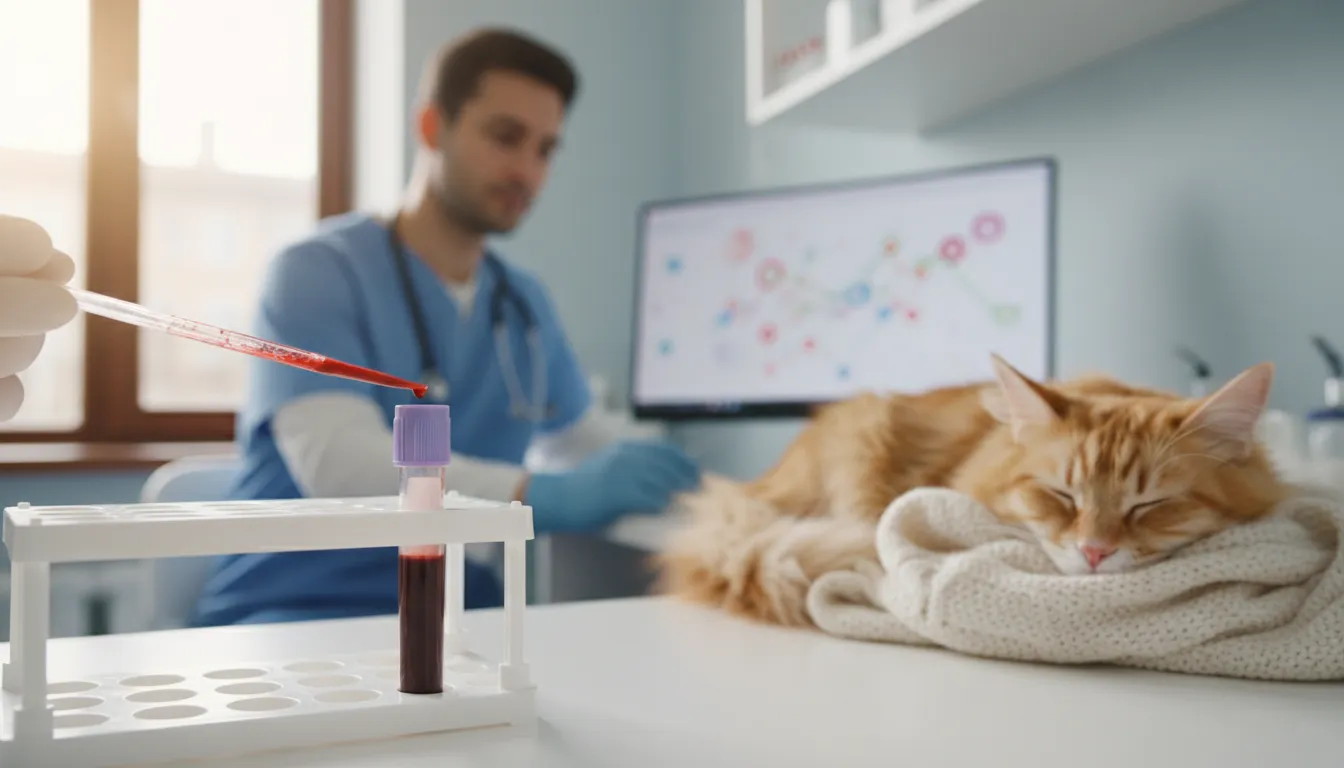
The CBC is what exposes that lie. It measures red blood cells, white blood cells, and platelets - the numbers behind oxygen delivery, immune defense, and clotting.
An abnormal white cell count can point to infection, inflammation, or even early leukaemia, long before your cat skips a single meal.
This single test often kicks off the entire chain of discovery that ends up saving a cat's life.
But blood only tells half the story. The other half is next.
#13: The Biochemistry Profile
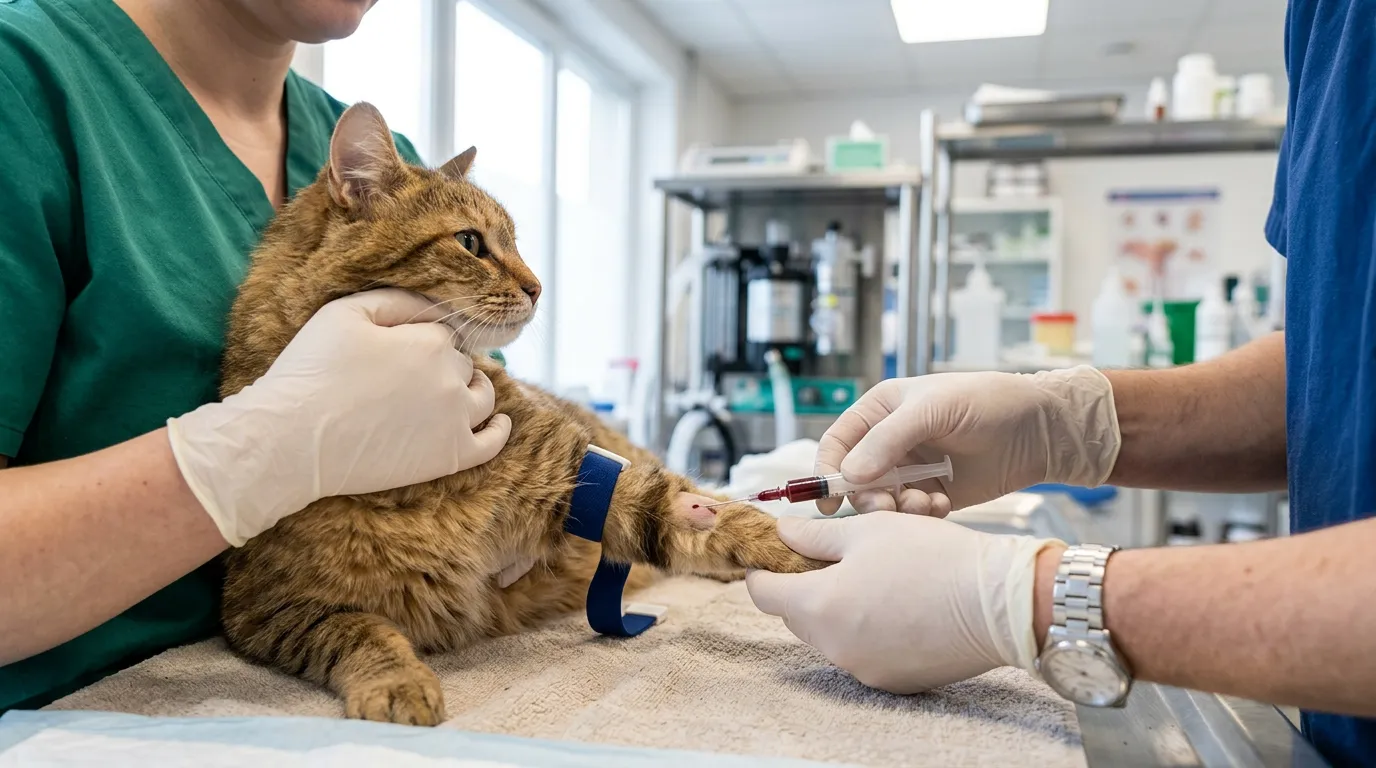
Think of this as your cat's organ report card - and some cats are quietly failing subjects nobody knew about.
This panel checks kidney function, liver function, thyroid levels, and pancreas activity, none of which a physical exam alone can reveal.
Kidney disease, liver dysfunction, diabetes, and thyroid disorders can all sit silent for months before symptoms show.
A full biochemistry panel can catch kidney disease months before a cat ever seems sick, and that window is often the difference between managing a disease and racing to save a life.
Fast Facts
- Chronic kidney disease affects only 1% to 3% of cats overall, but that figure can climb past 30% in geriatric patients.
- In cats over age 10, estimates range from 20% to 50% affected.
- Clinical signs typically don't appear until kidney function is already significantly compromised.
Next up: the test vets say gets skipped far too often in cats past age seven.
#12: Thyroid Hormone Testing
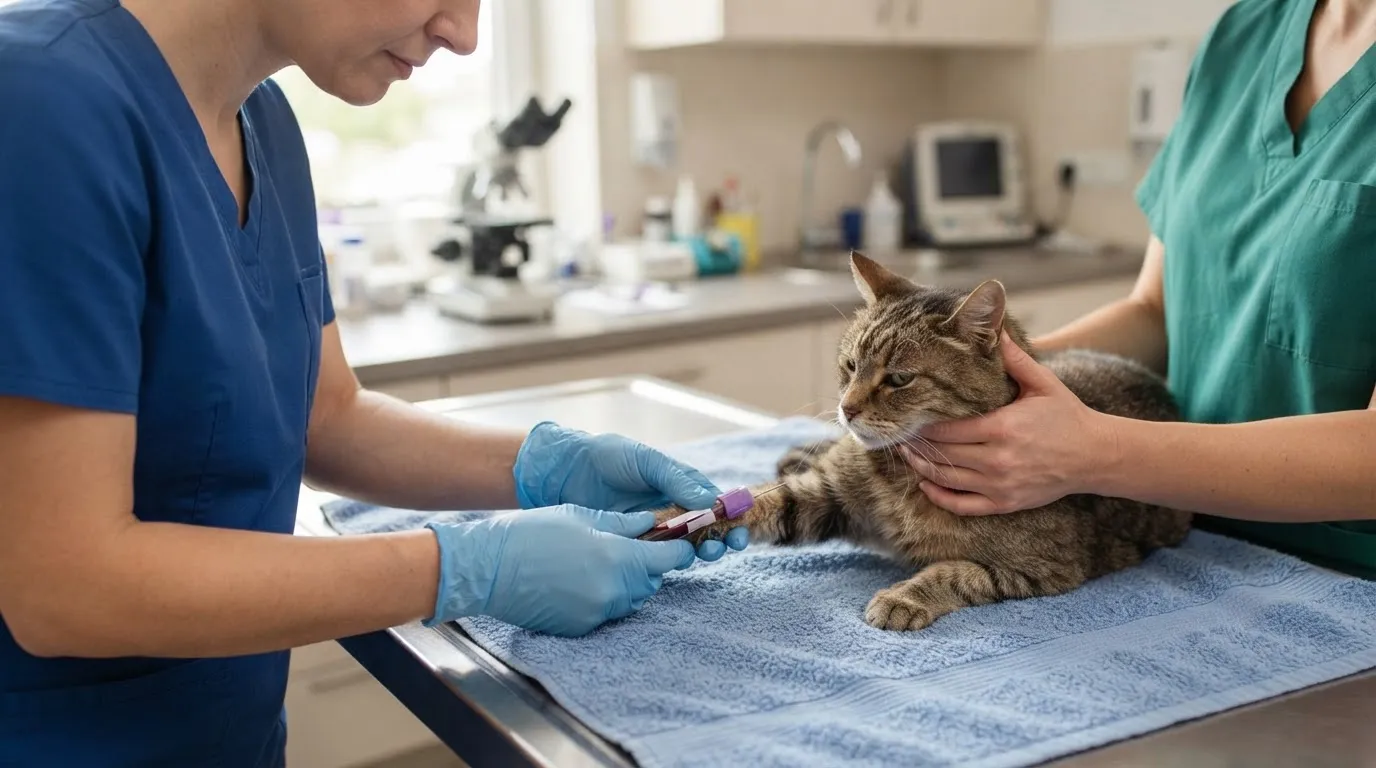
Here's something most owners don't know: hyperthyroidism is one of the most common diseases in older cats, and it can hide in plain sight.
Cats with too much thyroid hormone often lose weight while eating more, grow restless, or develop vomiting and diarrhea. Left untreated, it quietly strains the heart and kidneys.
Thyroid testing is one of the four pillars of wellness screening, alongside a CBC, biochemistry panel, and urinalysis, yet it's the one owners skip most because their cat "still seems fine."
One simple blood test catches it. Once caught, medication, diet changes, or radioactive iodine therapy can restore a cat to full health.
Next: the test built from something most owners would rather not collect.
#11: Urinalysis
A urine sample sounds unglamorous. It's actually one of the most information-dense tests in veterinary medicine.
It checks for urinary infections and crystals, sure, but it goes much further than that.
Urine concentration, protein levels, glucose, and pH can flag kidney disease, liver disease, diabetes, and infection, often before any outward sign appears.
From a single small sample, a vet can read hydration levels, metabolic rate, and kidney function all at once.
And while we're on what goes in and out of your cat, next is something that can live inside them for years without you ever knowing.
#10: The Fecal Exam
"My cat doesn't go outside, so we're fine." Vets hear this constantly, and they know it's often wrong.
A fresh stool sample gets checked under a microscope for parasite eggs before every wellness exam.
Kittens can carry roundworms, hookworms, and other parasites picked up from their mother or environment, all without a single visible symptom.
Even strictly indoor cats can pick up parasites from contaminated soil tracked in on shoes, infected prey, or exposure at birth.
Next: the check that's quietly preventing one of the most dramatic and preventable emergencies in cats.
#9: Blood Pressure Measurement
Most people have no idea cats can develop dangerously high blood pressure. Worse, cats give almost no warning before the damage is done.
High blood pressure silently attacks the kidneys, eyes, heart, and brain. A cat can be going blind from hypertension while its owner blames "just getting older."
It's closely tied to chronic kidney disease and hyperthyroidism - in fact, 19% to 60% of cats with chronic kidney disease are also hypertensive.
That overlap is exactly why blood pressure checks belong in every senior wellness exam, not as an optional extra.
Worth Knowing
- At least 60% of cats diagnosed with hypertension also show signs of chronic kidney disease.
- Roughly 1 in 5 cats with hyperthyroidism goes on to develop hypertension as well.
- Untreated high blood pressure can damage the eyes, brain, heart, and kidneys all at once.
Next: the check that can find something growing inside your cat long before any symptom appears.
#8: Abdominal Palpation
A vet's hands are more powerful than most owners realize. This check finds what no blood panel can reach directly.
Feeling the abdomen can reveal organ enlargement, irregular texture, hidden masses, or tenderness that would otherwise go unnoticed.
An experienced vet can detect a thickened intestinal wall, an enlarged spleen, or a mass on the kidney, all with fingertips alone.
Intestinal lymphoma, the most common feline cancer, can sometimes be felt as subtle thickening in the gut wall before any dramatic weight loss ever shows.
This check costs nothing extra and takes under two minutes. Next: the check that reveals what's happening inside your cat's chest, often with zero symptoms.
#7: Listening to the Heart
Heart disease in cats is a quiet killer. A cat with a significant murmur can eat, play, and purr normally right up until a crisis hits.
Using nothing but a stethoscope, a vet listens to the rate, rhythm, and quality of every heartbeat.
A murmur caught during a routine exam can lead to an echocardiogram that catches hypertrophic cardiomyopathy - the leading cardiac killer in cats - while it's still manageable.
Most cats diagnosed with heart disease are found at routine wellness exams, not emergency visits. The ones who make it to the emergency room rarely get the same outcome.
Next: a check almost no owner expects to matter, until they hear what it can catch.
#6: The Dental and Oral Exam
Here's the uncomfortable truth: most vets say dental disease is wildly underestimated by cat owners, and skipping oral checks is one of the costliest mistakes in feline care.
Dental disease affects the majority of adult cats, causing real pain, infection, and trouble eating. But a cat in dental pain rarely stops eating - it just adapts, chews on one side, and suffers in silence.
At a Glance
- About 64% of cats seen at veterinary hospitals nationwide had a diagnosed dental issue in a recent large-scale review.
- Roughly two-thirds of cats over age three show some degree of dental disease.
- Tooth resorption alone has been reported in 28% to 57% of cats studied.
Oral masses can turn malignant fast, and they're often caught during a routine wellness exam before they become obvious.
The dental exam isn't just about teeth. It's directly tied to how long your cat lives.
Next: a screening vets say gets missed most often in cats owners swear are "totally fine."
#5: The Eye Examination
The eyes aren't just windows to the soul - they're windows to systemic disease, and a trained vet reads them like a diagnostic report.
When blood pressure spikes, a fundic exam can reveal retinal damage - visible proof of hypertension a cat can be suffering from for weeks without any behavioral sign.
Changes in pupil size, cloudiness, or visible blood vessels can point to hypertension, inflammation, or infection.
Retinal detachment from uncontrolled high blood pressure can cause permanent blindness in cats, and it progresses fast. The eye exam is what can stop that before it becomes irreversible.
Next: the test that creates a permanent record, and why that record matters more than most owners realize.
#4: Building a Baseline Bloodwork Record
A single blood test tells you something. A series of them over years tells you everything.
This is the check most owners skip in young, healthy cats, and it's a mistake, because cats hide illness so well that early changes can show up in blood work long before you notice anything at home.
How your cat's results change over time matters more than any single number. A kidney value that sits at the top of "normal" for three years and then creeps over is a red flag, even if it's technically still in range.
Starting this baseline at age two or three gives your vet a decade of comparative data by the time your cat is a senior. That data saves lives.
Next: the check older cats desperately need, and the one most owners delay until symptoms force their hand.
#3: Chest and Abdominal X-Rays
Imaging goes places hands and blood panels simply can't reach. For cats over seven, this check changes everything.
Radiographs can assess the size and shape of the heart, lungs, kidneys, and liver, or reveal degenerative changes in bones and joints.
An enlarged heart silhouette, fluid building in the chest, a subtle mass near the liver - all invisible on a physical exam, all potentially visible on X-ray before a single symptom shows.
Many cats with early-stage heart failure are first identified on a chest X-ray taken during a routine senior screening.
Next: the infectious disease check that applies to far more cats than owners assume, regardless of whether they ever go outside.
#2: FeLV and FIV Testing
Feline Leukemia Virus and Feline Immunodeficiency Virus - two of the most serious infectious diseases a cat can face. Both can silently incubate for years before causing any obvious illness.
These aren't just tests for strays or cats with bite wounds. A cat exposed as a kitten, adopted before testing, or that slipped outside just once can carry FIV without a single outward sign for a long time.
Early detection lets owners make informed choices about treatment, household management, and how to safely cohabit with other cats.
FeLV-positive cats caught early can still have years of well-managed, quality life, but only if the diagnosis comes in time to act.
This is a test many vets say gets declined too often. Don't be the owner who says no.
Last one: the check experts now call the single most powerful tool for extending a cat's life.
#1: The Full Senior Wellness Panel
This is the one that matters most, and the one most often delayed until it's too late.
Wellness testing becomes critical as cats age, because older cats are far more likely to develop kidney disease, hyperthyroidism, or diabetes - three conditions that are manageable when caught early and brutal when caught late.
Cats age faster than humans, and their illnesses can progress just as fast. Regular exams with blood and urine testing let vets step in before disease has the chance to advance.
The integrated senior panel - blood chemistry, CBC, thyroid, urinalysis, blood pressure, and imaging combined - is the closest thing veterinary medicine has to an early-warning system for cats.
Vets recommend twice-yearly exams for middle-aged and senior cats. Many owners are still doing once every two years, and paying for it later.
Quick Compare
- Recommended: A full wellness panel twice a year for cats age seven and up.
- Common reality: Many owners book a check-up once every two years.
- The cost of waiting: Diseases caught late are harder, longer, and more expensive to treat.
The Bottom Line
Cats are experts at masking illness. Disease can be sitting quietly inside a cat that looks completely healthy.
The 15 checks above aren't luxuries - they're the tools vets use to see straight through that disguise.
Each one closes a gap your cat's own survival instincts are working hard to keep open.
Early detection is almost always cheaper, gentler, and less devastating than waiting for symptoms to force the issue.
The cats that live the longest aren't the luckiest ones - they're the ones whose owners refused to wait for symptoms.
Which of these checks has your vet already flagged for your cat, and which one have you been putting off? Tell us in the comments.