8 Cat Breeds That Choose the Quietest Person in the Room
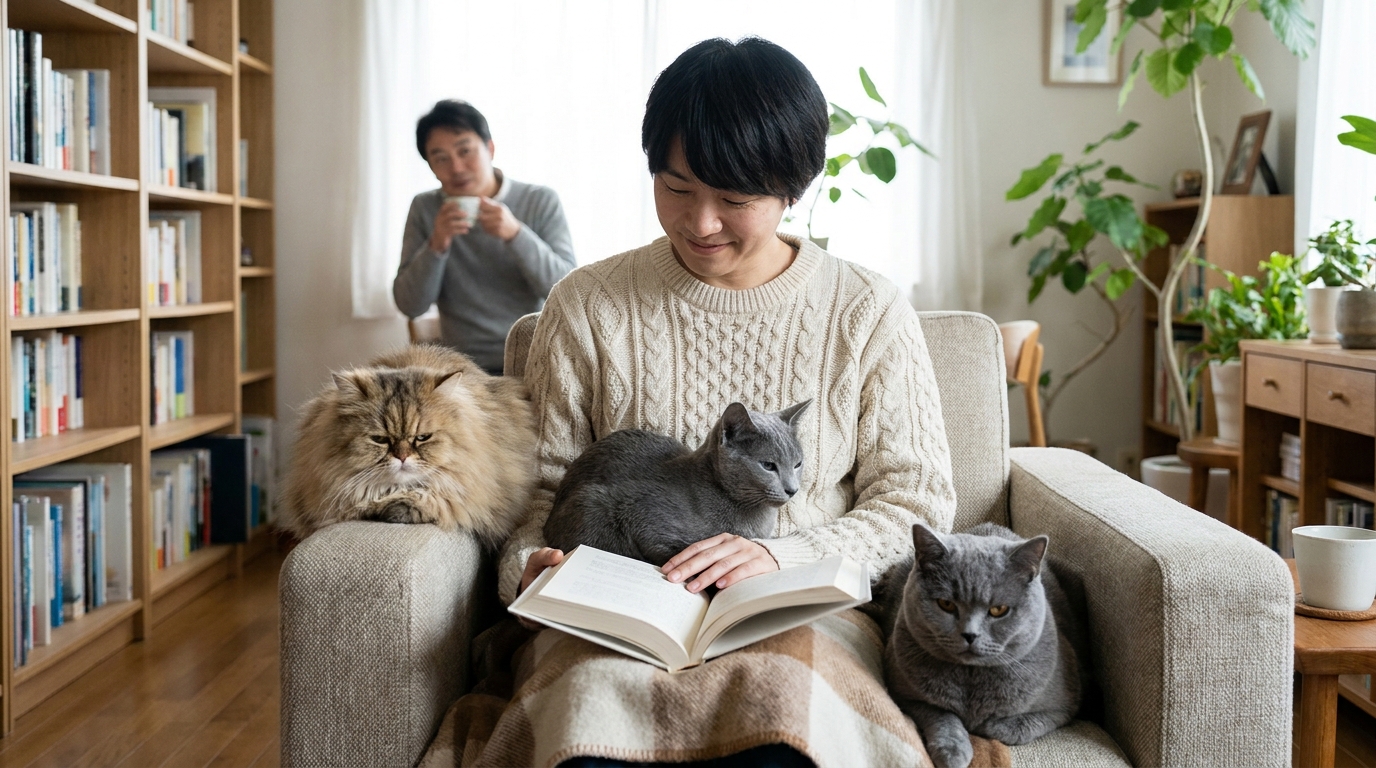
Veterinary behaviorists have documented a fascinating pattern: certain cat breeds consistently gravitate toward the calmest, most soft-spoken person in any gathering. It's not random, and it's not about who offers treats first.
These breeds use vocal tone, body language, and even breathing patterns to identify which human will provide the most peaceful interaction. If you've ever wondered why your cat ignores the excited dog-lover but curls up next to your introverted friend who hasn't said a word, there's actual science behind it.
Here's what the data actually says.
#8 — Russian Blue
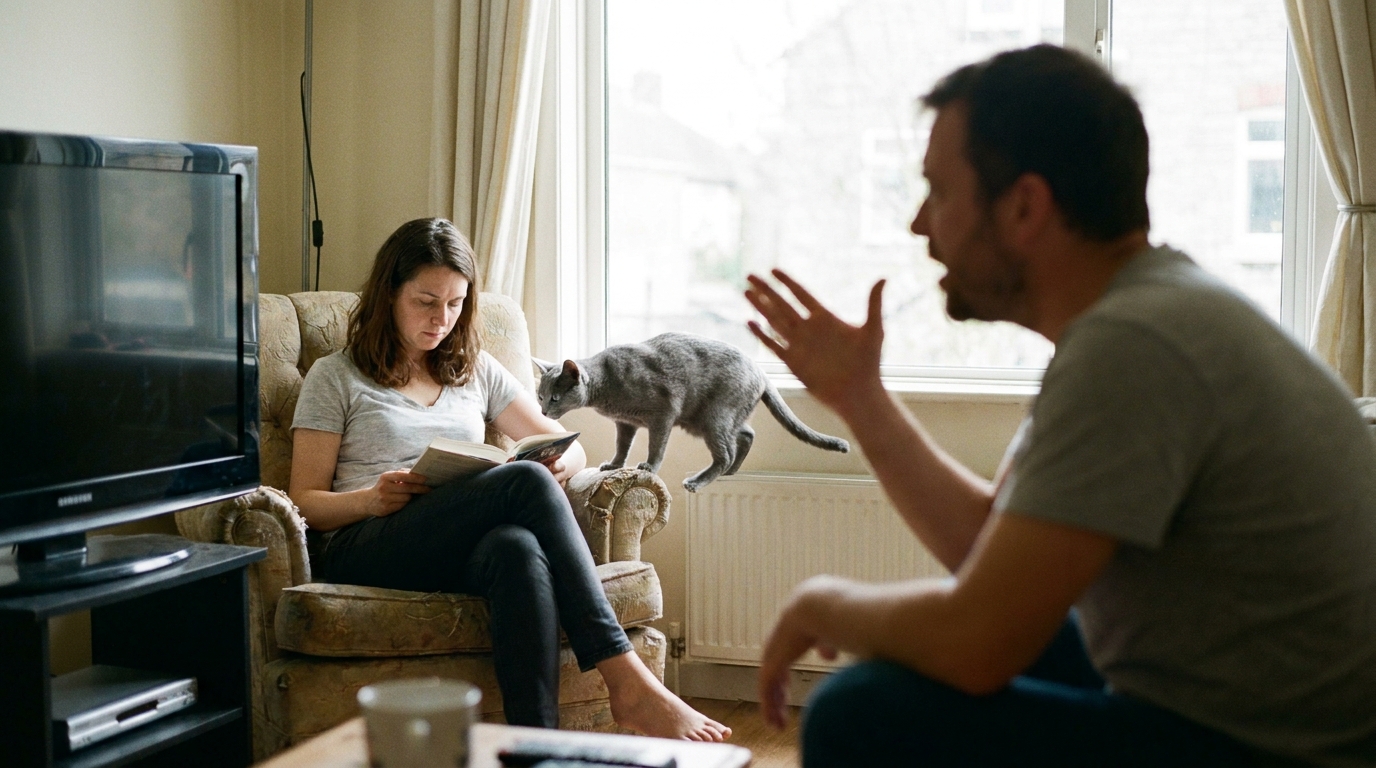
Russian Blues possess unusually sensitive hearing that makes them acutely aware of voice volume and pitch variations.
This breed originated in the port city of Arkhangelsk, where they lived in shipyards and warehouses. They evolved to be cautious around loud dock workers and noisy cargo operations. That ancestral wariness persists today.
Russian Blues can detect frequency ranges up to 64,000 Hz, nearly two octaves higher than humans, which means loud conversations register as genuinely uncomfortable to them. They physically retreat from raised voices.
Watch a Russian Blue enter a room full of people. They'll scan faces, but they're actually reading body language for signs of calm. Crossed legs, slow movements, and low vocal tones signal safety.
These cats bond intensely with one or two people, almost always the quietest members of the household. Once they've chosen, they're remarkably loyal.
But their sensitivity to noise goes beyond just volume...
#7 — Birman

Birmans were temple cats in Burma, bred for centuries in silent, meditative environments where loud behavior was culturally unacceptable.
That history shaped their temperament in measurable ways. Unlike breeds developed for pest control or outdoor survival, Birmans were companions to monks who spent hours in quiet contemplation. The cats learned to mirror that energy.
Modern Birmans still seek out environments that match their breeding history. They become visibly stressed in chaotic households but thrive with people who move slowly and speak softly.
One University of Lincoln study found that cats in quieter homes had 34% lower cortisol levels than those in high-noise environments. Birmans showed the most dramatic difference.
These cats don't just tolerate quiet people. They actively choose them, often walking past more animated family members to sit with whoever's reading or working silently.
Their stunning blue eyes seem to lock onto the calmest person first, almost like they're checking credentials before committing.
But there's one breed that takes this preference even further...
#6 — Ragdoll
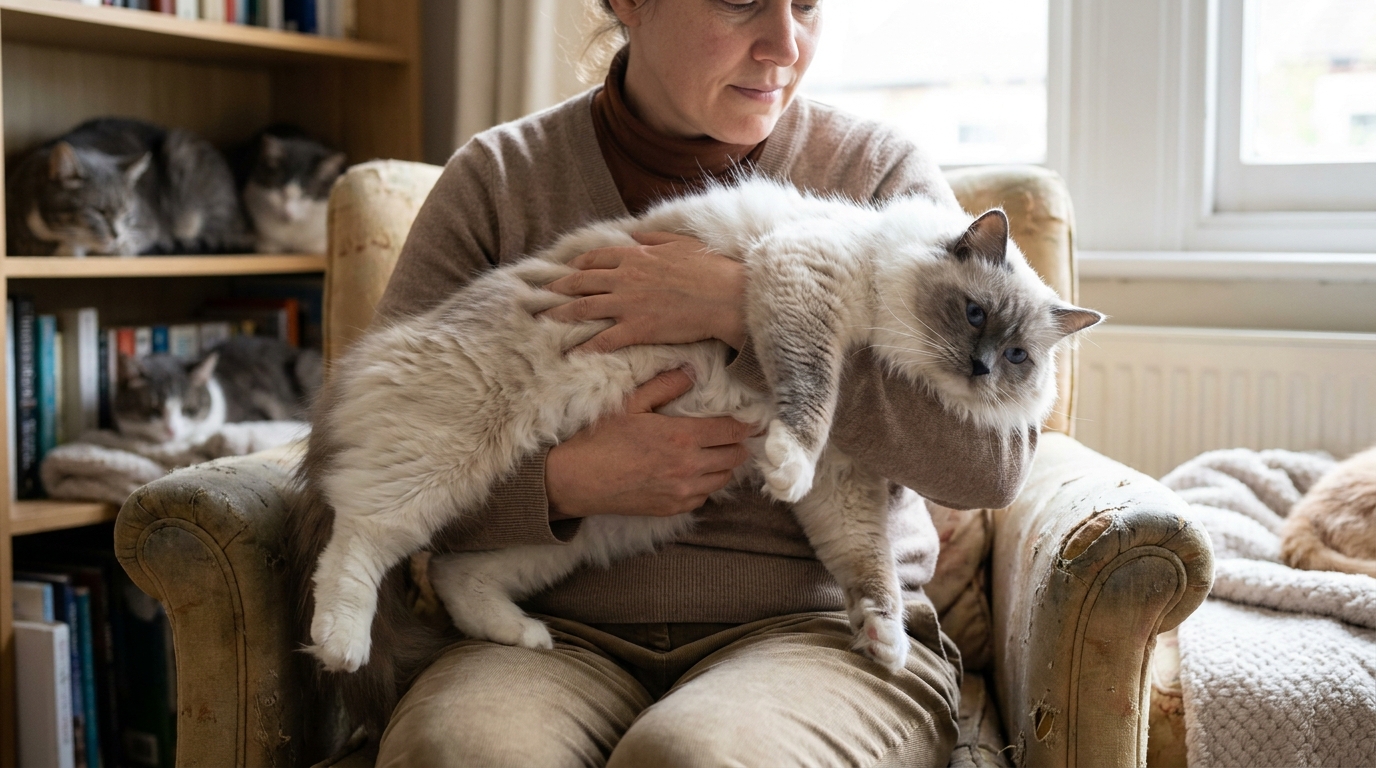
Ragdolls go limp when picked up, a trait that requires exceptional trust and a calm handler.
This breed was specifically developed in the 1960s for docile temperament. Breeder Ann Baker selected only the most placid, gentle cats for the foundation stock. The result is a cat that not only prefers quiet people but actually needs them.
A Ragdoll held by someone tense or hurried won't fully relax. They read muscle tension through physical contact and respond by staying slightly guarded. But place the same cat in calm arms, and they melt.
Ragdolls have lower baseline heart rates than most breeds, averaging 140 beats per minute compared to 160-220 in more energetic cats. They're physiologically predisposed to prefer low-stimulation interactions.
They'll often follow the quietest person from room to room, not demanding attention but simply wanting to be near that peaceful energy. It's proximity-seeking behavior driven by stress reduction.
Watch a Ragdoll at a gathering. They'll navigate around loud guests like obstacles and end up in the lap of whoever's barely moved or spoken.
Meanwhile, one Asian breed has turned this selectivity into an art form...
#5 — Japanese Bobtail
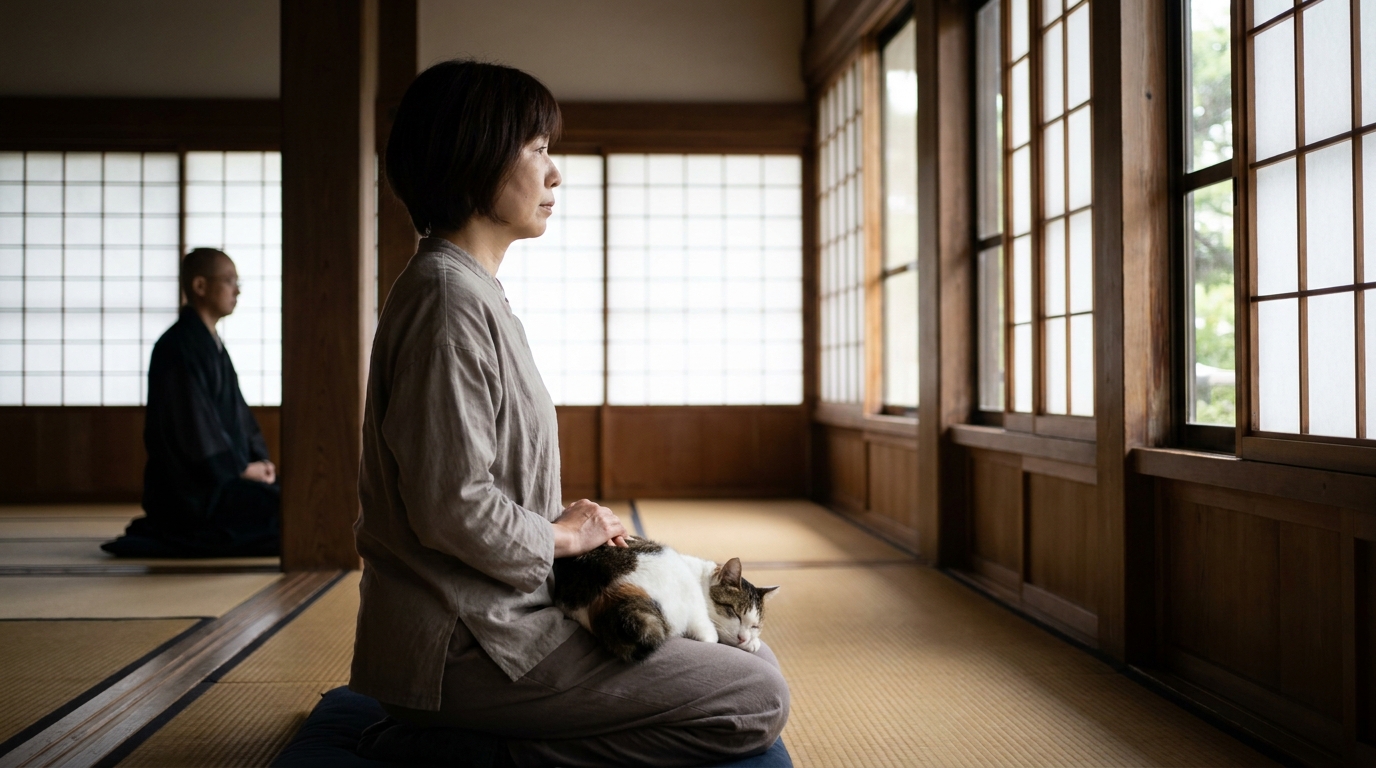
Japanese Bobtails were fixtures in Buddhist temples and imperial courts where silence was a mark of respect.
These cats learned over centuries that quiet humans were predictable and safe. Loud, animated people often preceded disruption—whether that meant ceremonies, visitors, or other environmental changes the cats found stressful.
Modern Japanese Bobtails retain that discernment. They're highly social but incredibly selective about who receives their attention. They'll assess every person in a room within minutes of entering.
Their assessment criteria are specific: steady breathing, minimal gestures, low vocal tone, and calm facial expressions. Research from Kyoto University found that cats can distinguish between genuine calm and forced quiet, responding only to the former.
Japanese Bobtails also vocalize less than most breeds, producing softer chirps rather than loud meows. They seem to expect the same restraint from their humans.
They're particularly drawn to people engaged in focused, quiet activities—reading, knitting, or working on a laptop. The concentration itself appears calming to them.
But one breed takes longer to decide than any other...
#4 — Chartreux
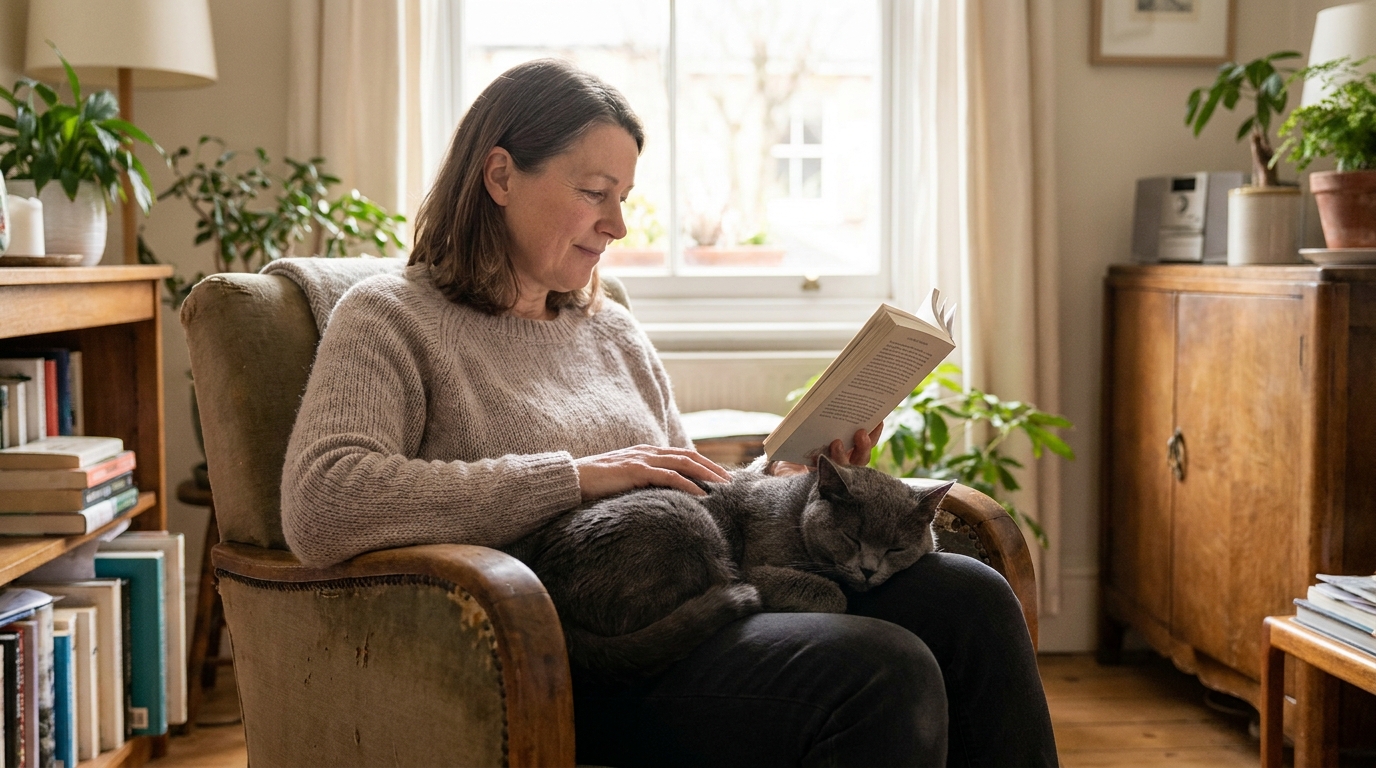
Chartreux cats are famous for being nearly silent themselves, producing only rare, soft chirps even when hungry or distressed.
This French breed lived with Carthusian monks who took vows of silence. For generations, these cats existed in environments where vocalization was not just discouraged but essentially absent. They adapted by becoming extraordinarily observant.
A Chartreux won't approach anyone quickly. They'll watch for extended periods, sometimes 15-20 minutes, before making contact. What they're watching for is consistency.
They're checking whether your calm demeanor holds or whether you'll suddenly move, laugh loudly, or shift energy. Chartreux have been observed testing potential companions by approaching gradually and retreating if any sudden movement occurs.
These cats value predictability above almost everything. The quietest person in the room is usually also the most predictable—fewer gestures, fewer vocal surprises, fewer abrupt changes.
Once a Chartreux bonds with someone, they're intensely devoted. But earning that bond requires passing their extended, silent evaluation period.
There's a breed that actually avoids eye contact with loud people...
#3 — Korat
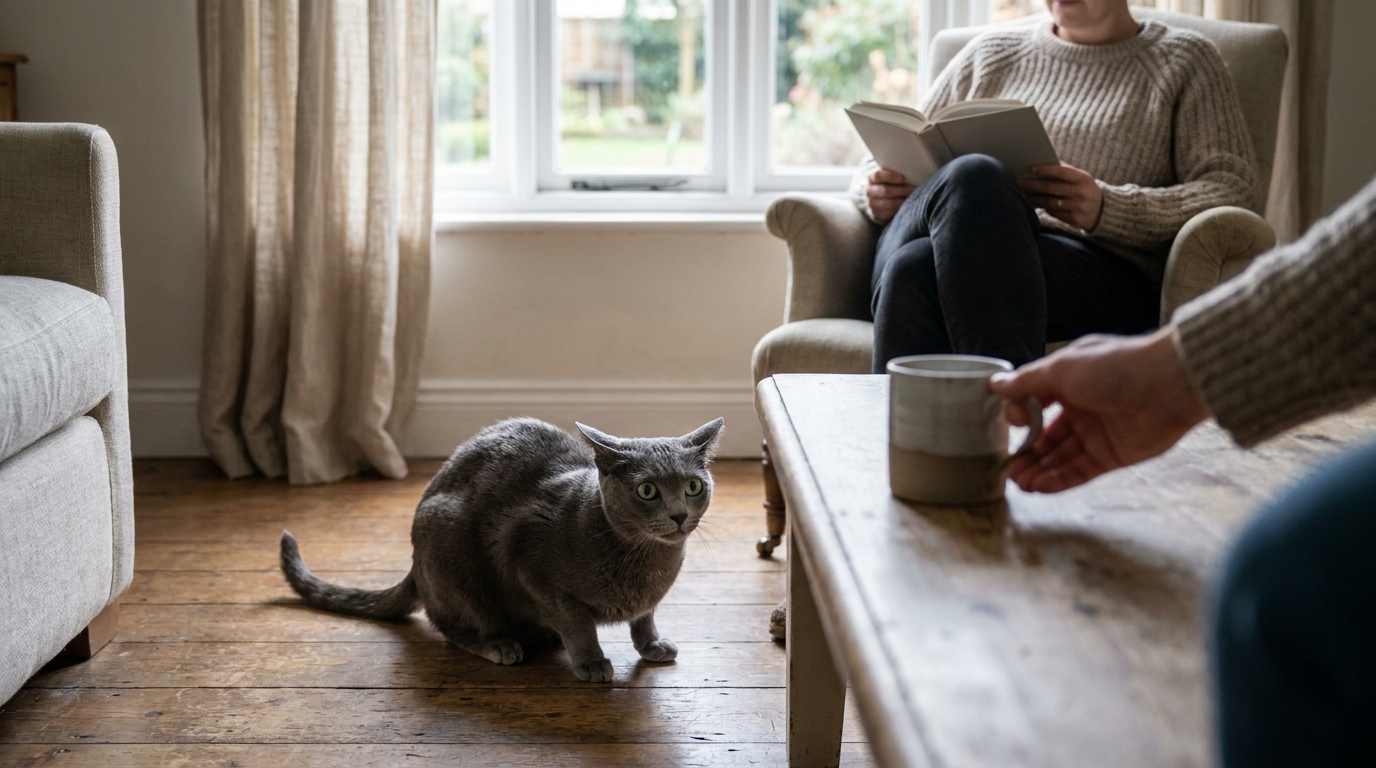
Korats are one of the oldest natural breeds, with nervous systems calibrated for the quiet rural villages of Thailand where they originated.
These cats startle more easily than most breeds. Sudden noises or rapid movements trigger an outsized response—not aggression, but withdrawal. They'll remember who caused that startle and avoid them afterward.
A Cornell University study measured startle responses across breeds and found Korats had a 40% stronger physiological reaction to unexpected sounds compared to the average domestic cat. Their heart rates spiked higher and took longer to return to baseline.
This heightened sensitivity makes them exceptionally good at identifying the one person who won't accidentally scare them. They assess volume, gesture speed, and even how heavily someone walks.
Korats also display what behaviorists call "gaze aversion" with people they find too stimulating. They'll literally look away and keep their body angled toward exits when near loud or animated individuals.
But give them a quiet person, and they transform. They'll maintain eye contact, approach directly, and settle in for extended contact. The contrast is striking.
One European breed has made this selectivity legendary...
#2 — Norwegian Forest Cat
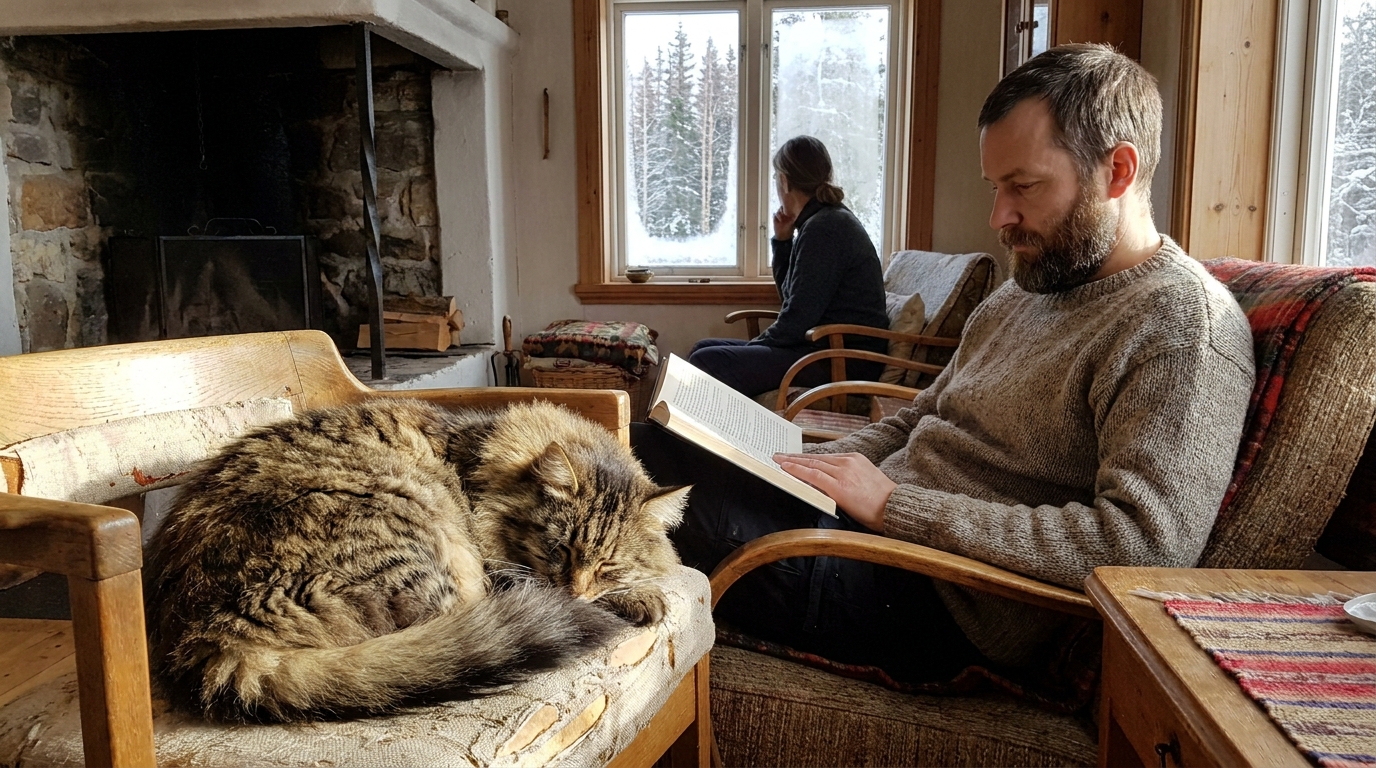
Norwegian Forest Cats evolved in harsh Scandinavian climates where survival meant conserving energy and avoiding unnecessary risk.
These large, powerful cats are calm by nature, but they're also extremely deliberate in their social choices. In their native environment, wasted energy could mean the difference between surviving winter and not. That calculation extended to social interactions.
Modern Norwegian Forest Cats still operate on an economy of effort. They don't engage with people who seem likely to require high-energy interaction—playing, chasing, loud enthusiasm. Instead, they seek humans who will allow them to simply coexist.
These cats have an average resting period of 16-18 hours daily, more than most breeds, and they prefer companions who respect that need for stillness. Quiet people naturally align with their lifestyle.
They're also remarkably patient judges of character. A Norwegian Forest Cat might observe household members for days or weeks before selecting their primary person. The choice almost always falls to whoever maintains the steadiest energy.
They'll tolerate attention from others but reserve genuine affection—head bunting, kneading, sleeping in contact—for the one person who doesn't demand it.
But the top spot goes to a breed that seems to have an almost eerie sense for finding the calmest soul in any space...
#1 — British Shorthair
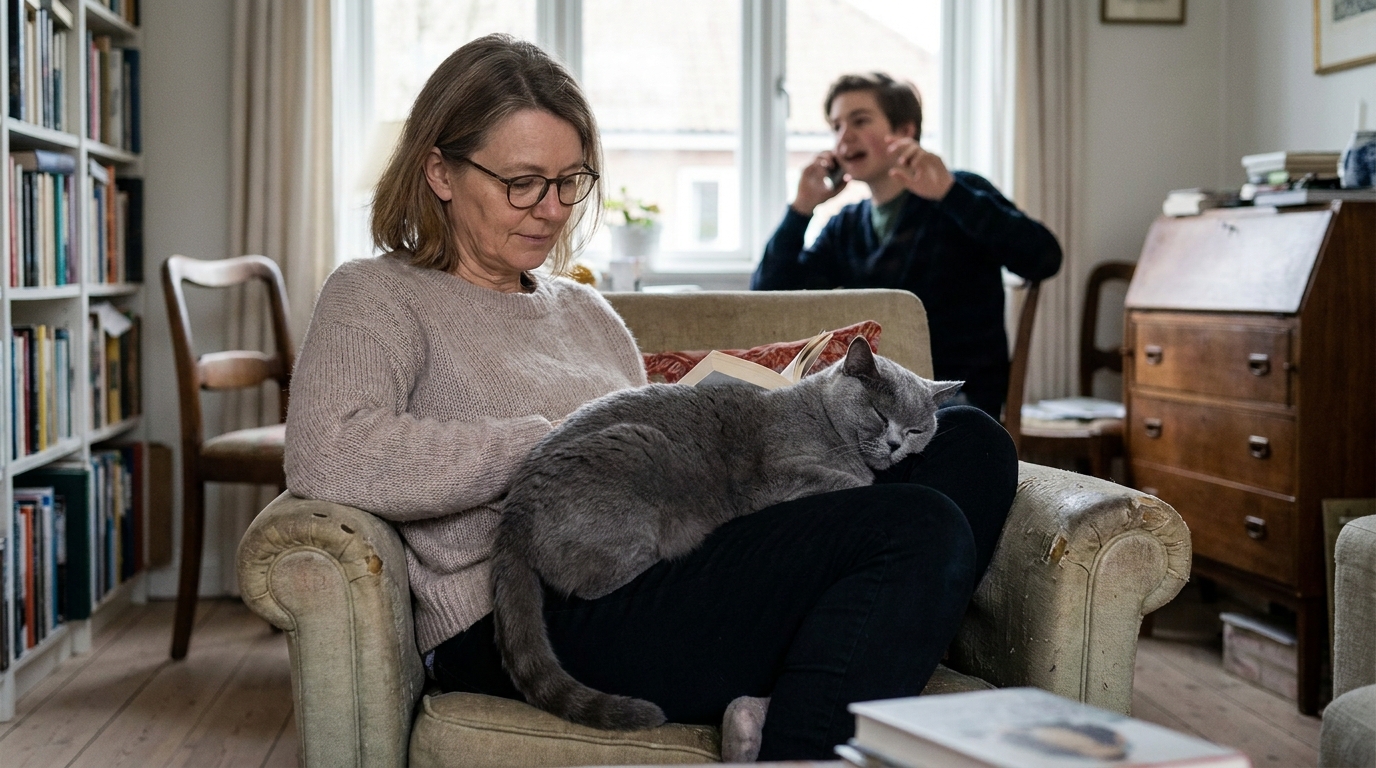
British Shorthairs are famous for their selective affection and their uncanny ability to identify the least demanding person available.
This breed was working-class in origin, living in shops, factories, and modest homes where attention was intermittent and quiet hours were long. They learned to bond with people who wouldn't overwhelm them.
Veterinary behaviorists note that British Shorthairs have lower oxytocin responses to general human interaction than most breeds, meaning they're less susceptible to indiscriminate bonding. When they do bond, it's strategic.
They actively avoid high-energy people. If someone enters a room speaking loudly or gesturing broadly, a British Shorthair will often stand and relocate without apparent distress—they're just removing themselves from an incompatible energy source.
These cats prefer laps that stay still. They'll abandon someone who shifts frequently, talks on the phone, or otherwise breaks the peaceful spell. But provide them with silent, motionless companionship, and they'll stay for hours.
British Shorthairs also display what researchers call "selective deafness." They'll ignore repeated calls from animated family members but respond immediately to a quiet summon from their chosen person. It's not hearing—it's choice.
What's most remarkable is their accuracy. In multi-person households, British Shorthairs consistently select the family member with the lowest average voice volume and the calmest behavioral patterns. They're rarely wrong.
The Bottom Line
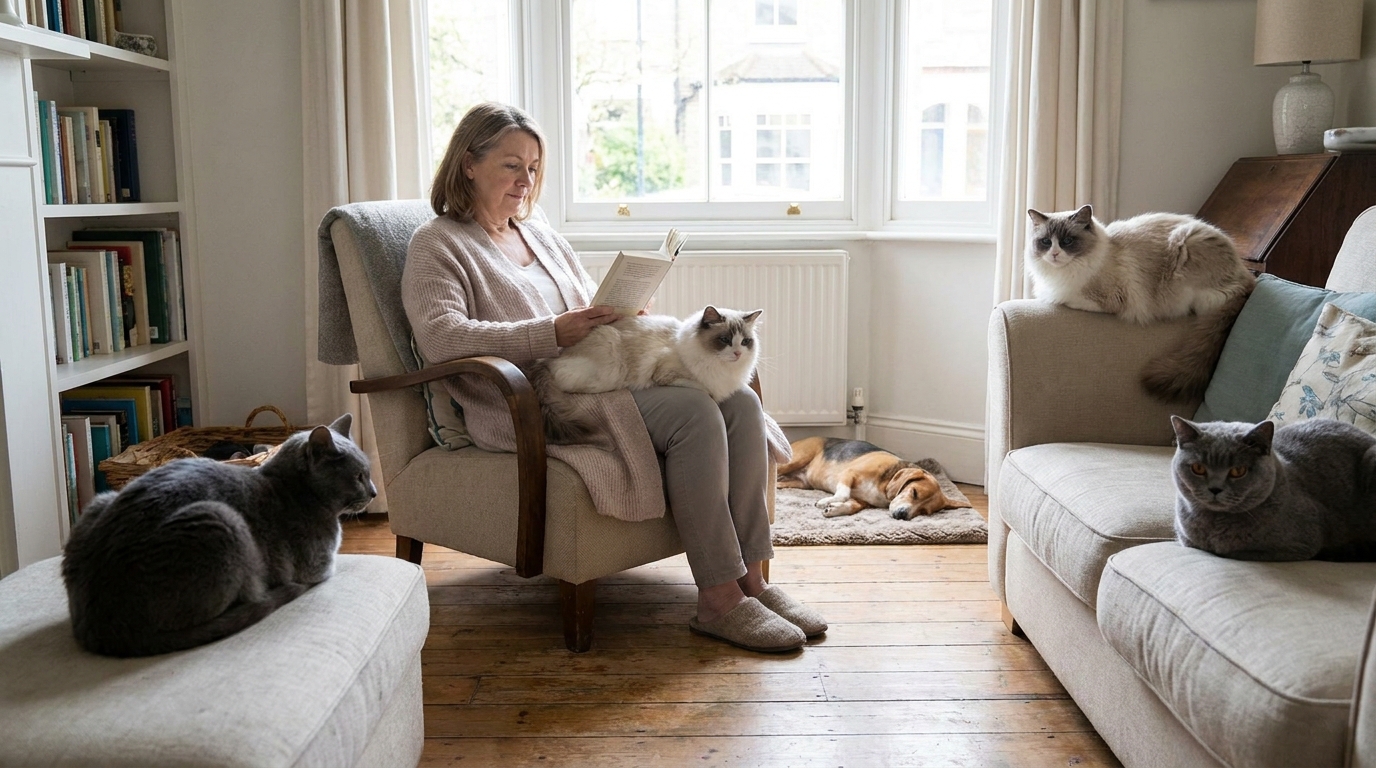
These eight breeds share a common trait: they've evolved or been bred to value calm over excitement, quiet over volume, and stillness over activity.
If your cat consistently chooses the quietest guest, the least talkative family member, or the friend who barely moved during their entire visit, you likely have one of these breeds or a mix with similar temperament. It's not shyness—it's preference.
Some people consider it rejection when a cat ignores them in favor of someone less outgoing. But these cats aren't being unfriendly. They're being honest about what makes them feel safest.
Did we miss a quiet-seeking breed? Drop it in the comments.