You walk up to your front door, key not yet in the lock, and somehow your cat is already right there on the other side. No alarm, no signal, no warning. Just a feline sitting patiently, as if they had penciled in your arrival on an imaginary calendar. It’s one of those quietly astonishing things that cat owners experience regularly but rarely stop to fully explain.
Honestly, this behavior is so consistent that it can feel almost supernatural. Is your cat psychic? Probably not. Is there a fascinating, science-backed explanation layered with instinct, biology, and a deeply tuned sensory system? Absolutely. Let’s dive in.
Your Cat’s Inner Clock Is More Accurate Than You Think
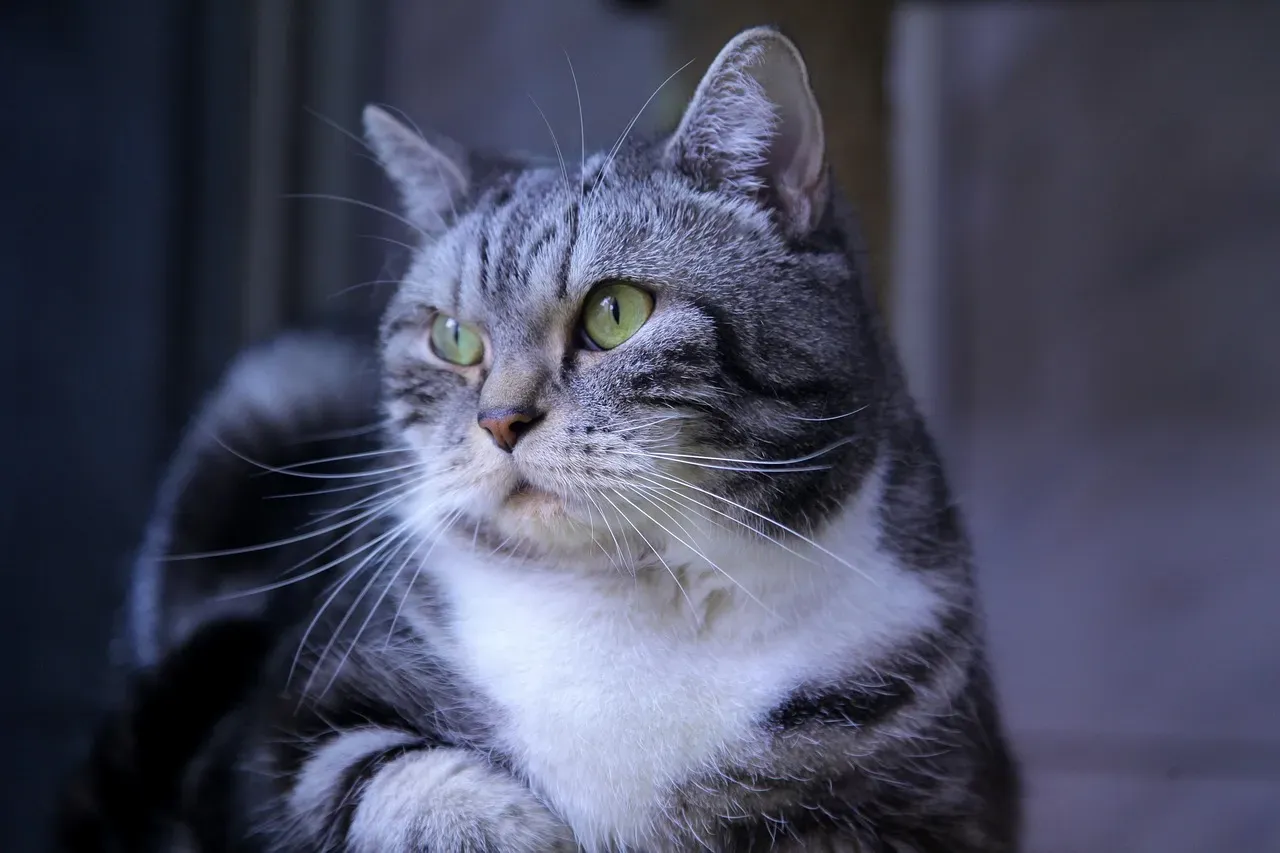
Here’s the thing: your cat is not guessing when you’ll be home. Cats can learn to recognize the routines of their owners. They also rely on their circadian rhythm and sense of smell to perceive time. Think of it like a biological alarm system, one that does not need batteries or a Wi-Fi connection.
Cats have a circadian rhythm, just like humans, and use it to tell, more or less, what time of day it is. This internal body clock is not just about sleeping and waking. Both dogs and cats have what is known as a circadian rhythm, an internal body clock that follows a 24-hour cycle. This rhythm helps regulate their sleep, appetite, energy levels, and yes, even their expectations around mealtimes and arrival times. Your schedule becomes part of your cat’s daily biological rhythm over time.
The Power of Routine: How Patterns Become Predictions
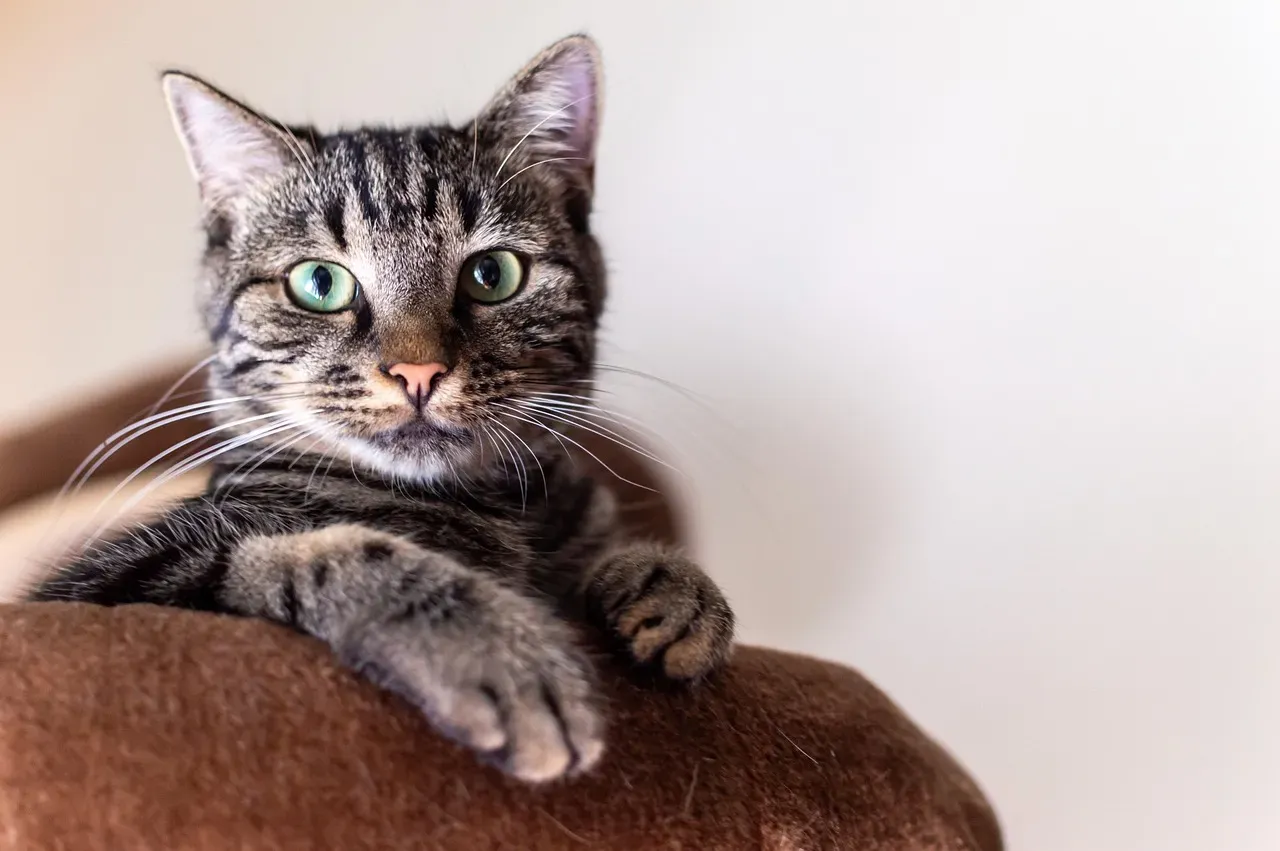
Cats are creatures of habit and they love routine. They have probably memorized your daily habits without you even realizing it. For instance, they will know which family members leave the house to go to work or school, and know that they will stay away for a while. It is less about reading a clock and more about reading your life.
Cats can also memorize patterns associated with time. Internal cues will be back-chained, meaning that a sequence of events must happen in the right order for it to be the correct time. It is remarkably similar to how you might feel hungry at noon simply because lunch has always been at noon. Your cat learns that a certain quality of light plus a certain hunger level plus the sound of a familiar vehicle means you are close.
Hearing You Before You Even Turn the Corner
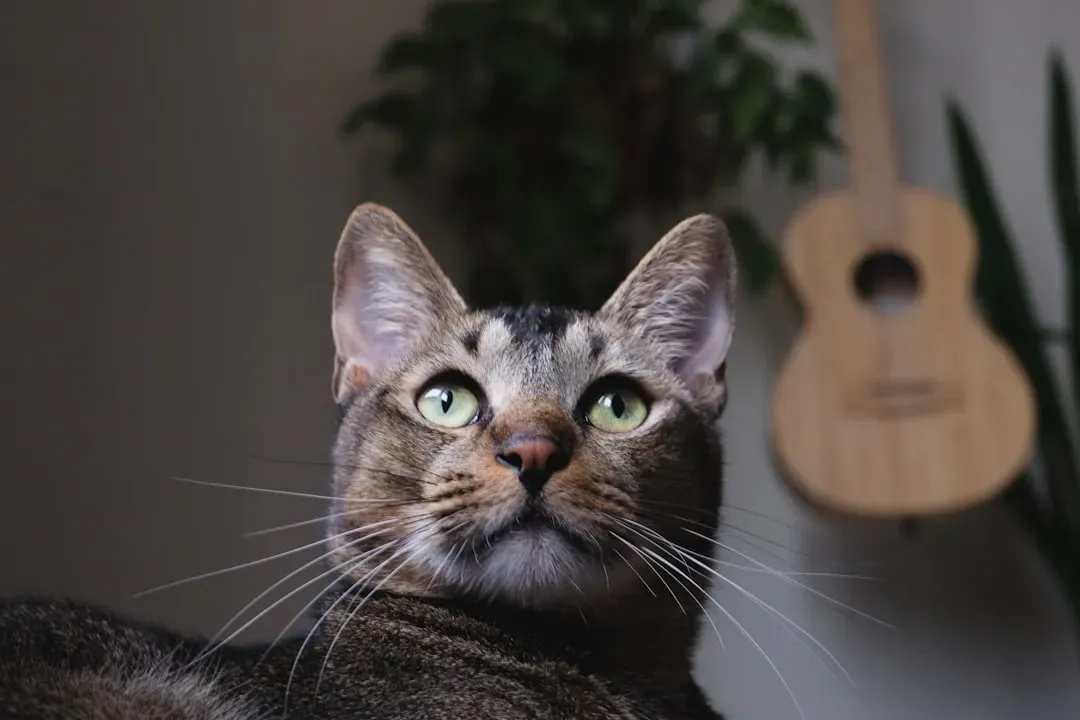
Let’s be real: your cat’s ears are something out of a science fiction story. Cats can hear sounds from 48Hz to 85,000Hz. They have one of the broadest mammal hearing ranges, and even outperform dogs, who hear sounds between 65Hz and 45,000Hz. That is a staggering advantage when it comes to detecting familiar sounds from a distance.
They use their super hearing to pinpoint prey, stay safe, and keep track of their owners. If you have ever wondered how your cat knows you are home before you open the door, it is because they can hear you coming from several feet away. They can even discern between your breathing pattern when sleeping and when awake. Other auditory markers your cat can recognize include the jingle of your keys, your footsteps, and the familiar creaking of your front door. Your entire arrival has a unique sound signature your cat has memorized perfectly.
A Nose That Knows You Better Than a Passport
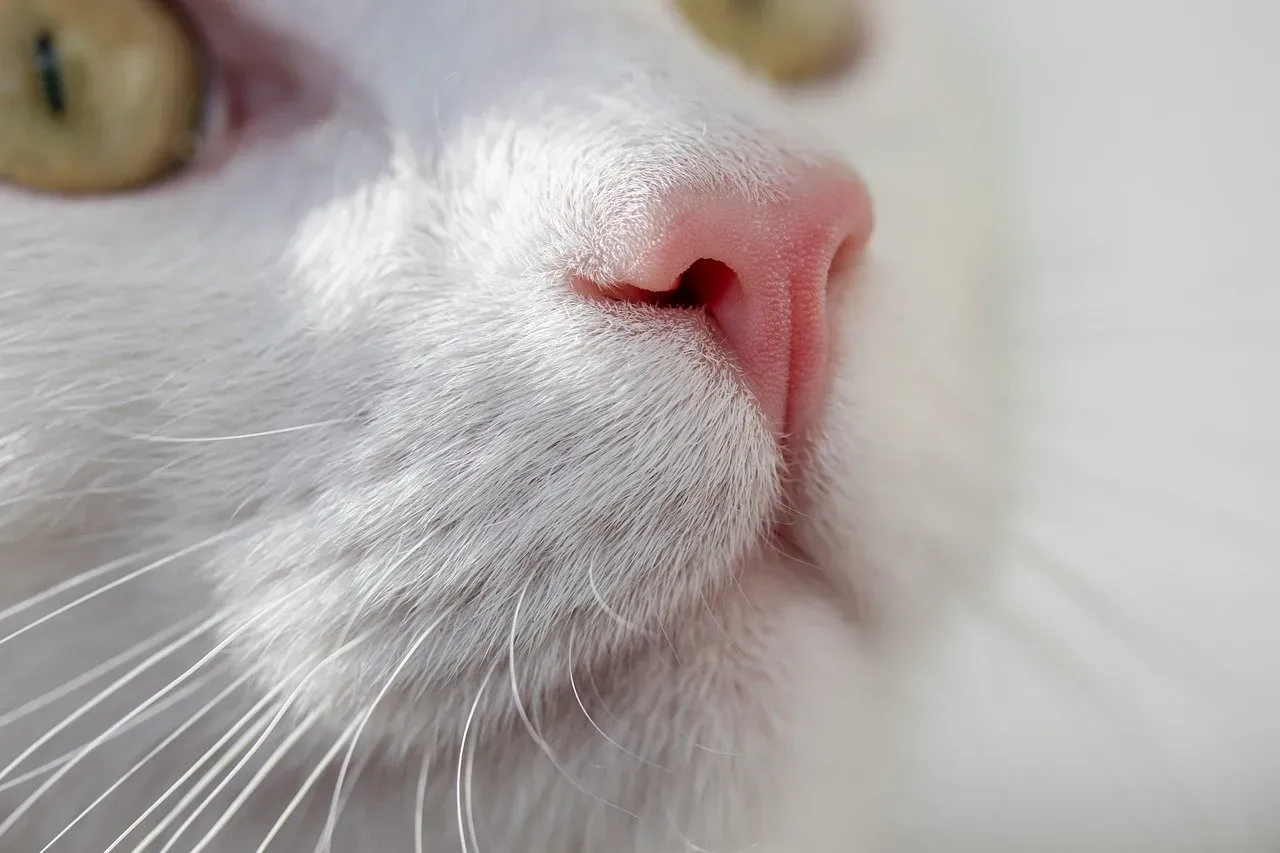
You might be surprised to learn that your cat recognizes you less by your face and more by your smell. A cat’s sense of smell is the primary way they identify people and objects. Cats have more than 200 million odor sensors in their noses, while humans have just 5 million. Their sense of smell is 14 times better than that of humans. That is not a minor upgrade. That is an entirely different world of sensory experience.
A 2025 study published in PLOS One confirmed this powerfully. Cats spend longer sniffing the odor of a stranger than that of their owner, suggesting that they can identify familiar humans based on smell alone, according to a study by researchers at Tokyo University of Agriculture, Japan. Every one of us carries a unique mix of skin oils, sweat, breath, and the scents of places we have been. Cats learn these complex signatures, using them to perceive humans and identify whether we are calm or stressed. Your scent is essentially your personal identification card.
The Vomeronasal Organ: Your Cat’s Secret Scent Weapon
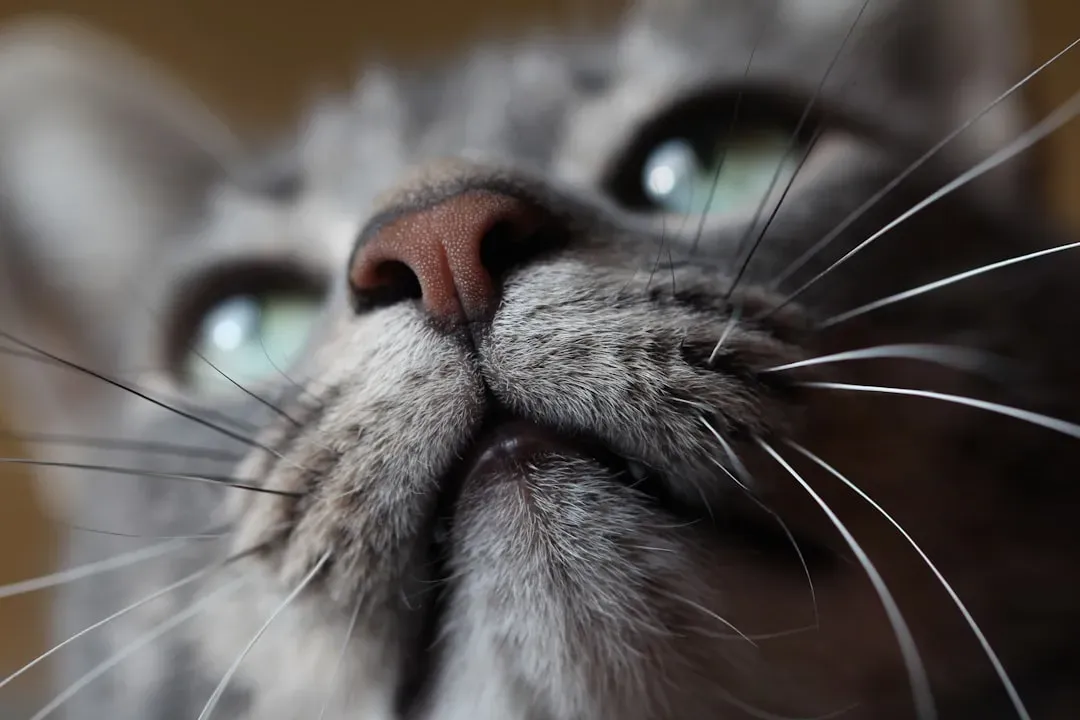
If regular smell is impressive, your cat’s dual smelling system is downright extraordinary. Cats also have a second “nose” hidden in the roof of their mouth called the vomeronasal organ, also known as Jacobson’s organ. The receptors in this organ pick up things that the scent receptors in a cat’s nose cannot. It is like having a bonus nose tucked away specifically for processing chemical messages.
This two-pronged smelling system enables felines to communicate much through scent, with the vomeronasal organ playing an essential role in enhancing detection of pheromones in the vicinity of the cat. This organ allows your cat to detect pheromones released by other cats and is extremely useful in helping them gather information about others in their world, including you, their owner. If you have ever caught your cat pausing and holding their mouth open, they are actually investigating a new smell by using their tongue to move scent molecules over the vomeronasal organ. It looks quirky. It is actually genius.
Scent Memory: Your Cat Has Filed You Under “Trusted”
Your cat does not just know your smell in the moment. They have stored it in long-term memory. Cats can retain and recall scent-based information, allowing them to recognize familiar individuals, animals, or environments over time. Cats can detect odors at concentrations far lower than humans, enabling them to identify subtle changes in their environment. Think of it like the way a familiar song can instantly take you back to a specific memory. For your cat, your scent does exactly that.
When your cat seems aloof upon your arrival home, do not take it as an insult. They have already filed you under “known entity” in their mental database, which means you have earned the rare feline privilege of being considered trusted. When cats rub, knead, or groom, they are not just being affectionate. They are actually demonstrating a behavior called scent mixing, in which they build a group scent. You are part of their inner circle, scent and all.
Environmental Cues Your Cat Uses as Clues
Your cat is not just listening and smelling. They are reading the entire environment around them for clues about what comes next. Your cat will have memorized certain cues that precede your arrival. For example, you may have neighbors who arrive 15 minutes before you. Your cat will hear them come home and know that you will arrive before too long. The environment is essentially a live-action schedule for them.
The life of a domestic cat automatically intermixes with the life of their human caregiver, and in doing so, the cat’s daily rhythms and habits fall into synchronisation with those of their human caregiver. This inevitably leads to moments in the 24-hour cycle when cats perform certain functions. In the instance of a person coming home from work, a cat will not only use their internal clock to gauge the moment of arrival, but also rely on previous rhythms and habits to wait by the front door. Every detail matters to them, down to the quality of afternoon light through the window.
How Cats React When Your Routine Changes
Here is where things get interesting. If your cat’s prediction system relies so heavily on routine, what happens when you disrupt it? Cats can be very reliant on their routine and the routine of their owners. If their routine or their environment changes, even in a subtle way, they might become stressed. This could be something as small as a change of fragrance in the living room, or something as big as their owner moving jobs and being out of the house more.
The cat’s welfare is directly and forcefully impacted by routine and environmental events. A groundbreaking study done in 2011 found that disruption to routine resulted in sickness behaviors in healthy cats. This is not your cat being dramatic. It is biology. The most important factor that causes stress in cats is a change in routine. So, if you regularly leave your cat and have done so for a long time, it is unlikely to suddenly become a problem. Consistency is not just comfort for your cat. It is their entire operating system.
The Emotional Bond Behind the Prediction
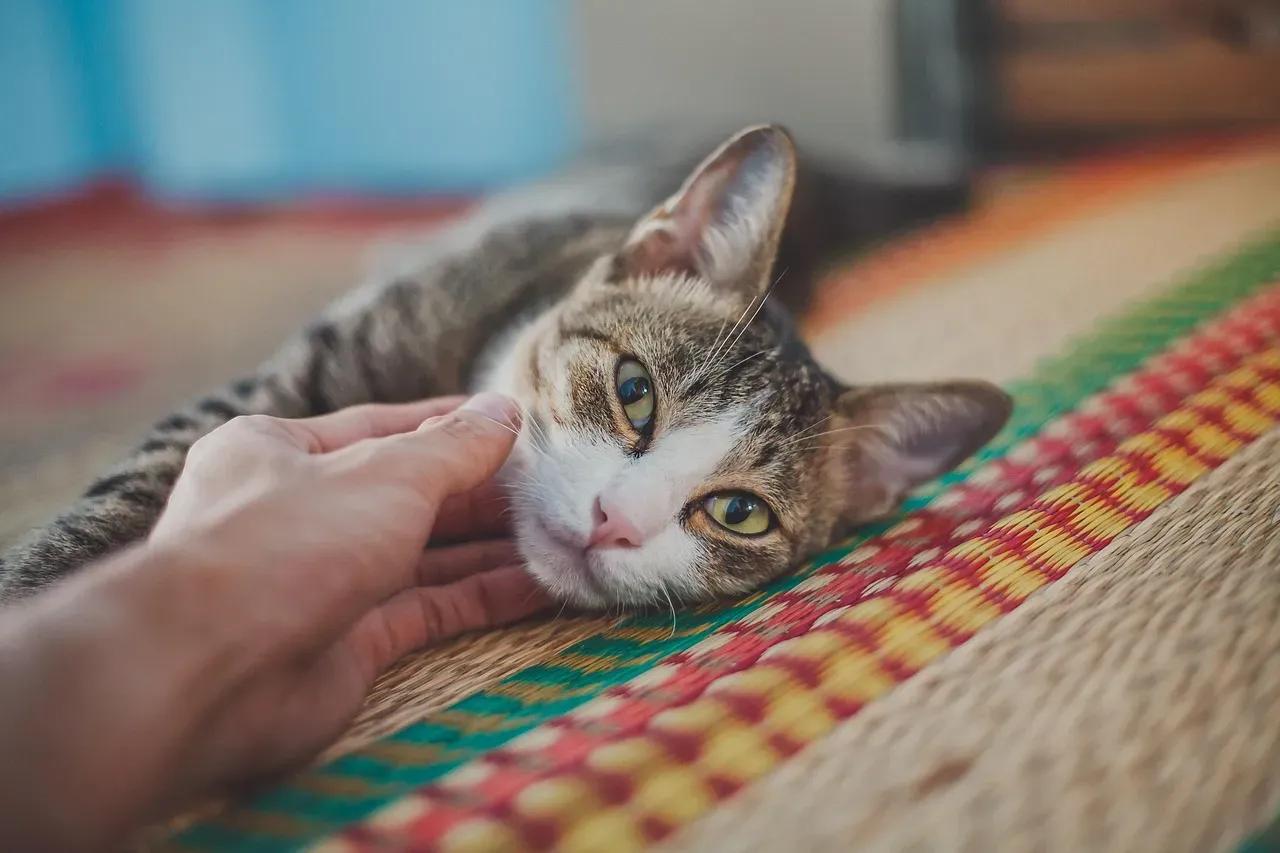
There is something deeply touching underneath all the science. Your cat’s ability to anticipate your return is not just mechanical. It is relational. The cats that were left alone for longer stretched and purred more upon reunion with their owners. These are both signs of trust and relaxation, suggesting that the cats were bonded with their owners. The reunion promoted a sense of happiness and security in the cat. They are genuinely glad you are back.
Cats are also creatures of habit. They often associate specific times of the day with feeding or play. If your cat waits by its food bowl as you prepare breakfast, it recognizes not just the routine but also the person who provides it. These small daily interactions build a foundation of trust and familiarity. Every homecoming you have ever had, every moment your cat greeted you, is a data point in a long history of connection they have been quietly building all along.
Conclusion
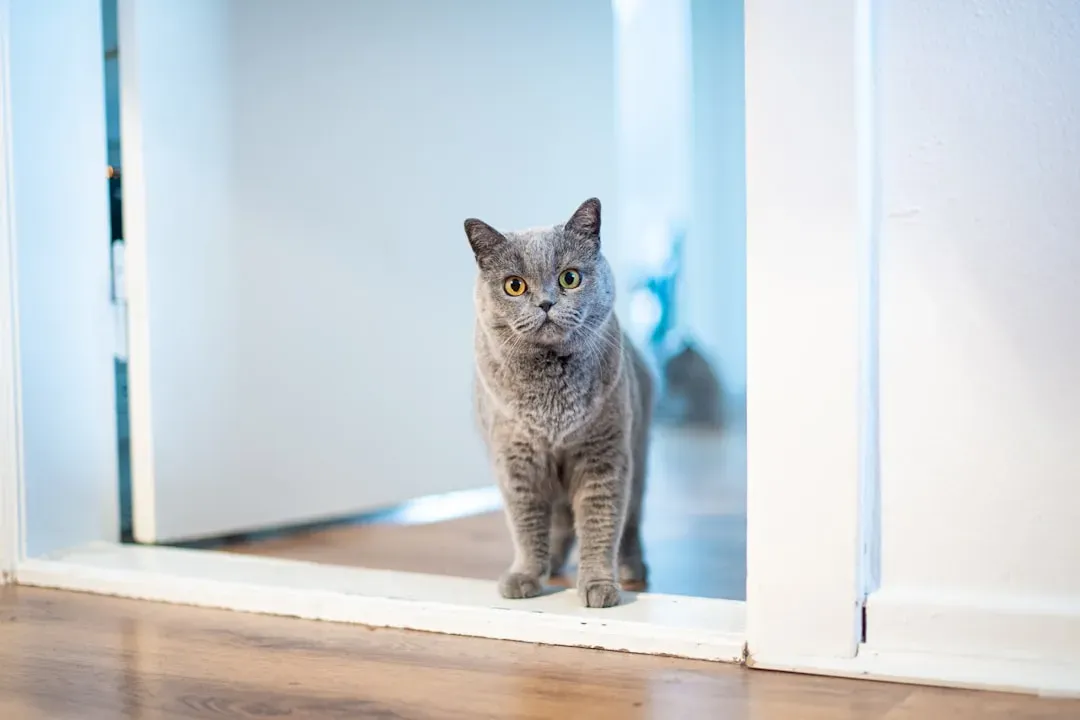
Your cat waiting at the door when you come home is not magic, and it is certainly not coincidence. It is the result of an extraordinary sensory system, a finely tuned internal clock, deeply stored memory, and a bond that your cat has been carefully building since the day you first walked through that door. They know the sound of your key, the rhythm of your footsteps, the signature of your scent. You are, in every measurable and biological sense, the most recognizable thing in their world.
It is a humbling thought, honestly. While you are out there navigating your day, your cat is at home essentially running a highly sophisticated recognition program in your honor. The next time you see that small face waiting for you on the other side of the door, you will know exactly what is going on behind those watchful eyes. What does that tell you about just how deeply your cat is paying attention?
Kristina is a young writer from India. An arts graduate and an avid content creator, Kristina is passionate about animals and wildlife. She enjoys exploring topics related to pet care, animal behavior, conservation, and nature, combining thorough research with engaging storytelling.