You’ve probably seen it a thousand times. You bring home a new gadget, a pair of shoes, or a massive online order, and before you’ve even fully unpacked it, your cat has claimed the box. Not the expensive toy inside. Not the cozy bed you bought specifically for them. The box. Just the plain, boring, slightly smelly cardboard box.
It seems ridiculous on the surface. Almost insulting, honestly, if you’ve ever spent real money on a cat tree only to watch your pet squeeze into the delivery container it arrived in. Yet, here’s the thing – your cat isn’t being ungrateful or dramatic. There’s something deep and real happening inside that little cardboard square. Something rooted in biology, psychology, and millions of years of feline evolution. Let’s dive in.
The Ancient Instinct You Never Knew Your Cat Was Following
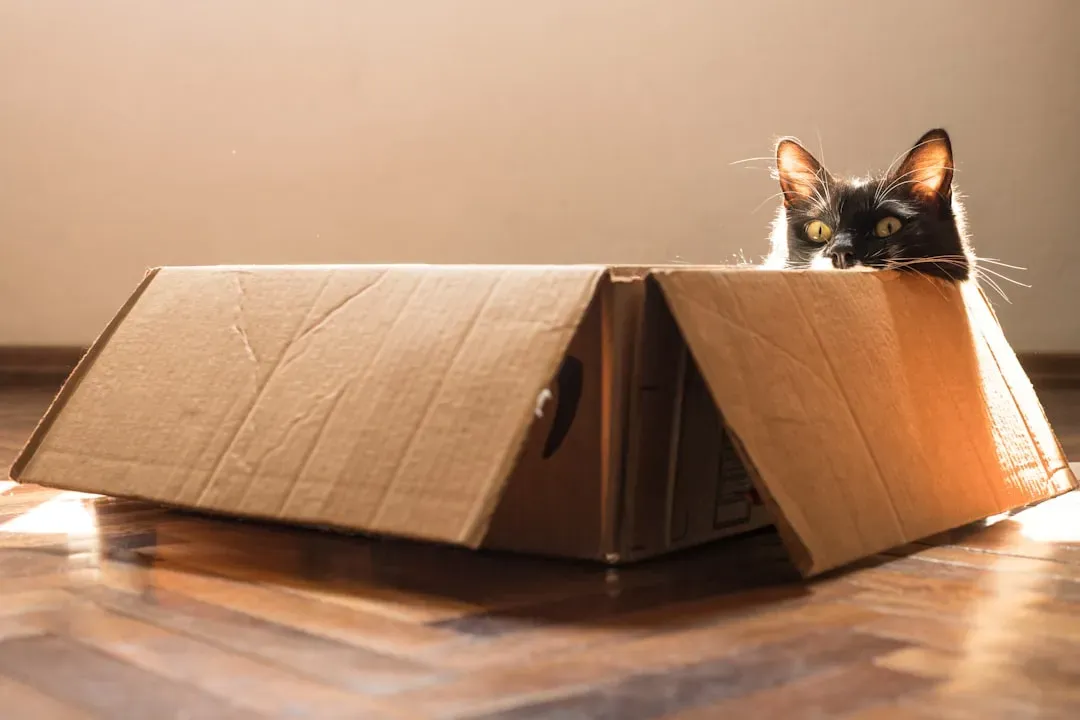
Your cat looks pampered and content lounging around your living room. Bowls full of premium food, a warm house, zero predators. Practically royalty. Yet underneath all that domestic comfort lives a creature still wired for survival in the wild. Cats are natural hunters, and their instinctual behaviors are deeply rooted in their wild ancestry – in the wild, they rely on stealth and camouflage to stalk and ambush prey.
Your housecat’s ancestors had to hunt to survive, and since the beginning, cats have been “ambush predators,” meaning they catch or kill prey using the element of surprise – they find a hiding place and wait for the opportunity to pounce. A cardboard box, then, is not just a cardboard box. It’s a stand-in for the bushes, the rock crevice, the hollow log. It’s the jungle, reimagined in corrugated form right there in your hallway.
The Security Blanket Made of Cardboard
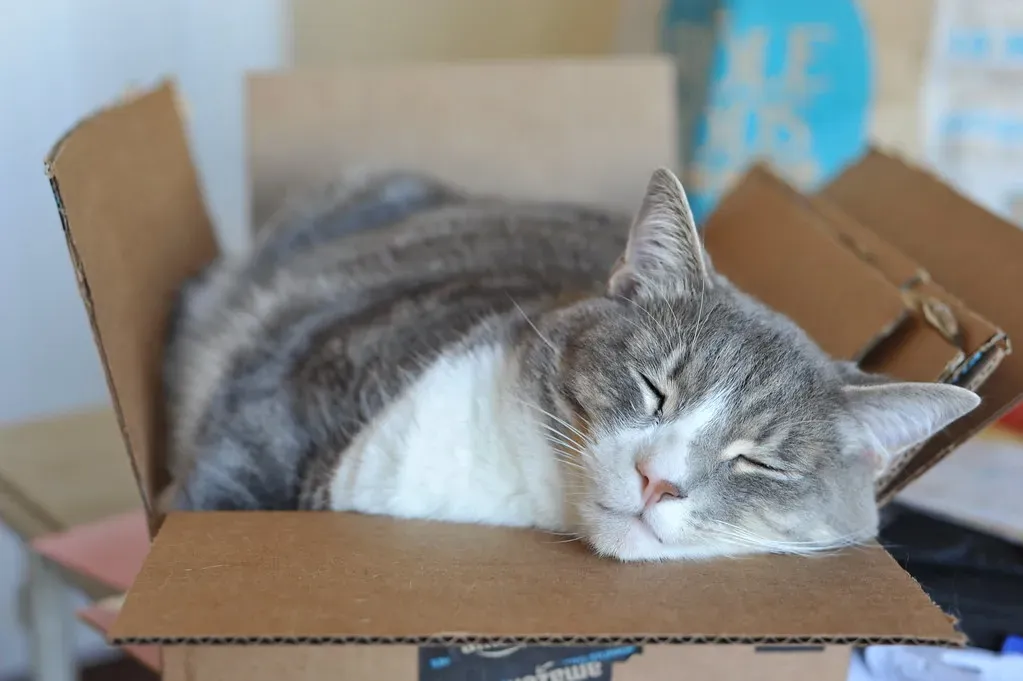
Cats often seek out boxes because the confined space makes them feel protected and sheltered – by nature, cats seek out small, confined spaces where they can hide from potential threats. Think of it like this: if you lived in a world where anything could sneak up on you at any moment, wouldn’t you want your back against a wall too? A box gives your cat exactly that reassurance.
A cat in a box feels their vulnerable back is protected, and they can periscope their little face around the edge to see everything happening, or retreat into a corner of the box as needed. It’s a beautifully simple strategy, really. Your cat gets to observe the world while feeling completely invisible. That’s not laziness – that’s tactical genius.
How Boxes Act as a Real Stress-Relief Tool
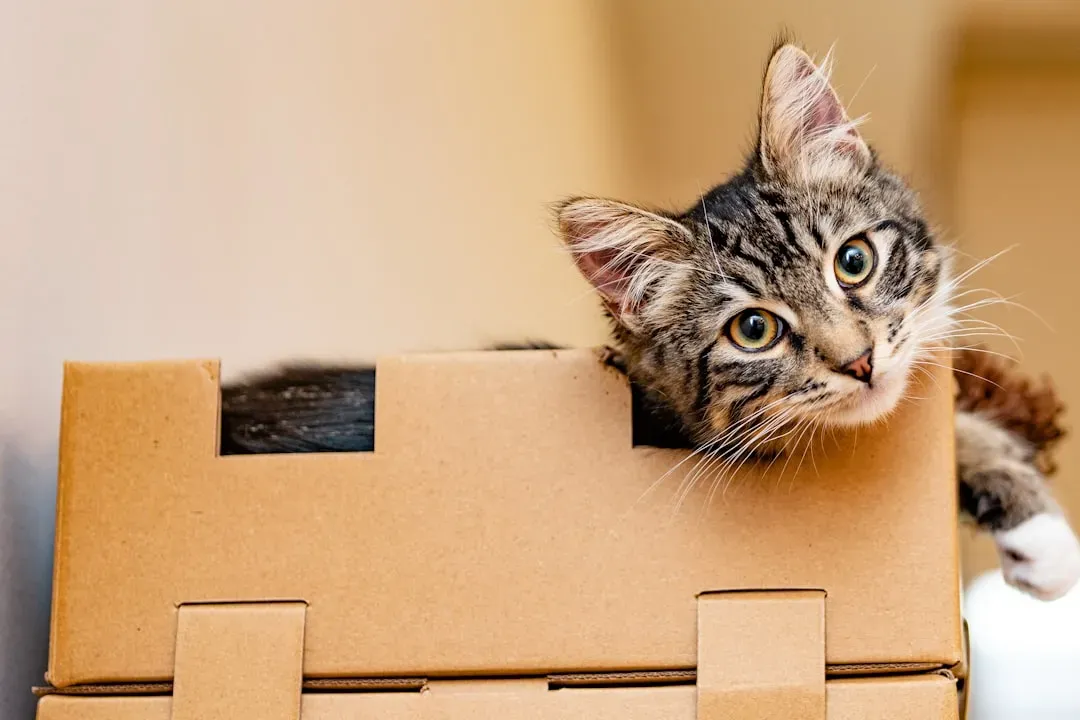
Boxes can serve as stress relievers – when faced with unfamiliar or stressful situations, a cat may retreat into a box to regain a sense of control and to feel at ease. This isn’t just theory. It’s been tested, measured, and confirmed in real scientific settings, and the results are honestly pretty fascinating.
A Dutch study showed that rescue cats were considerably less stressed when they had access to boxes to hide in – ethologist Claudia Vinke of Utrecht University in the Netherlands found a significant difference in stress levels between cats that had boxes and those that didn’t, with cats who had boxes getting used to their new surroundings faster, being far less stressed early on, and being more interested in interacting with humans. That last part is especially worth noting. The box didn’t just comfort the cats – it actually made them more sociable.
The Science of Hiding: What Research Actually Found
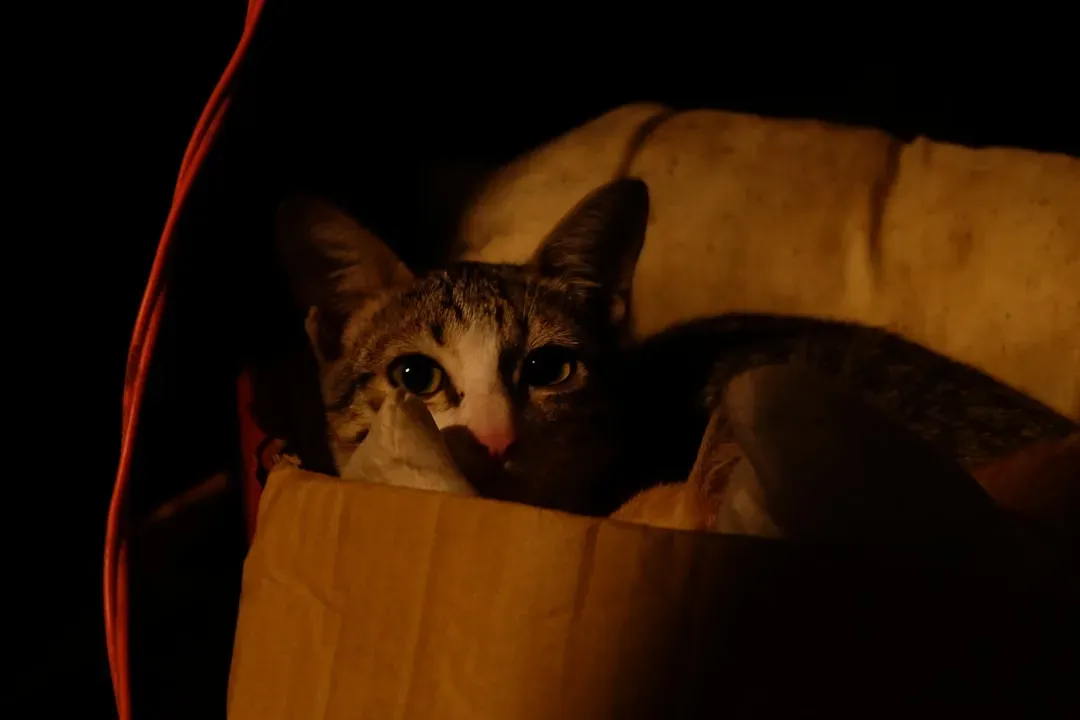
In published research, cats with a hiding box showed a significantly faster decrease of behavioral stress compared to the control group, which was most prominent during the first observation days. That’s not a small effect. We’re talking about a meaningful, measurable difference in how quickly a cat settles down and feels safe in a new environment.
Research provides more details about reaching a steady stress state, indicating that hiding boxes accelerate the recovery of behavioral stress by seven days – and the hiding box clearly helps shelter cats adapt more quickly to a stressful new environment, preventing the development of chronic stress. Seven full days faster. For a cat, that’s enormous. I think that alone should change how you look at the humble cardboard box sitting in your cat’s corner.
Warmth Is a Bigger Deal Than You Think
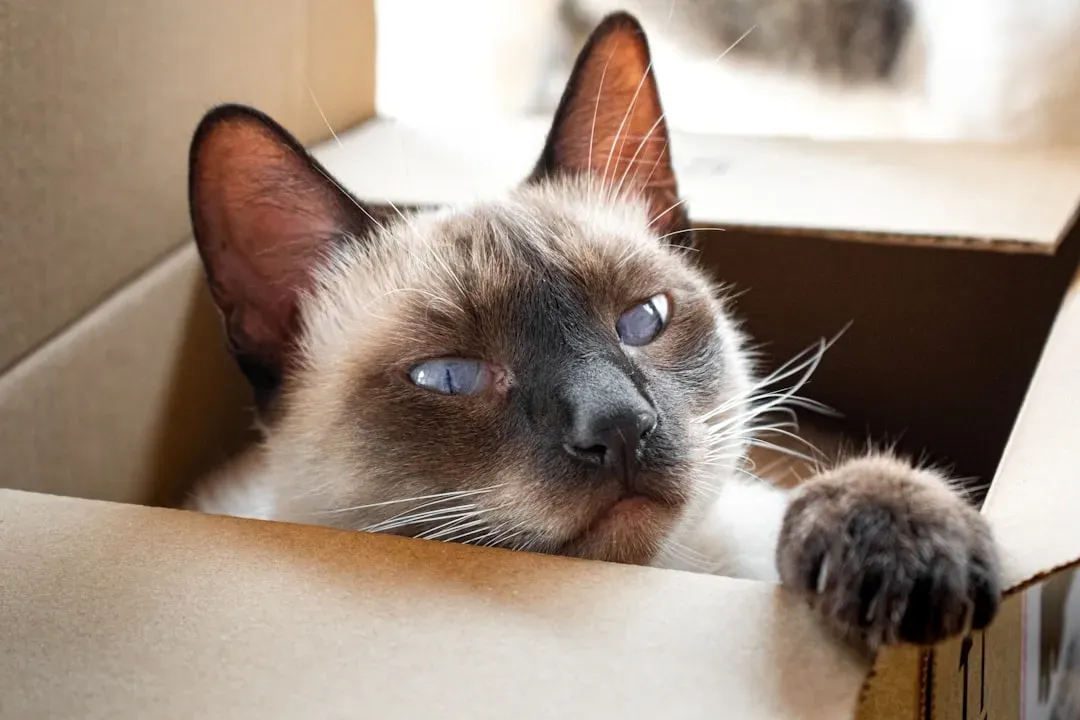
Here’s something most cat owners don’t realize: your home is almost certainly too cold for your cat. It sounds strange, but it’s true. According to a 2006 study by the National Research Council, cats are most comfortable in temperatures between 86 and 97 degrees Fahrenheit, yet most cats live in environments maintained at about 72 degrees, which is significantly cooler than their preferred temperature zone.
One reason your cat curls up in a tight space like a box or shelf is to conserve body heat – cardboard, in particular, is a good insulator, which means the inside of the box heats quickly, giving your cat their little pocket of warmth. So when your cat squeezes into a box that looks impossibly small, they’re not being quirky. They’re essentially wrapping themselves in a self-heating blanket. You can’t really argue with that logic.
The Scent-Marking Ritual You Probably Never Noticed
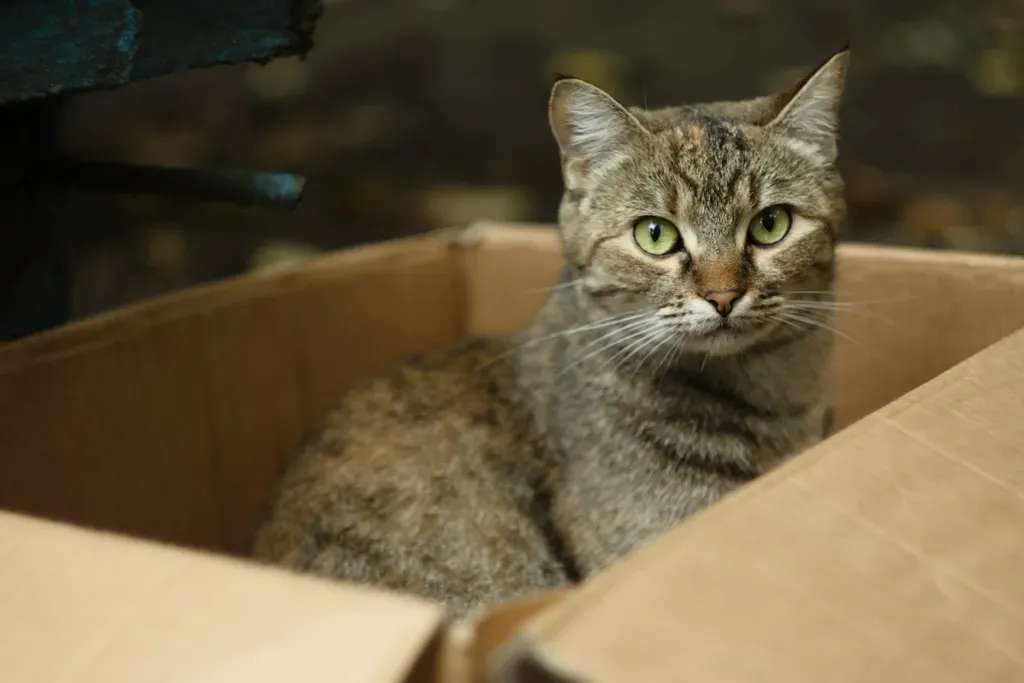
Every time your cat enters a new box, something subtle but significant happens. Cats are territorial animals and use scent marking as a way to establish and maintain their territory – when a cat enters a box, it leaves its scent behind, effectively claiming the box as its own territory, and this behavior is a way for cats to assert control over their environment and create a familiar, secure space. That box very quickly stops being your packaging material and becomes your cat’s personal property.
Cats have scent glands on the sides of their face, which is why they love rubbing their cheeks against everything – this action leaves their scent on the object, like a feline “Property of Whiskers” sign, and your cat considers a new cardboard box that has just arrived on your doorstep to be an interesting addition to their domain that they’ll naturally want to claim ownership of. In other words, the moment that delivery arrives, it was never yours to begin with.
Boxes as a Playground and a Sensory Adventure
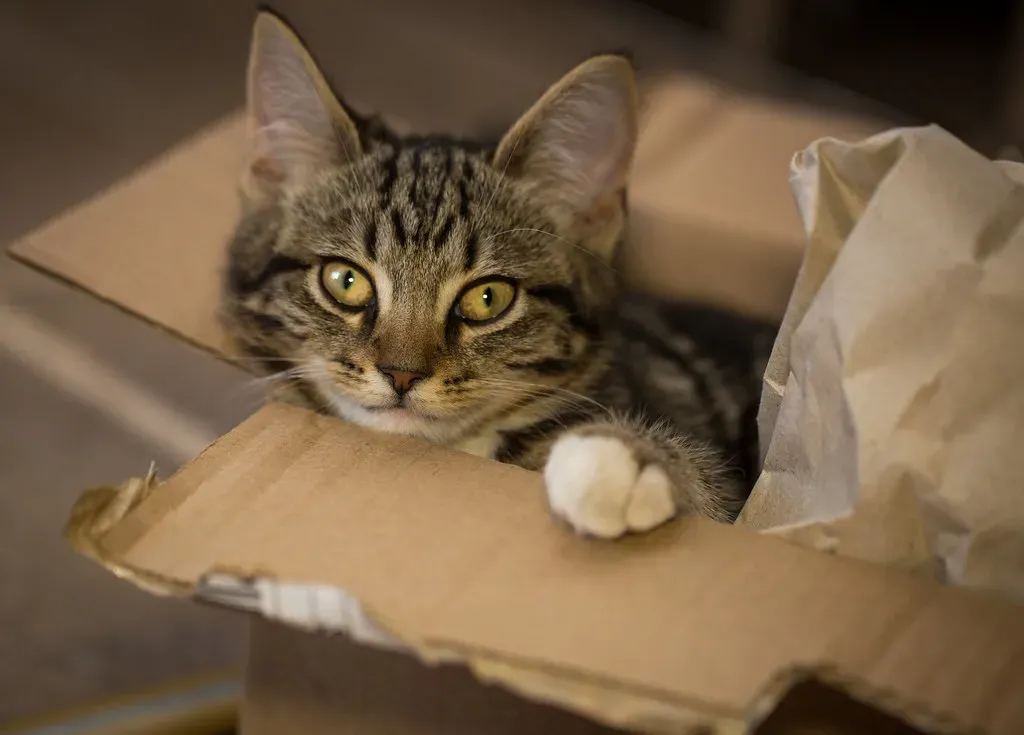
Cats are curious creatures, and boxes present an exciting world of exploration – cats love investigating new things, and a new box, with its smells and textures, represents a new puzzle that must be unraveled. It’s the feline equivalent of opening a mystery novel. Every new box that enters the home is a completely fresh experience, full of foreign smells carried in from warehouses, trucks, and loading docks.
Cats have an acute sense of smell, and cardboard boxes are porous materials that can retain scents – when cats enter a box, they are enveloped by a medley of intriguing smells, and this olfactory experience can be comforting and captivating, especially when they are exploring a box brought from the outside world, teeming with unfamiliar scents. Add to that the satisfying texture of cardboard for scratching and kneading, and you essentially have a multi-sensory cat amusement park sitting in the middle of your floor.
Even a Fake Box Fools a Cat – And That’s Remarkable
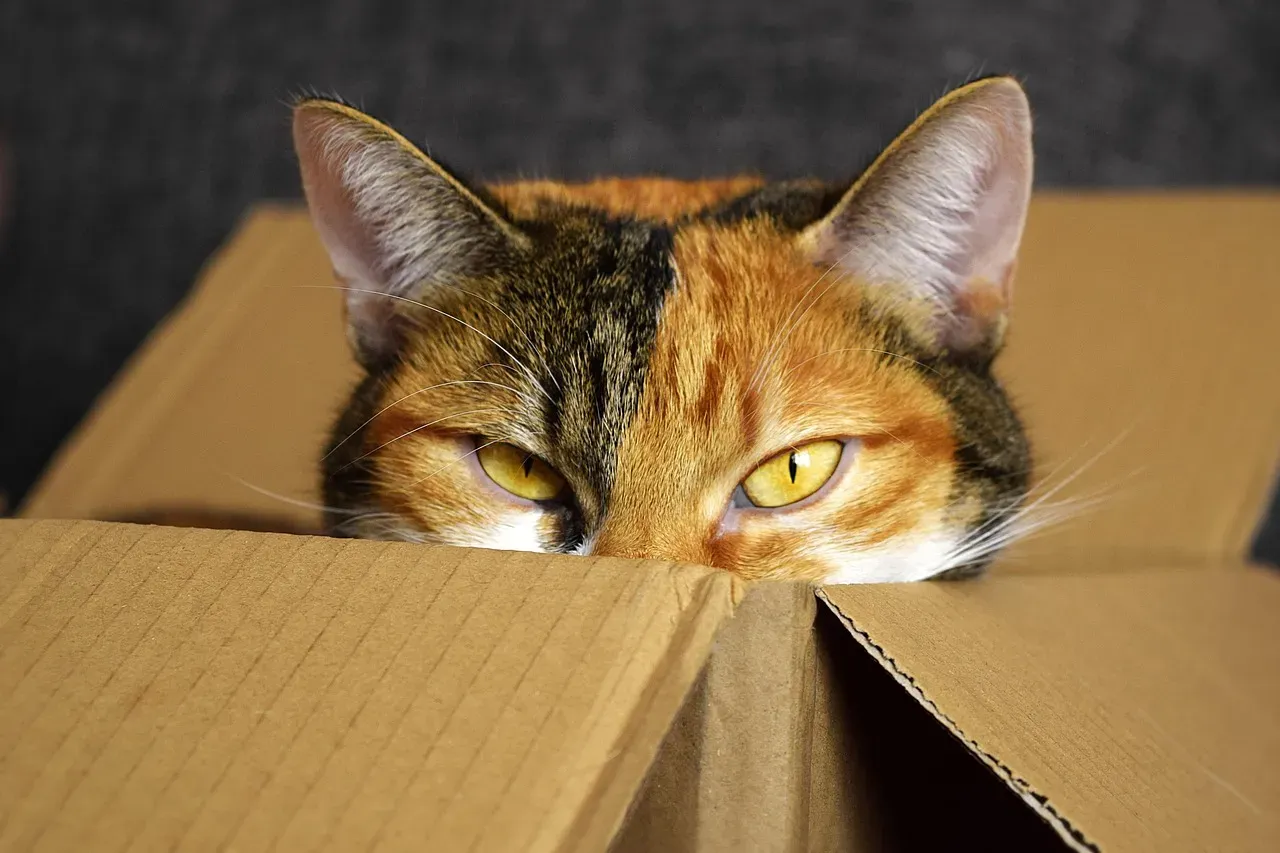
Here’s where things get genuinely mind-bending. What if you didn’t have a real box, just the outline of one? Would that even matter to your cat? Apparently, yes, and the research on this is wild. A study published in Applied Animal Behavioral Science indicates that cats love to sit in boxes even when it is only a two-dimensional outline shaped like a box on the floor, with a working theory being that a cat sees a shape with borders as a way to protect themselves from dangerous situations.
Research found that cats chose to sit in a square made of tape on the floor or in an optical illusion square more often than the control condition, demonstrating cats’ ability to recognize the illusion of a square and treat it in the same manner as they would a three-dimensional box. Let that sink in. Your cat isn’t just drawn to the physical structure. They’re drawn to the idea of enclosure itself. That’s not a quirk. That’s a deeply embedded psychological need playing out in real time.
When Box-Hiding Becomes a Signal Worth Paying Attention To
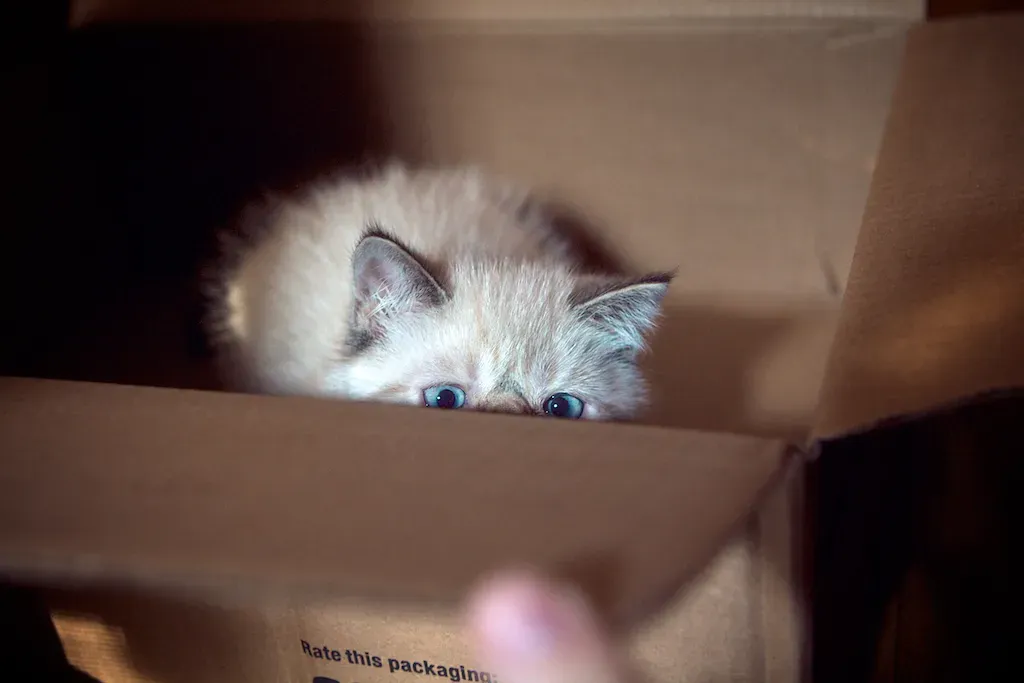
While box-sitting is perfectly normal and healthy for cats, there’s an important flip side that every owner should understand. Hiding behavior in a box or enclosed space might just be what a cat needs to feel safe, but it can also be a sign that something is stressing them out in their home. There’s a real difference between a cat who hops in and out of boxes playfully and one who seems to disappear into one for hours on end, day after day.
Cats lack refined conflict resolution skills, so they prefer to avoid negative interactions by avoiding others or hiding away – when tensions arise with family members, whether humans or fellow pets, the refuge of a box offers the cat a chance to recalibrate and de-stress. That said, if your cat is hiding excessively, that is a good time to talk to your veterinarian and maybe get a referral to a behaviorist who can help work with your cat’s fears in a way that can hopefully help them cope better. A box is a tool for comfort, not a permanent escape hatch.
Conclusion
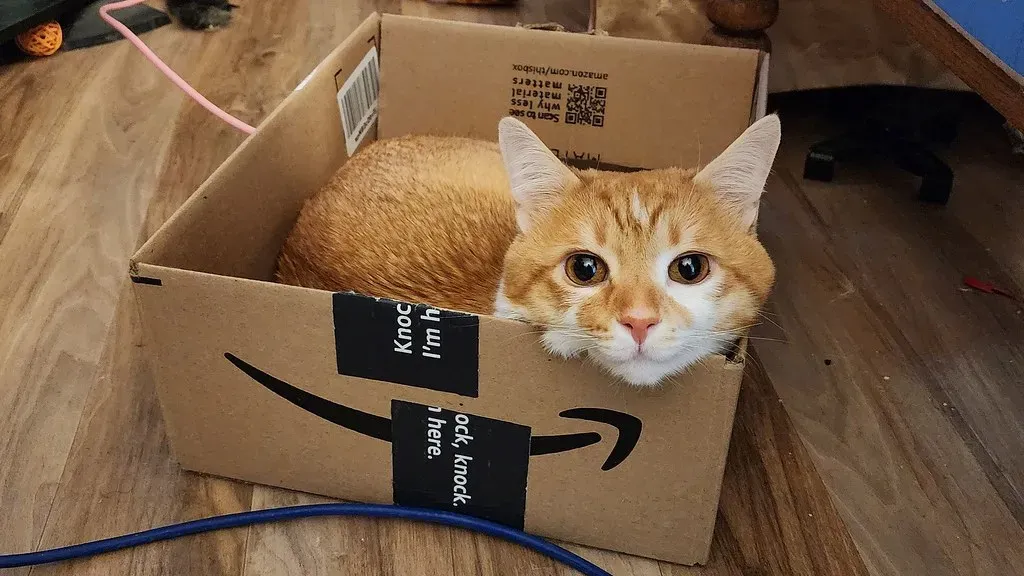
Your cat’s love of boxes is one of the most misunderstood behaviors in all of pet ownership. People laugh at it, post videos of it, and scratch their heads over it. Yet beneath the comedy is a layered, science-backed story of instinct, emotional regulation, sensory experience, and a very real need for safety and warmth. When you understand what’s actually going on inside that cat brain, the box stops looking ridiculous and starts looking like exactly what it is – your cat’s version of a comfort zone.
So the next time a delivery arrives and your cat vanishes into the box before you’ve even checked the contents, let them have it. Maybe even toss in an old piece of clothing to add your scent. Adding a soft blanket or a piece of your clothing can enhance this comfort, making the box an even more appealing spot for your cat to relax and sleep. That little cardboard square isn’t clutter. To your cat, it’s everything.
What do you think – does your cat have a favorite box they keep going back to? Drop your story in the comments. Chances are, it’s more meaningful than you ever realized.
Kristina is a young writer from India. An arts graduate and an avid content creator, Kristina is passionate about animals and wildlife. She enjoys exploring topics related to pet care, animal behavior, conservation, and nature, combining thorough research with engaging storytelling.