Most cat owners are convinced they’ve got their feline fully figured out – a purr means happy, a knead means love, end of story. But veterinary behaviorists and recent peer-reviewed research say that’s only half the picture, and the other half is a lot more unsettling than you’d expect.
Purring shows up during pain, fear, and even in the final hours of a cat’s life. Kneading can signal hormones, stress, or a decades-old survival instinct wired in from kittenhood. Somewhere between your lap and your laundry pile, your cat has been sending you fifteen distinct coded messages – and you probably only caught two or three of them. Here’s what the data actually says.
#1 – The Classic Lap Purr
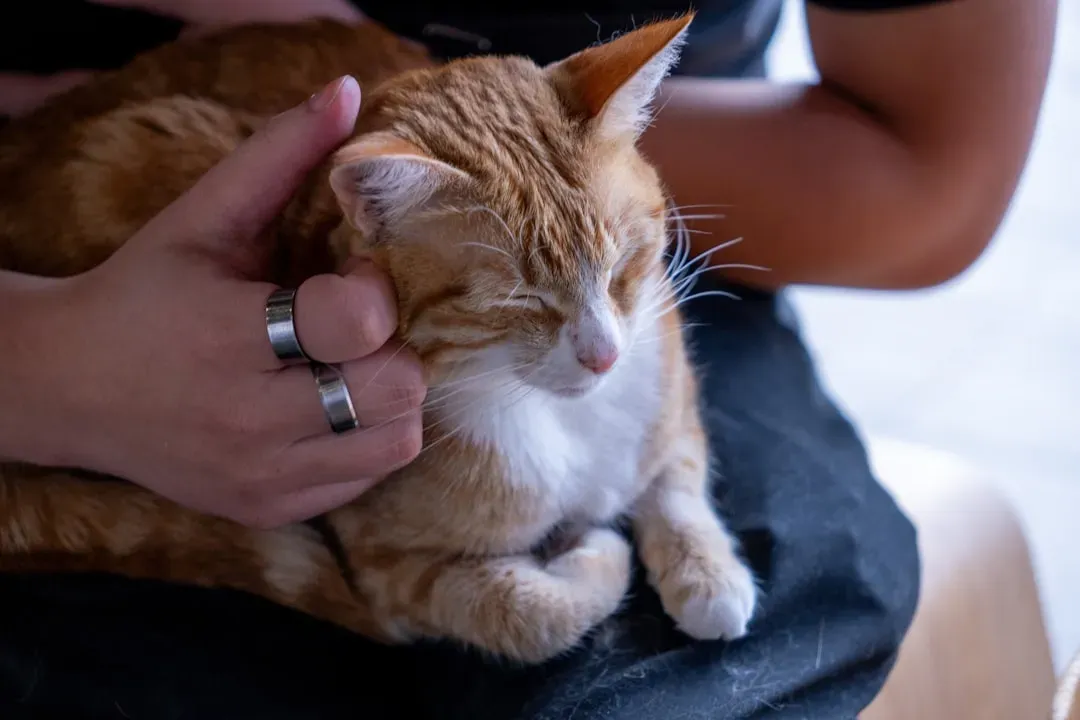
This is the purr everyone recognizes, and honestly, it’s the easiest one to read correctly.
One of the most well-known reasons cats purr is to express contentment and comfort, and when a cat curls up on a lap, closes its eyes, and begins to purr, it’s clearly indicating that it feels safe, happy, and relaxed. Vets consistently flag this as the baseline “everything is fine” signal. It’s one of the most common and widely accepted reasons cats purr, and you’ll often hear it when they’re curled up on a lap or getting gentle pets on a favorite spot.
The surprising part? This is actually the only purely positive purr on this entire list – every other one comes loaded with more complicated emotional baggage. That’s a big reason experts warn against assuming every purr means the same thing. But that’s nothing compared to what we found about #2.
#2 – The Purr-Knead Combo
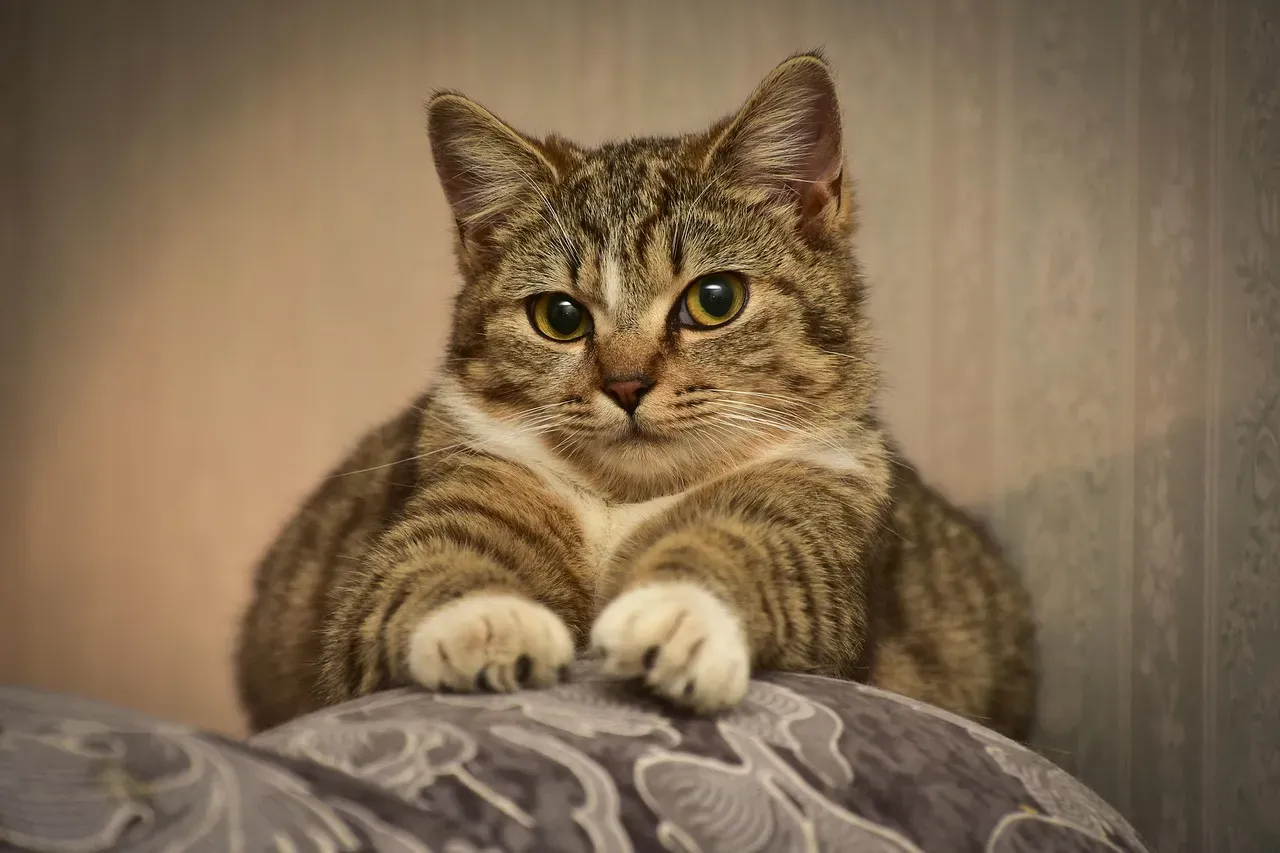
When purring and kneading happen at the same time, your cat isn’t just comfortable – it’s running its deepest emotional program.
Many cats knead while purring, resting, or bonding with trusted people, and this combination is considered the gold standard of feline trust signals. Researchers describe this pairing as a “dual reward system” in the brain. That means kneading is not simply a “happy” behavior – it signals that a cat is accessing its deepest comfort circuit, whether the trigger is contentment, anxiety, or physical discomfort.
Most people don’t realize that this combo can appear during stress too, not just bliss. If your cat kneads and purrs on your stomach every night, don’t just assume affection – context matters. Speaking of context, #3 flips the whole “happy cat” assumption on its head.
#3 – The Vet-Table Stress Purr
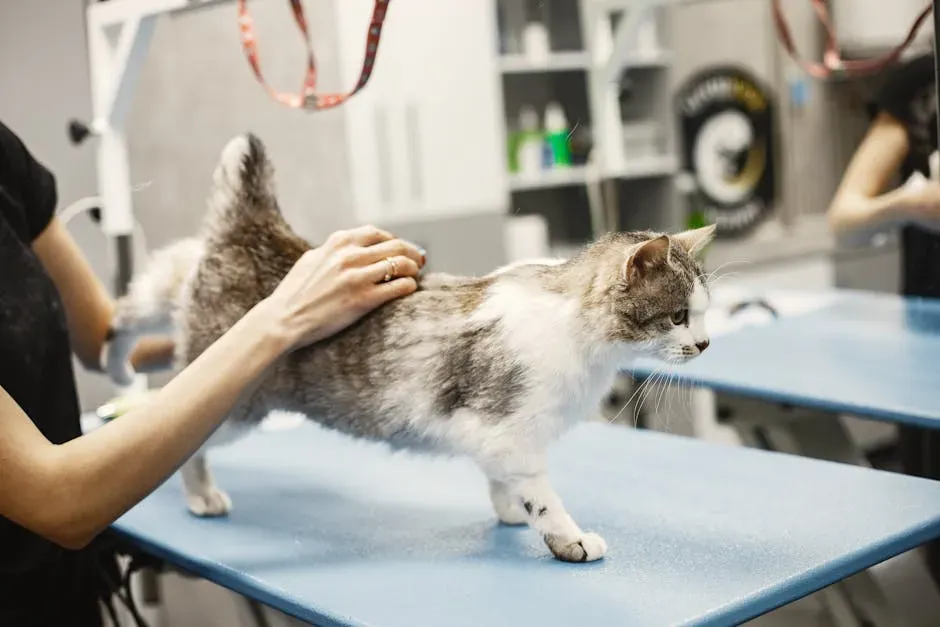
Here’s the myth-buster: a purring cat at the vet is often the opposite of relaxed.
Cats sometimes purr when they’re stressed – and one certified cat behavior consultant has the receipts. Mikel Delgado has talked about her own cat’s habit of purring at the veterinary office, despite clearly hating the visit.
I had a cat that used to purr at the veterinary office – and my cat definitely did not like going to the veterinarian! So that was kind of a stress response.
Mikel Delgado, certified cat behavior consultant
That single anecdote from a professional behaviorist upended a lot of assumptions in the cat-owning community. Purring isn’t always a sign of happiness – in some cases, cats purr when they’re stressed, anxious, or unwell, because purring can act as a natural coping mechanism that helps them calm down in unfamiliar or stressful situations, such as visiting the vet.
The truth most owners miss: a purring carrier ride to the clinic isn’t contentment, it’s damage control. Wait until you see what purring does during actual physical pain in #4.
#4 – The Pain and Illness Purr
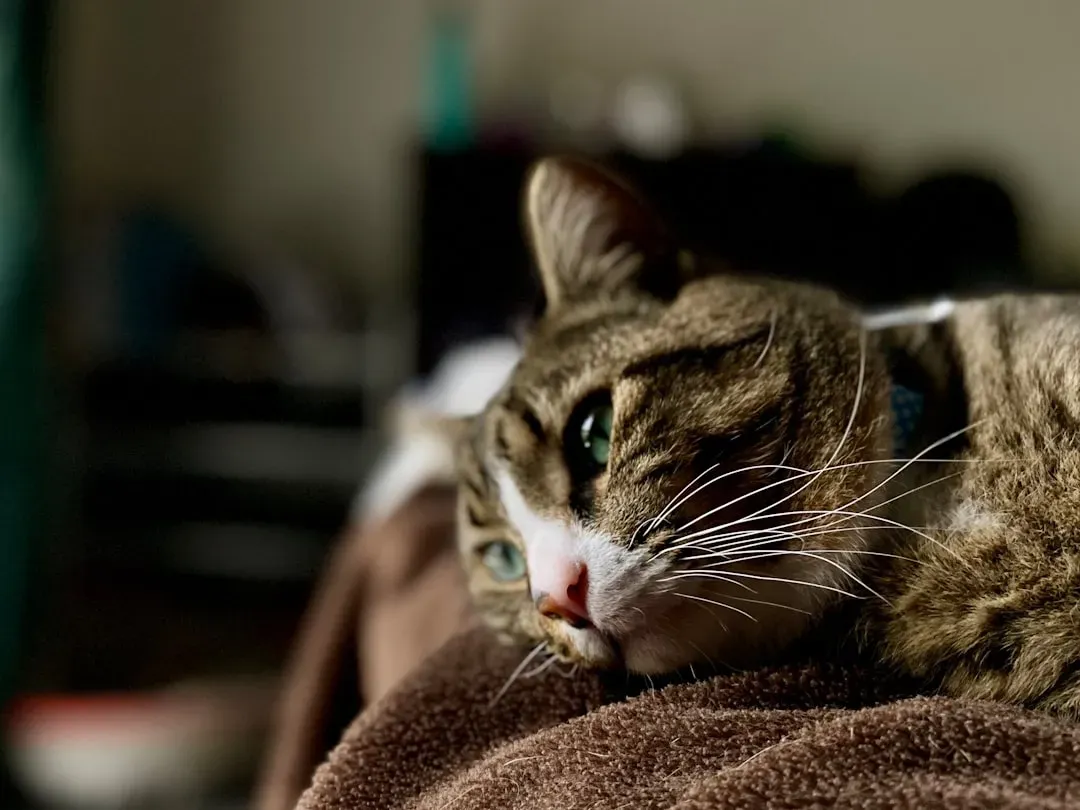
This one genuinely surprises new cat owners: sick or hurting cats often purr more, not less.
Cats can purr when they are healthy and feeling good, but cats can also purr when they are sick or in pain, and by purring, the cat may be asking for care. It’s not a contradiction – it’s a survival mechanism wired into the species. Veterinarians who treat many injured, purring cats believe purring can be a coping mechanism, helping them self-soothe when they are sick, scared, or dying.
Here’s the controversial opinion worth sitting with: treating every purr as a “happy noise” could actually cause owners to miss early signs of illness. If your typically quiet cat suddenly starts purring nonstop, that’s not necessarily good news – it might be worth a vet visit. And the science behind why purring might help healing is even stranger, which brings us to #5.
#5 – The Healing-Frequency Purr
Purring isn’t just a sound. It’s a vibration with a measurable frequency range, and that range lines up suspiciously well with therapeutic technology used on humans.
Research suggests purring may have health benefits, as the vibrations produced occur at a frequency of 25 to 150 Hertz, which has been shown to promote healing and tissue regeneration and is known to positively affect bone density and tendon and muscle repair. A 2001 study in The Journal of the Acoustical Society of America backs this up from another angle, noting that cats purr at frequencies between 20 and 150 hertz – similar to frequencies used in human treatments for bone growth and muscle pain.
Fast Facts
- Purr vibrations measure roughly 20 to 150 Hertz, depending on the study cited
- That range overlaps with frequencies used in human bone-growth and muscle-pain therapies
- The connection was documented in a 2001 paper in The Journal of the Acoustical Society of America
- No controlled study has proven purring actually heals anything in cats – it remains a theory
But here’s the honest caveat experts insist on: correlation isn’t proof. There is no strong evidence to support or refute the healing idea, and there’s never been a study of cat purrs to suggest they have any magical healing powers. So the “healing purr” theory is real science, but it’s still a theory. Next up, a purr type most people confuse with affection but is actually more transactional.
#6 – The Greeting Purr
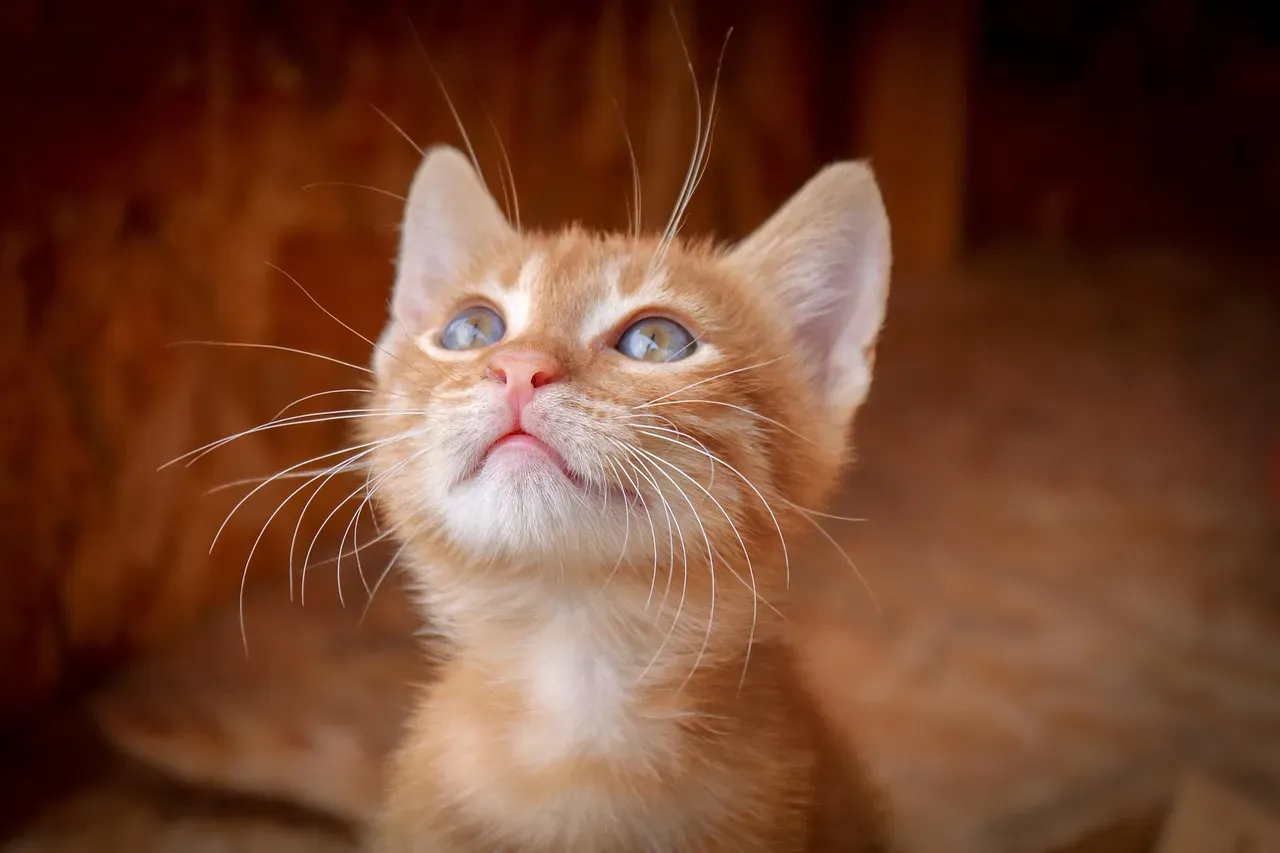
That quick, soft chirp-purr your cat gives when you walk through the door is its own distinct category.
Cats may utter a short purr when greeting people or other cats, and typically this is a friendly interaction – mother cats can also purr when approaching their kittens. It’s brief, it’s social, and it’s rooted in maternal bonding behavior that got repurposed for humans somewhere along the domestication timeline.
What most people get wrong: they lump this in with the “solicitation purr” (coming up next), but they’re not the same thing. The greeting purr is a hello, not a request. It’s short, low-effort, and doesn’t escalate if ignored – which is exactly how you can tell it apart from #7.
#7 – The Attention-Seeking Purr
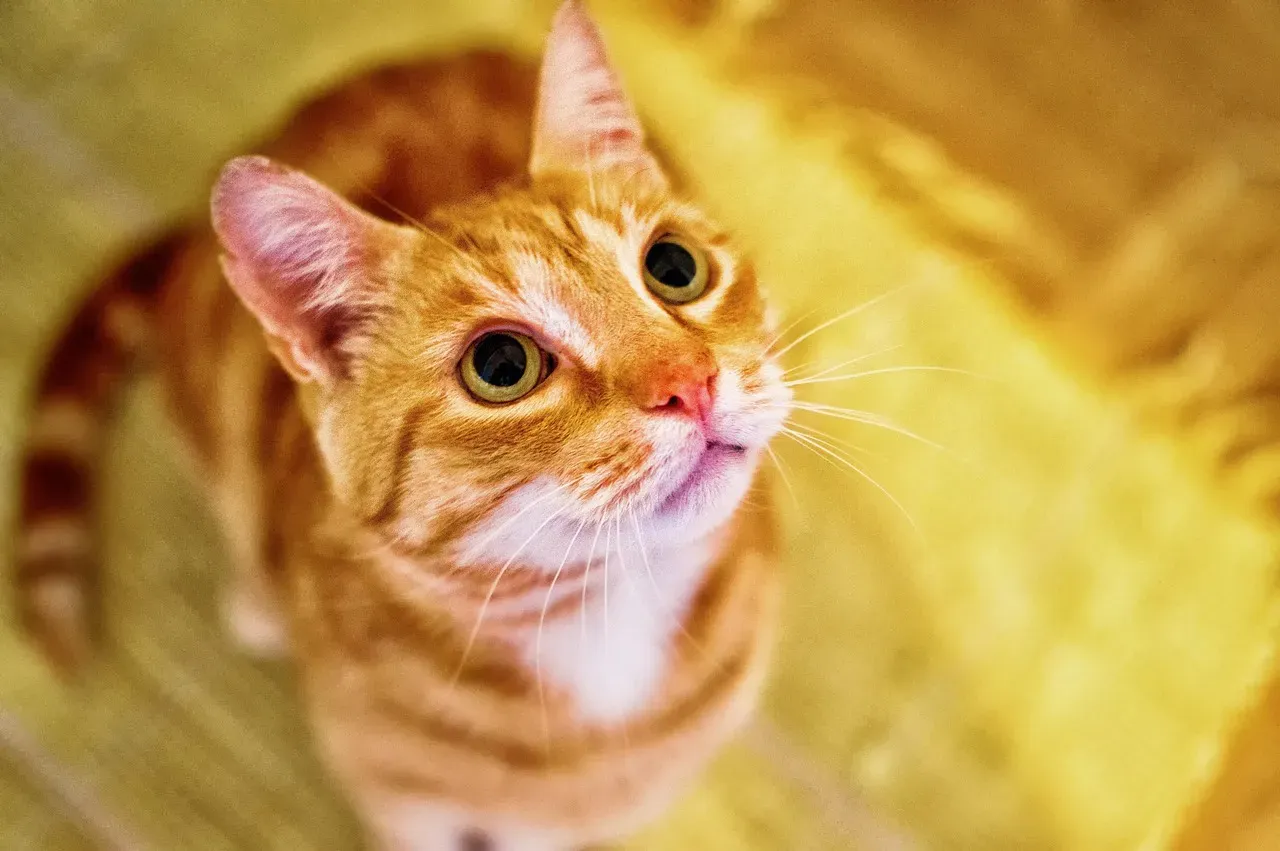
This purr has a job to do, and that job is getting you to do something.
Cats may purr when soliciting physical attention, such as a pet or neck scratch from people, and they may also purr when they rub their face or body against another cat, a person, or an object. This is a manipulative-but-endearing behavior – your cat has learned that purring plus rubbing equals a reaction from you. Happiness is one of the main reasons cats purr, and sometimes they purr because they’re enjoying cheek scratches or even eating.
The controversial take: this purr is basically a trained behavior, not a spontaneous emotional overflow – your cat has essentially trained you through repetition. If you want proof cats are strategic about their sounds, wait until you hear about the pitch difference in #8.
#8 – The Pitch Tell
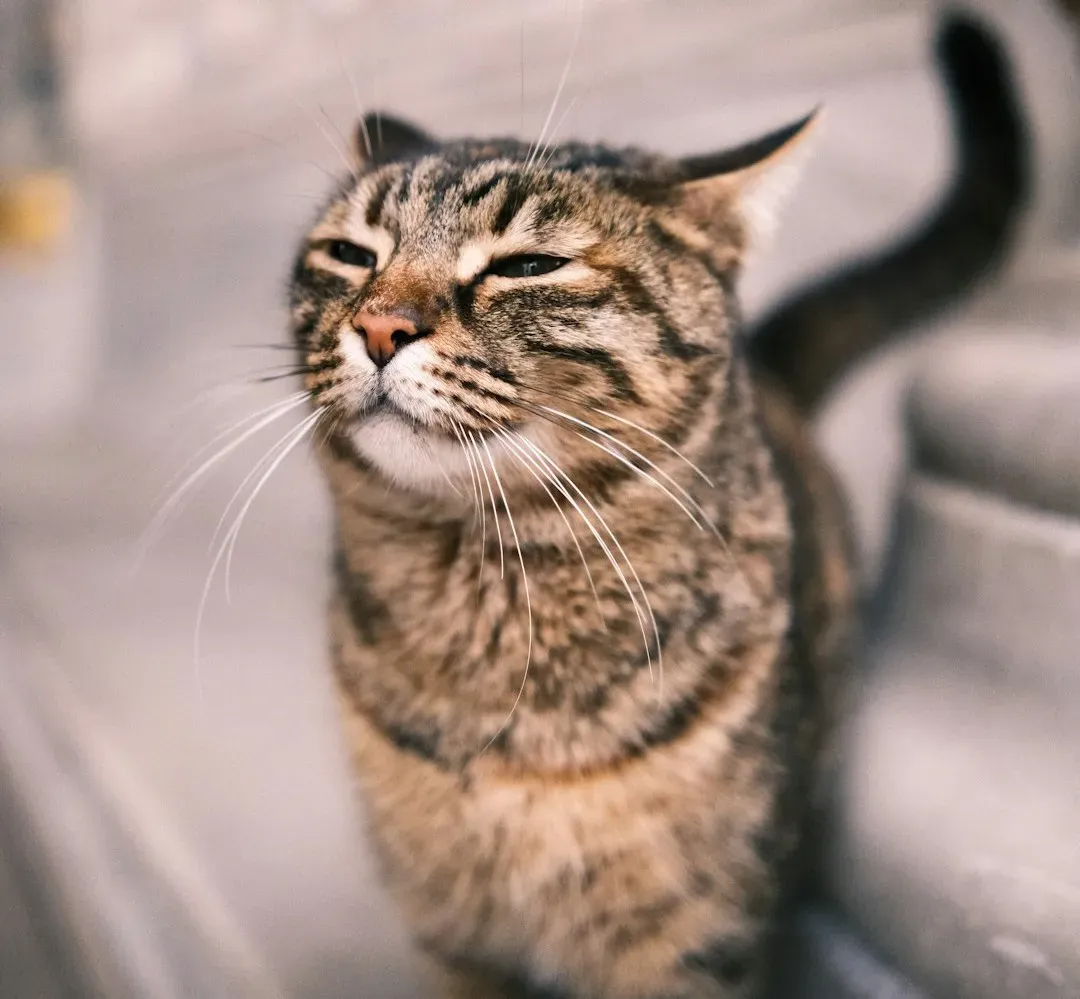
Not all purrs sound the same, and the difference in pitch might be the single most underrated diagnostic tool available to cat owners.
When cats are purring out of happiness, the purr tends to be lower pitched, while a stressed-out cat might have a higher-pitched purr, and it’s thought that anxious purring is done intentionally, whereas contentment purring is almost an automatic response. That distinction – automatic versus intentional – is a big deal scientifically.
Quick Compare
- Low-pitch purr: slow, rumbling, automatic – usually signals genuine ease
- High-pitch purr: tighter, more clipped, intentional – often paired with tense body language
- Body language check: relaxed eyes and loose posture support the low-pitch reading; wide eyes or a stiff tail support the high-pitch one
Most owners have never trained their ear for this, but it’s genuinely learnable. A low, rumbling, almost sleepy purr usually means genuine ease. A tighter, higher, more clipped purr paired with tense body language is the stress version. Purring, though, is only half the feline emotional vocabulary. Kneading tells its own origin story, starting with #9.
#9 – The Nursing-Memory Knead
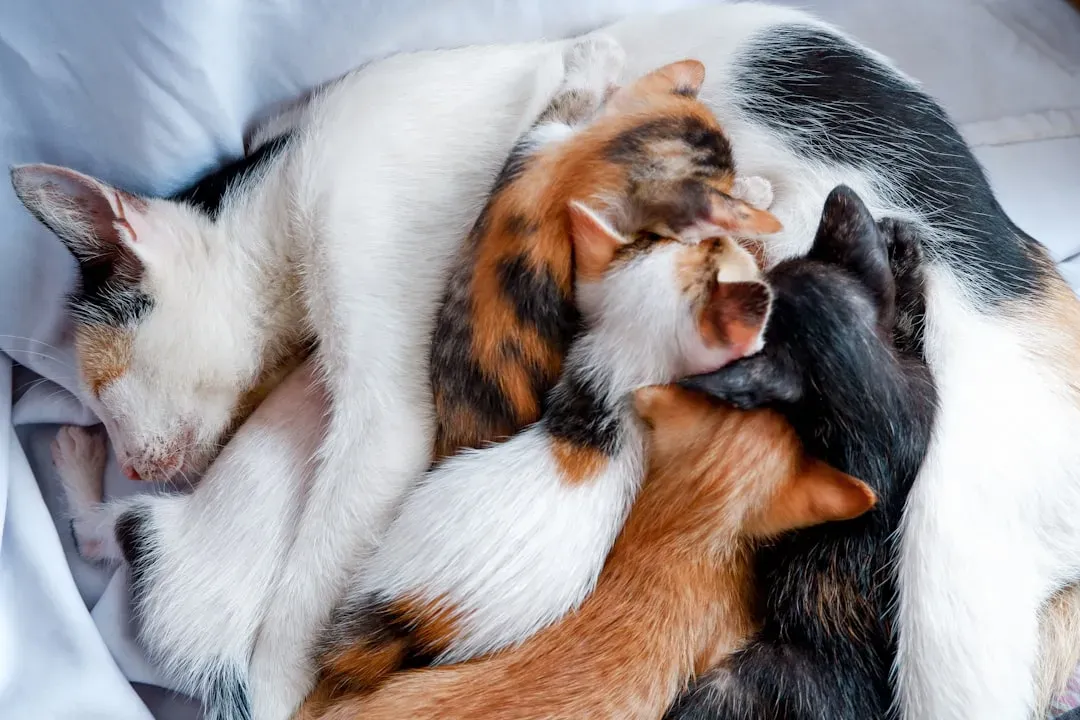
Every single knead your adult cat performs traces back to something that happened when it was days old.
Kittens often knead while nursing from their mother to stimulate milk production. That rhythmic paw-pressing against the mammary glands is a survival behavior, and it doesn’t fully disappear. Kneading originates from kittenhood, when kittens press their paws against their mother’s belly to stimulate milk flow, and this comforting behaviour often persists into adulthood, associated with feelings of security and contentment.
The surprising fact: some researchers classify kneading as a “neotenous” behavior – meaning it’s literally a juvenile trait that never got switched off. Your adult cat is technically doing a baby behavior every time it makes biscuits. But the reason cats specifically target fabric takes this in a stranger direction – see #10.
#10 – The Scent-Marking Knead
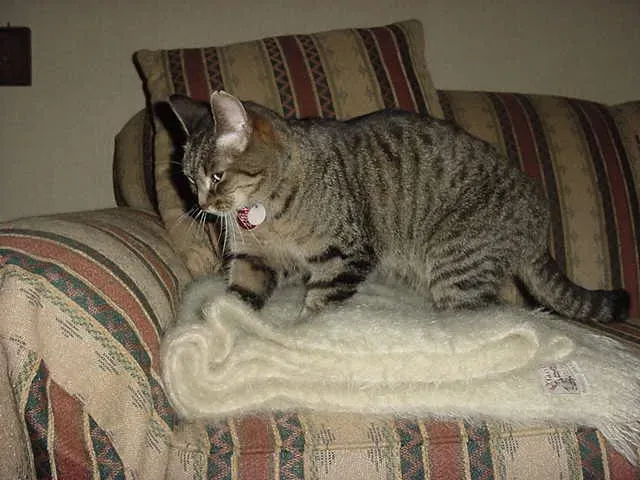
This is the knead most owners never think to question: why does your cat always pick the same blanket or your exact lap?
Cats have scent glands in their paw pads, and when they knead, they release pheromones. That’s not incidental – it’s deliberate territorial communication happening in plain sight. Kneading helps them mark territory and signal familiarity and ownership of a space.
At a Glance
- Scent glands sit in the paw pads, not just the cheeks or forehead
- Each knead presses those glands into fabric, depositing pheromones
- The behavior marks blankets, laps, and furniture as familiar or “claimed”
- It functions as both territorial marking and a comfort signal at the same time
The blunt truth: when your cat kneads your leg, it’s partially claiming you as property, not just showing love. Cats knead to claim blankets and other soft objects as their own by depositing their unique pheromones from the scent glands between their toes. It’s affection, sure – but it’s affection with a signature attached. Next, the instinct that predates domestication entirely.
#11 – The Nest-Building Knead
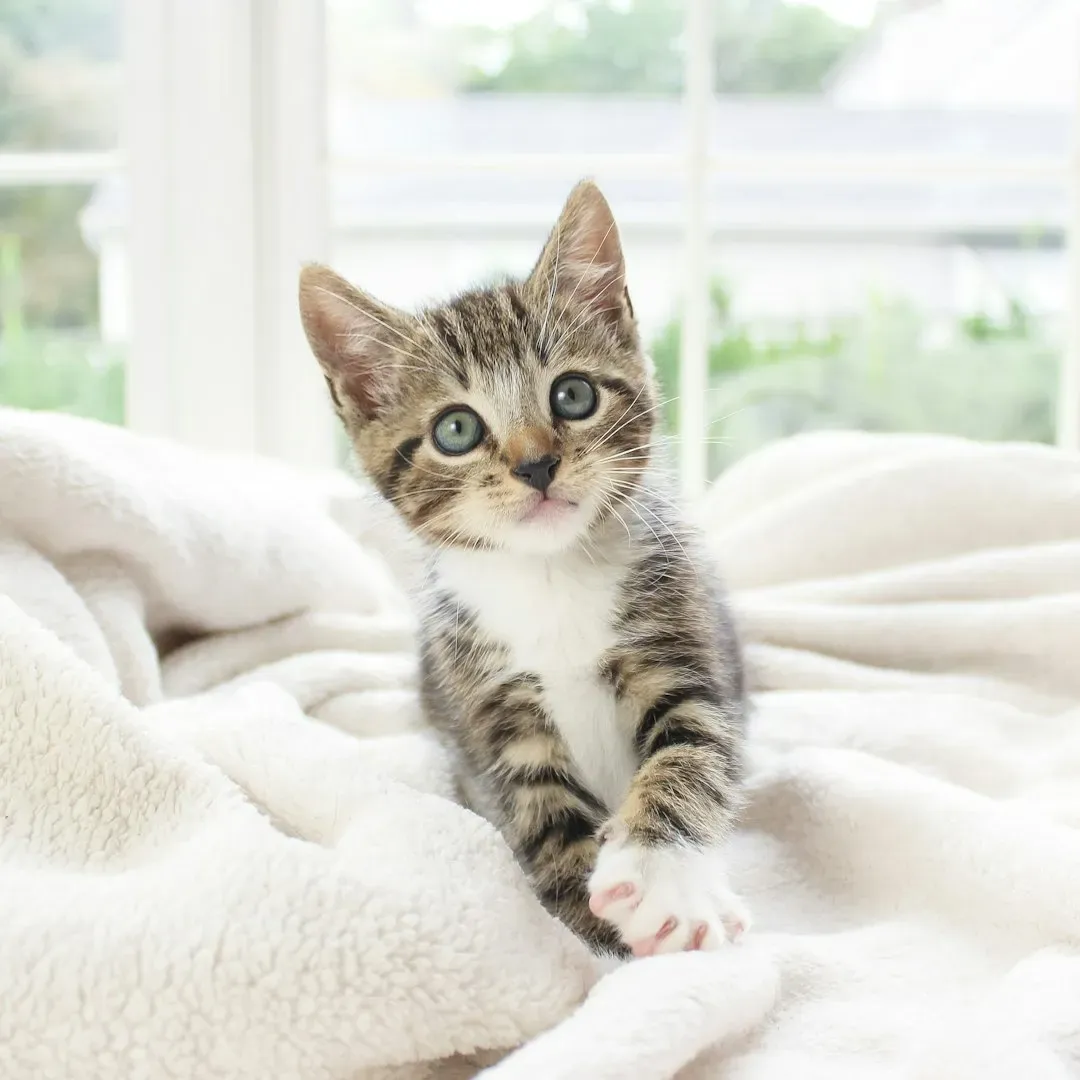
Before there were couches and heated cat beds, there was grass, dirt, and leaves – and cats had to make their own sleeping spot from scratch.
In the wild, cats press down grass or leaves to make a comfortable resting place, and domesticated cats show this same instinct when kneading, preparing a soft, safe sleeping area just like their ancestors. This is a purely mechanical, practical explanation – no emotion required. Kneading can also tamp down bedding material in preparation for sleep, a behavior also observed in wild cats.
What most people miss: this means the pre-nap knead-fest on your comforter isn’t really about you at all – your cat would do this on a pile of leaves in a forest with zero audience. It’s practical instinct wearing a cute costume. But the emotional version of kneading – the one aimed directly at humans – is even more revealing.
#12 – The “You’re My Human” Knead
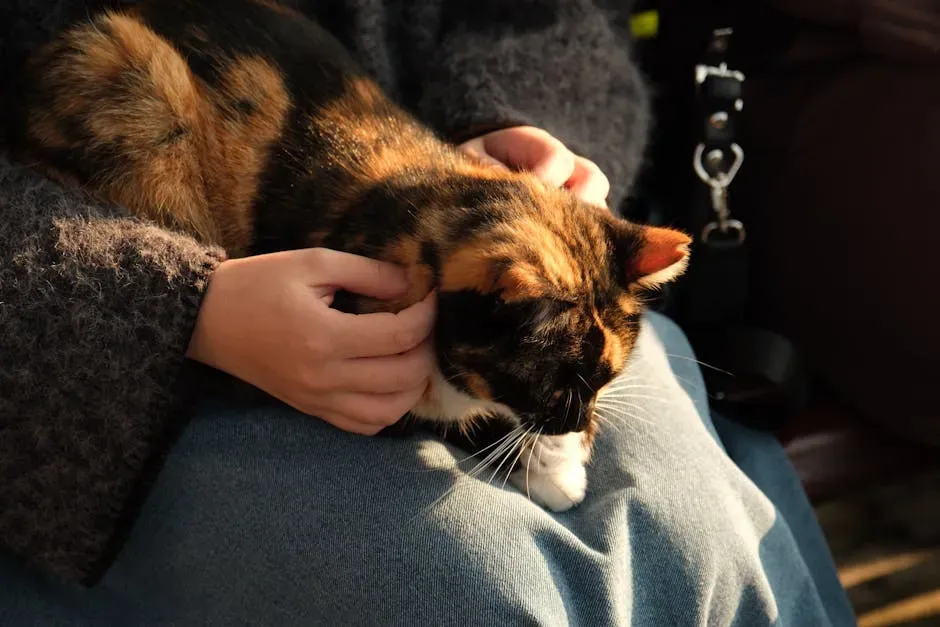
This is the knead that answers the question every cat owner secretly asks: does my cat actually love me, or just tolerate me?
Dr. Kristyn Vitale, a certified applied animal behaviorist at Unity Environmental University, has a theory that reframes kneading entirely.
It’s possible that some of the juvenile behaviors that used to be directed at the mother are now directed at the owner.
Dr. Kristyn Vitale, certified applied animal behaviorist
That’s not speculation – it’s backed by a landmark attachment study. Vitale’s 2019 study in Current Biology demonstrated that 65% of cats form secure attachment bonds with their human caregivers, providing the relational framework in which kneading functions.
The single most surprising fact here: two out of three cats are scientifically confirmed to be securely attached to their owner – a bond category typically discussed in human infant psychology. When a cat kneads on a human lap, it is deploying a kitten-to-mother bonding signal within a new attachment relationship. If you’ve ever wondered whether your cat truly loves you, kneading is one of the strongest indicators. But not every knead is romantic – some come with a side of drool, covered next.
#13 – The Suckling Knead
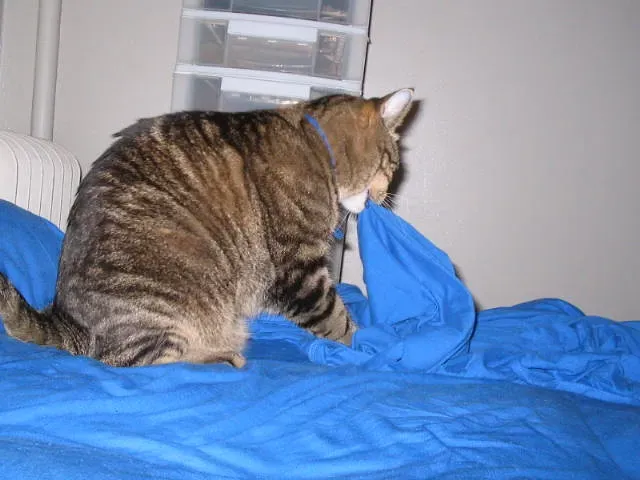
If your cat kneads and then starts sucking or chewing on a blanket corner, that’s not a random quirk – it’s the nursing instinct going one step further.
Some cats may suckle on a blanket while kneading to mimic nursing behavior. This combination usually shows up in cats weaned too early or those with a naturally strong comfort-seeking drive. It looks unusual, but it’s rarely a medical concern on its own.
The bolded truth here: suckling-while-kneading is essentially your cat regressing to kittenhood on command, using texture and rhythm to recreate a feeling it hasn’t experienced since it was weeks old. It’s a little strange to watch, but vets generally consider it harmless self-soothing. Hormones, though, can push kneading into a completely different gear – which is where #14 comes in.
#14 – The Hormonal Knead
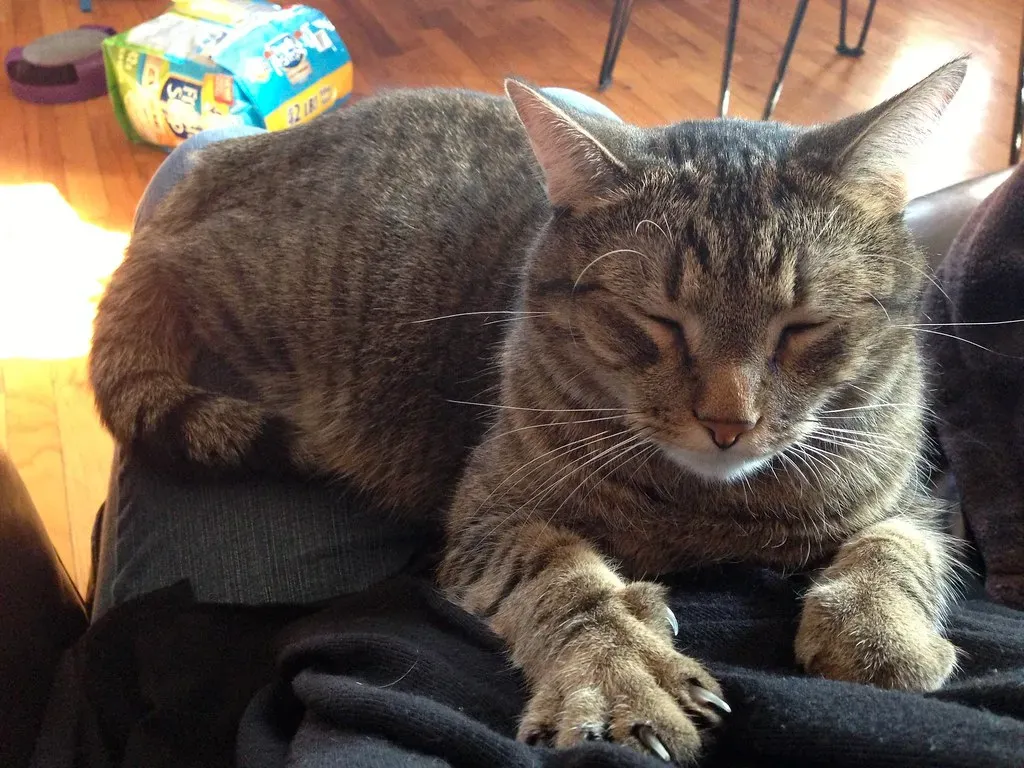
Sometimes a sudden spike in kneading has nothing to do with emotion at all – it’s biology doing the talking.
Unspayed female cats may knead more when in heat, and if your cat suddenly kneads more than usual, hormones may be involved. This is a detail a lot of new cat owners genuinely don’t expect, especially if they assumed kneading was purely a comfort behavior.
The controversial opinion vets are increasingly vocal about: if you’re not planning to breed your cat, a sudden kneading increase is one more reason spaying earlier rather than later makes sense – both for behavior management and long-term health. Watching for kneading pattern changes matters for more than hormones, though, as our final point makes clear.
#15 – The Warning Knead
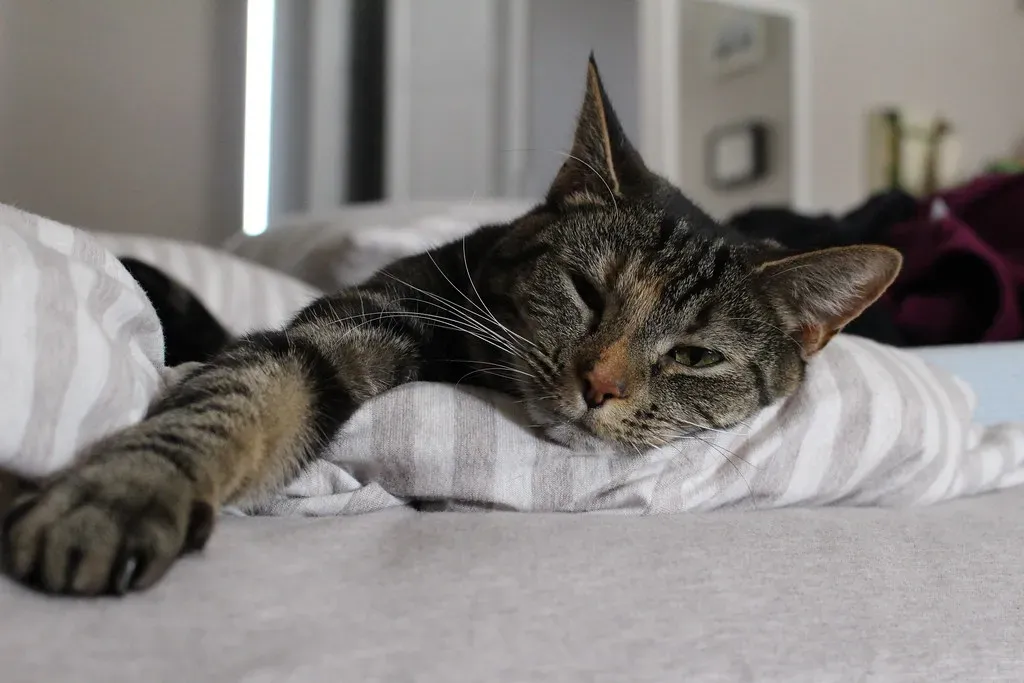
This is the knead every owner should actually be paying attention to, because it can double as an early health alert system.
A decrease or sudden increase in kneading behavior may signal changes in emotional or physical health, and if kneading is accompanied by other behavior changes such as hiding, aggression, appetite loss, or lethargy, a veterinary evaluation is warranted. Kneading isn’t just cute – it’s a behavioral vital sign vets increasingly track.
Worth Knowing
- A sudden increase or a total stop in kneading can both be red flags
- Watch for it alongside hiding, aggression, appetite loss, or lethargy
- Kneading can act as self-soothing during mild stress or anxiety
- Any abrupt shift in kneading habits paired with other changes deserves a vet call
The most important fact on this entire list: kneading may also serve as a self-soothing behavior during times of mild stress or anxiety, which means a cat that suddenly starts kneading obsessively might be dealing with something uncomfortable, not just feeling extra affectionate. If your cat’s kneading habits change overnight, don’t dismiss it as quirky – treat it as data.
The Bottom Line
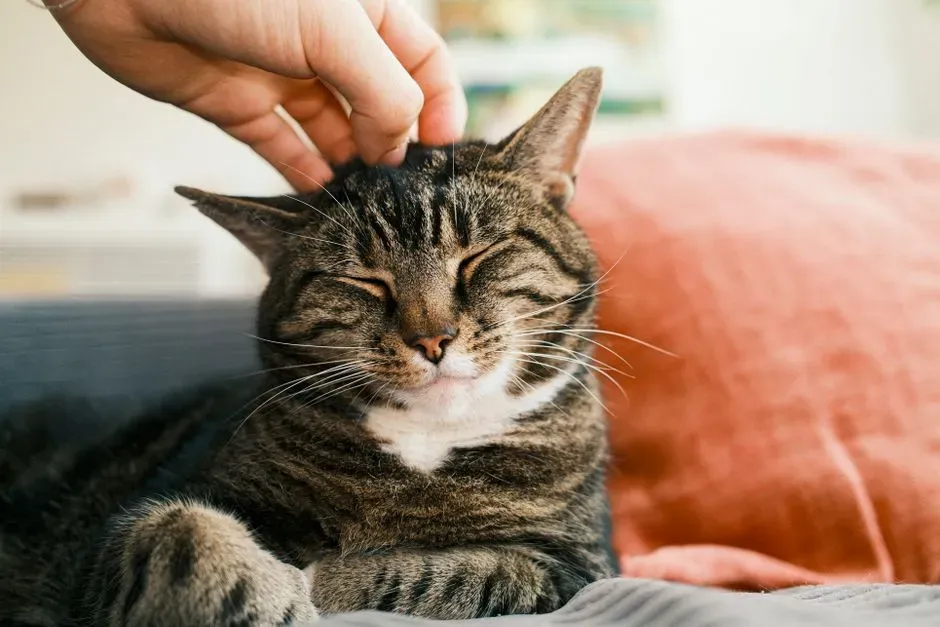
Here’s the uncomfortable truth: purring and kneading are not simple “happy meters.” They’re a mixed signal system covering contentment, stress, pain, hormones, territory, and even survival instinct from kittenhood – all wrapped in the same adorable packaging.
The biggest myth we found? That a purring cat is always a relaxed cat. Sometimes it’s the opposite. And honestly, we think too many owners ignore sudden changes in kneading simply because it looks cute – when vets increasingly treat it as an actual behavioral vital sign worth tracking.
So here’s our take: learn your specific cat’s baseline, because generic advice about purrs and kneads only gets you halfway there. Did your cat ever knead or purr in a moment that completely surprised you? Tell us what happened in the comments.
Kristina is a young writer from India. An arts graduate and an avid content creator, Kristina is passionate about animals and wildlife. She enjoys exploring topics related to pet care, animal behavior, conservation, and nature, combining thorough research with engaging storytelling.