
Most cat owners think they’ve covered all the bases – locked up the cleaning supplies, hidden the chocolate, maybe moved a plant or two. But veterinary poison control centers field tens of thousands of calls every year about cats harmed by things sitting in plain sight.
According to ASPCA Animal Poison Control, exposure to bouquets and indoor plants jumped two spots on their top toxins list in 2020 alone – over 9,000 more calls than the year before. The real danger isn’t what you already know to avoid.
It’s the fifteen hazards you walk past every single day without a second thought. Here’s what vets and poison control experts actually say – starting with the one sitting on your coffee table right now.
#15 – Your Scented Candles Are Not as Harmless as They Look
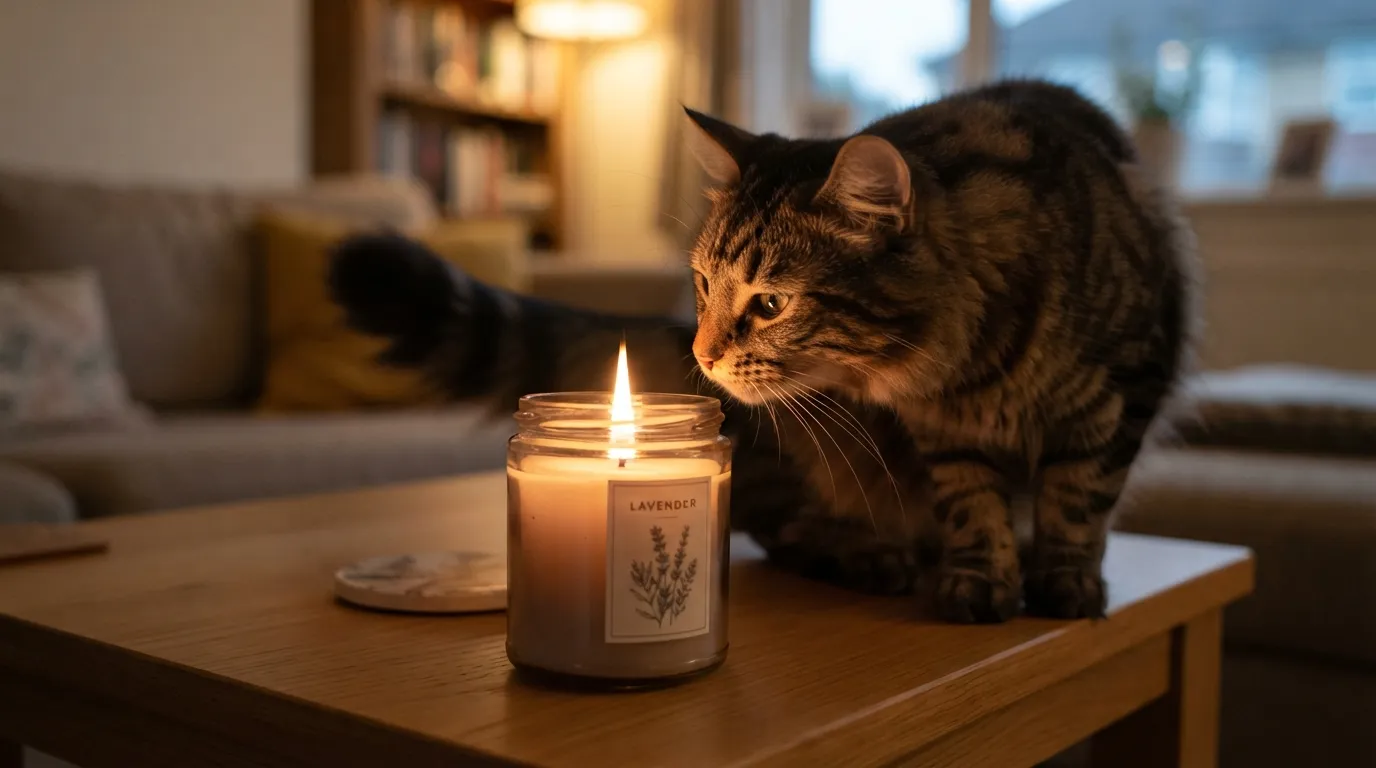
Most people light a candle to relax. Their cat may be paying for that habit.
Candles left unattended are a fire hazard, and the scented variety often contains compounds that irritate cats’ respiratory systems. Cats aren’t always aware of an open flame, so a swishing tail can catch fire before you even notice.
Keep candles in rooms your cat can’t access, and never leave them burning unsupervised. But that’s nothing compared to what’s waiting in #14.
#14 – Plug-In Air Fresheners and Essential Oils
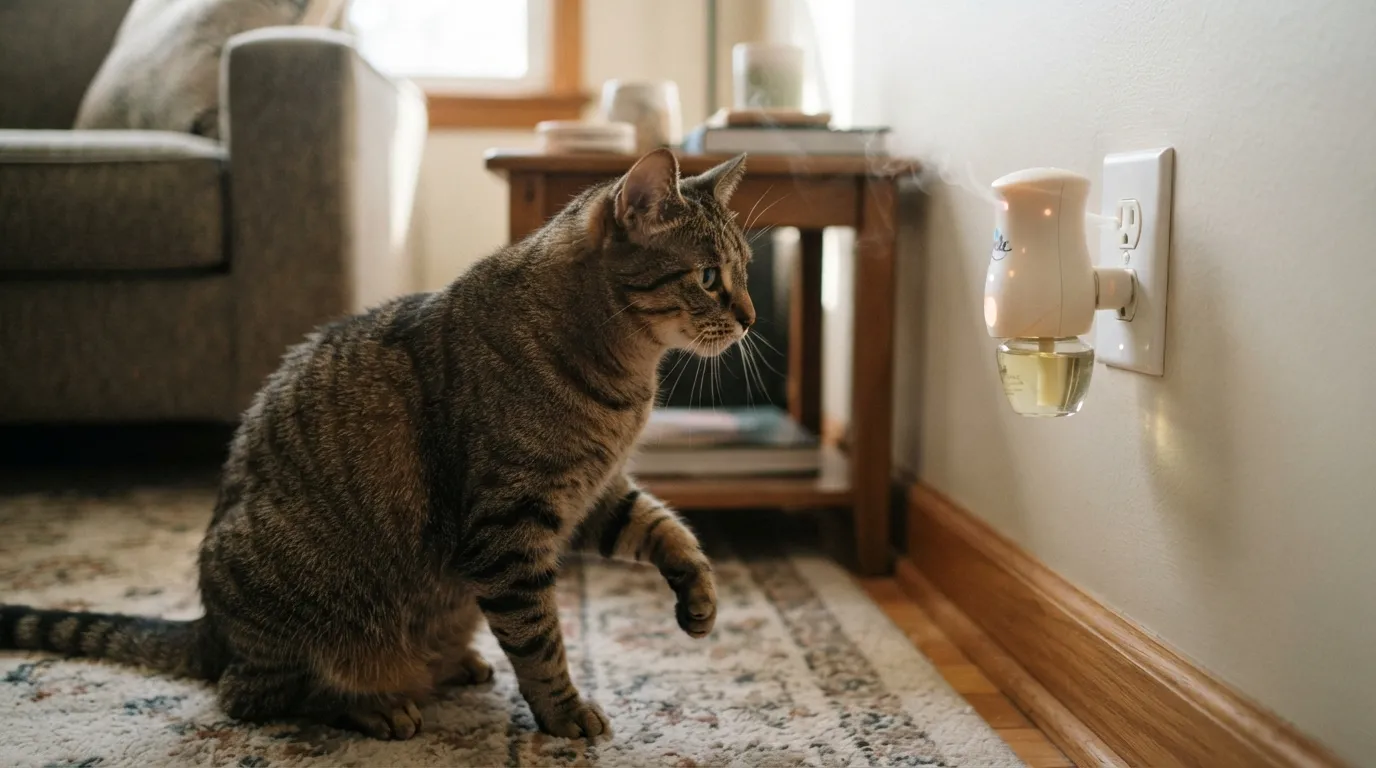
You think you’re making your home smell clean. Your cat’s liver disagrees.
Chemical threats come from essential oils used in cooking and deodorizing – cats cannot metabolize the toxins in many of them, so they can be deadly if swallowed or even touched. A single drop of concentrated tea tree oil, for example, can cause depression, hypothermia, and liver injury.
Plug-in air fresheners and oils like tea tree, eucalyptus, and peppermint are toxic through both topical exposure and inhalation. Swap them for unscented options immediately – then wait until you see what’s hiding in your bathroom cabinet in #13.
#13 – Over-the-Counter Medications on the Counter
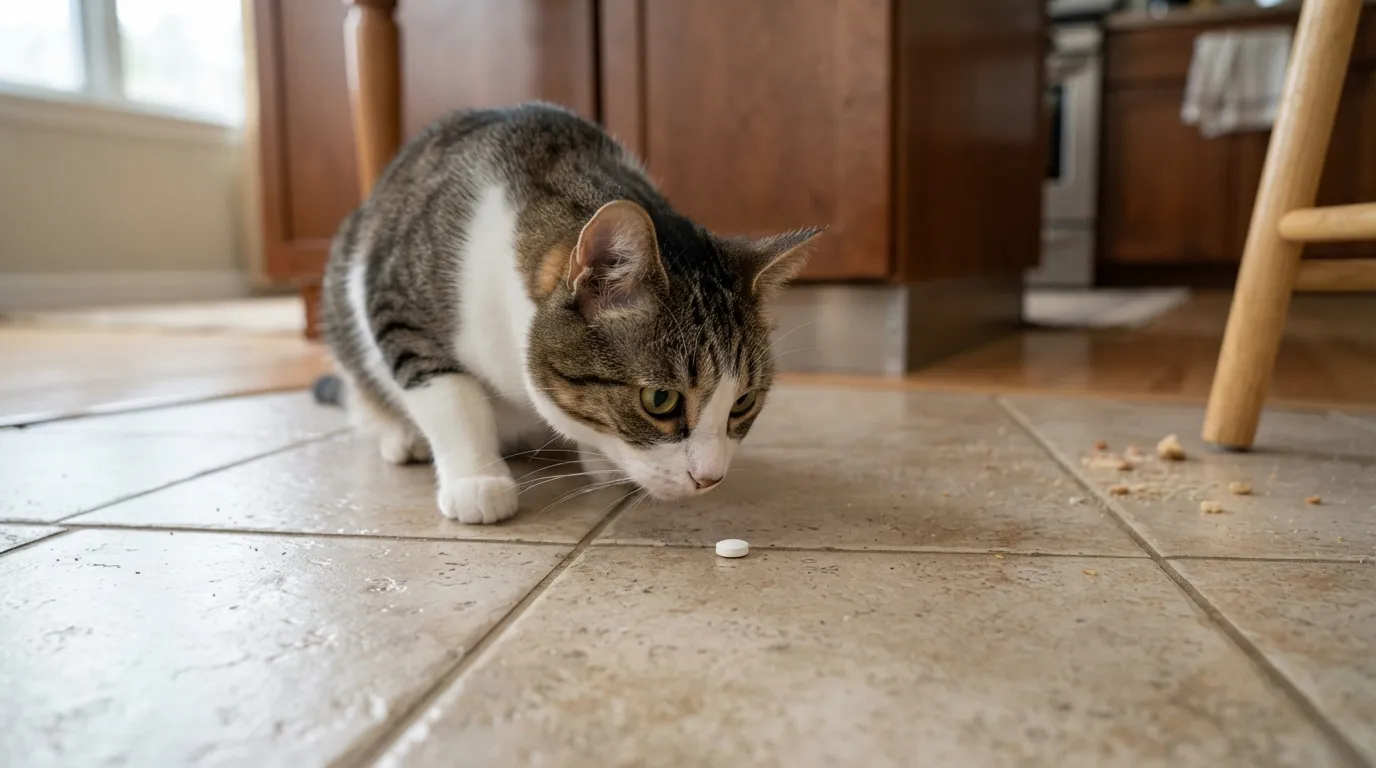
That pill you dropped on the floor this morning? Your cat already found it.
Many common medications are hazardous to cats – acetaminophen, ibuprofen, and naproxen can all be highly toxic. Cats can’t metabolize these drugs the way dogs can, and they’re skilled at hiding symptoms, which often delays treatment until it’s too late.
A dropped ibuprofen tablet on a tile floor is easy to miss and easy for a cat to find. Keep all pill bottles in a latched medicine cabinet – the next hazard is one almost every owner ignores completely.
#12 – The Washing Machine and Dryer
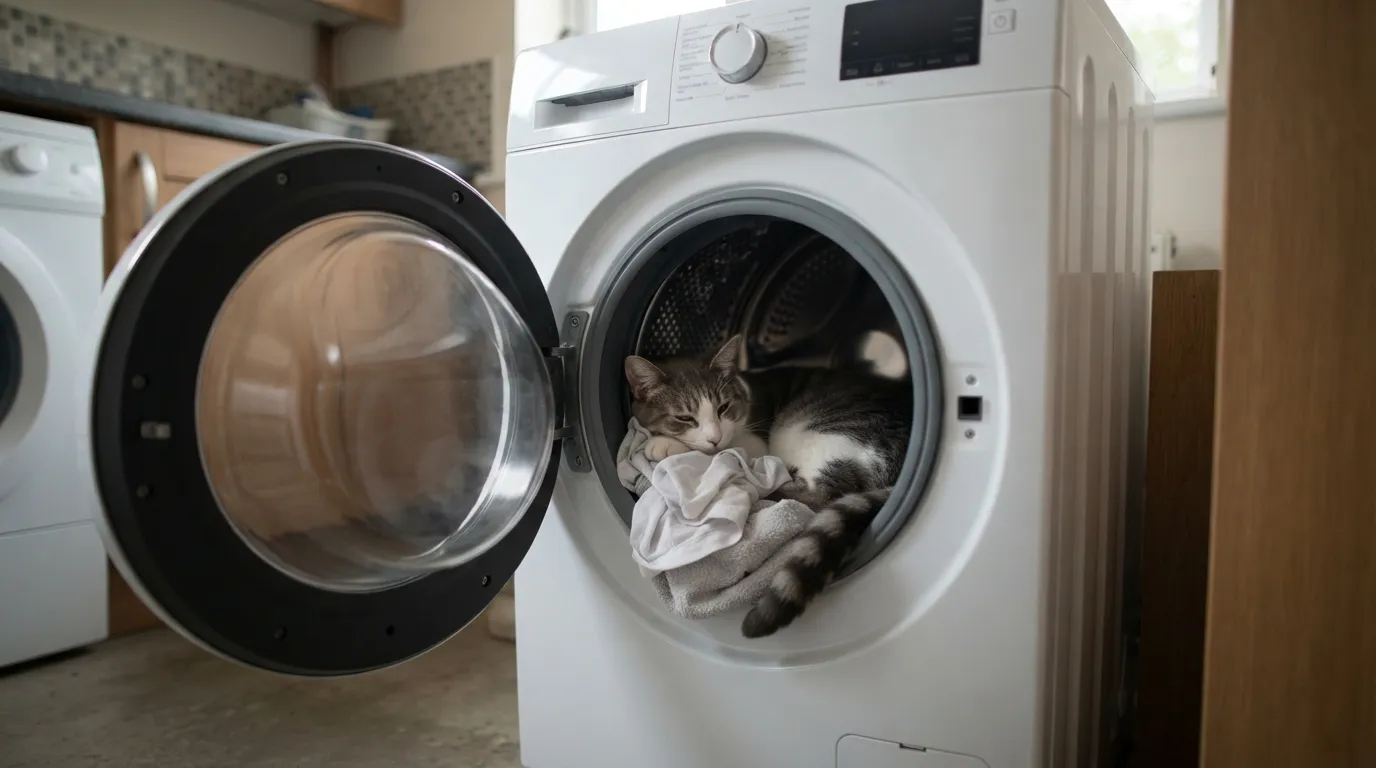
This one gets cats killed every year, and most owners never see it coming.
Cats can climb into washing machines and dryers and get stuck inside, and tragic accidents happen when a machine gets turned on without anyone knowing the cat is there. Dryers are especially appealing because they’re secluded, warm, and full of soft clothes.
At a Glance
- Always look inside before pressing start, every single cycle
- Keep washer and dryer doors closed between loads
- Warm, freshly-run dryers are a magnet for napping cats
- Front-loading washers add a drowning risk if a cat climbs in
Cats trapped in front-loading washers can suffer just as badly – near drowning, aspiration pneumonia, even chemical burns from detergent and bleach. Always check before you press start, every single time.
#11 – String, Yarn, Tinsel, and Dental Floss
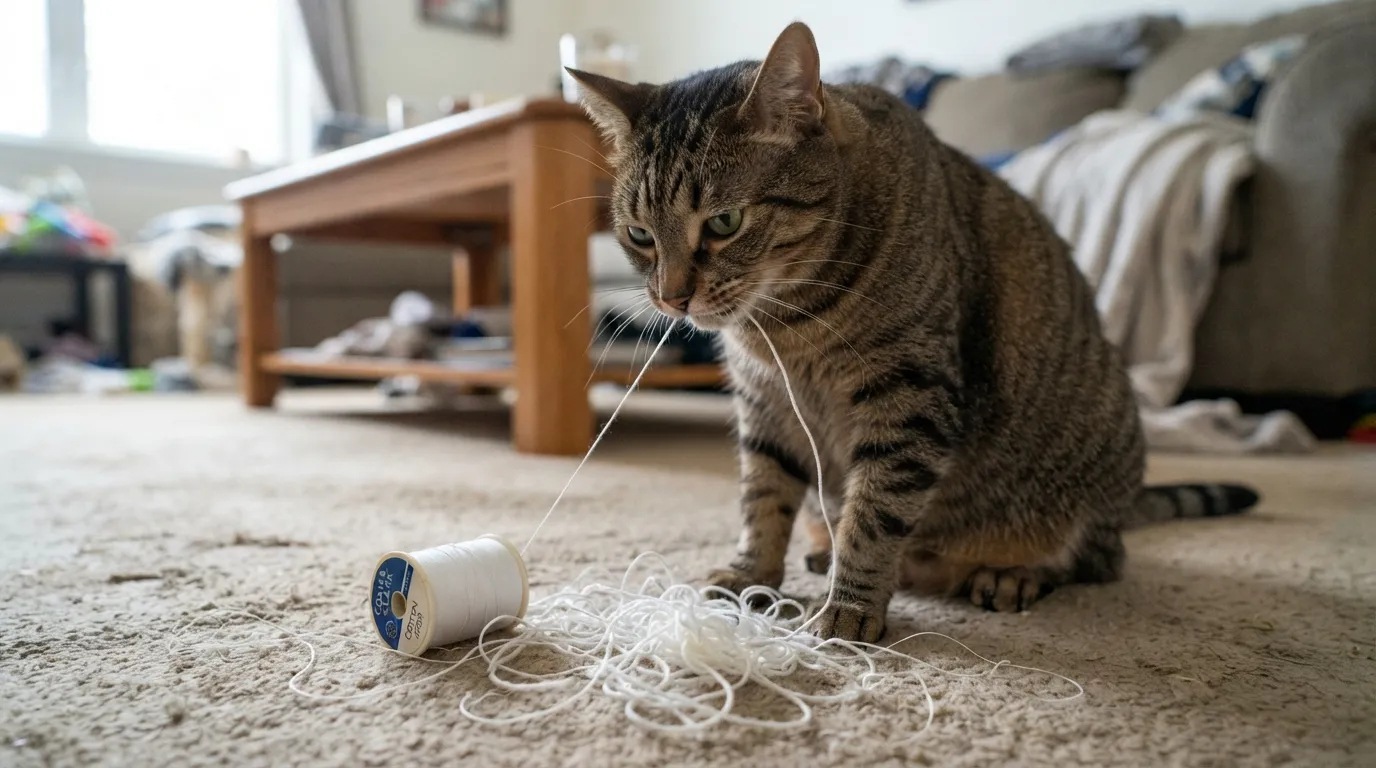
It’s the most “classic” cat toy. It’s also one of the most dangerous things in your home.
Anything long and string-like can get caught in a cat’s mouth or throat. If swallowed, it can cause part of the intestine to telescope into itself – a condition called intussusception – or act like a cheese-wire and cut through the bowel wall.
A large share of cat emergency surgeries trace back to swallowed objects like string, cord, dental floss, batteries, or buttons. Emergency intestinal surgery can cost thousands of dollars – and not every cat survives it.
#10 – Recliners and Rocking Chairs
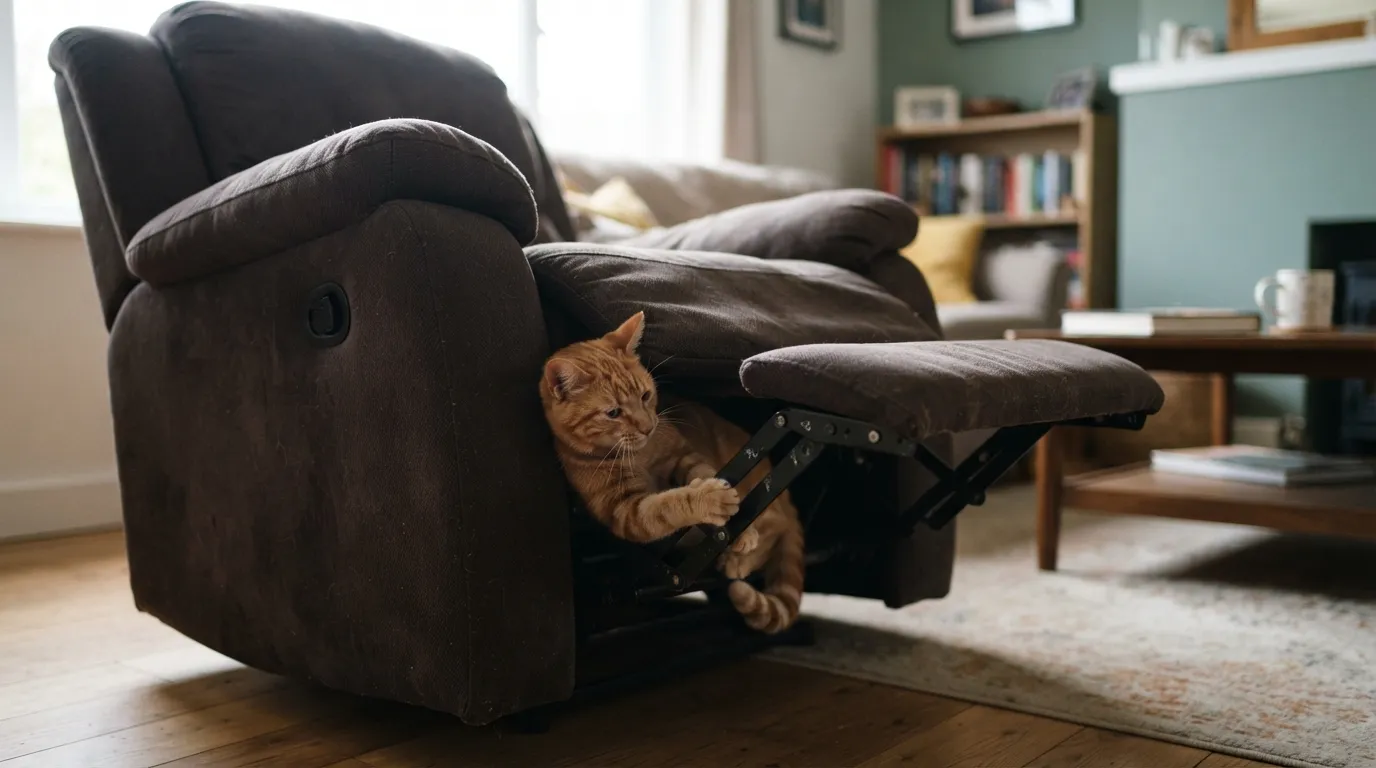
Your favorite chair could seriously injure or kill your cat. Owners rarely make this connection.
Rocking chairs are dangerous because a cat’s paw or tail can get trapped underneath as it moves, leading to serious injury. Recliners are worse – the mechanical footrest closes with real force, so always check where your cat is before putting the footrest down.
This is one of those hazards that’s completely silent until it isn’t. The next one, at #9, is right at eye level in your favorite room.
#9 – Household Cleaners Left on Surfaces
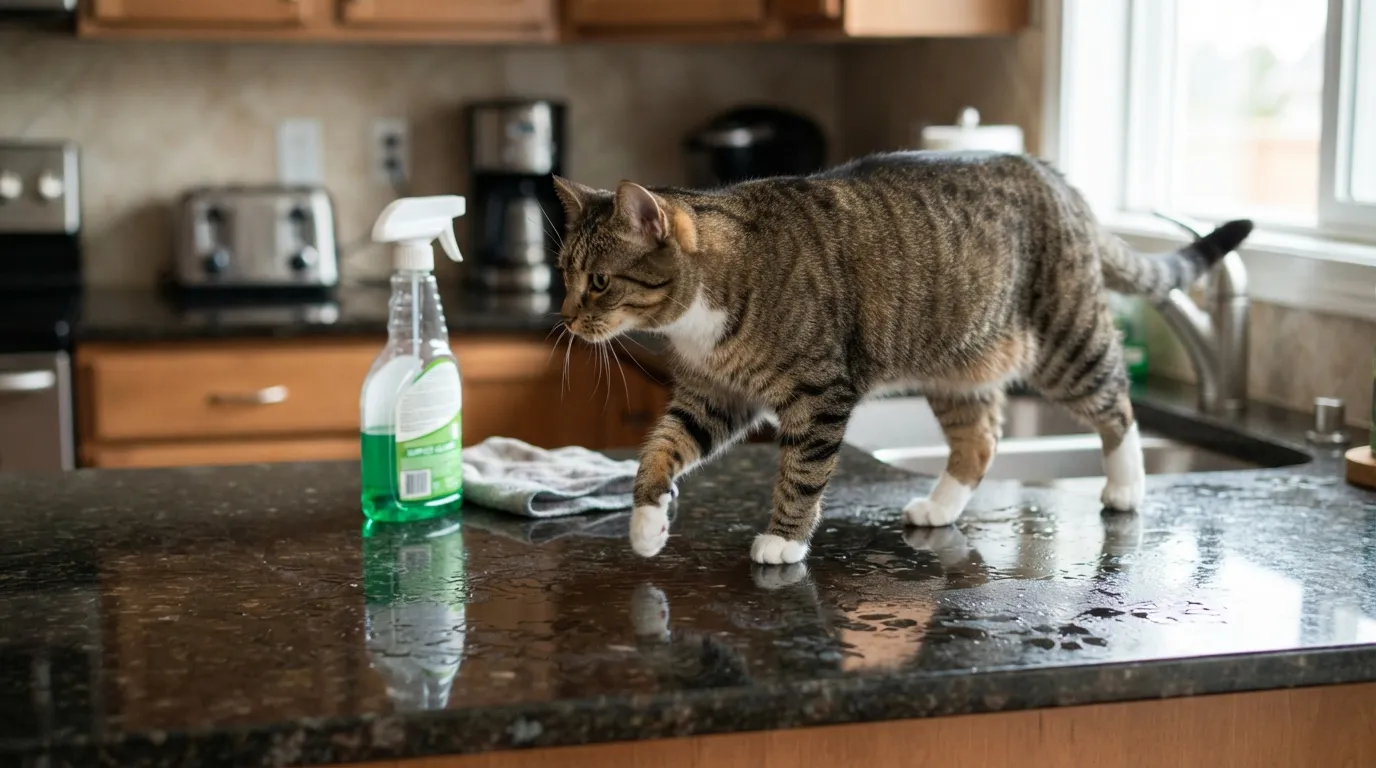
Spraying the counter and walking away seems harmless. For your cat, it’s a real risk.
Common household cleaners – kitchen and bath surface sprays, carpet cleaners, toilet bowl cleaners – can be toxic to cats. Symptoms range from stomach upset and chemical burns to respiratory trouble and organ damage.
Cats groom themselves by licking, so anything they walk through or rub against ends up in their mouths. A freshly cleaned floor is a poison delivery system if your cat walks across it before it dries.
#8 – Electrical Cords and Phone Chargers
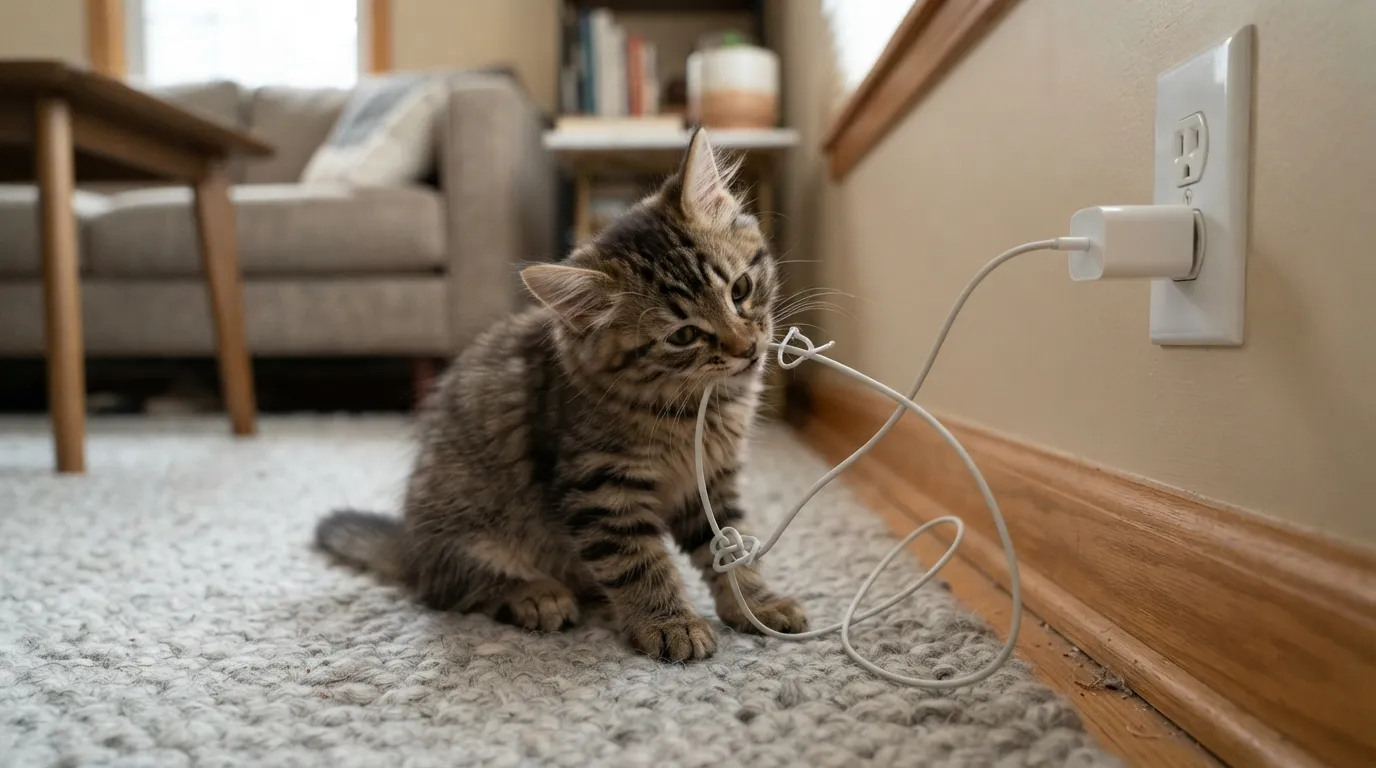
Every room in your house is wired with something your cat wants to chew.
Electrical cords are a hazard in every room. Kittens especially find them irresistible to chew, and can be electrocuted if they bite through the outer coating while the cord is plugged in.
Worth Knowing
- Teething kittens are the most frequent cord-chewers
- Cord protectors or furniture placement can block access
- Unplug chargers when they’re not actively in use
- Bitter-tasting deterrent sprays can discourage chewing
Thin phone and laptop chargers are especially tempting, and carry the same risk of electrocution or swallowed cord fragments. This is one hazard that can kill fast and silently.
#7 – Blind and Curtain Cords
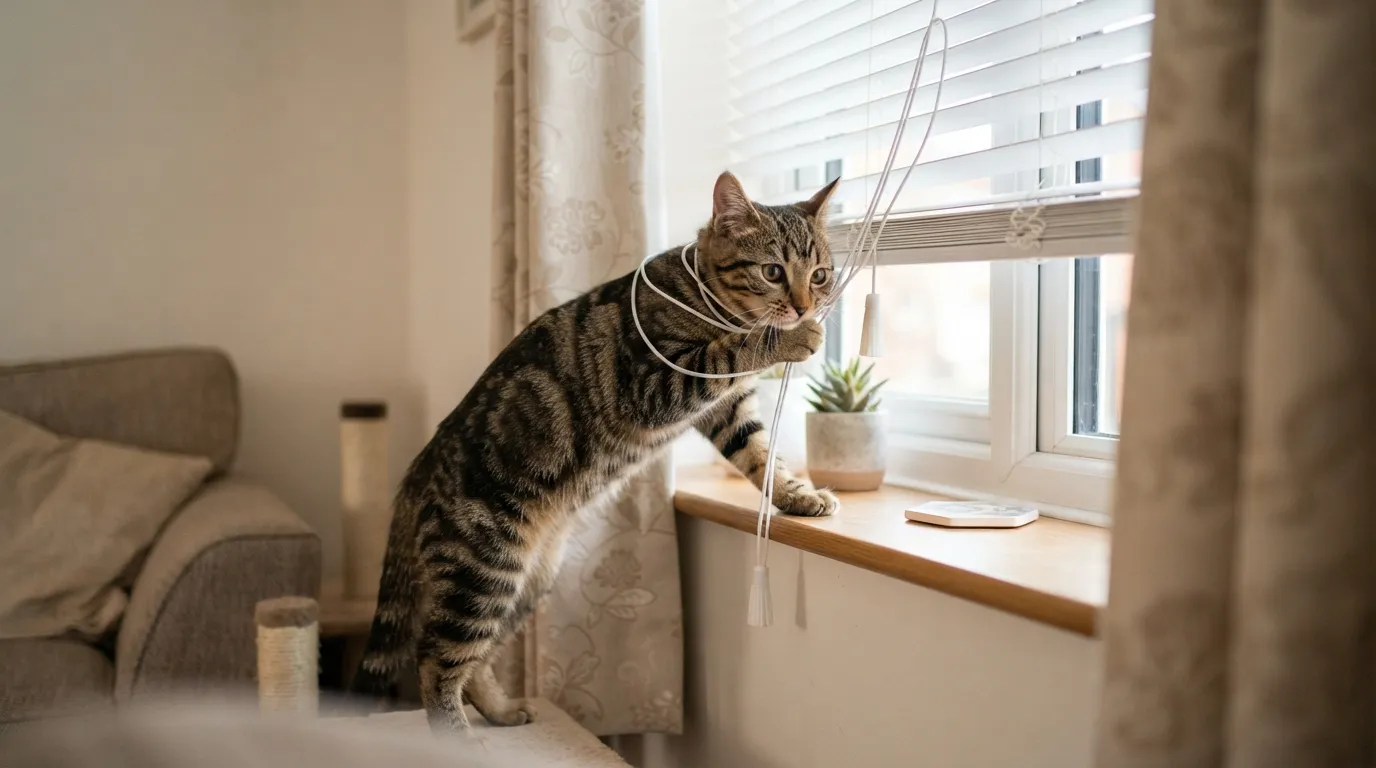
Your window dressings are a strangulation risk that most owners never think twice about.
Dangling cords from blinds or curtains are irresistible to cats, but playful cats can easily get tangled and strangled in them. It happens faster than most owners think possible.
Cut looped blind cords or install a cord wind-up cleat mounted high on the wall. This fix takes five minutes and could save your cat’s life.
#6 – Lilies (Any Kind, Anywhere in the House)
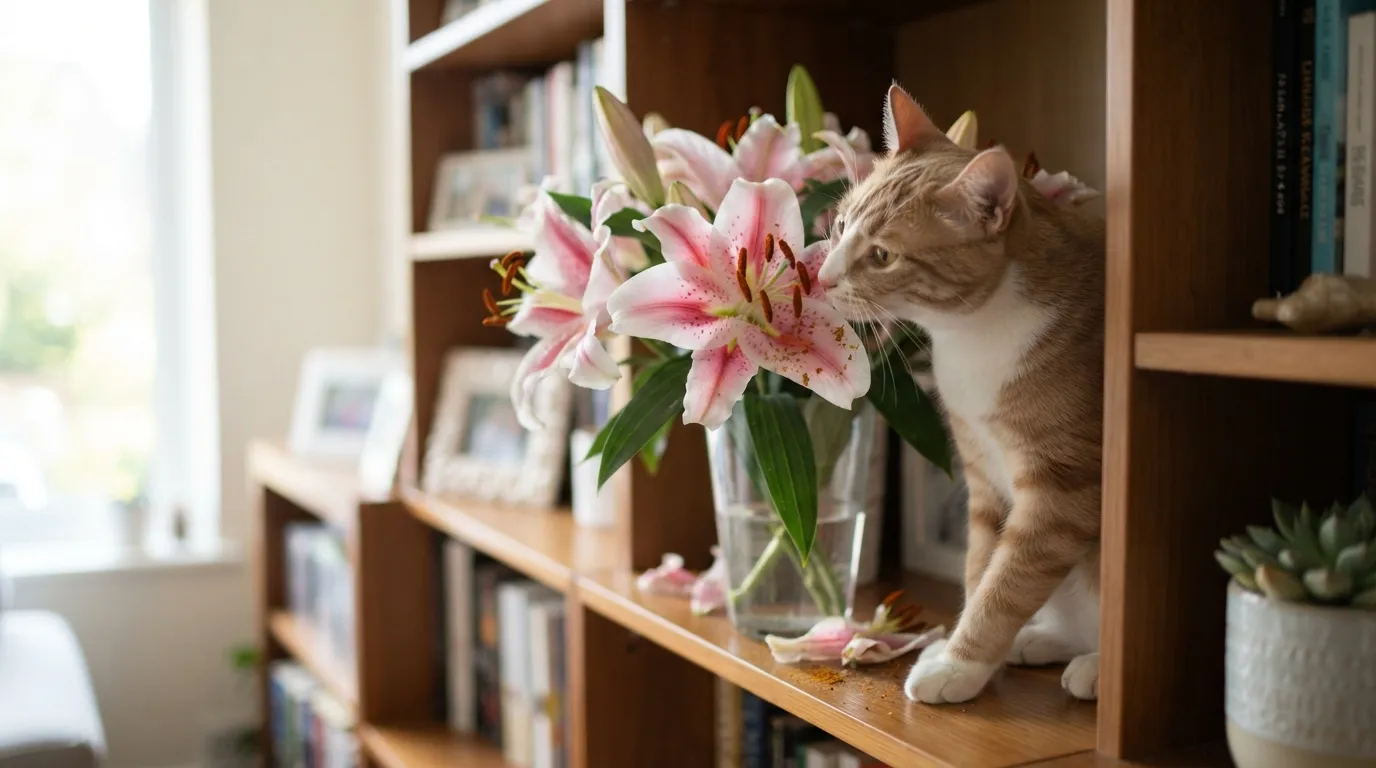
This is the one that devastates cat owners who had no idea. A single lily can be fatal.
Easter lilies are very dangerous for cats; ingestion of any part of the plant, or even the pollen, can cause kidney failure.
Dr. Tina Wismer, ASPCA Animal Poison Control Center
Cats need only chew a petal or two to take in enough toxin to cause death. Even licking pollen off their fur or drinking water from the vase can be fatal.
Fast Facts
- Easter, tiger, Asiatic, day, and stargazer lilies are all considered highly toxic
- Kidney failure can develop within 24 to 72 hours of exposure
- Even brushing against pollen and grooming it off can be enough
- There is no known “safe” amount – treat every exposure as an emergency
Every part of the plant – leaves, stems, petals, pollen – can cause harm. Never bring lilies into a home with cats. Never.
#5 – Sago Palms and Other “Trendy” Houseplants
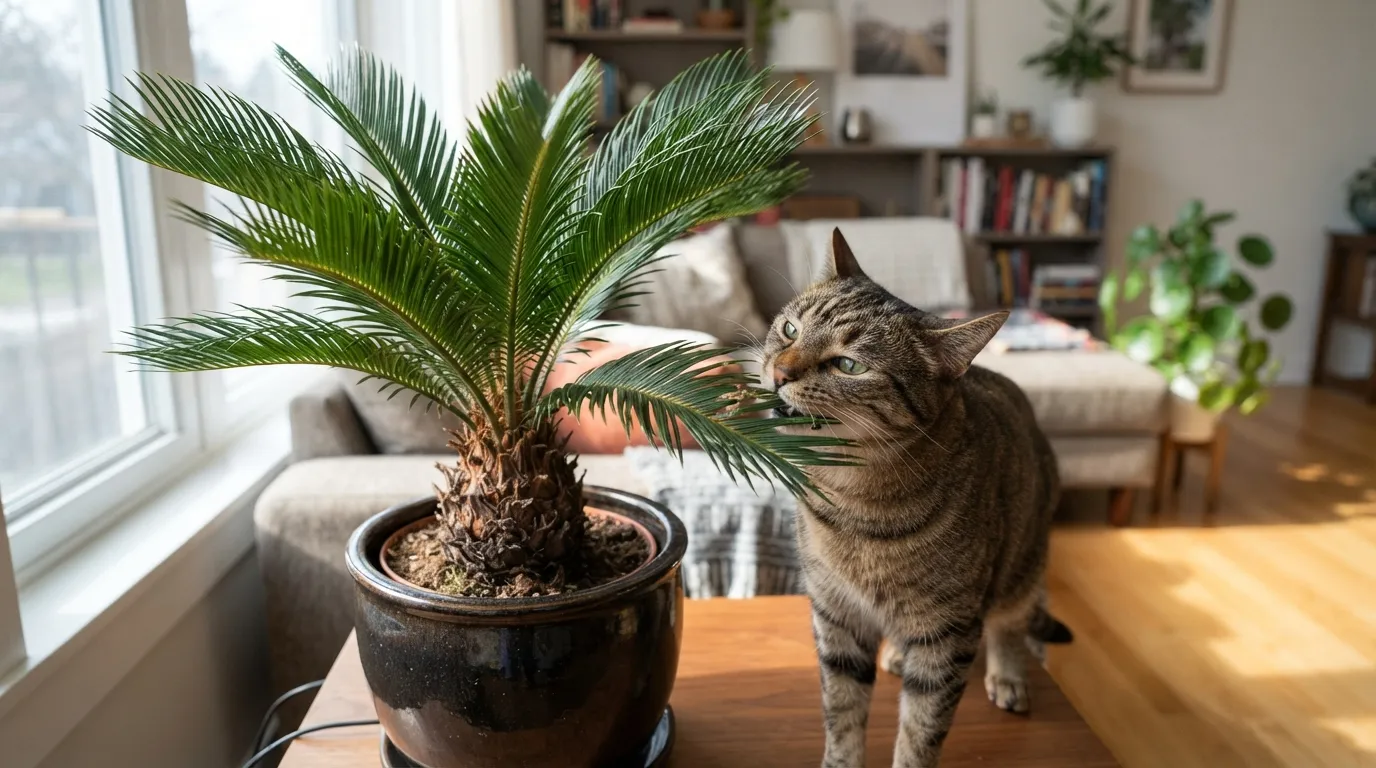
Instagram made these plants famous. Vets know them for a different reason entirely.
The Sago Palm is one of the most poisonous plants a cat can encounter – it contains cycasin, a toxin that attacks the liver, and even a small taste can cause acute, severe liver failure. Plant poisonings like this are part of why ASPCA poison control calls have climbed sharply in recent years.
Many toxic plants are irritants that inflame the skin, mouth, and stomach. Others cause systemic damage to organs like the kidneys or heart.
#4 – Plastic Bags
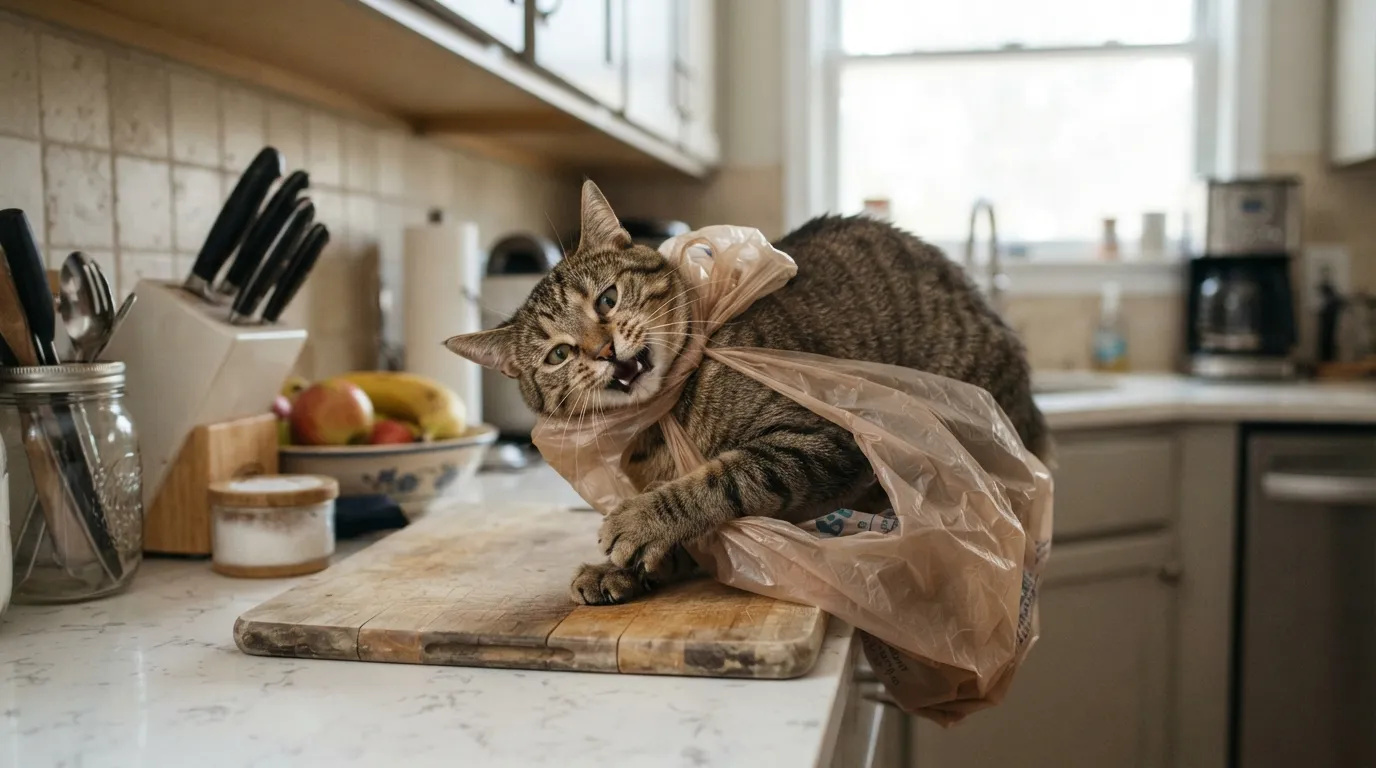
A grocery bag on the kitchen counter seems completely innocent. It isn’t.
Cats love the crinkly noise and interesting smells of plastic bags, but they can get stuck in the handles and suffocate while struggling to free themselves. Swallowed pieces can also lodge in the digestive tract.
Suffocation can happen in minutes, and a panicking cat only makes it worse by struggling harder. Never leave plastic bags on the floor or at cat-reachable height – ever.
#3 – Human Foods That Look Harmless
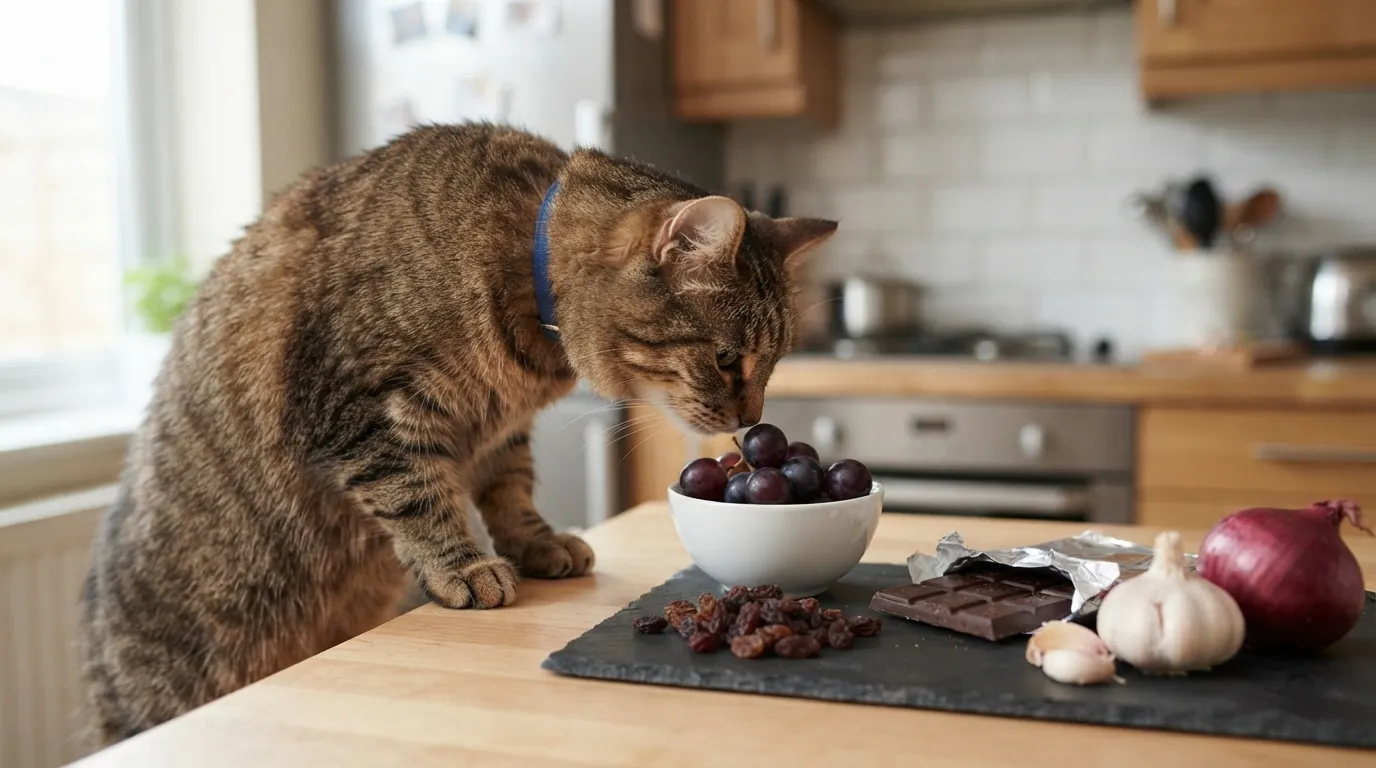
Most cat owners know chocolate is dangerous. Far fewer know about the others hiding in plain sight.
Cats are sensitive to chocolate, onions, garlic, grapes, raisins, and caffeine – and even raw bread dough, which ferments in the stomach and produces ethanol. Any of these can trigger serious illness fast.
Quick Compare
- Chocolate: theobromine strains the heart and nervous system
- Onions and garlic: damage red blood cells and cause anemia
- Grapes and raisins: linked to sudden kidney failure
- Xylitol: triggers a dangerous insulin spike and blood sugar crash
Nail polish remover, hair dye, and mouthwash all belong in closed drawers, especially since many contain xylitol. This sugar substitute shows up in sugar-free products everywhere, and most owners never think to guard against it.
#2 – Dog Flea and Tick Treatments
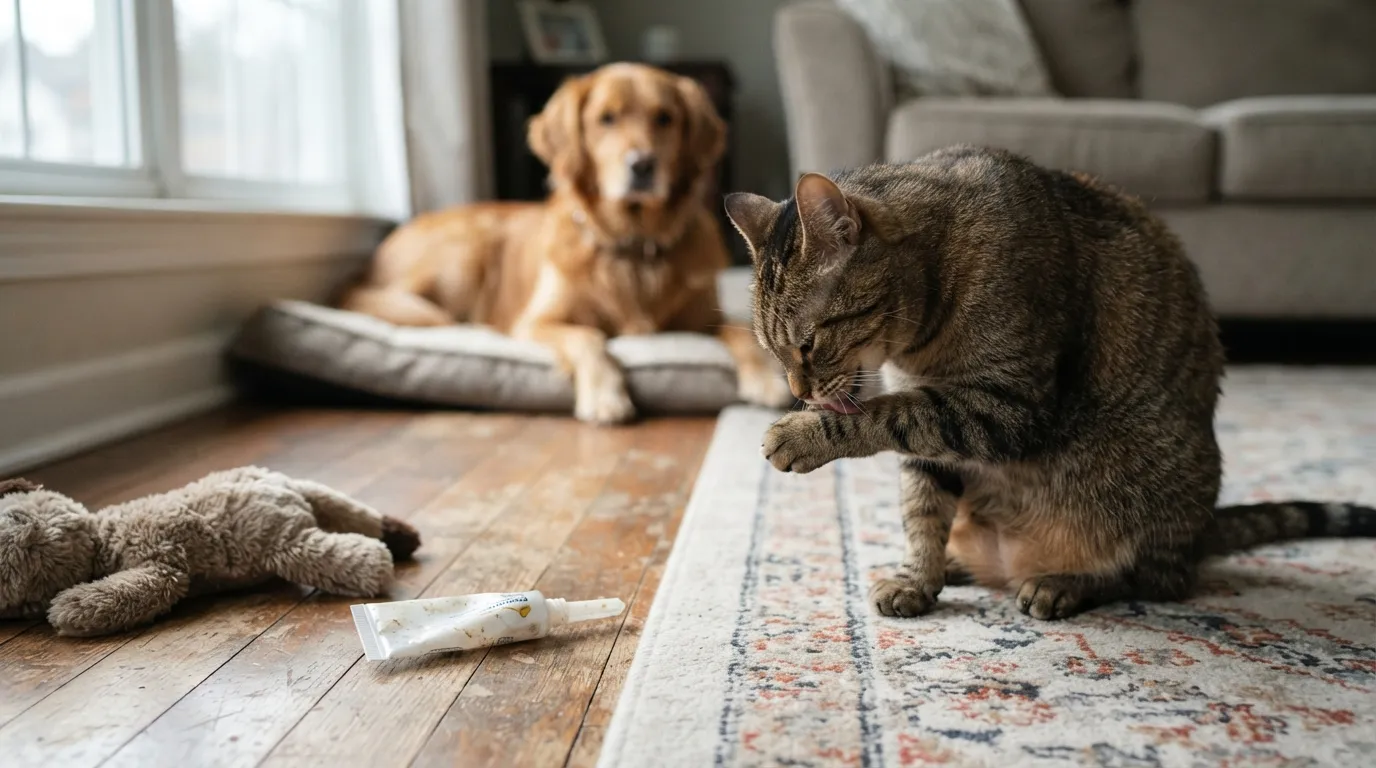
You treated the dog. Your cat walked through the same room. That’s the problem.
Flea preventatives made for dogs can contain compounds that poison a cat. Always read labels carefully and use only products specifically formulated for cats.
The real danger is cross-contamination – a treated dog brushes past a cat, and the cat later ingests the chemical while grooming itself. This is one of the most preventable emergencies in veterinary medicine, and still one of the most common.
#1 – Household Cleaners, Chemicals, and Garage Products Under the Sink
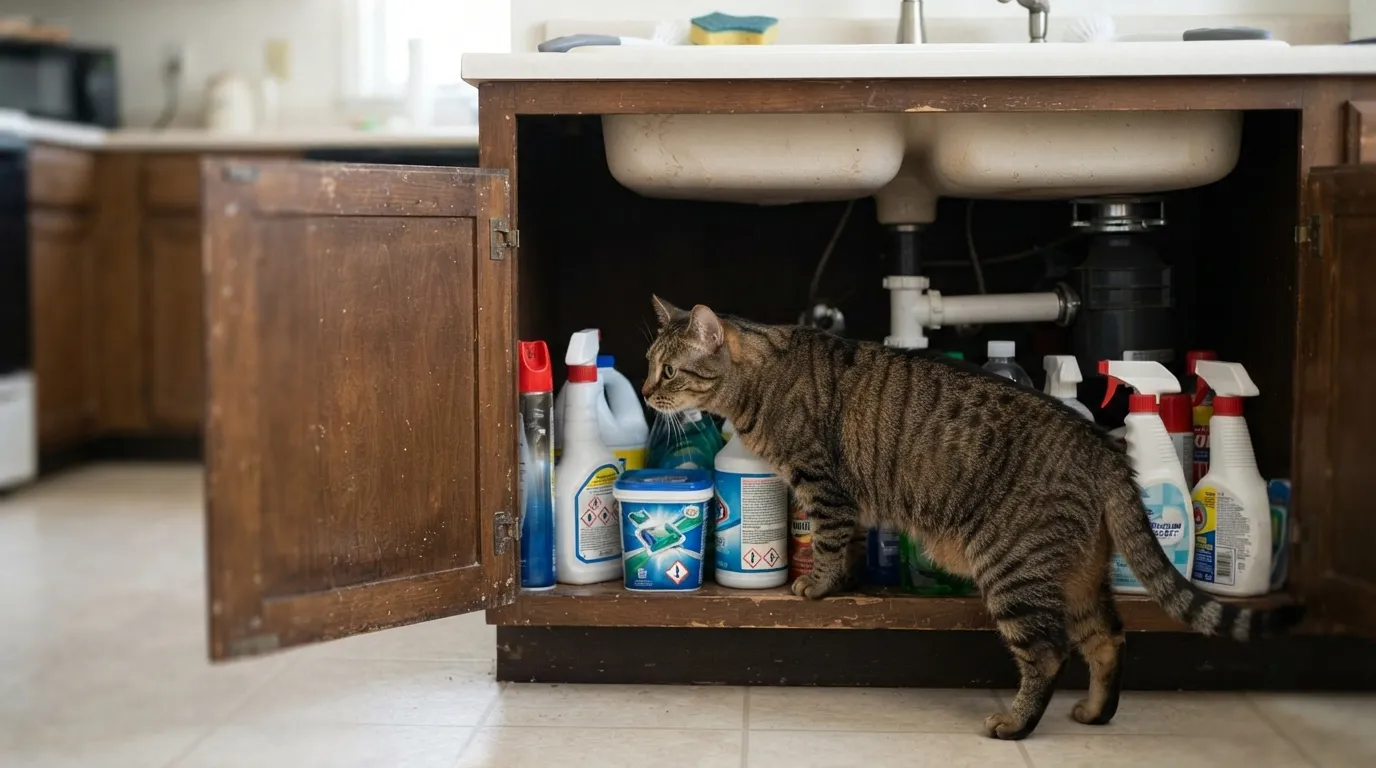
The biggest hazard in your home isn’t exotic. It’s the cabinet you open every day.
Lock up cleaning supplies and insecticides, and secure paints, epoxies, and glues in the garage or hobby room. Just about anything stored under the kitchen sink is probably bad for your cat.
Common household cleaners can cause stomach upset, chemical burns, and even organ damage. The reason this ranks #1 is simple: it’s everywhere, it’s used daily, and almost no one cat-proofs their under-sink cabinet.
Wipe up excess liquid after cleaning, stow products out of reach immediately, and don’t let your cat back into the room until everything’s completely dry.
The Bottom Line
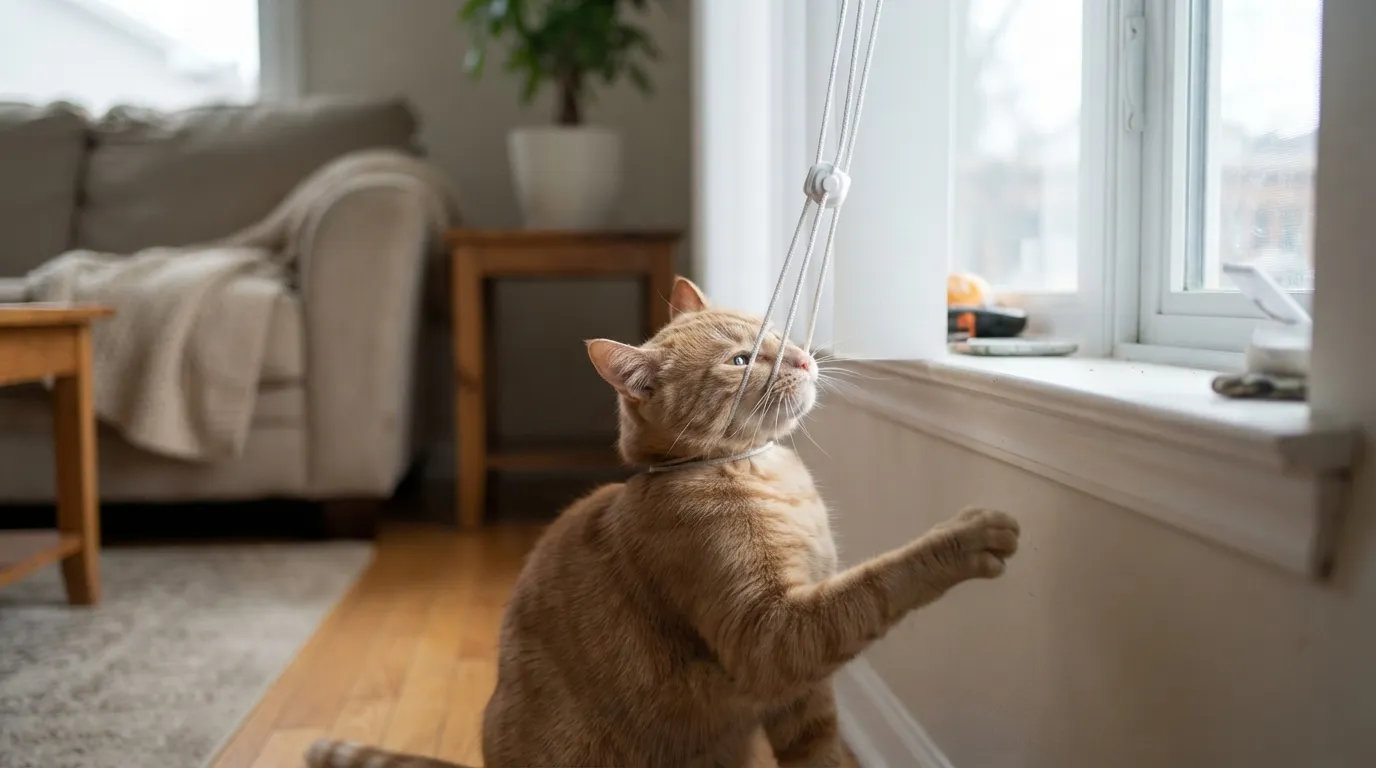
Your home is full of hazards that seem completely ordinary – and that’s exactly what makes them so dangerous.
Lilies that kill with a single lick. Dryers cats crawl into for a warm nap. Dog flea treatment that poisons through casual contact. Blind cords that strangle in minutes.
The pattern is clear: the hazards cat owners regret most are the ones they assumed were “probably fine.”
Go through this list room by room today, not tomorrow – your cat is probably walking past several of these hazards right now without you realizing it.
Did we miss a hazard that nearly caught your cat out? Tell us in the comments below.
Growing up traveling and experiencing new cultures and wonders, I have had a passion for nature, adventuring, photography, and videography. I am currently working towards a BSc in Biodiversity and Ecology at Stellenbosch University, and I hope to specialise in Marine Sciences one day.
Please send any feedback to Feedback@animalsaroundtheglobe.com