15 Tender Things a Sick Cat Does to Stay Close When It Needs You Most
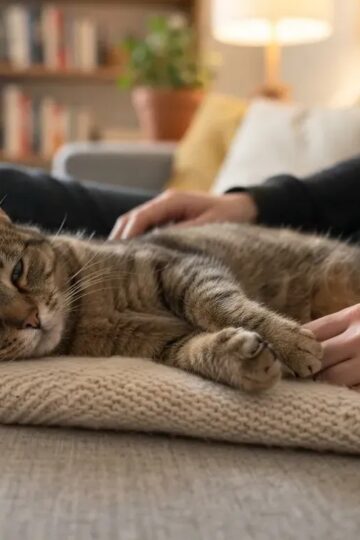
Most people assume a sick cat crawls under the bed and shuts the world out. That's the myth, and it's almost backwards.
Veterinarians and feline behaviorists say something stranger happens instead: when cats feel their worst, many of them lean in, not away. The signs are small, easy to miss, and almost never explained, so once you know what to look for, you'll never look at a "clingy" sick cat the same way again.
#15 - The Sudden Shadow: Following You Room to Room
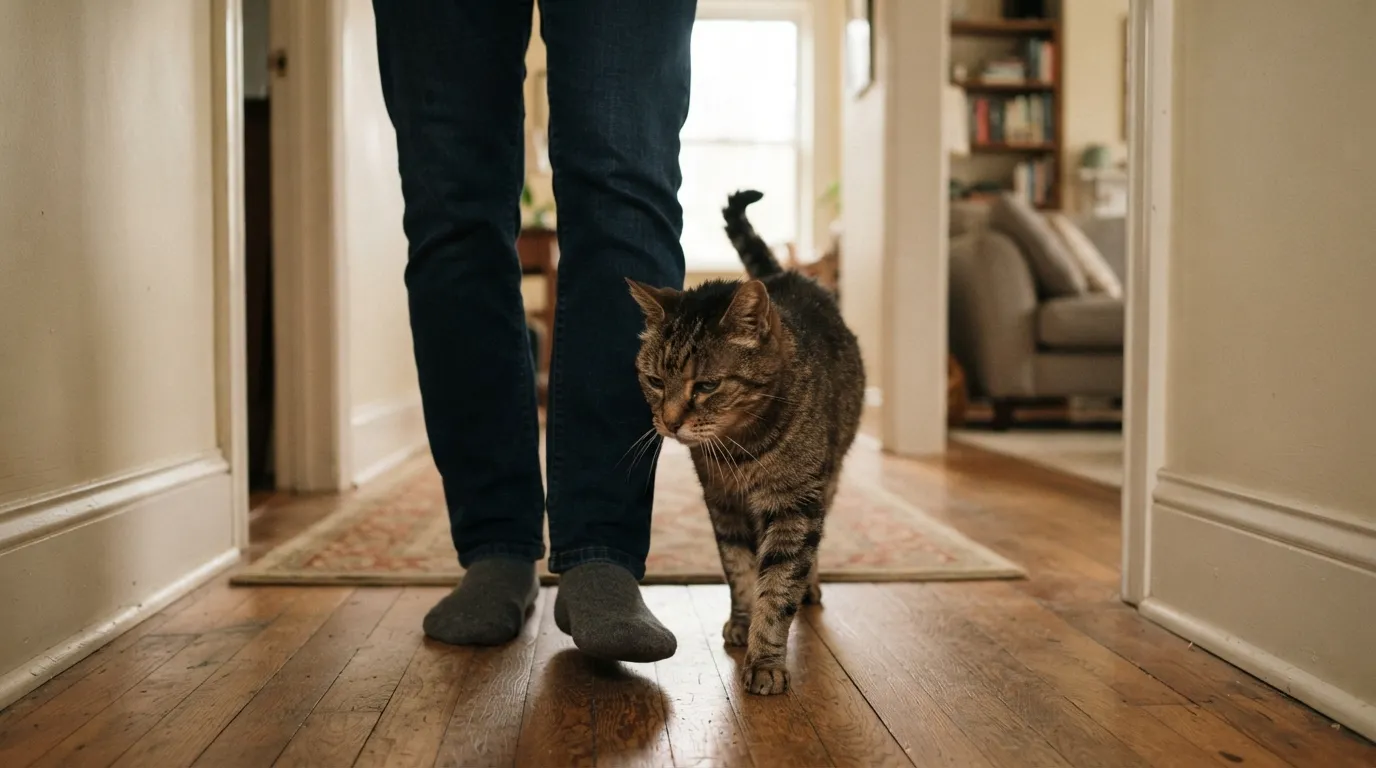
If your usually independent cat suddenly won't leave your side, it isn't attention-seeking. It's a trust signal.
Cats are social creatures who notice right away when their people slow down or act differently because of illness. A sick cat that reverses roles, becoming the one who follows, is telling you it needs your presence as an anchor.
Watch for this: the cat that used to nap alone now plants itself at your feet in every room. Cats pick up on subtle shifts in your body language, scent, and energy, and that awareness is exactly what pulls them closer.
But shadowing is just the opening act. The next behavior is harder to ignore once you know what it means.
#14 - Sleeping Directly on Top of You
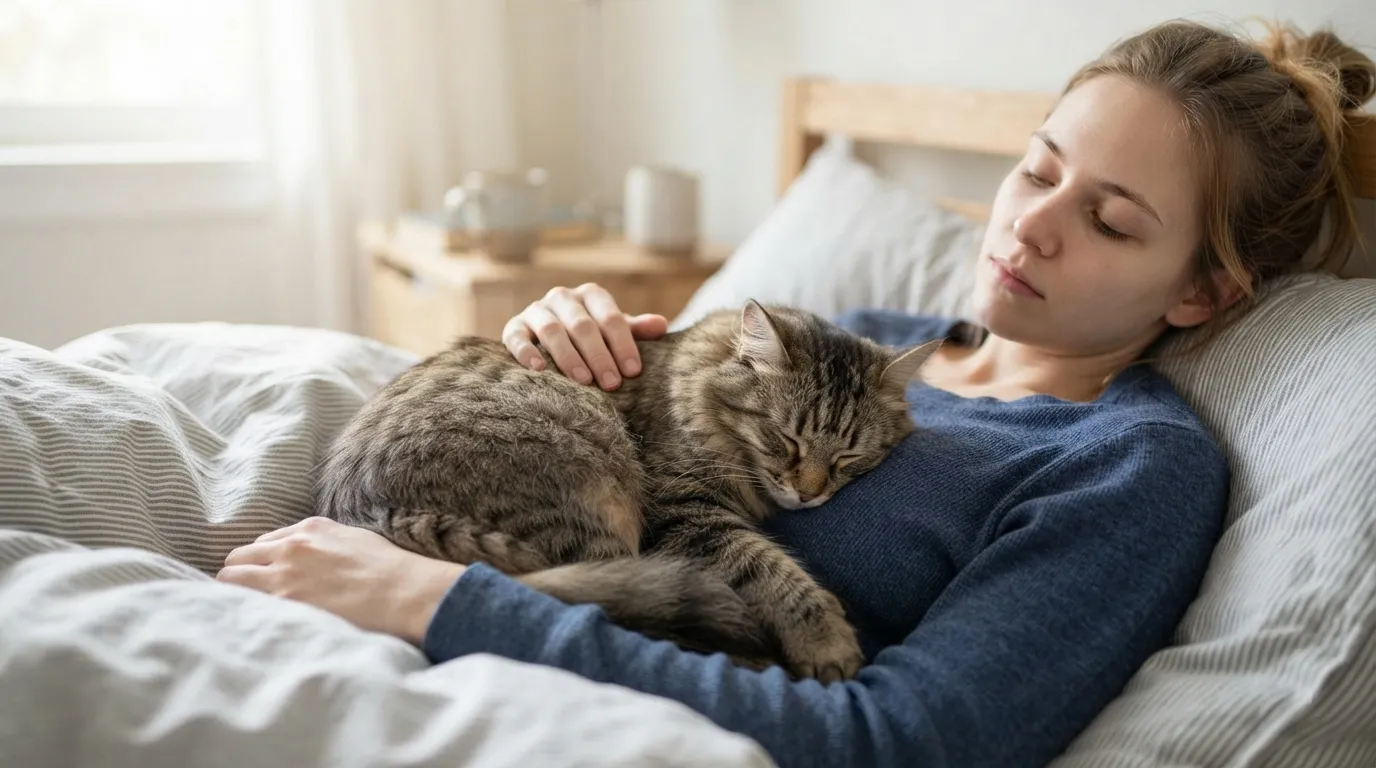
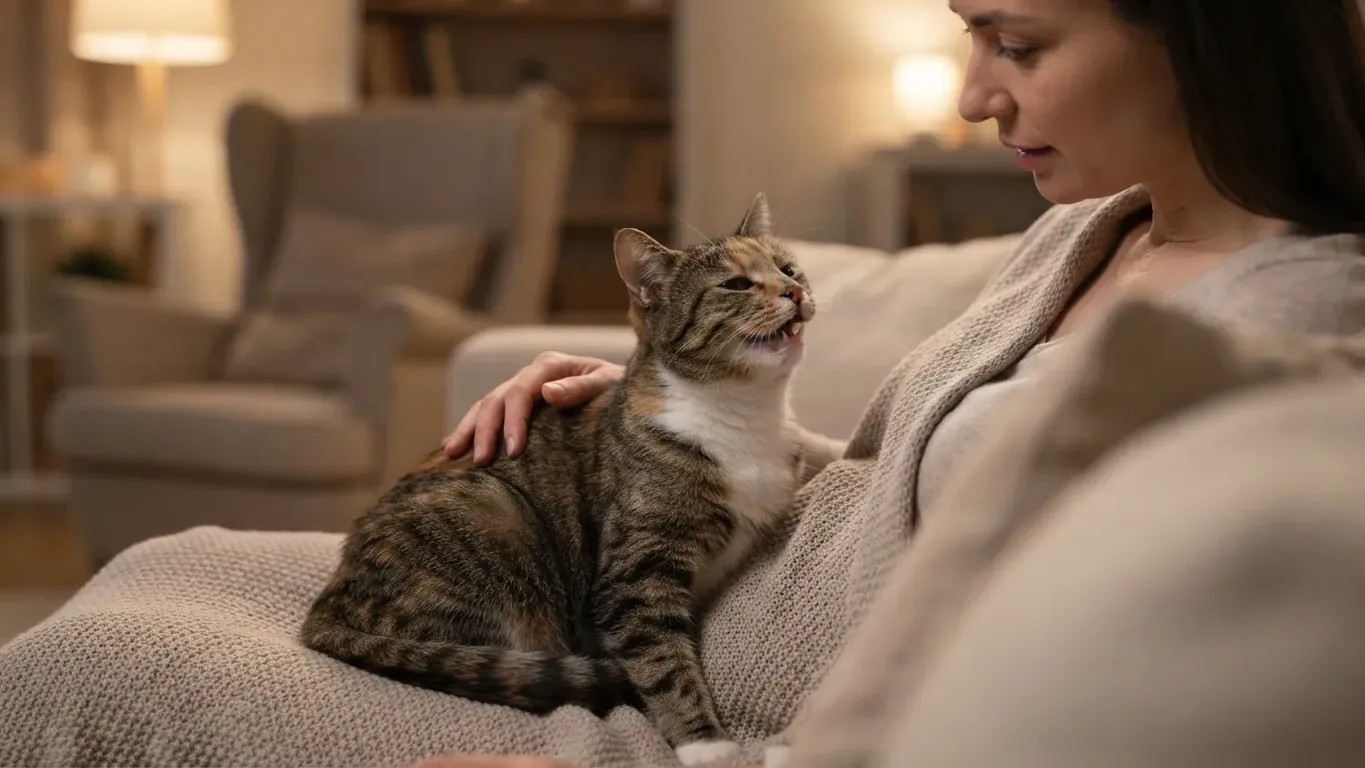
Sick people often report their cats sitting on their chest, trailing them from room to room, purring louder than usual. Choosing to sleep on you, instead of beside you, is a step further.
If you're unwell, your cat may start lying directly on your body as a way to offer comfort and calm. It's weight as language, a silent form of reassurance pressed against your skin.
A sick cat lying on your chest is one of the most physically intimate things a cat can do. It combines warmth, scent exchange, and vibration all at once, and it tells you your comfort matters enough for them to stay close.
What happens right alongside that weight on your chest is its own form of medicine.
#13 - Purring Longer and More Intensely Than Usual
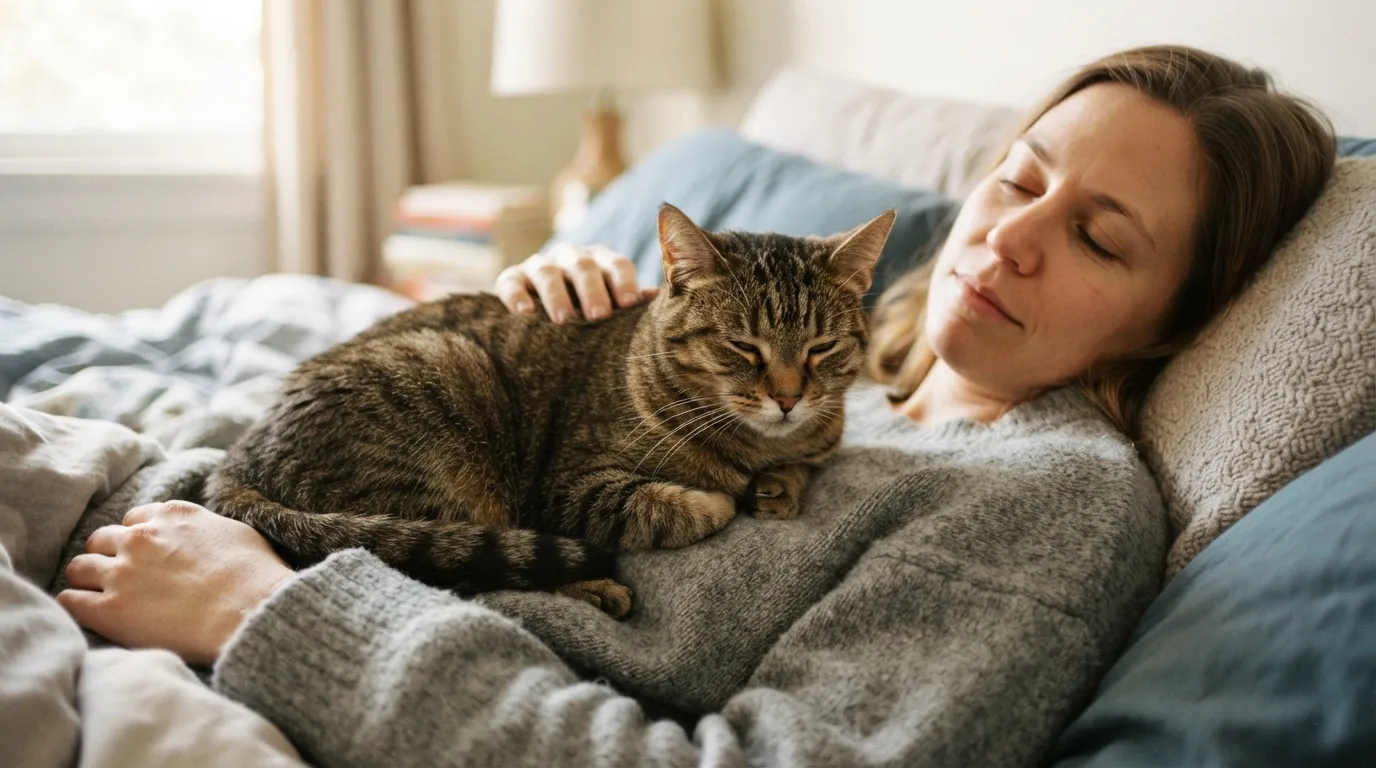
The rhythmic sound of a purr is known to have real therapeutic effects, potentially easing stress and even supporting healing. But when a sick cat purrs directly on top of you, something even more specific is happening.
A purring cat's vibrations typically fall between 25 and 150 Hz, the same frequency range used in physiotherapy. That's not a coincidence. It's biology working in your favor.
Fast Facts
- The average domestic cat purrs at a frequency of 25 to 150 Hertz, a range humans can both hear and feel.
- A narrower slice of that range, roughly 25 to 50 Hz, has been studied for its ties to bone repair after injury.
- Purring isn't only about contentment; cats may also purr when they're stressed, injured, or in pain.
Purring usually signals contentment, but cats also purr as a coping mechanism under stress. When your sick cat purrs harder than usual, it may be self-soothing and trying to soothe you at the same time, two intentions inside one sound.
And if that purr comes paired with a very specific eye signal, you're witnessing one of the most intimate gestures a cat can offer.
#12 - The Slow Blink
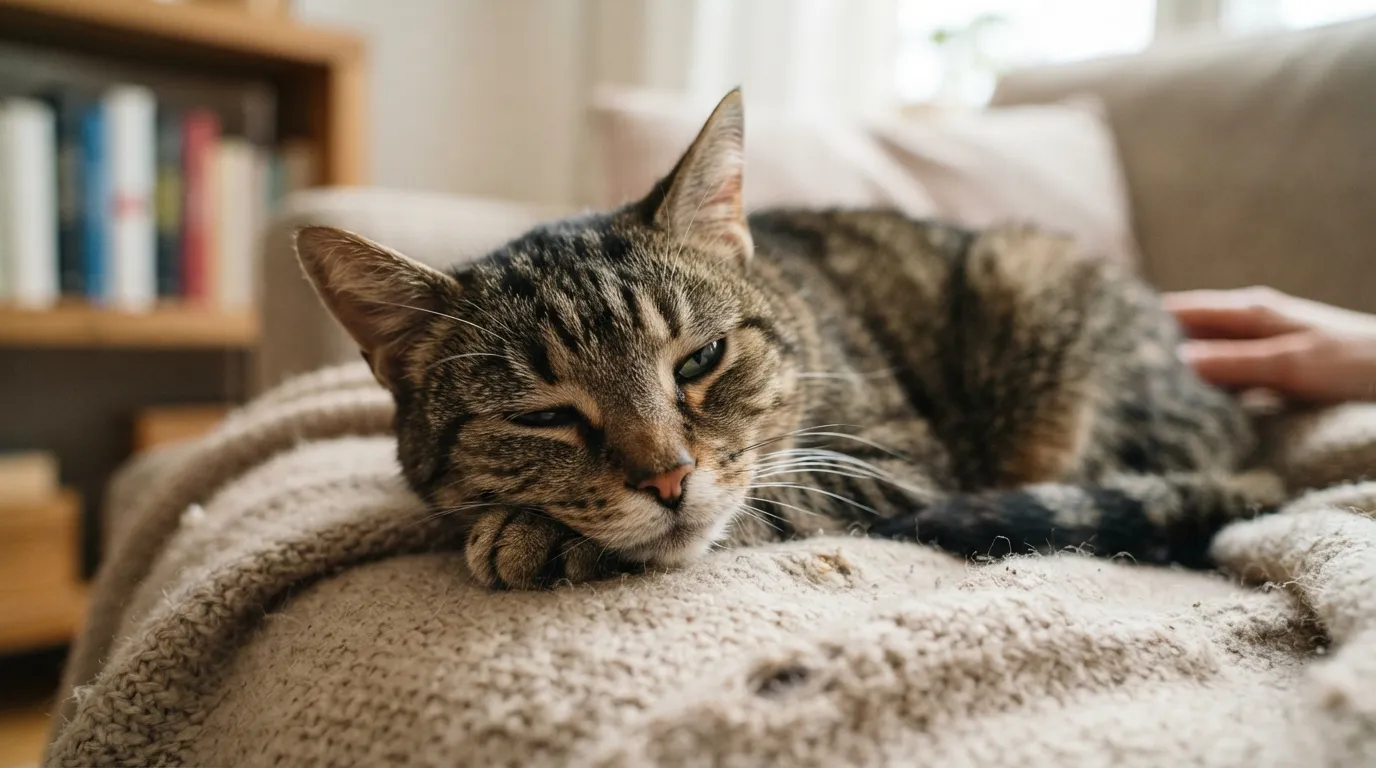
This one stops people cold once they understand it. In the wild, closing your eyes makes you vulnerable to attack, so when a cat does it slowly, deliberately, while looking right at you, it means something big.
A slow blink is basically a feline valentine. It tells you the cat trusts you enough to lower its defenses, even if only for a second, and it can deepen the bond between you the moment it happens.
A sick cat doing this is communicating pure vulnerability. It's saying: I feel terrible, and I still choose to trust you completely. Vets actually recommend slow-blinking back, since your cat understands it and often responds with even more affection.
But the slow blink often comes right before behavior #11, and that one involves the cat's whole body.
#11 - The Gentle Headbutt (Bunting)
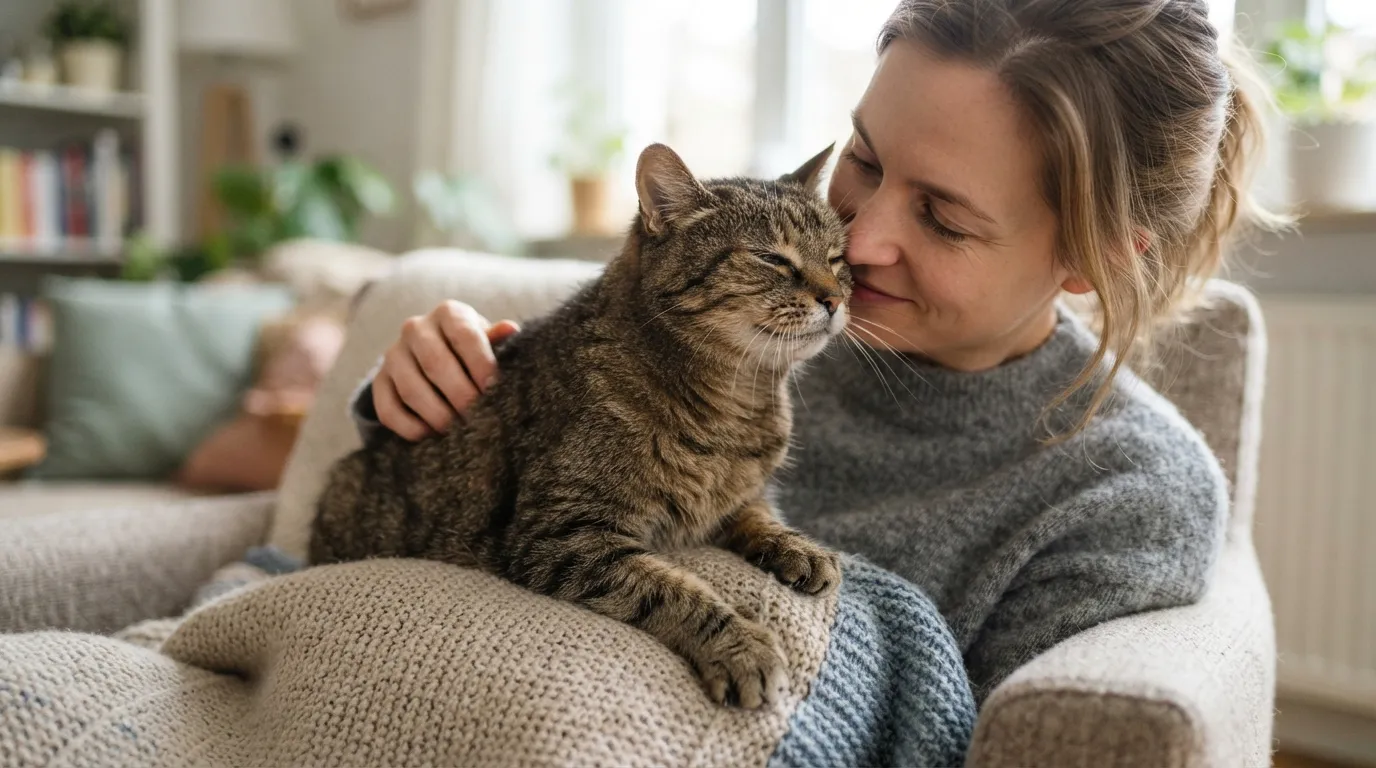
Cats will sometimes try to make themselves feel more secure in their environment by depositing their pheromones using bunting.
Joey Lusvardi, certified cat behavior consultant
When cats headbutt or rub against you, they release pheromones from scent glands on their face. You can't smell it, but as far as your cat is concerned, you're officially marked as theirs.
This is a cat essentially saying: "You are mine, and I am yours, even now." Cats often headbutt when anxious, using your familiar scent to comfort themselves in a moment they feel far from okay.
Directly connected to the headbutt is a behavior that happens with the paws, and it goes all the way back to kittenhood.
#10 - Kneading Your Lap or Chest
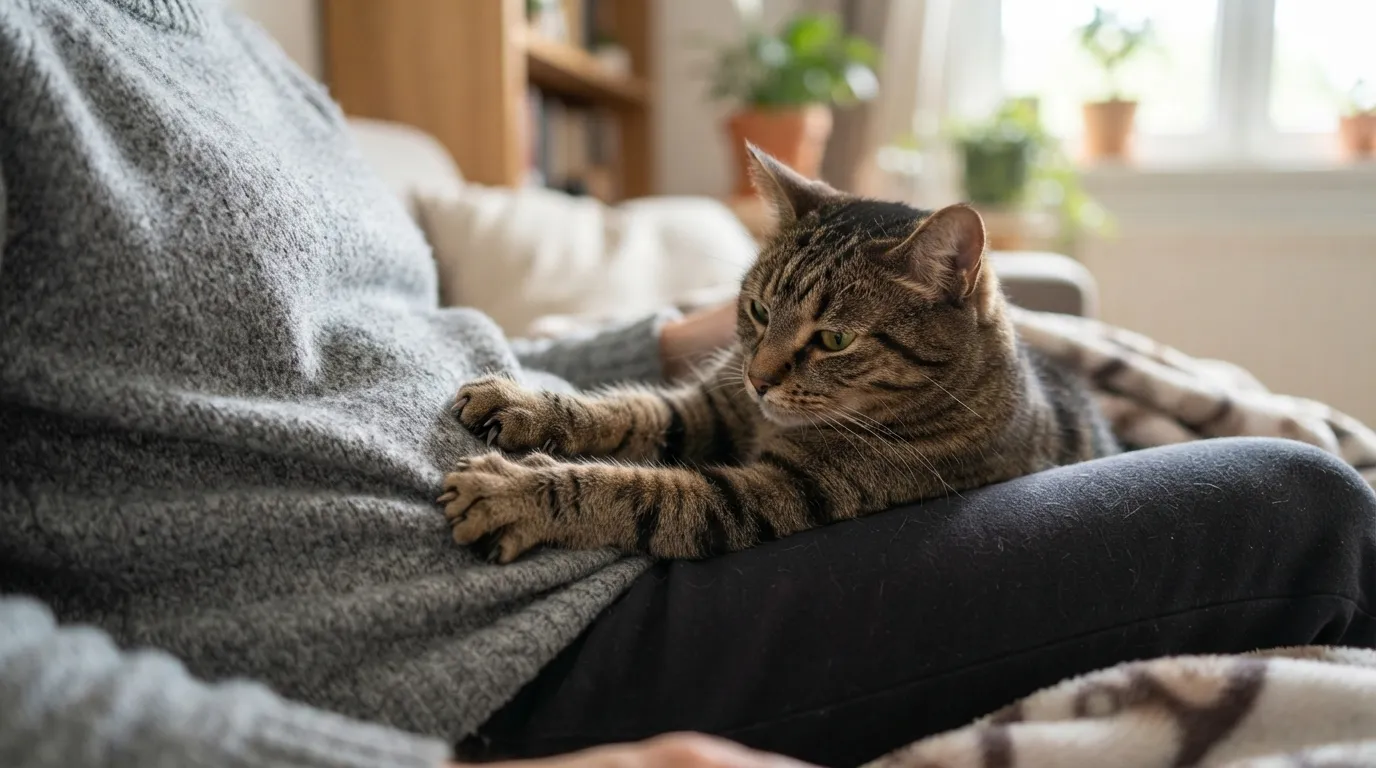
Kneading, or "making biscuits," is a natural comfort behavior. It's rooted in nursing, when kittens pressed their paws against their mother's belly to stimulate milk flow.
When a sick cat kneads you specifically, it's reaching for the deepest comfort it knows. Adult cats keep doing this whenever they feel relaxed and safe, so it's a genuine sign of love and trust when it's aimed at you.
A sick cat kneading you is reverting to its most primal comfort behavior, and you are the target. That's not something cats do casually. It means you are, to them, the safest place in the world right now.
What comes next is quieter, but somehow even more moving.
#9 - Unusual Vocalization: Softer, More Frequent Meows
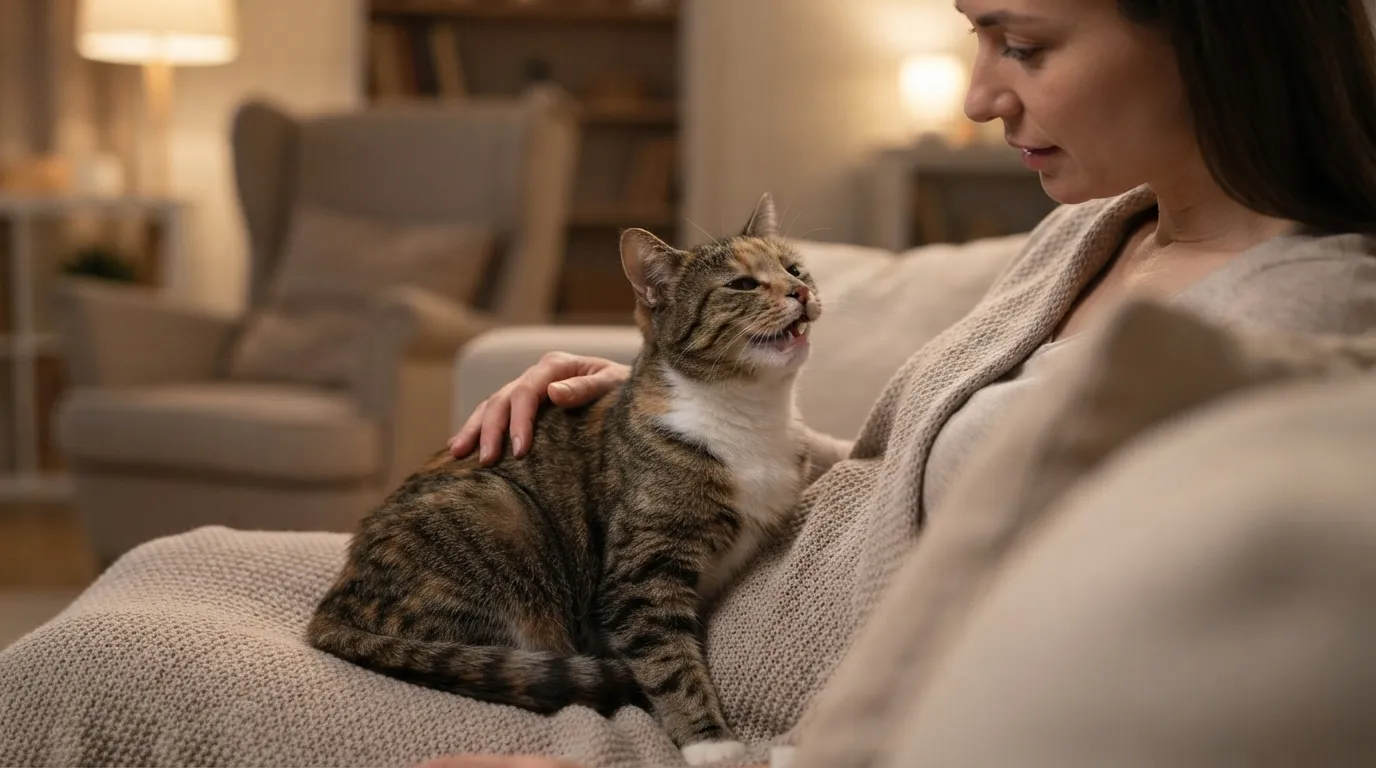
Some cats get louder and more demanding when something feels off, as if trying to raise the alarm. But in sick cats seeking closeness, the tone often shifts the other way, into something quieter and more conversational.
Cats frequently become clingier when they're unwell, offering more meowing, more purring, more cuddling than usual. The meow here isn't a demand. It's a check-in: are you still there? Can I stay near you?
Different meows and purrs can carry different meanings, so paying attention to the tone can help you understand what your cat is actually asking for. A sick cat that won't stop softly talking to you deserves a soft answer.
And sometimes that soft vocalization comes right before behavior #8, an act that looks almost parental.
#8 - Grooming Your Hand or Face
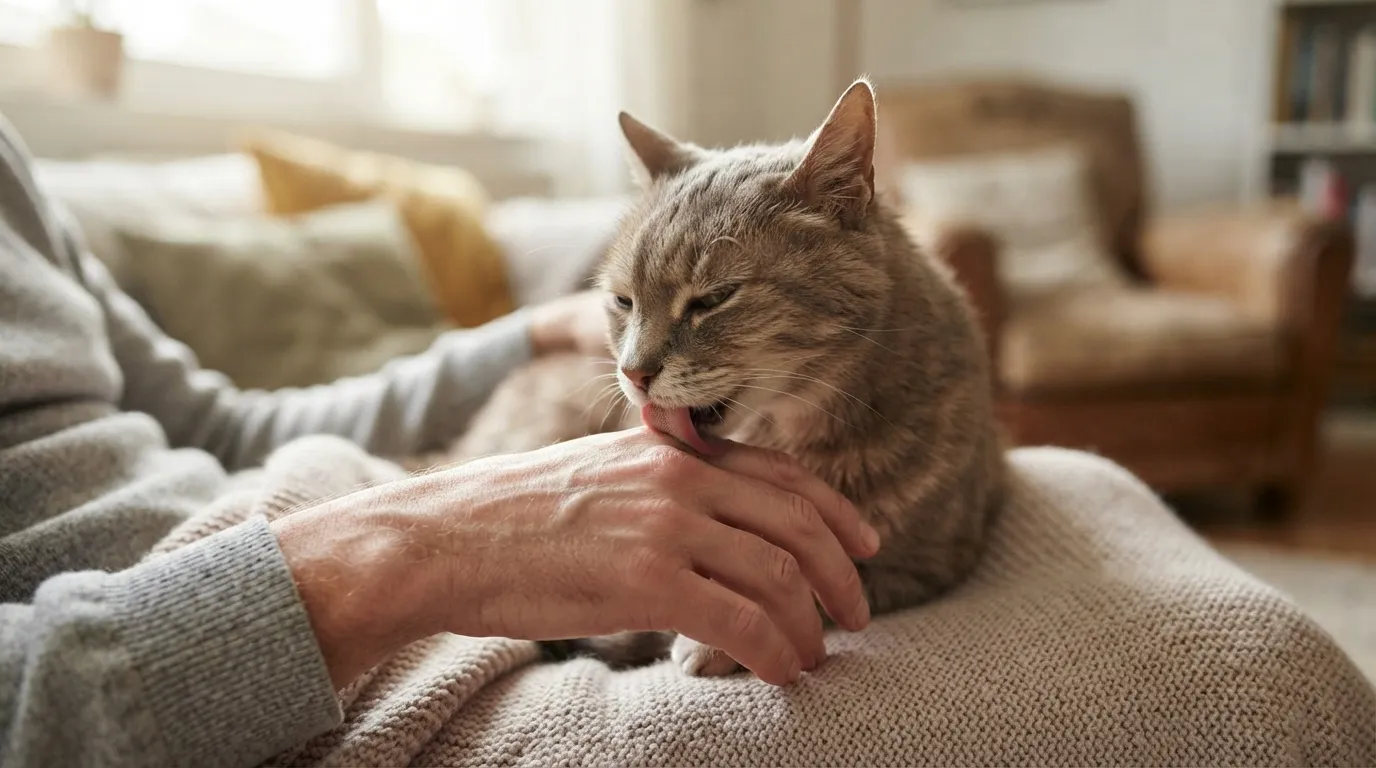
When a sick cat starts licking your hand, arm, or face, it's doing something that goes beyond simple affection. Mutual grooming, called allogrooming, is normally reserved for cats that are deeply bonded to each other.
Purring, headbutts, and resting nearby are ways cats express connection, but grooming takes it one step further. It's active care. The cat isn't receiving comfort here; it's giving it.
Worth Knowing
- Allogrooming tends to happen only with preferred individuals - a cat won't allogroom any random cat.
- Most mutual grooming targets the head and neck region, where roughly two-thirds of allogrooming occurs.
- The behavior is also linked to stress relief, since allogrooming can help cats relieve stress by releasing feel-good endorphins.
A sick cat that still tries to groom you is prioritizing your bond over its own exhaustion. That's remarkable, considering how little energy it likely has to spare. Grooming you is its version of tucking you in.
What happens right after grooming is often the most visually heartbreaking behavior on this whole list.
#7 - Curling Into the Tightest Ball Possible Against Your Body
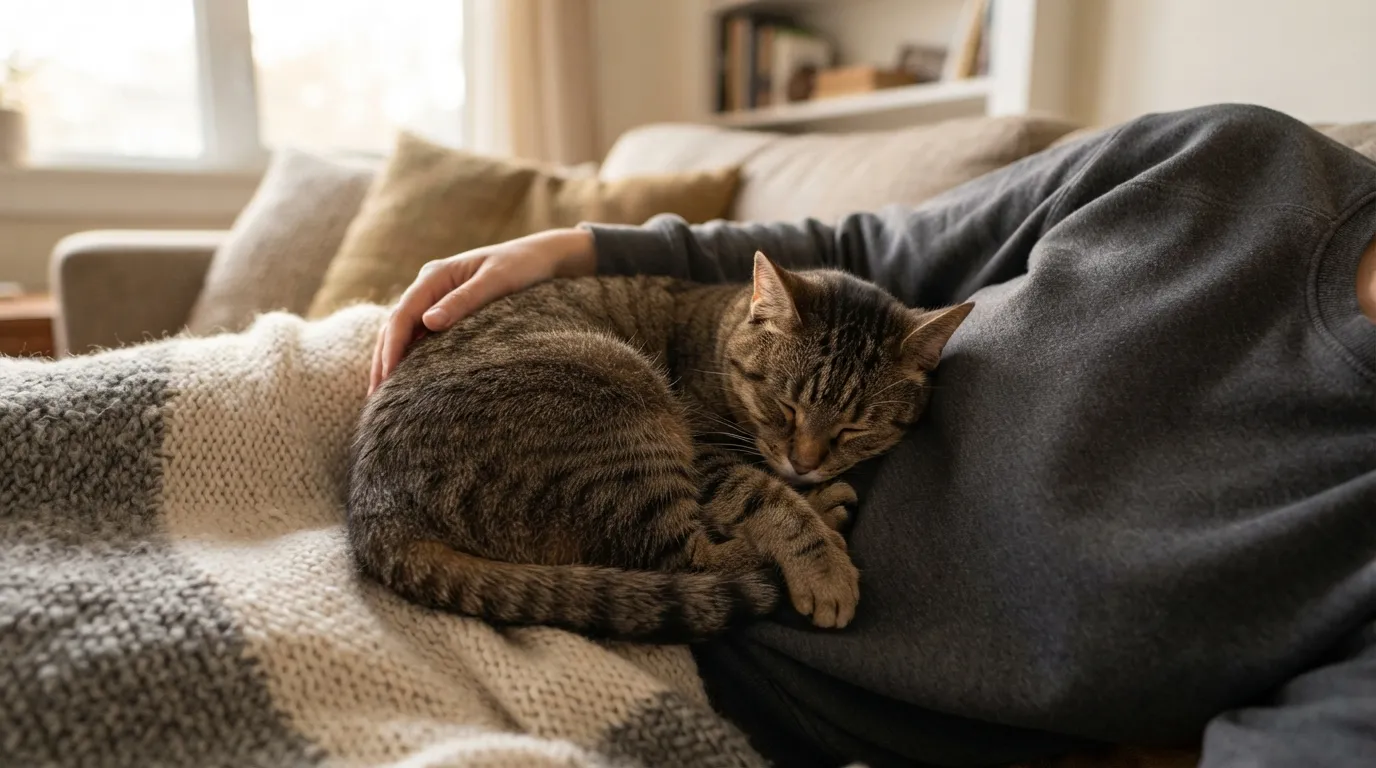
Sick cats often lie quietly in a hunched, closed-off position. But when they choose to do it pressed against your side, your leg, or your stomach specifically, that posture means something different entirely.
Cats naturally snuggle up to their owners for warmth and comfort, and that contact strengthens the bond between you. When a sick cat curls up as tightly as possible against your body, it's pulling warmth, security, and your scent all at once.
This isn't laziness. It's deliberate proximity-seeking from an animal conserving energy but refusing to be far from you. The tighter the curl, the deeper the need. It's one of the most tender things you'll ever witness.
The next behavior is one most owners misread entirely, and it can look like the opposite of comfort-seeking.
#6 - Hiding Near You (Not Away From You)
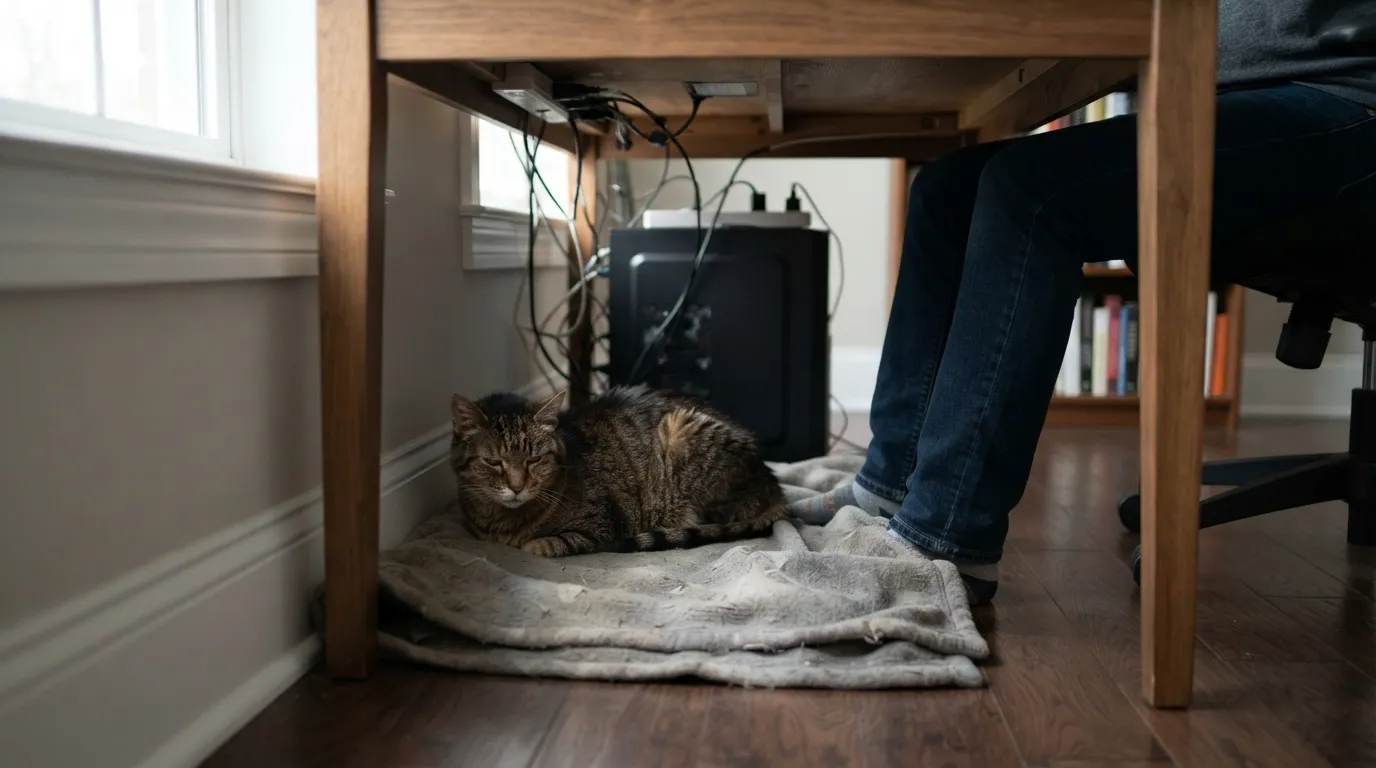
Here's the nuance most people miss. Hiding in a quiet, out-of-the-way spot is one of the most common signs of illness in cats, since cats have evolved to conceal pain instinctively.
But there's a crucial difference between hiding away from you and hiding near you.
Quick Compare
- Hiding Away: Total isolation. The cat seeks closets, high shelves, or far corners of the house, away from all contact.
- Hiding Near You: Quiet retreat, but close. The cat tucks under your desk, behind your legs, or beneath your blanket, staying inside your orbit.
A sick cat tucked under your desk, behind your legs on the couch, or beneath the blanket you're using isn't retreating. It's sheltering in your orbit.
Cats may not understand illness the way we do, but they're tuned into your emotional and physical state. When you're down or less active, staying nearby is their version of silent support, so don't mistake proximity for withdrawal.
And proximity reaches its most intense expression in the next behavior.
#5 - Staring at You Without Blinking
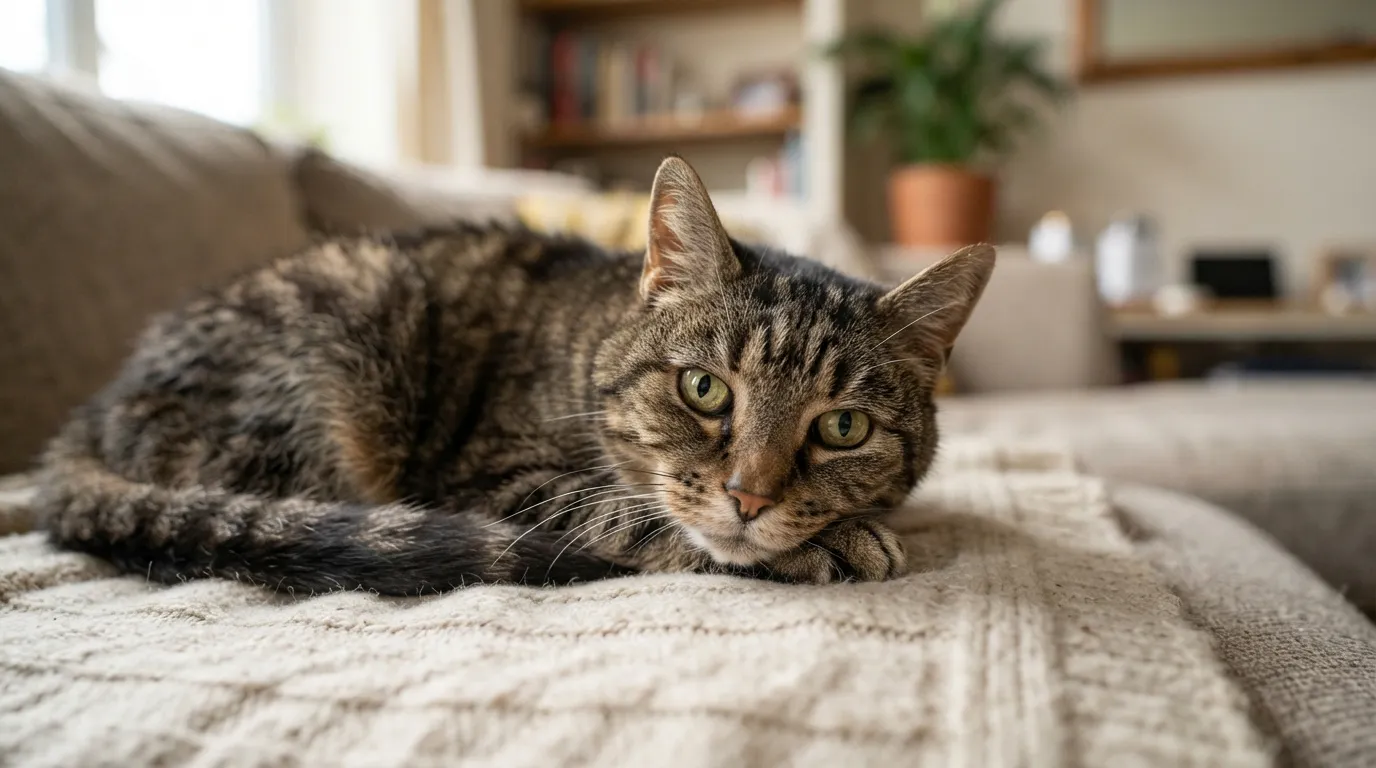
A sick cat that locks eyes with you and simply watches, unmoving, steady, calm, is doing something behaviorists consider deeply communicative. Cats constantly monitor scent, sound, and body language, and any shift in your health registers immediately.
That steady gaze in reverse, your sick cat watching you, is a form of vigilance. It's keeping tabs, making sure you're still there, still safe, still present.
A cat that stares at you while sick is essentially on watch duty. It has appointed itself your guardian. Every tail twitch, purr, and slow blink carries a message, and the unblinking stare is one of the loudest.
The next behavior combines physical contact with something almost ritualistic.
#4 - Resting a Paw on You While Sleeping
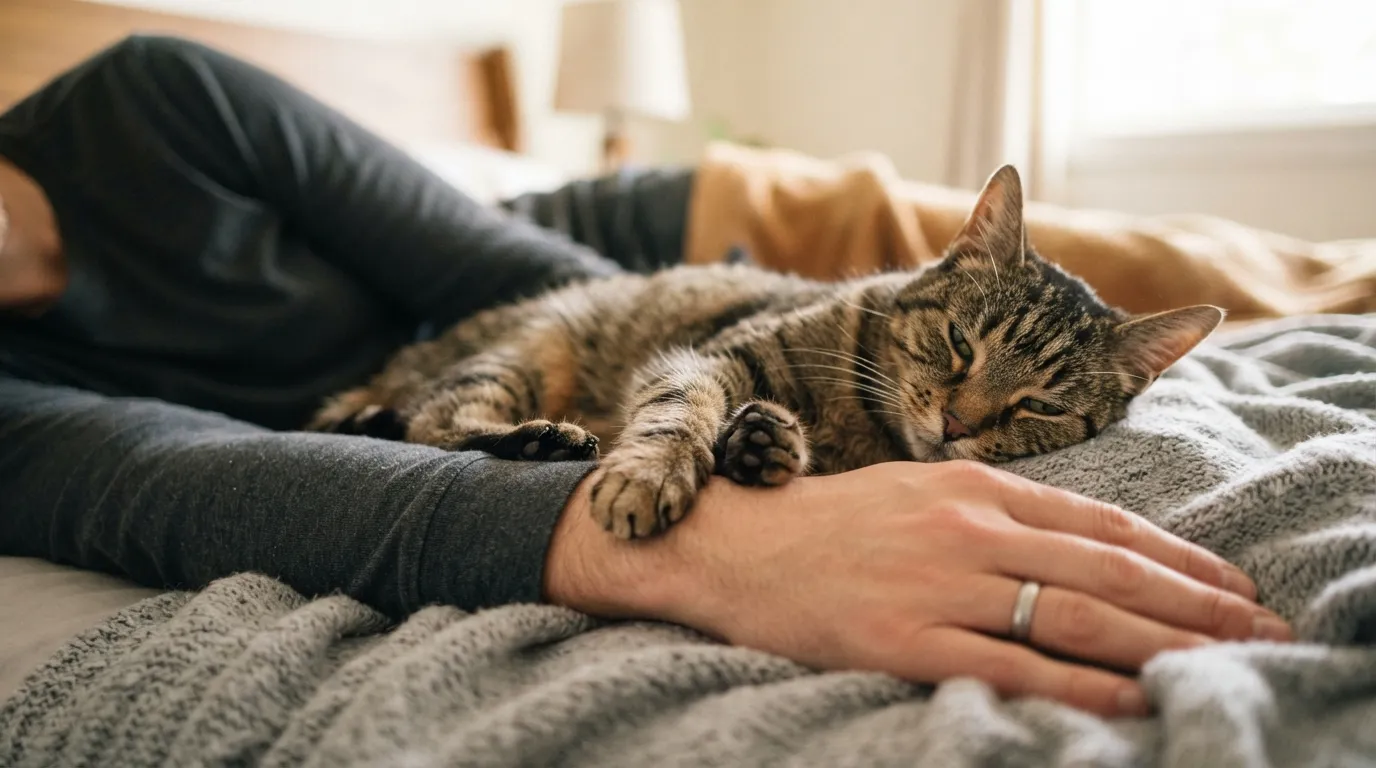
This one is easy to overlook because it looks like nothing, just a paw draped across your hand or resting on your knee. But it's not nothing.
Cats don't consciously decide to "comfort" people the way humans do, but their instincts push them toward closeness whenever they sense distress. A resting paw is a physical tether. The cat is asleep, but it's still maintaining contact.
This is the feline equivalent of holding hands. The cat is resting, conserving energy, but it refuses to fully disconnect from you. That single paw is proof cats are far more emotionally attuned than we usually give them credit for.
What's coming at #3 is the behavior that tends to undo even the most stoic cat owners.
#3 - Seeking Eye Contact More Than Usual
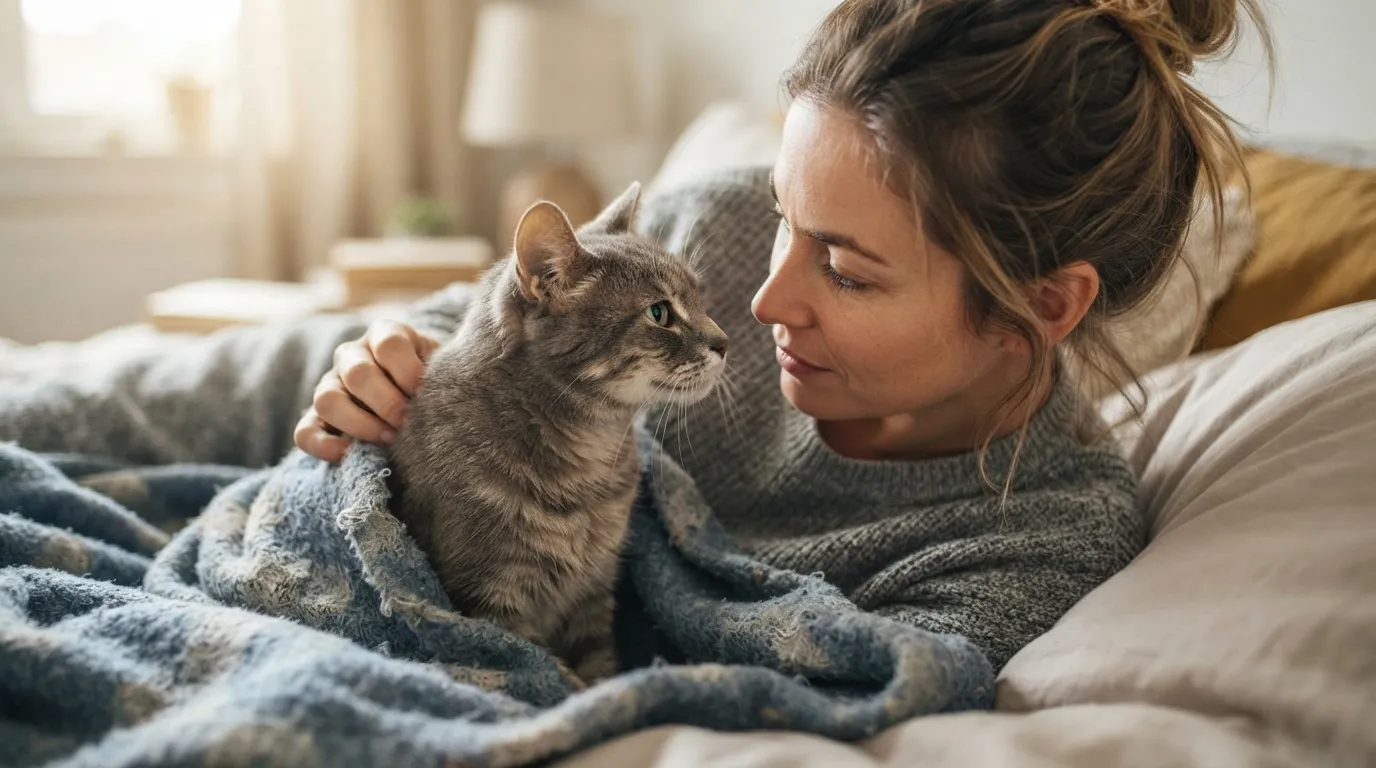
Cats that recognize a frowning or upset expression on your face will often try to cheer you up with snuggling and rubbing. But a sick cat that keeps seeking your eyes specifically is doing something even more deliberate.
Growing evidence suggests cats can sense illness through subtle physical and behavioral cues, thanks to heightened senses of smell, hearing, and observation. When your sick cat searches your face, it's reading you, and it wants to be read back.
Mutual eye contact between a sick cat and its owner is a two-way emotional transaction. You're both checking on each other in that moment. Many cats grow more affectionate when their owner is sick or upset, and that closeness comforts both of you at once.
The second most powerful behavior on this list is something most people never expect from an unwell cat.
#2 - Bringing You a "Gift"
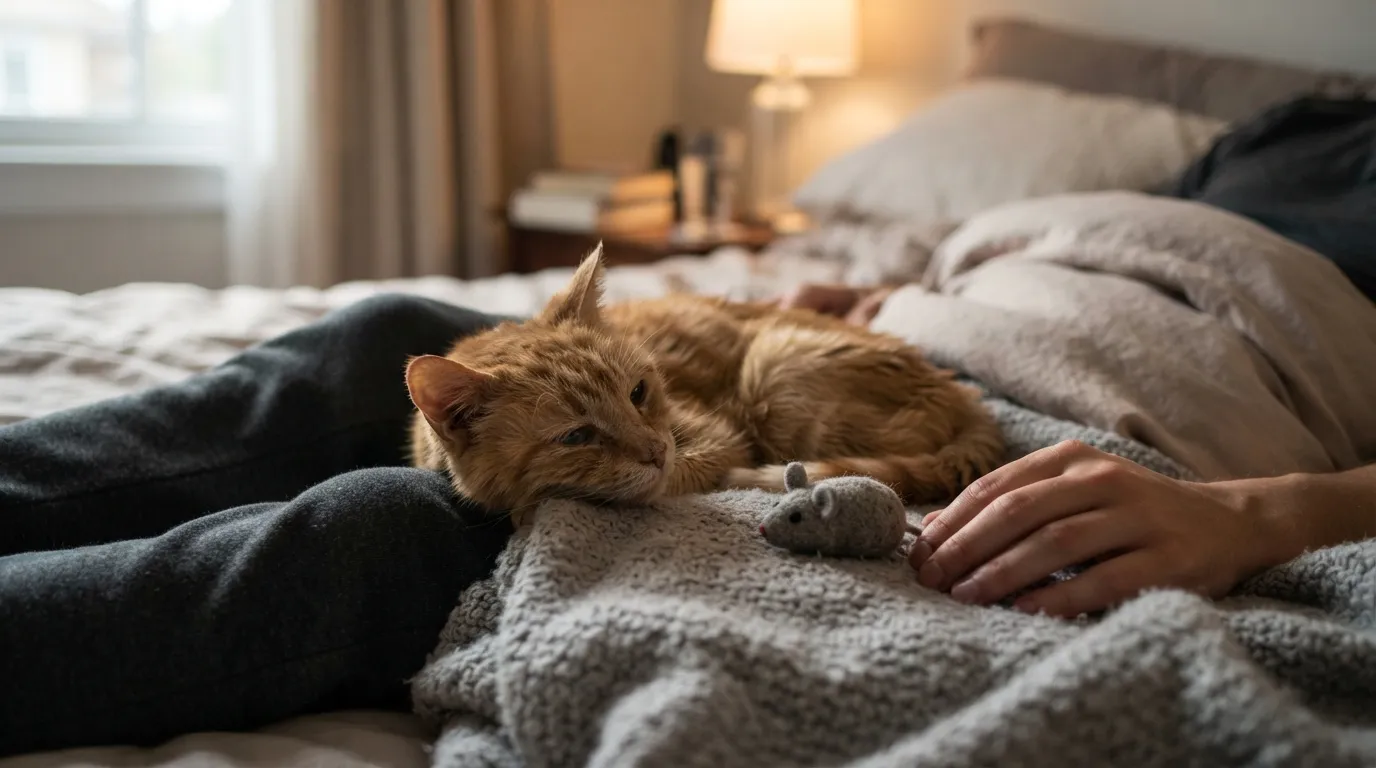
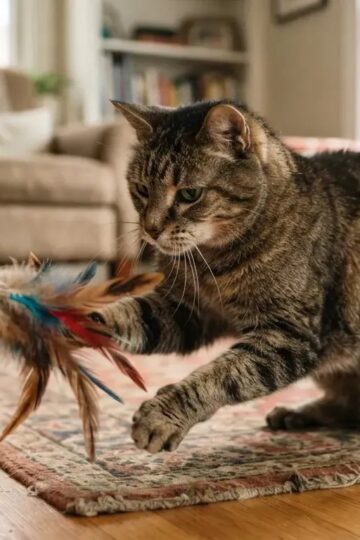
Cats bring their owners gifts of toys or prey as a token of affection, an instinctive behavior similar to how a mother cat brings food to her kittens. A sick cat that drags a toy to your side is performing a caregiving ritual, not a play session.
Some cats take it further, becoming more intent on making sure their human eats, offering "gifts" of food or treats alongside extra snuggling and purring. These caretaking behaviors are driven by a natural impulse to nurse vulnerable members of the household back to strength.
Why It Stands Out
- The instinct mirrors how mother cats provision kittens, redirected toward you.
- A sick cat spends scarce, precious energy on this gesture instead of resting.
- Food-related "gifts" reflect a drive to keep vulnerable housemates fed and cared for.
It is doing for you what it instinctively knows to do for the vulnerable members of its group: bringing provision, offering resources, staying close. It's exhausting itself to take care of you, even while it feels terrible.
And then there's #1, the behavior that's quietest, rarest, and most profound of all.
#1 - Simply Choosing to Stay
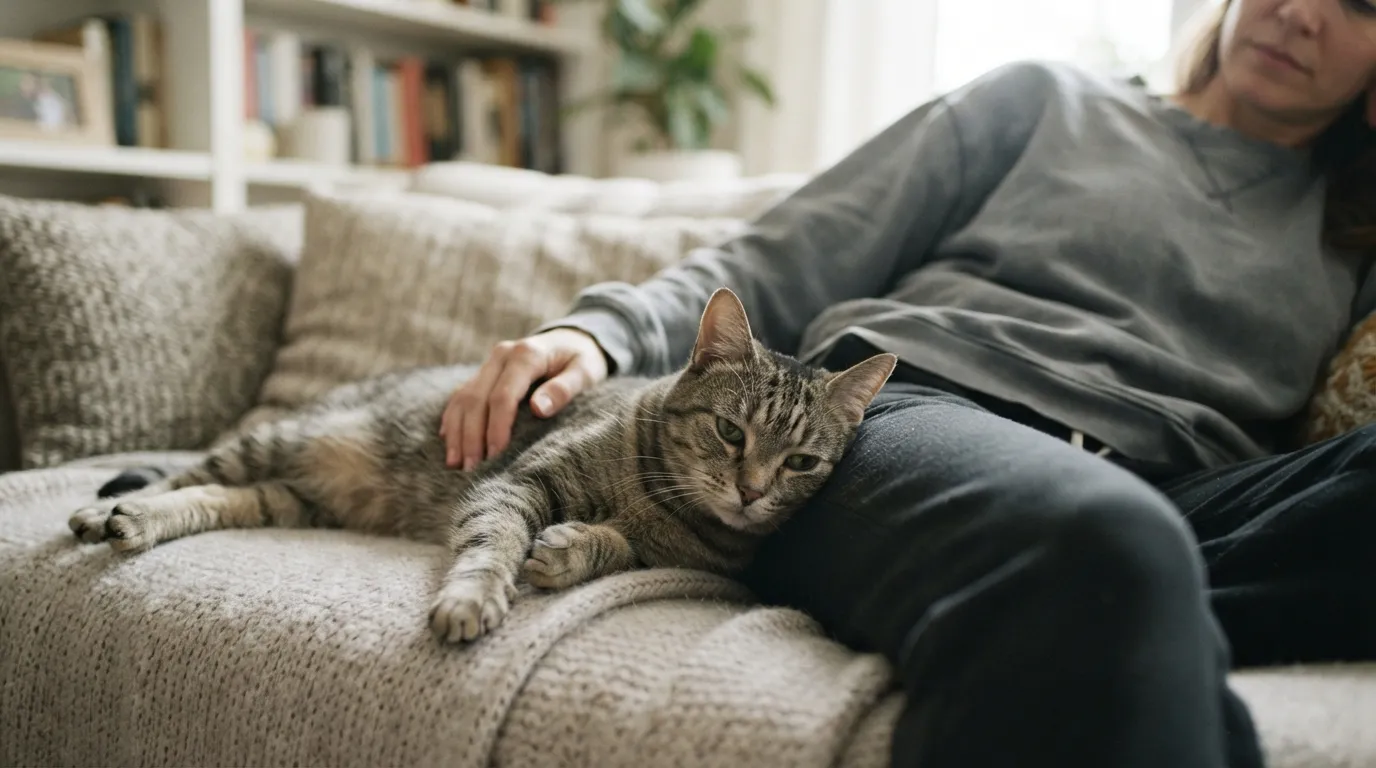
Every other behavior on this list is active. This one is just presence. In the early stages of illness, the only thing a cat owner may notice is that their cat has gone quiet and withdrawn.
But the sick cat that stays near you, not curled into a corner but settled at your side, still and steady, is making the most deliberate choice on this entire list.
If your cat becomes more affectionate and clingy while you're unwell, it may simply be their way of offering support. Even in their quiet moments, cats have a great deal to communicate.
This is a cat that feels awful, is instinctively driven to hide, and overrides that instinct to be near you. No performance. No fanfare. Just there. That is the deepest tenderness a cat knows how to show.
The Bottom Line
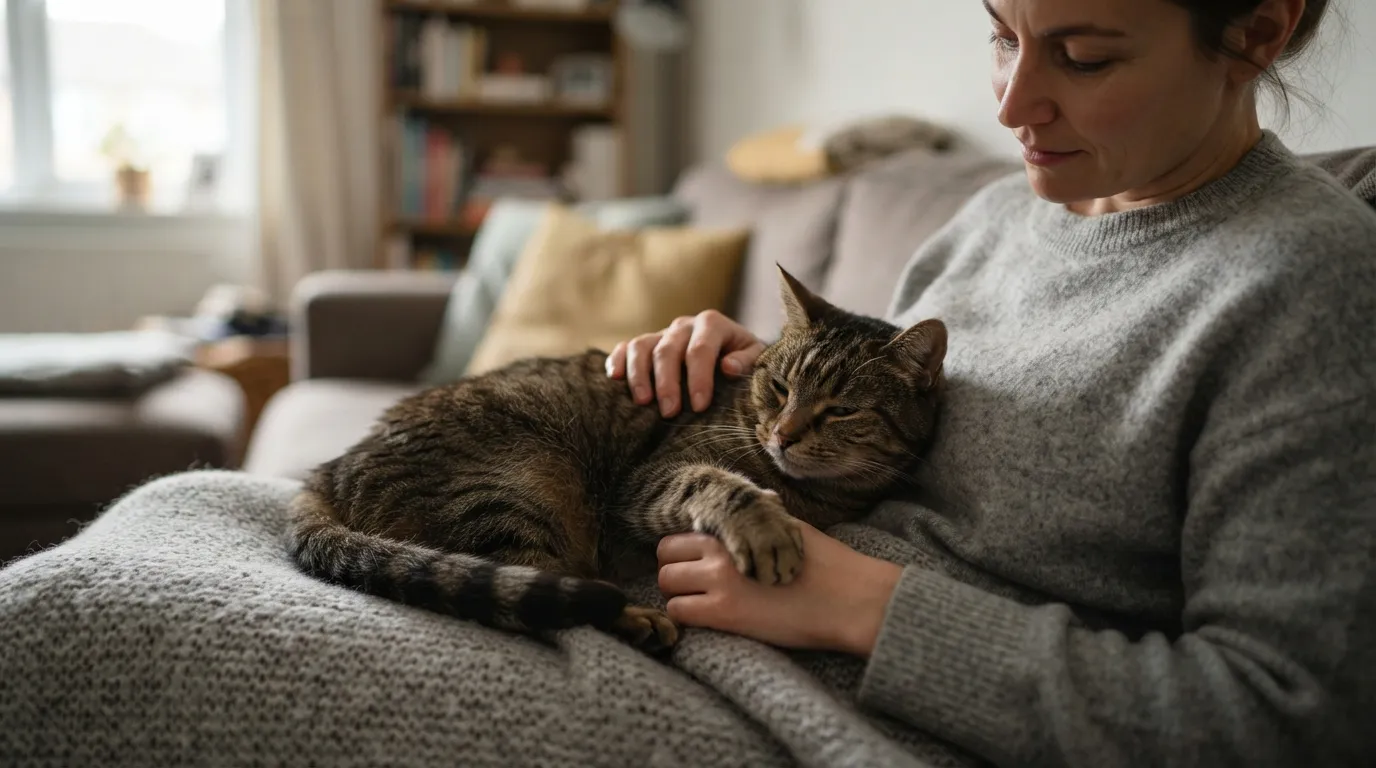
Sick cats don't always hide. Many of them reach out, with a paw, a purr, a slow blink, a quiet meow, or just their weight pressed against you.
Some cats do withdraw when they're unwell, but the ones that choose closeness instead are communicating something real and specific: you are my safe place.
Purring, headbutts, and resting nearby aren't small gestures. They're a cat's version of empathy, and they ease stress for both of you during a hard stretch.
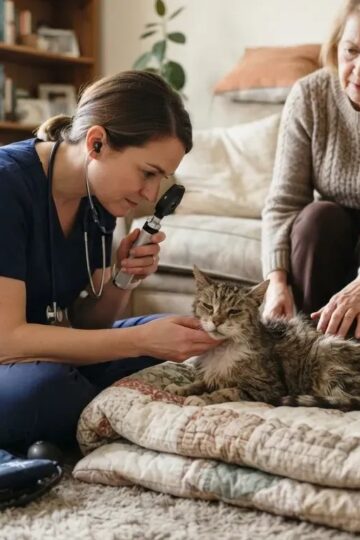
If your cat is doing these things while unwell, sit with them, answer the slow blink, rest your hand on that paw, and get them checked by a vet if symptoms persist. The tenderness is real, and so is the illness underneath it, and both deserve your attention.