16 Ways a Cat Asks for Company Without Ever Wanting to Be Touched
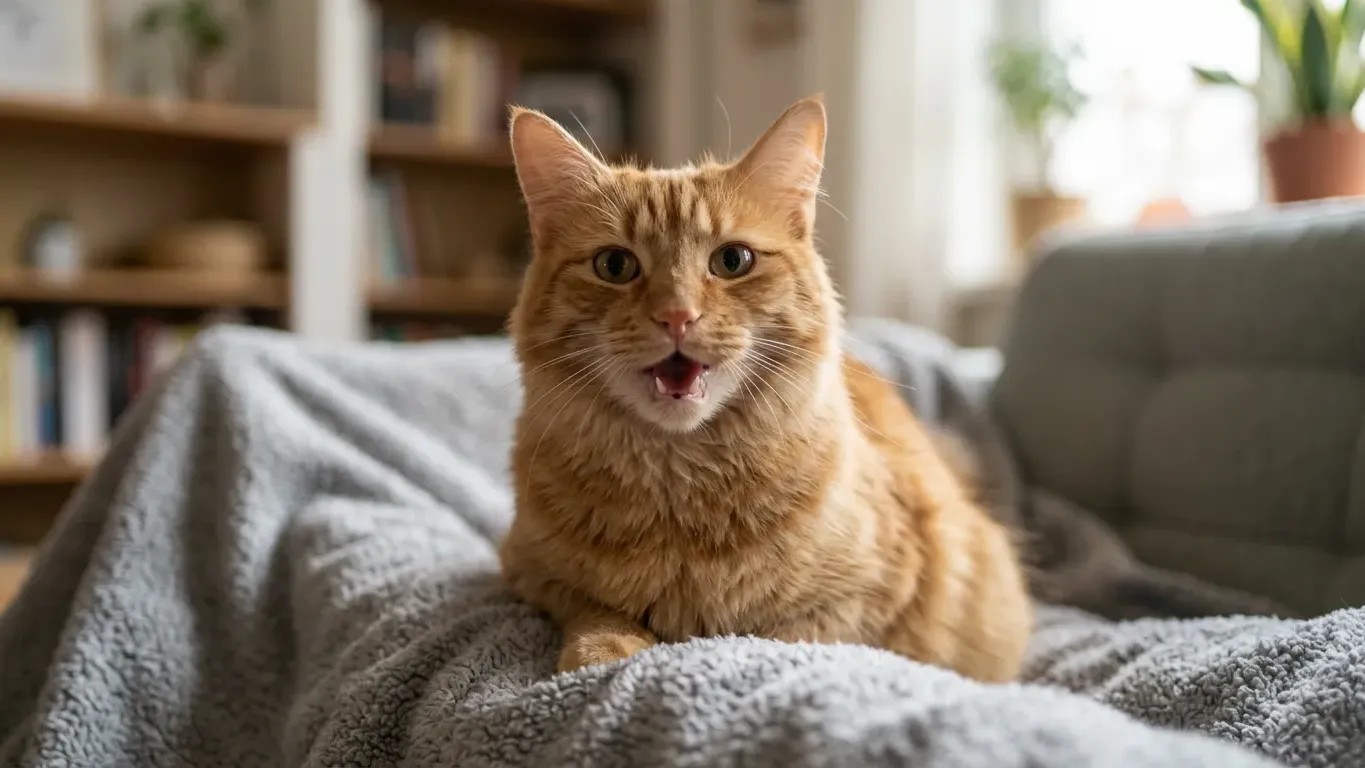
Most people assume that if a cat wanted company, it would climb into your lap. That assumption misses almost everything cats are actually doing.
Cats communicate constantly through tail angles, eye signals, sounds, and where they choose to sit. One study found cats spent roughly 65% of trial time near their owners without any physical contact at all - proof that "near you" and "touch me" are two completely different requests. Here's what the signals actually mean, starting with the one everyone dismisses as indifference.
#16 - Sitting in the Same Room, Just Far Enough Away
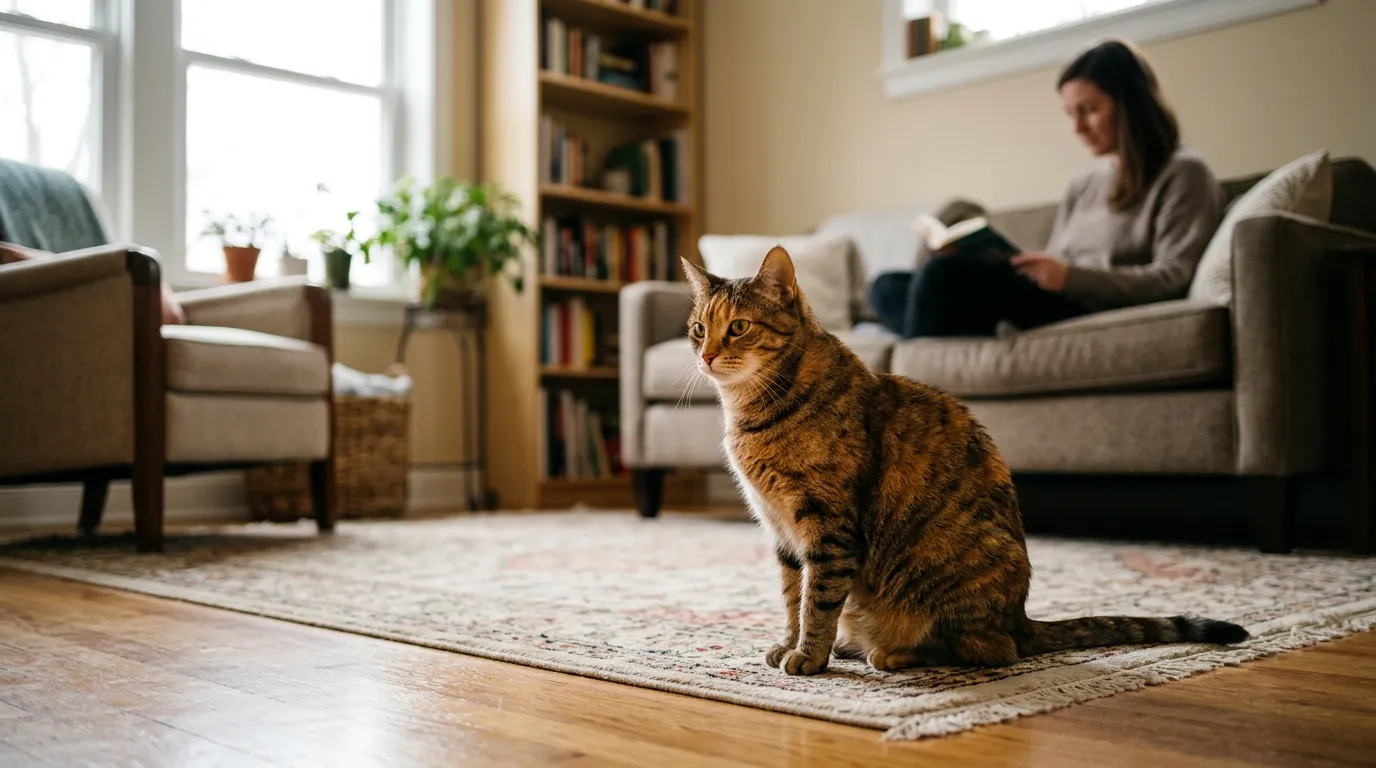
This one looks like indifference. It isn't.
Not every cat wants regular physical contact. Some prefer a quieter kind of closeness - sitting nearby without ever asking to be stroked.
Cats are territorial by instinct, and they treat their owners as part of that territory. The cat isn't ignoring you - it's including you in its safe zone.
That's already a bigger deal than it looks. But #15 is the one most owners walk right past.
#15 - The Slow Blink Across the Room
Your cat locks eyes with you from the windowsill and blinks - slowly, deliberately. Most owners miss it entirely.
The slow blink is one of the clearest affiliative signals in feline behavior. It tells you the cat is relaxed, unthreatened, and comfortable in your presence.
Researchers describe it as something close to a smile between cats and people. It's your cat saying "I like being with you" - without moving a single paw.
Fast Facts
- A 2020 University of Sussex study was the first to test slow blinking experimentally in cat-human communication.
- Cats slow-blinked back more often after their owner slow-blinked first than during plain eye contact.
- Even strangers got friendlier responses and closer approaches from cats after slow-blinking at them.
- Shelter cats that returned a researcher's slow blink tended to be adopted faster.
Now picture that same cat walking straight toward you. That's #14.
#14 - The Tail-Up Greeting Walk
Every time your cat strolls toward you with its tail pointing straight up, you're receiving a formal greeting.
A tail held high with a slight curve is one of the most consistent, well-documented signals in cat behavior. Chirps and trills often ride along with it, sweetening the invitation.
A straight-up tail isn't random - it's the feline equivalent of waving hello. Your cat is announcing that it wants to share space with you, not necessarily be scooped up.
The next one happens dozens of times a day and gets dismissed as annoying.
#13 - Following You from Room to Room
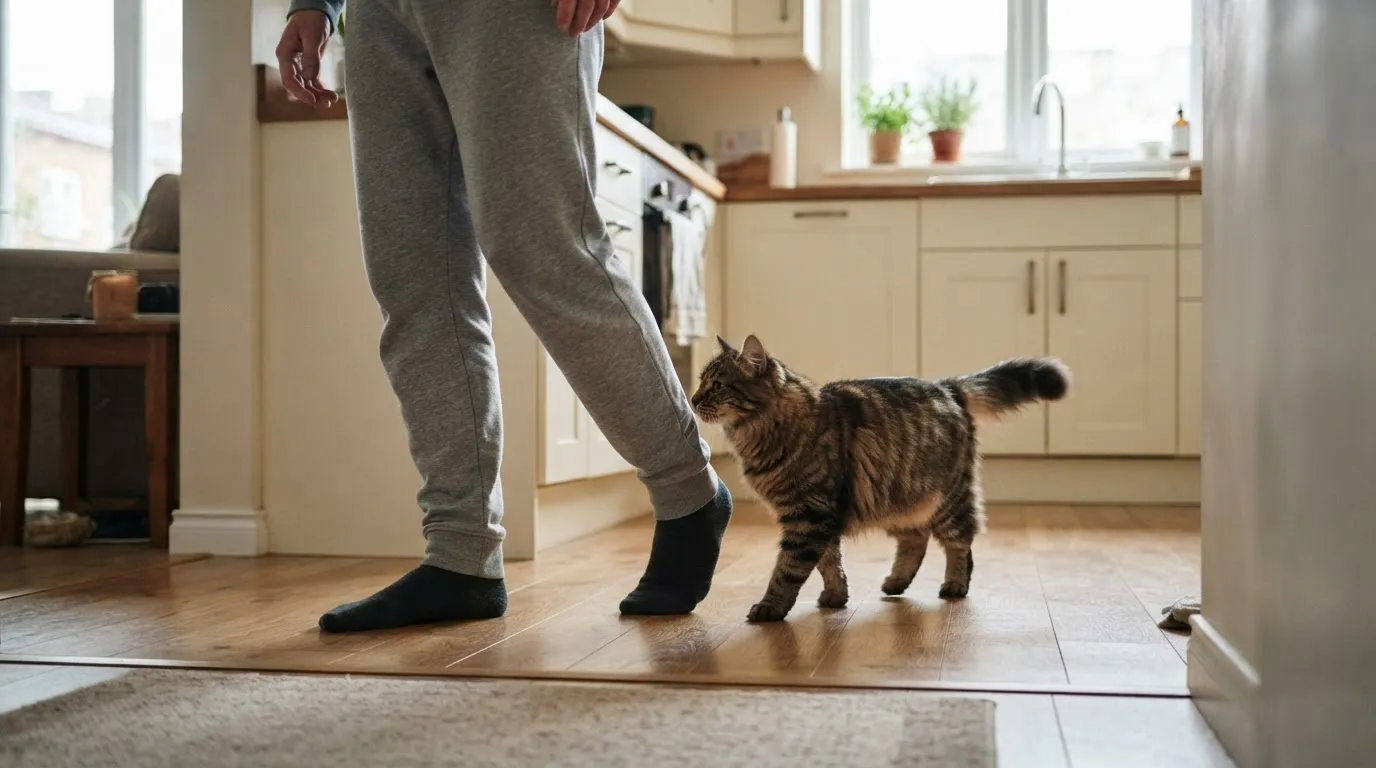
You get up for a glass of water. Your cat gets up too. You sit down, and it settles nearby - again.
Cats follow their people to soak up their scent, track their movements, and simply be part of the action. It's not neediness; it's participation.
This shadowing is one of the most underrated signs of feline bonding, usually written off as the cat being underfoot. It's deliberate companionship on the cat's own terms.
Now listen closely, because the next sound is easy to mistake for a meow.
#12 - The Trill or Chirrup Directed Straight at You
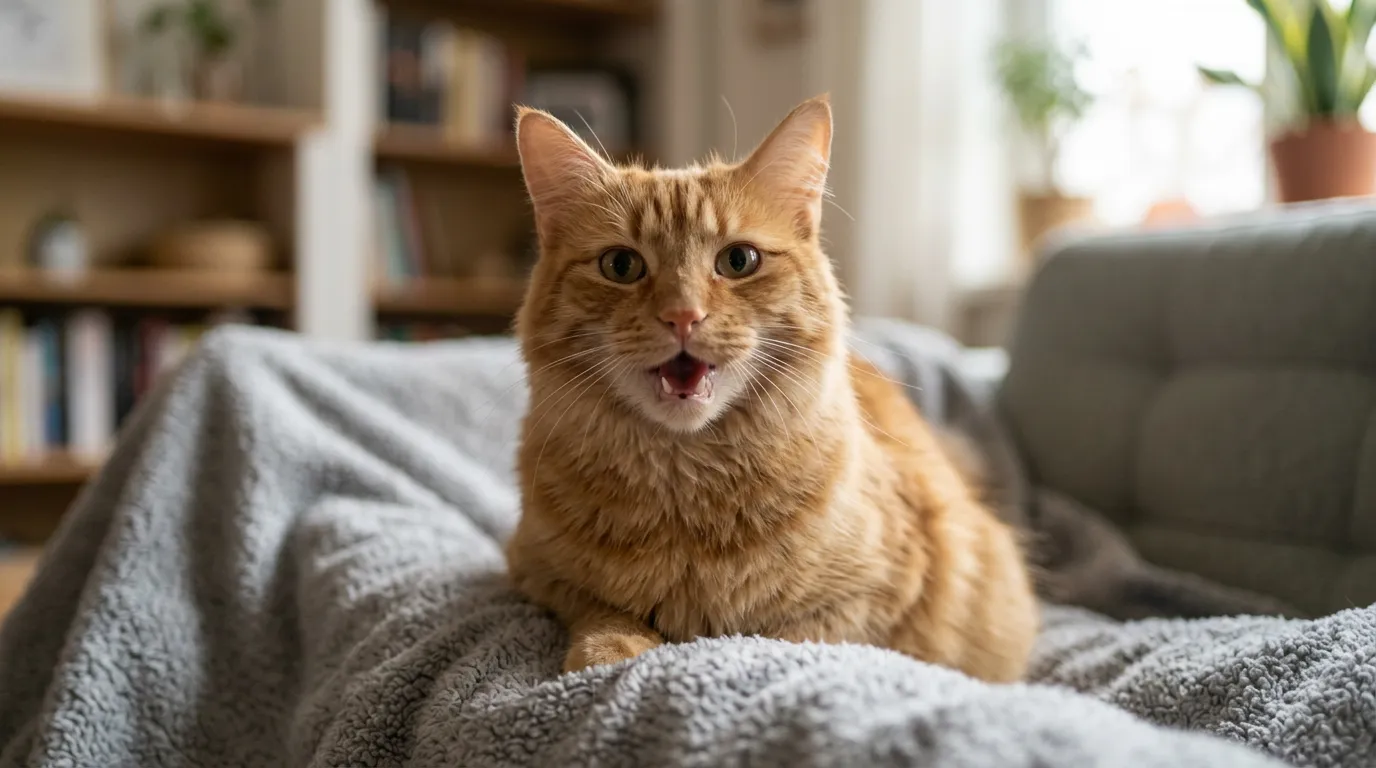
This little rolling, birdlike sound gets confused with a meow constantly. It's a completely different message.
A trill is a short, higher-pitched purr-like greeting - the same sound mother cats use to call their kittens. Friendly cats reserve it for people they trust.
When your cat trills at you, it's using the same vocal register a mother cat uses with her kittens. That's intimacy without a single paw laid on you.
The next signal isn't about approach at all - it's about the exact distance your cat refuses to close.
#11 - Sitting Just Outside Your Personal Space
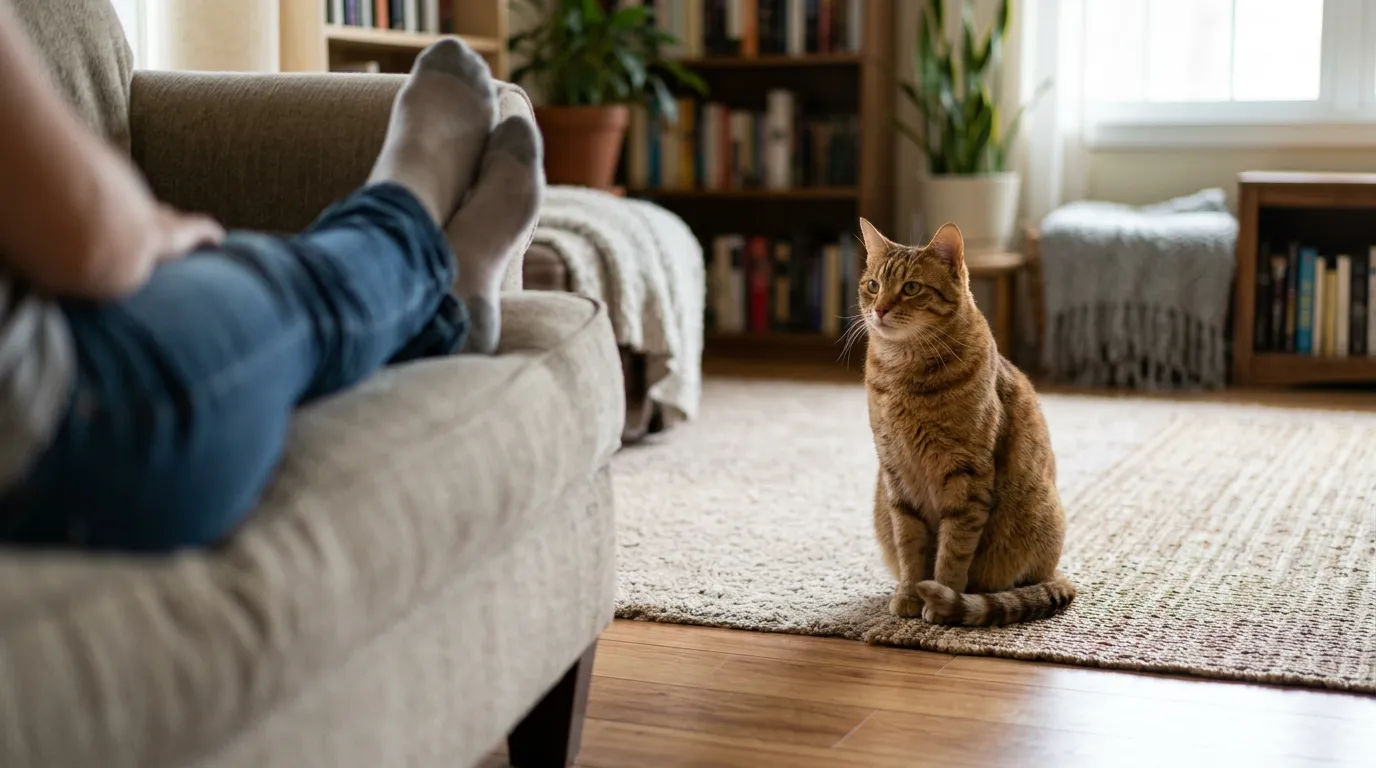
There's a specific distance your cat maintains: close enough to know you're there, far enough to keep its own autonomy. It isn't accidental.
Cats vary wildly in how much touch they enjoy. Some are conflicted - craving closeness while disliking prolonged handling.
That invisible perimeter isn't rejection - it's a comfort zone, and your cat is choosing to share it with you. Respecting that boundary is often the difference between a cat that stays and one that retreats.
Now watch what happens when that same cat gets fully comfortable - the loaf.
#10 - The "Loaf" Position Facing You
When your cat tucks all four paws underneath its body and faces you, it's doing something quietly significant.
A loafing cat has made itself physically vulnerable - it can't spring away with its paws tucked under. That posture only happens when tension is gone.
Loafing while facing you specifically means your presence is the reason the cat feels safe enough to relax. It's companionship by positioning, no contact required.
This next one gets misread constantly, and it's worth getting right.
#9 - Purring With No Request to Be Petted
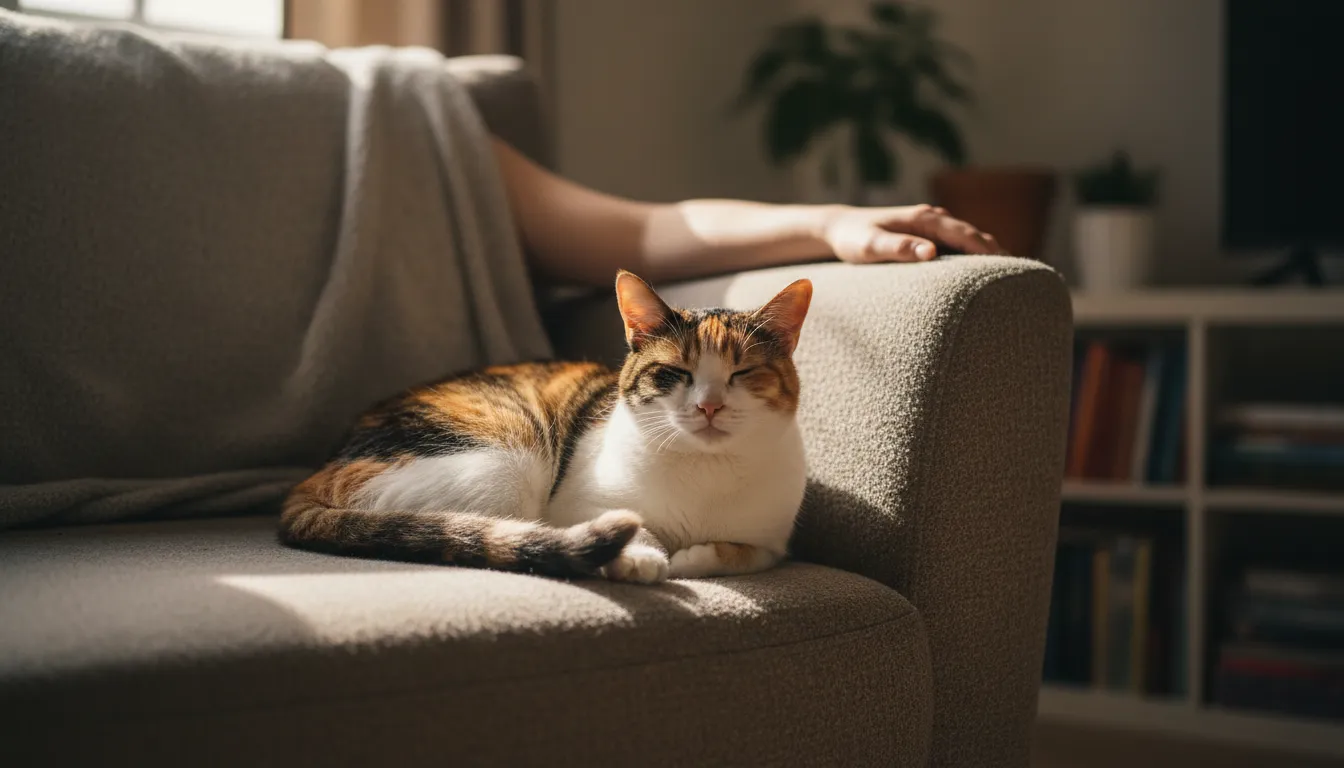
Most people assume a purring cat wants to be stroked. That's not always true.
Purring often signals relaxation and happiness on its own, especially paired with loose posture and slow blinking. A cat can purr contentedly simply because you're nearby.
A purring cat that doesn't nudge your hand is asking for your presence, not your hands. Respecting that distinction builds trust faster than any amount of unsolicited stroking.
Worth Knowing
- A domestic cat's purr typically vibrates somewhere between 25 and 150 Hertz.
- That range overlaps with frequencies studied for promoting bone and tissue healing.
- Purring isn't only about happiness - cats also purr when anxious, in pain, or giving birth.
- Calm, loose-bodied purring near you is the contentment version, not a request for touch.
The next one is a trap - and a lot of owners fall for it every single day.
#8 - The Social Roll
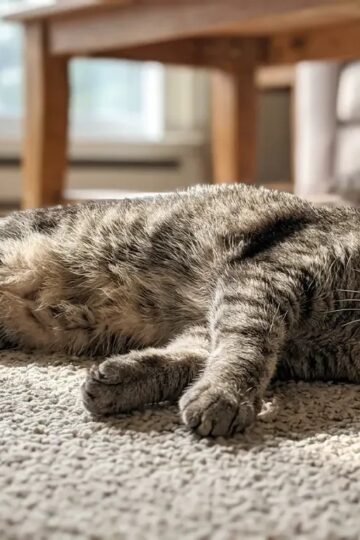
Your cat flops onto its side in front of you and just lies there, looking at you. You reach down. You get a warning nip.
Rolling over is a friendly greeting and a sign of relaxation - not an invitation for a belly rub. Misreading it is one of the most common ways trust breaks between cats and owners.
Cats are not aloof - they simply speak a language most humans were never taught to read.
John Bradshaw, feline behaviorist
The social roll says "I feel completely safe around you" - it's a display of trust, not a physical request. Acknowledge it with a slow blink and leave the belly alone; the cat will stay longer.
#7 - Sitting With Its Back to You
Counter-intuitively, a cat sitting with its back turned toward you is paying you a compliment.
A cat will never turn its back on something it considers a threat. Doing it in front of you means it feels fully protected in your presence.
Turning its back is the highest-stakes version of this signal. It has chosen you as its safe direction.
The next one hides in plain sight - a toy dropped at your feet and nothing else.
#6 - Bringing You a Toy (and Dropping It Nearby)
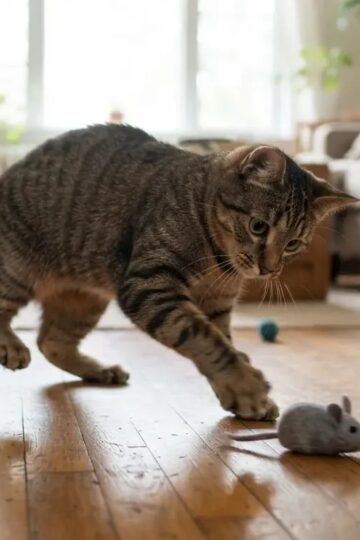
Your cat drops a toy mouse at your feet, stares at you expectantly, then sits down. It doesn't ask to be picked up or petted.
Presenting a toy is part of the same social vocabulary as head-butts and kneading - specific, consistent, and learnable. It's an invitation to engage, not to be handled.
This is your cat initiating a shared activity as a form of company. Ignoring the toy is a missed social connection from the cat's point of view.
Now picture the cat glancing away from the window - and back at you.
#5 - Chirping at the Window While You're in the Room
Your cat chirps at pigeons on the windowsill while you sit five feet away. Between chirps, it glances back at you.
The chirp itself expresses excitement over birds or squirrels. But that glance back is a check-in - confirming you're still there, still part of its world.
Those glances back are the cat keeping you in its social loop. It's sharing an experience with you silently - companionship in its most purely feline form.
The next behavior happens right in front of you and still goes unnoticed.
#4 - Kneading the Air or a Blanket Near You
Kneading - the rhythmic pushing of paws - happens near owners far more than it happens alone. That proximity is the point.
Often called "making biscuits," kneading is a leftover behavior from kittenhood tied to deep contentment. A purr paired with kneading paws shows total relaxation.
The cat isn't kneading because of you - it's kneading near you because of you. Few signals say "I want your company" more clearly than this one.
The next one is the only word cats learned specifically for us.
#3 - Meowing Softly at You Without Approaching
Adult cats don't meow at each other. They learned to meow specifically to communicate with humans.
A short, soft meow with no follow-up movement is a greeting - the feline version of saying "hey" to a housemate. Louder, persistent meowing means something else entirely, like hunger or frustration.
Cats are communicating constantly, in a language most humans have never been taught to read. This one is easy to miss. Don't.
The next one happens in your hallway every single day without you noticing.
#2 - Scent-Marking You Without Physical Affection
Your cat rubs its face along the edge of your shoe, your bag, or your chair - objects that carry your scent - the moment you come home.
Cats recognize their owner's scent and use it to feel connected and secure. They can even pick up on shifts in your mood or health through it.
At a Glance
- Scent glands are concentrated around a cat's cheeks, chin, and the base of the tail.
- Rubbing these areas on you or your belongings deposits a scent that marks you as familiar and safe.
- This bonding channel is passive and constant - it never requires a single touch back.
- In multi-cat homes, cats often scent-swap with each other and their favorite humans to build one shared "colony scent."
By scent-marking your belongings, the cat is folding you into its territory as a permanent, trusted member - not a guest it merely tolerates. This behavior requires zero physical contact and represents one of the deepest commitments a cat can make.
And then there's the one signal that outranks every other on this list.
#1 - Choosing to Sleep in Your Presence, Eyes Closed
This is the one that matters most - and the one most owners walk past without a second thought.
A cat willing to close its eyes near you is telling you it doesn't see you as a threat. Sleep is when a cat is at its most vulnerable, so choosing to do it near you is a decision, not an accident.
This is the purest expression of social bonding a cat offers - presence without need, closeness without demand. No purring, no meowing, no touch required. Just a sleeping cat in your room, because you are the reason it feels safe.
The Bottom Line
Most people spend years believing their cat is aloof or uninterested. Most of them are wrong.
Cats form secure attachments to their owners at surprisingly high rates and actively seek proximity even without a single touch. The slow blink, the tail-up walk, the trill, the deliberate room-follow - none of it is random.
Quick Compare
| Looks Like Distance | Actually Means |
|---|---|
| Sitting across the room | Sharing territory, quiet trust |
| Slow blink from afar | An emotional "smile," relaxed trust |
| Back turned toward you | The highest-level safety signal |
| One soft, single meow | A casual greeting, not a demand |
It's a coherent language, and once you learn it, you'll realize your cat has been asking for your company every single day - just never in the way you were taught to expect.