14 Things a Cat Does That Mean It Has Stopped Missing Its Old Home
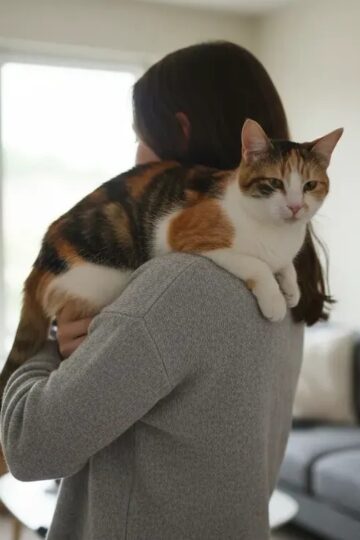
Most people assume a cat forgets its old home within a few days of moving in. The truth is stranger: cats are wired so deeply to scent and territory that truly letting go can take weeks, sometimes months.
But here's the part nobody tells you - the exact moment a cat moves on for good, it broadcasts it through a very specific set of signals. Most owners live with these cues every single day and never once realize what they're watching.
#14 - It Starts Actively Exploring Every Room
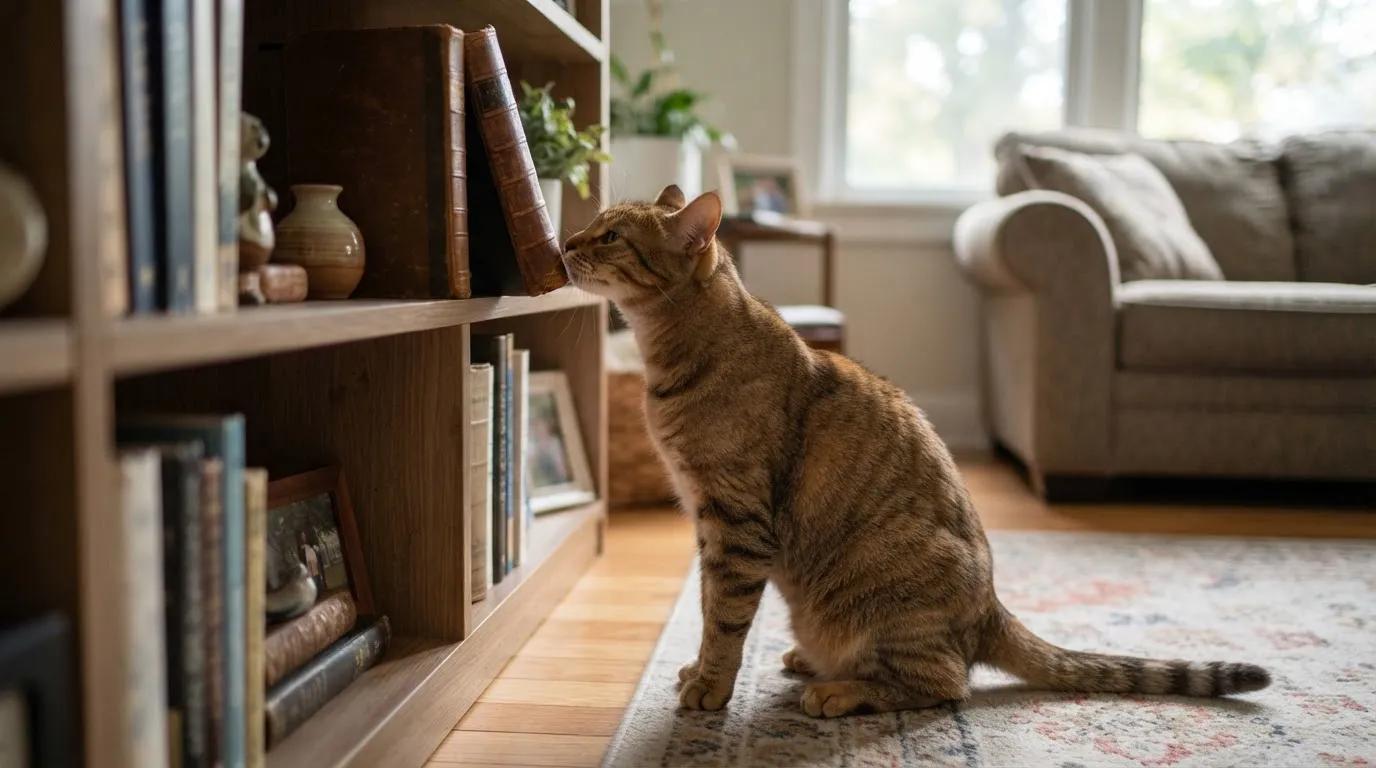
At first, a stressed cat picks one hiding spot and won't leave it, even for food. As comfort grows, it starts creeping out to sniff furniture and check out room after room.
That exploring isn't just curiosity - it's your cat leaving pheromone deposits around the home, quite literally rewriting the scent-map in its head. Old smells fade, new ones take over.
Fast Facts
- The "3-3-3 rule" says cats typically need 3 days to decompress, 3 weeks to settle in, and up to 3 months to feel fully at home.
- Shy or previously stressed cats can take six months or longer to fully bond with a new household.
- Exploring new rooms usually kicks in during the "3 weeks" phase, right alongside eating on schedule and using the litter box reliably.
Once your cat noses around baseboards and window ledges without crouching in fear, the shift has already begun. But that's nothing compared to what #13 reveals.
#13 - It Eats and Drinks on a Normal Schedule Again
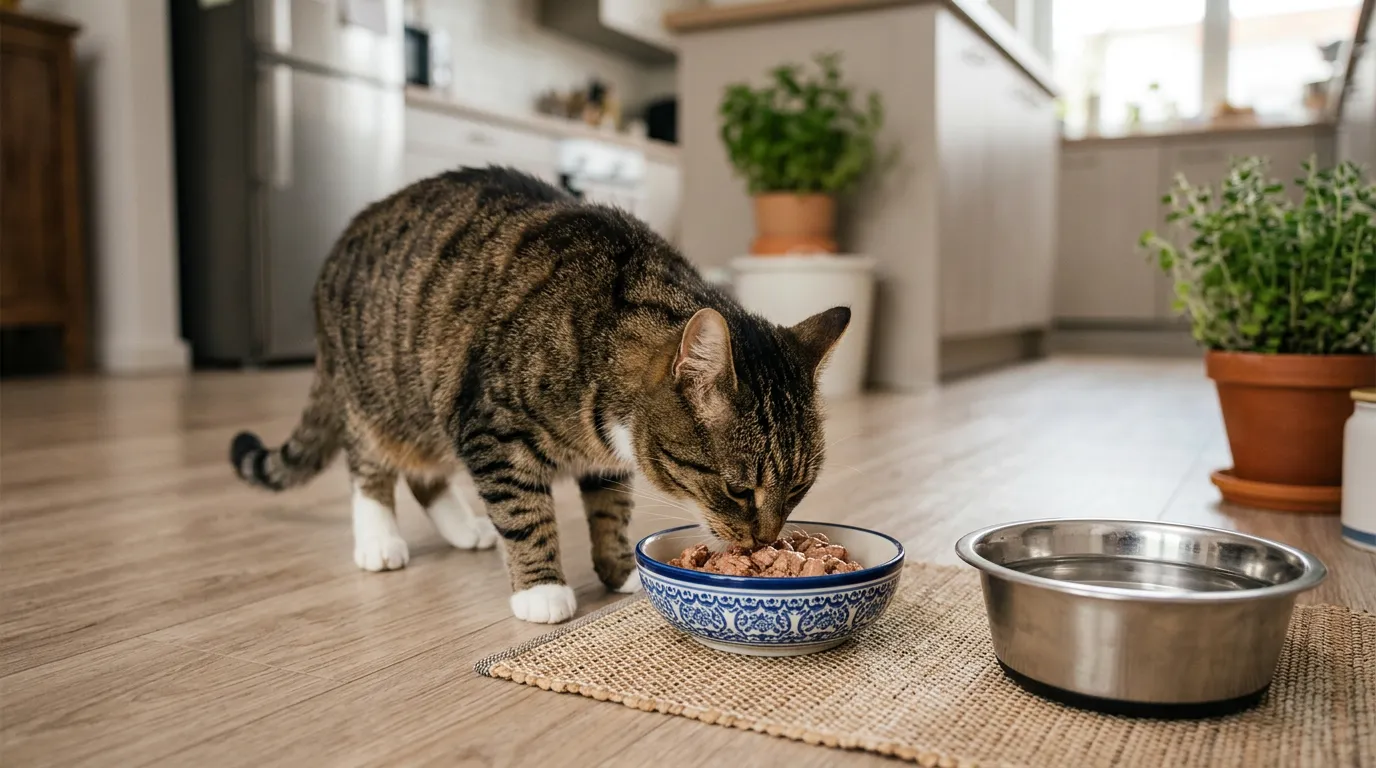
In the first few days, a stressed cat often skips meals entirely. As it settles in, its appetite snaps right back to normal.
Regular eating and drinking patterns suggest the cat feels safe and less anxious - and most cats return to the exact same feeding habits they had before the move.
Watch for your cat finishing its bowl without hesitation or distraction. That means its nervous system has finally stood down - but #12 shows an even more telling signal.
#12 - Grooming Returns to Normal
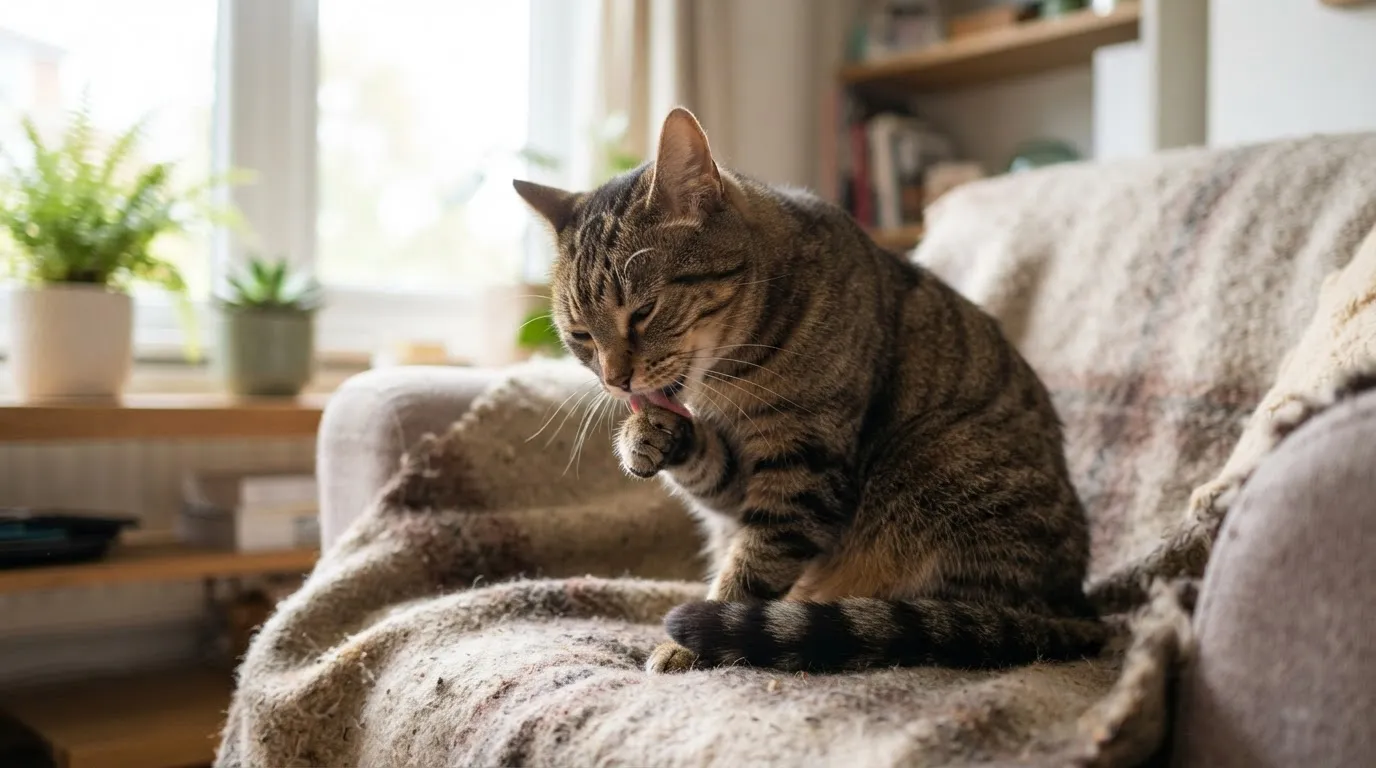
Cats are fastidious groomers, and grooming habits are a solid barometer of stress. A new cat might over-groom - or stop grooming altogether - out of pure anxiety.
Healthy, adjusting cats typically resume normal grooming behaviors within the first days, right alongside a returning appetite and playfulness. A cat that grooms calmly in plain sight is telling you it no longer feels threatened.
Both extremes - over-grooming and refusing to groom - are stress responses. A relaxed, ordinary grooming routine means the cortisol has finally dropped. Wait until you see what #11 signals.
#11 - It Uses the Litter Box Reliably Again
This one surprises most owners: litter box avoidance is a textbook anxiety behavior, and stressed cats often lose track of their box entirely.
A truly settled cat shows eating regularly, using the litter box consistently, and spending time out in the open instead of hiding. When all three line up together, your cat has crossed from survival mode into comfort mode.
Don't dismiss this as mundane - vets actually use reliable litter box use as a clinical stress benchmark. The next sign, #10, is the one most people misread completely.
#10 - It Stops Hiding and Starts Sleeping in the Open
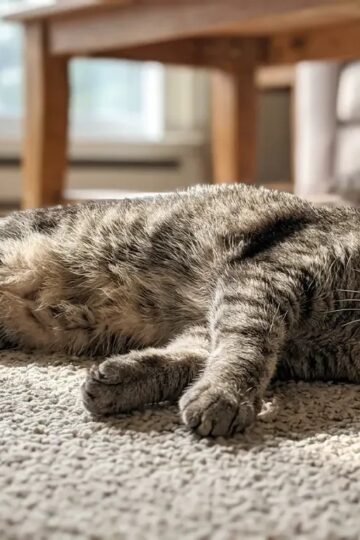
Secure cats seek out multiple comfortable sleeping spots rather than hiding constantly. When a once-stressed cat picks the middle of the living room rug over the space behind the washing machine, something fundamental has shifted.
Confident cats stop creeping along the edges of rooms and may lounge around in the open instead. That's physical proof your cat has mentally claimed the space as its own.
Pay attention to where your cat sleeps - high perches and central spots mean it feels like it owns the place. But watch what happens to that tail next, in #9.
#9 - Its Tail Goes Up When It Walks Toward You
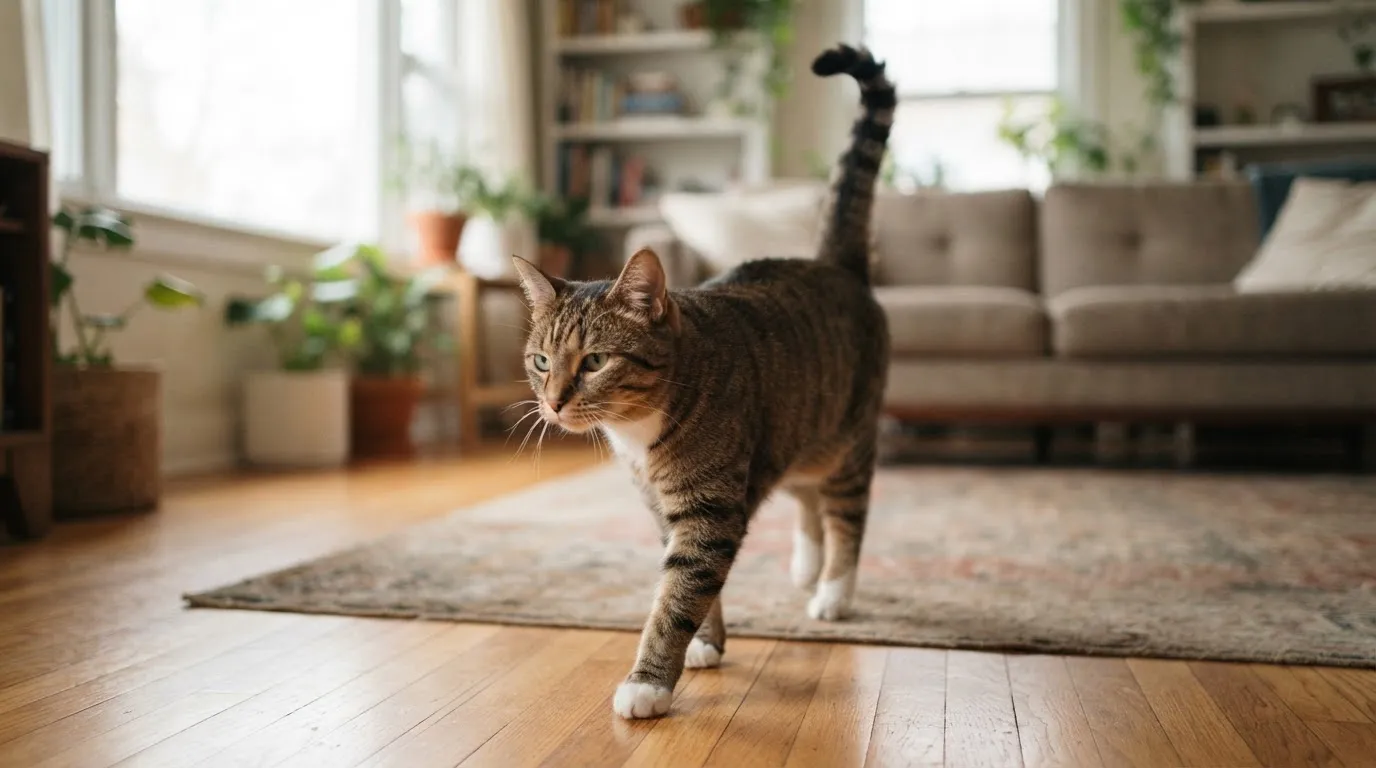
An upright or gently curled tail while exploring is one of the clearest signs a cat has genuinely settled in. A tail held high is a deeply social signal, reserved only for cats and people it trusts completely.
Look for a tail up and moving loosely, paired with soft eyes and a relaxed face. During the homesick phase, that same tail stays low or wraps tight around the body - its lift marks a real turning point.
Most owners notice the tail change before they can even name what it means. Now here's the one almost nobody catches - #8.
#8 - It Slow-Blinks at You
A cat that gives you a slow blink feels genuinely comfortable and trusts you completely. During the homesick phase, cats stay in high alert and rarely close their eyes voluntarily in a new space.
Slow-blinking means a cat is deliberately lowering its guard, since closing its eyes even briefly means losing awareness of the room. Naturally cautious animals don't do that unless they feel safe.
"This study is the first to experimentally investigate the role of slow blinking in cat-human communication."
Karen McComb, University of Sussex
If your cat holds your gaze and slowly closes its eyes, blink back - you're watching a cat that has mentally moved in. But #7 goes even deeper than eye contact.
#7 - It Starts Rubbing Its Face on Furniture and You
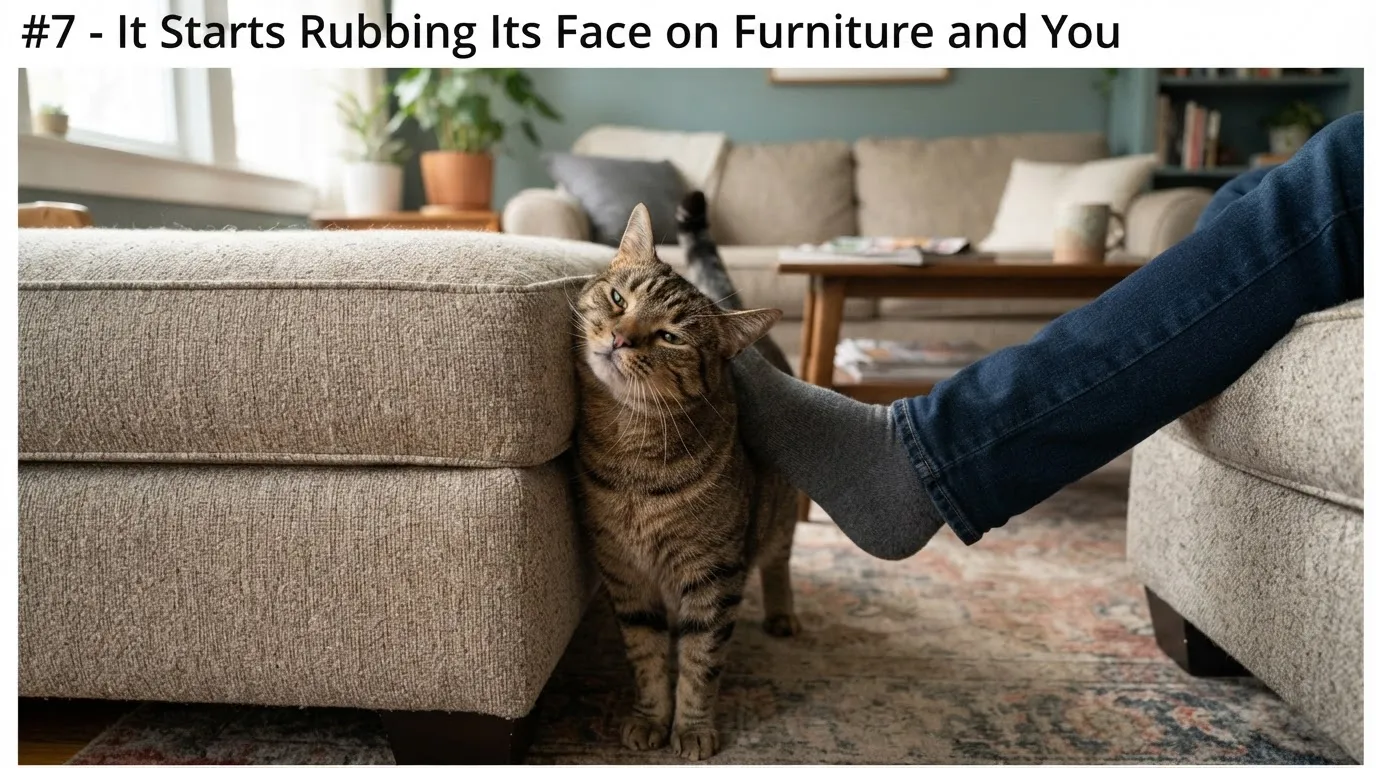
Relaxed, confident scent-marking is one of the clearest signs a cat has claimed a home as its own. A cat marks its scent by rubbing its face and body, depositing pheromones to mark the boundaries of what feels safe.
This isn't possessiveness - it's comfort, expressed chemically. Cheek and chin rubs against you are known as "bunting," a way of folding you into its trusted group.
A cat face-rubbing your couch legs, doorframes, and ankles is basically redecorating your home with invisible "mine" signs. That's the opposite of a cat pining for somewhere else - and #6 reveals something even more intimate.
#6 - It Kneads on You or a Blanket
When grown cats knead, it usually means they feel completely safe and relaxed. Kneading in open spaces, rather than hidden corners, is a strong marker that your home now registers as core, safe territory in your cat's mind.
Kneading starts as an instinctive nursing behavior kittens use with their mothers. In adulthood it becomes a way of showing contentment and affection - and a homesick, stressed cat almost never does it.
When your cat drapes itself across your lap and starts kneading rhythmically, it has linked you to safety at the most primal level. The next sign, #5, is one of the most overlooked of all.
#5 - It Plays Spontaneously Again
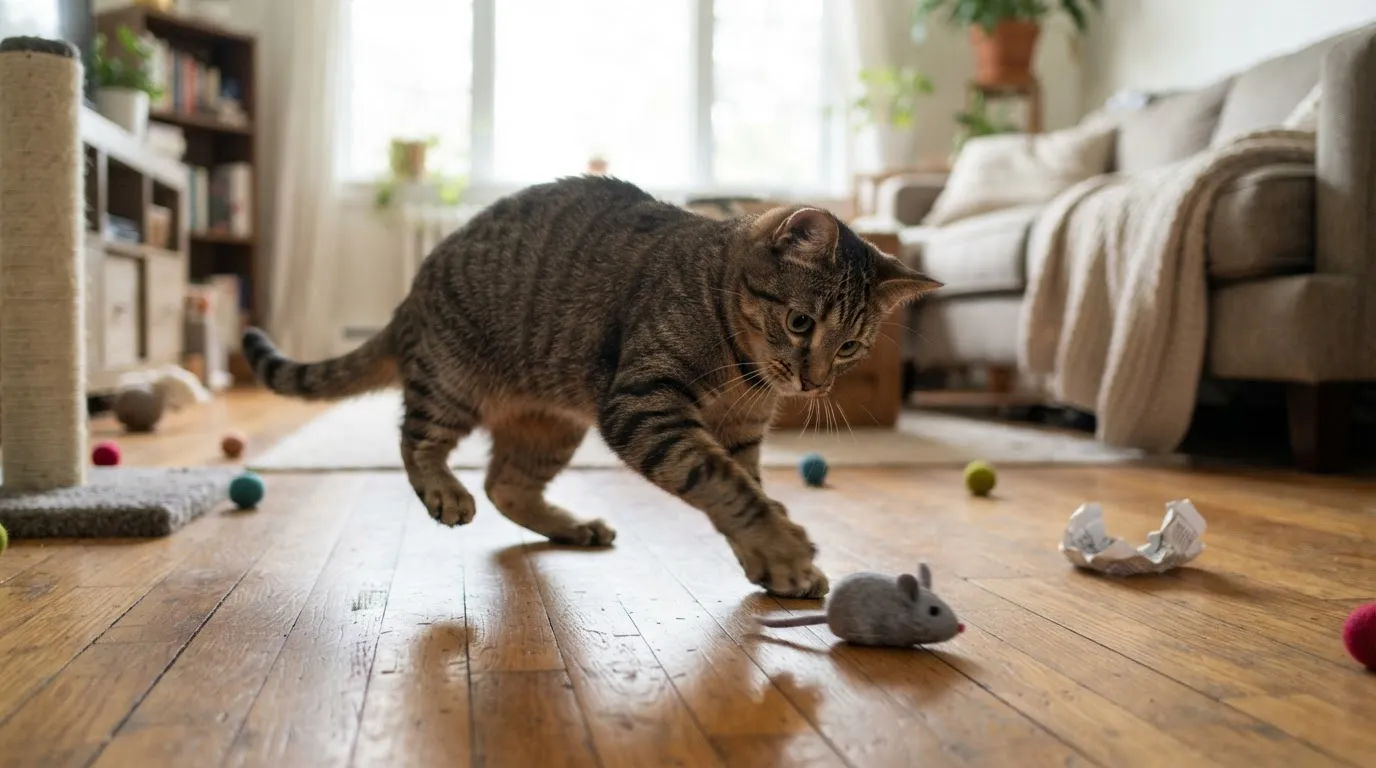
Comfortable cats are far more playful. Play is often the first thing chronic stress shuts down in cats - and the first thing that comes back during real recovery.
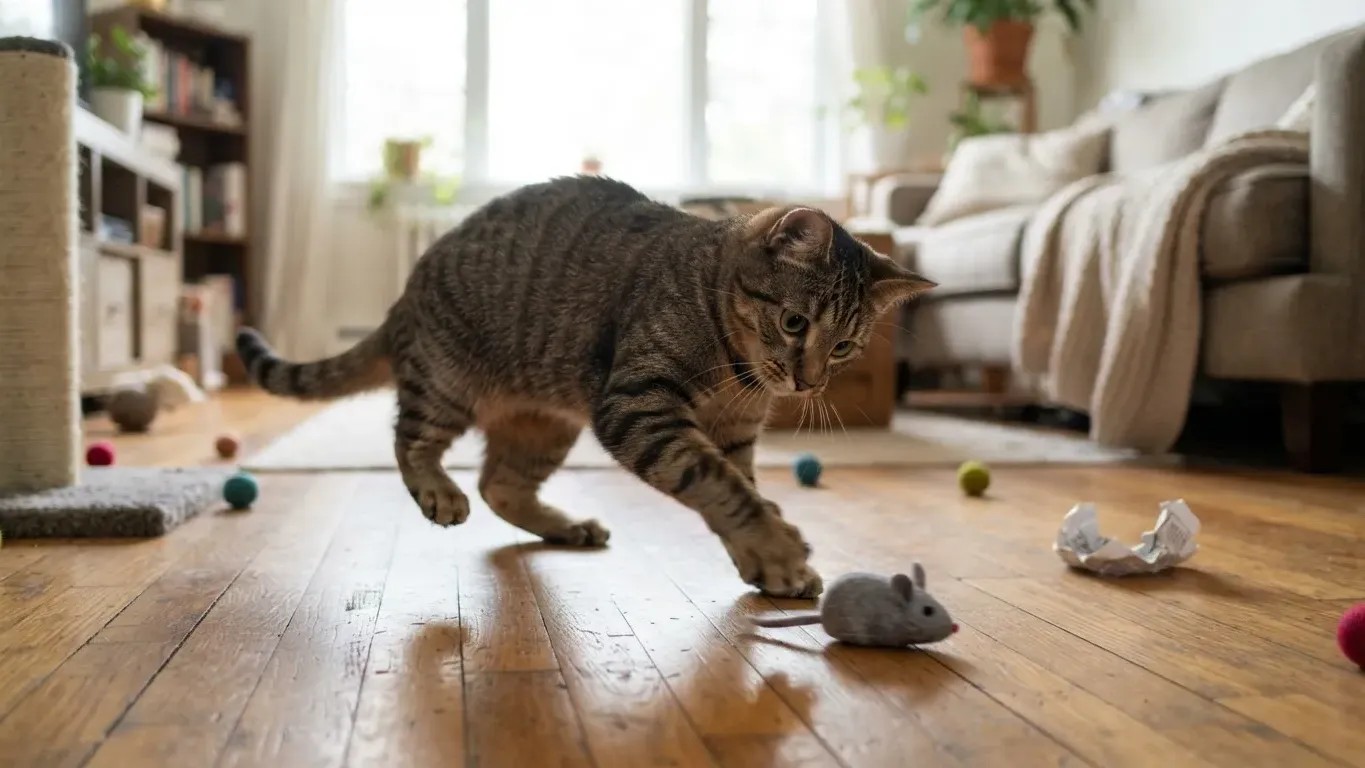
Renewed interest in toys, scratching posts, and family interaction signals growing confidence and comfort in the new space. The moment your cat bats a toy mouse across the floor unprompted, it has stopped surviving and started simply living.
Don't mistake a half-hearted paw-tap for full recovery - true spontaneous play, where the cat seeks out the toy itself, is the real landmark. Then look for #4, which is equally unmistakable.
#4 - It Seeks You Out for Social Interaction
When a cat starts initiating contact - approaching for pets, rubbing against your legs, or starting play on its own - that's a major sign of adjustment.
A settled cat will explore other rooms or hop onto your lap somewhere new, things it wouldn't risk during the anxious early weeks. A homesick cat waits to be approached; a settled cat does the approaching.
Worth Knowing
- Settled cats often start following their owners from room to room instead of staying put.
- Head-bumps and purring during contact are common signs of a strengthening bond.
- Many cats begin seeking attention on a predictable schedule once they feel secure.
That directional shift matters enormously, and it's a key milestone worth watching for. By this stage, your cat has mentally replaced the old home - but #3 is where it gets genuinely surprising.
#3 - It Establishes a Daily Routine on Its Own Terms
Small routines start to emerge once a cat feels safe - you can help set the rhythm for eating, play, and rest, but a truly settled cat starts driving those rhythms itself.
Somewhere around days 22 to 30, routines click into place and you finally see your cat's real personality. For a cat, a predictable routine is proof the environment itself is safe.
Notice when your cat shows up at the food bowl or picks its nap window - that internal clock runs on comfort. It only gets more telling at #2.
#2 - It Purrs and Kneads While Grooming Itself Near You
Cats only play, eat, and groom freely when they feel safe enough to do it - normal, healthy behavior is the clearest sign a cat is settling in well.
A settled cat softens its gaze instead of holding an intense stare, paired with neutral ears, relaxed whiskers, and an easy posture. When purring, grooming, and closeness to you happen all at once, that's total psychological ease on display.
This multi-signal combo is what behaviorists call a "comfort cluster," and it's vanishingly rare in a cat still missing another place. Which brings us to the single strongest signal of all.
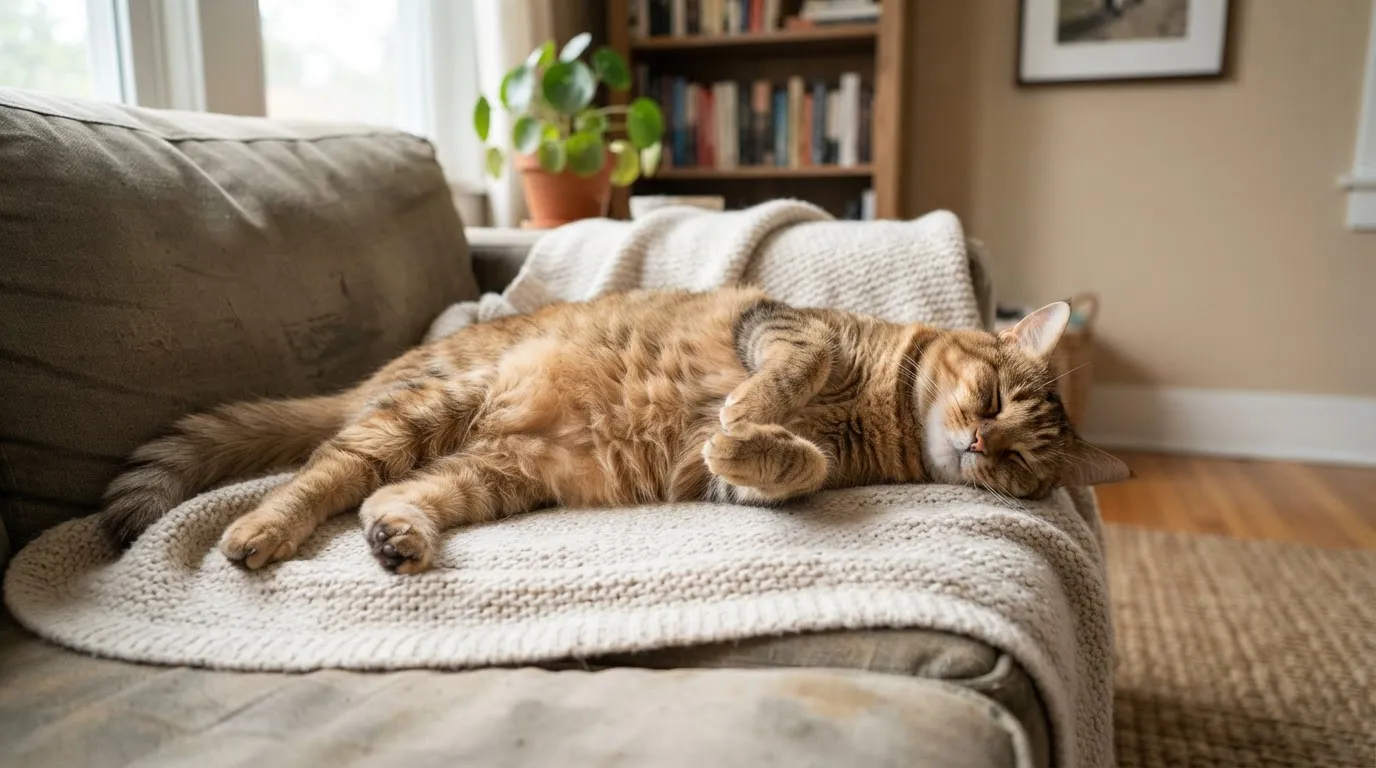
#1 - It Exposes Its Belly Without Flinching
If a cat shows you its stomach, stretches out its legs, or gets curious about new areas of the house, it's bonding with you and feeling genuinely settled.
The belly is the most vulnerable part of a cat's body, so exposing it is an act of total trust - not an invitation to pet, which is a mistake plenty of owners make. Confident cats stop hugging the edges of rooms and lounge in the open instead, belly up, legs stretched, like the place was always theirs.
A cat that rolls onto its back in the middle of your living room has decided something deep in its territorial brain: the old home no longer exists as a competing memory. This is the finish line.
The Bottom Line
On average, cats take anywhere from a few weeks to six months to fully adjust to a new home - and most owners never notice the process happening beneath the surface. These fourteen signals aren't cute quirks; they're a real, sequential map of a cat crossing from homesick to home.
Quick Compare
- Homesick cat: hides for hours, skips meals, avoids the litter box, tail low and tight.
- Settled cat: naps in the open, eats on schedule, uses the litter box without fail, tail up and loose.
- Homesick cat: stares warily, avoids blinking, stays out of easy reach.
- Settled cat: slow-blinks at you, seeks contact, rolls over to show its belly.
The heavy hitters - belly exposure, spontaneous play, confident scent-marking, and an upright tail - are your clearest proof the old home has been replaced in your cat's mind. Miss them, and you miss the whole story.
Which of these did your cat do first? Drop it in the comments - we'd love to know.