14 Reasons Your Breed Cat Is the Most Loyal Companion You Will Ever Have
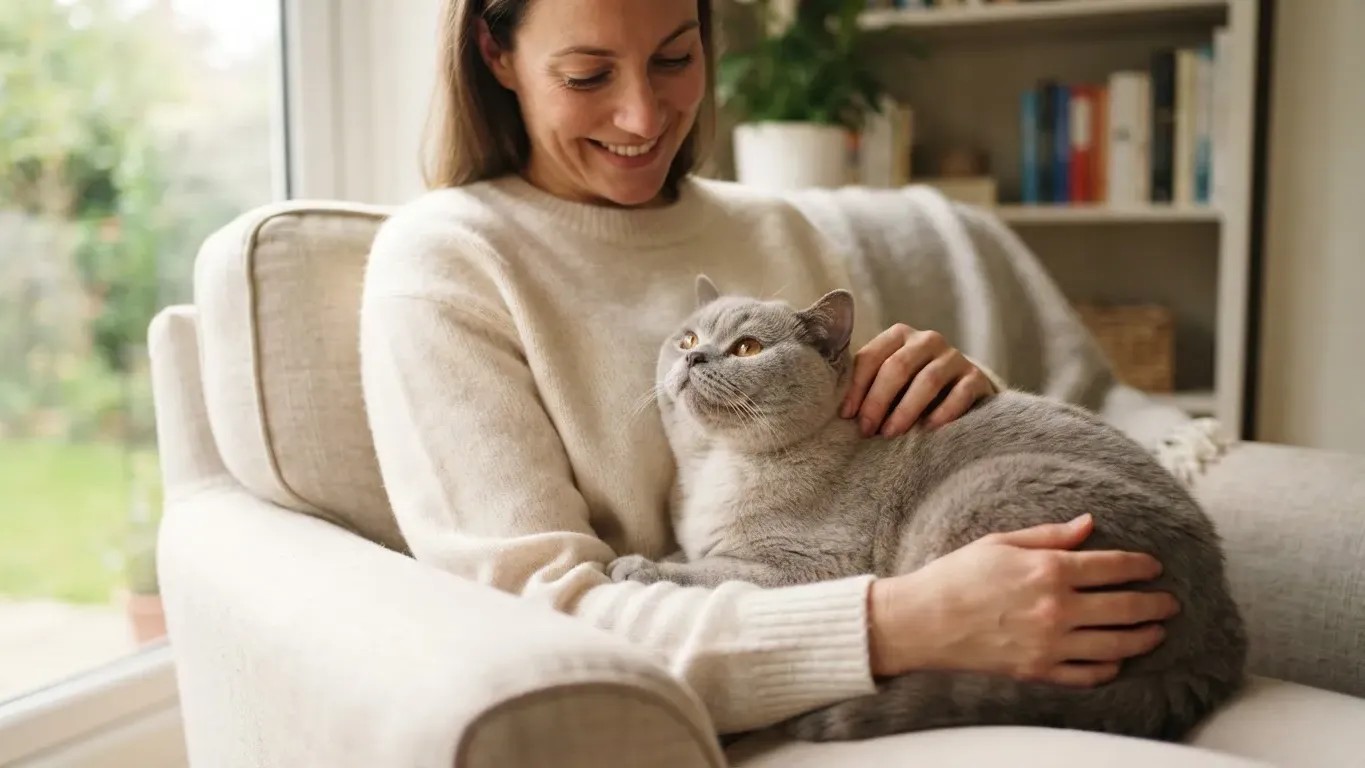
Most people assume cats are loners who only tolerate you for the sake of a full food bowl. That belief isn't just wrong - it's almost exactly backwards, and the research proves it.
From Oregon State University attachment studies to brain-chemistry labs tracking the "love hormone" in real time, cats - especially breeds shaped for generations to bond with humans - show loyalty as deep as anything a dog offers. Here's what the science actually found, starting with the moment your cat decided you were worth keeping.
#14 - Your Breed Cat Chose You Back
Most people assume they picked their cat. Turns out, your breed cat picked you right back.
One study offered cats four choices: human interaction, food, toys, and scent. Most cats, pet and shelter alike, chose human interaction over everything else - including food.
Cats are fully capable of independence. So a cat that seeks out your lap, sleeps on your pillow, and meows the second you walk in isn't compelled to - it's choosing to, and breed cats shaped for companionship choose it even harder.
The real shock: your cat isn't tolerating you. It is actively, consciously choosing you, every single day.
But #13 goes even further, and the science behind it is more personal than you'd think.
#13 - Their Attachment Is Scientifically Proven
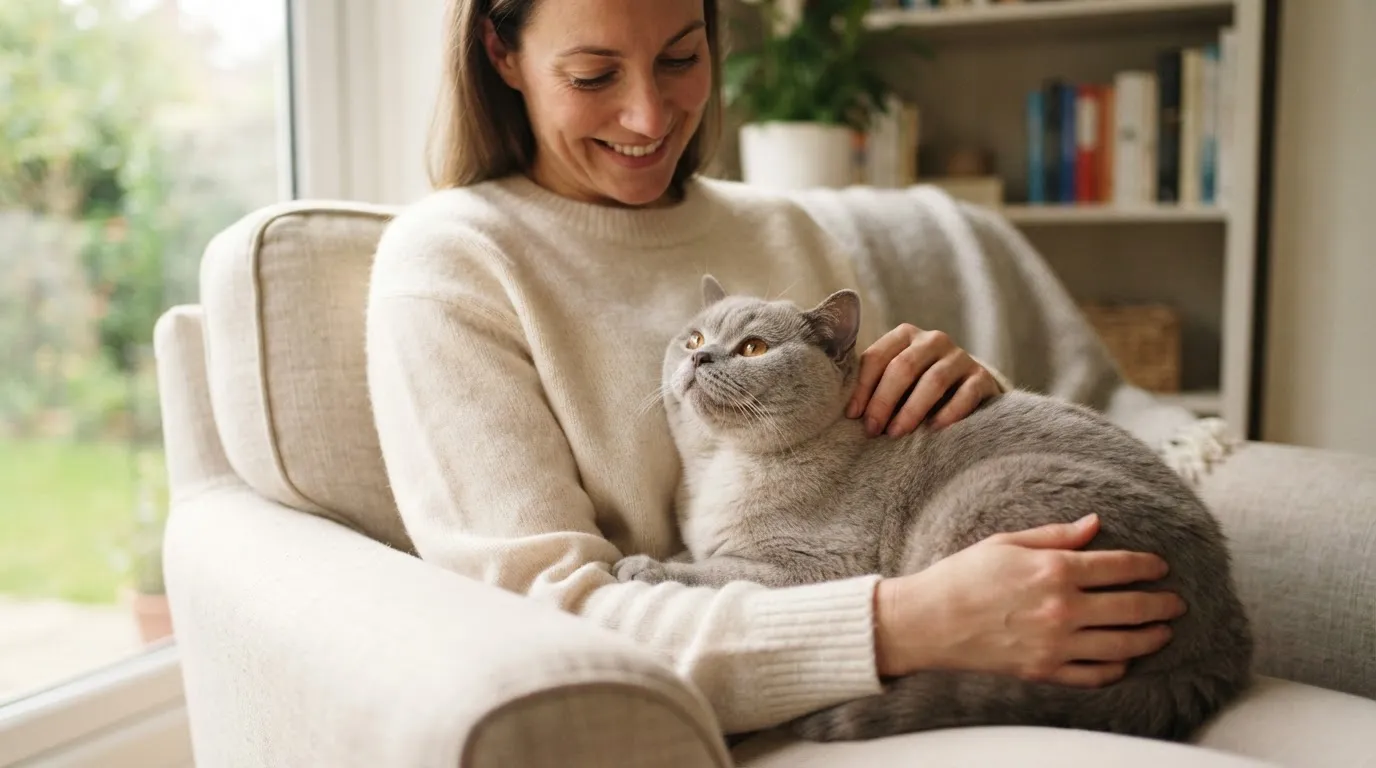
Everyone jokes that dogs are loyal and cats are indifferent. The data disagrees - sharply.
About 64% of cats show secure attachment to their owners, feeling safe and trusting in their presence. Dogs scored 58% on the same test.
Read that again: cats outscored dogs on a standard attachment measure. Oregon State University researchers found cats form the same kind of secure attachment that dogs and children do - peer-reviewed data, not anecdote.
Quick Compare
- Cats: 64% show secure attachment to their owner
- Dogs: 58% show secure attachment to their owner
- Both scores came from the same standardized attachment test used in child psychology
What makes breed cats different: generations of selective breeding have amplified this exact trait - the drive to treat one specific human as a secure base.
But #12 gets into brain chemistry most cat owners have never even heard of.
#12 - They Release the Same Bonding Hormone You Do
You feel warm around your breed cat. That's not just emotion - it's biochemistry, running in both directions.
A cat's trust isn't automatic; it has to be earned. Once it is, the same hormone that bonds human parents and partners kicks in: oxytocin.
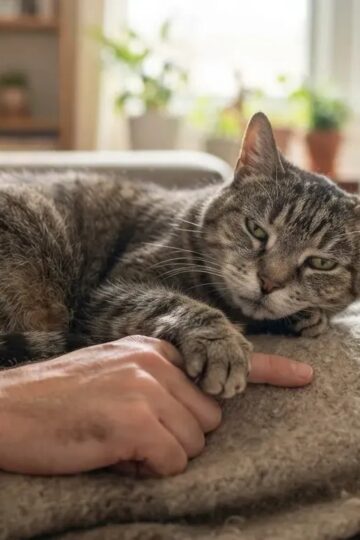
Cats release oxytocin when cuddling with owners, but only when they initiate the contact themselves.
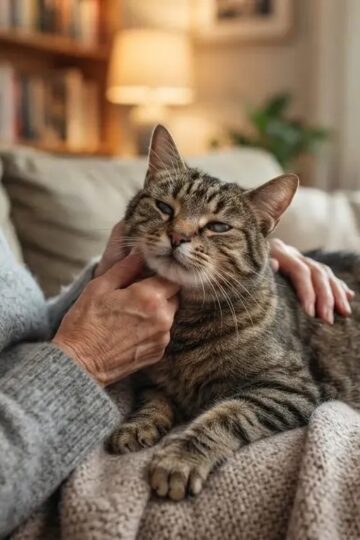
When your breed cat climbs into your lap on its own terms, oxytocin floods both of you at once. That's a real neurochemical bond, not a coincidence.
Low-frequency purring even lowers human heart rate and blood pressure. Your cat is, quite literally, good for your health.
But #11 is hiding in plain sight - most owners misread it completely.
#11 - The Slow Blink Is a Love Letter You've Been Missing
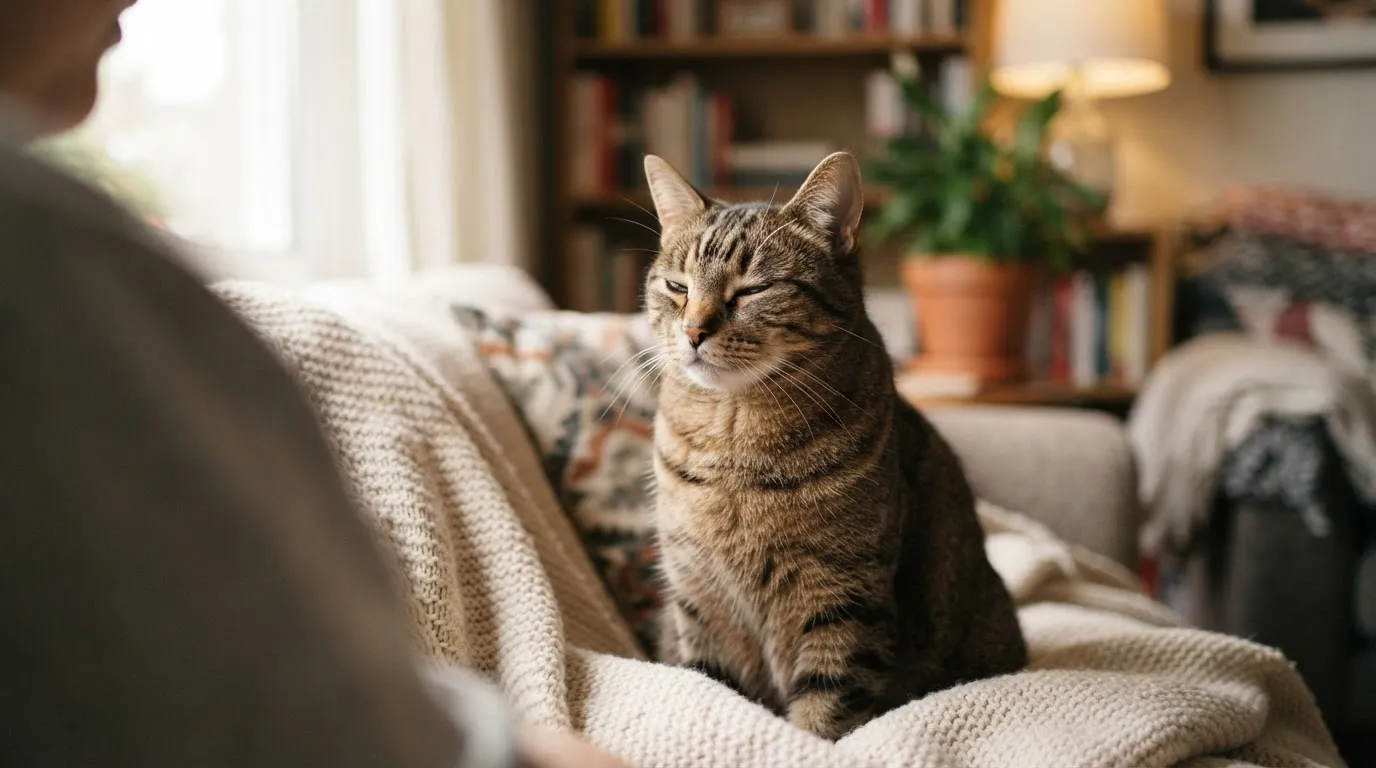
Your cat stares at you, then slowly half-closes its eyes. Most owners assume it's sleepiness - it's something far bigger.
In studies, cats slow-blinked back more often when owners slow-blinked at them first. They were also more likely to approach a stranger after a slow blink than after a neutral expression.
Researchers describe the slow blink as a documented signal of safety, one that triggers an actual chemical relaxation response.
In plain language: your cat is telling you it feels completely safe with you. It's the feline version of "I love you."
About 70% of cats do this specifically with owners they trust. If yours does it regularly, you've made the inner circle.
But #10 shows up in how they physically track you through the house.
#10 - They Follow You Because They Want To, Not Because They Have To
Dogs follow their owners because cooperation is wired into their genes. When your cat does the same thing, the reason is different - and arguably more meaningful.
Wanting to stay close to you throughout the day is one of the clearest signs of a strong bond a cat can show.
Veterinary behaviorists note that a cat following you room to room is simply its way of staying connected. For breeds bred specifically for human engagement - Maine Coons, Siamese, Ragdolls - room-following isn't a rare quirk. It's a daily routine.
Here's the twist: plenty of "independent" cat owners are just misreading loyalty signals their cat sends constantly.
But #9 turns grooming into something far more meaningful than habit.
#9 - When They Groom You, It's Genuine Devotion
It might feel strange when your cat licks your hand or your hair. Don't pull away - you're being honored.
Grooming other individuals, known as allogrooming, is reserved for those a cat trusts and considers part of its social group.
When your breed cat grooms you, it has decided you belong to its colony.
Worth Knowing
- Allogrooming is typically reserved for a cat's closest social bonds
- Turkish Angoras and Burmese are frequently noted for this affectionate habit
- Grooming sessions often reinforce the same oxytocin loop triggered by cuddling
It isn't treating you like a servant. It's treating you like family.
Breeds like the Turkish Angora and Burmese are especially known for this behavior, and it reinforces the oxytocin loop every single time it happens.
But #8 happens the second you walk through the door.
#8 - They Greet You at the Door - and It Means Everything
Greeting behavior is one of the clearest signs of emotional loyalty in any animal. A surprising number of breed cats do it every single time.
Cats form attachment bonds to their owners similar to how children attach to parents, and greeting at the door is one way they show it. Siamese cats, among the most people-focused breeds alive, do this almost universally.
The fact that your cat is waiting when you return isn't habit. It's a specific emotional response to your absence.
This isn't a kitten-phase behavior your cat grows out of, either. Research shows it holds steady, even deepens, into adulthood.
But #7 reveals why your cat notices the moment you're upset.
#7 - They Sense Your Emotional State
You're having a terrible day. Before you say a word, your cat is already sitting beside you, and that's not a coincidence.
Some breeds express loyalty through quiet companionship, reading body language, tone, and behavioral shifts with surprising accuracy. Russian Blues and Birmans are especially noted for this kind of emotional attunement.
Some owners swear their cat is more emotionally perceptive than most humans they know.
Research confirms cats form real emotional bonds shaped by shared experience, familiar scent, and repeated positive interaction.
But #6 is where memory turns loyalty into something permanent.
#6 - Their Long-Term Memory Locks In Loyalty
Cats don't just recognize you. They remember you with a precision that surprises researchers.
Studies show cats hold long-term memories of significant people and interactions. One study even found cats show measurably higher attachment to their owner than to a stranger.
That preference for you specifically is memory-driven loyalty, not habit.
Owners of long-lived breeds like Persians and British Shorthairs often describe bonds that only deepen over a decade or more. Relationship quality is shaped by lifestyle, time alone, housing, and breed - and breed matters enormously.
But #5 takes loyalty into genuinely protective territory.
#5 - They Alert You to Real Danger
This one surprises people every time. Breed cats aren't passive observers in your home - many actively monitor it.
There are documented cases of cats waking sleeping owners during fires, gas leaks, seizures, and hypoglycemic episodes. Cats may never fight off an intruder, but a deeply bonded cat is paying close enough attention to notice when something is genuinely wrong.
Fast Facts
- Documented alert cases include house fires, gas leaks, seizures, and hypoglycemic episodes
- Alert behavior tracks with bond strength, not breed alone
- Cats that alert owners typically show high levels of secure attachment
The key factor is the bond itself - attention like that only comes from a cat that's watching out for you.
But #4 gets into the kind of bond that mirrors human friendship, not servitude.
#4 - The Bond Resembles Best-Friend Chemistry, Not Servitude
People assume the cat-owner relationship is transactional: you provide food, the cat provides tolerance. Science says otherwise.
The dog-human bond resembles an infant-parent relationship. The cat-human bond looks more like a friendship between equals.
Your cat isn't loyal because it needs you the way an infant needs a parent. It's loyal because it genuinely prefers your company.
That's a fundamentally different, and arguably richer, kind of relationship - loyalty entirely on their terms.
But #3 explains why breed genetics amplify every trait on this list.
#3 - Breed Genetics Amplify Every Loyalty Trait
Here's what casual cat owners miss: not all cats are equally wired to bond. Breed genetics matter - dramatically.
Siamese, Ragdolls, Maine Coons, Burmese, and Russian Blues were selectively bred for generations specifically to maximize engagement with humans.
At a Glance
- Siamese - vocal and intensely people-focused
- Ragdoll - seeks physical closeness, often goes limp when held
- Maine Coon - dog-like devotion, follows owners room to room
- Russian Blue - quiet, emotionally attuned companion
Breed is a literal, measurable factor in relationship quality - it moves the needle in ways mixed genetics simply can't guarantee.
If your cat seems almost dog-like in its devotion, that's centuries of intentional selection at work.
But #2 explains why that loyalty holds up even under stress.
#2 - Their Loyalty Is Stable Under Stress - Not Fragile
Fair-weather loyalty isn't loyalty at all. What makes breed cats exceptional is that the bond holds up hardest when circumstances get difficult.
Research published in Current Biology shows cats form the same secure and insecure attachment styles as dogs and children. Securely attached cats, the clear majority, use their owner as a psychological anchor in unfamiliar situations.
Like dogs, cats display social flexibility in regard to their attachments with humans. The majority of cats are securely attached to their owner and use them as a source of security in a novel environment.
Dr. Kristyn Vitale, Oregon State University
In practice: moving house, vet visits, thunderstorms - your cat isn't retreating from you. It's orienting toward you.
But #1 is the single most underestimated reason your breed cat is the most loyal companion you'll ever have.
#1 - Their Loyalty Is Earned, Chosen, and Irreplaceable
Everything above builds to this. Dogs are loyal by design - cooperation is their evolutionary default.
Cats evolved from solitary hunters who never needed overt social gestures to survive, so they save their oxytocin-driven bonding for when they truly feel safe.
Every slow blink, every lap sit, every room-follow is your cat consciously renewing its choice to stay loyal to you. It didn't have to. It chose to.
No other animal in your home makes that calculation fresh every day and keeps arriving at the same answer.
Once you learn to read the quiet signals, you realize what you actually have: a companion that extends trust deliberately, keeps it consistently, and means it completely.
The Bottom Line
The evidence keeps stacking up, and it destroys the old myth fast. Cats form loyalty as real and deep as anything a dog offers.
Breed cats simply take that baseline and turn it up, generation after generation. From attachment scores that beat dogs, to oxytocin loops firing during a simple lap sit, to emotional attunement most owners only notice once they know what to look for - the pattern repeats everywhere researchers look.
Your breed cat isn't just a pet. It's a companion that chose this arrangement willingly, renews that choice every day, and never once needed your approval to feel whole.
That's not aloof. That's the deepest kind of loyal there is.
Which reason surprised you most? Drop it in the comments - we read every one.