13 Quiet Signals Your Senior Cat Sends When It Needs Your Attention
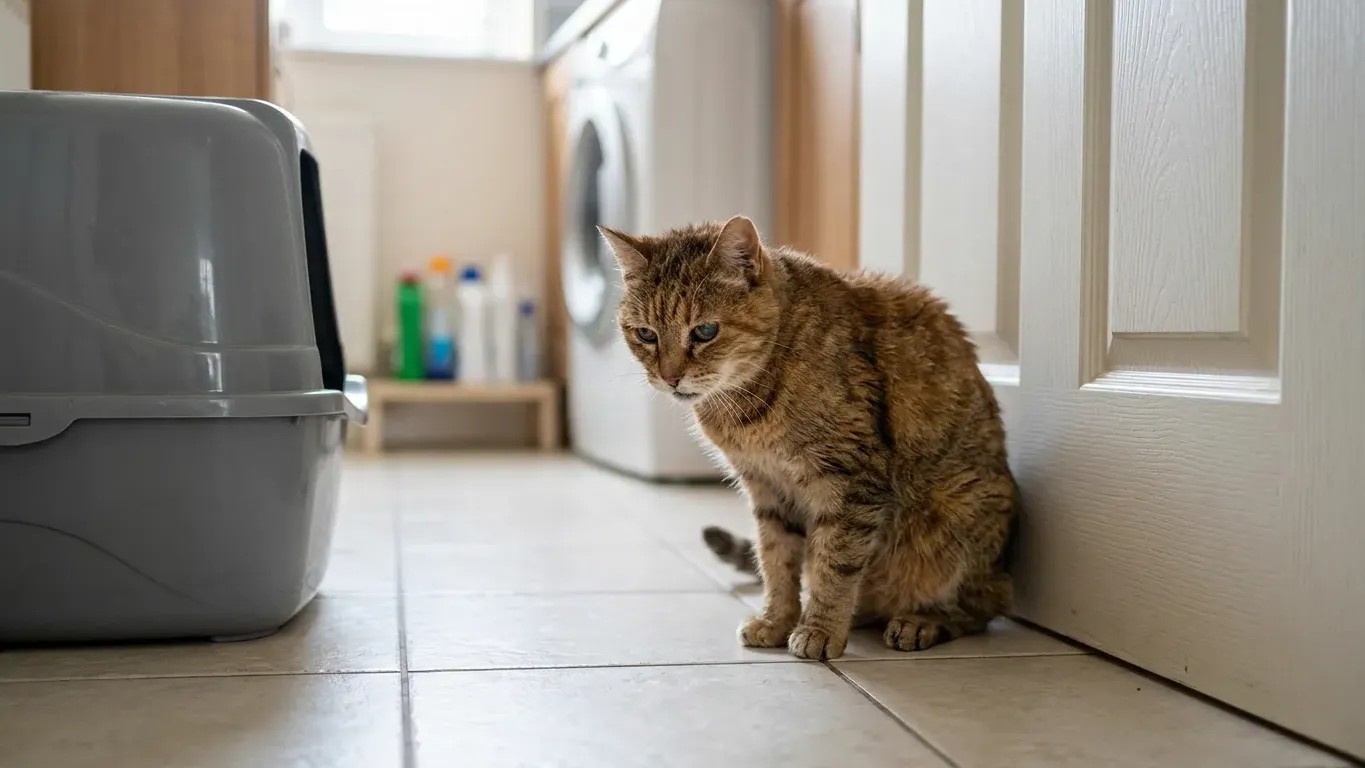
Most cat owners assume their senior cat is simply "slowing down with age." Turns out, that calm, quiet behavior might be a deliberately coded message - cats are wired by evolution to hide every sign of weakness.
Over 90% of cats aged 10 and older have some form of osteoarthritis, yet most owners never connect the dots until it's advanced. Cats rarely cry out or limp dramatically - they just quietly shift their habits, and those shifts are easy to miss.
Here's what vets and researchers actually watch for - starting with the signal almost every owner dismisses as nothing.
#13 - Sleeping in a Different Spot Than Usual
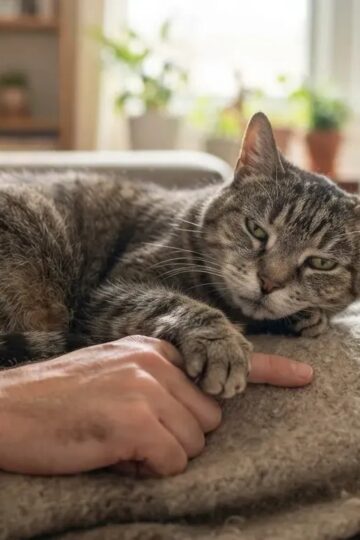
Your cat had a favorite patch of sunlight, a specific corner of the couch, a particular pillow. Now they've moved, and most owners barely notice.
Heat soothes sore joints, so an arthritic cat may drift toward the radiator or a warmer room. Sometimes the only visible change is exactly that - a new sleeping spot.
A cat who held the same spot for years and suddenly abandoned it is sending a real signal. File it under "something shifted," not "cats are weird."
But that's nothing compared to what we found about #12...
#12 - Hesitating Before a Jump They Used to Take Instantly
One day your cat pauses at the edge of the couch, then simply walks away. You laugh it off.
Hesitation before a jump is one of the most common pain signals in older cats, and plenty of painful cats never limp at all. Instead, they creep down from heights instead of hopping off.
Osteoarthritis affects more than 90% of cats 10 and older, and that hesitation is often the very first visible clue. Cats can mask joint pain for months before any real limp shows up.
Fast Facts
- Over 90% of cats aged 12 and older show radiographic evidence of osteoarthritis.
- Only a small fraction of affected cats are ever formally diagnosed by a vet.
- A cat can hide advancing joint damage for months - hesitation before a jump is often the earliest visible tell.
But that's nothing compared to what we found about #11...
#11 - A Coat That Looks Dull, Matted, or Greasy
Cats are obsessive groomers. When that habit stops, something is wrong - full stop.
A healthy senior cat's coat should still feel smooth. If it turns dull, coarse, or matted, pain or illness is often the reason.
Cats in discomfort move less, sleep more, and groom less - and a lackluster coat is the result. The coat is basically a visible health report, and a rough one means your cat is telling you something it can't say out loud.
But that's nothing compared to what we found about #10...
#10 - Unusual Litter Box Behavior
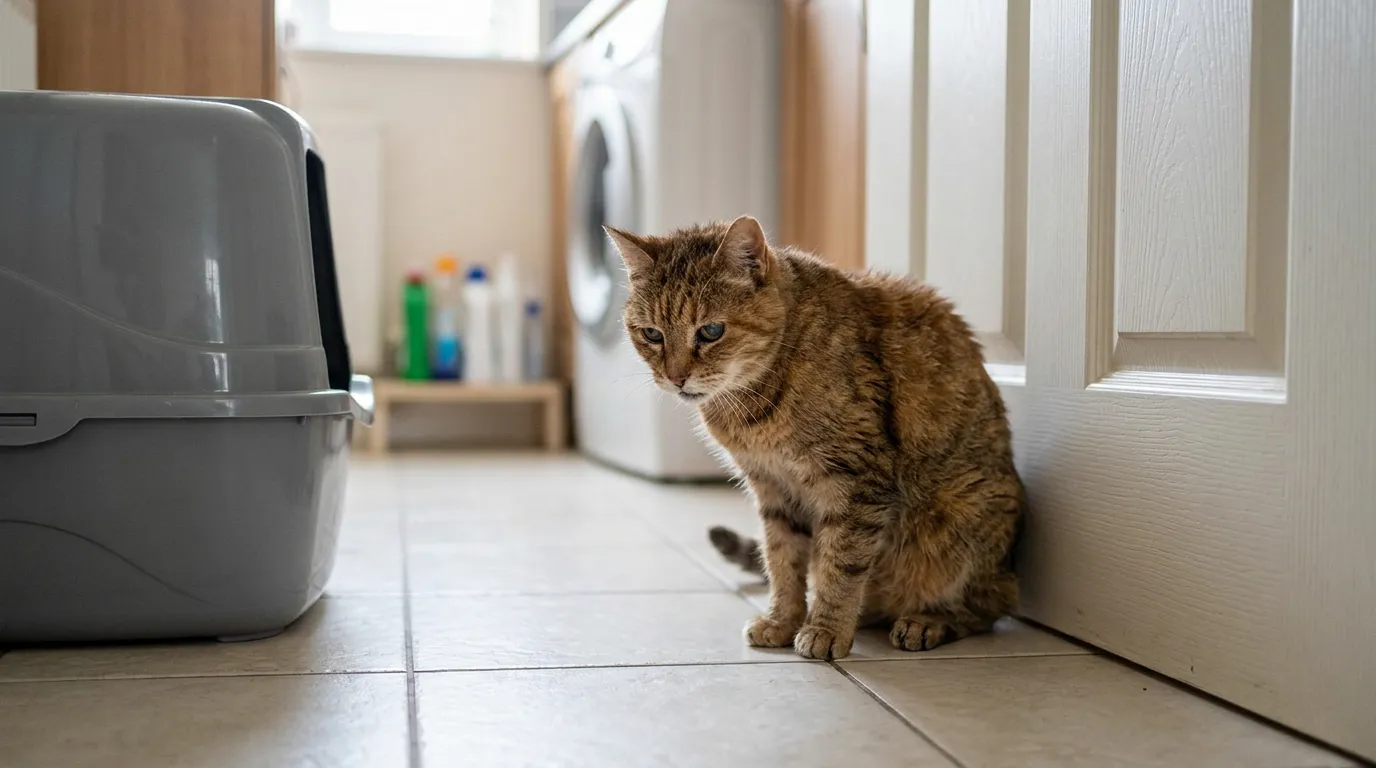
This one makes most people reach for the cleaning spray instead of the phone. That's the mistake.
Any notable change in litter box habits in a senior cat deserves a vet conversation. Urinating outside the box, straining, or sudden accidents can signal urinary infections, kidney disease, or cognitive decline.
What looks like bad manners is often a medical alarm. Missed litter or vocalizing while eliminating both warrant prompt attention.
But that's nothing compared to what we found about #9...
#9 - Drinking More (or Less) Water Than Normal
You refill the bowl more than usual - or notice it's barely touched. Either direction deserves attention.
Excessive drinking and urinating are classic signs of kidney disease, diabetes, and other chronic conditions that quietly erode a cat's health. A fuller water bowl than usual can be one of the earliest warning signs there is.
Both extremes - drinking too much or too little - are red flags, not personality quirks. Paired with appetite loss, vomiting, or sudden weakness, it's a same-day call to the vet.
But that's nothing compared to what we found about #8...
#8 - Hiding in Places They Never Used to Go
Under the bed, behind the washing machine, in the back of a closet - your senior cat has found a new haunt. It's not for fun.
A senior cat who suddenly spends the day hiding is very often withdrawing because of pain. Cats conserve energy and avoid situations that demand quick movement, so a quiet, enclosed space becomes the safest option.
This is not a quirk. It is a withdrawal signal, and it deserves to be treated like one.
But that's nothing compared to what we found about #7...
#7 - A Change in Facial Expression
This one is almost impossible to catch unless you know what you're looking for. Most owners have no idea it exists.
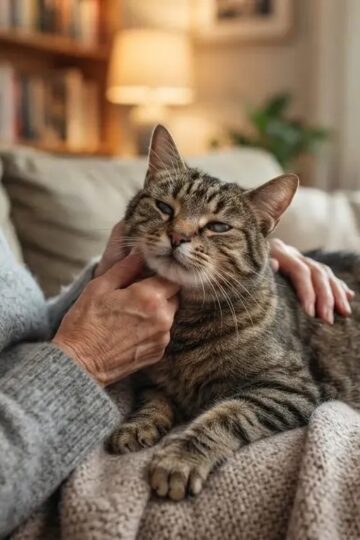
A senior cat's face often changes shape when it's in pain - tighter eyes, flattened ears, a tense muzzle replacing the usual relaxed look. Researchers even built a tool for this called the Feline Grimace Scale.
The scale checks five features: ear position, eye tension, muzzle tension, whisker change, and head position. It's a real, validated clinical tool - and you can use it at home just by studying your cat's resting face.
Worth Knowing
- Ears pulled back or rotated outward can signal discomfort.
- Squinting or half-closed eyes often mean pain, not sleepiness.
- A tight, drawn muzzle replaces the usual relaxed resting face.
- Whiskers may curve forward and bunch together.
- A lowered head position often accompanies more significant pain.
But that's nothing compared to what we found about #6...
#6 - Restlessness or Unsettled Sleep at Night
Your cat used to sleep through the night without a sound. Now there's pacing, repositioning, or strange wandering after midnight.
A senior cat who paces, changes spots repeatedly, or can't settle is sending a clear signal. Nighttime yowling in particular is strongly linked to pain, vision loss, hearing loss, or cognitive decline.
Cats with cognitive decline may forget where the food bowl or litter box even is, and small environmental changes become stressful. Nighttime restlessness is one of the most under-reported signals in senior cat care - and one of the most telling.
But that's nothing compared to what we found about #5...
#5 - Sudden Aggression or Resistance to Touch
Your gentle, docile cat snaps at you when you pick them up. Most owners take it personally - they shouldn't.
Hissing, growling, or biting during handling that used to be tolerated often means touch now causes pain. A cat may lash out near a specific spot simply to say, "please don't touch me there."
This is arguably the most misread signal on this entire list. Owners punish it as bad behavior; vets recognize it as pain, anxiety, or cognitive change.
But that's nothing compared to what we found about #4...
#4 - Loss of Interest in Food or Sudden Pickiness
Your cat used to inhale their food. Now they sniff, then walk away - or they'll only accept one specific texture.
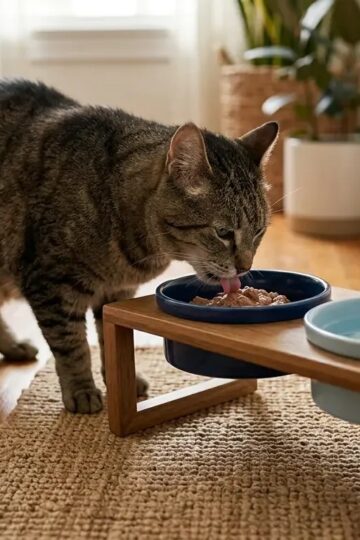
Senior cats may eat less as taste and smell perception shift, or they may develop dental and gastrointestinal problems that dull their appetite. A sudden preference for soft food specifically can point to dental pain or nausea.
Many owners wait weeks before flagging this to a vet. By then, the underlying cause has often had plenty of time to progress.
But that's nothing compared to what we found about #3...
#3 - A Hunched or Tucked Posture at Rest
Watch how your cat sits when they think no one is looking. Body position tells you more than almost anything else.
A cat in pain often protects the affected area - hunching the back, tucking the abdomen, holding the head low, or pulling the legs in tight instead of relaxing into a loaf.
Normal loaf position is loose and relaxed; a tight, compressed posture is the body guarding pain. Once you know the difference, you genuinely can't unsee it.
But that's nothing compared to what we found about #2...
#2 - Cognitive Confusion: Staring, Disorientation, and Forgetting the Routine
Your cat stands in the middle of the room and stares at the wall. They forget where the food bowl is and seem lost in their own home.
Confusion and disorientation are the main symptoms of feline cognitive decline. Clinginess, staring at walls for long stretches, and constant meowing are common companions.
Clinical signs of cognitive decline show up in 28% of cats aged 11-14, and in over 50% of cats 15 and older. That's not a rare condition - that's a majority of elderly cats, and it frequently overlaps with arthritis, kidney disease, and thyroid problems.
Worth Knowing
- Vocalization - crying out for no clear reason, especially after dark.
- Interaction changes - suddenly clingy, or suddenly avoidant of contact.
- Sleep-wake disruption - restless nights paired with excessive daytime napping.
- House soiling - forgetting where the litter box even is.
- Disorientation - getting "stuck" in corners or staring blankly at walls.
But that's nothing compared to what we found about #1...
#1 - A Subtle Withdrawal From You Specifically
This is the signal almost everyone misses, because it doesn't look like a symptom. It just looks like your cat becoming more independent.
The cat who always greeted you at the door but stopped, or who once groomed fastidiously but now looks unkempt, is showing you something real. Whether a cat turns clingy or retreats into solitude, the key is whether it's a genuine change from their normal self.
Senior cats managing chronic illness tend to suffer quietly, over long stretches, without any dramatic sign. The cat pulling away from the one person they've always trusted is, clinically speaking, one of the most serious signals on this entire list - and one of the easiest to address once it's caught early.
The Bottom Line
Senior cats communicate quietly. A small shift in routine is often your cat's only way of telling you something has changed.
None of these 13 signals are personality quirks or "just old age." Cats compensate for illness so well that owners are often the last to know something is wrong.
The fix is simple: watch daily, notice small changes, and mention them to your vet before they become big ones. Your senior cat is talking - the only question is whether you're listening.