14 Signs Your Senior Cat Is Quietly Telling You It Is in Pain
Most cat owners think they'll know the moment their senior cat is hurting - a cry, a limp, some obvious tell. They're wrong. Cats spent thousands of years as both predator and prey, and that dual instinct still shapes how they experience pain today.
A cat quietly works around pain that would send most people straight to a doctor, because hiding weakness once kept a wild cat safe from predators and rivals. That means real pain in an older cat can go unnoticed for months - the signs are there, you just have to know where to look, and here's what veterinary experts actually watch for.
#14: Hesitating Before a Jump
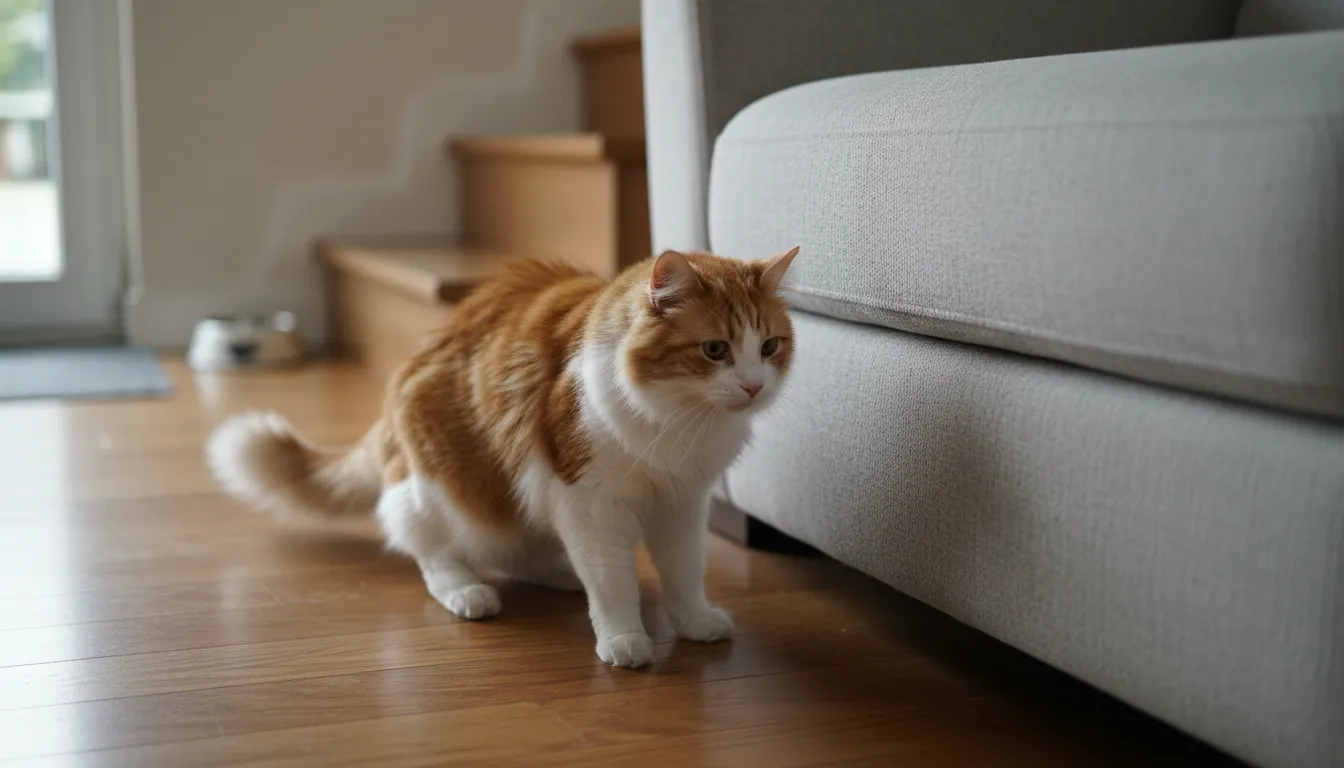
Hesitation to jump is one of the most common pain signals in older cats. Many painful older cats don't limp at all.
That pause before your cat launches onto the couch isn't laziness. It's a calculation of whether the pain is worth it.
A cat that once flew onto the countertop and now stands staring at it is telling you something critical. A significant drop in activity, reluctance to jump, or trouble with stairs often points to musculoskeletal pain in arthritic joints.
Don't dismiss this as "just getting older." Hesitation is only the beginning - the sign at #13 is happening inside your cat's body right now, and most owners never connect it.
#13: A Coat That's Gone Dull or Matted
One of the most common pain-associated behavior changes in aging cats is a drop in grooming. Cats are naturally meticulous about cleaning themselves, so when that stops, something is wrong.
Osteoarthritis affects more than 90% of cats age 10 and older. Spinal arthritis makes it uncomfortable to twist and turn, so grooming the hind end becomes genuinely difficult.
Fast Facts
- More than 90% of cats older than 12 show radiographic evidence of osteoarthritis.
- Appendicular skeletal changes appear in over 90% of cats of all ages when checked for reasons unrelated to their joints.
- The hip and elbow are consistently the joints most often affected.
- Only about 13% of affected cats worldwide ever get formally diagnosed.
A once well-kept cat that develops a dull, matted, or greasy coat is signaling that something has changed in how they feel. Some cats swing the other way, over-grooming one spot until it goes bald or raw.
Both extremes - too little grooming or obsessive grooming of one area - are red flags. And #12 is a sign you're probably misreading entirely.
#12: Sleeping in Strange New Spots
Instead of limping, you'll see quiet changes - hesitating before a jump, skipping favorite spots, sleeping somewhere new. Your cat isn't exploring. They're avoiding the routes that hurt to reach.
A senior cat that spends most of the day hiding under a bed or inside a closet is very often withdrawing because of pain, not simply mellowing with age. Cats in pain conserve energy and avoid situations that might require a quick, sudden movement.
If your cat has quietly relocated their favorite nap spot, notice *where*. Lower, easier-to-reach places almost always signal joint pain.
The sign at #11 is closely related, and it's the one most owners chalk up to personality.
#11: Sudden Withdrawal from Family Life
Pain in cats is rarely loud. You're not likely to find a cat yowling or crying - what you'll actually find is a cat that's simply less interactive, and hiding more.
Pain affects mood and social interaction directly. If your friendly cat suddenly turns aloof, pain may be the real reason, not attitude.
Senior cats in pain may become more irritable or withdraw entirely, losing interest in routines they used to love. What looks like moodiness is often suffering wearing a disguise.
Don't stop here - #10 reveals a physical clue you can actually *see* on your cat's face.
#10: A Tense, Tight Facial Expression
Most people wait for a wince or a whimper. The real signal is far more subtle than that - cats communicate discomfort through small facial changes.
A cat in pain often adopts protective postures: a hunched back, a tucked abdomen, a head held lower than usual, or legs tucked tightly instead of relaxed into a loaf.
Researchers built the Feline Grimace Scale for exactly this reason - squinted eyes, pulled-back whiskers, and flattened ears are documented pain markers vets are trained to spot.
Worth Knowing
- Five facial action units make up the scale: ear position, orbital tightening, muzzle tension, whisker change, and head position.
- It's described as a valid, fast, reliable and easy-to-use tool for pain assessment by both veterinary professionals and cat owners.
- It was built specifically to catch pain that hides in plain sight, before a cat stops eating or moving.
A cat sitting in a tight, tucked ball instead of a loose loaf is not relaxed - it's guarding. Next up, #9 is hiding in plain sight in your litter box.
#9: Litter Box Avoidance or Missed Shots
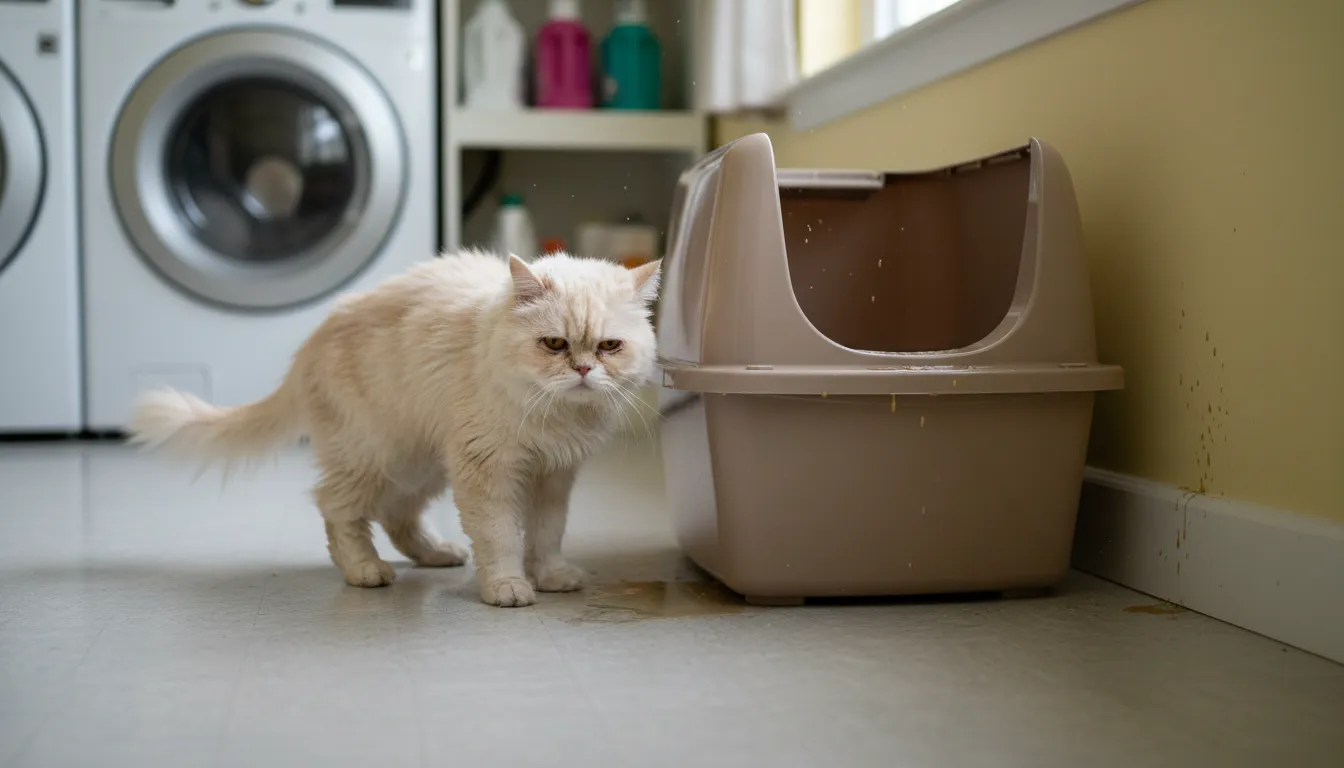
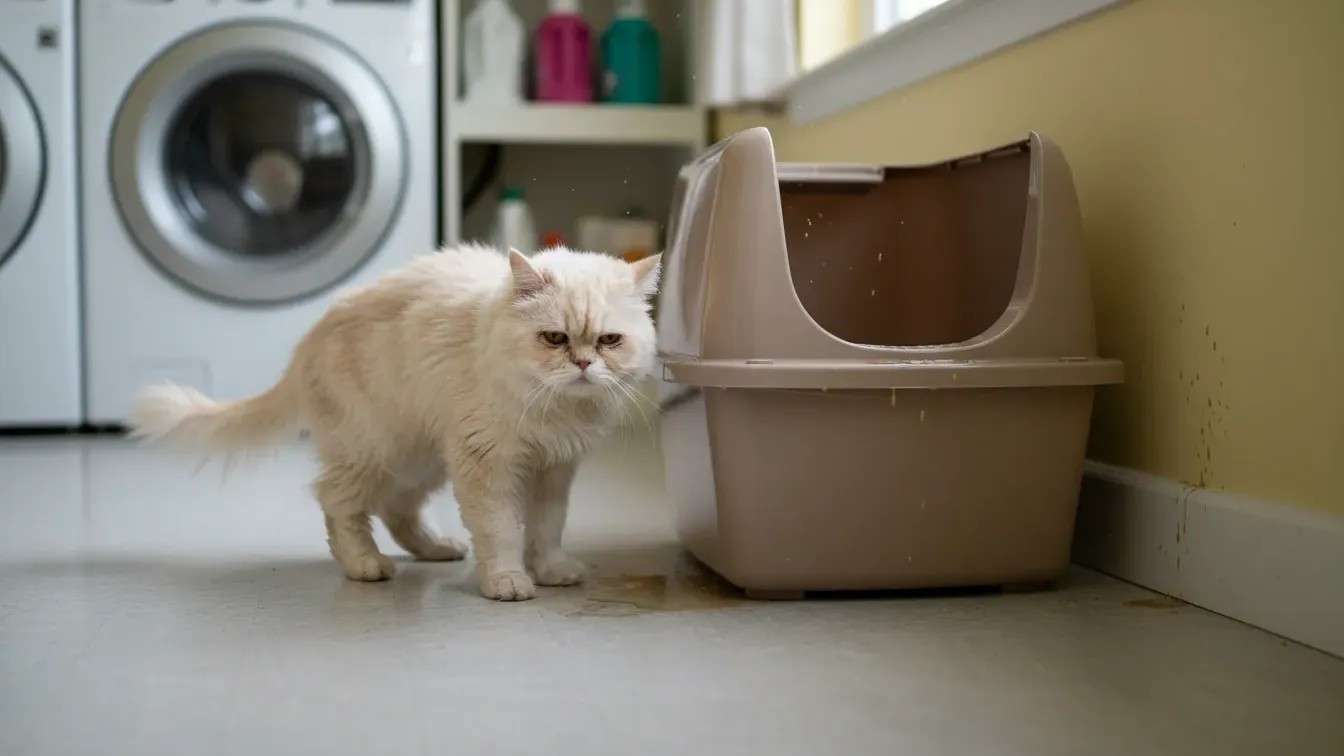
Cats that suddenly have accidents after years of perfect litter habits may be in too much pain to climb into a box with high sides, or too sore to walk to where it's kept.
A cat may start standing to urinate instead of squatting, because squatting hurts. Standing means missed litter, urine on walls, urine on the floor near the box.
Quick Compare
- Normal aging cat: squats to urinate, uses the box consistently, no accidents nearby.
- Cat in pain: stands instead of squatting, has accidents just outside the box, may strain or cry while eliminating.
Any sudden change in litter habits in an older cat deserves a vet visit on its own. Straining or vocalizing while eliminating can point to urinary or kidney disease that needs prompt treatment.
Most owners reach for the cleaning spray. They should be reaching for the phone. What's coming at #8 is even easier to overlook.
#8: A Hunched or Arched Posture While Standing
A senior cat that walks with an arched, hunched back, or favors one leg, is showing a direct physical sign of pain. It isn't a quirky walking style - it's compensation.
Abdominal pain can cause a hunched, tucked stance. Joint or spinal pain more often produces a lower, stiffer one.
Watch how a cat moves right after standing up from a long rest - slower, more deliberate steps are the tell. A limp is obvious, but a cat that has learned to compensate well can hide it for a long time.
The body never lies - a cat that has rearranged how it holds itself is broadcasting pain in the only language it knows. The sign at #7 will sound familiar to anyone who's dismissed it as their cat "getting vocal in old age."
#7: Changed or Increased Vocalization
Here's the one owners get backwards: a quieter cat is not necessarily a comfortable cat. Both increased *and* changed vocalization matter equally.
More frequent meowing, a shift in pitch, or crying at night are all recognized signs of chronic pain in senior cats. So is hissing or growling when touched or picked up.
If your cat cries out when you lift them or press a certain spot, stop pressing. That's not attitude - that's a direct signal.
What's at #6 happens so slowly you'll almost certainly miss it.
#6: Gradual, Unexplained Weight Loss
Weight loss in older cats is rarely innocent. Most cats in pain simply eat less, and less eating means slow, quiet muscle wasting that builds for weeks before anyone notices the ribs.
A sudden appetite drop can mean too much pain to eat, or nausea from an underlying disease. Vomiting, excess thirst, and dull, dry fur often ride along with it.
Weigh your senior cat monthly at home - a consistent 1 to 2 pound drop over two months is a veterinary emergency waiting to happen. But before appetite, there's something at #5 happening in your cat's mouth right now.
#5: Reluctance to Eat Hard Food or Dropping Food
Dental pain is severe, yet it's one of the most under-treated sources of suffering in older cats - precisely because cats keep trying to eat through it.
A recent estimate puts at least 85% of cats over age 3 with some form of dental disease. It won't always stop them eating, but it will show up as extra drooling, awkward chewing, or dropped food.
If your cat suddenly prefers wet food, chews on one side, or leaves half the bowl untouched, the mouth is likely to blame. This is one of the most treatable pain sources on this entire list - and most owners never make the connection.
Slide #4 involves something that happens *while your cat sleeps.*
#4: Stiffness After Resting or Sleeping
Watch your cat for the first 30 seconds after they wake up. A healthy cat shakes it off and moves smoothly.
A cat with joint pain walks stiffly, stretches gingerly, and takes several cautious steps before finding a rhythm. Recent research shows degenerative joint disease is a much bigger problem in cats than most owners realize.
Up to 60% of all cats, and 90% of older cats, have some degree of it. Most owners attribute post-nap stiffness to "old age." Vets call it undertreated arthritis.
The sign at #3 is one that even devoted cat owners routinely dismiss - and it's one of the most telling of all.
#3: Suddenly Objecting to Being Touched or Petted
When a cat objects to being touched, petted, or handled - especially one who used to enjoy it - vets consider that a genuine red flag.
A lap cat who suddenly can't stand being held may be feeling pain the moment they're touched. A once-friendly cat hiding under the bed from guests, or turning defensive when petted, is a textbook pain presentation.
This one gets misread as personality change, anxiety, even trauma. In reality, it's often the most loving thing your cat can do - try to warn you, in the only language it has.
The top two signs are the ones that seal the case. Don't scroll past #2.
#2: Restlessness and Inability to Get Comfortable
Senior pets naturally sleep more than younger animals, but pain can disrupt normal rest. A sudden burst of pacing or restlessness can be a sign of discomfort too.
It looks like anxiety. It's actually a cat trying to find a position that hurts less - and failing.
A cat that circles its bed, lies down, gets up, and moves again, over and over, is not being fussy. It's in active discomfort.
And #1, the most important sign on this entire list, is the one almost every owner gets completely wrong.
#1: Quietly "Slowing Down" and Losing Interest in Everything
This is the big one, and it's the most dangerous sign precisely because it's the easiest to rationalize. Owners see a cat that sleeps more, plays less, and engages less - and call it aging gracefully.
But pain is not a normal part of aging, and it can be treated. That distinction matters enormously.
Senior cats managing chronic illness are especially likely to suffer quietly over long stretches of time. That's why pain in cats shows up as behavior change far more often than vocalization or dramatic physical signs.
At a Glance
- Weight loss of 1 to 2 pounds within two months
- Straining, crying, or new accidents near the litter box
- Sudden refusal of food or water
- Crying out when touched, lifted, or petted
A cat that has stopped being curious, stopped greeting you, stopped seeking warmth, and stopped caring about its environment is not peaceful - it is suffering. The earlier you catch these changes, the better the chance of preserving your cat's comfort and quality of life.
The Bottom Line
Because these changes happen gradually, owners often write them off as "just getting older." But aging itself is not a disease, and chronic discomfort should never simply be accepted as normal.
Your senior cat is not dramatic and not demanding - which is exactly why you have to be the one paying attention. From a dull coat to a skipped jump to a newly quiet personality, the signals are real, and they are treatable.
Never give your cat human pain medication - many common drugs are toxic to felines. Safe pain relief should always come from a veterinarian.
If you spotted even two or three signs from this list in your own cat, book that vet appointment today. Have you noticed a sign we didn't cover? Drop it in the comments - your experience could help another cat owner catch something early.