15 Breed Health Problems Vets Wish Every Owner Knew About Sooner
Most dog owners pick a breed based on looks, size, or personality - almost none of them research what's silently coded into that dog's DNA. Here's the uncomfortable truth: as many as one in four purebred dogs carries a serious genetic problem, and most owners only find out when the vet bills start stacking up.
Selective breeding built these dogs to look a certain way, but it also quietly wired in disease risk nobody warns you about at the breeder's door. Vets see the pattern every single day - and what they wish owners knew, breed by breed, is exactly what's coming next.
#15 - Brachycephalic Obstructive Airway Syndrome (BOAS) in Flat-Faced Breeds
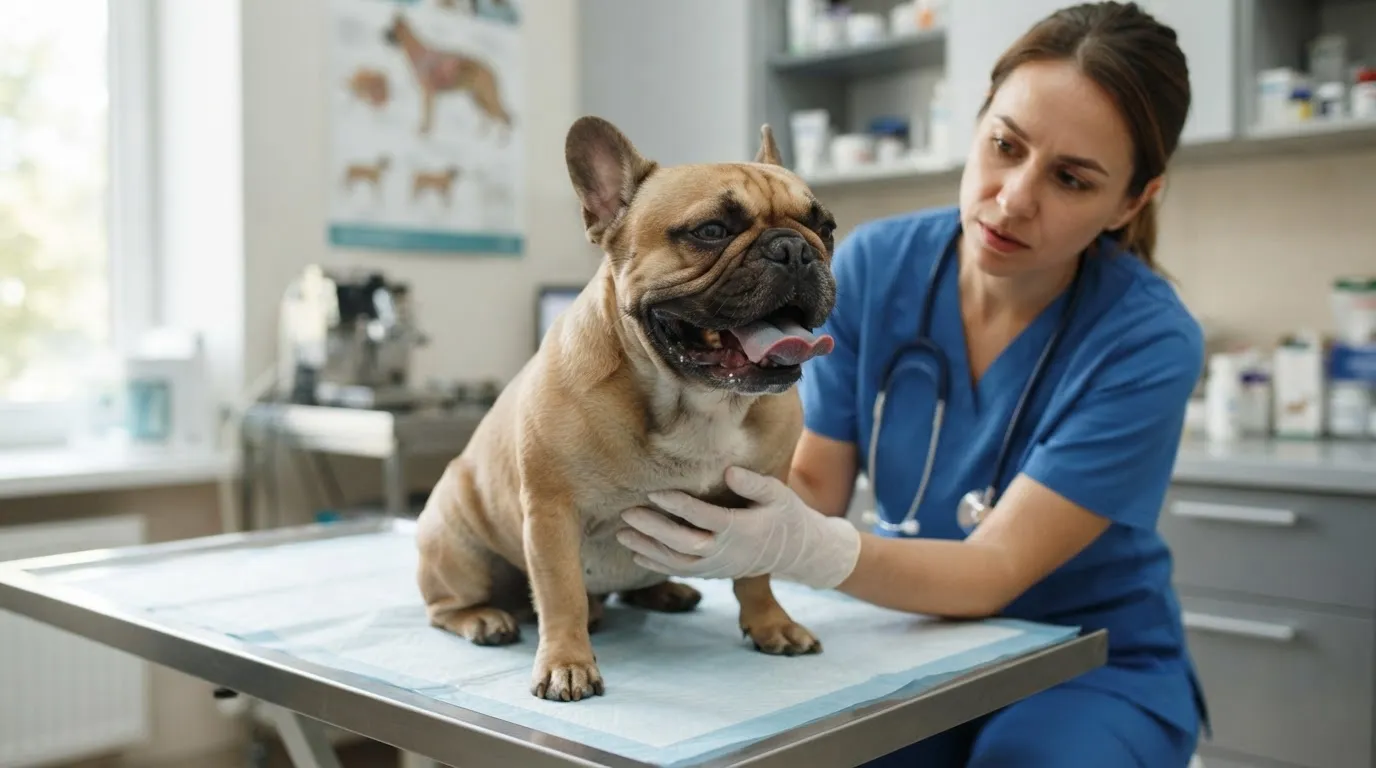
That "cute" smooshed face is a medical crisis hiding in plain sight.
Brachycephalic breeds like French Bulldogs, Pugs, Bulldogs, and Boston Terriers have skulls built in a way that directly causes BOAS. The condition brings respiratory distress, overheating, and a shockingly low tolerance for exercise.
The most alarming part: many owners mistake their dog's noisy breathing for "personality" and never seek treatment. Noisy breathing, reluctance to exercise, or bluish gums are warning signs that call for a vet visit before a crisis develops.
Keeping the dog cool and lean helps, but severe cases often need surgery to open the airway. Don't wait for a collapse to act.
But breathing problems are just the beginning - what #14 does to a dog's spine will genuinely shock you.
#14 - Intervertebral Disc Disease (IVDD) in Dachshunds
Dachshunds are built like a biological time bomb for spinal injury.
IVDD damages the discs between the vertebrae, triggering neurological problems that can end a dog's ability to walk. The Standard Smooth-Haired Dachshund has the highest known rate, at 24.4%.
Fast Facts
- Dachshunds carry 10 to 12 times the IVDD risk of other breeds
- 19% to 24% show clinical signs of IVDD at some point in life
- Standard Smooth-Haired Dachshunds top the list at 24.4%
- Dogs active more than an hour a day show notably lower odds
What most owners don't realize: everyday furniture is a major risk factor. Dogs that stayed active for over an hour a day showed lower odds of IVDD, yet many Dachshund owners do the opposite - letting an inactive dog leap on and off the couch freely.
Ramps instead of stairs, limited jumping, and regular vet checks are non-negotiable for this breed. Left unmanaged, IVDD can mean permanent paralysis.
The heart condition lurking inside #13 is one vets are increasingly worried owners are missing entirely.
#13 - Mitral Valve Disease in Cavalier King Charles Spaniels
If you own a Cavalier, this is the one thing you need to know - full stop.
Myxomatous mitral valve disease (MMVD) progresses to regurgitation and eventual heart failure. By age 6-7, half of all Cavaliers are affected - and by 11, almost every single one is.
Nearly every Cavalier will develop this condition if it lives long enough. In UK primary-care vet practices, heart murmur was the single most common finding in the breed, with cardiac disease affecting nearly a third of all Cavaliers studied.
Annual cardiac screening starting at age 2 is now widely recommended. Catching it early with medication can slow the disease and buy meaningful extra years.
And Cavaliers aren't done - #12 reveals a neurological issue in the same breed that can cause agonizing, invisible pain.
#12 - Syringomyelia in Cavalier King Charles Spaniels

A Cavalier scratching at thin air isn't being quirky - it's potentially in serious pain.
Syringomyelia forms fluid-filled cavities in the spinal cord, often because the skull is simply too small for the brain. Screened Cavalier populations show rates as high as 27-38%.
The heartbreaking reality: some affected dogs scratch constantly at their neck or shoulder with no visible skin problem at all. It's referred pain from spinal cord pressure - and many owners chase a dermatologist for years before the real diagnosis surfaces.
MRI screening is recommended for all Cavaliers at age 3 or older. Affected dogs should never be bred, to keep the rate from climbing further.
What's happening in German Shepherds - covered in #11 - is just as progressive and just as misunderstood.
#11 - Degenerative Myelopathy in German Shepherds
This is the canine equivalent of ALS, and most owners don't catch it until it's too late.
Degenerative myelopathy starts with subtle hind-limb weakness and progresses to full paralysis within one to three years. There is no cure.
The cruelest part is how easily DM gets mistaken for plain arthritis in the early stages. By the time most owners realize what they're dealing with, the window for physical therapy that could have slowed it down has often already closed.
German Shepherds also run high risk for hip dysplasia and heart disease, so a whole-body screening approach matters here - not just watching the back legs.
The cancer statistics in #10 are so extreme that many breeders refuse to discuss them openly.
#10 - Cancer in Golden Retrievers
No other popular family dog has a cancer rate that even comes close to this.
Cancer accounts for roughly 61% of all Golden Retriever deaths - more than double the average across all breeds. Lymphoma, mast cell tumors, hemangiosarcoma, osteosarcoma, and melanoma are the most common culprits.
Worth Knowing
- Cancer causes about 61% of Golden Retriever deaths - more than double the all-breed average
- Lymphoma, hemangiosarcoma, and mast cell tumors are the most common types seen
- Cancer is already the leading cause of death across adult dogs generally
- Annual bloodwork from age 5 onward helps catch warning signs early
That 61% figure means owning a Golden is, statistically, almost a guaranteed encounter with cancer. Yet the breed stays wildly popular, and most new owners have no idea until they're sitting in an oncology waiting room.
Cancer is already the leading cause of death in adult dogs overall, and Goldens face far greater odds than most. Annual wellness exams and bloodwork from age 5 onward are critical for this breed.
But Golden Retrievers aren't the only ones. What #9 reveals about allergies in Labs will surprise even longtime owners.
#9 - Environmental Allergies in Labrador and Golden Retrievers
Chronic itching, ear infections, and paw licking are not "just how Labs are."
Both breeds show far higher rates of environmental allergies than average, showing up as chronic ear infections, itchy skin, and constant paw licking. Left untreated, these spiral into secondary infections and years of ongoing vet bills.
Most owners spend years treating symptoms - the ear infection, the hot spot - without ever touching the underlying allergy driving all of it. Allergy testing and immunotherapy work well when started early, but vets rarely see these dogs until they're already miserable.
What works for a neighbor's mixed breed may do nothing for your Lab - allergy protocols really are breed-specific.
The drug reaction risk in #8 is one of the most urgent and least-known dangers in all of dog ownership.
#8 - MDR1 Gene Mutation in Herding Breeds
A routine dose of a common medication can kill a Collie. This is not an exaggeration.
Collies, Australian Shepherds, and Shetland Sheepdogs can carry the MDR1 mutation, which changes how their bodies process common drugs like ivermectin, loperamide, and certain anesthetics. Dogs with the mutation can suffer fatal reactions to medications considered perfectly safe for other breeds.
Ivermectin shows up in plenty of over-the-counter parasite products sold at farm supply stores. An owner who casually doses their Collie with a standard product could trigger neurological collapse within hours - a well-documented, entirely preventable tragedy.
A simple genetic test tells you if your dog carries the mutation before any drug is ever prescribed. If you own any herding breed, get it done now.
What's happening inside the chests of certain large breeds in #7 is equally urgent.
#7 - Dilated Cardiomyopathy (DCM) in Large Breeds
The heart literally enlarges and weakens - and the dog often shows no signs until it's in crisis.
DCM is common in Dobermans, Boxers, and other large breeds, causing heart walls to thicken and stiffen until they eventually fail. Affected dogs may show a murmur, lethargy, labored breathing, or sudden collapse.
Quick Compare
- Dobermans: highest known risk; sudden death is often the very first symptom
- Boxers: prone to an arrhythmia-driven form that can go unnoticed until collapse
- Great Danes & other giants: often symptom-free until the disease is advanced
In Dobermans especially, sudden death can be the first and only "symptom" - which makes routine cardiac screening a matter of life and death. Many vets now recommend annual Holter monitoring, a 24-hour heart rhythm test, starting at age 3.
DCM shows up far more often in purebreds than in the general dog population. Don't skip the stethoscope check at your next visit.
The hip condition in #6 is one of the most common - and most mismanaged - problems in all of veterinary medicine.
#6 - Hip Dysplasia in German Shepherds, Labs, and More
Every vet sees this weekly. Owners still routinely miss the early signs.
Hip dysplasia is a malformed joint that leads to abnormal wear and early arthritis - and while German Shepherds and Labs are the poster breeds, plenty of small and medium dogs get it too.
The most dangerous misconception is that a young dog "seems fine" and therefore doesn't need screening. Difficulty rising, reluctance to run or jump, and an odd gait get written off as tiredness or growing pains until the arthritis is already severe.
Early detection opens the door to both surgical and non-surgical management, and keeping the dog lean makes a real difference. Waiting rarely does.
What's in store for #5 involves a condition so common in one breed it's practically expected.
#5 - Epilepsy in Beagles, Boxers, and Dachshunds
Seizures in dogs are terrifying to witness - and some breeds are wired for them genetically.
Epilepsy shows up more often in Beagles, Dachshunds, and Boxers than in most other breeds, causing recurrent seizures that vary wildly in frequency and severity.
What many owners don't know: keeping a detailed seizure log is one of the most medically valuable things they can do. Careful records help guide diagnosis and treatment, alongside anticonvulsant medication and lifestyle changes to reduce stress.
Flashing lights, irregular sleep, and high stress can all raise seizure frequency in predisposed dogs. A veterinary neurologist - not just a general practitioner - tends to produce far better long-term outcomes.
The hormonal disorder hiding in #4 mimics aging so convincingly that thousands of dogs go undiagnosed for years.
#4 - Hypothyroidism in Golden Retrievers, Dobermans, and Boxers
Weight gain and lethargy sound like an aging dog - but in these breeds, it may be a thyroid problem.
A major UC Davis study of over 88,000 dogs found hypothyroidism to be one of ten inherited conditions with significantly higher rates in purebreds than in mixed breeds.
A dog with hypothyroidism may pack on weight, lose coat quality, and develop recurring skin infections - all routinely blamed on "just getting older." A simple blood panel catches it instantly, yet many dogs go years without ever being tested.
Treatment is cheap and highly effective: a twice-daily supplement typically restores near-normal quality of life within weeks. The tragedy here is purely in the delay.
What Boxers deal with in #3 makes them one of the most medically complex breeds any owner can choose.
#3 - Aortic Stenosis in Boxers and Large Breeds
This heart defect can cause sudden death in an apparently healthy, active dog.
Aortic stenosis narrows the space just below the aortic valve, forcing the heart to work harder with every beat until arrhythmias - or sudden cardiac death - follow, sometimes with zero warning.
Boxers are hit disproportionately hard, and the condition is frequently missed because mild-to-moderate cases show no outward symptoms at all. A heart murmur caught at a routine puppy exam is often the only early clue anyone gets.
Medication can slow progression in many cases - but only if it's caught. Boxers need annual evaluations with a board-certified cardiologist, not just a quick stethoscope listen.
The condition in #2 is a true emergency - owners have minutes, not hours, to act.
#2 - Bloat (Gastric Dilatation-Volvulus) in Large, Deep-Chested Breeds
This is the condition that kills healthy dogs in under an hour. And it's more common than people think.
In GDV, the stomach fills with gas and twists on itself, cutting off blood supply. Without emergency surgery within hours, the dog dies.
Fast Facts
- Great Danes face a lifetime bloat risk as high as 40%+ - the highest of any breed
- High-risk breeds also include German Shepherds, Standard Poodles, Weimaraners, and Irish Setters
- Preventive gastropexy has been linked to dramatically lower death rates in high-risk dogs
- Once GDV starts, a dog can go into shock within hours without surgery
Great Danes carry a lifetime bloat risk estimated above 40% - making it one of the single greatest threats that breed faces. German Shepherds, Standard Poodles, Weimaraners, and Irish Setters are also high-risk, and raised food bowls - once thought protective - have actually been linked to higher risk in some studies.
GDV is one of ten inherited conditions shown to run significantly higher in purebreds across a massive multi-year hospital study. Preventive gastropexy surgery during a spay or neuter is now widely recommended for high-risk breeds - ask before the crisis happens, not after.
And the number one condition on this list? It's the one vets say owners most consistently underestimate - despite it being completely detectable long before it becomes a problem.
#1 - Progressive Retinal Atrophy (PRA) in Multiple Breeds
Your dog is slowly going blind - and it starts years before you notice anything wrong.
PRA is a group of inherited diseases that cause the retina's photoreceptors to degenerate over time, hitting Cocker Spaniels, Labrador Retrievers, Irish Setters, Poodles, and many more. Night vision goes first, then peripheral vision, then everything.
Why It Stands Out
- Detectable by DNA test years before any visible symptom appears
- No cure exists, but early knowledge lets owners adapt the home in advance
- One swab can also screen for Collie eye anomaly and von Willebrand's disease
- Affects a wide range of breeds, not just one or two
PRA tops this list because genetic testing can identify it before a single symptom ever appears - yet the vast majority of owners never test. There's no cure, but knowing early lets owners adjust the home and routine before blindness sets in, which changes everything for the dog's quality of life.
Widely available DNA panels also screen for Collie eye anomaly, multidrug sensitivity, and von Willebrand's disease in the same swab. A $100 test could save your dog years of disorienting, stressful vision loss.
The Bottom Line
A UC Davis analysis of over 88,000 dogs identified ten inherited conditions running significantly higher in purebreds - and that's just the tip of the iceberg. From the Cavalier's near-universal heart disease to the Golden Retriever's staggering cancer rate, these risks are real, documented, and manageable when caught early.
The biggest mistake owners make is assuming a healthy puppy guarantees a healthy future. Annual screenings, genetic testing, and breed-specific vet protocols aren't optional extras - they're the difference between catching a problem and inheriting a crisis.
Which of these surprised you most? Drop it in the comments - and share this with anyone who just brought home a purebred pup.