Your cat has probably stared at you from across the room, tail flicking, eyes half-closed, and you had absolutely no idea what was happening. Were they content? Plotting? Mildly offended by your presence? The truth is, your cat was almost certainly saying something very specific – you just didn’t have the decoder ring yet.
While cats can’t speak your language, they’re constantly communicating through a sophisticated system of body language that’s far more complex than most people realize. From the position of their ears to the way they hold their tail, every movement tells a story. Once you start recognizing these signals, those mysterious stares start making a lot more sense.
The Foundation: Why Cats Communicate the Way They Do
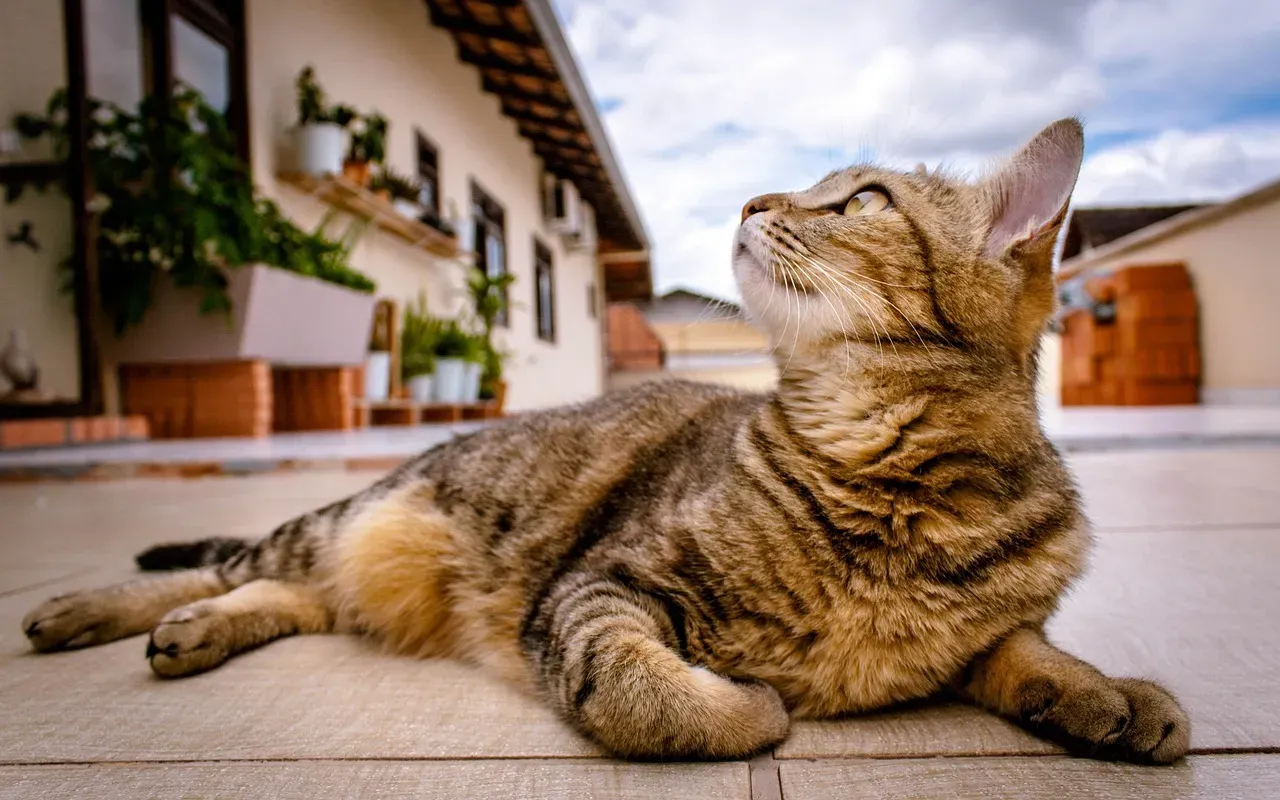
Wild cats developed their intricate body language system out of necessity for survival. Unlike dogs, who evolved as pack animals with complex social hierarchies, cats are primarily solitary hunters who needed subtle ways to communicate without alerting prey or rivals. That heritage shapes everything about how your domestic cat expresses itself today, even from the comfort of your sofa.
Cats can use a range of communication methods, including vocal, visual, tactile, and olfactory communication. Up to 21 different cat vocalizations have been observed, and they use visual signals, or body language, to express emotions like relaxation, fear, and aggression. In other words, your cat is operating a full communication system – and most of us are only tuning into a fraction of it.
Reading the Tail: Your Cat’s Most Expressive Tool
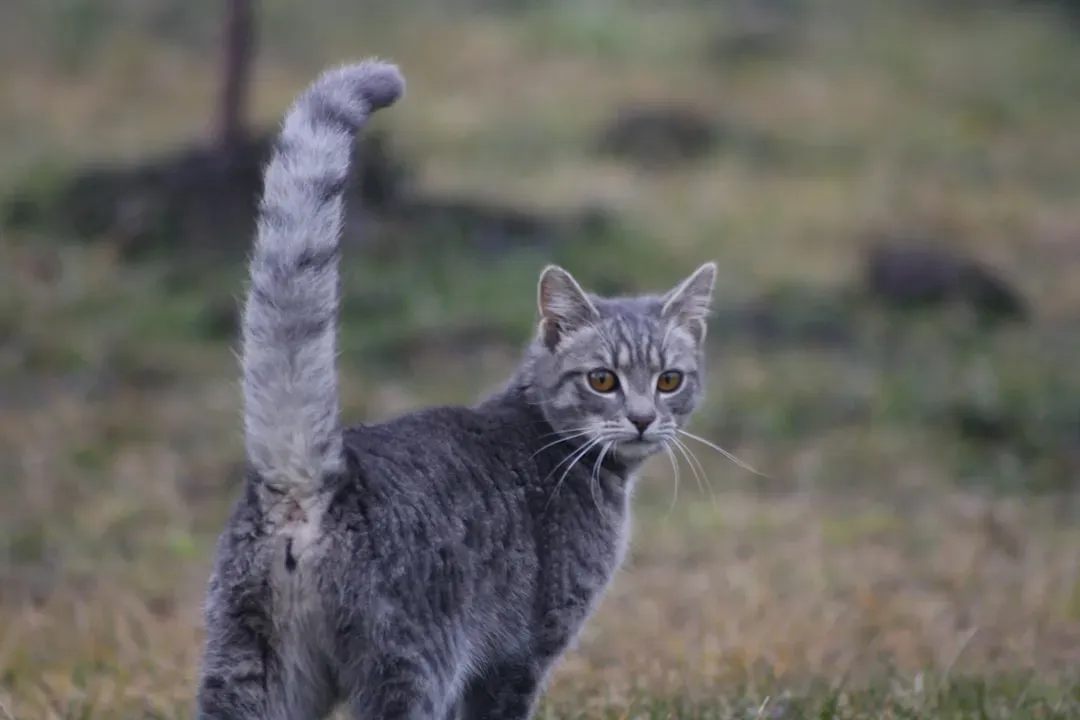
When your cat’s tail is upright, they are feeling social and confident, and are approaching in a friendly manner. This tail language indicates a friendly greeting between cats, and it’s actually how kittens greet their mothers. So when your cat trots toward you with a perfectly vertical tail, that’s one of the warmest greetings they know how to give.
When your cat thrashes their tail or thumps it on the ground, they are irritated, annoyed, or angry. This tells you that something is bothering your cat, and it’s a distance-increasing behavior. If you’re petting your cat and they start thrashing their tail, they’re trying to tell you to stop. If you don’t, the thrashing tail may be a prelude to hissing, growling, swatting, or biting. Consider that thrashing tail a very clear first warning.
Ear Positions: The Emotional Barometer on Your Cat’s Head
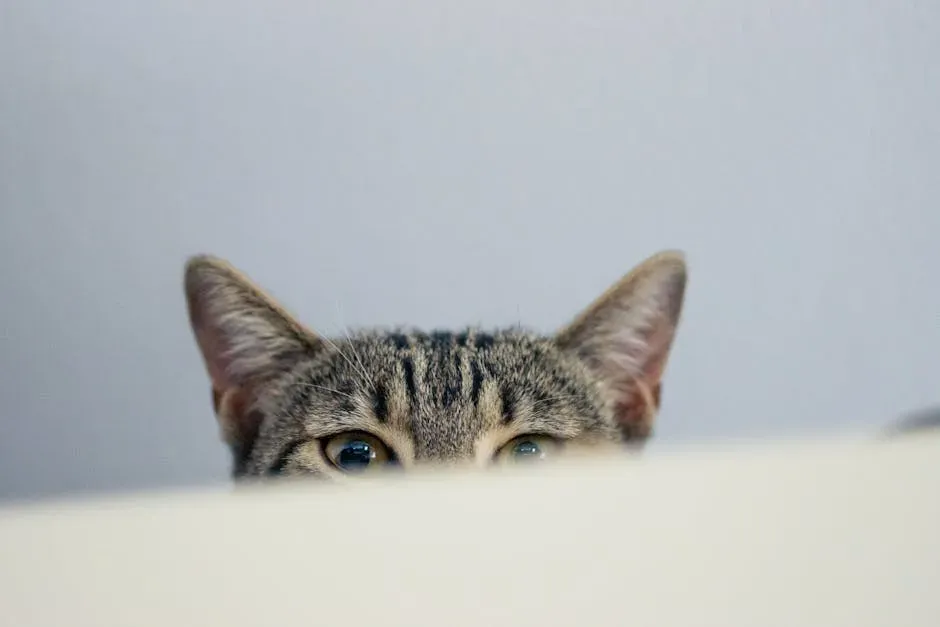
Cats use more than 20 different ear muscles to fine-tune ear movement. That’s a remarkable degree of physical precision, and it means the ears are one of the most reliably expressive parts of a cat’s body. Ears held naturally means the cat is relaxed, while ears pinned back mean the cat is afraid. When a cat’s ears are facing forward and close together, that means the cat is interested in something. When a cat twists its ears so that the opening is to the side, that means the cat is angry.
Analysis of ear and tail configurations shows clearly that the position of the ears is more important than tail position for both cats when they interact. This might surprise you, since most people watch the tail first. Ear postures likely convey a continuum of motivation along the three principal dimensions of interactive behavior: affiliation, defense, and threat. Paying attention to your cat’s ears first will often give you the most accurate read on where things stand.
The Slow Blink: A Feline Kiss Sent Across the Room
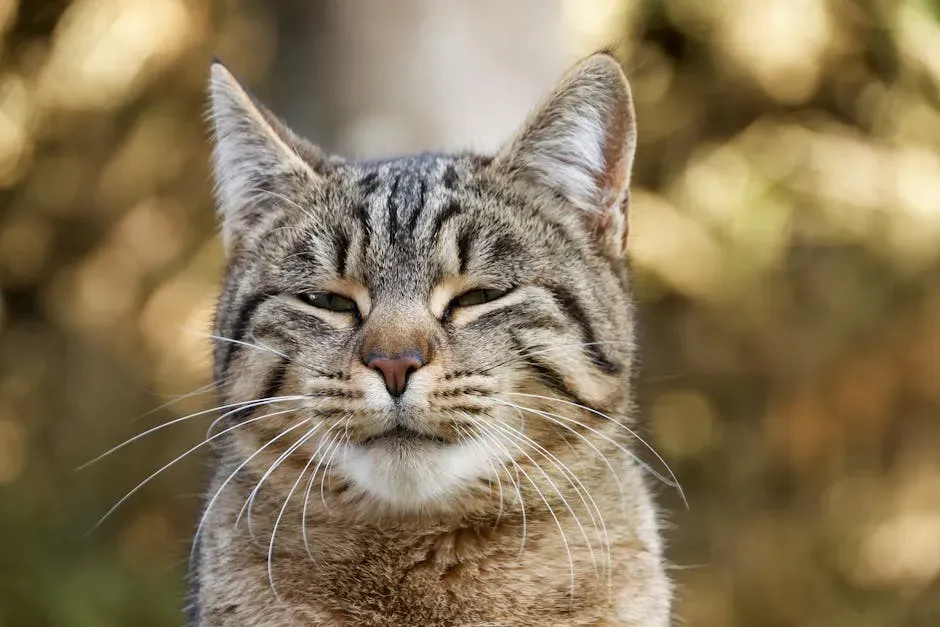
A study published in 2020 confirmed that slow blinking plays a key role in feline communication. Researcher Karen McComb, a psychologist at the University of Sussex, highlighted the significance of scientifically demonstrating that cats and humans can communicate in this way. It’s one of those findings that feels obvious to cat owners who’ve instinctively been blinking back at their cats for years.
When cats feel relaxed and content, they naturally narrow their eyes and blink slowly. This facial expression closely resembles the soft squint humans make when smiling. In other words, it’s a cat’s way of expressing friendliness and trust – a kind of silent hello. Not only did cats respond to the slow blinking of strangers, but they were also more willing to approach an outstretched hand afterward. That’s the power of one simple gesture.
Whiskers: The Subtle Signal Most Owners Miss
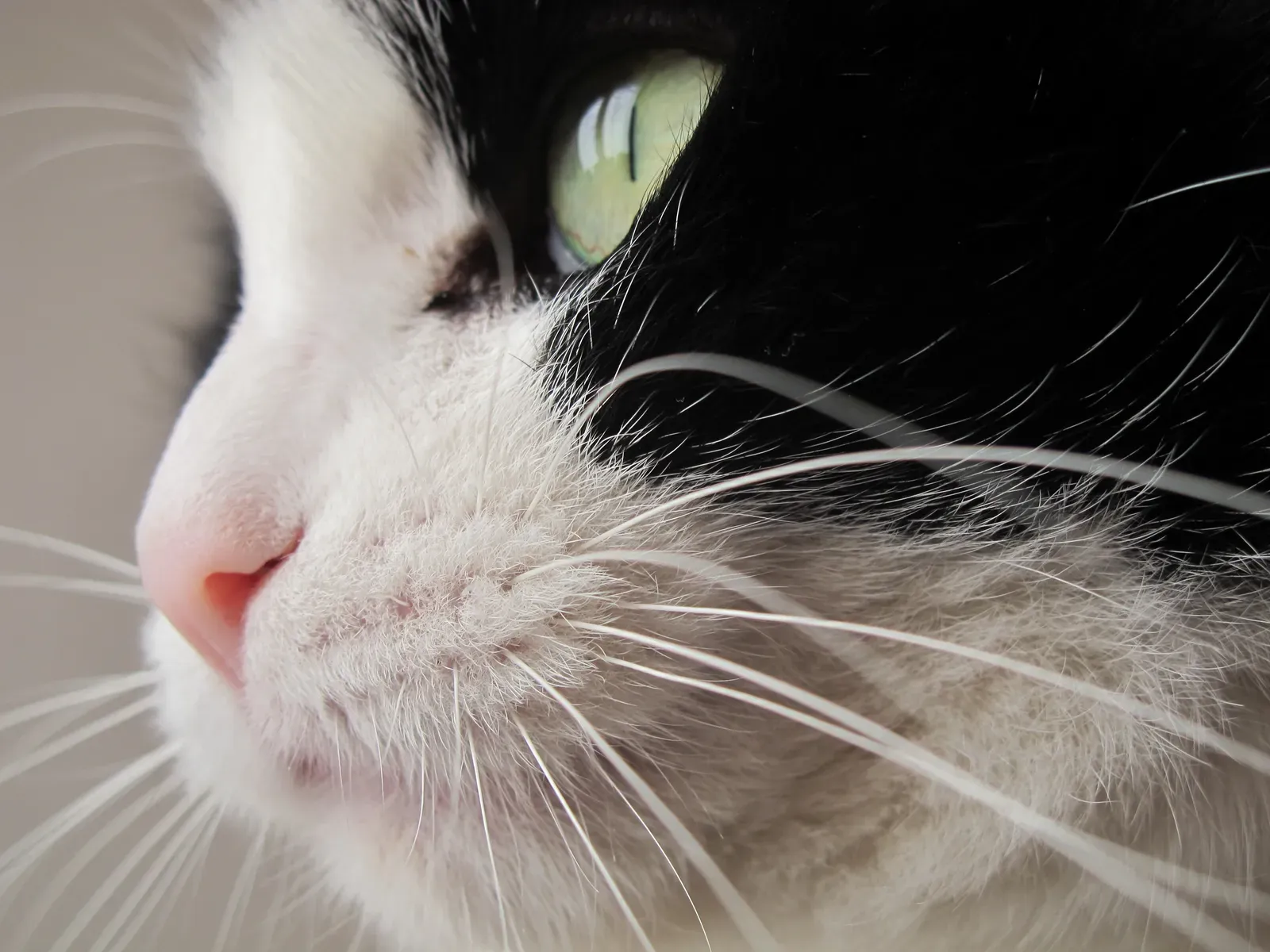
Whiskers not only act as a sensory aid for cats to find their way around in the dark, but they also tell you how a cat is feeling. If a cat’s whiskers are forward and fanned out, the cat is interested in something. If a cat’s whiskers are pressed tight to their face, the cat is most likely afraid and attempting to make itself look smaller. It’s a tiny detail that’s easy to overlook, but once you know what to look for, it becomes surprisingly obvious.
Forward-facing whiskers indicate curiosity and interest, while whiskers pulled back against the face suggest fear or aggression. Think of the whiskers as a mood ring that works. If you’ve taken in all the other signs and you still want more information, check out a cat’s whiskers. Compared to a cat’s posture, tail, ears, and eyes, the whiskers aren’t going to tell you as much, but they may provide a helpful hint. They’re the finishing detail in a much bigger picture.
Scent and Touch: The Hidden Language You Can’t See

Common forms of tactile communication include allorubbing, where two cats rub their bodies against each other around the mouth and cheek area, allogrooming, nose touching, and resting or curling up together. Cats using each other as pillows and intertwining their tails is believed to be a form of social bonding. These behaviors carry over directly into how your cat interacts with you.
Cats rubbing their heads against objects is known as “bunting.” Bunting often happens in the core area of their territory and seems to be associated with comfort, reassurance, and friendly social interactions. Head butts and chin rubbing are clear signs that your cat loves you, because cats have scent glands in their faces that allow them to claim friends and objects as their own. Being claimed by a cat, as it turns out, is a genuine honor.
Purring: More Complex Than You Think
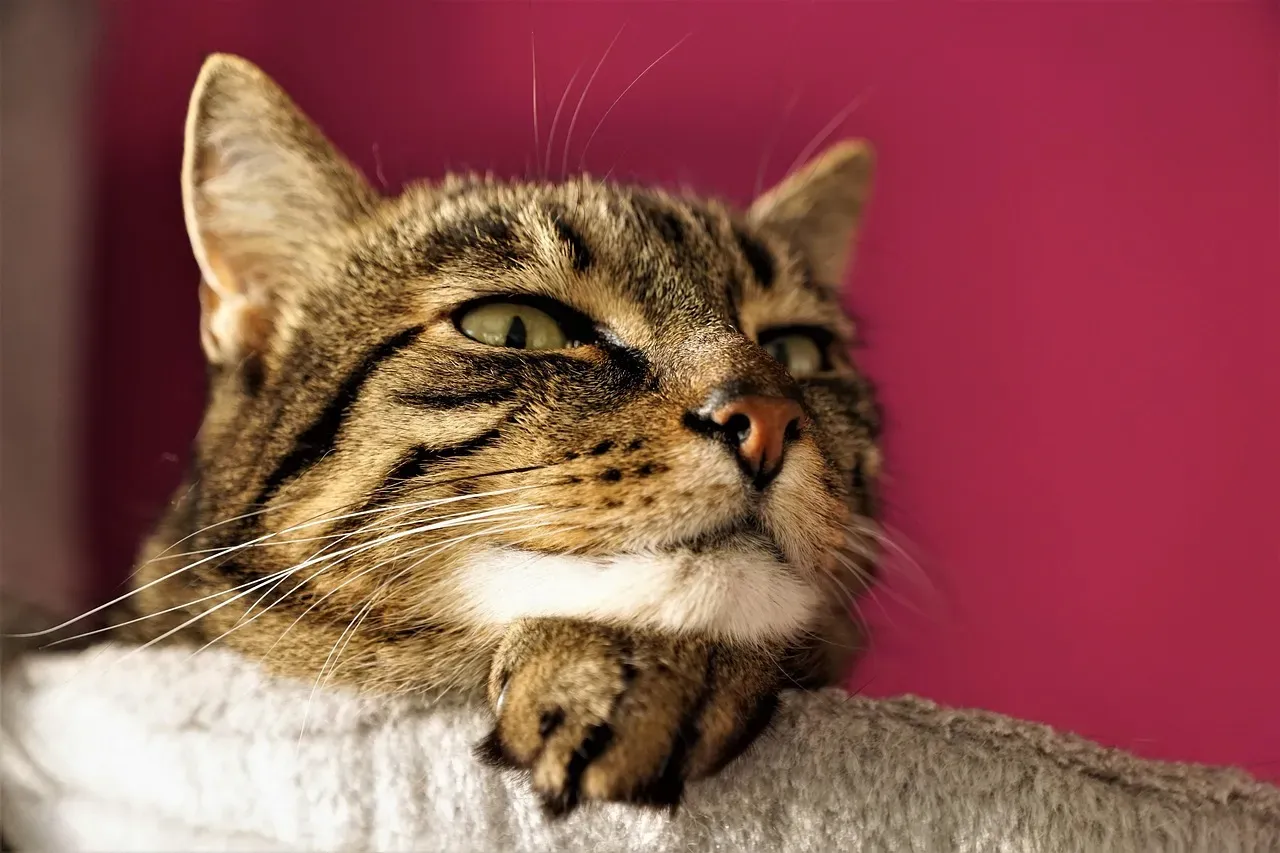
While most people associate purring with happiness, scientific research reveals that cats purr in various emotional states, including stress, pain, and anxiety. The frequency of purring, around 25 to 50 Hz, has been shown to promote bone healing and reduce pain in both cats and humans. That’s a remarkable detail – the sound your cat makes might actually be doing you some good too.
Mother cats purr to communicate with their newborn kittens, who are born deaf and blind but can feel the vibrations. This creates a bonding mechanism that continues throughout their lives as a comfort behavior. Some cats purr when they’re nervous at the veterinarian’s office or in new environments, using this self-soothing behavior to manage stress. So if your cat is purring loudly at the vet, it’s not necessarily a sign they’re calm – context always matters.
Body Posture: What the Whole Picture Is Saying
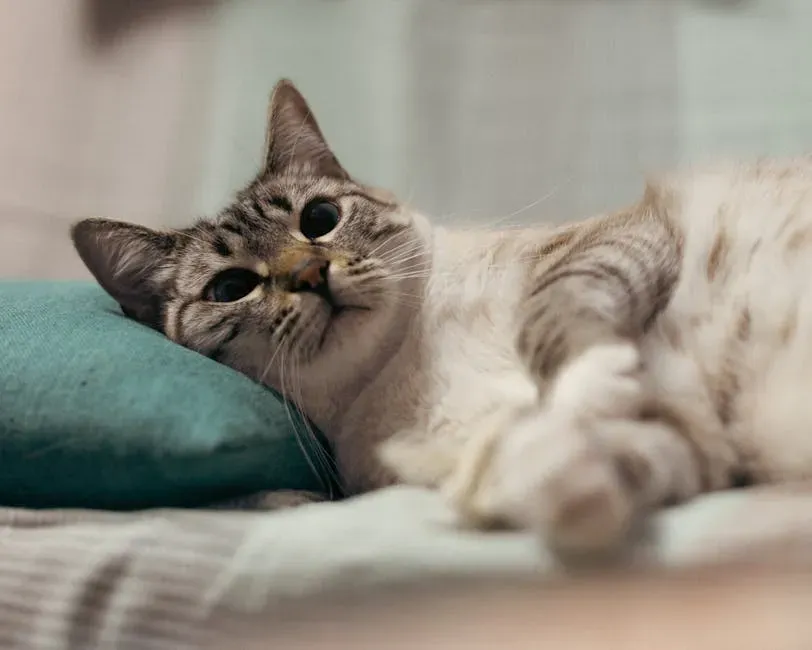
Cats who are relaxed will have loose, fluid body movements, and their breathing will be slow and steady. They might fold their feet in front of themselves, stretch their feet way out in front, or slouch over the side of a perch. Relaxed cats’ ears and whiskers will be at their neutral positions or maybe slightly forward, their pupils will be average size, and their eyelids will be soft, perhaps blinking slowly.
When cats lie on their back with their bellies exposed, they are in a position of vulnerability. Therefore, this position may communicate a feeling of trust or comfort. Still, that doesn’t mean you should automatically go for a belly rub. A belly-up posture often means trust and relaxation, but many cats don’t want belly rubs. Try chin or cheek scratches instead. Reading posture correctly means respecting what it’s actually communicating, not just what you want it to mean.
Meowing: A Language Invented Just for You
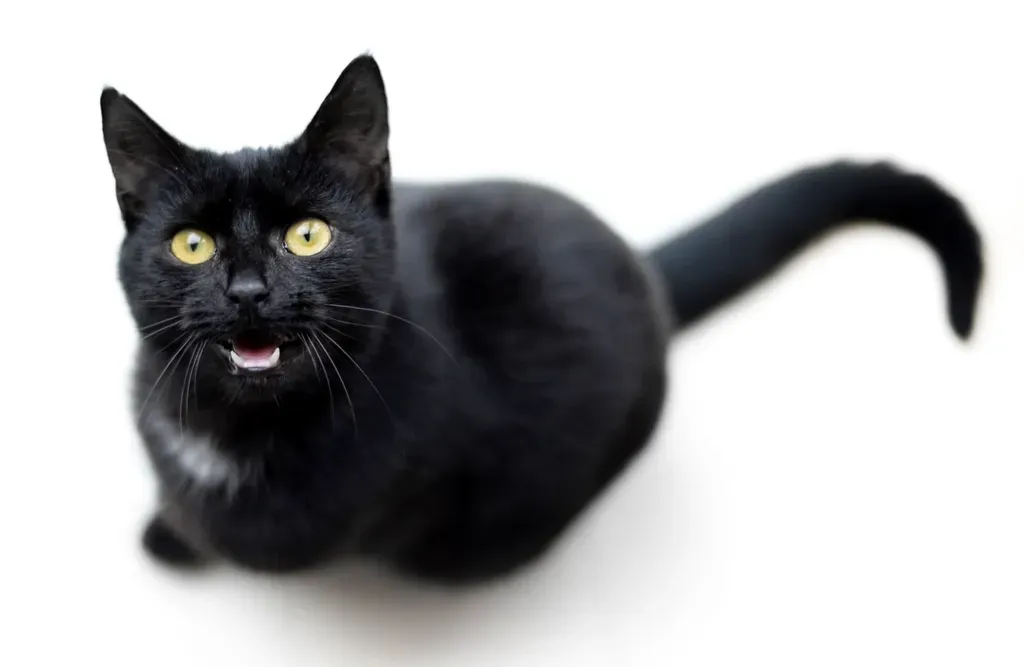
Adult cats rarely meow to each other, and so adult meowing to human beings is likely to be a post-domestication extension of mewing by kittens. Put simply, your cat developed the habit of meowing at you because it works. A meow can be assertive, plaintive, friendly, bold, welcoming, attention-soliciting, demanding, or complaining. It can even be silent, where the cat opens its mouth but does not produce any sound.
Research shows cats adjust their body language and vocalizations when interacting with humans, using more eye contact and meows than they do with other cats. Your cat has essentially tailored its communication style to reach you specifically. When speaking to their owners, cats employ distinct sounds including purr, hiss, howl, chirp, and meow. Your grown-up furry friend uses the meow as a special form of communication just for you. That’s a level of social adaptation that deserves a little more credit than cats typically get.
Reading the Full Picture: Why Context Is Everything
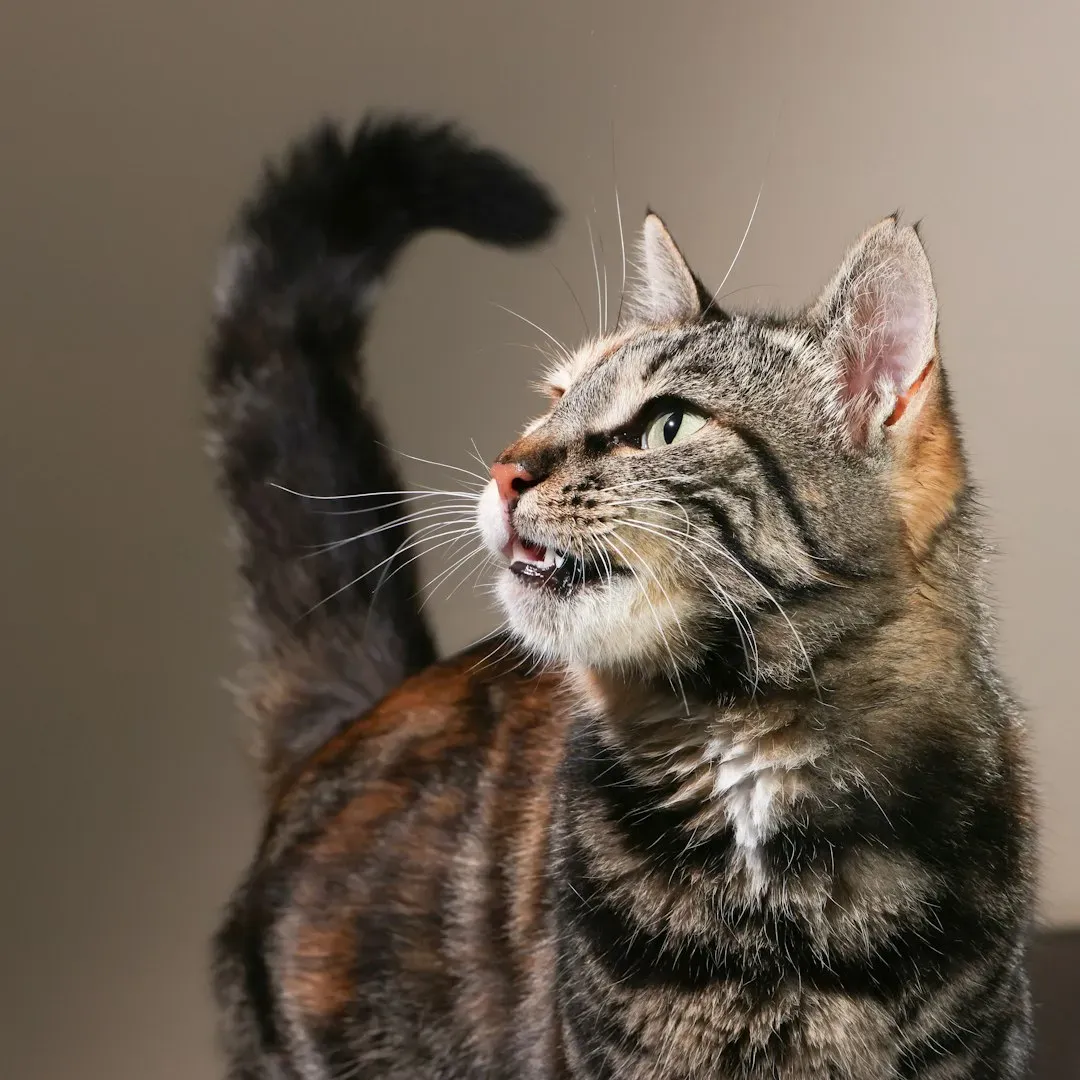
Cats rarely communicate with just one signal. Instead, they combine ears, eyes, tails, and posture into a full message. For example, forward ears paired with an upright tail and a slow blink signals a relaxed, friendly cat. Pinned ears combined with dilated pupils and a lashing tail signals agitation – time to give space. By looking at the whole picture, you’ll avoid misreading your feline companion’s intentions.
A cat’s body language must be observed in context. The environment, recent activities, and other animals present can influence their behavior. A slow blink from your cat may mean trust if you are relaxing together, but if they blink nervously during a vet visit, they might feel stressed. The signal is the same; the meaning shifts. Learning to account for context is what separates a curious observer from someone who genuinely understands their cat.
Conclusion
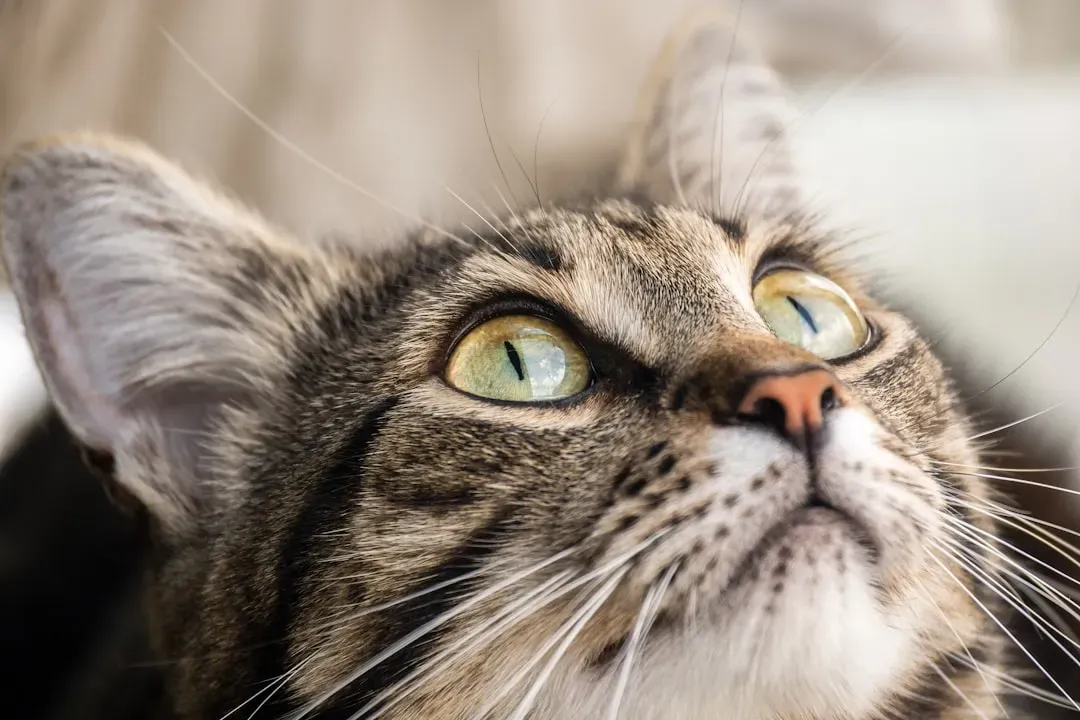
Your cat has been communicating with you since the moment you brought them home. The tail signals, the ear adjustments, the slow blinks across the room – none of it is random. When you learn to read cat signals accurately, you can respond in ways that build trust. Respecting boundaries when your cat is anxious, or engaging playfully when they’re in the mood, helps nurture a stronger relationship.
This silent language system, refined over thousands of years of evolution, offers incredible insights into your feline companion’s thoughts, feelings, and needs. By learning to read these subtle signals, from ear positions to tail movements, you become fluent in a communication method that deepens your bond and enhances your cat’s wellbeing.
The conversation between you and your cat has always been two-sided. The difference now is that you know how to listen. Pay attention to the small things – the tail curve as they approach, the ears that shift before the mood does, the blink that says everything without a single sound. Cats aren’t hard to read. They’re just waiting for you to look more carefully.
Kristina is a young writer from India. An arts graduate and an avid content creator, Kristina is passionate about animals and wildlife. She enjoys exploring topics related to pet care, animal behavior, conservation, and nature, combining thorough research with engaging storytelling.