13 Home Indoor Cat Habits That Prove It Is Happiest Living With You
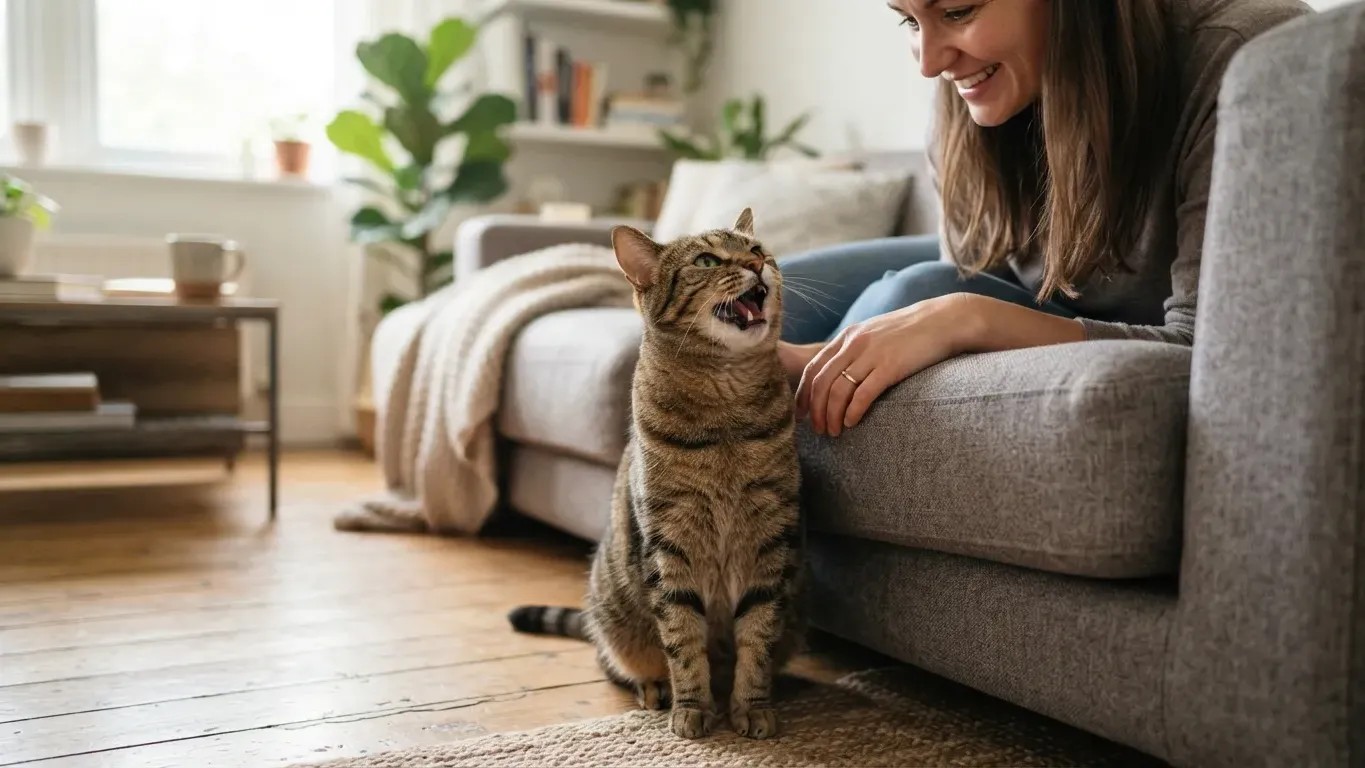
Most people think a happy cat is just a quiet cat that tolerates your presence. Turns out, science completely disagrees.
Indoor cats communicate deep contentment through dozens of small, consistent habits - and most owners walk right past these signals every single day without a clue.
A landmark Oregon State University study found that pet cats form attachments with their humans similar to the bonds children form with caregivers - the first time researchers confirmed this scientifically in cats. Here's what the data actually says, starting with the habit at #13 and building to the one that changes everything.
#13 - The Slow Blink That Means Everything
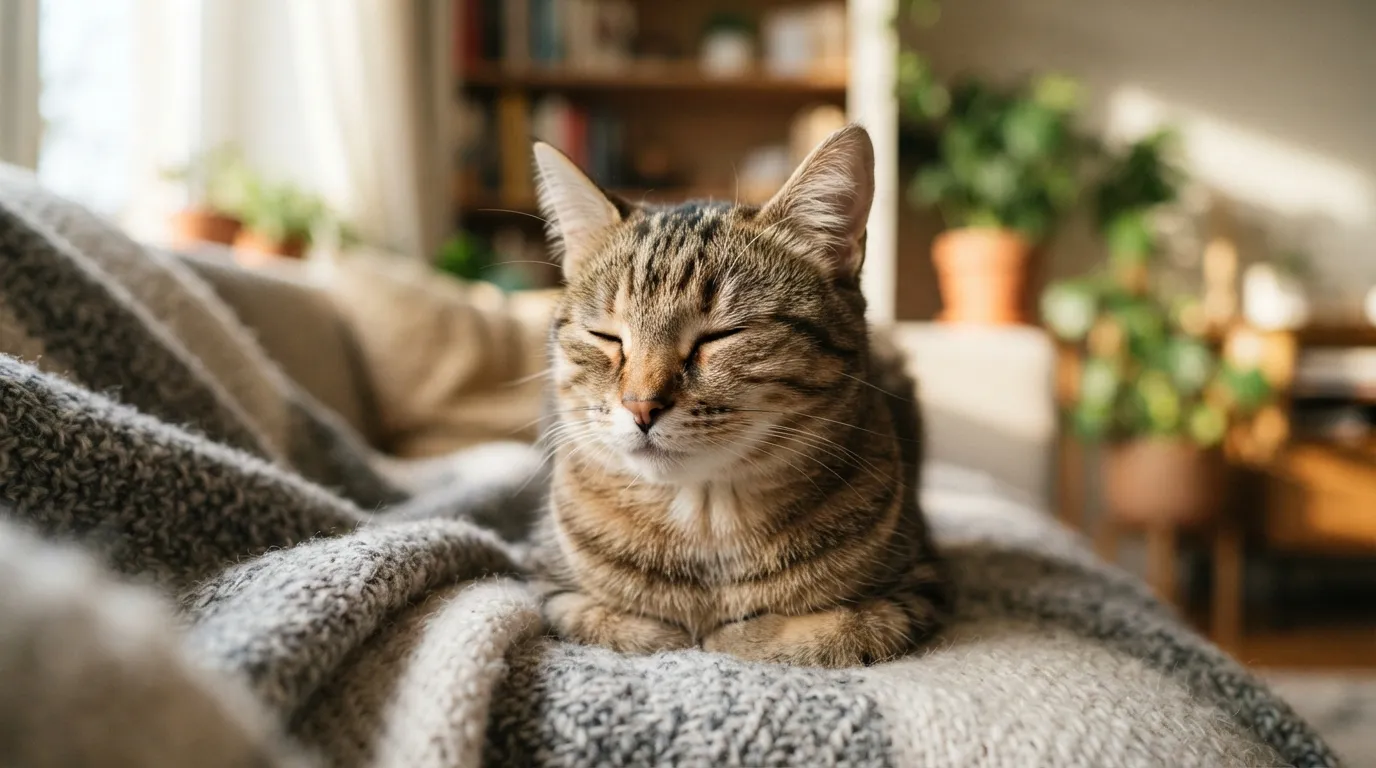
Most people think their cat is just squinting at them. They're missing the single most powerful signal of feline happiness.
A slow blink is one of the clearest signs a cat feels safe with you. Research on cat eye-narrowing found that cats are more likely to slow blink back at people who slow blink at them first.
Cats who get a slow blink back are also more willing to approach that person afterward. This is not random - it's a deliberate, chosen act of trust.
Cats don't smile the way we do, but the slow blink functions the same way, sometimes called a "cat kiss." A cat that slow-blinks at you unprompted has essentially decided you are safe territory.
Try returning the gesture next time your cat locks eyes with you. If they blink back, you have your answer.
But that's nothing compared to the sneaky sound habit waiting at #12...
#12 - The Purr That Isn't Just White Noise
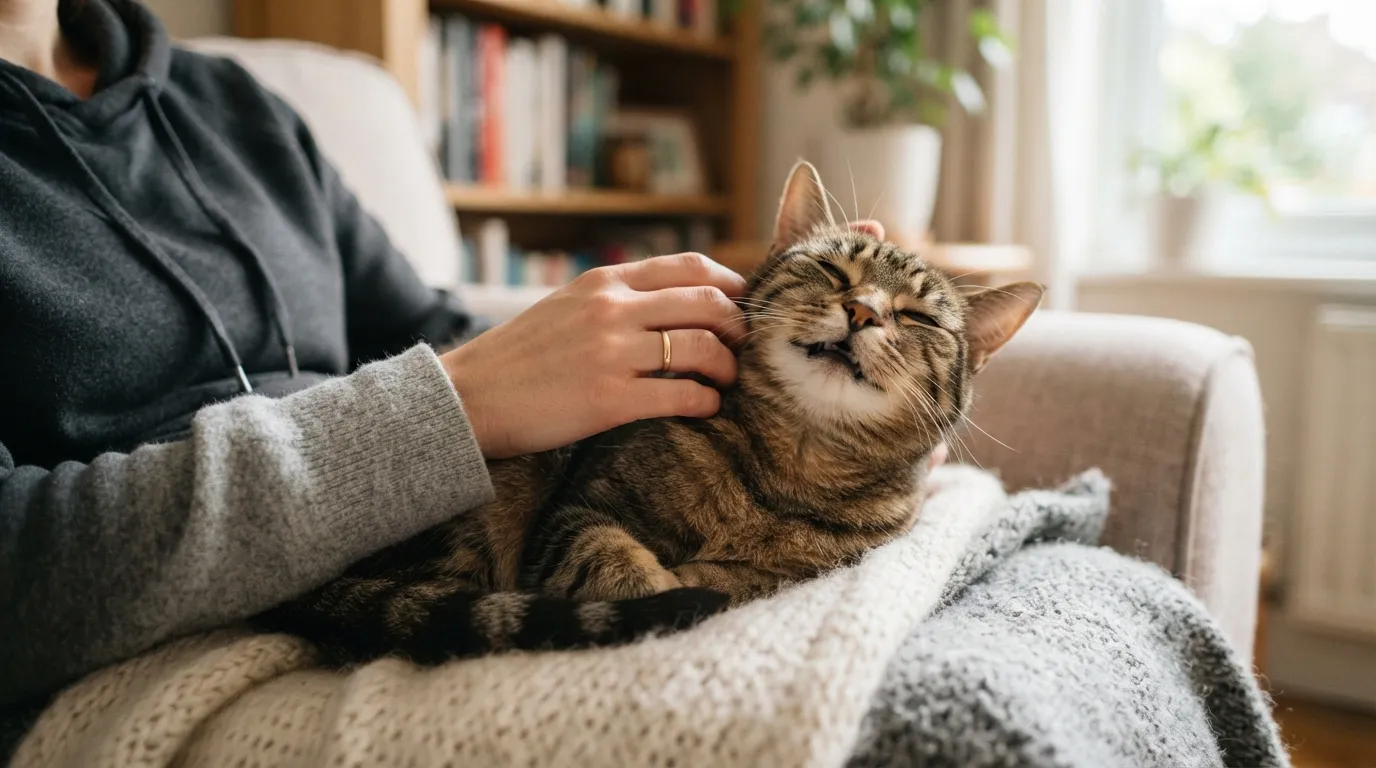
You hear it constantly, so you've stopped noticing it. That's a mistake.
Purring is the sign most people already recognize - and for the most part, if a cat is purring, you can assume they're happy. There are rare exceptions, though: cats sometimes purr when they're frightened or in pain.
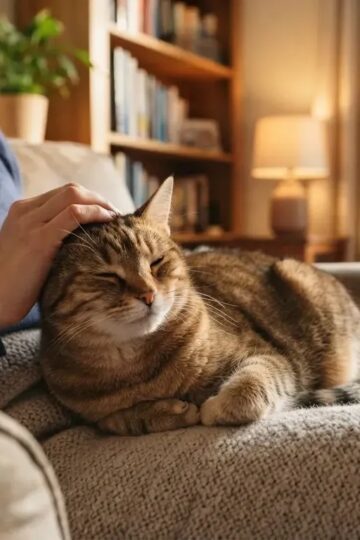
The key is context. Purring during petting or quiet time with someone your cat trusts almost always signals real contentment.
Fast Facts
- The average domestic cat purrs at a frequency of 25 to 150 Hertz.
- Humans have a range of about 20 to 20,000 Hz, so most of us can hear the purr - and feel it, too.
- Researchers have linked the lower end of that range, frequencies between 20 and 50 Hz, to increased bone density.
- Purring costs so little energy that a cat can do it while eating, dozing, or being petted, all at once.
A purring cat curled against you, with soft ears and half-closed eyes, is broadcasting happiness on every channel at once. That combination is nearly impossible to fake.
Learn to read the full picture, not just the sound. Purring plus relaxed body language means genuine happiness - not just tolerance.
But that's nothing compared to the paw habit at #11 that goes all the way back to kittenhood...
#11 - Kneading ("Making Biscuits") on You
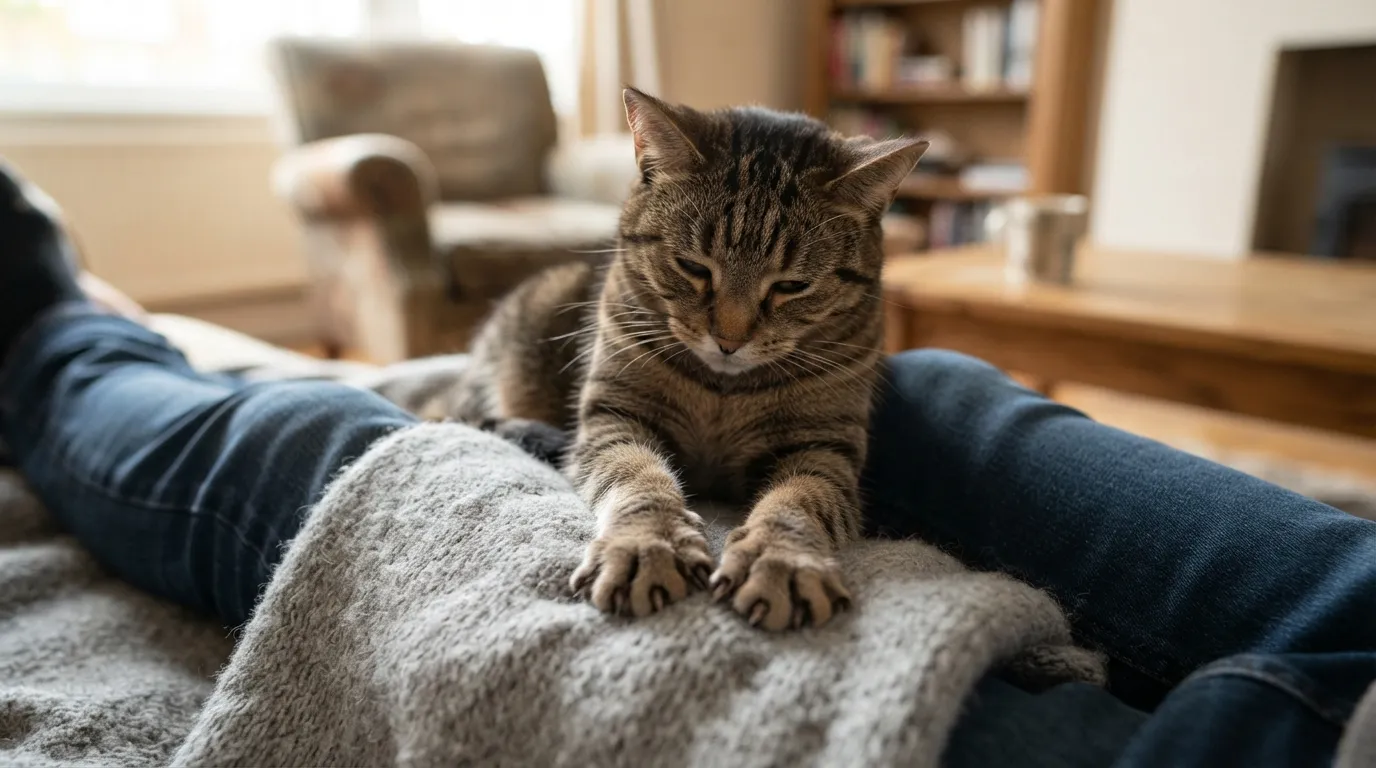
If your cat pushes their paws rhythmically into your lap or your blanket, you might find it mildly strange. It's actually a deeply rooted happiness signal.
Cats call this "making biscuits" because the motion mimics kneading dough. It starts in kittenhood, when kittens knead their mother to stimulate milk flow.
Kneading tends to show up when cats feel safe and comfortable, especially on soft surfaces near trusted people. It's often paired with purring, which only strengthens the signal.
When your cat kneads on you specifically, they're associating you with the earliest, safest feeling they've ever known. That's not a small compliment.
But that's nothing compared to the body language secret hiding in plain sight at #10...
#10 - The Upright Tail With a Tiny Hook
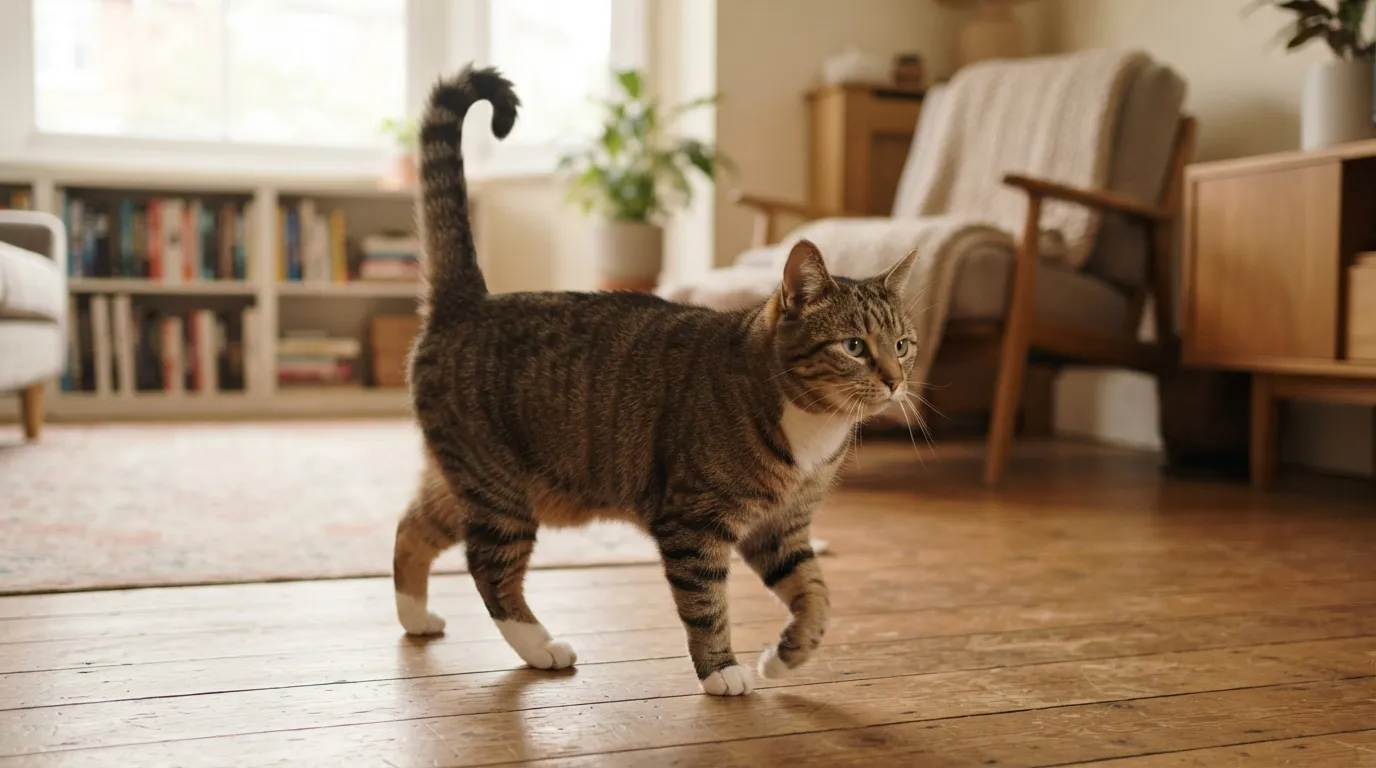
Pay attention to what your cat's tail does the second they spot you across the room. That one detail tells you more than an hour of watching them ever could.
A happy cat often stands relaxed or stretches out with soft, gently closed eyes. Their tail rises upright with the tip curved, like a question mark, and their ears point forward and neutral.
That little hooked tip is a cat's version of waving hello - reserved only for people they genuinely like. Strangers rarely get it.
Cats that feel securely attached often solicit attention by approaching with the tail held straight up, meowing or pawing at their favorite person. Watch for the hook. It's the tell.
But that's nothing compared to the bold belly move revealed at #9...
#9 - Rolling Over to Flash the Belly
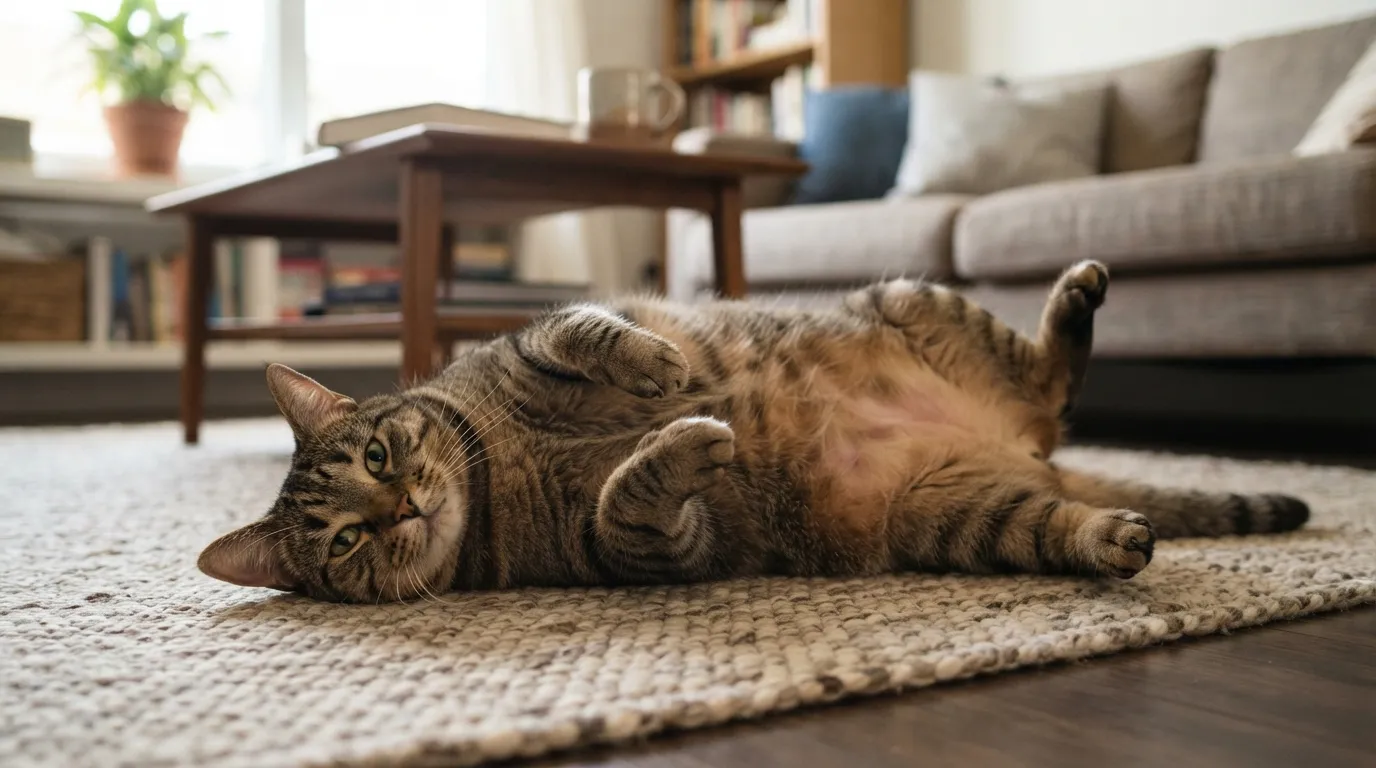
Your cat flops dramatically in front of you, belly exposed, looking ridiculous. Don't just laugh - understand what it means.
Rolling onto their back in front of you is a way of showing happiness and affection, and sometimes it's simply playful. The belly is a vulnerable area, so exposing it takes real trust.
Here's the twist most owners miss: the belly roll isn't automatically an invitation to rub it. Misreading it and going in for a rub can actually break the moment entirely.
The habit itself - the voluntary exposure of the most vulnerable part of their body, in your home, on your floor - is the compliment. Treat it as one.
But that's nothing compared to the head habit at #8 that scientists call one of the most intimate feline behaviors...
#8 - Head Bunting: The Headbutt That Claims You
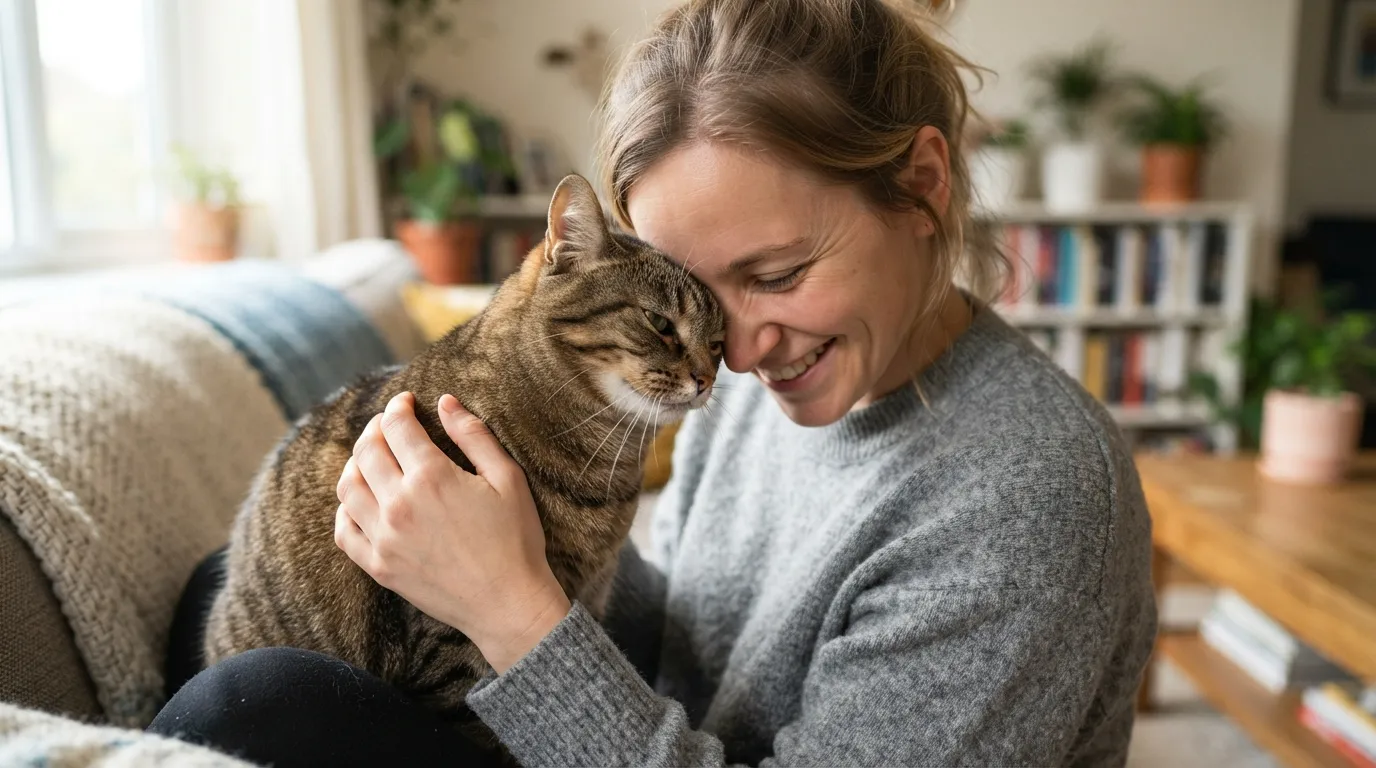
Your cat walks up and firmly presses their forehead into your face or hand. Most people think it's cute but random - it's anything but.
Bunting uses scent glands on a cat's head to mark you as familiar and safe. It's a form of social bonding, not aggression, and it builds a shared scent between you and your cat.
By bunting you, your cat is literally labeling you as safe, familiar, and theirs - which in feline social language is about as high an endorsement as it gets.
A cat that headbutts while purring is stacking two contentment signals at once. When you see both together, the happiness isn't in question.
But that's nothing compared to the sleeping habit at #7 that reveals just how secure your cat really feels...
#7 - Sleeping Deeply in Exposed, Wide-Open Places
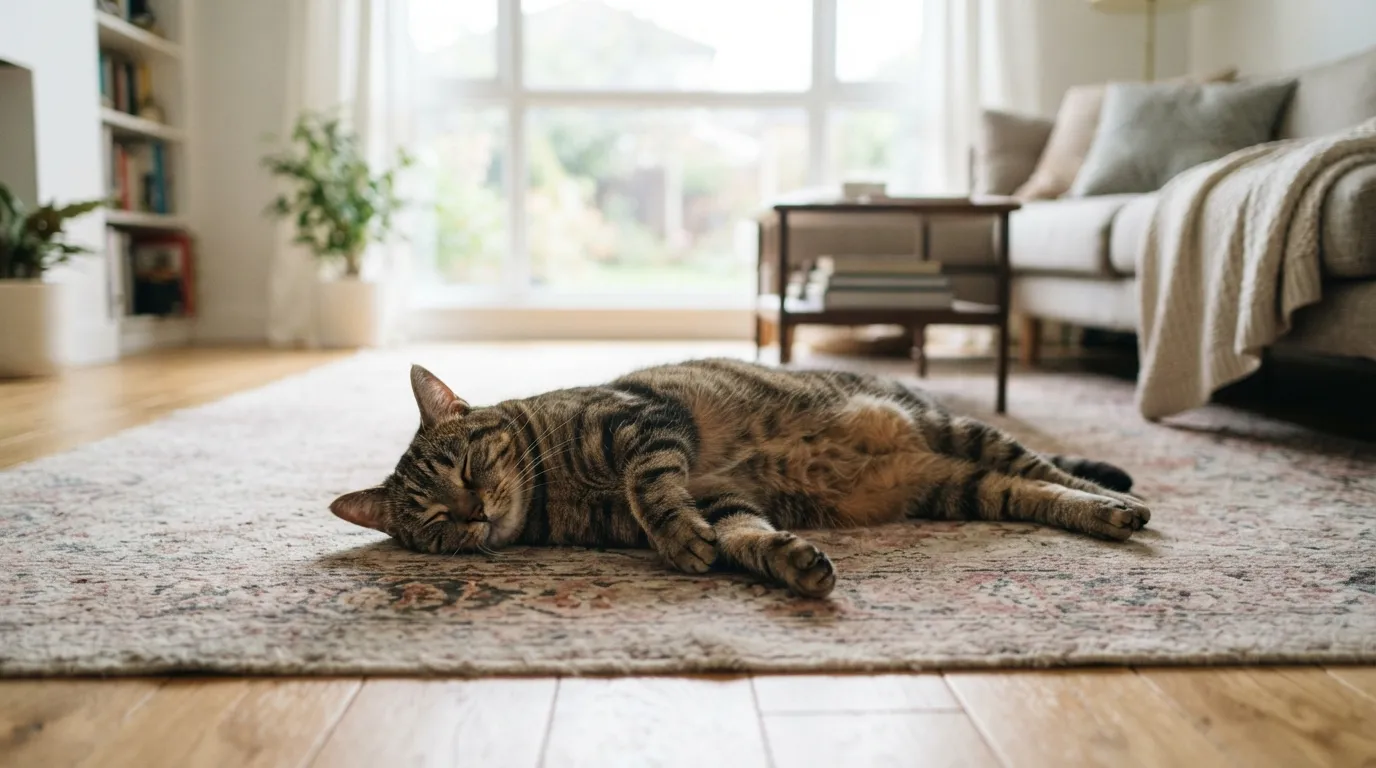
An anxious cat hides when it sleeps. A truly happy indoor cat does the opposite.
An animal that feels good usually sleeps well, which means it isn't stressed or on alert when it needs rest. A cat sprawled in the middle of the living room floor, or draped across your couch in full view, is broadcasting security.
Happy cats curl up against their owner, sleep in different spots around the house, or stretch out belly-up without a second thought. A fulfilled cat typically sleeps 12 to 16 hours a day and wakes up relaxed, not startled.
Quick Compare: What the Position Means
- Curled in a tight ball: comfortable, but still a little guarded.
- Sprawled flat on their side: fully relaxed, no urge to protect the belly.
- Belly-up, paws in the air: maximum trust - the most vulnerable pose a cat can strike.
- Loafed with eyes half-shut: calm and content, but still gently alert.
The fact that your cat sleeps so deeply and so visibly in your home means they feel zero threat - and that's entirely because of you. Vulnerability like that isn't given out easily.
But that's nothing compared to what the science revealed about the habit at #6...
#6 - Eating on a Calm, Predictable Routine
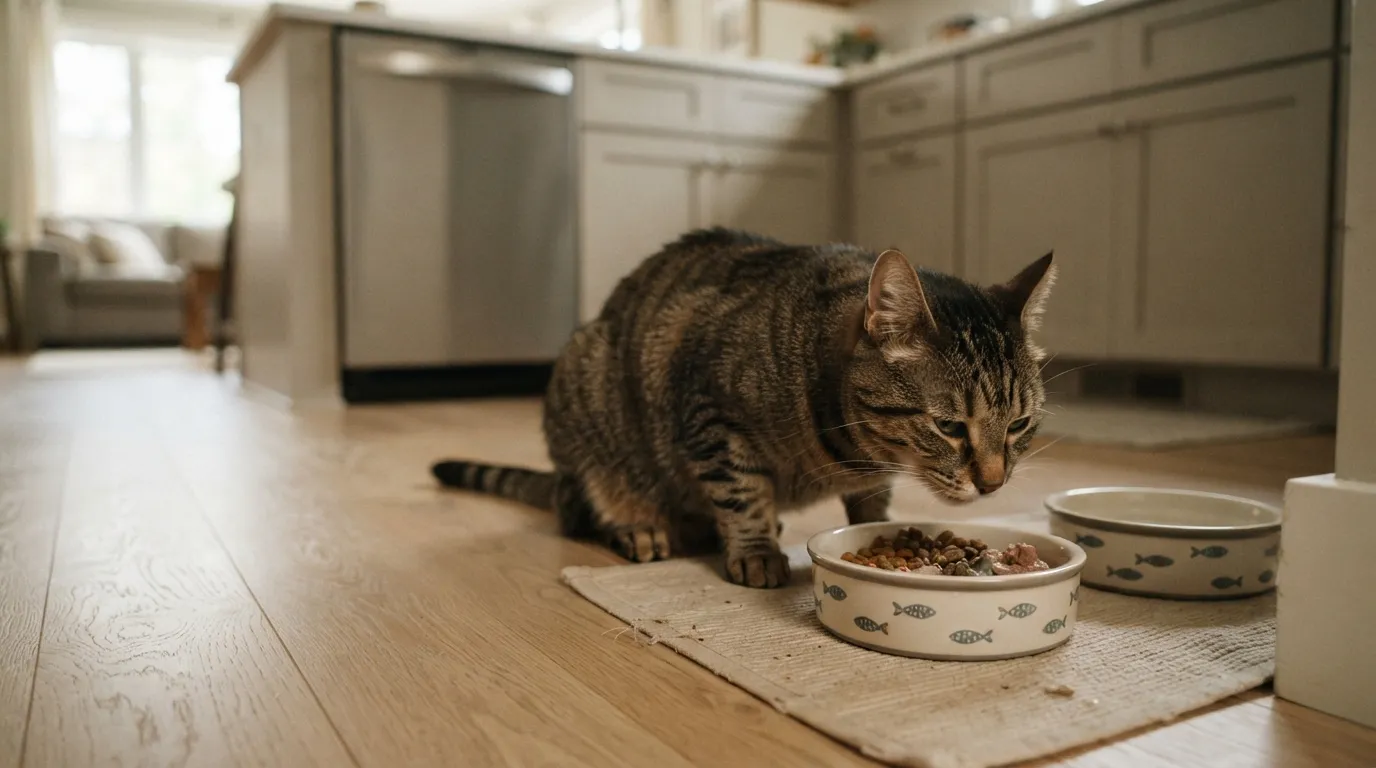
Here's one most cat owners overlook entirely - and it's one of the most honest indicators of a happy indoor life.
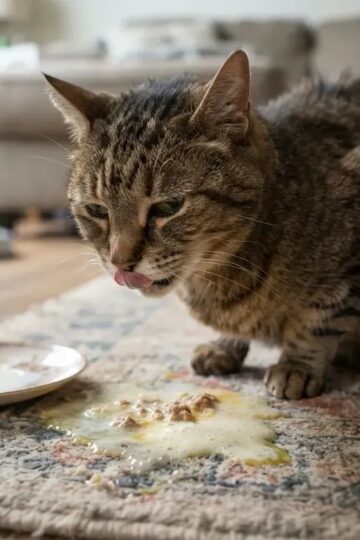
Content cats show up for meals, eat with focus, then move on with their day. Frantic begging, sudden food guarding, or skipping meals can signal stress, competition, or a health change worth watching.
Stress is the number one driver of disrupted eating in cats, so a calm eater is, by definition, a cat living without chronic anxiety. That calm comes directly from the stability you provide.
The most reliable signal isn't a textbook standard - it's consistency with your own cat's normal behavior. Routine eating is part of that consistency, and a break in it is the first warning sign worth taking seriously.
But that's nothing compared to the playful habit at #5 that signals something deeper than fun...
#5 - Active, Self-Directed Play
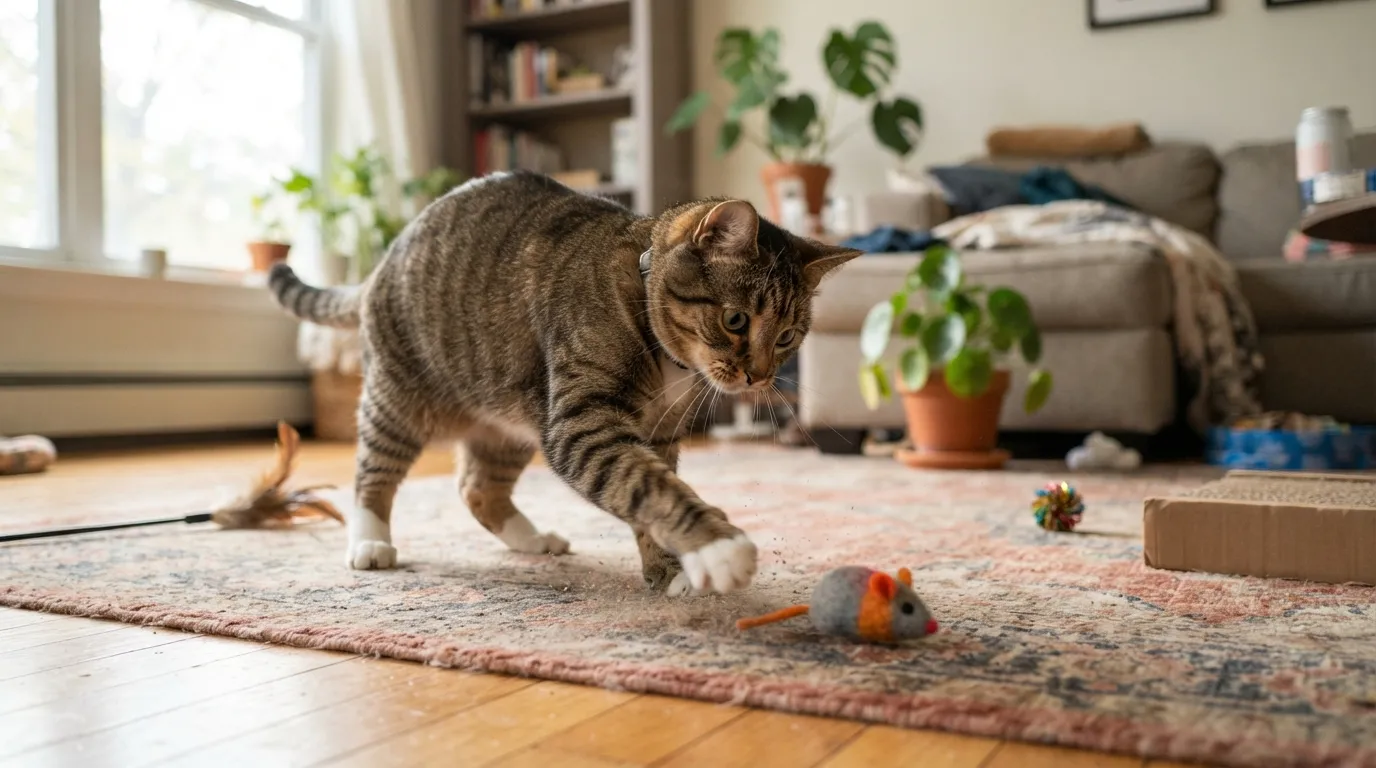
A lot of cat owners worry when their cat plays alone, batting a toy around the room at 2 a.m. They shouldn't - it's actually a great sign.
A playful cat is a happy cat. Some cats entertain themselves with toys; others need you to entice them with a wand toy, and either way, the instinct being satisfied is the same.
Even calm adult cats benefit from short bursts of predatory play - stalk, chase, pounce, capture. Curiosity itself counts too, whether that's sniffing a new object or investigating a box without fear.
A cat that initiates play - with or without you - is a cat whose core instincts are being met. That's the benchmark behaviorists actually use, not just how affectionate a cat seems.
But that's nothing compared to the window habit at #4 that most owners completely misread...
#4 - Staking Out the Same Window Perch Every Day
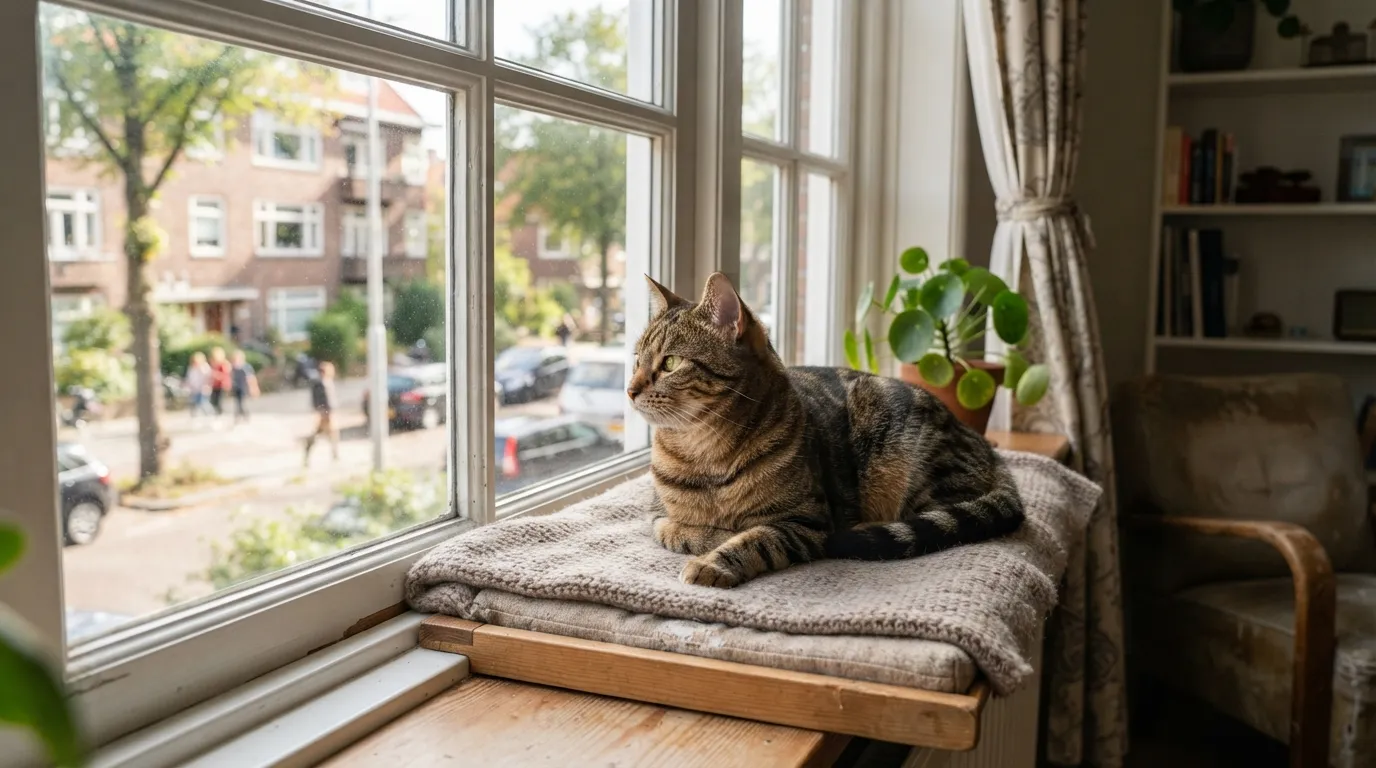
If your cat has claimed a specific window spot and returns to it daily, you might assume they're bored or longing for the outdoors. Experts say it's the opposite.
Watching the world through a window is a form of stimulation, and stimulation is a key sign of contentment. After a long nap, a happy cat often heads straight to their favorite window to watch the world go by.
A cat that window-watches regularly is mentally engaged, not mentally deprived. The distinction matters more than most owners realize.
An anxious cat hides. A content cat observes from a position of calm authority - and the window is one of the richest sources of stimulation an indoor cat has.
But that's nothing compared to the behavior at #3 that science now links directly to secure attachment...
#3 - Following You From Room to Room
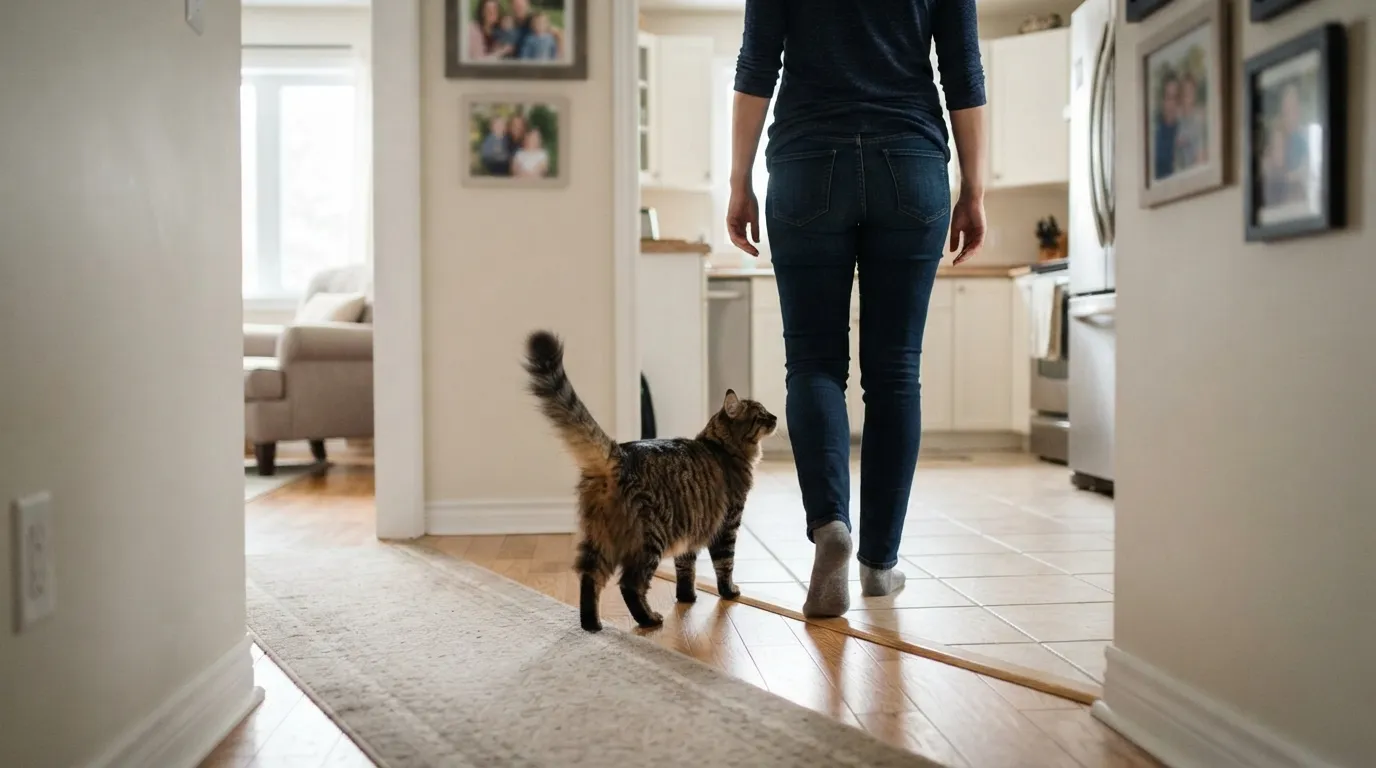
People joke that their cat "supervises" everything they do. It sounds funny, but there's real science underneath it.
In a groundbreaking Oregon State University study, researchers found that over 64% of cats show a secure attachment style similar to human infants and dogs. Cats are far more socially adaptive than the old stereotype gives them credit for.
Quick Compare: Attachment by the Numbers
- Kittens: 64.3% were categorized as securely attached and 35.7% were categorized as insecurely attached.
- Adult cats: 65.8% secure and 34.2% insecure - almost identical to the kitten numbers.
- Of the insecure kittens, 84% were ambivalent, 12% avoidant, and 4% disorganized.
- Human infants land in the same range, making the parallel between cats and children more than a metaphor.
When a cat feels secure, they use their owner as a "base" to explore the world from. Following you is proximity-seeking - the behavioral hallmark of a securely attached cat.
It isn't clinginess. It's a cat choosing you as its anchor point, every single time.
Every time your cat trails behind you and gets a word, a pat, or a treat, that bond gets reinforced a little more. A cat that keeps choosing to be near you has decided, repeatedly and on purpose, that you're worth following.
But that's nothing compared to the vocalization habit at #2 - and the surprising reason cats developed it at all...
#2 - Talking to You With Specific, Deliberate Meows
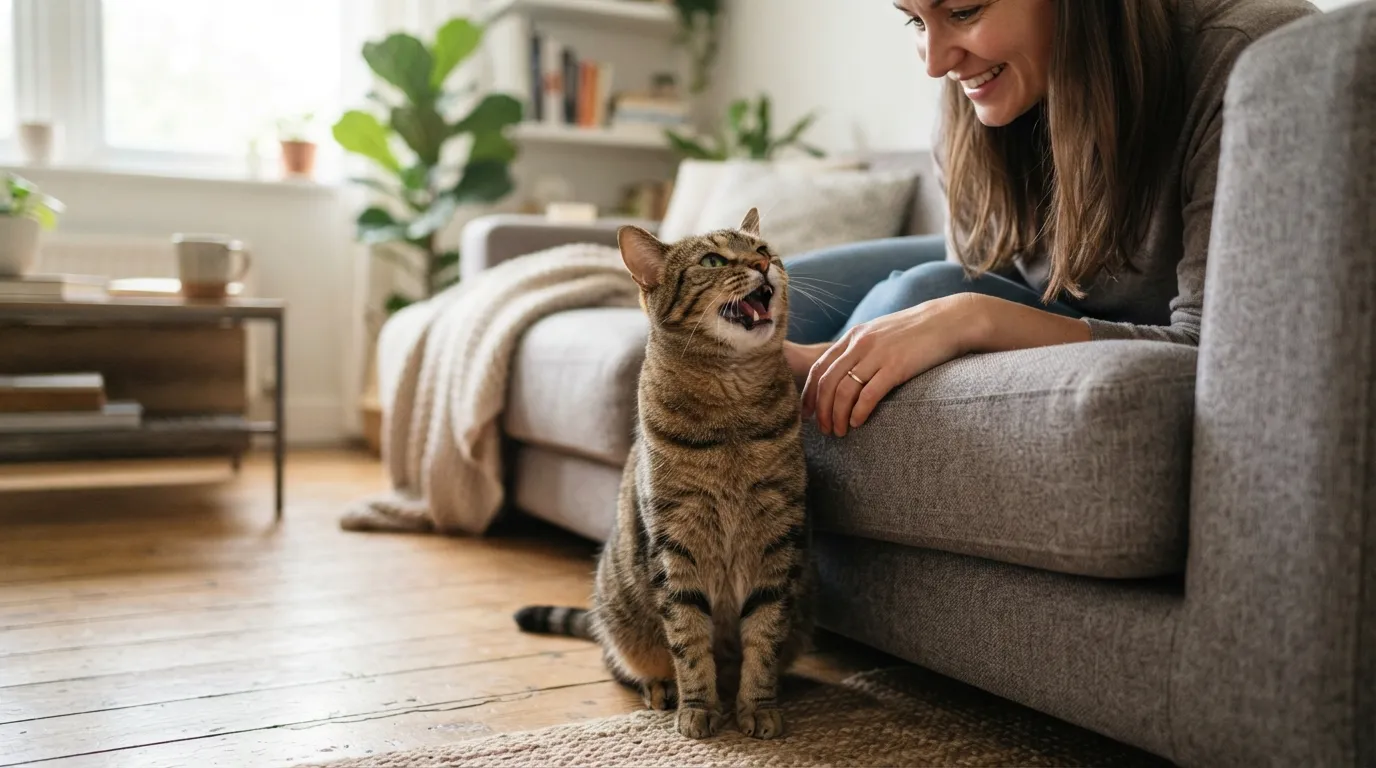
Here's a fact that genuinely surprises most people: cats developed the meow almost exclusively to communicate with humans, not with other cats.
Studies show cats can distinguish their owner's voice from a stranger's and remember familiar people for years. They are paying close, specific attention to you.
A happy indoor cat doesn't meow out of desperation - it meows to check in, to greet, to narrate its day. The cat that talks to you throughout the day has developed a private communication system built specifically for your relationship, one that doesn't exist anywhere else in that species.
Not every cat chirrups, but when you hear that rolling, melodic trill, take it seriously. It's widely considered one of the most enthusiastic and affectionate sounds a cat can make.
But nothing - absolutely nothing - on this list compares to what sits at #1...
#1 - Choosing You as Their Safe Place Under Stress
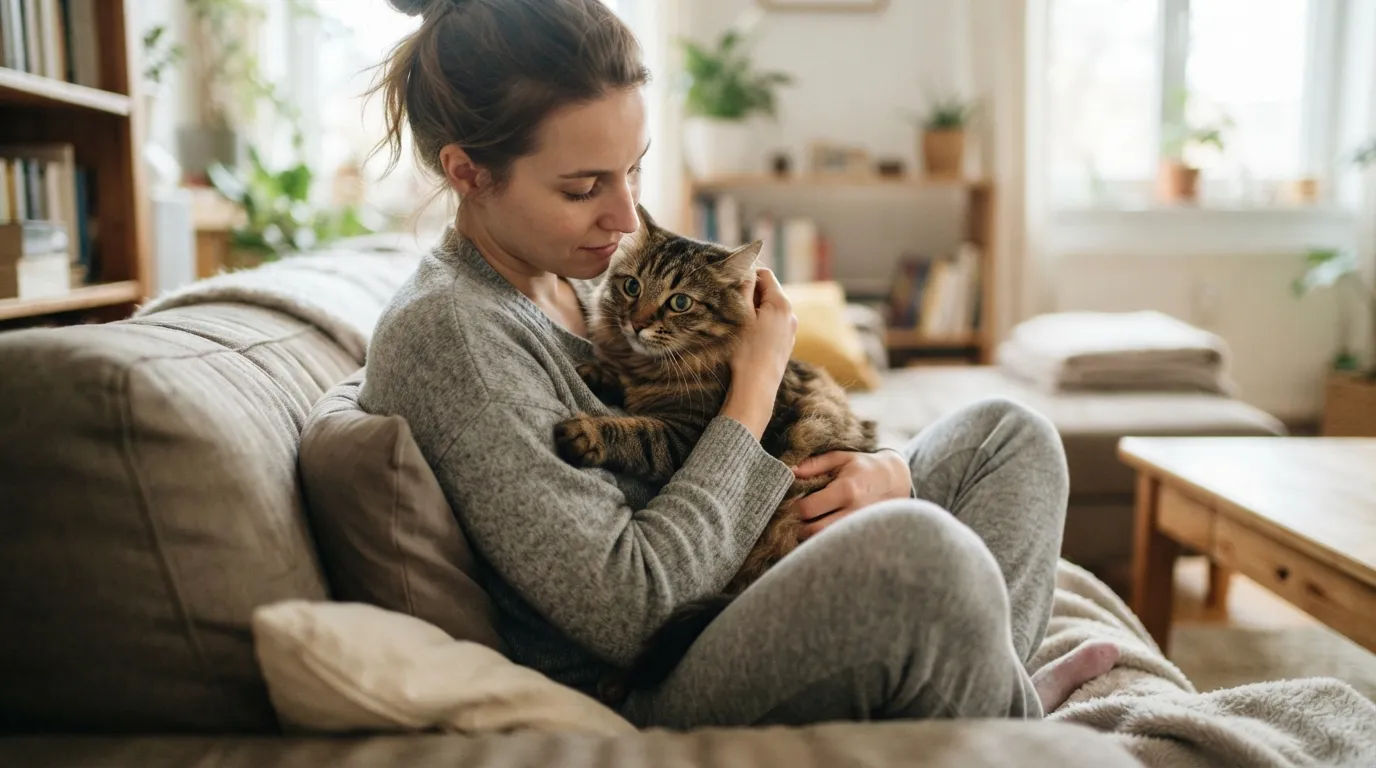
This is the one that matters most, backed by the strongest research, and it's the one that truly separates a happy indoor cat from a merely comfortable one.
When cats live in a state of dependency with a human, that attachment behavior is flexible - and the majority of cats use their person as a source of comfort. That isn't loyalty by default. It's a deliberate, learned, emotional choice.
Cats that are insecure can be likely to run and hide or seem to act aloof. There's long been a biased way of thinking that all cats behave this way, but the majority of cats use their owner as a source of security. Your cat is depending on you to feel secure when they're stressed out.
Kristyn Vitale, feline cognition researcher
When something frightens your cat - a loud noise, a stranger, an unfamiliar object - and they run toward you instead of away from everyone, that is the ultimate proof of happiness and trust combined.
The human-cat bond benefits both sides of the relationship: lower blood pressure for owners, and reduced stress behaviors for cats. You're not just making your cat happy - the relationship is genuinely mutual.
The Bottom Line
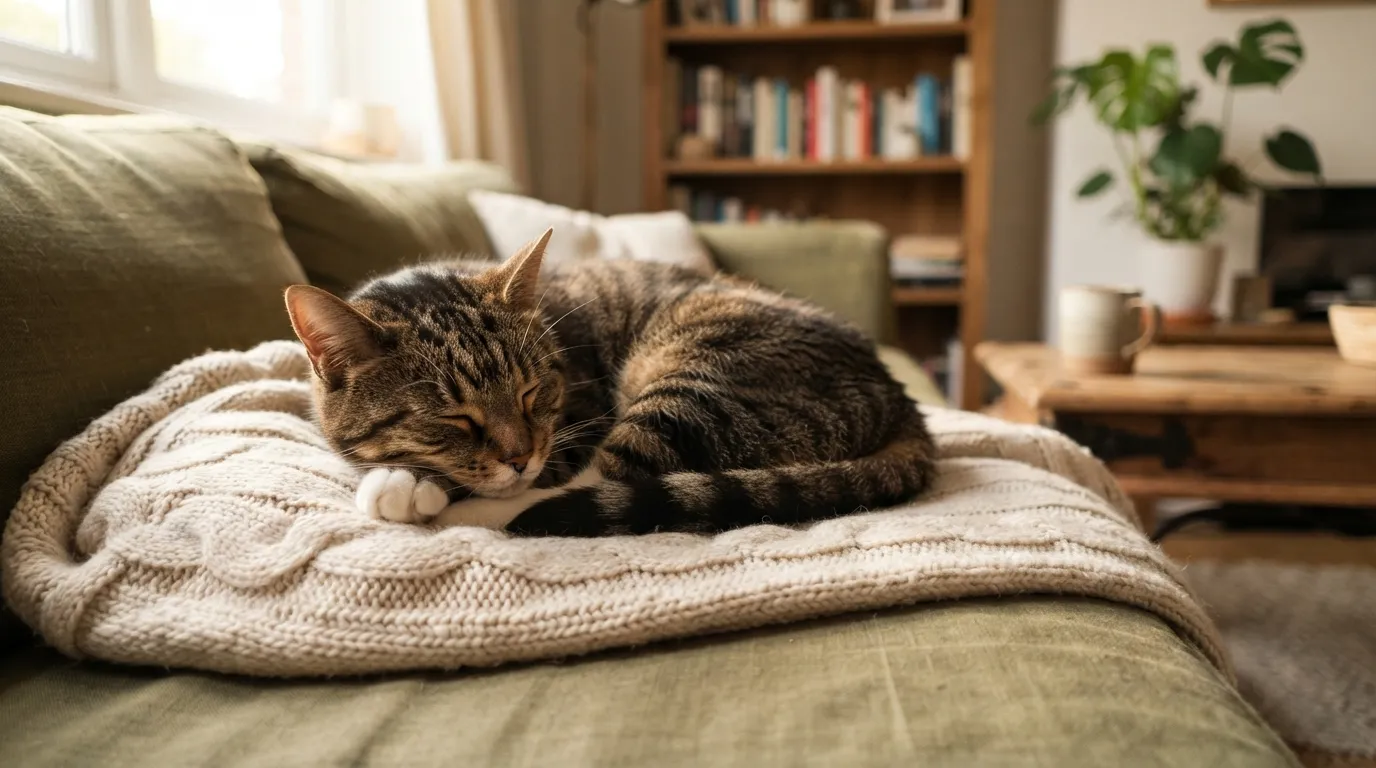
Most people spend years living with a happy cat and never fully realize it, because feline contentment is quiet, subtle, and easily mistaken for indifference. The science says otherwise.
Recent behavioral research has dismantled the aloof-cat stereotype for good. Cats are socially adaptive animals fully capable of deep emotional attachment to humans.
From the hooked tail they raise the second they see you, to the calm rhythm of their daily meals, to the moment they sprint toward you when the world gets loud - every habit on this list is a data point in the same picture. Your indoor cat isn't just surviving inside your home. It's thriving there, specifically because of you.
Which habit does your cat show the most? Drop it in the comments - we'd genuinely love to know.